







Hari Om

Menu

Hindu festivals

3992827d634f679e44c40a5ac9e8416b
Hindu festivals

Vat Savitri Vrat

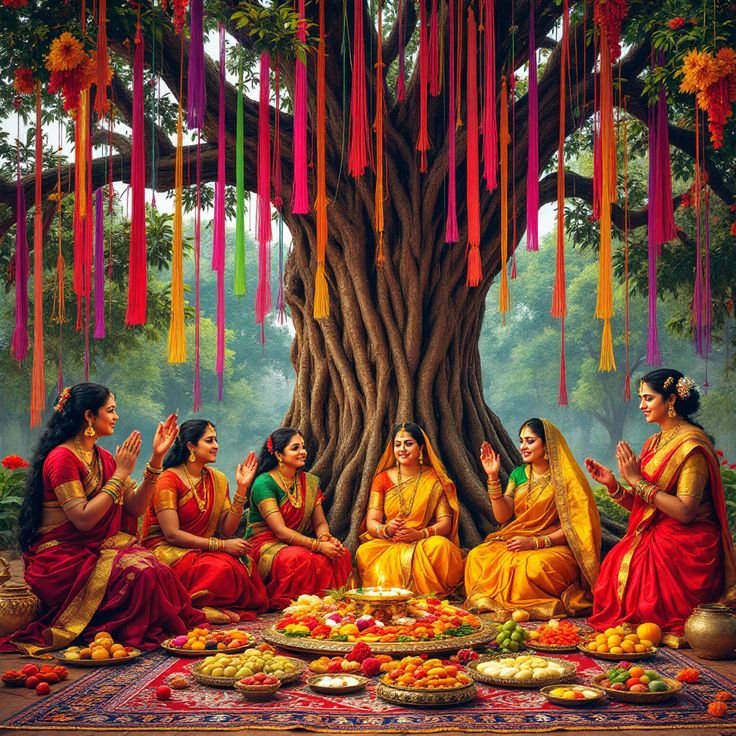
Vat Savitri Vrat Vat Savitri Vrat is a sacred Hindu observance performed by married women, especially in North India, Maharashtra, and Bihar. On this day, women fast and pray for the long life, health, and prosperity of their husbands. They worship the Vat (banyan) tree, which symbolizes longevity, by tying threads around it and offering prayers. The vrat is inspired by the legendary devotion of Savitri, who brought back her husband Satyavan’s life through her faith and determination. Vat Savitri Vrat is a fasting ritual observed by married women for their husbands’ long life, inspired by Savitri’s devotion to Satyavan. Rituals & Traditions of Vat Savitri Vrat at Savitri Vrat is a sacred festival observed by married Hindu women, especially in states like Bihar, Uttar Pradesh, Odisha, and Maharashtra. It is celebrated on the full moon day (Purnima) of the Jyeshtha month, usually in May or June. The vrat is dedicated to seeking the long life, prosperity, and well-being of their husbands, making it a symbol of devotion and marital harmony. The main ritual centers around worshipping the Vat (banyan) tree, which represents longevity and strength. Women wake up early, bathe, dress in traditional attire—often red or yellow sarees—and adorn themselves with bridal symbols like bangles, bindis, and sindoor. They observe a fast and gather around banyan trees, offering water, fruits, flowers, and sacred threads. By tying the threads around the tree and performing circumambulations, they pray for their husband’s health and happiness. The significance of the vrat comes from the legend of Savitri and Satyavan. When Satyavan’s life ended, Savitri followed Yama, the God of Death, and through her wisdom and unwavering devotion, she persuaded him to restore her husband’s life. This tale of courage and loyalty is at the heart of Vat Savitri Vrat. The festival not only emphasizes a wife’s love and sacrifice but also symbolizes strength, faith, and the eternal bond of marriage. Spiritual Importance & Cultural Significance Vat Savitri Vrat is a sacred Hindu observance performed by married women across states like Bihar, Uttar Pradesh, Odisha, and Maharashtra, dedicated to praying for the long life, prosperity, and well-being of their husbands, and it falls on the full moon day (Purnima) of the Jyeshtha month, usually in May or June. The vrat derives its name from the Vat or banyan tree, which symbolizes longevity, strength, and resilience, and women worship it with great devotion. On this day, devotees wake up early, bathe, and wear traditional attire, usually red or yellow sarees, symbolizing marital bliss, while adorning themselves with bridal ornaments such as bangles, bindis, and sindoor. They observe a fast, and in groups or individually, gather near banyan trees to offer prayers by presenting flowers, fruits, water, and sacred threads. Circumambulating the tree while tying threads around it is an essential ritual, as it represents the bond of marriage and the wish for a long, healthy life for their husbands. The festival’s roots lie in the legend of Savitri and Satyavan, where Savitri’s unshakable determination and wisdom compelled Yama, the God of Death, to return her husband’s life, making her a timeless symbol of devotion and courage. Through this vrat, women not only seek blessings for their husbands but also emulate Savitri’s virtues of loyalty, sacrifice, and perseverance. Even in modern times, Vat Savitri Vrat remains a powerful expression of faith, love, and cultural tradition, highlighting the sanctity of marriage and the spiritual strength of women. Food & Sweets & Modern Celebrations Vat Savitri Vrat is a revered Hindu festival observed with great devotion by married women, particularly in states like Bihar, Uttar Pradesh, Odisha, and Maharashtra, and it is dedicated to praying for the long life, prosperity, and good health of their husbands. Celebrated on the full moon day (Purnima) of the Jyeshtha month, usually in May or June, the vrat takes its name from the Vat or banyan tree, which symbolizes strength, resilience, and longevity. On this auspicious day, women wake up early, take purifying baths, and dress in traditional attire, often in bright red or yellow sarees, adorned with bridal ornaments such as bangles, bindis, and sindoor, signifying marital bliss. They observe strict fasts throughout the day and gather around banyan trees, where they offer prayers with flowers, fruits, water, and sacred threads. A key ritual involves tying threads around the trunk of the banyan tree and circumambulating it while chanting prayers, symbolizing their devotion and wish for their husbands’ well-being. The spiritual significance of this vrat is rooted in the legendary tale of Savitri and Satyavan, in which Savitri, through her unwavering faith, intelligence, and courage, followed Yama, the God of Death, and persuaded him to restore her husband’s life. This powerful story has made Savitri an epitome of marital devotion and strength, inspiring women for centuries. The festival, therefore, not only highlights the virtues of loyalty, sacrifice, and determination but also reinforces the sanctity of marriage. Even today, Vat Savitri Vrat continues to be observed with sincerity and faith, blending traditional rituals with modern expressions of devotion, making it a timeless celebration of love, strength, and the enduring bond between husband and wife.
,

Vat Savitri Vrat Read Post »

e81b7208f6d2c4ffac9f0b6657d7d150
Hindu festivals

Pongal

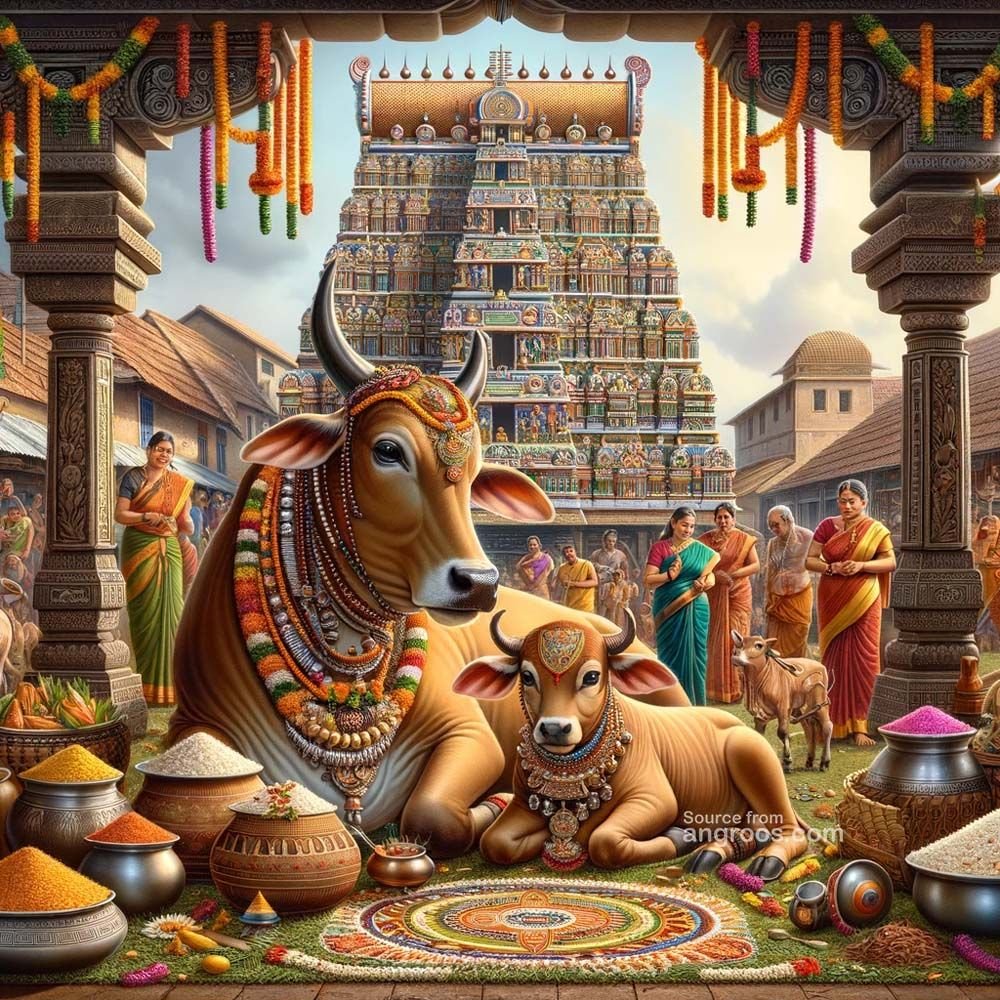
Pongal Pongal is a popular harvest festival celebrated mainly in Tamil Nadu, dedicated to the Sun God for blessing farmers with a good harvest. It usually falls in mid-January and lasts for four days, marking the beginning of the Tamil month Thai. Families prepare the special dish “Pongal” made of newly harvested rice, milk, and jaggery, which is first offered to the Sun as gratitude. The festival includes traditions like decorating houses with kolam (rangoli), wearing new clothes, and honoring cattle for their role in farming. Each day of Pongal—Bhogi, Surya Pongal, Mattu Pongal, and Kaanum Pongal—has its own cultural significance. More than just a festival, Pongal is a celebration of nature, farmers, and the bond between people and their land, symbolizing prosperity, happiness, and togetherness. Pongal is a famous harvest festival of Tamil Nadu, celebrated in January to thank the Sun God and nature for a good harvest. It lasts four days—Bhogi, Surya Pongal, Mattu Pongal, and Kaanum Pongal—where families cook sweet Pongal, decorate homes with kolam, honor cattle, and celebrate prosperity with joy. Rituals & Traditions of Pongal Pongal is one of the most important and vibrant festivals of Tamil Nadu, celebrated every year in mid-January. It marks the beginning of the Tamil month Thai and is dedicated to the Sun God, nature, and cattle, all of whom play a vital role in farming and human survival. Pongal is both a harvest festival and a cultural celebration, symbolizing prosperity, gratitude, and unity. The festival lasts four days, each with distinct customs. The first day, Bhogi Pongal, is dedicated to Lord Indra, the god of rain. People clean their homes, discard old items, and light bonfires to welcome prosperity and new beginnings. The second day, Surya Pongal, is the most significant. On this day, families prepare the special dish “Pongal,” made from freshly harvested rice, jaggery, and milk. This is offered to the Sun God with prayers, symbolizing gratitude for warmth and energy that enable agriculture. The third day, Mattu Pongal, honors cattle, especially cows and bulls. They are bathed, decorated with garlands, painted horns, and worshipped for their contribution to farming. The fourth day, Kaanum Pongal, is a day for relaxation, family reunions, social visits, and cultural activities, strengthening bonds within the community. During Pongal, homes are adorned with beautiful kolam (rangoli) designs, people wear new clothes, and villages celebrate with folk songs, dances, and traditional games. Beyond rituals, Pongal reflects the close connection between humans, animals, and nature. It is a reminder of the importance of gratitude, sustainable living, and harmony with the environment. Overall, Pongal is not just a festival of harvest; it is a celebration of life, prosperity, and togetherness that fills homes and hearts with joy. Spiritual Importance & Cultural Significance Pongal is the grand harvest festival of Tamil Nadu, celebrated with great devotion and joy every year in mid-January. Falling at the start of the Tamil month Thai, it is dedicated to the Sun God, nature, and cattle, who are essential for agriculture and human sustenance. Pongal symbolizes gratitude, prosperity, and the harmony between people, animals, and the environment. The festival spans four days, each marked with unique traditions. The first day, Bhogi Pongal, is dedicated to Lord Indra, the god of rains. On this day, homes are cleaned, old items are discarded, and bonfires are lit to welcome new beginnings. The second day, Surya Pongal, is the most important. Families cook the dish “Pongal,” made from freshly harvested rice, milk, and jaggery, in new clay pots. The preparation is done under the Sun, and when the dish boils over, people joyfully chant “Pongalo Pongal,” symbolizing abundance. The sweet dish is first offered to the Sun God in gratitude. The third day, Mattu Pongal, is devoted to cattle, especially cows and bulls, who are decorated with garlands, bells, and painted horns. Farmers honor them for their immense contribution to agriculture. The fourth day, Kaanum Pongal, is meant for family gatherings, social visits, and outings, strengthening bonds of love and friendship. Throughout the festival, houses are decorated with colorful kolam (rangoli) designs, people wear new clothes, and villages resonate with music, dance, and traditional games. Pongal is not just a harvest festival but also a cultural celebration of togetherness, gratitude, and sustainable living. In essence, Pongal represents harmony with nature, respect for hard work, and the joy of sharing prosperity with family and community. Food & Sweets & Modern Celebrations Pongal is one of the most celebrated and traditional festivals of Tamil Nadu, observed every year in mid-January. Falling in the Tamil month Thai, it marks the end of the winter solstice and the beginning of the harvest season. The festival is dedicated to the Sun God, cattle, and nature, all of which sustain agriculture and life. Pongal is not just a harvest festival but a cultural expression of prosperity, gratitude, and unity. The festival lasts four days, each with deep cultural significance. The first day, Bhogi Pongal, honors Lord Indra, the god of rain. People clean their homes, discard old possessions, and light bonfires to symbolize the end of negativity and the welcome of prosperity. The second day, Surya Pongal, is the most important. Families prepare the dish “Pongal” with freshly harvested rice, jaggery, and milk in new clay pots. When the mixture boils over, people cheer “Pongalo Pongal,” signifying abundance. This dish is first offered to the Sun God in gratitude for his life-giving energy. The third day, Mattu Pongal, is dedicated to cattle, especially cows and bulls, which are vital in farming. They are washed, decorated with flowers, bells, and painted horns, and worshipped with devotion. The fourth day, Kaanum Pongal, is a day for relaxation, social gatherings, and family outings, where people strengthen community and family ties. During the festival, homes are decorated with colorful kolam (rangoli), people wear new clothes, and villages come alive with folk dances, songs, and traditional games. Urban areas celebrate Pongal with cultural programs, temple rituals, and community feasts, while Tamil communities abroad observe

,

Pongal Read Post »

4763aa2fe66ae7c1d8faf7627f1c1e57
Hindu festivals, Uncategorized

Pitru Paksha

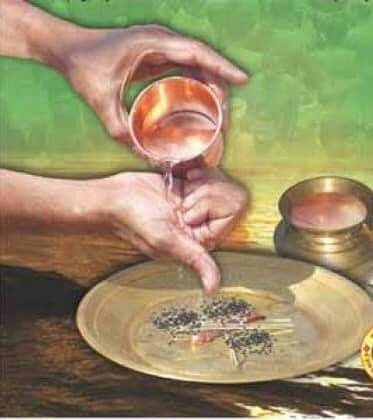
Pitru Paksha Pitru Paksha is a sacred 16-day period in the Hindu calendar dedicated to paying homage to one’s ancestors. It usually falls in the month of Bhadrapada (September–October), starting from the full moon day (Purnima) and ending on the new moon day (Amavasya), also called Sarva Pitru Amavasya. According to Hindu belief, during this time the souls of ancestors visit the earth to bless their descendants. To honor them, families perform Shraddha rituals, which include offering water (tarpan), food (pind daan), and prayers to ensure peace for the departed souls. Special dishes, often including kheer, puri, and seasonal fruits, are prepared and offered first to the ancestors and then shared among family members and the needy. Pitru Paksha is not only a way to express gratitude but also a reminder of the eternal bond between generations, emphasizing respect for family lineage and traditions. Pitru Paksha is a 16-day Hindu period devoted to honoring ancestors through rituals like Shraddha, tarpan, and pind daan, performed with devotion. It is believed that during this time, the souls of ancestors visit the earth, and offerings of food, water, and prayers bring them peace and blessings, ensuring harmony and prosperity for descendants. Rituals & Traditions of Pitru Paksha Pitru Paksha, also called Shraddha Paksha, is a sacred 16-day period in the Hindu lunar calendar dedicated to honoring ancestors. It usually falls in the month of Bhadrapada (September–October), beginning from the full moon day (Purnima) and ending on the new moon day (Amavasya), known as Sarva Pitru Amavasya. According to Hindu belief, during this period the souls of ancestors visit the earth to bless their descendants, and therefore families perform rituals to ensure their peace and salvation. The most important ritual during Pitru Paksha is Shraddha, which includes offerings of food (pind daan), water (tarpan), and prayers for the departed souls. Traditional vegetarian dishes such as kheer, puri, dal, rice, vegetables, and fruits are prepared with devotion. These are first offered to the ancestors symbolically and then distributed among Brahmins, cows, crows, and the poor, who are considered mediums to deliver the offerings. Many devotees also engage in fasting, feeding the needy, and acts of charity, which are believed to bring spiritual merit. Beyond the rituals, Pitru Paksha has great cultural and spiritual significance. It is a time to reflect on the contributions of forefathers, express gratitude, and acknowledge the eternal bond between generations. Observing Pitru Paksha sincerely is believed to bring peace to ancestors’ souls and bestow blessings of prosperity, harmony, and protection upon the family. Spiritual Importance & Cultural Significance Pitru Paksha, also known as Shraddha Paksha, is a deeply significant 16-day period in the Hindu calendar dedicated to paying homage to ancestors. It usually falls in the lunar month of Bhadrapada (September–October), beginning on the full moon day (Purnima) and ending on the new moon day (Amavasya), also known as Sarva Pitru Amavasya. According to Hindu belief, it is during this fortnight that the souls of departed ancestors visit the earth to bless their descendants. To express gratitude and ensure peace for their souls, devotees perform rituals collectively known as Shraddha. The rituals of Pitru Paksha include tarpan (offering water), pind daan (offering rice balls mixed with sesame and barley), and food offerings. Special vegetarian meals are prepared, such as kheer, puri, dal, rice, seasonal vegetables, and fruits, which are first offered to the ancestors with devotion. Traditionally, the food is then given to Brahmins, crows, cows, and the poor, symbolizing the sharing of blessings and ensuring that the offerings reach the departed souls. Feeding the needy and acts of charity are also considered essential, as they reflect compassion and humility. Pitru Paksha is not only about rituals but also carries a profound spiritual message. It highlights the cycle of life and death, reminding people of the eternal bond between generations. By remembering the contributions and sacrifices of forefathers, individuals strengthen their connection to their roots and uphold family traditions. Observing this period with sincerity is believed to bring peace to ancestors, liberation to their souls, and blessings of prosperity, harmony, and protection for the living family. Thus, Pitru Paksha is both a spiritual and cultural observance, teaching gratitude, respect, and the importance of lineage, while keeping alive the timeless value of honoring one’s ancestors. Food & Sweets & Modern Celebrations Pitru Paksha, also known as Shraddha Paksha, is a sacred 16-day period in the Hindu lunar calendar dedicated to honoring and remembering one’s ancestors. It occurs in the month of Bhadrapada (September–October), beginning on the full moon day (Purnima) and ending on the new moon day (Amavasya), also known as Sarva Pitru Amavasya. According to ancient Hindu belief, during this fortnight, the souls of departed forefathers descend to the earth to bless their descendants. To express gratitude and ensure peace for these souls, Hindus perform rituals known as Shraddha. The primary rituals of Pitru Paksha include tarpan (offering water with sesame seeds), pind daan (offering balls made of rice, barley, and sesame), and food offerings. Devotees prepare traditional vegetarian meals such as kheer, puri, rice, dal, vegetables, and fruits, which are first symbolically offered to the ancestors and then served to Brahmins, cows, crows, and the poor. These acts are believed to carry the essence of offerings to the departed souls, ensuring their satisfaction and blessing the family with prosperity and harmony. Acts of charity, feeding the needy, and observing simplicity are strongly encouraged during this period.Pitru Paksha also carries deep spiritual and cultural importance. It emphasizes the value of gratitude and remembrance, teaching that the living are forever connected to their lineage. By acknowledging the contributions and sacrifices of ancestors, families maintain continuity with traditions and honor their roots. Observing Pitru Paksha with sincerity is believed to grant peace to departed souls and bring health, wealth, and spiritual well-being to future generations. In essence, Pitru Paksha is more than a ritual; it is a time of reflection, devotion, and respect that bridges the bond between the past, present, and

,

Pitru Paksha Read Post »

35b1a3546e88dffcbcd7794065d13e9e
Hindu festivals

Hartalika Teej

Hartalika Teej Hartalika Teej is a sacred Hindu festival celebrated mainly by women in states like Uttar Pradesh, Bihar, Madhya Pradesh, and Rajasthan. It falls on the third day of the Shukla Paksha in the month of Bhadrapada (August–September). The word Hartalika comes from two Sanskrit words—Harat (abduction) and Aalika (female friend)—referring to the legend of Goddess Parvati, who was taken to a forest by her friend to perform penance to please Lord Shiva. The festival also includes gatherings of women who share stories, sing devotional songs, and perform rituals together, making it both spiritual and social. Hartalika Teej thus celebrates devotion, sacrifice, marital harmony, and the divine blessings of Lord Shiva and Goddess Parvati. Rituals & Traditions of Hartalika Teej Hartalika Teej is a revered Hindu festival celebrated with devotion, mainly by women in North Indian states like Uttar Pradesh, Bihar, Madhya Pradesh, and Rajasthan. It is observed on the third day of Shukla Paksha in the month of Bhadrapada (August–September). The name Hartalika is derived from two Sanskrit words: Harat meaning abduction and Aalika meaning female friend. According to legend, Goddess Parvati’s friend took her to the forest to help her perform severe penance so that she could attain Lord Shiva as her husband. After years of devotion and austerities, Parvati’s prayers were fulfilled, and Shiva accepted her. Thus, Hartalika Teej symbolizes the power of faith, love, and dedication. The festival carries both religious and cultural significance. On this day, married women observe Nirjala Vrat (fast without food and water) for the long life, prosperity, and happiness of their husbands, while unmarried girls observe the fast to be blessed with a suitable partner. Women wake up early, dress in bright traditional attire, apply mehndi on their hands, and adorn themselves with jewelry. They prepare clay idols of Lord Shiva and Goddess Parvati, offering prayers, flowers, fruits, and sweets. Singing devotional songs, listening to mythological stories, and performing rituals together create a festive and spiritual atmosphere. Hartalika Teej is not only a festival of fasting and prayer but also a celebration of womanhood, marital harmony, and cultural unity. It reinforces the values of sacrifice, faith, and devotion, while bringing families and communities closer. Spiritual Importance & Cultural Significance Hartalika Teej is an auspicious Hindu festival celebrated with devotion, mainly by women in states like Uttar Pradesh, Bihar, Madhya Pradesh, and Rajasthan. It is observed on the third day of Shukla Paksha in the month of Bhadrapada (August–September). The name Hartalika comes from the Sanskrit words Harat (abduction) and Aalika (female friend). According to legend, when Goddess Parvati expressed her desire to marry Lord Shiva, her father planned to marry her off to Lord Vishnu. To help her, a close friend took her away to the forest, where Parvati performed intense penance to please Shiva. Moved by her determination and devotion, Lord Shiva accepted her as his consort. This story highlights the values of sacrifice, faith, and perseverance, which are the essence of Hartalika Teej.On this day, married women observe Nirjala Vrat—a strict fast without food and water—for the long life, prosperity, and well-being of their husbands. Unmarried girls also keep the fast to be blessed with a suitable life partner. The vrat is considered highly powerful and meritorious, as it symbolizes Goddess Parvati’s devotion. Women wake up early, bathe, and dress in colorful traditional attire, adorning themselves with jewelry and mehndi. They prepare clay or sand idols of Lord Shiva and Goddess Parvati, worship them with flowers, fruits, sweets, and sacred offerings, and listen to the story of Teej Katha. Food & Sweets & Modern Celebrations Hartalika Teej is not only a deeply spiritual occasion but also a festival filled with joy, traditions, and flavors. Women observing the vrat (fast) stay without food and even water throughout the day, dedicating their devotion to Goddess Parvati. Once the fast is completed, families and communities come together to celebrate with special delicacies. Traditional sweets like gujiya, ghewar, kheer, malpua, and ladoos hold a special place during this festival. Savory dishes such as poori, aloo-sabzi, dal-baati, and halwa are also lovingly prepared, often shared among family and neighbors after the vrat. In modern times, Hartalika Teej has transformed into a vibrant social celebration. Women dress in bright green sarees, leheriyas, and ornate jewelry, symbolizing prosperity and marital bliss. Applying mehendi (henna) and singing traditional folk songs are integral to the occasion. Urban communities often organize Teej fairs, cultural programs, and competitions where women gather to celebrate with dance, music, and rituals. Social media has also added a new dimension, where women share festive pictures, recipes, and wishes with loved ones. Thus, Hartalika Teej beautifully blends spiritual austerity with cultural festivity, keeping alive age-old traditions while embracing modern ways of celebration.

,

Hartalika Teej Read Post »

Varalakshmia Vratam hindu
Hindu festivals

Varalakshmi Vratam

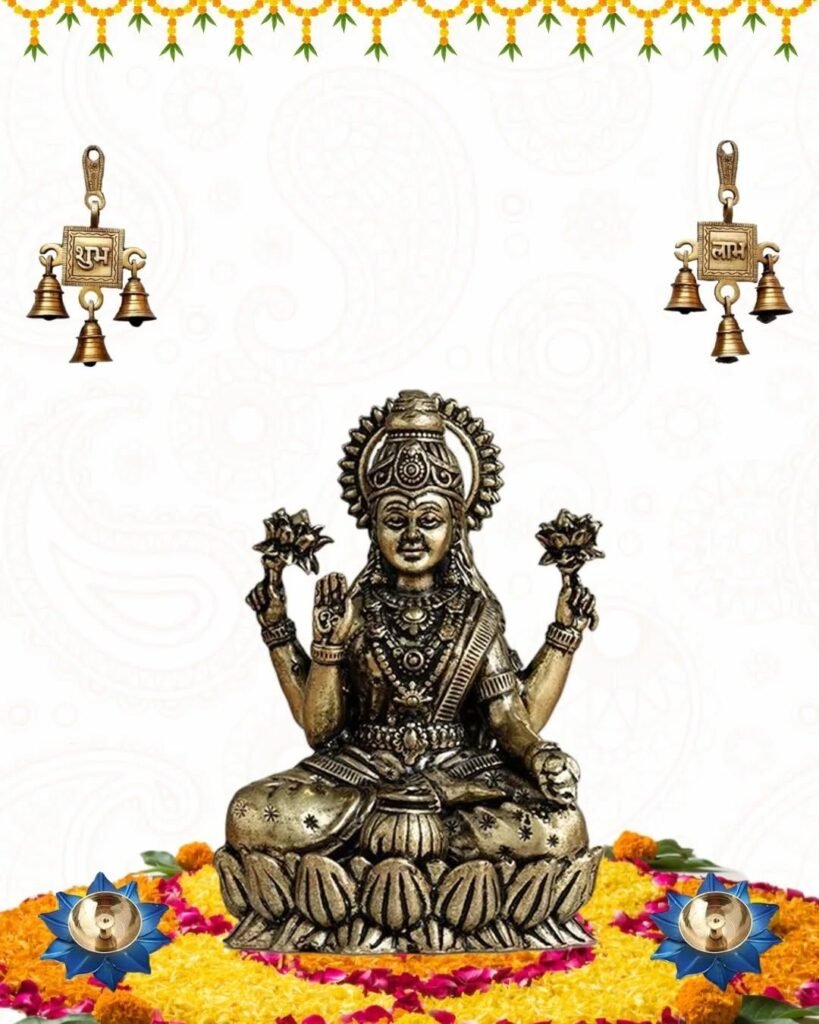
Varalakshmia Vratam Varalakshmi Vratam is a sacred Hindu festival dedicated to Goddess Lakshmi, the goddess of wealth, prosperity, and well-being. It is usually observed on the Friday before Raksha Bandhan or Shravan Purnima and is mainly performed by married women for the health, happiness, and prosperity of their families. On this day, devotees wake up early, clean their homes, and decorate the puja space with flowers and rangoli. A kalasha, symbolizing Goddess Lakshmi, is worshipped with offerings, prayers, and rituals. The vrat reflects devotion, gratitude, and the divine blessings of the goddess, believed to bring peace, prosperity, and harmony into family life. Varalakshmi Vratam is a Hindu festival dedicated to Goddess Lakshmi, observed by married women for family health, wealth, and prosperity. It involves kalasha puja, offerings, and prayers for divine blessings. Rituals & Traditions of Varalakshmi Vratam Varalakshmi Vratam is observed with devotion and follows a set of sacred rituals and traditions. The day begins with women waking up early, cleaning their homes, and decorating the entrance with rangoli (kolam) as a sign of auspiciousness. A kalasha (pot) filled with rice or water is placed on a banana leaf and adorned with mango leaves, turmeric, sandalwood, and a coconut. This kalasha symbolizes Goddess Lakshmi and is decorated with silk cloth, jewelry, and flowers. Special puja is performed by offering fruits, sweets, betel leaves, turmeric, and vermilion to the goddess. Women chant Lakshmi mantras and sing devotional songs, invoking the eight forms of Lakshmi (Ashtalakshmi). Fasting is observed during the day, and prayers are offered for the prosperity, health, and well-being of the family. One important tradition is tying a sacred thread on the wrist, believed to protect the devotee and bring blessings. In some regions, married women invite other women to their homes and exchange tamboolam (betel leaves, fruits, turmeric, bangles, and small gifts) as a gesture of goodwill and prosperity. The rituals conclude with an aarti and distribution of prasadam among family and neighbors. These traditions reflect devotion, gratitude, and the cultural importance of family unity, prosperity, and the blessings of Goddess Lakshmi. Spiritual Importance & Cultural Significance Varalakshmi Vratam carries profound spiritual importance, as it is dedicated to Goddess Lakshmi, the bestower of wealth, health, and prosperity. Spiritually, the vrat is believed to remove obstacles, protect families from misfortune, and grant divine blessings for overall well-being. It symbolizes surrender, devotion, and faith in the divine, reminding devotees that true prosperity comes not only from material wealth but also from peace, harmony, and righteousness. By worshipping Ashtalakshmi—the eight forms of Lakshmi—devotees seek blessings in every aspect of life, including knowledge, strength, fertility, fame, and success. The cultural significance of this vrat is equally strong, especially in South India, where it is observed with great enthusiasm in states like Tamil Nadu, Andhra Pradesh, Telangana, and Karnataka. It highlights the role of women as nurturers and protectors of family prosperity, with married women performing the vrat for the health and happiness of their households. Traditions like decorating the kalasha, preparing festive foods, inviting women for tamboolam exchange, and singing devotional songs reinforce social bonds and cultural values. Thus, Varalakshmi Vratam serves as both a spiritual practice and a cultural celebration—uniting families, strengthening community ties, and reminding devotees of the eternal grace of Goddess Lakshmi in sustaining life with abundance and peace. Food & Sweets & Modern Celebrations Food plays an important role in Varalakshmi Vratam, as devotees prepare a variety of traditional dishes and sweets to offer as naivedyam (sacred food) to Goddess Lakshmi. Popular items include pulihora (tamarind rice), lemon rice, curd rice, vada, idli, payasam (kheer), laddus, appam, bobbatlu/obattu (sweet flatbread), coconut ladoos, and pongal. Fresh fruits, betel leaves, coconut, and jaggery-based sweets are also part of the offerings. These dishes are prepared with purity and devotion, symbolizing gratitude for abundance. After the puja, the prasadam is distributed among family, friends, and neighbors, strengthening the spirit of sharing and togetherness. Women also exchange tamboolam—a traditional gift packet consisting of betel leaves, turmeric, bangles, fruits, and sweets—as a token of prosperity and goodwill. In modern celebrations, while the essence of devotion remains unchanged, the way the vrat is observed has adapted to contemporary lifestyles. Many families now perform the puja with ready-made kalasha decorations, printed rangolis, and simplified rituals for convenience. Communities and temples often organize collective Varalakshmi pujas, bringing women together in devotional gatherings. Digital platforms also allow people to join virtual pujas and share prayers online, making the festival accessible to those living away from their families. Despite these changes, the core spirit of the vrat—seeking Goddess Lakshmi’s blessings for wealth, health, peace, and harmony—remains timeless. The blend of traditional rituals, festive foods, and modern practices makes Varalakshmi Vratam both spiritually uplifting and culturally vibrant.

,

Varalakshmi Vratam Read Post »

768a0d4898d3de72d98cdd5e1cd973e7
Hindu festivals

Nag Panchami

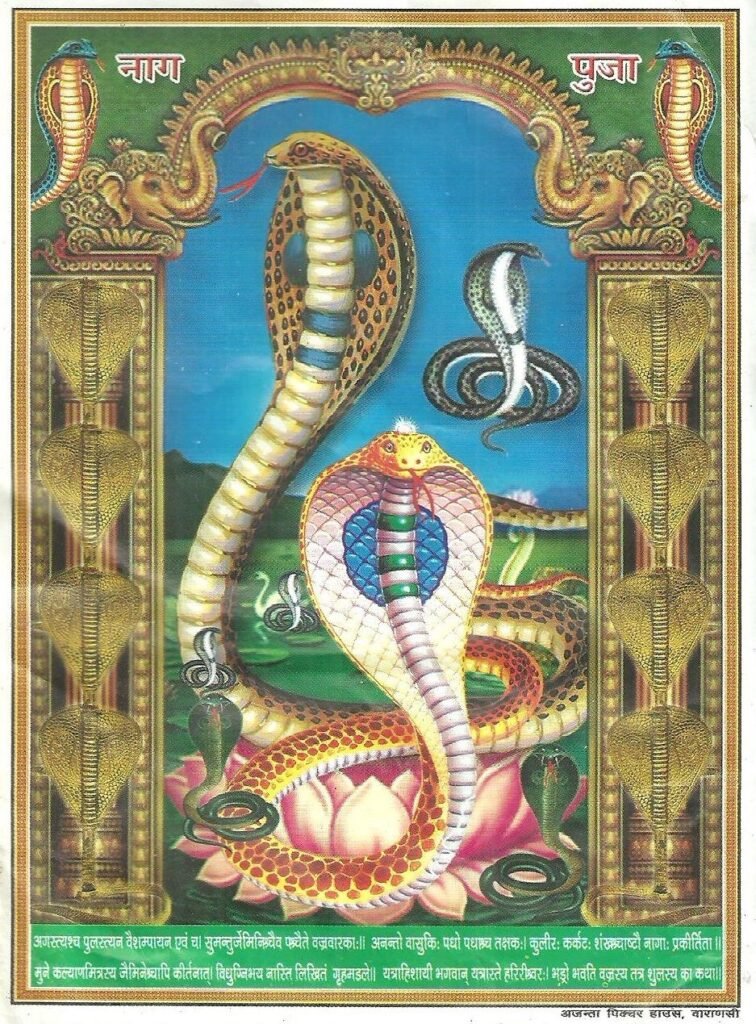
Nag Panchami Nag Panchami is a Hindu festival dedicated to the worship of serpents, especially Nag Devta, symbolizing fertility, protection, and prosperity. Devotees offer milk, flowers, and prayers at snake idols or anthills, seeking blessings for family well-being and protection from snakebites. It is celebrated on the fifth day of Shravan month. Nag Panchami is a Hindu festival dedicated to serpent worship, especially Nag Devta. Celebrated on the fifth day of Shravan month, devotees offer milk, flowers, and prayers at snake idols or anthills, seeking protection, prosperity, and family well-being. The festival symbolizes respect for nature and harmony with all living beings. Rituals & Traditions of Nag Panchami Nag Panchami is a revered Hindu festival dedicated to the worship of serpents, celebrated on the fifth day (Panchami) of the Shravan month, which usually falls in July or August. Serpents, or Nagas, hold a special place in Hindu mythology and are regarded as divine beings connected with fertility, prosperity, rain, and protection. Offering prayers to Nag Devta on this day is believed to safeguard families from misfortune, ensure good health, and bring peace and prosperity. On Nag Panchami, devotees worship serpent deities in temples, at anthills, or through idols and images. Milk, flowers, turmeric, rice, and sweets are offered, and many people observe fasting as a mark of devotion. In villages, milk is poured into snake holes as an offering, while in urban regions, pictures or clay images of snakes are worshipped at home. Mantras dedicated to serpent gods are chanted, and legends from the Puranas such as those of Sheshnag, Vasuki, and Takshaka are recited. Snakes are also associated with major deities—Lord Vishnu rests on Sheshnag, and Lord Shiva wears a serpent around his neck—making their worship sacred and auspicious. The festival is celebrated differently across India. In Maharashtra and Karnataka, women draw images of snakes on walls or doorsteps and perform rituals for family well-being. In Uttar Pradesh and Bihar, large fairs and processions with snake charmers displaying live cobras are common. Farmers also perform rituals to protect their crops, as snakes play an ecological role by controlling rodents and pests. Beyond the rituals, Nag Panchami carries a symbolic message of harmony with nature and respect for all living beings. It reminds people of the balance between humans and the environment, highlighting the importance of coexistence. Thus, Nag Panchami is not only a religious observance but also a cultural and ecological celebration that emphasizes reverence, gratitude, and the eternal victory of dharma and balance in nature. Spiritual Importance & Cultural Significance Nag Panchami is a sacred Hindu festival dedicated to the worship of serpents, observed on the fifth day (Panchami) of the holy month of Shravan, usually in July or August. Snakes, or Nagas, are deeply revered in Hindu mythology, symbolizing fertility, prosperity, rain, and protection. Worshipping Nag Devta on this day is believed to protect families from snakebites, bring peace and harmony, and ensure prosperity. Devotees observe Nag Panchami with great devotion by offering milk, flowers, turmeric, and rice to snake idols, pictures, or live serpents. In villages, people pour milk into anthills or snake holes as offerings, while in urban areas, clay or metal images of Nagas are worshipped at homes and temples. Fasting, chanting mantras, and reciting stories of serpent deities like Sheshnag, Vasuki, and Takshaka are common practices. Snakes are also closely linked with Hindu gods—Lord Vishnu rests on Sheshnag, and Lord Shiva adorns a serpent around his neck—making serpent worship highly sacred. Nag Panchami is celebrated with regional variations. In Maharashtra and Karnataka, women draw images of snakes at doorsteps or on walls and perform rituals for family safety and prosperity. In North India, especially in Uttar Pradesh and Bihar, fairs and processions are organized, and snake charmers display cobras to whom devotees offer milk. Farmers also pray to serpents for a good harvest, acknowledging their role in protecting fields from rodents and pests. The festival also carries mythological significance. One famous legend describes Lord Krishna subduing the poisonous serpent Kaliya Naag in the Yamuna River, symbolizing the victory of good over evil. Such stories inspire devotees to place their faith in divine protection. Beyond its rituals and stories, Nag Panchami conveys a deeper message of respect for nature and all living beings. It emphasizes coexistence, ecological balance, and gratitude toward creatures that play an important role in human life. Thus, Nag Panchami is both a religious and cultural celebration, reminding devotees of harmony between mankind, nature, and the divine. Food & Sweets & Modern Celebrations Nag Panchami is an important Hindu festival dedicated to the worship of serpents, observed on the fifth day (Panchami) of the holy month of Shravan, which usually falls in July or August. Serpents, or Nagas, hold a special place in Hindu mythology and are regarded as divine beings associated with fertility, prosperity, rain, and protection. Worshipping Nag Devta on this day is believed to safeguard families from snakebites, remove obstacles, and bring blessings of health, wealth, and harmony. The festival also reflects gratitude toward nature and respect for creatures that maintain ecological balance. On this day, devotees offer milk, flowers, turmeric, rice, and sweets to snake idols, pictures, or live serpents. In rural areas, people pour milk into anthills and snake burrows, while in cities, clay or metal images of serpents are worshipped in homes and temples. Many observe fasting, chant mantras, and recite stories from the Puranas that describe the glory of serpent deities such as Sheshnag, Vasuki, and Takshaka. The association of serpents with Hindu gods further increases the festival’s importance—Lord Vishnu rests on Sheshnag, while Lord Shiva adorns Vasuki around his neck. Nag Panchami is celebrated differently across regions of India. In Maharashtra and Karnataka, women draw snake images on walls or doorsteps and perform rituals for the well-being of the family. In North Indian states like Uttar Pradesh and Bihar, large fairs and processions are organized, where snake charmers carry cobras in baskets, and devotees offer them milk and prayers. Farmers, in particular,

,

Nag Panchami Read Post »

18c5f9ca6d7f76b9f7f5aa58155d105e
Hindu festivals

Kalki Jayanti

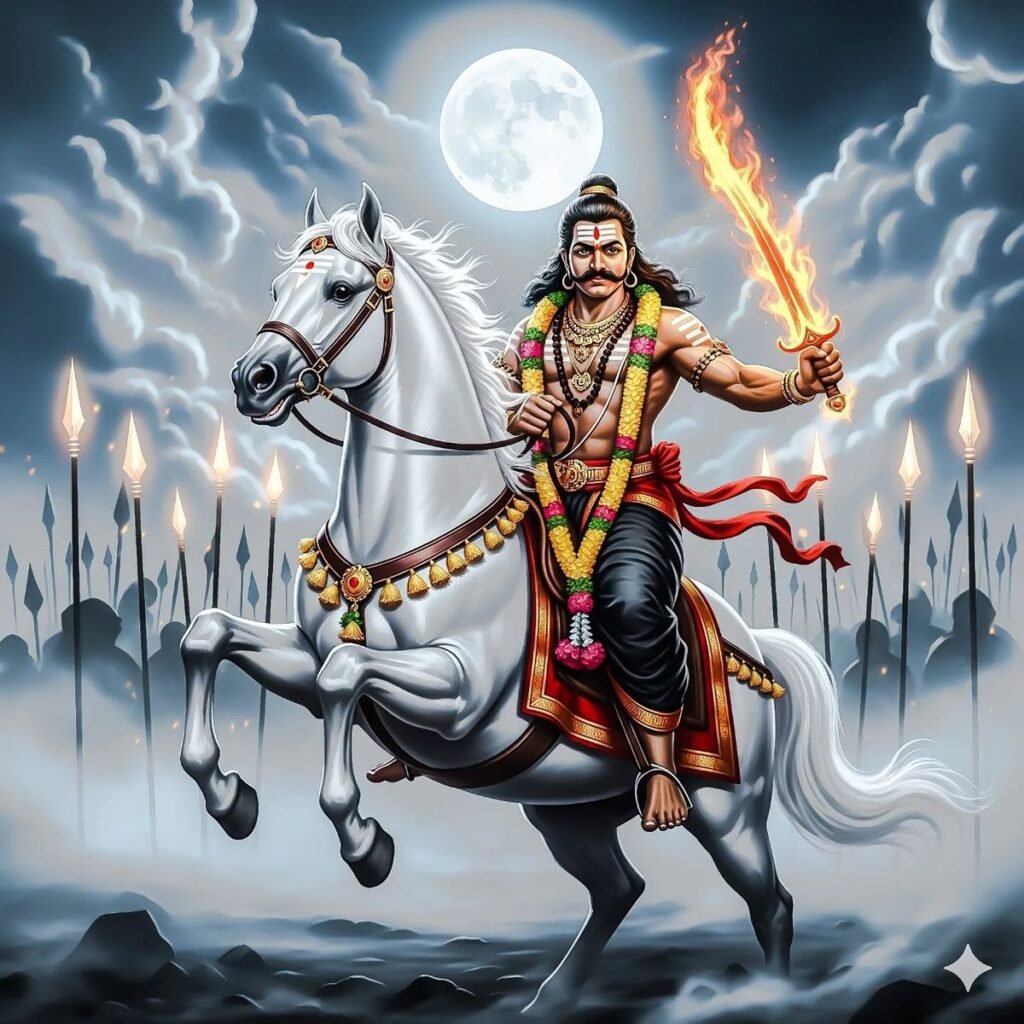
Kalki Jayanti Kalki Jayanti marks the birth of Lord Kalki, the prophesied tenth incarnation of Lord Vishnu, who is believed to appear at the end of Kaliyuga to destroy evil and restore righteousness. Devotees observe the day with prayers, fasting, and rituals, seeking blessings for peace, prosperity, and protection from negativity. Kalki Jayanti is the celebration of Lord Vishnu’s tenth avatar, Kalki, who is believed to appear at the end of Kaliyuga to eradicate evil and restore righteousness. Devotees observe the day with fasting, prayers, and rituals, seeking blessings for peace, protection, and the triumph of good over evil. Rituals & Traditions of Kalki Jayanti Kalki Jayanti is a revered Hindu festival that marks the birth of Lord Kalki, the prophesied tenth and final incarnation of Lord Vishnu. According to sacred scriptures like the Vishnu Purana and Bhagavata Purana, Lord Kalki will appear at the end of the current age, Kaliyuga, when evil, corruption, and immorality dominate the world. He is portrayed as a powerful warrior riding a white horse, carrying a shining sword, and radiating divine energy. His divine mission will be to destroy unrighteousness, punish the wicked, and re-establish the rule of truth, virtue, and dharma on earth. This prophecy instills faith that no matter how strong evil becomes, goodness will ultimately prevail. On this day, devotees observe fasts, worship Lord Vishnu, and recite mantras to seek blessings of protection, prosperity, and spiritual strength. Many read passages from scriptures describing the significance of Kalki’s arrival and his role in restoring cosmic balance. Temples conduct special pujas, satsangs, and devotional songs in honor of Lord Kalki. Spiritual discourses emphasize the importance of living a life guided by truth, discipline, and devotion while waiting for the divine appearance of Kalki. Kalki Jayanti is also symbolic in reminding humanity that every individual has a responsibility to fight against falsehood and uphold dharma in daily life. Observing this day inspires devotees to cultivate patience, righteousness, and unwavering faith in divine justice. Thus, Kalki Jayanti is not only a celebration of a future divine incarnation but also a spiritual call to live a life aligned with truth and virtue. Spiritual Importance & Cultural Significance Kalki Jayanti is an auspicious Hindu festival dedicated to the birth of Lord Kalki, the tenth and final incarnation of Lord Vishnu. As described in the Vishnu Purana, Bhagavata Purana, and other sacred texts, Lord Kalki will appear at the end of the present age, Kaliyuga, when unrighteousness, dishonesty, and evil forces overpower truth and morality. He is believed to descend riding a white horse, holding a blazing sword, and radiating divine brilliance. His purpose will be to destroy evil, protect the virtuous, and restore the supremacy of dharma. The prophecy of Kalki gives hope to devotees that righteousness will ultimately triumph, even in the darkest of times. On this holy occasion, devotees observe fasting, offer prayers to Lord Vishnu, and chant sacred mantras seeking blessings for peace, prosperity, and protection from negative influences. Temples conduct special pujas, havans, bhajans, and discourses narrating the significance of Lord Kalki’s incarnation. Reading scriptures and listening to spiritual teachings on this day encourages people to prepare themselves spiritually for the coming of Kalki by leading a righteous and disciplined life. Kalki Jayanti also carries a deeper philosophical message. It inspires individuals to recognize that the battle between good and evil is not only cosmic but also within every human heart. By controlling anger, greed, and falsehood, and by practicing truth, kindness, and devotion, one can invite the blessings of Lord Vishnu. The festival thus becomes a reminder of self-purification and moral responsibility. In essence, Kalki Jayanti is not only a celebration of a future divine incarnation but also a source of faith, motivation, and spiritual strength. It reassures devotees that the divine will always intervene to uphold dharma, and that the ultimate victory of truth and righteousness is certain. Food & Sweets & Modern Celebrations Kalki Jayanti is a significant Hindu festival celebrated to honor the prophesied birth of Lord Kalki, the tenth and final incarnation of Lord Vishnu. According to Hindu scriptures such as the Vishnu Purana, Bhagavata Purana, and Mahabharata, Lord Kalki will descend on earth at the end of Kaliyuga, the present age of darkness, corruption, and moral decline. He is described as a radiant warrior, mounted on a white horse, and carrying a blazing sword. His divine purpose will be to annihilate adharma (unrighteousness), eliminate the wicked, and re-establish dharma (righteousness) in the world. The prophecy of Kalki offers reassurance that truth and virtue will always prevail, no matter how powerful evil becomes. On the occasion of Kalki Jayanti, devotees perform rituals with deep faith and devotion. Many observe fasts, worship Lord Vishnu with flowers, incense, and offerings, and recite prayers and mantras dedicated to Lord Kalki. Reading sacred texts like the Vishnu Purana and attending spiritual discourses is also considered highly meritorious. Temples organize special pujas, havans, and devotional gatherings where the story of Lord Kalki’s future incarnation is narrated. These practices inspire people to live a life of purity, faith, and righteousness while awaiting the divine arrival of Kalki. The festival carries not only religious but also philosophical significance. It reminds humanity that the struggle between good and evil is not only a cosmic event but also an inner journey. Every individual is encouraged to conquer inner weaknesses such as greed, anger, and falsehood, and nurture qualities like compassion, honesty, and self-discipline. In this way, devotees can symbolically prepare themselves for Kalki’s arrival by aligning with the principles of dharma. Kalki Jayanti is, therefore, a celebration of divine justice, moral renewal, and hope. It strengthens the belief that whenever humanity falls into chaos and darkness, the divine will intervene to restore balance and harmony. By observing this festival, devotees reaffirm their faith in Lord Vishnu and draw inspiration to lead lives rooted in virtue, truth, and devotion.

,

Kalki Jayanti Read Post »

2cab162f1e7b7e91ae0020f12ea99fb3
Hindu festivals

Uttarayan

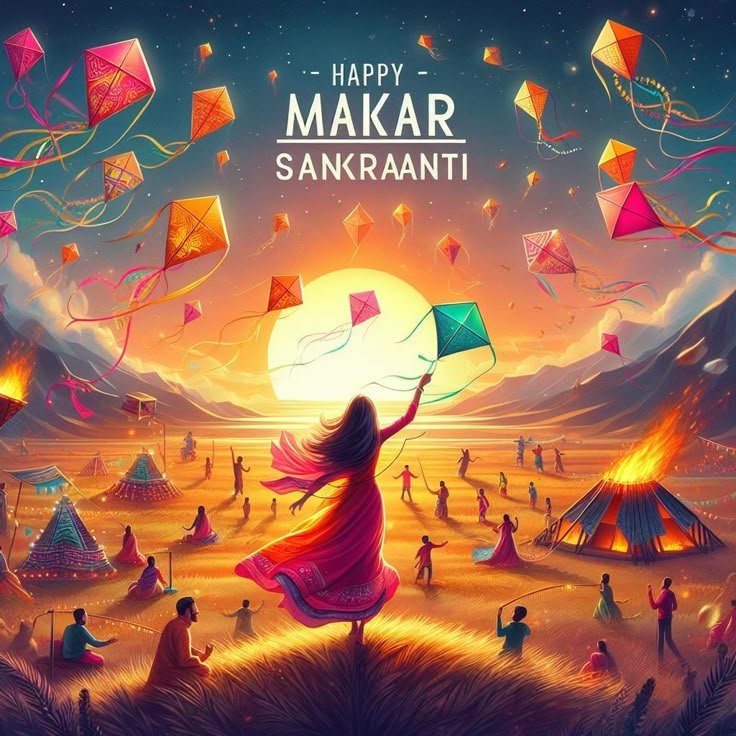
Uttarayan Uttarayan is a Hindu festival that marks the sun’s northward movement (Uttarayan) on Makar Sankranti, usually celebrated on 14th January every year. It is considered an auspicious transition of the Sun into Makara Rashi (Capricorn), symbolizing longer days and the end of winter. Uttarayan is a popular Hindu festival celebrated on Makar Sankranti, marking the sun’s northward journey. It is most joyfully observed in Gujarat and Rajasthan, where people fly colorful kites, enjoy sweets made of sesame and jaggery, and share happiness with family and friends. The festival also marks the harvest season, symbolizing prosperity, positivity, and the victory of light over darkness. Rituals & Traditions of Uttarayan Uttarayan is one of the most vibrant and joyous festivals celebrated in India, especially in the state of Gujarat, where it is observed with great enthusiasm. It marks the transition of the Sun into the zodiac sign of Capricorn (Makara Rashi), an event known as Makar Sankranti, which usually falls on 14th January every year. The word “Uttarayan” literally means the northward movement of the Sun, symbolizing longer days, the end of winter, and the arrival of the harvest season. In Gujarat, Uttarayan is primarily celebrated as the festival of kites. From early morning till late evening, the skies are filled with colorful kites of various shapes and sizes. Children, youth, and elders participate with equal excitement, trying to outdo each other in kite-flying battles, shouting “Kai Po Che!” when they cut the opponent’s kite. Special threads coated with powdered glass, known as manjha, are used for kite competitions, though in recent years eco-friendly alternatives are being encouraged to avoid harm to birds. Apart from Gujarat, the festival is celebrated across India under different names—Makar Sankranti in most states, Pongal in Tamil Nadu, Lohri in Punjab, and Bhogali Bihu in Assam. Despite regional differences, the underlying theme is the same—gratitude to the Sun God and nature for a good harvest. It is considered an auspicious time for new beginnings, charity, and religious rituals. Many people take holy dips in rivers like the Ganga, Yamuna, and Godavari, believing it purifies the soul and washes away sins. Food plays an important role in Uttarayan festivities. Traditional delicacies such as undhiyu (a mixed vegetable dish), chikki (made from sesame seeds and jaggery), and sweets prepared from peanuts, til, and jaggery are enjoyed with family and friends. These foods are not only delicious but also provide warmth and energy during the winter season. The festival also carries a spiritual meaning. According to Hindu beliefs, the period of Uttarayan is considered highly sacred. It is said that great souls choose this time to leave their mortal bodies, as it is believed to lead them to liberation (moksha). The Mahabharata mentions that Bhishma Pitamah waited for Uttarayan to leave his body on the battlefield of Kurukshetra. Thus, Uttarayan is not just about kite flying but also a celebration of nature, harvest, gratitude, and spirituality. It unites people of all ages, breaks barriers of caste and creed, and spreads joy in the community. The colorful skies during Uttarayan symbolize hope, prosperity, and the spirit of togetherness. Spiritual Importance & Cultural Significance Uttarayan is one of the most vibrant and joyous festivals celebrated in India, especially in the state of Gujarat, where it is observed with great enthusiasm. It marks the transition of the Sun into the zodiac sign of Capricorn (Makara Rashi), an event known as Makar Sankranti, which usually falls on 14th January every year. The word “Uttarayan” literally means the northward movement of the Sun, symbolizing longer days, the end of winter, and the arrival of the harvest season. In Gujarat, Uttarayan is primarily celebrated as the festival of kites. From early morning till late evening, the skies are filled with colorful kites of various shapes and sizes. Children, youth, and elders participate with equal excitement, trying to outdo each other in kite-flying battles, shouting “Kai Po Che!” when they cut the opponent’s kite. Special threads coated with powdered glass, known as manjha, are used for kite competitions, though in recent years eco-friendly alternatives are being encouraged to avoid harm to birds. Apart from Gujarat, the festival is celebrated across India under different names—Makar Sankranti in most states, Pongal in Tamil Nadu, Lohri in Punjab, and Bhogali Bihu in Assam. Despite regional differences, the underlying theme is the same—gratitude to the Sun God and nature for a good harvest. It is considered an auspicious time for new beginnings, charity, and religious rituals. Many people take holy dips in rivers like the Ganga, Yamuna, and Godavari, believing it purifies the soul and washes away sins. Food plays an important role in Uttarayan festivities. Traditional delicacies such as undhiyu (a mixed vegetable dish), chikki (made from sesame seeds and jaggery), and sweets prepared from peanuts, til, and jaggery are enjoyed with family and friends. These foods are not only delicious but also provide warmth and energy during the winter season. The festival also carries a spiritual meaning. According to Hindu beliefs, the period of Uttarayan is considered highly sacred. It is said that great souls choose this time to leave their mortal bodies, as it is believed to lead them to liberation (moksha). The Mahabharata mentions that Bhishma Pitamah waited for Uttarayan to leave his body on the battlefield of Kurukshetra. Thus, Uttarayan is not just about kite flying but also a celebration of nature, harvest, gratitude, and spirituality. It unites people of all ages, breaks barriers of caste and creed, and spreads joy in the community. The colorful skies during Uttarayan symbolize hope, prosperity, and the spirit of togetherness. Food & Sweets & Modern Celebrations The festival is most famous for kite flying. From morning to evening, the sky is filled with bright, colorful kites of all shapes and sizes. People engage in friendly competitions, trying to cut each other’s kites while shouting “Kai Po Che!” Families and communities gather on rooftops, creating an atmosphere of excitement and celebration. Food plays a vital role in Uttarayan.

,

Uttarayan Read Post »

0fe1943b3891270dcd9498a86f3998fa 1
Hindu festivals

Gudi Padwa

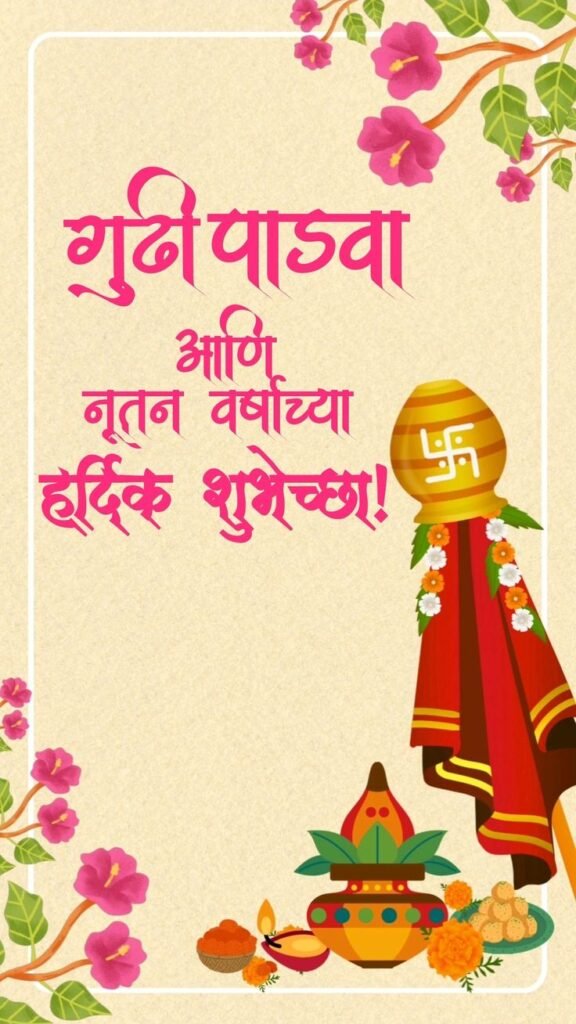
Gudi Padwa Gudi Padwa is a major festival celebrated in Maharashtra and some other parts of India to mark the beginning of the Hindu New Year according to the lunisolar calendar. It usually falls in March or April and symbolizes the arrival of spring and harvest. On this day, people raise a “Gudi,” a decorated bamboo stick with a bright cloth, neem leaves, mango leaves, a garland of flowers, and a pot (kalash) on top, which is hoisted outside homes as a sign of victory, prosperity, and good fortune. Families clean and decorate their homes, prepare special dishes like puran poli and shrikhand, and pray for health, happiness, and success. Gudi Padwa is a traditional festival celebrated mainly in Maharashtra, marking the Hindu New Year with joy, prosperity, and new beginnings. On this day, people hoist a beautifully decorated Gudi outside their homes, symbolizing victory and good fortune. Families prepare festive dishes, clean and decorate their homes, and pray for happiness and success. Rituals & Traditions of Gudi Padwa Gudi Padwa is a highly significant festival celebrated in Maharashtra and some other parts of India, marking the beginning of the Hindu New Year according to the lunisolar calendar. It usually falls in March or April, symbolizing the onset of spring, the harvest season, and new beginnings. The festival is deeply rooted in mythology and tradition. It is believed that on this day, Lord Brahma created the universe and also that King Shalivahana achieved a great victory, making the Gudi a symbol of triumph, prosperity, and joy. The highlight of the celebration is the hoisting of the “Gudi” outside homes. This Gudi is made using a bamboo stick, draped with a bright silk cloth, decorated with neem leaves, mango leaves, garlands of flowers, and topped with a silver or copper kalash. It is considered auspicious as it is believed to ward off evil, attract prosperity, and bring blessings into the household. The day begins with ritualistic oil baths, cleaning and decorating homes, and creating colorful rangoli designs at the entrance. Families wear new clothes and come together to celebrate the festival with joy. A special feature of Gudi Padwa is the preparation of festive delicacies such as puran poli, shrikhand, and the unique neem-jaggery mixture, which symbolizes life’s dual nature of sweet and bitter experiences. Beyond Maharashtra, the festival is celebrated under different names across India—Ugadi in Karnataka and Andhra Pradesh, Navreh in Kashmir, Cheti Chand among Sindhi communities, and Samvatsar Padvo in Goa. Each region has its own traditions, but the essence remains the same: to welcome the new year with hope, positivity, and devotion. Gudi Padwa is not merely a harvest festival; it is also a cultural and spiritual occasion that inspires people to embrace fresh beginnings. It emphasizes unity, family bonding, and gratitude for nature’s blessings. The festival teaches us to overcome difficulties, celebrate victories, and move forward with courage. With its vibrant rituals, delicious food, and joyous atmosphere, Gudi Padwa is truly a festival of prosperity, renewal, and happiness. Spiritual Importance & Cultural Significance Gudi Padwa is one of the most important and joyful festivals of Maharashtra, celebrated as the beginning of the Hindu New Year according to the lunisolar calendar. It usually falls in March or April and signifies the arrival of spring, the harvest season, and new opportunities. The festival has both mythological and cultural importance. It is believed that Lord Brahma created the universe on this day, and many also associate it with the great victory of King Shalivahana, making the Gudi a symbol of triumph, positivity, and prosperity. The unique feature of this festival is the hoisting of the “Gudi” outside homes. This Gudi consists of a tall bamboo stick, adorned with a bright silk cloth, decorated with neem leaves, mango leaves, a garland of flowers, and topped with an inverted copper or silver kalash. The Gudi is considered highly auspicious as it represents victory over evil and brings fortune and blessings to the family. The celebrations begin with people taking a ritual bath, cleaning their homes, and drawing beautiful rangolis at the entrance. Families wear new traditional clothes and gather for prayers and rituals. A variety of festive dishes are prepared, including puran poli, shrikhand, and a special mixture of neem and jaggery, symbolizing the balance of life’s bitter and sweet experiences. Apart from Maharashtra, this festival is celebrated with different names in other parts of India, such as Ugadi in Andhra Pradesh and Karnataka, Navreh in Kashmir, Cheti Chand among Sindhis, and Samvatsar Padvo in Goa. Despite regional variations, the essence of the celebration remains the same: welcoming the new year with joy, hope, and devotion. Gudi Padwa is not only a harvest festival but also a cultural occasion that strengthens family bonds and community unity. It encourages people to begin afresh, leaving behind the difficulties of the past year and embracing the future with enthusiasm. With its colorful traditions, spiritual significance, and festive spirit, Gudi Padwa truly represents prosperity, renewal, and happiness in the lives of people. Food & Sweets & Modern Celebrations Gudi Padwa is a major festival celebrated in Maharashtra, marking the beginning of the Hindu New Year according to the lunisolar calendar. It usually falls in March or April and coincides with the arrival of spring and the harvest season. The festival has deep cultural and spiritual significance, symbolizing prosperity, new beginnings, and victory. The most unique feature of Gudi Padwa is the hoisting of the “Gudi” outside homes. The Gudi is made using a bamboo stick draped with a bright silk cloth, decorated with neem leaves, mango leaves, flowers, and topped with an inverted copper or silver kalash. It is considered a symbol of good fortune and is believed to protect the household from evil while inviting happiness and prosperity. On this day, people clean and decorate their homes with colorful rangolis, wear new clothes, and prepare festive dishes such as puran poli, shrikhand, and a special mixture of neem and jaggery that represents the

,

Gudi Padwa Read Post »

c9dd2ebf8a769008af9adb9f1a4012b1
Hindu festivals

Ashadi Ekadashi

Ashadi Ekadashi Ashadi Ekadashi, also known as Devshayani Ekadashi, is a significant Hindu festival celebrated on the 11th day of the bright fortnight of Ashadha month (June–July). It marks the beginning of Lord Vishnu’s four-month cosmic sleep, called Chaturmas. Devotees observe fasting, prayers, and bhajans, seeking blessings of health, prosperity, and spiritual upliftment. In Maharashtra, the day is especially important as thousands of devotees, known as Warkaris, undertake the grand Pandharpur yatra to worship Lord Vitthal (a form of Vishnu). Ashadi Ekadashi symbolizes devotion, purity, and surrender to God, reminding people of faith, discipline, and selfless love for the divine. Ashadi Ekadashi, also known as Devshayani Ekadashi, is observed in the month of Ashadha (June–July). It marks the beginning of Chaturmas, the four-month rest of Lord Vishnu. Devotees fast, pray, and sing bhajans. In Maharashtra, the grand Pandharpur yatra honors Lord Vitthal with deep devotion and joy. Rituals & Traditions of Ashadi Ekadashi Ashadi Ekadashi, also called Devshayani or Shayani Ekadashi, is an important Hindu festival observed on the eleventh day of the bright fortnight in the month of Ashadha (June–July). On this sacred day, Lord Vishnu is believed to enter Yoga Nidra (cosmic sleep) on the serpent Shesha in the Kshir Sagar. This marks the beginning of Chaturmas, a four-month holy period dedicated to penance, devotion, and religious austerities, which continues until Prabodhini Ekadashi in Kartik month. Devotees celebrate Ashadi Ekadashi with great faith by observing fasts, chanting prayers, and singing bhajans in honor of Lord Vishnu. The fast is considered to purify the soul, remove past sins, and bring spiritual upliftment. In Maharashtra, the festival is most famous for its association with Lord Vithoba of Pandharpur. Lakhs of devotees, known as Warkaris, undertake the grand Pandharpur Wari pilgrimage, walking for days while carrying the palkhis (palanquins) of revered saints like Sant Tukaram and Sant Dnyaneshwar. They sing devotional abhangas and perform kirtans throughout the journey, filling the atmosphere with divine energy. Ashadi Ekadashi is thus not just a religious fast but also a celebration of devotion, discipline, and unity. It inspires devotees to surrender to the will of God and seek blessings for peace, prosperity, and liberation. Spiritual Importance & Cultural Significance Ashadi Ekadashi, also known as Devshayani Ekadashi or Shayani Ekadashi, is one of the most sacred observances in Hinduism. It falls on the eleventh day (Ekadashi) of the bright fortnight in the month of Ashadha (June–July). According to Hindu belief, on this day Lord Vishnu goes into Yoga Nidra (divine sleep) on the cosmic serpent Shesha in the Kshir Sagar (ocean of milk). His slumber continues for four months, until Prabodhini Ekadashi in the month of Kartik. This period, known as Chaturmas, is considered highly auspicious for penance, fasting, devotion, and spiritual practices. Ashadi Ekadashi holds immense religious and cultural significance. Devotees observe strict fasts, chant Vishnu Sahasranama, recite scriptures, and engage in kirtans and bhajans in praise of Lord Vishnu. The fast is believed to wash away sins, bring prosperity, and help the devotee progress toward liberation (moksha). In Maharashtra, Ashadi Ekadashi is deeply connected with the worship of Lord Vithoba, a form of Vishnu, at Pandharpur. The highlight of the celebration is the Pandharpur Wari, a grand pilgrimage in which lakhs of devotees, known as Warkaris, walk for days carrying the palkhis (palanquins) of revered saints like Sant Tukaram and Sant Dnyaneshwar. Singing devotional abhangas and performing kirtans, they create an atmosphere filled with devotion, unity, and spiritual joy. This festival is not only about fasting but also about strengthening faith, cultivating discipline, and surrendering to God’s will. Ashadi Ekadashi symbolizes the bond between devotees and the divine, reminding people to lead a life of purity, humility, and devotion. It brings together millions in a celebration of bhakti, making it one of the most important and vibrant festivals in the Hindu tradition. Food & Sweets & Modern Celebrations The observance of Ashadi Ekadashi is considered highly meritorious. Devotees undertake fasting, recite prayers, read scriptures like the Vishnu Sahasranama, and engage in devotional singing. It is believed that observing this Ekadashi brings spiritual purity, removes sins, and grants peace, prosperity, and the blessings of Lord Vishnu. In Maharashtra, Ashadi Ekadashi is celebrated in a grand and unique way. It is deeply associated with Lord Vithoba (a form of Vishnu) at Pandharpur. Lakhs of devotees, popularly known as Warkaris, participate in the famous Pandharpur Wari, a remarkable pilgrimage that culminates at the Vithoba temple. Carrying the palkhis (palanquins) of revered saints like Sant Tukaram and Sant Dnyaneshwar, the Warkaris walk for several days, singing abhangas (devotional hymns) and performing kirtans. The journey is not just a physical act but a spiritual offering, symbolizing humility, surrender, and devotion. Ashadi Ekadashi is therefore not only a day of fasting but also a celebration of faith, unity, and collective devotion. It teaches devotees to live a life of purity, discipline, and love for God. By surrendering to Lord Vishnu’s will, devotees find strength, peace, and spiritual fulfillment. The atmosphere of Pandharpur during this festival is filled with divine energy, making Ashadi Ekadashi one of the most vibrant and spiritually uplifting occasions in the Hindu calendar.

,

Ashadi Ekadashi Read Post »