






Hari Om

Menu

February 2026

Swami Sivananda standing outdoors wearing coat and holding stick. image
Swami Sivananda, Yoga of Synthesis

Jnana Yajna

Jnana Yajna When I study scriptures, I mark the important portions. I constantly think over the points and reflect. I found effective methods to tide over difficulties and obstacles. I recorded my own experiences. Thousands came to me in person or through correspondence seeking a remedy for solving their problems. I gave suggestions and suitable remedies based on my own experiences. I do not miss a single thought because I record all my thoughts. I attach great value to the experiences of the students also. I minutely observe and note down the points for the benefit of other students. I take care to see that these reach immediately all aspirants at distant places through my letters, articles and messages, through all leading journals and periodicals in various languages. For the guidance of so many struggling souls, I released my experiences as ‘Mind, Its Mysteries and Control’, ‘Spiritual Lessons’, ‘Precepts for Practice’. I classify the lessons and publish the same in pamphlet and book form. Thus my publications become numerous and limitless. When once I gave a lot of new material for ‘Practice of Yoga’, Volume Second, the publishers gave me a suggestion to have only one volume. In 1933, I wrote to them: “Why do you stop my work? Let ‘Practice of Yoga’ be in several Volumes, 3, 4, 5 and so on, when I have brand new ideas and lessons. Let me work as long as my eyes are good, as long as I have new messages and lessons for seekers after Truth. My love to serve mankind is so great that I will continue the publication work with the help of able stenographers and secretaries even if I lose my eyesight. Let the Divine work grow and bring peace and bliss to the world.” WHY THERE ARE REPETITIONS IN MY BOOKS I believe in the harmonious development of heart, intellect, mind and body. One-sided development is not of much benefit. I do not ignore any of the teachings of the sages and saints of various religions and cults. For a quick spiritual progress of students of different tastes and temperaments, I give the essence from all sources. I call this “Synthesised Yoga” or “Integral Yoga.” The lessons that I give are the outcome of my own researches and also the experiences of thousands of devotees. In all my books I emphasise the essential points of the practical side for an all-round development. This is regarded by some as “Repetition.” They are very helpful to sincere students. Aspirants are able to grasp the value and importance of such useful repetitions. These lessons are intended to create a deep and indelible impression on the minds of the aspirants. While describing a particular subject, with a view to making the book useful to all the readers, I repeat the vital points that are to be observed in daily life. These prove to be very helpful. They hammer the mind that is tossed by materialistic influences. That helps to develop the will-power also. There is a message for the solace, peace, freedom and perfection of every individual. Devotees have a big library with a complete set of my books and yet they frequently write to me for books that are in the press. They very often write to me: “The one beauty I find in your books is that the lessons create a taste for spiritual progress and tempt me to follow some of the lessons, though I am conscious that I do not have a natural taste or inclination for the path. The lessons are meant for me and I find them highly useful for my material progress as well. I feel a new power and hope in me after reading a few pages of your book: ‘Mind, Its Mysteries and Control’.” In 1935 the publishers sent me a letter from a devotee who complained that my books contain a lot of repetitions. I wrote to them: “Repetition should be carefully avoided. You will have to sit 3 or 4 nights with full thermos flasks of tea and work hard for removing the repetitions. For fear of repetition, do not omit the important portions. Repetitions are necessary when the lessons aim at hammering the worldly mind. This world is a sphere of repetition. We cannot please the entire world. The Gita, the Upanishads and other scriptures are full of repetitions. This cannot be avoided. Without hammering, nature refuses to change. After some years, when we bring out fresh editions, we can thoroughly overhaul each and every book, every para, every sentence and improve the book. Print all that I have given you. Do not omit even a single comma or word.” The devotee of that letter says that my books are full of repetitions and yet he wants to have a complete list of my latest publications! At the end he adds: ‘It is food and life for me.’ It will be a great surprise for the world to see that I authorise any number of publishers to bring out new editions of several of my books. One and the same book comes out from various presses in India, Germany, Switzerland, Indonesia and America. I want the maximum amount of work in a short space of time. My letters written in 1934-36 explain the method of my work in carrying out a dynamic work through the press:- “I like 20 days’ and 10 days’ productions. Can you do ‘Dhana-dhan’ or ‘Fata-fut’ work? Can you take up 3 or 4 books at a time? Engage several presses. This is Dhana-dhan work which is being done by a small press here in Rishikesh. Mind not about payments. Anyhow the bills will be paid, sooner or later.” “Engage several presses for finishing the matter quickly. Do not rely on one Press alone. Press people, goldsmiths and tailors belong to the same category. They do things very slowly, leisurely. They do not stick to their promise.” My object is quick work and rapid dissemination
Jnana Yajna Read Post »

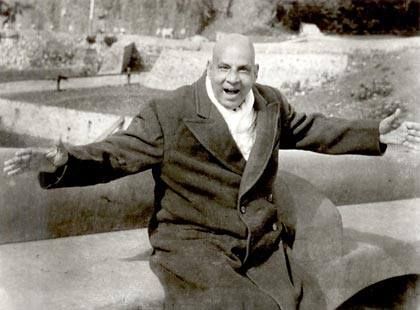
Swami Sivananda smiling with open arms image
Jnana Yoga

Brahma-Vidya and Upanishads

Brahma-Vidya and Upanishads by Swami Sivananda The school of philosophical thought known as the Vedanta is also called Uttara-mimamsa. The founder of the Vedanta system of philosophy was Badarayana Vyasa. The founder of Purva-mimamsa school was Jaimini, the disciple of Sri Vyasa. Of these two, Purva-mimamsa is generally understood to imply the inquiry into the Mantra portion of the Vedas, while Uttara-mimamsa is understood to mean an inquiry into the Upanishad portion of the Vedas. In other words, Purva-mimamsa treats of Karma Kanda; Uttara-mimamsa deals with Jnana Kanda. The Brahma Sutras of Badarayana or Sri Vyasa are termed as the Vedanta Darshana. They are called by this name, because they are based upon the Upanishads, the end or the final part of the Veda. These Brahma Sutras are the outcome of the harmonising of the apparently conflicting Upanishadic texts by Badarayana. The Bhashya written by Sri Sankaracharya on the Brahma Sutras is known as Sariraka Bhashya. The Vedas, each of which has a Samhita, Brahmana, Aranyaka and Upanishad, are again subdivided into two parts viz., the Karma Kanda or the work-portion and the Jnana Kanda or the knowledge-portion. The former leads man to world by happiness and enjoyment in Svarga or heaven and the latter to Moksha or liberation. The Samhita and the Brahmana sections go to make up the Karma Kanda and the Aranyaka and the Upanishad sections form the Jnana Kanda. Brahma Vidya or that knowledge by which the Brahman is attained is dealt with in the Upanishads. The Upanishads as the final part of the Vedas are Vedanta, the end of the Vedas. Through the divisions of Rig Veda and others, the Vedas are said to be four in number. Their branches are many. So also the Upanishads. In Rig Veda, there are twenty one branches. There are 109 branches in Yajur Veda. There are 1000 branches in Sama Veda. There are fifty branches in Atharvana Veda. In each branch there is one Upanishad. The word Upanishad is formed by adding the Krip suffix and the prefixes Upa and Ni to the root Shad meaning (1) to shatter or kill, (2) to attain and (3) to loosen. By the word Upanishad is denoted the knowledge of the knowable entity inculcated by the work which is to be commented upon. By what etymological process this knowledge is denoted by the term Upanishad is now explained. This knowledge is called Upanishad by virtue of its signification that it shatters or destroys the seed of Samsara such as ignorance and the rest, in those seekers after emancipation, who, devoid of all desires for objects seen and heard of, acquire the knowledge called Upanishad to be hereafter explained, and with their mind firmly concentrated therein meditate on it; for it will also be said later on well ascertaining that he will be freed from the jaws of death or the knowledge of Brahman is called Upanishad because of the fact that it leads to Brahman, in that it makes the seekers after emancipation just above described attain the highest Brahman; for it will be said later on, having attained the Brahman he becomes untainted and immortal; or, even the knowledge of Agni is denoted by the term Upanishad, because of its connection with the meaning of the root, to loosen; for, the knowledge of Agni, the first born, the knower, born of Brahman the subject matter of the second of the boons asked for leads to the attainment of heaven and thus loosens or enfeebles the lot of misery; such as residence in the womb, birth, old age, etc., continually recurring in this world. It will also be said later on, having reached heaven, they enjoy Immortality. It may be argued that students apply the term Upanishad even to the book, as when they say, we shall study or teach the Upanishad. This is no fault, as the meaning of the root Shad, i.e., the killing of the cause of Samsara, etc., cannot be attached to the mere work but is attached to knowledge; and even the mere work may also be denoted by that word, because it serves the self-same purpose, as when it said ghee verily is life. The word Upanishad therefore is used in its primary sense when it is used to denote knowledge; but it is used by courtesy, i.e., in a secondary sense to denote the work. Thus by the mere analytical explanation of the word Upanishad, those who are fully competent to acquire knowledge have been stated. The whole subject matter of knowledge has also been stated to be the thorough release from the bondage of Samsara consisting in the attainment of the Brahman. The meaning of the Upanishad may be either because it lessens the numerous evils of conception, birth, old age, disease, etc., in persons who take kindly to this knowledge of Brahman and approach it with faith and devotion, or because it makes them reach Brahman, or because it totally destroys the cause of Samsara such as ignorance, etc., thus from the several meanings of the root Shad preceded by Upani. Sri Rama says to Hanuman: The only means by which the final emancipation is attained is through Mandukya Upanishad alone, which is enough for the salvation of all aspirants. If Jnana is not attained thereby, by the study of ten Upanishads thou shalt soon attain Jnana and then My seat. O son of Anjana, if thy Jnana is not made firm, study well the 32 Upanishads. Thou shalt get release. If thou longest after Videha Mukti, study the 108 Upanishads. The Upanishads are the mystic experiences of the Rishis. The Upanishads, the Gita and the Brahma Sutras are technically called the Prasthanatraya. These are the three authoritative books on Hindu Philosophy. Any teacher who claims himself as an Acharya and who wants to open a new school of thought must write a commentary on these three important books. All the previous Acharyas, Sri Sankara, Ramanuja and Madhva have written commentaries

Brahma-Vidya and Upanishads Read Post »

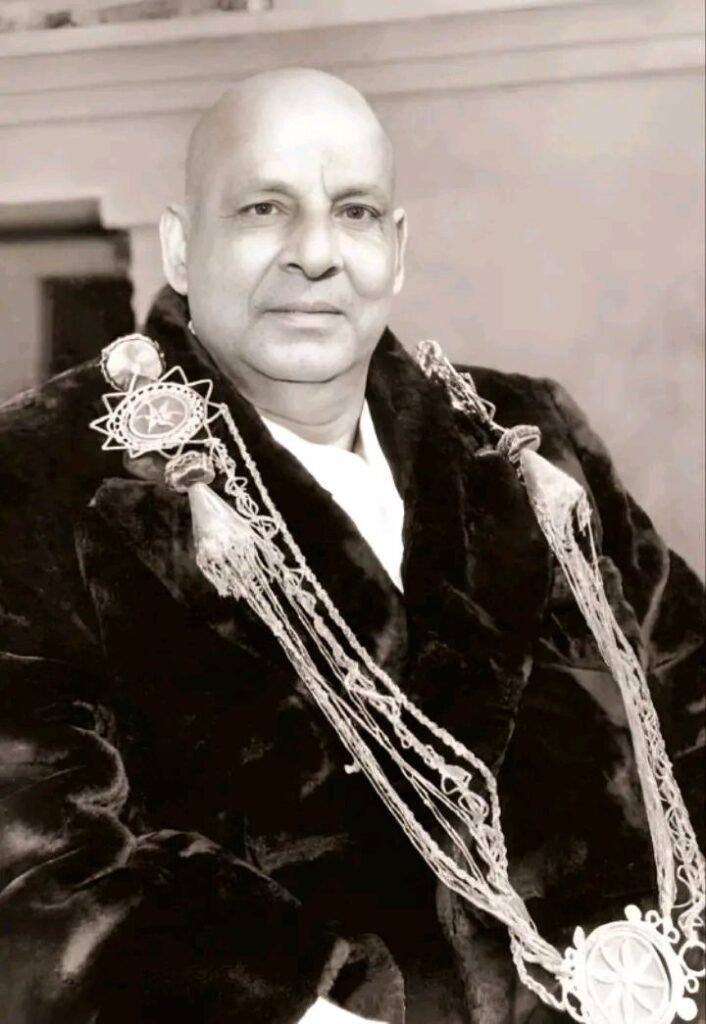
Swami Sivananda portrait wearing ceremonial robe and chain. image
Jnana Yoga

The Great Reality and its Nature

The Great Reality and its Nature By Swami Sivananda The Struggle for the Infinite The empirical examination of experience shows that the individual is compelled to develop a relation with objective existence. This is clear proof of the insufficiency and the finitude and, consequently, the transient character of the individual. But the urge for perfection points to the existence of a supremely unlimited Being beyond which there can be nothing. The analysis of the Self discloses the existence of the conscious Self as distinct from unconscious matter and mind. But the eternal nature of the Self requires it to be secondless and, hence, the existence of unconscious matter becomes unwarranted. The practical moral urge and the purified reason are corroborated by intuition which proclaims the existence of an indivisible, secondless, conscious Being. This supreme conception of the Reality necessitates life to be lived according to strict righteousness and moral discipline. The better the conception of the Truth, the more quickly is it realised. The First ObservationHuman consciousness at once presupposes the authenticity of the existence of the personal being which is the root of this consciousness. The very meaning of human consciousness is objectivity which sets in opposition a subject or the self against the non-subject or the not-self. Individuality of the subject and the object is the necessary condition of all forms of perception or knowledge in the world. Individual consciousness and individual existence are inseparable. The very first factor that the individual is faced within experience is the awareness of the existence of something which it cannot consider as the self. This is the starting point of active thinking and action. The individual is confronted with the urgent need of developing a relationship with the vast universe which stares at it as the not-self. This need marks the nature of the struggle of life as a whole, its purpose, method and goal. The need for external relation, however, is the outcome of a practical want in oneself, a want of thoroughness and genuineness in one’s own being. This is the hypothesis upon which is constructed the edifice of philosophical speculation. Self-consciousness refuses to rest blind and idle. It stimulates mental and physical activity, a postulate which demands no reason. The value of life is determined by the characteristics of the effects of this activity. The sense of value is based on the extent, the depth and, consequently, the longevity of the experience of conscious satisfaction in the self. The worth and the righteous nature of all activity is, therefore, dependent on how far it nears the most supreme form of happiness which is the standard set by the results of the computation of perfection as determined by the irresistible urge for completeness of one’s existence. The nature of this happiness, however, remains to be found out. The acts of life show that the individual consciously and voluntarily acts because of the joys which are experienced by the self as a consequence of those acts. An action is a transformation from one condition to another, which, naturally, is the effect of the inability to rest eternally, in a particular condition. It is observed that all actions, mental as well as physical, have a special characteristic of being directed towards some or the other of the forms in which the not-self appears. The impossibility to withhold conscious action leads us to the conclusion that there must be an intimate and permanent connection between the subjective conscious being and the vast objective existence. The fact that the vaster this objective existence included in the self’s relations and the nearer it is to the self the greater is the intensity of happiness experienced by the self points the way to the true nature of the ultimate Reality. Logically the highest bliss must be the result of a self-merging of the unlimited existence in Self- consciousness. This means the dissolution of the not-self in the Consiousness of the Self, the disappearance of the hallucination of objectivity in Self-identical, objectless, absolute, Awareness merely, which exists not only including but transcending the entire realm of objective existence in quality as well as quantity. Analysis of the SelfOn carefully scrutinising the waking, the dreaming and the deep sleep states, it is observed that the Self is different from the physical body, the psychological organs and ignorance which are respectively manifested in externality, internality and nihility of consciousness. Further, consciousness must necessarily be an essential constituent of the Self, for without consciousness existence itself is valueless. This at first leads us to conclude that the Self must be a conscious witness of the physical, the psychological and the ignorant conditions. But being a witness means existing as an unconcerned observer of certain phenomena which exist apart from oneself. This compels us to make the Self an individual perceiver with its rival, the percept. Metaphysically, individuality is the opposite of eternity, for, eternity means changeless self-existence which is synonymous with completeness and infinitude. Nothing that is dependent is eternal and nothing that is finite or individualised is independent. The subject cannot hope to exist eternally and at the same time be a relative of some external existence. To be eternal, the subject must be absolute, which is the fusion of the totality of existence in the subject or the Self. In order that it should be Real, the subject must at the same time become all objects, the entire existence, in which case the subjectness of the subject is sacrificed to or rather swallowed by a larger infinity of being where the subject and the object are not separated even in the least. Hence, if the Self is eternal it cannot be something existing apart from the three empirical bodies which are objects of the witness-Self. And, the Self must be eternal, for, at no time is it possible to deny the existence of the conscious Self. Now we are led to a twofold quandary. The Self cannot be called a differentiated witness of the three bodies,

The Great Reality and its Nature Read Post »

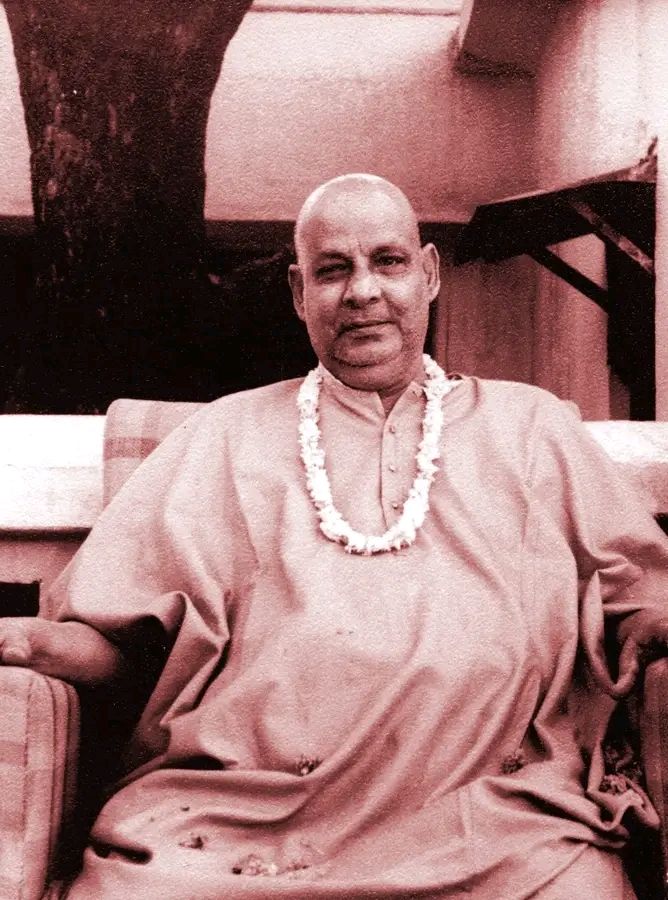
Swami Sivananda seated wearing garland vintage portrait image
Jnana Yoga, Swami Sivananda

Fitness for Wisdom

Fitness for Wisdom By Swami Sivananda One who is fit for receiving Wisdom of the Self shall receive it ‘in due time’. Self-effort and passage of time work simultaneously and one cannot be dis tinguished from the other, for Providence and Personal exertion cannot be separated as they both work simultaneously and are interdependent. Rather, these are only two names for one and the same force of action. Sri Sankaracharya had already exhorted that one has to undergo the disciplinary stages of Viveka, Vairagya, Sama, Dama, Uparati, Titiksha, Sraddha, Samadhana, and Mumukshutva before getting initiated into the mystery of Existence. One should not be initiated into the Truth of the Absolute unless he is found well developed in all these qualities. Nowadays generally we find that aspirants do not have a strong desire for Liberation. They may have a ray of Viveka and Vairagya of a mild variety. But it is very difficult to find an aspirant who cares for nothing but final Emancipation, who treats the whole world and its contents as mere straw, who meditates incessantly upon how to attain Salvation from embo died existence. It is not easy to understand the mea ning of Liberation. How can it be possible for raw men of the world to realise the nullity of earthly existence and of worldly activities? Even advanced aspirants sometimes have got a strong desire for doing something wonderful in this world, something which none has done before. Such people cannot have a real desire for liberation. And such people are unfit for receiving Brahma Vidya. It is only the Uttama-Adhikari, the best qualified, who cares for nothing, who is totally indifferent to the ways of the world, who is ever silent and serene due to the dawn of pro per knowledge, who is ever the same among the di verse men of the world, who is undisturbed by the distracted activity of the world, who is calm and peaceful, who has withdrawn himself from the bustle of life, who cares not for either death or life, who is unmindful of what is happening in the world, who is careless towards either this or that, that is really fit to receive the Ultimate wisdom of the Absolute! Even if there is the slightest desire lurking inside other than for the Realisation of the Absolute, that man will not be able to comprehend the true import of the Vedantic instructions by the Spiritual Teacher (Preceptor). He will have thousand doubts and dis tractions in the mind which will entirely pull him down from Vedantic Meditation. A person should desire for nothing else, than the Realisation of Brah man. There should be no other thought throughout the day than of the way of attaining Self-realisation. Every thought, every speech, every action, nay, every breath of the person should illustrate the method of realising the Absolute. Such a person is fit to receive Vedantic Wisdom.

Fitness for Wisdom Read Post »

Swami Sivananda Monk in saffron robes meditating by riverside on rock image
Jnana Yoga, Swami Sivananda

Gist of Wisdom

Gist of Wisdom by Swami Sivananda It is in the nature of man to strive for happiness but all the happiness which he can gain by his actions is only of limited duration. The enjoyments of the senses are transient and the senses themselves are worn out by too much enjoyment; further, sin generally accompanies these enjoyments and makes man unhappy beyond comparison. Even if the pleasures of the world are enjoyed as much as their nature permits, if they are as intense, as various and as uninterrupted as possible, yet old age approaches and with it death. And the enjoyments of heaven are in reality not more enviable than these pleasures of senses; they are of the same nature, although more unmixed and durable. Moreover they come to an end; for they are gained by actions and as these latter are finite, their effect must also be finite. In one word there is necessarily an end to all those enjoyments and what avails us to strive for pleasure which we know cannot sustain us beyond the moment of enjoyment. It is therefore in the nature of man to look out for an unchangeable, infinite happiness (Ananta Sukha) which must come from a ‘being’ in which there is no change-if such a ‘being’ can be found, it is only from Him that man attains an unalterable happiness and if this be so, this ‘being’ must become the sole object of all his aspirations and actions. This ‘being’ is not very far. He resides in your heart. He is the Sakshi Chaitanya who witnesses the activities of your Buddhi (intellect). He is the Nirguna (attributeless) Brahman of the Upanishads who is highly eulogised in a variety of ways by the Rishis and seers of the Upanishads. Whatever it be, it is in reality one. There truly exists only one universal Being called Brahman or Paramatman, the Highest Self. This Being is of an absolutely homogeneous nature (Ekarasa). It is a pure Being or pure Intelligence (Chaitanya Jnana). Intelligence is not to be predicated of Brahman as its attributes but it constitutes its substance. It is its Svarupa or essence. Brahman is not a thinking being, but thought itself. He is not all-knowing but knowledge itself (self-knowledge). He is not all-powerful but power itself. He is not all-beautiful but beauty itself. He is Bliss itself. Do you see the difference now? That is termed Svarupa or essence of everything. He is absolutely destitute of qualities; whatever qualities or attributes are conceivable, can only be denied of it. But if nothing exists but one absolutely simple Being, whence the appearance of the world by which we ourselves are surrounded and in which we ourselves exist as individual beings? Brahman is associated with certain power called Maya or Avidya to which the appearance of this world is due. Oh how deep, unfathomable and marvellous is this Maya, the inscrutable (Anirvachaniya) power of Brahman! Every human being, though in essence he is really Brahman, does not-though instructed-grasp the truth “I am Brahman” but feels convinced, without any instruction, that he is such a person’s son mistaking for the Atman and is only perceived like a stone or pot. Indeed, these worldly-minded persons wander in this miserable Samsara repeatedly deluded by the Maya of Brahman alone. The idea of Brahman, when judged from the viewpoint of intellect, is an abstraction, but it is concretely real for those who have the direct vision to see it (Aparoksha Anubhuti or Sakshatkara). Therefore, the consciousness of the reality of Brahman has boldly been described to be as real as the consciousness of an Amalaka fruit held in one’s palm. Even intellect can grasp only a little of the Truth. Brahman has positive attributes such as Sat-Chit-Ananda, purity, perfection, Satyam, Jnanam, Anantam, etc., They are not really attributes. They are all synonymous terms for Truth or Brahman. Sat-Chit-Ananda also is a mental Kalpana (imagination). These are the highest qualifications of Brahman which the human intellect can grasp. Generally Brahman is described by negation of qualities such as Nirakara (formless), Nirguna, Nirvikalpa (without modification of mind), etc. Are we not driven to take the same course ourselves when a blind man asks for a description of light? Have we not to say in such a case that light has neither sound, nor taste, nor form, nor weight, nor resistance, nor can it be known through the process of analysis? Of course it can be seen but what is the use of saying this to one who has no eyes? He may take the statement on trust without understanding in the least what it means, or may altogether disbelieve it, even suspecting in us some abnormality. Does the truth of the fact that a blind man has missed the perfect development of what should be normal about his eye-sight depend for its proof upon the fact that a large number of men are not blind? The very first creature which suddenly groped into the possession of its eye-sight had the right to assert that the light was reality. In the human world there may be very few who have their spiritual eyes open, but in spite of the numerical preponderance of those who cannot see, their want of vision must not be cited as an evidence of the negation of the light. In the Upanishads we find the note of certainty about the spiritual meaning of existence. In the very paradoxical nature of the assertion that we can never know Brahman-but can realise Him-there lies the strength of conviction that comes from personal experience (Anubhava). The variety of experience is not real, nay even experience itself is nowhere from the point of view of the Absolute. To lead the life wherein the variety of experience does not affect, either our weal or woe, is the highest practical rule of conduct in accordance with the proper aim of existence. The variety of experience creates distinction and sets up false limits where there

Gist of Wisdom Read Post »

Swami Sivananda wearing garland near riverside background. image
Jnana Yoga, Swami Sivananda, Uncategorized

The Yoga of Wisdom

The Yoga of Wisdom by Swami Sivananda The body is composed of the five elements and is unintelligent. It is made up of skin, flesh, blood and bones. It is produced by time, action and the attributes of Sattva, Rajas and Tamas. The Atman is neither born, nor does it die, nor does it stop or go anywhere. It is neither male nor female nor neuter. It is all-pervading and everlasting. It is one without a second, unblemished like ether, eternal, pure and perfect Knowledge itself. Sorrow has the body as its cause. The body has Karma for its cause. Action of Karma proceeds from man having the notion of ‘I’ in the body. The notion of ‘I’ which is unintelligent is beginningless, having Avidya for its root cause. Egoism is always associating with the reflection of Chit like a piece of iron heated in fire. Thus the body becomes independent with the Ahamkara and becomes possessed of intelligence. I am the body this notion arises by force of the connection between the Self and Ahamkara. Worldly life which is the giver of pleasure and pain has for its root this notion of ‘I’ in the body. On account of this identification of the Atman, which is without modification, with the Ahamkara, with the notion of I am the body, I am the doer of action, the individual soul always acts and is forcibly bound by the results. Possessed of virtue and vice he wanders up and down. I have surely done much good work through sacrifices, gifts and the rest, and shall therefore go to heaven and enjoy happiness there, thus he thinks. This is a false notion. He enjoys in heaven the celestial happiness for some time, and falls down as soon as the results of his meritorious deeds are exhausted. So long as there is connection of the Ahamkara or the principle of egoism and the rest with the body and the sense-organs, there are pleasure and pain and transmigratory existence for the self or the knower. Ahamkara is the notion of ‘I’ and ‘mine’ in the gross and subtle bodies. The ignorant are attached to the body. They cannot rise above the sense of ‘I’ and ‘mine’ in the gross body. The discriminating few rise above it through Knowledge. The Samsara or cause of worldly life exists so long as there is any thought of object of sense. When one awakens from the sleep of ignorance taking the unreal for the real, then it ceases to assert itself. The Samsara which has been erroneously imposed on the Self does not go of itself for one, who like a person in a dream cherishes objects of sense. Non-existence appears to exist through the force of beginningless Avidya or ignorance. Man is agitated through attachment and aversion. The sense of ‘I’ is the effect of ignorance. The mind is verily the world. The mind is bondage. The superimposition or identification of the mind with the Atman is the cause of bondage. Just as a piece of crystal which is in fact colourless takes the red or other colour from the object with which it is brought into contact, so also is the world-process or Samsara due to the contact of the Self with the intellect or the organs of sense. The mind cannot of itself cognise without a cognising Self behind it. The Self on the other hand, making the objects created by the mind as its own, takes the form of the latter like the piece of crystal when it is brought into contact with coloured objects, and thus becomes bound by the attributes of those objects and wanders about in Samsara as if helpless and powerless. Having first created the attributes of attachment and aversion to actions of diverse kinds, the mind takes in various forms, such as white, red and black (the good, the active and the passive). In this way, the Jiva or the individual soul wanders through the influence of Karma till the period of universal dissolution. At the time of universal dissolution, the Self survives with Vasanas taking impressions of past Karmas attracted under the influence of beginningless Avidya. When there is universal dissolution, there is no destruction of the individual soul. He remains in a latent form in the Mula Prakriti or Avyakta, which is the condition of the equilibrium of all the three Gunas. At the time of creation, he is born again together with the Vasanas born of the mind. In this way he is forced to go round and round like the wheel for drawing water. When, through special merit acquired by good Karmas in the past, he gets the company of pious devotees, his mind becomes directed towards the Lord. Then is produced in him faith, which is so difficult of attainment, in hearing stories relating to the Lord. Then comes to him without any trouble Knowledge of the Self. Then through the grace of the preceptor, as well as Knowledge of the meaning of the great sentences, Tat Tvam Asi Thou art That, and the like, and his own experience, he forthwith realises the distinction between the body, the organs of sense, egoism and the pure Atman and knows himself to be the intelligent and the blissful Self who is one without a second and becomes thenceforth released. Know yourself, therefore, to be separate from the three bodies and beyond Prakriti. Relinquish all sense of ‘I’ in the body and become a Sage of Wisdom. Realise your own Self to be free from the conditions of waking, dream and deep sleep, as Truth, Knowledge and Bliss Absolute.

The Yoga of Wisdom Read Post »

Swami Sivananda Two spiritual monks laughing together in vintage photo with floral border image
Sri Swami Sivanand Maharaj

20 Spiritual instructions

20 Spiritual instructions Gurudev Sri Swami Sivanand Maharaj Blessed Divinity SRI SWAMI SIVANANDA These twenty instructions contain the very essence of all Yoga Sadhana, Karma, Bhakti, Jnana and Yoga will all come to one who follows them whole-heartedly. They are the unfailing keys to quick and effective development and culture of the physical, mental, moral and spiritual self of man. 1. BRAHMAMUHURTA Get up at 4 a.m. daily. This is Brahmamuhurta which is extremely favourable for Sadhana. Do all your morning spiritual Sadhana during this period from 4 a.m. to 6:30 or 7 a.m. Such Sadhana gives quick and maximum progress. 2. ASANA Sit on Padmasana (lotus pose), Siddhasana (adept’s pose) or Sukhasana (any pose you like) for your Japa and meditation for half an hour, facing east or north. Increase the period gradually to three hours. Practice Sirshasana (headstand) and Sarvangasana (shoulderstand) for maintenance of health and Brahmacharya. Take light physical exercises as walking, etc., regularly. Do twenty rounds of easy, comfortable Pranayama (breathing exercises). Do not strain yourself while doing Pranayama. 3. JAPA You can repeat any Mantra (sacred syllable), such as pure Om or Om Namo Narayanaya, Sri Ram, Sita Ram, Sri Ram Jaya Ram Jaya Jaya Ram, Om Namah Sivaya, Om Namo Bhagavate Vasudevaya, Om Saravanabhavaya Namah, Hari Om, or Gayatri (a sacred Vedic Mantra), according to your taste or inclination, from 108 times to 21,600 times daily. Devotees of Christ may repeat the name Jesus or Hail Mary, Mother of Jesus. Parsis, Sikhs and Muslims may select a name or Mantra from the Zend Avesta, Granth Sahib or Koran respectively. 4. DIETETIC DISCIPLINE Take Sattvic food. Give up chillies, tamarind, garlic, onion, sour articles, oil, mustard, asafoetida. Observe moderation in diet (Mitahara). Do not overload the stomach. Give up those things which the mind likes best for a fortnight once or twice in a year. Eat simple simple food. Milk and fruits help concentration. Take food as medicine to keep the life going. Eating for enjoyment is a sin. Give up salt and sugar for a week or a fortnight. You must be able to live on rice, dhal and bread without any pickle. Do not ask for extra salt for dhal, and sugar for tea, coffee and milk. People taking non-vegetaraian diet should try their best to gradually give up flesh-eating as completely as possible. They will be immensely benefited. 5. MEDITATION Have a separate meditation room under lock and key. If this is not possible then a corner of the room should be set apart with a small cloth screen or curtain drawn across. Keep the room spotlessly clean. 6. SVADHYAYA Study systematically the Gita, Ramayana, Bhagavatam, Vishnu-Sahasranama, Lalita-Sahasranama, Adityahridaya, Upanishads, Yoga Vasishta, Bible, Imitation of Christ, Zend Avesta, Quran, the Tripitakas, the Granth Sahib and other religious books from half an hour to one hour daily, and have Suddha Vichara (pure thoughts). 7. ELEVATE THE MIND Get by heart some prayer – Slokas (prayer verses), Stotras (hymns) and repeat them as soon as you sit in the Asana before starting Japa or meditation. This will elevate the mind quickly. 8. BRAHMACHARYA Preserve the vital force (Veerya (seminal energy)) very, very carefully. Veerya is God in motion or manifestation (Vibhuti). Veerya is all power. Veerya is all money. Veerya is the essence of life, thought and intelligence. This instruction is not for bachelors only. Householders also must follow it as far as possible. They must be extremely moderate in their marital connections with their spouse. This is very important. 9. CHARITY Do charity regularly, every month, or even daily according to your means. Never fail in this item. If necessary forego some personal wants but keep up this charity regularly. 10. HAVE SATSANG Give up bad company, smoking, meat and alcoholic liquors entirely. Have constant Satsang (association with holy people). Do not develop any evil habits. Deliberately exert to develop positive virtuous qualities. 11. FAST Fast on Ekadasi (11th day of the Hindu lunar fortnight) or live on milk and fruits only. Christians must fast on alternate Sundays, Muslims on alternate Fridays, and Parsis on a suitable day every fortnight. 12. JAPA MALA Have a Japa Mala (rosary) around your neck or in your pocket or underneath your pillow at night. This will remind you of God. Twirl the beads during your leisure. You should repeat the Name at all times, whatever task you may be engaged in. 13. OBSERVE MOUNA Observe Mouna (vow of silence) for a couple of hours daily. Do not make gestures and inarticulate noises during the period of silence. 14. DISCIPLINE OF SPEECH Speak the truth at all cost. Speak a little. Speak sweetly. Always utter encouraging words. Never condemn, criticize or discourage. Do not raise your voice and shout at little children or subordinates. 15. BE CONTENT Reduce your wants. If you have four shirts, reduce the number to three or two. Lead a happy, contented life. Avoid unnecessary worry. Be mentally detached. Have plain living and high thinking. Think of those who do not possess even one-tenth of what you have. Share with others. 16. PRACTICE LOVE Never hurt anybody. Ahimsa Paramo Dharmah (Non-injury is the highest virtue). Control anger by love, Kshama (forgiveness) and Daya (compassion). Serve the sick and the poor with love and affection. This is service of God. 17. BE SELF RELIANT Do not depend upon servants. Self-reliance is the highest of all virtues. 18. HAVE SELF-ANALYSIS Think of the mistakes you have committed during the course of the day, just before retiring to bed (self-analysis). Keep a daily spiritual diary and self-correction register as Benjamin Franklin did. Maintain a daily routine and resolve-form. Do not brood over past mistakes. 19. DO YOUR DUTY Remember that death is awaiting you at every moment. Never fail to fulfil your duties. Have pure conduct (Sadachara). 20. REMEMBER GOD Think of God as soon as you wake up and just before you go to sleep, and at all other times whether engaged in any

20 Spiritual instructions Read Post »

Swami Sivananda Black and white photo of swami meditating under tree outdoors image
Sri Swami Sivanand Maharaj

Prayers

Prayers Gurudev Sri Swami Sivanand Maharaj Blessed Divinity Universal Prayer O Adorable Lord of Mercy and Love !Salutations and prostrations unto Thee.Thou art Omnipresent, Omnipotent and Omniscient.Thou art Existence-Consciousness-Bliss Absolute.Thou art the Indweller of all beings. Grant us an understanding heart,Equal vision, balanced mind,Faith, devotion and wisdom.Grant us inner spiritual strengthTo resist temptation and to control the mind.Free us from egoism, lust, greed, hatred, anger and jealousy.Fill our hearts with divine virtues. Let us behold Thee in all these names and forms.Let us serve Thee in all these names and forms.Let us ever remember Thee.Let us ever sing Thy glories.Let Thy Name be ever on our lips.Let us abide in Thee for ever and ever. — Swami Sivananda Prayer O All-Merciful Lord! Time is fleeting. The senses are revolting. The mind is jumping. Maya is deluding. The three fires are burning. The five afflictions are tormenting. Friends are disturbing. Diseases are troubling. The heat of the summer is scorching. Flies, mosquitoes, bugs and scorpions are teasing. The charms of the world are tempting. I can neither concentrate nor meditate. I cannot do anything in the spiritual path without Thy benign grace. O Lord! Thou art an ocean of mercy. Bless me. If I get a drop from that ocean, will it dry up? O Adorable Lord! People proclaim that Thou art Deenabandhu, Deenanath, Kripa Nidhan, Karuna Sagar, Anatha Rakshaka. Thou hast saved Ahalya, Draupadi, Prahlad, Dhruva, Gajendra, but in my case, Thou hast not done anything. I am still in pain, agony and darkness. I am crying for Thy grace and help. O absentee landlord of this world! Where hast Thou gone? O Self-Effulgent Lord! The fish cannot live without water. The sunflower cannot live without the sun. The Pativrata cannot live without her husband. The mind cannot live without Prana. The flame of the lamp cannot burn without oil. So also, I cannot live without Thee. O Lord, come, come, enthrone Thyself in my heart. Thou art the Prana of my Pranas. Thou art the Soul of my soul. Thou art Light Divine. Thou art Light of Knowledge. Thou art the Dispeller of darkness. Thou art the Supreme Guru. Thou art beyond the reach of mind and speech. Thou art beyond any kind of limitation. Thou art the Over-soul. Thou art the Self of this universe. Thou art self-luminous. Thou art without parts, without actions, without limbs, without any taint or fault, without birth and death. Thou art our Father, Mother, Brother, Friend, Guru, Relative and sole Refuge. Thou art the embodiment of Peace, Bliss, Knowledge, Power, Strength and Beauty. O All-Merciful Lord! Through Thy grace, may I realise Truth! May I always entertain sublime thoughts! May I realise myself as the Light Divine! May I serve humanity with Atma Bhav! May I be free from greed, lust, egoism, jealousy and hatred! May I behold the one sweet Immortal Self in all beings! May I realise Brahman with pure understanding! May that Light of lights ever guide me! May He cleanse my mind of all impurities! May He inspire me! May He bestow on me power, courage and strength! May He remove the veil of the mind! May He remove all obstacles in the spiritual path! May He make my life happy and fruitful! I bow to Thee, O Lord of lords, O God of gods, O Deva of Devas, O Brahman of the Upanishads, the Support for Maya and Isvara! Prayer to Lord Shiva The leaves of life are falling off . Youth is fading . The days are rolling on .Time , the destroyer , lays his hands on the whole world .Existence in this world is as momentary as a bubble or lightening .O lord Shiva ! Protect me . O Lord Shiva! Who holds the begging bowl of the skull of Brahma ! Control this monkey mind which jumps at its sweet will on the branches of desires in the forest of Lust and keep it with Thee for ever . THE SUPREME WITNESS The silent Sakshi, the Supreme Self silently looks from above the activities of the mind of the individual soul like a spectator.He is quite indifferent and unconcerned.He is quite unaffected like water on the lotus leaf.The individual soul identifies himself with the body and mind, works and enjoys the sensual objects with avidity, cupidity and stupidity and is bound thereby. Song of Eighteen “Ities”BySwami Sivananda For everyone’s success in life and especially for an aspirant’s success in spiritual life, it is essential that he should develop certain cardinal virtues. Virtue is strength, power and the key to peace. A virtuous man is ever happy, peaceful and prosperous. People ask me for the specific mention of the virtues that one should develop. The Song of Eighteen “Ities” enumerates the virtues that one should cultivate. Take up any one virtue and develop it to a very high degree of perfection; eradicate in toto its opposite evil quality even in its most subtle form. Meditate on these virtues, on their benefits and the methods of cultivating them. Here is the Song of Eighteen “Ities”: Serenity, regularity, absence of vanity,Sincerity, simplicity, veracity,Equanimity, fixity, non-irritability,Adaptability, humility, tenacity,Integrity, nobility, magnanimity,Charity, generosity, purity.Practice daily these eighteen ‘ities’,You will soon attain immortality.Brahman is the only real entity,Mr. So and so is a false non-entity.You will abide in eternity and infinity;You will behold unity in diversity;You cannot attain this in the university.You can attain this in the Forest University. ||

Prayers Read Post »

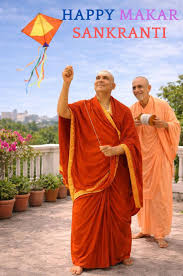
Swami Sivananda celebrating Makar Sankranti flying kite on terrace image
Swami Sivananda, Yoga of Synthesis

Fourth Stage

Fourth Stage Young aspirants, because of old habit, used to sleep in the winter cold till sunrise or till 6 or 7 in the morning. They must not waste their precious life in sleeping in the Brahmamuhurta, between 4 and 6 in the early morning. That period is highly favourable for deep meditation. The atmosphere also is charged with Sattvic vibrations. Without much effort one can have wonderful concentration at this period. From my Kutir, I used to chant aloud several times the Mantras: “OM OM OM, SHYAM SHYAM SHYAM, RADHESHYAM RADHESHYAM RADHESHYAM” and thus made my students get up early for prayers and meditation. This had no effect on the Tamasic type of aspirants. I arranged their night meals before sunset. That enabled some to get up early morning. It is only those who load the stomach heavily at night that find it difficult to get up early in the morning. In the beginning stages of Sadhana, even if people meditate alone in a room, they get up in the morning only to see that they were overpowered by sleep, and sleep the whole period in a sitting posture. This gave me an idea of a common prayer and meditation during Brahmamuhurta. One student would ring the bell in front of every Kutir and collect the aspirants in a common place for the collective Sadhana. I joined the group daily for some months and years. PRAYER AND STUDY CLASSES The function started with prayers to Lord Ganesha, Guru Stotra and Mahamantra Kirtans. One student would read a Chapter of the Gita and explain the meaning of one Sloka. Another student gave some short hints on concentration and meditation. In the end, I spoke for half an hour on attaining quick spiritual progress and suggested various methods for destroying the evil tendencies of the mind and controlling the turbulent senses. I laid great emphasis on ethical perfection. The function came to an end with the chanting of ten Santi Mantras in chorus. The students kept up the divine consciousness even during their work in the day. Some students lived in Brahmananda Ashram, a furlong away from my Kutir. On many occasions I paid surprise visits to the Kutirs at 4 a.m., and chanted OM several times and made them get up for prayers. I did not compel all the students to join the common meditation. I permitted them to have their own Sadhana in their own Kutirs. Thus I paid all my attention to the spiritual uplift of my students. Even now many students who attended in those days the common prayer and meditation say how they were inspired by my short speeches on Sadhana. In the evening also I organised a “Study Class” between 3 and 4. I asked one student to read a Chapter from any of my books. On the next day I used to put questions on the important points. I trained the aspirants in a variety of ways. They all specialised in chanting the Mantras of the scriptures, conducting Kirtans, delivering short lectures. I asked one student to put questions and others to answer them. In the evening class, I introduced Likhita-Japa and in the early morning, Trataka and other Yoga exercises. During the day, they should all prepare essays on Yoga and philosophy and write about their own experiences. Even today when school boys and young children come to the Ashram, I teach them a few short sentences in English and ask them to deliver a powerful lecture. Many have learnt my English Kirtans, like “Eat a little.” I trained my students in organisational work, typing, maintaining proper accounts managing the affairs of the Society and in attending to the devotees, visitors and the sick. Thus even in the early stages, the Yoga-Vedanta Forest University was vigorously in its working. ATTENTION TO VISITORS When visitors came to me, instead of talking to them on their family affairs, I asked them to forget the past and sing Kirtans with me. I taught them music, Bhajan, Kirtan and philosophy. Even today when devotees come to the Ashram, I prescribe a book for their study and on the next day, I ask them questions. I clear all their doubts and give helpful suggestions for the removal of their troubles and obstacles. They all feel happy in receiving my personal attention. The systematic work done at this sacred centre in the Himalayas on the banks of the Ganga, attracted thousands of seekers after Truth from all distant places in India and other countries. The Divine Life Society, the Yoga-Vedanta Forest University and the Sivananda Ashram became “watch-words” for all aspirants. Similar work is now organised systematically in various centres with the formation of Branches of the University, The Divine Life Society, Sivananda Ashram and Sivananda School of Yoga. I pay much attention to the diet of the aspirants at the Ashram. Here they have enough to keep themselves quite fit-not for luxury or craving of the senses, but helpful items for progressing in Sadhana. I introduced saltless diet on Sundays, simple boiled potatoes and bread on Ekadasi days or only milk and fruits for some students. I started the work with a dozen students. In a short period, a large number of devotees came to me during holidays from Delhi, Madras, Calcutta and other cities in India. Then I introduced a Collective Sadhana-a special programme with the important items of Sadhana-a kind of Spiritual Conference on the practical side of Yoga. This took the shape of Sadhana Weeks during Easter and Christmas holidays. And now this has become a regular feature during the last twenty years. Various Branches of the Divine Life Society in India organised similar Conferences with the routine of the Sadhana Week at the Ashram. They invite great men to deliver lectures during these Conferences. They print several leaflets, pamphlets and books for free distribution on the occasion. Thus there is a dynamic work for spiritual awakening all over the world.

Fourth Stage Read Post »

Swami Sivananda Collage of portrait and serving medical care image
Sri Swami Sivanand Maharaj

The Benevolent master

The Benevolent master Gurudev Sri Swami Sivanand Maharaj Blessed Divinity The Himalayas and its peaks mount Everest are known for its heights but it does not have depth, where as pacific ocean has depth but does not have height. Gurudev Shri Swami Sivananadaji Maharaj is worshiped and honored for his Himalayan height of purity, conduct, truth and service to the mankind and pacific depth of knowledge, devotion and abundant love and generosity to the mankind. He was an unmatched and unparalleled gem. Born in unknown corner of South India in very tiny village named Pattamadai in Tirunelvelly district on the bank of Tampraparani River, today after 116 year, his name has become a household name to the yoga lovers & the seekers of truth. He is light beacon to all who seek guidance in the path of spirituality. He was an ideal monk. He was able to do everything through his thought vibrations. Never did he become a head of any institution or association but a number of heads and presidents of socio-religious and political institution came to him for his guidance, grace and blessings. Swami Sivananadaji Maharaj never toured to the west but people from all corners of the world came to him after being inspired by his writings. He preached by his exemplary life. His life was embodiment of teaching. His mere sight elevated the minds of thousands. He was a living assurance for others for the realization of the absolute. Many drew inspiration from the sight of him during his holy presence and even today many more get inspiration from his holy Samadhi shrine from his holy abode at Sivananda Ashram, Rishikesh. He was beautiful within and without, ever absorbed in His inner being and beyond the realm of his thought vibrations yet controlling everything with it. He was strong indeed; His divine thoughts transmitted to the long distance & purified the world and enter the minds of thousands. The world will rejoice his memory for a long time to come. He healed by suggestion. In spite of being a doctor, He gave drugfree treatment. By powerful suggestions, he cured many people in the east & the west who sought refuge in him. He cured a variety of diseases. After having learned this great science of healing in his austerity, during his Tapasya, He always preached about the power of sincere prayer, prayers for peace and prosperities of mankind. He prayed for them, those who needed his prayer. He used to say, allopathic, homeopathy, ayurvedopathy or unanipathy may fail but NAMO PATHY- the holy name of the Lord will never fail. Sooner or later all prayers are answered. Such indomitable was his faith in prayers and power of the absolute with which he could move the mountain. His mission of Divine Life stands for service and love to the mankind for charity, purity for meditation and finally the goal of self-realization. His very life itself was his message. He lived and breathed only for the good of the known and unknown countless people not only on this planet earth but perhaps also many other distant planets. He lived through his physical and mental presence in small little thatched hut and most of his penance days hardly had square meal to satisfy his need but he has taken very tender care of each of his devotees & visitors providing them with the essential things. He served sick and poor, cows and dogs, known and unknown, far and wide. His name was Sivananda but widely he was known as Givananda and SEVANANDA (having bliss in service). Swami Sivanandaji’s compassion was boundless. The scorpions, lizards, mice or snakes, used to scroll around fearlessly in his room in front of him. He would not disturb them and they would not bother Him. What an understanding! What compassion! What a care! To him everything was Brahman! He used to say, “Sarvam Braham-mayam re-re ladaka Brahman! Ladaki Brahman! Gadha Ghadhi bhi Brahman!”. Everything is Brahman, Boys or Girls, donkey or monkey, everything is bliss bliss bliss! Absolute!!! These were not merely funny words or attitude, but these were his very realization of the ultimate truth. His life was a life of illumination and light. Divine qualities such as fearlessness and purity of the heart conferred liberation to him. The effect of Sattwa Guna made him established in truth and made him understand & distinguished between what is real and what is unreal. Swami Sivananadaji Maharaj was an embodiment of pure Sattawa. Total purity. From head to foot he was heart, oozing with love and only love to serve and love, give and purify, meditate and realize Adorable Presence Divine, worshipful homage unto Thee! We who are inseparable parts of Thy eternal, infinite existence, one with You in essential nature, have forgotten our eternal relationship with Thee Who art our adi, madhya and anta (beginning, middle and end), Who art our all in all. Through this forgetfulness we have alienated ourselves from Thee and thus find ourselves to be in a state deprived of the bliss, peace and light that is our birthright, that is what we are. We have deprived ourselves of this Self-experience, and we are living a spurious, false, counterfeit experience filled with love and hate, laughing and weeping, anxiety and tension, fear and bondage, fighting and quarrelling, self-centredness, selfishness, anger and jealousy. It is a kritrimavastha, a vishamavastha—an unnatural state, an abnormal state. It is not sahaja (natural) to us, but kritrima (unnatural). At the time when Sri Gurudev Sri Swami Sivanandaji Maharaj came to limelight in this world, sometime in the earlier part of this century, it could be observed that there were certain movements in human history which required rectification. History is nothing but the march of the intentions of the Time-spirit which vigorously adjusts and adapts itself to the ultimate aim and goal towards which the entire universe is moving. At the beginning of this century, there were two trends in the social movement, which went

The Benevolent master Read Post »