






Hari Om

Menu

February 24, 2026

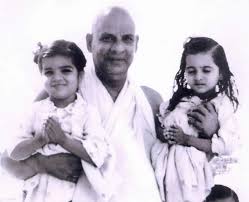
swami sivananda Black-and-white photo of monk holding two young children image
Celestial Collection of Divine Messages - Awakening the Divinity in Man, Swami Sivananda

Make A Beginning — Start From Today

Make A Beginning — Start From Today Sri Swami Sivananda Upon the substratum of Timeless Eternity Maya in Her own mysterious baffling manner marks time. In the ceaseless onward flow of Time definite periods have become distinct and divided into centuries, decades, years, months, etc. They have acquired a force and significance through long convention. All over the world the old year has just now passed out and a New Year has commenced. Through age long association of ideas this time has come to have a peculiar efficacy for all beginnings, fresh endeavours, new resolves and turning over a new leaf. It is the most propitious time. Make full use of this psychological moment. Do not lose this opportunity. Die to your old lower self. Be born into a newer life in the spirit. Sever once for all your connection with the little ego. Whatever be the slips, failures, disappointments and mistakes of the past year, forget them all. Never mind them. All is for the best. Be courageous in faith because there is always a glorious resurrection after each crucifixion. Spotless and untouched lies the year before you. Resolve to stick to a life of spotless moral purity, of chastity, physical and mental. Resolve to manifest Truth in thought, word and deed. The external world is plunged in unrighteousness, hatred and warfare because you have neglected to carry on the inner war with the vicious lower self. You have surrendered to this inner enemy. Commence the spiritual warfare with the inner foes like egoism, hatred, greed, ambition, pride, selfishness. Crush these down and develop equal vision, forgiveness, mercy, universal love. Then all outer war will end in a moment. A New Era will be ushered in. Darkness will pass and a new dawn will light up Humanity. The loving Lord has given you a priceless gift a shining year, pure and clear as crystal, a year teeming with opportunities of perfecting yourself as well as working to help and elevate all those around you. Struggle hard every moment to get nearer to the Ideal. Every step you take, through every act you do, you must move towards Freedom, towards Truth, towards Light. Make it a point to radiate love. Become a centre of spirituality through a regulated life of combined selfless activity and earnest prayer. Constantly have the name of God in your lips. Inspire and elevate everyone you come into contact with by proclaiming to them the message of unity of all life, in the oneness of the Self. Console the distressed with help, cheer up the depressed with hope. Infuse new vigour into the timid and the faltering in faith. On the threshold of the New Year convert yourself into a herald of Divinity. Lead a Divine Life of Love, service, devotion, discipline and wisdom. May the New Year witness you develop into a perfect and ideal being!

Make A Beginning — Start From Today Read Post »

image 41
Swami Sivananda, The Ultimate Goal of Mankind - Self Realization

Science of Relaxation

Science of Relaxation By Sri Swami Sivananda Life has become very complex in these days. The struggle for existence is very acute and keen. There is very keen competition in every walk of life. The bread problem has become very difficult to be solved. There is unemployment everywhere. Even brilliant young men with extraordinary qualification and recommendations hardly get job in these days. Therefore, a great deal of continuous mental and physical strain is imposed on modern humanity by its deadening daily work and unhealthy mode of life. Action produces movement; movement causes habits. Man has acquired many artificial habits. He has allowed nature’s original habits to lapse. He has brought tension in many muscles and nerves through incorrect habit-positions. He has forgotten the first principles of relaxation. He will have to learn lessons from the cat, dog and the infant in the Science of Relaxation. If you practise relaxation, no energy will be wasted. You will be very active, and energetic. During relaxation the muscles and nerves are at rest. The Prana or energy is stored up and conserved. The vast majority of persons who have no comprehensive understanding of this beautiful science of relaxation simply waste their energy by creating unnecessary movements of muscles and by putting the muscles and nerves under great strain. Some persons shake their legs unnecessarily while sitting. Some play Mridang or Tabala (drum) with their fingers on the table when their minds are idle or vacant. Some whistle. Some shake their heads. Some tap their chests or abdomen with their fingers. Energy is thus dissipated or depleted through unnecessary movements of the parts of the body on account of lack of knowledge of the elementary principles of the science of relaxation. Do not mistake laziness for relaxation. The lazy man is inactive. He has no inclination to work. He is full of lethargy and inertia. He is dull. Whereas a man who practises relaxation takes only rest. He has vigour, strength, vitality and endurance. He never allows even, a small amount of energy to trickle away. He accomplishes wonderful work gracefully in a minimum space of time. When you wish to contract a muscle in order to perform an action an impulse is transmitted from the brain through the nerve to the muscle. Energy or Prana travels through the motor nerves, reaches the muscle and causes it to draw its ends together. When the muscle contracts it pulls the limb which you wish to move. Now you can perform the action with ease. First there is thought. Thought takes form in action through contraction of muscles. Suppose you wish to lift up a chair. The desire creates an impulse in the brain. The impulse is transmitted to the muscles of the arms from the brain through the motor nerves. A current of prana or energy is transmitted along the nerves from the brain. The muscles contract and you perform the action of lifting up the chair. Similarly all other conscious or unconscious actions are performed by you. If the muscles are overworked more energy is spent and you get fatigue. There is much wear and tear in the muscles through overwork, strain and tension on account of heavy expenditure of Prana or energy. When you perform an action consciously message is given to the mind and the mind immediately obeys by sending a current of energy to the desired part. An unconscious act is done instinctively or mechanically. The mind does not wait for orders. When the scorpion stings you in a finger, the finger is at once withdrawn. You do not argue here. This is an instinctive or mechanical movement. A man of easily irritable nature cannot enjoy peace of mind. His brain, nerves and muscles are always under high tension. He is wasting every minute abundant muscular and nerve energy and brain-power. He is a very weak man though he is endowed with physical strength, because he loses his balance of mind very easily. If you really want to enjoy unruffled peace and abiding joy, you must try to possess a calm, controlled and balanced mind by eradicating worry, anxieties, fear, anger, and impulses. You do not gain anything by worrying yourself unnecessarily and manifesting anger for nothing at all. Anger belongs to brutal nature. Anger does positive injury to brain, blood and nerves. You are not profited a bit by exhibiting anger. By repeating an action, a habit is formed in the mind. If you worry yourself frequently, a worrying habit is developed. Your vitality and energy are simply drained by worry, anger, fear. Why should you be afraid of anything at all, when everything is nothing but your own self? Fear, anger and worry are the products of ignorance. The muscles and nerves of a victim of anger and worry are always under contraction and high tension. The action of one set of muscles can be checked by the operation of another set of muscles. One impulse may try to put one set of muscles in motion and by sending another repressive impulse through another set of muscles you can counteract the action of the first set of muscles. If a man abuses you, you may jump at once to beat him. An impulse has already put one set of muscles in motion. You may check the impulse through discrimination and reflection: “I do not gain anything by beating him. He is an ignorant man. He does not know how to behave. Let me forgive him now.” A repressive impulse will check at once the operation of the first set of muscles by another set of muscles. Raising of impulses and counter-impulses or repressing or inhibitive impulses cause high tension in nerves, muscles and brain. Vast majority of persons are slaves of impulses; hence they do not enjoy peace of mind. They are tossed hither and thither. The science of relaxation is an exact science. It can be learnt very easily. Relaxation of muscles is as much important

Science of Relaxation Read Post »

Swami Sivananda sitting in meditation with calm spiritual expression
Celestial Collection of Divine Messages - Awakening the Divinity in Man, Swami Sivananda

Mind—A Great Blessing and a Great Curse

Mind—A Great Blessing and a Great Curse Sri Swami Chidananda Blessed Lord! All the activities and movements in this life, the speech of this tongue, the actions of this body, the thoughts of this mind, the reasoning processes of this intellect, the spontaneous expression of this innermost nature, they are offered up as worship and adoration unto Thy Feet! May that life and its activities be acceptable unto Thee! May all beings in this universe attain happiness!From the unreal lead us to the Supreme Reality,From darkness lead us to the Divine Light,From death and mortality lead us to Immortalityand everlasting Life in the Spirit.Peace, peace, peace to all beings. Beloved Immortal Atman, blessed children of Light! There is a great happiness this evening, because yesterday we have observed what is known as the commencement of the northern journey of the sun. It is a way of saying it—we know that in this solar universe the sun is the unmoving centre, but we speak of the northern journey and the southern journey. The northern journey is regarded as the more auspicious six months, and the astronomical point of time when the northern journey commences happens to be 14th of January. Today we are in the middle of this special day of the sun as he has started upon his auspicious northern journey. May it mean to you greater and greater Light day by day. May it mean to you an inner unfolding of the awareness of your timeless, uncreated nature. Your true identity is that dimension of your being where you are an ever luminous light of Divine Consciousness, in which you are inseparably one with the Infinite Cosmic Light which we call the Supreme Being. May each day of this auspicious northern journey of the sun mean to you an ever-increasing awareness of this wondrous eternal deathless nature. This is my good year wish. Today I have the privilege of sharing with you a subject that has been suggested as something that might be very helpful to all who have recognised that the human status is not the top rung of the evolutionary process, but on the contrary it is the commencement of the evolutionary process upon a different dimension. Biologically, yes, the human status is the top-rung. But what is a conclusion biologically is a commencement spiritually, which culminates in perfect divinity. And those who have come into the path are souls who have recognised the fact that we stand upon the threshold of a great journey. If it is lived in the consciousness of this truth, then life becomes an ascent into ever expanding consciousness; from the ordinary body-bound awareness as a biological and a psychological individual awareness gradually begins to expand, and you become aware that you are also a moral being. You are not merely to live as a physical and a psychological being, expressing the normal nature of the body and the mind—but knowing that there is within you the potential for idealism, because there is a Being who expects you to over-reach your human nature. You have got potential for being an ideal being and to live for a cause. Now that this has been awakened, you are prepared to even sacrifice something that was so very precious at one time, that you would never have thought of renouncing it. But now you have changed your values and thus expand into an awareness of idealism: “I shall not merely live to satisfy the demands of the senses, satisfy the desires and cravings of the vital and mental nature. I shall rise above them in order to satisfy the call of an ideal, a high emotion, a great idea—something within me that I did not suspect was there—but it is there: the dimension of Dharma.” After that the consciousness will expand even more into a feeling of oneness with all; beyond the moral and idealistic vision one begins to see that there is a still greater dimension wherein all are one. There is a cosmic harmony, a universal unity, underlying the apparent variety that nature is presenting. We are not different. The joys of all are my joys. The sorrows of all are my sorrows. This expansion to embrace all creatures in friendship, compassion, loving kindness—the great Buddha called it Metta, loving kindness. Ultimately, there is in us the ability to expand even beyond this universe into infinity, because that is the reality of our being, boundless and eternal. Thus arises within us the awareness that life should be made into a conscious process of ascending into Light, of expanding into universal infinity and realising our being as timeless and eternal. We are standing upon the threshold of this spiritual journey, or we are upon the first rung of this ladder, whose top is lost in a Light that we cannot see—we can only imagine it. We cannot see the top, because it is lost in that dazzling radiance, in the pure white Light of Reality. We are standing at the bottom of that ladder and life means stepping onward and upward on this great ladder that leads beyond all darkness. When this awareness is there, life becomes a spiritual process. It is no longer a physical process. It is no longer a mental or a psychological process. It is no longer even an idealistic moral adventure in which one is prepared even to lose one’s life, because life does not have any value when compared to one’s ideals. It is more, it becomes a spiritual process. The Supreme Faculty with which the Universal Being has endowed us and which makes us capable of setting forth upon this journey is the human mind—the power to think, feel, reason and to see beyond. You can conceive of a goal which is not visible, but at the same time, the mind has the power to conceive of it and then work towards it. This great faculty also makes us distinct and unique compared to all other

Mind—A Great Blessing and a Great Curse Read Post »

image 39
Swami Sivananda, The Ultimate Goal of Mankind - Self Realization

Sandilya-Vidya

Sandilya-Vidya By SRI SWAMI KRISHNANANDA Sandilya, the great Rishi, had this revelation of the Supreme Being. Vidya is a meditation, an art of thinking on the Supreme goal. This meditation begins with the proclamation of the all-Comprehensiveness of Brahman, “sarvam khalvidam brahma–All this is verily Brahman”. This vidya is contained in section 14 of chapter III of the Upanishad. 1. Sarvam khalvidam brahma, tajjalaniti santa upasita, atha khalu kratumayah puruso yatha-kratur-asmin-loke puruso bhavati, tathetah pretya bhavati, sa kratum kurvita. This is a very famous passage in the Upanishad. This is how we have to meditate, calmly, quietly and peacefully, We have to meditate that everything comes from That, everything is sustained in That and everything returns to That. That which is the origination, the sustenance and the dissolution of all things is this Brahman. Inasmuch as it is the cause of all things, naturally, every effect in the form of this creation is contained there. We too are effects of creation. So we too are contained in it. There is a great justification in the assertion that everything is the Supreme Being. Logically and naturally, when the effects are all contained in the cause, one should be able to appreciate the all-comprehensiveness of the ultimate cause. This cause only is, inasmuch as no effect can be separated from the cause. There is an undifferentiated relationship between the effect and the cause. There is no gap between the one and the other. We are, therefore, not isolated from the cause. There is no vital cut or gulf between this universe of effect and its cause which is Brahman. This means to say that even now we are vitally connected with the Absolute. We are maintaining even at this moment an organic relationship. The difficult part of this meditation is that we ourselves, as thinkers, are associated vitally and organically with the Supreme Being on whom we have to meditate. We cannot think like this. For, the mind refuses to think. We can think something outside us and we can think of the universe practically, but we cannot think something in which we ourselves are involved. Because, there it is that the mind finds itself incapable of functioning. There is no such thing as mind thinking itself. Aristotle said that God is thought thinking itself. It is very difficult to understand what it means. How can thought think itself? It always thinks something else. So, Brahman cannot be thought by the mind, and yet this is the injunction of the Upanishad. The highest kind of meditation is sarvam khalvidam brahma. All this manifestation which you see in the form of individuality, whether organic or inorganic, visible or invisible, wherever it be, is That. Nothing but That is. Again to reiterate, the most difficult thing to swallow here is that we ourselves are a part of That. The meditator is part of that which is meditated on. How is one to even think? It requires a tremendous psychological preparation and an extraordinary type of purity of mind to appreciate what this instruction is. This is not an ordinary type of meditation. It is most extraordinary in the sense that you are contemplating yourself, as it were, and not something or somebody else. That is implied in the statement that everything is included in That, not excluding oneself who meditates. Thus should you meditate: “sarvam khalvidam brahma,–all this verily is the Supreme Absolute Brahman.” How do you contemplate Brahman? The whole universe–you can imagine what the universe could be–has come from That. It has not come from That as something different from That. The very substance of this creation is the substance of the Absolute. That is one aspect of the matter. The other aspect is that there is no disconneetion between the effect and the cause. So you can imagine how hard it is to entertain this thought. Everything is That because of the effect being non-disassociated from the cause. It is connected with the cause. It is sustained, even now at the time of the apparent creation, in That only and it will go back to That. So there is no place for anything to exist except that. Also there is nothing other to That. Thus, one should meditate. The word kratuh has several meanings. It means an effort of the will, an action of the mind, a determination of the understanding and a meditation that you practise. All this meaning is comprehended by the word kratuh. The whole of one’s life is nothing but a determination or willing in this manner. Throughout our life we will in some way or other. The individual is an embodiment of action performed through his will. And whatever we will, that we become because of the intensity of the will. As we affirm, so we experience and that we become. Our experiences are nothing but our affirmations through will. We have affirmed something very intensely in our previous lives, and the reward of those affirmations is the present series of experiences we are passing through here. So this is a caution, again administered to us. Inasmuch as whatever we think intensely and continuously, that we are going to become, what should we think throughout our life if we want to become Brahman? We want to become the Absolute itself. What should be the kind of thought that we should entertain? What should be the type of affirmation that we should make? How should our will work? This need not be explained further, because it is obvious. Therefore, my dear readers, spend your time in absorption of your thought in Brahman. This should be your meditation throughout your life. The Upanishad gives some further details as to how we should conduct this meditation in our life.2. Mano-mayah, prana-sariro bha-rupah satya-samkalpa akasatma sarva-karma sarva-kamah sarva-gandhah sarva-rasah sarvam idam abhyatto’vakyanadarah.The whole mental world is permeated by this Being. The light of the mind, the light of understanding, the light of intelligence is the light of Brahman. It appears to be embodied through these pranas and the body. They are a vehicle,

Sandilya-Vidya Read Post »

image 37
Swami Sivananda, The Ultimate Goal of Mankind - Self Realization

The Role of Spiritual Institutions and the Functions of the Divine Life Society

The Role of Spiritual Institutions and the Functions of the Divine Life Society The spiritual institution is a place of training for suitably equipped temperaments and mature minds towards the acquisition of the higher knowledge of human life. This specialised knowledge is not like one of the sciences or the arts taught in modern colleges or universities, among which a student can prefer anyone to the exclusion of others, but it is the central art and science which enables one to recognise the true meaning of life in general. Spiritual life is not one of the ways of living or even one of the stages of life, but that general background of motive and understanding which vitalises all stages and gives life and meaning to every way of thinking and mode of activity. One cannot live wisely and successfully in the world without adopting the spiritual perspective of the Universe. Spirituality is not worship of the deity in a temple, performance of rituals, following any code of behaviour or conduct, or even the practice of any cult, creed or religion. It is not even faith in God merely, for it rises above even this concept. Spirituality is that comprehensive understanding and envisagement of values, by which the Universe is taken in its totality–not in bits or parts–by which its unity is recognised. Not merely this; the aim of spiritual life is the recognition and realisation of this totality of the Universe as a single omnipresent, omniscient and omnipotent Self, or Atman. Obviously, this is a solution to all human ills, and all problems in creation. The spiritual philosophy makes one the best of any kind,–a farmer becomes the best farmer, a gardener the best gardener, a driver the best driver, a clerk the best clerk, an official the best official, a teacher the best teacher, and so on. The noblest element in a person is brought out by the technique of spiritual living. It is, thus, not a question of option left to people or a theme to be discussed as to whether it is necessary or unnecessary, for it is the only meaning of all existence. The Institutions that teach this science and art of life are the spiritual organisations of the world and their existence is naturally a ‘must’ for the benefit and the peace, plenty and prosperity of mankind. Anyone devoted to the ideals of truth, non-violence and purity can become a member of the Divine Life Society which is a non-sectarian Institution, embodying in its wide perspective the common fundamental principles of all the religions of the world, and of spiritual life in general. The Society accords equal place of honour to all faiths and religious traditions, and its members recognise no distinction or disruptive sentiment on account of each other’s different traditional background, or religious affiliation, all which the principles and the philosophy and teachings of the Society do integrate. Through the pages of the various books and journals of the Society, what is endeavoured is to reveal the secret of spiritual action, namely that it lies in the Knowledge of the true Self and in the effacement and transcendence of the ego; and to present Sri Swami Sivananda’s profound teachings that each soul is potentially divine and that everyone’s goal is to strive to manifest this divinity within by controlling the internal and external nature by ‘being good and doing good’. Anyone with the above ideals is welcome to become a member of the Divine Life Society. The Divine Life Society has been a pioneer in advocating and popularising health, culture and physical fitness through daily practice of yoga asanas and surya-namaskara among the students and youth of India. This health-building work it has been doing through the length and breadth of India, from Rishikesh to Kanyakumari, and from Assam to the Punjab, since the past about forty years. The Founder Swami Sivanandaji Maharaj had commenced this valuable yoga work even before. His world-wide yoga practice movement was one of the earliest movements in this direction. The organisation and spiritual work of this Society being entirely non-sectarian, non-denominational and fully tolerant in its nature, it has been a cementing factor amongst the people of this country. The Ashram has drawn its residents from all provinces in India. Its Branch Centres are to be found throughout the country and their spiritual work fosters tolerance and encourages national unity. The Institution propagates unity of religions and goodwill among the communities. Almost all its annual Conferences, at State level as well as All-India level, feature one or two sessions as All-Religions-Meet or Sarva-Dharma-Sammelana. Thus, its work is intended to function as a constructive force promoting goodwill and harmony and peaceful relationship in India’s society. This Society’s spiritual teachers in foreign countries have been welcomed everywhere as the country’s cultural and spiritual ambassadors of goodwill, who have endeared themselves to countless people by their sincerity and their service in the field of yoga. The vast goodwill thus earned for India and its spiritual science (adhyatma-vidya) is an invisible and yet a tangible asset whose value cannot be easily estimated. This good work is spreading progressively all over the world. Even long before any of our present-day teachers had started to go abroad, Swami Sivananda’s spiritual teachings and yoga literature had made such a powerful impact in other countries during this recent era that it had raised the name and the prestige of our nation and its culture to very great heights in the eyes of the educated peoples of numerous foreign countries the world over. His books on yoga were very eagerly translated into French, German, Latvian, Estonian, Italian, Danish and Spanish languages, with the earnest objective of bringing about the widest possible spread of our country’s most precious spiritual heritage. The dignity and eagerness of the country’s cultural heritage has obviously risen high in the eyes of the peoples of other nations by this Institution’s work. A perusal of the spiritual teachings and a careful examination of the work of the Institution can make it evident that it has been propagating practices and indirectly working

The Role of Spiritual Institutions and the Functions of the Divine Life Society Read Post »

swami sivananda Black-and-white group photo of guru with followers outside building image
Celestial Collection of Divine Messages - Awakening the Divinity in Man, Swami Sivananda

Who is a Jivanmukta?

Who is a Jivanmukta? Sri Swami Sivananda A Jivanmukta is a liberated sage. He is released even while living. He lives in the world, but he is not of the world. He always revels in the eternal bliss of the Supreme Self. He has no identification with the body and senses. Hence he has no idea of enjoyment or enjoyer when he exhausts the residue of his Prarabdha. He has no idea of action or agent. He roams about happily without attachment and egoism, with a balanced mind and an equal vision. His state is indescribable. He is Brahman Himself. The sage, who has realised that there is no other reality in the universe than Brahman, that he is Brahman Himself and that everything is Brahman, is freed from the round of births and deaths. He has attained freedom, perfection and immortality. He is a Jivanmukta (one who has attained liberation while living). Not through matted locks, not through fiery lectures and erudition, not through the exhibition of miracles, does one attain perfection or knowledge of the Self. He in whom the two currents, Raga, Dvesha, egoism, lust and anger are destroyed in toto is ever happy and he is Brahman or liberated sage or Jivanmukta. A Jivanmukta or liberated sage is absolutely free from egoism, doubt, fear and grief. These are the four important signs that indicate that one has attained perfection. For a Jivanmukta there is no distinction between a rogue and a saint, gold and stone, high and low, man and woman, man and animal, censure and praise, honour and dishonour. He beholds the one Self everywhere. He sees divinity in every one. As he is mindless, all differences and barriers have vanished for him. For a Jivanmukta who beholds the all-pervading, immortal, indivisible, self-luminous Atman everywhere, there remains nothing to be attained or known. He has attained perfection, highest bliss and highest knowledge. The sage becomes aware that he is free. He realises that rebirth is exhausted. He realises also that he has fulfilled all his duties and that there is no further return to this world. He further realises that he has obtained everything, that all his desires are gratified, that he has nothing more to learn and that he has obtained the highest knowledge. Raja Janaka asked a sage, “O Venerable Sage, how is it you do not perform Sandhya at daybreak, midday and sunset?” The sage replied, “O Rajan! The sun of knowledge, Jnana Surya is ever shining in the Chidakasa of my heart. There is neither sunrise nor sunset for me. How can I perform Sandhya when there is neither sunrise nor sunset? Further my old grand mother Maya is dead.” Raja Janaka bowed his head before the sage and silently left the place. He came to understand that the sage is a real Jivanmukta who is established in Brahmic Consciousness. What a great wonder! What meritorious actions did these Jivanmuktas do! They become liberated sages while living. Through their Satsankalpas they work wonders. They are gods on earth. How peaceful they are! They always possess unruffled mind. Wherever they go, they influence people. They do not speak and yet teach the aspirants through their silence. Adorations to such exalted beings! A Jivanmukta is a great spiritual hero. He is an enlightened sage who has knowledge of the Self. He is pre-eminent amongst men. He is the conqueror of the mind. He is absolutely free from desires, craving, fear, delusion, pride, egoism, etc. He is a powerhouse of spiritual energy. He radiates his spiritual currents to the different corners of the world. Sit before him. Your doubts will be cleared by themselves. You will feel a peculiar thrill of joy and peace in his presence. A Jivanmukta is an ocean of mercy. He tries his level best to rescue the worldly-minded who are deeply immersed in the mire of misery. He guides the aspirants in the attainment of Brahma-Jnana, which leads to perfect freedom. His very presence is thrilling and inspiring. He guides the students by his mere silence just as the silent Dakshinamurthy guided the four Naishtika Brahmacharis, Sanaka, Sanandana, Sanatsujata and Sanatkumara in days of yore. The way of living of Jivanmuktas or Sages differs. One sage lives in a princely style. Bhagiratha lived this kind of life. Another sage lives in a beggarly manner. He lives always in seclusion. One sage is always in a meditative mood. He never works. He never talks. He lives always in seclusion. Jada Bharata lived this kind of life. Another sage lives in busy crowded city. He plunges himself in service. He talks with the people. He delivers lectures, holds religious classes, writes books etc. Sri Sankara led this kind of life. This is due to Prarabdha. Every sage has his own Prarabdha. If all sages have the same kind of living and the same kind of Prarabdha, this world will be like a prison. Variety in manifestation is the nature of Prakriti. If the Vasanas and attachment to the object of the world vanish entirely and if one is in that immovable state, he has become a Jivanmukta. He abides in his own Self. He rests in the non-dual Supreme seat. The Jnana vision arises in him. The light of wisdom will shine unobscured like the sun in the absence of clouds. He is never attracted to any worldly objects. He is absolutely free from delusion and sorrow. He actually feels that the Self alone pervades and permeates everywhere in this world. He shines with Brahmic effulgence. He possesses equal vision and a balanced mind. He is free from longing for sensual objects, because the mind will always be made cool with Brahmic Bliss. He is bathed in the cool ambrosial nectar that dribbles from a contented and quiescent mind. There at the summit of the hill of eternal bliss you can see now the Jivanmukta or a full-blown Yogi. He has climbed the stupendous heights through intense and constant struggle.

Who is a Jivanmukta? Read Post »

image 35
Swami Sivananda, The Ultimate Goal of Mankind - Self Realization

Rays from the Light Fountain

Rays from the Light Fountain By Sri Swami Chidananda “Neither do men light a candle and put itunder a bush, but on a candle stick, andgiveith light until all …” – Message of Jesus Christ Success in all undertakings is attained as a result of effort; effort put forth in the firm conviction that sincere and earnest human endeavor never goes unfulfilled. Success is not achieved by never encountering failure. Failure is often a part of success. Failure is not final. Success is final. Failure is merely incidental. In our effort to attain perfection, failure may assail us many times. This doesn’t matter. Failure is not a sin. It is giving up effort that sinful. Failing is not a great fault. But wanting to sit down where one has fallen, refusing to rise up and struggle on, that, indeed is a bad fault. Ultimately, success is built over failure, won by persevering effort. There are many examples of this great quality of perseverance. You remember in what thrilling words Lord Buddha expressed his determination to attain enlightenment. After going to so many gurus, following so many paths, practicing so many austerities, becoming emaciated finally and losing his health, he decided to give up extreme austerities and physical tortures, self-inflicted, in the name (the false name) of penance. “Extremities,” he realized are not good. Penance is necessary, a certain degree of austerity, and mortification is necessary, but extremes are not in accordance with the law.” So saying, he took a little nourishment and sat down under the Bodhi Tree. “Now, no matter what happens,” he resolved, “come what may, I am determined to attain enlightenment. If this body has to shrivel up, if the skin has to wither and fall away, if the very bones of my body have to dry up and crumble away, yet Siddhartha will not leave this seat, until and unless illumination is attained. Let the body dry up, let the flesh wither and fall away, let the bones crumble and collapse. Until enlightenment comes, Siddhartha will not budge.” Then what a great inner struggle, what a storm and a hurricane he had to pass through! But Siddhartha did not move. Such should be one’s determination. Such should be one’s dedication to the life of lofty virtue, the path of light, the great goal of self-realization. Whatever one is engaged in, whatever type of life one is leading, inwardly one should be ever rising upward, God ward, divine ward, up, up to this great attainment. If there is this determination and dedication, there is such ceaseless striving and effort, ultimately realization must come. The grandeur of life is in dedicating it to a noble cause. If you do not win, it does not matter. It is a small mind that is always thinking of winning. Let the mind think greatly, grandly. Life should be lived nobly, based upon lofty sublime principles, with a wide vision. In the Upanishads, there is a naïve, but wonderful little story about a pair of birds who built a nest on the sea-shore, close to the waves. The birds were sand-pipers. They had three beautiful little eggs laid in their nest that where beginning to hatch, when, one day, while they were away getting soft things to line the nest, there came an extra big wave, rolling in from the sea, right up to the place where they had hidden the nest among the dunes. In one lap, it swallowed the nest and swept it out to sea: eggs, nest and all. The birds came back and could not find the nest. The reeds and the ruses were all wet, all white, all covered with foam. And the sea murmured. The birds flew up to the water’s edge, and demanded of the sea that their nest be restored to them. The sea continued to murmur and the waves to break. But there was no answer. Then the birds decided, “The sea has no business to take what does not belong to it. The sea shall give up what is not its own. We shall empty the sea. We shall regain our own.” Then the father bird flew back to a clump of grass, and plucked one tiny blade, few out to sea, scooped up a few drops of water, flew back to the sands, shook the drops of water to the shore, and returned to the sea. This process, back and forth, flying out to sea, dipping and scooping, flying back to land, shaking water on the shore, again, and again he repeated. Then, exhausted with hunger, he gave the blade of grass to the mother bird and foraged for food while she continued the process. The birds didn’t look at the sea. They didn’t try to calculate its depth or its magnitude. They concentrated fully upon the task at hand. Day’s passed. They poured themselves into their work. Then a great sage who was wandering past, saw the two little birds shuttling back and forth between shore and wave, and paused to watch them, puzzled. Then he addressed them, “Little ones, what your engaged in?” And the father bird replied, “Oh sage, I seek to empty the ocean.” The sage’s eyes widened. The little bird narrated the story of the wave, and the capture of his nest and eggs. He spoke of his determination to regain them. So saying, he sought the sage’s blessings and flew out to sea. The sage was astounded at the greatness of the spirit of this little bird. And he addressed it, (for he was a man of great realization, established in cosmic consciousness and at one with nature). He demanded that the ocean restore that which the wave had taken. And the ocean brought back the nest and the eggs, and laid them at the sage’s feet. And the birds were satisfied. The master who narrated this incident to the disciples said, “Such should be your determination, my child, such indeed should be your spirit,

Rays from the Light Fountain Read Post »

Swami Sivananda spiritual guru meditating in peaceful yogic lotus posture
Celestial Collection of Divine Messages - Awakening the Divinity in Man, Swami Sivananda

Effacement of Ego

Effacement of Ego Sri Swami Chidananda It is well to remember that Sattva, Rajas and Tamas have their own hooks that keep the Sadhaka back and prevent him from soaring into the realms transcendental. The Sattvic hook is the most subtle of all and therefore most difficult to discern and detect. With Sannyasa floats the Sannyasa Abhiman, with Tyaga creeps in Tyaga Abhiman–most subtle and most dangerous almost impossible to get over. –Swami Sivananda. I have been trying to explain to you why Gurudev has said, Bear Insult, Bear Injury. — Highest Sadhana. Why he has said so? It is extremely difficult to bear insult and accusations. Everyone has self-respect, a subtle form of ego, that would not allow you to bear insult, and that ego is our greatest enemy separating us from God. It is the wall between us and Him. So long as this wall is not completely shattered, annihilated, we would be on one side of the wall and God would remain on the other side; and we would not be able to attain Him, we will not have His glimpse. Whether it is Advaita Vedanta or Bhakti Marga or any other thinking, all emphasise this point. Whether it is Christianity, Islam, Buddhism or any other religion or any saint who has plunged himself deeply into spiritualism and mysticism, all recognise this basic truth that Sadhana cannot be complete without complete annihilation, complete dissolution of ego. There are three abodes of ego: 1) The gross or the Tamasic ego: It is completely demoniacal and makes the person always thinking and doing in negative way. It always keeps the person far from the Lord and from the divine qualities of peace and joy. He himself becomes the cause of all his miseries and sorrows as he plunges into the sensual pleasures only. He is always restless, always complaining. His life is full of unhappiness. 2) The Rajasic ego: It is due to delusion and attachment with the material world. The person becomes blind to reason, discrimination and the Goal of the life on account of his involvement in the worldly things, his bondages and ‘my and mine’ attitude. He is not as unhappy as the gross ego person. But he too loses the right path due to delusion. The result is he creates more and more Karma-bandhana and plunges deeper and deeper into the bog of Samsara and into the wilderness of the cycle of birth and death. So the ultimate outcome is the same as of Tamasic ego. Both are equally bad in the sense that both keep us away from our divine Destiny. In this sense, there is not much to choose between the two. 3) The subtle or Sattvic ego: This is desirable and helpful in the early advent on the spiritual path, for the simple reason that it keeps us out of the Tamasic and Rajasic egos and their consequences, and puts us onto the right, the spiritual path. It is a good ground to start spiritual Sadhana. But howsoever Sattvic or subtle it becomes, it is the ego principle and it remains so. So, so long as even the most subtle ego exists, one cannot have God-realisation, the Divine Experience. Selflessness, compassion and sympathy for others are the foundations of the subtle ego. It may be in the form of, ‘God is my father and All-in-all. Everything belongs to Him only. Nothing is mine. I should serve Him in all His Forms. The entire world is His creation, His form. So I should do service to others, I should do Paropakara.’ So, the subtle ego sows the seeds of Shubhechha. Thus it is helping the Sattvic person in putting onto the path of knowledge. It makes his life Dharmic, ethical, pure. So it is not only a necessary prelude to the spiritual life, but it is also helpful in brining us out of the Dehadhyasa. In this way, the Sattvic ego is uplifting and sublimating one’s life and is considered very beneficial. However from the point of view of Vedanta Darshan it is undesirable after a certain point. A mystic has given it an analogy of a golden cage. Though it is pure gold, very valuable, it remains a cage. Some mystics use the analogy of the three types of handcuffs — iron, silver and gold. The gold handcuffs look very beautiful, yet they remain handcuffs. So, for the ultimate Experience, the Sattvic ego is also to be transcended. Guru Maharaj has analysed the ego principle in a wonderful way in his writings. Sri Ramakrishna Paramahamsa Dev was not well educated, but he explains it in a very, very simple but telling way: In olden times, a traveller was passing through a thick forest. Three dacoits attacked him and snatched away all his wealth and made him captive. One dacoit said, “We should kill him.” The second dacoit protested, “We could get so much wealth from him, that is enough. Why kill him and invite trouble? We should tie him with a tree and run away. So that we can enjoy all his wealth.” So, all the three tied him tightly to a tree and went away. After a while, the third thief parted from the other two. As it started becoming dark he started thinking, ‘I should save that traveller from his bondage. Otherwise any wild animal may kill him. He is tied with the tree and is totally helpless.’ So he went back and freed the traveller from his bondage. Now the thief thought that they had taken the traveller in such a deep jungle that unless he showed him the way, the traveller would be lost in the wilderness of the jungle. So he took the traveller by a short-cut route, out of the wilderness and said, “Look there! That is your abode, your home. Now you proceed on by yourself.” The traveller said, “I cannot go alone. You must accompany me. You have been so much kind and helpful to me. I want to give you

Effacement of Ego Read Post »

swami sivananda Monk seated in front of snowy mountains wearing shawl and beads image
Swami Sivananda, The Ultimate Goal of Mankind - Self Realization

The Qualifications for a Student of Yoga

The Qualifications for a Student of Yoga By Sri Swami Sivananda Life is the greatest of all teachers and this earth is its school. Truly, the world is the best school. All its lessons are taught through the book of nature. Nature everywhere abounds with such lofty lessons which alone are quite sufficient to bestow the highest wisdom to man. Each day is a valuable page in this book and each thing and natural phenomena embodies a lesson to one who observes and reflects. And if you carefully analyse and reflect upon every phenomenon of nature, you will find that they all speak of the glory of God, the grandeur of the inner spiritual life; a life of unalloyed peace, bliss and perennial happiness,–yes, it urges you to launch upon the actual Sadhana to make you happy and to free you from grief, affliction and sorrow. All the ancient saints and seers–the men of God who have had intuition–have been declaring to all the mankind the great bliss, the vast power and knowledge that can be experienced if only man would turn from sensual, the sinful life and strive for the higher divine life. Yet we see today that man is as much immersed–if not more–in worldliness as he was centuries ago and the state of mankind is as apathetic and lethargic towards these questions of a ‘life’ in the Spirit as it was in the beginning of creation. Why is it that in spite of the clarion call of very many great seers, of the confident assurance of the scriptures, of the repeated experience of man himself in failing miserably to attain happiness amidst external physical world, you are again and again being deceived? Why is it that man has not yet learnt to take to Sadhana? Because he does not have a deep and abiding faith in the admonitions of saints, in the scriptures, in the words of those who have trodden the path and attained the goal. If only man did really believe in these great ones, he would certainly be induced to act up to their words. It is this basic lack of faith in man that is at the root of his failure to do Sadhana. Thus, if only man has faith in spiritual course of action, he will act up to it. If a man has to take up Sadhana, if he really wants to obtain this bliss which is not mixed with pain, he will certainly have to repose in faith. The entire social structure and order upon which mankind smoothly runs is based upon faith in mankind which is but a passing phenomenon, why should you not put faith upon the very Creator of these things? Thus you see that the first quality you have to acquire is faith. Now comes the question that having first of all full faith in the words of the seers and realised the necessity of Sadhana, what is the procedure, what is to be done? You may have faith, but if you do not put them into practice–if you do not begin to translate them into action, they will ever remain plans in the blueprint stage. So, after the faith in Sadhana comes practice. You must set about doing. No question of believing. A belief must become on act. Having reposed faith in the words of sages and scriptures, you begin doing Sadhana. Once you commence Sadhana, the next important thing you should bear in mind is that you should not give it up. Perseverance is of the utmost importance. All process in this universe are gradual. They have got stages. If you want to go through all the stages of Sadhana and attain the goal, you must have patience and perseverance. Therefore, you should have to always persevere, exert and plod on till the goal is reached. There is another important point that in spiritual Sadhana you should not merely be contented with the positive forces. There are active forces that oppose the Sadhak, that actually assail him and pull him down. Herein comes the necessity of the fourth important weapon–that is fortitude. While persevering man has to have a little courage, not to be easily shaken by the obstacles that assail him. He will have to brave the storm and proceed in spite of the difficulties and adverse conditions, trying to cow him down, to push him off from the path of Sadhana. It is with this fortitude he refuses to be discouraged and relying upon the inner Self he proceeds with the Sadhana, and ultimately he attains the ideal for which he has taken this birth upon earth; and while going through the process he will have to see that he keeps in mind the necessity of giving minute attention to all the small details upon the path, because in every process all such small details of the process are to be attended to, very carefully. If any small detail is left out, thinking that it is a superfluous, he will find that ultimately he has lost his valuable time and labour. This delays progress. It is the conglomeration of small things that go to achieve high ideals. Therefore, with firm faith, practical application, perseverance, careful attention to even small details and fortitude in trials, you must set foot and proceed on the path of Sadhana. Raise aloft that banner of the Divine Life. Feel all humanity to be one and spread the message of man’s divinity, the message of brotherhood and cosmic love, to every home and broadcast them to all. Ever assert your divinity every moment of your life. Ever strive to live in the consciousness that you are essentially divine and you have been given this human birth only to recognise your essential divine nature.

The Qualifications for a Student of Yoga Read Post »

Trimurti Shiva Vishnu Brahma emerging from water under moon image
Swami Sivananda, The Ultimate Goal of Mankind - Self Realization

Purity

Purity By SRI SWAMI KRISHNANANDA (Dictated on October 18th, 1998) Purity is achieved by freedom from desire, and desire should be distinguished from necessity. When one is hungry, one should eat, when one is thirsty one should drink, when one is fatigued, one should sleep. These absolute necessities cannot be called desires because without these necessities one cannot even survive. Desire is a destructive form of longing which innervates the whole system, longing for things which are not necessary for the maintenance of the body. Every kind of luxury should be considered as desire. One has to judge for oneself whether this particular thing is absolutely necessary, or one can be comfortable even without that. Each one is one’s own judge. If one can comfortably live happily without certain things, asking for those things once again is called desire. It will disturb the mind. There are levels of desire, of a lower category and a higher category, etc. You may feel like having a cup of tea, it is a minor desire, have it. You may like to go for a walk – go, go for a walk. Any object that brings about tumult in the emotion, that is an object of desire by which you either want it intensely or hate it intensely. Intense wanting and intense hating will affect the emotions. The test of good health is freedom from emotion, correct understanding without any kind of ebullition, burning desire of any kind. This is briefly the definition of desire. There are two kinds of desires, anabolic and catabolic. Anabolic desires are constructive, helpful and necessary for maintaining health and peace of mind. Catabolic desires are destructive in their nature. They throw the energy out. Any procedure by which we can conserve our energy is anabolic. Any process by which we deplete our energy and then become weak, that is catabolic. One must be able to very carefully distinguish between one and the other. Understanding is the judge, it is called Viveka-Shakti, capacity to distinguish between what is absolutely essential for living a normal life and what is irrelevant. This is a preliminary definition to the question “What is purity?”. So purity is not like an apple that falls from a tree, it has shades of definition. You will not find any such clear description of this subject in any book, each one has to use one’s common sense. It is necessary to save life. Suppose you find a snake is wriggling encircled by forest fire, you would like to save it but you do not go and catch hold of its neck. So even a good desire like wanting to save the snake should not be fulfilled in a reckless way. People generally take a long stick and throw it like this, etc. etc. There are desires of a different type, like sexual desire. It is neither good nor bad, like fire. Do you consider fire as a good thing or a bad thing? You cannot say anything about it. It can destroy or it can cook your food. So, likewise, sexual desire is a conservative process of maintaining a balance in the system, it is not capable of definition in a cut-and-dried manner. It is, as any desire is, relative to circumstance. But if it is a passion, you may distinguish between desire and passion. Passion is voluptuous, tumult-like, and makes one sick afterwards. Great discrimination has to be exercised here. There is a famous passage called Kama Gita in the Mahabharata. The desire says, “People try to conquer me, but they do not know that even the desire to conquer me is a desire, they don’t understand that, so I am behind all their attempts.” Desire for God sublimates all other mortal desires. The higher absorbs the lower, the lower should be transmuted to the higher by meditation.

Purity Read Post »