













Hari Om

Menu

February 24, 2026

image 46
Celestial Collection of Divine Messages - Awakening the Divinity in Man, Swami Sivananda

Swami Sivananda: That Wonderful, Noble-Souled Man

Swami Sivananda: That Wonderful, Noble-Souled Man You may not have known much about Swami Sivananda, but in a few words I will tell you about him. He was a noble-souled man filled with wonderful love, whose chief aim in life was to make other people happy. He was himself a very happy person who loved to laugh and make others laugh! He radiated cheerfulness and made people forget all their sorrows. He had no sense of difference between East or West, this country or that country, this religion or that religion. His personality was such that immediately he made everyone feel that they belonged to him, and he belonged to them. He had no strangers in the world and simply showered his love upon all. It was a very strange thing to observe how even people who did not speak his language at all immediately felt a sense of oneness the moment they came before him. He became a person beloved by countless people all over the world. The essential aspect of Gurudev’s life was first of all that he was a person of transparent simplicity. Many scholars, statesmen and other public figures came and offered their homage and respect to him, but he never felt himself to be in any way extraordinary. Natural simplicity, deep wisdom, compassion, understanding and sympathy were all there in his heart. He was a very unusual blend of deepest wisdom and vast knowledge, and at the same time he had this unassuming simplicity that one doesn’t usually associate with this type of knowledge and wisdom. He was as simple as a child and yet the wisest of sages. He was totally without self-consciousness; he never had the idea that he was something special. Another aspect that struck me, in contrast to all my negative qualities, was that in my entire 35 years of associating with the Master, I have never seen him get angry, speak angry words, or at any time raise his voice no matter what the situation was. This is something very distinctive. It is not ordinary with human beings, and it is such a contrast to me who was and still is excitable. I could get excited in an argument and raise my voice, but then, I don’t know how hard Master had to work with himself on this or whether he was born with this nature right from the very beginning. These are wonderful traits–this type of serenity, peace and absolute absence of anger. He was totally incapable of seeing anything bad or negative in people. I found that he always focused only upon things that were praiseworthy in people. He fixed himself only on the positive and just brushed aside anything that was negative. He was not ready to see anything bad, and there were many instances to attest to this positive quality of absolute sincerity. He was meticulous in anything he did, and there was a clockwork regularity in his daily life. For us as spiritual seekers, the most important aspect was that to him the spiritual purpose of life was the most important factor. He came to proclaim to the whole world a spiritual meaning of life, and he hammered on this theme again and again. He was himself one hundred per cent spiritual in his outlook toward everything. He had attained this nature through years of great penance and prayer, but he had some elements of this nature even from an early age. His teachings went directly to the heart of life. He always tended to emphasise the essentials of his message, and he didn’t bother going into too much detail. He was precise, to the point and simple. His teachings were the soul of simplicity, so much so, that some people who are more intellectually and rationally oriented take him to be one who is not much of a philosopher. God knows what depths of philosophy he had in his head, but so far as his teachings were concerned, he gave them in a manner that even a layman could understand and easily adopt. The teachings were very simple–going to the heart of the matter, not beating around the bush, and not caring so much about non-essential matters. His teachings always emphasised unity, and he always wanted to bring people, religions and countries together; hence, he always took care to mention only things that offered common ground where people could meet and be one. Above all, his teachings were practical. He did not so much write about things that you should know as much as about things you should do. Much of his teachings were practical instructions on living life and practising yogic sadhana. If you were to open any page of one of his books, you’d find him directly talking to you, and as a result, his works have great power. As a young man, he became a doctor and travelled to Malaya where he did medical service with great love for ten or twelve years. He served the poor and the suffering people without any expectation of gain or reward. The pains and sufferings of these poor people moved him; his large-hearted nature went out to them in great sympathy and he grew in compassion. He became a brother to all and was something like a Good Samaritan. He saw no difference between day and night in his work, and his door was open to all people at all times. Whenever a suffering man called him, immediately he went to his side. Sometimes, because they were very poor, he went and treated them for free, and he even left them some money from his own pocket. At the same time, this contact with sorrow, pain and suffering brought about an inner awakening in him. He found that life on earth need not be a beautiful experience–as it was full of disease and death–and this awakened a religious consciousness in him. He felt that life here is painful, the human body is an abode

Swami Sivananda: That Wonderful, Noble-Souled Man Read Post »

image 47
Swami Sivananda, The Ultimate Goal of Mankind - Self Realization

Yoga–What it is and What it is Not

Yoga–What it is and What it is Not By SRI SWAMI CHIDANANDA In Sanskrit, the primary definition of the term Yoga is the state of union with the Divine or the experience of oneness with the great Reality. Yoga, therefore, represents the experience of Truth, the consciousness of Reality, the union with the Divine. There are also secondary meanings of the term Yoga. Yoga is also a set of scientifically evolved and intelligently formulated practical techniques enabling man to shed himself of all the impurities imposed upon him by the nature of his body, mind and senses, and aiding him to concentrate his thoughts entirely upon the Supreme. Thus Yoga means anything that man may do to purify his lower nature, to restrain his senses, to direct his mind towards God, to come into a deep interior level of worship of the Divine and finally to realise his eternal oneness with the Divine Consciousness. The application of yoga is universal. It may be applied within the religious framework. Yet it clearly transcends religion. It is supra-religious, far beyond any dogma or doctrine. The extent and duration of its applicability is commensurate with the whole of humanity for all time. I shall attempt to show you the significance that Yoga holds for everyone in this great and eventful twentieth century. First and foremost, Yoga is not mere acrobatics. Some people suppose that Yoga is primarily concerned with the manipulation of the body into various queer positions, standing on the head, for instance, or twisting about the spine, or assuming any of the numerous odd poses which are demonstrated in the text-books on Yoga. These techniques are correctly employed in one distinct type of Yoga practice, but they do not form an integral part of the most essential type. Physical posture serve at best as an auxiliary, or a minor form of Yoga. Secondly, Yoga is not the performance of magical feats. I mention this especially because among the many misconceptions that abound about Yoga, this one is due to certain pretensions which have been made by fake Yogins–pseudo-Yogins. Anything that is good is all too easily corrupted by perverted people. At all times in the history of the world this has happened. Behind the deliberate mystification of things pertaining to Yoga there lies a selfish motive. Unfortunately, the distortion of this true science is the consequence. It will not be out of place, therefore, for me to tell you frankly and clearly that not all that has been put across as Yoga is really Yoga. Yoga is certainly not magic, nor is it the performance of any extraordinary or unusual mystical feat. Neither is Yoga ‘Fakirism’, the impression that is obtained by many tourists and travellers, especially by news-people who, with a strong preference for the sensational and the fantastic, have managed to create the fantastic idea that Yoga is some form of self-torture–lying on a bed of nails, burying oneself underground, chewing or swallowing pieces of glass, drinking acid, swallowing nails or piercing oneself with pins and needles. This has nothing to do with Yoga, and real Yogins have nothing to do with all this. Neither is Yoga any weird ceremonial or peculiar rite. It is not hedonism. It is not paganism. It is not palmistry. It is not prophesying. It is not astrology. It is not thought-reading, nor is it the dispensing of charms to ward off evil spirits or ‘possessions’. None of these is Yoga. If people call themselves Yogins and then explain their Yoga by exhibiting any of these unusual feats, then they are misusing the term Yoga. Yoga is not auto-hypnotism or self-hypnosis. It is not doing of incantations or by the monotonous performance of gestures. Yoga is not experiences like those obtained by taking lysergic acid or mescalin or peyote (of Mexican origin) or divine mushrooms. These experiences are not Yoga, nor are they products of Yoga. Neither is Yoga a religious cult. Certain Eastern concepts do lie behind it. This is true. But these concepts do not have anything to do with the evolution of the science Proper. Yoga is comprised of highly evolved and practical techniques which may be applied by persons of any race, nation, caste, creed, church or sect. As philosophical definitions were being formed and as religious concepts of the Hindus were being formulated, the science of Yoga was evolved. Certain metaphysical concepts are peculiarly Hindu and Eastern, but Yoga which is separable from its philosophical and metaphysical background, is a science of universal and practical value. Yoga is essentially a spiritual matter concerning spiritual methods. It is an intensely practical approach towards the realisation of the supreme Reality, the very Centre of all life–God. And it is the heritage of all humanity. Worshipful Gurudev Sri Swami Sivanandaji Maharaj used to tell a beautiful parable regarding the importance and truth about Yoga: There was a big tree in a jungle. On the top of a branch there was a very big honey-comb. But the ascent to the top of the tree was difficult. One had to cut steps on the trunk of the tree and ascend; but that demanded great patience and intelligent work. A slender creeper entwined that tree and reached up to a great part of the height. It appeared to be strong, though it perilously dangled in the air. A greedy man, desirous of possessing honey, without much effort, began to ascend the tree with the sole help of the creeper. He was too lazy to cut steps on the trunk of the tree and thought that the creeper was strong enough to take him to the top. When he was a few feet above the ground, a violent wind broke the creeper and the man fell down and fractured his limbs. Similar is the case with those who try to ascend the tree of Yoga (Divinity), in order to drink the honey of Moksha, with the help of the creeper of Kamya Karmas (actions with

Yoga–What it is and What it is Not Read Post »

Celestial Collection of Divine Messages - Awakening the Divinity in Man, Swami Sivananda

Sakti Yoga Philosophy -ONE

Sakti Yoga Philosophy – ONE Sri Swami Sivananda The power or active aspect of the immanent God is Sakti. Sakti is the embodiment of power. She is the supporter of the vast universe. She is the supreme Power by which the world is upheld. She is the Universal Mother. She is Durga, Kali, Chandi, Chamundi, Tripurasundari, Rajarajesvari. There is no difference between God and His Sakti, just as there is no difference between fire and its burning power. He who worships Sakti, that is God in Mother form, as the supreme Power which creates, sustains and withdraws the universe, is a Sakta. All women are the forms of Divine Mother. Siva is the unchanging consciousness. Sakti is His changing Power which appears as mind and matter. Sakti-vada or Sakta-darshana is a form of monism or Advaita-vada. A Sakta does Sadhana which helps the union of Siva and Sakti through the awakening of the forces within the body. He becomes a Siddha in the Sadhana when he is able to awaken Kundalini and pierce the six Chakras. This is to be done in a perfectly practical way under the guidance of a Guru who has become perfect. The Sakti must be awakened by Dhyana, Bhava, Japa and Mantra Sakti. The Mother, the embodiment of the fifty letters is present in the various letters in the different Chakras. When the chords of a musical instrument are struck harmoniously, fine music is produced. Even so, when the chords of the letters are struck in their order, the Mother who moves in the six Chakras and who is the very Self of the letters awakens Herself. The Sadhaka attains Siddhi easily when She is roused. It is difficult to say when and how She shows Herself and to what Sadhaka. Sadhana means unfolding, rousing up or awakening of power of Sakti. Mode of Sadhana depends upon the tendencies and capacities of the Sadhaka. Sakti may be termed as that by which we live and have our being in this universe. In this world all the wants of the child are provided by the Mother. The child’s growth, development and sustenance are looked after by the Mother. Even so all the necessaries of life and its activities in this world and the energy needed for it depend upon Sakti or the universal Mother. No one can free himself from the thraldom of mind and matter without Mother’s grace. The fetters of Maya are too hard to break. If you worship Her as the great Mother you can very easily go beyond Prakriti through Her benign grace and blessings. She will remove all obstacles in the path and lead you safely into the illimitable domain of eternal Bliss and make you absolutely free. When She is pleased and bestows Her blessings on you, then alone can you free yourself from the bondage of this formidable Samsara. The first syllable which a child or a quadruped utters is the name of the beloved Mother. Is there any child who does not owe its all to the affection and love of its Mother? It is the Mother who protects you, consoles you, cheers you and nurses you. She is your friend, philosopher, preceptor and guide throughout your life. Human mother is a manifestation of the Universal Mother. The supreme Lord is represented as Siva and His power is represented as His wife, Sakti, Durga, or Kali. Just as the husband and wife look after the well-being of the family, so also Lord Siva and His Sakti are engaged in looking after the affairs of this world. Radha, Durga, Lakshmi, Sarasvati and Savitri are the five primary forms of Prakriti or Devi. Durga destroyed Madhu and Kaitabha through Vishnu. As Mahalakshmi She destroyed the Asura Mahisha. And as Sarasvati She destroyed Sumbha and Nisumbha with their companions Dhumralochana, Chanda, Munda and Raktabija. When Vishnu and Mahadeva destroyed various Asuras the Power of Devi was behind them. Devi took Brahma, Vishnu and Rudra and gave them necessary Sakti to proceed with the work of creation, preservation and destruction. She is at the centre of the life of the universe. She is in the Muladhara Chakra in our bodies. She vitalises the body through the Sushumna. She vitalises the universe from the summit of Mount Meru. In this system of Sakti philosophy Siva is omnipresent, impersonal, inactive. He is pure consciousness. Sakti is dynamic. Siva and Sakti are related as Prakasa and Vimarsa. Sakti or Vimarsa is the power that is latent in the pure consciousness. Vimarsa gives rise to the world of distinctions. Siva is Chit. Sakti is Chidrupini. Brahma, Vishnu and Siva do their functions of creation, preservation and destruction in obedience to Sakti. Sakti is endowed with Iccha (will), Jnana (knowledge) and Kriya (action). Siva and Sakti are one. Sakti Tattva and Siva Tattva are inseparable. Siva is always with Sakti. There are thirty-six Tattvas in Sakti philosophy. Sakti is in Sakti Tattva, Nada is in Sadakhya Tattva, and Bindu is in Isvara Tattva. The creative aspect of the supreme Siva is called Siva Tattva. Siva Tattva is the first creative movement. Sakti Tattva is the will of Siva. It is the seed and womb of the entire world. The first manifestation is called the Sadakhya or Sadasiva Tattva. In this Tattva there is the beginning of formation of ideas. There is Nada Sakti in this Tattva. Next comes Isvara Tattva. This Tattva is called Bindu. The fourth Tattva is Vidya or Suddhavidya. Then Prakriti modifies into the Tattvas of the mind, senses and the matter which constitutes the world. Nada, Bindu are all names for different aspects of Sakti, Nada is really Siva Sakti. Siva has two aspects. In one aspect, He is the supreme changeless One, who is Sat-Chid-Ananda. This is Para Samvit. In the other aspect He changes as the world. The cause of the change is Siva Tattva. This Siva Tattva and Sakti Tattva are inseparable. Sakti Tattva is the first dynamic aspect

Sakti Yoga Philosophy -ONE Read Post »

Meditating devotee with Krishna divine light in heart image
Swami Sivananda, The Ultimate Goal of Mankind - Self Realization

Why Do Sadhana?

Why Do Sadhana? By Sri N. Ananthanarayanan We want the best food for the body, but we do not care about all the base thoughts and ideas with which we feed our mind. We want to remove all the corns, pimples and blemishes from our skin, but we are not perturbed in the least over the thorns and weeds of jealousy, anger, lust and other vices in the ground of our heart. We are worried about the whitening hair on our head, but we develop no concern if our finer feelings and sentiments get blurred and blunted as we go through life. We care for the superficial outside and not for the real inside. The real self is the inner Self. True culture is the culture of thoughts, feelings, sentiments, motivations. Culturing of the Bhava is the greatest culture. Bhava is one’s feeling, one’s attitude, one’s inclination towards the world and fellow-beings. The man with the noblest Bhava is the best man in the world. But the, ordinary man who is choosy in so far as material objects are concerned is quite indifferent when it comes to higher values. The student who passes out of school seeks admission in the most prestigious college in town. The grownup youth wants the best girl for his marriage partner and the young lady pines for the best boy in her area. When a person goes shopping, his eyes naturally alight on the best suit-length, the best sari, the latest camera, the most fanciful sun-glasses. You always want to eat the most delicious food, read the most interesting novel and see the most exciting picture. Whether you can afford it or not, all your desires are coloured by this strong yearning for the highest and the best…in so far as material and down-to-earth objects are concerned. But talk about finer sentiments, noble thoughts, higher feelings, ethical and spiritual values. Only a few in a thousand care for these richer values, because only a few in a thousand have that introspective vision capable of comprehending and appreciating these extramundane values. All the material objects of this world are but the shell; the kernel is God. The kernel is the Spirit. The average man of the world may think that he has done the wisest thing in buying the best car or acquiring the best cottage. But the car and the cottage are only the best among the shell pieces. They are shell, after all. They are the husk. The kernel, the grain, the substance is elsewhere. This the ignorant man does not realise. The Substance, the Spirit, lies deep within man. It can be attained only by removing all the dross that keeps It buried. Removing the dross is Sadhana. Sadhana is nothing but the exercise of inner purification. But, before a person commences Sadhana, he should know the purpose of doing Sadhana. Sadhana Cannot Be Forced A group of friends were discussing the utility of Yogasanas when one of them asked, “The heart is already pumping blood to all parts of the body. It is already sending blood to the head. Why should I stand upside down to increase the supply of blood to the head?”. Many people ask questions in similar fashion while discussing Yoga and spiritual practice: “Why should I do Japa? Why should I meditate? Why should I go to a temple?”. They do not ask, “Why should I shave my face every day? Why should I cut my nails and hair? Why should I apply skin cream and hair lotion?”. Each man has his aims and ambitions in life. The ambitions of most people are earthly, and naturally enough, their activities are earthly. For the average man living a humdrum life, it is certainly not necessary to send extra blood to the head or to do Japa, or to meditate or to visit a temple daily. He can dispense with all these and still live an apparently successful life in his limited sphere of activity. Yoga is not necessary for him. Spiritual practice is not an absolute necessity for him. Yoga is not essential for all, though it is open to all to practise. Yoga is not compulsory for the worldly person, though Yoga can be helpful even in the pursuit of material aims. Yoga and Sadhana are especially meant for those few among mankind who aspire to become supermen and God-men. Sadhana is meant for that person who wants to get at the Truth of things, who wants to become a saint, who wants to realise God. Sadhana is intended for those who want to become the cream of humanity, the elite of mankind. Sadhana cannot be thrust upon anyone. No one can be compelled to do Sadhana. You may be made to work or slave, but you cannot be forced to do selfless service. You can be robbed, but you cannot be dictated into doing charity of your own free will. You may be compelled by the law of the land to live in peace with your neighbours, but you cannot be compelled to love all with cosmic compassion and purity of motive. Society and circumstances may force you to desist from immoral actions, but they cannot prevent you from indulging in immoral thoughts. In other words, external compulsion cannot make you do Sadhana or practise Yoga. Sadhana is a purely personal affair and can arise only out of your own individual volition and free will. Before embarking on a course of Sadhana, before entering spiritual life, you should yourself feel the necessity to do Sadhana, you should feel that your life is a void without Sadhana. You should be missing something without Sadhana. If this precondition prevails in your life, then only your Sadhana can get off to a good start. How Many Can Realise? Even those people who believe in God and religion, when they hear a discourse on the need for Sadhana and God-realisation, begin to express grave doubts and ask, “After all, how many can

Why Do Sadhana? Read Post »

Swami Sivananda writing spiritual teachings surrounded by books
Celestial Collection of Divine Messages - Awakening the Divinity in Man, Swami Sivananda

Skanda Shashti Message (1945)

Skanda Shashti Message (1945) Sri Swami Sivananda Hindu festivals and celebrations have more in them than meets the eye. In fact, Hinduism, the cradle of all the religions of the world, presents us with a Divine Kaleidoscope: Spiritual Truths, ideas and ideals are expressed in an impressive, easily assimilable and striking manner, capable of being looked at from different angles according to the differences in temperament and taste between man and man, affording withal equal opportunities of drawing inspiration from it to one and all. In the eyes of the Lord, even the oldest amongst us is but a child. What is a hundred years or even more for one who is Eternity itself, for whom thousands of human years would pass in a mere winking of the eye? Yet, look at His compassion for us! He directs the Drama of Life here in such a way that everything that happens all about us has, besides the momentary entertainment that it offers us, bears in its bosom great lessons which would be invaluable aids in our march to Immortality. I have in mind the Puranas specially, when I say this. All the stories related therein are true. They are inspiring, elevating and interesting; they contain object lessons for us to learn and profit by. Read them again and again with zeal, faith and an open mind; you will soon cross this Samsara. The Skanda Purana describes the glorious deeds of Lord Subrahmanya. The Lord is an Avatara of Lord Siva necessitated by the miserable plight in which the Devas found themselves in their encounter with the Asuras. Lord Murugan assumed the role of the Commanding General of the Deva Army and easily conquered the Demons with the help of His Vel. The Puranic demons are mere nobodies in strength and valour when compared to the anti-Adhyatmic ones which an aspirant has to encounter every day and every second of his spiritual life. Who but he who has resorted to the Lord for succour and who has surrendered himself at His Lotus-Feet can conquer passion, anger, greed and their diabolic comrades? Lord Skanda’s grace is easily obtained. Saint Arunagiri says in his soul-stirring Tiruppugazh songs that even if the word MURUGA is uttered but once with Bhava, the Lord’s Grace descends on the devotee. Once the aspirant obtains the Lord’s Grace, the Demons take to their heels; and he is at once admitted into the realms of Immortality and Eternal Bliss. Pray to Him fervently with faith and devotion. You will very soon cross this vast ocean of Samsara. Subrahmanya is the Pratyaksha Devata (visible God) of this Kali Yuga. Worship of Him bestows instant fruits on the devotee. It is a very rare privilege to take part in the Laksharchana celebrations. The Lord’s Names are very, very powerful. Their utterance or listening to them will destroy sins committed in all one’s countless births. May the Grace of Lord Skanda be upon you all!

Skanda Shashti Message (1945) Read Post »

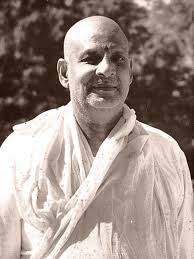
swami sivananda Vintage portrait of monk in white robe outdoors image
Swami Sivananda, The Ultimate Goal of Mankind - Self Realization

Vegetarianism

Vegetarianism By Sri Swami Sivananda Sage Uddalaka instructs his son Svetaketu: “Food when consumed, becomes threefold. The gross particles become the excrement, the middling ones flesh, and the fine ones the mind. My child, when curd is churned, its fine particles which rise upwards form butter. Thus, my child, when food is consumed, the fine particles which rise upwards form the mind. Hence, verily, the mind is food”. Three Kinds of Diet Diet is of three kinds, viz., Sattvic diet, Rajasic diet, and Tamasic diet. In the Bhagavad-Gita, Lord Krishna says to Arjuna: “The food which is dear to each is threefold. The food which increases vitality, energy, vigour, health, and joy and which are delicious, bland, substantial, and agreeable are dear to the pure. The passionate persons desire foods that are bitter, sour, saline, excessively hot, pungent, dry, and burning, and which produce pain, grief, and disease. The food which is stale, tasteless, putrid, rotten, and impure, is dear to the Tamasic”. Milk, barley, wheat, cereals, butter, cheese, tomatoes, honey, dates, fruits, almonds, and sugar-candy are all Sattvic food-stuffs. They render the mind pure and calm and play a very important part in the practices of spiritual aspirants, in the mental development of the student, and in the personality- power of the leaders of mankind. Fish, eggs, meat, salt, chillies, and asafoetida are Rajasic food-stuffs; they excite passion and make the mind restless, unsteady, and uncontrollable. Beef, wine, garlic, onions, and tobacco are Tamasic food-stuffs. They exercise a very unwholesome influence on the human mind and fill it with emotions of anger, darkness, and inertia. Stress on Moral and Spiritual Values No doubt, animal diet may produce a strong Sandow, or a dauntless soldier, or a keen, brainy scientist. But, in the Hindu view of life, the real value is placed upon the moral and spiritual worth of the man. Man is more than just body and mind; he is essentially an ever-perfect, ever- pure, and ever-free spirit in his true inner nature. Human birth is given as an opportunity and a means to attain this sublime knowledge of his inner spiritual nature and to regain his divinity. In this process, all grossness and animalistic tendencies have to be totally eliminated from the human personality. Non-vegetarian diet, which is gross and animal by its very nature, is a great hindrance to this process. Whereas, pure Sattvic diet is a great help to the refinement of the human nature. The chemical components of different foods vibrate at varying rate. Each particle of food is a mass of energy. The intake of certain food-stuffs sets up discordant vibrations in the physical body which throw the mind into a state of oscillation and disequilibrium. Concentration of mind is rendered difficult and high thinking is disturbed, because elevating thoughts imply fine vibrations. Meat Diet Generates Diseases Meat generates diseases, excites passions, and produces restlessness of mind. Scientists are coming to the conclusion that there are, in meat, certain things which are absolutely poisonous. A very large number of medical men who have studied the subject of diet in relation to health are forbidding their patients to eat animal flesh, not only as a means of cure for such diseases as gout, rheumatism, etc., but also as a preventive against uric- acid ailments and diseases of many kinds, including consumption, cancer, and appendicitis. Meat is not at all necessary for the keeping up of perfect health, vigour, and vitality. On the contrary, it is highly deleterious to health; it brings in its train a host of ailments such as tapeworm, albuminuria, and other diseases of the kidneys. In large meat-eating countries, cancer mortality is admittedly very high. Flesh-Eating Involves Cruelty Moreover, flesh-eating involves the exercise of cruelty which is not an elevating virtue. It is a bestial quality which degrades man. Cruelty is condemned by all great men. Pythagoras condemned meat diet an sinful food. The cruel slaughter of animals and the taking of innocent lives which flesh- eating entails makes it abhorrent to all right thinking men and women all over the world. Butchery and blood-shed is a great disgrace to civilisation and culture. Killing of animals for food is a great blunder; and the mentality it engenders is fraught with potential dangers for the life of humanity, a recognition of which made George Bernard Shaw say that as long as men torture and slay animals and eat their flesh, we shall have war. Abolish Slaughter-Houses If you want to stop taking mutton, fish, etc., just see with your own eyes the pitiable, struggling condition of the animals at the time of killing. Now mercy and sympathy will arise in your heart. You will determine to give up flesh-eating. If you fail in this attempt, just change your environment and live in a vegetarian hotel where you cannot get mutton and fish, and move in that society where there is only vegetable diet. Always think of the evils of flesh-eating and the benefits of a vegetarian diet. If this also cannot give you sufficient strength to stop this habit, go to the slaughter- house and the butcher’s shop and personally see the disgusting, rotten muscles, intestines, kidneys and other nasty parts of the animals which emits bad smell. This will induce Vairagya (dispassion) in you and a strong disgust and hatred for meat-eating. (Click here if you feel you need to see scenes from a slaughter-house to induce dispassion for meat. If you can’t stomach pictures, you can read about one person’s visit to a slaughter-house.) All slaughter-houses should be abolished, and the use of animal flesh as food should be absolutely given up. Flesh-eating is unnecessary, unnatural, and unwholesome. The countless instances of reputed philosophers, authors, scholars, athletes, saints, Yogins, Rishis who lived on vegetable diet conclusively prove that vegetarian diet produces supreme powers both of mind and body, and is highly conducive for divine contemplation and practice of Yoga. Man is created a frugivorous or fruit-eating creature. This scientific fact is evident

Vegetarianism Read Post »

bdfbff37681676212acbcea24a7005ed
Celestial Collection of Divine Messages - Awakening the Divinity in Man, Swami Sivananda

Man And His Mind

Man And His Mind Sri Swami Chidananda Radiant Atman! Man is man because he has a mind. Thinking, reasoning, feeling, that alone makes man. If he has no mind he is an animal. But mind can make a man a beast also. Mind can make a man a demon. Because if the mind is not made sattvic, if it is not governed by an awakened, discriminating, ever alert, vigilant and keenly enquiring intellect, then mind becomes the greatest problem; it becomes the greatest trap, the greatest enemy, the greatest complication, the greatest source of all types of troubles to the aspirant, to the seeker. One can become helpless, mercilessly tormented by the mind. It takes charge of one’s life, and one is ruled by emotions, sentiments, passions and error. Because the nature of the mind is to always create confusion and constant restlessness, constant activity, constant thinking of sense-objects, constant going outside, constant involving and entangling itself in things. It is a bundle of desires, cravings and imaginations. It is a companion with whom you should deal with great caution. It is there; you cannot help it. You cannot get rid of it; you have to live with it. But you must know that it is your problem, it is your trouble-maker. You should not think it is your friend. But it is the mind, the manas, that is your problem, not the antahkarana. The antahkarana (inner being) also contains your great helper. It contains your greatest asset, which can make you divine. Because the antahkarana contains not the mind only, it contains the buddhi (intellect). And it contains the chitta (sub-conscious mind), Pandora’s box, which contains all that is wonderful and beautiful and also all that is ugly and not so wonderful. You have no control over the chitta. If you want to get the best out of it, you have to transform it where it is. Even without being able to control it, you can transform it. You can gradually lessen and eliminate all its unfavourable tendencies and subtle impressions by a constant process of deep innermost transformation, purification. The power of the Name of God can reach where you cannot reach. It does not need to see. You are blind; you have to grope in darkness when you try to enter the mind, when you try to turn the gaze within and do introspection, analyse yourself, study yourself. The Name of God does not require by light to see, because it itself is the Light. The moment it goes, it goes on its own light. It goes deepest into the mind and through its power it gradually brings about a total transformation, a revolutionary transformation. It makes the mind no mind, fills it with sattva. It brings light into the darkness of the mind, and it is able to rid the chitta of all its negativity. Because chitta is necessary. That which is in the chitta is not entirely valueless, though it is a constant source of thought, desire, craving and imagination. Nevertheless, it contains precious gems, all the nine gems. Because anything you hear or read, anything sublime, elevating, noble, inspiring, is stored in the chitta. You must know how to take it out. Anything ugly, dirty, indecent—that too is stored in the chitta. Whatever you perceive, whatever you see, whatever you hear, immediately gets lodged in the chitta. So you must know the necessity of being selective, closing the windows of the senses, not allowing wrong things to get into the chitta. Allow only that which is valuable, which can be a wealth, an asset to you. That alone should be given entry. That which has got in from previous births you cannot help. That you have to transform through japa, meditation, prayer, satsanga, svadhyaya, nishkama-karma-yoga. That you must do. It is a gradual process. But what gets into the chitta now and in the future—that you can help. That is under your control. That is why they say you must have samyama, self-control. That is why they say you must be discriminative, you must have pratyahara (withdrawal of the senses) when you go amidst sense-objects, when you go amidst people. Some people will talk sense; some people will talk nonsense. Some will talk wisdom. You must know what to take in and what not to take in, what to ignore, bypass. Even in satsang everything that is said cannot be meant for everyone. You must know what is meant for you, take what is helpful or required and leave the rest. A listener is supposed to be a viveki. And when you go out, you must know what to open the sense to and what to close them to. You must be determined to keep your chitta pure. You should not allow impurity to enter through bad company or wrong perceptions, unnecessarily absorbing through the senses things which are likely to create problems. So you must be wise, you must be alert. You must live and move through each day of your life wakefully, wisely. That is the hallmark of a sadhak—wisdom,wakefulness, alertness, discrimination, selection and rejection. Yes, this is the great necessity; otherwise, mind can bring about a downfall. Mana eva manushyanam karanam bandhamokshayoh—mind alone is the cause of bondage and liberation of human beings. Buddhi isthe balancing factor. Buddhi is the redeeming feature of the antahkarana. Mind is the mischief-maker, buddhi is the redeeming factor. Buddhi should be cultivated, enriched by satsang and svadhyaya, constant reflection, manana, also. Then buddhi becomes a valuable friend; it is constantly present to help you. Aspiration too should be constantly kept up. It does not blaze by itself. The fire of aspiration has to be stoked time and again, day after day. It has to be fanned. Then alone it will always be fully blazing. Any fire if neglected gradually becomes embers and then covered with ash. And this fire of aspiration also can die out, God forbid. If further neglecting it, one dampens it with water or some contrary element, it will die out; you will have ashes only—neither useful to you, nor to anyone. Then no use weeping and putting those ashes on your body, no use. It is futile. And it will be no one’s fault but your own. Therefore, man is man because he has a mind. The hallmark of a sadhak is not merely activity of the mind and

Man And His Mind Read Post »

image 46
Swami Sivananda, The Ultimate Goal of Mankind - Self Realization

Tantra Sadhana

Tantra Sadhana By Sri Swami Krishnananda The system called Tantra has been always regarded as an esoteric and a secret way of spiritual practice, not accessible to the untrained one and to the common folk. The secrecy about the practice seems to consist in the novel outlook of life which the Tantra requires the seeker to entertain, a way of looking at things different from the one in which people are generally accustomed to see, interpret and evaluate things. The teachers of the Tantra hold that a seeker on this path has to outgrow the social and even the human outlook and develop a superhuman and divine outlook in respect of things. Since this would be to expect too much from the common man in the world, Tantra is supposed to be a closed secret whose gates can be opened only with the key provided by a competent Guru. The philosophy of the Tantra is based on the concept of a dual nature of everything. Nothing is single, but everything is bi-polar. The so-called unity of things is only a form taken by a particular manner of the coming together of two forces, Siva and Sakti, we may say, the positive and the negative poles. In order to understand this mystical conception of the universe, we may refer to the traditional doctrine of the Puranas, the Manusmriti and the Mahabharata, that in the beginning there was a universal Uni-Cell, as it were, known as the Brahmanda, which split into two, one part of which was the Cosmic Man and another part the Cosmic Woman. We may call these parts Siva and Sakti, if we so wish. Even our modem science seems to be corroborating this view when it holds that in the beginning the universe was a single Atom, which split into two and then into the multiplicity of the present form of the universe. Since the two parts and their subsequent sub-divisions actually belong to a whole, there is a natural pull exerted by each on the other, there is a mutual attraction between the positive and the negative poles, both at the cosmic level and its lower multiple forms of descent, even down to the atom, which today we learn is constituted of a bi-polar structure with a nucleus in the centre and electrons revolving round it in a most mysterious way. The behaviour of the two parts of any single organism seems to be a double attitude of the consciousness of duality and unity at the same time. There cannot be attraction between the positive and the negative unless they form two poles, and not a single something, and yet, at the same time, there cannot be this attraction if they are absolutely two different things without a basic unity operating in and between them. This is the mystery and the difficulty in understanding the phenomenon known as attraction, usually called love or affection in common language. While the concept of Siva and Sakti, in its highest essence, represents the Supreme Cosmic Duality, and one can imagine only attraction and love operating there, so that Siva and Sakti are considered as inseparable facets of a unitary reality sometimes known as Ardhanareesvara, the Cosmic Androgyne, the principle of repulsion, viz., dislike going with like, hatred going with love, will be seen at the lower levels where the bi-polar unity assumes a multiplicity of forms, so that one bi-polar unit cannot tolerate the interference or sometimes even the presence of another such bi-polar unit, for fear of losing its isolated self-conscious bi-polar unity. This subtle operation can be seen manifest in its grosser forms when one family group finds it difficult to appreciate another family group and bestow equal love upon it, one organisation, one social group, and even one bi-polar individual, cannot look upon another such without some suspicion and reservation. According to the doctrine or the Tantra, the sorrow of life is caused by a bi-polar existence, a split of the one into two, because the truth of things is oneness and not the dual existence in any of its forms. The dual form of life being, in a sense, an unnatural way of life, there is always an ambivalent attitude of like and dislike at the same time between one pole and another, love getting suppressed when hate supervenes, and hate being suppressed when love gains the upper hand, while the fact is that both these attitudes are present in an individual hiddenly and only one of the aspects comes to the surface as and when the occasion demands. To get back from duality to unity is the process of Tantra Sadhana. While this is the objective of every Sadhana, what is the speciality of the Tantra as distinct from other Sadhana in the achievement of this objective? The distinction is very subtle, not easily noticed. In all forms of religious practice, mostly, there is an ascetic injunction towards a rejection of the outer for the sake of the inner, the material for the sake of the spiritual, a cutting off of every desire as a baneful obstacle to Sadhana, and a considering of every joy in life as an evil to be eradicated at the earliest opportunity. To the Tantra, the things of the world, the material forms of perception, are not really obstacles, and a desire for them cannot be overcome by rejecting the desire itself. Everything in the world, the whole world itself, is a passage to perfection. The visible is a way to the invisible and not an obstacle to it. Human desires arise on account of the unintelligent attitude man develops towards desire, and he has a fear of desire since he is being told that all desire is bad and all objects are bondages. The Tantra holds that the object is not a bondage, because of the fact that the object is inseparably related to the subject, the object is the other pole of which the subject is the complementary

Tantra Sadhana Read Post »

214835459 4148525121893043 3198866625048083145 n
Celestial Collection of Divine Messages - Awakening the Divinity in Man, Swami Sivananda

Affirm Truth Reject Untruth

Affirm Truth Reject Untruth Sri Swami Chidananda Radiant Atman! This week we will observe the jayanti of Adi Sankaracharya, one of the greatest of Self-realised souls and philosophers this world of ours has produced. Leaving home, in a spirit of renunciation and aspiration to realise the Reality, at the tender age of eight years, he completed an unbelievable mission in the span of just a few years, passing away in his 32nd year. During that period he did what is known as digvijaya (conquest of the quarters), carrying the banner of Advaita Vedanta, the supreme philosophy of absolute monism, into the four corners of India and overcoming all lesser schools of philosophy through his convincing, irrefutable arguments. His incredible work remains dynamically living, active and ever progressive even to this day, more than 1200 years after he propounded his doctrine. The quintessence of Advaita Vedanta is to affirm the truth and reality of your essential, eternal, divine identity and to resolutely reject the error of thinking of yourself as a finite human creature having a name and form, beginning and end, and subject to changes such as birth, death, old age, disease, decay, pain, sorrow, suffering, etc. Resolutely rejecting this error and simultaneously affirming your eternal, unchangeable divine identity is the centre of Advaita Vedanta sadhana. They call it affirming and rejecting, pushtikarana and nirakarana—neti, neti. Sankara’s most popular work, Vivekachudamani, is a call to discrimination between the Self and non-Self–atma-anatma viveka. Atma is sat (existence absolute). Anatma is appearance only, temporary in time, limited in space, perishable; it is kshara purusha (perishable being). Atma is akshara purusha (imperishable being)–ajo nityah sasvato’yam purano na hanyate hanyamane sarire (Unborn, eternal, changeless and ancient, the Self is not killed when the body is killed). Thus the Vivekachudamani is a discourse, a treatise and a sadhana on discrimination between the Self and the non-Self. And a second work of his, Atma Bodha, is a light upon what the Self is. As you discriminate between the Self and the non-Self, you get a good knowledge of what the non-Self is, so you can reject it; you will not be deluded by it. You can free yourself from the veil of delusion by knowing the nature of anatman. And then, to be rooted in the Reality, to be fixed in it firmly, to be able to think, reflect and meditate upon it and to awaken the correct awareness within your consciousness, a thorough study of what the Self is is of great importance and value. To that end, Atma Bodha can be the way that God can gradually answer your prayer, “tamasoma jyotir gamaya” and “dhiyo yo nah prachodayat” (“From darkness lead me unto light” and “May He illumine our intellects”). To avoid that which is wrong, we have to get a knowledge of what wrong is; and to pursue and practice that which is right, we have the need to have a knowledge and a grasp of what right is, of what Reality and Truth is. Thus both the negative and positive and positive aspects of Vedantic admonition are of equal importance in making the mind aware of its error and to make the intellect grasp the truth. When Brahman is the reality to be attained, why unnecessarily know about the world, prapancha, samsara? The answer is that because you want to free yourself from the delusion of the world, you must know the tricks of this deluding appearance. Indeed, you must know everything about it, because it comes in numerous subtle ways. We think the world is outside us, but, by and large, the world or prapancha or samsara is within us. We have to understand that. What is it within us that makes us regard prapancha to be real and makes us move towards it, get attached to it, get bound by it? What is it within us? That has to be rooted out, eradicated first. Thus the study of avidya or maya within is the key to freeing ourselves from delusion and rising from darkness to light. Gurudev again and again reiterated: “Thou art immortal Soul. Thou art not this body nor this mind. They are upadhis, limiting adjuncts temporarily added on to you. They are there as part of your lesser personality, your earth consciousness, but you are also there far beyond them, transcending them, a divine personality, a supra-human spiritual reality, untouched by time and space, not bothered by pain, sorrow and suffering.” This, then, is to be heard, reflected upon and meditated upon. May you direct all your attention to the practice of this truth which shall make you free. For it is this truth that arouses in us our kinship with the eternal, universal Reality, paramatman. May the grace of the Lord grant you success in this sadhana of being what you really are and of resisting the pull of the lower mind to make you imagine that you are something other than this Reality. Constantly you have to reject the attempts of the mind and its age-old, inveterate tendencies to keep itself tied down to a lower level of ignorance and mistaken identity. It should be given no quarter. By the strength of your will power, your positive, awakened consciousness and your resolute and determined sankalpa to attain realisation in this very body, you must keep this process up. You must shine with an effulgent inner awareness of your own essential, immortal and imperishable divine identity. Your interior should be a mass of effulgence, of jnana prakasa. There should be a state of jnana bodha within, a state of wakefulness within–no slumber. For this you must pray, and for this you must practise. May this week be permeated by the spirit of Jagat Guru Adi Sankaracharya, the Advaita Acharya, and may it have the effect of successfully lifting up your consciousness from the present, ordinary, humdrum human level of earth consciousness into a lofty, sublime higher spiritual level of a divine spiritual consciousness!

Affirm Truth Reject Untruth Read Post »

image 42
Celestial Collection of Divine Messages - Awakening the Divinity in Man, Swami Sivananda

True Sannyasa

True Sannyasa Sri Swami Chidananda Beloved and worshipful Gurudev! Homage unto thy glorious and gracious spiritual presence, thou who art the light, the life and the soul of this Ashram that you have created upon this holy spot on the right bank of Divine Mother Ganga in sacred Uttarkhand! Fortunate are we to gather together in this sacred Samadhi Hall during this early morning hour of quietness and to enter into silent spiritual fellowship with souls whom you have drawn by the power of your inspiration and divine wisdom teachings. Most fortunate are those who visit this place. Most fortunate indeed are those who are able to spend some time doing anushthana japa, and most fortunate indeed are those thrice blessed souls who dwell with you and live the life divine. I bow to your presence and invoke thy glance of grace, kripa-kataksha, upon all those assembled here. I pray that thy guru-kripa and choicest blessings may enable them to lead the life sublime, to lead a life of tyaga and tapasya, nivritti and sannyasa, bhakti and bhajan, self-control and discipline, concentration and meditation, a life of active enquiry, discrimination and analysis, a life of introspection, reflection and contemplation, a divine life of truth, purity, compassion and kindness, a divine life of service, devotion, meditation and aspiration for Self-realisation. May this be your special gift on this day, June 1, the anniversary of your sannyasa, your renunciation. In 1924 you came here as a lone wanderer, not knowing the language of this part of the land, not knowing the customs prevailing here and unfamiliar with the experiences of extreme heat and extreme cold. You had but one thought, to be in seclusion, in silence, and to chant the Name of God, pray to Him and attain realisation. Blessed is that day, for out of that renunciation of yours, out of your embracing the monastic order, has sprung up a monastic family of effulgent tyagis, effulgent monks filled with a light of a higher awareness, a higher consciousness, benefiting others by this inner light that they have acquired by their contact with you. Blessed is that day, for it has given rise to this great, noble edifice of Divine Life, of Yoga-Vedanta, of practical spiritual sadhana, in this age of materialism, scepticism, atheism and hedonism. Blessed Immortal Atman! Beloved fellow seekers after the Eternal Reality! We were considering the need to awaken, unfold and activate the latent, dormant spiritual samskaras, the spiritual impressions and the latent tendencies, spiritual inclinations, vasanas, carried over from past births. Otherwise they will remain dormant without fructifying. A number of years back, in Egypt, when one of the tombs of a young pharaoh was opened, they discovered beside his mummy many seeds of grain left there by the ruler’s loyal subjects. The archaeologists were fired with an intense curiosity: “Will these seeds sprout? Are they still holding the life principle after lying here for thousands of years?” So, with great anticipation they planted them. And lo and behold when the seeds were watered and given the right conditions for germination, they soon sprouted forth and grew into shoots of grain. Civilisations had come and gone, kingdoms had risen and fallen, but in these seeds entombed with the young pharaoh, life remained dormant ready to sprout forth given the right conditions. Even so, we have considered how samskaras and vasanas, impressions and latent tendencies, will ever lie latent and dormant, without effectively making their appearance felt as part of our life, without becoming dynamically active, vigorously expressed and manifested in our own nature, until and unless they are made to sprout forth, awaken, put forth their fruits, by bringing to bear upon them a keen aspiration, a great desire, an intense longing, a fervent yearning for spiritual unfoldment, spiritual growth, spiritual realisation–subheccha, mumukshutva and jijnasa. Such was the intensity of aspiration that burned in the heart of young Dr. Kuppuswami when he turned his face north towards the Himalayas and the Ganga and walked the length of India, arriving here towards the end of 1923. He had an intense longing, an all-consuming desire in the heart, a desire implanted by God, which is part of God’s nature, vidya maya. Dharmaviruddho bhuteshu kamo’smi bharatarshabha (In all beings I am desire unopposed to dharma, O Arjuna). It is such desire that liberates. It is such desire that awakens. It is such desire that brings into dynamism latent tendencies and dormant spiritual samskaras. It is like a flame being applied to a combustible material which will otherwise ever remain dull and cold like any other thing around it. It is only when a flame is applied to it that it immediately bursts forth into a blaze full of radiance, full of heat, full of the power to consume, to reduce to ash anything that comes into contact with it. That power comes when it is awakened, made to manifest in an active way. That was what happened. Dr. Kuppuswami’s heart was afire for Self-realisation, for brahma-jnana, to become a jivanmukta, to have the peace that passeth understanding, to have the sukham-atyantikam yattad-buddhigrahyam-atindriyam (endless bliss beyond the senses that may only be grasped by the pure intellect), paramananda (supreme bliss) which gives nityatripti (eternal satisfaction). And he kept this longing ever clean, ever ablaze, ever fiery; he never allowed it to die down or become dull or become mediocre. It was kept to a high intensity of heat through his fervour through his zeal, through his enthusiasm, through his keen longing and eagerness. It was this that was the key to the Self-realisation, sainthood and sagehood of beloved and worshipful Guru Maharaj Swami Sivanandaji. This is the factor that causes a latent force, a spiritual force and power, to make itself actively manifest, to be dynamically expressed in our life as a transforming power, an uplifting force. If it is kept us to the very last, it takes us to the supreme state of blessedness and crowns our life with the glory of God-realisation. And Guru Maharaj was that awakening and sparking factor who ignited within you the dormant and latent spiritual tendencies through his wisdom teachings. It is when you opened a book of his and your eyes alighted upon some page. That is

True Sannyasa Read Post »