








Hari Om

Menu

February 24, 2026

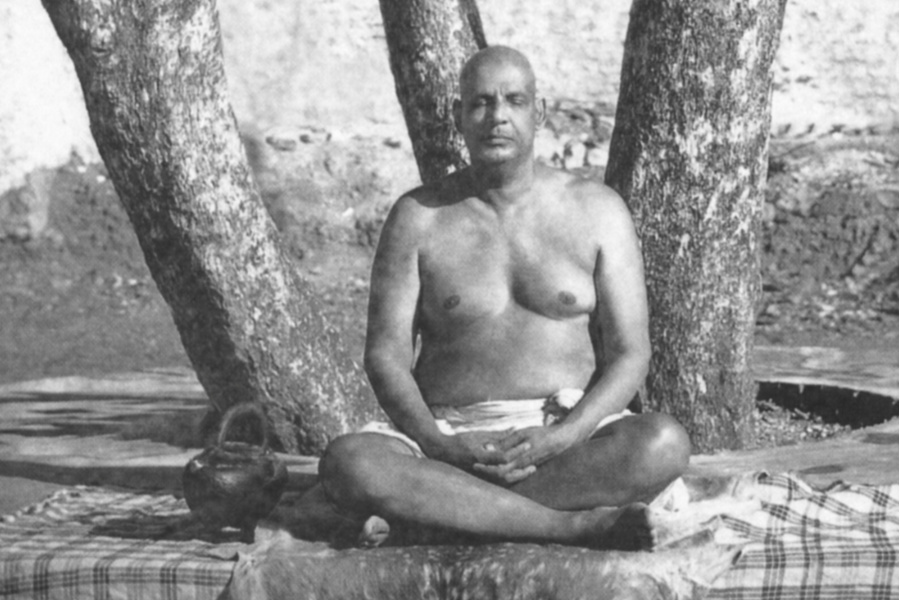
swami sivananda Monk meditating under tree outdoors image
How to Concentrate and Meditate, Swami Sivananda

Meditation–Your Only Duty

Meditation–Your Only Duty By Sri Swami Sivananda Meditation is your only duty. You must realise the goal of your life: God-Realisation. Then only would your life be fruitful. There are several stages in the path to God-Realisation. Purification, concentration, reflection, meditation, illumination, identification, absorption and salvation. Through service you should purify yourself and then proceed through concentration, meditation, etc.; finally you reach the goal of Salvation. Time for Meditation You must do Brahma Vichara in Brahmamuhurtha. You must enquire “Who am I” in Brahmamuhurtha. Meditation performed for an hour in Brahmamuhurtha is equal to meditation performed for six hours during other periods of the day. If you get up at 4 a.m. you will have time in the early morning for your prayers and meditation. You will charge yourself with Sattva. You will get strength to face the daily battle of life. Morning time is most suitable for meditation. The mind then is not filled with Raga-Dvesha as at other times. You can fill it with Sattva, through meditation, by recitation of Stotras and hymns, or of Slokas like “Ajo Nitya Sasvatoyam Puraano Na Hanyate Hanyamaane Shareere.” You must ever dwell on these thoughts. It is only for beginners: the instruction to meditate a little. You must meditate much. But you must increase the period gradually. Particularly retired people should meditate more. But, if I at once say, ‘Meditate more’. beginners will be frightened. Therefore, I say Meditate a little’ This is only to tempt people to meditate first of all. Method of Meditation The mind is duping you every moment. Therefore, wake up now at least and cultivate this discrimination through enquiry into the nature of the Self, through Satsanga, study and meditation. Meditate on OM. ‘Tad Japastadarthabhavanam’. OM is Satchidananda. OM is infinity. Om is perfection and freedom. Meditate on these divine attributes of Nirguna Brahman. Meditate on the nature of the Self. ‘I am Satchidananda—Existence-Knowledge-Bliss Absolute’. Meditate on divine qualities. If you are not able to practise this abstract meditation, then meditate on the Sun, the light, or the all-pervading ether or air. Meditate on the light that is shining in your heart; meditate on those dream pictures that you sometimes get. Meditate on the form of your Guru or Saints. Meditate on anything your mind likes best. Meditate on the form of your father, on his qualities. Do common meditation for a few minutes. From that common meditation, you will know that real peace and bliss are within. Collect all the rays of your mind—Pratyagatmanam Ishat Avrita Chakshuh—repeatyour Ishta Mantra; the mind should not move towards the sense-objects, there is no Vritti; Therefore, you enjoy perfect peace and bliss. Regularly practise such meditation. Nama Rupam Na Te Na Me Aham Atma Nirakara Sarvavyapi Svabhavata. Again and again meditate on these formulae. They will give you strength. Even if you meditate once, it gives you some strength. You are not the body composed of the five elements. Again and again remember this. Meditate on this. You must find the Atman through reflection and meditation. “Atman knows everything else; and knows itself, too.” That is your real Svaroopa. There is no such object in this world. Meditate and sing: ‘Sivoham Sivoham Sivoham Soham. Satchidananda Svaroopoham.’ Practise Yoga Asanas and Pranayamas, which will purify the body and mind, remove all diseases and help in concentration and meditation. You should get up in Brahmamuhurta and meditate. This is the best time for divine contemplation. The mind is calm. It is like a blank sheet of paper. You can mould it in any way you like. The worldly currents of Raga-Dvesha have not entered it at this time. You can chant Om (long or Deergha Pranava) 10 or 12 times. When you so repeat Om all the Koshas will begin to vibrate harmoniously. Meditate intensely, ceaselessly. It will be difficult to meditate ceaselessly in the beginning. Practise. You will grow in cheerfulness and joy. Increase the period of meditation. Gradually you will come to meditate ceaselessly, intensely. Meditate on the abstract qualities like Existence, Knowledge and Bliss Absolute. Keep these thoughts always before your mind. This is the abstract background of thoughts. Or, you can meditate on the form of the Lord: Saguna Upasana. Mentally visualise the picture of the Lord. Now look at His Face, now at His Chakra, now at His Feet. The mind will not run. The mind must not run out. If you try to find the mind on the Lord dwelling in the chambers of your heart you will be an introvert. You can meditate on the Jyotis in the heart. You can meditate on the divine objects seen in dreams or visions. You can meditate on the form of a Saint who is free from Raga-Dvesha. ‘Yatha Abhimatha Dhyaanaad vaa.’ Or, meditate on anything you like best. An aspirant once approached his Guru and asked for instruction on meditation. The Guru asked him to meditate on Lord Rama. The disciple said: I find it very difficult to meditate on Lord Rama.’ ‘Why?’ ‘Because I have got inordinate affection for my buffalo.’ Then the Guru said: ‘Then meditate on the picture of a buffalo.’ The disciple sat in deep meditation. One, two, three days passed. The Guru called on the disciple to come out. The disciple said: ‘I am not able to come out. I am myself a buffalo. I cannot pass through the door.’ The Guru found out that the disciple had perfect concentration of mind. He then gave him the form of Lord Vishnu to meditate upon. Then the disciple entered into deep Samadhi. There are many obstacles on the path. All these obstacles should be got over. Sleep always disturbs the aspirant. Take light food at night; dash cold water on the face when sleep tries to overpower you; stand up, and do Japa standing for some time; practise Bhastrika—these practices will drive off sleepiness during meditation. Chant OM 10 to 12 times. You will be fit for good concentration. You can

Meditation–Your Only Duty Read Post »

swami sivananda Monk seated wearing garland outdoors image
Celestial Collection of Divine Messages - Awakening the Divinity in Man, Swami Sivananda

A Unique Message Of Gurudev Swami Sivananda

A Unique Message Of Gurudev Swami Sivananda Sri Swami Chidananda What has Gurudev Swami Sivanandaji Maharaj specially done to the world which the great saints and sages like Sri Ramakrishna Paramahamsa, Swami Vivekananda, Swami Ramatirtha, Sankaracharya, Ramanuja, Vallabha and others did not do? Gurudev has brought the message of all these people. What Jesus said and Buddha and Mohammed said—the quintessence of these teachings has been given to us by Sri Gurudev. Gurudev has given us the essence of all the messages contained in the Upanishads, the Gita and other holy scriptures. What is the uniqueness of Sri Gurudev? Has he done something distinctive? Every person is unique. Just because you have been eating rice, Chapati, Dal and vegetables all your life, if today these things come to you, will you say, “What is unique in this? I am eating them daily. I don’t want them.” You will not say that; because today’s food is unique for today. It is the need of the hour; all that you have eaten for so many years will not appease your hunger today. Today’s meal is unique for you. Similarly, from this angle in the context of each period and generation, in each century, the work of a saint, a sage or a messenger of God who comes in that particular framework of time, is of most important significance to that particular time. If you go into deeper analysis, you will find that it is exactly the prime need of the hour. So from that point of view Gurudev’s teaching was unique. Its value cannot be estimated at all. It is invaluable. In the context of what was going on in India and outside India, Sri Gurudev appeared to once again revive the fast fading loyalty or allegiance of Indian people to their own culture. The people then were under the impact of a flood of alien ideas and ideals. At that time Gurudev put before them the great value and the precious importance of the eternal ideal and goal. He proved that the spiritual ideal can never become old. It is ever new. And it will continue to be new even in the future; because it is eternal. Gurudev thus showed people the right path and then woke them up to their error. He said, “Don’t commit the error of getting fascinated by wrong ideals. Don’t commit the error of casting away diamonds for a piece of glass. A diamond is always a diamond even for thousands of years. Glass can never take its place.” Gurudev also put them into the pride of their religion; he put into them a desire to propagate it. Dissemination of spiritual knowledge was something very dear to Gurudev. He used to say, “It is no good for you not to know what your religion is. Know your religion. But don’t keep it to yourself. Share it. Share whatever is beneficial to all. See that others also are benefited by this knowledge.” Though other saints have also done this before, Gurudev did it in a very unique way. He said, “Religion is not confined either to the time you visit a temple or your Puja room morning and evening. It is something which pertains to every breath that you take. It is something which has an intimate connection with and is concerned with every moment of your entire life.” So he refused to make religion a part of people’s life. For him life itself was religion. What is religion? Man’s attempt to worship God and to move towards Him is religion. Life should be lived as worship to God; life should be lived as an upward ascent into God-experience and Bhagavad-Darshan, coming face to face with God. The whole life must be made divine. You must live life as a divine process and not as a material or worldly process. We must open our eyes to this new outlook. Gurudev said, “Here I give to you life that is not going to be in any part either materialistic or worldly or gross. All life is spiritual. All life is divine connecting you directly to God. Therefore, live life divine. If you are a doctor practising medicine, practise it in a divine way, seeing His Presence in your patients. If you are a lawyer, then be a divine lawyer. Practise your law in a divine spiritual way. If you are a businessman, do your business in a divine way. Make it spiritual and not earthly and corrupt. If you are a professor or a teacher or a principal, know that you must be so in a divine way. If you are an engineer then be a divine engineer.” Because, that which you are doing is extraneous to yourself. It is ‘you’ who are doing it, so it does not matter what you are engaged in, ‘you’ must be divine while you are engaged in it. Then you will bring the quality of divinity in whatever you are engaging yourself in. In your engineering activity, in your medical activity and your academic activity, or any activity for the matter of that, bring the divinity which is your essential nature and can never be contradicted by anything in this world, no matter what anyone may say about it. You are essentially a divine being. Your earth personality is like an overcoat which you have taken upon yourself. But it cannot change what you are. Because this overcoat is temporary, it is Asat, unreal. And that which is unchangeable, eternal, beginningless and endless is your native state; that Vedanta calls Sat, the Truth. So all that is extraneous to you is Asat, unreal. That which is the essence of yourself is Sat. The essence of you is the immortal Atman. You are eternal Spirit, Atman, unborn, deathless. And therefore, in that essence of your being you are divine; because spirit is divinity. Divinity means all-Love, all-Truth, all-Auspiciousness and Blessedness. Therefore, in being divine, your entire life has to be divine.

A Unique Message Of Gurudev Swami Sivananda Read Post »

swami sivananda Framed portrait of monk with garland image
Celestial Collection of Divine Messages - Awakening the Divinity in Man, Swami Sivananda

The Richest Treasure on Earth

The Richest Treasure on Earth Sri Swami Chidananda The eternal message of the ancient sages and saints constitutes the common spiritual heritage of all mankind, and it is a universal inheritance that belongs to one and all. All of us have the right to receive this heritage, but we have not claimed it up until now. However, now the time has come to claim it. This common spiritual heritage of mankind is the richest treasure on earth. All other types of wealth can be taken away from you, devalued or destroyed, but once you acquire the spiritual wealth, it will never be diminished, and it will never leave you. There is enough sorrow and suffering in this world. Let us not add more. On the contrary, let us bring more happiness into this world. Make yourselves centres of joy, and as you go along this highway of life, scatter this joy and blessedness on all sides. Remember the simple prayer of Saint Francis of Assisi. Try to make your life a dynamic manifestation of this simple prayer. This prayer is the essence of all religion and spirituality, just as the message of divine life was the message of the worshipful Master Swami Sivananda. The St. Francis prayer goes like this: Oh Lord, make me an instrument of Thy peace.Where there is hatred, let me bring love.Where there is injury, let me bring pardon.Where there is doubt, let me bring faith.Where there is despair, let me bring hope.Where there is discord, let me bring harmony.Where there is conflict, let me bring unity.Where there is darkness, let me bring light.Where there is sorrow, let me bring joy. Divine Master, I do not seek so much to be consoled, but rather to console. I do not seek so much to be understood, but rather to understand. I do not seek so much to be loved, but to love. For it is in giving that one receives; for it is in consoling that one is consoled; for it is in pardoning that one is pardoned, and it is in dying to this little self that one attains everlasting light. This simple prayer provides a mould for us in which to cast our life’s conduct and character. It provides a blueprint upon which to pattern our thoughts, speech and actions in our day-to-day relationship with all life around us. There must be a certain amount of renunciation of our own views and desires, and in our own small way we must be able to say, “Not my will, dear Lord, but Thy will be done.” We have to forego self-satisfaction if we wish to exercise the subtle virtues of forgiveness, sympathy, understanding and helpfulness. Everything in this world of man has a price on it. The greater the value of what we wish to have, the greater the price that must be paid. When the thing that you wish to have is the Greatest, suffice it to say that no price for that supreme attainment should be considered too much to pay. Jesus referred to it as “the pearl of surpassing price.” Once you truly know its worth, you will act like the man in the parable. In modern terms he did the equivalent of selling his house, car, TV, radio, property, stocks, business and maybe even his wife’s jewellery, because he wanted to possess that which is priceless. He thought no sacrifice was too great. When the rich young man in the Bible wished to follow Him, Jesus said, “Go and sell all that you have and distribute it among the poor, and then come and follow me.” Jesus invited the young man to share a life where one has no home or property, and there is not even a stone on which to lay one’s head. You are not being asked here to do such a drastic thing, although in classical spiritual history that was what was demanded. The spiritual masters of the present century understand the problems of man in the context of the changed situation that prevails today, so they do not ask for such an extreme change in a seeker’s life. They do say however  that a certain amount of self-denial, sacrifice and submission to the dictates of the Higher Will are indispensable. We have to be happy ourselves, and we need to live to make others happy. This we can do, and this we must do. We have to start doing this from this very moment. Sorrow is not natural to you—joy is natural to you. To smile and laugh is natural to you—not weeping and wailing. You have come here for happiness and joy, because you have come here from a great universal source of light, which we refer to as universal soul or God. You are rooted in the divine Reality, and your origin is the eternal truth. Though different religions give various names to the Supreme Being, It is beyond all these names and forms. It is that one, non-dual Being Who is glorified in all scriptures of the world. That is your divine abode. Your abidance in this physical universe is only temporary. Even while you physically and mentally abide on this earthly plane, in truth, even at this moment, you are abiding in the divine. This Supreme Reality is pure bliss. You have come out of this bliss, you abide in this bliss, and this bliss is your ultimate goal. How can you avoid bringing this bliss out of yourself and manifesting it in this life? You are the children of light and bliss; yet, if you experience sorrow, it means that your life is not real life. It is the contradiction of the Reality and a negation of the truth. When you negate truth, your life becomes a living falsehood, and then all the miseries of life will start. The sufferings, conflict and grief of the world are the direct result of negating the truth. Once you stop engaging in this unnatural

The Richest Treasure on Earth Read Post »

image 50
How to Concentrate and Meditate, Swami Sivananda

The Meaning of Meditation

The Meaning of Meditation By SRI SWAMI KRISHNANANDA “Meditation is the art of uniting with Reality.” – Swami Krishnananda The art of meditation is not a job to be performed as one does the duties of one’s profession in life, for all activities of life are in the form of a function of ones individuality or personality which is to a large extent extraneous to one’s nature, due to which there is a fatigue after work and there are times when one gets fed up with work, altogether. But meditation is not such a function and it differs from activities with which man is usually familiar. If sometimes one is tired of meditation, we have only to conclude one has only engaged oneself in another kind of activity, calling it meditation, while really it was not so. We have to make a careful distinction between one’s being and the action that proceeds from one’s being. What sometimes fatigues the person is the latter and not the former. We may be tired of work, but we cannot be tired of our own selves. So it naturally follows that whenever we are tired of a work or a function, it is not part of our nature but extraneous to it. If meditation is also to become a work or a function of our being, it too would fall outside our nature. And one day we shall not only be tired of it but also be sick of it, since it would impose itself as a foreign element upon our being or nature, and it is the character of essential being to cast out every foreign body by various methods. Aspirants on the spiritual path are generally conversant with the fact that meditation is the pinnacle of Yoga and the consummation of spiritual endeavour. But it is only a very few that really gain access into the centrality of its meaning and mostly its essentiality is missed in a confusion that is usually made by equating it with a kind of work or activity of the mind, which is precisely the reason why most people find it difficult to sit long in meditation and are overcome either by sleep or a general weariness of the psycho-physical system. It is curious that what one is aiming at as the goal of one’s life should become the cause of fatigue, frustration and even disgust on occasions. People seek to know the secrets of meditation on account of dissatisfaction with the normal activities of life and detecting a lacuna in the value of earthly existence. And if even this remedy that is sought to fill this gap in life is to create a sense of another lacuna, shortcoming or dissatisfaction and if there should be factors which can press one into a sense of ‘enough’ even with meditation and make one turn to some other occupation as a diversion away from it, it has to be concluded that there is a serious defect in one’s concept of meditation itself. When we carefully and sympathetically investigate into meditation as a spiritual exercise, we come face to face with certain tremendous truths about Nature and life as a whole. Before engaging oneself in any task, a clear idea of it is necessary, lest one should make a mess of what one is supposed to do. The question that is fundamental is: ‘How does one know that meditation is the remedy for the short-comings of life?’ An answer to this question would necessitate a knowledge of what it is that one really lacks in life, due to which one turns to meditation for help. Broadly speaking, one’s dissatisfaction is caused, by a general feeling which comes upon one, after having lived through life for a sufficient number of years, that the desires of man seem to have no end; that the more are his possessions, the more also are his ambitions and cravings; that those who appear to be friends seem also to be capable of deserting one in crucial hours of life; that sense-objects entangle one in mechanical complexities rather than give relief from tension, anxiety and want; that one’s longing for happiness exceeds all finitudes of concept and can never be made good by anything that the world contains, on account of the limitation brought about by one thing excluding another and the incapacity of one thing to include another in its structure; that the so- called pleasures of life appear to be a mere itching of nerves and a submission to involuntary urges and a slavery to instincts rather than the achievement of real freedom which is the one thing that man finally aspires for. If these and such other things are the defects of life, how does one seek to rectify it by meditation? The defects seem to be really horrifying, more than what ordinary human mind can compass and contain. But nevertheless, there rises a hope that meditation can set right these shortcomings and, if this hope has any significance or reality, the gamut of meditation should naturally extend beyond all limitations of human life. Truly, meditation should then be a universal work of the mind and not a simple private thinking in the closet of one’s room or house. This aspect of the nature of meditation is outside the scope of the notion of it which many spiritual aspirants may be entertaining in their minds. An analysis of the nature of meditation opens up a deeper reality than is comprised in the usual psychological processes of the mind, such as thinking, feeling and understanding, and it really turns out to be a rousing of the soul of man instead of a mere functioning of the mind. The soul does not rise into activity under normal conditions. Man is mostly, throughout his life, confined only to certain aspects of its manifestations when he thinks, understands, feels, wills, remembers, and so on. All this, no doubt, is partial expression of the human individuality, but it is not in any way near to

The Meaning of Meditation Read Post »

swami sivananda Hindu altar with deities and guru portraits photo
Celestial Collection of Divine Messages - Awakening the Divinity in Man, Swami Sivananda

Message for Guru Poornima

Message for Guru Poornima Sri Swami Sivananda The full moon day in the month of Ashadha is the extremely auspicious and holy day of Guru Poornima. On this Ashadha Poornima Day, sacred to the memory of the great sage, Sri Vyasa Bhagavan or Sri Krishna Dwaipayana, Sannyasins settle at some place to study, do Vedantic Vichar and discourse on the thrice-blessed Brahma Sutras composed by Maharishi Vyasa. Sri Veda Vyasa has done unforgettable service to all humanity for all times by editing the four Vedas. Writing the eighteen Puranas, the Mahabharata and the Bhagavata. We can attempt to repay this deep debt of gratitude we owe Him only by constant study of His works and practise of His teachings imparted for the regeneration of humanity in this Iron Age or Kali Yuga. In honour of this Divine personage all Sadhakas and devotees perform Vyasa Pooja on this day, aspirants worship their Guru, Mahatmas and Sadhus are honoured and entertained and acts of charity done by all Grihasthis with deep faith and sincerity. Mark fully the deep significance of this great day. Ashadha Poornima heralds the Chaturmas or the setting in of the eagerly awaited rains. The water drawn up and stored as clouds in the hot summer now manifests in plentiful showers that usher in the advent of fresh life everywhere. Even so, do you all begin seriously to put into actual working all the theory and philosophy that you have stored up in you through patient study. Commence practical spiritual Sadhana right from this day. Generate fresh waves of spirituality. Let all that you have read, heard, seen and learnt become, through Sadhana, transformed into a continuous outpouring of Universal Love, ceaseless loving service, and continuous prayer and worship of the Lord seated in all beings. As the day of Guru Pooja or worship of one’s preceptor, this is a day of pure joy to the sincere aspirant. Thrilled by the expectation of offering his reverent homage to the beloved Guru, aspirants await this occasion with eagerness and devotion. It is the Guru alone that breaks the binding cords of attachment and releases the aspirant from the trammels of earthly existence. The Guru is God Himself. He guides and inspires you from the innermost core of your being. He is verily the Supreme Spirit. He is everywhere. Have a new angle of vision. Behold the entire Universe as Guru Swaroopa. See the guiding hand, the awakening voice, the illumining touch of the Guru in every object in this Creation. The whole world will now stand transformed before your changed vision. The Virat Guru will reveal all the precious secrets of life and bestow Wisdom. The Supreme Guru manifest in visible Nature will teach you the most valuable lessons of Life. Worship daily this Guru of Gurus, the Guru who taught even Avadhut Dattatreya. The silent all-enduring Earth with its lofty forbearance, the shady fruit bearing tree with its willing self-sacrifice, the mighty Pipal reposing with patience in the tiny seed, the dripping drops whose persistence wear away the rocks, the planets and the seasons with their order punctuality and regularity are Divine Gurus to him who will look, listen and receive. Become a personification of receptivity. Empty yourself of your petty ego-sense. All the treasures locked up in the bosom of Nature will become yours! You will have progress and perfection in an amazingly short time. Become pure and unattached as the mountain breeze. As the river flows continuously, steadily and constantly towards its goal, the Ocean, by moving every moment of your life towards the Supreme state of Existence-Knowledge-Bliss, let all your thoughts, all your words, all your actions be directed only towards the Goal. The Moon shines by reflecting the dazzling light of the Sun. It is the Full-Moon of Poornima Day that reflects in full splendour the glorious light of the Sun. It glorifies the Sun. Purify yourself through the fire of Service and Sadhana and like the Full Moon reflect the Glorious Light of the ATMAN. Become the full reflectors of Brahmic splendour, the Light of Lights, Make this your goal, to become a living witness to Divinity, the brilliant Sun of Suns! This then is my message to you all on most sacred Guru-Poornima, learn to behold all creation as Guruswaroopa, become full moon of spiritual perfection! May you all cut asunder the knot of Avidya and shine as a blessed Jivanmukta shedding Peace, Joy and Light everywhere!

Message for Guru Poornima Read Post »

How to Concentrate and Meditate, Swami Sivananda

How to Meditate

How to Meditate By Sri Swami Venkatesananda So many textbooks are available on meditation nowadays that everyone has some idea of what it is all about. In brief, meditation is the most wonderful adventure: ‘Discovery of self’. Meditation enables us to enjoy consciously the peace, happiness and revitalisation that we unconsciously have in sleep. Meditation lifts us above the cares and anxieties of our daily life, it enables us to overcome our moral weaknesses and evil habits and thus transform our very life. By dispelling ignorance, meditation removes all our morbid and childish fears and leads us to the hall of divine light, where we perceive our self as the immortal essence of all existence, where we realise that we are at once linked in a bond of eternal love with all creation. By enabling us to get in tune with this cosmic substratum and so with others, meditation gives us supernatural powers. Unless these powers (of whose existence we are not conscious and which we shall not deliberately use) become natural to us, they should be shunned as distractions. ‘An ounce of practice is better than tons of theory’. The following simple procedure will in due course enable you to enjoy deep meditation 1. Select a calm, quiet, clean and secluded spot or a room or corner of a room in your house reserved for this purpose. Sit there (preferably facing east–the sun rises in the east–or north–there is a great power in the north pole), with a symbol of God or a lighted lamp or candle, placed at eye-level. The best posture is, of course, the lotus posture; if you cannot do this, sit in any comfortable posture with your body erect. The yogi wants you to keep the back straight. All sorts of interesting reasons have been given, and one might be of interest to you. If the small of the back is held in, your back is naturally straighter than before. It seems to promote alertness of the mind. The moment you slouch and the small of the back shoots backwards and the spine curves forward your alertness is gone. The best time to meditate is from 4 to 6 a.m., but if this is not possible do this as soon as you wake up. It is good to have a quick bath; if this is not possible (without loss of the good morning hour), have a quick wash of hands, feet and face. 2. Chant a few hymns or offer your own prayer (audibly) to the lord: this is like switching the radio on and tuning it. Raise the mind to a higher level. Imagine you are in the presence of god. This may appear to be self-hypnotism, but the results are astounding. 3. Become aware that you are seated in your room or wherever it is. You are now aware of even your body’s contact with the seat. The knowledge ‘I am sitting here’ ensures that the mind is also here and does not wander away. If the attention tends to wander, gently but firmly bring it back: ‘I am sitting here.’ Become aware of the sensation of the hands resting on your knees or in your lap. Immediately the attention is brought within the body and once the attention is narrowed down, the whole inside seems to be illuminated. You realise that just one thing is happening–breathing. You are breathing. 4. Chant ‘om’ deeply, concentrating on the solar plexus, feeling that the sound vibrations arise from there. Feel that these sound vibrations travel upwards towards the crown of the head, through the vagus nerve. They actually will. When they reach the throat-region close your lips and continue ommmmmmm and let the sound fade out at the crown of the head. Do this three or six times. 5. It is one of those ironies of life that we seem to be interested in so many wonderful things in this world without paying the least attention to the greatest wonder which is breathing. It is because we are breathing that we are alive, that we are able to enjoy life. It is a supreme wonder. Ask yourself: “What makes you breathe out and having exhaled–what makes you inhale again?” What makes one take the next breath, or in other words, how does the breathing go on? When you pay attention to this you have forgotten where you are sitting. That is, the attention has gone still deeper within yourself and is now ready to go even deeper down. Breathe normally, effortlessly. At the same time, close the glottis a little bit, so that the breath itself produces some sound. (It is not the vocal cords but the glottis that helps to produce this sound.) Let this sound also fade away and not stop abruptly. You will find that your mind follows this sound and “goes inwards.” You may do ujjayi or bhramari pranayama. 6. Breathe gently now. Watch the breath. Try to listen to it without producing any sound even with the throat. It is good to use a visualisation of the nadis in conjunction with the breathing to bring about more intense concentration of the mind. Visualise the inhaled breath flowing down the ida and the pingala nadis on both sides of the spine. Hold the breath (Kumbhaka) for just a moment. (Kumbhaka literally means ‘pot-like’, which alludes to the abdominal cavity being filled by the inhaled breath.) Visualise the exhaled breath ascending up the sushumna (the central channel), at the same time drawing the abdomen in and up, as in uddiyana bandha. 7. Now the only thing you are doing is breathing. That is the only action, motion, movement. Become aware of this. Let there be the inner awareness, “I am breathing,” and let this stop the mind from doing something else. Gently but firmly hold on to the awareness, “I am breathing” 8. Repeat your mantra (any name of god or sacred formula or ‘om’) as you breathe in and out,

How to Meditate Read Post »

image 45
Celestial Collection of Divine Messages - Awakening the Divinity in Man, Swami Sivananda

Uniqueness of the Gospel of Gurudev

Uniqueness of the Gospel of Gurudev Sri Swami Chidananda The soul-elevating and life-transforming gospel of Sri Gurudev, now diffused nearly all over the modern world, have brought about among large sections of people a remarkable awakening to the lofty spiritual purpose of life, while pointing out to them the fundamentals of noble idealism, and the ways and means of their realization in and through the world. Long, long ago, in the dim and distant past, nearly four thousand years before, in what is called the Vedic age, were implanted the seeds of spiritual culture of this holy land. The great Vedic call of enlightened sages, like Vyasa, Vasishtha and others, was then sounded, and in this call constituted the basic elements in the structure of our culture, righteousness being the way of life, and God-realization its ultimate goal. Through the corridors of centuries, many changes have taken place in our country, as in the rest of the world. Various external influences and indigenous factors have contributed to the shaping of the different phases of the Indian culture, such as the advent of the Buddha, the inroads of foreign occupations, and it has undergone many transformations, though all the while retaining its basic outlook. During the last nine hundred years or so, Indian culture had to pass through a number of crises, it absorbed so many strains that were alien to it, and had to build up so many barricades within its framework so as to protect itself from obliteration through strong influences from outside. What are considered as many of the negative aspects of our culture today had their genesis in this period, at least quite a few of them. There were, of course, occasional flashes of brilliance, and spurts of religious enthusiasm and awareness, but the spiritual element in the life of the people, generally speaking, steadily corroded, and the voice of our ancient saints and seers began to sound faint and distant, and were often confused with interpolations that were born of frustration and bigotry. Therefore it was as though our ancient seers, the immortal souls of our culture, out of their compassion for us, desired that their call might once again be rung out, that the same note, the same call to humanity, to partake of the glorious spiritual experience of divine realization, be once again voiced forth. As though as an answer to their heart’s wish, God has sent amidst us a unique spiritual messenger in the person of Gurudev, who treasures within himself the voice of the Divine, the voice of the enlightened seers of the Upanishadic age, and who is eminently capable of understanding the trends of the modern times, and reinterpret the ancient teachings according to the needs and the spirit of our era. We find in Sri Gurudev’s gospel the voice of the Upanishads, the Gita, the Brahmasutras, once again resounding clear and urgent in our ears, so that we could regain what we have lost through the stresses of past centuries, reshape our lives according to the ideals of divine realization, and raise ourselves from the level of instinctive, animal life that we commonly lead, to that of what is really human and rationalistic, to that of what is ultimately divine and spiritual. The gospel of Gurudev, commented upon by many writers have come at a time, when more than ever we are in need of it, when we are rushing headlong towards the abyss of materialism, so that our aspirations would be turned towards a noble, spiritual objective, towards Dharma and godliness, so that we might save ourselves from the folly of misdirecting the powers of modern science and technology, rather than dictating and harnessing them for universal good. It is not only the reinterpretation of the voice of the Upanishads, the Bramha-sutras and the Gita that marks out Gurudev as a unique spiritual teacher, but it is his realization of the supreme truth, embodied in them, through practical experience. Our divine Master is unique in another respect as a teacher of the masses all over the world. He has delved deep into the teachings of all the great saints and sages belonging to different religions and times and climes, in order to bring about a beautiful synthesis of their essential points. His teachings are, therefore, universal in scope. In India there are a number of spiritual traditions, and, though within the fold of Hinduism, they have not so far substantially coalesced with one another. There are traditions of the great Tamil saints–the Nayanars and Alwars–the saints of Bengal, Maharashtra, Karnataka, Sindh, Punjab and so on, each group of them eliciting the allegiance of their respective linguistic regions. There has been little of intermingling of the traditions of these regions, and the saints of one region, though by their names known in another, did not reach out to the people outside their areas of influence through their teachings, because India is a multi-lingual country and the teachings of the regional saints are mostly in the languages of the regions. Gurudev has done a unique service to the people of India through making available to them a synthetic combination of the teachings of most of the great saints of this country, by the means of a common language, as also by inter-vernacular translation of his works, and has brought about a beautiful unification of the diverse teachings that are scattered over the various parts of this sub-continent. He has thus given a great common heritage to the India of the twentieth century, and passed it on to the rest of the world. Our Master’s gospel is neither Vaishnavite, nor Saivite, neither Vedantic nor Tantrik, neither Yogic nor Pauranik, in the exclusive sense. It represents a beautiful unification of all philosophical trends, religious cults and spiritual ecstasies, not only of this land, but of the whole world, in their essential perspectives. His gospel represents a combination of the spiritual approaches and experiences of all saints and seers. Gurudev has flooded the

Uniqueness of the Gospel of Gurudev Read Post »

swami sivananda Monk sitting on rooftop in meditation
Celestial Collection of Divine Messages - Awakening the Divinity in Man, Swami Sivananda

Outstanding Features of Siva’s Personality

Outstanding Features of Siva’s Personality I happened to meet an old Sannyasi who has a profound love and respect for Swami Sivanandaji. I asked him, being older than Swamiji and having himself embraced Sannyas even before Swamiji, why he had so much love and respect for him. The old Sannyasi told me that he took Sannyas because forty-nine years ago he had lost his wife and three children in a fortnight’s time. So, he said, his Sannyas was a Karana Sannyas. While Swami Sivanandaji, as Dr. Kuppuswami, could have led a most comfortable worldly life having had a lucrative practice with popularity which few could command. Renouncing all these worldly comforts and fame, he embraced Sannyas through real Vairagya. That, from the old Sannyasi’s point of view, was one of the outstanding features of Swamiji’s life which earned for him the love and respect of Sannyasins in general. My own experience about Swamiji has only been through his books and twenty minutes’ personal contact during his four-day stay in Bombay in October 1950. It is no exaggeration to mention that this short period was one of the happiest in my life. On all the four days I was in constant attendance at Swamiji’s camp. The most remarkable feature that I observed then was that whatever Swamiji received through one hand, he distributed through the other. Over and above that he gave away several books as gifts to the visitors. I then felt that our Hindu religious leaders should be brought before Swamiji and made to understand that, instead of the “one-way traffic” of receiving only, they should also learn “the other way traffic” of giving, too! I have read commentaries on Gita by different writers, but somehow or other Swamiji’s commentary appealed to me most. I, therefore, asked a Sanskrit scholar and a profound student of Gita the reason why Swamiji’s Gita appealed to me more than that of other writers. After perusing the book, he remarked that Swamiji’s Gita would naturally appeal to anybody as it has not been written with a view to showing his knowledge, but with a view to making a student understand it. This can be said about all the books that Swamiji has written. His, Mind, Its Mysteries and Control has been written in a simple language, easily understandable, though it is a difficult subject. One of the great characteristics of Swamiji’s teachings has been that he himself comes down to the level of the Sadhaka and then gradually takes him up to the higher level. The other Masters insist that the Sadhaka should himself come up to a certain level before they would direct him further. Thus we find among Swamiji’s followers people of all castes, creeds, religions, and of different stages of evolution. Swamiji is training a number of Sadhakas who will be able to spread the teachings of the wise throughout the country in course of time. A prominent Indian leader rightly said that, after Swami Vivekananda, Swami Sivanandaji is the fittest person to tour the world for shedding the light of the Hindu Philosophy all over the world. Swamiji’s hurricane All-India Tour (1950) has made him known throughout the country and his contemplated Continental Tour will not only make him known throughout the world but will be of immense value for the forthcoming Parliament of Religions. In spite of his being engaged in all the activities of the Ashram and being in touch with the minutest details thereof, Swamiji is very easily approachable and gives prompt replies to all the letters addressed to him. There is a magnetic attraction in Swamiji which draws to him the millions. Whoever meets him, is convinced that he is real Satchidananda Swarupa.

Outstanding Features of Siva’s Personality Read Post »

swami sivananda Monk sitting on rooftop in meditation
How to Concentrate and Meditate, Swami Sivananda

Concentration

Concentration By Sri Swami Sivananda If you focus the rays of the sun through a lens, they can burn cotton or a piece of paper; but, the scattered rays cannot do this act. If you want to talk to a man at a distance, you make a funnel of your hand and speak. The sound-waves are collected at one point and then directed towards the man. He can hear your speech very clearly. The water is converted into steam and the steam is concentrated at a point. The railway engine moves. All these are instances of concentrated waves. Even so, if you collect the dissipated rays of the mind and focus them at a point, you will have wonderful concentration. The concentrated mind will serve as a potent searchlight to find out the treasures of the soul and attain the supreme wealth of Atman (the Self), eternal bliss, immortality and perennial joy. Real Raja Yoga starts from concentration. Concentration merges in meditation. Concentration is a portion of meditation. Meditation follows concentration. Samadhi (superconscious state) follows mediation. The Jivanmukti (liberated being) state follows the attainment of Nirvikalpa Samadhi which is free from all thoughts of duality. Jivanmukti leads to emancipation from the wheel of birth and death. Therefore, concentration is the first and foremost thing a Sadhaka or aspirant should acquire in the spiritual path. You are born to concentrate the mind on God after collecting the mental rays that are dissipated on various objects. That is your important duty. You forget the duty on account of Moha (infatuation) for family, children, money, power, position, respect, name and fame. Concentration of the mind on God after purification can give you real happiness and knowledge. You are born for this purpose only. You are carried away to external objects through attachment and infatuated love. WHAT IS CONCENTRATION? Once a Sanskrit scholar approached Kabir and asked him, “O Kabir, what are you doing now?”. Kabir replied, “O Pundit, I am detaching the mind from worldly objects and attaching it to the lotus-feet of the Lord”. This is concentration. Concentration or Dharana is centering the mind on one single thought. Vedantins try to fix the mind on the Atman. This is their Dharana. Hatha Yogins and Raja Yogins concentrate their mind on the six Chakras (energy centres). Bhaktas concentrate on their Ishta Devata (tutelary diety). Concentration is a great necessity for all aspirants. During concentration, the various rays of the mind are collected and focussed on the object of concentration. There will be no tossing of the mind. One idea occupies the mind. The whole energy of the mind is concentrated on that one idea. The senses become still. They do not function. When there is deep concentration, there is no consciousness of the body and surroundings. When you study a book with profound interest, you do not hear if a man shouts and calls you by your name. You do not see a person when he stands in front of you. You do not smell the sweet fragrance of flowers that are placed on the table by your side. This is concentration or one-pointedness of mind. The mind is fixed firmly on one thing. You must have such a deep concentration when you think of God or the Atman. Everybody possesses some ability to concentrate. Everybody does concentrate to a certain extent when he reads a book, when he writes a letter, when he plays tennis, and in fact, when he does any kind of work. But, for spiritual purposes, concentration should be developed to an infinite degree. There is great concentration when you play cards or chess, but the mind is not filled with pure and divine thoughts. The mental contents are of an undesirable nature. You can hardly experience the divine thrill, ecstasy, and elevation when the mind is filled with impure thoughts. Every object has its own mental associations. You will have to fill up the mind with sublime, spiritual thoughts. Then only the mind will be expurgated of all worldly thoughts. The picture of Lord Jesus or Buddha or Lord Krishna is associated with sublime, soul-stirring ideas; chess and cards are associated with ideas of gambling, cheating and so forth. OBJECTS OF CONCENTRATION Sit on any comfortable pose. Place a picture of your Ishta Devata in front of you. Look at the picture with a steady gaze. Then close your eyes and visualise the picture in the centre of your heart or in the space between the eyebrows. When the picture fades out in your mental vision, open the eyes and gaze at the picture again. Close your eyes after a few seconds and repeat the process. It is easy to concentrate the mind on external objects. The mind has a natural tendency to go outwards. In the beginning stage of practice, you can concentrate on a black dot. on the wall, a candle flame, a bright star, the moon, or any other object that is pleasing to the mind. The mind should be trained to concentrate on gross objects in the beginning; and later on, you can successfully concentrate on subtle objects and abstract ideas. There is no concentration without something to rest the mind upon. Concentrate on anything that appeals to you as good or anything which the mind likes best. It is very difficult to fix the mind, in the beginning, on any object which the mind dislikes. Practise various sorts of concentration. This will train or discipline your mind wonderfully. Now concentrate on the Himalayas, a very great object. Then concentrate on a mustard or a pin-point. Now concentrate on a distant object. Then concentrate on a near object. Now concentrate on a colour, sound, touch, smell, or taste. Then concentrate on the ‘tik-tik’ of a watch. Now concentrate on the virtue ‘mercy’. Then concentrate on the virtue ‘patience’. Now concentrate on the Sloka, “Jyotishamai Tat Jyotih”. Then concentrate on “Satyam Jnanam Anantam”. Now concentrate on the image of Lord Siva. Then concentrate on the “Aham Brahmasmi” Mahavakya. AN UPHILL TASK FOR

Concentration Read Post »

images 2026 02 24T165523.909 2
Celestial Collection of Divine Messages - Awakening the Divinity in Man, Swami Sivananda

Is Liberation Possible In This Very Birth?

Is Liberation Possible In This Very Birth? Sri Swami Chidananda Recently, I was in Delhi, and around midnight a phone call came from my host’s daughter. She is a well-educated person with a good position. She wanted her parents to ask me a question, but, as I was up, I said, “Let me speak to her myself.” She said: “Swamiji, I can see that there is no real happiness to be found anywhere in this world. Please Swamiji, tell me, is it really possible to attain liberation in this very birth?” I answered her: “It is possible if the intense desire to attain God, to attain liberation, occupies your heart as the first and foremost of all desires, all wishes, all that you long for, all that you yearn after. “If God, if liberation, is your top priority, and it fills your heart, mind and intellect—your entire being, and you are consumed by that great longing and yearning—all other wishes come after it, they are secondary, not primary—then nothing in this universe can prevent you from attaining liberation in this very life. This is for sure! “Let us be practical. Does this mean that one should cease wishing or working for anything else? It is not absolutely necessary, and it is not absolutely possible either. As long as you are in this body, in this earth plane, you have to work for food, clothing and shelter, for the body has its hard demands. You have to keep yourself in reasonable comfort so that your body will not have a breakdown in health and become an obstacle on the path. Because through the body alone you have to live and work out your liberation. “So, taking care of the body’s minimal wants and providing for its shelter—a place to do your sadhana, pursue your spiritual practices—is a minimal requirement which no one can afford to totally deny or ignore. If you inwardly give up everything, yet on the outer plane exert to attain what is essential to survive and work out your liberation, then the body does not become an obstacle. Rather, it becomes the boat to cross the ocean of transmigration. It becomes the chariot to take you to your destination along the right road of a divinely lived life. It becomes your instrument for liberation. “Therefore, view it from this angle. Even the secular can be made part of the spiritual. The outer worldly life becomes a supplementary process to the inner spiritual life. It becomes an inevitable part of it; it becomes one with it. “So, no part of your life is left outside the purview of your spiritual life. One hundred per cent of your life, twenty-four hours of the day, becomes spiritual if viewed in the right way and lived in the right manner. It becomes an integral part of a comprehensive movement towards God, an ascent towards liberation. “That’s the way Gurudev taught. Have no dichotomy. Make no separation. Feel that all your life is only meant for sadhana, for liberation, for an upward ascent towards illumination. If thus, with all your heart, mind and soul, you long for it, let me assure you that liberation is one hundred per cent certain. No power on earth can prevent you from receiving what you deserve, what you have earned. For, by such a longing, you have earned it.” A great Teacher, when He was asked what was the greatest commandment of all, answered: “Love the Supreme Being with all your heart, with your entire being. Set aside your little ‘I’, thinking not about yourself, but thinking of and loving Him alone with all your mind and all your heart.” Then God does not sit in judgment of what you have been. He says, “Here is one who is longing for Me with his entire being.” Then He becomes for you the divine, celestial wish-yielding tree. You go beneath the tree, wish for anything and instantaneously you have it. God is all this and more, and it is such a God that you are worshipping. He is not a judging, punishing, angry, displeased God. He is the Supreme Reality and He says: “What you wish and long for with all your heart, that is yours. If you ask for Me, I am yours.” This is the real situation between the sincere seeking soul and its maker, support and fulfilment.

Is Liberation Possible In This Very Birth? Read Post »