













Hari Om

Menu

February 24, 2026

d63fe0eb1a9cc0752f269fe240c70fb2
Celestial Collection of Divine Messages - Awakening the Divinity in Man, Swami Sivananda

Sannyasa–A Rebirth Into Love And Service

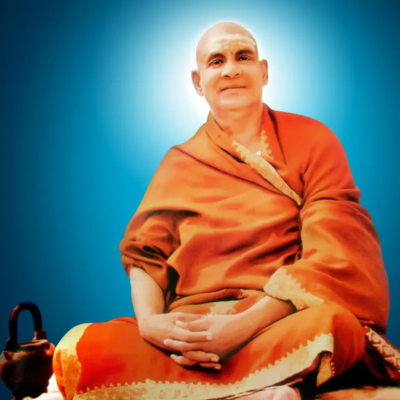
Sannyasa–A Rebirth Into Love And Service Sri Swami Chidananda The real meaning and the true glory of Sannyasa can be best understood by devoutly observing saints and men of God who are so many living embodiments of the highest and the best in Sannyasa. They personify Sannyasa in the truest sense of the term. And therefore to closely observe them, to carefully follow them and to humbly and earnestly emulate them is indeed the surest and the most effective way of living up to the high ideals of Tyaga and Sannyasa. Gurudev Sri Swami Sivanandaji Maharaj is verily the greatest exemplar of the true Sannyasa spirit. Every act of his is the illuminating revealer of the secrets of real renunciation and Sannyasa. As a fitting tribute to the memory of his great renunciation, we should all try to walk in the footsteps of this leader amongst Sannyasins. Gurudev is renunciation-incarnate. And by trying our humble best to embody in ourselves even partially a few aspects of his ideal life, we shall be fittingly observing this great occasion of his Sannyasa anniversary. It is the duty of every aspiring seeker and earnest Sannyasin to try to take note without fail of two significant factors, namely, theoretical conception of Sannyasa as laid down in the authoritative scriptures and the practical living of Sannyasa as immortalised by the vital tradition of this great land. What does the true discerning Hindu take Sannyasa to be? We know that Sannyasa is the fourth order or stage in life (Ashrama). The individual entering this stage of life gets the Diksha through the Guru and performs Viraja Homa (sacrifice). It is this Viraja Homa that gives you the right clue and right answer as to what Sannyasa implies. The Viraja Homa throws a flood of light upon the true meaning of Sannyasa. Sannyasa means annihilation of the old, deluded egoistic consciousness. It means the burning up of all desires and attachments in the blazing fire of absolute renunciation. It means reducing to ashes the last vestige of physical consciousness. It is the emergence of a glorious new consciousness. “I am neither mind nor body, immortal Self am I” is the consciousness of a Sannyasin whose body, mind, senses, Pranas and the ego all have been offered up in the Viraja Homa flames. It is the supreme renunciation. Sannyasa therefore implies Sarvatyaga. Hence his daily vow becomes: “I renounce the pleasures of this world. I renounce the pleasures of the astral world. I renounce the pleasures of heaven.” All desires are annihilated for anything here or in the hereafter. At this juncture we are given a startling revelation. We find that at the top of this great renunciation comes another vow. For the monk declares: “I will not cause fear to any being.” The monk gives the promise of absolute fearlessness to all creatures, whereby no living being need fear any harm from him. By this he pledges himself to Visva-Prema or universal love. For, fear can exist only where harm or pain is forthcoming and the latter are manifest only where hatred or animosity is present. But where love becomes enshrined, only loving service and joy flow forth, and all creatures may fearlessly partake of it with perfect assurance and confidence. Such universal love and service are therefore the spontaneous offshoots of Mahatyaga or supreme abandonment of selfishness. Therefore, these two great and sublime elements of Tyaga, i.e. abandonment of desires for name, fame and reward, and Seva, i.e. service to the sick, poor and needy, constitute the sublime elements in the spirit of Sannyasa. Tyaga is for Atmasakshatkara or Self-realisation. Therefore service and Self-realisation form the lofty twin impulses that move in the life of a true Sannyasin taking him towards the attainment of the highest consciousness of Truth Absolute. May we awaken in us the spirit of Sannyasa. May the blessings of Gurudev and the countless saints and sages whom he represents keep alive in us this glorious spirit of Sannyasa!

Sannyasa–A Rebirth Into Love And Service Read Post »
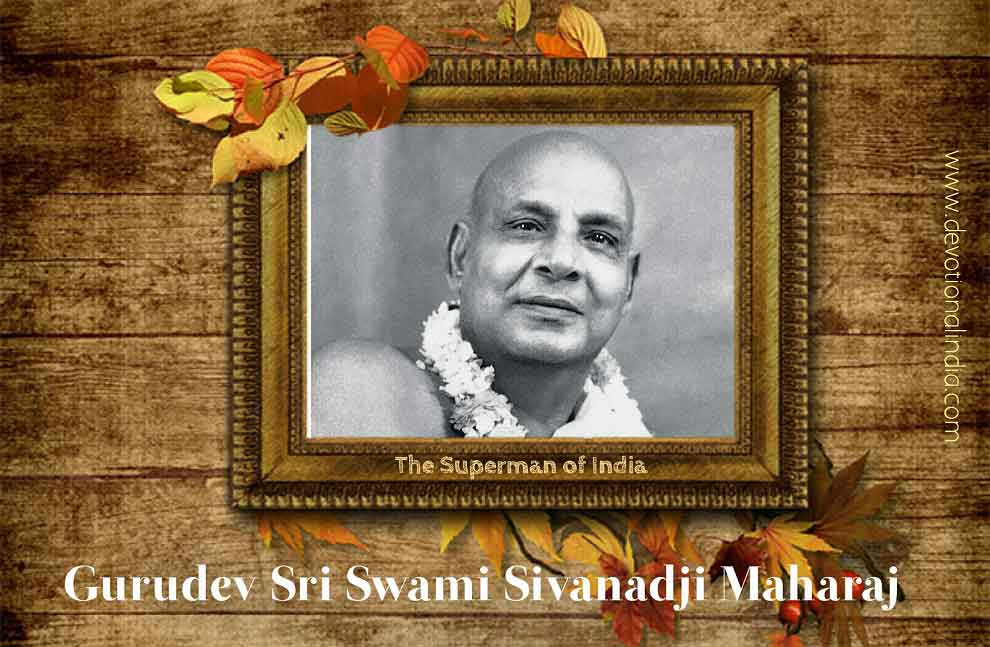
swami sivananda Framed portrait of Gurudev Sri Swami Sivanandaji Maharaj with floral design image
Celestial Collection of Divine Messages - Awakening the Divinity in Man, Swami Sivananda

Mind-conquest By Spiritual Culture

Mind-conquest By Spiritual Culture Sri Swami Sivananda The mind is like a wheel which revolves endlessly with tremendous velocity. It generates new thoughts with every revolution. This wheel is set in motion with the vibrations of psychic Prana or subtle Prana. The practice of Pranayama lessens the velocity of the mind, slows down the wheel gradually. Perfect control of Prana will bring the wheel to a standstill. Alcohol, meat, Rajasic foods, the cinema, novel-reading, obscene songs, obscene sights, obscene talks, evil company will make the wheel of mind revolve very rapidly; whereas fruits, Sattvic food, the company of Mahatmas, study religious books, solitude, Japa, Kirtan, concentration, meditation, enquiry of “Who am I?” will slow down the wheel and eventually bring it to a standstill. Identify yourself with the immortal Self. Enquire, “Who am I?” whenever bad thoughts arise in your mind. All the thoughts will gradually die. The fewer the desires, the fewer the thoughts. Become absolutely desireless. The wheel of your mind will stop entirely. If you reduce your wants, if you do not try to fulfil your desires, if you try to eradicate your desires one by one, your thoughts will diminish in frequency and length. The number of thoughts per minute will also decrease. Fewer the thoughts greater the peace. Remember this always. A wealthy man who speculates in a big city and who has a large number of thoughts has a restless mind, in spite of his comforts, whereas a Sadhu who lives in a cave in the Himalayas and who practises thought-control is very happy in spite of his poverty. The power of concentration will increase by lessening the number of thoughts. Certainly it is an uphill work to reduce the number of thoughts. In the beginning it will tax your ability very much. The task will be very unpleasant. But later on you will rejoice as you get immense strength of mind and internal peace by reduction of thoughts. Armed with patience, perseverance, vigilance, fiery determination and iron will, you can crush the thoughts easily just as you crush a lemon or an orange with ease. After crushing, it will be easy for you to root them out. Mere crushing or suppression will not suffice. There may be again resurrection of thoughts. They should be totally eradicated just as loose tooth is pulled out. When you hit at the head of a snake with a stick and crush its head, it remains absolutely motionless for some time. You think it is dead. All of a sudden it raises its head and runs swiftly. Even so, the thoughts that were once crushed and suppressed by you regain strength and raise up their heads. They must be destroyed totally beyond resurrection. It is very difficult to fix the mind on a single thought in the beginning. First diminish the number of thoughts. Try to have thoughts on one subject only. If you think of a rose, you may have all sorts of thoughts connected with the rose only. You may think of different kinds of roses that are grown in different parts of the world. You may think of the various preparations that are made out of roses, and their uses. You may allow even thoughts of other kinds of flowers to enter; but do not entertain thoughts of fruits and vegetables. Check the aimless wandering of the mind. Do not have thoughts at random when you think of a rose. Gradually you can fix the mind on one thought. You will have to discipline the mind daily. Eternal vigilance is needed in thought-control. The fewer the thoughts the greater the mental strength and concentration. Suppose that the average number of thoughts that pass through your brain within one hour is one hundred. If you succeed in reducing it by constant practice of concentration and meditation to ninety, you will have gained 10 per cent in concentration of mind. Every thought that is reduced adds strength and peace of mind. Reduction of even one thought will give you mental strength and peace of mind. You may not be able to feel this in the beginning, as you do not possess a subtle intellect; but there is a spiritual thermometer inside to register the reduction of even a single thought. If you reduce one thought, the mental strength that you have gained by this reduction will help to reduce the second thought easily. In rubber plantations planters thin out the rubber trees by first cutting the small surplus trees which stand in the vicinity of big ones. By so doing they can tap more milk or rubber juice from the big trees. Even so you must thin out the thoughts by destroying them one by one to drink the ambrosial milk or nectar of Immortality. When the tail of a lizard is cut, the cut-end will flutter about for some time, as there is still a little residual Prana in the tail. After one or two minutes all motions will cease. Even so, even after thinning and reduction of thoughts some thoughts will move about like the tail of the lizard. But they are powerless. They cannot do any serious havoc. There is no vitality in them. Just as the drowning man tries to catch anything to save himself, so also these lifeless thoughts try their best to come back to thier previous state of life and vigour. If you go on with your daily practice of concentration and meditation regularly, they will die by themselves like a gheeless lamp. Just as a warrior chops off the heads of his enemies one by one when they come out of a fortress through a trapdoor, as also chop off your thoughts one by one when they emerge out to the surface of the mind through the trapdoor of consciousness. The substitution method is very easy and effective in the destruction of evil thoughts. Cultivate only positive, virtuous thoughts of mercy, love, purity, forgiveness, integrity, generosity and humility

Mind-conquest By Spiritual Culture Read Post »

images 2026 02 24T121140.029
Celestial Collection of Divine Messages - Awakening the Divinity in Man, Swami Sivananda

The Type of Mind You Should Pray For

The Type of Mind You Should Pray For Sri Swami Chidananda Loving adorations to revered and beloved Holy Master Gurudev Swami Sivanandaji Maharaj, who taught us about the transitory nature of all names and forms that go to make up this world appearance, who taught us the permanent nature of the Eternal Reality that is beyond all ever-changing names and forms, that is eternal and absolute, imperishable and everlasting. If we wish to attain enlightenment, illumination, divine perfection and liberation, we should channelise all our thoughts in the direction of this great, all-transcendental, absolute Reality. In making our mind move continuously and constantly in an unbroken thought stream towards that one Being lies the guarantee of attaining the true fulfilment of our life. In that lies the guarantee of attaining our own highest good and supreme blessedness. Therefore, this is the type of mind you should pray for—a mind in which there is no inclination to turn in the direction of this temporary, perishable world of vanishing names and forms; there is no inclination to move outwards towards the objects that give a momentary, superficial, gross sense-pleasure, but at the same time are capable of inflicting upon us much disease, much sorrow. Wise people do not revel in these attractive but deceptive sense-objects. The wise do not revel in objects of superficial temporary satisfaction. You have to decide. Do you want to be wise, or do you want to prove yourself to be foolish. In spite of so much of spiritual reading, so much satsanga, viveka, vichara, if you are still foolish, that means that your foolishness goes very deep. We should also ask for a mind that remains balanced in pleasure and pain, honour and dishonour. Bear insult and injury. If anyone pleases you, if anyone blames you or speaks insultingly about you, remain the same. Do not be moved by it. Because in this world insult and injury are unavoidable. All types of people are there. If we are upset by little negative feelings people have towards us, then there will be no end to our being upset. You will never be at peace. The world is made up of all types of people. Sattvic people will talk to you respectfully. They will talk respectfully about you behind your back also. They will not say one thing in front of you, another thing behind your back. They will talk respectfully about you always, even to strangers. They want even strangers to know that such and such a person is worthy of respect. They project an image of you that draws forth respect from others. Thus, a sattvic person always shows reverence, speaks respectfully about others, feelingly, not caring how others speak about them. An honouring manner or insulting manner are the same to the sattvic person, because both have no value in their estimation. They are the same because fickle humanity is fickle. It is ever changing its moods and sentiments. The same people who will praise you to the skies one moment will talk very badly of you another time, if at that moment they are not pleased with you. Therefore, you must pray to God for a mind that is always the same no matter what kind of treatment is meted out by people. There is a Parsi saying that goes, “Give me such a heart, O Lord, that I may pass over even a period of utmost sorrow and suffering with a serene, cheerful mind. As I am cheerful when all things are running smoothly with me, even so may I always be cheerful when they are not running smoothly.” This is the sign of a true devotee, a sattvic devotee. A yogi who is united with God inwardly is always enjoying a feast. And what is that feast? The feast of contentment, santosh. There is an English saying, “Contentment is a continuous feast.” Let us, therefore, cultivate this type of interior—always cheerful, always balanced, always taking pleasure and pain as the same, always taking insult and injury or honour and respect in the same way—living always in a state of inner balance, contentment and cheerfulness. This we may ask of the Supreme Being, and this we may pray for from Holy Master.

The Type of Mind You Should Pray For Read Post »

artworks 000144273041 xsplae
Swami Sivananda, The Ultimate Goal of Mankind - Self Realization

Guru–Disciple

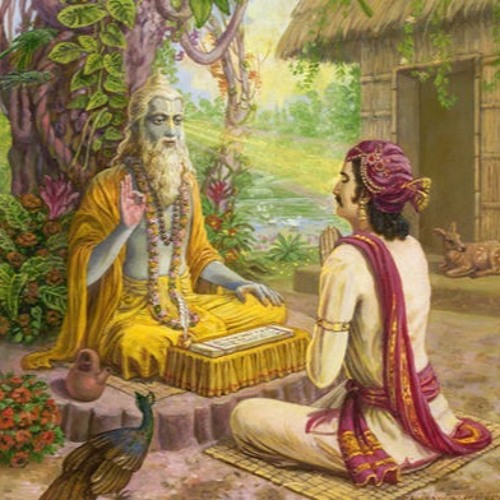
Guru–Disciple By Sri Swami Venkatesananda “I always bow to the Guru who is bliss incarnate, who bestows happiness, whose face is radiant with joy. His essential nature is knowledge. He is aware of his true self. He is the Lord of yogis, he is adorable, he is the physician who cures the disease of birth and death.” Sri Guru Gita–verse 93. Who is a Guru? Or what is a Guru? There is a beautiful text called the ‘Guru Gita’. If you read it, you will probably dismiss all these Gurus as non-Gurus. What you and I often refer to as Guru is in fact a teacher. There are millions of teachers in the world. There are academicians, professors, school masters. Then there are your own parents, they teach you something or the other. But Gurus? No. They are not found in such profusion as we pretend they are. A Guru is a very rare phenomenon. On the other hand I may contradict myself by saying that if the disciple is ready, it is possible he finds the Guru, not in the conventional sense, but in a different sense. There is a beautiful story in the eleventh section of the ‘Srimad Bhagavatam’, where a king encounters a naked ascetic and he says: “You appear to be a vagrant, a mendicant, a madman, but the radiance of your face belies all this. You have found something, what is that? If you are an enlightened person, tell me, who was your Guru?” The naked ascetic says, “Gurus, I have many. I have twenty-four Gurus. So I learn from everybody and everything.” When can that happen? When I am a good disciple. You must seek wisdom from several Gurus, only then is the knowledge complete. Who is a Guru? What is a Guru? A Guru is one who removes the darkness of ignorance. Ignorance refers to ignorance of God or ignorance of the self. Has anyone done that to you? If not, you have not met a Guru. You might have met a dozen of Swamis but that is of no consequence whatsoever. If he has not touched your heart, sorry, leave him alone. Of course learn from him as a teacher but not as a Guru. Guru is one who has been able to remove darkness of self-ignorance, or ignorance of God from your heart and enabled you to attain self-knowledge. Why am I labouring this point about the Guru? If we don’t understand this, the relationship becomes terribly perverse. It starts when you say: “He is my Guru.” Why is he your Guru? God alone knows for nothing has happened to you. A Swami said once that a stone lies at the bottom of a lake. You take it out, put it in the sun and it dries immediately because it hasn’t been influenced by the water. So it is possible that your heart is like the stone. It doesn’t respond to this Guru, and yet, because you have decided that he is your Guru, you have forged this kind of relationship. You are convinced that you are the proper seeker. Then you find some kind of Swami and decide that he is your Guru. One lady said to me in Sydney: “I would like to be your disciple because I think I can work in harmony with you. It is easy to work with you, so I would like to be your disciple.” This is a very clever way of looking at it. The other people are hard task masters but you seem to be an easy man, cheap, so I would like to be your disciple. I told her: “I am only a disciple myself, I am still trying to be a disciple to my Guru. I don’t know what it is to be a Guru.” Why do you appoint the other man as your Guru? Because you think he is easy to please, or he is cheap, inexpensive. The whole thing was a hoax right from the start. You are not a proper disciple and the other person is not a qualified Guru. These two people enter into a funny relationship which is based on falsehood, on untruth. Then begins the tug-of-war. I will obey my Guru as long as he tells me what pleases me. If he says something that doesn’t please me, then I begin to doubt. Probably he is not the right type of Guru. Then perhaps you pick up one of Swami Sivananda’s books and quote from somewhere where it says: “Be careful in your choice of a Guru and accept him only after testing him severely and finding out that he is the proper one to be your Guru.” First he says that you cannot become a Guru without attaining self-realisation, secondly he says you must obey your Guru implicitly, and thirdly he says that you must examine your Guru before accepting him. I keep these three quotations in three different pockets and pull each one out where it is applicable. When I look at you as my Guru, I pull out the quotation that says a Guru is necessary. When I am endeavouring to obey you, I pull the one out that says. I must obey the Guru implicitly. But when the third period comes along and I am given some instructions which I cannot obey, I pull the third one out and say: “I am sorry, I didn’t examine my Guru properly. Now that I have examined him thoroughly I dismiss him.” The whole thing is ridiculous. He must be the man who has opened my inner eyes. In his presence it is like the sun. In his presence the inner darkness must go. If it does not go he is not my Guru, he is a teacher. I learn from him. In the Bhagavad Gita this becomes very clear and beautiful. In the first chapter, the person who later became a disciple, Arjuna, literally and actually teaches Krishna. He says,

Guru–Disciple Read Post »

images 2026 02 24T120554.720
Celestial Collection of Divine Messages - Awakening the Divinity in Man, Swami Sivananda

The Glory of Renunciation

The Glory of Renunciation SRI SWAMI CHIDANANDA This is a most sacred and auspicious day on which we have to bring before our mind’s eye the supreme ideal for which Bharatavarsha has stood right from the ancient Upanishadic times to the present day in the Atomic Age, viz., the ancient ideal of Sanyas, of a life of perfect detachment, renunciation  and pure selfless love and service of all Jivas, seeing in the Jivas the full and direct manifestation of the Eternal Siva Himself. We have been observing for several years past the 1st of June as the day commemorating the stepping into Sanyas, by Sri Gurudev who is himself to us the most glorious and ideal exemplifier of what Sanyas in all its grandeur can be and has to be for every one of us. It is our great privilege to commence this function of the Sacred Sanyas Day of Gurudev by first of all mentally invoking the blessings of all the Great Satgurus of the past, and the Sanyasins of the present-day who have kept up the most glorious line effectively so that out of their strength and the blazing of Bharatavarsha’s inner culture, humanity may once again be saved from the unfortunate fate towards which it is heading, and once again peace and blessedness may be established upon earth. What is the real spirit of Sanyas which alone, our ancients have declared, will enable us to attain the great goal of life, Self-realisation, the great aspiration of Bharatavarsha? Our ancients have declared: Na Karmana Na Prajayaa Dhanena Tyaagenaike Amritatwamaanashuh. By total absolute desirelessness, by total renunciation alone can the supreme goal be attained. Tyaga is the very life-breath of Sanyas. Should this Tyaga be a mere passive shrinking from all these external things or is it something more positive, heroic and dynamic? Sanyas has always been the crowning one of the four orders of social life as given by our law-givers. The three lower orders are in fact merely preparatory stages for qualifying the individual for Sanyasa. In Brahmacharya the foundation is laid by giving the individual all the knowledge that he need have of the real purpose of human birth. What is Dharma and Adharma; what is truth and how is one to lead a life of self-control, so that he may progressively go towards the perfect life embodied in Sanyas — a man is taught in the Brahmacharya Ashrama. All the great noble ideals, the sublime lessons that he has imbibed in the first order are put into practice in the Grihastha Ashram. He tries to train himself in living detached amidst attachments and also by being in the world and yet not of the world and exerting constantly to produce goods, to earn wealth and yet not with selfish aim for his own sake. He tries to develop himself into an ideal mental Sanyasin. The second stage is thus the stage of practical experimenting where he tries out the knowledge gained in the first Ashrama. When he has risen higher in the ladder of evolution, our Varnashrama Dharma leads him on to the life of almost a Sanyasin. That is the Vanaprastha period when the external portion of the Grihastha is completely left, yet there are certain inner problems which he has not yet learnt to solve. When the Grihastha leads an ideal life of detachment born of self-control; the ego comes up as the very terrible foe from inside, and he feels: “I have done Dharma. I am very selfless. I am trying to keep up a high standard of ethical perfection.” When he starts the third order of life, he has to do the process of shedding off all these inner subtle obstacles. Then alone will he be completely qualifying himself for the last stage, Sanyas, where the external life is completely eliminated and he plunges inwardly into deep meditation alone. The Dharma of Sanyasin is to engage himself in deep meditation constantly. This is the crowning glory of Indian social life. As a matter of fact, if only this social structure had been devoutly preserved, instead of being neglected or allowed to lapse, if it had been preserved with the necessary modifications to suit it to the present day, we would have found that the life of Bharatavarsha is pervaded by Sanyas. Sanyas is the one spirit which hovers over the entire Bharatavarsha from the Himalayas to the Cape Comorin, from the West to the East, end to end of India. For right at the very beginning of our history Manu has declared that the great purpose of the human being’s life is Paraopakara. Vyasa says that all that brings suffering upon others leads to sin and its inexorable reactions and all that helps others, relieves others of pain and sorrow, and helps them, leads to Punya or merit, which bestows upon us the Ultimate Bliss. Based upon this we find out that the social order was built up through a series of Four Ashramas, each one progressively developing in the individual a higher and higher intensity of selflessness, of giving himself, culminating in the glorious Ashrama of Sanyasa.

The Glory of Renunciation Read Post »

Swami shivanand
Celestial Collection of Divine Messages - Awakening the Divinity in Man, Swami Sivananda

The Problem of Evil Thoughts

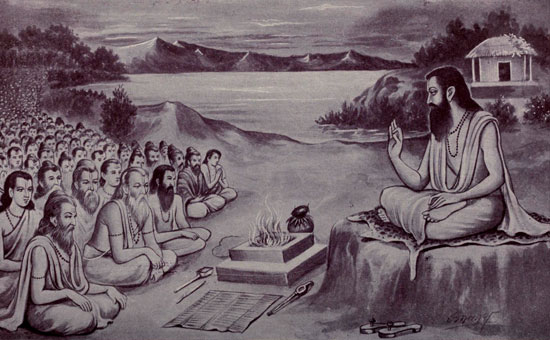
The Problem of Evil Thoughts Sri Swami Sivananda Worldly thoughts will trouble you a lot in the beginning of your meditation. If you are regular in meditation, these thoughts will gradually die by themselves. Meditation is a fire to burn these thoughts. Do not try to drive all the worldly thoughts. Entertain thoughts concerning the object of meditation. Watch your mind always very carefully. Be vigilant. Be on the alert. Do not allow waves of irritability, jealousy, anger, hatred and lust to arise in the mind. These dark waves are enemies of meditation, peace and wisdom. Suppress them at once by entertaining sublime and divine thoughts. Evil thoughts that have arisen may be destroyed by originating good thoughts and maintaining them, by repeating any Mantra or Name of the Lord, by thinking of any form of the Lord, by practice of Pranayama, by singing the Name of the Lord, by doing good actions, or by dwelling on the misery that arises from evil thoughts. When you attain the state of purity, no evil thoughts will arise in your mind. Just as it is easy to check the intruder or enemy at the gate, so also it is easy to overcome an evil thought as soon as it arises. Nip it in the bud. Do not allow it to strike deep root. Just as you close your door or gate when a dog or an ass tries to come in, so also, close your mind before any evil thought can enter and produce an impression on your physical brain. You will become wise soon and attain eternal, infinite peace and bliss. When you pass through the market of a big city, you will not be able to notice small sounds; but when you sit for common meditation with some of your friends in a quiet room in the morning, you will be able to detect even a little sneezing or coughing. Even so, you are not able to find out the evil thoughts when you are engaged in some work or the other, but you are able to detect them when you sit for meditation. Do not be afraid when evil thoughts pass through your mind when you sit for meditation. Do vigorous Japa and meditation. They will pass off soon. An aspirant complains: “As I continue my meditation, layer after layer of impurities rise from the subconscious mind. Sometimes they are so strong and formidable that I am bewildered as to how to check them”. If evil thoughts enter the mind, do not use your will force in driving them. It is difficult to destroy the evil thoughts by attacking them directly. You will only lose your energy. You will only tax your will. You will fatigue yourself. The greater the efforts you make, the more the evil thoughts will return with redoubled force. They will return more quickly also. The thoughts will become more powerful. Be indifferent. Keep quiet. They will pass off soon. Or substitute good counter-thoughts through the Pratipaksha Bhavana method. Or think of the picture of God and the Mantra again and again forcibly or pray. In the beginning of your practice of thought control, you will experience great difficulty. All sorts of evil thoughts will arise in your mind as soon as you sit for meditation. Why does this happen during meditation when you attempt to entertain pure thoughts? Aspirants leave their spiritual practices of meditation on account of this. If you try to drive a monkey, it attempts to pounce upon you with vengeance. Even so, the old evil Samskaras and old evil thoughts try to attack you with a vengeance and with redoubled force only at the time when you try to raise good, divine thoughts. Your enemy endeavours to resist you vehemently when you try to eject him out of your house. There is a law of resistance in nature. The old evil thoughts assert and say: “O man, do not be cruel. You have allowed us to stay in your mental house from time immemorial. We have every right to stay here. We have helped you up to this time in all your evil actions. Why do you want to oust us from our dwelling place? We will not vacate our abode”. Do not be discouraged. Go on with your practice of meditation regularly. These evil thoughts will be thinned out. Eventually they will all perish. Only when you sit for meditation, all sorts of evil thoughts will crop up. You will have to wage war with them. They will try their level best for their own existence. They will say, “We have every right to remain in this palace of mind. We have a sole monopoly from time immemorial to occupy this area. Why should we vacate our dominion now? We will fight for our birthright till the end”. They will pounce upon you with great ferocity. As you attempt to suppress them, they want to attack you with redoubled force and vigour. But positive always overcomes the negative. This is the law of nature. Just as darkness cannot stand before the sun, just as a leopard cannot stand before the lion, so also, all these dark, negative thoughts, these invisible intruders, enemies of peace, cannot stand before the sublime thoughts. They must die by themselves. Negative evil thoughts cannot stand before positive good thoughts. Courage overcomes fear. Patience overcomes anger and irritability. Love overcomes hatred. Purity overcomes lust. The very fact that you feel uneasy now when an evil thought comes to the surface of the mind during meditation indicates that you are growing in spirituality. In those days you consciously harboured all sorts of evil thoughts. You welcomed and nourished them. Persist in your spiritual practices. Be tenacious and diligent. You are bound to succeed. Even a dull type of aspirant will notice a marvellous change in himself if he keeps up the practice of Japa and meditation for 2 or 3 years in a continuous stream.

The Problem of Evil Thoughts Read Post »

Ancient sage teaching disciples near riverside hermitage image
Swami Sivananda, The Ultimate Goal of Mankind - Self Realization

THE FOUR SOURCES OF KNOWLEDGE

THE FOUR SOURCES OF KNOWLEDGE By SRI SWAMI SIVANANDA Inspiration, revelation, insight, intuition, ecstasy, divine sight and the supreme, blissful state are the seven planes of knowledge. There are four sources of knowledge: instinct, reason, intuition, and direct knowledge of Brahman (God) or Brahma-Jnana (knowledge of God). InstinctWhen an ant crawls on your right arm, the left hand automatically moves towards the right arm to drive the ant away. The mind does not reason here. When you see a scorpion near your leg, you withdraw the leg automatically. This is called instinctive or automatic movement. As you cross a street, how instinctively you move your body to save yourself from the cars! There is no thought during such kind of mechanical movement. Instinct is found in animals and birds also. In birds, the ego does not interfere with the free, divine flow and play. Hence the work done by them through their instinct is more perfect than that done by human beings. Have you ever noticed the intricate and exquisite work done by birds in the building of their beautiful nests ? ReasonReason is higher than instinct and is found only in human beings. It collects facts, generalizes, reasons out from cause to effect, from effect to cause, from premises to conclusions, from propositions to proofs. It concludes, decides and comes to final judgment. It takes you safely to the door of intuition and leaves you there. Belief, reason, knowledge and faith are the four important psychic processes. First you have belief in a doctor. You go to him for diagnosis and treatment. The doctor makes a thorough examination of you and prescribes certain medicines. You take them. You reason out: “Such and such is the disease. The doctor has given me some iron and iodide. Iron will improve my blood. The iodide will stimulate the lymphatics and absorb the exudation and growth in the liver. So I should take it.” Then, by a regular and systematic course of these drugs, the disease is cured in a month. You then get knowledge and have perfect faith in the efficacy of the medicine and the proficiency of the doctor. You recommend this doctor and his drugs to your friends so that they too might benefit from his treatment. IntuitionIntuition is personal spiritual experience. The knowledge obtained through the functioning of the causal body (Karana Sarira) is intuition. Sri Aurobindo calls it the Supermind or Supramental Consciousness. There is direct perception of truth, or immediate knowledge through Samadhi or the Superconscious State. You know things in a flash. Professor Bergson preached about intuition in France to make the people understand that there was a higher source of knowledge than the intellect. In intuition there is no reasoning process at all. It is direct perception. Intuition transcends reason but does not contradict it. Intellect takes a man to the door of intuition and returns. Intuition is Divya Drishti (divine vision); it is the eye of wisdom. Spiritual flashes and glimpses of truth, inspiration, revelation and spiritual insight come through intuition. The mind has to be pure for one to know that it is the intuition that is functioning at a particular moment. Brahma-Jnana (knowledge of God) is above intuition. It transcends the causal body and is the highest form of knowledge. It is the only Reality.

THE FOUR SOURCES OF KNOWLEDGE Read Post »

images 2026 02 24T115740.482
Celestial Collection of Divine Messages - Awakening the Divinity in Man, Swami Sivananda

Seeds of Vairagya

Seeds of Vairagya First comes Vichara, then comes Viveka. Through Vichara and Viveka flowers Vairagya. Vichara is stimulated by careful observations of life around us. We don’t allow an event or an occurrence to pass without observing it carefully and reflecting over it, ‘What is it that I am observing? What is its deeper meaning and significance? Does it hold any special lesson or an unspoken message for me?’ Thus one becomes a thoughtful observer and not merely a passive onlooker; one becomes an active enquirer of what is being seen and one tries to find out the deeper significance from every little thing. You can observe and learn something even from the behaviour of children. Suppose two children are left alone for a while and there happens to be only one toy. Soon they will quarrel, scream and cry. When the mothers come they find the stronger child holds the toy and has pushed away the other child enjoying the victory over the helpless child. This is the whole commentary on life. The behaviour of elderly people, communities, nations become epitomised in this small incident. If there were two toys, then also the stronger child may try to snatch away both the toys or he may want the same toy that the other one wants. What you find in the children, like that you find in the humanity also. In this way little incidents become unspoken teachers for an enquirer who reflects upon the inner significance. The famous English poet William Shakespeare says, And this life ‘exempt from public haunt’Finds tongues in trees, books in the running brooks,Sermons in stones and good in everything. —As You Like It. Act II scene (i) A person with a vision and a poetic eye, as he goes on a lonely quiet walk in a forest, does not merely see the inert objects but he also finds sermons hidden in stones and whole books in babbling brooks. Another poet Lord Tennyson finds inspiration from the ocean waves to go on ever, progressing forwards, upwards till the last breath. Men may come and men may go,But I go on for ever.I would never leave my march forwards.Dancing and circumventing with the waves,Till I cross the majestic ocean.I will march towards the mountain,Turning and twisting, leaping and falling,Overcoming the obstacles,I go on, and on, and on for ever. The ancient writer, Vishnudev Sharma was watching from his window the lush green fields and a big tree which was standing in their midst. One day a storm set in; terrible, sweeping winds. Suddenly he heard a big shattering sound of the falling of the old tree. The strong big tree which was standing erect had broken. But the standing harvest and small grass bent, bowed down and gave way to the sweeping breeze and when the storm passed away, once again stood up straight, fully cheerful full of life. The thinker learns a lesson from this small incident: “A hurricane does not uproot the pliant grass that bends low before its fury, it snaps only proud lordly trees” — Panchatantra. You can survive if you know when to yield leaving aside your pride. If one is obstinate and rigid on account of ego and does not bow down he meets the fate of the tree. That is what Zen also teaches us, that is also what Judo teaches us, ‘Don’t resist power with power but know how to yield and become unruffled.’ The poet learns this profound lesson: By yielding one is able to overcome the fury of the blast whereas by becoming rigid one is uprooted. In this way observation stimulates enquiry. Enquiry creates the ability to discriminate. Through discrimination one begins to see the difference between the mere passing appearances and the permanent changeless Reality. So comes Vairagya. Gurudev had this faculty of keen observation well developed, because he was a medical man. A physician has to observe every little symptom, whether the patient tells it or not. Sometimes the doctor gathers the symptoms by mere observation. If the patient is fidget and restless, the doctor takes note of it and knows that the patient is a nervous type person, easily susceptible to outer occurrence. So a doctor must be a keen observer. In the olden days diagnosis depended on physical examination and observation only, as there were no laboratory facilities, X-rays, etc. They were able to find out by questioning and observing what a certain symptom meant, and immediately they tried to know the cause behind it. So the medical profession makes a person keenly observant and very subtle in detecting the hidden cause behind the apparent symptoms. The young doctor Kuppuswami of Malaysia was abundantly endowed with these innate qualities which when applied to the spiritual field became very valuable to him, became very helpful to his spiritual unfoldment, to his subtle ability to grasp the actual reality of things in this world.

Seeds of Vairagya Read Post »

1520114800335
Swami Sivananda, The Ultimate Goal of Mankind - Self Realization

Fate, Free Will and God’s Will

Fate, Free Will and God’s Will By Sri N. Ananthanarayanan Strange are the world’s ways. Strange is the working of the human ego. When egoistic people succeed in some of their puerile pursuits they boast on every side: “I did this. I did that. Nothing can stop me from succeeding. Nothing can prevent me from doing what I want to do”. They take upon themselves all the credit for their success. When these very people fail in some other direction, they say, “It’s all fate. See, idiots are prospering. It’s my bad luck”. They tap their foreheads with their fingers and exclaim, “Taqdeer! Kismet!”. Thus, when they succeed, they attribute their success to their own dynamic ability, and when they fail, they trace their failure to some vague ‘destiny’. They lay the blame on Taqdeer. They do not want to take the blame upon themselves. Did I succeed? Ah, yes. I exercised my free will. Did I fail? Fate willed it so. This is convenient logic. This is fooling oneself. This is self-contradictory. But the whole world talks in this fashion. At the back of this false logic is the human ego. Lord Acton said, ” Power corrupts. Absolute power corrupts absolutely”. Likewise, success also corrupts the mind. The successful man’s head swells. He begins to forget God. He begins to think high of himself. He begins to brag. He will talk to his friends on the limitless possibilities of human achievement. He will talk contemptuously of those who meet with failure in life. He will sermonize on free will. What is this free will? In Hindu scriptural lore, whole treatises like the Yoga Vasishtha are devoted to glorifying free will or Purushartha. Stories, like those of Markandeya and Savitri, are cited in support. In his “Sure Ways for Success in Life and God-realisation”, Sivananda himself names some persons who rose from poverty to power by their own self-effort. But then, in this world, for every person who is able to raise himself by his own free will or self-effort, there are any number of others who are tied down to adverse circumstances by that unseen power called fate. In the same Hindu religious lore which glorifies free will, there are any number of passages and stories to declare and assert the inevitability of destiny or Prarabdha. The question naturally arises: “Which is more powerful? Fate or free will? What is the truth of the matter?”. The question itself is wrong and is based on the misconception that fate and free will are two separate entities. Sivananda clears this misconception. He says that the destiny or Prarabdha that we enjoy or suffer in this life is the result of the exercise of our free will or Purushartha in previous lives. He adds that our actions in this life will shape our destiny in future lives. Prarabdha and Purushartha, fate and free will, are not two different entities, but only two different names to indicate the same set of actions viewed from a particular point of time and from a particular angle of metaphysical speculation. What then is the use of the Theory of Fate and the Theory of Free Will? Theorising has its own utility. The Theory of Fate or the power of destiny and stories in support of it, in illustration of it, are intended to console and comfort the person in distress. The Theory of Free Will, and stories to exemplify that theory, are designed to boost the morale of the very same person buckling under the weight of repeated onslaughts of unfavourable forces and adverse circumstances. In other words, we tell the person in distress, “Do not grieve. Whatever has to happen will happen. Do not weep over the inevitable. Endure bravely”. Having thus consoled him by expounding the Theory of Prarabdha, we proceed to exhort him, “Suffering is only Karmic purgation. Your past sins are now washed out by this suffering. Now, rise up. Exert. The whole future is in your hands. Hard exertion now will shape for you a glorious future destiny. In your hands is your future. You now have the free will to make or mar your future by your present actions. Plod on. Persevere”. Thus, there is absolutely no contradiction between fate and free will. Both the theories are necessary and should be used together. It is a wrong popular notion, based on one-sided and limited understanding, which views the Theory of Fate and the Theory of Free Will as diametrically opposed concepts. But, if the question be asked, “Which is more real, Fate or Free Will?”, the correct answer would be, “Neither is real. Neither Fate nor Free Will. They are just theoretical concepts. They are merely philosophical formulations. The formula of Fate and the formula of Free Will are both fictitious. The only Reality is God’s Will”. It is God’s Will which operates everywhere and at all times. It is infallible. It is the only Truth. It is the only Power. Behind the actions of the good man and the bad man, behind the movement of birds and insects, behind the erupting volcano and the rumbling earthquake, behind all growth and decay, behind everything everywhere, the propelling force is God’s Will. God’s Will is the life in all creation. It is the living force. Without it there will be nothing. Without it your mind cannot think, your senses cannot operate. There is neither fate nor free will. There is only God’s Will. It is the human ego, it is mere vanity, which makes man claim for himself all the credit whenever he succeeds. It is his vanity again which makes him disclaim all responsibility for his failures and throw all the blame on a concept called Prarabdha. In truth, God is responsible for both success and failure. A man succeeds or fails, because God wills it so. God’s Will is supreme. It is the power or force which upholds the universe. It is the substance behind the world-show. The man who understands this

Fate, Free Will and God’s Will Read Post »

swami sivananda Illustration of spiritual saint seated with Om symbol
Celestial Collection of Divine Messages - Awakening the Divinity in Man, Swami Sivananda

Sri Gurudev

Sri Gurudev Sri Swami Chidananda Almighty Lord, Father of humanity, beloved God of grace, compassion and love. At this moment of our prayerful gathering here in the presence of beloved and worshipful Holy Master, this servant prays that Your divine grace may shower upon all those who are assembled here at this moment. To Thou Who art known as the transcendental Brahman, to Thee we bow in reverence and offer thanks for the gift of life and that we may know its worth. May we fully esteem the limitless scope and opportunity that life offers to us to make it a glorious pilgrimage into everlasting life. May we know well our great good fortune and understand well God’s plan for us. Blessed spiritual radiance, worshipful Gurudev! We bow in devotion, faith and simplicity before you and accept with eagerness and earnestness this gift of your presence and this gift of proximity to you in this sanctified Samadhi Shrine. In this holy Ashram on the banks of the Divine Mother Ganga, we come to you with eagerness once again in this early dawn to sit in spiritual fellowship and to contemplate the ever-pure, ever-perfect, all-full Paramatman. We come to contemplate, to sit in prayerfulness, to try to bless ourselves by this fellowship, and to begin the day in the ideal way so that as each minute of this day advances, we shall have made it full, holy and happy. Thanks to Gurudev’s enlightening teachings, ours is a life that flows in that direction which liberates us from darkness and from this ceaseless wheel of ever-recurring births and deaths. Ours is a life that is an ascent unto Divinity. This drawing close to the presence of this great awakening force which is Gurudev means to us a daily renewal of the awareness that we are dedicated to the effort to be awake and that we never cease until we emerge into a consciousness of the supreme Reality. The Light of Lights beyond all darkness abides within us as our own Self. There is no darkness within. All darkness exists only in the mind; darkness does not touch the Self. The Self which we are is beyond the mind. This is the great teaching that is to be grasped. In terse modern language Gurudev has stated the quintessence of Vedanta. “Nothing exists, nothing belongs to me. I am neither mind nor body, immortal Self am I.” “Nothing exists” means that nothing exists except Brahman. Any idea that something exists other than Brahman is ignorance and delusion. There must be dedicated, one-pointed concentration upon this ideal, again and again. Gurudev says, “The whole of spiritual life is nothing but concentration; the whole of Yoga is nothing but concentration.” Concentration means a total one-pointed focusing of one’s entire attention and energies towards this single objective in life. From ancient times when the great illumined seers and sages knew Brahman to be the one great Reality beyond all temporary changing appearances, from that time onward there have continuously been divine messengers coming into this world to awaken mankind and call it back to its divine status. In this long, unbroken line of messengers, one of the great teachers of mankind in this Twentieth Century was sent to us—Gurudev Sri Swami Sivanandaji. He has come as an awakener, an inspirer, a guide and helper of humanity. Gurudev has called humanity to know that in the midst of life and death the Eternal Being is there. Gurudev ever reminded humanity that life is a precious gift, a golden opportunity, a rare chance to attain supreme blessedness and that it should be known as such, seen as such and lived as such. For this boundless and limitless grace, we have no means of thanking him, except that we too come to see our life as an ascent unto Divinity and perfection. May his choicest blessings enable us to understand the secret of Divine Life, of selflessness and of service. Why did Gurudev once write, “Karma Yoga is the best Yoga?” Why is it that he did not stop his medical activities even though he had left Malaysia and settled down in Swarg Ashram? Even amidst his deep meditation, intense austerity and unbroken spiritual practices he found time for carrying on service of the suffering and the sick. What deep insight had God given to him that he thought it worthwhile to serve the poor and the needy even when he was a Tapasvin and a Sannyasin? May we have the same inner understanding that he had, which allowed him to serve all. Gurudev used to joke, “Sri Swami Chidananda Saraswati, M.A., PhD! What greater degree or honour can there be than to be a Sannyasin and a Swami?” Why would one want to add more meaningless letters after one’s name? Does the sublimity and the greatness of Sannyasa require these letters? He said, “Nothing needs to be added; the status of Sannyasa itself is so supreme that it does not require anything additional. You do not need to paint the rainbow.” And thus, he said, this life spiritual, this life of renunciation is supreme. If from corner to corner of the world millions are grateful to him and millions of lives have been transformed and elevated to new heights, what is the reason? How was Swami Sivananda Maharaj able to achieve this? Many people have never had a glimpse of him, never met him, never spoken to him, never known him in the flesh—and yet thousands of those people are living a changed life, and every morning they are remembering him with much gratitude and love. Why? Because of the wisdom teachings that he shared with all and which he spread to every nook and corner of the world. It was with a great purpose that he did so; it was his salient mission on earth. He was determined, and he spread his teachings by all means possible. He did this great dissemination of spiritual knowledge throughout his

Sri Gurudev Read Post »