








Hari Om

Menu

February 24, 2026

swami sivananda Black-and-white group photo of guru with followers outside building image
Celestial Collection of Divine Messages - Awakening the Divinity in Man, Swami Sivananda

Karma Can Be Transformed Into Yoga

Karma Can Be Transformed Into Yoga Sri Swami Sivananda If you always keep the goal of Self-realisation before you all the time you will have quick progress. No doubt, you are eternal; no doubt you have eternity before you. You are deathless. You are beyond the bounds of time. It is true; but let this not slacken your efforts to realise the Self in this birth. You do not know when you will get this human birth again. You cannot realise in a sub-human or in a super-human birth–either as an animal or as a god. In both of these series of births, the soul only enjoys or suffers according to the fruits of the Karma that he performs in his human birth. After this momentum is over, he will have to take a human birth again with another chance of realising the Self. This will enable you to realise how very important it is that we should strive our utmost to realise the Self here and now. Not a moment of this life is to be wasted. Every day you must introspect and find out if you are progressing. This is very, very essential. Otherwise, you are in the gravest danger of being led away from the path. Introspect. Find out. Maya is ever ready to delude you and lead you astray. Take care. She has ever so many forms. Pride of service, arrogance of position, conceit of achievement, attachment to accomplishments, desire for comforts, greed for power, anger at those who obstruct your seizure of power, and an innate craving to override, oppress, and misbehave towards others on account of an inborn superiority-complex–those are some of the heavenly damsels that always surround you to tempt you from your high goal. Beware! If you are able to turn every act into a brick to construct a canal through which will flow freely and continuously the thought of God, your heart will be filled with the nectar of bliss. The Bhava that “Work is worship” must be kept up. This will effectively counteract the allurements of Maya and nullify her temptations. Know that you are, in essence the Atman, the Akarta and Abhokta. God works through you for His own inscrutable purpose. How, then can you claim any merit or suffer a demerit? The one Atman that is in you–nay, that you are–is everywhere. Naught else is there in the entire universe. Everything is dear to you only because everything is your own Self. Who can cheat you; and whom can you cheat? Who can do you any harm; and how can you do any harm to others? Love, love, love! For everything is your own Self. Will you wantonly cut your own throat? That is what you are doing when you injure another–in thought, word or deed. Again, supposing your finger hurts your eye by mistake, will you cut if off? Similarly, you should not retaliate when your brother hurts you by mistake. You should accept whatever comes–applause and criticism, praise and condemnation, love and hatred, gain and loss–as God’s kindly gifts. Take every one who comes into contact with you as a manifestation of God Himself. Bow to every one; prostrate even before asses. Develop humility to the maximum extent. “To become humbler than the blade of grass” should be your ideal. If you feel that everyone is but a manifestation of God, you will not only tolerate but positively love criticisms. When another man criticises you, at once think he is right–for he is God. You should analyse the ideas entertained in the criticism only afterwards and arrive at a mature judgment. By this method you would very easily conquer the temptation to offer a rebuff. You will develop patience, understanding; and you will have goodwill on all sides from everyone. You should introspect in silence and solitude and analyse the points of criticism. Solitude will calm your emotions and the conclusion you arrive at will be sound. Karma Yogis should never let emotions and excitement get the better part of themselves. By following these instructions, any action–sacred or secular, even if it is service of the family–may be converted into as act of worship, leading to the most sublime goal of Self-realisation! May you all become perfect Karma Yogins!

Karma Can Be Transformed Into Yoga Read Post »

images 2026 02 24T124522.689
Celestial Collection of Divine Messages - Awakening the Divinity in Man, Swami Sivananda

What Does A New Year Mean To You?

What Does A New Year Mean To You? Sri Swami Chidananda Revered Immortal Atman! I have addressed you as “Revered Immortal Atman”. This address contains the message for the New Year! When Swamiji writes a letter, he does not begin it with “My dear John” or “My dear Govind”, but he begins with “Revered Immortal Atman” or “Glorious Immortal Atman”. This mode of address forms the message for mankind. Be aware of your real nature! Do not be under the delusion that you are this physical body and this ever-fluctuating mind. You are the blissful, immortal Atman. This mode of address contains the quintessence of all teachings. That Light which is eternally pervading everything, that Light thou art! When the day dawns tomorrow, do not have the feeling that ‘I am this body’, or ‘He is my friend’, ‘He did good to me’, ‘He did evil to me’. Instead, have the feeling of divine oneness. The Self which is in me is in all. “I am all purity. No evil feeling can arise in me, because I am made of God. I am heir to the Immortal Kingdom of God. I am the Emperor of emperors.” Let this new feeling pervade your consciousness in the New Year. Completely shed off yesterday’s consciousness. If you have been feeling that you are this little personality, now feel that you are not this personality. The coming part of your life should be utilised to realise this great message of the scriptures. The message of the scriptures is not confined to the particular person to whom it is addressed, but all such messages are universal in their application. Vasishta did not instruct Rama, only for the sake of Rama. Anasuya did not instruct Sita, only for Sita’s sake. Yaksha did not talk to Dharmaraja, only for the latter’s sake. Their instructions are meant for all. This reminds me of an interesting story. Once, an orthodox Pandit used to conduct a certain Katha daily for one hour. Once while conducting the Katha, he had occasion to explain the various kinds of food, Sattvic, Rajasic and Tamasic, and in his discourse, he said that one variety of vegetables, viz., brinjals, should be given up. His wife was also listening to the discourse. After the Katha was over, he and his wife returned home. The wife asked him, “What shall I prepare for the night?” He mentioned the same vegetable, which he had said that people should not take. The wife was astonished and said, “You told those people that brinjals should not be taken.” The Pandit replied, “You woman, you do not understand. The thing that I asked them not to eat is the vegetable in the book, but not the vegetable that is in your kitchen. Go and prepare it.” This mentality should not be there. In books, you read that you are the Atman. You appreciate and say, “What a beautiful, sublime Vedanta is there in that book!” If wonderful Vedanta is there, it should come in your actual life. Otherwise it is useless, though it may mean good sales for the book-seller. Vedanta should come in action. The life of man should be transformed. In this New Year, let us all bring Vedanta into our actual life. Let our life be pervaded by Yoga and Vedanta. That is the New Year’s Message. I will tell you one fine observation. Supposing we sit at the feet of saints and they go on giving their Upadesha. When they talk about the usual human weaknesses, like selfishness, etc., supposing there are hundred people hearing. They all hear and enjoy the little jokes and funs when the speaker points out particular common human weaknesses. Even when Swamiji sometimes speaks and points out the common failings of men, we think that this vice belongs to another person, but we never think that any of the vices belongs to us. We never feel that we have that particular vice and that we should correct ourselves. We enjoy the lecture thinking that the weaknesses mentioned belong to someone else. On the other hand, when such defects of men are mentioned, you must always find out which defects belong to you and try to remove them. “This is the weakness that I have got. I must remove it.” If this attitude is there, your evolution will proceed with electric speed. Only after cutting and polishing several times, the diamond shines. That is the shape our life has to take. ‘New Year’–the words themselves are significant. You should become new. It conveys that you have got the whole year to become new. It gives you three hundred and sixty-five golden days. Make use of them. You have three hundred and sixty-five days to become new. What is meant by becoming new? It does not mean that you should put on nice clothes on the New Year’s Day. It does not mean physical renewal. It is a total renewal of one’s consciousness and one’s mode of thinking and feeling. In what way one’s mode of feeling and thinking can be renewed? Have a new vision. “Udaracharitanam tu Vasudhaiva Kutumbakam”. To those who are large-hearted, the whole world is their kith and kin. Such a man feels as though he himself is suffering when he finds someone suffering. But a man of little heart feels that this is his, this is someone else’s. Therefore, have love, affection, regard for everyone. Let us behold the earth with the vision that everyone is our own kith and kin. And then have a still newer vision. Let the aspirant see the whole world as God. See everything as a manifestation of God Himself. See Divinity alone everywhere. That should be the new vision. This new light should come to all. Worship the world, looking upon it as Manifest Divinity, in cosmic form, even as Arjuna saw the whole universe as the Lord’s Vishwarupa. Let our thoughts be renewed. Let us not have Raga-Dvesha. “Let him do anything. I

What Does A New Year Mean To You? Read Post »

Swami Sivananda Monk praying beside large portrait image
Celestial Collection of Divine Messages - Awakening the Divinity in Man, Swami Sivananda

Svarnakesa

Svarnakesa Sri Swami Sivananda ONCE UPON a time there lived a Mahatma in a beautiful valley of the Himalayas. He had a small cottage made of grass on the banks of the river Bhagirathi. He was content with what he got by chance and was leading a very happy life, spending his time in divine contemplation. It so happened that one fine morning the thought entered his mind that he should leave his Himalayan solitude and enter the plains and lead a mendicant’s life, wandering from place to place. So he entered the plains. People were struck by his magnetic spiritual aura. He impressed them by his actions, speech and advice. His charming personality attracted all. He had grown a beautiful beard and had flowing hair, the colour of gold. On account of this he came to be known as Svarnakesa.cele As Swami Svarnakesa wended his way through the plains he impressed one and all by his personality. One day he was passing through a village. A lady approached him in tears with a child in her arms. She narrated her awful tale of how six of her children had died one after another. She appealed to the Mahatma to save her seventh child who was seriously suffering from high fever. Swami Svarnakesa felt pity for the woman and consoled her. He then pulled out one of the hairs from his head and said, “O venerable lady! Take this hair. Preserve it carefully and your child will be all right.” The lady took leave of the Mahatma in great joy. By God’s Grace the child soon recovered. The news spread everywhere. The Mahatma became very popular. The citizens of the towns and villages all around came to know that there was a Mahatma who could cure the diseases of children by his magical hair. The news spread like wild fire. The number of devotees who visited him grew more and more. Thousands of women approached him with their children for blessings. For all deserving cases the Mahatma would pull out a hair from his head and bless the patient with a sure cure. As days passed, the number of patients increased. There was a regular cry for the Mahatma’s hair. Svarnakesa could not cope with the crowd. They could not wait for the Mahatma to pull out his hair from his head. At last the excited crowd got hold of him and forcibly pulled out all his hair one by one. The Mahatma yelled in agony. People in their anxiety to get themselves cured of their diseases did not mind his anguish, until at last, the poor Svarnakesa breathed his last with wounds all over his body. A spiritual aspirant should not run after name and fame. He should not run after powers. Flying in the air, drinking nitric acid, swallowing nails, walking on fire, entering into Samadhi on public platforms, burying oneself alive for forty days-these are not the true tests of a Jivanmukta or Siddha. A Yogi is not one who shows some miraculous feats. A Siddha or Mahatma is not to be tested merely by the wearing of a loin-cloth, or by living in icy regions, or by eating neem leaves, or by living on air and water only. The real test of a Mahatma lies in the peace that he radiates, the joy and bliss that he imparts to those around him. The good that he does for humanity, the peace and bliss that he himself enjoys, absence of anger, lust, greed and desire for name and fame, equanimity in success and failure, cheerfulness, unalloyed bliss, absence of cares, worries and anxieties–know a true Mahatma by such sterling qualities. A Mahatma is a Kalpa Vriksha. He bestows everything on his devotees. The extent of his power depends upon the degree of devotion he possesses. A Mahatma is a Chintamani. One can get anything and everything from him. Qualify yourself. Purify yourself. Empty yourself. He will then fill you with realisation, light, joy, prosperity, immortality and bliss. May the blessings of Mahatmas be ever upon you! May you become blessed to receive their Grace!

Svarnakesa Read Post »

Swami Sivananda Indian spiritual guru yoga teacher founder Divine Life Society photo
Swami Sivananda, The Ultimate Goal of Mankind - Self Realization

Peace

Peace By SRI SWAMI SIVANANDA Peace is a divine attribute. It is a quality of the soul. It cannot remain with greedy persons. It fills the pure heart. It desserts the lustful. It runs away from selfish people. It is an ornament of a Paramahamsa. Peace is a state of quiet. It is freedom from disturbance, anxiety, agitation, riot of violence. It is harmony, silence, calm, repose, rest. Specifically, it is the absence or cessation of war. Peace is the happy, natural state of man. It is his birthright. War is his disgrace. Everybody wants peace and is clamouring for peace; but peace does not come easily. Even if it comes, it does not last for a long time. THE ABODE OF PEACE Peace is not in the heart of the carnal man. Peace is not in the hearts of ministers, advocates, businessmen, dictators, kings and emperors. Peace is in the hearts of Yogis, sages, saints and spiritual men. It is in the heart of a desireless man, who has controlled his senses and the mind. Greed, lust, jealousy, envy, anger, pride, and egoism are the enemies of peace. Slay these enemies by the sword of dispassion, discrimination, and non-attachment. You will enjoy perpetual peace. Peace is not in money, estate, bungalows, and possessions. Peace does not dwell in outward things, but within the soul. Money cannot give you peace. You can purchase many things, but you cannot purchase peace. You can buy soft beds, but you cannot buy sleep. You can buy good food, but you cannot buy good appetite. You can buy good tonics, but you cannot buy good health. You can buy good books, but you cannot buy wisdom. Withdraw yourself from external objects. Meditate and rest in your soul. You will realize everlasting peace now. Nothing can bring you peace, but yourself. Nothing can bring you peace, but the victory over your lower self, triumph over your senses and mind, desires and cravings. If you have no peace within yourself, it is vain to seek it in external objects and outward sources. INNER PEACE Perfect security and full peace cannot be had in this world, because this is a relative plane. All objects are conditioned in time, space, and causation. They are perishable. Where then can you look for full security and perfect peace ? You can find this in the immortal Self. he is an embodiment of peace. He is beyond time, space, and causation. Real, deeper peace is independent of external conditions. Real, abiding peace is stupendous stillness of the Immortal Soul within. If you can rest in this ocean of peace, all the usual noises of the world can hardly affect you. If you enter the silence or the wonderful calm of divine peace by stilling the bubbling mind and restraining the thoughts and withdrawing the outgoing senses, all disturbing noises will die away. Motor-cars may roll on the streets; boys may shout at the pitch of their voices; railway trains may run in front of your house; several mills may be working in your neighbourhood – and yet, all these noises will not disturb you even a bit. PEACE IS VITAL FOR GROWTH Peace is the most covetable possession on the earth. It is the greatest treasure in all the universe. Peace is the most important and indispensable factor for all growth and development. It is in the tranquillity and quiet of the night that the seed slowly sprouts from under the soil. The bud opens in the depth of the most silent hours. So also, in a state of peace and love, people evolve, grow in their distinctive culture, and develop perfect civilization. In peace and calmness, spiritual evolution is also facilitated. IMPACT OF POLITICS AND SOCIAL REFORM The ‘peace’ that prevails today is the peace of fear and the peace of preparation. Ignoring the sincere advice of men of wisdom, the great nations of the world are intent upon demonstrating their destructive strength. That way lies war, not peace. No political ‘ism can ever solve the problem and bring about peace. All ‘isms are only different hoods of the hydra-headed monster of selfishness-cum-egoism. When autocratic monarchs ruled over the nations, people thought that democracy would shower peace, plenty and prosperity upon earth. They dethroned the kings. Democracy also failed to yield the fruit of peace. Some people tried totalitarianism, socialism, communism – so many ‘isms. Each man thought that his solution alone was best for the world ! And each new ‘ism created only more problems and more quarrels. Many are working today for the promotion of world peace, without having peace in themselves. Their loud propaganda, big talk, and lectures cause more confusion, conflict, and discord. All over the world, great conferences are held for bringing about universal peace, universal brotherhood, and universal religion. It is the vanity of man that goads him to reform society without first reforming himself. Vanity rules the world. When two vain people meet, there is friction and quarrel. So also is the case of social reform. Self-styled enlightened men started interfering with the customs and manners of people, in an effort to civilize them. The people lost their old moorings, and the reformers could not offer new, sound ones. Masses of people drifted away into chaos. How can blind men lead other blind men ? You must first acquire the Supreme Knowledge of the Reality. Then, and then alone, can you lead another in the right path. You can elevate others only if you have elevated yourself. This world can be saved only by those who have already saved themselves. A prisoner cannot liberate other prisoners. One realized sage can do more for the promotion of peace than a thousand missionaries preaching and disputing, day in and day out. Politics has its basis in sociology; sociology has its basis in individual personal development; individual personal development is governed by the philosophy and the religion that each man follows. The philosophy of the East considers

Peace Read Post »

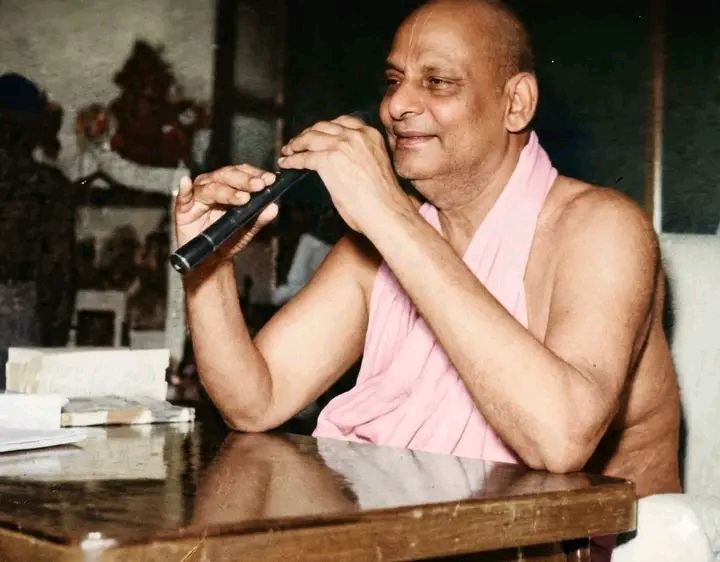
Swami Sivananda speaking into microphone seated at table. image
Celestial Collection of Divine Messages - Awakening the Divinity in Man, Swami Sivananda

The Dynamics of Selfless Service

The Dynamics of Selfless Service Sri Swami Sivananda Before proceeding to consider the bearing that the Ethics of the Bhagavad Gita has upon the various aspects of human conduct, it is important to emphasise that the cosmic love that forms the fundamental basis of these ethics is not an ideal to be fondly meditated upon, nor an idol to be bowed to from a distance, nor even an idler’s subject-for-gossip. Cosmic love is a very, very hard taskmaster. No doubt it is elixir for the inner spirit, a tonic for life itself and a fountain of eternal youthfulness and dynamism; but it has often demanded and inflicted a heavy toll on the physical, grosser and material part of man. Cosmic love is the confluence of paradoxes. This is extremely important to note and bear in mind always. It demands great sacrifices which are always made with the greatest delight. It demands ruthless renunciation of worldly pleasures and comforts; and this renunciation is embraced with ecstatic bliss. It demands the merciless severance of all worldly connections, relationship and affections; even this is done with a cheerful face and joyous spirit. Cosmic love only demands the annihilation of what in truth is a limitation, a littleness, a bondage, a painful condition (though in an unenlightened state, this might appear to be pleasurable!), in order that you might enter the Kingdom of Limitless Joy, Infinite Bliss, Ineffable Peace and Immortal Life. For the sake of Dharma Lord Rama renounced His Consort. Cosmic love transformed Prince Siddhartha into a mendicant, wandering along the streets of his erstwhile kingdom, with a begging bowl. In order that mankind might awake from the slumber of ignorance and walk the path of righteousness, Lord Jesus sacrificed His Life itself on the Cross. Beware of paying lip sympathy to cosmic love! Ask yourself: “How near have I approached the ideal of Sarva-Bhuta-hite-ratah (devoted to the welfare of all beings)?” That is the acid test of cosmic love. Not a moment of time is yours; it is given to you for being utilised in the service of humanity. Not a grain of food, nor a copper coin, nor a sublime thought, nor even a spiritual experience, is given to you for your private consumption: Cosmic love demands that you should share all with all. The food that you give your own body, the clothes with which you cover it, and the knowledge that you pour into your mind, have justification only in the measure in which your body is utilised in the service of humanity, and the mind is made the instrument through which solace, peace, happiness and enlightenment is brought to His children. Otherwise: Bhunjate te-tvagham Papa Ye Pachanyatmakaranat: if you cook food for your own consumption, you eat not food but terrible sin! Here, food is used symbolically. It refers to everything. Your wealth, your physical strength, your intellectual acumen and your spiritual light are all for others, for all beings. But this does not give you a licence to interfere in other people’s affairs, and in the name of cosmic love and selfless service, disturb the peace and create disharmony in the world. We have seen how sometimes big nations vie with each other in “rendering help to backward nations” “civilising an uncivilised country” “educating the illiterate masses” “raising the standard of living of the poor” — these are all cloaks which often hide nefarious intentions. The motive behind is not cosmic love, but masked selfishness and greed. Therefore, the Lord warns that Svadharme Nidhanam Sreyah, Para-Dharmo Bhayavahah. Our Puranas and stories of saints are replete with exemplars of the performance of duty. Cosmic love only demands that you should be beyond Raga (attraction towards particular persons and things), Dvesha (dislike for some persons or things) and Bhaya (fear). In the heart must be enshrined the light of the Truth “Sarvam Brahmamayam” “Isavasyamidam Sarvam” “Ahamatma Gudakesa Sarvabhutasaya sthitah” and this light must be ever kept alive in the heart. All your actions should be performed in this light. Then, the very performance of your own duty, with the right spirit of selfless service of humanity, would itself liberate you from Samsara Sve Sve Karmanyabhiratah Samsiddhim Labhate Narah–“Engagedin the performance of his own duties, man attains to Perfection.” The inner Bhava, or attitude, transforms work into worship. The heart is filled with cosmic love; and the inner spiritual vision perceives the Lord present in all things and His Consciousness pervading every thing that exists: it is easy to understand how this man would behave towards people and how he would perform his daily duties. The bottle of medicine is filled with God’s Power; the patient standing before you is God in human form; he accepts the doses of medicine you give him; it is your worship of God. You won’t throw away anything, you won’t behave rudely towards anyone; you won’t treat anyone or anything with contempt. For, you perceive that all things and all beings are filled with His Glory, His Light, His Life and His Love. That is cosmic love. Therefore, Svakarmana Tamabhyarchya Siddhim Vindati Manavah–ByWorshipping the Lord with the flowers of his daily activities, man attains to Perfection. May you all shine as Jivanmuktas, Jnanis, Yogins and Bhaktas in this very birth

The Dynamics of Selfless Service Read Post »

images 2026 02 24T124522.689
Swami Sivananda, The Ultimate Goal of Mankind - Self Realization

The Ontological Argument in Philosophy and Meditational Techniques

The Ontological Argument in Philosophy and Meditational Techniques By SRI SWAMI KRISHNANANDA It is a well-known fact that the process of meditation in the field of spiritual life is centralised in the attempt of consciousness to concentrate itself on Ultimate Reality. Here, in this connection, philosophical circles have been conducting deep researches into the possibility of Thought contacting Reality, and whether it is a possibility at all on account of the limitations to which psychological processes are naturally subject. The seed of the controversy arose from the affirmation of the Greek philosopher, Plato, that Ideas are the Archetypes of things; that is, the forms of the objects visualised in sense perception and the objects which are the field of phenomena, are like shadows or copies of the Ideas which Plato affirmed as being universals. It was the insistence of Plato that the universal is prior to the particular, more real than the multiplicity of things, and that the Ideas are eternal while the objects of sense are perishable. Aristotle, his disciple, erroneously thought that Plato made a mistake in creating a division between eternity and time-process since the two realms fall apart from each other and eternity cannot invade the realm of phenomena. If this is the case, thought cannot contact reality, or as a consequence thereof, we may say that there is nothing in the world which can touch God by any means whatsoever. However, here Aristotle should be considered as gone wrong in the appreciation of Plato’s foundational doctrine, because nowhere do we find Plato asserting that there is no connection between the eternal Ideas and the phenomenal objects of sense. The very fact of the objects being considered as shadows of the Ideas should give us a clue to the relationship between the Ideas and objects. There cannot be a shadow unless there is an original and the relationship between the two is obvious. This means to say that the faculties which are otherwise considered as phenomenal are not entirely distinct from the characteristic of the eternity of the Ideas, and are not organically dissociated from Reality, and the very aspiration for God arising from the heart of the human being should be proof enough to demonstrate that there is a vital relation between the phenomenal and the noumenal, the world and God. In the medieval ages, Saint Anselm propounded the argument known as the Ontological Argument for the existence of God, making out thereby that the thought of God cannot arise in the mind of a human being unless the potentiality for God’s Presence is already embedded in the human mind. Else, how does such an idea arise at all? As another great thinker has humorously said, the wonder is not whether God exists or God does not exist, but the wonder is that the tiny mind of the human being can conceive such a tremendous comprehensiveness called the Infinite. Saint Anselm’s argument is that the concept of God is itself proof for the existence of God; otherwise there should be no reason why such an idea should arise at all in the mind of the human being. It is well-known that nothing can arise from nothing and hence the thought of God cannot arise from a vacuum or a totally dissimilar cause. Rene Descartes, the famous French Philosopher, modified this argument of St. Anselm and followed a mathematically deductive process of reasoning in proving the existence of God. Descartes concluded that a finite mind cannot be expected to generate within itself an Infinite Thought. The Infinite cannot arise either from a finite source or from vacuum. The Infinite can arise from the Infinite only. Descartes concludes that God Himself must have planted the idea of the Infinite in the mind of the human being; else, there is no explanation as to how such a profound thought can arise in a mortal brain, limited to sensory perceptions. His well-argued confirmation of the existence of an eternal Self is something well-known in the history of philosophy. He carried on a process of doubting everything that the mind can think and could doubt even the existence of his own self, but the fact that there is doubting, cannot itself be doubted. Unless the doubter exists, the doubt by itself will have no meaning. We may doubt everything, God, world, individual and everything, but cannot doubt the validity of there being such a thing as doubt. The doubter cannot be doubted. Further it follows from this argument that the doubter must be a conscious being, since there is no such thing as unconscious doubting. The doubter is conscious existence, one feature inseparable from the other. The Self is Existence-Consciousness. It is from this potential certitude of Self and the mind that thinks on the basis of this Self, that we can deduce further on the concept of the Infinite. The eternal is in the heart of man. God exists, because the thought of God exists. However, the most formidable refutation of the Ontological Argument comes from the German Philosopher, Immanuel Kant, who analyses this Argument threadbare and concludes that the Ontological Argument has no philosophical value. Kant’s proposition is that the human mind can work only within phenomena and it cannot think noumena which transcend the boundaries of its capacity of knowledge. Hence, there is no such thing as Thinking God. Kant’s contention is that the ideas of God, world and soul are just regulative features, which suffice to give a synthetic unity of apperception to the perceptual process through space and time and the conceptual process through the categories of understanding, namely, the obligation on the part of the mind of the human being to think only in terms of quantity, quality, relation, and modality. Since God is not a quantity, quality, relation or modality, the mind cannot think God. The Ontological Argument is hereby refuted. But, here, one can observe, Kant deeply errs in his conclusion. The error of Kant consists in this: That the noumenon

The Ontological Argument in Philosophy and Meditational Techniques Read Post »

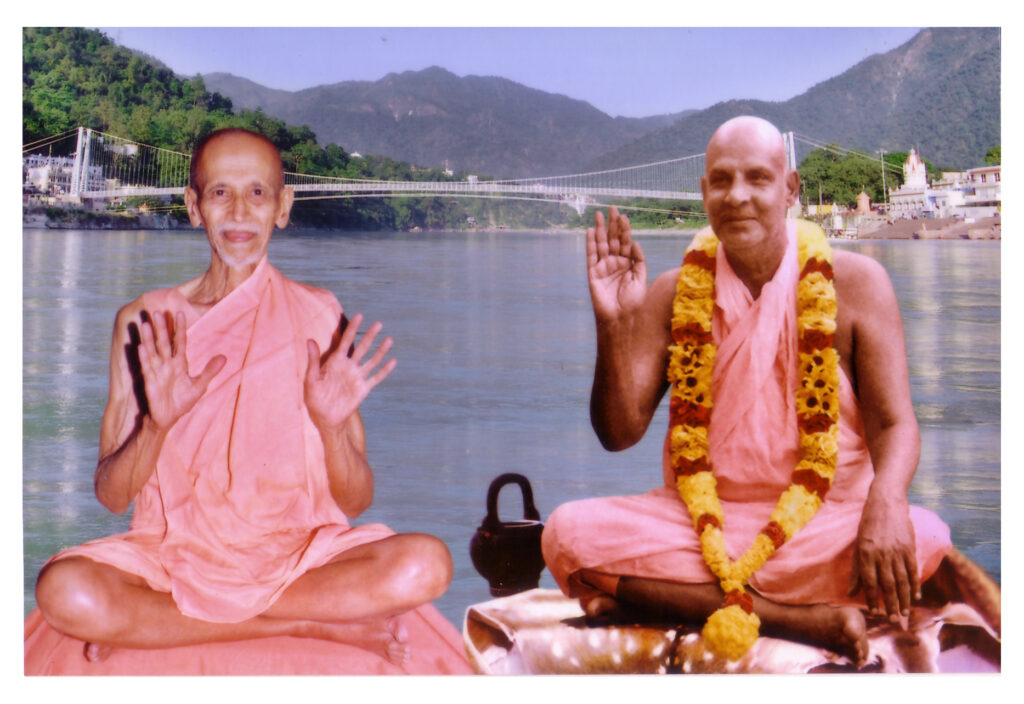
swami sivananda Two monks blessing by river image
Celestial Collection of Divine Messages - Awakening the Divinity in Man, Swami Sivananda

How Do Experiences Arise?

How Do Experiences Arise? Sri Swami Chidananda Radiant Immortal Atman! Blessed divinities! Children of the Divine! Beloved seekers of the Lord! Spiritual aspirants! Yogic practitioners upon the path of practical Yoga! I am very happy to welcome you to this Saturday evening Satsang. This day as my humble and loving contribution to this Satsang, I would like to offer a little thought for consideration and reflection. I can promise that it will bring added understanding about experiences through which you go in life. What is the basis of human experiences? Do they really exist outside of you? Have they got an independent existence apart from you? Your joys and sorrows, your happy laughter and your boo-hoo tears—do these things exist in this world outside of you? Do they come and hit you? Or is the actual state or affairs something different? Who makes you happy? Who makes you weep? Can you point the finger at someone or something and say: ‘This is the cause of my happiness; this is the cause of my sorrow’? That is what we all do. We think we are all wonderful, innocent nice people; but this world ‘outside’ puts us through the mill. We are bothered by the world giving us a very unfair deal. We are seeking for causes. Even supposing we concede for a while that there is possibly something outside of us that comes and makes us happy or unhappy—even then, it is not due to someone else! This is the great vision and wisdom of the Vedic understanding of life. Ultimately, you are the root of whatever comes to you—even when it seemingly comes to you from outside. You are ultimately the cause of all your experiences—whatever they are—whether they are plus or minus, positive or negative, joy or sorrow. You cannot put the blame on someone else, much less accuse someone else. No one is responsible. But the even more essential and primal dimension is this first question—is there something at all outside? Is this world capable of giving us experiences? We attribute a great deal of power to this world. But does it deserve it? This is a world of inert things, and we are conscious beings. Who is superior? Can inert things give experiences to conscious beings? I am not talking of your breaking a leg in a car-accident—that is something physical, which the body undergoes just like disease, old-age, infirmities, aches and pains, coughs and colds. Apart from these, the inner experiences of our frustration, disappointment, fulfilment, happiness, sorrow—does this also come from outside? Does it exist apart from us? One great sage dismissed the whole thing. He made a short and swift answer. He said: “Just consider what happens every day, after you have had a full day of work, social activities etc., and you are exhausted. You go to bed and sleep. And the moment you switch off from this state of waking consciousness and enter into the state of deep sleep, all your problems, sorrows and experiences of this outside world cease to exist! They just vanish out of sight. Everything that prevails during your waking consciousness—from the moment you wake up in the morning, throughout the day—is bundled away. You don’t have any problems, you don’t have any unhappiness—no fear, no disappointment, no frustration, no anxiety, no tension, nothing! You go into a serene state where everything is restful, peaceful and silent.” And if that state does not come to you for two or three days on end, then you become upset and want to go and see a doctor or take a pill. All people all over the world seek that state—it may be a condemned prisoner in his cell or some man serving a life-sentence, or it may be a hobo who lives merely on scraps or dole, or he may be a multi-billionaire, an emperor. No matter what the outer life is—it may be full of luxury, and yet even he has to seek that other state, night after night. Supposing you say: “Why do you want to go to sleep? Why not keep enjoying these luxuries and riches?” “No. No. No.” The time comes when that state seems to be more covetable. And therefore, the emperor and the beggar, both, seek to enter into a state where this world does not exist—there is no human relationship, there are no psychological hang-ups, no problem or complication of any kind. Everything is ‘Shanti, Shanti, Shantih’. Isn’t this wonderful? What makes us go off into that state where things cease to exist? Well, you can understand it, because when you enter into that state everything is instantaneously, magically, gone! This great sage said, “This is not all. See what happens the moment you wake up. All these things come back to you! Why do they vanish when you enter into sleep; and why do they once again start when you come back into the state of wakefulness?” They vanish because the mind ceases to be active. The moment you enter into that state, the mind comes to a standstill—there are no thoughts. The moment you wake up, the mind starts to become active, and the moment mental activity commences, the whole world with all its experiences comes back. So, the kingpin of this entire matter is the activity of the mind. This means, if we are able to change the nature of the activity of the mind, we have the key to bring about a change in the nature of experiences that may come to us from outside. Now, here we are not concerned about all the things. We are concerned about joy and sorrow, because that is the crux of the human situation. We do not want sorrow and pain—we want happiness and joy. That is what everyone is seeking. So, that particular question is more immediate and relevant to us. All your experiences are created by yourself. You make your own happiness, and you make your own misery. This

How Do Experiences Arise? Read Post »

bdfbff37681676212acbcea24a7005ed
Celestial Collection of Divine Messages - Awakening the Divinity in Man, Swami Sivananda

How To Find Peace

How To Find Peace Sri Swami Chidananda Direct your entire being—mind, intellect, emotions, sentiments, towards that one and only Being, the sole Source in whom there is enduring, eternal, unalloyed, unmixed, total happiness that would not decrease or change. That is Brahman. That is God. Make all your activities God-oriented by spiritualising them. You may ask: ‘All said and done, how can I implement it? I am involved in this world. This is a familiar ground for me. But I don’t know that unknown, unfamiliar Being. How can I have any love or affection, inclination or longing for That? True, your problem is genuine. But the solution is quite simple: Detach from here, attach There. So first of all, you should get yourself familiar to That whom you want to worship, love, adore, on whom you want to meditate upon, towards whom you want to move. There are three different ways. The first is the heredity. If you are born in a family where parents are devotees and they are doing Puja and Kirtan, singing devotional songs, reading about the Lilas of the Lord and the lives of saints, talking about Him, you will automatically develop love for Him. Secondly, if you are not born in such a family, you should think about our rich heritage, you should get yourself acquainted with it by reading the spiritual books. There is a unique tradition in all the parts of India. There are some people whose sole occupation and allocation is to master the scriptures and to go to various places and narrate, expound and elucidate them. So even an illiterate villager also knows some philosophy; he knows about Shabari, Ahalya and many such characters. He knows about Bhakti, he knows about God’s grace. Our scriptures abound in Stotras and Stutis, hymns and paeans of the Lord, glorifying Him. We develop great admiration, adoration, reverence and veneration for the Supreme Being. If you listen to the glories, grandeur and greatness of God and the desirability of that wonderful Experience of attaining that Being and attaining the supreme Bliss, Peace and Happiness, and going beyond all sorrow and suffering, it will create in you a longing for God, for that Experience and your life will certainly be changed. Thirdly, once your taste is developed in this direction, you develop a strong desire to acquire more knowledge. So you begin to read and study our great scriptures in your leisure hours, prepare your own personal notes and discuss the finer points with like-minded friends. You slowly build up your own library of inspiring literature. What you argued to be unknown and unfamiliar becomes known and so close to your heart that you will spend most of your spare time on That and you don’t like to waste your time on the worldly things. Now, you like to read about It, you like to think about It, you like to talk about It and you like the company of people with such tendency only. Now unknown That becomes your best friend and guide, the remote becomes the closest, He becomes a part of your life, you cannot live without Him.

How To Find Peace Read Post »

Swami Sivananda, The Ultimate Goal of Mankind - Self Realization

New Year Message From H.H. Sri Swami Chidanandaji Maharaj (1999)

New Year Message From H.H. Sri Swami Chidanandaji Maharaj (1999) By SRI SWAMI CHIDANANDA Radiant Immortal Atman! Dear Friends, May the grace of Gurudev Swami Sivananda illumine the New Year, 1999, with brightness and radiance of hope, aspiration and inspiration. At the dawn of this New Year, I wish to remind you of Gurudev’s message of Divine Life. Live a life of selflessness and service unto all beings. Worship God with devotion and develop Divine Love. Meditate upon the Supreme Being regularly each day without fail. Ever aspire to realise the Eternal Reality through right enquiry, discrimination, metaphysical reflection and spiritual contemplation. Strive to lead a pure life of noble conduct and holiness in thought, word and deed. Be a SADACHARI and a PAROPAKARI. Become a servant of humanity, a messenger of Peace and Unity. Develop vision of One in the spirit of unity. Practise the presence of the Divine and dedicate all the actions to the Lord. Start living this Divine Life today. This year will see the certain come down of an era. Mankind is looking forward to the transition with great expectation and at the same time with some degree of anxious trepidation. When the 20th Century is about to conclude soon to welcome the advent of the 21st Century, we find ourselves in a world split into numerous warring camps and rent with enmity, hostility, hatred and violent, destructive behavior on the part of individuals as well as groups of persons in clash and conflict with others. Today more than ever in human history, the positive process of spreading goodwill, love and friendliness has become imperative and urgent too. I have always thought of religion as the only unifying and binding force that can bring together mankind in the fraternal bond of spiritual oneness. Because, amidst all the outward diversities and apparent differences that exist on the surface, deep within each and every one of us, there abides one identical principle that forms the innermost core-reality. This is the same in all beings. For this reason, spirituality which is the inner divine dimension of religion, in the sense of theology, dogma and ritual, becomes an enduring foundation of universal brotherhood and human solidarity. It is upon this foundation that we have to raise the edifice of a New Humanity for the 21st Century. We have all to work for this. All our shared work and united efforts should be positive, constructive, creative and above all unifying. As a result, there must emerge a Global Human family with planet earth as its home. May this then be our priority task, which will make all other tasks worthwhile and meaningful. Come, come play your active part in this universal human mission. Exercise the blessed privilege of being an individual Human Family. May your being and doing be a blessing upon the contemporary scene. World peace is possible when people of the world wake up to the facts governing Universal life and when there is heart-to-heart feeling of goodness, love and the one-ness among the inhabitants of the world. I have a request to one and all who read these lines. If you devote one hour every day in meditation, to the projection of peace thoughts, there will be thousands of people doing the same thing every day and the effect of total effort of such auspicious, combined thought projection is inestimable. Not only will there be individual force of every such dedicated person acting in cooperation, but the additional strength received from Invisible Helpers, the ever present Masters, the Videhas, who will silently guide all and make them pursue the right path. They are the Great Beings who enter into the intellect and emotions of every good and pious person and use him as an instrument for serving mankind. Our ancients had this sublime and vibrant concern for Peace. Peace was ever in their heart and mind for all creation. They lifted up their hearts to the universal spirit and sent forth their prayerful invocation on behalf of all existence thus. “May peace be unto all the quarters! May peace be unto the skies! May peace be unto the earth! May peace be to the waters of the earth! May peace be to the medicinal herbs and all plants on earth! May peace be to the celestials! May peace be to Brahma, the Creator! May peace be upon Peace itself!” Will you not therefore, make now this New year resolve of devoting at least one hour every day to project thoughts of peace, so that the present troubles and turmoils of the world may cease? This is a very simple thing that you can do–yet the response from the Almighty and His Agents will be of great value. Make your own individual appeal to God and ask Him to send you Light, to help humanity for the establishment of peace and promotion of happiness. I wish you Happy Christmas. May Lord bless you all with a happy new year of peace, plenty and spiritual evolution.Om Sri Ram Jai Ram Jai Jai RamOm Sri Ram Jai Ram Jai Jai RamOm Sri Ram Jai Ram Jai Jai RamSri Sivananda Ashram, Padmarao Nagar, Secunderabad, 19 December 1998.

New Year Message From H.H. Sri Swami Chidanandaji Maharaj (1999) Read Post »

3218034516 1512cd1898 b
Celestial Collection of Divine Messages - Awakening the Divinity in Man, Swami Sivananda

Divine Messengers

Divine Messengers Sri Swami Chidananda It is Knowledge of Self which helps man to attain that state of eternal satisfaction or Nitya Tripti which is the Swarupa or Moksha. But for Self-knowledge Moksha will be impossible. And Self-knowledge itself will be impossible of attainment, but for those Divine Messengers who throw light on the path of our lives. REVIVAL OF SPIRITUAL KNOWLEDGE It is impossible to weigh the deep debt of gratitude we owe to these Divine Messengers who bring balance and sanity to a world which gets into pitiful imbalance every now and then. Whenever true knowledge, spiritual knowledge, begins to vanish from the face of the earth, and tends to lapse into oblivion, the Divine Messengers revive that knowledge and nourish it with the vitality of their own inner experience. If Vyasa wrote the Prasthana Traya, the eighteen Puranas and the Bhagawata, it was for this purpose only. Bharatavarsha is what it is today only because of the great sage Vyasa, the Avatar of Vishnu, and the great Brahma Vidya Gurus who followed him. The life-aim of Divine Messengers like Sri Aurobindo and our Gurudev is the same, viz. to bring back once again the Divine Knowledge which God Himself gave at the beginning of creation through Chaturmukha Brahma. These Divine Messengers seek to awaken man to the knowledge of his real heritage. THE AMSA AVATARAS The great Gurus are Avataras of God. They are Amsa Avataras. There are different kinds of Avataras. Avatara Vada is the Science of Incarnation. Apart from the ten main Incarnations of God, He often incarnates partially also. While the Purna Avatara of God will manifest all the sixteen kalas or rays of the Lord, the Kala Avataras manifest only one ray of the Lord. There are then Shakti Avataras who manifest any one aspect of the Lord. Sometimes, God speaks for the time being through an otherwise ordinary human being. This is known as Avesh Avatara. Again, God can be seen manifesting in a special form through some honoured deity as in the case of Lord Ranganatha of Srirangam, Mother Kali in Dakshineshwar, Vittala of Pandarpur, Krishna of Udipi and Ramachandra of Bhadrachalam. These are Archa Avataras. Lastly, great men who are the living and moving forms of God, the great Satgurus, are classified as Amsa Avataras. The vital role of the Amsa Avataras, apart from other acts of mercy which they may perform, is to keep alive in this world the current of Jnana, of spiritual knowledge. Fortunately for us, the children of Bharatavarsha, not a century has passed in which we have not been blessed with such God-men. The wandering fakirs in the North, the saints of Maharashtra, the Bhaktas in Bengal–all of them, in their own way, have kept up this current of Jnana ever vibrant in this holy land of ours. But for Gurudev, we would be devoid of the spiritual knowledge that we possess today. Even if you are a master of the Sanskrit language, it is not easy to understand the subtle truths contained in the Prasthana Traya–what is Kshara, what is Akshara, what is Purushartha and so on. And Gurudev, as you all know, has explained everything in such a way that even a person with average intelligence can understand them easily. This is how God, through His Divine Messengers, gives us back His own words which we forget and lose. All Divine Messengers have done this before. Jnaneshwar explained the sublime wisdom of the Gita in his immortal Jnaneshwari. Potana rendered the Bhagavata in Telugu. The Ramayana was re-written in Tamil by Kamban and in Hindi by Tulsidas. Ekanath again gave his Bhagavatam to Maharashtra. Nischalanath gave to the North his famous Vichar Sagar. How can we–ordinary mortals–offer our worship to these Divine Messengers who have given their lives to re-educate us, to re-kindle the divine wisdom in us? The only way and the true way in which we can obtain their grace is to walk along the path chalked out for us by these God-men out of their divine compassion.

Divine Messengers Read Post »