











Hari Om

Menu

February 24, 2026

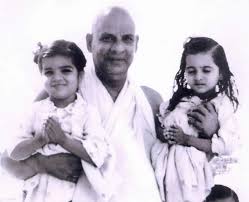
swami sivananda Black-and-white photo of monk holding two young children image
Celestial Collection of Divine Messages - Awakening the Divinity in Man, Swami Sivananda

Become Ye Krishnas

Become Ye Krishnas Sri Swami Sivananda Children of God! The life of Bhagavan Sri Krishna is an illustration of how an ideal, exalted life is to be lived. The best commentary on the Bhagavad Gita is the life of its own author. Sri Krishna lived what he taught and he taught what is of the highest and of the greatest value. Sri Krishna was an integral person who led the integral life with the consciousness of the integral Reality. He was one of the busiest possible beings, a matchless statesman, an expert in every art, living in the midst of a large family of heterogeneous temperaments, undertaking to bring peace to the earth by destroying antagonistic powers and raising up the down-trodden Dharma. And yet, with all these multifarious activities of an all comprehensive type, he was continuously rooted in the Omnipresent, Eternal, Absolute Consciousness. He was a synthesis of the One and the many, a reconciliation of the Unmanifest and the manifest, a soldering of the Infinite and the relative. For Krishna, there is nothing to acquire and nothing to renounce, for He is the Conscious Truth within both the opposites. He is a synthetic man who acts with prudence in this world, whose actions are based not on personal interests but on Truth-consciousness, not on the particular but the General Being. Hence, to become complete and perfect is to become a Krishna who was complete and perfect. In everyone, there is this ideal, Krishna, hidden within. Everyone is a potential Krishna. The Krishna-consciousness is already in you; you have only to manifest it through self-discipline and meditation. To live the philosophy of the Gita means to become Krishna Himself. In spite of distractions of the world, Krishna keeps up the unbroken relation of self identity with the highest Spirit. No greater man and yet no greater Divinity has ever appeared on earth than Sri Krishna. The same Krishna, the friend of the simple cowherds, the same humble servant who washed the feet of the guests in Yudhishthira’s royal sacrifice, was that all-devouring Virat the Universal Being, that dazzled the representative of man, Arjuna, and struck him with all awe. We do not find another to be compared with this glorious example, either as a perfected individual or as the revelation of the Supreme Being. The ideal of Sri Krishna is the one to be striven for by everyone through renunciation for the sake of knowledge of the Self. To be in the world and yet out of the world, to see the universe of plurality in the light of unity, to be man and yet know the Spirit in man, to work in the world and yet be untouched by its ways, to work as a master, to live like God, to work as a devoted, humble servant of all, to sport in the relative while resting in the Absolute, is the lesson which Sri Krishna teaches to the world. Become yourself Krishna, the Ishwara moving on earth, by practising the Yoga of synthesis which is the theme of the Immortal Bhagavad Gita. May you all shine as Krishnas! Taken from D.L. 1949

Become Ye Krishnas Read Post »
image 33
Swami Sivananda, The Ultimate Goal of Mankind - Self Realization

A Project of Education

A Project of Education By SRI SWAMI KRISHNANANDA The world has, first of all, to stand ‘outside there’ as an ‘object’ of the percipient individual, in order that the latter may make any sense of life at all. But, is it true that the world is really ‘outside there’, as an isolated object staring at the individual? This strange predicament which one encounters in the study of anything would testify to the value that seems to be attached to such processes and doctrines and ways of living as the purely astronomical, physical, chemical, biological, historical, political, social, economic, civic, aesthetic, and even ethical and epistemological envisagements of existence, as they stand today. The whole edifice may tumble down if the meaning of a life of this kind is rooted in the basic requirement that the world is ‘outside’ the individual. Modern astronomy and physics, to mention the least and the most obvious, fortunately, appear to have, unwittingly though, stumbled upon the fact that the universe is an undivided continuum, an organism, in which the space-time complex has to be transfigured into a four-dimensional perception, and that matter is not ‘outside there’ to be seen or dealt with by an ‘individual’. The ‘individual’ so-called goes with the universe. This should augur, evidently, a new vision of life in its entirety, awakening man from his slumber of empirical phenomenalism which, dream-like, is taken for reality, very erroneously. The return process to this great Fact of the Universe is education. A logical ascent to perfection is called for. The movement, then, is from the social scene to the psychology of the individual, the cosmical set-up and the Ultimate Reality. Education may be said to be the process of awakening to the structure of existence. It is a graduated widening and ascent in the dimension of consciousness to the degrees of reality. Life is essentially a system of adjustment of oneself to the laws of the universe. The meaning of human enterprise in the world, thus, is coordination of the individual with the facts of the cosmic arrangement of things and a harmonious cooperation in the fulfilment of its purpose. The evolutionary scheme of the universe would lay down the required curriculum of the educational career. But, the empirical insistence that the world is outside the individual has, however, to be taken into a matter-of-fact consideration, since all progress is from a lesser reality to a higher degree of being. This would also substantiate the empirical value of the stages of the evolution of the universe conceived and experienced as a reality of pragmatic existence in a world of enterprise and progress. The individual may be said to constitute a cross-section of the universe. The human being operates like a miniature cosmos. This would mean that the principles that are active in the universe direct and condition the existence and activity of all human life. The analysis would also reveal that there is a universal performance implicit in the existence of human beings and in their pursuits of what they consider as their objectives or aims. Towards this end, there is all the striving of human life, concerning which there has always been felt the necessity for intense educational training as a method of introducing a universal manifestation into the adventures of human individuality. These insights may perhaps be adequate to begin a spade-work for laying the foundation of a proper educational career for humanity. When a child is born and practically knows nothing except for the fact that it is evidently self-conscious of its bodily existence and has a feeling of awareness of a vague and nebulous atmosphere of persons and things around it, there is also in it a pressure towards objective consciousness, and the inclination of the child is more in the direction of externality of perception and feeling than an awareness of its own existence as a human unit. What we may call the cosmological scheme is naturally to be followed in an understanding of the educational project, since it would appear that education is nothing short of a conscious discipline of the individual to ascend gradually, stage by stage to levels indicated by cosmic evolution. The condition of the child-consciousness mentioned may pave the way with which the educational method could be commenced for implementation. In the earlier stages of education, call it the kindergarten, the Montessori stage, or the primary education level, there is always to be a psychological programme to bring slowly into a state of gradual integration the many-sided, rather distracted, perceptions of the external world by the child. Often education begins with training in writing reading and basic arithmetic and discipline. Later on, the mind of the child is allowed to move further in a similar integrated fashion along wider areas of human society around, together with the civic sense involved in every kind of human relationship, whether in the family or in the community of people outside, because, practically, the human individual is primarily concerned with other such individuals more than with things which are not human. There are instincts of the species which pull it to its own kindred individuals or kith and kin or others who are related humanly in any manner. Human relations may be said to be the immediately felt necessities in the process of study and training, which include the norms of civic duty and behaviour in regard to the immediate environment of any society, determined, of course, by the psychology, the social set-up or, rather, the sociological tradition and scheme operative. in the particular human environment,–it may be in a locality of a linguistic society bringing people together with an affinity of any cultural and fraternal thinking. With this method of what we may call human understanding scientifically introduced, an important barrier post in education is crossed. Then the student is further introduced to the world which is made up basically not only of human beings alone, but other things also that are there, which form the

A Project of Education Read Post »

images 2026 02 24T134903.393
Swami Sivananda, The Ultimate Goal of Mankind - Self Realization

Pratyahara (Abstraction of the Senses)

Pratyahara (Abstraction of the Senses) By SRI SWAMI KRISHNANANDA You have the stages described in the Yoga Sastras dealing with your sense organs, which present before you a picture of the world, even of God Himself, quite different, of course, from what they really are. What is sense perception? What are the senses doing? And, where are they? You may think that the eyes that see, the ears that hear, etc., are the sense organs. They are only organs, but not sensations. You have sensations, without which the organs will not get animated. A dead body also has these organs. It has eyes and ears but it has no sensation, so the eyes may be open, but there will be no seeing in a corpse. The seer is not the physical eye, but a sensation of visualisation, a form taken by the mind itself. What does the mind do in this condition? The one integrated mind that it really is ramifies itself into five different rays, – as sunlight, allowed to pass through the mouth of a pot with five apertures at the bottom, will be seen to project itself in five different channels. But, if the holes are fitted with certain lenses of a different structure and colour, the same sunlight which passes through the inside of the pot will project itself through these five apertures in five different manners. These five different manners of the projection of a single integrated mental process are called the sensations. So, we see colour through one sense, sound through another, etc. Actually, the basic substance of colour, taste, sound, touch and smell is one and the same. There are not five different things here inside us. They look like five different things because of the different lenses through which the single light passes. Thus, they give a wrong picture of things. If these contorted light rays through the five apertures are allowed to project further upon things outside, then the seer inside, which is the mind, will see the world of five-fold perception in a totally different manner from what the world really is. This is what has happened to us. We cannot see things as they really are. We see, we hear, we touch, etc., through the senses which are already conditioned by the structure or the avenues of perception. In order that you may not be tempted by these Disneyland-like presentations due to these distortions of sensations, you have to practise a process called pratyahara, which means the abstraction of the sensory operations, and centring the energy of these sensations in their source, which is the mind itself. Difficult is this process. The sensations are rebellious. Illustrations are given in the Bhagavad Gita, telling how difficult this method is,-though it is very simple to hear. Wild elephants, roaring lions, terrible tigers, bursting tornadoes and cyclones may be compared to the operations of the senses. Vasishtha instructs Sri Rama in the Yoga-Vasishtha: “You can drink the whole ocean, you can shake the root of the mountain, you can drink fire, but you cannot control the mind.” Like binding air in a little bag is your attempt to control the sense organs. Sensations are nothing but desires. They are not really connected with physical things. Wrongly do we feel that we love things, hate things, want things and do not want things, on account of the deceptive operations and the reports of the sense organs operating in this manner. Wild dogs are these sensations. They bark and may attack you, also. What do you do? You should not be carried away by the appearance of this tornado of the desire process. Here again a kind of self-analysis is called for. Sensations, as told already, are, only desires manifesting themselves, in these five formations. We want five things in this world: we want beautiful things to see, melodious things to hear, fragrant things to smell, delicious things to taste, soft things to touch. You have no other desire in the world except these. Though you may think that you have millions of desires, they are only five, basically. Now you have to instruct your own mind. Do you want delicious things, beautiful objects, melodious music, a soft bed? Many people in this world may have these facilities, but still they are most unhappy people. Beautiful presentations, tasty dishes, melodious music, soft beds of velvet have not made rich people happy. What the senses are telling you is indeed mischievous. Even if you have all these sensuous things, you will still be the same miserable person as you were before. The sensations are terribly deceptive and you cannot trust them for a minute. You cannot trust what you see or hear, cannot trust any sensation. They are here before you to pull the Atman (Self) out and make It appear like an anatman or a dead object. This living Atman then starts clinging to a dead Atman outside in the form of the visible things in the world. Here is the drama of life, the way in which we are living. Tell yourself again and again by bringing before your mind the experiences that ancient sages and saints also had passed through. They had the same difficulty. They were the same small people as any one of us is; they became big because of the understanding they exercised and the success they achieved in the restraint of the sense organs. When you meditate you will see a totally contradictory thing just in front of you. You will see there physically present (not imaginarily conceived) things that you once loved. You will think that they are only visions, but at that time they will not be visions. They will materialise themselves into the form that you loved once upon a time, and the same person will be there in front of you, the same treasure placed before you: “Here it is. You have left all of us and come. Here we are.” Don’t say

Pratyahara (Abstraction of the Senses) Read Post »

Swami Sivananda walking with devotees during spiritual gathering image
Swami Sivananda, The Ultimate Goal of Mankind - Self Realization

Practical Way to Self-Realisation

Practical Way to Self-Realisation By SRI SWAMI SIVANANDA Thou art divine. Live up to it. Feel and realise thy divine nature. Thou art the master of your destiny. Do not be discouraged when sorrows, difficulties and tribulations manifest in the daily battle of life. Draw up courage and spiritual strength from within. There is a vast inexhaustible magazine of power and knowledge within. Learn the ways to tap the source. Dive deep within. Sink down. Plunge in the sacred waters of immortality-the holy Triveni (triple stream confluence where river Ganga and Yamuna meet along with the invisible underground river Saraswati). You will be quite refreshed, renovated and vivified when you go to the divine source and realise: I AM THE IMMORTAL SELF. Understand the laws of the universe, Move tactfully in this world. Learn the secrets of nature. Try to know the best ways to control the mind. Conquer this mind. Conquest of mind is really conquest of nature and the world. Conquest of mind will enable you to go to the source of Soul-Power and you then realise: I AM THE IMMORTAL SELF. Do not murmur. Do not grumble when troubles and sorrows descend upon you. Every difficulty is an opportunity for you to develop your will and to grow strong. Welcome it. Difficulties strengthen your will, augment your power of endurance and turn your mind towards God. Face them with a smile, In your weakness lies your real strength. Thou art invincible. Nothing can harm you. Conquer the difficulties one by one. This is the beginning of a new life, a life of expansion, glory and divine splendour. Aspire and draw. Grow. Expand. Build up all positive virtuous qualities-the Daivi Sampatti, viz., fortitude, patience and courage that are dormant in you. Start a new life. Tread the spiritual path and realise : I AM THE IMMORTAL SELF. Have a new angle of vision. Arm yourself with discrimination, cheerfulness, discernment, alacrity and understanding spirit. A glorious brilliant future is awaiting you. Let the past be buried, You can work miracles, You can do wonders. Do not give up hope. You can destroy the harmful effects of unfavourable planets through your will-force. You can command the elements and the nature. You can neutralise the effect of evil influences and the antagonistic dark forces that may operate against you. You can change the unfavourable circumstances, into best possible ones. You can nullify destiny. Many have done this. You can also do so. Assert! Recognise!! Claim thy birth-right now!!! THOU ART THE IMMORTAL SELF. Determination and self-reliance are very necessary for success in Self- realisation. In Mundaka Upanishad you will find: “This Atman cannot be obtained by one who is destitute of strength or without earnestness or by penance without mark. But if a wise man strives after it by those means, then his self enters into Brahman (God).” Fearlessness is an important qualification for an aspirant. One should be prepared to renounce this life at any moment. Without renunciation of this little sensual life, the eternal spiritual life cannot be attained, ‘Abhayam’ (fearlessness) comes first in the Daivi Sampatti or divine qualities that are enumerated in the Gita- Chapter XVI-I. A timid man or a coward dies several times before he actually dies. When you have once decided to take to spiritual practices, stick to it tenaciously at any cost, nay, at the risk of your life. Come what may. Be bold, Stand up. Realise the Truth. Proclaim it everywhere, THOU ART THE IMMORTAL SELF. Destiny is your own creation. You have created your destiny through thought and actions. You can undo the same by right thinking and action. Even if there is an evil or a dark antagonistic force to attack you, you can diminish its force by resolutely denying the existence of evil or resolutely turning your mind away from it. Thus you can disarm destiny. The one thought “I am the Immortal Self” will neutralise all evil forces, the evil influences of all malevolent planets and will infuse in you courage and inner spiritual strength. Wrong thinking is the root-cause for human sufferings. Cultivate right thinking and right acting. Work unselfishly in terms of unity with Atma Bhava (feeling that the one Self dwells in all). This is right action. The right thinking is when you think: I AM THE IMMORTAL SELF. There is no such thing as sin. Sin is only a mistake. Sin is a mental creation. The baby-soul must commit some mistakes during the process of evolution. Mistakes are your best teachers. The idea of sin will be blown in the air if you think: I AM THE IMMORTAL SELF. Don’t say: “Karma, Karma. My Karma has brought me like this”. Exert. Exert. Do Purushartha (deliberate and conscious action). Do Tapas (austerities). Concentrate. Purify. Meditate. Don’t become a fatalist. Don’t yield to inertia. Don’t bleat like a lamb. Roar Om Om Om like a lion of Vedanta. See how Markandeya, who was destined to die at his sixteenth year, became a Chiranjeevi-an immortal boy of sixteen years on account of his Tapas. Also note how Savitri by her Tapas brought back to life her dead husband; how Benjamin Franklin and the late Sri T. Muthusami lyer of the Madras Bench, elevated themselves. Remember, my dear Niranjan, that man is master of his destiny. Viswamitra Rishi, who was a Kshatriya Raja (king), became a Brahma Rishi, like Vasishta and even created a third world for Trisanku by his power of Tapas. Rogue Ratnakar became the sage Valmiki through Tapas. Rogues, Jagai and Madhai of Bengal, became highly developed saints. They became the disciples of Gouranga. What others have done, you can also do. There is no doubt of this. You can also do wonders and miracles if you apply yourself to spiritual Sadhana, Tapas and meditation. Read the book: “Poverty to Power” by James Allen with interest and attention. You will be inspired. Draw up a programme of your life. Follow my “Twenty Important Spiritual Instructions” and “Forty Golden Precepts” (Sadhana

Practical Way to Self-Realisation Read Post »

images 2026 02 24T124522.689
Celestial Collection of Divine Messages - Awakening the Divinity in Man

We Are Supremely Blessed

We Are Supremely Blessed You are verily blessed and favoured that you have been chosen. Out of countless beings, only a few strive to attain a state of perfection which takes one beyond sorrow and which bestows eternal blessedness and supreme peace. To have come into such a Path is itself a great grace. You may be a Sannyasin, a householder, a businessman or a student, but if you have chosen to walk the path of goodness and righteousness, know that you are supremely blessed. In this world of hatred, conflict, unrighteousness, dishonesty, warfare, old age, suffering and death, the Jivatma–having taken birth as a mortal, human individual, a physical, biological and psychological being–is suffering from the threefold afflictions: afflictions caused by natural forces beyond our control, afflictions caused by other forms of living beings, and afflictions created by us from within. From within and without, the individual soul embodied as a human individual upon this earth journey is subject to these three-fold afflictions. Inner afflictions arise out of Raga-Dwesha and the six-fold enemies that are lingering in our own lower nature: desire, anger, greed, infatuated delusion and haughtiness which is intoxicated by ego, envy and jealousy. They are six inner negative trends which keep a person always in a state of restlessness and agitation and without peace. Thus subjected to inner and outer afflictions, the human individual wanders about in the waking state with no peace of mind. For this reason some people seek relief in sleep, and if they do not get sleep they are very much upset. Sleep is nature’s little mercy, a temporary withdrawal from the state of affliction. In such a world which causes further restlessness by invading your mind through radio, TV, newspapers and gossip, you have been chosen to come into the path of righteousness that leads beyond sorrow, into peace and into supreme happiness. It is not a small grace; it is a great grace. It is not an ordinary blessing; it is a rare and extraordinary blessing. You are supremely fortunate, supremely blessed. Amongst the blessed souls, you are specially blessed to be involved in a great way of life expounded by an enlightened perfect soul. It transforms your earth nature into purity and godliness, thus bringing a quality of divinity to your feelings, your attitude and principles of living. It elevates your life to a very high level of spirituality and into a sublime plane of beauty and blessedness. That is the special gift granted to modern mankind, throwing open the possibility of a life that is like gold when compared to the normal life of people steeped in ignorance. Gurudev threw open the gates to supreme blessedness for us even while we are upon this earth plane working out our Prarabdha Karma and enjoying petty pleasures and undergoing petty sufferings. He has shown the way for an upward ascent to Divinity through a certain way of life, which is meant for every human individual–in all walks of life, living anywhere and without making any extreme change in place, activity or pattern of life. This way of life brings about a subtle but definite change in one’s angle of vision, in the understanding of oneself and how life is meant to be. It brings about a change in one’s approach, understanding, attitude and angle of vision. It also brings about a change of Bhav, which is the most important thing. Thus, he gave us a key to transform life into a divine way to God experience. By changing the angle of vision and by a transformation of Bhav, your life begins to take on a new meaning, without any change in your outward circumstances needing to take place. You become a different being from within. You now look at life and things in this world with a new vision. You behold something which you never beheld before. You begin to engage in the same activities, but with a new outlook and a new feeling. Life changes its meaning, and it starts yielding spiritual results never before obtained. Gurudev taught us how to make the ordinary life divine, which means bringing God’s quality into it, bringing God-Realisation into it, bringing a Godward movement called Sadhana into it. It means bringing a Godward ascent and progress, called Yoga Abhyasa, into it. He coined the term “Yoga in daily life”–the ordinary daily life of the taxi driver, the schoolteacher and the shopkeeper. He brought Yoga to you where you are. He said Yoga is possible for every person. This was the extraordinary gift of divine living that beloved Holy Master gave, and it is important from time to time to come to the source of this new way of life and recharge your batteries. You once again enter into this experience and go back to your home feeling renewed, refreshed and invigorated. To have one’s vision clarified is no small blessing. You are a fortunate few; therefore, you should cooperate with this blessing that has been showered upon you by the Divine. You should joyfully seize that opportunity, take it into your hand and fully enter into the spirit of it with great sincerity, determination and enthusiasm. This is the secret of success. It is the inner master key for utilising to the fullest what has been freely given to you by God. Be constantly aware of this blessedness so that you do not forget. The saying ‘familiarity breeds contempt’ means that a thing which is available in plenty loses its value, or a thing about which one constantly keeps speaking loses its significance and soon becomes ordinary and commonplace and does not receive any more attention. This is a misfortune created by a certain lack within; it is a blind spot in the seeker himself which in no way diminishes the great gift bestowed by God and the great saints. So, if one wishes to avoid this pitfall and wishes to keep alive the awareness of the value of what has been bestowed,

We Are Supremely Blessed Read Post »

swami sivananda Two spiritual portraits in golden frames image
Celestial Collection of Divine Messages - Awakening the Divinity in Man, Swami Sivananda

Behold The Light of Lights–The Atman

Behold The Light of Lights–The Atman Sri Swami Chidananda Dipavali or Divali means a ‘row of lights’. This festival falls on the last two days of the dark half of Asvina (Sep.-Oct.). For some it is a three-day festival: the first day is Naraka-Chaturdasi, the second is Lakshmi-Puja on the New Moon day and the third is Bali-Padya. The festival of Dipavali is observed as the joyous commemoration of the victory of the Divine forces over the dark ones. On this day, according to ancient tradition, Sri Krishna killed the demon Narakasura. In our own bodies, egoism or Ahankara is the real Narakasura. Kill this egoism through the sword of Atma-Jnana or knowledge of the Self, and merge in Sri Krishna, the Supreme Light of the world, and thus enjoy the spiritual Dipavali or inner illumination. Many Dipavali festivals have come and gone, and yet the hearts of the vast majority of people are as dark as the New-Moon night. The houses are lit with brilliant lights, but the hearts are full of the darkness of ignorance. O Man! wake up from the slumber of ignorance, eradicate your ego or Ahankara (the real Asura), completely, and realise the eternal Light of the Soul, through meditation, and Vichara or enquiry, and dispel the darkness of ignorance, and attain full inner illumination. The screen that obscures the splendour and the light of the Atman is called the veil of Ajnana or Maya. Maya is Trigunatmika, viz., Sattva, Rajas and Tamas combined, Ajnana is manifest in the individual consciousness in three forms: Mala (impurity), Vikshepa (distraction) and Avarana (veil). After the destruction of the first two, it is on the final piercing of the Avarana that all dualities cease to be and the highest non-dual consciousness of the Atman alone shines there in all its radiance and brilliance. This truth is brought out to us by the battle between the Atma-Sakti as represented by Sri Krishna and the demon Narakasura, who is annihilated in the end. The ultimate aspect of Ajnana (Maya) is nothing but the human ego which continues to persist to the very last, and it is a prolonged struggle by which the Sadhaka ultimately overcomes it and has Aparoksha Anubhuti or direct realisation. The ego of man persists right up to the threshold of Nirvikalpa Samadhi. We are told that ever, in one of the highest types of Savikalpa Samadhi, when all other aspects of Jiva-consciousness are completely eradicated; the mere feeling of ‘I am’ (Asmita) persists. We learn from this that it is only when we begin to go deeper and deeper into Dhyana that certain obstacles, deeply hidden Vasanas and Samskaras of bygone experiences, begin to make themselves felt. In the first superficial stages of meditation most of the deeply submerged Vasanas do not come up in the form of Vrittis, because they are deep down in the unconscious of the individual. It is only when the meditation proceeds and becomes deep that these hidden Vasanas suddenly spring up into life and begin to distract the inner meditation of the Sadhaka. It is the keen one-pointedness of the meditative mind, the absolute fixity of concentration, the Tivra Ekagrata, the Brahmakara-Vritti which is generated and held steadily that overcomes: the last attack of the suddenly aroused hidden Vasanas, in a final assault. From the foregoing a great truth is revealed to us, viz., the ego is very hard to identify, to pin down, to catch and to destroy, for we do not know in what particular form it actually persists. Therefore, even the greatest of wise people, the most earnest and sincere of seekers and the cleverest of Yogis are, too, often deceived by the different forms and disguised shapes, which the Bahurupi (all-formed) ego assumes. It is a master-strategist. We will be looking for the ego in some particular form with a particular notion of its nature; but we will find that it is not there. And we will be caught unawares; we will be careless with a false assumption that the ego has now been completely removed. But to our surprise we will notice that the ego has always been there, that it has so completely changed its form that we do not find it in the form we thought of, but is in a totally different form which we did not at all recognise. Ego is the first son of Maya, it is a superb actor. No vigilance is too much on the part of the seeker, if he is determined to track down the ego to its last stand and destroy it. The ego can deceive and enslave all parts of the seeker, but not that part which is formally and wholly given over to the Divine. The Divine cannot be deceived. The only insurance against the deception of the ego is a whole-souled giving ourselves to the Divine, so that we become completely merged in the Divine and allow the Divine to take complete possession of us. For, it is the Lord alone who can ultimately overcome Maya. No amount of individual cleverness can ever be of any avail in rooting out this product of Maya, ego, because the very fact of individuality is within the realm of Maya. Individual consciousness flows from Mula-Avidya (primordial ignorance). While you are in Ajnana, you can never perceive its nature in all its subtle aspects. It is by a complete handing over of ourselves to the Divine that we shall be able to get beyond the pale of our ignorance or Avidya. This is a very subtle truth which will be apparent only after much reflection, Vichara. One should develop keen Vichara shakti (power of discrimination). Vichara is the greatest friend of the aspirant, well-wisher and guide at every stage of Sadhana, right up to the very end, until he is merged in Samadhi. Progressive aspects of finer and finer Vichara Sakti are indispensable companions to the Sadhaka on every stage of the ascent. If the leader is

Behold The Light of Lights–The Atman Read Post »

swami sivananda Collage of Swami Sivananda photos with text “The Benevolent Master” image
Celestial Collection of Divine Messages - Awakening the Divinity in Man, Swami Sivananda

Primary Principles of Sadhana And Their Perversions

Primary Principles of Sadhana And Their Perversions Sri Swami Sivananda The path of the spiritual aspirant verily lies through a bewildering jungle of difficulties and dilemmas of problems and paradoxes. One of such vexing paradoxes is that your mind is both your best friend as also your bitter enemy. Mind becomes a true friend only after being gradually trained to be so. Mind begins to be really helpful after the aspirant has progressed sufficiently in spiritual Sadhana. Until then it should be regarded as a troublesome and treacherous enemy inside us. It is extremely diplomatic, cunning and crooked. It is an arch-deceiver. One of the master-strokes of the mind’s artfulness is to make the aspirant feel and smugly imagine that he knows his mind perfectly well and cannot be led away by it and at the same time to delude him totally. The mind has the knack of making the unwary aspirant confidently think himself its master, while it makes a hopeless fool of him. Its deceptions are subtle. You have heard the saying, “The devil can quote scriptures for its purpose.” Similarly the mind can use a virtue to indulge in a vice. It has an inborn inclination to perversion. It can even take the support of a perfectly good principle seemingly to justify the most unprincipled sort of action. Unless it is scrutinised dispassionately its tricks are never fully discovered. Certain of the perversions usually noticeable are described below. This will be valuable to sincere aspirants who are eager to study their minds and eliminate defects and shortcomings. These are extremely useful tips specially in the working field, for aspirants engaged in active Seva in the midst of other people. Sadhakas are told, “Keep up Matri-bhava or Devi-bhava when you move with women.” This is a grand principle to safeguard your purity and spiritual progress. But this does not tell you, “Move with women;” nor does this advice mean that if you try to have this attitude then you may go on freely mixing with the opposite sex without any limit or restraint. The mind will ask, “Why not? What if I do? To retreat from their presence is sheer timidity. No fear when you do so with Devi-Bhava!” Beware, O Aspirant, beware of this tendency! Divine Bhava is not a licence to throw away all restrictions of the Sadhaka’s path. The permanent injunction for Sadhakas is to totally eschew all contact with the opposite sex. When unavoidably such contact becomes necessary, then, “Have Matri-bhava; have Devi-bhava” etc., are prescribed. Also this is to caution the aspirant not to hate women or become a misogynist. Women should be reverenced but from a safe distance. Let not Devi-bhava, etc., be taken to mean that you should be all the time in the midst of them. Watch your mind! Then there is the advice which says, “You may hiss but not bite.” This safe counsel was given to a fabulous snake which in a too extreme excess of piety became so totally docile and harmless that it got severely man-handled by a set of mischievous urchins. It was given as an example to over-timid householders and people struggling in the very midst of the harsh realities of competitive ‘Vyavaharic’ life. Here an overdose of ‘Avanty-brahmin’–like humility might well make life impossible amidst the Asuric elements abounding in the world. Therefore, just an outward show of pugnacity may be countenanced in so far as this does not affect your basic goodness and brotherhood. But this policy is not for the spiritual aspirant in the path of Sadhana and Nivritti. Definitely no. Let aspirants take heed of these words. The Sadhaka is neither to ‘bite’ nor is he to ‘hiss’ even. This ‘hissing’ business will soon become a part of your nature. You will soon find yourself hissing for everything, at everything, at everyone, in and out of season. This hiss will include every variety of rudeness ranging from hot argument, sharp retort, curt reply to angry glaring, shouting and abuse. Thus, short of physical violence and fight, every type of verbal brutality will be put into the “hissing” category. This will ultimately lead to spiritual ruin. The mind is ever waiting to take advantage of even the least concession shown to it. Its natural tendency is to go downward. O Aspirant, do not bite or even ‘hiss.’ Be humble, be sweet, be gentle. Be firm but be soft, polite and courteous. If you wish to ‘hiss’ then ‘hiss’ at your own mind. Thrash the ego. Fight the Shadripus. Watch the mind! Another victim to perversion is the piece of advice: “Be resolute. Stick to your principles. Never budge an inch”–the best possible advice to a sincere Sadhaka, but unfortunately often made the basis for the worst possible trait, i.e., obstinacy. This is a Tamasic trait. But the mind will make believe that you are manifesting Atma-bala or a divine determination. This is its work–to make him cling tightly to his ego. Hence this deception. But the careful aspirant must discern the difference between Sattvic Nishtha and sheer stubbornness. Atma-bala is not a cheap commodity to be got without a great deal of earnest struggle, discipline and will-culture. Determined adherence is advocated in respect of truly high and noble principles and not of self-conceited notions. By all means stick to spiritual Yogic Niyamas but avoid becoming obdurate in nature. Do not be deceived. Watch your mind! “Speak the truth always. Be frank.” Thus is the Upadesa. This means when you are required to talk then speak only the truth. It does not at all mean that you must go about telling everyone to his face what exactly you think of him or her. This is unwarranted behaviour. Under the garb of frankness to give free expression of opinions without caring for other peoples’ feelings is not ‘Arjava’ or frankness or straightforwardness. At the least it is thoughtlessness; at its height it is sheer brutality. It does not bespeak well of an aspirant. The same teacher

Primary Principles of Sadhana And Their Perversions Read Post »

chida52new
Celestial Collection of Divine Messages - Awakening the Divinity in Man, Swami Sivananda

The Remover of Darkness

The Remover of Darkness Sri Swami Chidananda Radiant children of Light! Beloved and blessed Sadhakas upon the spiritual path, sincerely aspiring to lead the spiritual life of servicefulness, worshipfulness, meditativeness and God-awareness. To you all assembled together here, please ponder in whose presence you live and move. You live in the presence of Gurudev, one who is known as a Guru, and your ancient scriptures bring out the implication of this term ‘Guru.’ ‘Gu’ and ‘Ru’ together mean ‘the remover of darkness’–the remover of darkness and the giver of light. It means that through his life, teachings and personal example he fulfils the ancient prayer Tamaso ma Jyotir Gamaya (Lead us from the darkness to the light). Now, are you earnestly, enthusiastically and determinedly trying to fulfil in your own life what you are praying for in that prayer? That is a crucial question. You may pray to God for light and for the illumination of your inner being, but at the same time you may live in such a way that in many small details you are shutting out the light–both the light coming from without as well as the light within, so that it has no opportunity to shine and illumine your interior. There is this prayer towards the end of the Isa Upanishad: “Radiant, shining light in the heavens, please remove this covering that hides You so that we may behold Your shining face.” But then, we also have to try to remove the covering from our vision. If we in our personal life and in our relationships with others are not continuously removing from our own eyes anything that hides the vision, then even if God should give us Darshan today–He stands there right in front of us in all His glorious splendour–we will not be able to behold Him, because we have our eyes open only to behold other things. We are not open to see the subtle reality that is hidden within the outer names and forms. If you pray day-after-day, “Let us behold Thee in all these names and forms,” but you behold only the gross outer name and form, then how can you behold Him Who is in all names and forms? If you ask for Him to reveal Himself through names and forms, you also have to try in every moment and in every step of your life to continuously keep on this process of seeing through the names and forms and affirming the Reality within. You have to do this process of taking away from your inner vision, your heart and mind this narrow view of, “This is a being, this is a thing, this is an object that is to be enjoyed through the Indriyas.” Like that, if you see only the objects of enjoyment and only persons with certain specific relationships with you, then how can your consciousness rise above this mundane consciousness of this earth plane? If a great one such as Tulsidas realised something, in what way are you the gainer? He is the gainer, as he beheld through his earnest efforts. He has enriched himself, he has blessed himself, but if we continue to only see the names and forms, in what way do we stand to gain? We gain nothing. Therefore, if we can strive diligently to keep our eyes and inner awareness open and to keep ourselves open only to the Reality, and we close our eyes to the apparent passing appearances, then day-after-day our relationship with all things around us will change. We will be ultimately enabled to live in this life and yet maintain a state of God-awareness and spiritual-consciousness. We maintain a state of being in this world but not of this world. We are not related to things in the way that a common man of ignorance is related to things. For him, the world is a field for enjoyment, filled with objects of sense experience. However, to the Sadhaka there is lessening attraction for the world, because he knows that all names and forms are merely temporary and perishable appearances, and he is ever intent only upon beholding the Reality. He ever strives to live in the light of the wisdom and the vision given by the remover of darkness and the bringer of Light, which the Guru is and which all the scriptures are. The scriptures exist in order to remove darkness and bring the Light of a new vision into our eyes–both the physical eyes as well as the inner psychological vision–where we are ever intent upon beholding the Reality that is hidden and not the appearance that covers and hides It. We want to see the indwelling Reality in all beings. We are intent upon seeing that all-pervading Presence and not being satisfied by remaining confined to this little narrow vision of name and form: “This is an object of enjoyment, this is a person from whom I can gain an advantage,” and so on. Like that, people are regarded as the source of advantage and gain or of being of use to us or of being pleasing to us in some way. All this can be transcended only if we are ever making effort in all our movements to continuously remove the covering of names and forms. Just as the ancient seeker prayed to the Lord in the Isa Upanishad, we continuously engage ourselves as part of our Sadhana to behold Bhagavan and not the name and form. We behold the Purusha and not the outer Prakriti covering and hiding the Purusha. As part of our Sadhana, we are ever doing Vichara to see the Nitya hidden in the Anitya. If we are constantly engaged in doing that, then our prayer, “Let us behold Thee in all these names and forms,” will be backed by our own life and action. When our prayers and actions become mutually complementary and supplementary–supporting and furthering each other–then life will flower into divinity. Here and now we can enjoy

The Remover of Darkness Read Post »

images 2026 02 24T115740.482
Celestial Collection of Divine Messages - Awakening the Divinity in Man, Swami Sivananda

Testing One’s Spiritual Progress

Testing One’s Spiritual Progress Sri Swami Chidananda ‘Essentially, each seeker should know “What am I aspiring for? Is my aspiration being fouled by the occasional reverse gear–if not frequent reverse gears or a permanent inbuilt reverse gear–or am I totally out of gear?” All the calls of the Gita to Arjuna are to stand up and shake off weakness. “Strive” is what all the scriptures say. Some time back one of our Divine Life Society Branches printed a card with the title “Spiritual Barometer.” It was meant to show the progress a person had made upon the spiritual path, in spiritual qualities and in all the various dimensions of spiritual life. For example, how far had you moved towards maturity in your newly unfolded spiritual consciousness; how far are you gradually trying to become established in your native dimension of consciousness where nothing can affect you, where the changing conditions of the body, mind, emotions, fears, imaginations, memories and projections into the future have no place? Were the spiritual qualities such as endurance, patience, strength and unshakability present? So, this was the purpose of the barometer: to test oneself. But it was by no means comprehensive. It was a very good thing and it tested a certain aspect of the individual’s spiritual progress, but there are other things that a Sadhaka needs to know about himself. For example, it would be a good exercise to know how really interested we are in our own progress, meaning thereby, “How much am I developing in the Jnana aspect, which includes right enquiry and discrimination, and arising out of right enquiry and discrimination a state of inner detachment and dispassion? How much am I progressing in Bhakti and the devotional path? Am I constantly in remembrance of God? Is God to me a higher value than anything else in the world? Is He central to my life, or are other things occupying the centre, and God is an also-ran? How far am I progressing in Karma Yoga, selflessness, keen desire to serve, enthusiasm in serving and expecting nothing in return? Then, how far am I progressing in Yoga and all that Yoga implies–concentration, Pratyahara and Abhyasa?” Similarly, it is worthwhile asking the question, “How far am I really interested in my spiritual progress?” If a person is really interested in physical culture and in developing a good, strong body, look at the extent to which he will go! He will sacrifice everything and commit to a strict diet and exercise, and day and night he will deny himself. These are all indications of how someone behaves who is really interested in some type of development. In your own field, are you doing all that is necessary in order to progress upon your spiritual path? How to know the answer to this? You have to devise your own test. If a patient is really interested in getting well soon, he will cooperate hundred percent with the doctor and cut out all articles of diet which are not good for him, and he will do all the things he has to do to get better. These are just two examples in other areas of life, but if these signs are not there in our spiritual life, are we then not deceiving ourselves into thinking that we are keen on our progress? Really deep within us there may be something else occupying us–not this spiritual progress, nor devotion, nor God-Realisation–something else that is unknown to us and therefore we are deceiving ourselves. Gita contains the quintessence of the Upanishads–the Jnana Kanda of the Vedas–which is the very basis and foundation of the Hindu religion. It is the highest Vedanta, the highest philosophy. It is also the science of Yoga and spiritual development and realisation. It is a Yoga Shastra and Brahmavidya of a very high order. It was arising out of a dialogue between God Himself and His nearest devotee, Arjuna, who was a friend, relative and favourite of His. These were the Divine words of God Himself. Therefore, whatever is expounded through such a conversation would be of the highest order of Brahmavidya and Yoga Shastra. There can be no doubt about it, because it was given by Lord Krishna Himself to someone very dear to Him. It is the highest word, and therefore it is said that it will bring you close to God. It is so very important, so very valuable, so very precise, and everything that is necessary to be brought to our knowledge in order to progress to the highest spiritual experience is provided. Even a little of that Vidya will save you from great sorrow. In this way it is lauded. Are you really and truly interested in expanding in knowledge, in progressing in wisdom, Jnana, Bhakti and Brahmavidya through divine teachings? Or, are you more comfortable in Tamas? You see, the question is very simple, and I will also put it in a simplistic manner. A car has essentially four gears–three forward and one reverse–and the question is, can the car move forward if it is in reverse gear? There is no use pretending that you want to go forward if the car is in reverse! You may not be pretending; you may be sincere and very honest in telling yourself you want to go forward, but nevertheless, you have put your car in reverse gear. The mind needs to be in the top gear, and a steady, unhampered movement forward is indicative of top gear. See whether the mind is in this gear, or is the mechanism sometimes in reverse gear? If you find it in reverse gear, you can ask yourself, “How can I expect to move forward if I have put this propelling mechanism into reverse gear?” At this important juncture, let us move forward in a steadily upward ascent, a ladder to heaven. Let each day be a new rung towards the ultimate supreme pinnacle. Strive to make it an actuality that each day is an upward-ascending stairway.

Testing One’s Spiritual Progress Read Post »

image 32
Swami Sivananda, The Ultimate Goal of Mankind - Self Realization

Positive Aids to Peace of Mind

Positive Aids to Peace of Mind By Sri N. Ananthanarayanan It is common knowledge that good health and economic securityare a “must” for peace of mind. But having both, many are still in astate of perpetual mental restlessness. Do you belong to this category? If yousay “Yes,” then read on. The chances are that your trouble is mostlyof your own making and therefore avoidable. Let us see how. Do Not Criticise Anybody or Anything Do you interfere too often in the affairs of others? May bethey are wrong. But why should you be disturbed on that account? Do notcriticise anybody or anything. God has not delegated to you the authority to sitin judgment over others. All men act the way they do because they are promptedthat way by the God within them. It is a good rule to mind your own business tokeep your peace. Mind your own business. An excellent dictum to follow for theman who prizes peace of mind above everything else. Nothing in this worldrequires your attention. There is a God to look after everything in fact. Helooks after you as well. Do not forget this fact. Let me repeat: Mind your own business. Do not criticiseanybody or anything. Criticism is tantamount to blasphemy. Why? Because whateverhappens happens by the Will of God. Nothing can happen without the concurrenceof God. The fact that something has happened–no matter whether it is good orbad from your point of view–is in itself proof positive that it has God’sapproval. And if you criticise the happening, you are questioning the Will ofGod, the Wisdom of God, the justice of God. Do not do that. You will keep yourpeace. Be Humble God sees things by the whole. Man sees things by parts. Godsees happenings over the three periods of time. Man sees events only in thepresent, isolated from the past and the future. That is why man sees discordwhere God sees harmony. Man sees lack of logic where God finds perfect logic.Put yourself in the place of God. Feel you are God. Feel that the entireuniverse is your creation and operates by your will. At once you will feeltremendous peace and strength surging within you. You say others insult you without reason, injure you withoutcause. Even if that is true, do not get agitated. Face the situation calmly. Youwill find that calmness can be a powerful weapon to overcome difficultsituations. Shut your eyes to insults. Let others think what they like, say whatthey like. This is a world of ignorant people. You be wise. Be humble beforeeverybody. Be humble in every situation. This will be possible if you give upthe idea of inferiority and superiority and learn to see God in everybody andeverything “God wills it so. So be it.”: Say that to yourself and keepquiet in the face of insults. Be unruffled. If you put up with insults, you willgrow in humility and purity. You will grow spiritually rich. Forget and Forgive Do not develop ill-feeling inside your heart for the man whohas insulted you or injured you. This is worse than open anger. This is mentalcancer. Do not nourish grievances. Forget and forgive. This is not justan idealistic maxim. This is the only way to retain your peace. The habit ofnurturing grievances is highly injurious to one’s own self. You will losesleep. You will poison your blood. You will develop blood pressure andneurasthenia. After all, the injury or insult was done to you once. Now it ispast. It is all over. It is spilt milk. Why do you want to perpetuate the miseryof that injury or insult by constantly remembering it? Why do you want to feedthe dying embers of hatred and ill-will? Is it not high foolishness? The span ofhuman life is so short that you cannot afford to waste time and life in suchtrifles. Get over the bad habit. The best way to do so is to keep yourself everbusy in any work which absorbs your interest. You can gain peace of mind if youactively follow a calling or profession, or even hobby, which holds yourinterest. You will then have a sense of fulfilment, of achievement. Remember theproverb: Man does not live by bread alone. If you can afford it, and if youvalue peace of mind more than money, you would even do well to take to a callingor job which you like but which is monetarily less rewarding than one which youdislike all the time but monetarily more rewarding. Do Not Aspire for Worldly Things Do not aspire for worldly glory, worldly recognition. This isthe surest way to mental and physical restlessness. Why do you crave forrecognition by others? The “others” are mostly ignorant people. Themost successful men of the world are often men of little real wisdom. Why do youplace so much value on their recognition? Instead, aspire for God’s blessings,the blessings of wise men of saintly souls. That is worth earning, worthstriving for. Do not attach much importance to public opinion. Publicopinion is often wrong. Attach importance to moral values, codes of conduct,scriptural teachings, opinion of saints and holy men. You can never go wrong. Never Be Jealous Jealousy often disturbs peace of mind. Are you jealous ofsomebody? Jealousy is a canker. It is incorrect to imagine that A has blockedyour promotion in office or that B has ruined you by competing in the samebusiness. Again and again remember: no one can make or mar your career. Yourcareer and your life are shaped by your previous Karma. If you are destined torise, not all the world can stop it. If you are not so destined, not all theworld can help you to come up either. Each man is governed by his own destiny.Each man’s life is independent, though seemingly interdependent with the livesof others. Remember this. Understand this point well. Never again be jealous ofothers or blame others for your misfortune. Purify Yourself May be, you are fed up with your environment which disturbsyour peace. Instead of trying to change the environment–the chances are youmay fail–change yourself

Positive Aids to Peace of Mind Read Post »