Hari Om

Menu

February 23, 2026

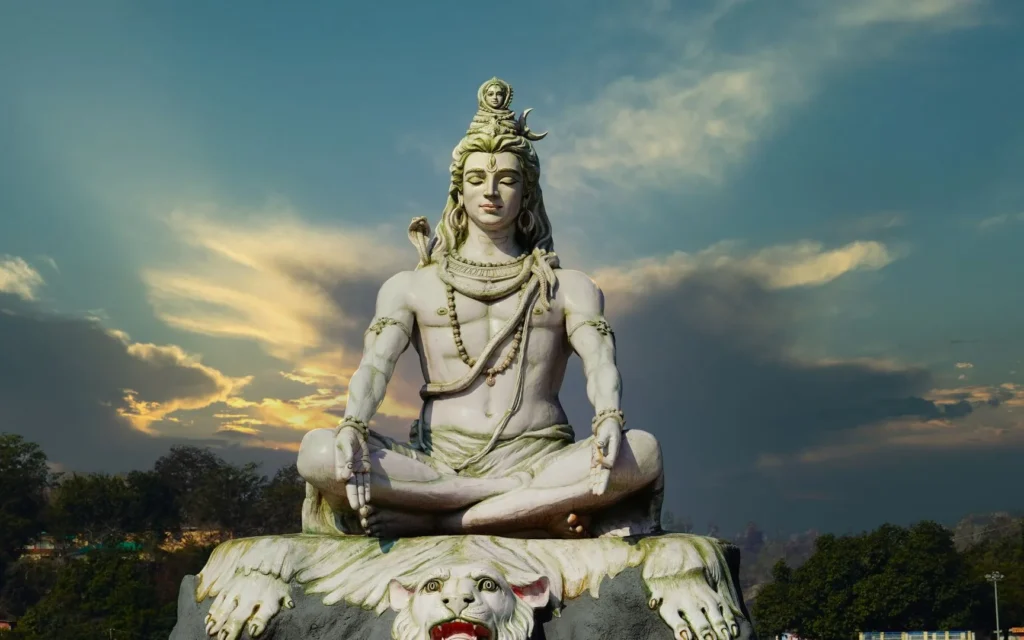
Lord Shiva statue meditating outdoors on tiger skin image
⁠Festivals in Sanathan Dharam and Hinduism, Swami Sivananda

Shivaratri

Shivaratri By Sri Swami Sivananda This falls on the 13th (or 14th) day of the dark half of Phalgun (February-March). The name means “the night of Shiva”. The ceremonies take place chiefly at night. This is a festival observed in honour of Lord Shiva. Shiva was married to Parvati on this day. People observe a strict fast on this day. Some devotees do not even take a drop of water. They keep vigil all night. The Shiva Lingam is worshipped throughout the night by washing it every three hours with milk, curd, honey, rose water, etc., whilst the chanting of the Mantra Om Namah Shivaya continues. Offerings of bael leaves are made to the Lingam. Bael leaves are very sacred as, it is said, Lakshmi resides in them. Hymns in praise of Lord Shiva, such as the Shiva Mahimna Stotra of Pushpadanta or Ravana’s Shiva Tandava Stotra are sung with great fervour and devotion. People repeat the Panchakshara Mantra, Om Namah Shivaya. He who utters the Names of Shiva during Shivaratri, with perfect devotion and concentration, is freed from all sins. He reaches the abode of Shiva and lives there happily. He is liberated from the wheel of births and deaths. Many pilgrims flock to the places where there are Shiva temples. The Story of King Chitrabhanu In the Shanti Parva of the Mahabharata, Bhishma, whilst resting on the bed of arrows and discoursing on Dharma, refers to the observance of Maha Shivaratri by King Chitrabhanu. The story goes as follows. Once upon a time King Chitrabhanu of the Ikshvaku dynasty, who ruled over the whole of Jambudvipa, was observing a fast with his wife, it being the day of Maha Shivaratri. The sage Ashtavakra came on a visit to the court of the king. The sage asked, “O king! why are you observing a fast today?” King Chitrabhanu explained why. He had the gift of remembering the incidents of his previous birth. The king said to the sage: “In my past birth I was a hunter in Varanasi. My name was Suswara. My livelihood was to kill and sell birds and animals. One day I was roaming the forests in search of animals. I was overtaken by the darkness of night. Unable to return home, I climbed a tree for shelter. It happened to be a bael tree. I had shot a deer that day but I had no time to take it home. I bundled it up and tied it to a branch on the tree. As I was tormented by hunger and thirst, I kept awake throughout the night. I shed profuse tears when I thought of my poor wife and children who were starving and anxiously awaiting my return. To pass away the time that night I engaged myself in plucking the bael leaves and dropping them down onto the ground. “The day dawned. I returned home and sold the deer. I bought some food for myself and for my family. I was about to break my fast when a stranger came to me, begging for food. I served him first and then took my food. “At the time of death, I saw two messengers of Lord Shiva. They were sent down to conduct my soul to the abode of Lord Shiva. I learnt then for the first time of the great merit I had earned by the unconscious worship of Lord Shiva during the night of Shivaratri. They told me that there was a Lingam at the bottom of the tree. The leaves I dropped fell on the Lingam. My tears which I had shed out of pure sorrow for my family fell onto the Lingam and washed it. And I had fasted all day and all night. Thus did I unconsciously worship the Lord. “I lived in the abode of the Lord and enjoyed divine bliss for long ages. I am now reborn as Chitrabhanu.” Spiritual Significance of the Ritual The Scriptures record the following dialogue between Sastri and Atmanathan, giving the inner meaning of the above story. Sastri: It is an allegory. The wild animals that the hunter fought with are lust, anger, greed, infatuation, jealousy and hatred. The jungle is the fourfold mind, consisting of the subconscious mind, the intellect, the ego and the conscious mind. It is in the mind that these “wild animals” roam about freely. They must be killed. Our hunter was pursuing them because he was a Yogi. If you want to be a real Yogi you have to conquer these evil tendencies. Do you remember the name of the hunter in the story? Atmanathan: Yes, he was called Suswara. Sastri: That’s right. It means “melodious”. The hunter had a pleasant melodious voice. If a person practices Yama and Niyama and is ever conquering his evil tendencies, he will develop certain external marks of a Yogi. The first marks are lightness of the body, health, steadiness, clearness of countenance and a pleasant voice. This stage has been spoken of in detail in the Swetaswatara Upanishad. The hunter or the Yogi had for many years practised Yoga and had reached the first stage. So he is given the name Suswara. Do you remember where he was born? Atmanathan: Yes, his birthplace is Varanasi. Sastri: Now, the Yogis call the Ajna Chakra by the name Varanasi. This is the point midway between the eyebrows. It is regarded as the meeting place of the three nerve currents (Nadis), namely, the Ida, Pingala and the Sushumna. An aspirant is instructed to concentrate on that point. That helps him to conquer his desires and evil qualities like anger and so on. It is there that he gets a vision of the Divine Light within. Atmanathan: Very interesting! But how do you explain his climbing up the bael tree and all the other details of the worship? Sastri: Have you ever seen a bael leaf? Atmanathan: It has three leaves on one stalk. Sastri: True. The tree represents the spinal column. The leaves are threefold. They represent the Ida, Pingala and Sushumna

Shivaratri Read Post »

swami sivananda Framed portrait of garlanded spiritual guru
Swami Sivananda, THE Glory of Saints - The Self Realized Masters of Bharat - The Jivanmuktas

The Light of the Himalayas

The Light of the Himalayas Srimati B. Sita Rai, New Delhi The sky may be dark and stars may not shine,The Sun may dwell in the Deep Divine,But on the stormy night when Fate declines,The Light of the Himalayas ever shines. It was the cold month of January. As a ship that was lost in the sea without a compass, so I was lost in this world of worries and sorrows, where there were stormy nights and dark waters. I left Delhi for Rishikesh and reached Hardwar early in the morning. From Hardwar the train sped me through the dense rustic woods to the lofty Himalayan slopes, where Ananda Kutir stands like a Light on the Hills. The heavenly beauty of Nature, the crystal clear water of mother Ganga and the very atmosphere which was surcharged with selfless service and cosmic love stirred my spirit. The sacred Ashram is surrounded by small Kutirs, wherein are housed a dispensary, a library, a pharmacy, a school for children, a Bhajan hall for ‘Akhanda Kirtan’, a Mandir, a printing press, a photographic studio and a Yoga museum. A number of devout Sadhakas were working in the departments with such earnest zeal that peace reigned all over. There were no conflict or complexities nor was there any confusion or chaos. The whole atmosphere was tuned by the dynamic personality of Swami Sivanandaji for ‘Spiritual Worship’ and ‘Human Brotherhood’. The Self-luminous Saint of Ananda Kutir guides those who are lucky to come in contact with him by some way or the other. In Him one finds the generosity of mother earth, kindness and the love of a mother, discipline of a commander, and magnetism of the Lord Himself. I paused and thought how wonderful it would be to be free from all the worldly bondages like these blissfull aspirants of Ananda Kutir. How could have they liberated themselves when they were in the midst of the world! Next morning as the shadows were awakening and the scent of the dawn was being carried by the cool breeze, I saw an eagle descending from the mountain tops. It glided without a flutter of wings into the valley and then disappeared amidst the shadows of the black mountains. At the end of the day I saw it return to its abode in the mountain peaks, far away from the strife, the struggle and the jostle of the world. While watching this from the bank of the Holy Ganga, Swamiji said: “So is the human being who wants to see the ‘Vision of Truth’ during his or her strife in the world. Though one may wander among the transient things and lose oneself among the shadows, yet all the life will be guided by that Eternal Goal. As the eagle soars to its abode, so will he soar beyond all sorrows, fleeting pleasures and passing joys. The attainment of that eternal goal is of primary importance for one who desires to disentangle oneself from all complications of life. Such a goal of one’s own experience, one’s own sorrows, sufferings, understanding and of Vision will throw Light on all the darkness and confusion of thoughts.” Pointing to the sacred Ganga Swamiji again said: “Look at the Ganga Mai. Throw filth in her or any dirty things, she will remain as sacred and pure as ever, and will provide sweet, clear water to the world. Life is a battle. It is a succession of conflicts. Despair not. Patience, perseverance and vigilance will crown your efforts with full success.” So saying this dynamic personality took me to the Bhajan hall. The day closed with a congregational Kirtan when the very walls began to resound with the Name of the Lord in a blissful atmosphere. Days passed in such ecstasy. It was my good fortune to have gone there. That great Mahatma treats you as if he had known you for ages. He looks to all the comforts and nurses you like a mother. This ‘Mother Divine’ is not only a spiritual guide but an ardent social worker, too. Not only he guides the devotees when they are with him but also when they are far away. The dedicated Sadhakas who have imbibed the Divine Bliss run to the devotees to serve when service is needed by them. Prayers are offered for the devotees and Prasad is sent. Their selfless service to humanity leaves deep and everlasting impressions on the minds of those who come in contact with Swamiji. He sees the Lord in everything and serves the Lord in everything by imparting the ray of Light to show the path. The Sun shines during the day and at night he provides light to the moon and the stars to shine, but he fails to provide them light on the dark nights of thunderstorms. But the Saint of Ananda Kutir provides Light even during the darkest hours of life. O, Mighty Light of Himalayas, may thou shine for ever and ever to guide the world.

The Light of the Himalayas Read Post »

Shankara Disciples River
⁠Festivals in Sanathan Dharam and Hinduism, Swami Sivananda

Shankara–The First Guru of Kali Yoga

Shankara–The First Guru of Kali Yoga By Sri Swami Madhavananda Whereas the generality of Avataras is for the purpose of re-establishment of Dharma through and by means of the destruction of the wicked and the protection of the righteous and whereas this sort of Avataras take place several times in each Yuga according to the needs of humanity, yet there is another, a special kind of Avatara described in our scriptures as coming into being sometimes after the commencement of each Yuga, not for the destruction of this or that individual monster or set of monsters and so on, but as the first Jnana Guru for the Yuga; viz., for the sole purpose of giving spiritual, psychic and ethical illumination to the lives of that Yuga and setting before them the path, which will take them to their goal of happiness here, salvation hereafter, ultimate emancipation from all bondage and consequent eventual Realization of their oneness with God. Dakshinamurti Thus we are told that, in the first Yuga known in our scriptures as Satya Yuga or Krita Yuga, the natural tendency of the great mass of sentient beings was (with of course the usual and invariable exception to the rule), one which impelled them to become ‘Krita Krityas’, viz., to fully and correctly perform the duties enjoined on them by the Shastras in respect of Karmas (actions), Upasana (Devotion and worship) and Jnana (spiritual knowledge) in due and full accordance with the different Adhikaras which were theirs by virtue of their Varnas, Ashramas and so forth. Hence the name Krita Yuga may be explained in terms of saying: ‘Krita Krityanaam Yugam Krita Yugam.’ For the various aspirants of those days on the ladder of spirituality used to perform all their respective functions in the three Kandas fully and correctly, and were therefore Krita Krityas (persons who had discharged all their duties). From this it naturally follows that in as much as the performance of Svadharma is the path of Chitta Shuddhi (purification of heart) as laid down in the scriptures, in Sri Krishna’s words in the eighteenth Chapter of the Bhagavad Gita: Yajnadanatapahkarma na tyajyam karyameva tat,Yajno danam tapaschaiva pavanani maneeshinam. (Yajnas, Charities, Penances and other Karmas are purifiers of the heart; therefore they should not be neglected but should necessarily be performed) and so on, it is consequently obvious that persons of the type described must naturally be pure in heart. And such, we find, was actually the case in respect of the great mass of the Jivas in the Krita Yuga. This type of Jivas is symbolised and illustrated before the world in the personalities and through the examples of Sanaka, Sanandana, Sanatkumara and Sanatsujata and others. In the next place, we note the Scriptures telling us that Chittashuddhi (purity of heart) is the direct and immediate means for the attainment of Jnana (Divine illumination); and we similarly find Lord Jesus Christ saying: “Blessed are the pure in heart; for they shall see God.” From this it follows that Sanaka and others of the Krita Yuga typify and represent the great order of the highly evolved souls who have become Krita Krityas, achieved Chittashuddhi and become Adhikaris for Atma Jnana (spiritual wisdom). We, therefore, find that they are not called upon to undergo an elaborate process of instruction and training of questioning and their answers, of discussing things and having them expounded and so forth. They go forward by a stroke of inspiration to the Adi Jagadguru of Krita Yuga, namely Bhagavan Dakshinamurti with various questions in their hearts for which they seek answers. But lo! and behold! They are astonished and gratified at the experience that when they actually go and sit before Him, they find all their questions automatically answered within their own hearts and there is nothing further for them to ask Him and receive instruction and be enlightened. It needs no elaborate and detailed exposition in optical physics to expound this fact of everyday experience, namely that if and when a mirror is not clean and pure or is a refractor, it does not produce correct reflections but only distorted images of the things before it, but if and when a mirror is absolutely pure and accurate, it immediately and correctly reflects everything before it. Exactly similar is the case with regard to the purity of the human heart and the lack of it. In other words if and when a heart is Sattvic but is of a Rajasic or a Tamasic character, it comes under the operation of the Law of Nature explained by Lord Sri Krishna in the Gita with the words: Sarvarthanvipareethamscha (It distorts all things and receives absolutely erroneous impression about them). But if and when a heart is absolutely pure, it acts as a correct reflecting mirror and automatically receives into itself a wholly right and accurate impression about the nature of God, the individual soul and the Universe. In short, it receives Divine Illumination. Thus, when Sanaka and other disciples of Dakshinamurti merely go and sit before Him, their pure and untarnished hearts naturally play the part of good reflectors and automatically receive and reflect within themselves all the Jnana (Spiritual Light) enshrined within the heart and head of the Lord, who is sitting in utter silence before them. This is why our Scriptures say: He, the eternally youthful one, sits in silence, and, by His very silence, explains everything to them; and all doubts and questions vanish from their hearts. By His eloquent silence, He brings into their hearts the requisite Soul-illumination for which they have come to Him and so on. (“Gurosthu mounam vyakhyanam shisyasthu chinnasamsaya.)” Bhagavan Dakshinamurti is therefore the first Jnana Guru of the Golden age viz. Satya Yuga, wherein the Jijnasu (the seeker after truth) has, (by his previous performance of Svadharma and his penances) destroyed all the impurities within his heart and thus goes before the Master with no obstacles (on his own side) on the path of Divine Knowledge. And the successive Jnana

Shankara–The First Guru of Kali Yoga Read Post »

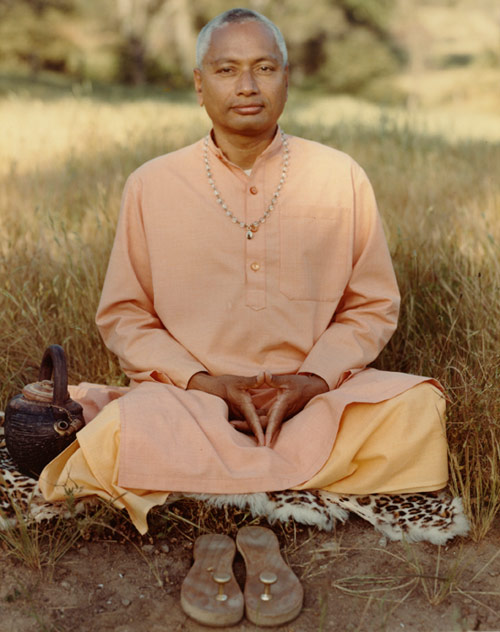
swami sivananda Vintage portrait of bald monk in white robe outdoors image
Swami Sivananda, THE Glory of Saints - The Self Realized Masters of Bharat - The Jivanmuktas

The Last Days

The Last Days Sri N. Ananthanarayanan. IT WAS the year 1960. In the Sivananda Ashram, after Arati at the night Satsang, a few visitors were gathered around the Master. The Master made kind enquiries of each one by turn, and one of them told him that he was about to retire from service. This set the Master in an introspective mood and he suddenly asked, “Have I retired? Or am I retiring?” The words were spoken softly, but they had an ominous meaning. Two years sped by. In May 1962, coming out of the Ashram office, the Master posed for the camera with a visitor. After the photograph was taken, the visitor thanked the Master, took leave and went away. The few people who were around were also preoccupied, and for a brief moment the Master was left alone in his chair, with only a close disciple standing nearby. All at once he turned to the disciple and said, “Na ham, na tum, daftar gum.” It was a favourite expression of the Master. He had voiced it many times before to many persons, to convey the ultimate Vedantic truth that the world ceases to exist for the man who attains the Turiya state; but strange to say, that day his abrupt utterance, intentionally directed perhaps, made such an impact on the disciple that the latter felt absolutely uncertain and unhappy. Four months later, during his birthday festivities, the Master displayed great hesitancy in inviting the assembled devotees to the succeeding year’s birthday celebrations, though each year it was his usual wont to do so. Devotees thus got another clue as to what was in store for them. The clearest indication came early in 1963, when at a night Satsang, the Master openly invited all who wanted Sannyas to get initiated on the Sivaratri Day in 1963 itself. “Who knows what may happen next Sivaratri?” he said. A disciple protested that the Master should not speak in that strain, but the Master summarily silenced her, saying, “Oh, keep quiet! You don’t know a thing.” About April 1963, the Master became unaccountably serious-minded in his attitude to men and matters. His deeds began to take on an unusual complexion–for instance, the economy drive which he instituted in the Ashram administration. It was difficult to understand how the large-hearted Master could impose cuts even in the petty allowances of the Ashram workers, but he did it. He slashed many other items of expenditure, large and small, with such meticulous care that the institution debts fell steeply in just one month. But the Master did everything so jokingly. “Economy sir, economy!” he used to say, whenever anyone went to him with an indent. No one, however, could sense a deeper purpose behind his actions. The truth was that the Master was preparing to leave, and wanted the Ashram to be free from financial problems. On several occasions during May and June that year, the Master called for the calendar, each time from a different person. Once, he flung the sheets up to June at one stroke and started looking into July. When a disciple wondered what it was all about, the Master exclaimed, “Oh, you don’t know!” And after fingering through the dates, he returned the calendar to him. Few could guess at that time that the Divine Master was fixing the auspicious date and time for his own Mahasamadhi. Starting from May 1963, the Master began to give daily tape-recordings on returning from the office. Unmindful of the strain, he would read loudly, forcefully and inspiringly from his printed books and typed sheets, and a disciple would record them on the tape. The Master was particular about this work. Once in ten days he would ask, “How much matter have I given? How long will it run?” He was so intensely eager to serve humanity even after he was gone from physical view. This inordinate desire to serve people found its outlet in many ways. While the Master had all along been regularly contributing articles to several journals as a vital part of his programme of disseminating spiritual knowledge, during the months preceding his Mahasamadhi he sent an unusually large number of articles to an equally large number of journals–service unto the last, the maximum good to the maximum number. Several times during the tape-recording days, the Master expressed sentiments such as these: “The sight is getting dim; take whatever you want on the tape now itself. The hearing is getting dull; tell whatever you want to tell now itself. The tongue is getting inarticulate; ask whatever you want to ask now itself.” As the Master was signing the letters one day, he said rather jokingly, “Sight is getting dim. Hereafter I can’t sign, sir,” and he glanced at the disciple who held the signature pad, as if to ascertain whether the latter had understood the implication of what he said. June 21, 1963 was to prove the last day that the Master attended the office in the Ashram’s Diamond Jubilee Hall. After work he came out as usual and, as he neared the neem tree outside the cashier’s office, he stopped for a while and deliberately looked around at the devotees following him. He exclaimed, with his characteristic sense of humour, “Oh! The celestial car is going to arrive from Brahmaloka. Who are all coming?” Murari Lal, a Lucknow advocate, said at once, “Swamiji, I’ll follow.” Dr Devaki Kutty, another devotee, did not reply, but just smiled. The Master smiled back, “H’m, after some time.” But as far as he himself was concerned, the celestial car was to come in just another twenty-three days. Back in his room the Master developed a pain in the hip-joint and, as much as he wished, he could not attend the usual night Satsang. Diathermy was administered and some medicine given. The next day again he could not go to the Ashram office. He attended to his correspondence, despatch of free book-packets and other work from where

The Last Days Read Post »

img 20180420 130508980715258
⁠Festivals in Sanathan Dharam and Hinduism, Swami Sivananda

Sankara–The Genius

Sankara–The Genius By SRI SWAMI KRISHNANANDA *Sankara Jayanti Message given on the 17th of May, 1972. Today is Vaisakha Sukla Panchami, the fifth day in the bright fortnight in the month of April-May, when we celebrate the advent of the great Acharya Sankara who is often referred to, by his followers, as Bhashyakara (the commentator on the Prasthana Traya,–the Brahma Sutras, the Upanishads and the Bhagavad Gita). The famous and immemorable event of his life and work is a consequence of the chronology of social history as well as a consequence of the logic of human thought. The immortal service that he has done for the world is thus an outcome of a chronological process as well as a logical one. First of all, let us see what is the chronological significance of the work of Acharya Sankara in the social history of India particularly and the world in general. Chronology is the sequence of history, and if we trace back the condition of the human society, particularly in India, during the time of the most ancient of human conditions available to us for study,–the time of the Vedas from where we begin the study of human history,–we realise that there was, during the time of the sages of the Vedas, a spontaneous tendency to recognise God in creation. This is the specific characteristic of the time of the Veda Samhitas–to visualise and to behold the creator in what is created, and to see the One in the many. Destiny, perhaps, willed that this should be the beginning of our cultural history so far as it can be recollected by our memories and available data, historically as well as archaeologically. The Samhitas of the Vedas are spontaneous hymns and prayers offered to God in His multifaceted manifestation as this cosmos. To the sages of the Veda Samhitas, the rise of the sun was a manifestation of God. It was the glorious God Aditya that was rising. The dawn was a manifestation of divinity. Similarly, the sunset had its own glory, revealing the divinity of God. The heat of summer, the pouring rains, the cold of winter, and the changing seasons, all that is visible as well as conceptual became a vehicle for enshrining devotion to God. It was a spontaneity of feeling which was, in a sense, a natural result of the intuition of the sages. Throughout the Samhitas, if you make a deep study of them, you will see spread out in various places, thoughts and devotional feelings in their various emphases and stresses, all beckoning the aspiration of the human soul to what is implied and what is hidden behind the manifested phenomena. Now here, in this psychological situation of mankind, we have a twofold significance from the point of view of cultural history. On the one hand, it was a visible expression of an inner realisation by which the sages plumbed the depths of infinity and proclaimed for all eternity and to all mankind “Ekam sat viprah bahudha vadanti, Indram Varunam Mitram Agni…” All the variety, whether in the field of the Adhidaiva (the transcendent, the presiding principle) or the Adhibhuta (the objective, the world) or the Adhyatma (the subjective, the individual), is a glorious facet or expression of the Supreme Being who is designated in the very commencement of the Rig Veda as “Ekam Sat”,–the One Being, without associating the Being with any cult, creed and religious faith. The most catholic definition of the Supreme Reality we have for the first time given in the body of the Rigveda Samhita. Ekam Sat–The One Being, One Reality, One Substance, One Existence,–that the sages recognise and designate as the manifold. In various ways they sing of the glories of this One Mighty Being. But on the other hand, for pure exoteric observation, it would rather look like an acceptance of polytheism or the worship of the many Gods, as if there is a real multiplicity of the realm of the Adhidaiva, as a counterpart to the multiplicity that we see in the realm of the Adhibhuta or the physical world. The variety of the physical world became the source of a susceptible feeling in the minds of people later on, through the passage of time, that, perhaps, the souls also are many and the Gods also are many, because the objects in the world are many! This is a slightly posterior period to that of the exuberance of the Veda Samhita Mantras wherein there was only a spontaneous spiritual outpouring of devotion to the One on account of Its having been recognised in realisation, in direct experience. But, when we make a study of these outpourings, they do not look like the manifestations of the One Experience. All study that is historical is exoteric, prosaic, mechanised and sensory, and hence the esoteric significance that was the background of the very origination of these Veda Mantras, got lost in the process of time, in the passage of history. The outward form, the visible significance of it as hymns offered to the various centres of divinity, the many Gods as they usually say, got emphasised, and these Gods became not only objects of reverence, but also objects of fear. It was not that Gods were always beneficent. They could also be wrathful. While in the earlier stages of the Veda Samhitas, it was not fear of God or even a reverence, in the ordinary sense of the term, cherished towards God that was the cause of these hymns, but an automatic outpouring in ecstatic poetry of a diviner experience felt within; later on, these recorded hymns became historical record of the utterances of the ancient masters. These Mantras which were visibly recorded for posterity, became objects of study and also vehicles for invocation of the many Gods. To the originators of these Mantras, the Gods were not manifold; they were the many phases of the One. But, now, they lost their connection with the original unity or the background, and only the phases are seen

Sankara–The Genius Read Post »

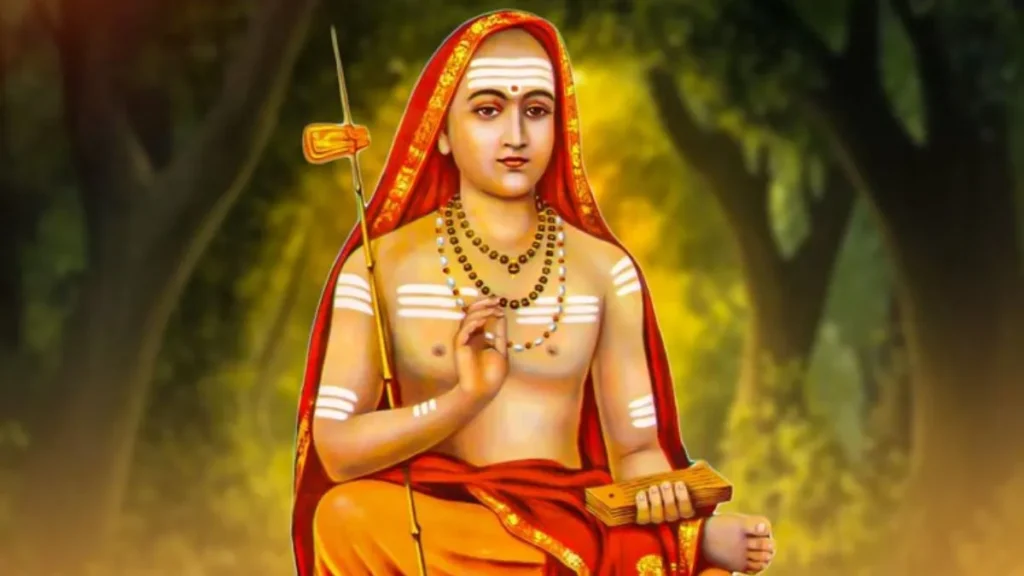
Adi Shankara 1000
⁠Festivals in Sanathan Dharam and Hinduism, Swami Sivananda

Sankara Jayanthi

Sankara Jayanthi By Sri Swami Chidananda Radiant Atman! This week we will observe the jayanti (birthday) of Adi-Sankaracharya, one of the greatest of Self-realised souls and philosophers this world of ours has produced. Leaving home, in a spirit of renunciation and aspiration to realise the Reality, at the tender age of eight years, he completed an unbelievable mission in the span of just a few years, passing away in his 32nd year. During that period he did what is known, as digvijaya (conquest of the quarters), carrying the banner of Advaita Vedanta, the supreme philosophy of absolute monism , into the four, corners of India and overcoming all lesser schools of philosophy through his convincing, irrefutable arguments. His incredible work remains dynamically living, active and ever progressive even to this day, more than 1200 years after he propounded his doctrine. The quintessence of Advaita Vedanta is to affirm the truth and reality of your essential, eternal, divine identity and to resolutely reject the error of thinking of yourself as a finite human creature having a name and form, beginning and end, and subject to changes such as birth, death, old age, disease, decay, pain, sorrow, suffering, etc. Resolutely rejecting this error and simultaneously affirming your eternal, unchangeable divine identity is the centre of Advalta Vedanta sadhana (practice). They call it affirming and rejecting, pushtikarana and nirakarana-neti, neti. Sankara’s most popular work, Vivekachudamani, is a call to discrimination between the Self and the non-Self-atma-anatma viveka. Atman is sat (existence absolute). Anatman is appearance only, temporary in time, limited in space, perishable; it is kshara purusha (perishable being). Atman is akshara purusha (imperishable being)-ajo nityah sasvato’yam purano na hanyate hanyamane sarire (Unborn, eternal, changeless and ancient, the Self is not killed when the body is killed). Thus the Vivekachudamani is a discourse, a treatise and a sadhana on discrimination between the Self and the non-Self. And a second work of his, Atma Bodha, is a light upon what the Self is. As you discriminate between the Self and the non-Self, you get a good knowledge of what the non-Self is, so you can reject it; you will not be deluded by it. You can free yourself from the veil of delusion by knowing the nature of anatman. And then, to be rooted in the Reality, to be fixed in it firmly, to be able to think, reflect and meditate upon it and to awaken the correct awareness within your consciousness, a thorough study of what the Self is of great importance and value. To that end, Atma Bodha can be the way that God can gradually answer your prayer, “tamasoma jyotir gamaya” and “dhiyo yo nah prachodayat” (“From darkness lead me unto light” and “May He illumine our intellects”). To avoid that which is wrong, we have to get a knowledge of what wrong is; and to pursue and practice that which is right, we have the need to have a knowledge and a grasp of what right is of what Reality and Truth is. Thus both the negative and positive aspects of Vedantic admonition are of equal importance in making the mind aware of its error and to make the intellect grasp the truth. When Brahman is the reality to be attained, why unnecessarily know about the world, prapancha, samsara? The answer is that because you want to free yourself from the delusion of the world, you must know the tricks of this deluding appearance. Indeed, you must know everything about it, because it comes in numerous subtle ways. We think the world is outside us, but, by and large, the world or prapancha or samsara is within us. We have to understand that. What is it within us that makes us regard prapancha to be real and makes us move towards it, get attached to it, get bound by it? What is it within us? That has to be rooted out, eradicated first. Thus the study of avidya or maya within is the key to freeing ourselves from delusion and rising from darkness to light. Gurudev again and again reiterated: “Thou art immortal Soul. Thou art not this body nor this mind. They are upadhis, limiting adjuncts temporarily added on to you. They are there as part of your lesser personality, your earth consciousness, but you are also there far beyond them, transcending them, a divine personality, a suprahuman spiritual reality, untouched by time and space, not bothered by pain, sorrow and suffering.” This, then, is to be heard, reflected upon and meditated upon. May you direct all your attention to the practice of this truth which shall make you free. For it is this truth that arouses in us our kinship with the eternal, universal Reality, paramatman. May the grace of the Lord grant you success in this sadhana of being what you really are and of resisting the pull of the lower mind to make you imagine that you are something other than this Reality. Constantly you have to reject the, attempts of the mind and its age-old, inveterate tendencies to keep itself tied down to a lower level of ignorance and mistaken identity. It should be given no quarter. By the strength of your will-power, your positive, awakened consciousness and your resolute and determined sankalpa (thought) to attain realisation in this very body, you must keep this process up. You must shine with an effulgent inner awareness of your own essential, immortal and imperishable divine identity. Your interior should be a mass of effulgence, of jnana prakasa. There should be a state of jnana bodha within, a state of wakefulness within-no slumber. For this you must pray, and for this you must practice. May this week be permeated by the spirit of Jagat Guru (world teacher) Adi Sankaracharya, the Advaita Acharya, and may it have the effect of successfully lifting up your consciousness from the present, ordinary, humdrum human level of earth consciousness into a lofty, sublime higher spiritual level of a divine spiritual consciousness!

Sankara Jayanthi Read Post »

07 gv
Swami Sivananda, THE Glory of Saints - The Self Realized Masters of Bharat - The Jivanmuktas

Last Days

Last Days Sri Swami Venkatesananda All who want sannyas should take initiation on the next Sivaratri day.” This pronouncement was made by Swamiji at an evening satsang early in 1963. In view of his repeated references in recent years to his mahasamadhi, many saw this unbounded invitation as a sign of his imminent passing–particularly when he added “Who knows what may happen next Sivaratri?” Swamiji, who had always kept spending and giving, and teaching his disciples and residents of the ashram to trust in God and to give and give and give, suddenly began to manifest a different attitude. He started an economy drive–a thing unheard of for him–slashing ashram expenditure and talking of taking more care. On several occasions during May and June he asked different people to bring him a calendar. Once, as he was looking at July, a disciple asked why, and he received the reply “You don’t know.” Early in May Swamiji began a rigorous session of tape-recordings. Each morning he would read from his books and printed sheets, forcefully and inspiringly–his voice ringing with authority and sincerity–while a disciple recorded. He did this for hours, unmindful of the strain. Every few days he would ask “How much matter have I given?” or, “How long will it run?” Once during these sessions he said “The sight is getting dim; take whatever you want now. The hearing is getting dull; tell whatever you want to tell, now itself. The tongue is getting inarticulate; ask whatever you want to ask.” At this time he also wrote many articles for journals. He had always regularly contributed articles to journals, but he seemed to be sending out all that he could in this period. On the 21st June he developed pain in his hip, and on this rare occasion did not attend the satsang. The next day he could not go to the ashram office, but attended to business from his kutir. At night the pain grew more intense, and the following morning he came out on to his verandah to see the mail, and insisted on continuing to tape-record the day’s quota of spiritual reading. He gave a little dictation, but retired early. The pain worsened. On a subsequent day, despite illness, Sivananda began dictating as usual. After a few sentences he said quietly, “Happiness comes when the individual merges in God.” There was a long pause. Then asked if he would continue, he said strongly in Tamil “Porum!” (Enough!). ‘Happiness comes when the individual merges in God,’ was the last recorded message of Swami Sivananda. A doctor from Dehru Dun, on examining Swamiji, said: “Swamiji you should not worry about anything. You should not think about anything.” Quietly and lovingly came the reply: “How can that be possible? I must think of many things, I must look after many people.” It was always Swamiji’s way, whenever anyone enquired about his health, to reply “Most wonderful”–and during this period whenever he was asked, a smile would play around his lips as he replied, “I am perfectly alright”. During this period Swamiji was not seeing any visitors and no one was allowed into his kutir, but from July 6th his condition started to improve so that on July 8th he was wheeled onto his verandah and once again visitors were allowed to go to him. He had the doors of his verandah kept open so that he could gaze upon his beloved Ganges. Despite physical suffering he was never dejected, his spirit was ever joyful and he would joke with his attendants. All who went near him during his last illness felt his irresistible love flowing out and encompassing them. On the evening of July 14th he developed a fever. For some time he had difficulty in swallowing even a few mouthfuls of water. His disciples wanted to give him barley water, as was the usual practice, but he insisted on Ganges water. It was brought to him and he had no difficulty in swallowing half a glassful: and with that he departed from the body. It was 11:15 p.m. Close to midnight there was an unparalleled and auspicious planetary conjunction that any yogi ready to depart would not wish to miss. It was at this time that Swamiji chose to depart. Swamiji’s body was placed in the lotus posture. Dazed and tearful disciples and devotees softly chanted the maha mantra on the verandah of his kutir, while one by one the ashram inmates went in, to bow before the beloved form in silence. The next morning, through the newspapers and radio, the world learnt of the mahasamadhi of this great saint. Messages of sympathy and condolence from all over the world kept the post office working at full pressure. The residents of Rishikesh streamed into the ashram. All the following day and far into the night devotees came from everywhere for the last darshan. On Tuesday, July 16, there was barely room to stand on the Ganges bank adjacent to the ashram. Everywhere crowds gathered to catch a final glimpse of the beloved form of Swami Sivananda. At 10.30 a.m., borne by his personal attendants, the bier moved out of the kutir as conches were blown and bells chimed. To the sound of vedic chanting, slowly and with great care the holy form of Swami Sivananda was borne towards the Ganges, where it was ceremoniously bathed. It was then placed on a palanquin filled with flowers and borne in procession to the ashram area on the Viswanath Mandir hill. Arati was performed. To the recitation of holy mantras, Swamiji’s body was taken in and tenderly placed in the samadhi shrine–its final resting place. Tributes came from all over the world. Swami Venkatesananda perhaps spoke for all close disciples when he wrote from Mauritius: So the ringing voice is silent. The majestic form has vanished. We shall no more see the gigantic figure clad in orange, shod in canvas shoes, stride with measured long steps, bags in hand, ready

Last Days Read Post »

PIC 2025 05 02T104327.409
⁠Festivals in Sanathan Dharam and Hinduism, Swami Sivananda

Sankara Jayanti Message

Sankara Jayanti Message By Sri Swami Sivananda Beloved Aspirants! “Religion is realisation. It is not mere learning, or dialectic.” This is the divine message which stands deeply imprinted in the mind of every Hindu. This is not mere fancy. This is not a mental conception. This is not a stretch of imagination. It is not a coinage of the brain. Nor is it a decision arrived at by vehement vituperation and incongruent argumentation promulgated by all ordinary intellectual prodigy. It is the bold assertion of the greatest philosopher of India, the Avatara of Lord Siva. What can we take him for except Lord Siva Himself, who proclaims authoritatively and undauntedly: Jaatam mayyeva sarvam punarapi mayi tatsamsthitam chaiva visvam,Sarvam mayyeva yaati pravilayamiti tadbrahma chaivaahamasmi. “In me is the whole Universe born; In me has it its support; and, in me does it dissolve. Therefore that very Brahman indeed am I.” Srimad Adi Sankara is our Vedanta Guru. He is God incarnate. He was born at a time when Indian thought and culture was decaying; when it underwent sore distraction; when ethical glory and far-spread influence of Buddhistic cult was gradually dying; when there was complete chaos and confusion; when innumerable sects sprang up and with their own individual doctrines confounded the mass; when social evil influences and blind superstitions falsely garbed in the name of religion fancifully attracted the deceptive masses in a frenzy and ambushed them in complete ignorance of the Ultimate Reality. There were no less than seventy-two cults and sects of this type which carried away people from the right path. The advent of Lord Krishna rejuvenated Hindu religion and saved many a soul from their complete ruin by subjugating themselves to passivism and passivism only due to the misinterpretation of the Vedas and the Upanishads. In the same way, Sri Sankara appeared on the earth to deliver very many struggling souls. He set them free, enlightened them and liberated them through his peaceful, unostentatious persuasion and loving propaganda. Through his irresistible logic, he planted the triumphant banner of unique intellectual conquest over all other schools of philosophy. Before him all other theories proved to be phantoms and fallacies. It was only Sri Sankara who gave the unshakable concrete form to Hinduism and established the unity and purity of enlightened Hindu thought and culture. Superstitions and corrupt practices melted away in no time. The age-long six systems of theism which were kept down in the mouth by the prattlers re-emerged in their original glory only through Sri Sankara. His victory over other systems of philosophy was never due to his holding fast to his own faith and reasoning without the consideration of the pros and cons of others. He had mastered even the minute intricacies pertaining to other theories. The underlying currents of his thoughts were the very foundation for other systems too. Hence they were recognised with much reverence by all the other schools of thought despite their difference in the superstructure. The secret of his conquest and the charm therein lay on his most apt and reasonable illustrations in every case. He never based his arguments on theoretical axioms and untestified hypotheses but entirely on integral experience (anubhava). Further all his arguments were based upon Srutis which too are genuine record of religious experiences of various saints and sages and not imaginary speculation with trivial data. He never entered into any hot unpalatable discussions to substantiate his case or disprove others’ theories. With his gigantic intellect he has poured out his masterful exposition and simple and clear elucidation of the supreme authority of the Prasthanatraya (The Upanishads, Bhagavad Gita and Brahma Sutras), the self-evident validity of the Sruti Pramana and so on. Above all, his philosophy was not only for the highly intellectual. It is within the easy reach of even the layman. With his profound knowledge, all-comprehensive learning, keen intuitive insight, and convincing explanations he has erected the strong edifice of Vedanta at the same time equally accessible to a simpleton as to a man of high intellect. How effectively has he prescribed “Bhaja Govindam” to a scholar who was racking his brain in committing various scriptures to memory! Vedanta is not the only aspect of philosophy which he has preached to the world. He has entered the heart of every earnest seeker after Truth. He encourages the worship of various forms of the Lord and advocates Bhakti Yoga. Without any tinge of partiality to one form or the other, he has given out innumerable slokas, each brimming with full tattva and bhava and which inculcate ecstasy and perennial joy even in the tender undeveloped minds. His untiring work of Lokasangraha marks him out as the veritable master of the Yoga of Activism too. At the background of all these his devotion to his Guru is supermost. Mark him say, “Any person who realises ‘That very Brahman am I’ through the unparalleled mercy and glance of the Sadguru loses all feelings of doubt and with his mind free from illusion attains liberation even while living in the body.” How much efficacy and glory lie in Guru Bhakti! May you all develop Guru Bhakti! May the blessings of Sri Sankara be upon you all!

Sankara Jayanti Message Read Post »

Lord Rama with Sita, Lakshman, Hanuman in royal court image
⁠Festivals in Sanathan Dharam and Hinduism, Swami Sivananda

Rama–The Apotheosis of Human Perfection

Rama–The Apotheosis of Human Perfection By SRI SWAMI KRISHNANANDA Let us observe this auspicious occasion of Sri Ramanavami as a moment of contemplation on a special spark of Divinity that made its advent on the earth. Popularly speaking, in ancient historical times, to emphasise the historical advent of this great Divinity on earth has been the exoteric side of the Epics as people generally understand it. This popular emphasis on the incarnations of God on earth has taken the form of Epics like the Ramayana. We are told in the Ramayana of sage Valmiki, the earliest of these documents, that it was a history par excellence, a history of a chronological procession of divine exploits which is what we generally mean by a divine Epic. It is believed that the earliest record of the history of Rama, the Ramayana of Valmiki, was written during the life-time of Rama Himself. It was not a biography written later on after several years. It was composed then and there, by a contemporary of Rama, sage Valmiki, and so it is but proper that devotees take it as the most authentic of documents pertaining to the history or life-story of Rama. Surprising though it may appear, this master-poet who composed the Ramayana was an illiterate brute in his earlier life, but suddenly transformed into a Master whose genius is today regarded as incomparable in the history of Sanskrit literature. This total transformation by a magical touch, as it were, was given to Valmiki by another genius, sage Narada. One genius created another genius, and this genius has written an Epic, stirring the soul of man, on a genius of human perfection, Sri Rama Himself. And so, even today a contemplation on these aspects of holiness and perfection brings us into contact with a unique feature, namely humanity as it ought to be properly understood and brought to bear on practical life. The whole of the Ramayana is an Epic of humanity. Humanity does not mean mankind but that which particularly characterises human nature. It is in this sense, Sri Rama is oftentimes called the paragon of humanity, an example of the perfection of human nature. This perfection of human nature is not inclusive of the foibles of man in his lower endowments. In the majestic words of Valmiki with which the Epic commences, we are given a description of what this perfection of humanity is, as an answer given by sage Narada to a question put by sage Valmiki as to who is the ideal of human nature. “Whom do you think, O sage, is the perfect embodiment of humanity in this world and can you give me an example of such a perfection?” was the question put by Valmiki to Narada. And then, Narada commences a dignified description of a personality whom today we know and adore as Sri Rama. That majestic feature of bodily personality, the ideal perfection of physiological structure, the profundity and beauty of understanding, dignity of behaviour, exemplary nature of conduct,–to put it in one word ‘perfection’ as conceived or as conceivable by the human understanding–this is what comes forth as an answer from the great sage Narada. We have two Epics, the Ramayana and the Mahabharata, just as in the West they have two Epics, the Iliad and the Odyssey. These two parallel movements of Epic stories, known as the Ramayana and the Mahabharata, give us a complete picture of the process of the advancement of the human soul towards its Perfection. It is not to be taken as a surprise that the culture of Bharatavarsha is a culture of the Spirit, so that anything that is said and done or believed in, is directly or indirectly connected with the march of the Spirit to the recognition of its Perfection. We have no other culture here except the culture of the Spirit. A connecting of the visible phenomena with what underlies the phenomena, is the significance of the Epics. And these two master-strokes of genius given to us by Valmiki and Vyasa, in the form of the Ramayana and the Mahabharata, give us the religion of India. There were some over-enthusiastic orientalists in the West particularly, and sometimes in the East also, who began to believe that the culture of India is in the Vedas and the Upanishads. But, if we bestow a little thought on the actual situation, it will become clear that if the Vedas and the Upanishads were the sole basis of the culture of India, the Indian culture would have been wiped out like the cultures of Egypt, Greece or Rome. These cultures are only names to us now. They do not actually exist now. They vanished from the process of time on account of their inflexibility, their rigidity of character and their emphasis on a particular aspect of human life. If, as people often believe, the dicta of the Vedas and Upanishads alone were to be taken as the foundation of Indian culture, there would have been no Indian culture today. It would have gone to the winds, because what we have in the Vedas and the Upanishads are ‘principles’, like theorems of geometry or algebra, which are wonderful enough, which are the basis of all scientific approaches and discoveries. Nevertheless, they are principles, and the masses do not live on principles. When we talk or when we move about in the streets, we do not think of the principles behind speaking and walking. We work with the peculiar manifestation of our personality which is spontaneous in its nature. Principles somehow have the aroma of fixity and rigidity. They cannot be changed. But, emotion seeks a spontaneous expression of itself and this feature, this peculiarity of human nature was taken notice of by the sages of the Vedic times themselves. In the Srimad-Bhagavata, one among the eighteen Puranas, at the very commencement itself, we are told that Vyasa felt the necessity of composing the Mahabharata and the Srimad-Bhagavata. And for a similar reason, was the Ramayana

Rama–The Apotheosis of Human Perfection Read Post »

⁠Festivals in Sanathan Dharam and Hinduism, Swami Sivananda

Way to Rama Rajya

Way to Rama Rajya By Sri Swami Sivananda Blessed Immortal Selves! Out of the fullness of my heart and love for you all I send a Message Divine to inspire you, to instantly elevate and to transform your life. It will transport you from weakness to tremendous strength, from failure to flaming success, from sorrow to blessedness and joy. Hearken, therefore, with utmost attention to this message of Ramanavami. The most sacred Ramayana abounds with innumerable life-redeeming lessons. But in receiving a message, the receiver eagerly looks for something therein which will throw light upon and guide him in the most pressing problems of the day. He seeks solutions for the crying questions of the moment. And at the present period the one matter that is terribly agitating all minds and hearts is the wide-spread Adharma–falsehood and passion, that is rampant everywhere in the world. To know the cause of it and the direct way to quickly remove it is the thing needed now. And to this end, out of the countless lessons teeming in the Ramayana, I wish to awaken you all to the most important and timely ones for humanity now. All the main ills of the modern world will be removed if these two lessons from the ideal life of Rama are adopted in our lives individually as well as nationally. Amongst numerous lessons I wish this day to particularly impress upon you two lessons. They are the special need of the world today. Humanity has become corrupt today due to the falling away from two essential ideals indispensable to the weal and happiness of life, individual, national as also international. They are the ideals of Truth and Purity. Let these twins flames of Truth and Purity burn bright upon your broad bosom. At the present moment you have excommunicated ethics and murdered morality in the name of modernism. Fraud and falsehood have acquired the status of fashionable fine-arts. People make out a polished pretence of purity and truth but there remains just a travesty. Fraud flourishes in all the four quarters of the globe. Politics has degenerated into a mere game of fraud. Broken pledges, discarded promises, dishonoured contracts once solemnly made, hypocritical avowals and assertions, and deliberately misleading and falsified statements–these are the kind that you meet with everywhere you turn. Enter a house, talk to the family therein and enquire about its affairs; then this will be the story you will hear. Analyse the internal affairs of a nation; then too the same story greets your ears. And behold the state of international affairs in this world; once again a similar tale you hear. Therefore I emphasise upon these two great ideals–the sublime ideal of Purity and the lofty ideal of Truth. Rama was the embodiment of both. The entire Ramayana was the outcome of his burning desire to uphold the promise of his father made to Kaikeyi, the queen. An illustrious prince, Sri Rama voluntarily subjected himself to untold hardships for fourteen years of forest life amidst fierce beasts and Asuras just to keep up a promise, and that too, a promise not made or given by him but by another even before he was born. What an ideal of highest purity is his life-long vow of Eka Patnivrata (vow of being married to only one woman). How dire is the need now of adopting this ideal in life when the solemn contract of sacred matrimony and its sanctity are outraged and scandalised all over the world. Ramayana is permeated with the spirit of these two ideals. Dasaratha sticks to truth even though it costs him his very life. Grief breaks his heart and shatters his body to death, yet the word to Kaikeyi is kept. Then, take Sri Rama. He loves Bharata more than his life-breath–yet, having given his word to his step-mother, not even the most poignant entreaty of the beloved Bharata could make him deviate an inch from his resolve. What a proof of the strength of truth. In every man’s heart should ring today the grand and most memorable declaration of Rama: “Fire may abandon its heat, ice its coolness, jasmine its fragrance, but I never break the promise made to my father.” Rama’s own mother, Queen Kausalya, tries her utmost to dissuade him. She tells him how the mother is even greater than the father, for, has it not been said, first and foremost: “Matru Devo Bhava”–let thy mother be like a god unto thee. But no, truth is indeed the supremest God of all gods. Remember again the heroic adherence to truth that Prince Bharata exemplifies with grand, superhuman resolution for fourteen tedious years. Bharata stuck to his lofty vow and to the little village of Nandigram, bowing with folded hands and bent head before the royal sandals of Lord Rama. And at the end of the period, had but Rama delayed a moment more, then true to his word, Bharata would have cast himself into the burning pit of a blazing fire. Such is the stuff of Truth–Truth that makes man immortal. And this precious human body is given to thee to strive to attain immortality. Therefore, blessed selves, embrace this Truth and inherit the life immortal. Then comes the marvellous fidelity of Sita in the grove of the Asokavana. What unforgettable adherence to the vow once taken. What adamantine steadiness in the midst of the severest trials and temptations. How Ravana tempted Sita; how he tries to convince her that Rama is dead even by producing an exact likeness of his severed head before the shocked and agonised gaze of Sita. But all through this we note the unwavering constancy of Sita. She was Truth personified. For what is Pativrata if not being absolutely true to one’s chosen lord. And such truth is indeed of the very form of the highest Purity. Therefore, blessed selves, men and women, young and old, great and small, O ye Adhyatmic warriors, all take up this trident of Truth

Way to Rama Rajya Read Post »