




Hari Om

Menu

February 23, 2026

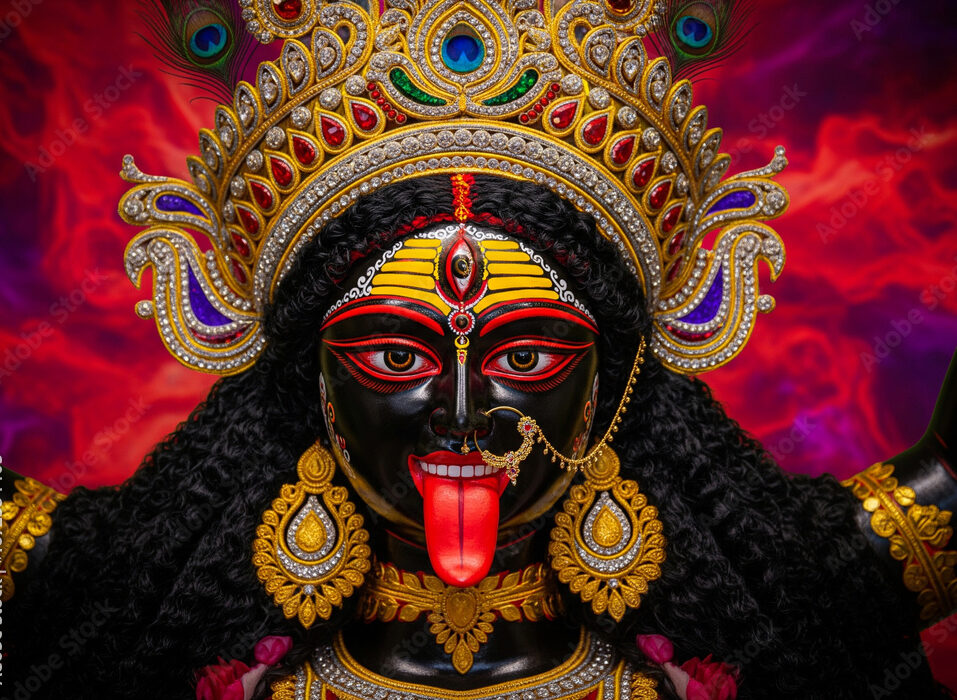
Goddess Kali idol with crown and extended tongue image
⁠Festivals in Sanathan Dharam and Hinduism, Swami Sivananda

The Terrible Kaali, The Benign Mother

The Terrible Kaali, The Benign Mother By Sri Swami Chidananda Since the past four days, we have been conducting the worship of Mother; theDivine Mother in Her threefold aspect–of Durga, Lakshmi and Saraswati–is nowbeing adored. Here we have a curious and significant fact which has come in fora lot of criticism by Westerners especially and such of those Indians themselveswho air Western views. It is the fact that as Durga we worship the Mother in avery fearful aspect. This has evoked a lot of surprise in the Western mind thateven highly cultured, educated and refined Hindus should persist in worshippinga God in fearful form, black in colour, with lolling red tongue, holding asevered human head dripping with blood in one hand and a fearful Khadga (sword)in another hand. Many misunderstand this worship and think it is an outmoded relic of somebygone savage practice. But, we still continue to worship this Mother. Is thissavagery? Is this a superstition which, in spite of culture, education andenlightenment, the average Hindu is unable to shake off? If it were so, how isit that the Hindu is still able to worship this terrible form with love when itwould seem that such a fearful aspect as Kaali or Durga could evoke but oneunmistakable emotion in man, viz., that of fear? Yet, we have a strangephenomenon of people literally melting in love. To understand the meaning of this strange phenomenon, we have to dive alittle deeper and go beyond the mere form of the Mother as Durga and try to findout the meaning behind the worship of this apparently terrible being. Themeaning is this. Destruction Precedes Construction We find that if anything constructive has to be done, it always necessitatessome variety of initial destruction; some preliminary breaking up is inevitablein the process. We find if a new thing has to be given birth to, if some newthing has to come into being, there is a corresponding destruction of somethingthat went before it, a pain and a suffering somewhere before the new being cancome about. If, for instance, the field is to be filled with life-giving corn, to keeplife, the sharp plough is plunged ruthlessly into the bosom of the virgin soiland it is inflicted with deep furrows; the soil is ruthlessly smashed and brokenup so that the vital seed might be sown and it might later grow into rich corn.Still further, if this seed that is sown is to spring up into plant and yieldmany more seeds, the seed has to die; it has to destroy itself, and burstingforth into its self-welcomed destruction, it gives place to the plant. From itsdestruction of its own seed-form the plant is constructed. If the seed persistedin remaining a seed, then no plant would come forward! Thus the phenomenon of destruction necessarily preceding a new birth is foundin every aspect of human life upon this earth. Similarly in the realm of thespirit, when the seeker has set himself to rise into the transcendental state ofPari-poornata, fullness, perfection, bliss, eternal life, and infinite peace,light and joy; when he starts upon this process, he finds that he is bound downby many things which do not allow him to rise up to that desired state ofspiritual felicity and bliss. Numerous elements of his old human self, manyundesirable factors of the lower aspect of this human self, which is known bythe name of Papapurusha or the Pashu, according to the Shakta (worshippers ofDivine Mother) parlance,–these factors hold him down, bound to ignorance,darkness, delusion and unatmic (not pertained to the Self) tendencies. Price of Bliss Here, he is confronted with this question, namely how ardently does he aspirefor the real life. Does he really want the bliss of the spiritual consciousness?Is he really sincere and deeply earnest in his desire to attain to the DivineLife or the Divine Consciousness? If so, what is the price he is willing to payfor it? For, upon his answer to this question depends whether the seeker is fitto worship the Mother or not. For, the Mother in Her aspect as Para Vidya,Supreme Atma-Jnana, as Aparoksha Anubhuti, as Saraswati, has to be approachedthrough Her aspect as Mahalakshmi. For, if an aspirant should really andearnestly desire to attain to Supreme Peace and Bliss, then he must beresolutely prepared to do the preliminary breaking process that is absolutelyessential before he can be free to rise up from the old personality and soarinto the empyrean realm of the spiritual consciousness full of bliss and peace.If his earnestness makes him ready to die to his lower self, then alone can hebe said to be a worshipper of Kali, Kali the fearful. But, fearful to whom?Destructive to whom? She wields Her sword and Her terrible form in order todestroy that which stands as an obstacle to our attainment of spiritual bliss.She is terrible to all that is lower in us, all that is evil and impure in us,all that is unspiritual in us, all that is base and animal in us and thesefactors that are in the individual are representatives in the microcosm offorces that are present in the infinite scale in the cosmic existence. Hereagain the individual finds that he cannot fight and overcome these enemiesthrough his own puny individual efforts. Therefore, comes the necessity and the meaning of Mother-worship. He invokesthat aspect of this Supreme Divine Power that might be capable of doing thisprocess of Pashu-Vadha (destroying the animal nature) in his own individualcase. Therefore he turns to the Mother and lovingly addresses Her “OhMother! Come to me as the terrible; come to me with your fearful sword; come tome as a destructive power, in thy fearsome aspect, which will be capable ofdestroying in me that which is unspiritual, that which is of the animal, baseand unatmic”. He welcomes the terrible so that She may release him from theclutches of the evil and the impure that is in him, the Papa-Purusha that is inhim. The first three days of the worship of the Divine Mother as Mahakaali orDurga is actually the voluntary invitation

The Terrible Kaali, The Benign Mother Read Post »
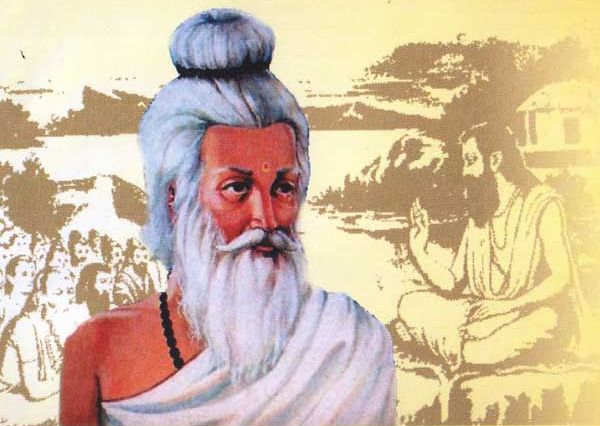
Yajnavalkya Special Cover released by India Post 2018 cropped
Swami Sivananda, THE Glory of Saints - The Self Realized Masters of Bharat - The Jivanmuktas

Guru and Disciple

Guru and Disciple DR. B. G. ADHVARYOO(Sri Swami Yajnavalkyananda) INTRODUCTION Thousands of people flock to Ananda Kutir every year for the Darshan of Pujya Swami Sri Sivanandaji Maharaj and for his blessings. Majority of them address and take him as their Gurudev. Amongst these visitors are the royal families, ministers, officers, lawyers, doctors, professors, teachers, business people and even farmers and labourers. The intention with the majority is to seek the blessings of Gurudev for physical gain in one way or the other. All address him as Gurudev and claim to be his disciples. This question will vex anyone, whether by mere Darshan Gurudev will shower his blessings. If not, what should be the path for the disciple if he wants to earn his blessings and how would one be fit for his blessings. Once one man approached Gurudev for his blessings. Swamiji replied: “Blessings are not obtained so cheaply. One has to earn it. One has to do Sadhana. Then and then only, the grace of Guru flows.” In short, Swamiji is stressing two points for the disciples. SADHANA WITH RIGHT ATTITUDE 1. Every one has to do his Sadhana himself, Guru will direct him, make him aware of the pitfalls on the path but he cannot do Sadhana for the disciple. 2. This Sadhana should be done with proper Bhava (attitude). If the service is done with Bhava (Narayana Bhava) towards the sick and the afflicted, it would be first class Sadhana. But if the same service is done without that Bhava it brings almost no result. Look at the example of doctors and nurses. If they serve the patients with that Bhava they would be tremendously elevated but we see that this is not common because there is no such Bhava; work is done but because it is the part and parcel of the duty of service. With this consideration one who wants to tread the path of Sadhana should become a pacca disciple and proceed step by step on the path with the determination not to step back even once. Remember again, two things, Bhava and Shraddha (faith) are essential for any progress. I humbly suggest the following stages. HUMILITY Stage I: Believe oneself to be the Sandals of the Guru. One must believe firmly that one is no more than the shoes of Gurudev. This should be the real Bhava from the bottom of the heart and one should behave accordingly. To be fit to be the shoes of such a great man (Maha Manav), Sri Swami Sivanandaji Maharaj, is not a small thing. By being saturated with this Bhava, one gets some satisfaction that one is at the feet of Gurudev and that he is able to, or rather has been given, opportunity to protect his feet. Just as shoes do not remain quite long on the feet of Gurudev, one is not able to maintain this Bhava for a longer time in the beginning. In being his shoes one learns the most important quality of humility and gets over the evil of Abhiman (ego). This Abhiman is the greatest hindrance to progress in any path, and more so in the spiritual path. Swamiji has stressed that the subtle Abhiman of being a Sannyasin is the worst of all the Abhiman. In similar way, one must guard oneself from that subtle Abhiman that one is a prominent disciple of Swamiji. In this process one shall cultivate humility and eradicate Abhiman with all its possible forms. When one thinks that one is well-established in this stage, then would begin the second stage. INSTRUMENTALITY Stage II: Believe oneself to be the Danda (stick) that Gurudev holds in his hand. One must think oneself to be nothing more than a stick, as it were, in the hands of Gurudev. This stick does not do anything by itself. It only does the thing that is done by the hands of Gurudev. In the same way, cultivate the Bhav that one is only an instrument in the hands of Gurudev and whatever is done by that instrument is done by the life behind, i.e., Gurudev. One should thereby cultivate Nimitta Bhav (nominal disposition). Keep fit so that the Guru can use you as his instrument as he chooses. If this Bhava gets established then the pride of “Doership”–“I did this,” “I am doing such and such a thing,” “I am going to do this thing next year” will vanish. The knife is cutting but cannot say that it is operating. It is the surgeon who operates, the knife being the instrument. One must become a sharp knife in the hands of the Master Surgeon, Sri Swami Sivanandaji Maharaj. He will do the finest operation of our “ego-dectomy.” Because of this Bhava of being the stick one may have the satisfaction of being of some service to him and one shall have the privilege of being in his hand. One is so lucky to be in his hand for which thousands crave. SELF-SURRENDER State III: Believe to be the pen with which he is writing. One must write about him and for him. It is not the pen that is writing but the hand which holds the pen. Pen is only the instrument. It writes what the mind dictates. One must surrender the mind to Gurudev and only write what the Master Mind dictates to the pen,–oneself. His mind shall be the ruling mind. One should have no independent existence, i.e., complete surrender to Gurudev. State IV: Believe to be his spectacles. If one’s glasses are dirty, one cannot see properly. In the same way, by being Gurudev’s glasses let us clean the dirt in ourselves first. This will make one quite pure. One must feel that his X’ray eyes would see the slightest dirt in ourselves and therefore the necessity of self-cleansing. It is not the glasses that see but the eyes. Glasses are only an aid. If one is Gurudev’s glasses one must see things as he sees. One must adjust one’s vision

Guru and Disciple Read Post »

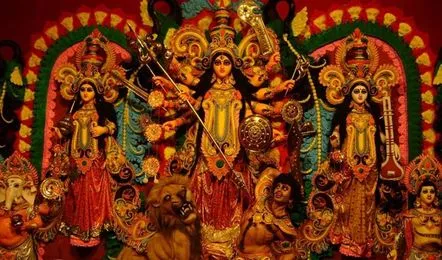
Durga Puja idols with Durga Lakshmi Saraswati and Kartikeya image
⁠Festivals in Sanathan Dharam and Hinduism, Swami Sivananda

Strive For The Ideal — 1954

Strive For The Ideal — 1954 By Sri Swami Sivananda The nine-day worship of the Divine Mother has just been celebrated by millions of Hindus. It is but meet that one should refresh one’s memory about the significance of this worship of the symbolic Power of the cosmic Consciousness, which we call variously as God, the Providence, the Immortal Spirit, and rededicate oneself for the realization of the goal. The Divine Mother is symbolised as the transcendental dynamism of the Absolute, which governs this universe. The law of gravitation, of cause and effect, of evolution, are all representative of this cosmic dynamism. It is the symbolic Power behind creation, preservation and dissolution; the whole universe is the manifestation of this Power. In the early dawn of civilisation, the Hindu mind conceived of the symbol of the eternal Consciousness in the idolisation of the Mother Divine, which was a more appealing, comprehensible, filially close and intimate, emotionally satisfactory and domestically affable conception than that of a vague, formless, unqualitative, ungraspable, ethereal ideal that could be one’s goal and support of life. All the world is gigantic imagination of the mind; says the Sruti. Yet, it has vivid, decisive and relatively substantial reality so far as one’s physical, emotional, intellectual and subconscious entities are concerned. Likewise, any concept featured out of imagination, enlivened by faith and devotion, and magnetized by concentration and meditation, can certainly have a physically substantial, mentally responsive, materially reciprocative, intellectually conceivable and spiritually transformative reality, which can have a far-reaching effect in the human life in its evolution towards Self-realisation. The Pauranic anecdote of the Mother Divine represents the triumph of the Divine Power over the myriads of dark forces of negativity—too well-known in all human lives—in the struggle between the dual factors of good and evil, truth and untruth, virtue and vice, freedom and involution, light and darkness. The occasion, therefore, is an annual reminder to the aspirant of the great Cosmic Law that the divine will always prevail ultimately over the undivine. The Navaratri is an annual awakening call to experience and express afresh the divine nature in man, make manifest the light of truth and love to vanquish and conquer the forces of evil within; for, it is through the positive forces of love and brotherhood and selflessness that negative and undivine elements can be effectively eliminated from the hearts and the minds of people. Darkness can never resist light. Truth, light and goodness are synonymous terms; they are the visible expressions of God. Truth alone triumphs, however long and agonising its twisting duel with untruth may be. The positive must and does overcome the negative. The call of the Mother is to rouse oneself to this truth and regulate one’s life as a dynamic expression of divine positivism. The message of the Mother is: Become a practical embodiment and champion of positive idealism, relative usefulness without attachment to the world, self-perfection, equal vision, balance of mind, motiveless service to humanity, unselfishness and absolute humility. Let one’s life, therefore, be based on a perfect righteousness and purity; let one’s idealism and goodness be eminently practical; let one’s virtues be vital, effective and life-transforming; let all aspire to be good, do good, and radiate goodness. The solace and salvation of the world consist in living the life divine. The brotherhood that one professes should be brotherhood in practice. The intellect and the emotion should be simultaneously activated by the self-same ideal. The evolutional process of nature always works in stages; all creativity or constructiveness is modulated according to the law of evolution. Evolution is the process of the unfoldment of real life and true growth. It results in permanent achievement. Therefore, one has to cultivate all that is good and noble through positive and constructive process of growth. If one wants happiness and well-being, one has to cast aside all violence and hate, and experience and radiate wave after wave of peace, serenity and compassion. Life without selfishness, lust, anger, greed and vanity is itself divine life. To nurture the plant of love, one has to pull out the weeds of jealousy, hate, suspicion and revenge. Not to do evil deeds, not to cause the slightest hurt even to the lowliest of the lowly, not to vilify anyone, not to gain at the cost of others, not to be impure and unholy, not to be deceitful and sly, not to choose the pleasant in preference of the good, have been the central teachings of all the saints and prophets all over the world. Cruelty towards any creation is cruelty done to Mother Herself. The essence of religion consists in refraining from harm to anyone. May all work together to overcome hate by love, evil by goodness, injustice by justice, untruth by truth, selfishness by selflessness. May peace be unto all. May the blessing of the Mother Divine lead all from the unreal to the real, from darkness to light, from mortality to immortality.

Strive For The Ideal — 1954 Read Post »

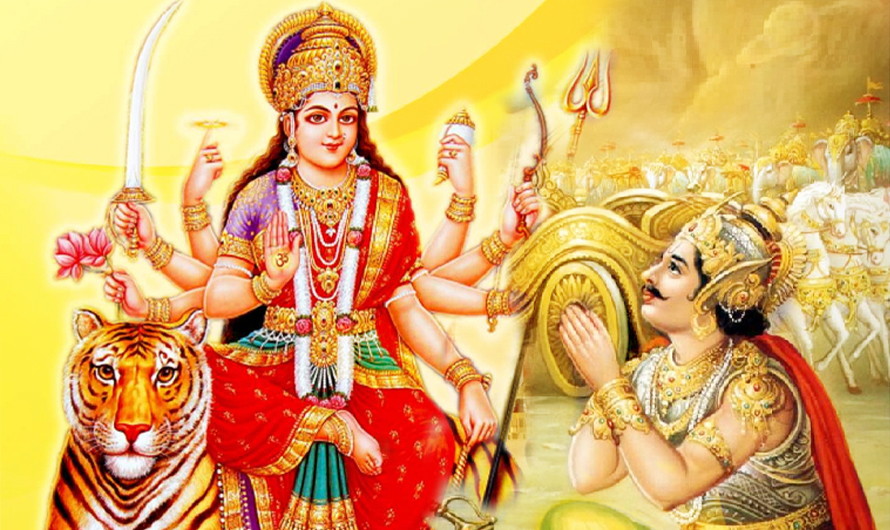
Goddess Durga blessing warrior Arjuna beside tiger image
⁠Festivals in Sanathan Dharam and Hinduism, Swami Sivananda

Devi Worship — 1949

Devi Worship — 1949 Sri Swami Sivananda Sarvamangala Mangalye Sive Sarvarthasadhike,Saranye Tryambake Devi Narayani Namostute O Narayani, Devi, the Three-eyed, the Refuge, the Auspicious, the Bestower of all wishes, the Blessedness that is in all that is blessed! Prostration be to Thee! Devi is synonymous with Shakti or the Divine Power that manifests, sustains and transforms the universe as the one unifying Force of Existence. In fact, worship of Devi is not sectarian, it does of belong to any cult, as it is commonly mistaken to be. Devi is not what is set in apposition to Vishnu or Siva, as the common populace understands. By Devi or Shakti we mean the presupposition of all forms of existential power, the power of knowledge of omniscience; omnipotence is power! These powers are the glorious attributes of God,—you may call Him Vishnu or Siva or as you like. In other words, Shakti is the very possibility of the Absolute’s appearing as many, of God’s causing this universe. God creates this world through Srishti-Shakti (creative power), preserves through Sthiti-Shakti (preservative power), destroys through Samhara-Shakti (destructive power). Shakti and Shakta are one; the power and the one who possesses the power cannot be separated; God and Shakti are like fire and heat of fire. Devi-worship or Shakti-worship is, therefore, worship of God’s glory, of God’s greatness and supremacy. It is adoration of the Almighty! It is unfortunate that Devi is understood as a mere bloodthirsty “Hindu-Goddess”—no, Devi is not the property of the Hindu alone, Devi does not belong to any religion,—not only so much, Devi is not differentiated from the Deva by sexual factors, Devi is the Conscious Power of the Deva! Let this not be forgotten. The words Devi, Shakti etc., and the ideas of the different forms connected with these names are concessions given to the limitations of human knowledge; they are not ultimate definitions of Shakti! The original Shakti is beyond human comprehension; Bhagavan Krishna says (in the Gita), “This is only my lower Nature (Shakti) beyond this is my higher Nature (the Original Shakti), the life-principle which sustains this universe.” The Upanishad says, “The Para-Shakti (Supreme Power) of this God is heard of in varieties of ways, this power is the nature (of God), manifesting as knowledge, strength and activity.” Truly speaking, all beings of the universe are Shakti worshippers, for there is none who does not love and long for power in some form or other. Physicists and scientists have proved now that everything is pure imperishable energy. This energy is only a form of Divine Shakti which exists in every form of existence. Since Shakti cannot be worshipped in its essential nature, it is worshipped as conceived of in its manifestations, viz., creation, preservation and destruction. Shakti in relation to these three functions is Saraswati, Lakshmi and Kaali. These, as is evident, are not three distinct Devis, but the One formless Devi worshipped in three forms. The Devas corresponding to these are Brahma, Vishnu and Siva, who, in the same way, are not three Devas, but the forms of the One Supreme Deva who is formless. Navaratri is the festive occasion of the “nine-nights” worship of Mahakaali, Mahalakshmi, Mahasaraswati, the Divinity of the universe adored in three ways. Saraswati is cosmic intelligence, cosmic consciousness, cosmic knowledge. Worship of Saraswati is necessary for Buddhi-Shuddhi Viveka-Udaya, Vichara-Shakti, for Jnana or Self-Illumination. Lakshmi does not mean mere material wealth like gold, cattle, etc. All kinds of prosperity, glory, magnificence, joy, exaltation or greatness come under Lakshmi. Appaya Dikshita calls even final Liberation as “Moksha-Samrajya-Lakshmi”. Hence worship of Lakshmi means the worship of the central purpose of existence itself. Mahakaali is the transformative power of Divinity, the power that dissolves multiplicity in unity. The worship of Devi is, therefore, the explanation of the entire process of spiritual Sadhana in all its aspects. During Navaratri, observe strict Anushthana and purify your inner nature. This is the most auspicious time in the year for Mother-worship. Read Saptashati or Deveemahatmya, Lalitasahasranama. Do Japa of the Mantra of Devi. Perform formal worship with purity and sincerity and devotion. Cry for Darshana of Devi. The Divine Mother will bless yon with the Knowledge, the peace and the joy that know no end! May the Divine Devi, the Mother, bless you all!

Devi Worship — 1949 Read Post »

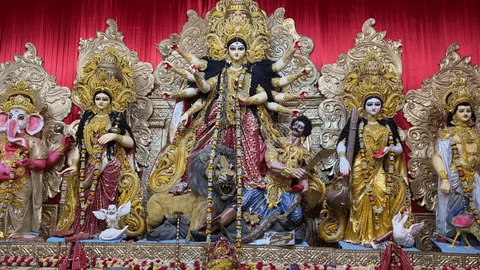
Durga Puja idols with Durga Lakshmi Saraswati Kartikeya Ganesh image
⁠Festivals in Sanathan Dharam and Hinduism, Swami Sivananda

The True Significance of Devi Puja — 1947

The True Significance of Devi Puja — 1947 By Sri Swami Sivananda India now celebrates after the achievement of Her long-cherished goal of Independence, the nine-day worship of the Divine Mother—the Durga Puja. It is important for all to know and rightly understand the real spirit and significance of this worship so that tangible spiritual and material benefit of a lasting character may be derived by everyone to a maximum extent. Rightly understood, the method of this worship shows you the true way to lead the divine life. It teaches you to live in such a way as to make your life a real and practical worship and adoration of the Divine Mother. It reveals the secret of rising from darkness, untruth and mortality unto the grand realm of light, truth and everlasting life. The three aspects of the Devi Puja are Goodness, Prosperity and Knowledge. Goodness reveals the Truth; Prosperity ushers in happiness; and Knowledge precedes the dawn of intuition and leads you to the goal of Satchidananda. To strive to bring about these three above-mentioned factors into the life of mankind constitutes the real invocation and adoration of the Divine Mother who is manifest in every form of humanity. Ritualistic or ceremonial worship is no doubt good, but it is the living worship that truly transforms and spiritualises you more quickly and leads you on to the highest realisation. To consecrate the Divine Mother in the holy altar of your heart, to manifest Her Divine Power within and to live to serve and do good to all is the best and the dynamic way to adore and worship the Divine Mother, Durga. To invoke the Goddess Lakshmi, you have to try ceaselessly to bring prosperity into the lives of all. Its significance is to be large-hearted and generous, charitable and kind. The Sadhaka will have to strive hard to remove the pain and sorrow and bring happiness to all as per his capacity. Those who are monetarily gifted, to them I would ask to open free dispensaries for the poor patients, feeding centres for the destitutes, to educate the illiterate and to aid and encourage through every means to increase the wealth of the country; for where prosperity and happiness prevail, there alone Goddess Lakshmi is more easily propitiated. Now, to manifest the Goddess Sarasvati you have to educate yourself first. You have to become a flood of light, and thereby you should radiate the Divine Knowledge to everyone. Such sincere aspirants can go to the slums and backward, illiterate localities and give free lessons on secular and spiritual matters as well. As such you can offer the grandest and worthiest form of worship to Devi Sarasvati. The message of Navaratri is a call to purity, plenty and wisdom. Where wisdom and virtue combine and become livingly manifest, there we have the Divine Life. Therefore, you should strive your best to grow in spirituality and aspire fervently to usher in an era of living purity, of dynamic virtue and of practical wisdom. All hail to such living worship! and all hail to such cosmic worshippers!! May the blessings of the Divine Mother usher in peace, plenty and prosperity to everyone’s life!

The True Significance of Devi Puja — 1947 Read Post »

Goddess Durga with multiple arms slaying Mahishasura
⁠Festivals in Sanathan Dharam and Hinduism, Swami Sivananda

Navaratri Durga Puja, Its Significance — 1946

Navaratri Durga Puja, Its Significance — 1946 By Sri Swami Sivananda Religious observances, traditional worship and Vratas at times have more than one significance. Apart from being the adoration of the Divine, they are commemorative of stirring bygone events, allegoric when interpreted from the Occult standpoint, and lastly deeply significant pointers and revealing guides to the Jiva on his path to Realisation. Outwardly, the nine days’ worship of Devi or the Mother is in the nature of a Vijaya-Utsava. These nine days’ triumph are offered to the Mother for Her successful struggle with the formidable demons led by Sumbha and Nisumbha. But to the spiritual aspirant in his life of Sadhana, the particular division of the Navaratri into sets of three days to adore different aspects of the Supreme Goddess has got a very sublime yet thoroughly practical truth to reveal. In its cosmic aspect it epitomises the stages of the evolution of Man into God, from Jivahood to Sivahood. In its individual import it shows the course that his spiritual Sadhana should take. Now, the central purpose of existence is to recognise your eternal identity with the Supreme Spirit. It is to grow into the image of the Divine. The Supreme One embodies the highest perfection. It is spotless purity, Niranjana. To recognise your identity with That, to attain union with That, is verily to grow into the very likeness of the Divine. The Sadhaka has, therefore, as the initial step, to get rid first of all the countless impurities, and the undivine elements that have come to cling to him in his embodied state. Then he has to acquire lofty virtues, auspicious Divine qualities. Thus purified and rendered full of Sattva, Knowledge flashes upon him like the brilliant rays of the Sun upon the crystal waters of a perfectly calm lake. This process of Sadhana implies resolute will, determined effort and arduous struggle. In other words, strength, infinite Sakti, is the prime necessity. It is the Divine Mother, Supreme Sakti of Brahman, that has to operate through the aspirant. Then consider how on the first three days Mother is adored as Power, Force—Durga the Terrible. You pray to Mother Durga to destroy all your impurities, your vices, your defects. She is to fight with and annihilate the baser animal qualities in the Sadhaka, the lower Asura in his nature. Also, She is the Power that protects your Sadhana from its many dangers and pitfalls. Thus the first three days, marking the first stage of destruction of Mala (impurities) and determined effort and struggle to rout out the evil Vasanas in your mind, are set apart for the worship of the Destructive aspect of the Mother. Once you have accomplished your task on the negative side, that of breaking down the impure Vasanas, propensities and old habits, the next step is to build up a sublime spiritual personality, to acquire positive qualities in place of the eliminated Asuric qualities. The Divine qualities, Daivi Sampat that Lord Krishna enumerates in the Gita, have to be acquired. The Sadhaka must cultivate and develop all the auspicious qualities. He has to pile up immense spiritual wealth to enable him to pay the price for the rare gem of divine wisdom (Jnanaratna). If this development of the opposite qualities (Pratipaksha Bhavana) is not undertaken in right earnest, the old Asuric nature will raise its head again and again. Hence, this stage is as important in an aspirant’s career as the previous one. The essential difference is—the former is a ruthless, determined annihilation of the filthy, egoistic lower self; the latter is an orderly, steady, calm and serene effort to develop purity. This pleasanter side of the aspirant’s Sadhana is depicted by the worship of Mother Lakshmi. She bestows on Her devotees the inexhaustible wealth of Daivi Sampat. Lakshmi is the Sampat-Dayini aspect of Brahman. She is Purity Itself. Thus worship of Goddess Lakshmi is performed during the second set of three days. Once the aspirant succeeds in routing out the evil propensities and in developing Sattvic, pure qualities, he becomes an Adhikari. He is ready now to receive the Light of Supreme Wisdom. He is fit to obtain Divine Knowledge. At this stage comes the devout worship of Sri Sarasvati, Who is Divine Knowledge personified, the Embodiment of Brahmajnana. The sound of Her celestial Veena awakens the notes of the sublime Mahavakyas and the Pranava. She bestows the Knowledge of the Supreme Naada and then gives full Atmajnana as represented by Her pure dazzling snow-white apparel. To propitiate Sri Sarasvati, the Giver of Jnana, is therefore the third stage. The tenth day—Vijaya Dasami—marks the triumphant ovation of the Jiva at having attained Jivanmukti through the descent of knowledge by the grace of Goddess Sarasvati. The Jiva rests in His own Supreme Self of Sat-Chit-Ananda (Existence-knowledge-Bliss Absolute). This day celebrates the victory, the achievement of the Goal. The Banner of Victory flies aloft. Lo! I am He! I am He!! Chidananda Rupah Sivoham, Sivoham, Chidananda Rupah Sivoham, Sivoham. This arrangement has also a special significance in the aspirant’s spiritual evolution. It marks the stages of evolution which are indispensable for every Sadhaka, through which every one should pass. One naturally leads to the other and to short-circuit this would inevitably result in a miserable failure. Nowadays many ignorant Sadhakas aim straight at the acquisition of Knowledge without the preliminaries of purification and acquisition of Daivi Sampath and complain that they are not progressing in the Path. How can they? Knowledge will not descend till the impurities are washed out, and purity is developed. Nor can the Sattvic plant grow on impure soil. Follow this arrangement, your efforts will be attended with sure success. This is your path. Naanya pantha vidyate ayanaaya, no other path is known for salvation. Destroy one evil quality, develop the opposite virtue. By this process you would soon bring yourself up to that perfection which would culminate in that identity with Brahman which is your Goal. Then all Knowledge

Navaratri Durga Puja, Its Significance — 1946 Read Post »

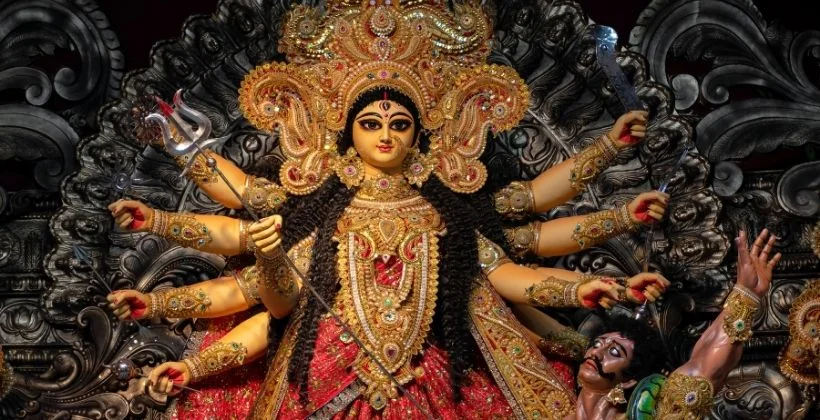
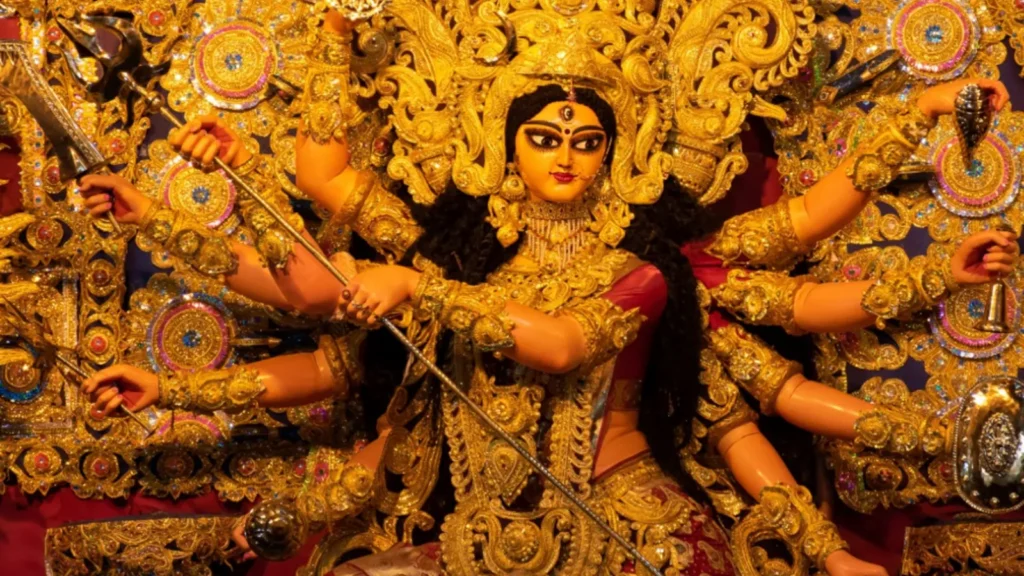
Golden Durga idol with multiple arms holding weapons image
⁠Festivals in Sanathan Dharam and Hinduism, Swami Sivananda

A Message To Mothers — 1945

A Message To Mothers — 1945 By Sri Swami Sivananda Today you have all assembled in shrines and temples devoted to the great Goddess, the Divine Mother, for celebrating the Dussera. This function is celebrated in various parts of India in different styles. But the one basic aim of this celebration is to propitiate Sakti to bestow upon you all wealth, auspiciousness, prosperity, Vidya and all other potent powers. Whatever be the particular or special request that every one of you may put before the Goddess, whatever boon you may ask of Her, the one thing behind all these motives is propitiation, worship and linking oneself with Her. There is no other aim. This is being effected consciously or unconsciously. Everyone is blessed with Her loving mercy and is protected by Her. This unique aim is yours not only in this particular occasion but every moment of your life. There is incessant struggle within you. The inner self struggles to escape from the clutches of the various senses, being sheathed and suppressed by them. It constantly warns you to identify this self with the major Self. It reminds you that you are on return journey unto the place whence you started. Whether it is your will or not, there is no second course or second destination left or reserved for you. You have to retrace your path. And on no spot can you dwell longer than the wink of an eye. Any amount of retardation on your part will not arrest this onward course. The more the momentum you gain, the sooner you will return to the destination or the goal. Therefore, equip yourself with proper contrivance and speed up. Do not waste a single minute. The leading of your life and the various aspects of it may differ from others, as the boon you ask of the Mother is different from your neighbour’s. But the view of both is the same and the views of different lives too. Every one yearns for liberation. Throw a ball on the floor. It rebounds. It attempts to reach the same point wherefrom it was thrown. But there is a difference in the return of one ball from the other. A ball with a thick cover, air fully inflated rebounds quickly whereas a Japan ball takes a longer time. Why? There is no sufficient stuff in the latter ball. As soon as it reaches the ground it loses its spherical shape. It gets deformed. The impact is too heavy for it. It has lost everything. It has to attain slowly its momentum. We are all like Japan balls. We must cover ourselves with Vairagya, inflate with Bhakti and devotion. Kirtans and prayer are double piston air pumps. Meditation is the space of travel. Jnana is the acceleration which takes the ball to its original position. This overcomes Avidya, the down-pulling gravitation. Selfless duty removes all the dust particles adhering to us in the form of egoism and vices. These are the equipment. These can be manufactured by one’s own self as the outcome of various experiences in life. But it is better that it is acquired from parents. You can save much time. Parents are the well-wishers of the children. They should not allow their children to cultivate bad habits. They must not sing cinema songs and other meaningless blabberings to lull their babes. Only Kirtans glorifying the various forms of the Lord should be used. Sing “Hari Hari Bol, Bol Hari Bol, Mukunda Madhava Kesava Bol.” This tune is very melodious. It is a sweet lullaby. At the same time it leaves deep imprints in the mind of the babe. You do not know what the mind of a child is. You are not capable of understanding its language. A child is full of divine qualities. It is only due to your bad company the child is spoiled. You nurse the child too much. You train the child with toilets and luxuries. You make these articles indispensable for him in later life. “As is the father, so is the son.” What habits you have acquired in the circle of your movement creep into him also. If you play at cards, your son too will do so stealthily if not openly before you. If you smoke, your son is sure to smoke. First correct yourself. The moment you realise that a son will be born to you, eradicate all the evil habits. Grains will grow perfectly only if the weeds are removed. The birth of a child is an A.R.P siren. It is a danger signal for you to be cautious. The mud pot is useful only as long as the seed or the bulbous plant grows roots. Afterwards it should not be kept in the pot. If it is kept not only the plant will suffer undergrowth but the pot will be broken. It must be immediately transplanted in a fertile field. The child must be kept in the house only as long as it is not in a position to discriminate between good and bad. The day the child shows a tendency to like or dislike, it must be taken to a tutor and entrusted to him. It is no more a child. Now he is a boy fit to receive instructions. Any parent, who ignorant of this fact, keeps the boy at home virtually stifles and snuffs out the moral, ethical and cultural life-growth in the boy. Only such tutors who feel it their responsibility to make an ideal man of the boy entrusted to them are to take up the training. Here comes the duty of the tutor. The tutor is not merely to cram certain portions from the prescribed text-books and lecture them to the boys. He is to teach and not to lecture. He must live what he teaches and transform by shining example. He must carefully watch the individual progress and satisfy himself as to the mental and ethical growth of every boy. More than

A Message To Mothers — 1945 Read Post »

Lord Rama silhouette aiming bow with Hanuman shadow above image
⁠Festivals in Sanathan Dharam and Hinduism, Swami Sivananda

Dussera Message — 1942

Dussera Message — 1942 By Sri Swami Sivananda Salutations to Sri Durga, Mother Divine who exists in all beings in the form of intelligence, mercy and beauty; who is the consort of Lord Siva; who creates, sustains and destroys the universe. Dussera is the greatest Hindu festival for adoring God as Mother Durga representing the Divine Mother. She is the energy aspect of the Lord. Without Durga, Siva has no expression and without Siva, Durga has no existence. Siva is the soul of Durga. Durga is identical with Siva. Lord Siva is only the silent witness. He is motionless, absolutely changeless. He is not affected by the Cosmic play. Durga does everything. Mother worship is the worship of God as the Divine Mother, Sri Maata. Sakti is the power of the Lord or the Cosmic energy. The Divine Mother in Her aspect of Durga is represented as having ten different weapons in Her ten hands. She is sitting on a lion. She keeps up the Lila of the Lord through the three Gunas—Sattva, Rajas and Tamas. Vidya, Santi, lust, anger, greed, egoism, pride are all Her forms. The Upasana or worship of Devi or Universal Mother leads to the attainment of knowledge of the Self. The story of the Kenopanishad known as the Yaksha Prasna supports this view. Uma taught the Truth to the Devas. Goddess Sakti sheds wisdom on Her devotees. A child is more familiar with the mother than the father, because she is very kind, loving, tender, affectionate and looks after the wants of the child. In the spiritual field also the aspirant or the devotee—the spiritual child—has intimate relationship with Mother Durga than with Father Siva. It behoves, therefore, that the aspirant should approach the Mother first and that She will introduce Her spiritual child to the Father for his illumination or Self-realisation. Mother’s grace is boundless. Her mercy is illimitable. Her knowledge is infinite. Her power is immeasurable. Her glory is ineffable. Her splendour is indescribable. She gives you Bhukti or material prosperity and Mukti also (liberation). Approach Her with an open heart. Lay bare your heart to Her with frankness and humility. Be as simple as a child. Kill ruthlessly egoism, cunningness, selfishness and crookedness. Make total, unreserved ungrudging surrender to Her. Sing Her praise. Repeat Her Name. Worship Her with faith and unflinching devotion. Do special Puja on Navaratri days. Navaratri or Dussera is the most suitable occasion for doing intense Sadhana. These nine days are very sacred to Devi. Plunge yourself in Her worship. Do Anushtana. Devi fought with Bhandasura and his forces for nine days and nine nights. The war ended on the evening of the tenth day known as Vijaya Dasami or the day of Victory. Akshara Abhyasa for children is done on the Vijaya Dasami day. Aspirants are initiated on this day. The beginning of learning of any science is done on this most auspicious day. It was on this day that Arjuna worshipped the Devi before starting the fight against the Kauravas in the field of Kurukshetra. May Durga give the milk of Divine wisdom to Her children and lift them to the magnanimous heights of Divine splendour and glory, the imperishable state of Kaivalya and eternal Sunshine!

Dussera Message — 1942 Read Post »

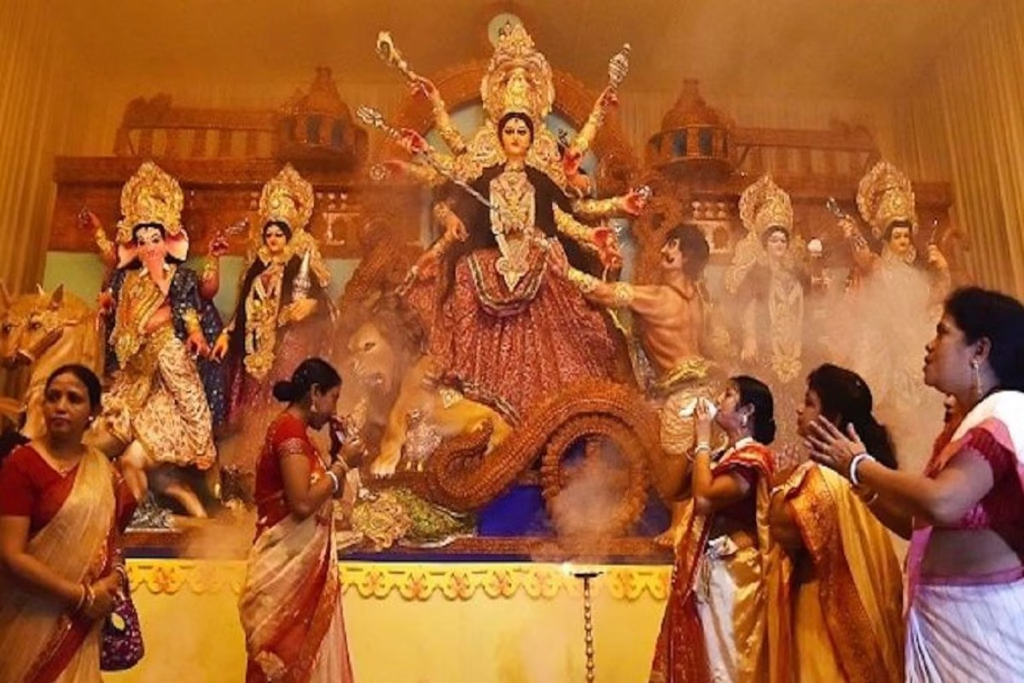
Devotees praying before Durga Puja idol with family image
⁠Festivals in Sanathan Dharam and Hinduism, Swami Sivananda

Durga Puja or Navaratri

Durga Puja or Navaratri By Sri Swami Sivananda SALUTATIONS to the Divine Mother, Durga, who exists in all beings in the form of intelligence, mercy, beauty, who is the consort of Lord Shiva, who creates, sustains and destroys the universe. This festival is observed twice a year, once in the month of Chaitra and then in Aswayuja. It lasts for nine days in honour of the nine manifestations of Durga. During Navaratri (the word literally means “nine nights”) devotees of Durga observe a fast. Brahmins are fed and prayers are offered for the protection of health and property. The beginning of summer and the beginning of winter are two very important junctions of climatic and solar influence. These two periods are taken as sacred opportunities for the worship of the Divine Mother. They are indicated respectively by the Rama-Navaratri in Chaitra (April-May) and the Durga Navaratri in Aswayuja (September-October). The bodies and minds of people undergo a considerable change on account of the changes in Nature. Sri Rama is worshipped during Ramnavmi, and Mother Durga during Navaratri. The Durga Puja is celebrated in various parts of India in different styles. But the one basic aim of this celebration is to propitiate Shakti, the Goddess in Her aspect as Power, to bestow upon man all wealth, auspiciousness, prosperity, knowledge (both sacred and secular), and all other potent powers. Whatever be the particular or special request that everyone may put before the Goddess, whatever boon may be asked of Her, the one thing behind all these is propitiation, worship and linking oneself with Her. There is no other aim. This is being effected consciously or unconsciously. Everyone is blessed with Her loving mercy and is protected by Her. Durga Puja or Navaratri commences on the first and ends on the tenth day of the bright half of Aswayuja (September-October). It is held in commemoration of the victory of Durga over Mahishasura, the buffalo-headed demon. In Bengal Her image is worshipped for nine days and then cast into water. The tenth day is called Vijaya Dasami or Dussera (the “tenth day”). Processions with Her image are taken out along the streets of villages and cities. The mother of Durga (that is, the wife of the King of the Himalayas) longed to see her daughter. Durga was permitted by Lord Shiva to visit her beloved mother only for nine days in the year. The festival of Durga Puja marks this brief visit and ends with the Vijaya Dasami day, when Goddess Durga leaves for Her return to Mount Kailas. This is the view of some devotees. In Bengal, Durga Puja is a great festival. All who live away from home return during the Puja days. Mothers reunite with their sons and daughters, and wives with their husbands. The potter shows his skill in making images, the painter in drawing pictures, the songster in playing on his instrument, and the priest in reciting the sacred books. The Bengalis save money throughout the year only to spend everything during the Puja days. Cloth is freely distributed to the Brahmins. The woman of Bengal welcomes the Goddess with a mother’s love and sends away the image on the last day, with every ceremony associated with a daughter’s departure to her husband’s home and with motherly tears in her eyes. This signifies the parting of Durga from Her beloved mother. Durga Puja is the greatest Hindu festival in which God is adored as Mother. Hinduism is the only religion in the world which has emphasised to such an extent the motherhood of God. One’s relationship with one’s mother is the dearest and the sweetest of all human relations. Hence, it is proper to look upon God as mother. Durga represents the Divine Mother. She is the energy aspect of the Lord. Without Durga, Shiva has no expression and without Shiva, Durga has no existence. Shiva is the soul of Durga; Durga is identical with Shiva. Lord Shiva is only the silent witness. He is motionless, absolutely changeless. He is not affected by the cosmic play. It is Durga who does everything. Shakti is the omnipotent power of the Lord, or the Cosmic Energy. The Divine Mother is represented as having ten different weapons in Her hands. She sits on a lion. She keeps up the play of the Lord through the three attributes of Nature, namely, Sattwa, Rajas and Tamas. Knowledge, peace, lust, anger, greed, egoism and pride, are all Her forms. You will find in the Devi Sukta of the Rig Veda Samhita that Vak, symbolising speech, the daughter of the sage Anbhirna, realised her identity with the Divine Mother, the Power of the Supreme Lord, which manifests throughout the universe among the gods, among men and beasts and among the creatures of the deep ocean. In the Kena Upanishad, you will find that the Divine Mother shed wisdom on Indra and the gods and said that the gods were able to defeat the demons only with the help of the power of the Supreme Lord. The worship of Devi, the universal Mother, leads to the attainment of knowledge of the Self. The story in the Kena Upanishad known as the “Yaksha Prasna”, supports this view. It tells how Uma, the Divine Mother, taught the Truth to the gods. Goddess Shakti thus sheds wisdom on Her devotees. Devi worship is, therefore, worship of God’s glory, of God’s greatness and supremacy. It is adoration of the Almighty. It is unfortunate that Devi is ignorantly understood by many as a mere blood-thirsty Hindu Goddess. No! Devi is not a vicious demoness nor is She the property of the Hindus alone. Devi does not belong to any religion. Devi is that conscious power of God. The words Devi, Shakti, etc., and the ideas of different forms connected with these names are concessions granted by the sages due to the limitations of the human intellect; they are by no means the ultimate definitions of Shakti. The original or Adi Shakti is beyond human comprehension. Bhagavan

Durga Puja or Navaratri Read Post »

religion 1
Swami Sivananda, The Divnity in Religions

Shintoism

Shintoism By Sri Swami Sivananda Shinto is an all-pervading indefinable way which is quite universal. Shinto or Kaminomichi or the way of the Kami or the Gods is the name of the religion observed by the Japanese from time immemorial. ‘Kami’ means God or deity, or sometimes soul. Shinto implies spontaneous following of the ‘Way of the Gods’. Shinto is not really an ‘ism’. It is only a teaching. It is not a set of verbal theories or concepts. It is the all-pervading way. It is very difficult to translate ‘Shinto’ into English. ‘Shinto’ means ‘The way of the Gods’ or the ‘God-like way’ or ‘The way from the Gods’. There is no proper equivalent for the term ‘Shinto’ in English. Shinto is an all-pervading, indefinable way which is quite universal. Shinto is divided into two classes, viz., the Sectarian Shinto, which is sub-divided into 13 sects; and the Shinto of the national faith of the Japanese, or the State Shinto Religion. A perfect understanding of Shinto will enable one to have proper understanding of the Japanese nation and their culture. There is neither much grand philosophy nor complicated ritual in Shintoism. Shinto is not a religion adopted by the State. It is a religion of the heart. Shinto is a natural and real spiritual force which pervades the life of the Japanese. Shinto is a creative or formative principle of life. The Shinto principle is the background of Japanese culture, code of ethics, fine arts, family and national structure. Shinto is the chief agent which has rejuvenated, vitalised and reinforced the social and religious life of Japan. The system of Shinto resembles more the system of Hinduism than that of Confucianism or Buddhism. It is a kind of personal religion. It ascribes divine attributes to every being. It is a kind of pantheism. For the Japanese, nation means a harmonious complex of individuals, Kuni-hito. Salvation, for the Japanese, means the Salvation of the whole nation instead of salvation of a few individuals. Shinto Theology According to Shinto theology, Ame-no-mi-naka-nushi is the Absolute Universal Self. This corresponds to Hiranyagarbha or the thread-Soul (Sutratman) of the Hindus. The visible universe (Ken Kai) and the invisible world (Yu Kai) have come into being from Ame-no-mi-naka-nushi through the activities of the three deities of Musubi, Principle of Creation, Completion and the Controlling Bond between the spiritual and the material, the invisible and the visible, the real and the ideal. These contradictory attributes are functional only. The Absolute Universal Self is not affected by these contradictory attributes. It is beyond these attributes. It-corresponds to the Nirguna Brahman (Attributeless Absolute) of Hinduism. The idea of time has come into existence from the attributes. Absolute loyalty to the Sovereign Emperor, who is regarded as a direct descendant and representative of the highest God, respect for ancestors, profound feeling of piety towards the parents and love for children form the fundamental structure of the Great Universal Way. The mirror, the sword and the jewel have a figurative meaning in the course of the development of Shinto. They symbolise wisdom, courage and benevolence or intelligence, will and love in Shinto theology. These three are the holy ensigns of royalty of the Sovereign Emperor. They are supposed to symbolise the dynamic working of the Great Way and so they are found in the forefront of every Shinto shrine, popularly known as Mistu-tomo-e or the three big commas. There are many Gods in Shinto, but the ancestral Sun-God, Anaterasu-omi Kami, stands supreme above them. Susano-o-no-Mikoto is the impetuous divine brother of the Sun-God. He is the God of rainstorm. Tsukiyomi-no-Mikoto is the Moon-God. These three constitute a divine triad. They preside, respectively, over the plane of High Heaven, the vast ocean, and the realm of Night. Shinto Ethics Purity is one of the fundamental virtues of Shinto ethics. There are two significations of purity. One is outer purity or bodily purity and the other inner purity or purity of heart. If a man is endowed with true inner purity of heart, he will surely attain God-realisation or communion with the Divine. Sincerity is also the guiding ethical principle of Shinto. Ten Precepts Of Shinto i) Do not transgress the will of the gods. ii) Do not forget your obligations to ancestors. iii) Do not offend by violating the decrees of the State. iv) Do not forget the profound goodness of the, gods, through which calamity and misfortunes are averted and sickness is healed. v) Do not forget that the world is one great family. vi) Do not forget the limitations of your own person. vii) Do not become angry even though others become angry. viii) Do not be sluggish in your work. ix) Do not bring blame to the teaching. x) Do not be carried away by foreign teachings. Shinto Sayings The heart of the person before you is a mirror. See there your own form. Even the wishes of an ant reach to heaven. Leave the things of this world and come to me daily with pure bodies and pure hearts. A single sincere prayer moves heaven. You will surely realise the divine presence through sincere prayer. Where you have sincerity, there also is virtue. Sincerity is a witness to truth. Sincerity is the mother of knowledge. Sincerity is a single virtue that binds Divinity and man in one. Retribution for good or ill is as sure as the shadow after substance. To do good is to be pure. To commit evil is to be impure. To admit a fault is the beginning of righteousness. The first and surest means to enter into communion with the Divine is sincerity. If you pray to a deity with sincerity, you will surely feel the divine presence. Common Shinto Prayer Our eyes may see some uncleanliness, but let not our mind see things that are not clean. Our ears may hear some uncleanliness, but let not our mind hear things that are not clean. Conclusion Shinto is the ‘Way to God’. ‘Tao’ of

Shintoism Read Post »