





Hari Om

Menu

February 21, 2026

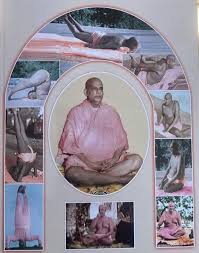
Swami Sivananda yoga master performing asanas and meditation in different scenes
Swami Sivananda, Teachings of Swami Sivananda on Yoga

Yoga Defined

Yoga Defined The word ‘Yoga’ comes from a Sanskrit root ‘Yuj’ which means ‘to join’. In its spiritual sense, it is the process by which the identity of the individual soul and the Supreme Soul is realized by the Yogi. The human soul is brought into conscious communion with the Divine Reality. Just as camphor melts and becomes one with fire; just as a drop of water when it is thrown into the ocean, becomes one with the ocean; the individual soul, when it is purified, when it is freed from lust, greed, hatred and egoism, when it becomes pure (Sattvic), becomes one with the Supreme Soul. The science that teaches the way of acquiring this occult knowledge is called ‘Yoga Sastra’. Yoga, in a generic sense, refers to Karma Yoga, Bhakti Yoga, Raja Yoga, Jnana Yoga, Hatha Yoga, Mantra Yoga, Laya Yoga or Kundalini Yoga. In a restricted sense, it means the Ashtanga Yoga or Raja Yoga of Patanjali Maharishi only. The word Yoga is also applicable in a secondary sense to all those factors and practices that are conducive to the final achievement or fulfillment of Yoga, and as such indirectly lead to final freedom or perfection. Similarly, though the one who has reached the final Asamprajnata Samadhi or union with Reality is called a Yogi, one who is attempting to get perfection in Yoga is also called a Yogi. Yoga philosophy is one of the six systems of Hindu philosophy. Unlike so many other philosophies of the world, it is a philosophy that is wholly practical. Yoga is an exact science based on certain immutable Laws of Nature. It is well known to people of all countries of the world interested in the study of East civilization and culture, and is held in awe and reverence as it contains in it the master-key to unlock the realms of Peace, Bliss, Mystery and Miracle. Even the philosophers of the West found solace and peace in this Divine Science. Jesus Christ himself was a Yogi of a superior order, a Raja-Yogi indeed. The founder of the Yoga Philosophy, Patanjali Maharishi, was not only a Philosopher and a Yogi, but a Physician as well. He is said to have lived about three hundred years before Jesus Christ. Yoga is that state of Absolute Peace wherein there is neither imagination nor thought. Yoga is control of mind and its modifications. Yoga teaches us how to control the modifications of the mind and attain liberation. It teaches us how to transmute the unregenerate nature and attain the state of Divinity. It is the complete suppression of the tendency of the mind to transform itself into objects, thoughts, etc. Yoga kills all sorts of pain, misery and tribulation. It gives you freedom from the round of births and deaths, with its concomitant evils of disease, old age, etc., and bestows upon you all the Divine Powers and final liberation through super-intuitional knowledge. Equanimity is Yoga. Serenity is Yoga. Skill in actions is Yoga. Anything by which the best and the highest in life can be attained is also Yoga. Yoga is thus all-embracing, all-inclusive and universal in its application leading to all-round development of body, mind and soul. Yoga is primarily a way of life, not something which is divorced from life. Yoga is not forsaking of action, but is efficient performance in the right spirit. Yoga is not running away from home and human habitation, but a process of moulding one’s attitude to home and society with a new understanding. Yoga is not a turning away from life; it is spiritualization of life. Yoga is Universal Yoga is for all. Yoga is universal. It is not a sectarian affair. It is a way to God and not a creed. The practice of Yoga is not opposed to any religion or any sacred Church. It is purely spiritual and universal. It does not contradict anyone’s sincere faith. Yoga is not a religion, but an aid to the practice of the basic spiritual truths in all religions. Yoga can be practised by a Christian or a Buddhist, a Parsee, a Muslim, a Sufi or an atheist. To be a Yogi means to abide continuously in God and to live at peace with men. Yoga is union with God. Yoga is union with all. God dwells in all. This is not Yoga A man gets himself buried in a box underneath the ground. He does this by plugging the nostrils through Khechari Mudra. This is no doubt a difficult Kriya. He gets Jada Samadhi. This is a state like deep sleep. The Samskaras and Vasanas (subtle desires) are not fried by this Samadhi. He does not return with superintuitional knowledge. This cannot give Mukti or Liberation. This is kind of feat only. This is not a sign of spirituality. People use this Kriya for acquiring money, name and fame. When they come out of the box, they stretch their hand for money. They make transactions before they enter the box. Tie the hands and legs of a man with iron-chain and shut him in a room. Before you lock the door he will stand before you. Get inside the room. He will be again there. No doubt this is very, very astonishing. It is a mere trick. It is a kind of Jaalam (illusion). Some people can seat on a plank studded with sharpened nails and chew snakes like chocolates. If you pierce a long needle in their arms, no blood will come out. Some can draw water from stone. A Yogic charlatan can perform all these things through some trick or Jaalam. But these have nothing to do with real Yoga. The public will take a man to be a Yogi or Guru only if he exhibits some Siddhis. It is a serious mistake. They must not be overcredulous. They will be easily duped by these Yogic charlatans. They must use their power of discrimination and reasoning. They must study the ways, habits, nature, conduct, Vritti, Svabhava, antecedence, etc.,
Yoga Defined Read Post »

Lord Hanuman sitting in blessing posture with scriptures image
⁠Festivals in Sanathan Dharam and Hinduism, Swami Sivananda

Hanuman Jayanthi

Hanuman Jayanthi By Sri Swami Sivananda Om Sri Hanumate Namah SRI HANUMAN is worshipped all over India–either alone or together with Sri Rama. Every temple of Sri Rama has the murti or idol of Sri Hanuman. Hanuman was the Avatara of Lord Siva. He was born of the Wind-God and Anjani Devi. He is also called by the names Pavanasuta, Marutsuta, Mahavira, Bajrangabali and Pavankumar. Hanuman was the living embodiment of the power of Ram-Nam. He was an ideal selfless worker, a true Karma Yogi who worked desirelessly. He was a great devotee and an exceptional Brahmachari or celibate. He served Sri Rama with pure love and devotion, without expecting any fruit in return. He lived only to serve Sri Rama. He was humble, brave and wise. He possessed all the divine virtues. He did what others could not do–crossing the ocean simply by uttering Ram-Nam, burning the demon-king’s city of Lanka, and bringing the sanjeevini herb to restore the life of Lakshmana. He brought Sri Rama and Lakshmana from the nether world after killing Ahiravana. Hanuman possessed devotion, knowledge, spirit of selfless service, power of celibacy, and desirelessness. He never boasted of his bravery and intelligence. He said to Ravana, “I am a humble messenger of Sri Rama. I have come here to serve Sri Rama, to do His work. By the command of Sri Rama, I have come here. I am fearless by the Grace of Sri Rama. I am not afraid of death. I welcome it if it comes while serving Sri Rama.” See how humble Hanuman was! How deep was his devotion to Sri Rama! He never said, “I am the brave Hanuman. I can do anything and everything.” Sri Rama Himself said to Hanuman, “I am greatly indebted to you, O mighty hero. You did marvellous, superhuman deeds. You do not want anything in return. Sugriva has his kingdom restored to him. Angada has been made the crown prince. Vibhishana has become king of Lanka. But you have not asked for anything at any time. You threw away the precious garland of pearls given to you by Sita. How can I repay My debt of gratitude to you? I will always remain deeply indebted to you. I give you the boon of everlasting life. All will honour and worship you like Myself. Your idol will be placed at the door of My temple and you will be worshipped and honoured first. Whenever My stories are recited or glories sung, your glory will be sung before Mine. You will be able to do anything, even that which I will not be able to!” Thus did Sri Rama praise Hanuman when the latter returned to Him after finding Sita in Lanka. Hanuman was not a bit elated. He fell in prostration at the holy feet of Sri Rama. Sri Rama asked him, “O mighty hero, how did you cross the ocean?” Hanuman humbly replied, “By the power and glory of Thy Name, my Lord.” Again Sri Rama asked, “How did you burn Lanka? How did you save yourself?” And Hanuman replied, “By Thy Grace, my Lord.” What profound humility Hanuman embodied in himself! There are many who want wealth in return for their services. Some do not want wealth, but they cannot resist name and fame. Others do not want any of these, but they want approbation. Still others want nothing, but they boast of their deeds. Hanuman was above all these. That is why he is recognised as an ideal Karma Yogi and an unsurpassed adept in Bhakti. His life is full of object lessons. Everyone should try his best to follow the noble example of Hanuman. His birthday falls on Chaitra Shukla Purnima–the March-April full moon day. On this holy day worship Sri Hanuman. Fast on this day. Read the Sri Hanuman Chalisa. Spend the whole day in the Japa of Ram-Nam. Hanuman will be highly pleased and will bless you with success in all your undertakings. Glory to Hanuman! Glory to his Lord, Sri Rama!

Hanuman Jayanthi Read Post »

Guru Purnima 1024x683 1
⁠Festivals in Sanathan Dharam and Hinduism, Swami Sivananda

Guru Purnima

Guru Purnima By Sri Swami Sivananda THE FULL moon day in the month of Ashad (July-August) is an extremely auspicious and holy day of Guru Purnima. On this day, sacred to the memory of the great sage, Bhagavan Sri Vyasa, Sannyasins settle at some place to study and discourse on the thrice-blessed Brahma Sutras composed by Maharishi Vyasa, and engage themselves in Vedantic, philosophical investigation. Sri Vyasa has done unforgettable service to humanity for all times by editing the four Vedas, writing the eighteen Puranas, the Mahabharata and the Srimad Bhagavata. We can only repay the deep debt of gratitude we owe him, by constant study of his works and practice of his teachings imparted for the regeneration of humanity in this iron age. In honour of this divine personage, all spiritual aspirants and devotees perform Vyasa Puja on this day, and disciples worship their spiritual preceptor. Saints, monks and men of God are honoured and entertained with acts of charity by all the householders with deep faith and sincerity. The period Chaturmas (the “four months”) begins from this day; Sannyasins stay at one place during the ensuing four rainy months, engaging in the study of the Brahma Sutras and the practice of meditation. Mark fully the deep significance of this great day. It heralds the setting in of the eagerly awaited rains. The water drawn up and stored as clouds in the hot summer now manifests in plentiful showers that usher in the advent of fresh life everywhere. Even so, all begin seriously to put into actual practice all the theory and philosophy that have been stored up in them through patient study. Aspirants commence or resolve to intensify with all earnestness, their practical spiritual Sadhana right from this day. Generate fresh waves of spirituality. Let all that you have read, heard, seen and learnt become transformed, through Sadhana, into a continuous outpouring of universal love, ceaseless loving service, and continuous prayer and worship of the Lord seated in all beings. Live on milk and fruit on this day and practise rigorous Japa and meditation. Study the Brahma Sutras and do Japa of your Guru Mantra, during the four months following the Guru Purnima. You will be highly benefited. The day of worship of one’s preceptor, is a day of pure joy to the sincere spiritual aspirant. Thrilled by the expectation of offering his reverent homage to the beloved Guru, aspirants await this occasion with eagerness and devotion. It is the Guru alone that breaks the binding cords of attachment and releases the aspirant from the trammels of earthly existence. The Srutis say: “To that high-souled aspirant, whose devotion to the Lord is great and whose devotion to his Guru is as great as that to the Lord, the secrets explained herein become illuminated”. Guru is Brahman, the Absolute, or God Himself. He guides and inspires you from the innermost core of your being. He is everywhere. Have a new angle of vision. Behold the entire universe as the form of the Guru. See the guiding hand, the awakening voice, the illuminating touch of the Guru in every object in this creation. The whole world will now stand transformed before your changed vision. The world as Guru will reveal all the precious secrets of life to you, and bestow wisdom upon you. The supreme Guru, as manifested in visible nature, will teach you the most valuable lessons of life. Worship daily this Guru of Gurus, the Guru who taught even the Avadhuta Dattatreya. Dattatreya, regarded as God and the Guru of Gurus, considered Nature Herself as His Guru, and learnt a number of lessons from Her twenty-four creatures, and hence he is said to have had twenty-four Gurus. The silent, all-enduring earth with its lofty forbearance, the shady fruit-bearing tree with its willing self-sacrifice, the mighty banyan tree reposing with patience in the tiny seed, the drops of rain whose persistence wears away even the rocks, the planets and the seasons with their orderly punctuality and regularity were all divine Gurus to him. They who will look and listen, will learn. Become a personification of receptivity. Empty yourself of your petty ego. All the treasures locked up in the bosom of Nature will become yours. You will progress and attain perfection in an amazingly short time. Become pure and unattached as the mountain breeze. As the river flows continuously, steadily and constantly towards its goal, the ocean, so also let your life flow ceaselessly towards the supreme state of absolute Existence-Knowledge-Bliss, by letting all your thoughts, all your words and all your actions be directed only towards the goal. The moon shines by reflecting the dazzling light of the sun. It is the full moon on the Purnima day that reflects in full splendour the glorious light of the sun. It glorifies the sun. Purify yourself through the fire of selfless service and Sadhana, and like the full moon, reflect the glorious light of the Self. Become the full reflectors of Brahmic splendour, the light of lights. Make this your goal: “I will be a living witness to divinity, the brilliant Sun of suns!” The Supreme Self alone is real. He is the Soul of all. He is all-in-all. He is the essence of this universe. He is the unity that never admits of a duality under all the varieties and diversities of nature. Thou art this immortal, all-pervading, all-blissful Self. Thou art That! Realise this and be free. Remember these four important lines of the Brahma Sutras: 1. Athatho brahma jijnasaa–Now, therefore, the enquiry of Brahman. 2. Janmasya yathah–From which proceed the origin, etc. 3. Sastra yonitwat–The scriptures are the means of right knowledge. 4. Tat tu samanvayat–For, That is the main support (of the universe). Jaya Guru Shiva Guru Hari Guru Ram;Jagad Guru Param Guru Sat Guru Shyam. It is through the medium of the preceptor that the individual can raise himself to Cosmic-Consciousness. It is through that medium that the imperfect can become perfect, the finite can become infinite and the mortal can pass into the eternal life of blessedness. The Guru is verily a

Guru Purnima Read Post »

home 05
Divine Teachings & Message of Swami Sivananda, Swami Sivananda

Practice of Meditation

Practice of Meditation A baby’s eyes are riveted on a flower or a butterfly. It keeps looking at the object with unwinking eyes, eyes full of wonder, for minutes together. A mother calls her teenage daughter to go and have lunch, but there is no response. The call is repeated twice, thrice; still there is no response. The girl just does not hear, though her ears are very much open. Nor is she deaf. What could be the reason, then, for her not hearing? Her mind is immersed in a Sherlock Holmes or a Harold Robbins; her eyes are glued to the lines; her face is buried in the book. In the dilapidated building of an elementary school, the class is on. The teacher explains something and then asks the children, “Did it enter?”. There is an instant response from the backmost bench: “Only the tail has not entered yet!”. The earnest voice belongs to a boy who has been all along intently watching the struggle of a rat to wriggle out of the class room through a hole in the wall. It has managed to squeeze in its body, but its tail is still not gone in. Perhaps the hole is blocked. These are everyday examples of concentration. Attention, concentration, meditation-these are different degrees of the same process. It is fixing the mind on a single object or idea to the exclusion of everything else. In his book, “Concentration and Meditation”, holy Master Sivananda presents a most beautiful scene to illustrate what is meant by concentration. In this, Dronacharya tests the power of concentration of his students, the Pandavas. A basin of water is placed on the ground. Above, a clay bird is kept rotating. The archer hat to hit the bird by looking at its reflection in the water. Drona: “O Yudhishthira, what do you see?” Yudhishthira: “O Acharya (teacher), I see the bird to be aimed at, the tree on which it is sitting and yourself also.” Drona: “What do you see, Bhima?” Bhima: “I see the bird, the tree, yourself, Nakula, Sahadeva, the tables and chairs, etc.” Drona: “What do you see, Nakula?” Nakula: “I see the bird, the tree, yourself, Arjuna, Bhima, the garden, the streamlet, etc.” Drona: “What do you see, Sahadeva?” Sahadeva: “I see the bird to be aimed at, yourself, Arjuna, Bhima, Yudhishthira, the horses, carriages, all the onlookers, several cows, etc.” Drona: “Now then, Arjuna, what do you see?” Arjuna: “O Revered Guru! I see nothing but the bird to be aimed at.” That is concentration. Arjuna’s is the power of concentration. Concentration, when developed, becomes meditation. Yoga is an exact science. Asanas and Pranayama (Yoga postures and breathing exercises) perfect the body. Service and charity expand the heart. Prayer, Japa (repetition of the Lord’s Name), Kirtan (singing devotional songs) and other devotional practices purify the mind and make it more subtle. The aspirant is now fully equipped for the last lap of the journey. It is the toughest part of the pilgrimage to God. It is full of darkness and the aspirant has to pierce this darkness with his purified mind. The purified mind is the most dependable weapon in the armoury of the spiritual aspirant. The purified mind must be made to concentrate. Concentration is mental focussing. The mind can be focussed on a concrete object or an abstract idea. For a novice, concentration becomes easy if the object of concentration is concrete. Also, the beginner should choose a pleasing object on which to concentrate. Only thus can he prevent the mind from wandering away from the object of concentration. To start with, concentration can be practised on the flame of a candle, the tick-tick sound of a clock, the star in the sky, the picture of OM or the picture of one’s lshta Devata (personal God). This should be followed by concentration on a suitable spiritual centre within the body. The Sadhak may concentrate with closed eyes on the space between is the eyebrows or on the tip of the nose. There is nothing which cannot be achieved by concentration. Concentration should be followed by meditation. Meditation is nothing but protracted or sustained concentration. A scientist has to concentrate on a problem, on a given subject, on a riddle, to bring out the answer, to solve it. He has to think, think and think. Then only the answer flashes forth. Likewise, meditation is intense concentration, concerted concentration on the problem of life, on the problem of the inexplicable triad of God, man and the universe. While concentration becomes essential even to solve small problems in science, what to speak of the problem of life which has baffled humanity since time immemorial? The Sadhak (aspirant) who wants God must meditate, meditate and meditate. Meditation can be practised on any image of the Lord. This is concrete meditation. After some practice, the aspirant will be able to visualise the form of the image even with closed eyes. Meditation can also be practised on abstract ideas and on various Vedantic formulae such as “I am Eternity”, “I am Infinity” and so on. Reading of profound scriptural texts like the Upanishads and the Brahma Sutras (revealed texts of the Hindus) requires intense concentration. Such reading itself is a mild form of meditation. It should be followed by contemplation on what was read. Repeated meditation on a single idea will bring out a wealth of knowledge on that idea. While meditating on a particular object or idea, various extraneous thoughts will try to enter the mind of the aspirant and interfere with his meditation. The aspirant should ignore these extraneous thoughts, be indifferent to them and repeatedly try to concentrate on the object of his meditation. Gradually, the frequency of interruption will be reduced and a time will come when meditation will give uninterrupted peace and bliss. Meditation is digging deep into the mine of truth and wisdom. Swamiji asks the Sadhak to meditate and bring put his own Gita and Upanishads.

Practice of Meditation Read Post »

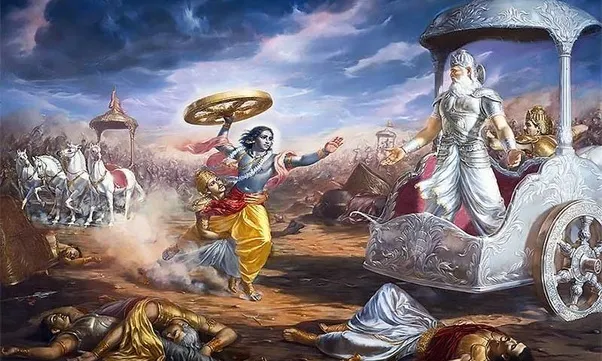
Krishna rushing with Sudarshan Chakra toward Bhishma on battlefield image
⁠Festivals in Sanathan Dharam and Hinduism, Swami Sivananda

The Gospel of the Bhagavadgita–Resolution of the Fourfold Conflict

The Gospel of the Bhagavadgita–Resolution of the Fourfold Conflict By SRI SWAMI KRISHNANANDA I shall endeavour to touch upon a few salient points in the gospel of the Bhagavadgita, which will be of some meaning and utility in our day-to-day life. To apply a knowledge to life is the most difficult aspect of knowledge. We have always been accustomed to bifurcate life from knowledge, and vice versa, so that a learned man is not necessarily a happy man, nor even a rich man. The reason is that learning or knowledge has been isolated from the facts of life. This is one of the conflicts that we observe in life. As they say humorously, Sarasvati and Lakshmi never live in the same house, meaning thereby that learning and wealth do not go together. There are many such conflicts, all which are supposed to be resolved, in one way or the other, by means of the great teachings known as the Bhagavadgita. Bhagavan Sri Krishna, when He spoke the Bhagavadgita, intended to resolve a conflict. What is a conflict, may be a question that raises itself before our minds. There are, actually, four types of conflict, within which every other type, kind, or variation of disharmony can be subsumed. The occasion for the delivery of this Gospel was the battle of Mahabharata, which means a field of conflict with other people. This is what is known as a battle. The first problem one encounters in life is conflict with other people. ‘You do not like me,’ and ‘I do not like you.’ When we wake up in the morning and look at the world, we are faced with a conflict with other people. This is a difficulty which saps the vitality of many in the world. We have to see faces with whom we cannot reconcile ourselves. It may be a boss, a subordinate or an equal,–it makes no difference. When we cannot reconcile ourselves with another face, there is a conflict; and we see nothing but faces when we get up in the morning and look at the world outside. The battle of Mahabharata is a large Epic, describing this primary conflict of human nature,–conflict of one person with another person, in which can be included conflicts of groups, communities and nations, because all these are nothing but personalities and individualities associating and clashing in certain manners and patterns. What you call a society, or a family, or a nation or a community is nothing but human beings grouping themselves into patterns. So, conflict with other people includes every kind of conflict in the world. Thus, we have the Mahabharata Epic, in the middle of which the Bhagavadgita occurs. Where is the Bhagavadgita located? In the middle of the battle of the Mahabharata. What is this Epic battle? A conflict between the Pandavas and the Kauravas, brothers in a unitary family. It was a family feud. We may say it was a conflict between Yudhishthira and Duryodhana, which amounts to the same essential situation. So, again, to reiterate, the conflict which Bhagavan Sri Krishna tries to resolve has as its background the conflict enumerated in the long Epic poem of the Mahabharata. What is this background? The conflict of personalities! That was the occasion for the war. Huge armies were arrayed on both sides. Thousands were about to fly at the throats of each other. That was the occasion for the giving of this Gospel. The Gospel was not given in a school, a college, or a university, a temple, a church, or an auditorium,–nothing of the kind. This most interesting and indispensable Gospel which you try to enshrine in your heart, in your memory, was given on that momentous occasion of a war that was about to break between large contending armies. Nobody would like to seek wisdom on that tense occasion. That is not the time to speak at all; it is the time to act and do something immediately. Who would speak philosophy when there are large numbers of men emotionally worked up into such a heightened pitch of anxiety and wrath that they will hear no words spoken by anyone, and are bent upon a severe type of action! On that occasion, who would speak a sublime Gospel or a scripture! But that was the occasion, and there could not be a better occasion. Now, the very purpose of this war was primarily to resolve a social conflict. Well; it was agreed that the war was indispensable. The purpose behind the war was not to destroy people but to resolve a social conflict or a political tension. It was impossible to mend people, and so they thought it was necessary to end people. And they concluded that by the ending of the people the conflict would automatically vanish. If you cannot untie a knot, you cut the knot. And for memory’s sake I may mention a few names who were involved in this conflict,–the leaders, the generalissimos of the war. There were powerful veterans on the side of the Kauravas, almost invincible in battle, three of whom, the most prominent ones; were Bhishma, Drona and Karna. Nobody could face them with immunity to their lives. On the other side, that of the Pandavas, we have leaders like Bhima and Arjuna, the brothers of king Yudhishthira, the eldest of the Pandavas. While the most powerful from the Kauravas side was Bhishma, the most invincible on the side of the Pandavas was Arjuna. They knew every tactics of war and people could shudder in their hearts by merely hearing the names of these people. Now, on mutual acceptance, it was agreed that the war had to be waged to end a social conflict. But, when the hour of crisis came, when the iron was hot and it had to be hit, when that moment came, what happened? A most unexpected conflict arose within the mind of Arjuna. It was not a conflict with other people, but a conflict within one’s own self.

The Gospel of the Bhagavadgita–Resolution of the Fourfold Conflict Read Post »

Swami shivanand
Divine Teachings & Message of Swami Sivananda, Swami Sivananda

Concentration

Concentration INTRODUCTION If you focus the rays of the sun through a lens, they can burn cotton or a piece of paper; but, the scattered rays cannot do this act. If you want to talk to a man at a distance, you make a funnel of your hand and speak. The sound-waves are collected at one point and then directed towards the man. He can hear your speech very clearly. The water is converted into steam and the steam is concentrated at a point. The railway engine moves. All these are instances of concentrated waves. Even so, if you collect the dissipated rays of the mind and focus them at a point, you will have wonderful concentration. The concentrated mind will serve as a potent searchlight to find out the treasures of the soul and attain the supreme wealth of Atman (the Self), eternal bliss, immortality and perennial joy. Real Raja Yoga starts from concentration. Concentration merges in meditation. Concentration is a portion of meditation. Meditation follows concentration. Samadhi (superconscious state) follows mediation. The Jivanmukti (liberated being) state follows the attainment of Nirvikalpa Samadhi which is free from all thoughts of duality. Jivanmukti leads to emancipation from the wheel of birth and death. Therefore, concentration is the first and foremost thing a Sadhaka or aspirant should acquire in the spiritual path. You are born to concentrate the mind on God after collecting the mental rays that are dissipated on various objects. That is your important duty. You forget the duty on account of Moha (infatuation) for family, children, money, power, position, respect, name and fame. Concentration of the mind on God after purification can give you real happiness and knowledge. You are born for this purpose only. You are carried away to external objects through attachment and infatuated love. WHAT IS CONCENTRATION? Once a Sanskrit scholar approached Kabir and asked him, “O Kabir, what are you doing now?”. Kabir replied, “O Pundit, I am detaching the mind from worldly objects and attaching it to the lotus-feet of the Lord”. This is concentration. Concentration or Dharana is centering the mind on one single thought. Vedantins try to fix the mind on the Atman. This is their Dharana. Hatha Yogins and Raja Yogins concentrate their mind on the six Chakras (energy centres). Bhaktas concentrate on their Ishta Devata (tutelary diety). Concentration is a great necessity for all aspirants. During concentration, the various rays of the mind are collected and focussed on the object of concentration. There will be no tossing of the mind. One idea occupies the mind. The whole energy of the mind is concentrated on that one idea. The senses become still. They do not function. When there is deep concentration, there is no consciousness of the body and surroundings. When you study a book with profound interest, you do not hear if a man shouts and calls you by your name. You do not see a person when he stands in front of you. You do not smell the sweet fragrance of flowers that are placed on the table by your side. This is concentration or one-pointedness of mind. The mind is fixed firmly on one thing. You must have such a deep concentration when you think of God or the Atman. Everybody possesses some ability to concentrate. Everybody does concentrate to a certain extent when he reads a book, when he writes a letter, when he plays tennis, and in fact, when he does any kind of work. But, for spiritual purposes, concentration should be developed to an infinite degree. There is great concentration when you play cards or chess, but the mind is not filled with pure and divine thoughts. The mental contents are of an undesirable nature. You can hardly experience the divine thrill, ecstasy, and elevation when the mind is filled with impure thoughts. Every object has its own mental associations. You will have to fill up the mind with sublime, spiritual thoughts. Then only the mind will be expurgated of all worldly thoughts. The picture of Lord Jesus or Buddha or Lord Krishna is associated with sublime, soul-stirring ideas; chess and cards are associated with ideas of gambling, cheating and so forth. OBJECTS OF CONCENTRATION Sit on any comfortable pose. Place a picture of your Ishta Devata in front of you. Look at the picture with a steady gaze. Then close your eyes and visualise the picture in the centre of your heart or in the space between the eyebrows. When the picture fades out in your mental vision, open the eyes and gaze at the picture again. Close your eyes after a few seconds and repeat the process. It is easy to concentrate the mind on external objects. The mind has a natural tendency to go outwards. In the beginning stage of practice, you can concentrate on a black dot. on the wall, a candle flame, a bright star, the moon, or any other object that is pleasing to the mind. The mind should be trained to concentrate on gross objects in the beginning; and later on, you can successfully concentrate on subtle objects and abstract ideas. There is no concentration without something to rest the mind upon. Concentrate on anything that appeals to you as good or anything which the mind likes best. It is very difficult to fix the mind, in the beginning, on any object which the mind dislikes. Practise various sorts of concentration. This will train or discipline your mind wonderfully. Now concentrate on the Himalayas, a very great object. Then concentrate on a mustard or a pin-point. Now concentrate on a distant object. Then concentrate on a near object. Now concentrate on a colour, sound, touch, smell, or taste. Then concentrate on the ‘tik-tik’ of a watch. Now concentrate on the virtue ‘mercy’. Then concentrate on the virtue ‘patience’. Now concentrate on the Sloka, “Jyotishamai Tat Jyotih”. Then concentrate on “Satyam Jnanam Anantam”. Now concentrate on the image of Lord Siva. Then concentrate on the “Aham Brahmasmi” Mahavakya. AN UPHILL TASK FOR THE BEGINNER For

Concentration Read Post »

Lord Krishna giving divine guidance to Arjuna on battlefield image
⁠Festivals in Sanathan Dharam and Hinduism, Swami Sivananda

The Yoga of the Bhagavad Gita

The Yoga of the Bhagavad Gita By Sri Swami Chidananda Today is the most auspicious and sacred day of Sri Gita Jayanti, when one of the most glorious scriptures of the world, which has been blessing humanity by its powerful Upadesha ever since it was expounded to Arjuna on the battle-field of Kurukshetra by the Lord. It is the advent of this glorious scripture that we are trying to commemorate today by the Jayanti celebration when we express our thoughts,–reverential and worshipful thoughts–in connection with this scripture as a gesture of our adoration of it, as also a token of our heartfelt gratitude for the blessing that it has been and shall ever continue to be to humanity. Gita has been said to be the very essence of the Upanishads upon which our culture is based. Even now the basis of Bharatian culture is recognised to be the Upanishads. The Upanishads about which one of the greatest of German savants said: “The Upanishads have been the solace of my life and the Upanishads shall surely be the solace at the time of my departure from life.” Gita is said to be the very cream and the essence of the lofty wisdom of these Upanishads. So in the Gita we have got the wisdom of the Upanishads in a nutshell. We have access to the best, the most precious gems that are to be found in the mine that the Upanishads are. Gita the Mother Therefore, it was that the father of our nation the late Mahatma Gandhiji of revered memory said that he regarded the Gita as his own mother, by which he meant to say that his very life had been sustained by the Bhagavad Gita, that his thoughts, his feelings, his philosophy, had been nourished by the soul-elevating and strengthening Upadesha of Srimad Bhagavad Gita. As a representative of our nation Mahatmaji expressed by this utterance what Gita ought to be to every Indian. He desired thereby that every Indian, every son of Bharatavarsha ought to make Gita his own, to enshrine the knowledge and the philosophy of the Gita in the chambers of his heart, to illumine his life by the bright flame of Gita-Jnana. It is this pride of Bharatian culture, this gem in the Bharatian culture, Mother Gita, that has ever been the soul of Indian philosophy. It is precisely for this reason that, even though it is just a small book of 700 verses, a mere exposition forming part of a greater epic poem, the Mahabharata, yet it has been given the unique place of one among our Prasthanatraya, and no great saint or scholar or Acharya worth the name has failed to comment upon it. Gita has received equal reverence at the hands of every one of the leaders of religion. All great Acharyas, all great saints, all great men of realisation and scholars have ever taken the Gita to be an authority and have also drawn from it and built up their philosophy. What is more: in the West, many a great and deep thinker has not at all hesitated to accept and avow frankly his debt to this great supreme scripture of scriptures. Emerson, for instance, was only too ready to accept that Gita had been a great factor in moulding his thought and his attitude towards life. Such is the glory of this great star in the firmament of our Hindu scriptures. The Scripture for All A scripture can be approached in several aspects. Specially such a universal scripture as the Gita can be and has been approached by people from numberless angles, each trying to seek in the Gita light for his particular view of life, for his particular philosophy of life. People of absolutely divergent temperaments, people of widely varying conceptions and different conclusions on similar questions, have all sought to find in the Gita support for their peculiar views. A Karma Yogin approaches the Gita and in it finds a support for the cause of Karma Yoga. A devout Bhakta approaches the Gita and his joy is unbounded that the Gita gives him wonderful support for his Sadhana. A Jnani approaches the Gita and is elated that the Gita fully supports his view. And a man of meditation–to him, too, Gita gives ample support and proof. For a man of active temperament, for a man politically inclined, a man who wants to move actively and effectively in this Vyavaharic world, in this world of externalised life, he, too, finds plenty in the Gita to enthuse him and to enlighten him and to guide him. The student of mere sociology who wants to present to the people his own views on the ideal society, has got in the Gita valuable support and guidance. Like this, we can multiply any number of instances. But then a scripture can be approached as a book of knowledge that enlightens us about numerous subjects and yet it can also be approached as a practical guide to see if there is anything in the scripture which will be of practical use to the person, which will be of substantial utility, by which I mean that a man approaches a scripture for purposes of actually solving some immediate problems that confront him, for actually helping him out of a practical difficulty in which he finds himself in life. Gita fulfils both these ends. Gita not only gives us in a nutshell a brilliant exposition of the philosophy of the Upanishads, but Gita also gives us in a very helpful, very practical and very decisive manner, valuable hints for the actual Sadhana, the actual practices through which we can make these truths of the Upanishads, living experiences of our own life. A Practical Guide A book may give all about the sugar industry, all about the various aspects of the growing of cane, the fertilisation, the care of the cane crop, the necessary manure and the method of transporting the cane to the factory–all

The Yoga of the Bhagavad Gita Read Post »

swami sivananda Seated spiritual guru with garland and disciple standing beside image
Divine Teachings & Message of Swami Sivananda, Swami Sivananda

Brahmacharya (Celibacy)

Brahmacharya (Celibacy) INTRODUCTION Brahmacharya is a divine word. It is the sum and substance of Yoga. Brahmacharya is the Achara or conduct by which you attain or reach Brahman (God). It is life in the Absolute. It is movement towards God or the Atman (Self). Brahmacharya is absolute freedom from sexual thoughts and desires. It is the vow of celibacy. It is control of all the senses in thought, word and deed. Brahmacharya is not mere bachelorhood. There should be strict abstinence not merely from sexual intercourse but also from auto-erotic manifestations, from masturbation, from homosexual acts and from all perverse sexual practices. It must further involve a permanent abstention from indulgence in erotic imagination and voluptuous reverie. In a narrow sense, Brahmacharya is celibacy. In a broad sense, it is absolute control of all the senses. The door of Nirvana (liberation) or perfection is complete Brahmacharya. Celibacy is to a Yogi what electricity is to an electric bulb. Without celibacy no spiritual progress is possible. It is a potent weapon and shield to wage war against the internal evil forces of lust, anger and greed. It serves as a gateway for the bliss beyond, and opens the door of liberation. It contributes perennial joy and uninterrupted bliss. It is the only key to open the Sushumna (the chief among astral tubes in the human body running inside the spinal column) and awaken the Kundalini (the primordial cosmic energy located in the individual). There cannot be any language without words. You cannot draw a picture without a canvas or a wall. You cannot write anything without paper. Even so, you cannot have health and spiritual life without celibacy. An established celibate will not feel any difference in touching the opposite sex, a piece of paper, a block of wood, or a piece of stone. A true celibate only can cultivate Bhakti (devotion). A true celibate only can practice Yoga. A true celibate only can acquire jnana (wisdom). Brahmacharya is meant both for men and women. Bhishma, Hanuman, Lakshmana, Jesus, Mirabai, Sulabha and Gargi were all celibates. THE VITAL ENERGY One of the students of Dhanvantari approached his teacher after finishing his full course of Ayurveda (the ancient Indian science of medicine) and asked: “O Bhagavan, kindly let me know the secret of health now.” Dhanvantari replied: “This seminal energy is verily the Atman. The secret of health lies in preservation of this vital force. He who wastes this vital and precious energy cannot have physical, mental, moral and spiritual development.” Veerya (seminal energy) is God in motion. Veerya is dynamic will. Veerya is soul-force. Veerya is the essence of life, thought, intelligence and consciousness. Always remember this. The vital energy, Veerya which supports your life, which is the Prana (life-force) of Pranas, which shines in your sparkling eyes, which beams in your shining cheeks, is a great treasure to you. It is the quintessence of blood. From food, chyle is manufactured; out of chyle comes blood; out of blood comes flesh; out of flesh comes fat; out of fat comes marrow; out of marrow comes semen. Semen is the last essence. It is the essence of essences. Just as sugar pervades sugar-cane and butter pervades milk, so also semen pervades the whole body. It exists in a subtle form throughout the body. It is withdrawn and elaborated in a gross form in the sexual organs under the influence of the sexual will and sexual excitement. SEXUAL EXCITEMENT AND ITS EVIL CONSEQUENCES When a man is excited by passion, the Prana is set in motion. The vital air or Prana moves the internal sap or semen. The semen is put into motion. It falls downwards, just as the clouds burst into the rain water; just as the fruits, flowers, and leaves of the tree drop down by the force of the blowing winds. Note carefully the evil after-effects, once the Veerya is lost. Prana gets unsteady. It gets agitated.. The body and mind refuse to work energetically. There is physical and mental lethargy. Exhaustion and weakness are experienced. You have to take recourse to milk , fruits and other articles to make good the loss of energy. Remember, these articles can never, never repair loss. Bad memory, premature old age, impotence, various sorts of eye diseases and nervous diseases are attributable to the heavy loss of this vital fluid. Those who have lost much of their semen become easily irritated. They lose their balance of mind quickly. Little things upset them. Those who have not observed the vow of celibacy become slaves of anger, laziness and fear. If you do not have your senses under control, you venture to do foolish actions which even children will not dare to do. Man, with his boasted intellect, has to learn lessons from birds and animals. Even animals have more self-control than men. It is only the so-called man who has degraded himself much by indulgence. At the heat of sexual excitement, he repeats the same ignoble act again and again. He has not a bit of self-control. He is an absolute slave to passion. He is a puppet in the hands of passion. Like rabbits he procreates and brings forth countless children to swell up the number of beggars in the world. Lions, elephants, bulls and other powerful animals have better self-control than men. Lions cohabit only once in a year. After conception, the female animals will never allow the male animal to approach them till the young ones are weaned and they themselves become healthy and strong. Man only violates the laws of nature and consequently suffers from innumerable diseases. He has degenerated to a level far lower than that of animals in this respect. Indulgence in the sexual act is exhausting to the female system and a drain upon their vitality as in the case of man. The nervous strain it imposes is very great indeed. The female system, being more delicate and high-strung, is often more affected than that of the

Brahmacharya (Celibacy) Read Post »

Bhagavad Gita As It Is book cover with Krishna and Arjuna image
⁠Festivals in Sanathan Dharam and Hinduism, Swami Sivananda

Message of the Gita

Message of the Gita By Sri Swami Sivananda My amiable friends! Many Gita Jayantis have come and gone and yet the darkness of your heart has not disappeared. Become a practical man. Live in the spirit of the teachings of the Gita daily. Aspire fervently. Lead a pure life. Watch the evil Vrittis of the mind carefully and nip them in the bud. Introspect and remove your defects. Cultivate good and sublime thoughts. Do daily virtuous actions. Serve the society with a disinterested spirit. Constantly remember those Slokas of the Gita which will help you daily to lead a virtuous and divine life. Repeat them daily. Stick to your Dharma and truthfulness. Do selfless service. Surrender yourself to the Lord. Have equal vision and balanced mind in success and failure, honour and dishonour, heat and cold, pleasure and pain, happiness and sorrow. Give the mind to the Lord and hands to the service of humanity. Be established in the vow of Brahmacharya. Give up selfishness, meanness, attachment and egoism. You will free yourself from the wheel of births and deaths, from the bonds of Karma and attain Supreme peace, eternal bliss and immortality. This is the Message of the Gita. You may know the whole Gita by heart. You may deliver lectures on the Gita for hours together and yet you may not have a ray of the wisdom of the Gita. What is wanted is actual living a life with mental non-attachment following the teachings of the Gita. Gita gives two Mantras for constant repetition. They are “OM” in eighth chapter and “OM TAT SAT” in the seventeenth chapter. Live in OM or OM TAT SAT, the symbol of Para Brahman or Para Brahman Itself. Practise the three vows given in the sixteenth chapter. Develop the virtues that are enumerated in the thirteenth and the sixteenth chapters which are aids for the attainment of the Knowledge of the Self. You may fail several times and fall down but again stand up as a hero and march forward fearlessly in the spiritual path and reach the goal of life. Srimad Bhagavad Gita is the cream of the Vedas. It is the quintessence of the Upanishads. It is an unique book for all times. The teachings of the Gita are universal and sublime. It has a message for the solace, peace, freedom and perfection of all human beings. Dive deep in the ocean of the Gita, bring out the most precious pearls of Knowledge and attain Immortality. May the Lord grant you strength to stick to your vows, resolves, truth and Dharma. May you ever abide in Lord Krishna and His precious teachings. May you all become like Arjuna. May the life of Arjuna inspire you all with noble instincts, noble ideals. Glory to Lord Krishna! Glory to the Gita! Glory to Arjuna! Glory to those who follow the valuable teachings of the Gita.

Message of the Gita Read Post »

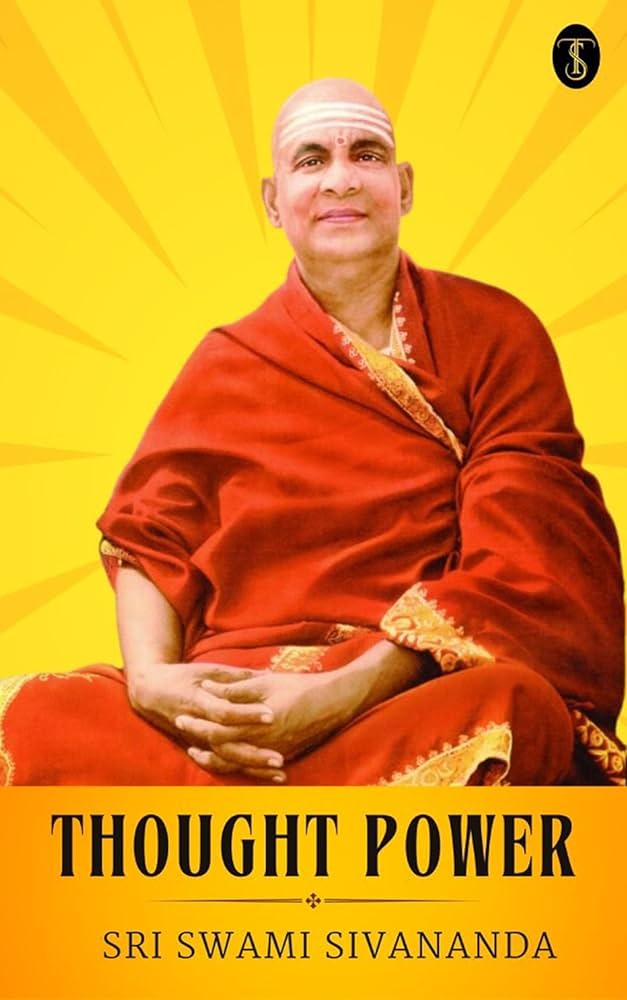
Swami Sivananda in red robes with “Thought Power” text image
Divine Teachings & Message of Swami Sivananda, Swami Sivananda

Satyam (Truth)

Satyam (Truth) INTRODUCTION Truth is the seat of God. Truth is God. Truth alone triumphs. Truth is the basic law of life. Truth is the means and the goal ultimate. Truth is the law of freedom, falsehood the law of slavery and death. Truth is justice, fair play, adherence to the fundamental laws of ethics. Purity and truth are the twin factors that unfold and awaken the divinity that lies dormant within you and lead you to perfection. Truthfulness is the first pillar in the Temple of God-realization. Truth is the gateway to the Kingdom of God. Truth is like a ladder. It leads you to the Kingdom of Immortal Bliss. THE ALL-INCLUSIVE VIRTUE Speaking truth is the most important qualification of a Yogin. Truth is the queen of virtues. Truth is the supreme virtue. Truth constitutes the essence of the Vedas. Control over passions constitutes the essence of truth. Self-denial or refraining from worldly enjoyments forms the essence of self-control. These attributes are always present in a virtuous man. Truth is righteousness. Righteousness is light, and light is bliss. Ahimsa, Brahmacharya, purity, justice, harmony, forgiveness, peace are forms of truth. Impartiality, self-control, modesty, endurance, goodness, renunciation, meditation, dignity, fortitude, compassion, and abstention from injury are the various forms of truth. All the above virtues, though seemingly different, have but one and the same form, namely, truth. All these hold up truth and strengthen it. When the path of truth is trodden, everything else also is done. When the root is watered, all the branches are automatically watered. THE SUPREME COMMANDMENT Be truthful. All righteousness is contained in this one commandment. Whatever you do, be true to yourself and to the world. Hide not your thoughts. Be frank. Be sincere. Be candid. Be straightforward. Be courageous to express your views. Be faithful to your trust. Deceive not the man who relies upon you. Keep up your promise even at the cost of your life. Your life may go, but not the given word. Do not hastily give your assent to anybody, to anything. Think deeply. Cogitate. Reflect. Say, “I shall think over the matter and talk to you later on”. Thus you will not be entangled. Do not make promises, but say, “I shall try. I shall think over the matter”. You are saved. You will not be caught in the whirlpool of troubles, repentance, and sorrow. To tell a lie is a great sin. He who utters falsehood loses the faith of other persons. People will not believe him even if he speaks the truth. The habit of telling lies becomes deep-rooted by repetition of lies. Man tells several lies to cover up one lie. A lie concealed by another lie leads to more lies. A sin concealed by another sin leads to more sins. A liar is a coward. Uttering falsehood is a certain mark of cowardice. Speak the truth. You will become courageous. TRUTH IS FEARLESS AND STRONG Truth is complete in itself. Truth has a strong foundation in itself. It is bold, it has no fears. It has no limit of space or time. It is a fearless, free bird in the sky. It does not care for status. It is wealth in itself. Truth stands even when there is no public support. Truth can be compared to a road of pasture, while falsehood can be compared to a bush of thorns. In a man who indulges in false thoughts, there is a lurking fear at every moment, an uneasiness, a fear of the self, a want of confidence and a feeling that something wrong may happen. Truth, on the other hand, is the path of righteousness which certainly leads to success in the long run. It is a straight road with no doubtful cross-roads. In the day-to-day world, it seems as though it is impracticable to strictly follow the path of truth, but if it is practiced as your ideal and goal in life, you have your way. All the stumbling blocks on your road to Truth will melt away as you proceed along the direct road. CERTAIN FALLACIES There are certain fallacies that arise in following the straight path of truth. It is absolutely no harm for a mother who fondly nurses the child in just diverting the attention of the child by saying that the small piece of sweetmeat has been carried away by the crow a short while back, and when she shows to be extremely sorry for it and brings round the ideas of the child by saying, “Papa, do not mind it, I shall bring a bigger cake for you in the evening”. It is absolutely no untruth if you do not interfere with others, wound their feelings, harm others or spoil others. If you refuse a small loan, certainly with something for you to fall back upon, if you refuse to lend your pen or any object that you would like not to lend, these cannot be counted as untruths. VARYING CONCEPTIONS OF TRUTH A worldly man, a moralist, and a spiritual man have different conceptions of truth. A moralist cares for the result of truth. If a man can save the lives of many innocent persons by telling a lie, it is truth for a moralist, because an untruth has brought greatest good. If the uttering of a truth brings greater harm to many persons, it is an untruth according to a moralist. According to a spiritual man, Brahman is truth; this world is unreal. BRAHMAN: THE ONLY TRUTH The world is untruth and the Absolute is Truth. The world is represented by sex and ego; the Absolute is represented by the noumenal, gnostic Being. Truth is not expressed even by Existence-Consciousness-Joy! It is only the nearest relative of Truth. Truth is even greater, grander, mightier, truer! Truth is; untruth is not. Hence, it is not absolutely correct even to say that Truth is one, for Truth is Existence itself, and is neither one, nor not-one. Truth is undivided. Truth is

Satyam (Truth) Read Post »