






Hari Om

Menu

February 21, 2026

swami shivananda ji devotional 1
Swami Sivananda, THE Glory of Saints - The Self Realized Masters of Bharat - The Jivanmuktas

Glory to Gurudev, Our Ideal

Glory to Gurudev, Our Ideal Speech on the Thirty-Ninth Birthday Celebrations I am happy that this Birthday was celebrated. At first I told Sri Swamiji that I might be excused for this. But, on account of these celebrations we have just now heard the essence of all scriptures, the core of the teachings of all saints of all climes and ages from his lips. We have heard the Upanishads in simple language. We have heard the Quran, the Bible, the Gita, the Puranas – all the scriptures given in simple, forceful, thrilling, fiery, inspiring, direct living words from Gurudev. For this one thing, it is worthwhile that the Birthday was celebrated. I can’t say how happy I am. What countless merits of previous births have given us this wonderful opportunity of sitting in this sacred place and hearing this fire coming out of this living blaze of infinite spirituality, infinite divinity that Gurudev embodies. What you have heard just now is something that cannot be described. He has simply poured out the divine light into us. Every word is a flaming fire of living spirituality. And, as Gurudev has said, we will get up tomorrow morning the same old people. To ensure against this, God has sent Swami Venkatesananda. Every word is now recorded and it will be printed. I pray to each one of you to treasure this copy of the printed report of Swamiji’s speech. Read it daily, the first thing in the morning and the last thing before going to be bed. This one talk of his is sufficient for our whole life, to give us the ideal pattern for our whole life, to transform us from jivas to infinite satchidananda atman, to elevate us to the Highest Divinity. Soon after Swami Krishnanandaji’s Birthday celebrations, I had requested Sri Gurudev that in my case the birthday celebrations may be dropped. After some days he said “Whether you want it or not, I am going to celebrate it.” Then he gave me a wonderful prescription. This has been a test; and by Gurudev’s Grace I have passed. “Why do you worry?” he said, “Let them celebrate the birthday. Think it is someone else’s birthday. Feel: I am Akarta, Abhokta. Be a witness.” This spiritual pill he gave me. That is the spirit I have maintained the whole morning. But, just now I am all the more convinced that it is somebody’s birthday. You have all given such a wonderful description of this person called Chidananda that I think some day I would like to meet him. You have all praised the spirit of selfless service. When we have got the example of Gurudev, how can we not do such service? Among Swamiji’s papers, I got a small diary which he had maintained in Swarga Ashram; it is printed in the book “Light Fountain.” In it you find items like “Serve Bhangis, Serve rogues. Go to the …. Kshettar where you are insulted.” He made all this part of his discipline. When this dazzling light is before us, is it possible that we can do anything else but follow some of it? You may give me credit for one thing: I am trying to obey Swamiji. But that is my duty as a disciple. All goodness is in God. All glory be to God. We will only glorify Him by trying to manifest goodness in our nature, in our thoughts, words, feelings, sentiments. If we look at Swamiji, we can understand to what great perfection and magnificent extent he is really glorifying God in and through his life. I am humbly trying to obey what Swamiji says. You are all admiring a statue. The glory belongs to the sculptor! It is the wisdom and the genius of the sculptor that is visible in the statue. You forget all about the sculptor and go on saying all sorts of things about the statue! The sculptor is there in Swami Sivanandaji Maharaj. The divine engineer of Swami Chidananda is Swami Sivananda. All glorification is due to those lotus-feet. Therefore, let us always enshrine in the temple of our hearts the ideal that is Sri Gurudev, a perfect example of living divinity that we have before us. Let us meditate upon him. Dhyanamulam guror murtihPujamulam guroh padamMantramulam guror vakyamMokshamulam gurorkripa Whatever he says should be our gospel. Let us make our entire life a living, practical and dynamic worship of this divine idol before us in the form of Sri Gurudev, so that we shall be able to fulfil the purpose of our existence, viz. the realisation of the inner nature of Sri Gurudev in this very life. If we, indescribably lucky disciples at the feet of this divinity, are fortunate to accomplish that, our lives will be doubly blessed. All praise, all glory to God. All praise, all glory to Gurudev Bhagawan, between whom and God there is no distinction. Bhagawan is nirakara, nirguna, avyakta; Gurudev is sakara, saguna, vyakta. Let us humbly offer our prayers at his divine feet that he may bless us that in this very life we may try to work up towards the fulfilment of our ideal that he is for us all.

Glory to Gurudev, Our Ideal Read Post »

images 2026 02 21T184323.236
Swami Sivananda, The Divnity in Religions

Essence Of Christianity

Essence Of Christianity By Sri Swami Chidananda To be rooted in the Divine, to be guided by the Divine, to recognise the reality of the Divine and the Divine alone, and to give secondary place to all that is other than the Divine is the sadhana,that is the great abhyasa. It is for this that strength has to be prayed for: “Deliver us from evil. Lead us not into temptation of succumbing to the influences, pulls and pressures of that which is other than the Divine, that which is other than your ideal, that which is other than the direction of your goal.” In the midst of the many pulls and many pressures from other directions, to be what Jesus the Christ wished you to be, what Gurudev Swami Sivanandaji has clearly asked us to be, is the acid test of the authenticity and genuineness of our spirituality. The relevance of the teachings of Jesus is not merely the church nor merely the words of the Bible. The relevance of the teachings of Jesus is the fact that He is an ever-present Presence, that He is an eternal witness, a companion who walks by us, who lives with us and who notes every movement, every thought, within and without us. It is this presence of His divine personality that has outlived His own contemporary times and is powerfully present. Jesus the Christ is not dead; great ones who have merged in Brahman do not die. They step out of the body and continue to prevail, pervading all space as a Presence that is relevant to everyone who recognises kinship with them. The guru is eternal. The divine teachers are eternal. The relevance of Jesus and the Christianity that He taught is His divine presence here and now, and always unto worlds without end. One who is a believer, one who makes his life, words and actions a response to the call “Follow Me,” keep as one’s touchstone or criterion for action: “If Jesus was by my side, what would I do in this particular situation? How would He have me behave at this moment, in this situation?” Your life should be an answer to this question. One should mould one’s character and conduct, life and actions on the basis of this criterion. That is the essence of Christianity. Ponder this truth on the day of Christmas Eve. May Jesus be a living factor in our lives. Then indeed Christmas will become a turning point into a new life of light and wisdom.

Essence Of Christianity Read Post »

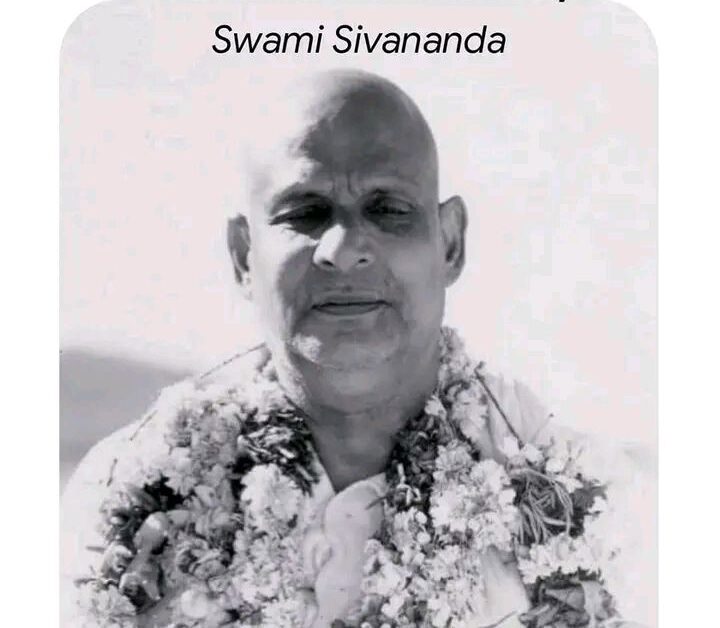
Swami Sivananda garlanded black and white portrait image
Swami Sivananda, THE Glory of Saints - The Self Realized Masters of Bharat - The Jivanmuktas

Divine Life Society

Divine Life Society When the Master left his job in Malaya and sailed for India, it was to seek God and find Him. When he gave away the last cent in Poona and began to wander as a mendicant, it was to surrender to God and be saved by Him. When he took Sannyas and practised intense austerities, it was to realise God and rest in Him. At no time during his Sadhana period did the Master even dream of starting an Ashram or founding a society. But somewhere around the year 1930, he was gripped by a burning desire to serve the world. Driven by this desire, he came out of his seclusion in Swarg Ashram and entered the cities, mingling with the masses. There was a sparkle in his eyes, a fire in his speech. The Master, who cast a spell on the vast audiences at Sitapur and Lakhimpur, the Sankirtan Samrat, who sang and danced his way into the hearts of tens of thousands at Rawalpindi and Lahore and threw them into high ecstasy, left no one in doubt about him being a realised soul. When and where he attained illumination no one knew. It was a secret known only to him and to God. Even after his God-realisation, the Master did not want to build an Ashram of his own. To spiritual aspirants who sought his guidance at that time, he said, “I am only a common Sadhu. I may not be able to help you much. Further, I do not make disciples. I can be your sincere friend till the end of my life. I do not like to keep aspirants by my side for a long time. I give lessons for a couple of months and ask my students to meditate in some solitary place in Kashmir or Uttarkashi.” The Master did not desire to get entangled, either in training seekers of God, or in tours for spiritual propagation. No doubt he was eager to serve humanity, but his method then was the “lightning method”. He would take some places by storm, do intense propagation for a few days and rush back to Rishikesh. This became his routine. In Swarg Ashram itself the Master saw a field for service awaiting him. It was not physical privation alone which afflicted the Swarg Ashram Sadhu community. Many of its members had left their hearth and home in a fit of dispassion, and now lived in a disorderly manner in the absence of someone to give them proper spiritual guidance. Many tortured the body in the name of austerity. Some took intoxicating drinks, fondly hoping to be thrown into Samadhi. Others just whiled away their time playing with pups and monkeys. The Master felt that once the physical and spiritual needs of these Sadhus were taken care of and their confidence won, their energies could be channelised for their own upliftment and for public good. Prompted by these thoughts, he founded the Swarg Ashram Sadhu Sangh on August 24, 1933, to promote the spiritual welfare of the Sadhus, and to disseminate spiritual knowledge widely. The Master now felt that as a first step towards reorganising the Sadhus into a community of useful citizens, he should train a batch of them on proper lines. The desire to serve the world thus forced him to accept disciples. But as their number increased, the Swarg Ashram management found it difficult to maintain them all. For the Master it now became necessary to choose between Swarg Ashram and training of his disciples. He opted for the latter. On January 17, 1934, the Master moved to the right bank of the Ganges with four disciples. Before leaving Swarg Ashram he handed the management of Satya Sevashram Dispensary to one Swami Jnanananda, who also had been a doctor in his pre-Sannyas days. From the day that he thus set foot on the right bank of the Ganges as an independent Sannyasin with disciples of his own, the Master’s life of service took on an unparalleled dynamism. He began to act in different directions with the air of a man who knew his mission in life. Within weeks he succeeded in securing from the Maharaja of Tehri Garhwal some land for constructing an Ashram. In the meantime, the Master and his disciples found on the Ganges bank itself, what looked like an abandoned cowshed. To them it was more than a palace, for it had four rooms. The Master occupied one, another was set up as a dispensary, and the remaining two were occupied by the disciples. They called it “Ananda Kutir”, the “Abode of Bliss”. This was in March 1934. Soon they found more cowsheds, vacant but uninhabitably filthy with hay and cow-dung. They cleaned them up and occupied them. “It was all East Indian Company style!” quipped the Master years later. “We just got into those huts and they were ours!” In one room an old cowherd was living, but he, too, left after a year. Now earnest seekers after Truth, who had taken the Master as their Guru, and who visited Rishikesh regularly for his Darshan, volunteered to build some Kutirs on the land granted by the Tehri ruler. The first to do so was Hari Ganesh Ambekar, a retired teacher from Nagpur. Then followed another devotee, Srimati R. Lall, wife of a high railway official. Others also arrived and the Master was encouraged. His mood was reflected in a letter he wrote on August 4, 1934: “Brahmachari Siva Rao is welcome. Greetings to him. I shall serve him. This body is meant for the service of all aspirants. I will attend on him carefully and guide him for quick spiritual progress. You can send any number of sincere aspirants. Here I have created a big field. All can evolve.” Some years later, one of the Master’s disciples, Het Ram Aggarwal, a doctor returned from London, observed, “In September 1937, we met Swamiji at Ananda Kutir and dined with him

Divine Life Society Read Post »

christ consciousness
Swami Sivananda, The Divnity in Religions

Christ-Consciousness

Christ-Consciousness By SRI SWAMI KRISHNANANDA ‘Empty thyself and I shall fill thee.’ This is a wondrous single sentence message of Jesus the Christ. The Spirit is not a quantity and it is opposed to all quantitative measurements and conceptions. ‘Blessed are the poor in spirit,’ is another suggestive statement of the Christ. We cannot understand what is meant to be poor. For us, to be poor is not to have money, grains and gold, not to have a field, a house and friends, and not to be recognised in society. That would be poverty, economically. We cannot think of poverty except in an economic, material and social sense. Likewise, the idea of emptying oneself, as far as our minds can understand, is a physical displacement of content. Far from this is the idea of the Spirit, which is implied in the above single-sentence message. The Christ-Consciousness, and not the personality of Christ, is what is to be taken into account here in our understanding of this statement. There is a difference between Christ and Christ-Consciousness. This fact was repeatedly emphasised by the Christ himself in many of His declarations as recorded in the New Testament. He never regarded Himself as a person, nor did He ever indicate that a person was speaking when He spoke. He always referred to ‘Him that sent me’. He was very much fond of referring to ‘Him that sent me’. He said: ‘I am here to proclaim the Law of Him who sent me here. It is not my law that I am demonstrating or proclaiming to the world.’ The Spirit that spoke through Him was not a creature of time. There is a very humorous and most significant statement of His. “Before Abraham was, I am.” What does it mean? “Before Abraham was, I am”, is a contradiction, grammatically. It conveys no sense. It is a blunder of grammar to say, ‘I am before Abraham was.” But that is the real Christ that spoke. And it is from the standpoint of that reality of Christ, the ‘present’ was precedent even to the ‘past’. The present precedes the past. How could it be? And that is what is implied in saying, “Before Abraham was, I am.” The Spirit is a present and not an event or a content or a creature in the passage of time which is usually dissected into the past, present and future. The Spirit has no past, no present and no future. And this is the Christ-Consciousness. From the above point of view, what would it mean to empty oneself and what would it also mean to be filled by It? This is the great philosophy of the Spirit. We are heading towards real Yoga when we speak about these things. Christ was a great Yogin, Master Yogin, one of the greatest Yogins the world has produced, an Yogin in the true sense of the term. He was perpetually in unison with the Spirit, drew sustenance from the Spirit and operated upon the Law of the Spirit in the world or the realm of matter. Mathematics was not his way of thinking. Otherwise how could a single loaf become basketful, over-flowing, flooding and capable of feeding thousands and yet remaining after the feeding was over. It was not arithmetic that worked there, because one cannot become many and many are not the same as the one. Our consciousness has grown upon it several accretions or layers of material concrescence. The philosophical way of thinking is slightly different from the ordinary way of thinking of the man in the street. I do not mean that you should be philosophers. But you should know the techniques of philosophical thinking, i.e., the art of thinking in a peculiar manner which differs entirely from the give-and-take, economic or commercial attitude of thinking which man usually entertains in his mind. All our thinking is commercial. We cannot think in any other way. But the Spirit is non-commercial, because it is non-material. Anything that we speak of in regard to the Spirit has to be metempirical and we have to shed the prejudice of earthly ways of thinking even before we take the first step in the practice of the way of the Spirit. All prejudices have to be shed. This is one of the conditions of emptying yourself. It does not mean that we have to vomit what we have eaten. We have to vomit the prejudices of the, mind. Hard it is to overcome a prejudice. And prejudice has grown like a fungus or a mushroom on our very consciousness itself. We take for granted many things. Unproved hypotheses are taken for granted; and they become the byword of the street, of the home, of society, of administration and of even international understanding. Everything is based on certain prejudices. But the Spirit does not care for either the nation or the international set-up. It is something superior in its value and content. To be spiritual is hard even to think and conceive; more difficult it is to practise the way of the Spirit. Personal and logical attempts and the so-called scientific attitudes do not help us here. Science itself has become a dogma, though it parades its knowledge of non-dogmatism. Logic is based again on a dogma, of certain presupposed values which themselves cannot be proved by logic itself. There is no such thing as non-dogmatic thinking as far as the ordinary man is concerned. Everything is a dogma. You take for granted that the world is. Who told you that the world is? It is something taken for granted. It is a hypothesis. You cannot prove it by logic, except by saying that you see it. And that you see it, is not a great proof, for, you can see even phantasmagoria, if your head is reeling. That the world is, that the body is a content thereof and that the world is ruled by the quantitative measurements of arithmetic and commercial laws, are hypotheses on which we

Christ-Consciousness Read Post »

swami sivananda Guru seated with two women devotees image
Swami Sivananda, THE Glory of Saints - The Self Realized Masters of Bharat - The Jivanmuktas

Divine Life

Divine Life Divine Life movement is a plan of life and a goal that is common and acceptable to all upon earth, who wish to rise above sorrow and obtain lasting Bliss. More than to strive to reach heaven after this life, the followers of the Divine Life try to make conditions of Heaven prevail upon earth… The basis of this movement is adherence to the triple ideals of truth, non-violence and purity—the common fundamental tenets of all the religions throughout the world. —Swami Sivananda We have been trying to know about Gurudev’s life and his teachings, what he taught us. One of the very, very important, most significant insight that Holy Master Swami Sivanandaji brought into our life and into our understanding is the truth that the spiritual striving, the Yoga-Sadhana cannot be diverted from daily living. You cannot treat them as two things apart having no interconnection. They cannot be treated as watertight compartments. It is impossible that what is going on here has no relevance there. Because, whatever striving you make, whatever Yoga, whatever prayer, whatever meditation or worship you make is within the framework of your life you are living. You are engaged in your spiritual Sadhana within the framework of that life itself, it is the scope of your Sadhana. Your daily life is the receptacle or the ground on which your Sadhana is to rest. So these two are inextricably and inseparably bound up together and are closely interconnected; whatever you are doing in living your daily life has necessarily its effect on your inner life, on your Sadhana life. Also, whatever Sadhana you are doing in the inwardness of your own spiritual subjectivity has its impact on your daily living. If the inner spiritual life you are living within the spiritual interior of your own subjectivity, does not have a corresponding effect on your outer, normal, day-to-day living, then you better sit up, and take a second look at yourself. There is something fundamentally wrong. Something has been wrong somewhere. The Guru will not be able to tell you what. God may try to make you aware of it in direct and indirect ways, but he does not come and correct you. Therefore, it is up to you to take a look at yourself, with very great seriousness, earnestness, sincerity, impartiality and total honesty, and find out what is wrong. If I am entering into that vast silence, that vast Peace in my meditation why do I not have the same peace when I come out of meditation and relate myself to the life around me? What has gone wrong? Why do I not project that Peace outside? I am talking about only one quality of the great Reality. It implies various qualities, fundamental among them are Purity, Truth, Compassion, Sat-Chit-Ananda, Joy, Cheerfulness and Auspiciousness. That is an expanded blessed state of the mind when you are content to be alone, you do not require anything to be added onto you, you are full. When you are alone, company of your own self is more than enough for yourself. You have no desire, no inclination to come out of yourself and to get into some company or relationship. Our scriptures call it Swatmarama Avastha or the state of abiding and rejoicing in the Self. This is your permanent ground. This is your continuous, unbroken normal state. Let this grow and you will overcome all your problems. You cannot burn an incense stick and yet not have the room filled with its fragrance. If no fragrance is there, there must be something wrong with the incense stick. It is not a genuine one. Right from the ancient times down to the medieval age, the spiritual ministers, the great devotees and the mystics have given their Experiences and teachings in songs. In this great land, there have been innumerable such devotees and mystics. All of them have reiterated the same truth and spiritual values. If you have a genuine, authentic spiritual life, if you are a real Sadhaka, a devotee of the lord, your interior life must have its inevitable influence and impact on every thought, word and action in the living of your day-by-day life. And that is the test for you. If there is a dichotomy between your outer life and inner life something is wrong. Find out its reason. Reflect upon it: “If my interior life is genuine and honest, authentic and real, then why is the link, the relationship not there? I am really a wonderful child of God. I am with God inside. But the moment I come in contact with God’s other children, I become something else, something different. So either there is something wrong with my interior spirituality or with my external normal dealings with God’s world and God’s creatures. Why the two behaviours are not connected? Why there is a sort of a break?” Holy Master Gurudev Swami Sivanandaji regarded the living of your daily life as important, if not more important than the practice of your spiritual Sadhana. He gave, not without any reason, a very significantly true message of ‘Divine Life’. His institution is The Divine Life Society, itsmagazine is The Divine Life and he gave the name Divine Life to his message. He did not call it this Yoga or that Yoga or transcendental meditation or any other name. This name that he gave has very much relevance, very much connection and relationship with your life. Gurudev regarded the living of your life equally important as the practice of your spiritual Sadhana, your Yoga, Vedanta and meditation. Perhaps he regarded the former more important than your spiritual life. Because if your life, your daily living is proper, then alone your Sadhana will proceed unhampered and be progressive and it will yield fruits, and it will go on yielding fruits. You don’t have to wait till it culminates in spiritual Realisation. It would go on yielding fruits right now. It would go on giving flowers and yielding fruits step by

Divine Life Read Post »

images 2026 02 21T183833.260
Swami Sivananda, The Divnity in Religions

Behold Jesus In Thy Midst

Behold Jesus In Thy Midst By Sri Swami Sivananda Prostrations, prostrations; crores of times at the Holy Feet of Lord Jesus, the Saviour of mankind, the Eternal Beacon-light that shines to guide man along the path of Rectitude to the Destination of Supreme Beatitude. Lord Jesus is the incarnation of Bold Understanding, Determined Will and Resolute Action. Study the Gospels again. Meditate on the resplendent, spiritually glowing Divine Form of Lord Jesus. How sweet, how compassionate, how gentle and loving He was! And yet, He showed no leniency towards Himself; He turned resolutely away from Satan–not that He could ever be tempted, but to set an example before us–and He had no patience with the unrighteous impostors and hypocrites. Could anyone on earth declare in more unequivocal, unambiguous and definite terms the rules of moral conduct, the Regulations that govern entry into the Kingdom of God, than Lord Jesus has done? Can we profess allegiance to Him and yet ignore His commands? Let every Christian today remember the flaming words of the Lord: “Not everyone that saith unto me, Lord, Lord, shall enter into the Kingdom of Heaven, but he that doeth the Will of my Father, which is in heaven.” And that Will of the Divine Father, Lord Jesus had not only stated in the plainest language, intelligible to the least intelligent among men, but what is even more, has demonstrated in an unforgettably graphic manner in the heart-rending, soul-inspiring life. Lord Jesus declared that it was worse than useless to run after the things of the world, ignoring the supremely important Spirit within. He knew the form of Satan, and therefore, He had forewarned His followers not to let Satan enter any part of their being, and if Satan is detected as having tainted any, to “pluck that part out and cast it out”, in order that the entire being may not be tainted, as heedlessness is sure to cause. We see the wisdom of His Wise Words today. And, what a painful sight it is! True, Lord Jesus bled on the Cross for the redemption of His people. Today, from His Eternal Seat in the Kingdom of God, His Divine Compassionate Heart bleeds even more profusely, for the people of His time were ignorant of the Law and they erred, but the people of the modern world have the resplendent light of Lord Jesus’s life and teachings shining and illumining the path of righteousness, and yet they want only to walk the path of darkness, ignorance, sin, selfishness, sensuousness and misery. If His Merciful Heart bled for the ignorant sinners, how much more would it bleed for the sins of those who err, ignoring His Light! Is this the way in which you would like humanity to show its gratitude to the Saviour? No, a thousand times No. It is never too late to mend. And, there are today thousands of pious, devout, righteous men and women in all parts of the globe; in whose hearts Lord Jesus is reincarnate as one or more of the divine virtues that He had idealised in His own Divine Personality. These men are not publicised in your newspapers; throw away these papers. These men are not in your limelight, but it is nothing but crime-light, the light in which dance the disciples of Satan. But these pious men of God, many of them, walk the humble path, unnoticed by the pleasure-seeker, the glamour-adorer, and the sin-blinded “civilised” man. But they are the salt of the earth; they are the sustainers of real life upon earth; it is their presence that brings down the Lord’s richest blessings upon all men; it its their presence that maintains, sustains, the world. It is they that unostentatiously, but all the same powerfully, radiate peace and happiness. And, if today there is even this much of peace, and this much of happiness that mankind enjoys, it is due to the presence of these divine souls in whose heart the Eternal Jesus has reincarnated in all His spiritual radiance and divine splendour. They have known that Lord Jesus is the Way, the Truth and the Life. Worship them. Adore them. Follow in their footsteps. They are not the footsteps of these men, they are in fact the Eternal Footsteps that the Lord Jesus has left on the sands of time. Study the lives of these saints. Reflect over their divine traits. How heroically they have reached in the most trying situations! Emulate them. Christianity is not an arm-chair religion, in fact, no religion can afford to recline on the armchair, if it is to live. Christianity is a Living Religion, a religion which is dynamic and vibrant. So long as there is one pious and devout follower of Christ, Christianity would live, there was only one Lord Jesus, who is today adored by millions all over the world. Even today Lord Jesus lives in our hearts, because, in the worst crises, in the greatest of temptations, he triumphed, holding aloft by his own life and actions the glory of truth and righteousness. He was not a speculative philosopher, but a Living God. Unless this Living God is worshipped in a living manner by living His Life, in our own life, all the speculations of philosophy will vanish into the thin air in which alone, in the vain intellects of the philosophers where alone they had their birth and where alone they existed. Trials and temptations come but to be overcome by the brave. Tests and trying situations are spiritual Vitamin tablets. They come to strengthen your mind and to purify your heart. They are, as it were, the wise men that discover Jesus in you. To succumb to these trials is weakness. To fast, to pray, to discriminate and to overcome these obstacles with the help of the Grace of the Lord is spiritual heroism. When the victory is achieved, to feel, to realise and to proclaim that it was the Lord’s Grace that enabled

Behold Jesus In Thy Midst Read Post »

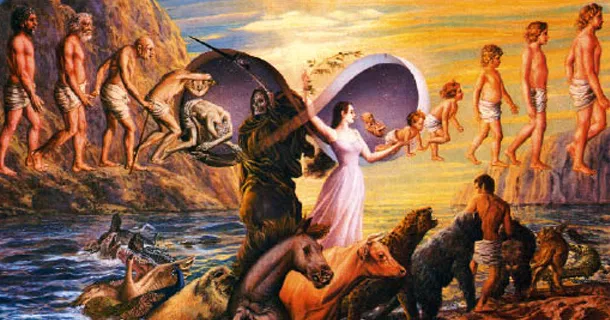
rebirth 1480578303
Swami Sivananda, The Divnity in Religions

A Call To Rebirth

A Call To Rebirth By Sri Swami Chidananda When Nicodemus came to Jesus Christ secretly one night He said: “Except a man be born again, he cannot see the Kingdom of God.” Nicodemus asked: “How can a man be born when he is old? Can he enter a second time into his mother’s womb and be born?” The great teacher answered; Truly, I say to you, unless one is born of water and the Spirit, he cannot enter the Kingdom of God.” Water is a universal cleansing and purifying agent. So it means getting rid of mala (impurity) and having chitta shuddi (purity of mind). You have to emerge as purified being. That is also the symbol behind baptism – a cleansing of and getting rid of all sin and emerging sinless, spotless, pure. Fire is also a universal purifying agent. Our fire ceremony also symbolises thorough burning away of all dross – of all that is impure, of all that is contrary to Divinity – and emerge as pure Spirit. This is why it is a symbol of the same rebirth Jesus referred to. It is rebirth from passion to purity; and then from material consciousness into a state of spiritual consciousness to emerge as a new being, aware of oneself as connected with the Supreme Universal Soul, as a spiritual being beyond time and space, without birth and death, name and form, ever pure, ever free, ever full, ever Divine. It is a rebirth of your very identity – a dying to the old self and being born into a new identity where you know of yourself only as related to the eternal Being. It is rebirth into the Spirit, plunging once again into Satchidananda. When you wake up from deep sleep, you wake up into a new reality. Waking up should constitute a rebirth into divine life – a rebirth into total truthfulness. For a spiritual aspirant, there should be a daily rebirth – a leaving behind of all that is dross, gross, undivine – and emerging into a new state of shining purity, spirituality and total divinity. Again and again there should be a rebirth until you become like the pure Cosmic Being, partaking of His total purity, partaking of His glorious Divine nature. Each daybreak should constitute a call to rebirth. This is the invariable condition for the realisation of Reality. It is a call to each one of you to truthfulness, absolute purity in conduct and character, to a continuous compassion and a reluctance to hurt or harm anything created by God. May we be reborn again and again! May you shine with Divinity! God bless you!

A Call To Rebirth Read Post »

swami sivananda Framed portrait of monk with umbrella
Swami Sivananda, THE Glory of Saints - The Self Realized Masters of Bharat - The Jivanmuktas

Dissemination of Knowledge

Dissemination of Knowledg The habit of giving was ingrained in Sivananda. As a boy at Pattamadai, he shared with other children the sweets his mother gave him. At school and college, he went to help his classmates with their lessons. After he left the medical institute, he ran the Ambrosia, to earn no doubt, but equally to share his considerable knowledge of health problems with an ignorant public. Later, in Malaya, he put to maximum use his medical knowledge by treating the sick, by contributing useful articles to periodicals, and by training the ward boys in his hospital for better jobs elsewhere. When he gained wealth and influence, he utilised both for the benefit of people in distress, who needed money, a job, a place to stay. This trait, this desire to share what he had with others, intensified after he became a Sannyasin. Around him sprang the Satya Sevashram Dispensary. Sivananda used his past savings to buy medicines for the sick Sadhus and pilgrims. When the Swargashram Kshettar gave him curd and Ghee for his consumption, he distributed them among convalescent Mahatmas in Lakshmanjhula. When the Yatris who came to have his Darshan made him offerings of sweets and fruits, he once again redistributed them. He gave his only blanket to a needy pilgrim, himself shivering in the cold. When Sivananda advanced in his spiritual practices, began meditating for hours on end, underwent various experiences, tapped the mine of spiritual wisdom at greater and ever greater depths, he put down those experiences on paper and grew eager to share the new-found knowledge with others. Thus were born his early spiritual tracts. Pilgrims who met Swamiji in Swargashram began to correspond with him when they returned home. Others who read his tracts began to write to him. Sivananda replied those letters and gave spiritual advice. This Jnana Dan or gift of knowledge possessed a characteristic which other gifts failed to have. Sivananda reasoned it thus. “Give food to the hungry” he told himself, “After a while, they will again be hungry. Give clothes to the naked; after a while, they will again be so. Give money to the needy; and when they have spent it, they will again be in want. But give knowledge to all; and you would have given them the wherewithal to take care of themselves”. His face brightened. The gift of knowledge, indeed, was the greatest gift. And what could be greater than spiritual knowledge? Sivananda began to share the wealth of his spiritual experience with others through conversation, lectures, letters, leaflets and articles in periodicals. In this regard, Swamiji utilised the printing press more than the platform. What was heard might be forgotten in a day, but the recorded knowledge would be of lasting benefit. While at Swargashram, Sivananda gave impetus to some Meerut publishers to start the magazines Sudarshan, Sankirtan and Swa-dharma, himself contributing articles to them. He began to send articles also to the Kalyan and the Kalyana Kalpataru of the Gita Press, Gorakhpur and to a long list of smaller journals. If an editor asked for one article, Sivananda sent four or five. He would say: “Even if they are not published, at least some of the editorial staff in charge of selection will go through them. I am satisfied even if one person reads the articles. If the editors like, they may publish one among the five or six. Even then, much good can be done to the public”. Among the magazines to which Swamiji contributed, there were some which carried much undesirable reading matter. Critics remarked: “Why should Sivananda send articles to magazines containing advertisement on sex matters? This is not good”. Swamiji replied: “I will continue to send articles to such papers first. The minds of those who go through sex matters will be purified by going through spiritual articles. Spiritual lessons and sexual advertisements will occupy different pans of the same scale and the reader will one day find that spiritual lessons weigh much heavier than the other pan. He will become spiritually minded. The readers will then preserve the pages on spiritual lessons for repeated study. I try to change the mentality of atheists and agnostics. Others are already religious minded. I need not struggle hard to change them”. Subsequent events verified the correctness of Sivananda’s standpoint. There was a magazine from Madras, the My Magazine of India, which had a large circulation not only in India, but also in Ceylon, Malaya, Burma and other countries. A reason for its popularity was the fact that with each issue the magazine carried many pages of romantic writing and many more pages of sex advertisement. Now, besides other journals, Sivananda chose this My Magazine too for contributing his articles. And when from 1931 onwards his powerful spiritual lessons began to appear regularly in its pages, not one or two or a dozen or a hundred, but literally thousands turned into avid readers of Swamiji’s articles and became his students and devotees. The persons who thus benefited by Swamiji’s writings were fired by an unmistakable spiritual enthusiasm, and in that mood, they wrote to Swamiji. They told Sivananda their joys and sorrows, placed before him their problems and perplexities, and sought his help. And help came with lightning speed. To a devotee who wrote a long letter detailing the miserable condition he was in, Sivananda sent an immediate reply asking him not to be desperate and assuring him that every moment he was changing and becoming a new man. And Swamiji ended the letter with these words: “Come and stay with me. I will help you, serve you and make you a dynamic Yogi”. “To the end of my life I shall remember this invitation of Sivananda” said the grateful devotee at a later date, “It was so bold, so unconventional and so very generous”. Sivananda’s letters were simple, but they appealed to the sense of inner certitude, and not to the surface rambling of the intellect. The first contact with Sivananda was, to many, like a shower of cool rain on a bit of

Dissemination of Knowledge Read Post »

the mythic origins of christianity true or false
Swami Sivananda, The Divnity in Religions

Christianity

Christianity By Sri Swami Sivananda Christianity derives its name from Christ. Christianity speaks of a personal God. There is not much deep philosophy or Yoga Sadhana in Christianity. There is reason for this. Jesus had to deal with the illiterate fishermen of Galilee. He gave them only moral precepts and showed them the way of righteous living. Christianity is based chiefly on Judaism and partly on Buddhism. The doctrines of the Christian religion are all taken from Judaism. Jesus never professed to abolish Judaism and to set up a new religion of his own. He says, “Do not think that I came to destroy the Law or the Prophets. I did not come to destroy but to fulfill. For verily I say unto you: Till heaven and earth pass, one jot or one title shall in no means pass from the law, till all is fulfilled. Whosoever , therefore, shall break one of these least commandments and shall teach men so, he shall be called the least in the Kingdom of Heaven; but whosoever shall do and teach them, the same shall be called great in the Kingdom of Heaven.” (Matthew 5:17-19) Christian faith sprung from the wisdom of India overspread the old trunk of Judaism. Buddhism prevailed in Palestine when Christ was born. Christ himself came in contact with it through John the Baptist. There is a striking resemblance between Buddhism and Christianity in their precepts, in their forms and ceremonies, in the architectural style of their temples, and even in the account of the lives of their founders. The dogmas or metaphysical doctrines of Christianity are the same as those of Judaism but its moral precepts are much higher and nobler than those of the Jewish prophets. Christianity owes to Buddhism that higher morality which distinguishes it from Judaism. The moral precepts and teachings of Buddhism have much in common with those of Christianity. Christ himself taught no dogmas. The teaching of Jesus which is chiefly ethical is embodied in the Sermon on the Mount, the Lord’s Prayer and certain parables known as the parables of the Good Samaritan, the Prodigal Son, and the Sheep and the Goats. Lord Jesus Lord Jesus was born in Bethlehem of Judea in the days of Herod the King. He was the son of a carpenter of Nazareth, a large village in Galilee, the northern Province of Palestine. Jesus was a Palestine Jew of the first century. He lived with Joseph and Mary and a large family of brothers or half-brothers in the house of the carpenter of Nazareth. He was baptized by John the Baptist on the banks of the river Jordan. Now he saw a vision of God’s spirit descending like a dove on him. He heard a voice say unto him: “Thou art my beloved son. I am well pleased with thee.” John the Baptist was the Preceptor of Jesus. Jesus was an incarnation of the Hebrew God Jehovah. Jesus is the Greek transliteration of an Aramic name pronounced Yeshua, according to Hebrew Scholars. It was altered into Jesus in English. He was also called Messiah, the anointed one, or the Saviour of the World. Between his 18th and 32nd years of age, Jesus spent his life in India and lived like a Hindu or Buddhist monk. He had burning Vairagya (dispassion) and spirit of renunciation. In India he assimilated Hindu ideals and principles. (Jesus in India) The Cross Lord Jesus totally surrendered himself at the lotus feet of the Lord. He had intense faith in Him. It was the faith that sustained him throughout his life. The Cross of Jesus will remain forever the supreme example of love and suffering without returning evil for evil. The Cross symbolizes a great principle of life. In the Christian theology, the Cross has a wonderful halo. It is not a common cross of wood. The Cross of Jesus is a classic instance of love resisting evil and overcoming it. When Lord Jesus was put to the Cross, he said: “My Lord! They do not know what they are doing. Please forgive them.” What a large heart and wonderful power of endurance Jesus had! He who has control over the flesh, who has crucified the flesh, who has subdued the life-passions, who has self-control, who has mortified the lower nature, can bear the Cross. Jesus’s Qualities Jesus was holy. He was God-man, the incarnation of God. Jesus called himself the Son of God. In Jesus we see perfect holiness, goodness, kindness, mercy, gentleness and justice. He said: “I am the Truth, the Way and the Life.” He is embodiment of all that is best, sublimest and most beautiful. He is the most perfect type and ideal of humanity. He is the embodiment of all his teachings. He is a philosopher, prophet, teacher, reformer. He always practiced what he taught. Jesus was truthful. His thoughts were very pure. There was no hypocrisy or deception in his thoughts. He risked his own life in uttering the truth. The spirit of Jesus is the spirit of Truth. He is called the Sun of Righteousness. He went about doing good. The words of Jesus still elevate people. They still live as a fountain of inspiration. Christ took the sins of humanity on himself, suffered for their sins and made them free. This is the theory of Atonement of Christ. His Philosophy and Teachings Nearly two thousand years have passed since Lord Jesus, the Prophet of Palestine taught the way, the truth and the life to mankind. The words of Jesus were not collected till some generations after they were uttered. Christianity was essentially a radiant way of life, a way of happy and victorious living in this world. There is no record of the life of Jesus until he was fully grown up. He astonished people by his insight when discussing religion with the religious leaders of his day. For three years he explained his claim as the “Only Son of God” and taught people

Christianity Read Post »

What is Rabbinic Judaism JR 02
Swami Sivananda, The Divnity in Religions

Judaism

Judaism By SRI SWAMI SIVANANDA Judaism constitutes the religious doctrines and rites of the Jews as enjoined in the laws of Moses. Judaism is based on Zoroastrianism. It has given rise to two great religions of the world, i.e., Christianity and Islam. The Muslims admit that their religion is founded on Judaism. The Koran also is very clear on this point. Zoroastrian conception of Ahura Mazda as the Supreme Being is perfectly identical with the idea of Elohim (God) Jehovah which we find in the books of Old Testament. Abraham, the Prophet, was the first man who has revealed God to all humanity. He is the Founder of the Hebrew race. Hebrew is one of the descendants of Jacob, an Isralite, a Jew. Isaac had two sons, viz., Essan and Jacob and their descendants are the Christians and Jews respectively. Abraham had two sons (one from Sarah and one from Hagar, the Egyptian woman), viz., Isaac and Ismael who are the fathers of Jews and Muslims respectively. OLD AND NEW TESTAMENT The Old Testament contains the sacred writings of the ambient Jewish race. The newer portion is known as the New Testament which was begun after the coming of Jesus Christ, more than nineteen hundred years ago. Long before Jesus came to this world, the Jews wrote and studied their sacred books. These were written in their Hebrew tongue. The old Hebrew books were translated into Greek about two hundred years before the Christian era. The books of the Jews were arranged into three main divisions. The first was called “The Law”. It dealt with the laws of the world. These books are now the first part of the Bible, viz., Genesis, Exodus, Leviticus, Numbers, and Deuteronomy. The second class was that of the Prophets. It included Joshua, Isaiah, and Jeremiah. Psalms and Proverbs constituted third class. The Old Testament contains 39 books. The New Testament contains 27 books. The first four books are Gospels which describe the life of Christ on this earth. The next book tells us of the Acts of the Apostles, particularly of the important Apostle Paul. The twenty-one shorter books give out the ideas underlying the Christian faith of the early Christians. The last book is the book of Revelations. It gives a description of the series of visions, viz., the lamb of God and the heavenly city. The author is John, the favourite Apostle of Jesus. All these books were written in Greek, which was the language of educated men at the beginning of the Christian era. JEWISH SECTS The Law was set forth as a complete system by which men should live. By the Law was understood in a special sense the Pentateuch. Every word of Pentateuch was considered as inspired and an immediate revelation of Moses. (a) There was a need for explanation of the Law. The Scribes were the interpreters of the Law. They explained and applied the rules of the Torah to special cases. The Scribes were recognised as the legislators and the judges of Israel. Their decisions had the force of Law. The first Scribes were priests. (b) The fraternity of the Pharisees were the popular or nationalist party. They believed in the doctrine of immortality, resurrection of the body, the existence of angels and spirits. As religious teachers, they upheld the authority of oral tradition as of equal validity with the written Law. They were inclined to fatalism in the question of the freedom of the will. The Zealots represented one extreme side of the Pharisaic movement. (c) Sadducus were aristocratic priests. They held to the letter of the Mosaic revelation. They denied the authority of the oral tradition as interpreted by the Pharisees. They taught complete freedom of the will in moral action. They had no belief in angels or spirits. They did not accept the doctrine of immortality as a deduction from the Pentateuch. (d) The Essenes followed celibacy, isolation, silence, ceremonial ablutions, and abstinence from animal food. They practised asceticism. They did worship of the sun and the angels. They believed in the dualistic theory of good and evil and the symbolism of light. They abstained from sacrifices and temple worship. TORAH The Prophets of Israel were the great religious leaders who brought great progress in Behraic thought. Rabbis also were authoritative teachers. They worked very hard in the field of Torah. They produced the massive Talmudic literature. They were the representatives of Pharisiasm. Talmud is indispensable, for a knowledge of Hebraic thought. The Torah was given in ten words. Each word became a voice. Every voice was divided into 70 voices all of which shone and glittered before the eyes of all Israel. Torah denotes the divine revelation to Israel on Mount Senai as embodied in the five Books of Moses. The Torah (Law) as given to Moses consists of 613 commandments which are the essence of the divine and terrestrial mysteries. Torah indicates a way of life rather than a form of belief. Moses received the Torah (Law, direction, instruction) on Senai and handed it down to Joshua, Joshua to the elders, the elders to the prophets and the prophets handed it down to the men of the Great Synagogue, a synod of zealous men created by Ezra, the Scribe in the fifth century B.C. The function of the synagogue was to study and teach Torah. The Synagogue was a church, a school, and a court of justice. It was a house of instruction. The unity of God, the Incorporeality of God, and the Holiness of God are the main features of Judaism. God gave His ten commandments to Moses on the Mount Senai. The Lord called unto him out of the mountain and said: “Thus shall thou say to the house of Jacob and tell the children of Israel”. THE TEN COMMANDMENTS I am the Lord Thy God, which have brought thee out of the land of Egypt, out of the house of bondage. Thou shalt have no other gods before

Judaism Read Post »