













Hari Om

Menu

February 21, 2026

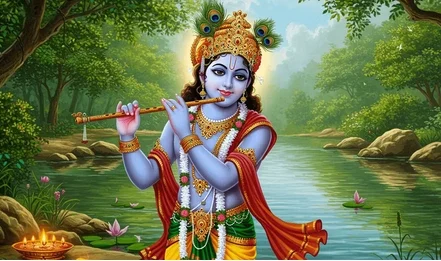
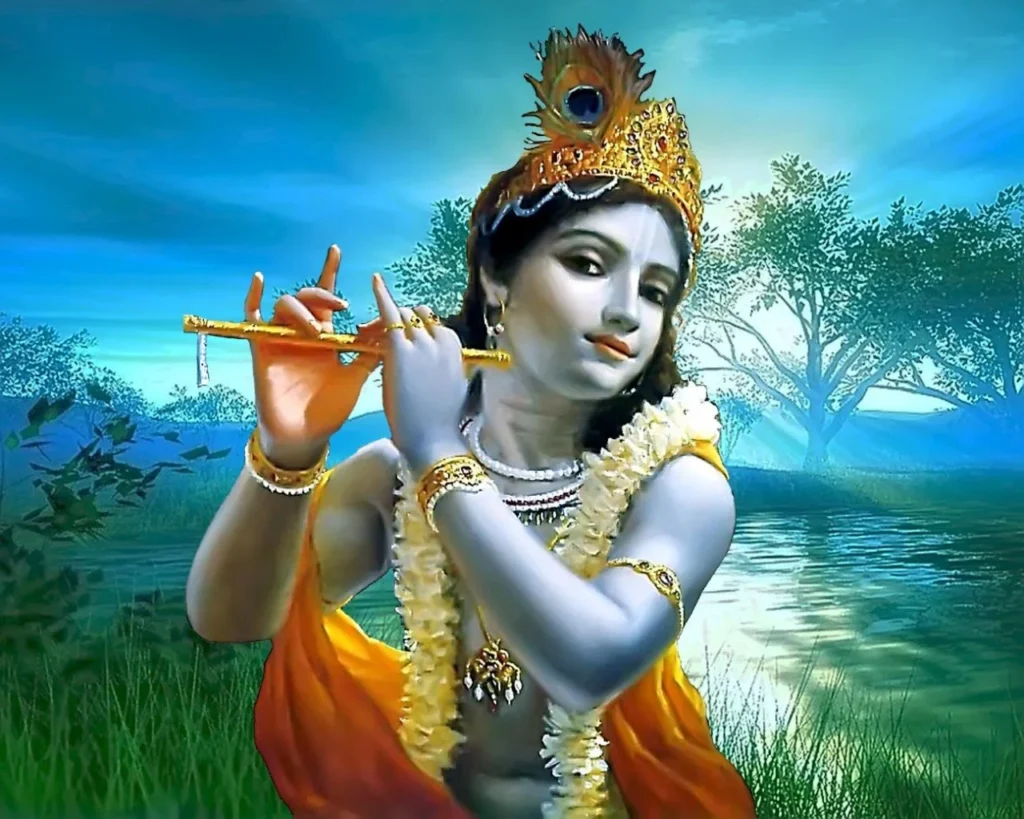
Lord Krishna playing flute near river landscape image
⁠Festivals in Sanathan Dharam and Hinduism, Swami Sivananda

The Human Ideal

The Human Ideal Sri Swami Sivananda Krishna Jayanti Message Blessed Selves, The birth of Sri Krishna on earth is of memorable importance, as this incident goes to make up and give form to the whole of the Indian Nation. It signifies the great event of the coming into being of the tremendous power of love and knowledge which has integrated in itself all the hearts and minds of India. In Sri Krishna we find the national, the political, the social, the domestic, the individual, the universal and spiritual ideals which have been adored and worshipped in India and which may well pave the way to world-unity, if only they are properly understood and adopted in human life. From the very beginning of the life of Sri Krishna we find in Him a bold champion who stood for the cause of peace and happiness of mankind. This is indeed an occasion for us all to lift our souls to the supreme enjoyment of the celebration of the birthday of the great hero, the friend and the teacher of this world, who refers to himself in His immortal Gita as the Father of this world, the Mother, the Sustainer, the Grandfather, the supremely Pure, the Origin, the Dissolution, the Substratum, the only thing to be known. In fact, such beings are not born or dead, but they only become visible or invisible to the human eye and consciousness. Sri Krishna was the statesman par-excellence, who taught through example and precept the art of government, the way to maintain peace on earth. He was an expert in the application of the means of Sama (persuasion and conciliation), Dana (offering remuneration), Bheda (causing division), and Danda (punishment), and these he used where they were absolutely necessary and where they did not go against Dharma or the Eternal law of the universe. Sri Krishna was not merely a statesman struggling to know what is right and wrong or good and bad to a nation or acting according to his own whims and fancies or private conceptions of the right and good. He was a cosmic man with a cosmic vision of things, who had no partiality whatsoever, who loved none and hated none, but acted as a channel for the operation of the iron hand of justice which rules the universe. Krishna connected causes and effects and brought law and justice to play their proper part in life not through induction or deduction, through supposition, guessing, or imagination, through public vote, or individual influence, but through the intuition of the essential Reality of the universe. His word was law and his act was justice. His thoughts were the supreme peace-makers which vibrated through every cell of the nation. Krishna commanded the love and the respect of the people by his comprehending in himself the universe as a whole. Sri Krishna was a philosopher, a sage and a Yogi, who alone can be an effective statesman worth the name. This is the lesson to be learnt from Sri Krishna, by all people, ruling as well as ruled. Sri Krishna lived the life of a princely householder, teaching to mankind that the knowledge of the Absolute is not incompatible with practical activity in life. He is the form, as it were, taken by the great Truth that the universe is the manifestation of Brahman. The universe is the Lila of the Purushottama, and Sri Krishna is the Lila-Purushottama, the sportive Absolute. There was no end to the domestic troubles that Krishna had, no limit to the social and political disturbances and threatening situations in which Krishna was involved, no bound to his responsibility and yet there was no match to his success, no equal to his shining example of the Life Perfect. Certainly, only an Avatara (incarnation of God) can be such a perfect being. The man on earth, the householder, with the weight of responsibility on his head and an environment attempting to menace and flout him at every step, should learn the science and art of right, good and happy life, from Sri Krishna, who combined knowledge with action with wonderful dexterity, for the good of the universe. The individual’s ideal is the attainment of Sri Krishna, to take Him as the means and the end. The Bhagavad Gita is the Gospel of life, the scripture of humanity, and the life of Sri Krishna is the great commentary on it. Every individual should try to become the great man of knowledge, the master of Yoga, the centre of love and the expert doer of right activity, as Sri Krishna was. Sri Krishna’s life, when it is carefully studied, will give one a knowledge of the synthesis of all Yogas, practised by one who, rooting himself in the spiritual Absolute, moved on this material earth. The life and teachings of Sri Krishna are the immortal teachers of mankind, they shall live for eternity. The words and actions of Krishna are to be taken by all aspiring individuals as the means and the being of Krishna as the end. This is possible only after a thorough purging and purification of the self, which is absolutely necessary for one’s knowing Krishna. Sri Krishna is the universal and spiritual ideal of man. Sri Krishna was the example of the great Superman of the East. It is towards this achievement that humanity is slowly moving. The perfection of man lies in the realisation of God, Nature and Man in one. Man is not a separate entity. Nature is not estranged from God, and God is not cut off from Nature and Man. The word ‘God’ has been misunderstood by many as merely one of the three principles in terms of which alone man can view Reality. Truly, God means that Supreme Being in which Nature and Man merge, as identical with His Consciousness. Sri Krishna is the representation on earth of the Supreme Reality. Glory to Him. All adorations to Him. Prostrations to Him. Beloved aspirants, Strive to become, to realise,

The Human Ideal Read Post »

Swami Sivananda blessing young child during spiritual ceremony photo
Swami Sivananda, Teachings of Swami Sivananda on Yoga

Sankirtan Yoga (Singing of the Lord’s Name)

Sankirtan Yoga (Singing of the Lord’s Name) Sankirtan is the Svarupa (essential nature) of God. Dhvani is Sankirtan. Sankirtan is the essence of the Vedas. The four Vedas originate from sound. There are four kinds of sound, viz., Vaikhari (vocal), Madhyama (from the throat), Pasyanti (from the heart) and Para (from the navel). Sound originates from the navel. Vedas also originates from the navel. Sankirtan and Vedas are born from the same source. People sit together and sing the names of the Lord with harmony and concord, and with Suddha or Divine Bhava (feeling). This is Sankirtan. Sankirtan is accompanied by the play of musical sounds as the word ‘San’ precedes ‘kirtan.’ Sankirtan is an exact science. It elevates the mind quickly and intensifies the Bhava or divine feeling to a maximum degree. Nama and Nami are inseparable. Nama means Name (Name of God). Nami means ‘that which is denoted by the Nama or Name’. Nama is greater than the Nami. Even in worldly experience the man dies but his name is remembered for a long time. Kalidasa, Valmiki, Tulsidas, etc., are remembered even today. Nama is nothing but Chaitanya. Sankirtan is singing God’s name with Bhava, Prem or divine feeling. Sankirtan Yoga is the easiest, quickest, safest, cheapest and best way for attaining God-realization in this age. People cannot practice severe austerities now-a-days. They do not have the strength of will to practice Hatha Yoga. They cannot maintain perfect life-long Brahmacharya. They do not have the prerequisites for Raja Yoga. They are not endowed with the keen intellect necessary for Jnana Yoga or Vedantic Sadhana. But this Sankirtan Yoga or the Yoga of Singing Lord’s Names is within the reach of all. There is infinite Sakti or power in the Lord’s Names. It will remove all impurities from your mind. Vedantins say that there are three kinds of obstacles to Self-realization – Mala, Vikshepa and Avarana. To remove them they prescribe Nishkamya Karma (selfless service), Upasana (worship) and Vedantic Nididhyasana (intellectual enquiry). This Sankirtan alone can achieve all these together. Sankirtan removes the impurities of the mind (Mala); it steadies the mind and checks its tendency to vacillate (Vikshepa); and ultimately it tears the veil of ignorance too (Avarana), and brings the Sadhaka (aspirant) face to face with God. Maya is so powerful that she deludes you every moment. Every moment she makes you feel that there is pleasure only in the sense-objects and nowhere else. You mistake pain for pleasure. This is the work of Maya. Beware. Remember Janma-mrityu-jara-vyadhi-duhkha-dosha, – this world is full of the pains of birth, death, old age, disease and misery. There is no pleasure in these finite objects. Yo Vai Bhuma Tat Sukham. You can have Bliss in the Infinite alone. Sankirtan will enable you to realize this Infinite here and now. Sankirtan will save you from Maya, from delusion. Therefore sing the Names of the Lord always. Let us, therefore, sing the Maha Mantra: Hare Rama Hare RamaRama Rama Hare Hare,Hare Krishna Hare KrishnaKrishna Krishna Hare Hare. This is the great Mantra which is specially meant for the people of Kali Yuga (this modern age of destruction) . Narada went to Lord Brahma and said: “O Lord, the people of Kail Yuga will not be able to practice austerities, nor to perform the Yajnas (sacrifices), nor to pursue the path of Vedanta. Kindly have mercy on them and tell me some easy way by which they can attain God.” Lord Brahma in His Supreme Compassion and Mercy gave this Maha Mantra by repeating which people of the Kali Yuga will attain Self-realization. Therefore, sing the Lord’s Names; serve, love, give, meditate, realize; be good and do good (this is the essence of all scriptures); be kind and be compassionate; enquire “Who am I ?”, know the Self and be free. May God bless you all with health, long life, peace, prosperity and Eternal Bliss.

Sankirtan Yoga (Singing of the Lord’s Name) Read Post »

Swami Sivananda spiritual saint and yoga master
Swami Sivananda, Teachings of Swami Sivananda on Yoga

Bhakti Yoga (The Path of Devotion)

Bhakti Yoga (The Path of Devotion) WHAT IS BHAKTI ? The term Bhakti comes from the root ‘Bhaj’, which means ‘to be attached to God’. Bhajan, worship, Bhakti, Anurag, Prem, Priti are synonymous terms. Bhakti is love for love’s sake. The devotee wants God and God alone. There is no selfish expectation here. There is no fear also. Therefore it is called ‘Parama Prem Rupa’. The devotee feels, believes, conceives and imagines that his Ishtam (tutelary deity) is an Ocean of Love or Prem. Bhakti is the slender thread of Prem or love that binds the heart of a devotee with the lotus feet of the Lord. Bhakti is intense devotion and supreme attachment to God. Bhakti is supreme love for God. It is the spontaneous out-pouring of Prem towards the Beloved. It is pure, unselfish, divine love or Suddha Prem. There is not a bit of bargaining or expectation of anything here. This higher feeling is indescribable in words. It has to be sincerely experienced by the devotee. Bhakti is a sacred, higher emotion with sublime sentiments that unites the devotees with the Lord. Mark how love develops. First arises faith. Then follows attraction and after that adoration. Adoration leads to suppression of mundane desires. The result is single-mindedness and satisfaction. Then grow attachment and supreme love towards God. In this type of highest Bhakti all attraction and attachment which one has for objects of enjoyment are transferred to the only dearest object, viz., God. This leads the devotee to an eternal union with his Beloved and culminates in oneness. TYPES OF BHAKTI Bhakti is of various kinds. One classification is Sakamya and Nishkamya Bhakti. Sakamya Bhakti is devotion with desire for material gains. A man wants wealth with this motive practices Bhakti. Another man wants freedom from diseases and therefore does Japa and offers prayers. A third one wants to become a Minister and does Upasana with this aim. This is Sakamya Bhakti. Whatever you want the Lord will certainly give you, if your Bhakti is intense and if your prayers are sincerely offered from the bottom of your heart. But you will not get supreme satisfaction, immortality and Moksha through Sakamya Bhakti. Your Bhakti should always be Nishkamya Bhakti. God has already given you a good position, a good job, wife and children and enough wealth. Be contented with these. Aspire for Nishkamya Bhakti. Your heart will be purified and the Divine Grace will descend upon you. Be in communion with the Lord, you will become one with the Lord and you will enjoy all the Divine Aisvaryas (Divine attributes like wisdom, renunciation, power, etc.). All the Vibhutis (Special forms in which the Lord manifests) of the Lord He will give you. He will give you Darsan. He will help you to dwell in Him. At the same time He will give you all the Divine Aisvaryas also. Another classification of Bhakti is Apara-Bhakti and Para-Bhakti. Apara-Bhakti is for beginners in Yoga. The beginner decorates an image with flowers and garlands, rings the bell, offers Naivedya (food-offerings), wave lights; he observes rituals and ceremonies. The Bhakta here regards the Lord as a Supreme Person, who is immanent in that image and who can be propitiated through that form only. He has no expanded heart. He is a sectarian. He dislikes other kinds of Bhaktas who worship other Devatas. Gradually, from Apara-Bhakti, the devotee goes to Para-Bhakti, the highest form of Bhakti. He sees the Lord and Lord alone everywhere and feels His Power manifest as the entire universe. “Thou art all-pervading; on what Simhasana shall I seat Thee ? Thou art the Supreme Light, in whose borrowed light the sun, the moon, the stars and the fire shine; shall I wave this little Deepa or light before You ?” – thus the devotee recognizes the transcendental nature of God. Para-Bhakti and Jnana are one. But every Bhakta will have to start from Apara-Bhakti. Before you take your food, offer it to God mentally; and the food will be purified. When you pass through a garden of flowers, mentally offer all the flowers to the Lord in Archana (offering flowers in worship). When you pass through the bazaar and see a sweetmeat shop, offer all the sweetmeats as Naivedya to the Lord. Such practices will lead to Para-Bhakti. Bhakti is also classified into Gauna-Bhakti and Mukhya-Bhakti. Gauna-Bhakti is the lower Bhakti and Mukhya-Bhakti is the higher type of Bhakti. Go from stage to stage. Just as a flower grows in the garden, so also gradually develop love or Prem in the garden of your heart. The enemy of devotion is egoism and desire. Where there is no Kama or desire, there alone will Rama (the Lord) manifest Himself. The enemies of peace and devotion are lust, anger and greed. Anger destroys your peace and your health also. When a man abuses you, keep peaceful. When blood begins to boil, it is impoverished. You lose vitality if you become a prey to fits of temper. HOW TO CULTIVATE BHAKTI It would be a gross mistake if you consider Bhakti as merely a stage of emotionalism, while it is actually a thorough discipline and training of one’s will and the mind, a sure means to intuitive realization of God Almighty through intense love and affection for Him. It is a means to thorough apprehension of the true knowledge of Reality, beginning from the ordinary form of idol worship right upto the highest form of cosmic realisation of your oneness with Him. You can achieve this by following the eleven fundamental factors which Sri Ramanuja had prescribed. They are Abhyasa or practice of continuous thinking of God; Viveka or discrimination; Vimoka or freedom from everything else and longing for God; Satyam or truthfulness; Arjavam or straightforwardness; Kriya or doing good to others; Kalyana or wishing well-being to all; Daya or compassion; Ahimsa or non-injury; Dana or charity; and Anavasada or cheerfulness and optimism. People put a question: “How can we love God whom we have not seen ?” Live in the company of saints. Hear the Lilas of God. Study the sacred scriptures. Worship Him first in His several forms as manifested in the world. Worship any image or picture of the Lord

Bhakti Yoga (The Path of Devotion) Read Post »

Lord Krishna giving Bhagavad Gita knowledge to Arjuna image
⁠Festivals in Sanathan Dharam and Hinduism, Swami Sivananda

Krishna Janmashtami

Gospel of Lord Krishna By Sri Swami Sivananda Om Namo Bhagavate Vasudevaya This is the birthday of Lord Krishna, the eighth Divine Incarnation. It falls on the 8th day of the dark half of the month of Bhadrapada (August-September). This is one of the greatest of all Hindu festivals. Lord Krishna was born at midnight. A twenty-four hour fast is observed on this day, which is broken at midnight. Temples are decorated for the occasion. Kirtans are sung, bells are rung, the conch is blown, and Sanskrit hymns are recited in praise of Lord Krishna. At Mathura, the birthplace of Lord Krishna, special spiritual gatherings are organised at this time. Pilgrims from all over India attend these festive gatherings. The Lord appeared when the moon entered the house of Vrishabha at the constellation of the star Rohini, on Wednesday, the 8th day of the second fortnight of the month of Sravana, which corresponds to the month of Bhadrapada Krishnapaksha according to the Barhaspatyamana, in the year of Visvavasu, 5,172 years ago (from 1945), which means 3227 B.C. Study the Bhagavatam and the Pancharatras, which are equal to the Upanishads. You will know all about the glory of Lord Krishna, His Lilas and superhuman deeds. The eighth Avatara, Krishna, who has become the Beloved of India and the world at large, had a threefold objective: to destroy the wicked demons, to play the leading role in the great war fought on the battlefield of Kurukshetra (where he delivered His wonderful message of the Gita) and to become the centre of a marvellous development of the Bhakti schools of India. There is no true science except devotion to Lord Krishna. That man is wealthy indeed who loves Radha and Krishna. There is no sorrow other than lack of devotion to Krishna. He is the foremost of the emancipated who loves Krishna. There is no right course, except the society of Sri Krishna’s devotees. The Name, virtues and Lilas (divine pastimes) of Krishna are the chief things to be remembered. The Lotus Feet of Radha and Krishna are the chief objects of meditation. Sri Krishna is the ocean of bliss. His soul-stirring Lilas, which are the wonder of wonders, are its waves. The honeyed music of His flute attracts the minds of His devotees from all three regions. His unequalled and unsurpassed wealth of beauty amazes the animate and the inanimate beings. He adorns His friends with His incomparable love. His palms bear the signs of a lotus and discus, the right sole of His feet of a flag, lotus, thunderbolt, an iron goad, barley seed, and the Swastika. His left sole has the rainbow, triangle, water-pot, crescent, sky, fish, and a cow’s footprint. His Form is composed of condensed universal consciousness and bliss. His Body pervades the entire cosmos. Devotion is the only means of attaining Lord Krishna. Bhakti kindles love for the Lord. When love is directed towards Krishna, man is freed from the bondage of the world. Though Lord Krishna appeared in a human body, He had a divine body not composed of the five elements. He did not take any birth here in the usual sense of the term. He did not die. He appeared and disappeared through His Yoga Maya as He has declared in the Gita. This is a secret, known only to His devotees, Yogis and sages. His enchanting form with flute in hand is worshipped in myriads of homes in India. It is a form to which is poured out devotion and supreme love from the hearts of countless devotees not only in India but also in the West. Millions of spiritual seekers worship Him and repeat His Mantra, Om Namo Bhagavate Vasudevaya. Lord Krishna was great in knowledge, great in emotion, great in action, all at once. The scriptures have not recorded any life more full, more intense, more sublime and grander than the life of Sri Krishna. Krishna has played various roles during His stay in the world. He was Arjuna’s charioteer. He was an excellent statesman. He was a master musician; he gave lessons even to Narada in the art of playing the veena. The music of His flute thrilled the hearts of the Gopis and everyone else. He was a cowherd in Brindavan and Gokul. He exhibited miraculous powers even as a child. He killed many demons. He revealed His Cosmic Form to His mother, Yasoda. He performed the Rasa Lila, the secret of which can only be understood by devotees like Narada, Gauranga, Radha and the Gopis. He taught the supreme Truth of Yoga, Bhakti and Vedanta to Arjuna and Uddhava. He had mastered every one of the sixty-four fine arts. For all these reasons He is regarded as a full and complete manifestation of God. Incarnations of God appear for special reasons under special circumstances. Whenever there is much unrighteousness, whenever confusion and disorder set in on account of unrighteousness and baffle the well-ordered progress of mankind, whenever the balance of human society is upset by selfish, ruthless and cruel beings, whenever irreligion and unrighteousness prevail, whenever the foundations of social organisations are undermined, the great Incarnation of God appears in order to re-establish righteousness and to restore peace. An Incarnation is the descent of God for the ascent of man. A ray from the Cosmic Being in His potential state of manifestation descends on earth with mighty powers to keep up the harmony of the universe. The work done by the Incarnation of God and His teachings produce a benign influence on human beings and help them in their upward divine unfoldment and Self-realisation. The Incarnation comes to reveal the divine nature of man and makes him rise above the petty materialistic life of passion and egoism. The greatest manifestations are called Incarnations proper. Rishis, Munis, prophets, sons of God and messengers of God are minor manifestations. The Incarnations usually come with their particular or favourite groups or companions. Lord Rama came with Lakshmana, Bharata and Shatrughna. Lord Krishna came with Balarama, Devas and Rishis. Sanaka came with

Krishna Janmashtami Read Post »

swami sivananda Monk studying and writing with books image
Swami Sivananda, Teachings of Swami Sivananda on Yoga

Karma Yoga (The Path of Selfless Service)

Karma Yoga (The Path of Selfless Service) WHAT IS KARMA ? Karma is a Sanskrit term. It means action or deed. Any physical or mental action is Karma. Thinking is mental Karma. Karma is the sum total of our acts, both in the present life and in the preceding births. Karma means not only action, but also the result of an action. There is a hidden power in Karma or action termed ‘Adrishta’ which brings in fruits of Karmas for the individual. The consequence of an action is really not a separate thing. It is a part of the action and cannot be divided from it. Karma, according to Jaimini Rishi, is the performance of Agnihotra and other Vedic rituals. According to the Gita, any action done with Nishkamya Bhava is Karma. Lord Krishna says: “Work incessantly. Your duty is to work but not to expect the fruits thereof.” The central teaching of the Gita is non-attachment to work. Breathing, eating, seeing, hearing, thinking, etc., are all Karmas. Thinking is the real Karma. Raga-dvesha (likes and dislikes) constitute real Karma. HOW KARMA IS FASHIONED Man is threefold in his nature. He consists of Iccha, Jnana and Kriya. Iccha is desire or feeling. Jnana is knowing. Kriya is willing. These three fashion his Karma. He knows objects like chair, tree. He feels joy and sorrow. He wills – to do this, or not to do that. Behind the action, there are desire and thought. A desire for an object arises in the mind. Then you think how to get it. Then you exert to possess it. Desire, thought and action always go together. They are the three threads, as it were, that are twisted into the cord of Karma. Desire produces Karma. You work and exert to acquire the objects of your desire. Karma produces its fruits as pain or pleasure. You will have to take births after births to reap the fruits of your Karma. This is the Law of Karma. KINDS OF KARMA Karma is of three kinds, viz. Sanchita or the accumulated works, Prarabdha or the fructifying works, and Kriyamana or the current works. Sanchita is all the accumulated Karmas of the past. Part of it is seen in the character of man, in his tendencies and aptitudes, capacities, inclinations and desires. Prarabdha is that portion of the part of Karma which is responsible for the present body. It is ripe for reaping. It cannot be avoided or changed. It is only exhausted by being experienced. You pay your past debts. Kriyamana is that Karma which is now being made for the future. It is also called Agami or Vartamana. In Vedantic literature, there is a beautiful analogy. The bow-man has already sent an arrow; it has left his hands. He cannot recall it. He is about to shoot another arrow. The bundle of arrow in the quiver on his back is the Sanchita. The arrow he has shot is Prarabdha. And the arrow which he is about to shoot from his bow is Agami. Of these, he has perfect control over the Sanchita and the Agami, but he must surely work out his Prarabdha. The past which has begun to take effect he has to experience. Actions are of three kinds, viz., good, bad and mixed. Good Karmas make you a god or angel in heaven. Bad Karmas throw you in lower wombs. Mixed actions give you a human birth. Every work is a mixture of good and evil. There can be neither absolute good work nor absolute bad work in this world. This physical universe is a relative plane. If you do some action, it will do some good in one corner, and some evil in another corner. You must try to do such actions that can bring the maximum of good and the minimum of evil. THE LAW OF KARMA The Doctrine of Karma forms an integral part of Vedanta. The Law of Karma is one of the fundamental doctrines not only in Hinduism, but also in Buddhism and in Jainism. As a man sows, so he shall reap. This is the Law of Karma. It expounds the riddle of life and the riddle of the universe. It brings solace, satisfaction and comfort to one and all. It is a self-evident truth. Fortunately, the Westerners have also begun now to acknowledge its importance and veracity. The Americans have now full belief in this doctrine. Every sensible man will have to accept it. There is no other go. A close study of this law gives encouragement to the hopeless man, to the desperate and ailing. Destiny is created by man’s thoughts, habits and character. There is every chance for his correction and improvement by changing his thoughts and habits. The scoundrel can become a saint; the prostitute can become a chaste lady; a beggar can become a king. This mighty law provides for all this. The Doctrine of Karma only can explain the mysterious problem of good and evil in this world. The Doctrine of Karma only can bring solace, contentment, peace and strength to the afflicted and the desperate. It solves our difficulties and problems of life. It gives encouragement to the hopeless and the forlorn. It pushes a man to right thinking, right speech and right action. It brings a brilliant future for that man who lives according to this universal law. If all people understand this law correctly and discharge their daily duties carefully, they would rise to sublime heights in the ladder of spirituality. They will be moral and virtuous and have a happy, peaceful, contented life. They can bear the burden of Samsara with patience, endurance and strength of mind. There will not be any room for complaint when they see the inequalities in birth, fortune, intelligence, capacities, etc. There will be heaven on earth. All will rejoice even in suffering. Greed, jealousy, hatred, anger, passion will vanish. Virtue will reign everywhere. We will have a glorious Satya Yuga now with peace and plenty everywhere. Blessed is the man who understands and lives in the

Karma Yoga (The Path of Selfless Service) Read Post »

Lord Krishna playing flute near river in Vrindavan image
⁠Festivals in Sanathan Dharam and Hinduism, Swami Sivananda

Krishna Janmashtami

Krishna Janmashtami By Sri Swami Sivananda Om Namo Bhagavate Vasudevaya This is the birthday of Lord Krishna, the eighth Divine Incarnation. It falls on the 8th day of the dark half of the month of Bhadrapada (August-September). This is one of the greatest of all Hindu festivals. Lord Krishna was born at midnight. A twenty-four hour fast is observed on this day, which is broken at midnight. Temples are decorated for the occasion. Kirtans are sung, bells are rung, the conch is blown, and Sanskrit hymns are recited in praise of Lord Krishna. At Mathura, the birthplace of Lord Krishna, special spiritual gatherings are organised at this time. Pilgrims from all over India attend these festive gatherings. The Lord appeared when the moon entered the house of Vrishabha at the constellation of the star Rohini, on Wednesday, the 8th day of the second fortnight of the month of Sravana, which corresponds to the month of Bhadrapada Krishnapaksha according to the Barhaspatyamana, in the year of Visvavasu, 5,172 years ago (from 1945), which means 3227 B.C. Study the Bhagavatam and the Pancharatras, which are equal to the Upanishads. You will know all about the glory of Lord Krishna, His Lilas and superhuman deeds. The eighth Avatara, Krishna, who has become the Beloved of India and the world at large, had a threefold objective: to destroy the wicked demons, to play the leading role in the great war fought on the battlefield of Kurukshetra (where he delivered His wonderful message of the Gita) and to become the centre of a marvellous development of the Bhakti schools of India. There is no true science except devotion to Lord Krishna. That man is wealthy indeed who loves Radha and Krishna. There is no sorrow other than lack of devotion to Krishna. He is the foremost of the emancipated who loves Krishna. There is no right course, except the society of Sri Krishna’s devotees. The Name, virtues and Lilas (divine pastimes) of Krishna are the chief things to be remembered. The Lotus Feet of Radha and Krishna are the chief objects of meditation. Sri Krishna is the ocean of bliss. His soul-stirring Lilas, which are the wonder of wonders, are its waves. The honeyed music of His flute attracts the minds of His devotees from all three regions. His unequalled and unsurpassed wealth of beauty amazes the animate and the inanimate beings. He adorns His friends with His incomparable love. His palms bear the signs of a lotus and discus, the right sole of His feet of a flag, lotus, thunderbolt, an iron goad, barley seed, and the Swastika. His left sole has the rainbow, triangle, water-pot, crescent, sky, fish, and a cow’s footprint. His Form is composed of condensed universal consciousness and bliss. His Body pervades the entire cosmos. Devotion is the only means of attaining Lord Krishna. Bhakti kindles love for the Lord. When love is directed towards Krishna, man is freed from the bondage of the world. Though Lord Krishna appeared in a human body, He had a divine body not composed of the five elements. He did not take any birth here in the usual sense of the term. He did not die. He appeared and disappeared through His Yoga Maya as He has declared in the Gita. This is a secret, known only to His devotees, Yogis and sages. His enchanting form with flute in hand is worshipped in myriads of homes in India. It is a form to which is poured out devotion and supreme love from the hearts of countless devotees not only in India but also in the West. Millions of spiritual seekers worship Him and repeat His Mantra, Om Namo Bhagavate Vasudevaya. Lord Krishna was great in knowledge, great in emotion, great in action, all at once. The scriptures have not recorded any life more full, more intense, more sublime and grander than the life of Sri Krishna. Krishna has played various roles during His stay in the world. He was Arjuna’s charioteer. He was an excellent statesman. He was a master musician; he gave lessons even to Narada in the art of playing the veena. The music of His flute thrilled the hearts of the Gopis and everyone else. He was a cowherd in Brindavan and Gokul. He exhibited miraculous powers even as a child. He killed many demons. He revealed His Cosmic Form to His mother, Yasoda. He performed the Rasa Lila, the secret of which can only be understood by devotees like Narada, Gauranga, Radha and the Gopis. He taught the supreme Truth of Yoga, Bhakti and Vedanta to Arjuna and Uddhava. He had mastered every one of the sixty-four fine arts. For all these reasons He is regarded as a full and complete manifestation of God. Incarnations of God appear for special reasons under special circumstances. Whenever there is much unrighteousness, whenever confusion and disorder set in on account of unrighteousness and baffle the well-ordered progress of mankind, whenever the balance of human society is upset by selfish, ruthless and cruel beings, whenever irreligion and unrighteousness prevail, whenever the foundations of social organisations are undermined, the great Incarnation of God appears in order to re-establish righteousness and to restore peace. An Incarnation is the descent of God for the ascent of man. A ray from the Cosmic Being in His potential state of manifestation descends on earth with mighty powers to keep up the harmony of the universe. The work done by the Incarnation of God and His teachings produce a benign influence on human beings and help them in their upward divine unfoldment and Self-realisation. The Incarnation comes to reveal the divine nature of man and makes him rise above the petty materialistic life of passion and egoism. The greatest manifestations are called Incarnations proper. Rishis, Munis, prophets, sons of God and messengers of God are minor manifestations. The Incarnations usually come with their particular or favourite groups or companions. Lord Rama came with Lakshmana, Bharata and Shatrughna. Lord Krishna came with Balarama, Devas and Rishis. Sanaka came with Sanandana, Sanatkumara

Krishna Janmashtami Read Post »

swami sivananda Illustration of spiritual saint seated with Om symbol
Swami Sivananda, Teachings of Swami Sivananda on Yoga

Karma Yoga

Karma Yoga WHAT IS KARMA ? Karma is a Sanskrit term. It means action or deed. Any physical or mental action is Karma. Thinking is mental Karma. Karma is the sum total of our acts, both in the present life and in the preceding births. Karma means not only action, but also the result of an action. There is a hidden power in Karma or action termed ‘Adrishta’ which brings in fruits of Karmas for the individual. The consequence of an action is really not a separate thing. It is a part of the action and cannot be divided from it. Karma, according to Jaimini Rishi, is the performance of Agnihotra and other Vedic rituals. According to the Gita, any action done with Nishkamya Bhava is Karma. Lord Krishna says: “Work incessantly. Your duty is to work but not to expect the fruits thereof.” The central teaching of the Gita is non-attachment to work. Breathing, eating, seeing, hearing, thinking, etc., are all Karmas. Thinking is the real Karma. Raga-dvesha (likes and dislikes) constitute real Karma. HOW KARMA IS FASHIONED Man is threefold in his nature. He consists of Iccha, Jnana and Kriya. Iccha is desire or feeling. Jnana is knowing. Kriya is willing. These three fashion his Karma. He knows objects like chair, tree. He feels joy and sorrow. He wills – to do this, or not to do that. Behind the action, there are desire and thought. A desire for an object arises in the mind. Then you think how to get it. Then you exert to possess it. Desire, thought and action always go together. They are the three threads, as it were, that are twisted into the cord of Karma. Desire produces Karma. You work and exert to acquire the objects of your desire. Karma produces its fruits as pain or pleasure. You will have to take births after births to reap the fruits of your Karma. This is the Law of Karma. KINDS OF KARMA Karma is of three kinds, viz. Sanchita or the accumulated works, Prarabdha or the fructifying works, and Kriyamana or the current works. Sanchita is all the accumulated Karmas of the past. Part of it is seen in the character of man, in his tendencies and aptitudes, capacities, inclinations and desires. Prarabdha is that portion of the part of Karma which is responsible for the present body. It is ripe for reaping. It cannot be avoided or changed. It is only exhausted by being experienced. You pay your past debts. Kriyamana is that Karma which is now being made for the future. It is also called Agami or Vartamana. In Vedantic literature, there is a beautiful analogy. The bow-man has already sent an arrow; it has left his hands. He cannot recall it. He is about to shoot another arrow. The bundle of arrow in the quiver on his back is the Sanchita. The arrow he has shot is Prarabdha. And the arrow which he is about to shoot from his bow is Agami. Of these, he has perfect control over the Sanchita and the Agami, but he must surely work out his Prarabdha. The past which has begun to take effect he has to experience. Actions are of three kinds, viz., good, bad and mixed. Good Karmas make you a god or angel in heaven. Bad Karmas throw you in lower wombs. Mixed actions give you a human birth. Every work is a mixture of good and evil. There can be neither absolute good work nor absolute bad work in this world. This physical universe is a relative plane. If you do some action, it will do some good in one corner, and some evil in another corner. You must try to do such actions that can bring the maximum of good and the minimum of evil. THE LAW OF KARMA The Doctrine of Karma forms an integral part of Vedanta. The Law of Karma is one of the fundamental doctrines not only in Hinduism, but also in Buddhism and in Jainism. As a man sows, so he shall reap. This is the Law of Karma. It expounds the riddle of life and the riddle of the universe. It brings solace, satisfaction and comfort to one and all. It is a self-evident truth. Fortunately, the Westerners have also begun now to acknowledge its importance and veracity. The Americans have now full belief in this doctrine. Every sensible man will have to accept it. There is no other go. A close study of this law gives encouragement to the hopeless man, to the desperate and ailing. Destiny is created by man’s thoughts, habits and character. There is every chance for his correction and improvement by changing his thoughts and habits. The scoundrel can become a saint; the prostitute can become a chaste lady; a beggar can become a king. This mighty law provides for all this. The Doctrine of Karma only can explain the mysterious problem of good and evil in this world. The Doctrine of Karma only can bring solace, contentment, peace and strength to the afflicted and the desperate. It solves our difficulties and problems of life. It gives encouragement to the hopeless and the forlorn. It pushes a man to right thinking, right speech and right action. It brings a brilliant future for that man who lives according to this universal law. If all people understand this law correctly and discharge their daily duties carefully, they would rise to sublime heights in the ladder of spirituality. They will be moral and virtuous and have a happy, peaceful, contented life. They can bear the burden of Samsara with patience, endurance and strength of mind. There will not be any room for complaint when they see the inequalities in birth, fortune, intelligence, capacities, etc. There will be heaven on earth. All will rejoice even in suffering. Greed, jealousy, hatred, anger, passion will vanish. Virtue will reign everywhere. We will have a glorious Satya Yuga now with peace and plenty everywhere. Blessed is the man who understands and lives in the Law, for he will soon

Karma Yoga Read Post »

istockphoto 1381030718 612x612 1
⁠Festivals in Sanathan Dharam and Hinduism, Swami Sivananda

Holi

Holi By Sri Swami Sivananda IN DAYS of yore, there were communities of cannibals in India. They caused much havoc. They threatened the lives of many innocent people. One of them was Holika or Putana. She took immense delight in devouring children. Sri Krishna destroyed her and thus saved the little children. Even today, the effigy or figure of Holika is burnt in the fire. In South India, the clay figure of Cupid is burnt. This is the origin of the great festival of Holi. It begins about ten days before the full moon of the month Phalgun (February-March), but is usually only observed for the last three or four days, terminating with the full moon. This is the spring festival of the Hindus. In the spring season all the trees are filled with sweet-smelling flowers. They all proclaim the glory and everlasting beauty of God. They inspire you with hope, joy and a new life, and stir you on to find out the creator and the indweller, who is hiding Himself in these forms. Holi is known by the name of Kamadahana in South India, the day on which Cupid was burnt by Lord Siva. Another legend has it that once upon a time an old woman’s grandchild was to be sacrificed to a female demon named Holika. A Sadhu advised that abuse and foul language would subdue Holika. The old woman collected many children and made them abuse Holika in foul language. The demon fell dead on the ground. The children then made a bonfire of her remains. Connected to this legend of the demon Holika is Bhakta Prahlad’s devotion to Lord Narayana, and his subsequent escape from death at the hands of Holika. Prahlad’s father, Hiranyakashipu, punished him in a variety of ways to change his devotional mind and make him worldly-minded. He failed in his attempts. At last he ordered his sister, Holika, who had a boon to remain unburnt even in fire, to take Prahlad on her lap and enter into the blazing flames. Holika did so. She vanished, but Prahlad remained untouched and laughing. He was not affected by the fire on account of the Grace of Lord Narayana. This same scene is enacted every year to remind people that those who love God shall be saved, and they that torture the devotee of God shall be reduced to ashes. When Holika was burnt, people abused her and sang the glories of the Lord and of His great devotee, Prahlad. In imitation of that, people even today use abusive language, but unfortunately forget to sing the praises of the Lord and His devotee! In North India, people play joyfully with coloured water. The uncle sprinkles coloured water on his nephew. The niece applies coloured powder on her aunt’s face. Brothers and sisters and cousins play with one another. Huge bundles of wood are gathered and burnt at night, and everywhere one hears shouts of “Holi-ho! Holi-ho!” People stand in the streets and sprinkle coloured water on any man who passes by, be he a rich man or an officer. There is no restriction on this day. It is like the April Fool’s Day of the Europeans. People compose and sing special Holi songs. On the festival day, people clean their homes, remove all dirty articles from around the house and burn them. Disease-breeding bacteria are thereby destroyed. The sanitary condition of the locality is improved. During the festival, boys dance about in the streets. People play practical jokes with passers-by. A bonfire is lit towards the conclusion of the festival. Games representing the frolics of the young Krishna take place joyously around a fire. On the last day of Holi, people take a little fire from this bonfire to their homes. They believe that their homes will be rendered pure, and their bodies free from disease. Nowadays, people are found indulging in all sorts of vices in the name of the Holi festival. Some drink intoxicating liquor like toddy and fall unconscious on the roads. They indulge in obscene speech as a result of drinking. They lose respect for their elders and masters. They waste their money in drink and dice-play. These evils should be totally eradicated. Festivals like Holi have their own spiritual value. Apart from the various amusements, they create faith in God if properly observed. Hindu festivals always have a spiritual significance. They wean man away from sensual pleasures and take him gradually to the spiritual path and divine communion. People perform havan and offer to the gods the new grains that are harvested. On such holy occasions there should be worship of God, Satsangs, and Kirtan of the Lord’s Names, not merely the sprinkling of coloured water and lighting of bonfires. These functions are to be considered most sacred and spent in devotional prayers, visiting holy places, bathing in sacred waters, and Satsang with great souls. Abundant charity should be done to the poor. Then only can Holi be said to have been properly celebrated. Devotees of the Lord should remember His delightful pastimes on such happy occasions. All great Hindu festivals have religious, social and hygienic elements in them. Holi is no exception. Every season has a festival of its own. Holi is the great spring festival of India. Being an agricultural country, India’s two big festivals come during the harvest time when the barns and granaries of our farmers are full and they have reason to enjoy the fruits of their hard labour. The harvest season is a festive season all over the world. Man wants relaxation and change after hard work. He needs to be cheered when he is depressed on account of work and anxieties. Festivals like Holi supply him with the real food and tonic to restore his cheer and peace of mind. The religious element in the Holi festival consists of worship of Sri Krishna. In some places it is also called the Dol Yatra. The word dol literally means “a swing”. An image of Sri Krishna

Holi Read Post »

Swami Sivananda spiritual guru meditating in peaceful yogic lotus posture
Swami Sivananda, Teachings of Swami Sivananda on Yoga

Foundation of Yoga

Foundation of Yoga Develop virtues like generosity, forgiveness and love. Mere Yogic Kriyas alone will not help you much. Do self-analysis daily and eradicate your faults and evil, slavish habits. Rectify your defects such as selfishness, pride, jealousy and hatred. You must cultivate a compassionate and loving heart first. At all times you must share what you have with others and practice selfless service. Then only will you get purity of heart. Yoga is unity, identity, homogeneity, oneness and sameness with God. Many aspirants neglect these preliminaries and jump, out of curiosity, to Yogic Kriyas for getting psychic powers. It is really a serious blunder. They will have a hopeless downfall. Therefore, be careful. Mere Yogic Kriyas cannot bring about the desired results. The purification of the heart is of paramount importance. The aspirant must free himself from lust, anger, greed, jealousy, hatred, egoism, vanity, attachment, pride and delusion. This is more difficult than control of breath or the practice of Yoga Asanas. Virtuous qualities such as mercy, tolerance, adaptability, courage, patience, balance state of mind and cosmic love should be assiduously cultivated. Sages have always laid great stress on selfless service, generous charity, purity and simple living. With firm faith, application, perseverance, careful attention to even small details, and fortitude in trials, you must set foot and proceed on the path of Sadhana. Yoga is not hidden in caves, not sequestered in thick Himalayan forests. It is not in taking mountain herbs. God is not a coward to run away from towns, cities and villages. Practice Yoga in your own home. When the desire to practice Yoga comes, it means that liberation is near at hand. Now, take the plunge. It is a blessing to be a Yogi. Practice Yoga and preach. Hatha Yoga ensures good physical and mental health. You must utilize this to the best advantage by deep meditation on the Atman or inner Self. Self-realization should be your goal. This should be achieved by the constant remembrance of God, by righteousness, by a life of virtue and by the practice of Yoga. Becoming a Yogi does not involve the abandonment of anyone or neglect of any duties. It means switching over from a life of purpose-lessness to the path of God. It entails a change of your attitude towards life and in the methods pursued for liberating yourself. True and lasting renunciation is, after all, a matter of the attitude of the mind. There is only one institution for you which can train you to evolve into a full-bloom Yogi, and that is where Providence has placed you-your own home. Mind is indeed the cause of bondage and liberation; a restless mind will find rest nowhere except in its own annihilation. The mind should be attacked on all sides with every possible type of weapon-with the repetition of God’s Name, study of religious scriptures, devotion, practice of silence, service. Pranayama, Japa, prayer, Kirtan and meditation. All these should be combined. Do not look upon Yoga as something beyond you or as calling for any extraordinary efforts. You can remain in your station of life, carry on your work and at the same time embark on the Yogic path. Do Japa, prayer, Kirtan, meditation and Asanas regularly. Any effort in the direction of Yoga never goes in vain. You will realize thereby the fruits of even a little Yogic practice. Yes, there is a popular notion that Yoga is only for the intelligentsia. It is not so. Yoga is for all. Everyone can and should practice Yoga from his own station in life. I can impart to your noble self training in one of the most ancient Hindu medicine – the great miracle panacea for all ills-Yoga. Become a Yogi from this moment. The aim and end of Yoga is Self-realization. Yogic methods should not be applied for mere material gains. Yoga does not consist in just reading books and discussion at a club table. It consists in practicing what you already know. Every activity – from the rearing of children to the management of the home – can be readily converted into Yoga. Kindly study the first six chapters of the Gita again and again. Merely running away from crowds is not a sign of Yoga. The performance of all actions as an instrument in His hands, and with the consciousness that this world is pervaded by Him, the Supreme Spirit, is called Yoga.

Foundation of Yoga Read Post »

⁠Festivals in Sanathan Dharam and Hinduism, Swami Sivananda

Strength And Humility

Strength And Humility By Sri Swami Chidananda The worship of Lord Hanuman is an ideal that requires our attention and adoration not once in a year, but always. The worship of Hanuman verily constitutes worship of the Divine Reality in the form of strength and powers dedicated to duty and to the Divine Being. The worship of Hanuman implies the worship of strength adorned with humility—the worship of strength and powers simultaneously combined with devotion and dutifulness. The great Hanuman’s life is nothing if it is not devotion and dedication, humility and the spirit of service. The worship of Hanuman indicates your acceptance of this ideal. The worship of Hanuman is a token of adoration to the principles of self-sacrifice and service, devotion and dedication, and absolute impersonal selflessness. The worship of Hanuman is the ideal for all beings who wish to transform their lives and themselves into beings of courage and strength, and at the same time be adorned by the spirit of service, total devotion and total dedication to the feet of one whom one considers oneself to be the disciple, follower and devoted servant of. If you consider yourself as a devoted servant of God, devotee of God, follower of God, you have ever to keep before you the effulgent, radiant ideal of this unparalleled personality of the Ramayana. He had the strength that could lift mountains. He had the strength that could cross oceans. But despite this he remained what he really was: a dedicated, devoted, self-effacing servant of the Divine, depicted always at the feet of the Divine, head bowed down and hands folded. This is Hanuman’s place, vow and personality in the ever-present presence of God. It is due to his dedication, devotion, humility and utter selflessness that he has become the favourite among the devotees of God. It is due to these sublime qualities of self-effacement that Hanuman has become perpetual, an ideal in Indian culture. He is the deity of millions in India. And through the Ramayana, Valmiki has sought to make him immortal, ever present in the vision of all human beings. May the grace of the Supreme inspire you to emulate this ideal and to sincerely work towards the fulfilment of such an ideal in your own personal life. The hazard and the danger of a subtle spiritual ego, a sadhaka abhiman, willbe made impossible if this ideal is present in your heart as a guide to your spiritual living, to your sadhana and to whatever selfless service you are engaged in. To beautify, elevate and transform all these three aspects of your spiritual life, the worship of Hanuman presents special significance, holds special meaning and constitutes a universal ideal. May God and guru enable us to live such a life, having before us this ideal to be striven for as we offer the external worship this morning at the little shrine on the bank of the Ganga!”

Strength And Humility Read Post »