Hari Om

Menu

February 20, 2026

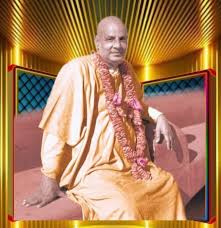
swami sivananda Monk seated wearing garland outdoors image
Practice of Meditation, Swami Sivananda

Exercises in Meditation

Exercises in Meditation I. Place a picture of Lord Jesus in front of you. Sit in your favourite meditative pose. Concentrate gently with open eyes on the picture till tears trickle down your cheeks. Rotate the mind on the cross on the chest, long hair, beautiful beard, round eyes, and the various other limbs of His body, and fine spiritual aura emanating from His head, and so on. Think of His interesting life and the miracles He performed and the various extraordinary powers He possessed. Then close the eyes and try to visualise the picture. Repeat the same process again and again. II. Place a picture of Lord Hari in front of you. Sit again in your meditative posture. Concentrate gently on the picture till you shed tears. Rotate the mind on His feet, legs, yellow silk robes, golden garland set with diamonds, Kaustubha gem, etc., on the chest, earrings, then the face, the crown of the head, the disc on the right upper hand, the conch on left upper hand, the mace on the right lower hand, and the lotus flower on the left lower hand. Then close the eyes and try to visualise the picture. Repeat the same process again and again. III. Keep a picture of Lord Krishna with flute in hands. Sit in your meditative pose and gently concentrate on the picture till you shed tears. Think of His feet adorned with anklets, yellow garment, various ornaments round His neck, the necklace set with the Kaustubha gem, the long garland of beautiful flowers of various colours, earrings, crown set with precious jewels of priceless value, dark and long hair, sparkling eyes, the Tilaka on the forehead, the magnetic aura round His head, long hands adorned with bracelets and armlets, and the flute in the hands ready to be played upon. Then close your eyes and visualise the picture. Repeat the same process again and again. IV. This is one kind of meditation for beginners. Sit in Padmasana in your meditation room. Close your eyes. Meditate on the effulgence in the sun, or the splendour in the moon or the glory in the stars. V. Meditate on the magnanimity of the ocean and its infinite nature. Then compare the ocean to the infinite Brahman, and the waves, foams and ice-bergs to the various names and forms. Identify yourself with the ocean. Become silent. Expand. Expand. VI. This is another kind of meditation. Meditate on the Himalayas. Imagine that the Ganga takes its origin in the icy regions of Gangotri near Uttarakasi, flows through Rishikesh, Haridwar, Varanasi, and then enters into the Bay of Bengal near Gangasagar. Himalayas, Ganga and the sea-these three thoughts only should occupy your mind. First take your mind to the icy regions of Gangotri, then along the Ganga and finally to the sea. Rotate the mind in this manner for 10 minutes. VII. There is a living universal Power that underlies all these names and forms. Meditate on this Power which is formless. This will terminate in the realisation of the Absolute, Nirguna, Nirakara (formless) Consciousness eventually. VIII. Sit in Padmasana. Close your eyes. Gaze steadily on the formless air only. Concentrate on the air. Meditate on the all-pervading nature of the air. This leads to the realisation of the nameless and formless Brahman, the One living Truth. IX. Sit in your meditative pose. Close your eyes. Imagine that there is a Supreme, Infinite Effulgence hidden behind all these names and forms, which is tantamount to the effulgence of crores of suns put together. This is another form of Nirguna meditation. X. Concentrate and meditate on the expansive blue sky. This is another kind of Nirguna meditation. By the previous methods of concentration the mind will cease thinking of finite forms. It will slowly begin to melt in the ocean of Peace, as it is deprived of its contents. The mind will become subtler and subtler. XI. Have the picture of OM in front of you. Concentrate gently on this picture with open eyes till tears flow profusely. Associate the ideas of eternity, infinity, immortality, etc., when you think of OM. The humming of bees, the sweet notes of the nightingale, the seven tunes in music, and all sounds are emanations from OM only. OM is the essence of the Vedas. Imagine that OM is the bow, the mind is the arrow and Brahman (God) is the target. Aim at the target with great care and just as the arrow becomes one with the target, you will become one with Brahman. The short accent of OM burns all sins, the long accent gives Moksha, and the elongated accent bestows all psychic powers (Siddhis). He who chants and meditates upon this monosyllable OM, chants and meditates upon all the Scriptures of the world. XII. Sit in Padmasana or Siddhasana in your meditation room. Watch the flow of breath. You will hear the sound “SOHAM”, ‘So’ during inhalation and ‘Ham’ during exhalation. SOHAM means ‘I AM HE.’ The breath is reminding you of your identity with the Supreme Soul. You are unconsciously repeating Soham 21,600 times daily at the rate of 15 Soham per minute. Associate the idea of Purity, Peace, Perfection, Love, etc., along with Soham. Negate the body while repeating the Mantra and identify yourself with the Mantra, the Atman or the Supreme Soul. XIII. Uddhava asked Lord Krishna, “O Lotus-eyed! How to meditate on Thee? Tell me what is the nature of that meditation and what it is?” To which Lord Krishna replied, “Be seated on the Asana that is neither high nor low, with your body erect and in an easy posture. Place your hands on the lap. Fix your gaze on the tip of the nose (in order to fix the mind). Purify the tracks of Prana by Puraka, Kumbhaka and Rechaka, and then again in the reverse way (i.e., first breathe in by the left nostril, with the right nostril closed by the tip of the thumb, then

Exercises in Meditation Read Post »
202
Practice of Meditation, Swami Sivananda

Twenty Hints on Meditation

Twenty Hints on Meditation 1. Have a separate meditation room under lock and key. Never allow anybody to enter the room. Burn incense there. Wash your feet and then enter the room. 2. Retire to a quiet place or room where you do not fear interruption so that your mind may feel secure and at rest. Of course, the ideal condition cannot always be obtained, in which case you should do the best you can. You should be alone yourself in communion with God or Brahman. 3. Get up at 4.00 a.m. (Brahmamuhurta) and meditate from 4 to 6 a.m. Have another sitting at night from 7 to 8 p.m. 4. Keep a picture of your Ishta Devata in the room and some religious books, the Gita, the Upanishads, the Yoga Vasishtha, the Bhagavata, etc. Spread your Asana in front of the picture. 5. Sit in Padma, Siddha, Sukha or Svastika Asana. Keep the head, neck and trunk in a straight line. Do not bend either forwards or backwards. 6. Close your eyes and concentrate gently on Trikuti, the space between the two eyebrows. Lock the fingers. 7. Never wrestle with the mind. Do not use any violent efforts in concentration. Relax all the muscles and the nerves. Relax the brain. Gently think of your Ishta Devata. Slowly repeat your Guru Mantra with Bhava and meaning. Still the bubbling mind. Silence the thoughts. 8. Make no violent effort to control the mind, but rather allow it to run along for a while and exhaust its efforts. It will take advantage of the opportunity and will jump around like an unchained monkey at first, until it gradually slows down and looks to you for orders. It may take some time to tame the mind, but each time you try, it will come round to you in shorter time. 9. Have a background of thought, either a concrete background of your Ishta Murty along with the Mantra or an abstract background of the idea of Infinity with OM if you are a student of Jnana Yoga. This will destroy all other worldly thoughts and take you to the goal. Through force of habit the mind will at once take shelter in this background the moment you release it from worldly activities. 10. Again and again withdraw the mind from worldly objects when it runs away from the Lakshya and fix it there. This sort of combat will go on for some months. 11. When you meditate on Lord Krishna in the beginning, keep His picture in front of you. Look at it with steady gaze without winking the eyelids. See His feet first, then the yellow silk robe, then the ornaments around His neck, then His face, earrings, crown set with diamonds on head, then His armlets, bracelets, then His conch, disc, mace and lotus. Then come again to the feet. Now start again the same process. Do this again and again for half an hour. When you feel tired, look steadily on the face only. Do this practice for three months. 12. Then close your eyes and mentally visualise the picture and rotate the mind in the different parts as you did before. 13. You can associate the attributes of God as omnipotence, omniscience, purity, perfection, etc., during the course of your meditation. 14. If evil thoughts enter your mind, do not use your will-force in driving them. You will lose your energy only. You will tax your will only. You will fatigue yourself. The greater the efforts you make, the more the evil thoughts will return with redoubled force. They will return more quickly also. The thoughts will become more powerful. Be indifferent. Keep quiet. They will pass off soon. Or substitute good counter-thoughts (Pratipaksha-Bhavana method). Or think of the picture of God and Mantra again and again forcibly. Or pray. 15. Never miss a day in meditation. Be regular and systematic. Take Sattvic food. Fruits and milk will help mental focussing. Give up meat, fish, eggs, smoking, liquors, etc. 16. Dash cold water in the face to drive off drowsiness. Stand up for 15 minutes. Tie the tuft of hair on the head with a piece of string to a nail above. As soon as you begin to doze, the string will pull you and wake you up. It will serve the part of a mother. Or lean upon an improvised swing for 10 minutes and move yourself to and fro. Do 10 or 20 mild Kumbhakas (Pranayama). Do Sirshasana and Mayurasana. Take only milk and fruits at night. By these methods you can combat against sleep. 17. Be careful in the selection of your companions. Give up going to talkies. Talk little. Observe Mouna for two hours daily. Do not mix with undesirable persons. Read good inspiring, religious books. (This is negative good company if you do not get positive good company). Have Satsanga. These are all auxiliaries in meditation. 18. Do not shake the body. Keep it as firm as a rock. Breathe slowly. Do not scratch the body every now and then. Have the right mental attitude as taught by your Guru. 19. When the mind is tired, do not concentrate. Give a little rest.20. When an idea exclusively occupies the mind, it is transformed into an actual physical or mental state. Therefore if you keep the mind fully occupied with the thought of God and God alone, you will get into Nirvikalpa Samadhi very quickly. Therefore exert. Exert in right earnest.

Twenty Hints on Meditation Read Post »

Swami Sivananda spiritual guru meditating in peaceful yogic lotus posture
Principal Asanas, Swami Sivananda

Bhujangasana (Cobra Page)

Bhujangasana (Cobra Page) Bhujanga means a Cobra in Sanskrit. When this pose is exhibited, the raised head and trunk resemble the raised hood of a cobra. Hence this is called Bhujangasana. TECHNIQUE Spread a blanket on the ground. Lie flat downwards keeping the back above. Relax all the muscles. Be at ease. Place the palms on the ground just below the shoulders and elbows. Let the body from the navel downwards to the toes touch the ground. Raise the head and upper portion of the body slowly just as the cobra raises its hood. Bend the spine backwards. Now the muscles of the back and lumbar regions are well stretched. The intra-abdominal pressure is also increased. Then slowly bring down the head to its original position. When you lie down at first with the face downwards on the ground, the chin is pressed against the chest. The chin-lock is formed. Repeat the process of raising the head and bringing it down half a dozen times, steadily. Breathe slowly through the nose. Retain the breath till you raise the head and bend the spine properly. Then you can slowly exhale. Then retain the breath while bringing the head down. As soon as the head touches the ground, breathe again slowly. BENEFITS Bhujangasana bends the spine backwards (posterior curvature) while Sarvangasana and Halasana bend it forwards (anterior curvature). This relieves hunchback, back pain, lumbago, myalgia of the back. It increases the intra-abdominal pressure and brings down the loaded faecal matter from the transverse colon to rectum. Hence it relieves constipation. It increases bodily heat and destroys a host of ailments. It awakens the Kundalini that is sleeping dormant in the Muladhara Chakra. It gives good appetite. Bhujangasana is particularly useful for ladies in toning their ovaries and uterus. It is a powerful tonic. It will relieve amenorrhoea (absence of menstruation,) dysmenorrhoea (painful or difficult menstruation), leucorrhoea (whites), and various other utero-ovarine diseases. It keeps up efficient blood-circulation in those parts and is more powerful than Aleteris Cordial. Deliveries will be normal and easy.

Bhujangasana (Cobra Page) Read Post »

Swami Sivananda wearing flower garland image
Practice of Meditation, Swami Sivananda

Instructions on Meditation

Instructions on Meditation O aspirants! Struggle hard. Make sincere efforts. Meditate regularly and systematically. Never miss a day in meditation. There will be a great loss if you lose even a day. No more words! Enough of discussions and heated debates. Retire into a solitary room. Close your eyes. Have deep silent meditation. Feel His presence. Repeat His name-OM-with fervour, joy and love. Fill your heart with Prema. Destroy the Sankalpas, thoughts, whims, fancies and desires when they arise from the surface of the mind. Withdraw the wandering mind and fix it on the Lord. Now Nishtha, meditation, will become deep and intense. Do not open your eyes. Do not stir from the seat. Merge in Him. Dive deep into the recesses of the heart. Plunge into the shining Atman. Drink the nectar of Immortality. Enjoy the silence now. I shall leave you there alone, Nectar’s sons! Rejoice, rejoice! Peace! Silence! Glory! O beloved Rama! You are within a strong spiritual fortress now. No temptation can influence you. You are absolutely safe. You can do vigorous Sadhana now without fear. You have a strong spiritual prop to lean upon. Become a brave soldier. Kill your foe, the mind, ruthlessly. Wear the spiritual laurels of peace, equal vision and contentment. You are already shining with Brahmic splendour in your face. The All-merciful Lord has given you all sorts of comforts, good health and a Guru to guide you. What more do you want? Grow. Evolve. Realise the Truth and proclaim it everywhere. Clarify your ideas again and again. Think clearly. Have deep concentration and right thinking. Introspect in solitude. Purify your thoughts to a considerable degree. Still the thoughts. Silence the bubbling mind. Just as in a surgical clinic the assistant surgeon allows only one patient to enter the consultation room and the operation theatre of a hospital, so also you will have to allow one thought-wave only to rise from the mind and settle down calmly. Then allow another thought to enter. Drive off all extraneous thoughts that have nothing to do with the subject matter on hand. An efficient control over thoughts through long practice is a great help in meditation. Watch every thought very carefully. Shut out all useless thoughts from the mind. Your life must tally with your meditation. You keep up your meditation during work also. Do not give new strength to evil thoughts by constant thinking. Restrain them. Substitute sublime thoughts. Control of thought is sine qua non. You should not waste even a single thought. Quiet the mind. Silence the thoughts. Still the outgoing tendencies or energies of the mind. Collect all the wandering thoughts. Do not store in your brain needless information. Learn to unmind the mind. Forget whatever you have learnt. It is useless for you now. Then only you can fill your mind with Divine thoughts in meditation. You will gain fresh mental strength now. A goldsmith converts 13 carat gold into pure 15 carat gold by adding acids and burning it several times in the crucible. Even so, you will have to purify your sensuous mind through concentration, reflection on the word of your spiritual preceptor and Upanishadic sentences or meditation, Japa or silent repetition of the name of the Lord. Positive overpowers the negative. A positive thought drives off a negative one. Courage drives off fear. Love destroys hatred. Unity annihilates separateness. Magnanimity destroys petty-mindedness (jealousy). Generosity drives away miserliness and greed. Keep yourself always positive. You will have wonderful meditation. Be silent. Know thyself. Know That. Melt the mind in That. Truth is quite pure and simple. Solitude and intense meditation are two important requisites for Self-realisation. Drive off negative thoughts. Become positive always. Positive overpowers negative. You can do nice meditation when you are positive. Whatever that elevates you, you can take it up for your advantage, just to elevate the mind and then continue your prolonged meditation. If interruption comes in your Sadhana, make up the deficiency or loss in the evening or at night or on the following morning. Meditation is the only valuable asset for you. Success in Yoga is possible only if the aspirant practises profound and constant meditation. He must practise self-restraint at all times, because all of a sudden the senses may become turbulent. That is the reason why Lord Krishna advises Arjuna, “O son of Kunti, the excited senses of even a wise man, though he be striving impetuously, carry away his mind. Such of the roving senses as the mind yieldeth to, hurry away the understanding just as the gale hurries away a ship upon the waters.” Mind is ever-changing and wandering. This wandering habit of the mind manifests itself in various ways. You will have to be on the alert always to check this wandering habit of the mind. A householder’s mind wanders to cinema, theatre, circus, etc. A Sadhu’s mind will wander to Varanasi, Brindavan, Nasik, etc. Many Sadhus never stick to one place during Sadhana. The wandering habit of the mind must be controlled by making it stick to one place, one method of Sadhana, one Guru and one form of Yoga. A rolling stone gathers no moss. When you take up a book for study, you must finish it before you take up another. When you take up any work, you must devote your whole-hearted attention towards the work on hand and finish it before you take up another work. One thing at a time. Those people who have not practised any Yogic discipline or curbing of the senses, Vrittis or impurities, will find it difficult to practise concentration and meditation. Their minds will be ever oscillating like the pendulum of a clock. Their minds will be ever roaming about like the wild bull or the monkey. Do not cause pain or suffering to any living being through greed, selfishness, irritability, and annoyance. Give up anger or ill-will. Give up the spirit of fighting, heated debates. Do not argue. If you quarrel with somebody

Instructions on Meditation Read Post »

Swami Sivananda yoga master performing asanas and meditation in different scenes
Principal Asanas, Swami Sivananda

Salabhasana (Locust Pose)

Salabhasana (Locust Pose) When this pose is demonstrated, it resembles a locust. Hence the name Salabha, a locust. TECHNIQUE Lie on the ground, face downwards. Keep the hands by the sides. the palms should be turned up.You can place the hands underneath the belly also. This is another way. Inhale (Puraka) slightly. Retain the breath (Kumbhaka) till you finish the Asana and then exhale slowly. Stiffen the whole body and raise the legs in the air one cubit high. Raise the head as in Bhujangasana. Keep the thighs, legs and toes as shown above. Turn up the soles of the feet. Lift up the legs, thighs and lower portion of the abdomen. Keep up this pose from 5 to 30 seconds. Bring the legs down slowly. Now exhale very, very slowly.You can repeat the process 6 to 7 times. You can keep the hands near your chest on the ground, with the palms facing the ground. BENEFITS This Asana gives a posterior curvature to the spine. It bends the spine backwards. In bending the spine it serves as a counter-pose to Paschimottanasana, Halasana and Sarvangasana which bend the spine forwards (anteriorly). Like Mayurasana, it increases the intra-abdominal pressure. It supplements the Bhujangasana. Bhujangasana develops the upper half of the body, while Salabhasana develops the lower half of the body and the lower extremities also. It tones up the muscles of the abdomen, thighs and legs. It brings down the accumulated faecal matter of the stomach to ascending colon, from ascending colon to transverse colon of large intestines, from transverse colon to descending colon and from there to the rectum. Read any book on elementary physiology. It will help you a lot. This Asana gives a good exercise for the abdomen. It relieves constipation. It tones the abdominal viscera (organs) viz., liver, pancreas, kidneys, etc. It removes several diseases of the stomach and bowels. It cures sluggishness of liver and hunchback. the lumbo-sacral bones are toned up. Lumbago is removed. All forms of myalgia of the lumbar region (hips) are removed. The digestive fire is increased. Dyspepsia is removed. You will have very good appetite.

Salabhasana (Locust Pose) Read Post »

Swami Sivananda seated on garden swing image
Practice of Meditation, Swami Sivananda

Errors in Meditation

Errors in Meditation A mixture of Tandri (drowsiness) and Manorajya (building castles in the air, reverie) is mistaken by aspirants for deep meditation and Samadhi. The mind appears to be established in concentration and free from Vikshepa (distraction). This is a mistake. Closely watch the mind. Remove these two serious obstacles through Vichara, Pranayama and light Sattvic diet. Be thoughtful, careful and vigilant. Stand for 10 minutes and dash cold water on the face and head, if drowsiness comes in. Sometimes cupidity will stimulate a concentrated state. You are concentrated elsewhere, but not on the Lakshya. Watch this and withdraw the mind. Deep sleep state is mistaken by many for Samadhi. Samadhi is a positive, real state. It is all knowledge. Do not make mistakes. During meditation, when the mind passes into a calm state of Samata, when you feel a peculiar concentration-Ananda-think you are entering into Samadhi state. Do not disturb this state. Try your best to keep it for a long time. Mark this state very carefully. Know things in their proper light. Do not be deluded. Emotion is mistaken for devotion; violent jumping in the air during Sankirtana for divine ecstasy; falling down in swoon on account of exhaustion from too much jumping for Bhava Samadhi; Rajasic restlessness and motion for divine activities and Karma Yoga; a Tamasic man for a Sattvic man; movement of air in rheumatism in the back for ascent of Kundalini; Tandri and deep sleep for Samadhi; Manorajya or building castles in the air for meditation; physical nudity for Jivanmukta state. Learn to discriminate and become wise. Do not mistake Tandri for Savikalpa Samadhi and deep sleep for Nirvikalpa Samadhi. The glory of the state of Turiya or Bhuma is ineffable. Its splendour is indescribable. If the body is light, if the mind is clear, if there is cheerfulness; know that you are meditating. If the body is heavy, if the mind is dull, know that you were sleeping while meditating. There is always a complaint amongst the aspirants: ‘I am meditating for the last 12 years. I have not made any improvement. I have no realisation.’ Why is it so? What is the reason? They have not plunged themselves in deep meditation into the innermost recesses of their hearts. They have not properly assimilated the mind with the thoughts of God. They have not done regular, systematic Sadhana. They have not disciplined Indriyas properly. They have not collected all the outgoing rays of the mind. They have not made the self-determination ‘I will realise this very second.’ They have not given full 100% of the mind to God. They have not kept an increasing flow of Divine Consciousness like the flow of oil (Tailadharavat). Even if you do not feel any pulse in the Sadhaka when he is in meditation, even if the breathing stops, do not think that he is in Nirvikalpa Samadhi. He should return with supersensual divine knowledge. Then only it can be said that he has attained real Samadhi. The breathing and pulse may stop from various other causes also. If one abstains from food and drink and practises a little concentration or even if he sits in the Asana steadily for some time, the breathing and pulse may stop. The Sadhaka must have perfect awareness in meditation. There is not much spiritual gain if he remains in a mere Jada state, even though he is insensible to external sounds. Once two Sannyasins were deceived by another Sadhu who used to sit in meditation without pulse and breathing for several hours. Later on, he turned out to be a hypocrite. He cheated them and ran away with some money. You will have to be very careful in your judgment.During meditation do not allow yourself to pass into a Jada state. Do not mistake this state for merging in the Lord or communion. Remaining in a Jada state for some hours is not desirable. It is like deep sleep. This will not help you in your spiritual evolution. If this time is spent in doing Japa, Kirtan, Mantra-writing and study of sacred books, you will have quick evolution. Be on the alert. Watch vigilantly. If there is real merging or real deep meditation, you must have peace, bliss and divine knowledge. You must be free from doubts, fear, delusion, egoism, anger, passion and Raga-Dvesha. Some dull inexperienced aspirants mistake this Jada state for Nirvikalpa Samadhi. They get false contentment and stop their Sadhana.

Errors in Meditation Read Post »

Swami Sivananda Monk holding staff and books iage
Practice of Meditation, Swami Sivananda

Reach the Highest Peak

Reach the Highest Peak The wise cut asunder the knot of egoism by the sharp sword of constant meditation. Then dawns supreme knowledge of Self or full inner illumination or Self-realisation. The liberated sage has neither doubts nor delusions now. All the bonds of Karma are rent asunder. Therefore be ever engaged in meditation. This is the master-key to open the realms of Eternal Bliss. It may be tiring and disgusting in the beginning; because the mind will be running away from the point or Lakshya now and then. But after some practice it will be focussed in the centre. You will be immersed in Divine Bliss. A mysterious inner voice will guide you. Hear this very attentively, dear Yogindra! When you get a flash of illumination, do not be frightened. It will be a new experience of immense joy. Do not turn back. Do not give up meditation. Do not stop here. You will have to advance still further. This is only a glimpse of Truth. This is not the whole experience. This is not the highest experience or realisation. This is a new platform for you. Stand firmly now on this platform. Try to ascend further. Reach the Bhuma or the Infinite or the Unconditioned. You will drink deep the nectar continuously. This is the acme or final stage. You can take eternal rest now. You need not meditate any more. If a pot with a lamp inside, which is placed in a dark room, is broken, the darkness of the room is dispelled and you see light everywhere in the room. Even so, if the body-pot is broken through the practice of constant meditation on Self, i.e., if you destroy Avidya and its effects (Deha-Adhyasa) and rise above body-consciousness, you will cognise the Supreme Light of Atman everywhere. Just as the water in a pot that is placed in the ocean becomes one with the waters of the ocean when the pot is broken, so also when the body-pot is broken by meditation on the Atman, the individual soul becomes identical with the Supreme Self. Just as the student creates interest in his study of mathematics or geometry, although it is disgusting in the beginning, by imagining the great advantage that he will gain by passing the examination, so also you will have to create interest in meditation by thinking of the incalculable benefits that will be derived by its constant practice, viz., Immortality, Supreme Peace and Infinite Bliss. A man who has not seen Swami Ramakrishnananda who lives in Badrinarayan, hears all about the personality and attributes of the Swami from a man who has actually seen him and who knows him fully well and then tries to visualise a mental picture of him. Even so, the aspirant should hear all about the invisible, hidden Brahman from the sages who have attained Self-realisation and then meditate on the Atman or the Self. Just as the light is burning within the hurricane lamp, so also the Divine Flame is burning from time immemorial in the lamp of your heart. Close your eyes, merge yourself within the Divine Flame. Plunge deep into the chambers of your heart. Meditate on this Divine Flame and become a Flame of God. When you study a book with profound interest, you do not hear if a man shouts and calls you by your name. Then you do not smell the sweet fragrance of flowers kept on the table in the flower vase. This is concentration or one-pointedness of mind. The mind is fixed firmly on one thing. You must have such a deep concentration when you think of God or Atman. It is easy to concentrate the mind on a worldly object because the mind takes interest in it naturally through force of habit. The sensual grooves are already cut in the brain. You will have to train the mind gradually by daily practice of concentration, by fixing the mind again and again on the picture of God or the Self within. You will have to cut new spiritual grooves in the mind by practising daily meditation. This mind will not move now to external objects as it experiences immense joy from the practice of meditation.The practice of concentration and the practice of Pranayama are interdependent. If you practise Pranayama, you will get concentration. Natural Pranayama follows the practice of concentration. A Hatha Yogi practises Pranayama and then controls the mind. He rises upwards from below. A Raja Yogi practises concentration and thus controls his Prana. He comes downwards from above. They both meet on a common platform in the end. There are different practices according to the different capacities, tastes and temperaments. To some the practice of Pranayama will be easy to start with; to others the practice of concentration will be easier. The latter had already practised Pranayama in their previous births. Therefore they take up, in this birth, the next limb of Yoga, i.e., concentration.

Reach the Highest Peak Read Post »

swami sivananda Black-and-white portrait of monk seated with flower garlands image
Practice of Meditation, Swami Sivananda

Seclusion and Meditation

Seclusion and Meditation Ekanath, Raja Janaka and others realised by doing spiritual Sadhana while remaining in the world. The central teaching of the Gita is to realise in and through the world. This is plausible, sounds all right, but not feasible for the vast majority. It is easier said than done. How many Janakas and Ekanaths have you had? These people were really Yoga Bhrashtas. It is absolutely impossible for the vast majority. Lord Jesus was missing for 18 years. Buddha went into seclusion for 8 years in Uruvala forest. Swami Rama Tirtha was a recluse in Brahmapuri forest for two years. Sri Aurobindo teaches that one should realise amidst activity, but he had shut himself up in a closed room for 40 years. Many had taken up seclusion during Sadhana period. You can make the beginning in the world but when you have made some progress, you must shift yourself up for advanced practices to a suitable place where you will find spiritual vibration and solitude. As the will-power in many persons has become very weak, as they have no religious discipline or training in schools and colleges when they were young, as they are under the sway of materialistic influences, it is necessary for them to go in seclusion for some weeks, months or years to practise rigorous Japa and undisturbed meditation. Calm the bubbling emotions, sentiments, instincts and impulses through silent meditation. You can give a new orientation to your feelings by gradual and systematic practice. You can entirely transmute your worldly nature into Divine nature. You can exercise supreme control over the nerve-centres, the nerves, muscles, the five Koshas or sheaths, emotions, impulses and instincts through meditation. Those who have fixed up their sons in life, who have retired from service and those who have no ties or attachment in the world, can remain in seclusion for 4 or 5 years and practise intense meditation and Tapas for purification and Self-realisation. This is like entering a University for higher studies or post-graduate course. When the Tapas is over, when they have attained Self-knowledge, they should come out and share their knowledge and bliss with others. They should disseminate knowledge of the Self through lectures, conversations, discourses or heart to heart talks according to their capacity and disposition. A householder (Grihastha) with Yogic tendencies and spiritual inclinations can practise meditation in a solitary and quiet room in his own house or any solitary place on the banks of any holy river, during holidays or throughout the year if he is a whole-time aspirant or if he is retired from service. If you want to retire into solitude for the practice of meditation, if you are a householder with spiritual thirsting for intense Sadhana, you cannot all of a sudden sever your connection with your family people. Sudden severance from worldly ties and possessions will give you intense mental agony and induce shock on your family people. You will have to break the ties gradually. Stay for a week or a month in seclusion to begin with. Then gradually prolong the period. Then they will not feel the pangs of separation. The aspirant should be free from hope, desire and greed. Then only he will have a steady mind. Hope, desire and greed make the mind ever restless and turbulent; they are the enemies of peace and Self-knowledge. He should not have many possessions also. He can only keep those articles which are absolutely necessary for the maintenance of his body. If there are many possessions, the mind will be ever thinking of the articles and attempting to protect them. Those who want quick progress in meditation during seclusion should not keep any connection with the world by way of correspondence, reading newspapers, or thinking of the family-members and possessions. He who has reduced his wants, who has not a bit of attraction for the world, who has discrimination and dispassion, burning desire for liberation, who has observed Mouna for months together, will be able to live in seclusion. The aspirant should possess serenity. The Divine Light can descend only in a serene mind. Serenity is attained by the eradication of Vasanas or desires and cravings. He should be fearless also. This is the most important qualification. A timid or cowardly aspirant is very far from Self-realisation. The aspirant need not bother about his bodily wants. Everything is provided for by God. Everything is prearranged by Mother Prakriti. She looks after the bodily wants of all very carefully in a more efficient manner than they themselves would do. Prakriti knows in a better manner what the requirements are and provides them then and there. Understand the mysterious ways of Mother and become wise. Be grateful to Her for Her unique kindness, grace and mercy. Semen or vital juice tones the nerves and brain and energises the system. He who has preserved his vital force by the vow of celibacy and sublimated it to Ojas-Sakti, can practise steady meditation for a long period. He only can ascend the ladder of Yoga. Without Brahmacharya no iota of spiritual progress is possible. Brahmacharya is the very foundation on which the superstructure of meditation and Samadhi can be built up. Many people waste this vital energy-a great spiritual treasure indeed-when they become blind and lose their power of reason under excitement. Pitiable indeed is their lot! They cannot make any substantial progress in Yoga. You should have perfect control over the body through regular practice of Asanas before you take up serious and constant meditation. You cannot practise meditation without a firm seat. If the body is unsteady, the mind will also become unsteady. There is intimate connection between the body and the mind. You should not shake the body even a bit. You should attain mastery over the Asana by daily practice, viz., Asana Jaya. You should be as firm as a statue or a rock. If you keep the body, head and neck erect, the spinal cord also will

Seclusion and Meditation Read Post »

swami sivananda Black-and-white photo of seated guru addressing a large gathering photo
Practice of Meditation, Swami Sivananda

Yoga of Meditation

Yoga of Meditation In the beginning you can meditate twice daily, from 4 to 6 in the morning and 7 to 8 at night. As you advance in your practices you can increase the duration of each sitting little by little using your common-sense and discretion, and also have a third sitting either in the morning between 10 and 11 or in the evening between 4 and 5. In the Yoga-Vasishtha you will find: “The right course to be adopted by one who is in his novitiate is this: Two parts of the mind must be filled with the objects of enjoyment, one part with philosophy and the remaining part with devotion to the teacher. Having advanced a little, he should fill one part of the mind with the objects of enjoyment, two parts with devotion to the teacher and remaining one with getting an insight into the meaning of philosophy. When one has attained proficiency, he should every day fill two parts of his mind with philosophy and supreme renunciation and remaining two parts with meditation and devoted service to the Guru. This will eventually lead you on to meditation for twenty-four hours.” Sitting in your favourite meditative pose and keeping the head and trunk erect, close your eyes and gently concentrate on either the tip of the nose or space between the two eyebrows or the heart-lotus of the crown of the head. When once you have selected one centre of concentration, stick to it till the last with leech-like tenacity. Never change it. Thus, if you have chosen to concentrate on the heart-lotus after having tried other centres, stick to the heart-lotus alone. Then only you can expect rapid advancement. Meditation is of two kinds viz., Saguna (with Gunas or qualities) meditation, and Nirguna (without Gunas or qualities) meditation. Meditation on Lord Krishna, Lord Siva, Lord Rama or Lord Jesus is Saguna meditation. It is meditation with form and attributes. The Name of the Lord is also simultaneously repeated. This is the method of the Bhaktas. Meditation on the reality of the Self is Nirguna meditation. This is the method of the Vedantins. Meditation on Om, Soham, Sivoham, Aham Brahma Asmi and Tat Tvam Asi, is Nirguna meditation. The wise cut asunder the knot of egoism by the sharp sword of constant meditation. Then dawns supreme knowledge of the Self or full illumination or Self-realisation. The liberated sage has neither doubt nor delusion. All bonds of Karma (action) are rent asunder. Therefore be ever engaged in meditation. This is the master-key to open the realms of Eternal Bliss. It may be disgusting and tiring in the beginning, because the mind will be running away from the point (Lakshya) every now and then. But after some time it will be focussed in the centre. You will be immersed in Divine Bliss. When you get a flash of illumination, do not be frightened. It will be a new experience of immense joy. Do not turn back. Do not give up meditation. Do not stop there. You will have to advance still further. This is only a glimpse of truth. This is not the whole experience. This is not the highest realisation. This is only a new platform. Try to ascend further. Reach the Bhuma or the Infinite. Now alone you are proof against all temptations. You will drink deep the nectar of Immortality. This is the acme or final state. You can take eternal rest now. You need not meditate any further. This is the final goal. You have within yourself tremendous powers and latent faculties of which you have really never had any conception. You must awaken these dormant powers and faculties by the practice of meditation and Yoga. You must develop your will and control your senses and mind. You must purify yourself and practise regular meditation. Then only you can become a Superman or God-man. Every human being has within himself various potentialities and capacities. He is a magazine of power and knowledge. As he evolves he unfolds new powers, new faculties and new qualities. Now he can change his environment and influence others. He can subdue other minds. He can conquer internal and external nature. He can enter into superconscious state. Just as the light is burning within the hurricane lamp, so also the Divine Flame is burning from time immemorial in the lamp of your heart. Close your eyes. Merge yourself within the Divine Flame. Plunge deep into the chambers of your heart. Meditate on this Divine Flame and become one with the Flame of God. If the wick within the lamp is small, the light will also be small. If the wick is big, the light also will be powerful. Similarly if the Jiva (individual soul) is pure, if he practises meditation, the manifestation or expression of the Self will be powerful. He will radiate a big light. If he is unregenerate and impure, he will be like a burnt up charcoal. The bigger the wick, the greater the light. Likewise, the purer the soul, the greater the expression. If the magnet is powerful, it will influence the iron filings even when they are placed at a distance. Even so, if the Yogi is an advanced person, he will have greater influence over the persons with whom he comes in contact. He can exert his influence on persons even when they live in distant places. During meditation, note how long you can shut out all worldly thoughts. Watch your mind. If it is for twenty minutes, try to increase the period to thirty minutes and so on. Fill the mind with thoughts of God again and again. “Though men should perform Tapas, standing on one leg for a period of 1,000 years, it will not, in the least, be equal to one-sixteenth part of Dhyana Yoga (meditation).”-Pingala Upanishad. You must daily increase your Vairagya, meditation and Sattvic virtues such as patience, perseverance, mercy, love, forgiveness, etc. Vairagya and good qualities help meditation.

Yoga of Meditation Read Post »

Swami Sivananda Monk with garland sitting peacefully picture
Principal Asanas, Swami Sivananda

Ardhamatsyendrasana

Ardhamatsyendrasana Ardha means half. This is half a pose. This Asana takes its name from the Rishi or Yogi Matsyendra, who first taught this Asana to the students of Hatha Yoga. This Matsyendra is said to have been the disciple of Lord Siva. Once Siva departed for a lonely island. There He taught Parvati the mysteries of Yoga. A fish that happened to be near the shore heard the teachings of Lord Siva. Siva came to know this. His heart being filled with mercy He sprinkled water on this Yogi-fish. Immediately, on account of Siva’s grace, the fish became a Siddha Yogi with a divine body. This Yogi fish was called by the name Matsyendra. Paschimottanasana and Halasana bend the spine forwards. Dhanurasana, Bhujangasana and Salabhasana are counterposes to bend the spine backwards. This is not sufficient. It must be twisted and bent from side to side also (literal movements). Then only perfect elasticity of the spinal column can be ensured. Matsyendrasana serves this purpose well, in giving a lateral twist to the spinal column. Some Hatha Yogins start with this Asana when they give practical lessons to the Yogic students. TECHNIQUE Place the left heel near the anus and below the scrotum. It can touch the perennial space. Do not allow the heel to move from this place. Perennium is the space between the anus and the external organ of generation. Bend the right knee and place the right ankle at the root of the left thigh and rest the right foot well on the ground, close to the left hip joint. Place the left Axilla arm-pit over the top of the vertically bent right knee. Push the knee now a little to the back so that it touches the back part of the Axilla. Catch hold of the left knee with the left palm. Then applying pressure at the left shoulder-joint, slowly twist the spine and turn to the extreme right. Turn the face also to the right as much as you can do. Bring it in a line with the right shoulder. Swing round the right arm behind the back. Catch hold of the left thigh with the right hand. Retain the pose from 5 to 15 seconds. Keep the vertebral column erect. Do not bend. Similarly, you can twist the spine to the left side. This will complete the spinal twist. BENEFITS This Asana increases appetite by increasing the digestive fire. It destroys terrible diseases. It rouses Kundalini and makes the Chandranadi (moon) flow steadily. The moon is said to be located above the root of the palate. It drops the cool ambrosial nectar, which is wasted by mixing with gastric fire. But this Asana prevents it.It keeps the spine elastic and gives a good massage to the abdominal organs. Lumbago and all sorts of muscular rheumatism of the back muscles are cured. The spinal nerve-roots and sympathetic system are toned. They draw a good supply of blood. This Asana is an auxiliary to Paschimottanasana.

Ardhamatsyendrasana Read Post »