
Hari Om

Menu

February 20, 2026

Swami Sivananda meditating in lotus pose under tree
Kinds of Meditation, Swami Sivananda

Vedantic Contemplation

Vedantic Contemplation Dive deep into the heart by withdrawing the mind from the sensual objects. Kill this illusory little “I” and know “I am He (Soham).” Just as the drop of water loses its name and form and joins the sea, so also the Jiva gets himself merged in the Supreme Soul and loses his own name and form. If you are a very busy man and if you lead a travelling life always, you need not have a special room and a special time for meditation. Do “Soham” Japa and Dhyana along with the breath. This is very easy. Or you can associate Rama Mantra also with the breath. Then every moment of breath will become a prayer and a meditation. Remember “Soham” or “Rama.” Feel His presence everywhere. This will suffice. If the mind constantly dwells on sensual objects, the conception of the reality of the universe will surely increase. If the mind ceaselessly thinks of Atman, the world appears like a dream. Free yourself from the base thoughts of the mind, the various useless Sankalpas (imaginations). Make ceaseless enquiry of Atman. Mark the word “ceaseless.” This is important. Then only there will be the dawn of spiritual knowledge. In Vedanta or the path of Jnana, the terms “Manana” (reflection) and “Nididhyasana” are very frequently used. Manana is Vijatiya Vritti-Tiraskara (driving away all the thoughts of worldly objects), and Svajatiya-Vritti-Pravaha (increasing the thought-currents of God or Brahman like a steady stream). Nididhyasana is deep intense contemplation. It is Anatma- Vritti-Nirodha or Atmakara-Vritti-Sthiti. The mind is perfectly established in the Absolute. No worldly thought will intrude now. The contemplation is like a steady flow of oil (Tailadharavat). In the beginning when you are a neophyte, you can close your eyes to remove the distraction of mind, as you are very weak. But later on you must meditate with eyes open, even during walking. You must keep your balance of mind at all times. Otherwise there is no hope of perfection. Be always contemplating on the non-existence of this phenomenal world. Atman only exists. All the visible things are Maya. Maya will vanish through Jnana, or meditation on Atman. One should exert himself to get rid of Maya. Maya havocs through the mind. Destruction of the mind means the annihilation of the Maya. Meditation is the only way of conquering Maya. It is the actions of the mind that are truly termed Karmas. True liberation results from the disenthronement of the mind. Those who have freed themselves from the fluctuation of their minds come into possession of the Supreme Nishtha (meditation). Should the mind be purged of all its impurities, then it will become very calm and all the worldly delusions attendant on its births and deaths will be soon destroyed. If you place a big mirror in front of a dog and keep some bread in front, the dog at once barks by looking at its reflection in the mirror. It foolishly imagines that there is another dog. Even so, man sees his own reflection only, through his mind-mirror, in all the people but foolishly imagines like the dog that they are all different from him and fights on account of hatred and jealousy. “There is no world. There is neither body nor the mind. There is only One Chaitanya (Pure Consciousness). I am that Pure Consciousness.” This is Nirguna meditation (without attributes). In Nididhyasana (meditation) you will have to develop the Svajatiya-Vritti-Pravaha. Make the thoughts of Brahman or Divine presence flow like inundation or flood. Do Vijatiya- Vritti-Tiraskara. Renounce the thoughts of objects. Drive them away with the whip of Viveka and Vichara. There is struggle in the beginning. It is trying indeed. But later on as you grow stronger and stronger and as you grow in purity and Brahma- Chintana, Sadhana becomes easy. You rejoice in the life of unity. You get strength from Atman. Inner strength grows when all the Vishaya-Vrittis are thinned out and the mind becomes one-pointed (Ekagra). Try to identify yourself with the eternal, immortal, ever pure Atman that resides in the chambers of your heart. Think and feel always: I am the ever-pure Atman. This one thought will remove all troubles and fanciful thoughts. The mind wants to delude you. Start this anti-current of thoughts. The mind will lurk like a thief. Vedantic Meditation This is only Nirguna meditation. Meditate on the following formulae:- I am the all OM OM OM I am All in all OM OM OM I am the Immortal Self in All OM OM OM I am the living Truth OM OM OM I am the living Reality OM OM OM I am the Witness of the three states (Aham Sakshi, Avasthatraya-Sakshi) OM OM OM I am Light of lights (Nirakara Jyotis-Svarupoham) OM OM OM I am Sun of suns OM OM OM I am Existence, Knowledge, Bliss Absolute (Sat-Chit-Ananda-Svarupoham) OM OM OM Even in Nirakara (formless) Vedantic meditation of Advaitins there will be an abstract mental image in the beginning of Sadhana. The abstract image will vanish eventually. When you meditate or assert, negate the three bodies and identify yourself with the indwelling Essence. Deny the names and forms. Do not mistake either the physical body or the mind, the Prana, the intellect or the Indriyas for the pure Eternal Atman. The highest Self is entirely distinct from these illusory vehicles or Mayaic products. Remember this point well. Meditate on the above ideas and bring the Bhava during work also. You can take up any one of the above formulae according to your taste. Bring back the mind to the point again and again if the mind wanders. You can rotate the mind from one formula to another if the mind wanders, and finally fix it on one formula only, when the mind has become steady. The mind will become now like the steady flame of a lamp in a windless place. The one formula also will drop by itself. You will rest in your own

Vedantic Contemplation Read Post »

swami sivananda Black-and-white group photo of guru with followers outside building image
Kinds of Meditation, Swami Sivananda

Meditation on Ideas

Meditation on Ideas This is meditation on Nirguna Brahman. This is Ahamgraha Upasana. This is meditation on OM. This is meditation on an abstract idea. Sit in Padmasana. Repeat OM mentally. Keep the meaning of OM always in the mind. Feel that you are the All-pervading, Infinite Light. Feel that you are the “Suddha-Sat-Chit-Ananda, Vyapaka Atman, Nitya Suddha Buddha Mukta, eternally free Brahman.” Feel you are Chaitanya. Feel that you are the “Akhanda Paripurna, Ekarasa, Santa, Infinite, Eternal, Unchanging Existence.” Every atom, every molecule, every nerve, vein, artery should powerfully vibrate with these ideas. Lip repetition of OM will not produce much benefit. It should be through heart, head and soul. Your whole soul should feel that you are the subtle, all-pervading Intelligence. This feeling should be kept up continuously. Negate the body-idea when you repeat OM mentally. When you chant OM, feel: Infinity I am OM OM OM All Light I am OM OM OM All Joy I am OM OM OM All Glory I am OM OM OM All Power I am OM OM OM All Knowledge I am OM OM OM All Ananda I am OM OM OM Meditate on the above ideas constantly. Constant effort with zeal and enthusiasm is indispensable. Repeat mentally the above ideas incessantly. You will realise. You will have Atma-Darshan within two or three years. Will and Manana are two important factors which play a conspicuous part in Nirguna meditation or Vedantic Sadhana. Manana is preceded by Sravana or hearing of Srutis and followed by Nididhyasana of a constant nature with zeal and enthusiasm. Nididhyasana is profound meditation. Sakshatkara or Aparoksha realisation follows Nididhyasana. Just as the drop of water when dropped on a hot iron is absorbed by the hot iron, so also the mind and the Abhasa Chaitanya (reflected consciousness) become absorbed in Brahman. The balance left is Chinmatra or Chaitanya Matra (Consiciousness-Absolute). Sravana, Manana and Nididhyasana of the Vedantic Sadhana correspond to Dharana, Dhyana and Samadhi of Raja Yoga of Patanjali Maharshi. By worship and meditation or Japa of Mantras, the mind is actually shaped into the form of the object of worship and is made pure for the time being through the purity of the object (namely, Ishta Devata). By continual practice (Abhyasa), the mind becomes full of the object to the exclusion of all else, steady in its purity and does not wander into impurity. So long as the mind exists it must have an object and the object of Sadhana is to present it with a pure one. The sound repeatedly and harmoniously uttered in Japa of Mantra must create or project into perception the corresponding thing, Devata. The Mantras gather creative momentum by repetition through the force of Samskaras. In Samadhi, the mind loses its own consciousness and becomes identified with the object of meditation (Tadakara Tadrupa). The meditator and meditated, the worshipper and worshipped, the thinker and the thought become one. The subject and the object, Aham and Idam (I and this), Drik and Drisya (seer and seen), the experiencer and the experienced become one. Prakasa and Vimarsa get blended into one. Unity, identity, homogeneity, oneness, sameness refer to Nirvikalpa Samadhi. There are two kinds of Nirvikalpa Samadhi, viz., one in which the Jnani sees the whole world within himself as a movement of ideas, as a mode of being or a mode of his own existence, like Brahman, by resting in Brahman (Svarupa Visranti). Brahman sees the world within Himself as His own Sankalpa or Vivarta. So does a Jnani also. This is the highest state of realisation as in the case of Lord Krishna, Lord Dattatreya, Sri Sankara, Jnanadev and others. Sarvabhutastham atmanam Sarvabhutani chatmani Ikshate yogayuktatma Sarvatra samadarsanah “The self, harmonised by Yoga, seeth the Self abiding in all beings, all beings in the Self; everywhere he seeth the same.” (Gita VI-29). But in the case of the man who has no realisation, he sees the world as something outside, different and independent. This is due to Avidya. In the second variety, the world vanishes from view and the Jnani rests on Suddha Nirguna Brahman, according to Rajju-Sarpa Nyaya (analogy of snake in the rope). When a Raja Yogi gives up his Savikalpa Samadhi, he meets the Jnani in Nirguna Brahman through Brahmakara Vritti. There is a living universal Power or Intelligence that underlies at the back of all these names and forms. Meditate on this Power or Intelligence which is formless. This will form an elementary Nirguna meditation without any form. This will lead to the realisation of the Absolute, Nirguna, Nirakara consciousness eventually. Sit in Padmasana. Concentrate on the air. This will lead to the realisation of the nameless and formless Brahman, the one living Truth. Imagine that there is a Parama, Ananta, Akhanda Jyotis (Supreme, Infinite effulgence) hidden behind all the phenomena with an effulgence that is tantamount to the blaze of crores of suns. Meditate on that. This is also another form of Nirguna meditation. Concentrate and meditate on the expansive sky. This is also another kind of Nirguna, Nirakara meditation. By the previous methods in concentration the mind will stop thinking of finite forms. It will slowly begin to melt in the ocean of Peace, as it is deprived of its contents, viz., forms of various sorts. It will become subtler and subtler also. Nirguna meditation is abstract meditation on Nirguna Brahman. Repeat OM mentally with Bhava (feeling). Associate the ideas of Sat-Chit-Ananda-Purity, Perfection, “All Joy I am: All Bliss I am: I am Svarupa: Asangoham-I am unattached: Kevaloham-I am alone: Akhanda-Eka-Rasa- Chinmatroham.”

Meditation on Ideas Read Post »

Swami Sivananda blessing young child during spiritual ceremony photo
Kinds of Meditation, Swami Sivananda

Saguna Meditation

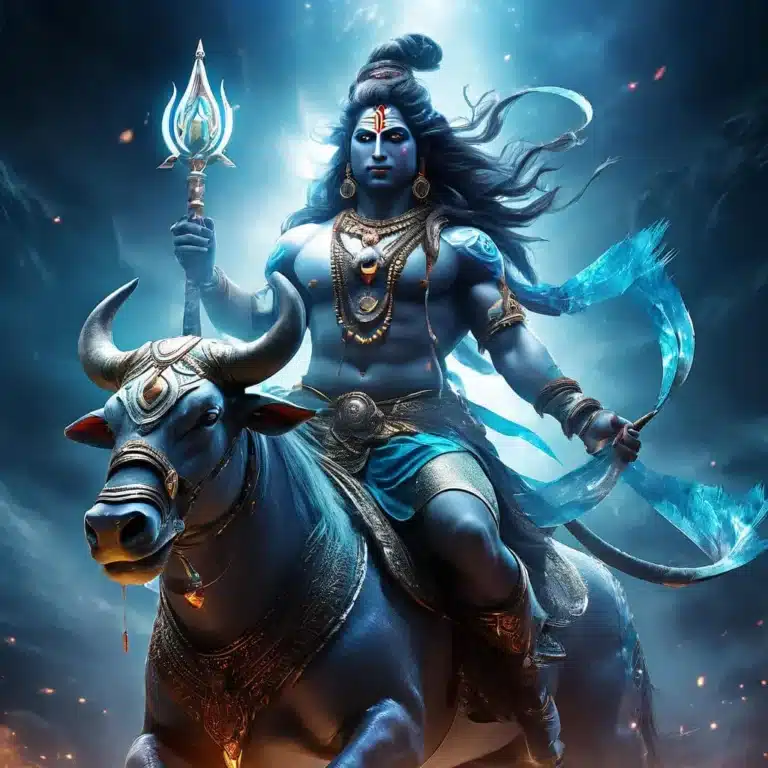
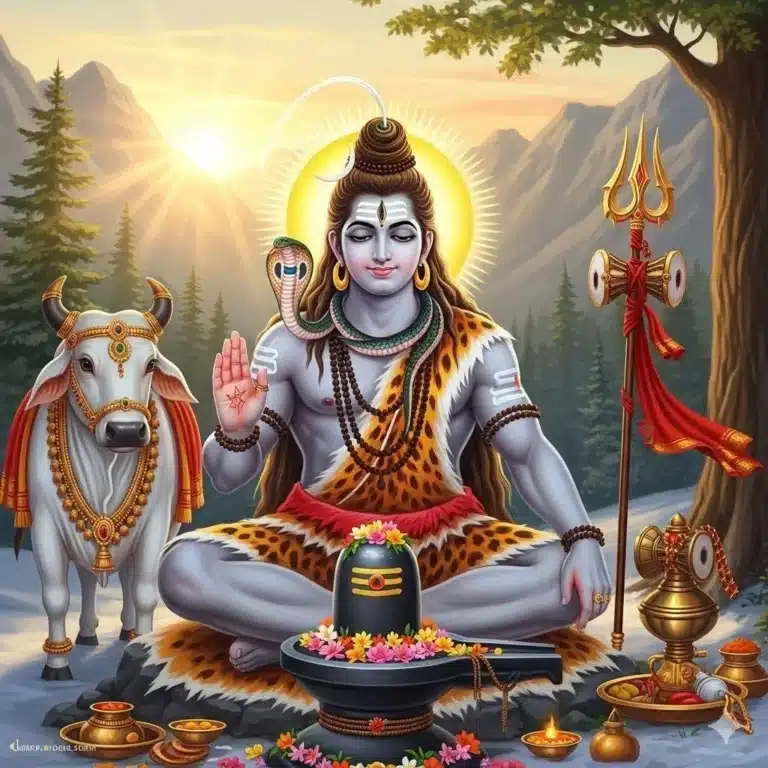
Saguna Meditation Meditation on Ishta Devatas This is meditation on a Murty, either Lord Krishna, Rama, Siva or Devi. This is a concrete form of meditation for people of Bhakti-Marga. This is meditation with Gunas, attributes of God. Repeat His name also. Think of His attributes, omniscience, omnipotence, omnipresence, etc. Your mind will be filled with purity. Lord Krishna’s picture with flute in hand and Lord Vishnu’s picture with conch, discus, mace and lotus are excellent ones of concrete meditation. Enthrone Him in the lotus of your heart amidst blazing light. Mentally think of His lotus-feet, yellow silk robe, necklace set with Kaustubha gem, earrings, crown, bracelets, conch, discus, mace and lotus, and then again come back to His feet. Again and again repeat the process. Saguna meditation is meditation on a form. Select any Murty you like best, either Siva, Vishnu, Rama or Krishna, according to your inclination or taste. Or follow the directions of your Guru. He will select for you the Ishta Devata or tutelary deity which will guide you. An archer first aims at grosser and bigger objects. Then takes up medium objects. Finally he shoots at finer and subtle objects. Even so, one should take to Saguna meditation to start with and when the mind is trained and disciplined well, he can have Nirakara, Nirguna meditation. Saguna meditation is meditation on a concrete object. Nirguna meditation is meditation on an abstract idea. Saguna Upasana removes Vikshepa. For three or six months, practise Trataka on any picture. After six months’ practice of Trataka, meditate on the mental picture of the Murty from half to two hours only in the Trikuti (space between the two eyebrows). See and feel that the Ishta Devata is present in every object in the universe. When you meditate, mentally repeat the Mantra of the Devata. Think of the attributes of the deity, such as omnipotence, omniscience, etc. Feel that Sattvic qualities from the deity flow towards you. Feel that you possess this Sattvic Bhavana. You will have Darsana of your Ishta Devata in one or two years, if you are sincere in your Sadhana. Follow this plan. This will help concentration. Move the mind on the various parts of the Murty. Take for instance the picture of Lord Vishnu with four hands and meditate as follows. The practice of Trataka is of great use in this Saguna meditation. “Dhyeyah sada savitrimandalamadhyavarti Narayanah sarasijasanasannivishtah Keyuravan makarakundalavan Kiriti Hari hiranmayavapur-dhritasankhachakrah.” “Sankhachakragadapane Dvarakanilayachyuta.” “Meditate always on Narayana seated in the Asana of lotus-flower in the midst of a lustrous sun in the lotus of heart or in Trikuti with golden armlets set with diamond, with earrings, with golden crown set with diamond, with golden necklace set with Kaustubha gem and with golden colour, with discus, conch, mace and lotus-flower in four hands-that indestructible Achyuta of Dvaraka.” During meditation, move the mind on the various parts of Vishnu. See the various parts of Vishnu. See with the mind His feet first, then legs, then His yellow silk cloth, then His golden Hara set with diamond, Kaustubha gem, etc., on the breast, then the earrings, Makara Kundalas, then the face, then the crown on the head, then the discus on the right upper hand, then the conch on the upper left hand, then the mace on the lower right hand, then the lotus-flower on the left lower hand. This is the order. Then come down to the feet and start again to the upper parts. By this method the mind will not run towards objects. First meditate on Virat-Purusha. Then take up Saguna meditation. Lastly have Nirguna meditation. Meditation on Virat Purusha Sit in Padma or Siddha Asana in your meditation room and meditate on the following thoughts for half an hour daily. This is a gross form of meditation for six months. 1. Heaven is His head. 2. Earth is His foot. 3. Quarters are His hands. 4. Sun and moon are His eyes. 5. Fire is His mouth. 6. Dharma is His back. 7. Grass and herbs are His hairs. 8. Mountains are His bones. 9. Sea is His bladder. 10. Rivers are His arteries and veins. The mind will expand now. Afterwards take to Saguna meditation on a form of God such as Rama, Krishna or Siva. Have this kind of meditation for a year. Then have recourse to Nirguna meditation on Brahman. By the practice of these various methods, the mind becomes a fit instrument to take up abstract meditation on an abstract idea. Meditation on Gayatri Gayatri is the “Blessed Mother” of the Vedas. It is a symbol of God, the Lord of created beings. Japa of Gayatri Mantra produces Chitta-Suddhi without which you can do nothing, nothing in spiritual line. You can never effect an iota of spiritual progress. Gayatri is an effective universal prayer. This is also known as Brahma Gayatri. Om Bhur Bhuvah Svah; Tat Savitur Varenyam Bhargo Devasya Dheemahi; Dhiyo Yo Nah Prachodayat. Om – Para Brahman Bhur – Bhu-Loka (Physical plane) Bhuvah – Antariksha-Loka (Astral plane) Svah – Svarga-Loka (Celestial plane) Tat – Brahman; Paramatman Savitur – Isvara; Creator Varenyam – Fit to be worshipped Bhargo – Remover of sins and ignorance; Glory Devasya – Of the shining one Dhimahi – We meditate Dhiyo – Intellects; Buddhis Yo – Which; Who Nah – Our Prachodayat – Enlighten “Let us meditate on Isvara and His Glory, Who has created this universe, Who is fit to be worshipped, Who is the remover of all sins and ignorance. May He enlighten our Buddhis (intellects).” Retire into the meditation room after bath just before sunrise. Sit in your Asana and repeat the Mantra mentally as many times as you can, but not less than 108 times and constantly feel that you are receiving light, purity and wisdom from Gayatri. Concentrate on the meaning of the Gayatri. This is important. Have your gaze at the Trikuti, the place between the two eyebrows.

Saguna Meditation Read Post »

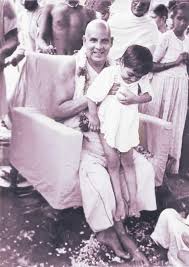
swami sivananda Monk holding child with affection
Principal Asanas, Swami Sivananda

Vajrasana ( The Adamantine Pose)

Vajrasana ( The Adamantine Pose) Those who sit in this Asana have a steady, firm pose. They cannot be easily shaken. The knees are rendered very hard. The Meru Danda becomes firm and strong. This Asana resembles more or less the Namaz pose in which Muslims sit for prayer. TECHNIQUE Keep the soles of the feet on both sides of the anus i.e., place the thighs on the legs one over the other and the soles on the buttocks. The calves must touch the thighs. The part from the toe to the knee should touch the ground. The whole burden of the body is put on the knees and ankles. In the beginning of practice, you may feel a slight pain in the knee and ankle joints but it passes off very quickly. Massage the paining parts and the two joints with the hands. You can use a little Iodex or Amritanjan for rubbing. After the feet and the knees, put both the hands straight on the knees. Keep the knees quite close. Sit like this, keeping the trunk, neck and head in one straight line. This is the most common Asana. You can sit in this Asana for a very long time comfortably. Yogins generally sit in this Asana. BENEFITS If you sit in this Asana for about half an hour immediately after food, the food will be digested well. Dyspeptics will derive much benefit. The nerves and muscles of the legs and thighs are strengthened. Myalgia in the knees, legs, toes and thighs disappears. Sciatica vanishes. Flatulence is removed. The stomach works vigorously. The practice of Vajrasana exercises a stimulating, beneficial influence on Kanda, the most vital part, and which is situated 12 inches above the anus and from which 72,000 Nadis spring. VARIATIONS Some people will keep the heels quite separate. The anus and the buttocks are kept between the two heels and the legs by the side of the two thighs. I. Kurmasana (Tortoise Pose):Press the buttocks firmly with the soles. Keep the head, neck and trunk erect. Keep the hands on your hips or on the knees or on the sides of the chest. II. Ardha Kurmasana:Sit in the same Vajrasana and stretch your hands to your face level, palms facing together and slowly bend and lie down on the ground on the support of your hands. III. Utthana Kurmasana:In this, you will have to sit in the same way as you sit for Garbhasana by keeping the hands between the calves and thighs. In Garbhasana, the feet are kept on the thighs as in Padmasana; but in Uttana Kurmasana the ankles are kept quite close one over the other and the hands pressing the head down. By all these Asanas, sprains and pains in the back will disappear. IV. Mandukasana (Frog Pose):Take the feet towards the back. Let the toes touch each other. Place the knees at the sides. Keep the hands on knees. This is called Mandukasana. V. Ardha Savasana:See the instructions elsewhere under Supta Vajrasana. VI. Padadirasana:Some people call the Vajrasana as Padadirasana. In this pose you can keep the hands on the knees or to your chest level, palms facing each other.VII. Parvatasana:Sit in Vajrasana posture. Raise your body and the hands above your head very slowly. This is called Parvatasana. A better variety of Parvatasana is described elsewhere. VIII. Ananda Mandirasana:Sit in Vajrasana and catch hold of the heels with the two hands. IX. Angushthasana:This is an important Asana for keeping up Brahmacharya. By sitting in Vajrasana slowly raise your knees. There is a similar Asana. See the description of Padangushthasana elsewhere. X. Supta Vajrasana: This is sleeping pose and Vajrasana combined or same as Ardha Savasana. First you must be perfect in doing Vajrasana. Then you can take to this Asana. More strain and force come on the knees in this Asana than in Vajrasana. Lie down on the back as in Ardha Savasana. Make a finger-lock. Allow the head to rest on the palms. Instead of making a finger-lock, you can place the hands as instructed in Matsyasana (first variety). In the beginning, the entire portion of the back may not touch the ground. The lower portion will remain raised up. Within a few days’ practice, you will be able to do this Asana quite satisfactorily.In this Asana you will get all the advantages of Vajrasana. Hunchback is removed as the spine is bent backwards. The spine gets elastic also. He who does this Asana will find it easy to do Chakrasana.

Vajrasana ( The Adamantine Pose) Read Post »

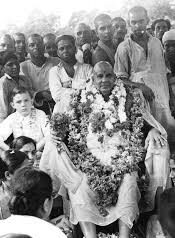
swami sivananda Black-and-white photo of guru with heavy garlands among devotees image
Kinds of Meditation, Swami Sivananda

Preliminary Meditation

Preliminary Meditation Meditation on a Rose Dharana or concentration is fixing of the mind on a concrete object or on an abstract idea. Meditation follows concentration. Meditation is an unbroken, uninterrupted or incessant flow of ideas of the object that is being concentrated upon. Concrete meditation on an object is necessary for an untrained mind in the beginning. Sit in Padma, Siddha or Sukha Asana in a room set apart only for meditation and meditate on the colour, form, the various parts of rose such as petals, stalk, pollen, etc., on the various kinds of roses, as white rose, yellow rose, red rose, cabbage rose, on the various preparations as rose water, rose syrup, scents as Otto de Rose, essence of rose, confections as Gulkand, etc., of the diverse uses of rose as rose water for cleaning the eyes in ophthalmia, Gulkand as a laxative in constipation, the flowers and garlands for worship of God and for wearing, etc., on the various virtuous properties such as its cooling effect on the system, its carminative properties, the price of rose and garlands of roses, the places where they are found in abundance and various other items connected with rose. You must exclude any other foreign thought associated with other objects. By this concrete method the mind becomes fit for abstract meditation. Practise for half an hour daily in the morning at 5 a.m. for a month. Meditation on a Buffalo Krishna Chaitanya, a Brahmachari in Omkar Ashram on the banks of the holy Narmada, went to Rama Acharya and prayed to him to teach him the method of meditation. Rama Acharya said to Krishna, “O Krishna, meditate on Lord Krishna having crossed legs and flute in hand, located in the midst of a big sun in the lotus of your heart and repeat mentally the famous Krishna Mantra: ‘Om Namo Bhagavate Vaasudevaya’.” Krishna Chaitanya said, “Guruji, I am quite dull-headed. I cannot do this. This is too difficult for me. The Mantra is very, very long. Kindly suggest an easy method.” Rama Acharya said, “O Krishna Chaitanya! Do not be afraid. I will tell you an easy way. Hearken. Place a beautiful, small brass idol of Sri Krishna in front of you. Sit in Padmasana. Look at this idol, hands, legs, etc., with attention. Do not look at any other object.” Krishna replied, “O Guruji, this is still more difficult. Sitting with crossed legs will give severe pain in the hips and the knees. If I think of the pain I cannot look at the idol. I have to sit steadily, look with attention and mark carefully the various parts. I cannot do more than one action at a time and I cannot remember more than two things at a time. O Guruji Maharaj, kindly show me a very, very easy way.” Rama Acharya said, “O Chaitanya, place the photo of your father in front of you. Sit in front of the photo in any way you like. Simply look at the figure for a short time.” Krishna Chaitanya replied, “O Guru, my protector, this is also difficult, because I am very much afraid of my father. He is a terrible man. He used to beat me severely. I tremble the very moment I think of his form. My legs quiver. This will never suit me. I should say, this method is more difficult than the previous ones. I pray, Guruji, kindly suggest a very, very simple method this time. I will surely follow.” Rama Acharya said, “O Krishna, tell me now, which thing do you like best?” Krishna replied, “O Guruji, I have tended a buffalo in my house. I have taken plenty of milk, curd and ghee from that buffalo. I like it best of all. I constantly remember this.” Rama Acharya said, “Krishna, now go to this room, lock the door. Sit in a corner on a mat and constantly think and meditate on this buffalo only to the exclusion of all other objects. Do not think of anything else. Do this presently.” Now Krishna Chaitanya was very much pleased. With a gay, cheerful mind he went inside the room, followed the instructions of the Guru implicitly and began to meditate on the buffalo with one-pointed mind intensely. He did not get up from the seat for three days continuously. He forgot all about his food. He was unconscious of his body and surroundings. He was deeply absorbed in the form of the buffalo. Rama Acharya came on the third day to the room of Krishna to see his condition and found Krishna absorbed in meditation. With a loud voice the Guru called out, “O Krishna, how do you feel? Come outside and take your food.” Krishna replied, “O Guruji, I am very grateful to you. I am in deep meditation now. I cannot come out now. I am very big. Horns have grown out of my head. I cannot get out of the small door. I like the buffalo very much. I have become buffalo myself.” Rama Acharya found out that Krishna’s mind had attained Ekagrata and was quite fit for attaining Samadhi. Rama Acharya said, “O Krishna, you are not a buffalo. Now change your meditation. Forget the form of the buffalo (Nama and Rupa) and meditate on the underlying essence of the buffalo, Sat-Chit-Ananda, which is your real nature.” Krishna Chaitanya changed his method, adhered to Guru’s instructions and attained Kaivalya Mukti, the goal of life. The above story goes to illustrate that meditation on any object which the mind likes best, is very easy. Patanjali Maharshi suggests various methods for meditation as: “Meditate on the Effulgent One in the Lotus of the heart who is beyond sorrow. Meditate on the heart that has given up all attachment to sense-objects. Meditate on the knowledge that comes in sleep.” And lastly he has introduced the Sutra No. 39: “Yathabhimatadhyanadva-Meditate on anything that appeals to you as good.” It will be easy to concentrate on a

Preliminary Meditation Read Post »

swami sivananda Vintage portrait of monk in white robe outdoors image
Kinds of Meditation, Swami Sivananda

Selection for Meditation

Selection for Meditation There are different kinds of meditation. A particular kind is best suited to a particular mind. The kind of meditation varies according to taste, temperament, capacity and type of mind of the individual. A devotee meditates on his tutelary deity or Ishta Devata. A Raja Yogi meditates on the special Purusha or Isvara who is not touched by the afflictions, desires and Karmas. A Hatha Yogi meditates on the Chakras and their presiding deities. A Jnani meditates on his Self or Atman. You will have to find out yourself the kind of meditation that is suitable for you. If you are not able to do this, you will have to consult a teacher or preceptor who has attained Self-realisation. He will be able to know the nature of your mind and the correct method of meditation for you. The mind assumes the form of the object it cognises. Then only perception is possible. A Bhakta constantly meditates on the form of his tutelary deity or Ishta Devata. The mind is always takes the form of the Deity. When he is established in his meditation, when he attains the stage of Para Bhakti or supreme devotion, he sees his Ishta Devata only everywhere. Then names and forms vanish. A devotee of Lord Krishna sees Lord Krishna only everywhere and experiences the state described in the Gita “Vaasudevah Sarvam Iti-Everything is Vaasudeva (Krishna) only.” A Jnani or a Vedanti sees his own Self or Atman everywhere. The world of names and forms vanishes from his view. He experiences the utterances of the seers of the Upanishads: “Sarvam Khalvidam Brahma-all indeed is Brahman.” Meditation is of two main kinds, viz., Saguna (concrete) meditation and Nirguna (abstract) meditation. In concrete meditation the Yogic student concentrates on the form of the Lord Krishna, Rama, Siva, Hari, Gayatri or Sri Devi. In abstract meditation he concentrates the whole energy of the mind on one idea of God or Atman and avoids comparisons of memories and all other ideas. The one idea fills the whole mind. When you see the concrete figure of Lord Krishna with open eyes and meditate, it is the concrete form of meditation. When you reflect over the image of Lord Krishna by closing your eyes, it is also concrete form of meditation but it is more abstract. When you meditate on the infinite, abstract light it is still more abstract meditation. The former two types belong to Saguna form of meditation, the latter to Nirguna form. Even in Nirguna meditation there is a concrete form in the beginning for fixing the mind. Later on, this form vanishes and the meditator and the meditated become one. Saguna meditation is meditation on a Murty or form of the Lord. This is a concrete form of meditation for people of devotional temperament. This is meditation with Gunas or attributes of God. Repeat the name of the Lord or pure OM. Think of His attributes, Omniscience, Omnipotence, Omnipresence, etc. Your mind will be filled with purity. Enthrone the Lord in the lotus of your heart amidst a blazing light. Mentally think of His feet, legs, chest, head, hands and the ornaments and dress and again come to His feet. Again and again repeat this process. Imagine that there is a fine garden with lovely flowers. In one corner there are beautiful cabbage-roses. In the second corner there is the “lady of the night.” In the third corner there are Champaka flowers and in the fourth, jasmine. First meditate on jasmine. Then take the mind to the rose. Then to the “lady of the night” and finally to the Champaka. Again rotate the mind as above. Do this again and again for 15 minutes. Gross meditation like this will prepare the mind to finer abstract meditation on subtle ideas. Have the figure ‘OM’ in front of you. Concentrate on this. Do Trataka also with open eyes (steady gazing without winking, till tears flow profusely). This is both Saguna and Nirguna meditation (with and without attributes). Keep a picture of OM in your meditation-room. You can do Puja for this symbol of Brahman. Burn incense, etc., and offer flowers. This suits the modern educated persons. This is abstract meditation on Nirguna Brahman. Repeat OM mentally with Bhava (feeling). Associate the ideas of Sat-Chit-Ananda, Purity, Perfection, “All-Joy I am,” “All Bliss I am.” There is no world. There is neither body nor mind. There is only one Chaitanya (pure consciousness). I am that pure Consciousness. This is Nirguna meditation (without attributes). Meditation on Mahavakyas is tantamount to meditation on OM. You can take up either “Aham Brahma Asmi-I am Brahman” or “Tat Tvam Asi-That thou art.” These are the Mahavakyas or the great sentences of the Upanishads. Meditate on their significance. Deny or negate or throw out the Koshas and identify with the one essence that lies behind them. Meditate. Purify your mind. Practise concentration in a solitary room. Then squeeze out the Upanishads and the Gita from your heart. Do not depend upon imperfect commentaries. If you are sincere, you will understand the real Sankalpas (thoughts) of the Rishis of the Upanishads and Lord Krishna, what they really meant when they uttered those wise Slokas (verses) in scriptures. Unfold the Divinity that is lurking in your heart by concentration and meditation. Do not waste your time. Do not waste your life. Meditate. Meditate. Do not lose even a single minute. Meditation will remove all the miseries of life. That is the only way. Meditation is the enemy of the mind. It brings about Manonasa or the annihilation of the mind. Meditation is of two kinds, viz., concrete and abstract. If you meditate on any picture of a concrete object, it is concrete meditation. If you meditate on an abstract idea, or any quality (such as mercy, tolerance), it is abstract meditation. A beginner should practise concrete meditation. For some, abstract meditation is more easy than concrete meditation. The aspirant can take up the practice

Selection for Meditation Read Post »

swami sivananda Guru seated with two women devotees image
Principal Asanas, Swami Sivananda

Gomukhasana (Cow Face Posture)

Gomukhasana (Cow Face Posture) When this Asana is demonstrated, it will look like the face of a cow. Hence this significant name. Gomukha means `Cow-face.’ TECHNIQUE Place the heel of the left leg under the left part of the anus. Bring the right leg in such a way that the right knee will be above the left knee and the right sole along the side of the left thigh in close contact. By gradual practice, you will have to bring the right heel to touch the left buttock. Sit quite erect. Now you will have to make a finger-lock of the two index-fingers at the back dexterously, of course with a little difficulty in the beginning. Take the left hand to the back, raise the left index-finger upwards. Bring the right index-finger downwards and catch hold of the left index-finger firmly. Make a finger-lock now. If it slips, try again, and keep the lock for two minutes. Breathe slowly. The Asana will now look like the face of a cow. When you make the finger-lock, do not turn the body, do not bend the heel and chest. Keep the trunk quite straight. Change the hands and legs alternately. Fat people will find it difficult to do this Asana, to adjust the heels and thighs and to make the finger-lock. But continual practice will make them all right. BENEFITS This Asana removes rheumatism in the legs, sciatica, piles or haemorrhoids, neuralgia of the legs and thighs, indigestion, dyspepsia, muscular pain in the back, and sprain in the forearms. This helps in maintaining Brahmacharya and good health. Mula Bandha comes by itself and can be kept up with ease. Hence, this Asana is suitable for the practice of Pranayama. Ordinarily you can sit at all times in this Asana for long meditation also. Lean persons with thin thighs and legs will like this Asana very much. Yogi Swami Svarupananda of Jwalapur, Haridwar, was a votary of this Asana. He used to sit always in this Asana alone. This was his favourite Asana. If you find a little congestion (accumulation) of blood in the thighs and legs, massage or shampoo the legs and thighs with your hands as soon as you release the Asana.There is also another variety of Gomukhasana. When you do this variety, raise the elbow of the left hand upwards and the fingers at the back. Take the right hand to the back, raise the index-finger up as far as you can and form a hook of the index-fingers. VARIATIONS I. Vama Janvasana:You will have to keep the legs as in Gomukhasana by keeping the right thigh and knee over the left. The hands can be kept near your chest or on the lap of knees. II. Dakshina Janvasana:In this Asana the left thigh and knee are kept over the right. This is convenient for some persons.

Gomukhasana (Cow Face Posture) Read Post »

Swami Sivananda seated blessing pose image
Practice of Meditation, Swami Sivananda

Practice of Samyama

Practice of Samyama The three-Dharana, Dhyana and Samadhi-together constitute Samyama. Samyama is the name given to the combined practice of Dharana, Dhyana and Samadhi at one and the same time. By Samyama on external objects the Yogi gets various Siddhis and hidden knowledge of the universe of Tanmatras, etc. By concentration on Indriyas, Ahankara, mind, etc., he gets various powers and experiences. These three (Dharana, Dhyana and Samadhi) are more internal than the preceding Yama, Niyama, Asana, Pranayama and Pratyahara. These three constitute the Yoga proper. The five accessories are the external means of Yoga. These three directly bring Samadhi. The other five purify the body, Prana and Indriyas. Hence these three are called Antaranga Sadhana. By the conquest of Samyama comes the stage of cognition. As Samyama becomes firmer and firmer, so does the knowledge of Samadhi become more and more lucid. This is the fruit of the practice of Samyama. Samyama should become very natural. Then the knowledge flashes like anything. Samyama is a powerful weapon for the Yogi. Just as the archer aims at the gross objects at first and then takes to subtle objects he does great deal of practice and ascends the Yogic ladder rung by rung. By Samyama on the sun comes the knowledge of the worlds. By Samyama on the moon, comes the knowledge of the region of stars. By Samyama on the Pole Star, comes the knowledge of the movements of the starts. By Samyama on the strength of elephants and others, comes their strength. By Samyama on the signs (of others), comes the knowledge of their minds. By Samyama on the relation of the ear and ether, comes the divine hearing. By Samyama on the relation between ether and body, to the Yogi attaining the lightness of cotton, comes the power of passage through ether (air). By Samyama and direct perception of the Samskaras (impressions of mind), comes the knowledge of the previous birth. By Samyama on the distinctive relation between Sattva (purity) and Purusha (the soul), comes the power of omnipotence and omniscience. By Samyama on the Chakra (plexus) of navel, comes the knowledge of the body.By Samyama on the Chakra at the pit of the throat, comes the removal of hunger and thirst. By Samyama on the light of the head, comes the Darshan of Siddhas.

Practice of Samyama Read Post »

Swami Sivananda portrait with spiritual message image
Principal Asanas, Swami Sivananda

Dhanurasana ( Bow Pose)

Dhanurasana ( Bow Pose) When this Asana is performed, it represents the appearance of a bow (Dhanus). The stretched arms and forelegs form the string of the bow. It bends the spine backwards. It supplements Bhujangasana. We can say it is a combination of Bhujangasana and Salabhasana with the addition of catching the ankles with the hands. Bhujangasana, Salabhasana and Dhanurasana form a valuable combination. They always go together. They form one set of Asanas. This combination acts as a counter-pose to Halasana and Paschimottanasana, which bend the spine forwards. TECHNIQUE Lie on your chest with the face downwards. Relax all the muscles. Keep the arms at the sides. Gently fold the legs at the back. Raise your hands backwards. Catch hold of the ankles with the hands. Raise the chest and head. Expand the chest. Keep the arms and forelegs quite straight and stiff. Now a good convex arch is formed. If you stretch the legs, you can raise your chest up. You should dexterously manipulate. Retain the breath in a mild manner and exhale slowly. Do this 5 or 6 times. You can retain the pose as long as you can comfortably keep it. Keep the knees close.The whole body rests on the abdomen. This Asana gives a good massage to the abdominal region. You must do this Asana when the stomach is empty. You can give a good movement to the bow-shaped body from side to side, laterally and forwards and backwards. They will ensure a thorough massage to the abdomen. Swing, rock and rejoice. Mentally repeat Om, Om, Om. BENEFITS This is useful in chronic constipation, dyspepsia and sluggishness of liver. It removes hunchback, rheumatism of legs, knee-joints and hands. It reduces the fat, energises digestion, increases peristalsis, invigorates the appetite and relieves congestion of blood in the abdominal viscera and tones them also.Dhanurasana is a blessing for people who suffer from gastro-intestinal diseases. Like Halasana it keeps the spine elastic. It prevents premature ossification of bones. He who does Halasana, Mayurasana and Dhanurasana can never become lazy. He is full of energy, vigour and vitality. VARIETIES I. Akarshana Dhanurasana:This Asana can be termed as Dhanurasana. Sit on the ground. Spread the legs. Catch the right toe with the left hand. Slowly bend the left leg and bring the toes to your chin level and the knee near the left armpit. Now the thigh will touch closely your abdominal portion. Catch hold of the left toe with the right hand and keep the elbow at the back as far as possible. This is more beneficial than the previous variety.

Dhanurasana ( Bow Pose) Read Post »

swami sivananda Seated spiritual guru with garland and disciple standing beside image
Practice of Meditation, Swami Sivananda

The State of Meditation

The State of Meditation Generally when you have dreamless or deep sound sleep it is either you do not remember what you dreamt of or you fall into absolute unconsciousness which is almost death-a taste of death. But there is the possibility of a sleep in which you enter into an absolute silence, immortality and peace in all parts of your being and your consciousness merges into Sat-Chit-Ananda. You can hardly call it sleep for there is perfect awareness. In that condition you can remain for a few minutes. It will give you more rest and refreshment than hours of ordinary sleep. You cannot have it by chance. It requires a long training. When your meditation becomes deep, you generally operate through the subtle Karana Sarira (causal body) only. The Karana Sarira consciousness becomes your normal consciousness. Yogins have a normal Karana Sarira consciousness. Bhaktas like Lord Gauranga, Tukaram, Tulasidas, identified themselves with their Karana Sarira and had normal Karana Sarira consciousness. A Bhakta too becomes one with Brahman. He has divine Aisvarya yet he has a thin ethereal body. He keeps up his individuality. A whirl-pool is one with the whole mass of the water. It has a separate existence also. Similar is the case with the Bhakta who has a life with his Karana Sarira. You will have to pass through six stages of meditation and finally you will enter into perfect Nirvikalpa Samadhi or superconscious State. Form-perception and reflex-perception will totally vanish. There is neither meditation nor the meditated now. The meditator and the meditated have become one. You will attain now the highest knowledge, eternal and supreme peace. This is the aim of existence. This is the final beatitude of life. You are an established sage or an illumined Jivanmukta now. You are liberated while living. Hence you are called a Jivanmukta. You are absolutely free from pain, sorrow, fear, doubt and delusion. You have become identical with Brahman. The bubble has become the ocean. The river has joined the ocean, and has become the ocean. All differences and distractions will totally vanish. You will experience “I am the Immortal Self. All indeed is Brahman. There is nothing but Brahman.” In the beginning of meditation lights of various colours, such as red, white, blue, green, a mixture of red and green light, etc., appear in the forehead. They are Tanmatric lights. Every Tattva has its own hue. Prithvi Tattva has yellow colour. Apas has white colour. Agni has red colour. Vayu has green colour. Akasa has blue colour. The coloured lights are due to these Tattvas. Sometimes a big sun or moon or lightning-like flashes appear in front of the forehead during meditation. Do not mind these appearances. Shun them. Try to dive deep into the source of these lights. Sometimes Devatas, Rishis, Nitya Siddhas will appear in meditation. Receive them with honour. Bow to them. Get advice from them. They appear before you to help and give you encouragement. When there is one Vritti alone, you will get Savikalpa Samadhi. When this one Vritti also dies, you will get Nirvikalpa Samadhi. In Samadhi, the Triputi (triad-knower, knowledge and knowable) vanishes. The meditator and the meditated, the thinker and the thought become one and identical. There is no meditation in Samadhi. It drops. The Dhyata (meditator) and Dhyana get merged in Dhyeya (object of meditation). Beginners will get jerks in meditation. Jerks of head, feet, hands, arms, forearm and trunk may take place. Timid persons are unnecessarily alarmed on the score. It is nothing. Meditation brings on changes in the cells of brain, nerves, etc. Old cells are replaced by new vigorous cells. They are filled with Sattva. New groups, new channels for Sattvic thought-currents, new avenues are formed in the brain and mind. The muscles are therefore agitated a bit. Be courageous and bold. Courage is an important virtue and qualification for aspirants. Cultivate this positive quality. For a few days probably there will be no change perceptible. You will still feel and show irritability. Go on practising every morning. Presently, as you say an irritable thing, the thought will flash into your mind, unbidden, “I should have been patient.” Still go on with your practice. Soon the thought of patience will arise with the irritable impulse and the outer manifestation will be checked. Still go on practising. The irritability has disappeared and patience has become your normal attitude towards annoyance. In this manner you can develop various virtues of sympathy, self-restraint, purity, humility, benevolence, nobility, generosity, etc. Only a trained mind which utterly controls the body can inquire and meditate endlessly. So long as life remains, never for a moment lose sight of the object of your search and contemplation (Brahman), never for a moment allow it to be obscured by any terrestrial temptation. During the inhalation the air comes out 16 digits. When the mind gets concentrated it will become less and less. It will come to 15, then 14, 13, 12, 10, 8 and so on. When you enter into very deep, silent meditation, breath will not come out of the nostrils. There may be occasional slow movement of the lungs and the abdomen. From the nature of the breathing you can infer the degree of concentration of an aspirant. Watch the breath very carefully. When you advance in the spiritual practice it will be very difficult for you to do meditation and office-work at the same time because the mind will undergo double strain. It works in different grooves and channels with different Samskaras during meditation. It finds it very difficult to adjust to different kinds of uncongenial activities. As soon as it comes down from the meditation it gropes in darkness. It gets bewildered and puzzled. It has to work in different grooves and channels. When you again sit for meditation in the evening you will have to struggle hard to wipe out the newly acquired Samskaras you have gathered during the course of the day and get a

The State of Meditation Read Post »