Hari Om

Menu

February 20, 2026

Swami Sivananda sitting with veena musical instrument spiritual portrait photo
Experiences in meditation, Swami Sivananda

Anahata Sounds

Anahata Sounds Anahata sounds (or the melody) are the mystic sounds heard by the Yogi at the beginning of his cycle of meditation. This subject is termed Nada-Anusandhana or an enquiry into the mystic sounds. This is a sign of purification of the Nadis or astral currents, due to Pranayama. The sounds can also be heard after the uttering of the Ajapa Gayatri Mantra, “Hamsah Soham,” a lakh of times. The sounds are heard through the right ear with or without closing the ears. The sounds are distinct when heard through closed ears. The ears can be closed by introducing the two thumbs into the ears through the process of Yoni Mudra. Sit in Padma or Siddha Asana, close the ears with right and left thumbs, and hear the sounds very attentively. Occasionally, you can hear the sounds through the left ear also. Practise to hear from the right ear only. Why do you hear through the right ear only or hear distinctly through the right ear? Because of the solar Nadi (Pingala) which is on the right side of the nose. The Anahata sound is also called Omkara Dhvani. It is due to the vibration of Prana in the heart. TEN KINDS OF SOUNDS Nada that is heard is of 10 kinds. The first is Chini (like the sound of the word Chini); the second is Chini-Chini; the third is the sound of bell; the fourth is that of conch; the fifth is that of Tantri (lute); the sixth is that of Tala (cymbals); the seventh is that of flute; the eighth is that of Bheri (drum); the ninth is that of Mridanga (double drum) and the tenth is that of clouds, viz., thunder.Before thou settest the foot upon the ladder’s upper rung, the ladder of the mystic sounds, thou hast to hear the voice of thy inner God (Highest Self) in 7 manners. The first is like the nightingale’s sweet voice chanting a song of parting to its mate. The second comes as the sound of a silver cymbal of the Dhyanis, awakening the twinkling stars. The next is as the melodious plaint of the ocean-sprite imprisoned in its shell. And that is followed by the chant of Veena. The fifth sound of bamboo-flute shrills in thine ear. It changes next into a trumpet-blast. The last vibrates like the dull rumbling of a thunder-cloud. The seventh swallows all the other sounds. They die, and then are heard no more.

Anahata Sounds Read Post »

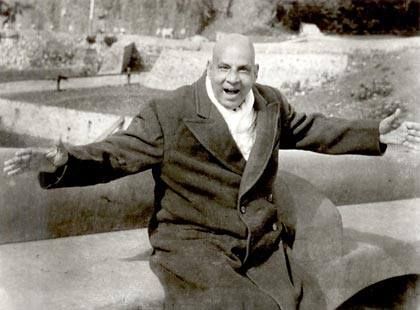
Swami Sivananda smiling with open arms image
Advanced Asanas, Swami Sivananda

Tolangulasana (Weighing Scale Pose)

Tolangulasana (Weighing Scale Pose) This Asana when demonstrated will resemble the form of a weighing scale. Hence this is named as Tolangulasana. TECHNIQUE Lie down in Padmasana as in Matsyasana. Place the palms of the hands underneath the buttocks. If you find it difficult to keep the palms below the buttocks, slowly rest on your two elbows by gradual reclining. Raise the head and the upper part of your body above the ground. Now the whole body will be resting on the buttocks and forearms. Press the chin against the chest. This is Jalandhara Bandha as you can comfortably keep and then exhale slowly. You can do this 5 to 30 minutes. BENEFITS This Asana removes flatulence. Meru-Danda is expanded and developed. Owing to the tension of the abdomen, the faecal matter is pushed down to the rectum from the colon. As the chest considerably expands, the pigeon-chest is slowly removed and you will have a broad, fine chest. You will obtain the benefits of Padmasana. The muscles and the nerves of the arms and forearms get increased supply of blood. Therefore, they will become strong.

Tolangulasana (Weighing Scale Pose) Read Post »

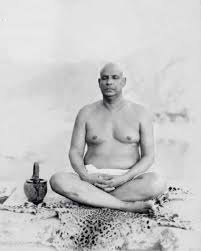
swami sivananda Monk meditating in seated posture picture
Experiences in meditation, Swami Sivananda

Various Experiences in Meditation

Various Experiences in Meditation I. In the beginning of meditation, lights of various colours, such as red, white, blue, green, a mixture of red and green lights, etc., appear in front of the forehead. They are Tanmatric lights. Every Tattva has its own hue. Prithvi Tattva has yellow colour. Apas Tattva has white colour. Agni has red colour. Vayu has green colour. Akasa had blue colour. The coloured lights are due to these Tattvas only. Sometimes a big sun or moon, or lightninglike flashes appear in front of the forehead during meditation. Do not mind these appearances. Shun them. Try to dive deep into the source of these lights. Sometimes Devas, Rishis, Nitya Siddhas will appear in meditation. Receive them with honour. Bow to them. Get advice from them. They appear before you to help and give you encouragement. In the beginning of meditation and concentration you will see in the centre of the forehead a resplendent, flashing light. This will last for half or one minute and then disappear. The light will flash either from above or sideways. Sometimes a sun of 6 inches or 8 inches in diameter with or without rays will be seen. You will see the form of your Guru or Upasya-Murty also. When you get glimpses of the Self, when you see the blazing light, when you get some other extraordinary spiritual experiences, do not fall back in terror. Do not give up the Sad-hana. Do not mistake them for a phantom. Be brave. March boldly with joy. II. What sort of dreams do you get? What kind of thoughts arise in your mind as soon as you wake up, when you are alone in the room, when you walk in the streets? Are you able to keep up the same state of mind you have during meditation in a closed room when you walk in the street also? Introspect and closely watch your mind. If the mind is perturbed when you walk in the streets, you are still weak, you have not advanced in meditation, you have not grown in spirituality. Continue the meditation vigorously. An advanced student will have thoughts of Brahman even in dream. Understand the power of silence. The power of silence is infinitely greater than lectures, talks, orations and discourses. Lord Dakshinamurti taught the four youths, Sanaka, Sanan-dana, Sanatana and Sanatkumara through silence. The language of silence is the language of God. The language of silence is the language of heart. Sit silently and restrain the mental modifications. Sit silently and send out the inner spiritual force to the world. The whole universe will be benefited. Live in silence. Become silent. Rest in silence. Know the Self and be free. When you sit for meditation in the morning send out your love and peace to all living beings. Say: Sarvesham Santir Bhavatu. May peace be unto all: Sarvesham Svasti Bhavatu. May prosperity be unto all: Lokah Samastah Sukhino Bhavan-tu. May happiness be unto the whole world. In the peace all the pains are destroyed; for the intellect of the tranquil-minded soon becomes steady. When the mental peace is attained, there is no hankering after sense-objects. The Yogi has perfect mastery over his reason. The intellect abides in the Self. It is quite steady. The miseries of the body and the mind come to an end. During meditation you will have no idea of time. You will not hear any sounds. You will have no idea of environments. You will forget your name and all sorts of relationship with others. You will enjoy peace and bliss. Gradually you will rest in Samadhi. In the beginning, the aspirant remains in a state of bliss for some time. He comes down. By constant practice of incessant meditation, he continues to remain in that exalted state for ever. Later on, the body-idea completely vanishes. When you enter into deep meditation, you will have no consciousness of your body or surroundings, you will have equanimity of mind. You will not hear any sound. There will be stoppage of upgoing and down-going sensations. The consciousness of egoism will also gradually vanish. You will experience inexplicable joy and indescribable happiness. Gradually, reasoning and reflection also will cease. When you enter the silence through deep meditation, the world outside and all your troubles will drop away. You will enjoy supreme peace. In this silence is Supreme Light of lights. In this silence is undecaying Bliss. In this silence is real strength and joy. When you practise rigorous meditation, Kevala Kumbhaka or natural retention of breath without Puraka (inhalation) and Rechaka (exhalation) will come by itsejf. When Kevala Kumbhaka comes, you will enjoy immense peace and you will have one-pointed mind. The visions of the Rishis concerning the soul and such other transcendental matters, manifest themselves to one who is devoted to the constant duties prescribed by the Srutis and the Smritis, who is unselfish and who seeks to know the supreme Brahman. During deep meditation, the aspirant forgets the external world first and then the body. That feeling of rising up during meditation is a sign that indicates that you are going above body-consciousness. You will feel a peculiar Ananda (bliss) also when you experience this feeling. In the beginning this feeling of rising up will last for a minute only. After a minute you will feel that you have come back to normal consciousness again. You will enjoy a sort of higher type of indescribable peace during your meditation. But it will take a long time to get real spiritual experiences or merge the mind in your Lak-shya or chosen object of meditation or get over body-consciousness completely. Be patient. Persevere. You will succeed. The attainment of cosmic consciousness is permanent in realised souls. It is like a glimpse in the beginning. Through steady meditation, it becomes permanent or natural. III. Concentration is fixing the mind on any point, external or internal. During meditation the mind becomes calm, serene and steady. The various rays of the mind are collected and focussed in the object of meditation. The mind

Various Experiences in Meditation Read Post »

swami sivananda Monk in red robes with garland in decorative floral frame image
Principal Asanas, Swami Sivananda

Savasana (Corpse Pose)

Savasana (Corpse Pose) This is an Asana for relaxation of all muscles, nerves, etc. This Asana should be performed at the very end. It is a closing pose. Mritasana is another name for this pose. TECHNIQUE Spread a soft blanket. Lie flat on your back. Keep the hands on the ground by the sides. Stretch the legs quite straight. Keep the heels close. Let the toes remain separated. Close the eyes. Breathe slowly. Relax all muscles, nerves, organs, etc. Start the relaxation process from the toes. Then proceed to the calf-muscles, muscles of the back, chest, arm, forearm and hands, neck, face, etc. See that the abdominal organs, heart, chest, brain are also relaxed. Relax the plexus of nerves also. Now repeat “Om, Om, Om.” Think of Atman. Think of Rama. Meditate gently with Suddha Bhava, feeling of purity. Do not sleep. Continue the meditation for 15 minutes. You will enjoy perfect peace, ease, comfort and relaxation. Every one of you should enjoy it. Words are imperfect. They cannot adequately describe the feelings. BENEFITS Savasana combines pose and meditation. It gives rest not only for the body but also for the mind and soul. It gives relief, comfort and ease. Relaxation is a very important factor in muscular exercises. In Halasana, Sarvagasana, Paschimottanasana, Dhanurasana and Ardha-Matsyendrasana, you know pretty well that all the muscles of the back, Lettissimus dorsi, Psoasmagnus, Quadratus lumborum, Rectus, abdominis, Pectoralis major of the chest, Biceps, Triceps, the deltoid of the arm, Sartorius of the thighs, are all stretched and contracted to an enormous degree. During intense muscular activity, the metabolism is increased. Metabolism is the Anabolic and Catabolic changes that take place in the body (wear and tear in the system). Anabolic changes are constructive and Catabolic changes are the destructive ones. During metabolism all the muscular tissues are supplied with fresh oxygenated blood or plasma through capillary oozing and carbon dioxide is taken back through the veins to the right auricle of the heart. This is termed tissue-respiration. Just as interchange of oxygen and carbo dioxide takes place in the lungs, so also interchange of carbon dioxide and oxygen takes place in the tissues also. Mark the wonderful creation and working of the internal mechanism of the body! How marvellous is the machinery! Can a scientist make a single atom, a single cell, a single organ of the body? Bow with folded hands before the Creator of this wonderful mechanism of the body. Repeat Om Ram. Enter into silence. Meditate. The whole mystery of creation will be revealed unto you through His Grace. The muscles that are put under severe strain demand relaxation and rest. It is Savasana that promptly and efficiently ensures complete relaxation and perfect ease.

Savasana (Corpse Pose) Read Post »

Swami Sivananda standing near riverside image
Obstacles in Meditation, Swami Sivananda

HIGHER OBSTACLES IN MEDITATION

HIGHER OBSTACLES IN MEDITATION 1. Ambition and Desire Whenever desires trouble you, try to attain Vairagya by looking into the defects of sensual life. Cultivate dispassion or indifference to sensual pleasures. Think that enjoyment produces pain and various troubles and everything is perishable. Withdraw the mind again and again from the objects and fix it on the Immortal Self or the picture of the Lord. When the mind attains a state of equanimity, when it is freed from distraction and Laya, do not disturb it. Ambitious objects, desires and various disturbing thoughts are other obstacles. Destroy desires by Vichara, control of In-driyas, Vairagya, Viveka and Brahmacharya. Do not plan. Do not imagine. Do not try to fulfil them. Be indifferent. Annihilate emotion. Do not be attached to desires. Desires are powerless in the absence of emotions and attachment. They dwindle and die. Find out the causes of disturbing thoughts and remove them one by one. Watch the mind carefully. Dwell in solitude. Do not mix. Have patience, Utsaha and courage. If you find great interest and happiness in meditation, if you are progressing, stop study also for some time. Study also is a Vishaya. God is not in books. He can be reached only by constant meditation. Erudition is to gain applause in society. Avoid pedantry. Sometimes the mind feels tired. Then take complete rest. Do not strain the mind. Go in for evening stroll along the seaside, along the banks of Ganga or any other delightful spot. Chant OM. Feel OM. Hum Om. Reduce the period of meditation for a couple of days. Use your strong common-sense and hear the voice from within often. Observe the moods of the mind. The two currents, Harsha and Soka, are moving in the mind. When you are depressed, go in for a good walk. Close the books. Think of sublime thoughts. Feel you are all joy. Remember that these are all Dharmas of the Upadhi and they do not belong to the thing itself-ATMAN. They will pass away quickly. 2. Moral and Spiritual Pride As soon as aspirant gets some spiritual experiences or Siddhis, he is puffed up with vanity and pride. He thinks too much of himself. He separates himself from others. He treats others with contempt. He cannot mix with others. If any one has some moral qualifications such as spirit of service or self-sacrifice, or Brahmacharya, he will say: “I am an Akhanda-Brahmachari for the last twelve years. Who is pure like myself? I lived on leaves and gram for four years. I have done service in the Ashram for ten years. No one can serve like myself.” Just as worldly people are puffed up with the pride of wealth, so also Sadhus and aspirants are puffed up with their moral qualifications. This kind of pride is also a serious obstacle in the path of God-realisation. It must be eradicated thoroughly. As long as a man boasts of himself, so long he is in the same little Jiva only. He cannot have Divinity. 3. Religious Hypocrisy (Dambha) There are as many fashions in Sadhus as there are in worldly persons. Just as hypocrisy prevails in the worldly persons, so also hypocrisy manifests in aspirants, Sadhus and San-nyasins who have not completely purified the lower nature. They pretend to be what they are not in reality. They pose as big Mahatmas and Siddha-Purushas when they do not know even the alphabet of Yoga or spirituality. They put on serious Sunday-faces which some Christian Missionaries sometimes assume on Sabbath days. This is a dangerous Vritti. They cheat others. They boast and brag too much of themselves. They do mischief wherever they go. They practise hypocrisy to get respect, honour, good food and clothing and to cheat credulous simpletons. There is no greater crime than trading in religion. This is a capital sin. Householders can be excused. But we cannot excuse the aspirants and Sadhus who are treading the path of spirituality and who have renounced everything for God-realisation. Religious hypocrisy is more dangerous than the hypocrisy of worldly persons. A long drastic course of treatment is needed for its eradication. A religious hypocrite is very far away from God. He cannot dream of God-realisation. Thick Tilakas, elaborate painting of the forehead, wearing of too many Tulasi and Rudraksha Malas on neck, arms, forearms and ears are some of the external signs of religious hypocrisy. 4. Name and Fame (Kirti and Pratishtha) One can renounce even wife, son, property, but it is difficult to renounce name and fame. Pratishtha is established name and fame. This is a great obstacle in the path of God-realisation. This brings downfall in the end. This does not allow the aspirant to march forward in the spiritual path. He becomes a slave of respect and honour. As soon as the aspirant gets some purity and ethical progress, ignorant people flock to him and pay homage and salutations. The aspirant gets puffed up with pride. He thinks he is a great Mahatma now. He becomes eventually a slave of his admirers. He cannot notice his slow downfall. The moment he mixes up freely with householders, he loses what little he had gained during eight or ten years. He cannot influence the public now. The admirers also leave him because they do not find any solace or influence in his company. The people imagine that the Mahatma has got Siddhis and they can get wealth and children through his grace, and roots for removal of diseases. They always approach a Sadhu with various motives. The aspirant through bad association loses his Vairagya and Viveka. Attachment and desires crop up now in his mind. Therefore an aspirant should hide himself always. Nobody should know what sort of Sadhana he is doing. He should never attempt to exhibit any Siddhi. He should be very humble. He should pass for quite an ordinary man. He should not accept any rich present from householders. He will be affected by the bad thoughts of

HIGHER OBSTACLES IN MEDITATION Read Post »

Swami Sivananda portrait photograph picture
Principal Asanas, Swami Sivananda

Chakrasana (Circle Pose)

Chakrasana (Circle Pose) Many acrobats demonstrate this Asana in the streets. Young boys can do this Asana very easily because their spine is very elastic. When the bones become rigid and ossified in advanced years, bending of the spine becomes difficult. It resembles a circle. Hence the significant name Chakrasana. In fact, it resembles more a bow than a circle. TECHNIQUE Stand up. Raise the hands above in the air. Slowly bend towards the back making a curve of the body. When the hands come to your hip-level at the backside, slowly bend your legs at the knee. This will help you to bend further and to touch the ground with your hands. Do not be in a hurry. Do it slowly by adjusting balance. Otherwise, you will have a fall. Keep a thick blanket on the ground and over this, practise this Asana. In the beginning, you can do this by the side of a wall or you can ask your friend to catch hold of your hips firmly and then bend.There is another way of doing the Asana. This is suitable for old people. There is no danger of falling at all. Lie down on the back. Keep the soles and palms on the ground. The palms must be kept by the side of your head and the elbow above. Now bring your heels near to your palms on the ground and raise your body above, thus making a curve of your spine. By continuous practice one can render the spine very elastic. Elasticity of spine means everlasting youth. A man with a rigid spine can form a semicircle at the outside. In the course of two weeks all the rigid parts will become elastic. You can catch hold of the heels with the hands when you do this Asana. BENEFITS He who practises this Asana will have perfect control of the body. He will be agile and nimble. He can turn out more work in a short space of time. All the parts of the body are benefited by this Asana. If you find it difficult to keep the Asana for a long time, lie down flat on the ground, again lift it up. When you raise yourself upon this Asana the body will be light. You will get exhilaration of spirit at once. You will be ready for active work. If there is any pain in the neck and shoulders after the practice of Sarvangasana, do this Asana immediately for a few minutes. It will relieve the pain as it bends the neck backwards and thus it is a counter-pose to Sarvangasana. All the other benefits of Dhanurasana, Salabhasana and Bhujangasana are derived from this Asana.

Chakrasana (Circle Pose) Read Post »

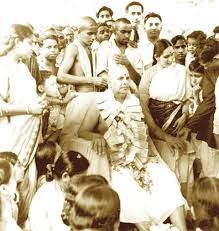
swami sivananda Vintage photo of spiritual guru surrounded by devotees image
Obstacles in Meditation, Swami Sivananda

MENTAL OBSTACLES

MENTAL OBSTACLES 1. Anger It is a gate to hell. It destroys the knowledge of Self. It is born of Rajas. It is all-consuming and all-polluting. It is the greatest enemy of peace. It is a modification of lust. Just as milk is changed into curd, so also lust or desire becomes transmuted into anger. When a man’s desire is not gratified, he becomes angry. Then his mind becomes confused. He loses his memory and understanding. He perishes. A man when he is angry will talk anything he likes and do anything he likes. He commits murder. A hot word results in fighting and stabbing. He is under intoxication. He loses his senses for the time being. He does not know what he is exactly doing. He is a prey to anger. He is under the sway of anger. Anger is a form of Sakti or Devi. In Chandipatha you will find: “Ya devi sarva-bhuteshu krodharupena samsthita Namas-tasyai namas-tasyai namas-tasyai namo namah.” “I bow to that Devi who is seated in all beings in the form of anger.” Resentment, indignation, fury, wrath and irritation are all varieties of anger according to degree or intensity. If a man wants to correct another man and uses slight anger unselfishly as a force to check and improve him, then it is called �righteous anger.’ Suppose a man molests a girl and tries to outrage her, and a by-stander becomes angry towards this criminal, then it is called �righteous indignation.’ That is not bad. Only when the anger is the outcome of greed or selfish motives, it is bad. Sometimes a religious teacher has to express a little anger outwardly to correct his disciples. This is also not bad. One has to do it. But he should be cool within and hot and impetuous outside. He should not allow the anger to take deep root in his Antahkarana for a long time. It should pass off immediately like a wave in the sea. If a man becomes irritable for trifling things very often, it is a definite sign of mental weakness. One should control irritability by developing patience, Vichara, Kshama, love, mercy and spirit of service. When anger is controlled it becomes transmuted into an energy that can move the world. It becomes changed into Ojas, just as heat or light is changed into electricity. Energy takes another form. If an aspirant has controlled anger completely, half of his Sadhana is over. Control of anger means control of lust also. All vices, evil qualities and wrong actions take their origin in anger. If anger is controlled all bad qualities die by themselves. He who has controlled anger cannot do any wrong or evil actions. He is always just. An easily irritable man is always unjust. He is swayed by impulses and emotions. Too much loss of semen is the chief cause for irritability and anger. The root cause for anger lies in egoism. Through Vichara, egoism should be removed. Then only can one control anger completely to the very root. Through development of the opposite virtues such as Kshama, love, Santi, Karuna and friendship it can be controlled to some extent. The force can be reduced. Jnana only completely fries all Samskaras. But practice of Mouna is of great help in controlling anger. It is very difficult to say when a man will be thrown into a state of fury. All of a sudden he gets a terrible fit of anger for trifling matters. When the anger assumes a grave form, it becomes difficult to control. It should be controlled when it assumes the form of a small ripple in the subconscious mind. One should watch the mind carefully, whenever there is a sign of irritability. Then it becomes very easy. When a man is furious, he has lost all control. Anger gains strength by repetition. If it is checked, man gains strength of will gradually. An aspirant should direct all his attention towards conquest of his powerful enemy. Sattvic food, Japa, meditation, prayer, Satsanga, Vichara, service, Kirtan, Brahmacharya, Pranayama-all will pave a long way in eradicating this dire malady. A combined method should be adopted in its removal. When a man abuses, you try to keep quiet. Bear the insult. You will gain strength. Check the impulses and emotions to begin with. Whenever there is likelihood of a burst of anger during conversation or debate, stop your speech. Always try to speak sweet and soft words (Madhura and Mridu). The words must be soft and the arguments hard, but if the words are hard, it will bring discord. If you find it difficult to control anger, leave the place at once and take a brisk walk. Drink some cool water immediately. Chant OM loudly for 10 minutes. Smoking, meat-eating and drinking of liquors make the heart very irritable. Therefore they should be completely abandoned. Tobacco brings diseases of heart. It gives rise to �tobacco-heart’ which gets easily irritated. Be careful in the selection of companions. Talk little. Mix little. Plunge yourself into spiritual Sadhana. Think that the world is a long dream; that the world is Mithya. This will prevent anger. Make Vichara: “What is abuse? What do I gain by getting angry? It is only wasting of energy and time. I am not body. The Atman is the same in all.” This will completely remove anger. Anger spoils the blood. It throws various poisons into the blood. Instances are recorded of women who have killed children by nursing them with breast milk when they were in a fit of anger. In the light of modern psychology all diseases take their origin in anger. Rheumatism, heart diseases and nervous diseases are due to anger. The whole nervous system is completely shattered by one fit of anger. It takes months before it is restored to normal equilibrium. 2. Backbiting This is a dirty, abominable habit of petty-minded people. Almost all are victims of this dire malady. This has become an ingrained habit of
MENTAL OBSTACLES Read Post »

swami sivananda Spiritual collage with monk seated between Hindu deities and floral border image
Principal Asanas, Swami Sivananda

Matsyendrasana (Spine Twist-Full Pose)

Matsyendrasana (Spine Twist-Full Pose) Those who have practised Ardha Matsyendrasana for some time are ready for taking up this full pose. The full pose is a little more difficult than the half pose. The late Sri Madhavadasji Maharaj of Malsar (Gujarat), a famous Hatha Yogi, used to teach his students this pose straightaway. This Asana derives its name from the Rishi Matsyendra. TECHNIQUE Sit erect with legs stretched. Place the left foot on the joint of the right thigh forcibly with both your hands and fix the heel of the left foot at the navel. Let the right leg touch the ground by the side of your left knee. Place the left hand outside the right knee and press the knee to the left side. Get hold of the right toe with the fingers (thumb, index and middle fingers) of the left hand. The right foot should remain firm. Turn the right hand towards the back and catch hold of the left heel. The face and body are turned back towards the right side. Twist the spine. Gaze at the tip of the nose. Breathe slowly. Retain the pose for 20 seconds. You can keep it for 2 or 3 minutes also by gradual practice. Repeat the process several times. The technique appears to be difficult. If you give careful attention and think with concentration, then it is very clear and easy. Or see once when your friend does this Asana.This should be practised both by the right side and left side by turns. Then only maximum benefits of the Asana will be derived. First do the half pose for 2 or 3 weeks and then attempt this. Then the muscles and joints will be more elastic and flexible. If you find it difficult to keep up your balance, instead of turning your hand towards the back, you can keep the palm on the ground. This will give you good support, and would make matters easy. Slowly you can take the hand away and turn it towards the back. BENEFITS The advantages that are derived from the half pose will be derived in this full pose to a great extent. The synovial fluid of the joints increases and the joints become very active. All the adhesions in the joints that are caused by rheumatism are removed. It bestows beautiful health. It augments the Prana Sakti (vigour and vitality) and consequently removes innumerable diseases. The pressure of the heel on the navel forces blood towards the back which nourishes well all the nerves of the back, particularly the Prana Nadis of the back. It awakens the Kundalini and brings peace of mind. Hail! Hail! the Yogi Matsyendra who first introduced this Asana amongst the Hatha Yogic students. Om Namah Parama Rishibhyah-Prostrations to the Rishis! Those who have practised Ardha Matsyendrasana for some time are ready for taking up this full pose. The full pose is a little more difficult than the half pose. The late Sri Madhavadasji Maharaj of Malsar (Gujarat), a famous Hatha Yogi, used to teach his students this pose straightaway. This Asana derives its name from the Rishi Matsyendra. TECHNIQUE Sit erect with legs stretched. Place the left foot on the joint of the right thigh forcibly with both your hands and fix the heel of the left foot at the navel. Let the right leg touch the ground by the side of your left knee. Place the left hand outside the right knee and press the knee to the left side. Get hold of the right toe with the fingers (thumb, index and middle fingers) of the left hand. The right foot should remain firm. Turn the right hand towards the back and catch hold of the left heel. The face and body are turned back towards the right side. Twist the spine. Gaze at the tip of the nose. Breathe slowly. Retain the pose for 20 seconds. You can keep it for 2 or 3 minutes also by gradual practice. Repeat the process several times. The technique appears to be difficult. If you give careful attention and think with concentration, then it is very clear and easy. Or see once when your friend does this Asana.This should be practised both by the right side and left side by turns. Then only maximum benefits of the Asana will be derived. First do the half pose for 2 or 3 weeks and then attempt this. Then the muscles and joints will be more elastic and flexible. If you find it difficult to keep up your balance, instead of turning your hand towards the back, you can keep the palm on the ground. This will give you good support, and would make matters easy. Slowly you can take the hand away and turn it towards the back. BENEFITS The advantages that are derived from the half pose will be derived in this full pose to a great extent. The synovial fluid of the joints increases and the joints become very active. All the adhesions in the joints that are caused by rheumatism are removed. It bestows beautiful health. It augments the Prana Sakti (vigour and vitality) and consequently removes innumerable diseases. The pressure of the heel on the navel forces blood towards the back which nourishes well all the nerves of the back, particularly the Prana Nadis of the back. It awakens the Kundalini and brings peace of mind. Hail! Hail! the Yogi Matsyendra who first introduced this Asana amongst the Hatha Yogic students. Om Namah Parama Rishibhyah-Prostrations to the Rishis!

Matsyendrasana (Spine Twist-Full Pose) Read Post »

Swami Sivananda poster with spiritual teachings image
Principal Asanas, Swami Sivananda

Padahastasana (The Feet and Hands Posture)

Padahastasana (The Feet and Hands Posture) This can be styled as “Standing Paschimottanasana,” as the technique is the same. The only difference is that you will have to do this while standing. Some people call this “Hastapadangasana.” TECHNIQUE Stand erect. Let the hands hang down closely by the sides. Keep the heels close and toes apart. Raise the hands above the head. Slowly bend the body downwards. Keep the knees stiff and erect. Do not bend the legs at the knees. Slowly bring the hands down without bending at the elbows and catch hold of the toes with your thumb, index and middle fingers only. When you bend, slowly exhale and draw the belly backwards. Keep the forehead between the knees. The face is buried between the hollow of the knees or the head can be pushed further between the two thighs. There are varieties in this Asana by interchanging the feet and hands. There is no space here for a detailed description. Further, they are not of much use or advantage. Retain the pose from 2 to 10 seconds. Fatty people will find it difficult to practise this Asana in the beginning. With patience and perseverance they will be able to do it perfectly in a short time. When you draw the back, you will have to contract the abdominal muscles and rectum.If you find it difficult to catch hold of the toes owing to the stiffness of the muscles of the hips and excess of fat in the abdomen, bend the knees slightly. After catching hold of the toes, straighten and stiffen the legs. That is Yukti or common-sense. You can drink a small quantity of water before you do this Asana. BENEFITS There are manifold benefits of this Asana. You will feel much invigorated after the exercise is over. The body is rendered light as much Tamas is dispelled. Adiposity disappears. Any shortening of the legs owing to fracture of the leg or thigh-bones is rectified. You will get slight lengthening of the leg by practice of this Asana for about three months and rubbing the thighs and legs with mustard oil to which a little salt is added. Salt increases penetration of the oil. This Asana helps free passage of Apana Vayu downwards. The Sushumna Nadi is purified and strengthened. The benefits of Paschimottanasana are derived from this Asana also. VARIATIONS I. Padahastasana (Second Variety):Stand erect. Slowly raise your left leg and catch hold of the toe with your fingers. Keep the right on your hip. Do not bend the legs. Some people call this variety as Padahastasana. II. Tadasana (Tree Pose):This is a familiar exercise among the school-students in the drill-class. Now raise one hand above the head very quickly. Do not bend the head. Then bring it to former position. Again do the same with the other hand. Repeat like this as many times as you can. Instead of taking directly above the head at one stretch, you can stop for a while when the hand comes to your shoulder level, parallel to the ground. You can take the two hands together also. When this Asana is over, shampoo the muscles of the hands, shoulders, etc. This Asana is also called Vrikshasana. Sirshasana is also called Vrikshasana. Stand erect on one leg keeping the other leg at the root of the other thigh. This is also a variety of Vrikshasana. III. Utthita Vivekasana:This is very useful for doing Pranayama and Japa in standing position. Stand erect. You can keep the hands in a folded way near your chest. IV. Purna Padasana:If you keep your hands at sides and stand erect, it is called Purna Padasana.

Padahastasana (The Feet and Hands Posture) Read Post »

Swami Sivananda Monk sitting calmly outdoors in meditation image
Obstacles in Meditation, Swami Sivananda

PHYSICAL OBSTACLES IN MEDITATION

PHYSICAL OBSTACLES IN MEDITATION 1. Aimless Wandering Some aspirants have got the habit of wandering aimlessly. They cannot stick to one place even for a week. The wandering habit must be checked. They want to see new places, new faces and want to talk with new people. A rolling stone gathers no moss. A Sadhaka should stick to one place at least for a period of twelve years (one Tapas period). If his health is delicate, he can stay for six months in one place during summer and rainy seasons and in another place for six months during winter. During winter he can stay either at Rajpur (Dehra Dun) or Rishikesh. During summer he can go to Badrinath or Uttarakashi. Sadhana suffers if one wanders constantly. Those who want to do rigorous Tapas and Sadhana must stay in one place. Too much walking produces weakness and fatigue.2. Cessation of Sadhana The aspirant is very enthusiastic in his Sadhana in the beginning. He is full of zeal. He takes a great deal of interest. He expects to get some results or Siddhis. When he does not get these results, he gets discouraged. He loses his interest in his Abhyasa and slackens his efforts. He gives up his Sadhana completely. He loses his faith in the efficacy of the Sadhana. Sometimes the mind gets disgusted with one particular kind of Sadhana. It wants some new kind of Sadhana. Just as mind wants some variety in food and other things, so also it wants variety in the mode of Sadhana. It rebels against monotonous practice. The aspirant should know how to coax the mind on such occasions and to extract work from it by a little relaxation of mind. The cessation of Sadhana is a grave mistake. Spiritual practices should never be given up under any circumstances. Evil thoughts will be ever waiting to enter the gates of the mental factory. If the aspirant stops his Sadhana, his mind will be Satan’s workshop. Do not expect anything. Be sincere and regular in your daily routine, Tapas and meditation. The Sadhana will take care of itself. Mind your own daily business. The fruit will come by itself. Let me repeat here the words of Lord Krishna-“Thy business is with the action (Tapas, Sadhana and meditation) only, never with its fruits; so let not the fruits of action be thy motive, nor be thou to inaction attached.” Your efforts will be crowned with sanguine success by the Lord. It takes a long time for purification of the mind and getting a one-pointed mind. Be cool and patient. Continue your Sadhana regularly. Be careful in the selection of your companions. Undesirable persons easily shake your faith and belief. Have full faith in your spiritual preceptor and the Sadhana which you are pursuing. Never allow your own convictions to be changed. Continue your Sadhana with zeal and enthusiasm. You will have quick spiritual progress and you will ascend the spiritual ladder step by step and reach the goal ultimately.3. Deha-Adhyasa When you go in seclusion for intense Tapas and meditation or when you practise intense meditation in a quiet room, do not bother much about your shaving. Let the hair grow. These mechanical thoughts such as thoughts of shaving, etc., will produce great distraction in your mind, and interfere with the continuity of Divine thoughts. Do not think much of the body, bread, clothing, etc. Think more of God or Atman. 4. Diseases Diseases are generated in the body through sleeping in daytime, late vigils overnight, excess of sexual intercourse, moving in crowd, the checking of the urine and the excreta, the evils of unwholesome food, laborious mental work, lack of regular exercise, etc. If the Yogic student develops some diseases on account of his failure in observing the laws of health and indiscretion, he says, “My diseases have arisen from the practice of Yoga.” Then he will discontinue his practice. This is the first obstacle of Yoga. This body is an instrument for attaining God-realisation. If you do not possess good health, you cannot do any rigorous Yoga-practice and meditation. Therefore keep this body healthy and strong by regular exercise, practice of Asanas and Pranayamas, wholesome food, sunbath, fresh air, cold bath, etc. Just as clouds screen and obstruct the sun, so also the cloud of sickness stands in your way. Even then you must not leave the practice of Japa, concentration and meditation. These small clouds of sickness will pass off soon. Give the suggestions to the mind. “Even this will pass away.” Just as you do not leave your food even for a day, so also you should not leave your spiritual practice even for a day. The mind is ever ready to deceive you and stop you from the practice of meditation. Do not hear the voice of the mind. Hear the sweet voice of the soul. Meditation itself is a tonic, and a panacea for all diseases. If you are seriously ailing you can do Japa and light meditation while lying on the bed. 5. Discussing Too Much Some people in whom the reason has developed have got the habit of entering into unnecessary controversies and discussions. They have got Tarkika Buddhi. They cannot remain quiet even for a second. They will create opportunities for heated debates. Too much discussions end in enmity and hostility. Much energy is wasted in useless discussions. Intellect is a help if it is used in the right direction of Atmic Vichara. Intellect is a hindrance if it is used in unnecessary discussions. Intellect takes the aspirant to the threshold of intuition. Thus far and no further. Reason helps in inferring the existence of God and finding out suitable methods for Self-realisation. Intuition transcends reason but does not contradict reason. Intuition is direct perception of Truth. There is no reasoning here. Reasoning concerns matters of the physical place. Wherever there is ‘why’ and ‘wherefore,’ there is reasoning. In transcendental matters which are beyond the reach of reason, reason is of no use. Intellect helps a lot in reflecting and ratiocination.
PHYSICAL OBSTACLES IN MEDITATION Read Post »