















Hari Om

Menu

February 19, 2026

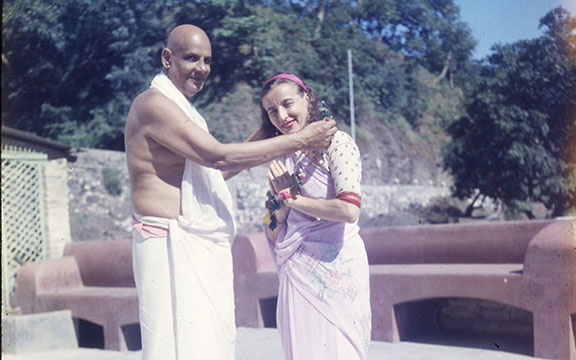
Swami Sivananda garlanding woman outdoors image
Resources, Swami Sivananda

Your Real Nature

Your Real Nature by Swami Sivananda Do you know who you are? I shall tell you. Hear me. You are the master of the body and the senses and the mind. You are the master of your life. All power is within you. You have to know this and manifest it. How can the mind torment you? How can despair overcome you? Despair is a quality of the mind and the mind is your servant. You are all bliss, all light, all strength, all knowledge. You are divinity. You are above and beyond both body and mind. You are immortal satcidananda (existence – knowledge – bliss absolute). The important thing to know clearly is that you are not the slave of the mind and the senses. You have got into the habit of thinking that their craving is your craving. Now get out of this habit, by constantly reminding yourself that you have nothing to do with the mischievous mind and senses. Remember constantly that you are not this perishable body. You are not this perishable, changing mind. You are the all-pervading consciousness. You are the eternal seer. You are the eternal witness. Therefore be ever free and blissful . Intensify your spiritual life. Seek the light of vedanta. Be a flame of the light of the Upanishads. Ever meditate on: “I am the immortal, all-pervading Brahman.” Om is the bow, the soul is the arrow and Brahman is the target. When you realise the effulgent supreme being you shake off all evil and attain the supreme stainless unity. Devote yourself to the holy quest of truth. Devote yourself to the discovery of the ultimate spiritual essence that is all-pervading and interpenetrating. Withdraw the senses. Look within and search your heart. Dive deep into the recesses of your heart, through deep meditation on the innermost self, the inner ruler. You will doubtless realise your identity with Brahman and get to the heart of the infinite – the heart of infinite joy and bliss.

Your Real Nature Read Post »

swami sivananda Vintage photo of monk raising hand in blessing holding ritual fan image
Resources, Swami Sivananda

Am I The I?

Am I The I? by Swami Sivananda You say, “This is my body” this indicates that you are different from the body and the body is your instrument. You are holding it just as you hold a walking stick in your hand. In sleep you exist independent of the walking stick in your hand (body). In dreams you operate through the astral body without having any concern for the fleshy body. Through ignorance you have identified yourself with the physical body and mistaken it for the real ‘I’ which is everpure, allpervading, selfexistent, selfluminous and selfcontained, which has neither beginning nor end, which is changeless, beyond time, space and causation, and which exists in the past the present and the future. Prana (vital force) is not ‘I’. It is the effect of rajas (energy). It is inert. It cannot welcome a man while you are asleep, though it is flowing. It increases and decreases. You say, “My prana” this shows you are different from prana. It is your instrument only. You can control the breath by pranayama. The controller is different from the controlled (prana). Prana is not ‘I’. Mind also is not ‘I’. It gropes in darkness. It borrows light from a higher power. It gets puzzled and confused. During shock and fear it becomes insentient. It is the effect of satva. It is your instrument. You say, “my mind” therefore mind is different from ‘I’. It is full of changing ideas. It has a beginning and an end. You can control the mind and the thoughts the controller is different from the controlled (mind). It is as much your property, and outside of you, as your limbs etc., or dress, chair, etc. In sleep there is no mind yet you wake up with a feeling of continuity of consciousness. There is no mind in delirium or coma yet ‘I’ remains. Mind is a bundle of thoughts and all thoughts are centred around the false egoistic little ‘I’. The root thought of all these thoughts is the ‘I’ that is full of vanities. Talking of myself, I always speak of ‘I’. The sheaths in which I am happy, old, black, a sanyasi (monk), etc., are incidents in the continuity of the ‘I’. They are ever changing and varying but the ‘I’ remains the same unchanging amid the changing.

Am I The I? Read Post »

Swami Sivananda Guru meditating with faded background portraits image
Resources, Swami Sivananda

Treacherous Mind

Treacherous Mind by Swami Sivananda Mind is very treacherous. It will hurl you down into the abyss of ignorance. It will say: “Pitva pitva punar pitva punar janma na vidyate”. (Drink, drink again, there is no rebirth). It will say: “Give up sadhana (spiritual practice), you will not gain anything. There is no bliss beyond the senses. The world is real, there is nothing like sensual pleasure, enjoy it to your heart’s content.” Hear not this voice of the mind. Swim against the mind-current. Mind is your bitter enemy. Disconnect your self from the mind – stand as its silent witness. Do not become one with the mind and the senses. Practise introspection and self-analysis. Thus will the mind gradually be tamed. It will become your obedient servant. Sensual pleasures are nectar in the beginning but they are venom in the end. Here is a way to thin out the mind, a way to control it. If the mind says, “Eat eggs and meat”, eat only spinach, fruits and milk. If the mind says, “Read novels and newspapers”, read only the Gita, the Upanishads and practise karma yoga. If the mind says, “Gamble; practise vigil and do kirtan the whole night. O truant mind: O mischievous imp: I am tired of giving you admonitions. You are like the shameless son-in-law who sits idly in the house of his father-in-law, eating and drinking, and bearing all the rebukes and broom beatings it is difficult to control the mind without the grace of the Lord. The prompter of thoughts alone can subjugate this wild mind. My prostrations and adorations to the prompter. Listen O mind, to this piece of advice. Sink not in the mire of samsara (worldly life), in the perilous ocean of births and deaths. Mix thou not in mundane affairs. Eat not the fruits of pain and sorrow. Take not birth again and again. Wither not thyself in wicked deeds. Is not eternal bliss thy quest? Commune with the Lord of bliss now. Forget the body and its connections and rest peacefully in blissful joy. Abide in thy supreme abode. Now there will be an end of birth. Desire not name, fame, prestige, position, title, honour, rank. Care not, O mind, for earthly affection, love and kind words, respect, nice clothes and dainty dishes, the company of damsels and their talk. Remain steadfast. Gaze on the Lord dwelling in the cave of thy heart – He who is thy refuge, thy solace, source and centre, the witness and the abode, the Lord and dissolution.

Treacherous Mind Read Post »

swami sivananda Vintage photo of guru teaching disciples by riverside image
Resources, Swami Sivananda

How to Cultivate Right Thinking

How to Cultivate Right Thinking by Swami Sivananda Every thought has an image, form, dimension, weight, shape, colour, etc. Thought is as much matter as a piece of stone. A table is a mental image plus some external something. Whatever you see outside has a counterpart in the mind. The pupil is a small round thing in the eye and the retina is another small structure in the eye. How is it that the image of a big mountain, seen through that small aperture, is cast onto the mind? How does the big form of the mountain enter a tiny hole in the eye? This is a marvel of marvels. The image of the mountain already exists in the mind. The mind is like a big, vast sheet of canvas cloth that contains all the pictures of the objects seen outside. Thought moves and passes from one man to another. Thought readily influences people. A man with strong thoughts can readily influence people with weak thought. Telepathy is a branch of occult science wherein the yogi can transmit messages to any man in any part of the world. A thought of anger or hatred sends arrows from the mental factory towards the person aimed at. It harms the individual, sets up discord and disharmony in the thought world and comes back again to the sender and harms him also. If one can understand the effect and power of thought, he will be more careful in the manufacture of his thoughts in his mental laboratory. Develop the faculty of producing only satvic (pure) thoughts by protracted mental discipline, dietetic adjustments, repetition of good hymns with meaning, good company, the study of divine books, japa (repetition of God’s name), meditation, pranayama (yoga breathing), prayer, etc. A good man can help his friend, even though he lives a long way away, by good thoughts alone. Do not allow evil thoughts to enter your mental factory. Always watch your thoughts. Avoid useless thinking. Conserve your mental energy. To cultivate sublime thoughts always keep yourself occupied in doing virtuous deeds and in the study of religious books. Destroy random thinking. Think of only one subject and its different aspects. When you do this never allow any other thought to enter the conscious mind. Again and again withdraw the mind to the subject on hand. Then take up another thought when you have exhausted the previous one. By this practice you will develop organised thinking. The mental images will gain intense strength and force; they will become clear-cut and well defined. In ordinary persons the mental images are undefined.

How to Cultivate Right Thinking Read Post »

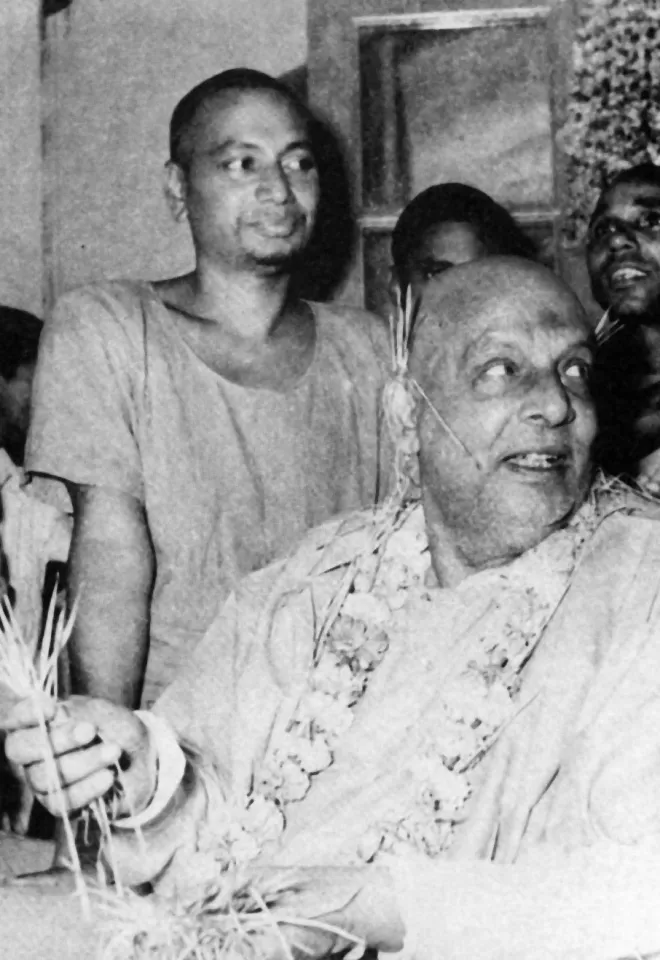
swami sivananda Black-and-white photo of garlanded guru holding ritual grass with devotees image
Resources, Swami Sivananda

Change Your Habits

Change Your Habits by Swami Sivananda Mind is a bundle of habits. Bad habits and prejudices, hidden in one’s nature, will be brought to the surface of the mind when the opportunity comes. If you change the habits you can also change your character. You sow a habit and reap a character. You sow a character and reap a destiny. Habits originate in the conscious mind but when they become established, by constant repetition, they sink into the unconscious mind and become our ‘second nature’. Habit can however be changed by a new, healthy, agreeable habit, of a stronger nature. At present you are thinking, “I am the body”. Think, “I am Brahman”. In the course of time you will be established in Brahmic consciousness. Do not be a slave to one idea. Whenever you get new, healthy ideas, the old ones must be given up. In the mind there is an internal fight ever going on between ‘nature’ and ‘will’, between the old, worldly habits and the new, spiritual habits. In the case of aspirants, the fight is between the old samskaras of the sensual world and new, spiritual samskaras. It is a fight between the good impressions of the past and bad impressions of the past. It is a fight between viveka (wisdom) and instinctive mind and indriyas (senses). Eventually will, which is pure, strong and irresistible, is bound to succeed. There is no doubt about this. As your reason grows and you become wiser and wiser – by study, by contact with the wise and by meditation – your mind must be well prepared to take up new, healthy, rational ideas and eschew the old, morbid ones. Mind is your tool. When emotions arise, separate them, study them, analyse them – but do not identify yourself with them. Master your impulses, emotions and moods. Rise from the position of slave to that of a spiritual king. Just as the repetition of a thought or action leads to perfection, so also does the recurrence of the same process, or the same idea, lead to the perfection of abstraction, concentration and meditation. Give your full mind to God. Only then will you have realisation. Even if one ray of the mind runs outside, it is impossible to attain God-consciousness. You cannot enjoy peace of mind, you cannot practise meditation, if there is tossing of the mind. Destroy mundane desires through dispassion and surrender to the Lord.

Change Your Habits Read Post »

swami sivananda Monk seated wearing garland outdoors image
Resources, Swami Sivananda

Training of the Mind

Training of the Mind by Swami Sivananda If a pebble in our shoe torments us, we expel it. Once the matter is understood, it is just as easy to expel an intruding and obnoxious thought from the mind. Thoughts are the sources of all actions – they are real karma, real action. If, right at the beginning, you can root out all evil thoughts, you will not do any evil actions. You will be free from misery and anxiety. Watch the thoughts with vigilance. Once the tossing of the mind vanishes, the mind will be very calm and you will get good meditation. Free yourself from the clutches of the mind, and liberation will come by itself. Those who have even a little control over their thoughts and speech will have a calm, serene, beautiful face, a sweet voice and brilliant, lustrous eyes. Conserve all mental energy. Use it for spiritual purposes. Do not store useless information in your brain. Learn to unmind the mind. Then only you can fill the mind with divine thoughts. As all the dissipated mental rays are collected you will gain new mental strength. Useless thoughts impede your spiritual growth; obnoxious thoughts are stumbling blocks to spiritual advancement. In untrained persons four or five kinds of thoughts occupy the mind at one time. These may be thoughts of the household, of business, of the office, of the body and so on. If you watch carefully you will see that many thoughts are inconsistent and that the mind wanders aimlessly. Entertain only thoughts that are useful and helpful. These are the stepping stones to all spiritual progress. Every thought must be of a constructive nature; it must be positive and definite. Mental images must be well-defined. Every thought must bring peace and comfort to others and never bring pain or unhappiness. Then, you are a blessed soul on earth. Always watch your mind. Be vigilant. Be alert. Do not allow waves of irritability, jealousy, anger, hatred and lust to arise in the mind. These are the enemies of meditation, peace and wisdom. Suppress them at once by entertaining sublime thoughts. Evil thoughts which have already arisen may be destroyed by originating and maintaining good thoughts, by repeating any mantra, by doing any good actions, by abstracting the mind and by enquiring, “Who am I?” or by will-force.

Training of the Mind Read Post »

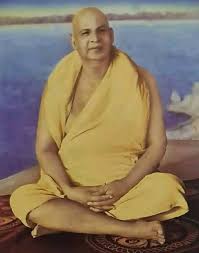
swami sivananda Monk in yellow robes seated cross-legged against painted backdrop image
Resources, Swami Sivananda

Discipline of the Mind

Discipline of the Mind by Swami Sivananda You must have a pure mind if you want to realise the self. Unless the mind is free and it casts away all desires, cravings, worries, delusion, pride, lust, attachment, likes and dislikes, it cannot enter into the domain of supreme peace and unalloyed felicity, the immortal abode. A glutton or a sensualist, a dullard or a lazy man, cannot practise meditation. He who has controlled the tongue and other organs, who has an acute acumen, who eats, drinks and sleeps in moderation, who has destroyed selfishness, lust, greed and anger, can practise meditation and attain success in samadhi (superconsciousness). You cannot enjoy peace of mind, you cannot practise meditation if there is viksepa in your mind. Viksepa is tossing of mind. Viksepa is rajas (passion); viksepa and desires co-exist in the mind. If you really want to destroy viksepa, you must destroy all mundane cravings through dispassion and self-surrender to the Lord. If you apply fire to green wood, it will not burn; if you apply fire to a piece of dried wood, it will at once catch fire and burn. Even so, those who have not purified their minds will not be able to start the fire of meditation. They will be sleeping or dreaming building castles in the air – when they sit for meditation. But those who have removed the impurities of the mind by japa (repetition of God’s name), service, charity, pranayama (yoga breathing) etc., will enter into deep meditation as soon as they sit for meditation. The pure ripe mind will at once burn with the fire of meditation. Clarify your idea again and again. Think clearly. Have deep concentration and right thinking. Introspect in solitude. Purify your thoughts. Still the thoughts. Silence the bubbling mind. Allow one thought-wave only to rise from the mind and settle down calmly. Then allow another thought to enter. Drive off all extraneous thoughts that have nothing to do with the subject matter on hand. An efficient control over thoughts, through long practice, is a great help in meditation. Watch every thought very carefully. Shut out all useless thoughts from the mind. Your life must tally with your meditation. You keep up your meditation during work also. Do not give new strength to evil thoughts by constantly thinking. Restrain them. Substitute sublime thoughts.

Discipline of the Mind Read Post »

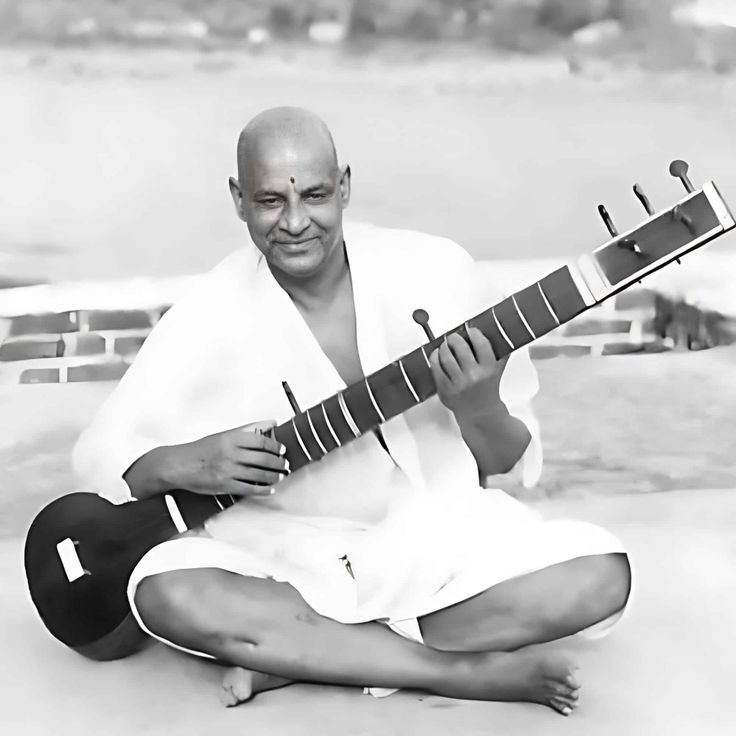
Swami Sivananda sitting and playing tanpura outdoors. image
Resources, Swami Sivananda

Perfection

Perfection by Swami Sivananda The essential qualification for a sadhu (man of renunciation) is that he should adapt himself to all conditions and circumstances, causing no inconvenience to others. His is the duty to serve not to worry others. Very few sadhus know what they are and what they should be. This morning an old sadhu from Swarg Ashram came here. He was there when I was there, too. He is aged 80 now. Today they did not prepare roti here. There was only rice and curry. But, the sadhu would not take. He wanted only roti (bread). It seems rice will produce wind. If you allow him, he will lecture to you for half an hour on the evil effects of riceeating. But he will refuse to be reminded that a very large population in India and the world lives on rice alone. This is all that he has understood of sadhana (spiritual practice) during all these thirty years of sadhu life: “Rice should not be taken: roti alone is good for health and meditation.” All their life these people will waste on this one thought of the right food and the wrong food. What is there if one day you do not get your food to your own liking. Even your own wife will not tolerate you for a day if you are so particular about what food you should have. It is the special duty of a sadhu not to cause any inconvenience to householders. We are not to be a burden on householders, but to be of some service to them. When will the sadhu understand this. Some sadhakas (seekers), here also have that impression that they are living in an asrama and that one consideration ought to be sufficient to open out the gates of Kaivalya (liberation) to them. I assure you: even if they live many hundreds of their lives near the greatest saint in the world, they will not improve even a bit. They must themselves exert. Each one must think for himself, act for himself. There have been some sadhakas here whom I myself trust and put in charge of the affairs of the asrama then I myself used to dread to approach them. If, for instance, I go to them and ask them to prepare a little more of what they give me for my food in order that I may give the extra quantity to some one else, I would be refused. What I do on those occasions is to reduce my own consumption and distribute this to the others. If a sadhaka gets real samadhi (superconsciousness) in a hundred births, that is a very great achievement. God is perfect; and unless and until all the evil qualities are eradicated and divine qualities acquired to the degree of perfection, there will be no samadhi.

Perfection Read Post »

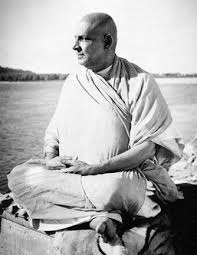
Swami Sivananda meditating by riverside image
Resources, Swami Sivananda

Self-Realisation

Self-Realisation by Swami Sivananda There is no other duty for man except meditation on the self. Dismissing all else, one should establish oneself in the self. There remains nothing to be done or attained when the self is experienced. For that Brahman the immortal is before, behind, to the right and to the left and stretched forth above and below. Brahman is all this. The real alone is an enduring being and this real is experienced through meditation coupled with knowledge. Whatever a man of purified mind makes clear in his mind, and whatever desires he desires, that he gets and that he fulfills. One should therefore have pure and perfect resolves. The supreme self is experienced in the fourth state of consciousness.It is neither this nor that it has no quality in particular and yet it is everything. It is peaceful, blessed and nondual. It is the cessation of all phenomena. It is the atman that should be known and realised. That is the purpose of life. The liberated sage experiences that he is everything the tree, the mountain, the sun. He is the food and the eater of the food. He is the knower, the knowledge and the known, in one. He is the whole universe in himself. Bliss is the ultimate nature of reality from bliss all this comes forth. All the bliss of the world is only a shadow of selfbliss. The self is the source of all bliss it is everything all knowledge and all bliss. All this is based on consciousness and is guided by consciousness. Consciousness is Brahman. I am Brahman. That thou art. This self is Brahman. Only the infinite is bliss. There one sees nothing else, hears nothing else, understands nothing else. That is the infinite fullness. The self is an ocean without a shore and a surface. It is merely existence, consciousness and bliss. When there is duality one can speak to the other, but when everything is but one’s own self then who can speak to whom? Who can see whom? Atman is pure consciousness it is the unchanging witness. It is realized within your heart as existence, knowledge, bliss absolute. Realise this atman within the temple of your own heart and enjoy immortal bliss.

Self-Realisation Read Post »

Swami Sivananda spiritual saint and yoga master
Resources, Swami Sivananda

Persevere in Sadhana

Persevere in Sadhana by Swami Sivananda Let the sadhana (spiritual practice) always be regular, continuous, unbroken and earnest. Not only regularity but also continuity in sadhana and meditation are necessary if you want to attain selfrealisation quickly.A spiritual stream, once set going, does not dry up unless the channelbed gets blocked, unless there is stagnation. Be vigilant eternally. Meditate regularly. Annihilate the undercurrent of vasana (habitpatterns).Patience, perseverance, courage, determination, discrimination and dispassion are needed to tread the spiritual path. Put away thoughts, stimuli, perceptions, intentions, emotions, feelings, preoccupations and deliberations arising out of the senses and the sense objects.You will attain supreme blessedness or the peace of the eternal. Keep the flame of thy aspiration ever kindled bright. Let purity, serenity, compassion, truth and oneness, manifest in thy thoughts and actions. Through penance, prayer and meditation the soul ascends on the divine chariot, to the realms of infinite bliss, to God’s halls of wisdom.Regularity is of paramount importance in spiritual practice. Spiritual aspirants must be arduous and efficient in performing their tasks without a break. Pray without a break. Have unshakable faith.Remember vairagya (dispassion) and abhyasa (constant practice). Prayer is the wing by which you fly to God. Meditation or intuition is the eye by which you see God. Pray fervently unto the Lord. Pray for the Lord’s light and guidance.Meditate on the great truth within. Strive ever to keep thyself close to the divine centre. Day by day draw nearer unto the Lord. Strive inwardly to grow into the likeness of the divine ideal. Meditate on the great truth within. Strive ever to keep thyself close to the divine centre. Day by day draw nearer unto the Lord. Strive inwardly to grow into the likeness of the divine ideal.

Persevere in Sadhana Read Post »