





Hari Om

Menu

February 19, 2026

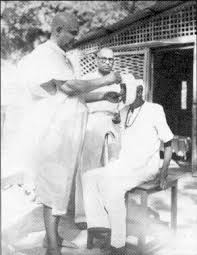
Swami Sivananda being assisted by devotee image
Swami Sivananda, Yoga

Hatha Yoga

Hatha Yoga by Swami Sivananda Hatha Yoga relates to the restraint of breath (Pranayama), Asanas, Bandhas and Mudras. ‘Ha’ and ‘tha’ mean the union of the sun and the moon, union of Prana and Apana Vayus. ‘Hatha’ means any tenacious practice till the object or end is achieved. Trataka, standing on one leg, (a kind of Tapas) and similar poses are all Hatha Yoga practices. Hatha Yoga is inseparable from Raja Yoga. Raja Yoga begins where Hatha Yoga ends. Raja Yoga and Hatha Yoga are interdependent. Raja Yoga and Hatha Yoga are the necessary counterparts of each other. No one can become a perfect Yogi without a knowledge and practice of both the Yogas. Hatha Yoga prepares the student to take up Raja Yoga. A Hatha Yogi starts his Sadhana with body and Prana; a Raja Yogi starts his Sadhana with his mind; a Jnana Yogi starts his Sadhana with Buddhi or intellect and will. A Hatha Yogi gets Siddhis (psychic powers) by uniting Prana and Apana and by taking the united Prana-Apana through the six Chakras (centres of spiritual energy) to Sahasrara at the crown of the head. A Raja Yogi gets Siddhis by Samyama, i.e., combined practice of Dharana, Dhyana and Samadhi at one time. A Jnana Yogi exhibits Siddhis through pure will or Sat-Sankalpa. A Bhakta gets Siddhis through self-surrender and the consequent descent of grace. Kriyas, viz., Neti, Dhauti, Nauli, Basti, Tratak and Kapalabhati belong to Hatha Yoga. All need not practise these Kriyas. Those who have got much phlegm in the body should practise these Kriyas. Learn these under an expert Hatha Yogi. Hatha Yoga is not the goal. It is only a means to an end. Take to Raja Yoga after possessing good health. Do Asana, Kumbhaka, Mudra and shake the Kundalini. Then take it to Sahasrara through Chakras in the Sushumna. O children of light! Will you drink not, will you drink not, the nectar of immortality? Brother! Attain good health. Without health how can you live? Without health, how can you earn? Without health how can you get success in Yoga or any undertaking? Possess wonderful health through the practice of Hatha Yoga. Drink the nectar in Sahasrara and live in the immortal abode of Siva. Yoga Asanas Health is wealth. Health is indeed a covetable possession. Good health is a valuable asset to one and all. It can be achieved by the regular practice of Yoga Asanas. The practice of Asanas controls the emotions, produces mental peace, distributes Prana evenly throughout the body and different systems, helps in maintaining healthy functioning of the internal organs, gives internal massage to the various abdominal organs. Physical exercises draw the Prana (energy) out but the Asanas send the Prana in. The practice of Asanas cures many diseases and awakens Kundalini Sakti. These are the chief advantages in the Yogic system of exercises which no other systems have. Practise a few Asanas daily at least for a period of fifteen minutes. You will possess wonderful health. Be regular in your practice. Regularity is of paramount importance. Practise Bhujang, Salabh, Dhanur, Sarvang, Hala and Paschimottasan Asanas. Bhujang, Salabh and Dhanur will remove constipation and muscular pain of the back. Sirsh, Sarvang and Hala will help you in maintaining Brahmacharya, rendering the spine elastic and curing all diseases. Paschimottasan will reduce fat in the belly and help digestion. Relax all muscles in Savasana in the end. Asanas should be done on empty stomach in the morning or at least three hours after food. Morning time is best for doing Asanas. Do not wear spectacles when you do Asanas. Wear a singlet if necessary and a Langotee. Be moderate in your diet. Practice of Brahmacharya is very important for success in Yoga Asanas. Start with minimum time for each Asana and then gradually increase the period. Answer the calls of nature before you start the practice. Boys and girls over ten years of age as well as women can practise Asanas. The world needs good, healthy, strong boys and girls. What do we find in these days in India? India, the land of Rishis and sages, the land which produced Bhishma, Bhima, Arjuna, Drona, Asvatthama, Kripa, Parasurama and countless other chivalrous warriors, the soil which contained numberless Rajput chiefs of undaunted courage and matchless strength, now abounds in weak and timid persons. Children beget children. The laws of health are ignored and neglected. The nation is suffering and dying. The world requires numberless brave, moral, Adhyatmic soldiers who are equipped with the five virtues, viz., Ahimsa, Satyam, Asteya, Brahmacharya and Aparigraha. Pranayama Pranayama is an exact science. It is the fourth Anga or limb of Ashtanga Yoga. It is the regulation of breath or control of Prana. Pranayama steadies the mind, augments the gastric fire, energises digestion, invigorates the nerves, destroys the Rajas, destroys all diseases, removes all laziness, makes the body light and healthy and awakens Kundalini. Pranayama should be practised when the stomach is empty. Be regular in your practice. Do not take bath immediately after the practice. Do not practise Kumbhaka or retention of breath in the beginning. Have only slow and mild Puraka (inhalation) and Rechaka (exhalation). Do not strain the breath beyond your capacity. Keep the ratio for Puraka, Kumbhaka and Rechaka as 1:4:2. Exhale very very slowly. Sit on Padma, Siddha or Sukha Asana. Keep the head, neck and trunk in a straight line. Inhale slowly through the left nostril and retain the breath according to the ratio, then exhale slowly through the right nostril. This is half process of Pranayama. Then inhale through the right nostril, retain and exhale through the left nostril. Do not retain the breath for more than one or two minutes. Do ten or twenty Pranayamas according to your capacity. Do not fatigue yourself. Increase the number gradually. You can go up to 16:64:32. This is Sukhapurvaka or easy comfortable Pranayama. Practise Sitali in summer. This will purify your blood and cool the system too. Practise
Hatha Yoga Read Post »

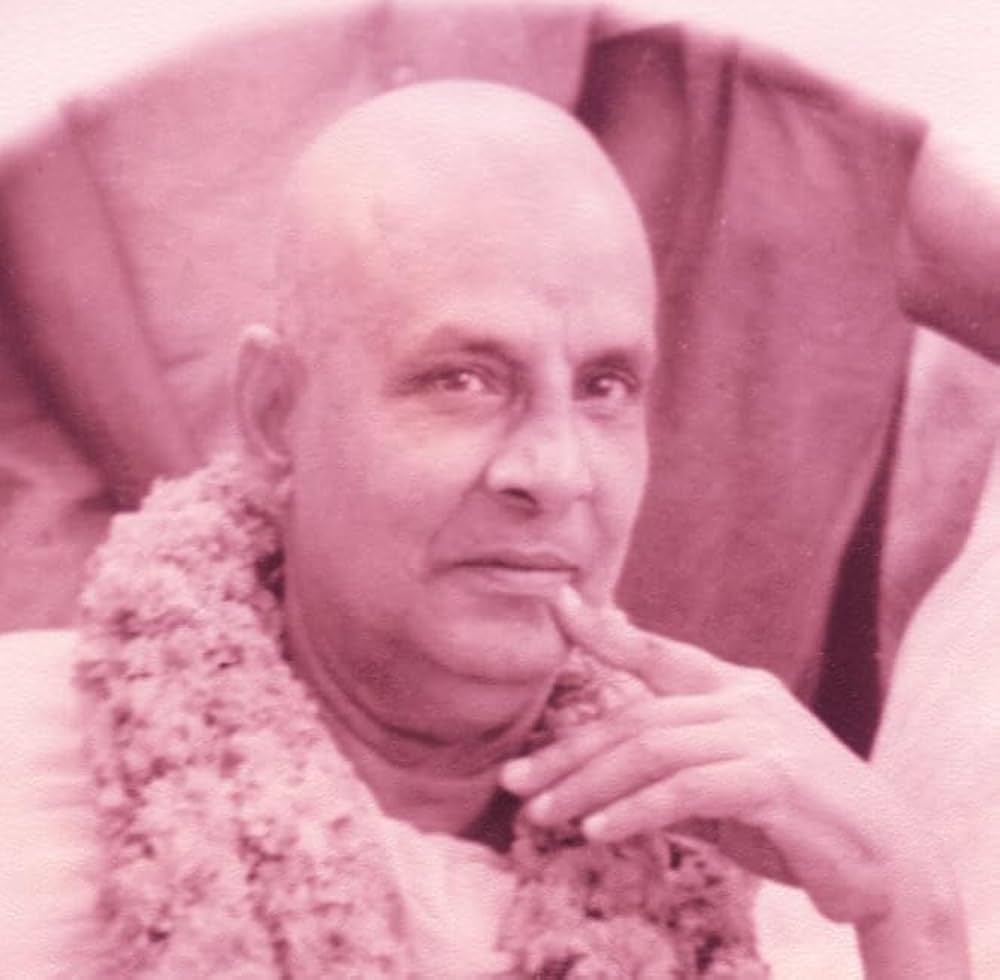
Swami Sivananda close-up with thoughtful expression image
Swami Sivananda, Yoga

Japa Yoga, The Easy Sadhana

Japa Yoga, The Easy Sadhana by Swami Sivananda Name and Nami are inseparable. Remember His Name. Chant His Name. Sing His Name. Glory to His Name. Victory to His Name, which blesses us for ever and confers immortality, supreme peace and eternal bliss. Constant repetition of the Names of the Lord (Japa, Smarana) is an easy means for crossing the ocean of mortal Samsara or earthly existence. This is more suitable for the householders. Meditation is different from Japa. Japa is the repetition of any Mantra. When the mind is made to dwell on the form of your Ishta Devata as well as on the Divine attributes, such as Omnipotence, Omniscience, etc., it is called meditation. You should cultivate Bhakti or devotion if you want to attain success in Mantra Yoga. Bhakti Yoga and Mantra Yoga are interblended. They are inseparable. That man who does not repeat the Lord’s Name lives in vain. It is better to die than to live without His Name. He who does Japa of any Mantra must lead a virtuous life. Then he will realise the maximum benefits of the Mantra. Japa and Dhyana are more important than Asana and Pranayama. You should not doubt the teachings of the scriptures. Flickering faith will lead to downfall. A man of weak will, who has no faith in Japa, cannot expect to have progress in the spiritual path. If he says: “I am practising ‘Who am I? enquiry,” this is all wild imagination. Few are fit for the �Who am I?’ enquiry. Repeat any Mantra of a Devata you like best and feel its influence on the mind and the body and its revelations. This is better than mere study of books. Books, doubtless, will help you and throw much light. But what is wanted is real Sadhana or practice. Observance of Brahmacharya, truthfulness, Ahimsa, right conduct, recourse to Sattvic diet are necessary during the practice. There is rhythm in the repetition of a Mantra. Rhythm is metre. Rhythm is flowing motion. Rhythm is harmony of pronunciation and proportion. Rhythm is recurrence of accents. This rhythm causes harmony in the practitioner. The hypnotic rhythm of Mantra repetition causes stillness in the mind. If you feel very weak, you can stop the practice of Asanas for some time. But Japa should be continued at all times. It is a mental and physical tonic, besides a purifier and giver of Moksha. Karmas have to be purged out. An eager aspirant gets all sorts of diseases, because he is hurrying up for union with the Lord. Many evil Karmas have to be exhausted or worked out. Aspirants should be absolutely fearless. Disease is a messenger from God. Disease is a guest of this house, body. Diseases are tests to try the sincerity of the aspirant. Seekers after Truth should have unshakable, unflinching, unswerving faith at all times, in all conditions of life. They should not be discouraged. Regular study of the Ramayana, Japa with Dhyana, morning and evening walks, should be regularly practised. Kamal got a severe scolding from his father Kabir for prescribing Ram Nam for a merchant, to be repeated twice for curing leprosy. Kamal asked the merchant to repeat Ram Nam twice and yet he was not cured of this disease. Kamal reported to his father about the incident. Kabir was very much annoyed and told Kamal: “You have brought disgrace on my family by asking the merchant to repeat Ram Nam twice. Repetition of Ram Nam once is quite sufficient. Now ask the merchant to stand in the Ganga and repeat Ram Nam once from the bottom of the heart.” Kamal followed the instructions of his father. The merchant repeated Ram Nam once only with Bhava from the bottom of his heart. He was completely cured of leprosy. Kabir sent Kamal to Tulasidas. Tulasidas wrote Ram Nam on a Tulasi leaf and sprinkled the juice over 500 lepers. All were cured. Kamal was quite astonished. Then Kabir sent Kamal to bring the corpse that was floating in the river. Sur Das repeated Ram Nam only once in one ear of the corpse, and it came back to life. Kamal’s heart was filled with awe and wonder. Such is the power of God’s Name. My dear friends, my educated college youths, my dear barristers, professors, doctors and judges! Repeat the name of the Lord with Bhava and Prema from the bottom of your heart and realise supreme bliss and immortality this very second. Mantras For Japa In this iron age or the Kali Yuga, Name of the Lord is the support for a man to cross this ocean of Samsara. There is an indescribable power (Achintya Sakti) in the Name. This Sakti takes man to the Lord. Of the various kinds of penances, in the form of action or austerity, the constant remembrance of Krishna is the best. (Vishnu Purana II-Chap. VI verses 134-135). Those who meditate on the form of Lord Krishna may repeat mentally the Mantra: Om Namo Bhagavate Vasudevaya. Vasudeva is another name for Lord Krishna. It means: “All-pervading intelligence.” Bow down to Lord Narayana and utter the words ‘Jaya Narayana.’ Do mentally Japa of “Om Namo Narayanaya.” Do eight lakhs of this sacred Mantra. This will form one Purascharana. Then do Haven. Feed the Brahmins and the poor people. You will have wonderful spiritual experiences. Japa of OM and Mahavakyas such as ‘Aham Brahma Asmi’ will strengthen Vedantic Samskaras, purify the Chitta and eventually lead to the attainment of knowledge of Self. Every Mantra should be preceded by Pranava or OM. Omkara gives full life to the Mantra. All Mantras have equal potency or Power. It is quite incorrect if you say one Mantra is superior to another. You can attain God-realisation by doing Japa of any Mantra. Valmiki attained God-consciousness by repeating even Mara-Mara. Some people think that OM or Soham is superior to Om Namassivaya or Om Namo Narayanaya. This is also wrong. The state gained by doing Japa of

Japa Yoga, The Easy Sadhana Read Post »

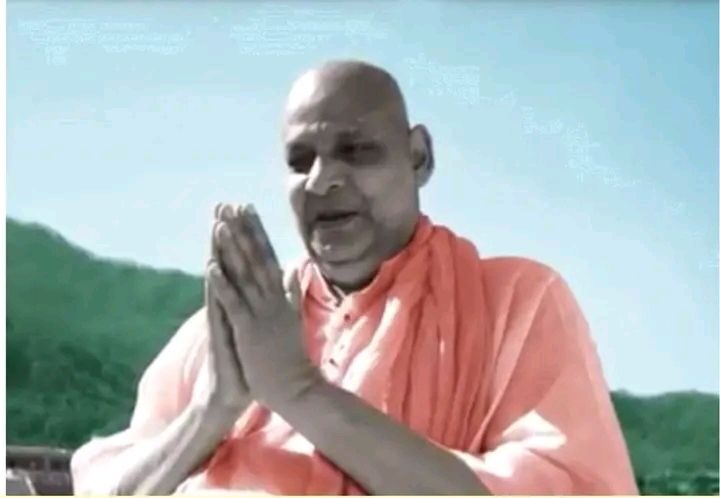
Swami Sivananda folded hands greeting outdoors image
Pranayama, Swami Sivananda

The Meditation Room

The Meditation Room Have a separate meditation room under lock and key. Never allow anyone to enter the room. Keep it sacred. If you cannot afford to have a special room for contemplative purposes and for practising Pranayama, have a place in the corner of a quiet room, set apart for this purpose. Have it screened. Place the photo of your Guru or Ishta-Devata in the room in front of your Asana. Do Puja daily to the picture, physically and mentally, before you start meditation and Pranayama. Burn incense in the room or burn Agarbathi (incense sticks). Keep some sacred books there such as Ramayana, Srimad Bhagavata, Gita, Upanishads, Yoga-Vasishtha, etc., for your daily study. Spread a fourfold blanket and over it a piece of soft white cloth. This will serve the purpose of an Asana. Or spread an Asana of Kusa grass. Over it spread a deer or tiger skin. Sit on this Asana for practising Pranayama and meditation. You can have a raised platform made of cement. Over this you can spread your Asana. Small insects, ants, etc., will not molest you. When you sit on the Asana keep your head, neck and trunk in a straight line. By doing so, the spinal cord that lies with the spinal column will be quite free. THE PLACE Select a solitary, beautiful and pleasant spot, where there are no disturbances, on the bank of a river, lake or the sea or the top of a hill where there is a nice spring and grove of trees, and where milk and articles of food are easily procurable. Build a small Kutir or hut. Have one compound. In the corner of the enclosure, sink a well. It is impossible to get an ideal place that can satisfy you from all viewpoints. The banks of Narmada, Yamuna, Ganga, Kaveri, Godavari, Krishna are very suitable for building Kutirs or huts. You must select one such spot, where there are some other Yogic practitioners in the neighbourhood. You can consult them in times of difficulties. You will have faith in the Yogic Kriyas. When you see others also who are devoted to such Yogic practices, you will diligently apply yourself in your practice, as you will get an impetus and you will strive to excel them. Nasik, Rishikesh, Jhansi, Prayag, Uttarkasi, Brindavan, Ayodhya, Varanasi, etc., are good places. You can fix a spot in a place far from the crowded localities. If you build a Kutir in a crowded place, people out of curiosity will molest you. You will have no spiritual vibrations there. You will be without any protection if you build your cottage in a thick forest. Thieves and wild animals will trouble you. The question of difficulty for food will arise. In Svetasvatara Upanishad it is said: “At a level place, free from pebbles, fire and gravel, pleasant to the eyes, and repairing to a cave, protected from the wind, let a person apply his mind to God.” Those who practise in their own houses can convert a room into a forest. Any solitary room will serve their purpose well. THE TIME The practice of Pranayama should be commenced in Vasanta Ritu (spring) or Sarad Ritu (autumn) because in these seasons success is attained without any difficulty or troubles. The Vasanta is the period from March to April. The Sarad, autumn, lasts from September to October. In summer do not practise Pranayama in the afternoon or evening. In the cool morning hours you can have your practice. THE ADHIKARI One who has a calm mind, who has subdued his Indriyas, who has faith in the words of the Guru and Sastras, who is an Astika (i.e., one who believes in God) and is moderate in eating, drinking and sleeping and one who has an eager longing for deliverance from the wheel of births and deaths-is an Adhikari (qualified person) for the practice of Yoga. Such a man can easily get success in the practice. Pranayama should be practised with care, perseverance and faith. Those who are addicted to sensual pleasures or those who are arrogant, dishonest, untruthful, diplomatic, cunning and treacherous; those who disrespect Sadhus, Sannyasins and their Gurus or spiritual preceptors and take pleasure in vain controversies, and are of a highly talkative nature, those who are disbelievers, who mix much with worldly-minded people, who are cruel, harsh and greedy and do much useless Vyavahara, can never attain success in Pranayama or any other Yogic practice. There are three types of Adhikaris, viz., 1. good (Uttama), 2. middle (Madhyama) and 3. inferior (Adhama) according to Samskaras, intelligence, degree of Vairagya, Viveka and Mumukshutva and the capacity for Sadhana. You must approach a Guru, who knows Yogasastra and has mastery over it. Sit at his lotus-feet. Serve him. Clear your doubts through sensible and reasonable questions. Receive instructions and practise them with enthusiasm, zeal, attention, earnestness and faith according to the methods taught by the teacher. A Pranayama practitioner should always speak kind and sweet words. He must be kind to everybody. He must be honest. He must speak the truth. He must develop Vairagya, patience, Sraddha (faith), Bhakti (devotion), Karuna (mercy), etc. He must observe perfect celibacy. A householder should be very moderate in sexual matters during the practice. A KUTIR FOR SADHANAThe Pranayama student should erect a beautiful room or Kutir with a very small opening and with no crevices. It should be well pasted with cow-dung or with white cement. It should be absolutely free from bugs, mosquitoes and lice. It should be swept well every day with a broom. It should be perfumed with good odour and fragrant resin should be burnt therein. Having taken his seat, neither too high nor too low, on an Asana, made of a cloth, deer-skin and Kusha grass one over the other, a wise man should assume the lotus-posture and keeping his body erect and his hands folded in respect should salute his tutelary deity and Sri Ganesa by repeating ‘Om

The Meditation Room Read Post »

swami sivananda Framed portrait of garlanded spiritual guru
Swami Sivananda, Yoga

Obstacles in Yoga

Obstacles in Yoga by Swami Sivananda A lecture delivered in the Willoughby Memorial Hall, Lakshmipur, by Swami Sivananda Sarasvati, on December 15 1932 There are certain obstacles in the path of Yoga, which you should, by all means, overcome in the very beginning of your Yogic career. If you do not adequately guard yourself against these impediments in right time by the warning voice of your Guru, they will smash all your hopes and aspirations to pieces and will eventually bring about miserable downfall. Lust, greed, anger, hatred, jealousy, fear, inertia, depression, prejudice, intolerance, evil company, arrogance, self-sufficiency, desire for name and fame, curiosity, building castles in the air and hypocrisy are foremost among these. You should ever introspect and watch your mind. You should take effective measures to remove these obstacles root and branch. “Women, beds, seats, dresses, and riches are obstacles in Yoga. Betels, dainty dishes, carriages, kingdoms, lordliness and powers; gold, silver, as well as copper, gems, aloe wood, and kine; learning the Vedas and the Sastras; dancing, singing and ornaments; harp, flute, and drum; riding on elephants and horses; wives and children, worldly enjoyments; all these are so many impediments.” (Siva Samhita: Ch. V-3). The Yogic student should not possess much wealth as it will drag him to worldly temptations. He may keep a small sum to get the wants of the body. Economical independence is of paramount importance to an aspirant; because it will relieve him from anxieties and will enable him to continue his practices uninterruptedly. If you get easily offended even for trifling things, know that you cannot make any progress in Yoga and meditation. You should, hence, cultivate amiable, loving nature and adaptability. Some aspirants easily get offended, if their defects and vices are pointed out. They become indignant and begin to fight with the person who shows the defects. They think that the person is concocting them out of jealousy and hatred. This is bad. Others can very easily detect your defects. If you have no life of introspection, if your mind is of outgoing tendencies, how can you find out your own defects? Your self-conceit veils and blurs your mental vision. If you, therefore, want to grow in spirituality and Yoga, you must admit your defects, when they are pointed out by others. You must endeavour to eradicate them and must be really grateful to the man for pointing out your defects. It is rather a difficult business to eradicate the self-assertive nature. This nature is born of ignorance only. Everyone has built his personality from beginningless time. This personality has grown very strong. It is hard to bend this personality and make it pliable and elastic. You want to dominate over others. You do not want to hear the opinions and arguments of others, even though they are quite logical, sound and tenable. You have a pair of jaundiced eyes. You say: “Whatever I say is correct. Whatever I do-is correct. The views and actions of others are incorrect.” You never admit your mistakes. You try your best to support your own whimsical views by crooked arguments. If arguments fail, you will take to vituperation and hand-to-hand fight also. If people fail to show you respect and honour, you are instantaneously thrown into a fit of fury. You are immensely pleased with anybody who begins to flatter you. You will tell any number of lies to justify yourself. Self-justification goes hand in hand with self-assertive Rajasic nature. You can never grow in Yoga so long as you have this self-assertive nature with the habit of self-justification. You should change your mental attitude. You must develop the habit of looking at matters from the view-point of others. You must have the new vision of righteousness and truthfulness. Then alone you will grow in Yoga and spirituality. You should treat respect and honour as offal and poison, and censure and dishonour as ornament and nectar. You will also find it hard to adjust yourself to the ways and habits of others. Your mind is filled, as it were, with likes and dislikes, prejudice of caste, creed and colour. You are quite intolerant. The faultfinding nature is ingrained in you. You jump at once to find the faults of others. You cannot see the good in others; you have a pair of morbid eyes. You cannot appreciate the meritorious actions of others. You brag of your own abilities and merits. That is the reason why you fight with all people and cannot maintain cordial relations with others for long time. You should overcome these defects by developing tolerance, love and other good virtues. The old Samskaras (latent impressions) of vanity, cunningness, crookedness, arrogance, petty-mindedness, fighting, boasting or bragging nature, self-esteem or thinking too much of yourself, speaking ill of others, belittling others may be still lurking in your mind. You can never shine until you remove these faults thoroughly. Success in Yoga is not possible unless these undesirable negative qualities of lower nature are completely eradicated. Those who engage themselves in hot discussions, vain debates, wranglings, lingual warfare and intellectual gymnastics cause serious damage to their astral bodies. Much energy is wasted. The astral body gets actually inflamed and an open sore is formed. Blood becomes hot. It bubbles like milk over fire. Ignorant people have no idea of the disastrous effects of unnecessary hot discussions and argumentations. Those who are in the habit of arguing unnecessarily and entering into vain discussions cannot expect an iota of progress in Yoga. Aspirants must entirely give up unnecessary discussions. They should destroy the impulses by careful introspection. You have heard several brilliant lectures, delivered by learned monks or Sannyasins. You have listened to several discourses and expositions on the Bhagavad-Gita, the Ramayana, the Bhagavata and the Upanishads. You have also heard several valuable moral and spiritual instructions. But you have not at all endeavoured to put anything into serious earnest practice and to do protracted solid Sadhana. Mere intellectual assent to a religious

Obstacles in Yoga Read Post »

Swami Sivananda standing outdoors with river and hills background image
Pranayama, Swami Sivananda

he five Essentials

he five Essentials Five things are necessary for practising Pranayama. First a good place; second, a suitable time; third, moderate, substantial, light and nutritious food; fourth, patient and persistent practice with zeal, ease and earnestness, and lastly, the purification of Nadis (Nadi-Suddhi). When the Nadis are purified the aspirant enters the first stage in the practice of Yoga-‘Arambha’. A Pranayama practitioner has a good appetite, good digestion, cheerfulness, courage, strength, vigour, a high standard of vitality and a handsome appearance. The Yogi should take his food at a time when Surya Nadi or Pingala is working, i.e., when the breath flows through the right nostril, because Pingala is heating and digests the food quickly. Pranayama should not be practised just after taking meals, nor when one is very hungry. Gradually one should be able to retain the breath for 3 Ghatikas (one hour and a half) at a time. Through this, the yogi gets many psychic powers. When anyone wants to stop the breath for a long period, he should remain by the side of a Yogi Guru, who knows the practice of Pranayama thoroughly. The breath can be suspended by graduated practice from one to three minutes without the help of anybody. Suspension for three minutes is quite sufficient for purifying the Nadis and steadying the mind and for the purpose of good health.

he five Essentials Read Post »

Swami Sivananda Two monks conversing with guru image background image
Swami Sivananda, Yoga

Yogic Diet

Yogic Diet by Swami Sivananda A diet that is wholly conducive to the practice of Yoga and spiritual progress is called Yogic diet. Diet has intimate connection with the mind. Mind is formed out of the subtlest portion of food. Sage Uddalaka instructs his son Svetaketu “Food, when consumed becomes threefold: the gross particles become excrement, the middling ones flesh and the fine ones the mind. My child, when curd is churned, its fine particles which rise upwards, form butter. Thus, my child, when food is consumed, the fine particles which rise upwards form the mind. Hence verily the mind is food.” Again you will find in the Chhandogya Upanishad: “By the purity of food one becomes purified in his inner nature; by the purification of his inner nature he verily gets memory of the Self; and by the attainment of the memory of the Self, all ties and attachments are severed.” Diet is of three kinds viz., Sattvic diet, Rajasic diet and Tamasic diet. Milk, barely, wheat, cereals, butter, cheese, tomatoes, honey, dates, fruits, almonds and sugar-candy are all Sattvic foodstuffs. They render the mind pure and calm. Fish, eggs, meat, salt, chillies and asafoetida are Rajasic foodstuffs. They excite passion. Beef, wine, garlic, onions and tobacco are Tamasic foodstuffs. They fill the mind with anger, darkness and inertia. Lord Krishna says to Arjuna: “The food which is dear to each is threefold. Hear the distinctions of these. The foods which increase vitality, energy, vigour, health and joy and which are delicious, bland, substantial and agreeable are dear to the pure. The passionate desire foods that are bitter, sour, saline, excessively hot, pungent, dry and burning and which produce pain, grief and disease. The food which is stale, tasteless, putrid and rotten, leavings and impure is dear to the Tamasic.” (Bhagavad-Gita. Ch. XVII-8, 9, 10). Food plays an important part in meditation. Different foods produce different effects on different compartments of the brain. For purposes of meditation, the food should be light, nutritious and Sattvic. Milk, fruits, almonds, butter, sugar-candy, green gram, Bengal gram soaked in water overnight, bread, etc., are all very helpful in meditation. Thed (a kind of root available in abundance in the Himalayan regions) is very Sattvic. Tea and sugar should be used in moderation. It is better if you can give them up entirely. Dried ginger-powder can be mixed with milk and taken frequently. Indian Yogins like this very much. Another health-giving stuff is myrobalan of the yellow variety which can be chewed now and then. In the Vagbhata it is represented as even superior to a nourishing mother. It takes care of the body better than a mother does. A mother gets annoyed with her child sometimes, but myrobalan always keeps an even temperament and is cheerful and enthusiastic in attending to the well-being of human beings. It preserves semen and stops all nocturnal emissions. Potato, boiled without salt or baked on fire, is also an excellent food for practitioners. A beginner should be careful in choosing food-stuffs of Sattvic nature. Food exercises tremendously vast influence over the mind. You can see it obviously in everyday-life. It is very difficult to control mind after a heavy, sumptuous, indigestible, rich meal. The mind runs, wanders and jumps like an ape all the time. Alcohol causes great excitement of the mind. Evolution is better than revolution. You should not make sudden changes in anything, particularly so in matters pertaining to food and drink. Let the change be slow and gradual. The system should accommodate it without any trouble. Nature non agit per saltum (nature never moves by leaps). Food is only a mass of energy. Water and air also supply energy to the body. You can live without food for several days; but you cannot live without air even for a few minutes. Oxygen is even more important. What is wanted to feed the body is energy. If you can supply this energy by any other means, you can entirely dispense with food. Yogins live without food by drinking nectar. This nectar flows through a hole in the palate. It dribbles and nourishes the body. A Jnani can draw energy directly from his pure, irresistible will and support the body without any food whatsoever. If you know the process of drawing the energy from the Cosmic Energy, then you can maintain the body for any length of time and can dispense with food completely. Food is of four kinds. There are liquids which are drunk; solids which are pulverised by the teeth and eaten; there are semi-solids which are taken in by licking; and there are soft articles that are swallowed without mastication. All articles of food should be thoroughly masticated in the mouth until they are reduced to quite a liquid before being swallowed. Then only they can be readily digested, absorbed and assimilated in the system. The diet should be such as can maintain physical efficiency and good health. The well-being of an individual depends more on perfect nutrition than on anything else. Various sorts of intestinal diseases, increased susceptibility to infectious diseases, lack of high vitality and power of resistance, rickets, scurvy, anaemia or poverty of blood, beriberi, etc., are due to faulty nutrition. It should be remembered that it is not so much the climate as food which plays the vital role in producing a strong healthy body or a weakling suffering from a host of diseases. An appreciable knowledge of the science of dietetics is essential for everybody, especially for spiritual aspirants, to keep up physical efficiency and good health. Aspirants should be able to make out a cheap and well-balanced diet from only a certain articles of diet. What is needed is a well-balanced diet, not a rich diet. A rich diet produces diseases of the liver, kidneys and pancreas. A well-balanced diet helps a man to grow, to turn out more work, increases his body-weight, and keeps up the efficiency, stamina and a high standard of vim

Yogic Diet Read Post »

Swami Sivananda Guru teaching students in outdoor riverside setting image
Swami Sivananda, Yoga

Yogic Discipline

Yogic Discipline by Swami Sivananda A lecture delivered in the Hallett Hall, Gaya, by Swami Sivananda Sarasvati on March 3, 1937. Yoga is rooted in virtue. Ethical discipline is very necessary for success in Yoga. Ethical discipline is the practice of right conduct in life. The two moral back-bones of Yoga are Yama and Niyama, which the aspirant must practice in his daily life. These correspond roughly to the ten commandments of Lord Jesus or to the noble eightfold path of Lord Buddha. Non-injuring (Ahimsa), truthfulness (Satyam), non-stealing (Asteya), continence (Brahmacharya) and non-covetousness (Aparigraha) are the component parts of Yama. Internal and external purification (Saucha), contentment (Santosha), austerity (Tapas), study of religious and philosophical books (Svadhyaya) and self-surrender to the Lord (Isvara-Pranidhana) come under Niyama. Practice of Yama and Niyama will eradicate all the impurities of the mind. In fact, Yama and Niyama form the corner-stones of Yoga philosophy. Pre-eminence is given to abstention from injuring any living creature (Ahimsa) amongst all other virtues. There must be non-injuring in thought, word and deed. Non-injuring is placed first because it is the source of the following nine. The practice of universal love or brotherhood is nothing but the practice of non-injuring. He who practices non-injuring will get quick success in Yoga. The practitioner must abandon even harsh words and unkind looks. He must show goodwill and friendliness to one and all. He must respect life. He must remember that one common Self dwells in the hearts of all beings. Truthfulness (Satyam) comes next in order. Thought must agree with word, and word with action. This is truthfulness. These virtues are attainable only by the unselfish. Truth can hardly arise unless there is pure motive behind all actions. The word of the Yogi must be a blessing to others. Then comes non-stealing (Asteya). You must be satisfied with what you get by honest means. The Law of Karma is inexorable. You will have to suffer for every wrong action of yours. Action and reaction are equal and opposite. Amassing wealth is really theft. The whole wealth of all the three worlds belongs to the Lord. You are only a caretaker of his wealth. You must willingly share what you have with all and spend it in charity. The fourth virtue is the practice of celibacy. That portion of human energy which is expressed in sexual union when controlled, becomes transmuted into a form of special spiritual energy called Ojas-Sakti and this is stored up in the brain. If you practice Yoga and at the same time lead an impure, voluptuous and immoderate life, how can you expect progress in Yoga? All great spiritual giants of the world have practiced celibacy and that is the reason why they were able to thrill and electrify the whole world through the power of the special spiritual energy they had stored up in their brains. A Yogi with an abundance of this energy keeps his audience spell-bound, as it were, and sways them even as a monarch sways his dominions. There is a peculiar charm in his smile and power in the words emanating from his heart. He produces a very profound impression in the minds of all with whom he comes in contact. Householders are allowed to visit their wives once in a month at the proper time, without the idea of sexual enjoyment, but just for the sake of preservation of progeny. If this rule is observed, then it tantamounts to the practice of celibacy. Such observers of this rule are also Brahmacharins. As soon as a son is born, the wife becomes the mother, because the father himself is born in the form of the son. A son is nothing but the modified energy of the father. Brahmacharya is the basis of acquiring immortality. Brahmacharya brings material progress and psychic advancement. Brahmacharya is the substratum for a life in the Atman. It is a potent weapon for waging a relentless war against the internal monsters�passion, greed, anger, miserliness, hypocrisy, etc. It contributes to perennial joy and uninterrupted, undecaying bliss. It gives tremendous energy, clear brain, gigantic will-power, bold understanding, retentive memory and good power of enquiry (Vichara-Sakti). It is through Brahmacharya and Brahmacharya alone that you can have physical, mental, moral and spiritual advancement. What is wanted is restraint and not suppression of sexual desire. In restraint no sexual thought will arise in the mind. There is perfect sublimation of sex-energy. But in suppression the aspirant is not safe. There are sexual thoughts. When favourable opportunities occur, the repressed desire manifests with redoubled force and vengeance, and there is the danger of a miserable downfall. One should be very careful. After Dhanvantari had taught all the secrets of the Ayurveda system of medicine to his disciples, they enquired the key-note of this science. The master replied: “I tell you that Brahmacharya is truly a precious jewel; it is the one most effective medicine, nectar indeed, which destroys disease, decay and death. For attaining peace, brightness, memory, knowledge, health and Self-realisation, one should observe Brahmacharya which is the highest duty. Brahmacharya is the highest knowledge; Brahmacharya is the greatest strength. Of the nature of Brahmacharya is verily this Atman, and in Brahmacharya It resides. Saluting Brahmacharya first, the cases beyond cure I cure. Aye, Brahmacharya can undo all the inauspicious signs.” What is wanted is deep inner life. Silence the bubbling thoughts. Keep the mind cool and calm. Open yourself to higher spiritual consciousness. Feel the Divine Presence and Divine Guidance. Fix your mind at the Lotus-Feet of the Lord. Become like a child. Speak to Him freely. Become absolutely candid. Do not hide your thoughts. You cannot do so, because He is the Inner Ruler (Antaryamin). He watches all your thoughts. Pray for Mercy, Light, Purity, Strength, Peace and Knowledge. You will surely get them. You will be established in Brahmacharya. A Yogic student should abstain from greed. He should not receive luxurious presents from anybody. Gifts affect the mind of the

Yogic Discipline Read Post »

swami sivananda Framed portrait of Gurudev Sri Swami Sivanandaji Maharaj with floral design image
Pranayama, Swami Sivananda

Kundalini & Chakras

Kundalini & Chakras KUNDALINI Kundalini is the serpent power or sleeping Sakti, that has 3 coils with face downwards, in the Muladhara Chakra, at the base of the spine. No Samadhi is possible without its being awakened. The practice of Kumbhaka in Pranayama produces heat and thereby Kundalini is awakened and passes upwards along the Sushumna Nadi. The Yogic practitioner experiences various visions. Then the Kundalini passes along the Six Chakras and eventually gets united with Lord Siva, seated on the Sahasrara or thousand-petalled lotus, at the crown of the head. Nirvikalpa Samadhi ensues now and the Yogi gets liberation and all the divine Aishvaryas. One should practise control of breath with concentration of mind. The awakened Kundalini that is taken up to Manipura Chakra may drop down again to Muladhara. It has to be raised again with effort. One should become perfectly desireless and should be full of Vairagya before he attempts to awaken Kundalini. Kundalini is like a thread and is resplendent. When it is awakened it hisses like a serpent beaten with a stick and enters the hole of Sushumna. When it travels from Chakra to Chakra, layer after layer of the mind becomes open and the Yogi acquires various Siddhis (psychic powers). SHAT-CHAKRASChakras are centres of spiritual energy. They are located in the astral body, but they have corresponding centres in the physical body also. They can hardly be seen by the naked eyes. Only a clairvoyant can see with his astral eyes. Tentatively they correspond to certain plexuses in the physical body. There are six important Chakras. They are: Muladhara (containing 4 petals) at the anus; Svadhisthana (6 petals) at the genital organ; Manipura (10 petals) at the navel; Anahata (12 petals) at the heart; Visuddha (16 petals) at the throat and Ajna (2 petals) at the space between the two eyebrows. The seventh Chakra is known as Sahasrara, which contains a thousand petals. It is located at the top of the head. Sacral plexus tentatively corresponds to Muladhara Chakra; Prostatic plexus to Svadhishthana, Solar plexus to Manipura, Cardiac plexus to Anahata Chakra, Laryngal plexus to Visuddha Chakra and Cavernous plexus to Ajna Chakra.

Kundalini & Chakras Read Post »

Swami Sivananda close-up portrait image
Swami Sivananda, Yoga

Yoga Sadhana

Yoga Sadhana by Swami Sivananda Sadhana means any spiritual practice that aids the aspirant to realise God. It is a means to attain the goal of life. Without Sadhana no one can achieve the goal. Sadhana differs according to taste, temperament and capacity. You can realise the goal of life by four different paths. Just as one and the same coat will not suit Mr. John, Mr. Smith, Mr. Dick and Mr. Williams, so also one path will not suit all people. These four paths lead to the same goal, viz., the attainment of the Ultimate Reality. Roads are different but the destination is the same. Lord Krishna says to Arjuna: “Howsoever men approach Me, even so do I reward them, for, the path men take from every side, is Mine, O Partha.” The four paths are: the path of work (Karma-Yoga), the path of devotion or love (Bhakti-Yoga), the path of psychic control (Raja-Yoga) and the path of self-analysis and knowledge (Jnana-Yoga). These divisions are not hard and fast. There is no line of demarcation between one another. One path does not exclude the other. For instance Karma-Yoga is suitable for a man of active temperament; Bhakti-Yoga for a man of emotional temperament; Raja-Yoga for a man of mystic temperament; and the path of Jnana-Yoga or Vedanta for a man of will or reason. Each path blends into the other. Ultimately they all converge and become one. Thus it is hard to say where Raja-Yoga ends and Jnana-Yoga begins. All aspirants of different paths meet on a common platform in the long run. Religion must educate and develop the whole man-his head, heart and hand. Then only there will be perfection. One-sided development is not commendable. The four paths, far from being antagonistic to one another, indicate that the different methods of the Yoga System are in absolute harmony with each other. Karma-Yoga leads to Bhakti-Yoga which in its turn leads to Raja-Yoga. Raja-Yoga brings Jnana. Supreme devotion is Jnana only. Bhakti, it should be borne in mind, is not divorced from Jnana. On the contrary, Jnana intensifies Bhakti. Karma-Yoga removes the tossing of mind, Raja-Yoga steadies the mind and Jnana-Yoga removes the veil of ignorance and brings in the Knowledge of Self. Every Yoga is a fulfilment of the preceding one. Thus Bhakti is the fulfilment of Karma, Yoga of Bhakti, and Jnana of all the preceding three. The practice of Karma-Yoga prepares the aspirant for the reception of knowledge of Self. It moulds him into a proper Adhikari (aspirant) for the study of Vedanta. Ignorant people jump at once to Jnana-Yoga without having any preliminary training in Karma-Yoga. That is the reason why they fail miserably to realise Truth. The impurities still lurk in their minds. The mind is filled with likes and dislikes. They only talk of Brahman or God. They indulge in all sorts of useless discussions vain debates and dry, endless controversies. Their philosophy is on their lips only. In other words, they are lip-Vedantins. What is really wanted is practical Vedanta through ceaseless selfless service. Those who follow the path of Karma-Yoga should do work for work’s sake, without any motive. Two things are indispensable requisite in the practice of Karma-Yoga. A Karma-Yogi should have extreme non-attachment for the fruits of his works and secondly he should dedicate all his actions at the Altar of God with the feeling of Isvararpana (self-surrender). Non-attachment brings freedom and immortality. Attachment is death. Non-attachment is eternal life. Non-attachment makes a man absolutely fearless. When you thus consecrate all your actions to the Lord, you will naturally develop devotion towards Him, and the greater the devotion the nearer you are to the Lord. You will slowly begin to feel that God directly works through your body and senses. You will feel no strain in the discharge of your works now. The heavy load you felt previously on account of your false egoism, has now vanished out of sight, never to return. The doctrine of Karma-Yoga (for detailed particulars vide my book Practice of Karma-Yoga.) forms an integral part of Vedanta. It expounds the riddle of life and the riddle of the universe. It brings solace, satisfaction and happiness to one and all. It is a self-evident truth. Fortunately even the Westerners have begun to acknowledge its importance and veracity. They have no other go. Every sensible man or woman will have to accept it. “As you sow, so you reap” holds good not only on the physical plane but in the moral world as well. Every thought and every deed of yours generate in you certain tendencies which will affect your life and hereafter. If you do good actions in a selfless spirit, you will naturally soar high to regions of bliss and peace. Karma-Yoga is the lowest rung in the Spiritual Ladder; but it lifts us up to ineffable heights. It destroys pride, selfishness and egoism. It helps growth and evolution. Every work is a mixture of good and evil. This world of ours is a relative plane. You must therefore strive to do such actions that can bring maximum of good and minimum of evil. If you know the secret of work, the technique of Karma-Yoga, you will be absolutely free from the taint of Karma. That secret is to work without attachment and egoism. The central teaching of the Bhagavad-Gita and the Yoga-Vasishtha is non-attachment to work. Lord Krishna says to Arjuna: “O Arjuna, work incessantly. Your duty is to work always. But do not expect fruits. The lot of that man who expects fruits is pitiable. He is the most miserable man in the world.” Generally people have various motives when they work. Some work in society for getting name and fame, some for money, some for getting power and position, and some others for getting enjoyments in heaven. Some build temples and churches with the idea that their sins will be washed off. Some perform sacrifices for getting children. Some sink

Yoga Sadhana Read Post »

swami sivananda Black-and-white photo of guru resting in bed with disciple reading nearby picture
Swami Sivananda, Yoga

Practical Lessons in Yoga

Practical Lessons in Yoga by Swami Sivananda Yoga Philosophy is one of the six systems of Hindu Philosophy which exist in India. Unlike so many other philosophies of the world, it is a philosophy that is wholly practical. Yoga is an exact science based on certain immutable Laws of Nature. It is well known to people of all countries of the world interested in the study of Eastern civilisation and culture, and is held in awe and reverence as it contains in it the master-key to unlock the realms of Peace, Bliss, Mystery and Miracle. Even the philosophers of the West found solace and peace in this Divine Science. Jesus Christ himself was a Yogi of a superior order, a Raja-Yogi indeed. The founder of the Yoga Philosophy was Patanjali Maharshi, who was not only a Philosopher and a Yogi, but a Physician as well. He is said to have lived about three hundred years before Jesus Christ. Patanjali defines Yoga as the suspension of all the functions of the mind. As such, any book on Yoga, which does not deal with these three aspects of the subject, viz., mind, its functions and the method of suspending them, can he safely laid aside as unreliable and incomplete. The word Yoga comes from the Sanskrit root “Yuj” which means “to join.” Yoga is a science that teaches us the method of joining the individual soul and the Supreme Soul. It is the merging of the individual will with the Cosmic or Universal Will. Yoga is that inhibition of the functions of the mind which leads to the absolute abidance of the soul in its own real nature of Divine Glory and Divine Splendour. It is the process by which the identity of the individual soul and the Oversoul is established by the Yogi. In other words, the human soul is brought into conscious communion with God. Yoga is the Science of sciences that disentangles the individual soul from the phenomenal world of sense-objects and links with the Absolute, whose inherent attributes are Infinite Bliss, Supreme Peace, Infinite Knowledge and unbroken Joy. Yoga is that state of Absolute Peace wherein there is neither imagination nor thought. Yoga is control of mind and its modifications. Yoga teaches us how to control the modifications of the mind and attain liberation. It teaches us how to transmute the unregenerate nature and attain the state of Divinity. It is the complete suppression of the tendency of the mind to transform itself into objects, thoughts, etc. Yoga kills all sorts of pain, misery and tribulation. It gives you freedom from the round of births and deaths, with its concomitant evils of disease, old age, etc., and bestows upon you all the Divine Powers and final liberation through super-intutional knowledge. The word Yoga is also applicable in its secondary sense to the factors of Yoga, viz., self-training, study, the different actions and practices that go to make up Yoga as they are conducive to the fulfilment of Yoga and as such indirectly lead to emancipation. Union with God is the goal of human life and that ought to become the touchstone of all human endeavours. That is the be-all and end-all of existence. Equanimity is Yoga. Serenity is Yoga. Skill in actions is Yoga. Control of the senses and the mind is Yoga. Anything by which the best and the highest in life can be attained is also Yoga. Yoga is thus all-embracing, all-inclusive and universal in its application leading to all-round development of body, mind and soul. The object of Yoga is to weaken what are called the five afflictions. The five afflictions are: Ignorance, Egoism, Likes, Dislikes and the instinct of self-preservation (or clinging to bodily life). Ignorance is the fertile soil which bears an abundant crop of the rest. On account of ignorance only egoism has manifested. Wherever there is egoism, there invariably exist likes, dislikes and the rest side by side. Clinging to bodily life or fear of death is born of likes only. It is nothing but attachment. Egoism is a specific form of ignorance. The mind gets itself attached wherever there is pleasure. If the mind likes pomegranate, it gets itself attached to this fruit, as it derives pleasure from eating it. The mind runs after things that have been associated with agreeable experiences in the past. This is attachment (like). The mind runs away from objects which have caused pain. This is dislike. These are all the faults of man himself. The world can never hurt you. The five elements are your best teachers. They help you in a variety of ways. The things created by the Lord are all beneficial. It is only the creation of man that brings pain and misery. These five afflictions bind you to the outside objects and reduce you to piteous slavery. These afflictions remain as tendencies even when they are inoperative. These afflictions and tendencies can be attenuated by Yogic discipline. On account of ignorance you have forgotten your primitive Divine Glory. On account of this evil you are not able to remember your old status of Godhood, your original immortal, blissful, divine nature. Ignorance is the root cause of egoism, likes, dislikes and the rest. These five afflictions are great impediments to Yoga. They stand as stumbling-blocks to the attainment of Self-realisation. These five afflictions remain in a dormant, attenuated, overpowered or fully developed state. When the husband begins to quarrel with the wife, his love for her becomes dormant and he shows dislike for her for the time being. In a Yogic student these afflictions become thinned out or attenuated by the spiritual force of his Yogic practices. But they do exist in a subtle state. They cannot do any havoc. They are like the cobra whose poisonous fangs have been extracted by the snake-charmer. The �overpowered state� is that state in which one set of impressions is kept under restraint for some time by another powerful set of impressions; but

Practical Lessons in Yoga Read Post »