Hari Om

Menu

February 19, 2026

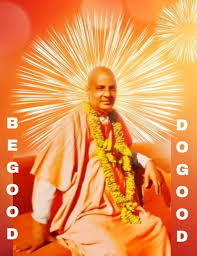
Swami Sivananda Collage of portraits picture
Pranayama, Swami Sivananda

Matra

Matra The time taken in making a round of the palm of the hand, neither very slow nor very quickly snapping the fingers once, is called Matra.Each time-unit is called Matra. The twinkling of an eye is sometimes taken as the period of one Matra. Time occupied by one normal respiration is considered as one Matra. Time taken up in pronouncing the mono-syllable, OM, is regarded as one Matra. This is very convenient. Many Pranayama-practitioners adopt this time-unit in their practice.

Matra Read Post »

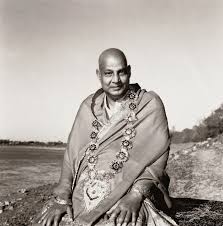
swami sivananda Bald monk wearing red robe and flower garland outdoors image
Swami Sivananda, Yoga

Seek God Within

Seek God Within by Swami Sivananda Seek God within you, in your heart. Seek him not elsewhere. Seek him with faith. Seek not God for favours. Such favours will not bring you near to God. Cultivate niskamya bhakti (motiveless devotion) – pine for his grace and mercy. Quicken and enliven your faith in God. Let the flame of faith grow brighter and brighter daily. Feel His presence everywhere. Obtain His grace through faith, devotion and total self-surrender. Cling to the feet of the Lord. Lead the life divine. Roll the beads and mentally repeat his name. Sing his praises and remember Him at all times. Fix your mind on the lotus-feet of the Lord at all times. See the Lord in all objects. Sing the Lord’s names. Meditate on His form first then meditate on His all-pervading essence. Withdraw the senses from their objects and gaze within. Concentrate on the heart – search for Him there. Practise ahimsa, satyam and brahmacarya (non-violence, truth and purity). Say from the bottom of your heart, “I am thine. Thy will be done O Lord.” Stick to dharma (right conduct). Control the mind and the senses. Kill egoism, lust, greed, hatred, etc. Serve the saints. Serve your guru – guru and God are one. Chant the name and praises of the Lord. Meditate on His divine attributes. Constantly remember the Lord and His presence. Serve and worship the Lord. Cling to the name of the Lord. Practise the religion of sacrifice. Dedicate yourself to God. Walk in humility and love. This is the way to God-realisation. Here are some auxiliaries to bhakti. Study the lives of saints, again and again. You will get new inspiration and you will be elevated, renovated and transformed. Japa (repetition of God’s name), kirtan (chanting), prayer, service of saints, meditation, smarana (remembering God), are aids to God-realisation. Shun evil company. Live in the company of saints. Serve the sick and the poor. Lead a simple life. Cultivate divine virtues such as humility, tolerance, mercy, kindness, courage, selflessness, cosmic love, truthfulness, purity and celibacy.

Seek God Within Read Post »

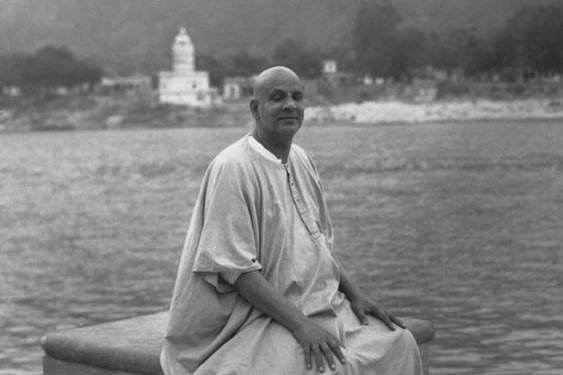
Swami Sivananda seated beside river image
Swami Sivananda, Yoga

Guide to Sadhakas

Guide to Sadhakas by Swami Sivananda The first thing a spiritual aspirant has to acquire is mastery over the mind. Like a blind man – look at the objects. Like a deaf man – hear sounds. Do not allow the sense experiences to penetrate within. The mind gets fattened on account of its being fed by sense objects. Restrain the senses by the process of pratyahara (abstraction). Why should you struggle to curb the mind? Its power is far greater than any other power, but it will become your slave if you surrender to the Lord and allow his divine power to work through you. The control of prana (life force) should be the natural and unfailing duty of all spiritually minded persons. It is the control of prana which paves the way for the non-cogitation of all the externals and the conquest of death. Firmness of practice in the stainless non-dual principle, control of prana and the subjugation of the mind – these three are the paths to realise the meaning of moksa. Out of these three, one should be mastered thoroughly. Then the effects of all three will be obtained as all three are inseparably related to one another. If the mind and prana cease to exist then thoughts will cease to arise – both of these are one only like the flower and its fragrance, or a seed and the oil in it. Prana and mind stand to one another in the relationship of supporter and supported. If either of them is slain then the other also will cease to exist. The destruction of both will confer moksa. Spiritual life begins with repentance. Spiritual life begins with aspiration. Genuine aspiration is the pre-condition of success in leading a spiritual life. Aspiration is indeed the fruit of good actions of the past. Guard your spiritual aspirations very carefully. Increase them through viveka (wisdom), sadvicara (pure enquiry) and satsanga (holy company). Devotion to God and guru, practice of discipline, regular meditation – these will quickly lead to self-realisation. Selfless work is for the purification of the mind. Self-realisation is brought about by discrimination, dispassion, determination and meditation. He who is faithful to truth and who diligently practises meditation, turning inwards in meditation, is put upon the ultimate path which leads to self-realisation.

Guide to Sadhakas Read Post »

Swami Sivananda portrait with floral border picture
Pranayama, Swami Sivananda

Avasthas (Stages)

Avasthas (Stages) ARAMBHA AVASTHA Pranava (OM) should be chanted with three Matras (prolonged intonations). This is for the destruction of the former sins. The Mantra, Pranava, destroys all obstacles and all sins. By practising this he obtains the `Arambha Avastha’ (the beginning or first stage). The body of the Yogi begins to perspire. When it perspires he should rub it well with the hands. The trembling of the body also occurs. He sometimes jumps like a frog. GHATA AVASTHA Then follows the Ghata Avastha, the second state, which is acquired by constantly practising suppression of breath. When a perfect union takes place between Prana and Apana, Manas and Buddhi, or Jivatman and Paramatman, without opposition, it is called Ghata Avastha. He may now practise only for about one-fourth of the period prescribed for the practice before. By day and by evening let him practise only for a Yama (3 hours). Let him practise the Kevala Kumbhaka once a day. Drawing away completely the organs from the objects of senses during cessation of breath is called Pratyahara. Whatever he sees with his eyes, let him consider as Atman. Whatever he hears with the ears, let him consider as Atman. Whatever he smells with his nose, let him consider as Atman. Whatever he tastes with his tongue, let him consider as Atman. Whatever the Yogi touches with his skin, let him consider as Atman. Then various wonderful powers are obtained by the Yogi, such as clairvoyance, clairaudience, ability to transport himself to great distances within a moment, great power of speech, ability to take up any form he likes, ability to become invisible and the wonder of transmuting iron into gold. That Yogi who is carefully practising Yoga attains the power to levitate. Then, should the wise Yogi think that these powers are great obstacles in the attainment of Yoga, he should never take delight or recourse to them. The Yogins should not exercise these powers before any person whomsoever. He should live in the world as an ordinary man in order to keep his powers concealed. His disciples would, without doubt, request him to show them (his powers) for the gratification of their desire. One, who is actively engaged in one’s (world-imposed) duties, forgets to practise Yoga. So he should practise day and night nothing but Yoga without forgetting the words of his Guru. Thus he, who is constantly engaged in Yogic practices, passes the Ghata state. Nothing is gained by useless company of worldly-minded people. Therefore, one should with great effort shun evil company and practise Yoga. PARICHAYA AVASTHA Then by such constant practice, the Parichaya Avastha (the third state) is gained. Vayu or breath, through arduous practice pierces the Kundalini, along with Agni through thought and enters the Sushumna, uninterrupted. When one’s Chitta enters the Sushumna along with the Prana, it reaches the high seat in the head, along with Prana. When the Yogi by the practice of Yoga acquires power of action (Kriya Sakti) and pierces through the Six Chakras and reaches the secure condition of Parichaya, the Yogi then verily sees the threefold effects of Karma. Then let the Yogi destroy the multitude of Karmas by the Pranava (OM). Let him accomplish `Kaya-Vyuha’, a mystical process of arranging the various Skandhas of the body and taking various bodies, in order to exhaust all his previous Karmas without the necessity of being reborn. At that time let the great Yogi practise the five Dharanas<$FDescribed in the `Appendix’.> or forms of concentration by which, command over the five elements is gained and fear of injuries by any one of them is removed. NISHPATTI AVASTHA This is the fourth stage of Pranayama. Through graduated practice the Yogi reaches the Nishpatti Avastha, the state of consummation. The Yogi, having destroyed all the seeds of Karma drinks the nectar of immortality. He feels neither hunger nor thirst, nor sleep nor swoon. He becomes absolutely independent. He can move anywhere in the world. He is never reborn. He is free from all diseases, decay and old age. He enjoys the bliss of Samadhi. He is no longer in need of any Yogic practice. When the skilful tranquil Yogi can drink the Prana Vayu by placing tongue at the root of the palate, when he knows the laws of action of Prana and Apana, then he becomes entitled to liberation.A Yogic student will automatically experience all these Avasthas one by one as he advances in his systematic, regular practices. An impatient student cannot experience any of these Avasthas through occasional practices. Care should be taken in the observance of Mitahara and Brahmacharya.

Avasthas (Stages) Read Post »

Swami Sivananda Monk seated near riverbank calmly image
Swami Sivananda, Yoga

Sankirtan Yoga

Sankirtan Yoga by Swami Sivananda Sankirtan is singing God’s name with feeling (Bhava), love (Prema) and faith (Sraddha). In Sankirtan people join together and sing God’s name collectively in a common place. Sankirtan is one of the nine modes of Bhakti. You can realise God through Kirtan alone. This is the easiest method for attaining God-consciousness in Kali Yuga or the Iron Age “kalau kesava-kirtanat”. When several people join together and practise Sankirtan, a huge spiritual current or Mahasakti is generated. This purifies the heart of the aspirants and elevates them to the sublime heights of divine ecstasy or Samadhi. The powerful vibrations are carried to distant places. They bring elevation of mind, solace, strength to all people and work as a harbinger of peace, harmony and concord. They annihilate hostile forces and quickly bring peace and bliss to the whole world. Lord Hari says to Narada, “naham vasami vaikunthe yoginam hridaye na cha, mad-bhakta yatra gayanti tatra tishthami narada”, i.e., “I dwell not in Vaikuntha nor in the hearts of the Yogins, but I dwell where my devotees sing my name, O Narada.” Kirtan destroys sins, Vasanas and Samskaras, fills the heart with Prem and devotion and brings the devotee face to face with God. Akhanda Kirtan is very powerful. It purifies the heart. The Mahamantra: ‘Hare Rama, Hare Rama, Rama Rama, Hare Hare-Hare Krishna, Hare Krishna, Krishna Krishna, Hare Hare’ or ‘Om Namah Sivaya’ should be sung continuously for 3 hours or 24 hours, three days or a week, by forming batches. One will lead and others will follow. Do Akhanda Kirtan on Sundays or holidays. Do Prabhat-Pheri Kirtan in the morning around the streets. Kirtan in the early morning is more effective than at night. At night, sit before the picture of the Lord along with your children, family-members and servants. Do Kirtan for one or two hours. Be regular in the practice. You will derive immense peace and strength. Sing the Lord’s Name from the bottom of your heart. Be wholly and solely devoted to Him. Delay in God-realisation is extremely painful. Merge in Him. Live in Him. Be established in Him. May peace and prosperity abide in you all! Kalisantarana Upanishad At the end of Dvapara Yuga, Narada went to Brahma and said: “O Lord! How can I cross Kali or mundane existence easily?” Brahma replied. “Well asked. Hearken to that which all Vedas keep secret and hidden, through which one may cross the Samsara or mundane existence. He destroys the evil effects of Kali through the mere uttering of the word ‘Lord Narayana,’ who is the primeval Purusha!” Narada asked Brahma: “O venerable Lord! What is the name?” Brahma replied: “The names are: Hare Rama, Hare Rama, Rama Rama Hare Hare, Hare Krishna, Hare Krishna, Krishna Krishna Hare Hare. These sixteen names destroy the evil effects of Kali or sins. There is no better means than this in all the Vedas. These sixteen names destroy the Avarana or veil of ignorance that has enveloped the Jivas or the human beings. Then just as the sun shines fully after the clouds are dispersed, so also, Para Brahman or Supreme Self alone shines after the veil is removed.” Narada asked. “O Lord! What are the rules to be observed when one utters these names?” Brahma replied:” O Rishi Narada! There are no rules. Whoever repeats these names three and a half crores or 35 millions in a pure or an impure state, is freed at once from all sins. He is at once released from all bondages. He merges himself in the Lord and attains Eternal Bliss and Immortality”. The Jiva has sixteen Kalas, corresponding to which sixteen words or names are given in this Mahamantra. This is very good for repetition during Akhanda Kirtan. If you repeat this Mantra 20,000 times per day you will finish three and a half crores within 5 years. You can sing this Mantra and can do Japa also. You can write this Mantra in a notebook as Likhita Japa. The names of God, chanted in any way correctly or incorrectly, knowingly or unknowingly, carefully or carelessly, is sure to give the desired result. The glory of the Name of God cannot be established through reasoning and intellect. It can certainly be experienced or realised through devotion, faith and constant repetition of the name only. The power of name is ineffable. Its glory is indescribable. The efficacy and inherent Sakti of the name of God is unfathomable. May you attain God-consciousness by repetition of the names of God as described above. May you have real taste for the names of the Lord!

Sankirtan Yoga Read Post »

swami sivananda Monk writing at desk with books image
Pranayama, Swami Sivananda

Three Bandhas

Three Bandhas There are four Bhedas (piercing of divisions) viz., Surya, Ujjayi, Sitali and Basti. Through these four ways, when Kumbhaka is near or about to be performed, the sinless Yogi should practise the three Bandhas. The first is called Mula Bandha. The second is called Uddiyana, and the third is Jalandhara. Their nature will be thus described. Apana which has a downward tendency is forced up by contracting and drawing the anus upwards. This process is called Mula Bandha. When Apana is raised up and reaches the sphere of Agni (fire), then the flame of Agni grows long, being blown about by Vayu. The Agni and Apana come to or commingle with Prana in a heated state. Through this Agni, which is very fiery arises in the body the flaming of fire which arouses the sleeping Kundalini. Then the Kundalini makes a hissing noise, becomes erect like a serpent beaten with a stick and enters into the hole of Brahmanadi (Sushumna). Therefore Yogins should daily practise Mula Bandha. Uddiyana should be performed at the end of Kumbhaka and at the beginning of inhalation. Because Prana ‘Uddiyate’-goes up the Sushumna in this Bandha, it is called Uddiyana by the Yogins. Being seated in the Vajra and holding firmly the two toes by the two hands near the two ankles, he should gradually upbear the Tana (thread or Nadi, the Sarasvati Nadi) which is on the western side of Udara (the upper part of the abdomen, above the navel), then to neck. When Prana reaches Sandhi (junction) of navel, slowly it removes the diseases of the navel. Uddiyana can be done in standing posture also. When you practise in standing posture, place your hand on the knees or a little above the knees. Keep the legs a little apart.The Bandha called Jalandhara should be practised at the end of Puraka. Jalandhara is of the form of contraction of the neck and is an impediment to the passage of Vayu upwards. When the neck is contracted by bending the head downwards, so that the chin may touch the chest, Prana goes through Brahmanadi. Assuming the seat, as mentioned before, one should stir up Sarasvati and control Prana. On the first day Kumbhaka should be done four times, on the second day ten times and then five times separately. On the third day, twenty times will do and afterwards Kumbhaka should be performed with the Bandhas and with an increase of two times per day.

Three Bandhas Read Post »

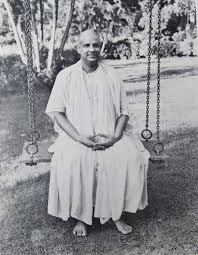
Swami Sivananda seated on garden swing image
Swami Sivananda, Yoga

Kundalini Yoga

Kundalini Yoga by Swami Sivananda Kundalini Sakti is the coiled-up, dormant, cosmic power that underlies all organic as well as inorganic matter. It is the primordial energy that lies at the basal Muladhara Chakra in a dormant, potential state. Kundalini Yoga is that Yoga which treats of Kundalini Sakti, the seven Chakras or centres of spiritual energy, the arousing of the sleeping Kundalini Sakti and its union with Lord Siva in Sahasrara Chakra at the crown of the head. The seven Chakras are pierced by the passing of Kundalini Sakti to the top of the head. The seven Chakras are: Muladhara (at the anus), Svadhishthana (at the root of the organ of generation), Manipura (at the navel), Anahata (in the heart), Visuddha (in the neck), Ajna (in the space between the two eyebrows) and Sahasrara (at the crown of the head). Nadis are the astral tubes that carry Pranic currents. They cannot be seen by naked eyes. They are not the ordinary nerves, arteries and veins. There are 72,000 Nadis. Among them three are important. They are Ida, Pingala and Sushumna. Sushumna is the most important one, because Kundalini passes through this Nadi only. The first step in Kundalini Yoga is the purification of Nadis. When Sushumna is pure then only Kundalini will pass through it. Purification of Nadis is done by the practice of Pranayama. The Yogi opens the mouth of Sushumna Nadi through Pranayama, Bandhas and Mudras and awakens the sleeping Kundalini and takes Her to Sahasrara at the crown of the head through the lower six Chakras. Kundalini sleeps in the Muladhara in 3 � coils. The three coils represent the three Gunas and half coil represents the Vikritis. Kundalini is awakened through Pranayama, Asanas and Mudras by Hatha Yogins, through concentration by Raja Yogins, through devotion and perfect self-surrender by Bhaktas or devotees; through analytical will, by the Jnanis; by Japa of Mantra and by the grace of the Guru. If you are pure and free from all desires, Kundalini will awaken by itself and you will be benefited. If you awaken Kundalini by violent methods, forcibly, when your heart is impure, when desires lurk in your mind, you will come across temptations of various sorts, when you move from plane to plane, you will have a downfall. You will have no strength of will to resist these temptations. That aspirant who has firm faith in Yogic Sastras, who is courageous, devotional, humble, generous, merciful, pure and dispassionate, can easily awaken Kundalini and attain success in Samadhi. He should also be equipped with right conduct and self-restraint; he should constantly engage himself in the service of his Guru and be free from lust, anger, Moha, greed and vanity. When Kundalini is taken to the Sahasrara, when She is united with Lord Siva, perfect Samadhi (super-conscious blissful state) ensues. The Yogi drinks the nectar of immortality. May Mother Kundalini guide you all in your Yogic practices! May Her blessings be upon you all!

Kundalini Yoga Read Post »

Swami Sivananda spiritual saint and yoga master
Pranayama, Swami Sivananda

Asanas for Pranayama

Asanas for Pranayama PADMASANA (LOTUS POSE) This is also known by the name Kamalasana. Kamala means lotus. When the Asana is demonstrated it presents the appearance of a lotus in a way. Hence the name Padmasana. Amongst the four poses prescribed for Japa and Dhyana, Padmasana comes foremost. It is the best Asana for contemplation. Rishis like Gheranda, Sandilya, speak very highly of this important Asana. This is highly agreeable for householders. Even ladies can sit in this Asana. Padmasana is suitable for lean persons and for youths as well. Technique Sit on the ground by spreading the legs forward. Then place the right foot on the left thigh and the left foot on the right thigh. Place the hands on the knee-joints. You can make a finger-lock and keep the locked hands over the left ankle. This is very convenient for some persons. Or you can place the left hand over the left knee and the right hand over the right knee with the palm facing upwards and the index finger touching the middle portion of the thumb (Chinmudra). SIDDHASANA (THE PERFECT POSE) Next to Padmasana comes Siddhasana in importance. Some eulogise this Asana as even superior to Padmasana for the purpose of Dhyana (contemplation). If you get mastery over this Asana you will acquire many Siddhis. Further, it was being practised by many Siddhas (perfected Yogins) of yore. Hence the name Siddhasana. Even fatty persons with big thighs can practise this Asana daily. In fact this is better for some persons than Padmasana. Young Brahmacharins, who attempt to get established in celibacy, should practise this Asana. This is not suitable for ladies. Technique Place the left heel at the anus or Guda, the terminal opening of the alimentary canal or digestive tube. Keep the right heel on the root of the generative organs; the feet or legs should be so nicely arranged that the ankle-joints should touch each other. Hands can be placed as in Padmasana. SVASTIKASANA (PROSPEROUS POSE) Svastika is sitting at ease with the body erect. Spread the legs forward. Fold the left leg and place the foot near the right thigh muscles. Similarly, bend the right leg and push the foot in the space between the thigh and calf muscles. Now you will find the feet between the thighs and calves of the legs. This is very comfortable for meditation. Keep the hands as instructed in Padmasana. SAMASANA (EQUAL POSE)Place the left heel at the beginning of the right thigh and the right heel at the beginning of the left thigh. Sit at ease. Do not bend either on the left or right. This is called as Samasana.

Asanas for Pranayama Read Post »

Swami Sivananda standing near riverside image
Swami Sivananda, Yoga

Nada Yoga

Nada Yoga by Swami Sivananda Sit in Padmasana or Siddhasana or Sukhasana. Close the ears with the thumbs. This is Shanmukhi Mudra or Vaishnavi Mudra. Hear the music of Anahata sounds. You will have wonderful concentration. Do Japa (Ajapa Japa) of Soham with breath or Japa of any Mantra. Practise Pranayama for one or two months. You will hear the ten sounds clearly and enjoy the music of the soul. The sound that you hear will make you deaf to all external sounds. Abandon all worldly thoughts. Control your passion. Become indifferent to all objects. Practise Yama (self-restraint), or Sadachara (right conduct). Concentrate your attention on the sound which annihilates the mind. The sound serves the purpose of a sharp goad to control the elephant-mind which roams in the pleasure garden of sensual objects. It serves the purpose of a snare for binding the deer�Chitta. Just as the bee which drinks the honey does not care for the odour, so the mind which is absorbed in sound does not long for sensual objects. The first sound is Chini, the second is Chinichini. The third is the sound of a bell. The fourth is like that of a conch. The fifth is like that of a lute. The sixth is like that of a cymbal. The seventh is like that of a flute. The eighth is like that of a drum. The ninth is like that of a Mridanga. The tenth is like that of thunder. Hear the internal sound through the right ear. Change your concentration from the gross sound to the subtle. The mind will soon be absorbed in the sound. You will get knowledge of hidden things in the seventh. In the eighth stage you will hear Paravak. In the ninth you will develop divine eye. In the tenth you will attain Para Brahman. The sound entraps the mind. The mind becomes one with the sound as milk with water. It becomes absorbed in Brahman or the Absolute. You will then attain the seat of Eternal Bliss.

Nada Yoga Read Post »

Swami Sivananda portrait with radiant background image
Pranayama, Swami Sivananda

Dietetic Discipline

Dietetic Discipline The proficient in Yoga should abandon articles of food detrimental to the practice of Yoga. He should give up salt, mustard, sour, hot, pungent and bitter things, asafoetida, worship of fire, women, too much walking, bathing at sunrise, emaciation of the body by fasts, etc. During the early stages of practice, food of milk and ghee is ordained; also food consisting of wheat, green pulse and red rice is said to favour the progress. Then he will be able to retain his breath as long as he likes. By thus retaining the breath as long as he likes Kevala Kumbhaka (cessation of breath without inspiration and expiration) is attained. When Kevala Kumbhaka is attained by one, expiration and inspiration are dispensed with. There is nothing unattainable in the three worlds for him. In the commencement of his practice sweat gets out. As a frog moves by leaps so the Yogi sitting in Padmasana moves on the earth. With a further increased practice, he is able to rise from the ground. He, while seated in lotus-posture, levitates. Then arise in him the power to perform extraordinary feats. Any pain, small or great, does not affect the Yogi. Then excretions and sleep are diminished; tears, rheum in the eyes, salivary flow, sweat and bad smell in the mouth, do not arise in him. With a still further practice, he acquires great strength by which he attains Bhuchara Siddhi which enables him to bring under his control all the creatures that tread on this earth; tigers, Sarabhas, elephants, wild bulls and lions even die by a blow given by the palms of this Yogi. He becomes as beautiful as the God of Love himself. By the preservation of the semen a good odour pervades the body of the Yogi. MITAHARA Take wholesome Sattvic food half stomachful. Fill a quarter with pure water. Allow the remaining quarter free for expansion of gas and for propitiating the Lord. PURITY IN FOOD “Ahara-suddhau sattva-suddhih, Sattva-suddhau dhruva- smritih, Smritilambhe sarvagranthinam vipramokshah.” By the purity of food, follows the purification of the inner nature; on the purity of the inner nature, the memory becomes firm; and on the strengthening of memory follows the loosening of all ties, and the wise get liberation thereby. You must not practise Pranayama just after meals. When you are very hungry, then also you must not practise. Go to the water closet and empty the bowels before you begin Pranayama. A Pranayama-practitioner should observe Samyama (control) in food and drink. Those who are strict and regular in diet derive immense benefits during the course of practice. They get success quickly. Those persons who suffer from chronic constipation and who are in the habit of defecating in the afternoon can practise Pranayama in the early morning without answering the calls of nature. They should try their level best by some means or other to get an evacuation their bowels in the early morning. Food plays a very important role in Yoga Sadhana. An aspirant should be very, very careful in the selection of articles of diet in the beginning of his Sadhana period. Later on when Pranayama-Siddhi is obtained, drastic dietetic restrictions can be removed. CHARU This is a mixture of boiled, white rice, ghee, sugar and milk. This is a wholesome combination for Brahmacharins and Pranayama-practitioners. MILK DIET Milk should be scalded but not too much boiled. The process of scalding is that the milk should be immediately removed from the fire as soon as the boiling point is reached. Too much boiling destroys the vitamins, the mysterious nutritive principles and renders it quite useless as an article of diet. Milk is a perfect food by itself, containing as it does the different nutritive constituents in a well-balanced proportion. It leaves very little residue in the bowels. This is an ideal food for Yogic students during Pranayama practice. FRUIT DIET A fruit diet exercises a benign, soothing influence on the constitution and is a very desirable diet for Yogins. This is a natural form of diet. Fruits are very great energy-producers. Bananas, grapes, sweet oranges, apples, pomegranates, mangoes, Chikkus (Sapota) and dates are wholesome fruits. Lemons possess anti-scorbutic properties and act as restoratives to blood. Fruit-juice contains vitamin C. Chikkus increase pure blood. Mangoes and milk is a healthy agreeable combination. You can live on mangoes and milk alone. Pomegranate juice is cooling and very nutritious. Bananas are very nutritious and substantial. Fruits help concentration and easy mental focussing. ARTICLES ALLOWED Barley, wheat, ghee, milk, almonds promote longevity and increase power and strength. Barley is a fine article of diet for a Yogi and Sadhaka. It is cooling too. Sri Swami Narayan, the author of `Ek Santka Anubhav’, who wears a Kaupin of gunny bag, lives on bread, made up of barley. He recommends barley bread to his disciples. It is said that Emperor Akbar lived upon barley. You can take wheat, rice, barley, milk, bread, cow’s milk, ghee, sugar, butter, sugar-candy, honey, dried ginger (Soont), green pulse, Moongdal, Panchashaka vegetables, Peypudalai, potatoes, raisins, dates, light Khichdi of green dal. Khichdi is a light food and can be agreeably taken. The food should be reduced in proportion to the increase in Kumbhaka. You must not reduce your food much in the beginning of your practice. You must use your commonsense all throughout the Sadhana. Toor-ki-dal can be taken. The Pancha-Shaka belongs to the species of spinach. They are excellent vegetables; the thick succulent young leaves are boiled and seasoned or fried with ghee. They are five in number, viz., Seendil, Chakravarthi, Ponnangani, Chirukeerai and Valloicharnai keerai. When the Pingala or Suryanadi runs in the right nostril, you must take your food. Suryanadi produces heat. It will digest the food well. You may take jack-fruit, cucumber, brinjal, plantain-stem, lauki, parval and bhindi (lady’s finger). ARTICLES FORBIDDEN Highly seasoned dishes, hot curries, chutneys, meat, fishes, chillies, sour articles, tamarind, mustard, all kinds of oil, asafoetida, salt, garlic, onions, urad-ki-dal (black gram), all
Dietetic Discipline Read Post »