Hari Om

Menu

February 19, 2026

swami sivananda Monk seated in front of snowy mountains wearing shawl and beads image
Sadhana, Swami Sivananda

Sadhana: Its Techniques of Applied Psychology

Sadhana: Its Techniques of Applied Psychology by Swami Sivananda Watch all your feelings very carefully. Suppose you get a gloomy feeling. Take a small cup of milk or tea. Sit calmly. Close your eyes. Find out the cause for the depression and try to remove the cause. The best method to overcome this feeling is thinking of the opposite. Positive overcomes negative. This is a grand effective Law of Nature. Now think strongly of the opposite of gloom. Think of cheerfulness. Feel that you are in the actual possession of this quality. Again and again repeat this formula: ‘Om Cheerfulness’ mentally. Feel “I am ever cheerful.” Begin to smile and laugh several times. Sing; sometimes that can elevate you quickly. Singing is very beneficial to drive off gloom. Chant OM loudly several times. Run in the open air. The depression will vanish soon. This is the Pratipaksha Bhavana method of Raja Yogins. This is the easiest method. The method of driving gloom by force-by willing, by assertion, by command-taxes the ‘will’ very much although it is the most efficient method. It demands great strength of will. Ordinary people will not succeed. The method of displacing or dislocating the negative feeling by substituting the opposite, positive feeling, is very easy. Within a very short time, the undesirable feeling vanishes. Practise this and feel. Even if you fail several times, continue. You will be successful after some sittings and some practice. You can treat in the same manner other negative feelings as well. If there is the feeling of anger, think of love. If there is harshness of heart, think of mercy. If there is dishonesty, think of honesty, integrity. If there is miserliness, think of generosity and generous persons. If there is Moha (infatuation), think of discrimination and ATMIC VICHARA. If there is pride, think of humility. If there is hypocrisy, think of frankness and its invaluable advantages. If there is jealousy, think of nobility and magnanimity. If there is timidity, think of courage, and so on. You will drive off the negative feelings and will be established in a positive state. Practice of a continued type is essential. Be careful in the selection of your companions. Talk very little and that, too, on useful matters.

Sadhana: Its Techniques of Applied Psychology Read Post »

Swami Sivananda blessing pose holding symbol
Pranayama, Swami Sivananda

Varieties of Pranayama

Varieties of Pranayama “Bahya-abhyantara-stambha-vrittih-desa–kaala- sankhyabhih paridrishto deergha-sukshmah.” Yoga Sutras-Ch. II-50 Pranayama is regarded lengthy or subtle according to its three components, the external, the internal and the steady; the retention processes are modified by the regulation of space, time and number. When the breath is expired, it is Rechaka, the first kind of Pranayama. When the breath is drawn in, it is the second, termed Puraka. When it is suspended, it is the third kind, called Kumbhaka. Kumbhaka is retention of breath. Kumbhaka increases the period of life. It augments the inner spiritual force, vigour and vitality. If you retain the breath for one minute, this one minute is added to your span of life. Yogins by taking the breath to the Brahmarandhra at the top of the head and keeping it there, defeat the Lord of death, Yama, and conquer death. Chang Dev lived for one thousand and four hundred years through the practice of Kumbhaka. Each of these motions in Pranayama, viz., Rechaka, Puraka and Kumbhaka, is regulated by space, time and number. By space is meant the inside or outside of the body and the particular length or the breadth and also when the Prana is held in some particular part of the body. During expiration the distance to which breath is thrown outside varies in different individuals. The distance varies during inspiration also. The length of the breath varies in accordance with the pervading Tattva. The length of the breath is respectively 12, 16, 4, 8, 0 fingers’ breadths according to the Tattvas-Prithvi, Apas, Tejas, Vayu and Akasa (earth, water, fire, air and ether). This is again external during exhalation and internal during inhalation. Time is, the time of duration of each of these, which is generally counted by Matra, which corresponds to one second. Matra means a measure. By time is also meant how long the Prana should be fixed in a particular centre or part. Number refers to the number of times the Pranayama is performed. The Yogic student should slowly take the number of Pranayamas to eighty at one sitting. He should have four sittings in the morning, afternoon, evening and midnight, or at 9 a.m., and should have thus 320 Pranayamas in all. The effect or fruit of Pranayama is Udghata or awakening of the sleeping Kundalini. The chief aim of Pranayama is to unite the Prana with the Apana and take the united Prana-Apana slowly upwards towards the head. Kundalini is the source for all occult powers. The Pranayama is long or short according to the period of time it is practised. Just as water, thrown on a hot pan shrivels upon all sides as it is being dried up, so also air, moving in or out ceases its action by a strong effort of restraint (Kumbhaka) and stays within. Vachaspati describes-“Measured by 36 Matras, is the first attempt (Udghata), which is mild. Twice that is the second, which is middling. Thrice that is the third, which is the intense. This is the Pranayama as measured by number.” The ‘place’ of exhalation lies within 12 Angulas (inches) of the tip of nose. This is to be ascertained through a piece of reed or cotton. The place of inhalation ranges from the head down to the soles of the feet. This is to be ascertained through a sensation similar to the touch of an ant. The place of Kumbhaka consists of the external and internal places of both exhalation and inhalation taken together, because the functions of the breath are capable of being held up at both these places. This is to be ascertained through the absence of the two indicatives noted above, in connection with exhalation and inhalation. The specification of the three kinds of breath regulations, by all these three-time, space and number-is only optional. They are not to be understood as to be practised collectively, for in many Smritis we meet with passages, where the only specification mentioned with reference to the regulation of breath is that of time. The fourth is restraining the Prana by directing it to external or internal object; “Bahyabhyantaravishayakshepi chaturthah” (Yoga Sutras: II-51). The third kind of Pranayama that is described in Sutra 50 of the Yoga Sutras, is practised only till the first Udghata is marked. This fourth Pranayama is carried further. It concerns with the fixing of the Prana in the various lotuses (Padmas or Chakras) and taking it slowly, and slowly, step by step, and stage by stage to the last lotus in the head, where perfect Samadhi takes place. This is internal. Externally it takes into consideration the length of breath in accordance with the prevailing Tattva. Prana can be described either inside or outside.By gradual mastery over the preliminary three kinds of Pranayama, the fourth kind comes in. In the third kind of Pranayama the sphere is not taken into consideration. The stoppage of the breath occurs with one single effort and is then measured by space, time and number and thus becomes Dirgha (long) and Sukshma (subtle). In the fourth variety, however the spheres of expiration and inspiration are ascertained. The different states are mastered by and by. The fourth variety is not practised all at once by a single effort like the third one. On the other hand, it reaches different states of perfection, as it is being done. After one stage is mastered, the next stage is taken up and practised. Then it goes in succession. The third is not preceded by measurements and is brought about by a single effort. The fourth is however preceded by the knowledge of the measurements, and is brought about by much effort. This is the only difference. The conditions of time, space and number are applicable to this kind of Pranayama also. Particular occult powers develop themselves at each stage of progress.


Varieties of Pranayama Read Post »

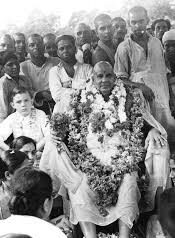
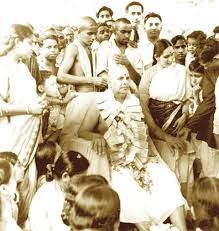
swami sivananda Black-and-white photo of guru with heavy garlands among devotees image
Sadhana, Swami Sivananda

Aspects of Spiritual Sadhana

Aspects of Spiritual Sadhana by Swami Sivananda I When your house is on fire how daringly you enter the house to take your child who is sleeping in the room. Even so you must be very courageous when you tread on the spiritual path. You must be absolutely fearless. You must not have the least attachment to your body. Then only you will have Self-realisation quickly. Timid people are absolutely unfit for the spiritual line. If there are mangoes on the top of a big tree you do not jump all at once to pluck them. It is impossible. You gradually climb up the tree by getting hold of different branches and then reach the top of the tree. Even so you cannot jump all at once to the summit of the spiritual ladder. You will have to place your foot with caution in each rung of the ladder. You will have to practise Yama, Niyama, Asana, Pranayama, Pratyahara, Dharana and Dhyana. Then only you will reach the highest rung of the ladder of Yoga viz., Samadhi. If you are a student of Vedanta you will have to equip yourself with the four means first. Then you will have to do Sravana, Manana and Nididhyasana. Then only you will attain Brahma-Sakshatkara. If you are a student of Bhakti Yoga, you will have to practise the nine modes of Bhakti viz., Sravana, Kirtana, Smarana, Padasevana, Archana, Vandana, Dasya, Sakhya and Atma-Nivedana. Then only you will attain the state of Para-Bhakti. If the chicken and fowl run hither and thither to eat various sorts of rubbish, what does the owner of the poultry do? He gives a slight tap on their heads and throws before them some grains to eat. Gradually they leave their habit of eating filth. Even so this mind runs hither and thither to eat filthy things and enjoy the five kinds of sensual objects. Give a tap on its head and make it taste gradually the spiritual bliss by practice of Japa and Meditation. A Jivanmukta or a Bhagavata has lustrous eyes. He has a protrusion on the top of the head and Trikuti, the space between the two eyebrows. Whatever he says will be indelibly impressed in your mind. You cannot forget it till the end of your life. He possesses tremendous power of attraction. He will clear all your doubts in a marvellous manner. You will enjoy a peculiar joy and peace in his presence. All your doubts will be cleared in his presence. Silence is his language. He is very compassionate and free from selfishness, anger, greed, egoism, lust and pride. He is an embodiment of truth, peace, knowledge and bliss. It takes a long time for the charcoal to catch fire but gun-powder can be ignited within the twinkling of an eye. Even so it takes a long time for igniting the fire of knowledge for a man whose heart is impure. But an aspirant with great purity of heart gets knowledge of the Self within the twinkling of an eye, within the time taken to squeeze a flower by the fingers. Maya is a very huge saw. Lust, anger, greed, delusion, pride, jealousy, hatred, egoism etc., are the teeth of this huge saw. All-worldly minded persons are caught up in the teeth of this saw and are crushed. Those who are endowed with purity, humility, love, dispassion, devotion and enquiry are not hurt. They escape through the divine grace. They pass smoothly below the saw and reach the other side of immortality. A piece of ordinary white paper or coloured paper has no value. You throw it away. But if there is the stamp or the picture of the Asoka Chakra on the paper (currency notes) you keep it safe in your money purse or trunk. Even so an ordinary piece of stone has no value for you. You throw it away. But if you behold the stone-Murthy of Lord Krishna at Pandarpur or any other Murthy in shrines, you bow your head with folded hands, because there is the stamp of the Lord in the stone. The devotee superimposes on the stone-Murthy, his own Beloved and all the attributes of the Lord. Image-worship is very necessary for beginners. II Some Sadhakas do constant Sadhana in a mild manner; some do intense Sadhana for two hours in the morning and two hours at night. If you want to attain Self-realisation quickly you must do intense and constant Sadhana for a protracted period. You may have Darshan of Lord Krishna face to face. You may talk to Him also several times. You may play and eat with Him also. But if you want to have final liberation you must have Atma-Sakshatkara. Nama Deva had Darshan of Lord Krishna several times and yet he was declared to be a half-baked saint by the potter-saint Gora Kumbhar. He had to go to Vishoba Khesar for attaining perfection and Kaivalya. When you sit on an Asana for meditation you want to get up soon, not on account of pain in the legs but on account of impatience. Conquer this undesirable negative quality by developing patience gradually. Then you will be able to sit for three or four hours at a stretch. During meditation you will be frequently talking to somebody mentally. Stop this evil habit. Have a careful watch over the mind. An aspirant writes to me: “Somebody tapped at my door at 3 a.m. I woke up and opened the door. I saw Lord Krishna with crown on His head. He disappeared soon. I went through the lane in search of Him. I was not able to find Him out. Then I came back to my house and sat in front of my door till day-break to see Him again.” Cases of somnambulists or sleep-walkers are not uncommon. They dream even while standing and walking also. The above case might have been a pure case of somnambulism. You will have to be very careful in

Aspects of Spiritual Sadhana Read Post »

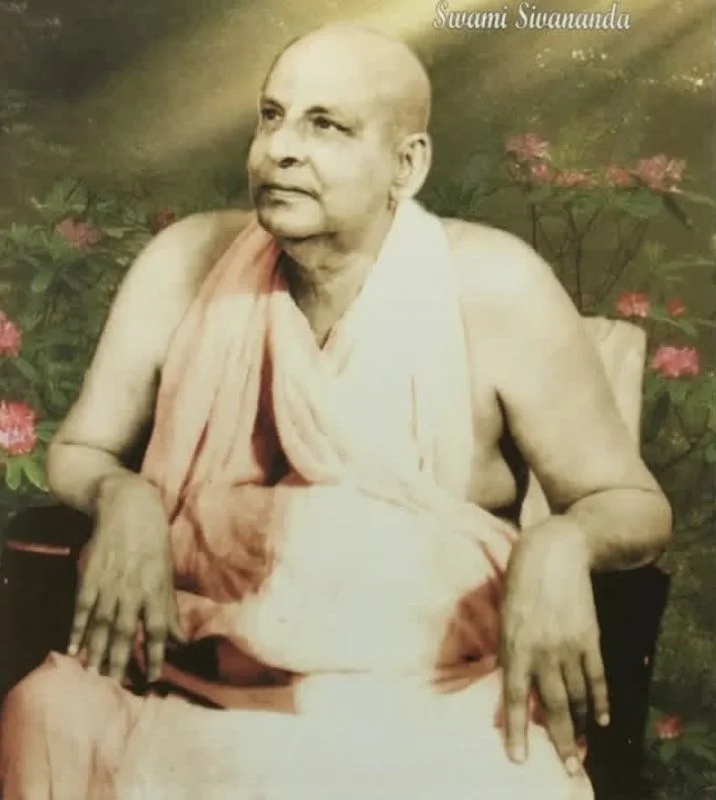
swami sivananda Portrait of Swami Sivananda seated with floral background image
Sadhana, Swami Sivananda

Primary Principles of Sadhana and Their Perversions

Primary Principles of Sadhana and Their Perversions by Swami Sivananda The path of the spiritual aspirant verily lies through a bewildering jungle of difficulties and dilemmas of problems and paradoxes. One of such vexing paradoxes is that your mind is both your best friend as also your bitter enemy. Mind becomes a true friend only after being gradually trained to be so. Mind begins to be really helpful after the aspirant has progressed sufficiently in spiritual Sadhana. Until then it should be regarded as a troublesome and treacherous enemy inside us. It is extremely diplomatic, cunning and crooked. It is an arch-deceiver. One of the master-strokes of the mind’s artfulness is to make the aspirant feel and smugly imagine that he knows his mind perfectly well and cannot be led away by it and at the same time to delude him totally. The mind has the knack of making the unwary aspirant confidently think himself its master, while it makes a hopeless fool of him. Its deceptions are subtle. You have heard the saying, “The devil can quote scriptures for its purpose.” Similarly the mind can use a virtue to indulge in a vice. It has an inborn inclination to perversion. It can even take the support of a perfectly good principle seemingly to justify the most unprincipled sort of action. Unless it is scrutinised dispassionately its tricks are never fully discovered. Certain of the perversions usually noticeable are described below. This will be valuable to sincere aspirants who are eager to study their minds and eliminate defects and shortcomings. These are extremely useful tips specially in the working field, for aspirants engaged in active Seva in the midst of other people. Sadhakas are told, “Keep up Matri-bhava or Devi-bhava when you move with women.” This is a grand principle to safeguard your purity and spiritual progress. But this does not tell you, “Move with women;” nor does this advice mean that if you try to have this attitude then you may go on freely mixing with the opposite sex without any limit or restraint. The mind will ask, “Why not? What if I do? To retreat from their presence is sheer timidity. No fear when you do so with Devi-Bhava!” Beware, O Aspirant, beware of this tendency! Divine Bhava is not a licence to throw away all restrictions of the Sadhaka’s path. The permanent injunction for Sadhakas is to totally eschew all contact with the opposite sex. When unavoidably such contact becomes necessary, then, “Have Matri-bhava; have Devi-bhava” etc, are prescribed. Also this is to caution the aspirant not to hate women or become a misogynist. Women should be reverenced but from a safe distance. Let not Devi-bhava, etc., be taken to mean that you should be all the time in the midst of them. Watch your mind! Then there is the advice which says, “You may hiss but not bite.” This safe counsel was given to a fabulous snake which in a too extreme excess of piety became so totally docile and harmless that it got severely man-handled by a set of mischievous urchins. It was given as an example to over-timid householders and people struggling in the very midst of the harsh realities of competitive ‘Vyavaharic’ life. Here an overdose of ‘Avanty-brahmin’-like humility might well make life impossible amidst the Asuric elements abounding in the world. Therefore, just an outward show of pugnacity may be countenanced in so far as this does not affect your basic goodness and brotherhood. But this policy is not for the spiritual aspirant in the path of Sadhana and Nivritti. Definitely no. Let aspirants take heed of these words. The Sadhaka is neither to ‘bite’ nor is he to ‘hiss’ even. This ‘hissing’ business will soon become a part of your nature. You will soon find yourself hissing for everything, at everything, at everyone, in and out of season. This hiss will include every variety of rudeness ranging from hot argument, sharp retort, curt reply to angry glaring, shouting and abuse. Thus, short of physical violence and fight, every type of verbal brutality will be put into the “hissing” category. This will ultimately lead to spiritual ruin. The mind is ever waiting to take advantage of even the least concession shown to it. Its natural tendency is to go downward. O Aspirant, do not bite or even ‘hiss.’ Be humble, be sweet, be gentle. Be firm but be soft, polite and courteous. If you wish to ‘hiss’ then ‘hiss’ at your own mind. Thrash the ego. Fight the Shadripus. Watch the mind! Another victim to perversion is the piece of advice: “Be resolute. Stick to your principles. Never budge an inch”-the best possible advice to a sincere Sadhaka, but unfortunately often made the basis for the worst possible trait, i.e., obstinacy. This is a Tamasic trait. But the mind will make believe that you are manifesting Atma-bala or a divine determination. This is its work-to make him cling tightly to his ego. Hence this deception. But the careful aspirant must discern the difference between Sattvic Nishtha and sheer stubbornness. Atma-bala is not a cheap commodity to be got without a great deal of earnest struggle, discipline and will-culture. Determined adherence is advocated in respect of truly high and noble principles and not of self-conceited notions. By all means stick to spiritual Yogic Niyamas but avoid becoming obdurate in nature. Do not be deceived. Watch your mind! “Speak the truth always. Be frank.” Thus is the Upadesa. This means when you are required to talk then speak only the truth. It does not at all mean that you must go about telling everyone to his face what exactly you think of him or her. This is unwarranted behaviour. Under the garb of frankness to give free expression of opinions without caring for other peoples’ feelings is not ‘Arjava’ or frankness or straightforwardness. At the least it is thoughtlessness; at its height it is sheer brutality. It does not bespeak well of an


Primary Principles of Sadhana and Their Perversions Read Post »

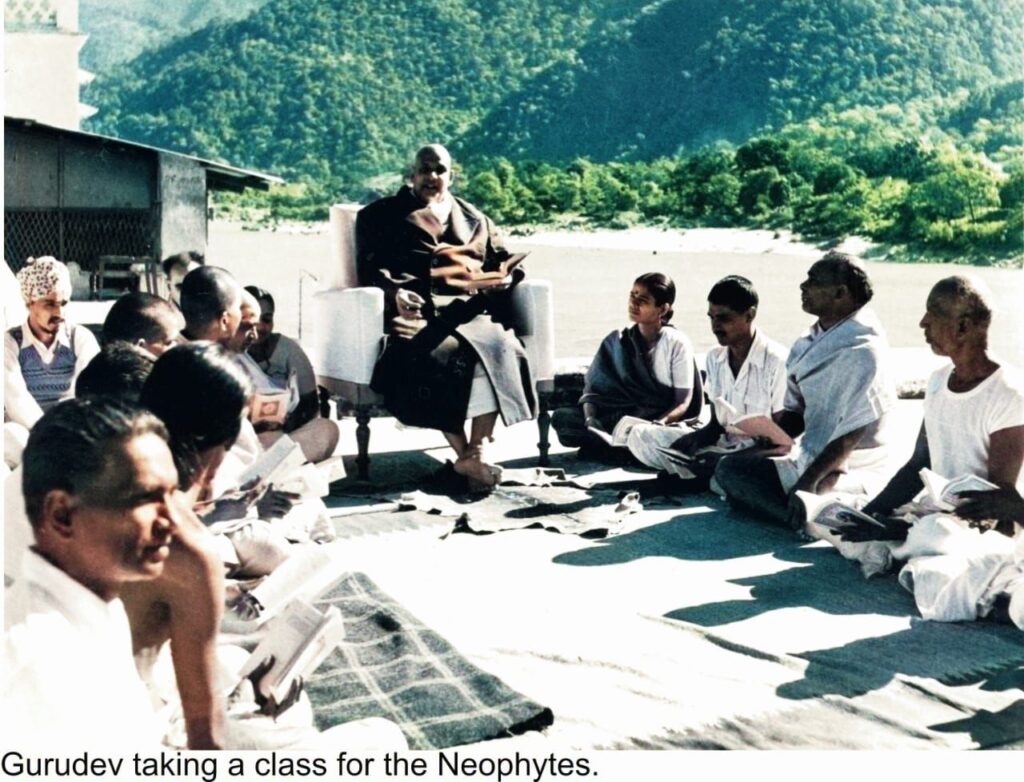
Swami Sivananda Guru teaching students in outdoor riverside setting image
Pranayama, Swami Sivananda

Control of Breath

Control of Breath The first important step is to master the Asana of posture or to control the body. The next exercise is Pranayama. Correct posture is indispensable requisite for the successful practice of Pranayama. An easy comfortable posture is Asana. That pose is the best which continues to be comfortable for the greatest length of time. Chest, neck, and head must be in one vertical line. You should not bend the body either forwards or laterally, i.e., either on the right or left side. You should not sit crooked. You should not allow the body to collapse. You must not bend the body either forwards or backwards. By regular practice the mastery over the pose will come by itself. Fatty people will find it difficult to practise the Padma Asana or the Lotus Pose or Siddha Asana (perfected pose). You need not wait for practising Pranayama till you get full mastery over the Asana. Practice Asana and side by side you can practise Pranayama also. In course of time, you will acquire perfection in both. Pranayama can also be practised by sitting in the chair erect. In Bhagavad-Gita, the Immortal Song of Lord Krishna, you will find a beautiful description of seat and pose: “In a pure secret place, all by himself, established in a fixed seat of his own, neither too high nor too low, with cloth, black antelope-skin and Kusa grass one over the other, there, making the mind one-pointed, with thought and the functions of the senses controlled, steady on his seat, he should practise Yoga for the purification of the Self, holding the body, head and neck erect, firm, gazing steadily at the tip of the nose without looking around” (Ch. VI-10, 11 & 12). Pranayama is the control of the Prana and the vital forces of the body. It is regulation of the breath. This is the most important step. The aim of Pranayama is the control of Prana. Pranayama begins with the regulation of the breath for having control over life-currents or inner vital force. In other words, Pranayama is the perfect control of the life-currents through control of breath. Breath is external manifestation of the gross Prana. A correct habit of breathing must be established by the regular practice of Pranayama. In ordinary worldly persons the breathing is irregular. If you control the Prana you can completely control all the forces of the Universe, mental and physical. The Yogi can also control the Omnipresent manifesting power out of which all energies take their origin, whether concerning magnetism, electricity, gravitation, cohesion, nerve- currents, vital forces or thought-vibrations, in fact the total forces of the Universe, physical and mental. If one controls the breath or Prana, the mind also is controlled. he who has controlled his mind has also controlled his breath. If one is suspended, the other is also suspended. If the mind and Prana are both controlled, one gets liberation from the round of births and deaths and attains immortality. There is intimate connection between the mind, Prana and semen. If one controls the seminal energy, the mind and Prana are also controlled. He who has controlled his seminal energy has also controlled his Prana and mind.He who practises Pranayama will have good appetite, cheerfulness, handsome figure, good strength, courage, enthusiasm, a high standard of health, vigour and vitality and good concentration of mind. Pranayama is quite suitable for the Westerners also. A Yogi measures the span of his life not by the number of years but by the number of his breaths. You can take in a certain amount of energy or Prana from the atmospheric air along with each breath. Vital capacity is the capacity shown by the largest quantity of air a man can inhale after the deepest possible exhalation. A man takes fifteen breaths in a minute. The total number of breaths comes to 21,600 times per day.

Control of Breath Read Post »

swami sivananda Framed portrait of monk with garland image
Sadhana, Swami Sivananda

Bases of Spiritual Sadhana

Bases of Spiritual Sadhana by Swami Sivananda A man abandoning society and activity as evil and shutting himself up in seclusion, isolated from mankind so that he might grow in virtue and into sainthood through meditation, will in all probability be found to be less ready to overlook the transgressions of an erring brother than a practical humanitarian earnestly exerting himself in the field of sincere selfless service. If a monkey or a stray dog happens to enter his Kutir and upset his water-pot or run away with his rottis, the Ekantavasi Virakta will perhaps shout and curse the animal and nurse a grudge against it to the end of his days! Then, again, the admirable virtue of adaptability comes only by mixing and moving among men in many moods and dealing with different peoples of diverse temperaments. It is through selfless activity and service that one acquires the ability to accommodate oneself to the peculiarities of personalities and of places. If, thinking to experience oneness of Self and to feel universal brotherhood, you confine yourself to a solitary cell and take to repeating Vedantic formulae, you run the risk of becoming Tamasic instead and turning eccentric and intolerant. Slowly you will lose what good traits you had previously. It is to guard against this risk that we have the wise counsel “Let not virtue wither for want of its exercise.” It is evident that the recluse in retreat and the Sannyasi in seclusion may well learn a useful point or two from the Nishkama Karma Yogi and the humble Svayam Sevak. No doubt through the method of meditation one may develop several virtues of a subjective type, subjective in that they centre round and concern the Sadhaka’s own immediate personality. Through constant contemplation subjectively one may acquire non-attachment to one’s body, and imperviousness to environment or a victory over the Rajasic urge to wander aimlessly, etc. Restraint and self-denial too could be acquired to some degree. On the other hand, it is only through selfless activity, unattached work and loving service that one can acquire precious gems of purity, patience and humility. Humility especially comes through service alone. In this connection it is of a great profit to remember one point of immense practical value, i.e., of all virtues humility forms the basis. It is only when a man is humble and feels that there is much that he does not possess and has to acquire that there arises in him the eager desire to grow into those noble qualities he is deficient in. Here begins his systematic endeavour and attempt to acquire and possess them. The proud and arrogant man has little scope for growth, because he feels he knows everything. There is that self-sufficiency in his pride which leads him to think that there remains nothing for him to strive for and to acquire. Therefore it is said that humility is the fruitful source of all virtues and that everything that is kind and good naturally grows from it. Generosity and kindness too are the outcome of active contact with the suppliant and the needy, the helpless, the wretched and the distressed. Herein lies the unique distinctive quality of Nishkamya Karma, works reverently done as worship of the Almighty. Moreover, certain noble traits exist in man in dual aspects, latent and manifest. For example, the latent quality of purity is manifest as chastity in actual life. Fearlessness becomes manifest as positive courage when a sudden crisis calls it forth, when a dangerous emergency arises. A habitual state of self-restraint manifests itself as a deliberate act of self-control in the face of an actual temptation or trait. So far as complete and balanced development of both the aspects is concerned, Karma Yoga becomes indispensable. Again subjective virtues developed by a life of seclusion and isolation, to attain to fullness and perfection should be actively exercised. One must not rest satisfied in merely eliminating evil, in being virtuous in a negative way. There must be a positive passion for putting into practice the good in us for the enhancement of the joy and welfare of all creatures. Then alone these virtues justify themselves; they become, as it were, ripe fruits, fully blossomed flowers. They will then expand in their breadth and from the individual circle gradually extend to all humanity, then of the whole universe and finally become all-embracing and cosmic. Development and progress if they are to extend thus into infinity must be dynamic. On the path of moral and spiritual happiness, a life of quiescence carries with it the danger of stagnation setting in at some stage or other. This is the reason why many fail to reach ethical perfection even after years of seclusion and meditation. Selfless activity and loving service should therefore never be underestimated and neglected. Finally one would do well to bear in mind an important point. It has been seen how humility forms the fundamental basis of all good. Then, to the virtues that are acquired with great toil and patient effort, it is humility, again, that acts as the sustainer and vigilant preserver. Humility is the shield and armour against the arch-enemy of the aspirant, moral and spiritual pride. For having progressed considerably in the path of virtue the virtuous man will unconsciously fall a prey to vanity. An insidious feeling of self-approbation will creep in unnoticed. This will later manifest itself in the form of a sort of indulgent attitude and a lofty contempt for those who are not following a similar life. A constant humility kept alive by a ceaseless exercise of it in service is the only sure armour against this foe. It vigilantly protects the striving seeker in his quest after true and abiding happiness. He who effaces his little “self” through a life of motiveless, humble and loving service with Narayana Bhava obtains a unique happiness and bliss. Who can gauge the exquisite joy that he experiences! May all therefore realise the supreme importance of

Bases of Spiritual Sadhana Read Post »

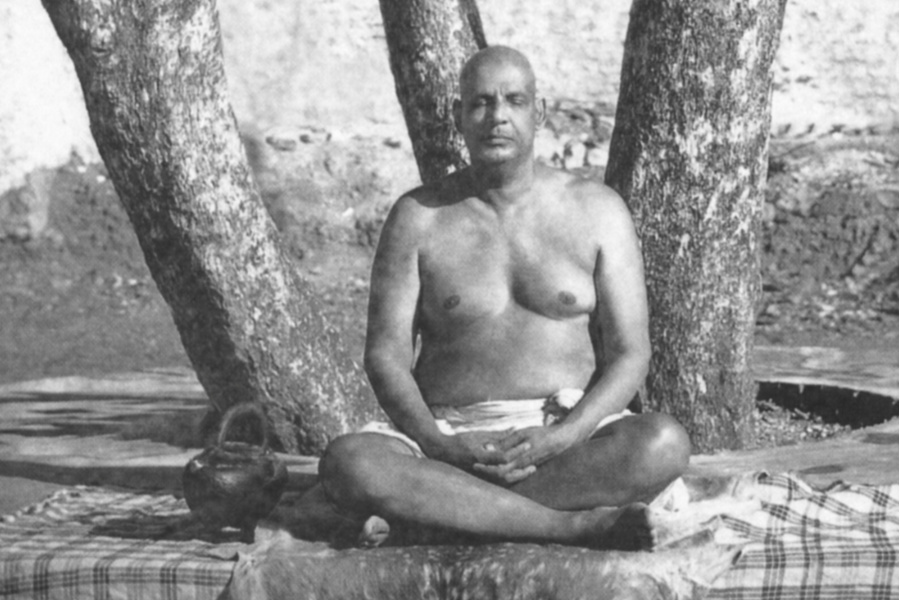
swami sivananda Monk meditating under tree outdoors image
Sadhana, Swami Sivananda

Abhyasa: The First Phase Of Sadhana

Abhyasa: The First Phase Of Sadhana By Swami Sivananda Abhyasa or practice is the effort to secure steadiness of the modifications of the mind. The effort to restrain all the Vrittis of the mind and to make the mind steady like the jet of a lamp in a windless place is called Abhyasa. To drive back the mind to its source-Hridaya Guha and get it absorbed in Atman is Abhyasa. To make the mind inward and to destroy all its outgoing tendencies is Abhyasa. And this practice should be done for a long time without any break and with perfect devotion. Through Abhyasa you will have to change the outgoing Vishaya Vrittis of the mind. Without the Vrittis of the mind you cannot enjoy sensual objects, and if the Vrittis along with Samskaras are controlled Manonasa or the annihilation of the mind follows. Abhyasa becomes fixed and steady when practised for a long time without any break and with perfect devotion. Constant, steady application is indispensable for perfect control of the mind and attainment of Asamprajnata Samadhi which alone can fry all the seeds of Samskaras. Therefore, constant and intense practice is needed for a long time. Then alone the wandering mind will come under your perfect control. Then alone wherever it is directed it will be ever at rest. Without practice nothing can be achieved. The practice should be accompanied by perfect faith and devotion. If there is no faith and regularity, success is impossible. Abhyasa should be continued till you get perfection. FOUR POINTS FOR MEMORY IN SADHANA REMEMBER THE PAINS OF SAMSARA. REMEMBER DEATH. REMEMBER THE SAINTS. REMEMBER GOD. 1 and 2 will produce Vairagya. 3 will bring inspiration. 4 will cause attainment of God-consciousness. Every aspirant should constantly bear these most important four points in memory.

Abhyasa: The First Phase Of Sadhana Read Post »

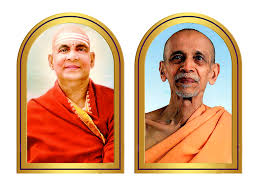
Swami Sivananda Paired spiritual leaders framed photo
Pranayama, Swami Sivananda

What is Pranayama?

What is Pranayama? Tasmin sati svasaprasvasayor-gativicchedah pranayamah -“Regulation of breath or the control of Prana is the stoppage of inhalation and exhalation, which follows after securing that steadiness of posture or seat.” This is the definition of Pranayama in the Yoga Sutras of Pantanjali. ‘Svasa’ means inspiratory breath. ‘Prasvasa’ means expiratory breath. You can take up the practice of Pranayama after you have gained steadiness in your Asana (seat). If you can sit for 3 hours in one Asana, continuously at one stretch, you have gained mastery over the Asana. If you are able to sit from half to one hour even, you can take up the practice of Pranayama. You can hardly make any spiritual progress without the practice of Pranayama. Prana is Vyasthi, when the individual is concerned. The sum total of the cosmic energy or cosmic Prana is Hiranyagarbha who is known as the floating ‘Golden-Egg’. Hiranyagarbha is Samashti Prana. One match stick is Vyashti (single). The whole match box is Samashti. A single mango-tree is Vyashti. The whole mango grove is Samashti. The energy in the body is Prana. By controlling the motion of lungs or respiratory organs, we can control the Prana that is vibrating inside. By control of Prana, the mind can be easily controlled, because the mind is fastened to the Prana, like the bird to the string. Just as the bird that is tied to a post by a string, after flying here and there, finds its resting place in the post, so also this mind-bird after running hither and thither, in various sensual objects, finds its resting place during deep sleep in the Prana. PRANAYAMA (ACCORDING TO THE GITA) Apane juhvati pranam prane’panam tathapare; Pranapanagatee ruddhva pranayamaparayanah (Gita, Ch. IV-29). Others offer Prana (outgoing breath) in Apana (incoming breath) and Apana in Prana, restraining the passage of Prana and Apana, absorbed in Pranayama. Pranayama is a precious Yajna (sacrifice). Some practise the kind of Pranayama called Puraka (filling in). Some practise the kind of Pranayama called Rechaka (emptying). Some are engaged in the practice of Pranayama called Kumbhaka, by impeding the outward passage of air, through the nostrils and the mouth, and by impeding the inward passage of the air, in the opposite direction. PRANAYAMA (ACCORDING TO SRI SANKARACHARYA) “Pranayama is the control of all the life-forces by realising naught but Brahman in all things as the mind, etc. “The negation of the Universe is the outgoing breath. The thought ‘I am Brahman’ itself is called the incoming breath. “The permanence of that thought thereafter is the restrained breath. This is the Pranayama of the wise, while the pressing of the nose is only for the unknown.” (Aparokshanubhuti, 118-120) PRANAYAMA (ACCORDING TO YOGI BHUSUNDA) Bhusunda says to Sri Vasishtha: “In the cool lotus of the heart within this visible tenement of flesh composed of the five elements, there are two Vayus, viz., Prana and Apana, commingled in it. For those who tread smoothly and without any of the slightest efforts, the path of these two Vayus will become the sun and the moon themselves in the heart-Akasa, and will rove in the Akasa and yet be animating and carrying their fleshy-tabernacle. These Vayus will go up and down to higher and lower states. They are of the same nature in the waking, dreaming and dreamless sleeping state, and permeate all throughout. I am moving in the direction of those two Vayus and have rendered nil all my Vasanas in the waking state lit unto those of the dreamless sleeping state. Divide a filament of the lotus-stalk into a thousand times and you will find these Vayus more subtle than that. Hence it is difficult for me to treat about the nature of these Vayus and their vibrations. Of these, Prana does ceaselessly vibrate in this body with an upward motion, both externally and internally, while Apana, having the same fluctuating tendency, vibrates both external and internal to the body having a downward motion. It will be beneficial if the Prana, exhaled to the extent of 16 digits, is inhaled to the same extent. Only 12 digits are inhaled ordinarily. Those who have brought to experience-viz., the equalisation of Prana in exhalation and inhalation will enjoy infinite bliss. “Now hear about the characteristics of Prana. The inhalation to the length of 12 digits of the Prana which has been exhaled, is called (the internal) Puraka (inhalation). This also is called the internal (Puraka), when Apana Vayu re-enters the body from outside without any effort. When Apana Vayu ceases to manifest itself and Prana gets absorbed in the heart, then the time occupied in such a state is (internal) Kumbha. Yogins are able to experience all these. When the Prana in the Akasa of the heart manifests itself externally (to the heart within) in diverse aspects without any affliction to the mind then it is called (the external) Rechaka (exhalation). When the externally fluctuating Prana enters the nose and stops there at its tip, then it is called the external Puraka. But when it is passing from the tip of the nose it goes down 12 digits. Then also it is called the external Puraka. When Prana goes arrested without and Apana within, then it is called the external Kumbhaka. When the shining Apana Vayu takes an upward bent within, then it is styled the external Rechaka. All these practices lead to Moksha. Therefore they should ever be meditated upon. Those who have understood and practised well all the external and internal Kumbhakas and others, will never be reborn. “All the eight courses, I have given out before, are capable of yielding Moksha. They should be practised both day and night. Those who are associated with these practices smoothly, and control their minds by not letting them run in other directions, will in course of time attain Nirvana. Such practitioners will never thirst after material pleasures. They will ever be in their uniform practice, whether walking, standing, waking, dreaming or sleeping.”Prana, having

What is Pranayama? Read Post »

swami sivananda Vintage photo of spiritual guru surrounded by devotees image
Sadhana, Swami Sivananda, Yoga

The Three Governing Factors of Sadhana

The Three Governing Factors of Sadhana by Swami Sivananda Many people even after studying classic works on religion and philosophy, do not know what they should do in practice to attain the goal of life, viz., God-realisation, and they seek enlightenment on this. The three things essential for God-realisation are: (1) constant remembrance of God, (2) cultivation of virtues and (3) spiritualisation of all activities. (1) Constant remembrance of God: There may be breaks in the beginning, but by repeated practice, gradually you can have constant remembrance. Constant Namasmarana, mental repetition of God’s Name, alone is possible for the vast majority of people. Awakening of Kundalini and raising of Brahmakara Vritti are very, very difficult, but when the mind is purified, they would come automatically. (2) Cultivation of virtues: Of all virtues Ahimsa (non-injury), Satya (truthfulness) and Brahmacharya (celibacy) are the most important. If one is established in one virtue, all other virtues will cling to him. Watch the Vrittis. Introspect. Develop purity in thought, word and deed. In the beginning, practise at least physical purity. Then mental purity will come by itself. (3) Spiritualisation of all activities: Feel you are an instrument in the Lord’s hands and that all the Indriyas (senses) belong to Him. Repeat the formula: “I am Thine; all is Thine; Thy Will be done.” It is a beautiful formula for self-surrender. You may forget this formula and egoism may assert itself. But introspect again and again and find out your weakness. Try to be established in the feeling, “I am an instrument in the hands of the Lord.” Remember the Gita verse: SELF-SURRENDER Yat karoshi yadasnasi yajjuhoshi dadasi yatYat tapasyasi kaunteya tat kurushva madarpanam. (Whatever you do, or eat, or offer in sacrifice, or give, or practise as austerity, do it as an offering unto Me.) Praseeda devesa jagannivasa: “O God of gods! Resort for the world, have mercy.” It is a formula more potent than or as potent as pahi mam, palaya mam, prachodayat-these are all tremendous formulae. They are very powerful. So again and again remember them and their significance. Sri Ramah saranam mama, Sri Krishnah saranam mama, Harih saranam-these are potent Saranagati Mantras. Saranagati is taking refuge in the Lord, or self-surrender unto Him. KarpanyadoshopahatasvabhavahPrichchhami tvam dharmasammudhachetah,Yat sreyah syat nischitam bruhi tanmeSishyasteham sadhi mam tvam prapannam. (My heart is overpowered by the taint of weakness; my mind is confused about duty. I ask Thee. Tell me decisively what is good for me. I am Thy disciple. Instruct me, who has taken refuge in Thee.-Gita II-7). This is a Satguru-Saranagati Mantra. Sarvadharman parityajya mamekam saranam vraja,Aham tva sarvapapebhyo mokshayishyami ma suchah. (Abandoning all duties, take refuge in Me (the Lord) alone; I will liberate thee from all sins, grieve not.-Gita XVIII-66) These are all Saranagati formulae. In the Eighteenth Chapter of the Gita there is a Sloka: INSTRUMENTALITY Yasya nahamkrito bhavo buddhiryasya na lipyate,Hatvapi sa iman lokan na hanti na nibadhyate. (He who has no egoism, whose intelligence is not tainted by (the obsession of) good or evil, even if he kills the whole world, he neither kills nor is bound by the action.-Gita XVIII-17) Krishna said this to Arjuna when the latter shied away from the battle to which he was duty-bound as a soldier when challenged by the aggressor. Remember these Slokas. You will have the spirit of Saranagati. You will feel that the Lord is in you, and you are in the Lord. After the day’s work, offer whatever you have done to god. Do not identify yourself with actions. Feel that you are doing your duty as a detached instrument of the Lord’s benevolence. Kayena vacha manasendriyairvabuddhyatmana va prakritessvabhavat,Karomi yadyat sakalam parasmaiNarayanayeti samarpayami. Offer all actions and their fruits to God. Then you will not be bound. In this way you should spiritualise all your activities. Feel that the whole world is a manifestation of the Lord and you are serving the Lord in all names and forms, and whatever you do-your actions and the results thereof consecrate to the Lord. Then your heart will be purified and will be ready to receive the divine light and grace. SUREST METHOD Therefore, practise the three requisites-constant remembrance of God, spiritualising your activities and cultivating virtues. These three are very important. Practise them. This is the easiest, the quickest and the surest method for attaining God-realisation. Esha sarveshu bhuteshu gudhatma na prakasate,Drisyate tvagryaya buddhya sukshmaya sukshmadarsibhih. (This Atman is hidden in all beings, but it is seen only by subtle seers through their sharp and subtle intellect.) The intellect should be razor-sharp if you wish to understand the Brahma Sutras properly. All are not meant for it. Even then practical experience is essential. Therefore, to the vast majority, constant remembrance of the Lord, spiritualisation of all activities and cultivation of virtues-Ahimsa, Satya, Brahmacharya-form the most important part of Sadhana. These also constitute the noble eightfold path of Lord Buddha. These also correspond to the “Sermon on the Mount” of Lord Jesus. These are the essentials in all religions. So, kindly practise these, and attain God-relisation. Love all. Be good and do good. May Lord bless you all.

The Three Governing Factors of Sadhana Read Post »

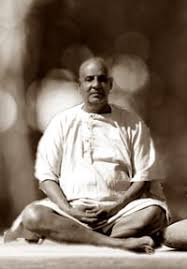
Swami Sivananda sitting in meditation with calm spiritual expression
Swami Sivananda, Yoga

Prerequisites of Spiritual Sadhana

Prerequisites of Spiritual Sadhana by Swami Sivananda I I will dwell here upon the main qualifications necessary for launching upon the actual Sadhana. All the ancient saints, seers, men of God that have had intuitive experience of the Truth have been declaring to all mankind the great bliss, the vast power and knowledge that can be experienced if only man would turn from sensual sinful life and strive for the higher divine life. Yet we see today that man is as much immersed-if not more-in worldliness as he was centuries ago and the state of mankind is as apathetic and lethargic towards these questions of a life in the spirit as it was at the beginning of creation. Why is it that in spite of the clarion call of very many great seers, the confident assurance of the scriptures, the repeated experiences of man himself in failing miserably to attain happiness amidst external physical world, man is again and again being deceived? Why is it that man has not yet learnt to take to Sadhana? We read hundreds of spiritual books; we attend discourses; we convene gatherings as during the Sadhana Week. After years of intense study of spiritual books, contact with saints, after hearing these things again and again, yet man does not actually do anything. Because he does not have a deep and abiding faith in the admonitions of saints, in the scriptures, in the words of those who have trodden the path and attained bliss. His faith in external objects is something more real to him. If only man did really believe in these great ones he would certainly be induced to act up to their words. It is this basic lack of faith in man that is at the root of his failure to do Sadhana. Sadhana is necessary; but man will not do it because he does not really believe in its necessity. Man believes that for his happiness money is required. Man believes that if only he will get a good job he will get money. Man believes that if he has good college education he will get this job; and through that money; and through that, happiness that he desires. Believing in it every parent sends his child to school and from a young age he is taught to believe that if he passes his examinations creditably he will get a good job, salary, motor cars, etc. The child believes in the words; he studies, passes the examinations and the remuneration he expects comes. Because he had a feeling, because he thought all these things were necessary he desired them. But ultimately, of course, it is the unfortunate experience of all men that this happiness they get is mixed up more than tenfold with pain. Man gets an anna of happiness and with it fifteen annas of pain, suffering, for which he did not bargain when he first set about searching for this happiness. Thus if man has faith in spiritual course of action he will act up to it. Lacking this faith he does not do Sadhana. If a man has to take up to Sadhana, if he really wants to obtain this bliss which is not mixed with pain, he will certainly have to repose faith. It may be called blind faith; but there is nothing like blind faith because all things on this earth go upon faith only and if man lives today it is on account of mutual trust and faith. A ten rupee note is a piece of paper and it is because you have the Asoka Chakra ensign on it, it will immediately get you whatever you want if presented at the bazaar. Because you have the faith in this piece of paper. If you do not have faith upon this paper, you would not have the confidence to start from the house; you would never be sure of reaching your destination. The doctor gives you a prescription on a piece of paper. If you do not have faith you will not take it from him. But the faith upon which all society is based makes you take his word, pay him money for his advice, take it to the chemist, get the medicine and you are cured. The entire social structure and order upon which mankind smoothly runs is based upon faith and trust. When you are prepared to put faith in mankind which is but a passing phenomena-those in whom you put your faith are dying before your eyes-when you are prepared to put faith upon these passing entities like mankind, why should you not put faith upon the very Creator of these things? Having first of all full faith in the words of the seers and known the necessity of Sadhana, what is the procedure, what is to be done next? You may have faith. Thousands of well-wishers may suggest good lines of action for your welfare and you may believe in them fully. If you do not put them into practice-if you do not begin to translate them into function-they will ever remain plans in the blue-print stage. If you don’t set about procuring money, cement, bricks, various other building materials and labour, the whole construction will remain in blue-print only. It will not see the light of the day. After faith in Sadhana comes practice. You must set about doing. No question of believing. A belief must become an act. One must set about doing. Having reposed faith in the words of sages, you begin doing Sadhana. Once you commence Sadhana, the next important thing you should bear in mind is you should not easily give it up. Perseverance is of the utmost importance. All processes in this universe are gradual. They have got stages. Agriculture is gradual; it takes twelve months. You have to sow, water the field, cut out the weeds, and in course of time you will be able to take the grain. If you are impatient-if you

Prerequisites of Spiritual Sadhana Read Post »