









Hari Om

Menu

February 18, 2026

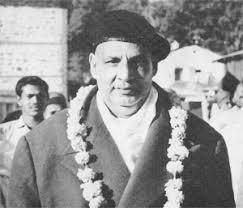
Swami Sivananda wearing garland and cap image
Getting Started, Swami Sivananda

Adapt, Adjust, Accomodate

Adapt, Adjust, Accomodate by Swami Sivananda Bear insult. Bear injury. This is the essence of all Sadhana. This is the most important Sadhana. Forgive those who slander or speak ill of you. Do not harm any one who injures you. If anybody from aversion speaks disparagingly of you, greet him courteously without minding those disagreeable words. Wrath is the daughter of ignorance, the sister of jealousy and the mother of hard-heartedness. With boldness, manliness and self-reliance, combine humility, softness of speech and behaviour and self-denial. Be ready to serve others. Put up with provocation and abuse without retaliation. Remove all harshness and rudeness from your nature. Courtesy and politeness must become part of your very nature. While coming in contact with Raga, Dvesha, lust, anger and greed, we have to see that the friction does not ignite us. Let us always keep handy the cooling balm of Bhagavan’s Divine Name and His reflection. Do not argue much. Speak only measured words. If anyone abuses or insults, keep quiet. Identify yourself with the Atman. Atman is the same in all. It can never be hurt or be insulted. Watch your thoughts, words and actions very carefully. Know the power of words and use them cautiously. Respect all. Speak sweet measured words. Be kind. Cultivate patience, love and humility. Enquire ‘Who am I?’ HE WHO GIVES RESPECT, GETS IT. Be serene and tranquil under all circumstances. Cultivate this virtue, Shama (serenity), again and again through constant and strenuous endeavour. Serenity is like a rock; waves of irritation may dash on it, but cannot affect it. Meditate daily on the ever-tranquil Atman or the Eternal which is unchanging. You will attain this sublime virtue gradually. The divine light will descend only on a calm mind. An aspirant with a calm mind only can enter into deep meditation and Nirvikalpa Samadhi. He alone can practice Nishkama or selfless Karma Yoga. Each Sadhaka should bear in mind that divine life is to be lived in small details. If you are divine in small details, you can be divine in big things. Unless you are careful in your day-to-day life and mould your life in accordance with your idealism, it cannot bear fruit. Doubt or uncertainty is a great obstacle in the path of Self-realisation. It bars the spiritual progress. This must be removed by Satsanga, study of religious books, Vichara and reasoning. It will again and again raise its head to mislead the aspirant. It should be killed beyond resurrection by certainty of conviction and firm unshakable faith based on reasoning. Doubt is your great enemy. Doubt causes restlessness of mind. Destroy all doubts through Vichara and Jnana. Introspect regularly. Practise self-examination for ten minutes before you go to bed. Sit comfortably on a chair. Close your eyes. Think of all actions-good and bad-that you did during the course of the day. Think of all the mistakes that you committed consciously or unconsciously. A man, who has no life of introspection, whose mind is of outgoing tendencies, cannot find out his own mistakes. The self-conceit acts as a veil and blurs the mental vision. If an aspirant wants to grow, he must admit his defects when they are pointed out by others. He must try his level best to eradicate them and must thank the man who has pointed out his defects. Then he can grow in spirituality. Do not brood over your past mistakes and failures as this will only fill your mind with grief, regret and depression. Do not repeat them in future. Be cautious. Just think of the causes which led to your failures and try to remove them in future. Strengthen yourself with new vigour and virtues. Develop slowly your will-power. Every temptation that is resisted, every evil thought that is curbed, every desire that is subdued, every bitter word that is withheld, every noble aspiration that is encouraged, every sublime thought that is cultivated, adds to the development of will-force, good character and attainment of eternal bliss and immortality. Subconscious life is more powerful than your ordinary life of objective consciousness. Beneath your conscious life there is a very wide region of subconscious life. The subconscious life can modify and influence your conscious life. Through the practice of Yoga you can modify, control and influence the subconscious depths. All habits are imbedded in subconscious. The mind is a product of experience. It is the result of past thinking and is modified by present thinking. From experience you get Samskara, from Samskara you get Vasana, from Vasana you get Vritti. Then imagination (Kalpana) makes the Vritti into a desire (Iccha). Ego attaches itself to the desire and it becomes then an urge (Trishna). Then you are forced to do Cheshta or action to fulfil the desire. Action gives rise to experience and so the cycle is repeated. Samskaras or impressions you have created during your Sadhana period within a closed room, will be wiped out if you are not careful or vigilant during your period of activity in the world. So constantly dwell on these ideas, “The whole world is my body. All bodies are mine. All lives are mine. All pains are mine. All joys are mine!” Jealousy, anger, hatred, egoism, all will vanish. The mind is the creator of all fancies, concepts and through these of worries. A little control over the mind should be exercised when small ripples of disturbance pass over the surface. Sit calmly and watch the mind-wanderings carefully. Find out what are its habitual likings and thoughts. Just as you remove at once from your shoes a pebble that troubles you, so also you must be able to remove at once any tormenting thought from your mind. All your troubles and miseries are due to your egoism. It is egoism that has limited you. The cause of your misery does not come from without. Annihilate this egoism. You will enjoy infinite bliss and a life of expansion. The secret of renunciation is renunciation of

Adapt, Adjust, Accomodate Read Post »

Swami Sivananda blessing young child during spiritual ceremony photo
Saints and Masters, Swami Sivananda

Swami Papa Ramdas

Swami Papa Ramdas If anyone wants me to tell them something about Beloved Papa, I ask them to visualise what it would be like if, by some divine alchemy, Love and Bliss were to coalesce and stand before them as one luminous entity. That is how Papa can be seen with the naked eye. Papa was indeed the very image of Love and Bliss divine. What was the source of that Love? When he opened out his heart to Ram, his eternal Beloved, Ram flooded his heart with never-ending, never-fading Love. This happened when Papa turned to his beloved Ram with pure devotion and utter self-surrender, turning his back on the world and the attractions it might hold for him. It was born of the realisation of his oneness with the Infinite and the Eternal Self. Every fibre of his being then thrilled to the sweet rhythm of Love. Bliss ineffable flowed over and saturated him, rising like an artesian spring from the heart’s core when Papa realised the entire universe of name and form as the vibhuti or manifestation of the Self. In the state of pure Bliss-consciousness he carried on his spiritual ministry till his last day on earth. Through his talks and actions he gave those who sought him a taste of the love and bliss divine. The purest pearls of wisdom that fell from his tips spread sweetness and light all round, dispelling gloom, fear and anxiety that held the people in a tight grip. Earnest seekers were lifted up to higher levels of consciousness, getting a glimpse of the true life of the Spirit, with the result that a deep yearning for that life was kindled in them. Papa’s talks were often punctuated with jokes and laughter. The total impression left on the mind of the listener was never to be forgotten. Once, to illustrate the futility of empty, theoretical advaitic knowledge, Papa narrated the following story. He was staying in a small mandir in Jhansi when a man approached him and asked, “Who are you?””I am Ramdas,” he replied simply. “No, you speak a lie there,” returned his visitor. “You are Ram Himself. When you declare you are Ramdas, you do not know what you say. God is everything and in everything. He is in you and so you are He. Confess it right away. “True, dear friend,” Ramdas replied, “God is everything. But at the same time, it must be noted God is one, and when He is in you and everywhere around you, may I humbly ask to whom you are putting this question?” After a little reflection, the man could only answer, “Well, I have put the question to myself “. Papa always stressed the necessity of absolute honesty and sincerity as essential in the great Quest. Better an honest, dualistic bhakti than a hypocritical advaita. Whereas bhakti, however dualistic, will lead ultimately to jnana as jnana mata, the mother of jnana, advaita practised only with the head leads merely to confusion and hypocrisy. Another incident illustrates this point well. When Papa was staying at Mount Abu he was taken to meet a “great saint”, Swami Kaivalyananda, a young sannyasin living in a cave, his body completely shaved, but surrounded by a number of books. Papa approached him and prostrated.With a look of surprise, the sannyasin asked, “To whom are you offering this salutation?” “To Ram,” Papa replied. “Who are you?” “Ramdas. “ “Ramdas. Ramdas, funny, isn’t it? There is only one Truth. Why do you assume this false duality?” “It is Ram Himself, being One, who has chosen to be many. “ “Wrong,” retorted the advaitin. “He is always One; many is false, illusion.” “Truth has become God and His devotee for the sake of lila, the divine play,” Papa responded. “Why play?” “For love and bliss; so when Ramdas prostrates before you, it is yourself who do it in the form of Ramdas,” Papa went on. “Bosh!” cut in the sannyasin. “There is only one, never two.” “Then to whom are you talking, dear Swamiji,” asked Papa, pulling out his brahmastra. The sannyasin reflected a while and had to reply, “To myself”. “Exactly. You assume there are two although in the light of absolute Truth there is only one.” “No, no–no realised person believes in duality,” maintained the advaitin, getting jumpy. “Here, take this book and read it. You will understand things more clearly, I assure you. It is written by me.” He pressed Papa to accept it. Noticing the author’s name on the cover, Papa noted that he referred to himself as “Swami Kaivalyananda, M.A.”! Papa, known as Vittal Rao in his purvasrama days, was born in 1884 at Hosdrug, Kerala, to Sri Balakrishna Rao and Smt. Lalita Bai, a devout Saraswat couple. Papa lived the ordinary life of a householder until he was thirty-six. During that time he experienced many trials and tribulations from the worldly point of view, but in his case they caused him to enquire deeply into the true meaning of life. A wonderful transformation was wrought in him of which nobody had any inkling until he was suddenly fired with an intense wave of dispassion. He came to realise the futility of worldly pursuits, and the need for real, everlasting peace and happiness. Inspired by the teachings of Sri Ramakrishna, Swami Vivekananda and Swami Ram Tirtha, Papa became thoroughly convinced that God alone can give one eternal peace and happiness. The path of pure devotion and self-surrender shone forth for him with an irresistible appeal. All attachments to family, friends and business dropped away just as a fully ripened fruit falls from the tree. He was inwardly ready to give himself up wholly and unreservedly to God. At that critical time, his father, noticing his son’s waning interest in secular pursuits and his waxing love for and devotion to God, initiated him into the Ram mantram and assured him that by repeating it unstintingly he would, in due time, find the true

Swami Papa Ramdas Read Post »

Swami Sivananda portrait with flower garland image
Getting Started, Swami Sivananda

Serve, Love, Give, Purify

Serve, Love, Give, Purify by Swami Sivananda Become a Karma Yogi and work for the well-being of the world. You must do universal service in order to attain the state of being one with the universal consciousness. It is only through selfless activities, unattached work and loving service that one can acquire the precious gem of purity, patience and humility. Wherever there is distress share what you have and alleviate human suffering wherever it is possible. Thus you will be able to achieve the goal for which God has given this human body. While doing selfless service, an insidious feeling of self approbation may creep in unnoticed. This may later manifest itself in the form of a sort of indulgent attitude and a lofty contempt for those who are not following, a similar life. A constant humility kept alive by a ceaseless exercise of it in service is the sure armour against this foe. Spiritualise all activities. Feel you are an instrument in the Lord’s hands and that all the Indriyas (senses) belong to Him. Repeat the formula ‘I am Thine; all is Thine; Thy Will be done.’ Feel that the whole world is a manifestation of the Lord and you are serving the Lord in all names and forms. Whatever you do-your actions and the results thereof-consecrate them all to the Lord at the end of each day. Do not identify yourself with actions. Then your heart will be purified and you will be ready to receive the divine light and grace. Rest not with being good. Do good also. Be kind. Be compassionate. Let not virtue wither for want of exercise. God is love. Love is God. Selfishness, greed, egoism, vanity, pride, hatred contract the heart and stand in the way of developing universal love. Feel that the whole world is your body, your own home. Melt and destroy all barriers that separate man from man. Idea of superiority is ignorance. Develop Visvaprema-all-embracing love. Unite with all. Separateness is death. Unity is eternal life. God is love. The only true religion is the religion of love or the religion of heart. Feel for others as you feel for yourself. Love expects no reward. Love knows no fear. Love Divine gives-does not demand. Love thinks no evil; imputes no motive. To love is to share and serve. Do charity-amounting to at least one tenth of your income or six Paise per Rupee. Happiness comes to him who gives happiness to others. Give, Give. Give in plenty, in humility and with joy. Thus in the very process of giving enrich yourself too. If a man, who has not removed jealousy, backbiting, hatred, pride, selfishness says, “I am meditating for six hours daily,” it is all nonsense. Excel. There is no hope of getting into a meditative mood even after a year unless a man removes all these Vrittis and purifies his mind first by selfless service at least for six months. Excel in Service, Expand in Love, Advance in Knowledge. Service is Love in expression, Love is concentrated Knowledge, Knowledge is diffused love. PURIFY Spirituality means growing into the form of Divine Ideal. It is the transformation of your nature from human to Divine. This is brought about by Abhyasa, i.e., spiritual practice or Sadhana and Vairagya leading to renunciation. Conscious attempt to merge ourselves in the Supreme Reality is called spiritual Sadhana, which should be the common aim of all, though the process may be different. If you wish to evolve quickly, you must have the right kind of Sadhana. If you are a student of the path of self-reliance, you can select the Sadhana for your daily practice, yourself. If you are a student of the path of self-surrender, you should get the right kind of Sadhana from a Guru and practice it with intense faith. Constant Satsanga with the wise and study of the Srutis under a Guru will slowly wipe out the wrong and worldly Samskaras. Make intense inner Sadhana the keynote of your life. Base your life upon the ceaseless remembrance of the Divine consciousness and constant feeling of His presence. Sadhana is at first mechanical and it is only in the later stages that it becomes a part and parcel of one’s own life. It appears as a drudgery in the beginning, but later on it imparts joy, peace, strength, courage and freedom. Do not be slack in you Sadhana. It is Sadhana that will help you in the long run. It is the only asset in this life. Be regular in your Sadhana-and attain Self-realisation in this very birth. Never mind repeated failures in your Sadhana. Nil desperandum. Despair not. Do not give up the struggle or the Sadhana. Stand up and fight again. Struggle again. You are nearer to success each time. Every failure is a steppingstone to success. You are sure to succeed in the long run. Only when you have purified the heart, silenced the mind, stilled the thoughts and surging emotions, withdrawn the outgoing senses, thinned out the Vasanas, you can behold the glorious Atman during deep meditation. The practical method of realising one’s divine nature is the complete transformation of the base animal nature, transcending the human nature and awakening fully the dormant spiritual traits within. This is done through perfect ethical evolution, self-restraint, self-analysis, self-purification, concentration, meditation, practice of selfless love and service to all and systematic inner culture through right speech and right conduct. This alone is the pathway to Yoga and inner unfoldment. Never complain against bad environments. Create your own mental world wherever you remain and wherever you go. Do not try to run away from bad unfavourable environments. God has placed you there to make you grow quickly. The world is not a hindrance to your spiritual path. The world is your Guru. The world is a training school. The world is Virat or Isvara. Perfect serenity, cultivation of divine virtues, entertaining holy thoughts, discipline of diet-all these pave the way to

Serve, Love, Give, Purify Read Post »

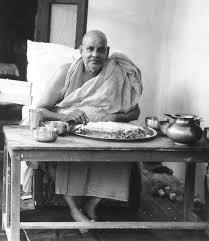
Swami Sivananda eating at table image
Getting Started, Swami Sivananda

The Universal Prayer

The Universal Prayer by Swami Sivananda O Adorable Lord of Mercy and Love!Salutations and prostrations unto Thee.Thou art Satchidananda.Thou art Existence-Consciousness-Bliss Absolute.Thou art Omnipresent, Omnipotent and Omniscient.Thou art the Indweller of all beings. Grant us an understanding heart,Equal vision, balanced mind,Faith, devotion and wisdom.Grant us inner spiritual strengthTo resist temptations and to control the mind.Free us from egoism, lust, greed, hatred, anger and jealousy.Fill our hearts with divine virtues. Let us behold Thee in all these names and forms.Let us serve Thee in all these names and forms.Let us ever remember Thee.Let us ever sing Thy glories.Let Thy Name be ever on our lips.Let us abide in Thee for ever and ever.

The Universal Prayer Read Post »

ChatGPT Image Feb 13 2026 05 01 40 PM
Getting Started, Swami Sivananda

Power

Power by Swami Sivananda Aspire Fervently Give up thirsting for sensual objects. Cling fast to the faith in the Divinity. Aspire fervently and constantly. You will have pure mind. Never hurt a man in thought, word or deed. Always do good and kind acts. Purge yourself of all miseries and sorrows. Merge in calmness and silence. You will attain supreme peace and eternal happiness. Destroy the tossing of the mind through Viveka, constant meditation and ceaseless Brahma Vichara (Atmic enquiry). Direct your attention to selfless service and worship of the Lord. You will attain supreme joy. STICK TO YOUR PRINCIPLESFollow the Truth always. Strive for it ever in thought, word and deed. Be compassionate. Be bold. Resign yourself to the Lord. There is no room for lamentation and despair. Stick tenaciously to your principles and ideals. Do your duty without looking to the fruits or consequences of your actions and God will be with you. Become dispassionate. Learn to discriminate. Know thyself and be free from attachment. You will go beyond “Time” and “Death”. BE FIERY IN YOUR DETERMINATIONBe always cheerful and smile away your worries. Follow the correct principles of living. Be temperate in eating, drinking, sleeping, amusements and in all other things. Cultivate a very strong faith in God. Silence the surging emotions and bubbling thoughts. Do not be carried away by the temptations of the world. Be careful. Be wise. Get away from the company of worldly-minded persons. Put your heart, mind, intellect and soul even in your smallest act. Always act with faith and determination. Be firm in your resolve and fiery in your determination. BE FIRM IN YOUR VOWS Do your duties properly. Be firm in your vows and true in speech. Possess good character. Be kind to all. Conquer wrath. Become master of self. Get rid of envy. You will soon attain God-realisation. Take refuge in the Name of the Lord. Do not think very often of your defects and weaknesses. Aspire fervently. Grow in spirituality. You will attain Divinity. Meditate on the glory and splendour of the Supreme Being who illumines everything, who is indivisible, the Existence-Knowledge-Bliss-Absolute. You will attain the Supreme. NEVER DESPAIR You have got Svatantrya in action. You can do your Karma in any way you like. You can become a Yogi or Jnani by right thinking and right action. Man is not a helpless being. He has a free will of his own. Therefore overcome all your unfavourable circumstances. Have courage. Be bold. Never despair. You will succeed. There is nothing in the world which cannot be achieved by a man by the right sort of efforts. Wake up now. Open your eyes. Become a virtuous man. Do good actions. Sing Hari’s name. Have constant Satsanga. All evil habits will be eradicated. Purify. Concentrate. Meditate. You will realise the goal. AS YOU THINK, SO YOU BECOME “As a man thinketh, so he becometh” is one of the greatest laws of nature. Think you are pure, pure you will become. Think that you are a man, man you will become. Think you are Brahman, Brahman you will become. Become an embodiment of good nature. Do always good actions. Serve. Love. Give. Observe Brahmacharya and Mouna. Control anger. Make others happy. Live to serve others. Then only will you enjoy happiness. DRAW STRENGTH FROM WITHIN Do not allow the mind to go its own way altogether. Keep your Prana and senses under your control, and bring the mind under your control with the help of the intellect strengthened by Sattva. Be slow to make a promise but be quick to carry it out. Cultivate an amiable, loving nature and adaptability. Be courageous. Never despair. Draw strength from within. Feel the divine presence everywhere. Dive deep into the Divine source. You will realise the infinite bliss. CONQUEST OF NATURE To live is to fight for the ideal and goal. Life is a series of awakenings. Conquer the mind and the senses. These are your real enemies. Live under lifelong vows. Conquer your internal and external nature. Fight against the dark antagonistic evil forces, through Japa and meditation. Soar high always in the realms of higher spiritual knowledge. Show your manliness and spiritual strength now. THIS WORLD IS A GREAT SCHOOLThis world is a great school. It is for thy education. Be wise. Be in the spirit of Yoga. Utilise all opportunities to the best possible advantage. There is no such thing as bad. Your capacities and will-power will develop. You will receive more of Divine Light, Knowledge, Purity, Peace and Spiritual strength. Smile with the flowers and the green grass. Shake hands with the shrubs, ferns and twigs. Develop friendship with all neighbours, dogs, cats, cows, human beings, trees, in fact, with all nature’s creations. You will have a perfect and rich life. Open your eyes now. Wake up from your deep slumber and profound inertia. Regain the lost divinity. Thou art Divine. Thou art Atman. Realise this and be free. THE WORLD IS YOUR BODY Actions produce Samskaras or impressions or potencies. The impressions coalesce together through repetition and form tendencies. Tendencies develop into habits and character. The sum total of the tendencies of a man is his character. Character generates Will. Therefore, if the character is pure and strong the Will also will be pure and strong and vice versa. Therefore sow the seed of good habits at once. It will grow gradually. It will assert itself to gain a seat in the body and mind, and work by itself till it gets sanguine success. All the old morbid habits will be destroyed. Feel that the whole world is your own home or body. Feel that God dwells in all creatures of this universe. “Isavasyamidam sarvam”. You will attain the Supreme. UNDERSTAND THE SECRET OF KARMA-YOGA Look at the stupendous and magnanimous work turned out by Lord Buddha, Sri Sankara and other Karma Yogins of yore. Their names are handed down from posterity to posterity. Their names are still

Power Read Post »

Swami Sivananda with disciple by riverside picture
Getting Started, Swami Sivananda

Glory of Sadachara or Right Conduct

Glory of Sadachara or Right Conduct by Swami Sivananda 1. A man, who has attached ethical perfection by the continued practice of right conduct or Yama and Niyama, has got a magnetic personality. He can influence millions. Character gives a strong personality to man. People respect a man who has good character. Moral people command respect everywhere. He who is honest, sincere, truthful, kind and liberal-hearted always commands respect and influence at the people. Sattvic virtues make a man Divine. He who speaks truth and practices Brahmacharya becomes a great and dynamic personality. Even if he speaks a word there is power in it and people are magnetized. Character building is of paramount importance if a man wants to develop his personality. No development of a strong personality is possible without celibacy. Personality can be developed. But the practice of virtue is indispensable. 2. A man may die but his character remains. His thoughts remain. It is the character that gives real force and power to man. Character is power. They say knowledge is power but I say with all the emphasis at my command that character is power. Without character the attainment of knowledge is impossible. That man who has no character is practically a dead man in this world. He is ignored and despised by the community. If you want success in life, if you want to influence others, if you want to progress well in the spiritual path, if you wish to have God-realisation, you must possess an unblemished or spotless character. The character of a man survives or outlives him. Sri Sankara, Buddha, Jesus and other Rishis of yore are remembered even now because they had wonderful character. Character is a mighty soul-force. It is like a sweet flower that wafts its fragrance far and wide. A man of noble traits and good character possesses a tremendous personality. Personality is character only. A man may be a skillful artist, a clever songster, an adorable poet or a great scientist, but if he has no character he has no real position in the society. 3. You must be polite, civil and courteous. You must treat others with respect and consideration. Good manners and soft words have brought many a difficult thing to pass. He who gives respect to others gets respect. Humility brings respect by itself. Humility is a virtue that subdues the hearts of others. A man of humility is a powerful magnet or loadstone. 4. Note carefully how the Rishis had given instructions to their students when they had finished their course of study: “Speak the truth. Do your duty. Do not neglect the study of the Vedas. Do not swerve from Truth. Do not swerve from duty. Do not neglect your welfare. Do not neglect your prosperity. Do not neglect the learning and teachings of Vedas. Do not neglect the duties towards God and forefathers. May the Mother be thy God (Matri-devo bhava). May the Father be thy God (Pitri-devo bhava). May the preceptor be thy God (Acharya-devo bhava). May the guest be thy God (Atithi-devo bhava). Do such actions as are blameless. Those that are good works to us, they should be performed by thee, and none else. Those Brahmins that are superior to us, they should be comforted by thee with seats, etc. Give with faith. Do not give without faith. Give with joy, with modesty, with fear, with kindness.” 5. Righteousness is eternal. Do not leave the path of righteousness even if your life is in danger. Do not leave righteousness for the sake of some material gain. A virtuous life and a clean conscience give great deal of comfort to a man while living and at the time of death also. A holy man with piety is far superior to the mighty potentate. God is much pleased with a pious man. Lord Krishna says: “Even if the most sinful worshipeth Me, with undivided heart, he too must be accounted righteous, for he hath rightly resolved.” There is a great hope even for a cutthroat, if he makes a strong determination and takes up the spiritual path. 6. Dear friends! Do your duties in a satisfactory manner in accordance with Sadachara. Apply yourself diligently to all kinds of your daily duties. Consult the Sastras and Mahatmas whenever you are in doubt. Build up your character. This will give you success in life. Practise daily to remove old evil habits. Establish daily virtuous healthy habits. Character will help you to attain the goal of life. Character is your very being. Evolve. Expand. Grow. May the character take you to the Atmic Bliss and Self-realisation. 7. Nectar’s sons! Children of Immortality! Shake off all weaknesses. Stand up. Gird up the loins. Have Sadachara satisfactorily in accordance with your caste or stage in life. Evolve quickly in spiritual path. Eternal Bliss, Supreme Peace, Infinite Knowledge can be had only in God (Atman). Practice of Sadachara will surely lead you to the attainment of God-consciousness. There is no happiness in finite objects. Infinite alone is Bliss. Understand the Truth through the practice of Sadachara. This world is unreal. It is like a mirage. Senses and mind are deceiving you at every moment. Wake up. Open your eyes. Learn to discriminate. Do not trust your Indriyas. They are your enemies. It is very difficult to get a human birth. Life is short. Time is fleeting. Walk in the path of Sadachara. Those who cling to unreal things of this world are verily committing suicide. Struggle hard to practice Sadachara. Keep up the ideal always before your eyes. Attempt to realise the ideal. Stick to Sadachara with leech-like tenacity. Practise it and realise Sat-chit-ananda state right now in this very second.

Glory of Sadachara or Right Conduct Read Post »

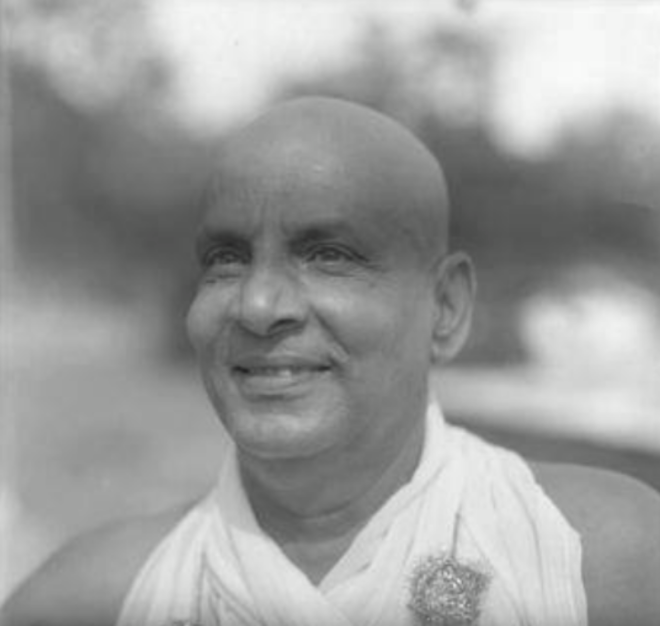
Swami Sivananda smiling portrait image
Saints and Masters, Swami Sivananda

Paramahansa Yogananda

Paramahansa Yogananda by Swami Sivananda Paramahansa Yogananda was born on 5 January, 1893, near the Himalayas, in Gorakhpur. His parents, brothers and sisters were all saintly and pious, but Mukunda (the boyhood name of Yogananda) was unique amongst all of them. He displayed his spiritual gifts and powers even from his childhood. His line of Gurus descended from Babaji, the deathless Guru said to be the reincarnation of Lord Krishna. Babaji�s disciple was Lahiri Mahasaya, who in turn had as his disciple, Sri Yukteswar. It was Sri Yukteswar who was destined to be the spiritual master of Paramahansa Yogananda. For ten years Yoganandaji trained for his high duty at the Ashram of his Guru, pursuing his university career at the same time. After his rigorous training, filled with the light of God-vision, he was now ready to undertake the mission entrusted to him by his line of Gurus. The education of the youth was always dear to the heart of Yoganandaji. He set up his first school in Bengal in 1917. Its curriculum includes the standard high school subjects as well as Yoga concentration, meditation and the Yogoda system of physical development. In 1920, Yoganandaji went to America as a delegate from India to the International Congress of Religions at Boston, and from then on America became his home. Five years later he founded the Self-Realization Fellowship with its head quarters at Mount Washington, Los Angeles. In his famous Autobiography of a Yogi, Yoganandaji has given graphic descriptions of his spiritual experiences and his contact with the great Yogis of India. This book has since become one of the greatest spiritual classics in the world and has been translated into many languages. Paramahansa Yogananda had a broad and liberal heart. Even though he himself was a great Master, he approached other saints with great reverence. Kriya Yoga was the method of God-realisation taught by Yoganandaji. His mission in the West was to spread the knowledge of Yoga practices, by which man can enter into union with God. Yoganandaji also gave new explanations to the teachings of the Bible, showing the similarity of its teachings with that of Hinduism. He promoted the cause of a better understanding between the East and West. Numerous students got personal instructions in Yoga teachings in the classes conducted by him in his ministry of thirty-two years. He spoke in churches, societies, universities and clubs. In 1935, Yoganandaji�s class instructions were published in the form of lessons and mailed to students all over the world. In India the same teachings were spread by the Yogoda Satsanga Society, with its headquarters at Dakshineswar. The Self-Realization Fellowship today has hundreds of centres throughout the world. There are seven large centres in California, where renunciates stay to serve and practise Yoga. A number of trained monks tour all over the world, giving discourses and Kriya Yoga initiation to students. Besides giving instructions on Yoga and balanced living, SRF also conducts many social services, especially in India. Yoganandaji attained Mahasamadhi on March 7, 1952. The great Master showed his power over death, for his body did not decay for many weeks.

Paramahansa Yogananda Read Post »

Swami Sivananda Guru seated with disciples indoors image
Getting Started, Swami Sivananda

Ethics as Means to Yoga

Ethics as Means to Yoga by Swami Sivananda 1. All aspirants commit mistakes now in jumping to Samadhi and Dhyana all at once as soon as they leave their houses without caring a bit for ethical perfection. The mind remains in the same condition although they have practiced meditation for fifteen years. They have the same jealousy, hatred, idea of superiority, pride, egoism, etc. Meditation and Samadhi come by themselves when one has the ethical perfection. 2. Sadachara or right conduct is the foundation of Yoga. Yoga is rooted in virtue. Ethical discipline is very necessary for success in Yoga. Ethical discipline is the practice of right conduct in life. One should be well established in Sadachara to begin with. Sadachara is the practice of Yama-Niyama. Yama and Niyama are the two moral backbones of Yoga, which the aspirant must practice in his daily life. These correspond roughly to the ten commandments of Jesus or to the noble eight fold path of Lord Buddha. Practice of Yama-Niyama will eradicate all impurities of the mind. 3. Yama is the very foundation of Yoga, without which the superstructure of Yoga cannot be built. Yama is the practice of Ahimsa (abstinence from injury and killing), Satyam (truthfulness), Asteya (abstinence from theft or falsehood), Brahmacharya (continence) and Aparigraha (abstinence from avariciousness or greed). Patanjali Maharshi mentions the above five chief items for practice in Yama. In every religion you will find this to be the foremost. Great emphasis is given in every chapter of the Gita on the practice of Yama. 4. Niyama is the observance of the five canons, viz., Saucha, Santosha, Tapas, Svadhyaya and Isvara Pranidhana. According to Sandilya Rishi, the practice of Saucha, Daya, Arjava, Dhriti and Mitahara is included in Yama. Saucha is external and internal purity. Washing the hands, taking baths, etc., are for external purity. Filling the mind with pure divine thoughts is internal purity. 5. “The mind becomes pure by cultivating habits of friendliness, compassion, complacency and indifference towards happiness, misery, virtue and vice.” Whosoever shows friendliness towards all those who are found in the enjoyments of pleasures, the dirt of envy leaves him. When the mind shows compassion towards those who are suffering from pain and the wish to remove the miseries of others as if they were his own, the dirt of the desire to do evil to others is removed. Whoever shows complacency towards those who are virtuously inclined beings, the dirt of envy is removed from his mind. Whoever shows indifference towards the vicious and taking to the middle path and not taking sides, towards the viciously inclined, the dirt of the impatience is removed from his mind. 6. By this removal of the characteristics of the qualities of disturbing energy (Rajas) and inertia (Tamas), the characteristic of essential purity (Sattva) manifests itself. He becomes possessed of a very high manifestation of essential purity. His mind becomes inclined to the side of the restraint of mental modifications, because this enlightenment is natural to that state. When the mind becomes pure it attains the state of steadiness and becomes one-pointed. If these moral qualities are not cultivated, the means cannot lead to steadiness. Therefore, one should be well established in Sadachara if he wants to attain perfection in yoga. When one is established in it perfectly, then Samadhi or Nishtha will come by itself.

Ethics as Means to Yoga Read Post »

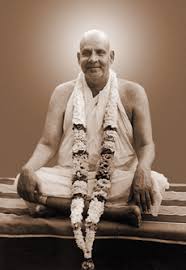
swami sivananda Sepia photo of garlanded monk seated cross-legged with calm smile image
Getting Started, Swami Sivananda

Ethical Discipline

Ethical Discipline by Swami Sivananda 1. ‘Atman or Self is one. There is one common consciousness in all beings. All Jivas are reflections of the one Supreme Soul or Paramatman. Just as one sun is reflected in all pots of water, so also the one Supreme Being is reflected in all human beings. One cannot become many. One appears as many. One is real. Many are illusory. Separateness is illusory. Separateness is temporary. Unity is real. Unity is Eternal. One life vibrates in all beings. Life is common in animals, birds and human beings. Existence its common.’ This is the emphatic declaration of the Upanishads. This primary truth of Religion is the foundation of ethics or Sadachara. If you hurt another man, you hurt yourself. If you help another man, you help yourself. On account of ignorance one man hurts another man. He thinks that other beings are separate from himself. So he exploits others. So he is selfish, greedy, proud and egoistic. If you are really aware that one Self pervades, permeates all beings, that all beings are threaded on the Supreme Self, as the row of pearls on a string, how can you hurt another man, how can you exploit another man? 2. Who of us is really anxious to know the Truth about God or Divine Life? We are more ready to ask ourselves: “How much money you have got in the Imperial Bank? Who said that against me? Do you know who I am? How are your wife and children doing?” and questions of this sort than questions like: “Who am I? What is this Samsara? What is bondage? What is freedom? Whence have I come? Whither shall I go? Who is Isvara? What are the attributes of God? What is our relationship to God? How to attain Moksha? What is the Svarupa of Moksha?” 3. The beginning of ethics is to reflect upon ourselves, our surroundings and our actions. Before we act we must stop to think. When a man earnestly attends to what he recognises as his duties, he will progress and in consequence thereof his comfort and prosperity will increase. His pleasures will be more refined; his happiness, his enjoyments and recreations will be better and nobler. Happiness is like a shadow; if pursued it will flee from us, but if a man does not trouble himself about it and strictly attends to his duties, pleasures of the best and noblest kind will crop out everywhere in his path. If he does not anxiously pursue it, happiness will follow him. 4. The increase or rather refinement of happiness, however, cannot be considered as the ultimate aim of ethics, for pain and affliction increase at the same rate because man’s irritability, his susceptibility to pain grows with the growth of his intellectuality. The essence of all existence is evolution or a constant realization of new ideals. Therefore the elevation of all human emotions, whether they are painful or happy, the elevation of man’s existence, of his actions and aspirations, is the constant aim of ethics. 5. The Socratic formula: “Virtue is knowledge,” is found to be an adequate explanation of the moral life of man. Knowledge of what is right, is not coincident with doing it, for man, while knowing the right course is found deliberately choosing the wrong one. Desire tends to run counter to the dictates of reason; and the will, perplexed by the difficulty of reconciling two such opposite demands, tends to choose the easier course and follow the inclination rather than to endure the pain of refusing desire in obedience to the voice of reason. Hence mere intellectual instruction is not sufficient to ensure right doing. There arises the further need for chastisement or the straightening of the crooked will, in order to ensure its cooperation with reason in assenting to what it affirms to be right, and its refusal to give preference to desire or the irrational element in man’s nature when such desire runs counter to the rational principle. 6. The pure reason urges a man to what is the best. The Asuric nature of a man fights and struggles against the man. The impulses of a man who has not undergone the ethical discipline runs counter to his reason. All advice, all rebuke and exhortation, all admonition testify that the irrational part is amenable to reason. 7. The basis of good manners is self-reliance. For such reasons have the great founders and eminent teachers of all religions repeatedly proclaimed the need for recognising the Godhead within and for self-reliance in the last resort rather than any texts and persons and customs. Self-reliance is the basis of behaviour. 8. Self-control is the greatest in the man whose life is dominated by ideals and general principles of conduct. The final end of moral discipline is self-control. The whole nature of man must be disciplined. Each element requires its specific training. Discipline harmonises the opposing elements of his soul. The self-control will enable the aspirant to know the Truth, to desire the good and win the right and thus to realise the Reality. 9. Discipline is the training of our faculties, through instructions and through exercise, in accordance with some settled principle of authority. You must discipline not only the intellect but also the will and the emotions. A disciplined man will control his actions. He is no longer at the mercy of the moment. He ceases to be a slave of his impulses and Indriyas. Such mastery is not the result of one day’s effort. One can acquire the power by protracted practice and daily self-discipline. You must learn to refuse the demands of impulses. A self-controlled man will be able to resist the wrong action to which a worldly man is most strongly impelled.

Ethical Discipline Read Post »

Swami Sivananda seated with musical instrument image
Getting Started, Swami Sivananda

Sadachara or Right Conduct

Sadachara or Right Conduct by Swami Sivananda 1. Ethics or ethical science treats about Sadachara or right conduct, morality or duty. Ethics is the science of morals, that branch of philosophy which is concerned with human character and conduct. 2. Conduct is behaviour. Deportment, carriage, demeanour, conduct, behaviour are synonymous terms. The way in which rational beings should behave towards each other as well as towards other creatures is dealt with in the science of morals or ethics. 3. To speak the truth; to practice Ahimsa; not to hurt the feelings of others in thought, word and deed; not to speak harsh words to anyone; not to show anger towards anybody; not to abuse others or speak ill of others and to see God in all beings is Sadachara. If you abuse anyone, if you hurt the feelings of others, really you are abusing yourself and hurting the feelings of God only. Himsa (injuring) is a deadly enemy of Bhakti and Jnana. It separates and divides. It stands in the way of realising unity or oneness of Self. 4. That act or exertion which does not do good to others, or that act for which one has to feel shame should never be done. That act on the other hand, should be done for which one may be lauded in Society. This is a brief description of what right conduct is. 5. Lord Manu says in the Smriti: “Achara (good conduct) is the highest Dharma, declared by the Sruti and by the Smriti. Thus beholding the path of Dharma issue from Achara, the sages embrace Achara as the root of all Tapas.” 6. Righteousness, Truth, good works, power and prosperity all originate from conduct. You will find in the Mahabharata: “The mark of Dharma is Achara (good conduct). Achara is the mark of good. Higher than all teaching is Achara. From Achara, Dharma is born, and Dharma enhances the life. By Achara man attains life; by Achara he attains prosperity; by Achara he attains fair fame, here and hereafter. He who is the friend of all beings, he who is intent on the welfare of all with act, thought and speech-he only knoweth Dharma.” 7. Dharma is extremely subtle (Ati Sukshma) intricate and complex. Even sages are perplexed. Dharma gives wealth, satisfaction of desires and liberation in the end. Dharma tops the list of the four Purusharthas, viz., Dharma, Artha, Kama and Moksha. Dharma is generally termed as duty, righteousness, etc. Any action that is best calculated to bring Sreyas (Moksha) is Dharma. That which brings well-being to human beings is Dharma. 8. All that is free from any motive of injury to any being is surely morality. For, indeed the moral precepts have been made to free the creatures from all injuries. Dharma is so called because it protects all. Indeed morality saves all creatures. 9. The conduct is the root of prosperity. Conduct increases fame. It is conduct which prolongs life. It is conduct which destroys all calamities and evils. Conduct has been said to be superior to all the branches of knowledge. 10. It is by conduct that one acquires a long life, and is by conduct that one acquires riches and prosperity. It is a means to attain the goal of life. Without good conduct no one can achieve the goal. Good conduct brings in fame, longevity, wealth and happiness. It eventually leads to Moksha. It is conduct that begets virtue, and it is virtue which prolongs life. Conduct gives fame, long life and heaven. Conduct is the most efficacious rite of propitiating the celestials. 11. The good and virtuous are so on account of the conduct they follow. The marks, again of good conduct are afforded by the deeds of those that are good or righteous. Indeed, it is by conduct that one acquires the fame that depends upon great deeds both in this world and in the next. For sooth, one may, by his conduct alone, conquer the three worlds. There is nothing which virtuous persons cannot obtain. A person of good deeds and good, pleasant and sweet speech has no peer. People regard that man who acts righteously and who does good acts even if they only hear of him without actually seeing him. 12. The man whose conduct is improper or wicked never acquires a long life. All creatures fear such a man and are oppressed by him. If therefore one wishes his own advancement and prosperity, one should in this world, follow the path of righteousness and conduct himself properly. Good conduct succeeds in removing the inauspiciousness and misery of even one who is sinful. 13. The man of right conduct has ideals, principles and mottoes. He strictly follows them, removes his weaknesses and defects and develops good conduct and becomes a Sattvic man. He is very careful in behaving with his elders, parents, teachers, Acharyas, sisters, brothers, friends, relatives, strangers and others. He attempts to know what is right and wrong, by approaching Sadhus and Mahatmas and by studying scriptures very carefully and then treads the path of righteousness or Dharma. 14. The man of right conduct always cares for the welfare of all beings. He lives in harmony with the neighbours and all people. He never hurts the feelings of others, never speaks lies. He practices Brahmacharya. He checks the evil tendencies of the mind and prepares himself through the practice of right conduct to attain the Bliss of union with Paramatman. 15. An aspirant went to Veda Vyasa and said: “O Maharshi, Avatara of Vishnu, I am in a dilemma. I cannot properly comprehend the right significance of the term ‘Dharma.’ Some say it is right conduct. Others say that which leads to Moksha and happiness is Dharma. Anything, any action that brings you down is Adharma. Lord Krishna says: ‘Even sages are puzzled to understand perfectly what is Dharma, what is Adharma. Gahana karmano gatih-Mysterious is the path of action.’ I am bewildered. O Maharshi, kindly

Sadachara or Right Conduct Read Post »