Hari Om

Menu

February 18, 2026

Swami Sivananda sitting with veena musical instrument spiritual portrait photo
Swami Sivananda, Yoga

The First Part of Yoga-Practise

The First Part of Yoga-Practise by Swami Sivananda Purification of mind is the first part of Yoga-practice In everyone there are still various impurities of the mind. There are subtle evils lurking in the crannies of one’s mind. Unless the barriers of subtle jealousy, subtle hatred, and evil desires are surmounted, one cannot attain the fullness of Knowledge, Enlightenment and Glory. God-consciousness or communion with the Lord is the acme of ethico-religious discipline of Yoga. Ethical development is more difficult than the attainment of intellectual eminence. The truths of Life, the Knowledge of God can only be grasped and attained by that Yoga student who possesses a pure and untainted heart. Conquer your internal and external nature. Fight against the dark antagonistic evil forces through remembrance of God and meditation. Abandon all sorts of wrong beliefs, weaknesses, superstitions, wrong notions and ideas of impossibilities. Have a wide outlook on life. See God in everything, in every face. Give up all that is false and untrue. Lead a life of virtue and happiness. Stick tenaciously to your principles and ideals. Live a simple, vigorous and active life. Melt all illusory differences. Destroy sex-obsession by constantly thinking of the Truth that is sexless and bodiless Reality. Cheer up your spirit. Have perfect trust in God. Be sincere. Serve all with love. Exert. Apply yourself diligently and ignite the spiritual dynamo within. You will have immortal Life, infinite peace and absolute Happiness.

The First Part of Yoga-Practise Read Post »

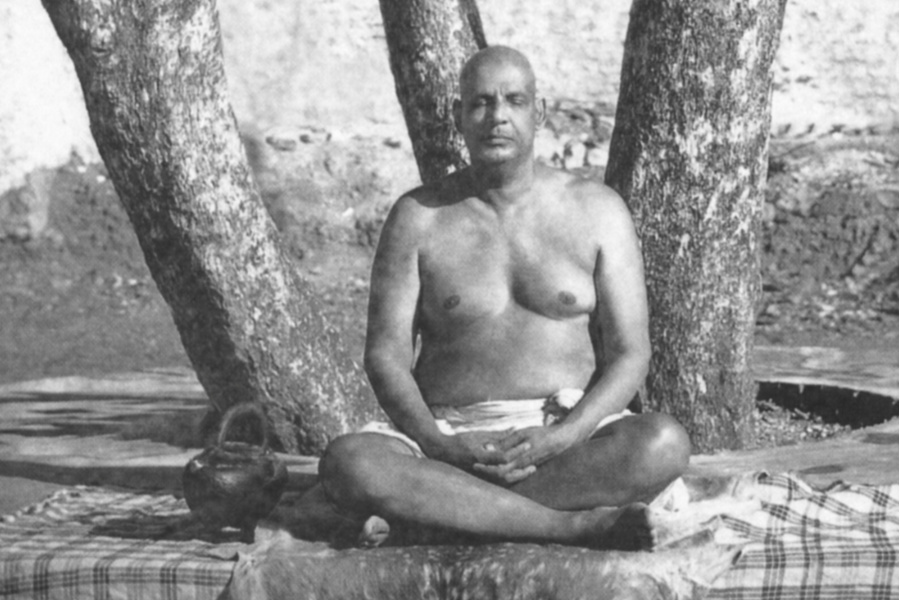
swami sivananda Monk meditating under tree outdoors image
Swami Sivananda, Yoga

What Does Yoga Teach You?

What Does Yoga Teach You? by Swami Sivananda Yoga teaches you the truth that every one has within oneself various potentialities and capacities. Man has within himself tremendous powers and latent faculties of which be has really never had any conception. He must awaken these dormant powers and faculties by the practice of Yoga. You can transmit your powerful, soul-stirring, beneficial thoughts to others; because, Yoga tells you, you are an image of God, nay, you are God Himself. The inner essence in you is Omnipotent. The moment the veil of ignorance enshrouding you is rent asunder you will shine in all the Splendour and Glory of the Effulgent Reality. Everyone of you is a power in yourself. You can influence others. You can radiate joy and peace to millions upon millions of people far and near. You can elevate others even from a long distance. Take to Yoga-practice and awaken your dormant powers. Awaken yourself to the conscious realisation of the Divine Light in you. Let your neighbours actually feel how entirely a changed being you are, a superman. Let them smell the Divine Fragrance from you. A full-blown Yogi can never be concealed. His healing powers, his spiritual Purity, his all-embracing Love, his selfless actions, his magnetic personality will be felt by everyone with whom he comes in contact. Just as fragrant fumes emanate from scented sticks, so also sweet spiritual fragrance will emanate from the body of the Yoga-practitioner the moment he attains perfection in Yoga. There is a peculiar charm in his smile, and great power in his words emanating from his heart. He produces a very profound impression upon the minds of everyone he comes in contact. Within you is the hidden God, the immortal soul, within you is the inexhaustible spiritual treasure. Within you is the fountain of joy and happiness. Practise. Feel. Assert. Enjoy the Supreme

What Does Yoga Teach You? Read Post »

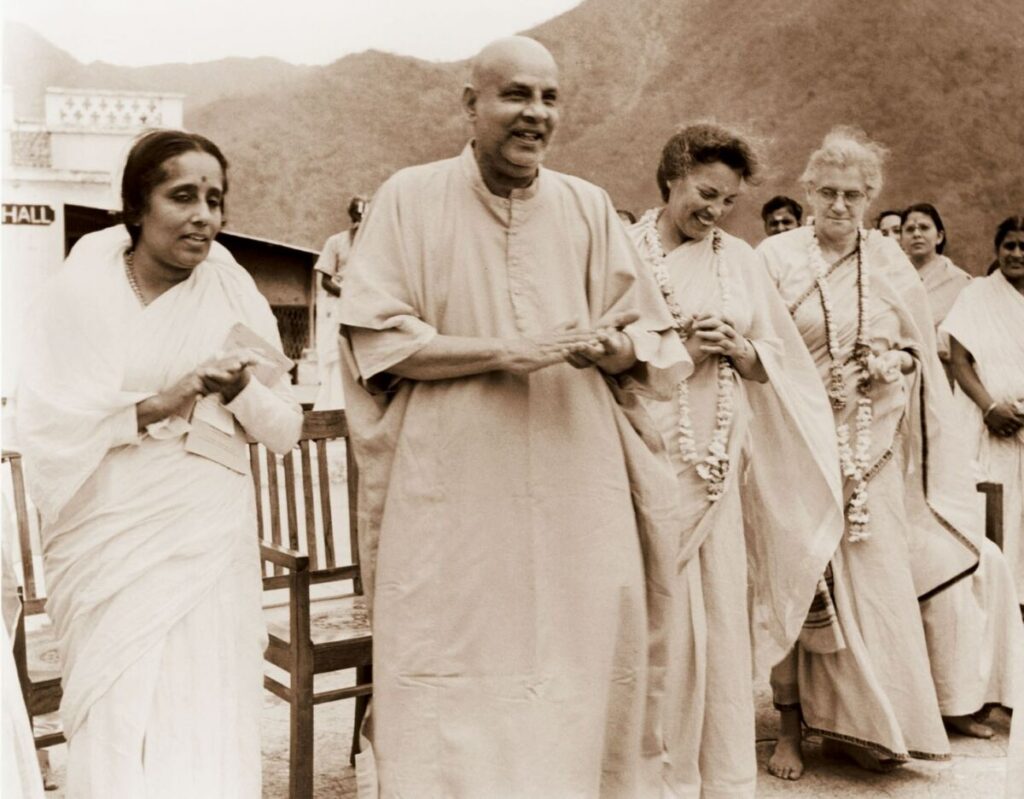
Swami Sivananda walking with devotees during spiritual gathering image
Swami Sivananda, Yoga

This is Yoga

This is Yoga by Swami Sivananda Yoga is an exact science. It is a perfect, practical system of self-culture. It is the discipline of the mind, senses and the physical body. It helps the student to attain perfect concentration of the mind, ethical perfection, moral excellence and spiritual calmness. It is the master-key to unlock the realms of Peace and Bliss, Mystery and Miracle. Yoga does not consist in sitting cross-legged for six hours or stopping the beatings of the heart or getting oneself buried underneath the ground for a week or a month; these are mere physical feats. Real Yoga is the attainment of the highest divine knowledge through conscious communion with God. The word Yoga comes from the Sanskrit root “Yuj” which means “to join.” Yoga is the science that teaches us the method of uniting the individual soul with the Supreme Soul, of merging the individual will in the Cosmic Will. Yoga transmutes the unregenerate nature of the student and raises him to the highest state of Divine Glory and Splendour. It bestows on you increased energy, vitality, vigour, longevity and a high standard of health. It will infuse in you a sense of security, a new strength, confidence and self-reliance. Yoga brings a message of hope to the forlorn, joy to the depressed, strength to the weak, and knowledge to the ignorant. It kills all sorts of pain, misery and tribulation. By practice of Yoga you can turn out efficient work within a short space of time, resist temptations, remove disturbing elements from the mind and attain full success in every walk of life. Through the practice of Yoga you can control the subtle forces within the body and command nature. You can unfold all your latent faculties and develop physical, mental, supernatural and divine powers. The whole mystery of Nature will become an open book to you. You can live in the Eternal Light and Glory of God.

This is Yoga Read Post »

Swami Sivananda meditating in lotus pose under tree
Getting Started, Swami Sivananda

Spiritual Diary

Spiritual Diary by Swami Sivananda The Spiritual Diary is a whip for goading the mind towards righteousness and God. If you regularly maintain this diary you will get solace, peace of mind and make quick progress in the spiritual path. Maintain a daily diary and realize the marvelous results. -Swami Sivananda 1 When did you go to bed last night? 2 When did you get up from bed? 3 How many hours did you sleep? 4 How many Malas of Japa? 5 How long in Kirtan? 6 How many Pranayamas? 7 How long did you perform Asanas? 8 How long did you meditate in one Asana? 9 How many Gita Slokas did you read or get by heart? 10 How long in the company of the wise (Satsanga)? 11 How many hours did you observe Mouna? 12 How long in disinterested selfless service? 13 How much did you give in charity? 14 How many Mantras you wrote? 15 How long did you practice physical exercise? 16 How many lies did you tell and with what self-punishment? 17 How many times and how long of anger and with what self-punishment? 18 How many hours you spent in useless company? 19 How many times you failed in Brahmacharya? 20 How long in study of religious books? 21 How many times you failed in the control of evil habits and with what self-punishment? 22 How long you concentrated on your Ishta Devata (Saguna or Nirguna Dhyana)? 23 How many days did you observe fast and vigil? 24 Were you regular in your meditation? 25 What virtue are you developing? 26 What evil quality are you trying to eradicate? 27 What Indriya is troubling you most? NOTES: 4. One Mala of Japa is one full turn around the Japa Mala or rosary for a count of 108 repetitions of the Lord’s Name or Mantr 5. You can perform Kirtan in any language you wish.

Spiritual Diary Read Post »

Swami Sivananda collage with meditative poses image
Getting Started, Swami Sivananda

Special Instructions

Special Instructions by Swami Sivananda 1. When your house is on fire how daringly you enter the house to take your child who is sleeping in the room! Even so you must be very courageous when you tread on the spiritual path. You must be absolutely fearless. You must not have the least attachment to your body. Then only you will have Self-realisation quickly. Timid people are absolutely unfit for the spiritual path. 2. If there are mangoes on the top of a big tree, you do not jump all at once to pluck them. It is impossible. You gradually climb up the tree by getting hold of different branches and then reach the top of the tree. Even so you cannot jump all at once to the summit of the spiritual ladder. You will have to place your foot with caution on each rung of the ladder. You will have to practice Yama, Niyama, Asana, Pranayama, Pratyahara, Dharana and Dhyana. Then only you will reach the highest rung of the ladder of Yoga, viz., Samadhi. If you are a student of Vedanta you will have to equip yourself with the four means. First you will have to do Sravana, Manana and Nididhyasana. Then only you will attain Brahma Sakshatkara. If you are a student of Bhakti Yoga, you will have to practice the nine modes of Bhakti, viz., Sravana, Kirtana, Smarana, Padasevana, Archana, Vandana, Dasya, Sakhya and Atma-nivedana. Then only you will attain the state of Para-bhakti. 3. If the chicken and fowls run hither and thither to eat various sorts of rubbish, what does the owner of the poultry do? He gives a slight tap on their heads and throws before them some grains to eat. Gradually they leave their dirty habit of eating filth. Even so this mind runs hither and thither to eat filthy things and enjoy five kinds of sensual objects. Give a tap on its head and make it taste gradually the spiritual bliss by practice of Japa and meditation. 4. It takes a long time for the charcoal to catch fire but gun-powder can be ignited within the twinkling of an eye. Even so it takes a long time for igniting the fire of knowledge for a man whose heart is impure. But an aspirant with great purity of heart gets knowledge of the Self within the twinkling of an eye, within the time taken to squeeze a flower by the fingers. 5. Maya is a very huge saw. Lust, anger, greed, delusion, pride, jealousy, hatred, egoism, etc., are the teeth of this huge saw. All worldly-minded persons are caught up in the teeth of this saw and are crushed. Those who are endowed with purity, humility, love, dispassion, devotion and enquiry are not hurt. They escape through the divine grace. They pass smoothly below the saw and reach the other side of immortality. 6. Winter is very congenial for vigorous meditation. You will not get tired even if you meditate for hours together at a stretch. But in the morning hours laziness tries its level best to overpower you. If you cover yourself with one or two warm blankets you feel quite comfortable. You do not want to get up in the early morning even though the repeated alarm wakes you up again and again. You decide now: “Let me sleep for fifteen minutes more and then let me start my meditation.” Then you begin to cover nicely, with the blanket, certain exposed parts of the feet. You feel quite pleasant now. What is the net-result? You begin to snore nicely and get up only after the sun has arisen. Days, weeks and months will roll on like this. Every winter also will pass away in this manner. Just at that time which is quite favourable for meditation, mind deceives you and overpowers you by sleep. Mind is a master-magician. He knows several tricks and illusions. Maya operates through mind. Mysterious is Maya. Be on your alert. Be vigilant. You can control mind and Maya. Throw away the blanket as soon as you hear the alarm. Sit on Vajra Asana. Do 20 Pranayamas. Drowsiness will disappear. 7. O friends! Wake up! Sleep no more. Meditate. It is Brahmamuhurta now! Open the gate of the temple of the Lord in your heart with the key of love. Hear the music of the soul. Sing the song of Prema to your Beloved. Play the melody of the Infinite. Melt your mind in His contemplation. Unite with Him. Immerse yourself in the ocean of Love and Bliss. 8. Just as you remove at once a pebble in your shoes that troubles you, so also you must be able to remove any tormenting thought from your mind at once. Then only you have gained sufficient strength in control of thought. Then only you have attained some real progress in the spiritual path. 9. An aspirant says: “I am able to meditate on one Asana for three hours. In the end I become senseless but I do not fall down to the ground.” If there is real meditation, you will never become senseless. You will experience perfect awareness. This is a negative, undesirable mental state. You will have to get over this state by keeping up perfect vigilance. 10. Suppose the mind runs outside during meditation forty times within one hour. If you can make it run only 38 times it is a decided improvement. You have gained some control over the mind. It demands strenuous practice for a long time to check the mind-wandering. Vikshepa Sakti is very powerful. But Sattva is more powerful than Vikshepa Sakti. Increase your Sattva. You can very easily control the oscillation of the mind. 11. When there is deep concentration you will experience great joy and spiritual intoxication. You will forget the body and the surroundings. All the Prana will be taken up to your head. 12. If you find it difficult to concentrate your mind within a room,

Special Instructions Read Post »

Swami Sivananda standing outdoors wearing coat and holding stick. image
Getting Started, Swami Sivananda

Advice to Aspirants

Advice to Aspirants by Swami Sivananda 1. Vanity, arrogance, self-assertive nature and Rajasic violence are great obstacles in the spiritual path. They take various forms. It is very difficult for the aspirant to detect them. The Guru only can detect them and show efficient methods to eradicate them. The aspirant vainly imagines that he is advanced in the spiritual path. He resents when these defects are pointed out by others. He never admits his defects. Such an aspirant cannot make any spiritual progress. 2. The aspirant claims that he is a superior Sadhaka with psychic powers and great knowledge of Yoga. He thinks that he is free from defects and that he is a perfect Yogi. He poses as a Yogi with realisation. He says that he can influence others and has a large number of disciples, devotees, and admirers. Such an aspirant cannot make an iota of spiritual progress. He is more egoistic and proud than ordinary householders. 3. Lower nature persists and resists. It refuses to get itself sublimated and transformed. 4. If the aspirant is not willing to regenerate his lower nature, he will not be benefited even if he remains for several years with his Guru. 5. Disobedience and indiscipline are great obstacles in spiritual path. Self-assertion stands in the way of obedience. The ego can be annihilated only by obedience, humility and service. The aspirant has his own ideas, whims, fancies and impulses. He is unwilling to accept any order or discipline, presented by his Guru. He has his own ways. He promises to be obedient and observe discipline, but the actions done or the course followed is the very opposite of his profession or promise. 6. He finds faults in his Guru and even superimposes defects in him. This is height of his folly. How can he improve in the spiritual path? 7. He who is not straightforward cannot profit by the Guru’s help. 8. An aspirant who conceals facts, who utters falsehood, who is hypocritical cannot hope for the descent of divine light. He does things to keep up his position, to get his own way or indulges in his own habit. He clouds his own understanding and conscience. 9. It is impossible to correct an aspirant who has the dangerous habit of constant Self-justification. He is ready to bring any kind of clumsy argument to justify himself, to keep up his position and prestige. 10. If an aspirant continues out of Self-esteem and Self-will or Tamasic inertia to shut his eyes or harden his heart against the Divine Light, so long as he does that, no one can help him. 11. The entire being must agree for the divine change. There must be integral surrender. Then alone the light will descend. Then alone the Guru can help the aspirant. 12. An aspirant who is obstinate, Self-assertive or aggressive and Self-willed has his own ways of thinking and acting. He will not pay any heed to the advice of his Guru. He gets stuck up in the Self-created mind. He cannot rise up in the ladder of Yoga. 13. If an aspirant who is arrogant, vain, untruthful and violent says, that he is meditating for two hours nicely, he is a hypocrite, he is a deluded soul. No meditation is possible in one who has such evil traits. Do not believe this deluded man. 14. Obey your teacher. Follow his instructions implicitly. Be truthful. Be calm. Be serene. Be humble. Be devoted. Be disciplined. You will attain Self-realisation now and here. May Lord bless you all, O sincere seekers after Truth. 15. Svetasvatara Upanishad says: “He who has supreme devotion to God, and has intense devotion to the Guru as he has to God, unto him are the truths of the Upanishads revealed.”

Advice to Aspirants Read Post »

Swami Sivananda seated wearing garland and tilak. image
Getting Started, Swami Sivananda

Exercises for Developing Sight

Exercises for Developing Sight by Swami Sivananda Whenever you meet a person, look at his figure carefully from top to bottom, and note mentally his peculiar features, condition of his eyes and eyebrows, teeth, arms, etc., the sort of dress he is wearing, whether he has got moustache or not, the kind of cap he has on his head, his voice, his behaviour, his looks, his gait, whether he seems to be a kind-hearted or cruel man, whether he is intelligent or dull, whether he is polite or not, his colour, etc. There are many people who are not able to give a clear description of the faces of their own friends with whom they are moving for years and years. The son is unable to describe exactly the physiognomy or marks on the face of his father, though he lives with him in close contact for a number of years. The obvious reason is that the son has not developed the power of memory. One cannot become a skilful scientist unless he has an acute power of observation. He has to observe the various phenomena of nature and to draw his own conclusions and inferences. He has to collect facts and figures to study the ‘Law of Nature’. Enter the drawing room of your friend and notice carefully what all things you find therein. Then close your eyes and reflect. Then come out of the room and note mentally, in order, all the things which the room contains, and then enter again into the room for verification. You should practise this for some months. Then you will develop a wonderful power of sight. Go to a library and note carefully all the books that are arranged in any two rows of the almirah or shelf. Close your eyes and reflect. Note down in your diary, and then verify. Let there be mistakes. It does not matter much. A time will come when you will not commit even a single mistake. You should be able to pick out or single out your comrade in a big crowd by noticing the nature of his gait and movements of his limbs or hands at a distance. There was a blind man in Srinagar who could tell the nature of colours by simply feeling the cloth. What a wonderful development of the power of touch he had! It is all a matter of training. At night, you cannot see properly; the power of seeing becomes dull, but the power of hearing is intensified. This is compensation in nature. There are some deaf and dumb people in the world who are intelligent. They do good work in the press as compositors. When one organ becomes deficient, another organ gets more developed. The energy of the organ that is not in use is utilised by the other organ and it grows rapidly. Nature is very merciful and intelligent. There are some people who cannot remember more than two things at a time. There was a soldier who could not remember the ingredients of gunpowder, even though he was trained to remember for months together. This is due to ill-development of the faculty of memory. A judge in a court of law should have an acute hearing. Then alone he will become a distinguished and able judge. Then alone he can write down quickly all evidences without any mistake. A commander-in-chief should have an acute sight. Then alone he can survey all the infantries and cavalries. Then, and then alone, he can have a clear vision of the enemies on the opposite side, even at a very long distance. One will have to develop the power of hearing and power of attention. The development of these two organs is of great help in the practice of memory-culture. In some, the organ of hearing is more developed. In others, the power of sight is more developed. Dogs have got an acute nose. They have to smell things before they get their daily bread. Prakriti has shown marked intelligence in the creation of beings. Cobras have an acute sense of hearing. They hear through their eyes. They have not got separate ears. Tigers have acute nose; they can smell blood from a very long distance. There is a play of intelligence in every inch of divine creation. Songsters and musicians have very acute hearing. They have to develop it. They will have to find out various kinds of undulations in the vibration of sounds which make difference in Ragas and Raginis. The very profession itself demands the development of the particular organ which helps them in the culture of their art or science.

Exercises for Developing Sight Read Post »

images 77
Saints and Masters, Swami Sivananda

Lord Buddha

Lord Buddha by Swami Sivananda Introduction In the sixth century before the Christian era, religion was forgotten in India. The lofty teachings of the Vedas were thrown into the background. There was much priestcraft everywhere. The insincere priests traded on religion. They duped the people in a variety of ways and amassed wealth for themselves. They were quite irreligious. In the name of religion, people followed in the footsteps of the cruel priests and performed meaningless rituals. They killed innocent dumb animals and did various sacrifices. The country was in dire need of a reformer of Buddha’s type. At such a critical period, when there were cruelty, degeneration and unrighteousness everywhere, reformer Buddha was born to put down priestcraft and animal sacrifices, to save the people and disseminate the message of equality, unity and cosmic love everywhere. Birth Buddha’s father was Suddhodana, king of the Sakhyas. Buddha’s mother was named Maya. Buddha was born in B.C. 560 and died at the age of eighty in B.C. 480. The place of his birth was a grove known as Lumbini, near the city of Kapilavastu, at the foot of Mount Palpa in the Himalayan ranges within Nepal. This small city Kapilavastu stood on the bank of the little river Rohini, some hundred miles north-east of the city of Varnasi. As the time drew nigh for Buddha to enter the world, the gods themselves prepared the way before him with celestial portents and signs. Flowers bloomed and gentle rains fell, although out of season; heavenly music was heard, delicious scents filled the air. The body of the child bore at birth the thirty-two auspicious marks (Mahavyanjana) which indicated his future greatness, besides secondary marks (Anuvyanjana) in large numbers. Maya died seven days after her son’s birth. The child was brought up by Maya’s sister Mahaprajapati, who became its foster-mother. Astrologer’s Prediction On the birth of the child, Siddhartha, the astrologers predicted to its father Suddhodana: “The child, on attaining manhood, would become either a universal monarch (Chakravarti), or abandoning house and home, would assume the robe of a monk and become a Buddha, a perfectly enlightened soul, for the salvation of mankind”. Then the king said: “What shall my son see to make him retire from the world ?”. The astrologer replied: “Four signs”. “What four ?” asked the king. “A decrepit old man, a diseased man, a dead man and a monk – these four will make the prince retire from the world” replied the astrologers. Suddhodana’s Precaution Suddhodana thought that he might lose his precious son and tried his level best to make him attached to earthly objects. He surrounded him with all kinds of luxury and indulgence, in order to retain his attachment for pleasures of the senses and prevent him front undertaking a vow of solitariness and poverty. He got him married and put him in a walled place with gardens, fountains, palaces, music, dances, etc. Countless charming young ladies attended on Siddhartha to make him cheerful and happy. In particular, the king wanted to keep away from Siddhartha the ‘four signs’ which would move him to enter into the ascetic life. “From this time on” said the king, “let no such persons be allowed to come near my son. It will never do for my son to become a Buddha. What I would wish to see is, my son exercising sovereign rule and authority over the four great continents and the two thousand attendant isles, and walking through the heavens surrounded by a retinue thirty-six leagues in circumference”. And when he had so spoken, he placed guards for quarter of a league, in each of the four directions, in order that none of the four kinds of men might come within sight of his son. Renunciation Buddha’s original name was Siddhartha. It meant one who had accomplished his aim. Gautama was Siddhartha’s family name. Siddhartha was known all over the world as Buddha, the Enlightened. He was also known by the name of Sakhya Muni, which meant an ascetic of the Sakhya tribe. Siddhartha spent his boyhood at Kapilavastu and its vicinity. He was married at the age of sixteen. His wife’s name was Yasodhara. Siddhartha had a son named Rahula. At the age of twenty-nine, Siddhartha Gautama suddenly abandoned his home to devote himself entirely to spiritual pursuits and Yogic practices. A mere accident turned him to the path of renunciation. One day he managed, somehow or the other, to get out of the walled enclosure of the palace and roamed about in the town along with his servant Channa to see how the people were getting on. The sight of a decrepit old man, a sick man, a corpse and a monk finally induced Siddhartha to renounce the world. He felt that he also would become a prey to old age, disease and death. Also, he noticed the serenity and the dynamic personality of the monk. Let me go beyond the miseries of this Samsara (worldly life) by renouncing this world of miseries and sorrows. This mundane life, with all its luxuries and comforts, is absolutely worthless. I also am subject to decay and am not free from the effect of old age. Worldly happiness is transitory”. Gautama left for ever his home, wealth, dominion, power, father, wife and the only child. He shaved his head and put on yellow robes. He marched towards Rajgriha, the capital of the kingdom of Magadha. There were many caves in the neighbouring hills. Many hermits lived in those caves. Siddhartha took Alamo Kalamo, a hermit, as his first teacher. He was not satisfied with his instructions. He left him and sought the help of another recluse named Uddako Ramputto for spiritual instructions. At last he determined to undertake Yogic practices. He practiced severe Tapas (austerities) and Pranayama (practice of breath control) for six years. He determined to attain the supreme peace by practicing self-mortification. He abstained almost entirely from taking food. He did not find much progress by

Lord Buddha Read Post »

Swami Sivananda seated holding framed saint portrait with garland. image
Getting Started, Swami Sivananda

How to Develop Perception and Hearing

How to Develop Perception and Hearing by Swami Sivananda Organs deteriorate if you do not use them properly, just in the same manner as hands and legs get atrophied by disuse, and are developed by muscular exercises, etc. There is intimate connection between sight and memory, and also hearing and memory. He who has an acute sight, a keen perception, a good power of observation and hearing, will have very good memory. There are counterparts of these external parts in the internal astral body. They are called astral senses. A Yogi hears through astral ears, and sees through astral eyes, and thus develops clairvoyance and clairaudience. He can hear sounds from distant lands, and see objects that are in distant localities. Generally, people are very careless. They have no interest to learn higher things and to have a fund of knowledge. There are millions of people in India who cannot sign even their names. India, the land of Rishis and sages, still abounds in ignorance when compared with America and the Continent. Even a small boy, who brushes a pair of boots and applies polish in the streets of London and Paris, knows politics, reads newspapers, and can discuss things nicely. The masses of India are steeped in ignorance and darkness. The root cause is carelessness, indifference and cold apathy. To get success in life, to become an able doctor or a lawyer or a good successful businessman, the ears and the eyes should be developed to an enormous extent. A blind man, or a deaf and dumb man, is practically a living dead man. All wealth and knowledge comes from the ears, the eyes and the organ of speech. These Indriyas are the Ayatana, or the receptacles, for riches and knowledge. The knowledge of the sense-universe comes through these two channels and is expressed by speech to others. Whenever you move about, you should be very alert. You must keep the eyes and ears sharp. You should try to remember all things and news that you have seen, heard or read. You should develop the power of observation. Be very attentive. Attention helps observation. Bring the power of curiosity into play. Curiosity will turn into desire after sometime. Interest and attention will come in automatically. Whenever a man talks to you, give him a very patient hearing. If there are useful and interesting points, note down in your pocket-diary then and there. Go through the pages of the diary once a week. Exercises for Developing Hearing Keep a watch very close to the ear, and hear the sound attentively. On the second day, keep it at a little distance, and hear the ‘tick, tick’ sound. Everyday increase the distance, and train yourself to hear the sound. Plug the ear with the index-finger of your hand. Train the ears alternately. There is also another exercise. Close both the ears through Yonimudra with your two thumbs and try to hear the Anahata sounds that emanate from the heart-lotus. You will hear ten varieties of sounds, such as, the sound of a flute, Mridanga, Veena, conch, bells, thunder, humming of the bee, drum, etc. Allow the organ of hearing (ear) to shift from one sound to another and carefully differentiate the various sounds, and eventually fix the ear on one sound. First try to hear the gross sounds and then the subtle sounds. There is also a third exercise. Fix the ears on the Pranava Dhvani that emanates from the Ganga. It will be heard like “Bhum”, or long “OM.” Train your ears to hear this sound. Do this exercise in the morning at 4 a.m. or at night at 9 p.m., when the din and bustle of the town is at an end. Keep your ears keen. Try to differentiate the sounds of various kinds of birds, beasts, children, factories, motor-cars, aeroplanes, cycles, shrieks, yells, snores, sobbing, crying, laughing, mocking, joking, etc. It is advisable to sit in a quite room. Close your eyes and try to concentrate on these sounds. Distinguish them. You must be able to find out, from hearing a voice of a person at a distance from within your room, that such and such a man has come in front of your room. There are some people whose voices have some resemblance. You should be able to find out that the voice of Mr. Bose more or less resembles the voice of your cousin Mr. Ganga Prasad. You should be able to find out the nature of Ragas and Raginis from the nature of vibrations and undulations, such as Kalyani, Todi, Bhairavi, Kanada, Kamboji, Deepak, Durbari, Malkose, etc. Try to hear the sounds of the heart by applying your ear to the chest of another man. You will hear the sounds “lub-dhub.” Pay heed to the sounds of sparrows and other birds, and try to differentiate their sounds. Sometimes they sing. At other times, they give signals of alarm to invite their mates and friends when there is impending danger. Animals and birds have got their own languages. Yogins can understand their languages. There is a particular technique in Samyama (or the practice of Dharana, Dhyana and Samadhi) on sounds. Some males have the voice of females, and some females the voice of males. You must be able to differentiate. You must be able to know the hissing sound of a cobra, its nature, strength of vibration, etc. Even at a distance you can say, “There is a cobra in that room.” Cats express peculiar sounds during, before and after copulation. Dogs, horses and elephants are very intelligent animals. They have got simple consciousness. They laugh and smile and express their feelings of joy and gratitude by certain sounds. You must be able to understand the nature of the sounds. By the practices enumerated above and careful observation, you will be able to develop a wonderful power of hearing. You can get on well in your business ventures and vocations in life. Sharp ears and keen
How to Develop Perception and Hearing Read Post »

Swami Sivananda seated outdoors near river and trees. image
Saints and Masters, Swami Sivananda

Parsvanatha

Parsvanatha by Swami Sivananda Parsva is regarded as an incarnation of Indra. He was the son of King Visvasena of Kashi, a descendant of the Ikshvaku family, and Queen Bama Devi, daughter of King Mahipala. He was the twenty-third Tirthankara. He was born on the eleventh day of the dark fortnight in the month of Pousha in the year 872 B.C. Parsvanatha began to practise the twelve vows of a householder when he was only eight years old. Prince Parsva was now sixteen years old. He was sitting on the throne. His father Visvasena said, “My son, in order to continue our celebrated royal dynasty, you must marry now. At the desire of Nabhi Raja, Rishabha had to marry”. Parsvanatha was very much frightened when he heard the words of his father. He said, “My life-period will not be so extensive as that of Rishabha. I am to live only a few score years. I have already wasted sixteen years in boyish sports. I must enter the order in my thirtieth year. Should I then have a married life for so short a period in the hope of getting pleasures which are, after all, only imperfect, transient and illusory?” Parsvanatha’s heart was filled with a spirit of renunciation. He reflected within himself: “For long, long years I enjoyed the status of Indra and yet the lust for pleasures did not decrease. Enjoyment of pleasures only increases the lust for pleasures, just as the addition of fuel only increases the virulence of fire. Pleasures at the time of enjoyment are pleasant, but their consequences are surely disastrous. “The soul experiences from beginningless time the sufferings of birth, old age, etc., on account of its attachment to the objects of this world. To satisfy the cravings of his senses, man wanders in the realm of pain. So that he may have sensual gratification, he does not heed the moral injunctions and he commits the worst vices. He kills living animals to enjoy the pleasures of the senses. Lust is at the root of theft, greed, adultery and all vices and crimes. “As a consequence of sinful acts, the soul is forced to migrate from birth to birth in the kingdom of the lower animals etc., and to suffer the torments of hell. This lust for pleasures must be shunned ruthlessly. So long I have wasted my life. I am not going to spend any more time in the vain pursuit of pleasures. I shall be serious and practise right conduct.” Prince Parsva had the twelve Anuprekshas or meditations. He resolved to abandon the world. He took leave of his parents and then left his house. He retired into the forest. He became absolutely naked. He turned towards the north and bowed to the great Emancipated Siddhas. He plucked five tufts of hair from his head and became a monk. Parsva practised fasting. He observed with scrupulous care the twenty-eight primary and the ninety-four secondary rules of the order of monks. He was found lost in meditation. He attained the pure omniscience. He attained the final liberation in the Sammeda Hill which is known today as the Parsvanatha Hill. Parsvanatha preached in Kashi, Kosi, Kosala, Panchala, Maharashtra, Magadha, Avanti, Malava, Anga and Vanga. Many joined the Jain faith. Parsvanatha spent seventy years in preaching. Mahavira modified and enlarged what had already been taught by Parsvanatha. He did not preach anything which was absolutely new. Parsvanatha lived for one hundred years. He abandoned his home when he was thirty years old. He left home in 842 B.C. and attained Nirvana in 772 B.C. Glory to Parsvanatha, the twenty-third Tirthankara!


Parsvanatha Read Post »