













Hari Om

Menu

February 18, 2026

Swami Sivananda Guru seated with disciple in outdoor setting image
Living Divine Life, Swami Sivananda

God’s Plan for You

God’s Plan for You by Swami Chidananda Radiant Atman, beloved children of Light. Blessed children of the Father, Mother, Universal; common parent of all existence, all life. You are part of that existence brought forth from the Unmanifest Universal Being. Therefore, you are part of that Being as children are part of their parents. You are part of that great manifestation that has come out of that supreme timeless, spaceless, transcendental, absolute Reality. You are part of this manifestation that is known as phenomenal existence, that is subject to the perception of the five senses, that is also a frame within which you are at this moment making your earth journey. It is a phase you have to pass through because you are there already, and you must pass through it with understanding. Then you will make it a gainful process, if you pass through it with a deeper understanding of why it has been given to you, to have been sent here, to be in this phenomenal appearance and to be made in it for sometime and go through it in it’s various phases. If pondering this, you come to understand that this is not only something that has come to you and cannot be avoided, not only that it is necessary, but rather you need to understand that it is something very valuable and very important two… very valuable and very important–double two. When you come to understand it this way, then you will suddenly recognize it as a bestowal, something granted. It’s a great large Heart, much love, much love, something granted, that is in the form of Grace Manifest,–Grace Manifest. If very wealthy parents, multimillionaires send their children to the very best of the universities, top universities for studying and getting the best tuition, best environment, best training, evidently they do it, because they want their offspring not to just be literaturely learned and scholastic, they want their offspring to shine, to achieve, to be top scholars, golden crowned personalities in their own field of learning. It is with this intention they are willing and prepared to spend any money to get the best tuition for them, to send them to refresher courses, to top professors, and all that … Why? Because they love them. Because they happen to be their children and because they happen to be their parents. They don’t want them to opt for number two. They want to give them all, so they get their number one. And this you think is natural. This you can understand. The truth is, your father and mother are not merely multimillionaires or multibillionaires of inexhaustible wealth. No one can compare to your Father/Mother God–your parent God–illimitable wealth of the whole world that can never be exhausted. So, there you have as your parent, Father/Mother God whose wealth is illimitable. Nothing can compare to it, inexhaustible, illimitable. Naturally He can afford to do anything in order to make you become a top person in His creation. That is God’s plan for each and every one of you who are present in this hall at this moment for this six day spiritual retreat from the 26th Dec. to 31st Dec., 1997 in this Holy Ashram of beloved and worshipful Master Gurudev Swami Sivananda. Believe me when I tell you that I’m not being poetical or fanciful, because I know that for each and everyone of you, God is focusing upon you with all His love and grace and with this one view that He wants to make out of you the supremest of human individuals on earth, on this planet earth, in this period. Many horses run in a race, but it is the first one that crosses the winning line that gets acclaimed all over the world. Photographers throng around the horse, and the trainer, and the jockey, and then you have it all, media, the radio, all the TV stations and on all the TV screens, millions and millions of them in each home. Why? Because the horse out distanced all and came out to be the first. It is the horse of the year, super horse of the year, super horse. Yes! And the helper of the owner, the helper of the trainer, the helper of the jockey, ah, and those who bet upon him. I bet upon all of you, and God is your owner, your master, and your own life and your books are your trainers and you are the rider and the horse is what you call your life. The seat, support, of your life must take you to the winning point in a flash and you must come first and that is God’s plan for you. Anyone may tell anything else, but I tell you this and I will keep on telling this and I shall have no reason to change. I will go on telling this as long as telling is good, because it is so. It happens to be so. Therefore, know that you are people of destiny. For each and everyone of you God plans that you should, as you move towards the conclusion of your present earth incarnation, you must be at the very top…at the very top. Each one must shine like a gem,…shine like a gem and God intends this. That is why God has brought you here. God has this plan for wherever you are. Right from your birth He has been working towards this. I know, because of this divine intention for you in your life, He has brought you here today. He has brought you here today and he has brought me also here today. What I mean to say is………….. that I am here to tell you these things. It is because it is meant to be. You have to be told this at this point in time. You are here to obtain the supremest of all experiences, the greatest of all goals man can conceive of in life,

God’s Plan for You Read Post »
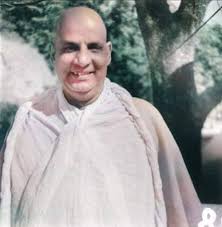
Swami Sivananda smiling outdoors photo
Living Divine Life, Swami Sivananda

Purpose of Life

Purpose of Life by Swami Sivananda The life of man is an indication of what is beyond him and what determines the course of his thoughts, feelings and actions. The wider life is invisible, and the visible is a shadow cast by the invisible which is the real. The shadow gives an idea of the substance, and one can pursue the path to the true substance by the perception of the shadow. Human existence, by the fact of its limitations, wants and various forms of restlessness, discontent and sorrow, points to a higher desired end, incomprehensible though the nature of this end be. As life on this earth is characterised by incessant change, and nothing here seems to have the character of reality, nothing here can satisfy man completely. The Bhagavad Gita has referred to this world as anityam, asukham, duhkhalayam, ashashvatam-“Impermanent, unhappy, the abode of sorrow, transient”. The sages of yore declared with immediate realisation that “Truth is One” and that the goal of human life is the realisation and the experience of this Truth. The universe is inconstant, and it is only a field of experience provided to the individuals so that they may evolve towards the experience of the Highest Truth. It is the glory of the people of Bharatavarsha (India) that to them the visible universe is not real and the invisible Eternal alone is real. They have no faith in what they perceive with the senses. They have faith only in that which is the ground of all experience, beyond the senses, beyond even the individual mind. Earnest seekers used to seek shelter under great sages who purified the holy region of the Himalayas with their mighty presence, and lived the austere life of Yogis in order to attain freedom from the trammels of earth-bound life and rest in the beatitude of the Absolute, Brahman. This they considered the true life, and thus the way of fulfilling the law of the Eternal. The great law-giver Manu, after describing the various tenets of Dharma, finally asserts: “Of all these Dharmas, the Knowledge of the Self is the highest; it is verily the foremost of all sciences; for, by it, one attains immortality.” The pursuit of Dharma, Artha and Kama has its meaning in the attainment of Moksha which is the greatest of all the Purusharthas (end of human life). Dharma is the ethical and moral value of life; Artha is its material value; and Kama is its vital value; but Moksha is the infinite value of existence which covers all the others and is itself far greater than all these. Others exist as aids or preparations for Moksha. Without Moksha, they have no value and convey no meaning. Their value is conditioned by the law of the Infinite, which is the same as Moksha. The Vedas and the Upanishads are the exhalations of the Divine Being, and they give an exhaustive commentary on spiritual life. They are expositions of the significance and the import of human life and of the method of the transmutation of the mortal appearance into the Immortal Essence. The instance of the great Nachiketas and the story of his adventurous search for Truth narrated in the thrilling Kathopanishad serve as exemplars to all men capable of thought and reflection. Nothing of the world of sensibility can be of real value-this is what Nachiketas taught through his memorable act of renunciation. Not even the longest life and the immense wealth offered to him could tempt him. He persevered in his quest for the Highest, and in the end achieved the Highest. Nothing short of it could satisfy him. Such are the true heroes. A real hero is not he who stands against bullets or risks his life in hazardous attempts, fights battles, dives into oceans and climbs high cliffs, but he who subdues his senses and overcomes his mind, recognises the supreme unity of life and casts aside dualities and desires. To achieve this is the duty of man; this is the immortal message of the sages of the Upanishads. The tangle of sense-experience in which man is caught is most vexing, and hard it is to free oneself from it. Man is deluded by the notion of the reality of the so-called external relations of things and thus he comes to grief. The Mahabharata says that the contact of beings in this universe is like the contact of logs of wood in a flowing river, temporary. Yet the attachment to sense-percepts is so strong that phantoms are mistaken for facts, the impure is mistaken for the pure, the painful for the pleasant, and the not-self for the Self. The message of the ancient sages is that the life one lives in the sense-world is deceptive, for it hides the Existence underlying all things and makes one feel that the particular presentation of forms before the senses alone is real. “Children run after external pleasures and fall into the net of wide-spread death. The heroes, however, knowing the Immortal, seek not the Eternal among things unstable here,” says the Upanishad. The call of the ancient sages to man is: “O son of the Immortal! Know yourself as the Infinite! become the All. This is the supreme blessing. This is the supreme bliss.” This is the undying message to man. The sages have again and again stressed: “If one knows It (i.e., the Immortal Being) here, then there is the true end of all aspirations! If one does not know It here, great is the loss for him.” (Kenopanishad). And sage Yajnavalkya says that all great deeds done in this world, without the knowledge of the One Imperishable Being, are not worth anything. Humanitarian services; fasts and charity; one’s political, national, social and individual life; should all be based on the feeling of universal brotherhood which is the eternal expression of the Reality of universal Selfhood. Humanity can hope for peace when this condition, discovered and laid down by the Rishis, viz., abiding by the law of

Purpose of Life Read Post »

swami sivananda Vintage photo of monk raising hand in blessing holding ritual fan image
Living Divine Life, Swami Sivananda

Brahmacharya

Brahmacharya by Swami Sivananda “Brahmacharya or spotless chastity is the best of all penances; a celibate of such spotless chastity is not a human being, but a god indeed… To the celibate who conserves the semen with great efforts, what is there unattainable in this world? By the power of the composure of the semen, one will become just like Myself.” – Sri Sankaracharya Introduction Brahmacharya is a divine word. It is the sum and substance of Yoga. Brahmacharya is the Achara or conduct by which you attain or reach Brahman (God). It is life in the Absolute. It is movement towards God or the Atman (Self). Brahmacharya is absolute freedom from sexual thoughts and desires. It is the vow of celibacy. It is control of all the senses in thought, word and deed. Brahmacharya is not mere bachelorhood. There should be strict abstinence not merely from sexual intercourse but also from auto-erotic manifestations, from masturbation, from homosexual acts and from all perverse sexual practices. It must further involve a permanent abstention from indulgence in erotic imagination and voluptuous reverie. In a narrow sense, Brahmacharya is celibacy. In a broad sense, it is absolute control of all the senses. The door of Nirvana (liberation) or perfection is complete Brahmacharya. Celibacy is to a Yogi what electricity is to an electric bulb. Without celibacy no spiritual progress is possible. It is a potent weapon and shield to wage war against the internal evil forces of lust, anger and greed. It serves as a gateway for the bliss beyond, and opens the door of liberation. It contributes perennial joy and uninterrupted bliss. It is the only key to open the Sushumna (the chief among astral tubes in the human body running inside the spinal column) and awaken the Kundalini (the primordial cosmic energy located in the individual). There cannot be any language without words. You cannot draw a picture without a canvas or a wall. You cannot write anything without paper. Even so, you cannot have health and spiritual life without celibacy. An established celibate will not feel any difference in touching the opposite sex, a piece of paper, a block of wood, or a piece of stone. A true celibate only can cultivate Bhakti (devotion). A true celibate only can practice Yoga. A true celibate only can acquire jnana (wisdom). Brahmacharya is meant both for men and women. Bhishma, Hanuman, Lakshmana, Jesus, Mirabai, Sulabha and Gargi were all celibates. The Vital Energy One of the students of Dhanvantari approached his teacher after finishing his full course of Ayurveda (the ancient Indian science of medicine) and asked: “O Bhagavan, kindly let me know the secret of health now.” Dhanvantari replied: “This seminal energy is verily the Atman. The secret of health lies in preservation of this vital force. He who wastes this vital and precious energy cannot have physical, mental, moral and spiritual development.” Veerya (seminal energy) is God in motion. Veerya is dynamic will. Veerya is soul-force. Veerya is the essence of life, thought, intelligence and consciousness. Always remember this. The vital energy, Veerya which supports your life, which is the Prana (life-force) of Pranas, which shines in your sparkling eyes, which beams in your shining cheeks, is a great treasure to you. It is the quintessence of blood. From food, chyle is manufactured; out of chyle comes blood; out of blood comes flesh; out of flesh comes fat; out of fat comes marrow; out of marrow comes semen. Semen is the last essence. It is the essence of essences. Just as sugar pervades sugar-cane and butter pervades milk, so also semen pervades the whole body. It exists in a subtle form throughout the body. It is withdrawn and elaborated in a gross form in the sexual organs under the influence of the sexual will and sexual excitement. Sexual Excitement and its Evil Consequences When a man is excited by passion, the Prana is set in motion. The vital air or Prana moves the internal sap or semen. The semen is put into motion. It falls downwards, just as the clouds burst into the rain water; just as the fruits, flowers, and leaves of the tree drop down by the force of the blowing winds. Note carefully the evil after-effects, once the Veerya is lost. Prana gets unsteady. It gets agitated.. The body and mind refuse to work energetically. There is physical and mental lethargy. Exhaustion and weakness are experienced. You have to take recourse to milk , fruits and other articles to make good the loss of energy. Remember, these articles can never, never repair loss. Bad memory, premature old age, impotence, various sorts of eye diseases and nervous diseases are attributable to the heavy loss of this vital fluid. Those who have lost much of their semen become easily irritated. They lose their balance of mind quickly. Little things upset them. Those who have not observed the vow of celibacy become slaves of anger, laziness and fear. If you do not have your senses under control, you venture to do foolish actions which even children will not dare to do. Man, with his boasted intellect, has to learn lessons from birds and animals. Even animals have more self-control than men. It is only the so-called man who has degraded himself much by indulgence. At the heat of sexual excitement, he repeats the same ignoble act again and again. He has not a bit of self-control. He is an absolute slave to passion. He is a puppet in the hands of passion. Like rabbits he procreates and brings forth countless children to swell up the number of beggars in the world. Lions, elephants, bulls and other powerful animals have better self-control than men. Lions cohabit only once in a year. After conception, the female animals will never allow the male animal to approach them till the young ones are weaned and they themselves become healthy and strong. Man only violates the laws of nature and consequently suffers from innumerable

Brahmacharya Read Post »

swami sivananda Monk seated wearing garland outdoors image
Living Divine Life, Swami Sivananda

Ahimsa (Non-Violence)

Ahimsa (Non-Violence) by Swami Sivananda Introduction In the regeneration and divinisation of man, the first step is to eliminate his beastly nature. The predominant trait in beasts is cruelty. Therefore, wise sages prescribe Ahimsa (non-injury). This is the most effective master-method to counteract and eradicate completely the brutal, cruel Pasu-Svabhava (bestial nature) in man. Practice of Ahimsa develops love. Ahimsa is another name for truth or love. Ahimsa is universal love. It is pure love. It is divine Prem. Where there is love, there you will find Ahimsa. Where there is Ahimsa, there you will find love and selfless service. They all go together. The one message of all saints and prophets of all times and climes, is the message of love, of Ahimsa, of selfless service. Ahimsa is the noblest and best of traits that are found expressed in the daily life and activities of perfected souls. Ahimsa is the one means, not only to attain Salvation, but also to enjoy uninterrupted peace and bliss. Man attains peace by injuring no living creature. There is one religion – the religion of love, of peace. There is one message, the message of Ahimsa. Ahimsa is a supreme duty of man. Ahimsa, or refraining from causing pain to any living creature, is a distinctive quality emphasized by Indian ethics. Ahimsa or non-violence has been the central doctrine of Indian culture from the earliest days of its history. Ahimsa is a great spiritual force. Meaning of Ahimsa Ahimsa or non-injury, of course, implies non-killing. But, non-injury is not merely non-killing. In its comprehensive meaning, Ahimsa or non-injury means entire abstinence from causing any pain or harm whatsoever to any living creature, either by thought, word, or deed. Non-injury requires a harmless mind, mouth, and hand. Ahimsa is not mere negative non-injury. It is positive, cosmic love. It is the development of a mental attitude in which hatred is replaced by love. Ahimsa is true sacrifice. Ahimsa is forgiveness. Ahimsa is Sakti (power). Ahimsa is true strength. Subtle Forms of Himsa Only the ordinary people think that Ahimsa is not to hurt any living being physically. This is but the gross form of Ahimsa. The vow of Ahimsa is broken even by showing contempt towards another man, by entertaining unreasonable dislike for or prejudice towards anybody, by frowning at another man, by hating another man, by abusing another man, by speaking ill of others, by backbiting or vilifying, by harbouring thoughts of hatred, by uttering lies, or by ruining another man in any way whatsoever. All harsh and rude speech is Himsa (violence or injury). Using harsh words to beggars, servants or inferiors is Himsa. Wounding the feelings of others by gesture, expression, tone of voice and unkind words is also Himsa. Slighting or showing deliberate discourtesy to a person before others is wanton Himsa. To approve of another’s harsh actions is indirect Himsa. To fail to relieve another’s pain, or even to neglect to go to the person in distress is a sort of Himsa. It is the sin of omission. Avoid strictly all forms of harshness, direct or indirect, positive or negative, immediate or delayed. Practice Ahimsa in its purest form and become divine. Ahimsa and Divinity are one. Ahimsa, a Quality of the Strong If you practice Ahimsa, you should put with insults, rebukes, criticisms and assaults also. You should never retaliate nor wish to offend anybody even under extreme provocation. You should not entertain any evil thought against anybody. You should not harbour anger. You should not curse. You should be prepared to lose joyfully even your life in the cause of Truth. The Ultimate Truth can be attained only through Ahimsa. Ahimsa is the acme of bravery. Ahimsa is not possible without fearlessness. Non-violence cannot be practiced by weak persons. Ahimsa cannot be practiced by a man who is terribly afraid of death and has no power of resistance and endurance. It is a shield, not of the effeminate, but of the potent. Ahimsa is a quality of the strong. It is a weapon of the strong. When a man beats you with a stick, you should not entertain any thought of retaliation or any unkind feeling towards the tormentor. Ahimsa is the perfection of forgiveness. Remember the noble actions of great sages of yore. Jayadeva, the author of Gita-Govinda, gave large and rich present to his enemies who cut of his hands, and obtained Mukti (liberation) for them through his sincere prayers. He said: “O my lord! Thou hast given Mukti to Thy enemies, Ravana and Kamsa. Why canst Thou not give Mukti to my enemies now ?” A saint or a sage possesses a magnanimous heart. Pavahari Baba carried the bag of vessels and followed the thief saying: “O Thief Narayana! I never knew that You visited my cottage. Pray accept these things.” The thief was quite astonished. He left off his evil habit from that very second and became a disciple of Pavahari Baba. Remember the noble actions of saints like Jayadeva and Pavahari Baba, you will have to follow their principles and ideals. Gradational Practice of Ahimsa When thoughts of revenge and hatred arise in the mind, try to control the physical body and speech first. Do not utter evil and harsh words. Do not censure. Do not try to injure others. If you succeed in this by practice for some months, the negative thoughts of revenge, having no scope for manifesting outside, will die by themselves. It is extremely difficult to control such thoughts from the very beginning without having recourse to control of the body and speech first. First control your physical body. When a man beats you, keep quiet. Suppress your feelings. Follow the instructions of Jesus Christ in his Sermon On The Mount: “If a man beats you on one cheek, turn to him the other cheek also. If a man takes away your coat, give him your shirt also.” This is very difficult in the beginning. The old Samskaras (impressions)

Ahimsa (Non-Violence) Read Post »

swami sivananda Black-and-white photo of guru with heavy garlands among devotees image
Living Divine Life, Swami Sivananda

Satyam (Truth)

Satyam (Truth) by Swami Sivananda Introduction Truth is the seat of God. Truth is God. Truth alone triumphs. Truth is the basic law of life. Truth is the means and the goal ultimate. Truth is the law of freedom, falsehood the law of slavery and death. Truth is justice, fair play, adherence to the fundamental laws of ethics. Purity and truth are the twin factors that unfold and awaken the divinity that lies dormant within you and lead you to perfection. Truthfulness is the first pillar in the Temple of God-realization. Truth is the gateway to the Kingdom of God. Truth is like a ladder. It leads you to the Kingdom of Immortal Bliss. The All-Inclusive Virtue Speaking truth is the most important qualification of a Yogin. Truth is the queen of virtues. Truth is the supreme virtue. Truth constitutes the essence of the Vedas. Control over passions constitutes the essence of truth. Self-denial or refraining from worldly enjoyments forms the essence of self-control. These attributes are always present in a virtuous man. Truth is righteousness. Righteousness is light, and light is bliss. Ahimsa, Brahmacharya, purity, justice, harmony, forgiveness, peace are forms of truth. Impartiality, self-control, modesty, endurance, goodness, renunciation, meditation, dignity, fortitude, compassion, and abstention from injury are the various forms of truth. All the above virtues, though seemingly different, have but one and the same form, namely, truth. All these hold up truth and strengthen it. When the path of truth is trodden, everything else also is done. When the root is watered, all the branches are automatically watered. The Supreme Commandment Be truthful. All righteousness is contained in this one commandment. Whatever you do, be true to yourself and to the world. Hide not your thoughts. Be frank. Be sincere. Be candid. Be straightforward. Be courageous to express your views. Be faithful to your trust. Deceive not the man who relies upon you. Keep up your promise even at the cost of your life. Your life may go, but not the given word. Do not hastily give your assent to anybody, to anything. Think deeply. Cogitate. Reflect. Say, “I shall think over the matter and talk to you later on”. Thus you will not be entangled. Do not make promises, but say, “I shall try. I shall think over the matter”. You are saved. You will not be caught in the whirlpool of troubles, repentance, and sorrow. To tell a lie is a great sin. He who utters falsehood loses the faith of other persons. People will not believe him even if he speaks the truth. The habit of telling lies becomes deep-rooted by repetition of lies. Man tells several lies to cover up one lie. A lie concealed by another lie leads to more lies. A sin concealed by another sin leads to more sins. A liar is a coward. Uttering falsehood is a certain mark of cowardice. Speak the truth. You will become courageous. Truth is Fearless and Strong Truth is complete in itself. Truth has a strong foundation in itself. It is bold, it has no fears. It has no limit of space or time. It is a fearless, free bird in the sky. It does not care for status. It is wealth in itself. Truth stands even when there is no public support. Truth can be compared to a road of pasture, while falsehood can be compared to a bush of thorns. In a man who indulges in false thoughts, there is a lurking fear at every moment, an uneasiness, a fear of the self, a want of confidence and a feeling that something wrong may happen. Truth, on the other hand, is the path of righteousness which certainly leads to success in the long run. It is a straight road with no doubtful cross-roads. In the day-to-day world, it seems as though it is impracticable to strictly follow the path of truth, but if it is practiced as your ideal and goal in life, you have your way. All the stumbling blocks on your road to Truth will melt away as you proceed along the direct road. Certain Fallacies There are certain fallacies that arise in following the straight path of truth. It is absolutely no harm for a mother who fondly nurses the child in just diverting the attention of the child by saying that the small piece of sweetmeat has been carried away by the crow a short while back, and when she shows to be extremely sorry for it and brings round the ideas of the child by saying, “Papa, do not mind it, I shall bring a bigger cake for you in the evening”. It is absolutely no untruth if you do not interfere with others, wound their feelings, harm others or spoil others. If you refuse a small loan, certainly with something for you to fall back upon, if you refuse to lend your pen or any object that you would like not to lend, these cannot be counted as untruths. Varying Conceptions of Truth A worldly man, a moralist, and a spiritual man have different conceptions of truth. A moralist cares for the result of truth. If a man can save the lives of many innocent persons by telling a lie, it is truth for a moralist, because an untruth has brought greatest good. If the uttering of a truth brings greater harm to many persons, it is an untruth according to a moralist. According to a spiritual man, Brahman is truth; this world is unreal. Brahman: The Only Truth The world is untruth and the Absolute is Truth. The world is represented by sex and ego; the Absolute is represented by the noumenal, gnostic Being. Truth is not expressed even by Existence-Consciousness-Joy! It is only the nearest relative of Truth. Truth is even greater, grander, mightier, truer! Truth is; untruth is not. Hence, it is not absolutely correct even to say that Truth is one, for Truth is Existence itself, and is neither one,

Satyam (Truth) Read Post »

swami sivananda Spiritual monk seated by riverside wearing shawl and garland photo
Living Divine Life, Swami Sivananda

Goal of Life is God-Realisation

Goal of Life is God-Realisation by Swami Sivananda The Atman Bliss is the essential nature of man. The central fact of man’s being is his inherent divinity. Man’s essential nature is divine, the awareness of which he has lost because of his animal propensities and the veil of ignorance. Man, in his ignorance, identifies himself with the body, mind, Prana and the senses. Transcending these, he becomes one with Brahman or the Absolute who is pure bliss. Brahman or the Absolute is the fullest reality, the completest consciousness. That beyond which there is nothing, that which is the innermost Self of all is Atman or Brahman. The Atman is the common Consciousness in all beings. A thief, a prostitute, a scavenger, a king, a rogue, a saint, a dog, a cat, a rat-all have the same common Atman. There is apparent, fictitious difference in bodies and minds only. There are differences in colours and opinions. But, the Atman is the same in all. If you are very rich, you can have a steamer, a train, an airship of your own for your own selfish interests. But, you cannot have an Atman of your own. The Atman is common to all. It is not an individual’s sole registered property. The Atman is the one amidst the many. It is constant amidst the forms which come and go. It is the pure, absolute, essential Consciousness of all the conscious beings. The source of all life, the source of all knowledge is the Atman, thy innermost Self. This Atman or Supreme Soul is transcendent, inexpressible, uninferable, unthinkable, indescribable, the ever-peaceful, all-blissful. There is no difference between the Atman and bliss. The Atman is bliss itself. God, perfection, peace, immortality, bliss are one. The goal of life is to attain perfection, immortality or God. The nearer one approaches the Truth, the happier one becomes. For, the essential nature of Truth is positive, absolute bliss. There is no bliss in the finite. Bliss is only in the Infinite. Eternal bliss can be had only from the eternal Self. To know the Self is to enjoy eternal bliss and everlasting peace. Self-realisation bestows eternal existence, absolute knowledge, and perennial bliss. None can be saved without Self-realisation. The quest for the Absolute should be undertaken even sacrificing the dearest object, even life, even courting all pain. Study philosophical books as much as you like, deliver lectures and lectures throughout your global tour, remain in a Himalayan cave for one hundred years, practise Pranayama for fifty years, you cannot attain emancipation without the realisation of the oneness of the Self. What Moksha Implies Oneness of Self or oneness of Existence is Reality, and the realisation of this Reality is Moksha. Moksha is the breaking down of the barriers that constitute separate existence. Moksha is the absolute state of Being, where the unity of all-pervading and all-permeating consciousness is realised with certainty, like that of an orange which we see in our palm. Moksha is not an attainment of liberation from an actual state of bondage, but is the realisation of the liberation which already exists. It is freedom from the false notion of bondage. The individual soul feels itself to be in bondage on account of ignorance caused by the power of Avidya. When the false belief caused by delusion is removed by Knowledge of Atman, the state of Moksha is realised then and there, in this very life. It is not to follow after death.The cause of delusion is the desire in man. The desires generate the thought-waves, and the thought-waves veil the real nature of the Soul which is blissful, immortal, and eternal. When the desires are annihilated, Knowledge of Brahman dawns on the individual. Knowledge of Brahman is not an action. You cannot reach Brahman even as you cannot reach yourself except by knowing yourself. Knowledge of Brahman is absolute and direct. It is intuitive experience. Reason and Intuition Intuition dawns like a flash. It does not grow bit by bit. The immediate knowledge through intuition unites the individual soul with the Supreme Soul. Intuition merges the subject and the object of knowledge, together with the process of knowing, into the Absolute where there is no duality. In intuition, time becomes eternity, space becomes infinity. Intuitive knowledge alone is the highest knowledge. It is the imperishable, infinite knowledge of Truth. Sense-knowledge is a knowledge of appearance, and not of Truth. Sensing is false knowledge and intuition is right knowledge. You can attain Atma-Jnana or Knowledge of the Self through intuition and intuition alone. Without developing intuition, the intellectual man remains imperfect. Intellect has not got that power to get into the inner chamber of Truth. Intellect functions in the realm of duality, but is powerless in the realm of non-duality. Mind and intellect are finite instruments. Reason is finite. It cannot penetrate the Infinite. Intuition alone can penetrate the Infinite. The scientific attempts to prove the Infinite are futile. The only scientific method here is the intuitional. Meditation leads to intuition. Meditation is the key to unfold the divinity or Atman hidden in all names and forms. The Meditational Process There is no Knowledge without Meditation. The aspirant churns his own soul. Truth becomes manifest. Through regular meditation, you gradually grow in spirituality. The divine flame grows brighter and brighter. Meditation gradually offers you the eternal light and intuition. By constant practice of concentration and meditation, the mind becomes as transparent and pure as a crystal. The din of the strife for things mundane becomes smaller and smaller as one recedes inside. There are laws on the new plane. The music is different. The notes are very sweet. There is a perpetual pervading of something better. The lustre of spiritual awakening changes the perspective and one seeks devotedly that which will bring him real lasting joy and peace in the long run. Therefore, the seeking of material and immediate advantages becomes less urgent. Meditation leads you more and more inward, from the gross to

Goal of Life is God-Realisation Read Post »

swami sivananda Vintage photo of spiritual guru surrounded by devotees image
Living Divine Life, Swami Sivananda

Lead the Divine Life

Lead the Divine Life by Swami Sivananda Om! Salutations to the adorable Hari, than whom there is nothing greater, and who is above all this universe! Why should you prolong your bondage unnecessarily? Why should you not attain your divine birthright now? Why should you not break your bondage now? Delay means prolongation of your sufferings. You can break it at any moment. This is in your power. Do it now. Stand up. Gird up your loins. Do rigorous and vigorous Sadhana and attain freedom, which is immortality or eternal bliss. The divine within you is stronger than anything that is without you. Therefore, be not afraid of anything. Rely on your own Inner Self – the Divinity within you. Tap the source through looking within. Improve yourself. Build your character. Purify the heart. Develop the divine virtues. Eradicate evil traits. Conquer all that is base in you. Endeavour to attain all that is worthy and noble. Make the lower nature the servant of the higher through discipline, Tapas, self-restraint and meditation. This is beginning of your freedom. Become a good man first. Then control the senses. Then subdue the lower mind by the higher mind. Then the Divine Light will descend. Only then the vessel will be able to receive and hold the divine light. So long as your senses are not subdued or weakened, you will have to practise tapas or self – restraint, dama or pratyahara. You may conquer millions of persons in a battle, but you will become the greatest conqueror only if you can conquer your own lower self or mind. Build your spiritual life on a sure foundation on the rock of divine grace and strength of character. Take refuge in the Lord and his eternal Law. There is no power in heaven or on earth that can bar your path now. Success in Self-realisation is certain. Failure exists not for you. There is light on your path. All is brilliant. Purify the heart first and then climb the ladder of Yoga steadily within courage and undaunted spirit. Climb onwards swiftly. Attain Ritambhara Prajna and reach the summit of the ladder, the temple of wisdom, where the cloud of virtue or nectar drizzles from Dharmamegha Samadhi. Sufferings purify the soul. They burn up the gross material sins and impurities. The Divinity becomes more and more manifest. Sufferings give inner spiritual strength and develop the will-force, the power of endurance. Hence, sufferings are blessings in disguise. Spiritual life is toilsome and laborious. It demands constant vigilance and strong perseverance before substantial progress is made. Meditation and worship are the means of evolving your potentialities and seeking a higher level of consciousness or existence. Practise meditation persistently and calmly without haste. You will soon attain samadhi. Only when you have purified your heart, silenced the mind, stilled the thoughts and surging emotions, withdrawn the outgoing senses, thinned out the vasanas, you can behold the glorious Atman during deep meditation. Even a ray of your light during meditation will lighten your path. It will give you great deal of encouragement and inner strength. It will goad (motivate) you to do more Sadhana. You will experience this ray of light when the meditation becomes more deep and when you rise above body-consciousness. You have yourself build the walls of your prison-house through ignorance. You can demolish the walls through discrimination and enquiry of ‘Who am I?’ When an electric lamp is covered by many wrappings of cloth, there will be no bright light. When the cloth is removed one by one, the light grows brighter and brighter. Even so, with the self-resplendent Atman which is covered by the five sheaths. By meditation on the pure Self and practise of the ‘neti-neti’ doctrine, the self-luminous Atman reveals itself to the meditator. There are four means by which perfect tranquility or emancipation can be attained. These form the highest happiness. They are: Satsanga or association with the wise, dispassion, enquiry of ‘who am I?’ and meditation. These are called Heaven. These are religion. These form the highest happiness. Without renunciation you can never be happy. Without renunciation you can never be successful in gaining the highest good, i.e. Moksha. Without renunciation you can never be at your ease. Therefore renounce everything. Make happiness your own. Hold renunciation as the foremost of things. Life is unfolding of the latent capacities of the soul. Lead the Divine life. Generate sublime divine thoughts in your mind through meditation, Japa, Kirtan and study of sacred scriptures. Worship is the unfolding of the bud of the flower of the soul. Worship bestows life eternal. Bask the body in the physical sunlight. Bask the soul in the sunlight of the Eternal. You will have good health and everlasting life. Bathe in the river of life everlasting. Plunge into it. Take a dip in it. Float in it. Rejoice!

Lead the Divine Life Read Post »

Swami Sivananda sitting in meditation pose image
God, Swami Sivananda

Theory and Practice

Theory and Practice by Swami Venkatesananda The Yoga-Vedanta Forest Academy (originally called a University) was Swami Sivananda’s brain child. When he gave expression to this idea he had a certain vision which was characteristic of him-that of a synthesis of theory and practice. In this particular area of the Himalayas you’ll find many enlightened souls (some perpetually silent, others engaging themselves in their own practices) without the urge-and sometimes the ability-to communicate with others. Perhaps if you go and live with them, through what is known as Shaktipath, you might also reach enlightenment-but it is also possible that you might not. For the vast majority of people some form of theoretical introduction is vital before they are even induced to take up the practice of Yoga. The usual gradation in Yoga is that first comes Karma-yoga, then Bhakti-yoga, then Raja-yoga and then Jnanayoga. There was a great Acharya called Ramanuja. It was his theory that Bhakti comes after Jnana, for how can you love something which you don’t know? Real Bhakti (or Parabhakti or devotion) arises after you have some knowledge of the person or the principle. Thousands of people may be potential Yogis and may want to practice Yoga. If they are given a glimpse of the theory they would probably enter the path, but they are neglected by these cave-dwellers who have reached the goal without an intellectual understanding of the theory. Krishna suggests this in the Bhagavad-Gita: chaturvidha bhajante mam janah sukrtino ‘rjunaarto jijnasur-artharthi jnani cha bharatarshabha (VII. 16) Four kinds of virtuous men worship Me, O Arjuna, and they are the distressed, the seeker of knowledge, the seeker of wealth, and the wise, O lord of the Bharatas. All sorts of people seek to enter the spiritual path. Among them are the Jijnasus, the people who want to know. If they are told that they must become like those silent Yogis, either they are completely turned off, waste their time or imagine that they have become like the masters, which is even more dangerous. Merely sitting erect and unmoving doesn’t make you an enlightened person. Gurudev himself used to make fun of these people, comparing them to stones in the Ganga. The stones also sit there for thousands of years, unmoving. Are they also enlightened? Two incidents come to mind. Way back in 1946, when the Ganga bank had not been developed (or spoiled, it depends upon your point of view) there were no steps. There was a longish veranda on the post office complex; that was our kitchen, dining hall, Satsang place, office and everything in those days. Gurudev used to conduct a morning meditation class there from 4.15 to about 6.00. Right on the Ganga bank a howling wind blows early in the morning, and in spite of it he used to come out of his room exactly at 4.00, wearing an enormous overcoat and a shawl tied as a turban. It was an exciting, inspiring sight just to look at this Jivanmukta walking out of his little Kutir. He was regular and punctual in attending the meditation class. A visitor from Andhra Pradesh was not keen on attending this class, but used to sit up poker-stiff on a huge rock at 4.00 a.m. One day after the meditation class Gurudev was seated on one of those cement benches and we entered into some discussion for about half an hour. In the meantime that gentleman had finished his meditation and entered through the farther door. Gurudev looked at him with one eye closed. (He usually closed one eye whenever he wanted to say something very interesting!) For a couple of minutes, Gurudev questioned him and he revealed that he meditated every day from 4 to 7. Gurudev appeared to admire him. But suddenly the whole scene changed. He roared: “Look at him! Sleepy and drowsy. (To him) What are you doing? Sitting and sleeping on the stone? Do you know what meditation means? What Samadhi means? To touch the infinite. Do you know what power, what energy you’ll have when you touch the infinite like that? You say you have been enjoying deep meditation and Samadhi for three hours. Yet when you come out you are sleepy, drowsy. Go and wash your face.” In those days there was no water supply here. We used to form a line of water carriers from the Ganga to the downstairs kitchen water tank. Gurudev said to this man, “Join them, fill up the tank, then you will know what Samadhi means.” So Samadhi is not merely sitting. If that is Samadhi then all the stones on the Ganga bank have attained Samadhi! The second incident happened to me. One day in 1948 I went down to the Ganga several times at three-hour intervals. I saw an almost naked ascetic seated under a tree with half-closed eyes. I thought he was a very great Yogi who could meditate for over ten hours at a stretch. One night there was some commotion in the temple where he was staying as a guest. The next day he had left. On enquiry, the temple priest said to me that he was not a real Sadhu (holy man) but a bad character and that his ability to sit unmoving was the result of some drug! When you see someone sit still for a long time and you try to imitate him and can’t do it, either you give up the whole thing, pretend that you have also attained this state or find a short cut to it. Someone comes along and says, “You’re wasting your time. Take one sniff of this drug and then you’ll enter into real Samadhi.” Then you begin to think that may be the Guru also does the same thing. It leads to all sorts of perversions. So when you imitate these enlightened cave-dwellers you may become like them, but you may not. You may slip into Tamas, which is very easy. So one needs some other

Theory and Practice Read Post »

swami sivananda Bald monk wearing red robe and flower garland outdoors image
God, Swami Sivananda

My Religion and its Teaching

My Religion and its Teaching The Divine Life Movement I love seclusion. I have to hide myself at times. I do not crave for name and fame. I did not spend much time in a deep study of all the scriptures and religions of the world, for preparing thrilling lectures. I never liked to spend time in writing fine essays for publication through books or newspapers. I was not pleased when people called me: “Mahatma, Guru Maharaj.” I never planned for any Institution to perpetuate my name. But the Divine Will was different. The whole world came to me with all divine glory and splendour. That may be due to the intense prayers of thousands of sincere seekers after Truth coupled with my own inborn tendencies to share with others what I have and to serve the world on a large scale on the right lines, for the attainment of Light, Peace, Knowledge and Power. I was induced to start the Divine Life Society when I found some facility and useful hands to carry on the work. I carried the Message of the Sages and Saints and taught the world the way for Peace and Bliss. Because of the popularity of the Divine Life Society, many learned and pious souls from far off lands have come to see me and, sharing with me the love for selfless service, are doing valuable work in spreading right knowledge, which alone can confer lasting peace and happiness. Many foreign Branches of the Divine Life Society are reprinting parts of my writings and distributing them free in their respective regions. The Need of the Hour When man gets entangled in selfishness, greed, lust, passion, he naturally forgets all about God. He always thinks of his body, family and children. He constantly attends to his food, drink, comforts and conveniences. He is drowned in the ocean of Samsara. Materialism and scepticism reign supreme. He gets irritated by little things and begins to fight. There is restlessness, misery, panic and chaos everywhere. Now the whole world seems to be in the grip of materialism. The invention of new kinds of bombs causes terror everywhere. People have lost faith in holy scriptures and the teachings of the sages and saints. People have become irreligious owing to wrong education and evil influences. The stirring events since the advent of the twentieth century did not fail to have their effect upon all spiritual-minded people, Sannyasins, saints and men-of-God. The horrors of world wars moved them greatly. The fateful epidemic and the world-wide depression that followed it, touched their compassionate heart. They saw that the sufferings of mankind were mostly brought on by its own deeds. To awaken man to his errors and follies and to make him mend his ways so that he may enthusiastically utilise his life for attaining worthier ends, was felt to be the urgent need of the age. Millions were eagerly looking for such guidance. This silent prayer was heard and I saw the birth of the Divine Life Mission with its task of rescuing man from the forces of bestiality and brutality and divinising his life upon this planet. Just at this critical juncture, I started the Divine Life Society. Now people consider it a blessing to the world. It has as its basis the quintessence of the teachings of all religions and of all saints and prophets of the world. Its principles are broad, universal, all-embracing and in accordance with science and reason. It has set for itself the task of raising man above the sorrows and miseries of this mundane life by making him see the Blissful Divinity that is hidden behind all outward forms. Good thoughts pervade and influence all good people. The thought-currents generated by the Divine Life Movement have had their effect upon the people of Europe and America, and now there is a great thirst for peace all over the world. Millions dread the speedy termination of the race by nuclear weapons. Universal Ideals For Spiritual Perfection The Divine Life Society is an all-embracing and all-inclusive Institution; its objects, ideals and aims are very broad and universal. It does not condemn any of the principles or tenets of any cult. It includes all the fundamental principles of all religions and cults. There are no pet dogmas or sectarian tenets. It leads people to the spiritual path. It enables people to take easily to the Divine Life even while living in the world and following the teachings of some particular cult or religion. The Society has brought about a vigorous awakening throughout the world and has contributed much to a new life of freedom in action, a life of harmony amidst worldly turmoils and a life of bliss through mental non-attachment and mental renunciation of desires, egoism and mine-ness. There is universal appreciation of the principles, aims, ideals of the society and the method of its work. It lays great stress on the practical side of Sadhana. It expounds in a rational and scientific manner the Yoga of Synthesis. Members belonging to various institutions and organisations in all parts of the world become members of the Divine Life Society and write to me for spiritual guidance. I take special care of them and give them lessons through post for their spiritual progress and welfare. The Divine Life Society proclaims that any man can attain Wisdom in his own station of life, be he a Brahmachari, Grihastha, Vanaprastha or Sannyasi, be he a scavenger, Brahmin, Sudra or Kshatriya, be he a busy man of the world or a silent Sadhaka of the Himalayas. Divine Knowledge is not the sole property of Sannyasins, recluses. It explains how although the central basis is Jnana Yoga, Vedanta, it is necessary for one to practise Karma Yoga for purification of mind and heart; Hatha Yoga to keep up good health and strength and purify the Prana and steady the mind; Raja Yoga to destroy the Sankalpas and induce concentration in meditation; and Jnana

My Religion and its Teaching Read Post »

Swami Sivananda seated wearing garland candid photo
God, Swami Sivananda

Philosophy for the Divine Life

Philosophy for the Divine Life by Swami Krishnananda Philosophy is not a theory but a vision of life (Darsana). It is not merely ‘love of wisdom’ but signifies a real ‘possession’ of it. The philosophers are therefore not professors, academicians or doctrinaires, or even ‘spectators’, but true participants of life in its real meaning and relationship. To be a philosopher, thus, implies more substance than what is often taken to be its value in life. A philosopher is not concerned with human beings alone: his concern is with all creation, the universe in its completeness. His thought has to reflect the total import of existence in its togetherness. A philosopher’s task calls for a great strength of will and clarity of understanding, side by side with an exalted moral consciousness. The usual prerequisites for a student of philosophy have been stated to be… 1. Viveka or discrimination of reality as distinguished from appearance 2. Vairagya or disinterest in those appearances which are divested of reality 3. Sama or tranquillity of mind 4. Dama or self-restraint, meaning control over the clamours of sense 5. Uparati, or freedom from the distractions characteristic of selfish activity 6. Titiksha or power of fortitude in the midst of the vicissitudes of life 7. Sraddha or faith and conviction in the meaningfulness of the pursuit of philosophy 8. Samadhana or ability to concentrate the mind on the subject of study 9. Mumukshutva or a sincere longing to attain the practical realisation of the Absolute. Without the equipment of these necessary qualifications, a student under the scheme of philosophy will be a failure and cannot get at either its method or its purpose. Though the discipline needed is arduous indeed and no one, ordinarily, can be expected to be full with it to perfection, it has to be accepted that it is an inviolable condition of the pursuit of philosophy, at least in an appreciable measure. Else, philosophy would only shed as much light to the student as the sun to the blind. Philosophy has often been identified with a life of contemplation, without action. That this is a misrepresentation based on ignorance would become obvious from the nature of philosophic wisdom, as has been stated above. Though wisdom is a state of consciousness and implies concentration and meditation, it does so not in any exclusive sense, for philosophic wisdom is all-inclusive. It synthesises the different sides of the psychological nature, e.g., the knowing, willing, feeling and active. Any lopsided emphasis is contrary to the requirements of a wisdom of life. The teaching of the Bhagavadgita, a monumental embodiment of the gospel of the philosophic life, is a standing refutation of the notion that philosophical knowledge is tantamount to actionlessness. A philosopher, in his heightened understanding, has also the power of sublime feeling and action for a universal cause. Philosophy is not also opposed to religion; on the other hand it is the lamp which illumines the corners of religion both within and without. Philosophy supplies the raison d’ etre of religious practices, even of ritual, image and symbol. If religion is the body, philosophy is the life in it. Philosophy ennobles religion, sublimates art and stabilises the sciences, such as sociology, ethics and politics. It was the hope of Plato that the philosopher and the ruler be found in the same person, if the world is to have peace. Philosophy is also the remedy for the illnesses which psychoanalysis has been immaturely attempting to trace back to a supposed irrationality of behaviour. Philosophy discovers the rationality behind the so-called irrational urges. In India, philosophy as Darsana has always been associated with practice or Sadhana. What goes by the name of Yoga is the implementation of philosophy in practical life, with reference to the psychological functions predominating in an individual. Philosophy has therefore relation to one’s being more than to one’s intellectual grasping of outer situations. The philosophic truth is neither the inner nor the outer merely, for it is the whole. The cosmic gets mirrored in the consciousness of the philosopher who lives it more than anything else. Philosophy is different from any kind of extreme, whether in thinking or living. The golden mean isits rule, which excludes nothing, but includes everything by way of transformation to suit the constitution of the whole which is its aim. To arrive at this finale of knowledge, it considers the cases of perception, inference and intuition; observation, implication and the testimony of experience. It neither denies nor affirms peremptorily. Philosophy is, thus, necessary for every stage and kind of life to make it a joy. There is no satisfaction where there is no meaning. Philosophy is the discovery of the meaning behind life. Philosophy is impartial judgment without prejudice, underestimation or overestimation. It recognises the values accepted in the different fields of knowledge and iterated in the various viewpoints of observation and logic in order to construct an edifice of integral envisagement. From this it follows that philosophy does not take sides, has a place for every standpoint of thinking in its proper perspective, and its function is to so fit everything into its broad scheme that nothing is either ignored or made to strike a dissonant note in the harmony of its development. Its position is that of the chief judge in the government of the universe. It listens, understands, sifts, weighs and considers the status of any given circumstance not from the standpoint of the circumstance in its isolatedness but in its relation to the whole of existence. No one can, therefore, afford to turn away from the divine gift called ‘philosophy’.

Philosophy for the Divine Life Read Post »