Hari Om

Menu

February 17, 2026

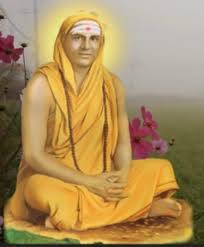
Swami Sivananda seated in yellow robes with glowing halo image
Our Heritage, Swami Sivananda

Swami Omkarananda

Swami Omkarananda Swami Omkarananda hails from Andhra Pradesh, he was born in Hyderabad on the 25th of December, 1929. He came to the Ashram as a small boy 17 years of age in the year 1946 and Sri Gurudev immediately entrusted him with the work of type-writing, copying and editing. He had an insatiable desire for reading books which desire of his he fulfilled by pouring over tomes throughout the night with a little chimney lamp during those days when electricity was not in the Ashram and had almost a passion to become a literary specialist in the English language which wish of his was partially fulfilled to the satisfaction of Sri Gurudev himself. He was entrusted with the management of the Ashram’s printing press in the year 1953, in which capacity he worked for about a year. Later on like a devil he worked day and night without taking rest, taking only tea, in which work Sri Narasimhulu of the Ashram assisted him very effectively, especially in type-writing manuscript, copying manuscript, etc., of Sri Gurudev. Apart from editing and compiling such massive works like Sadhana, Swami Omkarananda also is known as the author of some independent productions like the Foundation of Swami Sivananda’s literature, etc., during the days of his life in the Ashram, till about 1966.

Swami Omkarananda Read Post »

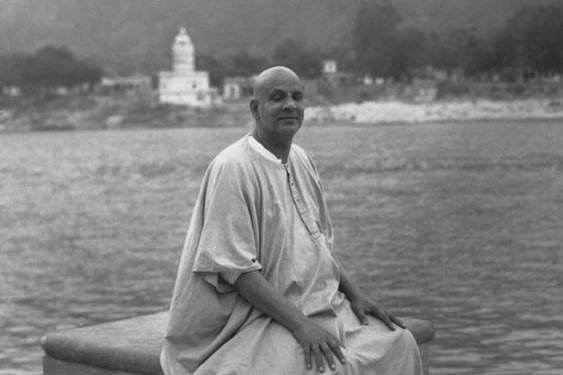
Swami Sivananda seated beside river image
Saints and Masters, Swami Sivananda

Appayya Dikshitar

Appayya Dikshitar by Swami Sivananda Introduction There had risn the Moghul Empire From the glowing ashes and fire Of the Battle of Panipat, When in a southern Brahmins hut Was born a lad that blew again The Vedantic bugle amain, And stirred from slumber and from sloth With the urge of righteous wrath The guardians of the Vedas, Heirs of the Upanishads, And made them stand alert intent To hear the tune of sad lament Break forth from Indias anguished soull No longer may they sprawl and loll On downy beds of idleness, Complacent with their past greatness When loud the manly bugle blared, And the need for action declared. The great Appayya Dikshitar Was a saint, a sage and scholar. He it was the clarion sounded, Our hearts then with clat bounded; He it was that called in that age To us to guard our heritage. Versed was he in philosophy, And eer did he win the trophy In duels and combats of learning, Leaving, savants with shame burning. In rhetoric peerless was he, And his fame Pundits did envy And on him much mud they slung; The aspirants to him they clung. Sweet in praise, of Siva he sang Hymns that with rich melody rang, And devotees still love to sing Hymns by him, among poets a king. For aspirants and learned men, With learned skill and acumen, The four schools of thought he surveyed, And their tenets to all conveyed In learned treatises and books, Unblemished by jaundiced looks, And in commentaries bejewelled, With Vedic wisdom unexcelled. Like a golden ring on the spire Of the Vedantic shell of fire, Appayya Dikshitar did glisten Among the wheel of lesser men. Once to Tirupathi the sage Went on a lonely pilgrimage, And there the Mahant to him told: “Enter not the fane; it cant hold Within its precinct a Saivite; To enter here you have no right.” Wrath was the saint and quietly he By occult power did oernight change The fanes image of Lord Vishnu To Siva. The Mahant turned blue When in the morn he, aghast, saw Vishnus image changed to Siva. To the great sage he now did run And of him humbly beg pardon, And asked the image be restored To the shape he loved and adored. Such was the great saint Appayya, An incarnation of Siva, Whom men still love and have reverence For his wisdom and intelligence. Appayya Dikshitar was born in Adayapalam, near Ami in the North Arcot district, in 1554 A.D., in the Krishna Paksha of the Kanya month of Pramateecha Varsha under the Uttara Proushthapada constellation. His fathers name was Rangarajudhwari. Appaya had the name Vinayaka Subramanya when Namakarana ceremony or christening took place. Acharya Dikshitar or Acchan Dikshitar was the younger brother of Appayya. Appayya studied the holy scriptures under Guru Rama Kavi. He completed the fourteen Vidyas while he was quite young. What a great marvel! Chinnabomma, Raja of Vellore, invited Appayya and Acchan Dikshitar to his capital after the death of Rangaraja, who was the Chief Pundit of the State. Srinivasa Thathachari, the Dewan, had great dislike for the worshippers of Lord Siva. He censured the devotees of Lord Siva. Appayya praised the Siva Lilas and the glory of Lord Siva. Appayya was very intelligent. He was a master logician. He was well-versed in grammar, metaphysics and other sciences. He was a master in all branches of learning. His exposition of Vedanta was unique. He cleared the doubts of all. His name and fame spread far and wide. The Rajas of Thanjavur, Kalahasti and Tirupathi invited him. Marriage Ratna Kheta Srinivasa Dikshitar, an erudite scholar in Sanskrit, a devotee of Kamakshi Devi, Kancheepuram, was the Chief Pundit of the Court in the Chola kingdom. The Chola king asked the Pundit, “O Pundit, what is the day today?” The Pundit replied, “Today is Full Moon day”. But, really, it was New Moon day. Everybody laughed. Srinivasa Dikshitar felt greatly mortified. He was a true devotee of Kamakshi Devi. Her grace was fully upon him. Srinivasa prayed to Her. The Devi appeared before Srinivasa, gave him one of Her earrings and asked him to throw it in the sky. Srinivasa acted accordingly. The earring attained the form of a full moon and shone brilliantly. The king, the ministers and other people witnessed this marvellous scene and were struck with amazement. The king made Srinivasa sit on the golden throne, adorned him with jewels and honoured him highly. Srinivasa came to know that Appayya was a great scholar. He wanted to defeat him. He proceeded to Kancheepuram to propitiate Kamakshi Devi in order to get Her blessings. He did severe Tapas. The Devi appeared before him and said, “O Bhakta, choose your boons from Me”. Thereupon Srinivasa said, “Let all the Kalas be seated on my tongue. I have to conquer Appayya, who is a great scholar and orator, through Thy grace and help only. The whole world knows my name and fame. Please help me to keep up the same”. The Devi replied, “O Bhakta, Appayya is not an ordinary human being. He is verily the incarnation of Lord Siva. I am verily your form. Do not enter into a controversy with him. Give your daughter Mangalambika in marriage to Appayya and become the revered father-in-law to him. Then only your desire will be fulfilled”. At the same time, Lord Siva appeared in Appayyas dream and said, “O child, go to Kancheepuram. Srinivasa will give his daughter in marriage to you”. Appayya went to Kancheepuram immediately and lived there. Srinivasa took his daughter and reached Appayyas residence. Appayya honoured Srinivasa duly with Arghya (offering of special hospitality by way of respectful libations and glorification), Padya (washing of the feet), Asana (offering of an elevated seat), etc. Srinivasa said, “The Devi has ordered me to give my daughter in marriage to you. O Appayya, please marry her and attain fame, prosperity and tranquillity”. Appayya married Mangalambika. He led


Appayya Dikshitar Read Post »

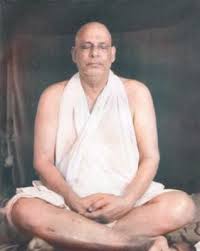
Swami Sivananda sitting in meditation pose image
Our Heritage, Swami Sivananda

Swami Chinmayananda

Swami Chinmayananda Known as Balakrishnan, he was born of noble parents at Ernakulam (Kerala) on the 8th of May, 1917. The rigidity of the family daily routine of worship, lasting for quite a few hours, became part and parcel of the mental and moral make-up of the young lad. And, added to this, he had the rare chance of coming under the influence of his family-Gurus who were saintly souls Right from young age he had the inquiring mind which critically questioned everything. He was equally brilliant in his studies and emerged out of the Lucknow University as a Master of Arts. Like many of the highly learned youths who find them selves in a dilemma as to what to do with life when they come out of the universities, Balakrishnan too was assailed by doubts with conflicting ideologies. But providence guided him properly; he studied the great works of Swami Vivekananda, Aurovindo and others, and found his way to his Master, Swami Sivananda. Swami Sivanandai Maharaj knew that he was an exceptionally gifted person and entrusted him with conducting a Gita Committee, as Gurudev called it, which consisted of some members,-the members being Sri Balakrishna Menon (Swami Chinmayananda), Swami Krishnananda (II), a very learned philosopher from Bihar called Sri Nanda Kishore Srivastava, etc. He used to conduct classes in the Ashram, now and then. He was ordained into Sannyasa by Sri Gurudev on 25th February, 1949 to pursue further studies of scriptures under Swami Tapovanamji Maharaj, in Uttarakashi where he stayed with the great Master studying panchadasi and other Vedanta Texts as well as Upanishads. Having mastered these texts. Swami Chinmayananda started his own Jnana Yajna Mission and moved from corner to corner of India conducting Gita Yajna classes, Upanishad classes and discourses on the scriptures, which earned him great reputation as an extraordinary orator and a masterly exponent of India’s culture, its literary heritage and scriptural lore. Swami Chinmayananda has also travelled to the West many a time. He has Centers in various places in India and also abroad. Today he is one of the world-figures who have hoisted the flag of India’s spiritual heritage not only in this country but also in the other countries of the world.


Swami Chinmayananda Read Post »

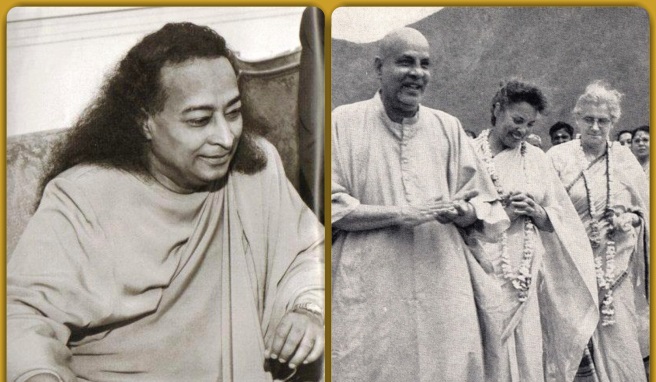
Swami Sivananda collage with Spiritual teachers picture
Our Heritage, Swami Sivananda

Swami Madhavananda

Swami Madhavananda Born on the 15th of December 1917, and known as Karunanidhi, he hails from Andhra Pradesh. As he lived in both the outskirts of Andhra Pradesh and Karnataka, he is very conversant with the atmosphere of both the States and knows Telugu and Kannada languages. When Karunanidhi arrived at the Ashram, he found that revered Sri Gurudev was away upon his “All-India Spiritual Awakening Tour”. He was cordially received by Swami Krishnananda who was the in-charge of the Ashram during the absence of Gurudev and all the other office-bearers. He awaited Gurudev’s return and met him for the first time on 8th November, 1950. It would appear that right at this first brief meeting and talk Gurudev immediately recognised his potentialities. Very surprisingly and to the wonder of many people, Sri Gurudev at once gave him the work of the Cashier of the Ashram. Those were very hard days as the funds were almost nil, and it was not easy for anyone to perform the duties of the Cashier. Karunanidhi as a Cashier, prior to his being ordained a Sannyasin, spent very difficult times of course with shop-keepers who were creditors of the Ashram. But with his calm, quiet and reticent nature he managed his little function of the Cashier those days very well. Recognising his spiritual worth, Sri Gurudev gave him Sannyasa within months of his arrival, i.e., on Mahasivaratri, the 6th of March, 1951 and named him Swami Madhavananda. After two or three years of his service as a Cashier, he was appointed by Gurudev by nomination as a Secretary, which, of course, increased the weight of the work he had to perform. This position of responsibility he ungrudgingly accepted and immediately commenced this performance spread over a wide area of the different departments of the Institution. Not only this; together with the responsibilities as Secretary, he took upon himself, of his own accord, the additional burden of supervising the construction works of the Ashram, sheerly with the intention of seeing that there is no wastage of any kind and the building works are efficiently carried on in the interest of public good. Those were days when the Ashram was inordinately hard-pressed with inadequacy of financial resources and the work of the Secretary was indeed not a happy job. It was something which would wear out anyone and fatigue even a strong personality. The Swami indeed worked very hard and steered the course of The Divine Life Society’s functions at the Headquarters during those difficult days when the income side of the Institution was hardly worth mentioning. There were many occasions when it looked that it was difficult for the Ashram to make both ends meet and one could not predict the fate of the Ashram the next day. Such was the nature of the problem created by the financial stress. Swami Madhavananda did indeed bear the brunt of the pains that an Executive of the Institution would have to undergo under such circumstances. The entire saga of the history of the Ashram at its Headquarters during those years would speak eloquently of the sacrifice which the Swami personally did, as the times required, without rest and without even adequate sleep. The several years of such strenuous work naturally told upon his system, particularly the condition of his heart, which called for special attention by way of medical treatment. All this did not deter the Swami from continuing his Seva to the Institution, and it, indeed, did not cease at any time. At the same time, he is a very religious type of person, meticulously following a daily routine of prayer and worship for several hours. He is a reserved type of person who minds his own business, as one may say, not interfering and unconcerned with anything in the world, except whatever work is entrusted to him, and always confined to his own Kutir of prayer and worship. Swami Madhavananda was elected as the Treasurer of the Divine Life Society in August 1963, soon after the Mahasamadhi of the Master. And in due recognition of his glorious services, he was elected as the Vice-President of the Divine Life Society, in the year 1975, which position he continues to hold till this day. This was really as it ought to have been, considering not only his elderly personality but also the intense sincerity with which he has always been identifying himself with the Ashram’s spiritual ideals, the amiableness of his nature and the goodness of his hearth to mention only a few of the exemplary characters which are embodied in his person.

Swami Madhavananda Read Post »

Swami Sivananda garlanding woman outdoors image
Our Heritage, Swami Sivananda

Swami Dayananda

Swami Dayananda Born in Bhimavaram, Andhra Pradesh, in the year 1923 to prosperous parents, he was known as Ramalinga Raju. Even when he was studying in college, he was interested in the literary side, particularly philosophy and religion, and he was an admirer of Dr. Radhakrishnan, especially. Suddenly he felt an urge to renounce the world and found himself at the feet of Swami Sivananda, in the year 1946. Reading, doing Japa and meditation were his specialities. Swami Sivananda recognised the great spirit of renunciation in the young man and initiated him into the holy order of Sannyasa within two years of his joining the Ashram, on 14th January, 1948 and gave him the monastic name of Swami Dayananda. He accompanied Sri Gurudev during the All-India tour in 1950 and did untiring service to him, day and night, with great love and care. Swami Dayananda is known as the active participant in the work of The Divine Life Society from the time Sri Gurudev felt it necessary to have a wing of the Ashram helping in printing work. The very seed of the Printing Press, it may be said, was sown by Swami Dayananda. Over night he worked a miracle, as it were, and brought a printing machine (a tradle machine) from Rishikesh town and saw to it that the very next day (20th September, 1951) the inauguration of the Printing Press so dear to Sri Gurudev was performed. He also worked and struggled tooth and nail to bring electricity to the Ashram, which he succeeded in bringing, a few years after the founding of the Printing Press. Actually the manner in which he brought electricity to the Ashram is an epic, a saga by itself. No person would have succeeded easily in doing that work, since it required permission from the Government which was not eager to spend money, for the sake of bringing connection to the Ashram. Anyhow by moving the District Magistrate of Dehra Dun, Swami Dayananda succeeded in doing this work. Thereafter he concentrated himself entirely on the Printing Department, even till today. Due to his persistent and tenacious concentration on this work the Press has increased its dimension. It has become one of the top-most Printing plants in the Garhwal region, which is all due to his indefatigable work and totally unselfish labour. Sri Gurudev loved him so much that once he said, “Ah! I am proud of you, Swami Dayananda,” and added, “You are an embodiment of Nishkama Seva.” Today, he is the main-spring behind the management of the Printing Press. Swami Chidananda paid his tribute thus: “Swami Dayanandaji Maharaj has been a pillar of this Institution over these decades. Today he is a �Veetaragi’, a �Nirlipta’, �Tyagi’ Saint. He is a rare Sadhu who in the midst of intense Guruseva is yet ever engaged in trying to abide constantly in the state of �Atma-samsthiti’. He is also �Iccha Rahita’ Yogi in the sense that he has no personal self-desire of any sort in his life. He has one overwhelming desire and that is Sri Gurudev’s Jnana Yajna. Other than his desire to meditate, meditate, meditate, his only second ambition in life is to see each and everyone of Holy Master Sivananda’s books in print and to make them available to thirsting spiritual aspirants all over the world.” In the year 1970, Swami Dayananda was appointed as one of the Secretaries of the Divine Life Society, in which post he continued till September, 1975 when he was elected by the Board of Trustees as a member of the Trust Board and Treasurer of the Divine Life Society. Revered Swami Dayanandaji Maharaj attained Mahasamadhi on Monday, 4 February, 2002.

Swami Dayananda Read Post »

swami sivananda Sepia portrait of monk seated cross-legged with calm expression image
Saints and Masters, Swami Sivananda

Goswami Tulsidas

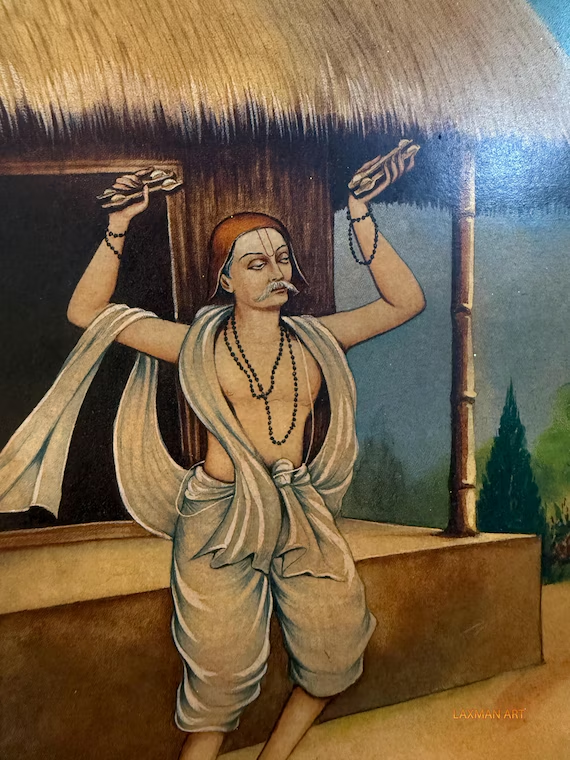
Goswami Tulsidas by Swami Sivananda Tulsidas was born in Rajpur, in the district of Banda in Uttaranchal, in Samvat 1589 or 1532 A.D. He was a Sarayuparina Brahmin by birth and is regarded as an incarnation of Valmiki, the author of Ramayana written in Sanskrit. His fathers name was Atmaram Shukla Dube and his mothers name Hulsi. Tulsidas did not cry at the time of his birth. He was born with all the thirty-two teeth intact. In childhood his name was Tulsiram or Ram Bola. Tulsidass wifes name was Buddhimati (Ratnavali). Tulsidass sons name was Tarak. Tulsidas was passionately attached to his wife. He could not bear even a days separation from her. One day his wife went to her fathers house without informing her husband. Tulsidas stealthily went to see her at night at his father-in-laws house. This produced a sense of shame in Buddhimati. She said to Tulsidas, “My body is but a network of flesh and bones. If you would develop for Lord Rama even half the love that you have for my filthy body, you would certainly cross the ocean of Samsara and attain immortality and eternal bliss”. These words pierced the heart of Tulsidas like an arrow. He did not stay there even for a moment. He abandoned home and became an ascetic. He spent fourteen years in visiting the various sacred places of pilgrimage. While returning from answering the calls of nature, Tulsidas used to throw the water that was left in his water-pot at the roots of a tree which a spirit was occupying. The spirit was very much pleased with Tulsidas. The spirit said, “O man! Get a boon from me”. Tulsidas replied, “Let me have Darshan of Lord Rama”. The spirit said, “Go to the Hanuman temple. There Hanuman comes in the guise of a leper to hear the Ramayan as the first hearer and leaves the place last of all. Get hold of him. He will help you”. Accordingly, Tulsidas met Hanuman, and through His grace, had Darshan or vision of Lord Rama. Tulsidas wrote twelve books. The most famous book is his RamayanRam-charit-manasin Hindi. He wrote this book under the directions of Hanuman. This Ramayan is read and worshipped with great reverence in every Hindu home in Northern India. It is an inspiring book. It contains sweet couplets in beautiful rhyme. Vinaya Patrika is another important book written by Tulsidas. Some thieves came to Tulsidass Ashram to take away his goods. They saw a blue-complexioned guard, with bow and arrow in his hands, keeping watch at the gate. Wherever they moved, the guard followed them. They were frightened. In the morning they asked Tulsidas, “O venerable saint! We saw a young guard with bow and arrow in his hands at the gate of your residence. Who is this man?” Tulsidas remained silent and wept. He came to know that Lord Rama Himself had been taking the trouble to protect his goods. He at once distributed all his wealth among the poor. Tulsidas lived in Ayodhya for some time. Then he shifted to Varanasi. One day a murderer came and cried, “For the love of Rama give me alms. I am a murderer”. Tulsi called him to his house, gave him sacred food which had been offered to the Lord and declared that the murderer was purified. The Brahmins of Varanasi reproached Tulsidas and said, “How can the sin of a murderer be absolved? How could you eat with him? If the sacred bull of SivaNandiwould eat from the hands of the murderer, then only we would accept that he had been purified”. Then the murderer was taken to the temple and the bull ate from his hands. The Brahmins were put to shame. Tulsidas once went to Brindavan. He visited a temple. He saw the image of Lord Krishna. He said, “How shall I describe Thy beauty, O Lord! But Tulsi will bow his head only when You take up bow and arrow in Your hands”. The Lord revealed Himself before Tulsidas in the form of Lord Rama with bow and arrows. Tulsidass blessings brought the dead husband of a poor woman back to life. The Moghul emperor at Delhi came to know of the great miracle done by Tulsidas. He sent for Tulsidas. Tulsidas came to the emperors court. The emperor asked the saint to perform some miracle. Tulsidas replied, “I have no superhuman power. I know only the name of Rama”. The emperor put Tulsi in prison and said, “I will release you only if you show me a miracle”. Tulsi then prayed to Hanuman. Countless bands of powerful monkeys entered the royal court. The emperor got frightened and said, “O saint, forgive me. I know your greatness now”. He at once released Tulsi from prison. Tulsi left his mortal coil and entered the Abode of Immortality and Eternal Bliss in 1623 A.D. at the age of ninety-one at Asighat in Varanasi.

Goswami Tulsidas Read Post »

Swami Sivananda seated with devotees near river image
Saints and Masters, Swami Sivananda

Mira Bai

Mira Bai by Swami Sivananda Mira is regarded as an incarnation of Radha. She was born in Samvat 1557 or 1499 A.D. in the village Kurkhi, near Merta, a small state in Marwar, Rajasthan. Mira was the daughter of Ratan Singh Ranthor and the grand-daughter of Dudaji of Merta. The Ranthors of Merta were great devotees of Vishnu. Mira Bai was brought up amidst Vaishnava influence, which moulded her life in the path of devotion towards Lord Krishna. She learnt to worship Sri Krishna from her childhood. When she was four years of age, she manifested religious tendencies. Once there was a marriage procession in front of her residence. The bridegroom was nicely dressed. Mira, who was only a child, saw the bridegroom and said to her mother innocently, “Dear mother, who is my bridegroom?”. Mira s mother smiled, and half in jest and half in earnest, pointed towards the image of Sri Krishna and said, “My dear Mira, Lord Krishnathis beautiful imageis your bridegroom”. Child Mira began to love the idol of Krishna very much. She spent much of her time in bathing and dressing the image. She worshipped the image. She slept with the image. She danced about the image in ecstasy. She sang beautiful songs in front of the image. She used to talk to the idol. Miras father arranged for her marriage with Rana Kumbha of Chitore, in Mewar. Mira was a very dutiful wife. She obeyed her husbands commands implicitly. After her household duties were over, she would go to the temple of Lord Krishna, worship, sing and dance before the image daily. The little image would get up, embrace Mira, play on the flute and talk to her. Ranas mother and other ladies of the house did not like the ways of Mira, as they were worldly-minded and jealous. They were all annoyed with her. Miras mother-in-law forced her to worship Durga and admonished her often. But Mira stood adamant. She said, “I have already given up my life to my beloved Lord Krishna”. Miras sister-in-law Udabai formed a conspiracy and began to defame the innocent Mira. She informed Rana Kumbha that Mira was in secret love with others, that she with her own eyes had witnessed Mira in the temple with her lovers, and that she would show him the persons if he would accompany her one night. She further added that Mira, by her conduct, had brought a great slur on the reputation of the Rana family of Chitore. Rana Kumbha was very much enraged. He straightaway ran with sword in hand towards the inner apartments of Mira. Fortunately, Mira was not in her room. A kind relative of the Rana checked him and said, “Look here Rana! Do not be in haste. You will repent later on. Consider well. Enquire into the matter very carefully. Find out the truth. Mira is a great devotional lady. What you have heard now may be a wild rumour only. Out of sheer jealousy some ladies might have concocted a cock-and-bull story against Mira to ruin her. Be cool now”. Rana Kumbha agreed to the wise counsel of his relative. The Ranas sister took him to the temple at dead of night. Rana Kumbha broke open the door, rushed inside and found Mira alone in her ecstatic mood talking to the idol. The Rana said to Mira, “Mira, with whom are you talking now? Show me this lover of yours”. Mira replied, “There sits Hemy Lordthe Nanichora who has stolen my heart”. She fainted. There was a wild rumour that Mira was mixing very freely with Sadhus. She, no doubt, had great regard for Sadhus and mixed freely with them. Mira never cared a bit for the meaningless scandals. She stood unruffled. Mira was persecuted in various ways by the Rana and his relatives. She got the same treatment which Prahlad got from his father Hiranyakasipu. Hari shielded Prahlad. Here, Sri Krishna always stood by the side of Mira. Once the Rana sent a cobra in a basket to Mira with the message that it contained a garland of flowers. Mira took her bath and sat for worship. After finishing her meditation, she opened the basket and found inside a lovely idol of Sri Krishna and a garland of flowers. Then the Rana sent her a cup of poison with the message that it was nectar. Mira offered it to Lord Krishna and took it as His Prasad. It was real nectar to her. Then the Rana sent a bed of nails for Mira to sleep on. Mira finished her worship and slept on the bed of nails. Lo! The bed of nails was transformed into a bed of roses. When Mira was thus tortured by her husbands relatives, she sent a letter to Tulsidasji and asked the advice of the saint. She wrote thus: “All my relatives trouble me, because I move amongst Sadhus. I cannot carry on my devotional practices in the house. I have made Giridhar Gopal my friend from my very childhood. I am strongly attached to Him. I cannot break that attachment now”. Tulsidasji sent a reply: “Abandon those who do not worship Rama and Sita as if they are your enemies, even though they are your dearest relatives. Prahlad abandoned his father; Vibhishana left his brother Ravana; Bharata deserted his mother; Bali forsook even his Guru; the Gopis, the women of Vraja, disowned their husbands in order to attain the Lord. Their lives were all the happier for having done so. The opinion of holy saints is that the relation with God and love of God alone is true and eternal; all other relationships are unreal and temporary”. Once Akbar and his court musician Tansen came in disguise to Chitore to hear Miras devotional and inspiring songs. Both entered the temple and listened to Mirs soul-stirring songs to their hearts content. Akbar was really moved. Before he departed, he touched the holy feet of Mira and placed a

Mira Bai Read Post »

Saints and Masters, Swami Sivananda

Narsi Mehta

Narsi Mehta by Swami Sivananda Narsi Mehta belonged to a Vadanagar Nagar-Brahmin family of Junagarh in Kathiawar, Gujarat. He was born of a very poor family. From his very boyhood he had great devotion to Lord Krishna. He lived with his brother. All the time he kept singing songs on Krishna and Gopi Lila and dancing in ecstasy. As he did not care a bit for any of the household matters and as he did not earn anything, his brother’s wife taunted and ill-treated him. Narsi Mehta never entertained any idea of earning his livelihood. He had the firm conviction that Lord Krishna would provide him with all his wants. This was due to his previous Samskaras. He was of a happy-go-lucky nature. He did Tapasya at Gopinath, situated on the seaside. He had the Darshan of Lord Krishna through the grace of Lord Siva. He came back to his house and got married. He had a son by name Shyamaldass and a daughter by name Kunwarbai. Narsi Mehta was a contemporary of Mira Bai. He had Sakhya Bhav. He would address Lord Krishna in terms of equality. He was a simple-minded, frank Bhakta. He saw Lord Krishna everywhere and in everything. He had Para Bhakti and cosmic consciousness. He composed a poem ‘Hari Mala’. It is said that his daughter’s marriage was conducted by Lord Krishna Himself with great pomp and eclat. Though Narsi Mehta was very poor, rich marriage-presents given to Kunwarbai’s mother-in-law greatly astonished all. Many miracles happened in Narsi Mehta’s life. He had direct Darshan of Lord Krishna on several occasions. Once he was moving with his brother along a road. He was very hungry. He could not get any food on the way. There Lord Krishna took the form of a shepherd boy and gave him good food in a small cottage. Narsi asked his orthodox brother to partake of the food and said to him that it was Lord Krishna Himself who was serving him. His brother had no faith. Narsi and his brother continued their journey onwards. Narsi’s brother forgot to take his vessel from the cottage. He ran back to the place and found out the vessel, but there was neither cottage nor shepherd boy. It was all the grace of Krishna, who served His Bhakta to keep up His word in the Gita: Ananyaschityanto Mam Ye Janah Paryupasate Tesham Nityabhiyuktanam Yogakshemam Vahamyaham (Ch. IX-22) Narsi’s brother repented very much for not taking food along with Narsi. On another occasion, Narsi was performing his father’s Sraddha (the annual offering of Pindas to the departed souls). There was shortage of ghee. Narsi went to the bazaar to purchase ghee. On the way he met a Sankirtan party and joined them. He began singing Hari Bhajans and dancing in an ecstatic mood. He entirely forgot all about Sraddha and ghee. His poor wife was waiting and waiting anxiously for him. Two miracles happened then. It was all Krishna’s grace to help His Bhakta. The first miracle was that the sun did not move a bit in the firmament. It stood still. Nobody knew how much time had actually passed. Secondly, Lord Krishna assumed the form of Narsi, brought ghee and handed it over to Narsi’s wife. She gave mild rebuke also to Krishna who was there acting the part of Narsi. All the Brahmins were nicely fed. They departed with joy. The function was over. Narsi’s wife started arranging the things and cleaning the room and the verandah. Then came Narsi with ghee in hand and apologised to his wife for coming late. After the death of his wife and son, Narsi became more free. He began devoting all his time to worship and singing of Bhajans. He became an Ativarnashrami. He broke down all caste rules and observances. He held Kirtan everywhere, even in the houses of sweepers and men of inferior caste. The other Nagar-Brahmins hated Narsi and also outcasted him. They refused to admit him in one of their feasts. Another miracle happened now. A Dom or a man of inferior caste was found by the side of each Brahmin. The haughty Nagar-Brahmins were cowed down. They began to show respect to Narsi. They openly admitted and declared that Narsi Mehta was a great Bhakta. The world has not produced a Bhakta greater than Narsi in this Yuga. Narsi’s devotion was of a unique nature. He has pointed out to the world the true path of devotion. That is the reason why he still lives in our hearts, why his inspiring song, ” Vaishnava Janato Thene Kahiye”, which gives a fine description of a true Vaishnava, is sung even today by all the Bhaktas. Glory to Narsi! Glory to Hari! Glory to His Name!

Narsi Mehta Read Post »

swami sivananda Black-and-white photo of guru resting in bed with disciple reading nearby picture
Saints and Masters, Swami Sivananda

Kabir

Kabir by Swami Sivananda Kasbir was born in 1440 A.D. The probable date of his death is 1519 A.D. as mentioned in Kabir Ka Santi. Kabir died at Maghar near Gorakhpur. He was found lying as a child in the lake called Lahar Talao near Kashi on a leaf of lotus. Here he was found by Niru, a childless Mohammedan weaver who was going with his wife Nima to attend a function in a neighbouring village. They took compassion on the forsaken baby. They took him to their home and there they brought him up as their own child. A Kazi was called in to give the child a name. The Kazi told Niru that the child was a demon and should be killed immediately. A miracle happened. The knife was plunged into the heart of the child. No drop of blood came out. Kabir uttered a verse which made them understand that he was not ordinary flesh and blood. Then the name ‘Kabir’ was given to the child. The word ‘Kabir’ means ‘great’ in the Arabic language. Kabir seems to have been of Hindu parentage, though adopted and brought up as a Mohammedan. It is said that he was born of a Brahmin girl-widow, who, to hide her shame, left the child in the lake. But in a stanza, Kabir denies his own conception in a womb. He says that he was not born nor did he dwell in a womb {vide page 122, Vol. VI, of Macauliffs Sikh Religion). Kabir grew up without food. His adopted parents became very anxious about him. Then he began to drink the milk of a calf which yielded milk daily in a miraculous manner. The life of Kabir is shrouded in mystery. We know nothing of his early training and career. What has been discovered in the way of his biographical details is very little. Beyond the facts that he was a weaver, born of poverty-stricken parents, that he lived at Kashi during the reign of Sikander Lodi, that he was the disciple of the great religious reformer Ramananda, and that he himself was the Guru of a number of distinguished disciples, we know positively nothing about Kabir. From his early boyhood, Kabir was very much religiously inclined. He was of a reflective disposition. He had very often his mystic moods. Even in his childhood he engaged himself in discussions about God with Sadhus. He received and served Sadhus and Sannyasins with intense devotion and faith. Though his foster father got him married, Kabir was not attached to home and family. He used to roam about the holy city of Kashi. He earned his livelihood from the loom. Kabir’s initiation Kabir remained for a long time without a Guru. He wanted to become the disciple of Ramananda. As he was a Mohammedan, he doubted whether Ramananda would accept him as his disciple. One day, he went and hid himself on the steps of the Ghat of the Ganga to which Ramananda used to come every morning to take his bath. That day, the great preacher, Ramananda came to bathe as usual. It was dark. Ramananda did not see the sleeping Kabir. He placed his feet upon Kabir’s chest. As soon as he found out that he had trodden upon a human body, he cried out ‘Ram…Ram…’ Kabir started up and said, “I have found him at last.” He fell at the feet of Ramananda and said, “Thou hast given me the word of initiation and I am thy disciple now.” Ramananda was struck with the sincerity and devotion of Kabir and accepted him as his disciple. Kabir was formally initiated by the great teacher. Kabir joined in the theological and philosophical disputes which his master held with all the great Mullahs and Brahmins of his day. A famous Brahmin named Sarvajit, who was well versed in logic, came to Kashi. The Pundits of Kashi informed Ramananda of the arrival of the learned Brahmin and told him that no one could defeat the erudite logician. Ramananda sent Kabir to argue with him. The orthodox Pundit asked: “O Kabir! What is your caste?” Kabir replied, “I am a weaver.” The proud Pundit sneered at Kabir in a contemptuous manner and asked what a weaver was. Kabir replied: ‘Wo one Knowelh the secret of the weaver, God hath woven the warp of the whole world. Ifthou listen to the Vedas and the Puranas. Thou shall hear: 7 have stretched the warp so long; I have made the Earth and Firmament my workshop, I have set the Sun and the Moon in alternate motion. Working my legs I did one workwith such a weaver my heart is pleased. ” (Macauliff) Kabir was like Guru Nanak. He was loved by both the Hindus and the Mohammedans. He was not of one religion or of one nation. He was the prophet of universal brotherhood. He did not observe the rules of caste. He recognised the higher harmony of Hinduism and Islam. He realised the truth that religion, spirituality, love, devotion, faith and divine life were the monopoly of no one religion, but were common to all religions. Kabir’s religion was a religion of simplicity. His motto was love. His means of salvation was devotion to God and God alone. Kabir’s home was the universe, his brother was mankind and his great father was the Father in Heaven. Kabir did not renounce the world in order to devote himself to the practice of severe austerities and meditation. He was a dynamic Yogi. He worked at the loom, and at the same time, his mind was ever fixed on God. Kabir began to attract a large number of people. Many became his disciples. They all gathered round him-at the loom or in the marketplace to listen to his sweet, soul-stirring and sublime songs and inspiring discourses. Mysterious are the ways of prophets and saints! They preach silently. Wise men only are profited by their teachings. They only can really

Kabir Read Post »