








Hari Om

Menu

February 17, 2026

swami sivananda Spiritual collage with monk seated between Hindu deities and floral border image
Saints and Masters, Swami Sivananda

Mahatma Gandhi

Mahatma Gandhi by Swami Sivananda Introduction MOHANDAS Karamchand Gandhi, the youngest son of Karamchand Gandhi and Putlibai, was born on October 2, 1869. His birthplace was Porbander, a small seaside town in the Kathiawar peninsula of western India. His mother was a devout and religious woman who attended temple services daily and never ate before she prayed. At school in Porbander, Gandhiji was very shy and lacked the confidence and poise necessary to talk to strangers. But he was admirably punctual and obedient, and participated actively in school games. In compliance with the prevailing custom of child marriage, Mohandas married at the age of thirteen. Kasturbai, his illiterate wife, was simple, persevering, bold and independent. A Student of Law in England Karamchand Gandhi died in the year 1885, leaving little property for his family. In 1887, Mohandas completed his matriculation and left for England to study law. He lived in London, where he found the life strange and difficult to adjust to. Although he adopted English dress and took dancing and violin lessons, he was nevertheless quite unsuccessful in conforming to the British mode of life. His friends tried to compel him to eat meat but he abstained, adhering very rigidly to a vegetarian diet. He joined vegetarian clubs and very soon became a champion of vegetarianism. It was in fact in England where Gandhiji�s experiments in diet began. A transformation in Gandhiji�s life and character now began to take place. His heart ached deeply for religion. He was inspired by meetings with Madame Blavatsky and Annie Besant. He read their books on Theosophy and read the Bible. He was impressed by the similarity of the teachings of the Sermon on the Mount and the Gita. He began reading the Gita only during his second year in London, and in it found the comfort and solace he sought. Gandhiji studied French, Latin and science. He was called to the Bar in 1891, after which he at once sailed for India. On his return to his native land he began to study Indian Law. At Rajkot he established a moderately successful practice. While there, he was insulted by a political agent, a British officer who was prejudiced against Gandhiji�s brother. This insult changed the course of his life, inspiring him with the desire to learn something about the politics his of country. Fight Against Racial Prejudice in S.A. At this time, Gandhiji accepted an offer from the Meman firm of Porbander to go to South Africa as their legal representative. He arrived in Natal in 1893 and was immediately requested to go to Pretoria where his presence was required. He confronted difficulty when he entered a first-class compartment on a train to the Transvaal. At Pietermaritzburg he was ejected from the train with all his luggage. He now became resolved to fight colour prejudice. The ill-treatment that the Indians received at the hands of colonialists was abhorrent to Gandhiji, and he was determined to champion their cause. This led him, in 1894, to found the Natal Indian Congress. In 1899, on the outbreak of the Anglo-Boer War, he led the Indian Ambulance Corps of one thousand members. They engaged in active service and on one occasion were under attack of heavy fire. In 1901, Gandhiji�s health broke down and he returned to India. After a year or two he was again summoned to South Africa. While there, in 1901, he founded the newspaper, Indian Opinion. Five years later, when a native rebellion broke out in Natal, Gandhiji offered a Stretcher-Bearer Corps. During the First World War he raised an Ambulance Corps and conducted a recruiting campaign in Karia. It was in South Africa that Gandhiji first adopted Satyagraha, the method of non-violence, to fight the injustice to which Indians were subjected. The entire Indian community rallied around him magnificently, for he had readily identified himself with all. His powerful Satyagraha campaign with which he confronted the unjust laws of the local government was overwhelmingly successful. He showed that this “soul force”, as he called it, could be universally applied to bring peace and abolish despotism and ever-growing militarism. Struggle for Independence His mission accomplished, Gandhiji arrived in India in 1915. In 1918, he assumed leadership of the Indian National Congress and associated himself with the Khilafat movement. He used the peaceful method of non-co-operation and non-violence for achieving freedom for his country from the yoke of foreign rule. The Gandhi movement spread like wild fire. He roused the masses to political consciousness and proved to them that they possessed immense soul-force. He was sentenced to six years imprisonment and was released in February, 1924. In that same year he became President of the Indian National Congress. In April 1930, the Salt Satyagraha was started by Gandhiji. For his breach of the Salt Laws he was interned on the 5th May, 1930. He was released on the 25th January, 1931 in order to attend the Round Table Conference in London. He was again arrested in January, 1933 and released in May of the same year. Gandhiji�s intense love for his fellow men, his long fasts, his great sacrifices for his country�s cause, indomitable will, moral force and deep spiritual life, won for him the hearts of his countrymen. In their excessive devotion, love and reverence for him they bestowed upon him the title of “Mahatma”, meaning “Great Soul”. They addressed him affectionately as Bapuji. It means “beloved father”. The tremendous soul-power of which Gandhiji spoke was essentially derived from the chanting of Ram-Nam and the study of the Gita and Ramayana. Not a day passed without a study of the second chapter of the Gita, in which, Gandhiji felt, was contained its entire philosophy. On the 15th of August, 1947, Gandhiji won freedom for India. Soon after this he was shot at three times at point-blank range by Nathuram Vinayak Godse, a Hindu extremist. On Gandhiji�s lips, just before he gave up his last breath, were the words “Hey Ram!” Thus

Mahatma Gandhi Read Post »

Swami Sivananda wearing garland near riverside background. image
Our Heritage, Swami Sivananda

Swami Sankarananda

Swami Sankarananda Swami Sankarananda was born in Karnataka on the 13th May, 1900. He was a versatile genius. It is extremely rare nowadays to find one who so beautifully blends in himself the scholar and the Sevak, for whom cooking or scavenging, building construction or administration of an institution and thinking and writing on subtle philosophical subjects, would all be natural and therefore dear. Sankarananda was. a linguist and has utilised his mastery of Bengali literature to interpret Tagore’s works to the people of Karnataka. He has also translated several of Swami Sivanandaji’s works into the Canarese language. Since he joined the Sivananda Ashram in 1946 he has not spared himself in the service of the Master. Swami Sivananda initiated him into the Holy Order of Sannyasa on “Sankara Jayanti day” 1948. Since then Sankarananda has served the Master’s Cause with a rare zeal and spirit of dedication. He has distinguished himself in several departments of the Ashram. The Society’s Garden at Rishikesh owes its growth to him. Side by side, he has carried on his literary activities. At the invitation of the Mysore University, he delivered a series of lectures on Bengali Literature. At the Yoga Vedanta Forest Academy, too, he delivered a series of lectures on the spiritual significance of the Mahabharata, which have been brought together in a volume entitled “The Glorious Journey”. His talks and writings share the nature of his life itself; they are all thought provoking.

Swami Sankarananda Read Post »

Swami Sivananda with folded hands in greeting gesture.
Our Heritage, Swami Sivananda

Swami Santananda

Swami Santananda Sri Chandrasekar, as he was known when he came to the Ashram. from Swami Jnanananda Ashram, Tirukkoilur (South India), hails from Tamil Nadu. He joined the Sivananda Ashram in 1957; a young man with an exceptional gift of melodious voice. He was ordained as a Sannyasin soon after his arrival and was named as Swami Santananda. By his soulful sweet Kirtans he used to commence the daily Satsangas in the Ashram, which would transport him and the audience to the realm of ecstasy. Devotees used to forget themselves in bliss. This young and enthusiastic Swami was also a personal Secretary to Sri Gurudev, especially during the last few years of the Master when his physical frame needed great care and service due to age and ailments, which he did with all love and dedication. After an year of the Master’s Mahasamadhi, sometime by the end of 1964, he felt an urge to live by himself and left the Ashram. His charming personality and sweet voice are irresistable and so wherever he went he attracted devotees in large numbers. Thus he soon found groups of Kirtan lovers gathering around him in different towns of South India, as well as in Malaysia and Singapore where the Indian population is quite large. He formed what is known as “Siva Family” in different places, the most dynamic of which is in Kuala Lumpur, Malaysia, where the Swami has established a large spiritual and cultural Centre, which is doing social, cultural and spiritual services under his inspiration and guidance.

Swami Santananda Read Post »

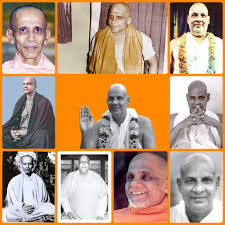
swami sivananda Collage of multiple spiritual guru portraits image
Saints and Masters, Swami Sivananda

Swami Vivekananda

Swami Vivekananda by Swami Sivananda This illustrious patriot-saint of modern India was born in Calcutta on 12 January, 1863. He was named Narendra. His father, Viswanath Datta, was a brilliant lawyer. He was highly respected for his intelligence and culture. His mother, Devi Bhuvaneshwari, was a devout woman with a great ability for training her children. As a boy, Narendra was very naughty and self-willed, and often had to be placed under a water tap to curb his mischief. Nevertheless, he was very generous, loving and devoted, with a strange attraction for wandering Sadhus. He enjoyed doing worship of Lord Rama and Lord Krishna with his mother. After his matriculation, Narendra went to college. He was rarely absent from social parties. He was the “soul of social circles” and no gathering was deemed complete without his presence. One day, his neighbour received a surprise visit from the saint of Dakshineshwar, Sri Ramakrishna. Narendra was also invited to sing devotional songs. As he sang, he sent thrill after thrill through Sri Ramakrishna until the saint fell into a state of ecstasy. When he became normal again, he made Narendra sit beside him and enquired lovingly of the boy. With time their friendship grew. The death of his father forced Narendra to find work and support the family. During these years of great struggle, his sheet anchor was his Guru, Sri Ramakrishna. Narendra yearned intensely for God and began to plague the Master for realisation. Narendra, now known as Swami Vivekananda, founded an Ashram near Calcutta, in order to organise better the Master’s mission. This was the beginning of the Ramakrishna Mission. From 1888 to 1890 Swami Vivekananda travelled widely. He went on a pilgrimage all over the country, studying the conditions of the people. Wherever he went, his magnetic personality created a great impression. In 1893, Swami Vivekananda went to America to attend the World Parliament of Religions in Chicago. His powerful speech at the opening session of the Parliament brought him instant fame and acclaimed him as a great orator and the most ideal interpreter of India’s wisdom. He instantly became very popular in America. Swami Vivekananda’s powerful personality and his passionate call of service of the poor, is still influencing people all over India and the world. Swami Vivekananda arrived in America penniless and depending only on God’s Grace. After the Parliament he began to receive the homage and hospitality of all America. He lectured at all the important centres. As a true Sannyasin he refused to sell religion for the sake of amassing money. He preached the gospel of unity of faiths and scattered the seeds of purity, knowledge and faith. After his stay of two years in America he toured England and Europe for three months. The tremendous ovation he received on his return to India in no way took his mind away from his mission of bringing religion to the doors of the poorest. His aim was to awaken the masses by reviving Vedic religion, and to clean it of the dross and impurity that had clung to it for so many centuries.In 1902 Swami Vivekananda entered Mahasamadhi. Six years of discipleship under Sri Ramakrishna had taken him to the realms of God-vision. Seven years of travelling in India had broadened his outlook on life. Nine years of a national and international career were all that were left for him; yet, how filled with glorious work those nine years were! Swami Vivekananda’s gospel was one of hope, faith and strength. He never succumbed to despair, for he knew that India was capable of expansion and growth. His clarion call to the nation was: “Awake, arise, and stop not till the goal is reached.”

Swami Vivekananda Read Post »

swami sivananda Vintage photo of guru teaching disciples by riverside image
Our Heritage, Swami Sivananda

Swam Chaitanyananda

Swami Chaitanyananda Swami Chaitanyananda hails from Hyderabad, Andhra Pradesh. He came to the Ashram in the late forties, in the service of Sri Gurudev. Swami Sivananda initiated him into Sannyasa in 1951 and he became the first in charge of the correspondence section which assumed a position of a full fledged department since the return of Sri Gurudev after the All India tour in November, 1950 because of the stir the tour had created and the consequent bulk of correspondence that the daily mail brought. He did this service for many years, until he left for Uttarakashi in 1958, for seclusion and Sadhana. At Uttarakashi he stays in the small Sivananda Ashram, built by the Headquarters at Rishikesh, and conducts classes in Vedantic Texts for the bonefit of Sadhakas.

Swam Chaitanyananda Read Post »

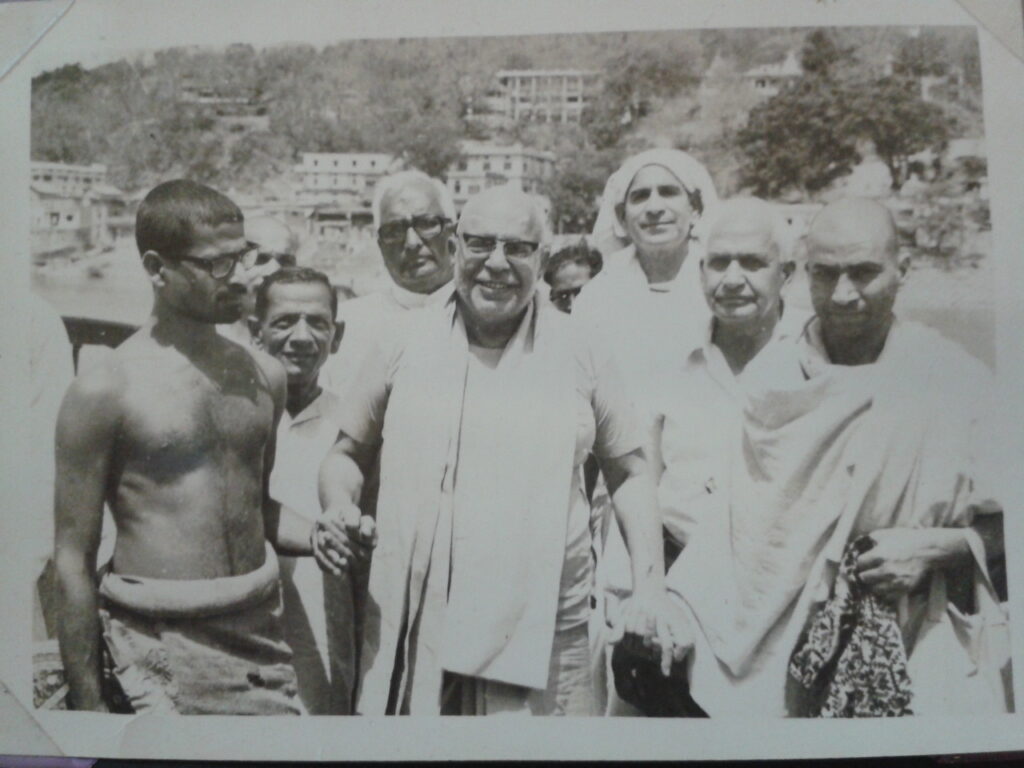
Swami Sivananda Group of monks and devotees posing together image
Our Heritage, Swami Sivananda

Swami Sahajananda

Swami Sahajananda Sri Swami Sahajananda, Spiritual Head of Divine Life Society of South africa, was born in the KwaZulu-Natal town of Estcourt on 10 July, 1925. His pre-monastic name was V. Srinivasan. Although he had a promising academic career and was keenly interested in sports and games, the young teacher had a strong yearning to lead the spiritual life, as he found his mind tormented by turbulent thoughts. Coming to know that for success in such an endeavor a Guru was very necessary, he began to yearn for one. One day, visiting a bookshop in Durban that dealt with Vedic literature, he happened to glance at a book entitled, Practice of Karma Yoga. Its author was none other than the great Sage of India, Sri Swami Sivananda. Even though Srinivasan did not know the meaning of the words, “Karma Yoga” at that time, the book sent a strange thrill through him. Glancing through its pages, he instantly knew that he had found the Guru he was searching for. He was fascinated to discover that spiritual life can not only purify the mind but grant one God-realisation as well. Henceforth, God-realisation became the goal of his life. He at once lost all interest in his academic career in which he was highly ambitious. He also lost interest in sports and games which he loved so much. He corresponded with the Master and began following his instructions. On his first visit to the Master in 1948, the only instruction received from the Master was “Learn to type and make Tea.” On his return to South Africa, he took up a post at the FOSA TB settlement, teaching at the school and serving the sick. In 1949, he received the Master’s instruction to start a branch in this country. In 1956, on his second visit to the Master, he was initiated into the holy order of Sannyas, with Swami Sahajananda being his monastic name. One of the cornerstones of Swamiji’s spiritual life was his total obedience and dedication to the Master. On his return to South Africa, he continued the Master’s work at a vigorous pace. Dissemination of the Master’s spiritual literature was uppermost on his priority list. Swamiji worked tirelessly printing the Master’s books to the last days of his life, and was an expert editor, typesetter, printer, book binder, etc. He always ensured that the Master’s books were of the highest quality. Alongside this, Swamiji began building projects for the underprivileged in the province. These projects included schools, clinics, children’s homes, creches, low cost housing, peace & skills training centres, etc. From 1974 until his Mahasamadhi on 2007, Swamiji completed over 300 such projects. All the while, as such work continued, the Master’s Grace and guidance could be felt at every step. On the spiritual side, many devotees flocked to the Mission, engaging in spiritual practices and Sadhana outlined by the Master and Swamiji such as attending regular Satsangs, Meditation, Japa, etc. Karma Yoga formed and important part of Gurudev’s “Yoga of Synthesis”. Over the years, countless devotees engaged in selfless service, assisting Swamiji in various aspects of the work. The spectrum ranged from printing and working in the press to building, serving at the clinic, cleaning, cooking meals for the poor, etc. To this effect, Swami Sahajananda worked tirelessly for 58 years serving his Master, and the people of South Africa. He attained Mahasamadhi on 10 December 2007 after a short illness. Thousands made the journey to Sivanandashram, Reservoir Hills, to pay their final respects to one who left such a deep impression on the lives of so many.

Swami Sahajananda Read Post »

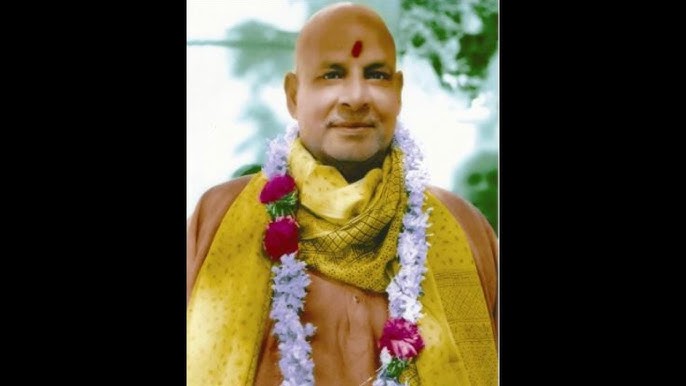
Swami Sivananda portrait with garland and tilak image
Our Heritage, Swami Sivananda

Swami Sharadananda

Swami Sharadananda Sri Padmanabhan came to the abode of Sri Gurudev sometime in. the mid forties when he was a Brahmachari of very young age. Active in temperament, adventurous in spirit, and curious about knowing almost everything which he regarded as helpful for furthering the Mission of Sri Gurudev, Padmanabhan worked hard in the development of the photo-studio in the Ashram with such rapidity and success that he quickly earned a name in the locality as a photographer and artist endowed with a novel ingenuity. The various photoprints of Sri Gurudev that are available at present and the photographs of the Ashram are all the work of his pioneering effort. Padmanabhan accompanied Sri Gurudev during his All-India-Ceylon Tour and did an extraordinary job of making still and Moviefilms of the entire tour. His skill is something superb. Sri Gurudev ordained him into the order of Sannyasa on Mahasivaratri, the 3rd of March, 1951, and gave him the name of Swami Sharadananda. After that he worked more vigorously and produced some movie-films of 8 mm and 16 mm size, one of which was a sound-film executed with great labour. Swami Sharadananda, at the same time, was of an intensely studious type and was vigorously devoted to the study of such scriptures as the Srimad-Bhagavata and the Mahabharata. Later on, in the year 1957, he was inspired by a desire to go into seclusion and settled himself for a short time at Uttarkashi and then permanently in Gangottari, the snow-capped heights in the Himalayas. It was there that he took to a serious study of the Bhagavadgita with the famous commentary of Shankarananda and betook himself to intense forms of Tapas in many ways. His fame, as an austere Sannyasin, spread so wide that he spontaneously endeared himself to everyone in the Garhwal regions around Gangottari and among the Sadhus and Sadhakas living there.

Swami Sharadananda Read Post »

Swami Sivananda black and white portrait
Our Heritage, Swami Sivananda

Swami Premananda

Swami Premananda Swami Premananda was working as an officer in the revenue department of the Government, and he used to visit the Ashram. Later on he relinquished this job on a call from the spiritual ideal of life, in pursuit of which he came to the Ashram of Sri Gurudev, sometime in 1957. Sri Gurudev found him to be a very honest worker, having been already acquainted with managemental and administrative work as a revenue official. He was primarily, at the beginning, entrusted with looking to the Branches of the Divine Life Society through its office at the Headquarters, which work he did to the satisfaction of Sri Gurudev. He fell ill later on. He had an acute attack of Malaria which partially rendered him deaf, by the intake of Quinine, and in that connection to take rest he went from the Ashram to some place in Rajasthan where devotees finding him a very simple and amiable person requested him to continue to stay there for a long time and start a little Centre of the Divine Life Society. This nucleus of Sri Gurudev’s work in Rajasthan spread itself in different places especially in the Punjab where he became quite known to people there due to his discourses on the Ramacharita Manas of Sri Tulsidas, and spiritual messages that he gave to people together with his personal touch which began to make devotees feel that his presence has a healing touch to families and individuals who had difficulties and problems of one type or the other. For many years, Swami Premananda lived outside the Headquarters of the Ashram, carrying on this work of spreading spiritual messages, though visiting the Ashram almost annually. Once when he came to the Ashram on a visit, he was requested by Swamijis in the Ashram to settle down here and to render some service at the headquarters, which he graciously accepted and is rendering till his Mahasamadhi on 2003.

Swami Premananda Read Post »

Swami Sivananda seated with two companions image
Our Heritage, Swami Sivananda

Swami Shanmugananda

Swami Shanmugananda Sri Venkataraman was born on the 9th of October, 1926 in the Dist. of Tanjore in Tamil Nadu, in an orthodox Brahmin family. He imbibed from his parents devotion and adherence to daily religious routines, which made him God loving and simple. He had High School education but set up an electrical shop, though an unusual profession for his community. But that is how God works, because that gave him an opportunity to have casual Darshan of Sri Gurudev, though by sheer chance, when he got a professional order to fix up the amplifying system at the Dharmapura Adhinam where Sri Gurudev paid a visit during his All India tour in October 1950. Even this chance Darshan of Swami Sivananda worked a miracle in the young lad. He started losing interest in his business and began to ponder over the purpose of working hard for a mere livelihood. Quickly he decided, left his business and home town without anyone’s knowledge, came straight to Sivananda Ashram, Rishikesh, and met Dr. K. C. Roy who too left his practice after meeting Sri Gurudev at Chidambaram during the All India tour and dedicated his services to the Ashram’s Hospital. Dr. Roy, thinking that he had come on pilgrimage, took him to Sri Gurudev for Darshan and introduced him as an honest and devoted person, having an electrical business. At once Swami Sivananda told Venkataraman, “Stay here and serve the Ashram.” Venkataraman’s joy knew no bounds, to the astonishment of Dr. Roy. He stayed and is still ‘staying, since 21st february, 1951. Soon after that electricity was brought to the Ashram. by Swami Dayananda’s superhuman efforts and Venkataraman it is who did all the electrical wiring and fitting work for the entire Ashram, with whom Sri Gurudev was highly pleased. He was ordained as a Sannyasin in the year 1957. He has rendered very valuable service in the Guest and electrical departments, and is now looking after the construction of buildings of the Ashram for nearly two decades. Though he is a follower of Advaita Vedanta, he firmly believes in the efficacy of ritualistic form of worship and devotes long hours in such worship of Lord Skanda or Shanmukha, of whom he is a very staunch devotee. He is thorough in ritualistic worship and is fully conversant with the Mantras and rituals. He is equally a scholar in Tamil literature, particularly of Lord Murugan or Shanmukha.

Swami Shanmugananda Read Post »

Swami Sivananda being assisted by devotee image
Our Heritage, Swami Sivananda

Swami Vimalananda

Swami Vimalananda Sri Nagaraj was born in 1932 in Chamarajanagar(near mysore), Karnataka, and was a great patriot, having taken part in the quit India Movement in his early student life. He was at the same time a great admirer of Sri Ramakrishna Paramahamsa and Swami Vivekananda, whose teachings had a profound influence on his life. He used to regularly attend the Ramakrishna Mission Satsanga. Finally his love for seclusion on the banks of the Ganga for doing intense Sadhana brought him to Sivananda Ashram in 1953. Sri Nagaraj is an exemplary Nishkama Karma Yogi, and Swami Sivananda at once recognized this spirit in him. Because of his sincerity and trustworthy nature, he was entrusted with the job of receiving Sri Guredev’s mail and attending to his correspondence which he did to the great satisfaction of Sri Gurudev. He was at the same time doing personal service to Swami Chidananda, towards whom he slowly developed an exceptional type of devotion and implicit obedience, so much so that his words were gospel to Sri Nagraj. It is indeed rare to see such type of devotion and obedience these days. Even so his love for Sri Gurudev, the Ganga and the Himalayas is something unique. Often he would go into the Himalayan jungles for solitude and seclusion, for hours together. Since Sri Gurudev’s Mahasamadhi in 1963, Sri Nagaraj is serving Swami Chidananda as his personal secretary. On 26th of July, 1972, the sacred Guru Purnima, he embraced the Order of Sannyasa and got the monastic name Swami Vimalananda. Being Secretary to Swami Chidananda, he has traveled widely, both in India and abroad. He is an embodiment of patience and self-sacrifice.

Swami Vimalananda Read Post »