




Hari Om

Menu

February 16, 2026

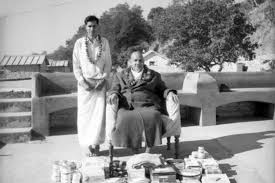
Swami Sivananda Guru seated with disciple in outdoor setting image
Swami Sivananda, swami sivananda teachs

Religion

Religion Swami Sivananda respected all religions equally. He found that the fundamental tenets of all religions are the same. In his teachings, he talks about only those ideals, which are shared by all the major religions. His teachings have, therefore, universal appeal. Here are some of his teachings that reflect his broad outlook on religion… The fundamentals of all religions are the same. Non-essentials only differ. Every religion teaches: There is one, eternal, all-pervading, all-blissful, all-peaceful Supreme Being. Speak the truth. Love all. Serve all. Purify your heart. Never hurt others’ feelings. Be pure. Observe celibacy. Control the senses and the mind. Concentrate. Meditate and attain God-realisation. One religion is as good as another. One road to the Supreme is as good as any other road. There are different kinds of roses but the scent is one. Religion is one, but many are its forms of practice. The essentials of all religions are the same. Let not sectarians blind your vision into a narrow view of religion. All prophets are messengers of God. Their words are infallible and sacred. “Do as you would be done by. Do unto others as you wish others do unto you.” This is the whole of Dharma. Attend to this carefully. Practise this in your daily life. There is only one religion, the religion of love, religion of oneness. Religion consists in doing good to others, and in practice of love, mercy, truthfulness and purity in all walks of life. This is the essence of true religion: Love all beings, serve all with atma-bhava (attitude of being your own self). Slay egoism. Destroy likes and dislikes. Realise the Self or Atma. The universal religion is the religion of the heart or love, the realisation of oneness. That which brings well-being to human beings is dharma. Dharma is termed as duty, righteousness, etc. Do unto others as you wish others to do unto you – this is the whole of dharma. If one wishes his own advancement and prosperity, one should follow the path of righteousness and conduct himself properly. Religion unites the individual Soul with the Supreme Soul. Religion shows the way to Self-realisation and eternal life in Brahman. Religion consists in doing good to others, and in the practice of love, mercy, truthfulness, non-violence and purity in all walks of life. Every religion emphatically declares: “One can attain eternal Bliss and Immortality by God-realisation. Speak the truth, observe celibacy, love others and practise self-restraint.” There is only one religion, the religion of truth and love, the religion of heart, the religion of service, sacrifice and renunciation. It is the religion of goodness, kindness and tolerance. Behold the oneness of all religions. All religions point to one single aspiration of human soul. And that is to transcend the limitations of environment and circumstances and get into the State of final beatitude and sublime peace – the natural craving of the soul. All religions are the fulfilment of the natural urge in man, which is essentially spiritual. Religion is a manifestation of the eternal glow of the spirit within man. The main purpose of religion is the unfoldment of the Divinity within man. Religion is practical philosophy; philosophy is theoretical religion. Religion is not a denial of life. It is fullness of life. Man becomes God through discipline, self-restraint and meditation. That is religion. Religion is living in God. All the prophets have reassured in most emphatic terms the fundamental truth that all religions are branches of the same tree. They have taught that the same sap of universalism flows in all their systems. Be good and do good; this is the essence of dharma. Goodness leads to godliness. By practising goodness, one lays foundation for the highest attainment of God-consciousness. The ringing notes of religion are: Be good. Be pure. Be kind. Be compassionate. Serve all. Love all. See God in all. The righteous man is the truly religious man. Practice of religion is the practice of righteousness, goodness, truth, love and purity. Religion is life. Life is sacrifice. Religion should be a living experience in the life of a man. A life of selfless service and sacrifice, with regular prayer and meditation, is the highest religion. Religion is the source of goodness and happiness, the basis of virtue and prosperity of the individual, and through the individuals, of the nation. A life of purity, virtue, goodness, self-control, selflessness and humility forms the common basis of all yogas, all spiritual attainments and all practical religions. No one can be religious without being ethical-minded and moral in his practical life. The cardinal principle of Hindu ethical teachings is universal love on which is built the magnificent edifice of humanism. That man who practises the religion of universal compassion achieves the highest good.
Religion Read Post »

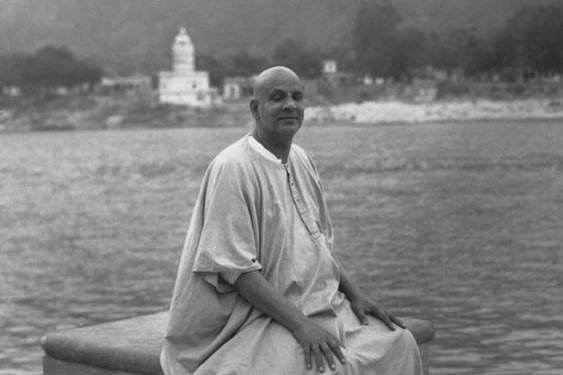
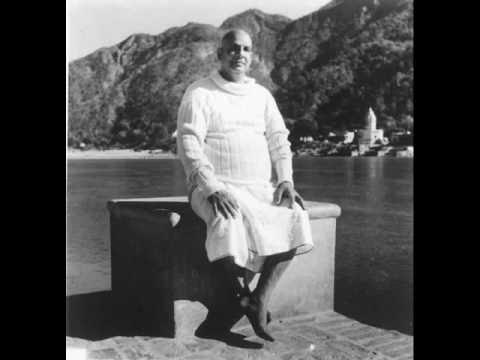
Swami Sivananda seated by river with hills image
Swami Sivananda

Divine Life

Divine Life Swami Sivananda gave the most important call to mankind: ‘You are essentially divine. Every man can attain Divinity. It is the birthright of man to attain that Divinity’. He gave a call to seek God within one’s own inner recess of the heart. That Atman (Self) hidden deep within is no other than the Absolute. And that is your real nature. Here are some of his teachings on this subject… Within you is the hidden God, Within you is immortal Soul! Kill the little ‘I’. Die to live. Lead the Divine Life. Within you is the fountain of joy. Within you is the ocean of bliss. Rest peacefully in your own Atma, And drink the nectar of Immortality. Lead the Divine Life. Share what you have with others. Have perfect faith in God. Love thy neighbour as thy self. Behold one Atman in all. This is the way to supreme blessedness. Divine life or Yoga does not ask man to change his religion, or to run away from home. It wants ‘Detach. Attach’. Detach the mind from the objects of the world, and attach it to the Lord. The temple of divine life has four pillars: meditation, purity, love and righteousness. Let all your actions be full of love, godliness and purity. This is divine life. To be selfish is demoniac life. To be selfless is divine life. To speak truth at all costs, to speak sweetly with love, to practise non-violence, celibacy, to behold the Lord in all forms is divine life. beloved disciple! Feel His presence everywhere. Love all. Serve all. Be kind to all. Be tolerant. Be humble. Be pure. Be patient. Be forgiving. This is divine life. To be ever in communion with the Lord by annihilating mine-ness and egoism through faith, devotion and self-surrender is divine life. To study the Gita, the Upanishads, the Ramayana, Bhagavatam, Yoga-Vasishtha, Koran, the Bible, Zend-Avesta, and to follow the teachings contained therein is divine life. Drive away rajas (passion) and tamas (inertia) and fill the mind with sattva (purity). This is divine life. Cultivate the divine virtues: straight-forwardness, courage, serenity, generosity, mercy, and self-restraint. This is divine life. Keep up a balanced mind in success and failure, censure and praise, honour and dishonour, gain or loss, heat and cold. This is divine life. Divine life is life in God or Brahman. Give up identification with the body, wife, children and property. Identify yourself with the All-pervading, Immortal Brahman, and rest peacefully in Brahman. This is divine life.

Divine Life Read Post »

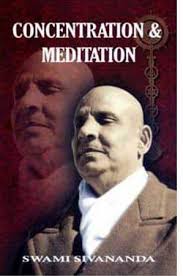
Swami Sivananda concentration and meditation poster picture
Bhakti Yoga, Swami Sivananda

Faith and Aspiration

Faith and Aspiration by Swami Sivananda Faith is Sraddha. Faith is the greatest thing in the world. Even the highest rationality has faith as its background. One cannot ratiocinate on things in which he has no faith. Even the greatest philosopher has faith as his stronghold. No intellectualism can prove good if it is not supported by faith. The whole world stands on faith and is guided by faith. Religion has faith as its root. One cannot prove God if he has no faith in God. God is only a matter of faith. This faith is the outcome of previous Samskaras. Certain men are born-philosophers and certain others do not grasp the fundamentals of religion even at the age of seventy. This is all due to past Samskaras or impressions. Faith is guided by impressions of actions done in the previous births and the present faith is nearer or farther from the Truth in accordance with the advancement made in spiritual evolution. Blind faith should be turned into rational faith. Faith without understanding is blind faith. Bhakti is the development of faith. Jnana is the development of Bhakti. Faith leads to Final Experience. Whatever a person strongly believes in that he experiences, and that he becomes. The whole world is a product of faithful imagination. If you have no faith in the world, the world does not exist. If you have no faith in sensual objects, they will not give you pleasure. If you have no faith in God, you never reach perfection. Wrong faith turns even existence into non-existence. One who thinks that Brahman does not exist, himself becomes non-existent, says the Taittiriyopanishad. Faith is the fundamental necessity for spiritual Sadhana. Aspiration is a development of faith. It is one step ahead of faith. The flame of faith burns as the conflagration of spiritual aspiration for Moksha. The aspirant yearns to have divine experience. It is no more mere faith but strong feeling which cannot be easily shaken by external events. The devotee longs to have union with the Beloved. He has no sleep, no rest. He always contemplates on how to attain the object of his love. He prays, sings, and gets mad of his Lord. Divine madness overtakes the devotee and he completely loses his personality in the aspiration for attaining God. This is called self-surrender.

Faith and Aspiration Read Post »

images 68 1
Bhakti Yoga, Swami Sivananda

The Divine Name

The Divine Name by Swami Sivananda Bhakti in essence is twofold: on the one hand there is an intense attachment towards God nurtured by deep emotion, and on the other, an earnest urge of love for Him. When these two elements are combined, we find Bhakti to be either an attachment emerging out of love or love being manifested itself as an attachment. Either we take love or attachment, the essential feature in Bhakti is that this feeling is in relation to the Highest the supreme Lovable One who is Real and imperishable, and surely not in relation to the objects of the world that are transitory and therefore, unreal. Such a love or devotion, as it may be termed, assumes various forms of expression and goes by different names. Kirtan or narration in poetry or prose of singing the glory of Lord, or more popularly, singing the Name of the Lord, is one of them. Any name denotes a particular concept; it is rather a verbal embodiment of a concept. Whatever the object of conception may be, either general or particular, either gross or subtle, visionary or real, the name is essentially associated with it. It gives a clear, adequate expression to a particular form or object that is associated with it, so as to enable us to comprehend and distinctly retain it in our mind. The Name is a verbal embodiment of the conception of the Supreme Being who is known by different names and forms in different times and climes. The Supreme is Infinite, and as it is not always possible for the common man to conceive of what is beyond the perception of the finite mind, they symbolise this Infinite Truth as forms, symbols or objects that vary according to their respective tendencies or mode of perception. Though in the initial stage there is difference and distinction among various names and their associated objects, but ultimately, when a habit of repetition of the Name is formed and the divine consciousness is kept ever awake, then there remains no distinction between the Name and the associated idea or object, the intuitive knowledge of the Supreme reveals in the Name itself. For, the basis of all names and forms is the one Primal Being who manifests Himself under different names and forms as per the faiths and tendencies of the different sects and races of different times and places. Harmonious, rhythmical note produces a distinctive image. It is not an imagination. For every sound there is a particular image. It has been scientifically proved that a certain particular sound produces a certain particular figure over some distinct surface. So it is reasonably believed that the respective names of God associated with their respective forms can also produce their images on the mental surface. Through continuous repetition it forms a deep-rooted impression in the mind of the repetitioner who ultimately attains God-Vision. There is an unfathomable depth, intense sweetness and charm in the Lord’s Name. It is beyond the futile explanation of the limited intellect. It is a thing knowable only through experience. The music first thrills the nerves, harmonises them and then mysteriously acts upon the mind. The sincere devotee loses himself in divine ecstasy. The worldly mind cannot grasp or perceive this state of intense emotion. The Lord’s Name is all-bliss, and when it is chanted, the mind merges in its bliss, it loses its individual entity in the bliss: it becomes one with the Bliss itself. God and His Name are identical; they are inseparable. He dwells where His Name is sung. The whole atmosphere becomes sanctified. Peace, purity and bliss prevail there. His Name carries the message of love. His Name frees the soul from affliction, unrest and bondage. His Name knows no barrier or distinction. His Name purifies the vicious lower self and elevates it to sublimity of universai consciousness and transcendent God-head. In ordinary self-consciousness there is the duality between the repetitioner and the Name. It is discursive: it is within the fields of common experience, it is confined within the rigid categories of the mind of limited conceptions. Ultimately the ordinary self-consciousness elevates into a transcendental experience, into a state of super-consciousness. The repetitioner and the Name become one. The eternally revealed Truth reveals to himself. He realises his oneness with the Supreme. The senses of duality the gulf of separateness between the finite and the infinite is removed. The dawn of intuition leads him from finitude to infinitude, from bondage to freedom, from darkness to Light, from mortality to Immortality. He only experiences his delight in the Divine. He does not even have the inclination to analyse his delight or its source, he will find that is but his love for God. He is not conscious of anything other than God. To him everything is only the manifestation of God. His all-absorbing love for God pierces through the names and forms of the universe, the universe as a whole, and in its multiphased appearance present themselves to him only as God. He feels the same intensity of love to the animate and inanimate objects of the world. The glory of the Divine Name cannot be obviously established through reasoning or discursive arguments. It can be experienced only through faith and belief. A finite, limited intellect surely cannot understand the nature of the infinite or the limitless. There is no limit of God’s Name. The scriptures present us His innumerable Names. It means His Names are unreckonable and therefore, infinite. So, how can a finite intellect comprehend that which transcends finitude? All Glory to His all-blissful, all-pure, omnipotent Name that liberates one from the shackles of earthly bondage and leads him to the illimitable domain of peace, bliss, and immortality! All glory to those blessed ones who take delight in His Name, sustain themselves by His Name and live to merge in His Name!

The Divine Name Read Post »

Swami Sivananda seated beside river image
Swami Sivananda

Life

Life Swami Sivananda considered human birth as a rare opportunity for the individual soul to evolve itself to perfection and merge into the Supreme Soul. He even treated trials, tribulations and difficulties as stepping-stones in this ladder of evolution. His wonderful positive approach makes his views on life a treasure to be preserved very carefully. Here are some of his teachings on this subject… Life is God in expression. Life is a voyage in the infinite ocean of time. Life is journey from impurity to purity, from hatred to cosmic love, from death to Immortality, from imperfection to perfection, from diversity to unity, from ignorance to eternal Wisdom, from pain to eternal Bliss. Life is a great opportunity provided by the Lord for His children to evolve into Himself. Study the book of books – the book of life – again and again. The opening words of this book are: “You are all-pervading Soul.” Live in the Eternal. Tat Tvam Asi. Thou art That. Realise this and be free. Make it a habit to see the brighter side of life, when reverses make their impact on you. In times of strifes and struggles, you must learn to withdraw inward, and find solace in God within yourself. Everyone, without exception, can find something to be grateful, if only he will search for it. Trials, tribulations and difficulties are stepping-stones to success. Out of defeats and failures wring victory. God has planned what is best for you. You need not plan anything. Your life is in His hands. Do not be anxious for tomorrow. Live in the present. Forget the past. Give up hopes of the future. Take hold of each day as if it were the last day and utilise every second in prayer, meditation and service. Let your life become a continuous sacrifice to God. The body is a gift to thee from God. Utilise this body well in the service of the Lord in (the form of) humanity and constant spiritual endeavour. Be kind to all. Love all. Serve all. Be generous and tolerant towards all. Serve the Lord in all. See the Lord in the poor, the downtrodden and oppressed, and serve them with Narayana bhava. The Lord will be highly pleased with you. You can attain Immortality Like Him, you are Divinity, goodness, purity and truth. The salt of life is selfless service. The bread of life is universal love. The water of life is purity. The sweetness of life is devotion. The fragrance of life is generosity. The goal of life is emancipation. Live the life divine. Live a life of service and love. Stand steadfast in the pursuit of Truth. Serve, love, give, purify. Be good, do good. Be kind, be compassionate. Be generous, be charitable. Be tolerant, be patient, be persevering. Be pure, be wise. Concentrate. Meditate. You will soon attain God-realisation. Success comes to those who dare and act. It seldom comes to the timid. May you all attain success in life!

Life Read Post »

Swami Sivananda standing by seashore photo
Swami Sivananda

The World

The World After the transcendental Experience, Swami Sivananda found the drishya jagat (the world perceived through the senses) as a long-drawn dream. Its reality was, for him, as ephemeral as that of a dream. Yet he did not hate the world, nor has he undervalued its importance. He had always treated the world as a training ground, and as an opportunity for evolution of the individual soul. Here are some of his teachings on this subject: This world is a vast school of experience. World is the best teacher for those who want to be benefited. Learn and gain. World is an arena of developing various sattvic qualities. The world is only a temporary resting-place for you. It is like a public inn. You are here to learn some lessons, which can help you in your spiritual progress.This world is only a halting place. Persevere in your sadhana. Lead a life of selfless service, renunciation, dispassion and meditation.

The World Read Post »

Swami Sivananda sitting near river with mountains image
Bhakti Yoga, Swami Sivananda

Name, Faith and Love

Name, Faith and Love by Swami Sivananda GLORY OF RAMA NAM What is that thing which is superior to Rama even? It is RAM NAM. How? Sri Hanuman told Sri Rama: “O My Lord, there is something superior to Thee. ” Sri Rama was quite astonished. He asked Hanuman: “What is that thing, O Hanuman, which is superior to Me?” Hanuman replied: “Hey Prabho, Thou hadst crossed the river with the help of a boat. But I crossed the ocean with the help of (and the power and strength of) Thy Name only. Name is indeed superior to Thee. “ Mahatma Gandhi says: “You must learn to take the name of Rama with full devotion and faith. When you study the Ramayana, you will learn from Tulsidas the divine power of that blessed Name. “You might ask me why I tell you to use the word RAMA and not one of the many other names of the Creator. True, His Names are as many as and more than the leaves on the yonder tree and I might for instance ask you to use the word God. But what meaning, what associations would it have for you here? In order to enable you to feel anything when repeating the word God, I should have to teach you some English. I should have to explain to you the foreign people’s thoughts and associations. “But in telling you to repeat the name of RAMA, I am giving you a name worshipped since the beginning of time by the people of this land, a name familiar to the very animals and birds, the very stones of Hindustan through so many thousands of years. You all know the story of Ahalya? No, I see you don’t. But you will soon learn it when you study the Ramayana. You will learn how a stone by the roadside sprang to life at the touch of Rama’s foot as he passed by. You must learn to repeat the blessed Name of Rama with sweetness and such devotion that the birds and beasts will pause for a moment to listen to you; the very trees will bend their leaves towards you, stirred by the divine melody of that Name. And when you are able to do this, I tell you, I will come all the way on foot from Bombay as on a pilgrimage to hear you. In His sweet Name lies a power which can cure all our ills. “ Kamal got a severe scolding from his father Kabir for prescribing RAMA NAM for a rich merchant to be repeated twice for curing leprosy. Kamal asked the merchant to repeat RAMA NAM twice and yet he was not cured of this dire disease. Kabir was very much annoyed and told Kamal: “You have brought disgrace on my family by asking the merchant to repeat Rama Nam twice. Repetition of Rama Nam only once is quite sufficient. Now beat the merchant severely with a stick on his head. Ask him to stand in the Ganga and repeat RAMA NAM once from the very bottom of his heart. ” Kamal followed the instructions of his father and gave a good thrashing on the head of the merchant who began to bleed profusely. He then repeated Rama Nam once only with Bhava from the very core of his being and was completely cured of his disease. Kabir sent Kamal to Tulasi Das. Tulasi Das wrote Rama Nam on a Tulasi leaf and sprinkled the juice over five hundred lepers. All were cured. Kamal was quite astonished. Then Kabir sent Kamal to Surdas. Surdas asked Kamal to bring the corpse that was floating in the river. Surdas repeated ‘Ra’ only once (not the full name Rama) in one ear of the corpse and it was brought back to life. Kamal’s heart was filled with awe and wonder. Such is the power of God’s Name. My dear friends, my educated college youths, my dear barristers, professors, doctors and judges, don’t be puffed up with false, worthless college learning. Repeat the Name of the Lord with Bhava and Prem from the very bottom of your hearts with all your beings and realise the supreme bliss, knowledge, peace and immortality right now, this very second. Kabir says: “If any one utters RAMA NAM even in dream, I would like to make a pair of shoes out of my skin for his daily use. “ Who can describe the glory of God’s Name? Who can really comprehend the greatness and splendour of the holy Names of the Lord? Even Lord Siva’s consort, Parvati failed to describe in adequate terms the very true significance and grandeur of God’s Name. When one sings His Name or hears It sung, he is unconsciously raised to sublime spiritual heights. He loses his body-consciousness. He is immersed in joy and drinks deep the divine nectar of immortality. He gets divine intoxication. Repetition of God’s Name enables the devotee to feel the Divine Presence, the Divine Glory and the Divine consciousness within himself and also everywhere. How sweet is Hari’s Name! How powerful is God’s Name! What an amount of joy and peace and strength it brings to one who repeats His Name! Blessed indeed are those who repeat God’s Name for they will be freed from the wheel of birth and death and attain Parama Ananda and immortality.

Name, Faith and Love Read Post »

Swami Sivananda seated with musical instrument image
Bhakti Yoga

Lord Krishna and His Teachings

Lord Krishna and His Teachings by Swami Sivananda Om Sri Krishna Rukminee-Kanta Gopeejanamanohara,Samsarasagare magnam mamuddhara jagadguro. Lord Krishna was born in Mathura which is situated on the banks of the beautiful river Yamuna, in U. P. He showed superhuman physical strength and very mysterious powers on various occasions even as a boy. He killed many wild beasts and birds and is especially famous for killing the demoniac snake called Kaaliya which used to live in the waters of the Yamuna. His Flute was the signal for a general onrush towards the beautiful grooves where everything was love and pleasure. He organised several kinds of plays, games and picnics in the gardens and shady retreats of Vrindavana for the amusement of the maids and boys of Gokula. He gradually gave up all his boyish pranks and soon turned out to be a most astute statesman when he reached the age of adolescence. He became a powerful and able ruler and had much to do in the field of politics. At the holy hermitage of Rishi Sandeepani, he and his brother Balaram learnt philosophy and theology, science and politics, and several other arts such as archery etc. He settled up all internal dissensions that were rending the country from one corner to another. He chastised Kamsa and Jarasandha for their tyranny and restored peace and order in place of bloodshed and misery. Lord Krishna was a statesman of a very superior order. He was a reformer, a Yogi and a Jnani to boot. He was a master of Vajroli Mudra. Hence He is termed as a Bala-Brahmachari though he lived in the midst of Gopis. His love towards the Gopis was one of Divine type. It was not physical love. How can you expect carnality in a boy of eleven years? He always identified Himself with Nirguna, Anatma Brahman and used his mind and body as His instruments in Vyavahara. He was a Sakshi of Prakriti’s activities. Lord Krishna is popularly known as “Bansiwala”. When Lord Krishna played on the Flute it conveyed a different, divine message altogether to the Gopis (the incarnations of the classical Devatas). It was not a mere musical sound. Kling is the Beeja Akshara of Lord Krishna. It is a powerful Mantra. It produces a powerful vibration in the mental stuff and transforms the Rajasic nature of the mind. It produces certain kind of powerful spiritual idea in the mind which greatly helps purification of mind, concentration and contemplation. It induces Vairagya and Antarmukha Vritti and attenuates the force of Vasanas and Samskaras. It completely checks the thought-force. It produces rhythmical vibrations of the five sheaths. The following is the “Mahamantra” of Lord Krishna. It is found in the Gopala Tapani Upanishad. Those who repeat this Mantra 18 lakhs of times with concentration, Suddha Bhava and intense Sraddha will doubtless have direct Darshan of Lord Krishna. It is 18 Akshara Mantra. “Om Kling Krishnaya Govindaya Gopijana Vallabhaya Svaha. “ The following is the Nyasa for the Mantra: “Om Kling Krishnaya Divyatmane Hridayaya Namah”. “Govindaya Bhumyatmane Sirase Svaha”. “Gopijana Surya-atmane Sikhaya Vashat”. “Vallabhaya Chandra-atmane Kavachaya Hum”. “Svaha Agnyatmane Astraya fut. “ “Om Namo Bhagavate Vasudevaya” is a 12 Akshara Mantra of Lord Krishna. Dhruva repeated this Mantra and obtained His Darshan. Repeat it 12 lakhs of times. Even ladies can repeat this Mantra. You need not go to Vrindavana, to have the Darshan of Lord Krishna. Your own heart is the real Vrindavana. You will have to search Him in your Hridaya-Vrindavana. Rukmini and Radha are the two Saktis (Kriya Sakti and Jnana Sakti) of Lord Krishna. Arjuna is Jiva. Kurukshetra is the battlefield within. The real battle is the one with the mind, Indriyas, Vishaya Samskaras, Vishaya Vrittis, and Svabhava. Draupadi is the mind. Pandavas are the Indriyas. Blind Dhritarashtra is the original Avidya. Gopis are the nerves or Nadis. Enjoyment with Gopis is enjoyment of Atmic Bliss by controlling the various nerves. This is the esoteric exposition. Just as Lord Dattatreya is still moving about with his astral body in the reputed Girnar hills and gives Darshan even now to His sincere Bhaktas, just as Sri Jnana Dev is still moving about with his astral body in Alandi near Poona, and gives Darshan even now to his sincere devotees, so also Lord Krishna is still moving about in Vrindavana and gives Darshan to His sincere Bhaktas even now. The Bhagavad Gita contains the teachings of Lord Krishna. It is a wonderful book for constant study. Aspirants should study this book with great care daily. The first six chapters deal with Karma Yoga and represent the “Tat” Pada of “Tat Tvam Asi” Mahavakya. The next six chapters deal with Bhakti Yoga and represent the “Tvam” Pada. The last six chapters deal with Jnana Yoga and represent the “Asi” Pada. Lord Krishna summarised His teachings in the following words in the 12th Chapter (8-11) of the Gita: “Fix thy mind in Me only, thy intellect in Me, (then) thou shalt no doubt abide in Me alone hereafter (Yoga of Meditation). If thou art unable to fix thy mind steadily on Me, then by the Yoga of constant practice (Abhyasa Yoga-Yoga Practices) do thou seek to reach Me, O Dhananjaya. If thou art unable to practice even this Abhyasa Yoga, be thou intent on doing actions for My sake; even by doing actions for My sake, thou shalt attain perfection (Assiduity of Love). If thou art unable to do even this, then, resorting to union with Me, renounce the fruits of all actions, with the self controlled, (doing one’s duties without desires). “ Act but act only with devotion to God without desire for fruits. Is this impossible? Sri Krishna said: “No”. I shall explain His words by quoting an example. The soldiers in an army fight: they kill men and are killed but they act without any desire, without any mind: they are under the orders of their general. They know not what they do, they move,

Lord Krishna and His Teachings Read Post »

images 63 1
Bhakti Yoga, Swami Sivananda

Glory of Lord Shiva

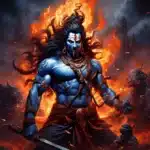
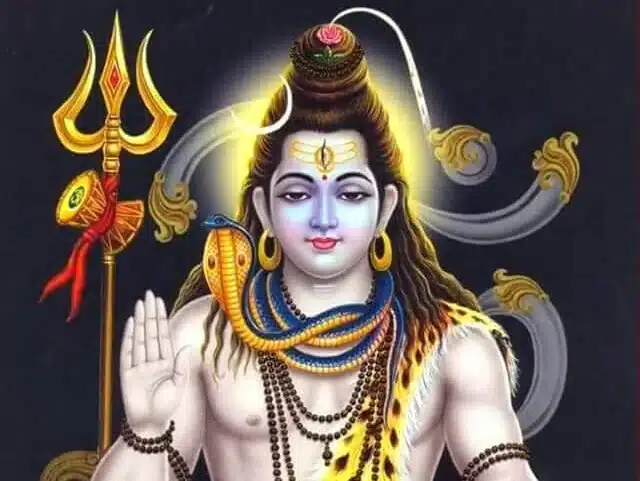
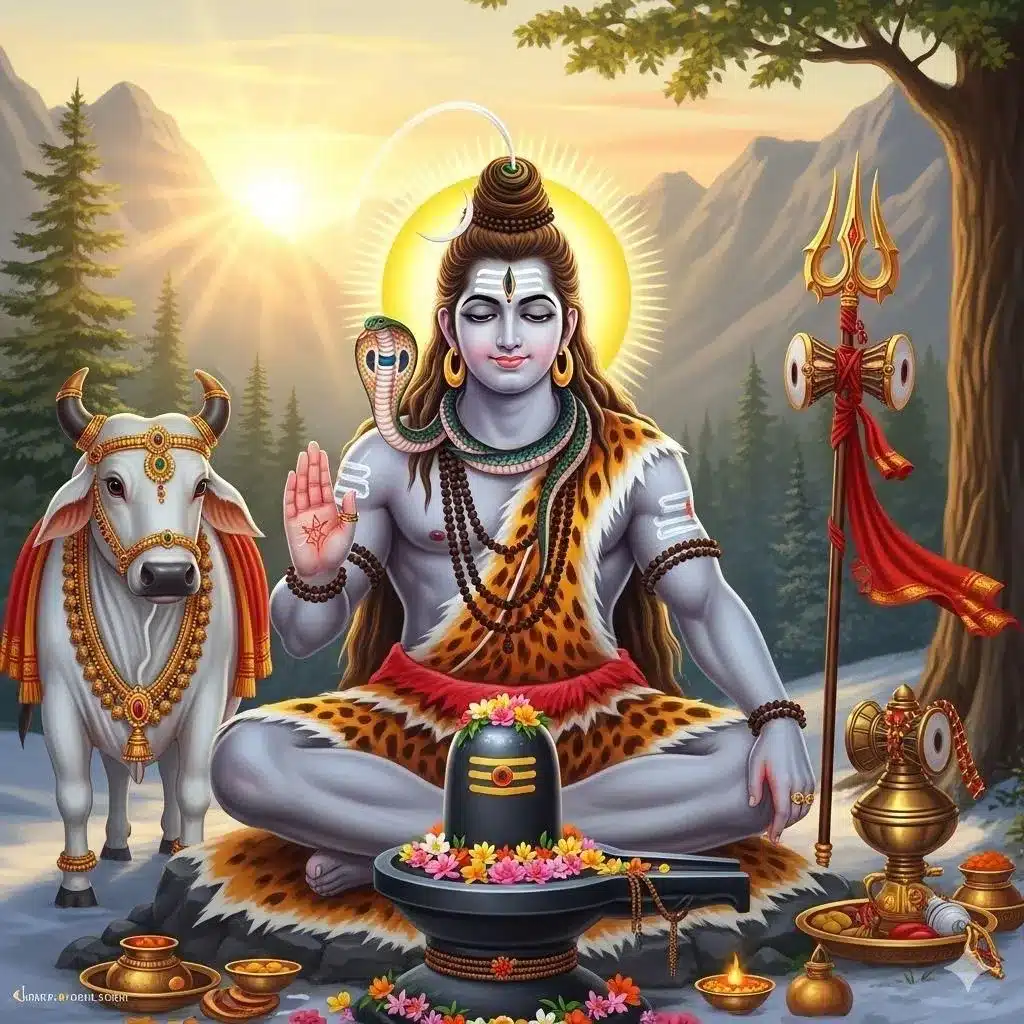
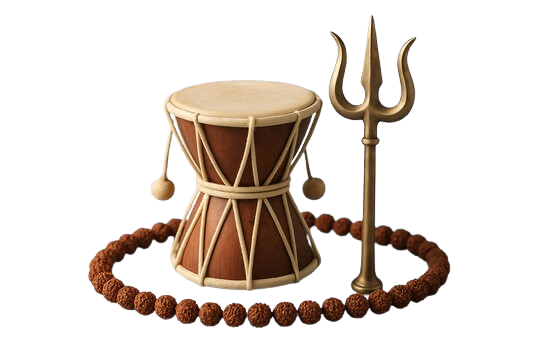
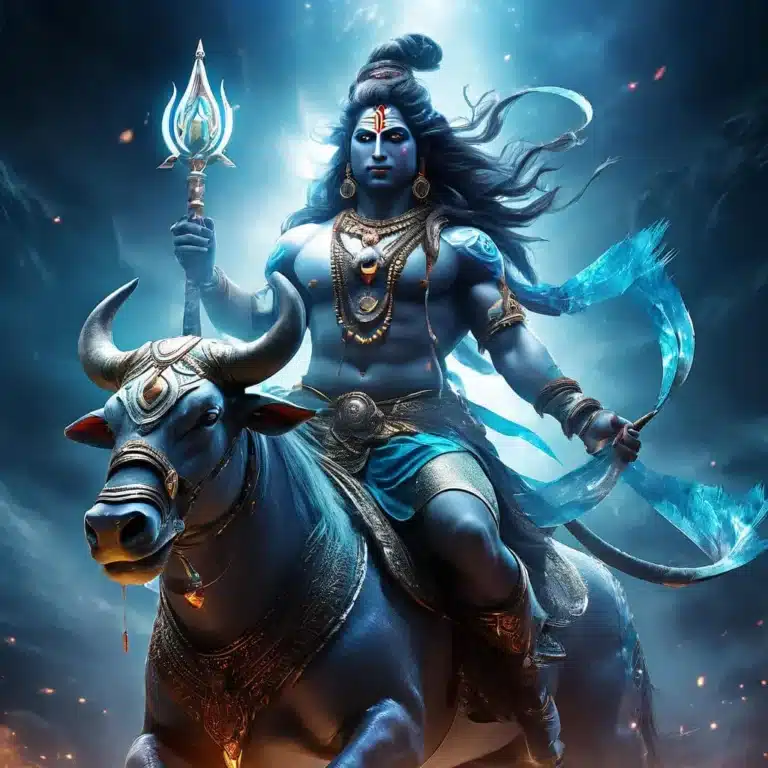
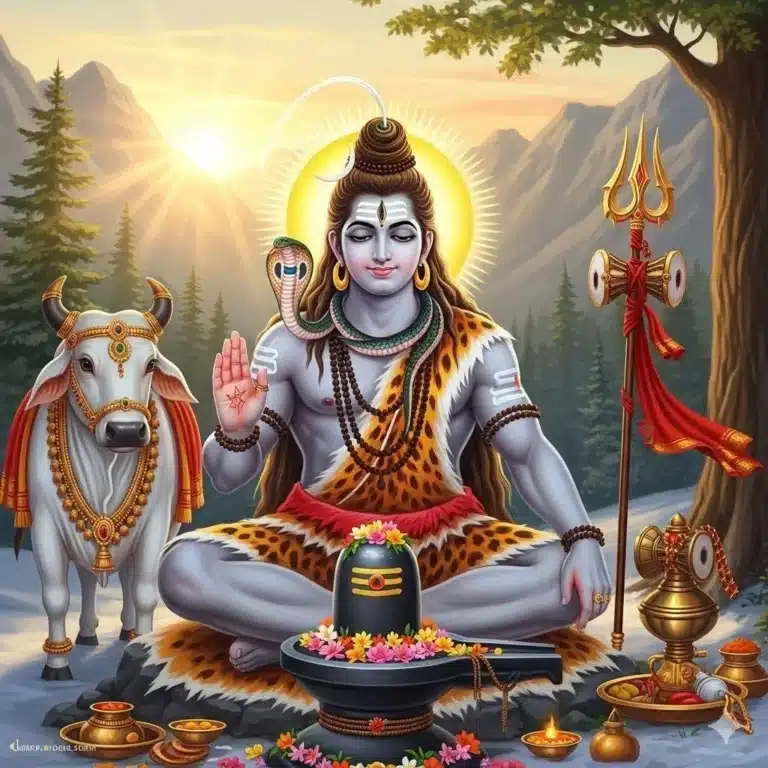
Glory of Lord Shiva by Swami Sivananda Om. I bow with folded hands to Lord Siva, Who is the Lord of the universe (Jagat-Pati), world’s teacher (Jagad-Guru), Who is the destroyer of Tripuras (3 cities, egoism, lust and anger), Who is the Lord of Uma (Uma Sankar), Gauri (Gauri Sankar), Ganga (Ganga Sankar), who is full of light (Jyotirmaya), knowledge and bliss (Chidananda Maya), Who is the Lord of Yogins (Yogeesvara), Who is the storehouse of knowledge and Who is known by the various names as Mahadeva, Sankara, Hara, Sambhu, Sadasiva, Rudra, Soolapani, Bhairava, Uma- Mahesvara, Neelakantha, Trilochana or Tryambaka (the three-eyed), Visvanatha, Chandrasekhara, Ardhanareesvara, Mahesvara, Neelalohita, Parama Siva, Digambara, Dakshinamurti, etc. How merciful He is! How loving and kind He is! He even wears the skulls of His devotees as a garland around His neck. He is an embodiment of renunciation, mercy, love and wisdom. It is a mistake to say that He is the destroyer. Lord Siva in reality is the regenerator. Whenever one’s physical body becomes unfit for further evolution in this birth either by disease, old age or other causes, He at once removes this rotten physical sheath and gives a new, healthy, vigorous body for further quick evolution. He wants to take all His children to His Lotus Feet quickly. He desires to give them His glorious “Siva-Pada”. It is easier to please Siva than Hari. A little Prem and devotion, a little chanting of His Panchakshara is quite sufficient to infuse delight in Siva. He gives boons to His devotees quite readily. How large is His heart! He gave Pasupatastra to Arjuna without any difficulty for his little penance. He gave a precious boon to Bhasmasura. In Kalahasti near Tirupati He gave Darshan for Kannappa Nayanar, the devoted hunter who plucked his two eyes to replace the weeping eyes in the Murti. In Chidambaram even the untouchable saint Nandanar had Darshan of Lord Siva. He ran with tremendous speed to make the boy Markandeya immortal when he was in the clutches of the God of Death-Yama. Ravana of Lanka pleased Siva with his Sama chantings. He initiated the four virgin youths Sanaka, Sanandana, Sanatana and Sanatkumara into the mysteries of Jnana in the form of Guru Dakshinamoorthy. In Madurai in Tamil Nadu, Sundaresvara (Lord Siva) assumed the form of a boy and carried earth on his head for a devoted lady for the sake of Puttu (a kind of sweetmeat) as wages when an anicut was erected in the Vaigai river. Look at the unbounded mercy for His devotees! When Brahma and Lord Vishnu went to find out the head and feet of Lord Siva, He assumed an infinite, expansive blaze of light (Jyotirmaya). They were baffled in their attempts. How magnanimous and self-effulgent He is! He lived in the house of Pattinattu Swami in Southern India for several years as his adopted son and disappeared after giving him the small note: “Even the broken needles will not follow you after your death. ” The reading of this note was the starting point for attainment of Jnana for Pattinattu Swami. Why not you all attempt this very second with sincerity to realise God (Lord Siva)? Hatha Yogins awaken the Kundalini Sakti that is lying dormant in the Muladhara Chakra by Asana, Pranayama, Kumbhaka, Mudra and Bandha, take it above through different Chakras (centres of spiritual energy) Svadhishthna, Manipura, Anahata, Visuddha and Ajna and join it with Lord Siva at the Sahasrara, the thousand-petalled lotus at the crown of the head. They drink the nectar of Immortality (Siva-Jnana-Amritam). This is termed Amrita-srava. When the Sakti is united with Siva, full illumination comes for the Yogi. Lord Siva represents the destructive aspect of Brahman. That portion of Brahman that is enveloped by Tamo-Guna-Pradhana-Maya is Lord Siva who is the all-pervading Isvara and who also dwells in Mount Kailas. He is the Bhandar or store-house for wisdom. Siva minus Parvati or Kaali or Durga is pure Nirguna Brahman. With Maya (Parvati) He becomes the Saguna Brahman for the purpose of pious devotion of His devotees. Devotees of Rama must worship Lord Siva also. Rama Himself worshipped Lord Siva at the famous Ramesvaram. Lord Siva is the Lord of ascetics and Lord of Yogins robed in space (Digambara). His Trishul (trident) that is held in His right hand represents the three Gunas-Sattva, Rajas and Tamas. That is the emblem of sovereignty. He wields the world through these three Gunas. The Damaru in His left hand represents the Sabda Brahman. It represents OM from which all languages are formed. It is He who formed the Sanskrit language out of the Damaru sound. The wearing of the crescent moon on His head indicates that He has controlled the mind perfectly. The flow of the Ganga represents the nectar of immortality. Elephant represents symbolically the Vritti, pride. Wearing the skin of the elephant denotes that He has controlled pride. Tiger represents lust. His sitting on the tiger’s skin indicates that he has conquered lust. His holding a deer in one hand indicates that He has removed the Chanchalata (tossing) of the mind. Deer jumps from one place to another swiftly. The mind also jumps from one object to another. His wearing of serpents on the neck denotes wisdom and eternity. Serpents live for a large number of years. He is Trilochana, the three-eyed One, in the centre of whose forehead is the third eye, the eye of wisdom. Nandi, the bull that sits in front of Sivalingam represents Pranava (Omkara). The Lingam represents Advaita. It points out “I am one without a second. Ekam eva Advaiteeyam” just as a man raises his right hand above his head pointing out his right index finger only. Kailas hills in Tibet are a huge range with a central, beautiful, naturally carved and decorated shining peak, eternally clad with silvery snow 22, 980 feet above sea-level. Some take the height to be 22, 028 feet. This particular peak is in the form of a

Glory of Lord Shiva Read Post »

110489 90143
Bhakti Yoga, Swami Sivananda

Science of Worship

Science of Worship by Swami Sivananda Man does not get full satisfaction from sensual pleasures. He always feels that he is in want of something. He is restless and discontented. Then he longs to come into conscious communion with the Lord of the Universe and to attain immortality and everlasting peace. This ultimate craving of a man finds its satisfaction in worship. The individual soul desires to unite himself with his father, the Supreme Soul. This is done through worship. Love and devotion naturally rise in his heart when he hears the glory and greatness of the Lord. An object of worship is therefore necessary for man to pour forth his love and devotion. Worship helps spiritual evolution and eventually brings the devotee face to face with God. As the Absolute or Infinite cannot be comprehended by the limited and finite mind, the conception of the impersonal God in His lower, limited form came into existence. The Nirguna Brahman assumes forms for the pious worship of the devotees. Worship is the expression of love and devotion by the devotee to the Lord, of extreme reverence towards Him, of keen longing to be in conscious communion with Him, of eager aspiration to be always at His feet, of intense craving to be united with Him. The devotee feels the pangs of his separation from the Lord, sheds profuse tears, and sings His praise, glory, splendour and greatness. Worship may take the form of prayer, of praise, of meditation or of Kirtan. Worship differs according to the growth and evolution of the individual. There is nature worship. Parsees worship the element fire. Hindus worship the Ganga, cows, asvatta tree, etc. In the Vedas there are hymns to Indra, Varuna, Agni, Vayu. This is nature worship. There is hero-worship. Great heroes like Sivaji, Napoleon are worshipped even now. In hero-worship the individual imbibes the virtues of the person whom he worships. Birthday celebrations of great persons, anniversary celebrations are forms of worship. Then there is relic worship. Hairs and bones of departed souls are also worshipped. Then there is Pitru-worship, or worship of forefathers. There is worship of Gurus or Rishis or Devatas. As man evolves, he passes from one stage of worship to another. The lower stages drop down by themselves. A man of higher stage should not condemn his brother who is in a lower stage. One should not forget the underlying, indwelling, interpenetrating, one Essence or Intelligence when he does the worship of any kind. The fundamental object in worship is union with the Lord, who pervades or permeates all these names and forms, by developing intense love. Isvara has different aspects or forms such as Brahma, Vishnu, Siva, Rama, Krishna, Ganapathy, Karttikeya, Durga, Lakshmi, Sarasvati, Indra, Agni, but in whatever name and form, it is Isvara who is adored. The Lord in the form is worshipped. The devotion goes to the Lord. All are worshipping the one basic Reality, Isvara. The differences are only differences in names and forms on account of differences in the worshipers. Worship of Lord Jesus or Lord Mohammed or Sri Guru Nanak or Lord Buddha or Lord Mahavira is really worship of Isvara only. These are all His forms. “However men approach Me, even so do I welcome them, for the paths men take from every side is Mine, O Partha. ” (Gita: IV-11. ) “Whatsoever form any devotee desires to worship with faith-that (same) faith of his I make firm and unflinching. ” (Gita: VII-21). Ignorant, petty-minded people fight unnecessarily amongst themselves and disturb the peace of the country. The essentials of all religions are the same. Non-essentials must differ. There is quarrel on these non-essentials only. All religions agree: “One should attain salvation by right living, by speaking truth, by celibacy, by loving all, by developing virtuous qualities, by meditation, by devotion. “ The term “Sadhana” comes from the root “Sadh”, which means “to exert”, “to endeavour to get a particular result or Siddhi. ” He who does the attempt is called Sadhaka. If he achieves the desired result, Siddhi, he is called Siddha. A fully developed Siddha is one who has attained full knowledge of Brahman. Self-realisation or Darshan of God is not possible without Sadhana. Any spiritual practice is called Sadhana. Sadhana, Abhyasa are synonymous terms. That which is obtained through Sadhana is Sadhya (God or Brahman). Upasana means worship. It means to sit near God. One who does Upasana is an Upasaka. The object of worship is Upasya. Upasana is a broad term which includes many forms of worship. It includes meditation, Japa, daily Sandhya, prayer, Stotra etc. It is of two kinds, viz. , Ahamgraha Upasana or meditation on Nirguna, Nirakara Brahman and Saguna Upasana or meditation on Isvara (with form and attributes). The former is called Avyakta Upasana, and the latter Vyakta Upasana. Upasana is again either gross (Sthula) or subtle (Sukshma) according to the nature of the Adhikari, his degree of competency or advancement in the path. He who worships a Murthy, rings bells and offers sandal-paste, flowers, etc. , does gross form of worship. Whereas he who visualises the image of his Ishtam, meditates on it and offers mental offerings, does subtle form of worship. Manasic Pooja is Sukshma Upasana. Pooja comes from the Sanskrit root “Pooj” which means to worship. Pooja is a simple form of worship. A picture or image is used for worship. Mantras are recited. Water is poured over the image. Flowers are offered. Sandal-paste is applied. Naivedya and Arghya are offered, camphor and incense are burnt. The devotee pours forth his love and devotion to the Isvara who is hidden in the picture or image. One important point is that he who does Pooja must abandon the idea of ownership of the articles of worship etc. , and must think that all the articles and wealth belong to Isvara and he is only the caretaker. Then only his worship will bring the desired result. Prostrations, offering, etc. , are

Science of Worship Read Post »