Hari Om

Menu

February 14, 2026

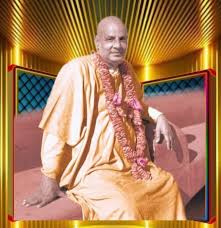
Swami Sivananda garlanded portrait image
Raja Yoga, Swami Sivananda, Uncategorized

Mind Conquest by Sama and Dama

Mind Conquest by Sama and Dama By Swami Sivananda Calmness of mind comes through the practice of Sama and Dama. Sama is calmness of mind induced by the eradication of Vasanas. Vasana-tyaga (renunciation of desires) through discrimination constitutes the practice of Sama, one of the sixfold virtues (Shadsampatti). If a desire arises in your mind, do not give way to it. This will become the practice of Sama. Sama is keeping the mind in the heart by Sadhana. Sama is restraint of the mind by not allowing it to externalise or objectify. The restraint of the external activities and the Indriyas is the practice of Dama (Bahyavritti-nirodha). If you renounce the desire for eating mangoes, it is Sama. If you do not allow the feet to carry you to the bazaar to purchase the mangoes, if you do not allow the eyes to see the mangoes and if you do not allow the tongue to taste them, it is Dama. A desire arises to eat sweets. You do not allow the feet to move to the bazaar to purchase the sweets. You do not allow the tongue to eat the sweets. You do not allow the eyes to see the sweets also. This kind of restraint of the Indriyas is termed Dama. It is termed Sama when you do not allow any thought to arise in the mind concerning sweets by eradication of Vasanas (Vasana-tyaga). This eradication of the Vasanas can be accomplished through Vichara, Brahma-chintana, Japa, Dhyana, Pranayama, etc. Sama is an internal restraint. Dama is a restraint of the Indriyas. Though the practice of Sama includes the practice of Dama, as the Indriyas will not move and work without the help of the mind, yet the practice of Dama is necessary. The practice of Dama should go hand in hand with Sama. Sama alone will not suffice. You must attack the enemy, desire, from within and without. Then alone you can control the mind quite easily. Then alone the mind will be in perfect control.

Mind Conquest by Sama and Dama Read Post »

Swami Sivananda Monk with garland sitting peacefully picture
Raja Yoga, Swami Sivananda

Mind Conquest-Ten Important Methods

Mind Conquest-Ten Important Methods By Swami Sivananda Mind is a bundle of Vasanas (desires) and Sankalpas (thoughts, imagination). Mind is a bundle of Raga-Dvesha (likes and dislikes). Annihilation of mind is Mano-Nasa. Manolaya is temporary absorption of the mind. This cannot give Moksha. The mind can come back again and wander in sensual objects. Manonasa alone can give release or Moksha. I. BY VICHARA How is the mind purified, brought under control and how are its activities stopped, and how is it annihilated? Here are some useful and practical points. Mind can be controlled and annihilated by Vichara or enquiry of ‘WHO AM I?’. This is the best and most effective method. This will annihilate the mind. This is the Vedantic method. Realise the unreality of the mind through philosophical thinking. II. BY ERADICATION OF EGO Eradicate the feeling of egoism. Ego is the seed of the tree of mind. – I thought is the source of all thoughts. All thoughts are centred on the little – I. Find out what the little – I is. This little – I will dwindle into airy nothing. It will be absorbed in the Infinite – I or Para Brahman, the source for the little – I or Ahamkara (egoism). The Sun of Self-realisation is fully seen when the cloud of ego disappears. III. BY VAIRAGYA Vairagya (dispassion) is another method for annihilating the mind. It is distaste for objects of sense-pleasures by finding out the defects in the sensual life. Objects are perishable. Sensual pleasure is momentary and illusory. IV. BY ABHYASA Abhyasa or practice is another method. Concentrate the mind by fixing it on Brahman. Make it steady. Abhyasa is ceaseless meditation. This leads to Samadhi. V. BY NON-ATTACHMENT Asanga or non-attachment is a sword to destroy the mind. Take the mind away from objects. Detach Attach. Detach it from the objects and attach it to the Lord. Do this again and again. The essence of the seed of the sprout of world-experience, which is desire, can be destroyed by the fire of non-attachment. VI. BY VASANAKSHAYA Vasanakshaya is another method. Vasana is desire. Renunciation of desires leads to Vasanakshaya. This will lead to annihilation of mind (manonasa). Desire for objects of pleasures is bondage; giving it up is emancipation. Desire is the most essential nature of the mind. Mind and egoism are synonymous. VII. BY PRANAYAMA Vibration of Prana causes movement of the mind. It gives life to the mind. Pranayama or control of Prana will stop the activities of the mind. But it cannot destroy the mind to its roots like Vichara. VIII. BY CONTROL OF THOUGHTS Control the thoughts or Sankalpas. Avoid imagination or day-dreaming. The mind will be annihilated. Extinction of Sankalpas alone is Moksha, or release. The mind is destroyed when there is no imagination. The experience of the world illusion is due to your imagination. It vanishes away when imagination is completely stopped. IX. BY EQUANIMITY AND BALANCE Mental renunciation of possessions is another method. The absolute experience can also be realised if you learn to be in a state of thought-suspending Samadhi. Attainment of equanimity is another method. Be balanced in pain and pleasure, heat and cold, etc. X. BY DEVOTION AND SERVICE Japa, Kirtan, prayer, devotion, service of Guru and study are also means to annihilate the mind. He alone experiences everlasting peace and Eternal Bliss who has transcended the mind and rests in his Own Satchidananda Atman.

Mind Conquest-Ten Important Methods Read Post »

Swami Sivananda seated with couple near river image
Raja Yoga, Swami Sivananda

Mind Conquest by a Simple Sadhana

Mind Conquest by a Simple Sadhana By Swami Sivananda Man is a mixture of three ingredients, viz., human element, brutal instinct and divine ray. He is endowed with finite intellect, perishable body, a little knowledge and a little power. This makes him distinctly human. Lust, anger, hatred belong to his brutal nature. The reflection of cosmic intelligence is at the back of his intellect. So he is an image of God. When the brutal instincts die, when this ignorance is rent asunder, when he is able to bear insult and injury, he becomes one with the Divine. A thirsting aspirant is one who practises self-denial. He always tries to feel that the body does not belong to him. If anyone beats him, cuts his hand or throat, he should keep quiet. He must not speak even a single harsh word to him because the body is not his. He starts his Sadhana, – I am not the body. I am not the mind. Chidananda-Rupah Sivoham. One harsh or unkind word throws a man out of his balance. A little disrespect upsets him. He feels and feels for days together. How weak he has become despite his boasted intellect, high position in society, degrees and diplomas and titles? Bear insult. Bear injury. This is the essence of all Sadhana. This is the most important Sadhana. If you succeed in this one Sadhana, you can very easily enter the illimitable domain of eternal bliss. Nirvikalpa Samadhi will come by itself. This is the most difficult Sadhana; but it is easy for those who have burning Vairagya and yearning for liberation. You must become a block of stone. Only then will you be established in this Sadhana. Nothing can affect you. Abuses, ridicules, mockery, insults, persecutions cannot have any influence on you. Remember the instructions of Lord Jesus: – If anyone gives you a slap on one cheek, show him the other cheek also. If anyone takes your coat, give him your cap also. How sublime is this teaching! If you follow this you will have great spiritual strength and power of endurance. It will make you divine. It will transform the nature of the offender also at once. Study the life of the Avanti Brahmin in Bhagavata (IX Skandha). You will draw inspiration and strength. People spat at this Brahmin, threw faecal matter on him and yet he stood adamant. A Mohammedan spat on Saint Ekanath 108 times, and yet the saint was not affected even a bit. All saints and prophets had this power of endurance. People pelted stones at Prophet Mohammed and threw the ovary of the camel on his head, and yet he was cool and serene. The Jews pierced thorns on the body of Lord Jesus. He was ill-treated in a variety of ways. He bore all these calmly and blessed the persecutors. He was nailed on the cross and yet he said, – O Lord! forgive these people. They do not know what they are doing. Read again and again the Sermon on the Mount by Lord Jesus. All aspirants will be tested by the Lord and a time will come for everybody to bear worst trials, adversities and persecutions. These trials will make them wonderfully strong. They must be ever prepared to bear all these trials and persecutions. You will have to develop wonderful patience and endurance. You will have to kill your egoism, pride, Deha-abhimana or false identification with the perishable body. Then only you can bear insult and injury. Try at first to control the physical reactions and the feelings. Do not retort. Do not speak vulgar words. Do not revenge. Kill the vindictive spirit or attitude. Check the impulses of speech, thought and action. Gradually you will gain control. Regular Japa, meditation, Kirtan, prayer, enquiry, solitude, Satsanga, selfless service, Mouna, Asana, Pranayama, will-power will give you immense strength to bear insult and injury.

Mind Conquest by a Simple Sadhana Read Post »

Swami Sivananda seated with devotees indoors image
Raja Yoga, Swami Sivananda

Basic Tendencies of the Mind and their Control

Basic Tendencies of the Mind and their Control By Swami Sivananda Desire, judgment, doubt, belief, firmness, weakness – all are the Manas only. Friend and enemy, virtue and sin, pleasure and pain are in the mind only. The mind has the potency of creating or undoing the whole world in the twinkling of an eye. Mind is Jada but appears to be intelligent by borrowing light from Brahman. Senses cannot do anything independently if the mind is not connected with them. When the mind has once tasted the sexual pleasure, it always runs after woman. The world is beautiful and pleasant or ugly and miserable just as the mind chooses. The ghost of your mind dances in the theatre of this universe to the music of the organs. The face is a notice-board wherein the Vrittis of the mind are advertised. If all thoughts are eliminated there remains nothing which can be called as – mind. If you want rapid progress in the spiritual path, watch every thought. Enjoyment strengthens, increases and aggravates a desire. Desires are the outcome of thoughts which are associated with objects. Many people have fallen from Yoga through the influence of subtle desires. Memory of the past retards an aspirant’s spiritual advancements. Yoga consists in the suppression of the functions and modifications of the mind. When the mind is at work, Buddhi and Ahamta will work along with the mind. A gross mind with selfishness and lust is absolutely unfit for a spiritual life. When one reaches perfection, the mind melts in its source – Brahman. Each nation has its own characteristic mentality and particular intellectual bent. The mind can leave hold of lower things only if it is attracted by higher things. People of dirty mind judge others according to their own standard of judgment. The worldly minds want thorough overhauling and drastic regeneration. A Rajasic mind full of desires can never dream of an inner spiritual life. Purification of mind leads to the comprehension of the true nature of Brahman. A pious man attends to his business concerns but has his mind’s eye ever fixed upon the Lord. Mind is Atma Sakti. It is through mind only that Brahman or the Supreme Self manifests as the differentiated universe with heterogeneous objects. Mind is nothing but a collection of Samskaras or impressions. It is nothing but a bundle of habits. The true nature of the mind consists in the Vasanas or subtle desires; the idea of – I or egoism is the seed of the tree of mind. The sprout which springs up from this seed-egoism is Buddhi or intellect. From this sprout, the ramifying branches called Sankalpas take their origin. Mind is made of subtle Sattvic matter. According to Chhandogya Upanishad, mind is formed out of the subtlest portion of food. Manolaya or temporary absorption of the mind in the object of meditation will not help you to attain liberation. Manonasa or annihilation of the mind only will enable you to achieve the final emancipation or Moksha. Have no longing for objects. Reduce your wants, cultivate Vairagya or dispassion. Vairagya thins out the mind. Do not mix much. Do not talk much. Do not walk much. Do not eat much. Do not sleep much. Control your emotions. Abandon desires and Vasanas. Control irritability and lust. Slay the impure mind through meditation. Practise perfect Brahmacharya. There is no half measure in the spiritual path. Never wrestle with the mind. Do not use any violent effort in concentration. When the mind is jumping and wandering much, make no violent effort to control the mind but rather allow it to run alone for a while and exhaust its efforts. It will take advantage of the opportunity and will jump around like an unchained monkey at first. Then it will gradually become quiet and look to you for orders. If evil thoughts enter your mind, do not use your will-force in driving them. You will only lose your energy in doing so. You will tax your will. You will fatigue yourself. The greater the efforts you make, the more the evil thoughts will return with redoubled force. They will return more quickly also. The thoughts will become more powerful. Be indifferent. Keep quiet. Become a silent witness of those thoughts. Do not identify yourself with them. They will vanish very soon. Substitute good thoughts. Pray and sing the Lord’s name. Never miss even for a day your meditation. Regularity is of paramount importance. When the mind is tired out do not concentrate. Give a little rest. Do not take heavy food at night. This will interfere with your morning meditation. Japa, Kirtan, Pranayama, Satsanga (association with the sages), practice of Sama (serenity), Dama (self-restraint), Yama (right conduct), Sattvic food or pure food, study of scriptures, meditation, Vichara or Atmic enquiry – all these will help you to control the mind and attain bliss and immortality.

Basic Tendencies of the Mind and their Control Read Post »

Swami Sivananda writing spiritual teachings surrounded by books
Raja Yoga, Swami Sivananda

Suddha and Asuddha Manas

Suddha and Asuddha Manas By Swami Sivananda Through the discriminating mind, the lower mind is powerfully mastered by the wise. “Uddharet-atmana-atmanam-Let him raise the self by the Self.” (Gita, VI-5) The Two Kinds Of Mind Suddha Manas or Sattvic mind (pure mind) and Asuddha (impure) Manas or the instinctive mind or desire-mind as it is called are the two kinds of mind according to Upanishadic teaching. There is the lower mind filled with passion. There is the higher mind filled with Sattva (purity). There are two minds. You will have to make it into one-Sattvic mind only-if you want to meditate. It is through the higher or Sattvic mind that you will have to control the lower or instinctive mind of passions and emotions. There are two kinds of Buddhi also-Vyavaharic Buddhi and pure Buddhi. There are two kinds of Aham or Ahankara, viz., Suddha Aham which identifies with Brahman (Sat-Chit-Ananda) and Asuddha Aham which identifies with the body. There are two kinds of Sankalpa (resolve, conation), viz., Suddha Sankalpa (thoughts of God) and Asuddha Sankalpa (thoughts of body and the world). The Asuddha Manas which creates Asuddha Sankalpa, the Vyavaharic Buddhi and Asuddha Ahankara-all these three form a vicious circle. These three work in co-operation. The seed of the mind is Ahankara. Mind is merely a bundle of thoughts. Of all thoughts, the ‘I’ thought is the root thought. It is the first thought also that emanated from the mind. Therefore, mind is only the thought ‘I’. Buddhi is the basis of Ahankara. It is Buddhi that forces you to identify yourself with the physical body. It is Buddhi that creates difference (Bheda) and Nana Bhava (the idea of many in the world). Characteristics Of The Sattvic Mind A Sattvic mind like solitude, silence, simple living, high thinking, study of spiritual books, philosophical discussions, concentration of mind and company of Sadhus, Mahatmas and Sannyasins. A stainless mind can be judged through speech, face and eyes. Through these expressions, the opinion can be formed whether a person has stainless mind. Higher desires, noble aspirations, lofty ideals, true religious feeling, mercy, sympathy, pure unselfish love, devotion, Vichara (Atmic enquiry), inspiration, genius-all come from the higher, pure Sattvic mind. Suddha Manas (pure mind) is Brahman itself. It is an embodiment of purity itself. Characteristics Of The Rajasic Mind A Rajasic mind likes crowded cities, much talking, luxurious life, low thinking, the company of women, study of romantic novels, eating dainty dishes and selfish works. Instinctive mind is the lower, impure Kama Manas with desires, passions and appetities. The vast majority of persons have this instinctive mind only. Even the so-called civilised and educated persons live on the plane of the instinctive mind. Their senses are very sharp and acute and they run after more refined things for their sense-gratification. They identify themselves with the physical body and the senses. They have no idea of the subtle Atman which is entirely distinct from the body and the Indriyas. Their ‘I’ is the physical, gross body only though they know that there is a mind. Sensual enjoyment brings on diseases and destroys the power of discrimination (Viveka). It makes the mind Malina (impure). Therefore, shun Vishayabhoga (sensual enjoyment). Try to realise the Self within wherein lies eternal bliss and immortality. Sattvic Mind Needed For Atma-Vichara A sharp, subtle, one-pointed, Sattvic (pure) mind is needed for Atma-Vichara (enquiry into Atman or the Supreme Spirit) and study of Upanishads. A gross mind or practical (Vyavaharic) Buddhi with selfishness and lust is absolutely unfit for Vichara and philosophical ratiocination. Selfishness clouds understanding. Selfishness is the bane of life. The mind of a worldling is ever ready to absorb sexual thoughts. It cannot imbibe subtle, philosophical ideas. It is callous and cannot vibrate properly to take in philosophical ideas. You can drive a nail in clay, but not in a stone. The mind has to be purified by Nishkama Karma, Japa, Pranayama and other spiritual Sadhanas. Mind is compared to a mirror. If the mirror is dirty, you cannot see your face clearly. Similarly, if the mind-mirror is dirty (full of Mala, impurities-Kama, Krodha, Lobha, etc.), you cannot see God clearly; you cannot see the Self clearly. The light of Brahman cannot shine efficiently. Clean it up with effort daily, through spiritual Sadhana, meditation, strenuous Nishkama Karma Yoga, devotion, etc. You will realise God. “Manasaiva-anudrashtavyam” is the utterance of the Srutis. Brahman is to be seen by the mind. Here ‘mind’ means the Suddha Manas (pure mind). Brahman can be seen by a mind which is equipped with the four means of salvation; which is rendered subtle and pure by the practice of Sama, Dama, Yama and Niyama; which is furnished with the sacred instructions of a qualified Guru and which does Sravana (hearing), Manana (reflection) and Nididhyasana (constant musing). Should the pure mind concentrate itself for some time through a study of Jnana Sastras, association with the wise and an uninterrupted practice of meditation, then in such persons developing Jnana, a divine vision will dawn in which there will be a direct cognition of the one Reality. Slay The Impure Mind The enemy of Atman is the impure mind, which is replete with excessive delusion and a host of thoughts. This mischievous and powerful imp of lower mind is the generator of all pains and all fears and the destroyer of all noble, spiritual wealth. Your real enemy is this impure mind only which is full of delusion, Trishnas, Vasanas and host of other impurities. Lest this enemy of mind should spoil you in diverse ways through the “enjoyments” of the many “pleasures” in this world, slay it in the hope of getting eternal bliss and spiritual illumination. Destroy the lower Asuddha (impure) Manas through the higher Suddha Manas. Destroy your instinctive mind through discrimination and help of your higher, Sattvic mind. Then and then alone will you get eternal, infinite peace and bliss of Atman. Then alone will you become a Jivanmukta. Sattvic minds and

Suddha and Asuddha Manas Read Post »

Swami Sivananda seated with two companions image
Raja Yoga, Swami Sivananda

Important Matters of Mind Conquest

Important Matters of Mind Conquest By Swami Sivananda I. CONQUEST OF DESIRE Desire is death. Desirelessness is immortality. Desire is an enemy of peace. It cuts at the root of wisdom and knows no satiation. Therefore, cultivate dispassion, discrimination, meditate and enjoy everlasting bliss. Conquer desire and attain self-realisation or knowledge of Atman. Resist. Conquer all worldly attractions through prayer, Japa, meditation and Vichara. Craving for sensation gives pain. Cultivate dispassion and discrimination. Meditate. This craving will die. Peace is the fruit of the death of all emotions, cravings and desires. Perfect life is attained by liberation from desires. The cause of all pain and sorrow, is rooted in desire. If desire is annihilated all pain and sorrow will vanish. Detach. Control desires. Meditate on Atman. You will attain self-realisation. The dynamic power of substitution is the safest way to conquer desire. Your longing for objects will disappear if your eyes turn upwards to God. The practice of contentment and meditation leads to a few wants and peace. Freedom from passion is the truest enjoyment. True serenity dawns by subduing your passions. Vasanas or desires tend towards bondage; but the extinction of them leads to Moksha or salvation. II. RENUNCIATION – THE REAL STRENGTH Vairagya or dispassion is true power. With the development of dispassion and discrimination all pains will cease. You will attain bliss eternal. Walk in the path of renunciation of desires. Consider as fire or poison all objects which are said to be pleasures. The longing after the stainful material enjoyments, is itself bondage; the renunciation of the same is Moksha or freedom. Attraction and repulsion towards objects alone is bondage and nothing else. The more you try to get away from sense-objects, the more you get into them. But dispassion, discrimination and meditation will make you free. Detachment comes through discrimination (between the real and the unreal). Sensual pleasures make you oblivious of the painless blissful Moksha or emancipation. Renunciation of worldly pleasures, is only an effective means to attain God-realisation, but not an end in itself. Empty your mind, you will be filled with God. Wisdom is a better support than all other possessions. Dispassion is wisdom. Therefore, attain the wisdom of Atman. Make wisdom your provision for the journey from this world to the Absolute or the Domain of eternal bliss. III. NEED FOR A THOROUGH STUDY OF THE MIND You must know thoroughly the nature of mind and its activity. Mind constitutes the root of the tree of Samsara or Ajnana (ignorance). If the baneful root of mind is destroyed, the tree of birth and death will also be destroyed. This body is the seed from which generates the sprout of pleasures and pains, giving rise to the ever-gyrating creeper of Samsara. The cause of the seed of body is the mind which following the track of desires, is the receptacle of pleasures and pains arising from births and deaths. The mind that is ever hankering after, and involved in, sensual pleasures, is the seed of all Maya. It is the imagination of the individual that is the cause of his bondage and not the mere existence of the universe as an object of perception. It is through the mind that the hosts of bodies, which do not exist, though seeming to exist, arise beyond number. It enjoys these bodily objects as in a dream. The mind is brought under control by mental discipline such as Sama, Dama, etc. The best means of conquering Maya which involves all in pains, is the destruction of mind. Atman begins to dawn with the destruction of the mind. You should so destroy the mind that it will not afterwards be able to rear up its head at all. Destroy the mind past all resurrection through Vichara or enquiry and ceaseless meditation on Atman. Annihilate Vasanas and egoism. Now the mind will be emptied. Just as the flame of a lamp is extinguished when the oil and wick are burnt only, so also the mind gets immediately dissolved and becomes one with Brahman when the Vasanas or desires and egoism are destroyed. The real Samata is the absorption of the mind in the contemplation of Brahman. Destroy the impure mind through your higher mind and get yourself firmly seated in the Supreme Paramatman. IV. NOBLE IS RESTRAINT Learn to control desires and emotions. Learn to subdue, to purify, to order all your thoughts. Fight against all negative thoughts and doubts. Let sublime divine thoughts come to you from every side. Be careful of your thoughts. Whatever you send out of your mind, comes back to you. Every thought you think, is a boomerang. If you hate others, hate will come back to you. If you love others, love will come back to you. Thoughts of depression, failure, weakness, darkness, doubts, fear, etc., are negative thoughts. Cultivate positive thoughts of strength, confidence, courage, cheerfulness. The negative thoughts will disappear. V. MASTERY OF MIND Mind is the thief who had robbed the Atmic Jewel, viz., the Self. Slay by the arrow of Viveka the demon of lower, selfish mind whose form covers up the five senses of knowledge and the five senses of action. Sensation are turned into percepts, and percepts are converted into concepts. It is the life-experience in the sense-universe. No thought of anything is possible, where neither the eyes have seen nor the ears have heard. The senses do not perceive anything. It is the mind that perceives through the senses. The mind is often directed by the senses. The Vasanas generate never-ending pains arising from mental actions. Therefore, they should be made to wear themselves away. The great Vasanas are the nets to catch the fishes of Jivas who are worldly-minded. A mind which is never disturbed with its worries, will reach the Nirvana seat, devoid of actions through the extinction of Vasanas. Power intoxicates. Be careful. Beware. It will bring about your downfall quickly. Where wealth and power reign, contentment runs away. Even

Important Matters of Mind Conquest Read Post »

Swami Sivananda writing at desk image
Raja Yoga, Swami Sivananda

Raja Yogic Method of Mind Conquest

Raja Yogic Method of Mind Conquest By Swami Sivananda Raja Yoga means ‘King of all Yogas’. It aims at controlling all thought-waves or mental modifications. Raja Yoga is suitable for men of mystic temperament with leaning towards the occult. A serious practice of Raja Yoga can be thought of only after you have purified your mind and have gained some control over your senses and appetite. The eight limbs of Raja Yoga are Yama (self-restraint), Niyama (religious observance), Asana (posture), Pranayama (restraint of breath), Pratyahara (abstraction of the senses), Dharana (concentration), Dhyana (meditation) and Samadhi (super-conscious state). I. YAMA AND NIYAMA Yama is the practice of non-injury, truthfulness, non-stealing, celibacy and non-covetousness in thought, word and deed. This is the foundation of Yoga. Niyama is the observance of the five canons – internal and external purity, contentment, austerity, study of religious books and worship and surrender to the Lord. Impure motives, lack of celibacy, overeating, indolence, oversleeping, false fears, building castles in the air, allurement of minor supernatural powers like clairaudience and clairvoyance are all obstacles in this path. II. ASANA AND PRANAYAMA Any comfortable and steady pose is Asana. A steady pose gives concentration of mind. If you have mastery over the seat, the dualities of heat and cold and all other pairs of opposites will not disturb you. You must be able to sit in one Asana for three hours at a stretch. The pose becomes steady by thinking of the Infinite. There are some other Asanas such as Sirshasana and Sarvangasana that are very useful for the preservation of good health and Brahmacharya (celibacy). Prana is energy. It is life-breath. It is the life-principle. When Prana vibrates, the mind begins to think. Prana is expended in thinking, willing, acting, talking, etc. The excess of Prana is stored up in the brain and nerve-centres. If you can control Prana, you can control all the forces in the universe. Prana manifests as motion, gravitation, magnetism, electricity. The knowledge and control of Prana is what is really meant by Pranayama. Pranayama removes diseases of the body, steadies the mind and purifies it. It strengthens the intellect and augments the intellectual capacity. It increases the power of memory. When you practise Pranayama, you will have to be careful about your diet. You should avoid overloading the stomach. You should take light, easily digestible and nutritious food. III. PRATYAHARA AND DHARANA Pratyahara is abstraction or withdrawal of the senses from their objects. Pratyahara checks the outgoing tendency of the senses. The practice demands considerable patience and perseverance. It gives tremendous power. During the course of the practice you will have to withdraw the mind again and again from the sense-objects and fix it on the point of meditation. That Yogi who is well-established in Pratyahara can meditate quite calmly even in the battlefield where countless machine-guns roar in a continuous stream. Dharana or concentration is centering the mind on one single thought. During concentration the mind becomes calm, serene and steady. The various rays of the mind are collected and focussed on the object of meditation. There will be no tossing of the mind. When there is deep concentration you will experience great joy and spiritual intoxication. You will forget the body and surroundings. Concentration increases by curtailing wants and desires, by observing silence for one or two hours daily, by practising Pranayama, by prayer and by increasing the number of sittings in meditation daily. You must always try to be cheerful and peaceful. IV. DHYANA AND SAMADHI Meditation (Dhyana) follows concentration. The mind dwells on God alone during meditation. Deep meditation cannot come in a day, or a week or a month. You will have to struggle hard for a long time. Gradually you will enter into deep meditation and Samadhi (superconscious state). You will have to pass through the six stages of meditation and finally you will enter into perfect Nirvikalpa Samadhi or super- conscious state. Form perception will totally vanish. V. REWARDS OF SAMADHI The meditator and meditated become one. You will attain highest Knowledge and Supreme, Eternal Peace. This is the goal of life. This is the aim of existence. This is the final beatitude of life. You will be absolutely free from pain, sorrow, fear, doubt and delusion. You will experience: – I am the Immortal Self. All indeed is God. There is nothing but God. You will feel that the whole world is nothing but pure consciousness. The tables, chairs, men, women and other things will appear to contain this consciousness just as vessels contain their contents. You will feel that the Lord is sporting in all things as this pure consciousness. You will actually lose the sense of material nature of things around you. This rare experience will give you great bliss. May you all attain success in Yoga and enter into Nirvikalpa Samadhi or the Blissful Union with the Lord by controlling the mind and the senses and practising regular and constant meditation!

Raja Yogic Method of Mind Conquest Read Post »

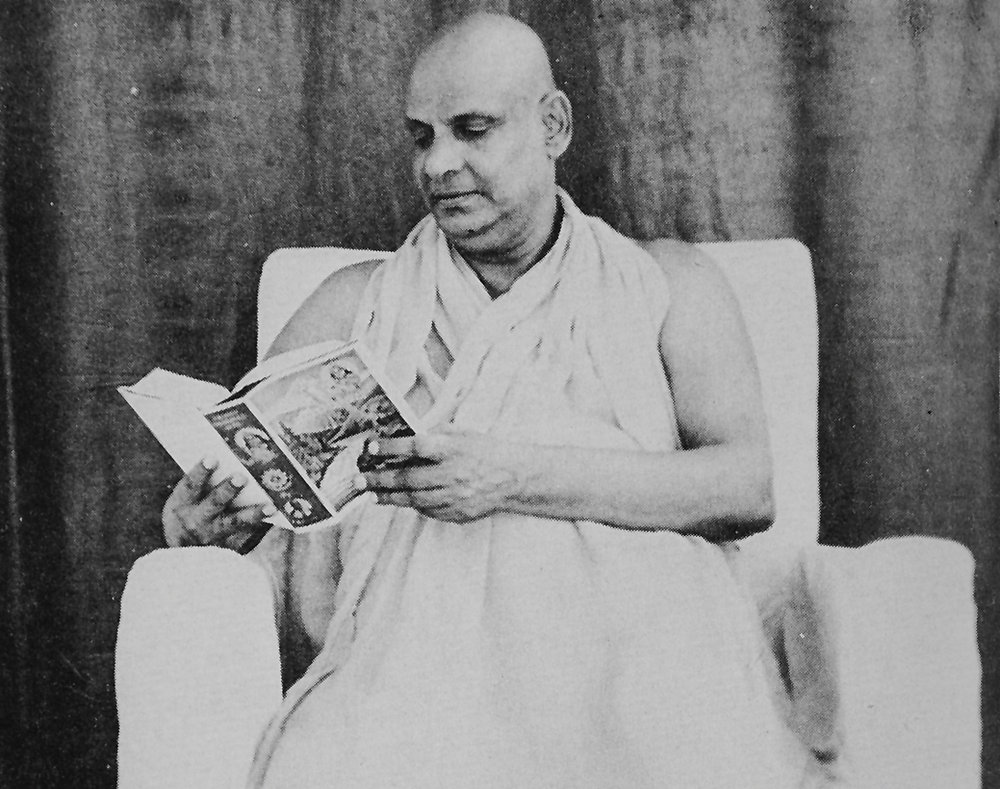
Swami Sivananda reading a book image
Bhakti Yoga, Swami Sivananda

Yoga of Surrender-TWO

Yoga of Surrender-TWO by Swami Sivananda Give up egoism and throw your whole burden of anxieties on the Lord. Do total self-surrender to Him. You will attain His grace. He will take care of you completely in all ways. In difficulties and struggles, God will give you strength and inner peace to bear them. This is His grace. Constant remembrance of the Lord, constant recitation of His Name will fill your heart with Sattva or purity and immense strength and peace to face the most trying conditions with perfect calmness and serenity. Have perfect trust in God. Do total surrender unto Him. Place yourself in His loving care. Do this with your whole heart and mind, with perfect confidence and faith. Worry not about your future, about money, about your health. He will take care of you. You will have plenty, immense strength and wonderful health. Repeat this formula very often with intense faith: The Lord is my strength, my support and stay. You will derive strength, power and peace. After surrendering to the Lord, do not grumble if you get difficulties and troubles. This goes against self-surrender. God knows what is best for you. He does what is best for you. His ways are mysterious. Know His mysterious ways and become wise. Egoism and desire are obstacles to self-surrender. Slay these two enemies of self-surrender ruthlessly. You may accuse Him now and say: He is not just. He is cruel. He has no eyes. Vicious persons are thriving well in the world. I am virtuous and I suffer. There is no God. Later on you will realise that He has done the best thing for you. Do not pray to the Lord for removal of sufferings. Pray to Him for granting you power of endurance and patience to bear the calamity. A devotee remains unaffected by adversities, trials and tribulations. He knows and feels that they are all Karmic purgations and are the real messengers of God; he welcomes them calmly. A devotee alone gets troubles and adversities, because this is his last birth; many Karmas have to be worked out and he must be united with the Lord in this very birth. He gives immense patience and strength to His devotee to bear troubles and calamities. The devotee is ever calm and cheerful. He is not in the least affected by them as his mind ever dwells in the contemplation of the Lord. He has no body-consciousness. Murmur not, grumble not. Even a leaf cannot move without the Will of God. What is destined to take place as willed by God, takes place. Face every difficulty and the battle of life with a smile patiently and heroically. Become a brave soldier. Become an Adhyatmic hero. Troubles and difficulties come to intensify your faith, to strenghten your will and power of endurance and turn your mind more and more towards God. Pain is a great eye-opener. It is your silent teacher. It is the only best thing in the world. It will make you remember God. Kunti prayed: O God! Lord Krishna! Give me pain always, so that I may ever remember You. The more troubles and adversities you get, the stronger and firmer will become your faith in God. The worst troubles and adversities that come to you have the greatest purpose and meaning in them. They will mould you into a divine being. Welcome them and say: I am Thine, all is Thine, Thy Will be done, my Lord. Approach the Lord with Sarva-Bhava with all your heart, mind and soul, with your whole being. Do not keep any reservation. Do not keep any secret gratification. The mind, Chitta, intellect and the ego should all agree to surrender wholly. You will be supremely blessed. You will obtain His full grace. Prahlada, Mira and Sakku Bai were tortured in various ways. But the Lord gave them strength and peace. They did not feel torture even a bit. He gave them Darshan and blessed them. Lord’s grace is in proportion to the degree of self-surrender. The more the surrender, the more is His grace.

Yoga of Surrender-TWO Read Post »

Swami Sivananda seated Devotees serving image
Raja Yoga, Swami Sivananda

Precepts for Practice of Mind Control

Precepts for Practice of Mind Control By Swami Sivananda The mind is weak. The senses are strong. The bonds of temptation are stronger still. In the midst of these three, you are tossed up and down. Spiritual Sadhana alone can really impart to you the inner Santi or eternal peace. Do Japa, meditation, Kirtan, Satsanga and study of spiritual books. These will help you and not the temptation that assails you. Do not think of the objects of the senses. Cessation from worldly enjoyments is Uparati. Constant practice to fix the mind in God is Samadhana. Deep concentration is Samadhana. Do not allow the mind to externalise. This is Sama. Checking the external instruments of the sense-organs is Dama. Ninety per cent perspiration and ten per cent inspiration make a genius or prodigy. Intelligence is ninety per cent memory. When the sense-object attracts you, withdraw the mind from the object. To see Rama or Krishna in a sense-object is possible only for well-advanced aspirants. – I am non-doer. This is the Bhava of a Vedantin. The devotee offers all his actions as sacrifice unto the Lord. He feels that he is an instrument in the hands of the Lord (Nimitta Bhava). The Lord knows what is best for you. He moulds you in a variety of ways for His unhampered play or Lila and for the attainment of the final beatitude. Therefore resign yourself to His supreme will and be satisfied with whatever happens and thus prepare yourself for the attainment of that balanced state (Samata) wherein there is absence of likes and dislikes or the pairs of opposites. Lust deals a deadly blow to spiritual Sadhana. Kill this lust by diverse methods. Do not entertain lustful thoughts. Do not look at figures that create the mental sensation of passion. Avoid going to cinemas. Do not mix with all sorts of people who take pleasure in lustful speech. Think of the Lord when the idea of sex enters the mind. Pray to Him fervently. The conception that the body is the Atman constitutes Avidya or ignorance. (Dehadishvan-atmasu aham asmi ityatmabuddhiravidya). From it spring desires with regard to whatever promotes the well-being of the body and aversion with regard to whatever tends to injure it. There further arises fear and confusion when we observe anything threatening to destroy it. All this constitutes an endless series of manifold evils. A sage always rests in Samadhi or Turiya state. He has only one state, the state of Turiya or the fourth. He has none of the three states. He neither wakes, dreams nor sleeps. He has neither past, nor present nor future. If you fail in keeping your resolves, make fresh resolves. Just as the child falls many a time when it tries to walk without the help of the wall, just as the new cyclist falls from the cycle a number of times before he learns to sit steadily in the seat, so also the new aspirant will fail a number of times in his resolves. He has to make repeated attempts. Ultimately he will come out victorious. Just as the tongue is not affected by Ghee, so also the skilful aspirant is not affected by the temptations of the world. He takes shelter in the Lord, in His name and grace. Sometimes you get the solution for a certain difficult problem as soon as you get up from sleep. The subconscious mind is working when you go to bed. The subconscious mind has the impressions of all actions of the past. It lays before you by a sudden flash the hidden mysteries, when you concentrate. A lustful look itself is break in Brahmacharya. There is internal discharge. Veerya is separated from the system. Make the mind understand by repeated hammering and Vichara that all sexual pleasure is false, utterly worthless and extremely harmful. Clearly think over how very illusory and full of pain it is. On no account should you listen to the promptings of the impure mind. Place before the mind the glory and the advantage of a life in the eternal and all blissful, omniscient, Atman. He who is humble, calm, quiet in mind, and controlled in conduct, and who is content in his heart finds the whole universe full of joy and bliss. All rivers find their centre in the ocean, all touches in the skin, all tastes in the tongue, all smells in the nose, all colours in the eye, all sounds in the ear, all percepts in the mind, all knowledge in the heart, all actions in the hands, all movements in the feet and all the Vedas in speech. Even so the centre for all individual souls and all beings is Brahman or the Supreme Self. If the Jivahood is a reality, it can never be destroyed and freedom would be impossible. The Jiva becomes one with the Supreme Self on release. There is nothing like Jivahood – an unreality, a creation of ignorance, the Jiva being identical with Brahman. In reality the Jiva is neither created nor destroyed. It is your ignorance that makes you see the individual soul or Jiva limited by Upadhis as something different from Brahman. When the dark ignorance, the deluder of all men, the great nescience, the veil that covers the individual soul is rent asunder, then he realises the Nirguna Brahman, within him dwelling in the intellect, in cavity of his heart. Brahman is to be realised by meditation alone and not otherwise. When you practise Yoga, certain Siddhis like celestial scents, sounds, sights, the most agreeable sensations of taste and touch, pleasurable sensations of coolness and warmth, will come to you. Disregard them. Shun them, as they will bind you and cause distraction and downfall. They are distractions on your path. March forward and try to attain the summit of Nirvikalpa Samadhi. Restrain speech and the senses and practise meditation during the hours after dusk, the hours before dawn and at dawn of day. These periods

Precepts for Practice of Mind Control Read Post »

Swami Sivananda receiving document from monk image
Raja Yoga, Swami Sivananda

Methods of Mind-Conquest

Methods of Mind-Conquest By Swami Sivananda Mind-conquest by the Four Traditional Methods A digest of Sivananda’s description of the four traditional methods of annihilating the mind, runs thus. A Vedantin destroys the mind through Self-expansion; he practises self-denial, identifies himself with the Supreme Brahman, and thus brings about the annihilation of the mind. A Raja Yogi achieves the same goal, by stilling the mind, eradicating the Vrittis. A Bhakti Yogi obtains the death of the mind by contracting and reducing it to zero; he practises self-surrender, places his mind at the feet of the Lord. A Karma Yogi slays the mind by removing selfishness and by selfless service; he practises self-sacrifice identifies himself with the Cosmic Being, and expands his heart by total elimination of all selfish desires. Mind-conquest by Meditation on ‘Om’with Tadrupas-Tadartha-Bhavanam A hundred methods there are for mind-conquest. Equally as many are the types and tastes of mind. To suit the different types of mind, Sivananda prescribes different methods of conquest. To approach the Infinite and transcend the mind, one of the important methods of Sivananda is the Meditation on Om with Tadrupas-Tadartha-Bhavanam. Om is the symbol of the Immortal, all-pervading Self; it is the perfect sound-representation of the timeless, soundless, infinite Reality. Sivananda says: Think of Om to the exclusion of everything else. Shut out all mundane thoughts. They may, of course, recur again and again; but you will have to generate the thoughts of the pure Self repeatedly. Associate the ideas of purity, perfection, freedom, knowledge, immortality, eternity, infinity etc. with Om. Association with Om is to become one with the thing signified. ‘Tadjapas-tadartha-bhavanam.’ Try to identify yourself with the all-blissful Self when you think or meditate or chant Om and negate the five Koshas as illusory adjuncts created by Maya. You have to take the symbol Om as Satchidananda Brahman. This is the meaning. During meditation you should feel that you are all-purity, all-light, all-pervading existence, etc, Meditate on the Self daily. Think that you are entirely different from the mind. Constantly meditate upon the following thoughts and mentally repeat: All-pervading Ocean of Light I am, Om Om Om; Omnipotent, Omniscient I am, Om Om Om; All-bliss, all-purity, all-glory, all-joy, all-health, all-Peace I am, Om Om Om. Mind-conquest bythe Method of the Vedantic Kumbhaka Regarding his method of the Vedantic Kumbhaka for mind-conquest, Sivananda has this to say, in his work, Science of Pranayama – Being without any distraction and with a calm mind, one should practise Pranayama. Both expiration and inspiration should be stopped. The practitioner should depend solely on Brahman; this is the highest aim of life. The giving out of all external objects is said to be Rechaka. The taking in of the spiritual knowledge of Sastras is said to be Puraka and the keeping to oneself of such knowledge is said to be Kumbhaka. He is an emancipated person who practises his Chitta thus. There is no doubt about it. Through Kumbhaka, the mind should always be taken up and through Kumbhaka alone it should be filled up within. It is only through Kumbhaka that Kumbhaka should be firmly mastered. Within it, is ‘Parama-Siva.’ At first in this Brahmagranthi there is produced soon a hole or passage. Then having pierced Brahmagranthi, he pierces Vishnugranthi, then he pierces Rudragranthi, then the Yogi attains his liberation through the religious ceremonies, performed in various births, through the grace of Gurus and Devatas and through the practice of Yoga. Mind-conquest by the Methodof the Gayatri Sadhana A total illumination of the inner being, and the ascension of it into the infinitude of the self-luminous Consciousness and illimitable Powers of Being, is brought about by the continuous repetition with feeling, faith and concentrated force, and the consequent unfolding of the limitless Sakti inherent in the Gayatri Mantra. This Vedic Mantra of the ancient Sages of India is bequeathed to every man as his most invaluable spiritual heritage for mind-conquest, self-conquest and realisation of the endless and eternal Light of the Brahman within and without. At length Sivananda has described this method in his special pamphlet on Gayatri Mantra and also in his magnum opus on Spiritual practices, ‘Sadhana’. Mind-conquest by the Method of Sakti Yoga Freedom from the thraldom of mind, matter and Maya, maintains the Sakta-guru, is impossible of achievement except through the Grace of the Endless Sakti or Power that the Divine Mother is. If the Mind is to be conquered, the Maya is to be transcended, the Matter is to be transfused into absolute Consciousness, one has to awaken the Supreme Power latent in oneself, as the Kundalini Sakti, as the Divine Mother, by Dhyana, by Bhavana, by Japa, by the force and potencies released from Mantra Sakti. One attains Siddhi or Perfection when the latent infinite Power is awakened, and the entire process and the subtleties of the discipline have to be conducted and obtained from the Guru. Observe in these passages of Sivananda, how the mind which is nothing but a configuration of Vasanas, Samskaras, thoughts, is quite sublated into the integral experience of the infinite Whole, the infinite Light, Power and Delight: – The person who follows this Sakta method enjoys Bhukti (the pleasures in the world) and Mukti (liberation from all worlds). Siva is an embodiment of Bliss and Knowledge. He himself appears in the form of man with this life that is a mixture of pleasure and pain. If you remember this point always, all dualism, all hatred, all jealousy, all pride will vanish, and with them the mind too vanishes. You must consider every human function as worship or a religious act. Answering calls of nature, micturation, talking, eating, walking, seeing, hearing become worship of the Lord, if you develop the right attitude. It is Siva, who works in and through man. Where then is egoism, or individuality, or the mind? All human actions are divine actions. One universal life throbs in the hearts of all, hears in the ears of all. What a magnificent experience


Methods of Mind-Conquest Read Post »