


Hari Om

Menu

February 13, 2026

swami sivananda Vintage portrait of bald monk in white robe outdoors image
Jnana Yoga, Swami Sivananda

Philosophy of the Two Birds

Philosophy of the Two Birds by Swami Sivananda TWO birds, inseparable companions, dwell in one and the same tree. One of them eats the fruits and the other looks on without eating. The first bird which eats the fruits is the Jiva or the individual soul. The other bird is the Kutastha or the silent Sakshi or witness or the Pratyagatman. The tree is the mysterious tree of Maya or Samsara. The fruits are the fruits of Karmas done by the Jiva, viz., pleasure or pain. The first bird, Jiva or man, laughs when he eats sweet almonds and drinks tea sweetened with sugar to his taste; but when he eats the biter almonds that are mixed with the sweet ones and when he drinks tea without sugar, he shows a different face altogether. When he gets a lucrative post, when he gets married or when he begets a son, he laughs; but when his son or wife dies, when he is dismissed from his post, he weeps. When he joy-rides in a motor car, he laughs; when he suffers from rheumatism or acute dysentery, he weeps. He stoops to pick up enjoyments. He is lured by the temptations of the world; he chooses what is pleasure (Preya) for the sake of the body and loses the true end. He lives in the midst of darkness but fancies himself as wise and learned. He goes round and round deluded in many crooked ways. The way of the hereafter is not apparent to him. He is foolish. He is deluded by the delusion of wealth. He thinks, That is the world, There is no other – thus he falls again and again under the sway of death. Today he eats dainty dishes, sweetmeats and fruits. Tomorrow he starves. Today he travels in a motorcar. Tomorrow he walks bare-footed in thick jungles. Toady he speculates and earns several lakhs of rupees. Tomorrow he becomes a bankrupt and walks in the streets as a beggar. He is selfish, ignoble, hard-hearted, impatient, discontented and passionate. He speaks ill of others. He earns money by unlawful means and leads an unrighteous life. He feels he is in want of something, the nature of which he does not exactly comprehend. He strives for the accomplishment of rest, which he feels, he is in need of. But he finds that worldly greatness, when secured, is a delusion and a snare; he doubtless does not find any happiness or peace in it. He gets degrees, diplomas, titles, honours, power, name and fame; he marries, he begets children; in short, he gets all that he imagines would give him happiness. But he finds no rest. He (Jiva) is entangled in Samsara by the five Kleshas: Avidya (ignorance), Asmita (egoism), Raga-dvesha (like and dislikes) and Abhinivesa (clinging to life). He is tied to his earthly life, by the three knots, Avidya (ignorance), Kama (desire) and Karma (action). He is endowed with the three bodies, viz., physical, subtle and causal. He is enveloped by the five sheaths viz., Annamaya Kosha (food sheath), Pranamaya Kosha (vital sheath), Manomaya Kosha (mind sheaths), Vijnanamaya Kosha (Buddhi sheath) and Anandamaya Kosha (bliss sheath). He does actions with the five Karma Indriyas or organs of action, viz., Vak (speech), Pani (hands), Pada (feet), Upastha (reproductive organ) and Guda (anus). He gets knowledge of the world through the five Jnana Indriyas as organs of knowledge, viz., Srotra (ears), Tvak (skin), Chakshus (eyes), Jihva (tongue) and Nasika (nose). He does actions and expects fruits on account of his ignorance. The Samskaras (impressions) are imbedded in the Karana Sarira and subconscious mind. His accumulated Karmas are called Sanchita Karmas; his current actions are called Agami or Kriyamana; this will be added to his Sanchita; he enjoys in this life the fruits of his Prarabdha Karmas, the Karmas which have given birth to this body. Sanchita Karmas rare destroyed by knowledge of the Self. Current actions will not affect when one does actions with Sakshi Bhava or Nishkamya Bhava. One will have to reap the fruits of Prarabdha. He is bound by the chain of six links. The first link is Avidya (ignorance). The second is Aviveka (non-discrimination) that is born of Avidya. The third link is Abhimana or egoism born of non-discrimination. The forth link of the chain is Raga-Dvesha (attraction, repulsion) born of egoism. The fifth link is Karma (action). He does actions owing to Raga Dvesha. The sixth link is body. He takes bodies to reap the fruits of his Karmas. If he attains knowledge of the Self, the whole chain is destroyed at once. He will be free from the taking of the physical body if he does not perform actions with expectation of fruits. He can free himself from Karmas, if he destroys Raga Dvesha. He can destroy Raga Dvesha, if he annihilates egoism. He can annihilate egoism, if he destroys non-discriminations. He can destroy non-discrimination, if he annihilates ignorance or Avidya. Avidya is the root cause for his sufferings. This bird, Jiva, leaves the physical body here, goes to heaven to enjoy the fruits of his virtuous actions with the help of his astral body and comes back to this Mrityuloka when the Karmas are exhausted. He carries the Samskaras and Vasanas along with the astral body. This process called Avagamana (going and coming) lasts till he gets Brahma Jnana. The other bird Sakshi is self-existent. He is not affected by the pleasure and pain, virtue and vice, likes and dislikes. Pleasure and pain, virtue and vice, likes and dislikes are the Dharmas or the attributes of the Antahkarana or the internal instrument only. They cannot touch the pure, self-luminous, immortal, subtle, all-pervading, attributeless and formless Sakshi. In a football or cricket match the spectator is not affected by the success or failure in the game. It is the players only who are affected by the success or failure. He, the Brahman, is self-existent and self-luminous. He is the ear of the ear,

Philosophy of the Two Birds Read Post »
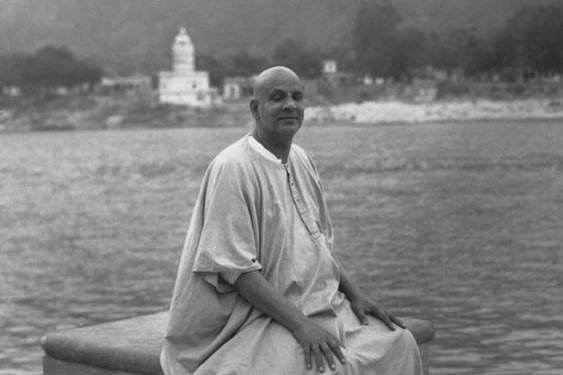
Swami Sivananda seated beside river image
Karma Yoga, Swami Sivananda

Work without any Motive

Work without any Motive Man generally plans to get the fruits of his works before he starts any kind of work. The mind is so framed that it cannot think of any kind of work without remuneration or reward. This is due to Rajas. Human Svabhava is always like this. When discrimination dawns, when the mind is filled with some more Sattva or purity, this nature changes slowly. The spirit of selflessness slowly creeps in. The quality of Rajas creates selfishness and attachment. A selfish man has no large heart. He has no ideal. He is petty-minded. His mind is full of greed. He always calculates. He cannot do any service in a magnanimous manner. He will say: “I will get so much money. I must put forth so much work only.” He will weigh the work and money in a balance. He cannot do a little more work. He will be ever watching the time for stopping his work. He is mercenary. He is hired for money. He is actuated by the hope of reward. He is greedy of gain. Selfless service is unknown to him. He has no idea of God. He has no glimpse of Truth. He cannot imagine of an expanded, selfless life. He has got into a narrow, circumscribed circle or groove. He dwells within this small grove. His love extends to his own body, his wife and children. That is all. Generosity is unknown to him. If you expect fruits for your actions, you will have to come back into this world to enjoy such fruits. You will have to take birth again. A Nishkamya Karma Yogi says: “Do all works without expectation of fruits. This will produce Chitta Suddhi. Then you will get knowledge of the Self. You will get Moksha or eternal bliss, peace and immortality.” This is his doctrine. That is the reason why Lord Krishna says to Arjuna: Karmanyevaadhikaraste ma phaleshu kadachanaMa karmaphalaheturbhurma te sangostvakarmani. “Thy business is with the action only, never with its fruits; so let not the fruits of action be thy motive, nor be thou to inaction attached.” Gita: Chapter II-47. God dispenses the fruits of actions according to the motive. If the motive is pure, you will get Divine Grace and purity. If the motive is impure, you will get rebirth in this Mrityuloka to reap the fruits of your actions. Again you will do virtuous and vicious actions through the force of Raga-Dvesha. You will be entrapped in the never-ending wheel of birth and death. But you should not remain in a state of inertia also (Akarmani) thinking that you will not get the fruits if you work selflessly. You must not say: “What is the use of my work now? I can not get any fruits. I will keep quiet.” This is also bad. You will become Tamasic and dull. There will be mental inactivity. You will get purity of mind if you work in the spirit of Nishkamya Karma Yoga. This is a very great reward for your actions. You cannot imagine the exalted condition of a man of pure mind. He has unbounded peace, strength and joy. He is very near to God. He is dear to God. He will soon receive the divine light. Work without any sort of motive and feel its effects, purity and inner strength. What an expanded heart you will have! Indescribable! Practise, feel and enjoy this state.

Work without any Motive Read Post »

swami sivananda Vintage photo of spiritual guru surrounded by devotees image
Jnana Yoga, Swami Sivananda

Message of Amrita

Message of Amrita by Swami Sivananda HEY AMRITA PUTRA! Are you always peaceful? Are you noble? Do you possess self-restraint? Are you endowed with divine virtues? Are you free from ignorance? Do you possess knowledge of the Self? Have you got illumination? Have you realised the immortal, pure Self? How do you stand before these questions? If you have not got these things, then come, sit down and listen? Here is the message of Amrita for you all! Even if you practise a little of this, you will go beyond death, sorrow and pain. Meditate always I am pure consciousness. I am Sat-Chit-Ananda Brahman. I am the immutable, self-effulgent, immortal Self. I am the silent witness of the three states, viz., waking, dreaming and deep-sleep state. I am distinct from the body, mind, Prana and senses. I am distinct from the five sheaths. You will attain Self-realisation soon. You will attain knowledge of the Self (Brahma Jnana). It is bondage when you are attached to your wife, property or body, when you take the body as the pure Self. It is liberation when you are not attached to any object of this world, when you identify yourself with the pure, immortal Atman. Wherever there is Kama (desire), there is no Rama; wherever there is Rama there is no Kama. Wherever there is desire, there is the world. Therefore, go beyond desire by cultivating discrimination (Viveka), dispassion (Vairagya) and by meditating on Brahman or the Supreme Self and be happy. Live without the feeling of ‘I-ness’, ‘mine-ness’ and attachment. Restrain the senses. Observe the rules of right conduct. Get purity of heart. Hear the Truth. Abide in the Self. Be happy. As soon as you realise that you are not this body, you become free from matter and death, you are free from the bondage of Karma, from the fetters of desires, from the mirage of this mundane life and its concomitant evils and miseries. Soul, Supreme Self, Atman or Brahman is that abiding, constantly existing and imperishable entity which is the basis for the world, indivisible, self-luminous, unchanging, all-pervading and the silent witness or Sakshi of the three states. The knower of this attains immortality and enters the abode of bliss and nectar. Brahman is real and eternal. This body is unreal and perishable. From the knowledge of Self (Atman) and not-self (Anatma) springs the stream of immortality or the ancient wisdom of the seers of the Upanishads. Atman is the immortal substance or essence in man. Atman is the origin of thoughts, desires and reasonings. Atman is spiritual because it is beyond matter and mind. It must be immortal because it is spiritual; it is beyond time, space and causation; it is beginningless and endless, causeless and infinite. If you realise this immortal soul which is hidden in your heart and all these forms, if the knots of Avidya (ignorance), Kama (desire), and Karma (action) are rent asunder, if the chain of ignorance, viz., ignorance, non-discrimination, egoism, likes and dislikes, Karma, body, etc., is broken, you will be freed from the round of births and deaths, you will enter the city of deathlessness. The ignorant man only runs after sensual objects and falls into the moral coils spread around him. He lives in the midst of darkness. He falls again and again under the sway of the Lord of Death. The way to Moksha is not apparent to him. He is deluded by the sensual pleasures of this world. But the patient, thoughtful man of discrimination and dispassion does not desire the illusory pleasures of this world. He meditates on the Supreme Self and attains Eternal Bliss and Immortality. Moksha is the summum bonum of life. Moksha is the fulfilment of the life’s purpose. Life ends in the earth plane when you attain Moksha, or liberation from births and deaths. The realisation of your real object in life is freedom or Moksha. Moksha bestows on you eternal life of undecaying bliss and perennial joy. Moksha is not annihilation. Moksha is the annihilation of the little self-arrogating ego only. Moksha is realisation of the identity of the individual soul with the Supreme Soul. by annihilating this little self, you possess the whole of true universality, you attain life eternal and a fuller life. If you have purity of mind and concentration, you can make the mind assume any Bhava you like. If you think of mercy, your whole being will be saturated with mercy. If you think of peace, the whole being will be filled with peace. The spiritual path is doubtless beset with various difficulties. It is the razor path. The walk in this path is like the walking on the edge of a sharp razor. You will fall down several times but you will have to rise up quickly and walk again with more zeal, boldness and cheerfulness. Every stumbling block will become a stepping stone to success or ascent in the hill of spiritual knowledge. Every fall will give you additional strength to rise up to a great height in the ladder of Yoga. Do not lose sight of the goal. Do not miss the ideal. Do not be discouraged. The Indweller will guide you and push you up. All saints and sages, all prophets and sees had to pass through tremendous struggles and severe ordeals before they reached the goal. March boldly, O fair youth! and reach the goal. It is not true that only one attained Moksha or liberation. History bears evidence of many a Sankara having come into this world. If the past could produce Sankaras, why not the future also? What one has achieved can be achieved by others also. This is the immutable law of nature. Whosoever would attain the knowledge of the Self, like Yajnavalkya of the Brihadaranyaka Upanishad, like Uddalaka of Chhandogya Upanishad, will also attain Moksha or Immortality. The way to the enlightened sages is sinless. The way to liberation, freedom, perfect happiness and peace is through perfect

Message of Amrita Read Post »

Swami Sivananda smiling with open arms image
Karma Yoga, Swami Sivananda

Poised Reason

Poised Reason Actions which are of a binding nature lose that nature when you do them with equanimity or evenness of mind through the help of pure reason, which has lost all attachment to sensual objects and which is resting in the Self. You will have to cultivate and develop this pure reason and equanimity of mind. God has given this marvellous machine to man for service of humanity and thereby attaining an immortal life. If he uses this body for satisfaction of petty desires and selfish ends, he becomes an object of pity and condemnation. He is caught up in the wheel of birth and death. Rest the mind in the Self or Isvara when you perform any action. He who has developed pure poised reason and who is resting in the Self, is quite aware that all actions are done by the Divine Actor within (Antaryamin). He is perfectly conscious that God really operates in this body-machine and moves this machine. This Yogi of equanimity or evenness of mind now understands fully the fundamental principles that govern all bodily actions. He performs all actions for God’s sake in fulfilment of His purpose without desire for fruit and eventually attains the everlasting peace.

Poised Reason Read Post »

swami sivananda Black-and-white photo of guru with heavy garlands among devotees image
Jnana Yoga, Swami Sivananda

Become a Jivanmukta

Become a Jivanmukta Not through matted locks, not through fiery lectures and erudition, not through the exhibition of miracles does one attain perfection of Knowledge of the Self. He in whom the two currents of Raga-Dvesha, egoism, lust and anger are destroyed in toto is ever happy and he is a Brahmin or liberated Sage or Jivanmukta.If the Vasanas and attachment to the objects of the world vanish entirely and if you are in that immovable state, you have become a Jivanmukta. You will abide in your own Self. You will rest in the non-dual supreme seat. The Jnana vision will arise in you. The light of wisdom will shine unobscured like the sun in the absence of clouds. You will never be attracted to any worldly object. You will be absolutely free from delusion and sorrow. You will actually feel that the Self alone pervades and permeates everywhere in this world. You will shine with Brahmic effulgence. You will possess equal vision and a balanced mind. You will be free from longing for sensual objects because the mind will always be made cool with Brahmic bliss. You will be bathed in the cool ambrosial nectar that dribbles from a contented and quiescent mind.Try to enjoy the sleepless sleep wherein all the senses and the mind remain in a state of quietude and the intellect ceases functioning. This sleepless sleep is Maha Nidra or super-conscious state. It is perfect awareness wherein the individual soul has merged itself into the Supreme Soul. There is no waking from this sleep. This show of names and forms has eventually vanished.

Become a Jivanmukta Read Post »

Swami Sivananda side view portrait near river. image
Karma Yoga, Swami Sivananda

Yoga of Equanimity

Yoga of Equanimity Worldly people are generally elated by success and depressed by failure. Elation and depression are the attributes of the mind. If you want to become a real Karma Yogi in the right sense of the term, you will have to keep a balanced mind at all times, in all conditions and under all circumstances. This is no doubt very difficult. But you will have to do it anyhow. Then only will you have peace of mind and real lasting happiness. He who keeps a balanced mind is a Jnani. Karma Yoga prepares the mind for the attainment of Jnana. That is the beauty of Karma Yoga. That is the secret and essence of Karma Yoga. There must not be the least attachment to any kind of work. You must be ready to leave any work at any time. There may be a divine call upon you for certain work. You will have to take it up at once without grumbling, whatever may the nature of the work be, whether you are willing or not. You will have to stop it also, if conditions and circumstances demand you to do so. This is Yoga. There is no attachment to the work here. Many people get attached to the work. They like some kind of work and they take interest in it. They dislike some other kind of work. They are unwilling to leave it also, if conditions want it to be stopped. They take undue responsibility on their shoulders, pine and labour under care, worries and anxieties. This is not Yoga at all, because there is attachment to the work owing to the quality of Rajas. Worldly people always work with attachment. Hence they suffer. If there is a divine call, you may start a world-wide movement. You must be prepared to stop it at any time if God wills, even though you do not get any success here. It is not your look out to get success or failure. Simply obey the divine call and act like a soldier on the battlefield. There is great joy in such kind of work because there is no personal element here. Keep the reason rooted in the Self. Have a poised mind amidst the changes of the world. Work for the fulfilment of purposes divine. Do not expect any fruit. Do everything as Isvararpana. Work for the welfare of the world in unison with the Divine Will. Allow the divine energy to work unhampered through your instruments. The moment your egoism comes in, there will be immediate blocking of the free flow of the divine energy. Make your Indriyas perfect instruments for His Lila. Keep the body-flute hollow by emptying it of your egoism. Then the Flute-Bearer of Brindavan will play freely through this body-flute. He will work through your instruments. Then you will feel the lightness of the work. You will feel that God works through you. You will be washed of all the responsibilities. You will be as free as a bird. You will feel that you are quite a changed being. Your egoism will try to re-enter. Be careful. Be on the alert. By gradual practice and purification of the mind you will become an expert in Karma Yoga. All your actions will be perfect and selfless. All actions will eventually culminate in Jnana. This is the Yoga of equanimity. This kind of Yoga is inculcated by Lord Krishna in His teachings: Yogasthah Kuru Karmani Sangam Tyaktva DhananjayaSidhyasidhyoh Samo Bhutva, Samatvam Yoga Uchyate. “Perform action, O Dhananjaya, dwelling in union with the Divine, renouncing attachments, and balanced evenly in success and failure; equilibrium is Yoga.” Gita: Chapter II-48. You will have to leave even such subtle attachment as: “May God be pleased.” Work merely for the sake of the Lord. Then even eating, walking, talking, sleeping, breathing and answering calls of nature will become Yogic activity. Work becomes worship. This is the great secret. You will have to learn it by gradual practice in the field of Karma Yoga. You will have to spiritualise all your actions. You will have to transmute all your actions into Yoga by practice. Mere theorising will not do. Understand the secrets of Karma Yoga. Work unselfishly. Become a true Karma Yogi and enjoy the infinite bliss of the Atman. Merit and demerit, Punya and Papa, do not affect that Karma Yogi who has evenness or equanimity of mind, for he exults not over the good fruit of the one nor worries over the bad fruit of the other. He has equanimity of mind in success and failure. His mind is always resting in God all the while. Works which are of a binding nature lose that character when performed with a balanced mind. The Karma Yogi has no attachment to sensual objects. He has purified his mind by constant selfless service. He has given up all idea of agency. He treats the body as an instrument of God, given to him for the fulfilment of His purpose. He attributes all activities to the Divine Actor within. He who is established in the Yoga of equanimity becomes an expert in the science of Karma Yoga. That is the reason why Lord Krishna says: Buddhiyukto jaha teeha ubhe sukritadushkrite,Tasmat yogaya yujyasva yogah karmasu kausalam. “United to the pure reason, one abandoneth here both good and evil deeds: therefore cleave thou to Yoga; Yoga is skill in action.” Gita: Chapter II-50. The Karma Yogi who possesses evenness of mind casts off the fruits of actions. He escapes from good and bad births. Clinging to fruit only is the cause of rebirth. When all actions are performed for God’s sake in fulfilment of His purpose without desire for fruit, the Karma Yogi gets illumination. He shakes off the bondage of birth. He attains knowledge of Brahman and through Brahma Jnana, liberation or Moksha. In the Gita you will find: Karmajam buddhiyukta hi phalam tyaktva manishinah,Janmabandhavinirmuktah padam gachchantyanamayam. “The sages, united to the pure reason,

Yoga of Equanimity Read Post »

swami sivananda Black-and-white group photo of guru with followers outside building image
Jnana Yoga, Swami Sivananda

Jivanmukti and Videhamukti

Jivanmukti and Videhamukti by Swami Sivananda Jivanmukti is that state in which the sage gets established in Satchidananda Brahman. He becomes the Brahman. The phenomenal universe does not vanish from his vision. Just as the man who was duped in the beginning by the water in the mirage knows that it is only illusion after careful examination, so also the liberated sage fully knows that this world is mere illusion though it appears to him. Freedom from the Kleshas or afflictions is Jivanmukti. The liberated sage is not affected by pleasure and pain. He knows fully well that pleasure and pain, action and enjoyment are the attributes or Dharmas of the Antahkarana. He has now separated himself from the mind. He now stands as a spectator or witness of the mind. Avarana Sakti and Vikshepa Sakti are the two Saktis of Avidya. As soon as Knowledge of the Self dawns, the Avarana Sakti is destroyed. Avarana Sakti is the veiling power. Vikshepa Sakti is the projecting power. This world is projected through the power of Vikshepa Sakti. On account of the Avarana Sakti you are not able to perceive the Satchidananda Brahman. On account of the destruction of Avarana Sakti, a Jnani is freed from birth and death. But Vikshepa Sakti (Lesha Avidya) remains like a burnt seed owing to the strength of Prarabdha. Therefore, there is appearance of the world for a Jivanmukta. Just as trembling of the body on account of fear remains even after the illusion of snake in the rope is destroyed by the knowledge of the rope, just as the mirage appears even after the illusory nature of the later is understood, so also the world appears for the Jivanmukta even after he has attained Self-realisation, even after he has clearly understood the illusory nature of the world. But just as the man who has understood the illusory nature of the mirage will not run after the mirage for drinking water, so also the Jivanmukta will not run after sensual objects like the worldly-minded people though the world appears to him. That is the difference between a worldly man and a liberated sage. After the death of Dronacharya, there was a fight with Asvatthama. Lord Krishna entered the battlefield with the pure resolve, This chariot and the horses will remain as they are today till I return home after the battle is over. Asvatthama utilised Brahmastra and Agniastra. Though the chariot and the horses of Arjuna were reduced to ashes by the weapons of Asvatthama, yet they remained intact on account of the pure resolve of Lord Krishna. As soon as Lord Krishna returned home, the chariot and the horses were burnt to ashes. This physical body is the chariot. Virtue and vice are the two wheels of the chariot. The three Gunas represent the banner. The five Pranas are the ropes. The ten Indriyas are the horses. The five objects of enjoyment are the path. Mind is the rein. Intellect is the driver. Prarabdha is the Sankalpa. The four means and Sravana, Manana, Nididhyasana are the weapons. Satsanga is the battlefield. Guru is Asvatthama. ‘Tat Tvam Asi’ Mahavakya is the Brahmastra. Knowledge of the Atman is the fire. As soon as the knowledge of the Self dawns, the world and body which represent the chariot and horses are burnt. On account of the force of Prarabdha, the world and the body appear to the vision of the Jnani or the Jivanmukta. Just as the potter’s wheel continues to revolve on account of the force already given by the stick of the potter, even after he has removed the stick, so also the world and body appear for the Jivanmukta on account of the force of Prarabdha, although in reality they are destroyed by the attainment of knowledge of the Self. This is called Bhatitanu Vritti. That which gets destroyed is the Pratiyogi of destruction. by destruction there is the appearance of the Pratiyogi. In Badha there is no appearance of Pratiyogi; but Abhava (non-existence) in the three periods of time appears. This is the difference between destruction and Badha. The Dharma of a man’s Chitta that has the characteristics of agency and enjoyment is fraught with pain and hence tends towards bondage. The control of it (the Chitta) is Jivanmukti. Videhamukti follows when, through the existence of Prarabdha, the removal of the vehicles (of the bodies) takes place like the ether in the pot (after the pot is broken). The destruction of Chitta is of two kinds, that with form and without form. The destruction of that with form is of the Jivanmukta; the destruction of that without form is of the Videhamukta. As soon as the Prarabdha is fully exhausted, the Jivanmukta attains the state of Videhamukti, just as the pot – ether becomes one with the universal ether when the pot is broken. In Videhamukti, the world entirely vanishes from the vision of a sage. There is no Prapancha Pratiti. As soon as Prarabdha is exhausted by enjoyment, Ajnana which assumed the modifications of gross, subtle and causal bodies involves itself into the Brahman. The Lesha Avidya (trace of ignorance that is found even in a Jivanmukta which is the cause for moving, eating, etc.,) along with the effect (Karya) is destroyed by the Chetana (consciousness) that is contained in the Samskaras of Brahma Vidya. Just as the fire in the fuel burns the heap of grass and itself burnt, so also the Chetana that is contained in the Samskaras of Knowledge destroys the world and the Samskaras of Knowledge are also destroyed eventually. Then the pure, self-luminous Satchidananda Brahman remains behind. If one knows through direct intuitive perception, I am Satchidananda Brahman, it is Sakshatkara or Self-realisation. From the very date on which one realises his own Atman, he becomes a Jivanmukta. The Jivanmukta roams about happily in this world as he is free from the three kinds of fevers. He is free from all sorts of attachment and Vasanas.

Jivanmukti and Videhamukti Read Post »

Swami Sivananda portrait photograph picture
Jnana Yoga, Swami Sivananda

Who is a Jivanmukta

Who is a Jivanmukta by Swami Sivananda I A JIVANMUKTA is a liberated sage. He is released even while living. He lives in the world but he is not of the world. He always revels in the eternal bliss of the Supreme Self. He has no identification with the body and senses. Hence he has no idea of enjoyment or enjoyer when he exhausts the residue of his Prarabdha. He has no idea of action or agent. He roams about happily without attachment and egoism, with a balanced mind and equal vision. His state is indescribable. He is Brahman Himself. The sage, who has realised that there is no other reality in the universe than Brahman, that he is Brahman Himself and that everything is Brahman, is freed from the round of births and deaths. He has attained freedom, perfection and immortality. He is a Jivanmukta (one who has attained liberation while living). Not through matted locks, not through fiery lectures and erudition, not through the exhibition of miracles, does one attain perfection or knowledge of the Self. He is whom the two currents, Raga-Dvesha and egoism, lust, anger are destroyed in toto is ever happy and he is Brahman or a liberated sage or Jivanmukta. A Jivanmukta or liberated sage is absolutely free from egoism, doubt, fear and grief. These are the four important signs that indicate that one has attained perfection. For a Jivanmukta there is no distinction between a rogue and a saint, gold and stones, high and low, man and woman, man and animal, censure and praise, honour and dishonour. He beholds the one Self everywhere. He sees divinity in everyone. As he is mindless, all differences and barriers have vanished for him. For a Jivanmukta who beholds the all-pervading, immortal, indivisible, self-luminous Atman everywhere, there remains nothing to be attained or known. He has attained perfection, highest bliss and highest knowledge. The sage becomes aware that he is free. He realises that rebirth is exhausted. He realises also that he has fulfilled all his duties and that there is no further return to this world. He further realises that he has obtained everything, that all his desires are gratified, that he has nothing more to learn and that he has obtained the highest knowledge. Raja Janaka asked a sage, O venerable sage! How is it that you do not perform Sandhya at daybreak, middy and sunset? The sage replied, Rajan! The sun of knowledge – Jnana Surya – Is ever shining in Chidakasa of my heart. There is neither sunrise nor sunset for me. How can I perform Sandhya when there is neither sunrise nor sunset? Further my old grand-mother Maya is dead. Janaka bowed his head before the sage and silently left the place. He came to understand that the sage is a real Jivanmukta who is established in Brahmic consciousness. What a great wonder! What meritorious actions did these Jivanmukta do! They have become liberated sages while living. Through their Sat-Sankalpas they work wonders. They are visible Gods on earth. How peaceful they are! They always possess unruffled mind. Wherever they go they influence people. They do not speak and yet teach the aspirants through their silence. Adorations to such exalted beings! A Jivanmukta is a great spiritual hero. He is an enlightened sage who has knowledge of the Self. He is pre-eminent amongst men. He is the conqueror of mind. He is absolutely free from desires, craving, fear, delusion, pride, egoism, etc. He is a powerhouse of spiritual energy. He radiates his spiritual currents to the different corners of the world. Sit before him. Your doubts will be cleared by themselves. You will feel a peculiar thrill of joy and peace in his presence. A Jivanmukta is an ocean of mercy. He tries his level best to rescue the worldly-minded who are deeply immersed in the mire of misery. He guides the aspirants in the attainment of Brahma Jnana which leads to perfect freedom. His very presence is thrilling and inspiring. He guides the students by his mere silence, as the silence Dakshinamurthy guided the four Naishtika Brahmacharis, Sanaka, Sanandana, Sanatsujata and Sanat Kumara, in days of yore. The way of living in Jivanmuktas or sages differs. One sage lives in a princely style. Bhagiratha lived this kind of life. Another sage lives in a beggarly manner. One sage is always in a meditative mood. He never works. He never talks. He lives always in seclusion. Jada Bharata lived this kind of life. Another sage lives in a busy crowded city. He plunges himself in service. He mixes with the people. He delivers lectures, holds religious classes, writes books, etc. Sankara led this kind of life. This is due to Prarabdha. Every sage has his own Prarabdha. If all sages lead the same kind of life and have the same kind of Prarabdha this world will be like a prison. Variety in manifestation is the nature of Prakrit. If the Vasanas and attachment to the object of the world vanish entirely and if one is in that immovable state, he has become a Jivanmukta. He abides in his own Self. He rests in the non-dual supreme seat. The Jnana vision arises in him. The light of wisdom will shine unobscured like the sun in the absence of clouds. He is never attracted to any worldly objects. He is absolutely free from delusion and sorrow. He actually feels that the Self alone pervades and permeates everywhere in this world. He shines with Brahmic effulgence. He possesses equal vision and a balanced mind. He is free from longing for sensual objects because the mind will always be made cool with Brahmic Bliss. He is bathed in the cool ambrosial nectar that dribbles from a contented and quiescent mind. There at the summit of the hill of eternal bliss you can see now the Jivanmukta or a full-blown Yogi. He has climbed the stupendous heights through intense and constant struggle. He did severe, rigorous spiritual

Who is a Jivanmukta Read Post »

Swami Sivananda saffron robe portrait image
Jnana Yoga, Swami Sivananda

The Individual Nature

The Individual Nature by Swami Sivananda The location of the individual in the scheme of things makes it inadequate in every way. Its reactions cannot eliminate some amount of error. All individual experience is a form of error in some degree, though all error becomes an element of perfection in the Absolute. The aim of life of the individual is to overcome the urge for organic reactions in relation to external perceptible objects and to transcend itself in the all-comprehensive Absolute, which is the essential reality of all individuals. These reactions among individual natures are either unconscious or conscious. The unconscious urges are termed instincts and the conscious ones are those which constitute the rational processes in the individuals. Beyond these reactions of a twofold nature, there is the supreme integrating principle, viz., intuition and direct realisation of the highest essence of experience. These instinctive urges are powerful, and being ingrained in the very constitution of the individual, refuse to be easily subdued. The most powerful of these involuntary unconscious urges are those of self-preservation and self-reproduction. The instinct of self-preservation is sometimes wrongly called ‘food-seeking’ instinct. Food is not the end that is sought by the individual; food is only a means to the fulfilment of the will-to-live or the love of life which is inherent in everyone, and which is the end. One does not desire to eat food as an end in itself; the purpose of food and drink is living as an individual personality, possessed of a body. This urge is not within the control of the rational intellect, and it overcomes the other urges by its intensity of expression. It manifests itself in various forms, and has several ramifications, primarily connected with, as well as secondarily related to it. It tethers the individual to bodily life and thwarts all ordinary attempts at turning a deaf ear to it. This instinct, this craving for life, this love of individual personality can be overcome only in a higher understanding and feeling relating to a wider experience transcending gross physicality and distorted psychic personality. But any unwise meddling with this urge, without properly understanding its deeper meaning, may make it run riot and ruin the individual attempting to control it. Intimately connected with the self-preservative urge is the self-reproductive urge, the nature of which has to be analysed before any method of overcoming instincts may be discovered. The self-reproductive instinct is misnamed ‘sex-instinct’. This urge has, really, little to do with the sexual personality, as such; the sexual personality is only a means to the propagation of the species, and it is this urge for the production of a new individual of the species that makes use of sex as a cat’s paw. What becomes the object of craving is not sex, but the pleasure caused by the release of the tension brought about by the urge for being instrumental in bringing forth a new individual. Homosexual intercourse and fixation on objects which do not help actual reproduction are only cases of perversion or regression of this original urge, due either to a defect in the formation of the sex glands, or to frustration and non-fulfilment. The aim of the urge for reproduction is not to bring pleasure to the individual; its purpose is the continuation of the species. Those characteristics of the sexual personality which become the source of attraction for the opposite sex are merely the external indications of the development of the gonadial hormones which, through these indications, make known their maturity and readiness for the act of the production of a new individual. This attraction is not concerned with the pleasure of anyone, but is merely the process of the externalisation of cellular and nervous vibration seeking intercourse with the counterpart of the constitution of the attracted individual. It is not the external feature or the form of the opposite sex that is the source of attraction, but it is the meaning which is read in it by the individual that gives value to it and forces the individual to conform itself to that value. It is the suggestiveness and the expressiveness of the form that evokes the stimulation and vibration of the entire constitution in its counterpart. The more does something mean to one, the more is the value that one attaches to it, and the more is one concerned with it. The reading of meaning in the opposite sex is not a rational act of the individual, but it is the ‘general’ urge of the species that materialises itself in a specific individual as an involuntary instinct for physical action. All stimuli set the organism in vibration, and this disturbs its equilibrium. In this process there is release of nervous energy, affecting, not merely the body, but, to a great extent, even the mind. The pleasure that is experienced at the time of being stimulated by an ‘intended’ external agency is really the warmth and affection felt in yielding to an inner command of the physical nature, when motor reactions take place in the organism, on account of the magnetic properties called forth in it. What ravishes the personality and makes it leap up in ecstasy at the time of a desirable objective reaction in the physical world is the total disintegration of the parts of this organism and the peace that follows as a consequence of the cessation of this disturbance, on the fulfilment of the purpose of this reaction. All instinctive pleasure is ultimately the recognition of harmony and equilibrium and joy in consciousness on account of the banishing of disturbance in it by the fulfilment of the meaning of the instinct through the possession and utilisation of the object which plays the role of an agent in loosening and removing the nervous and psychic tension created by the expression of the instinct. Even the urge for self-reproduction may be explained in terms of the urge for self-preservation. It is really the will-to-live of the individual of the species

The Individual Nature Read Post »

Swami Sivananda close up portrait im age
Jnana Yoga, Swami Sivananda

Equal Vision

Equal Vision by Swami Sivananda The state of equal vision is much misunderstood. Equal vision is with reference to the one common consciousness or Atman or the immortal soul in all beings. Giving apples or grapes to the pigs is not equal vision. They will not like them. They will like only their own delicious food. A Jivanmukta who has equal vision will not embrace all women who pass on the road saying ‘I have equal vision in man and woman’. He will not walk on his head saying, ‘I have equal vision in legs and head’. He will not eat faecal matter saying, ‘I have equal vision in rice and faecal matter’. He will not eat through the anus saying, ‘I have equal vision in anus and the mouth’.Body is mistaken for Atman and licentiousness is practised in the name of Vedantic equal vision by people of small understanding.The Sruti declares, He who sees all beings in the Self (Atman) and the Self in all beings, shrink not from anything thereafter. He who sees the One Atman or the Supreme Self in all beings, how can there be delusion or grief for him, how can he be afraid of anything? (Isavasya Upanishad 7, 6, 7). The Self harmonised by Yoga sees the Atman in all beings, and all beings in the Self; everywhere he sees the same (Gita VI-29). Sages behold the one Atman in a Brahmana adorned with learning and humility, a cow, an elephant and even a dog and an outcaste and thus have equal vision (Gita V-18).Behold the one Atman in all beings. This is equal vision.You can have Bhavana-Advaita. You cannot have Kriya-Advaita. If there are three litres of milk and if there are twenty inmates in an Ashram, the three litres should be given to the six sick persons only.

Equal Vision Read Post »