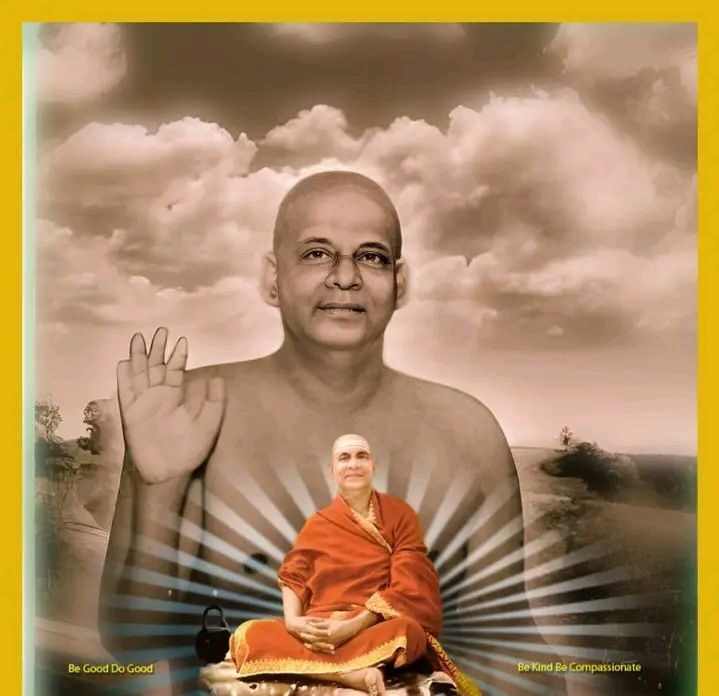
Hari Om

Menu

February 13, 2026

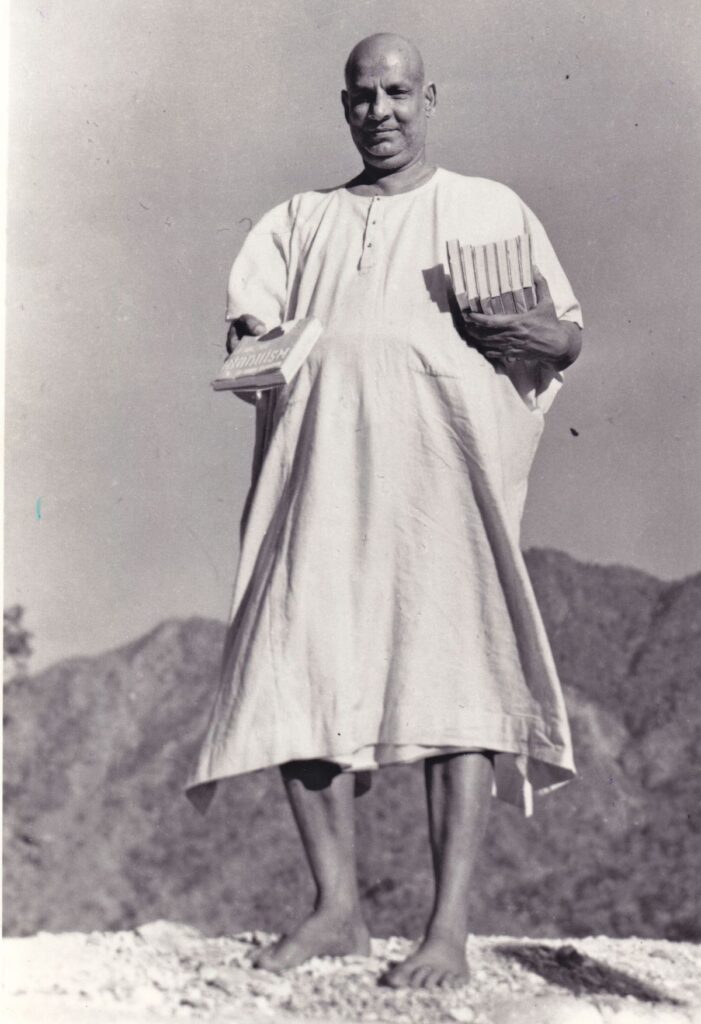
Swami Sivananda holding books outdoors image
Karma Yoga, Swami Sivananda

Karma Yoga: A Means to Knowledge

Karma Yoga: A Means to Knowledge The practice of Nishkamya Karma Yoga destroys sins and impurities of the mind and causes Chitta Suddhi or purity of the Antahkarana. Knowledge of the Self dawns in a pure mind. Knowledge of the Self is the only direct means to freedom. As cooking is not possible without fire so is emancipation not possible without knowledge of the Self. Karma cannot destroy ignorance because they are not hostile to each other. But knowledge certainly destroys ignorance as light destroys the thickest darkness. You will find in the Mahabharata: “Knowledge springs in men on the destruction of sinful Karma when the self is seen in the Self, as in a clear mirror.” Santi Parva: 204-8. In the following passages Karma Yoga is pointed out as a means to the attainment of Atma Jnana: “The Brahmanas seek to know this (Atman) by the study of the Vedas, by Yajna or worship.” Brih. Upanishad: 4-5-22. “But without Yoga, O mighty-armed, renunciation is hard to obtain.” Gita: Chapter V-6. “Having abandoned attachment, Yogins perform action for the purification of the self.” Gita: Chapter V-11. “Sacrifice, gift and also austerity are the purifiers of the wise.” Gita: Chapter XVIII-5.

Karma Yoga: A Means to Knowledge Read Post »

Swami Sivananda meditating near river image
Jnana Yoga, Swami Sivananda

Preliminary Sadhana

Preliminary Sadhana by Swami Sivananda Try to know the ways and habits of this Ahamkara. It thirsts for self-aggrandisement or self-advancement, power, possession of objects and enjoyment. Kill this Ahamkara or egoism and selfishness. Be disinterested. Pin your faith to the opposite virtues, spirit of sacrifice and service as the guiding principles of life. At once you will have a rich, expanded spiritual life. Kindle the powers of resistance. Keep up the positive ideal of active service of humanity and pure love. Generate the positive Sattvic counter current of energy to combat the downward negative currents of Vasanas. Keep yourself always in a positive state. Overcome negative thoughts by entertaining positive divine thoughts. Rise from impurity, impotence and faintness of heart. Be bold, be cheerful always. Cultivate Daivi Sampat such as mercy, peace, forgiveness, tolerance, etc. Destroy Asuric Sampat such as arrogance, egoism, pride, anger, lust, etc.; you are bound to attain the highest bliss or Knowledge. O Aspirants! take refuge in your own Self, the immortal Soul. Be steadfast in your resolve. Tread the path of truth and righteousness. Watch your mind very carefully. Be vigilant and diligent. Discipline the turbulent Indriyas. Curb the tongue and the reproductive organ. You will cross the ocean of Samsara and attain Immortality and perennial Peace and Joy.

Preliminary Sadhana Read Post »

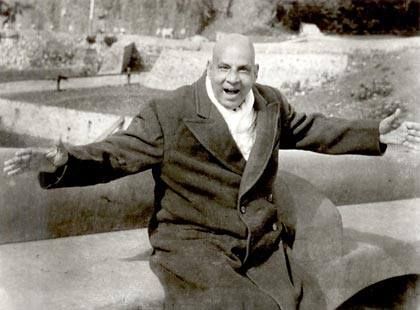
Swami Sivananda smiling with open arms image
Jnana Yoga, Swami Sivananda

What is this Ego?

What is this Ego? by Swami Sivananda Ego or Egoism or Egotism or Ahamkara in Sanskrit is the self-asserting principle or Tattva born of ignorance or Prakriti. Abhimana is egoism. Garva is egoism. The seed of this ego is the differentiating intellect or Bheda Buddhi. It is the ego which has created the idea of separateness from God or the Atman. It is the ego which is the root cause for all human sufferings and births and deaths. This ego identifies itself with the body, mind, Prana, the senses. Wherever there is ego, there are mineness, selfishness, likes and dislikes, lust, anger, greed, hypocrisy, pride, jealousy, delusion, arrogance, conceit, impertinence, Vasanas, Trishna or cravings and Vrittis or Sankalpa, clinging to this earth-life (Abhinivesha), agency, doer (Kartha) and enjoyer (Bhokta). You must have very clear understanding of the nature of this ego, if you want to annihilate egoism. Killing of egoism is killing of mind only. Destruction of thought, desires, cravings, mineness, selfishness, jealousy, pride, lust is really destruction of mind or egoism. Control of senses also is annihilation of the mind or egoism. This egoism assumes a subtle form. The gross egoism is not so dangerous as the subtle egoism. Institutional egoism is a subtle form of egoism. The man identifies himself with the institution and gets attached to the institution or cult. He has no broad-mindedness or catholicity. The working of egoism is very mysterious. It is very difficult to detect its various ways of working. It needs a subtle and sharp intellect to find out its operation. If you practise introspection daily in silence you will be able to find out its mysterious ways of working. This ego likes his own birth place and district, people of his district, own mother tongue, his own relations and friends, his own ways of eating, mode of dressing. He has his own predilections and preferences. He dislikes others’ ways of eating, dressing etc. This ego wants to exercise power and influence over others. He wants titles, prestige, status, respect, prosperity, house, wife, children. He wants self-aggrandisement. He wishes to domineer and rule over others. If anybody points out his defects, his vanity feels offended. If anyone praises him he is elated. This ego says, I know everything. He does not know anything. What I say is quite correct. What he says is quite incorrect. He is inferior to me. I am superior to him. He forces others to follow his ways and views. This ego will lurk like a thief when you start introspection and self-analysis. It will elude your grasp and understanding. You must be ever alert and vigilant. If you obtain the grace of the Lord through Japa, Kirtan, prayer and devotion you can easily kill this ego. Through Lord’s grace only your self-surrender will become Perfect. When this ego melts in the cosmic ego you will attain communion with the Lord or Self-realisation. May you realise the goal of life and attain everlasting Bliss through annihilation of this little ego! by Swami Sivananda

What is this Ego? Read Post »

Swami Sivananda blessing pose holding symbol
Jnana Yoga, Swami Sivananda

Ahamkara

Ahamkara by Swami Sivananda AHAMKARA or egoism is the self-arrogating principle in man. It is a Vritti or modification that arises in the mind. Patanjali Maharshi calls this by the name ‘Asmita’. The same mind assumes the form of egoism when man self-arrogates himself. Ahamkara manifests first and then comes ‘Mamata’. This baneful egoism generates actions, desires and pains. It is the source for all evils. It is illusory. It deludes people. Through it is nothing, it is everything for the worldly people. It is associated with mineness. It is born of Avidya or ignorance. It springs from false conceit. Vanity fosters it. It is the greatest enemy. If one renounces this dire Ahamkara he will be happy. The secret of renunciation is renunciation of egoism. Ahamkara has its seat in the mind. It is under the influence of egoism man commits evils and wrong actions. It is deep-rooted. Anxieties and troubles proceed from egoism. Ahamkara is a veritable disease. Pride, lust, anger, delusion, greed, jealousy, love and hatred are the attendants of Ahamkara. Ahamkara destroys our virtues and peace of mind. It spreads the snare of affection to entrap us. He who is free from egoism is very happy and peaceful. Desires multiply and expand on account of egoism. Our inveterate enemy, egoism, has spread about us the enchantments of our wives, friends, children, etc., whose spells it is hard to break. There is no enemy greater than egoism. He who neither desires nor dislikes anything and who preserves the serenity of mind at all times is not affected by the feeling of egoism. There are three kinds of egoism in the three worlds. Of these, two kinds of egoism are beneficial and of superior nature but the third is of a vile kind and is to be abandoned by all. The first is the supreme and undivided ego which is eternal and which pervades through the world. It is the supreme soul (Paramatman), besides which there is nothing in nature. Meditate on the formula ‘Aham Brahma Asmi – I am Brahman.’ Identify yourself with Brahman. It is Sattvic Ahamkara. The knowledge which makes us perceive our own self to be more subtle than the tail-end of paddy or to be as minute as the hundredth part of a hair and to be ever existent is the second kind of Ahamkara. The two kinds of egoism are found in Jivanmuktas or liberated sages. They lead to the liberation of men. They will not cause bondage. Hence they are of beneficial and superior nature. The third kind of Ahamkara is the knowledge which identifies the ‘I’ with the body composed of the hands, feet, etc., which takes the body for the soul or the Self. This is the worst or basest form of egoism. This is found in all worldly persons. This is the cause for the growth of the poisonous tree of rebirths. Those who possess this kind of egoism can never come to their right senses. Countless persons have been deluded by this form of Ahamkara. They have lost their intelligence, power of discrimination and power of enquiry. This kind of egoism produces baneful results. People come under the influence of all evils of life. Those who are slaves of this form of Ahamkara are troubled by various desires which induce them to do wrong actions. It debases them to the state of beasts. This kind of Ahamkara should be destroyed by the other two kinds of Ahamkara. The more you thin out this egoism, the more you will get knowledge of Brahman or the light of the soul. Again there are three kinds of Ahamkara viz., Sattvic egoism, Rajasic egoism and Tamasic egoism. Sattvic egoism will not bind a man to Samsara. It will help the aspirant to attain the final emancipation. If you try to assert ‘Aham Brahma Asmi’ ‘I am Brahman’ – this is Sattvic egoism. Even in a Jivanmukta there is slight trace of Sattvic egoism. He does actions through this Sattvic egoism. ‘I am a king, I know everything. I am very intelligent’ – this is Rajasic egoism. ‘I am a fool. I do not know anything’ – this is Tamasic egoism. The literal meaning or Vachyartha of ‘Aham’ Pada is Aham Vritti that arises in the mind, the little ‘I’ which identifies itself with the physical body. The indicative meaning or Lakshyartha of ‘Aham’ Pada is Atman or Brahman, the big or infinite ‘I’. Mere illusion (Maya) is the cause of egoism. Knowledge is the cause of egoism. Knowledge is produced through the illusory objects such as the body, tree, river, mountains, cow, horse, etc. If there are no objects, we will have no knowledge of objects at all. Then egoism, the seed of Manas. Will be absorbed. The idea of ‘I’ which is the nest containing all frailties is the seed of the tree of mind. The sprout which at first germinates from the seed of Ahamkara is Buddhi or intellect. From this sprout, the ramifying branches called Samkalpas take their origin. Through such a differentiation, the mind, Chitta and Buddhi are but the different names or qualities of the same Ahamkara. The branches of Vasanas will naturally produce innumerable crops of Karmas, but if with the sword of Jnana you sever them from the heart’s core, they will be destroyed. Cut the branches of the dire tree of mind and eventually destroy the tree at its root completely. Cutting the branches is only a secondary thing, the primary one being the eradication of the tree at its root. If you, through virtuous actions, destroy the idea of ‘I’ at the root of the (mind), then it will not grow up. Atma Jnana or knowledge of the Self is the fire which destroys the conception of Ahamkara, the seed of the tree (mind). There is another classification of egoism, viz., gross (Sthula) and subtle (Sukshma). When you identify yourself with the gross physical body, it is gross egoism. When you

Ahamkara Read Post »

Swami Sivananda folded hands greeting outdoors image
Jnana Yoga, Swami Sivananda

Real Education

Real Education by Swami Sivananda EDUCATION should teach the pupils to love God and man. Education should instruct the students to be truthful, moral, fearless, humble and merciful. Education should teach the students to practise right conduct, right thinking, right living, right action, self-sacrifice and attain knowledge of the Self. The Devas, the Asuras and the men received education under Prajapati. They learnt the triad of self-restraint, liberality and mercy. This is real education. Indra remained as a student under Prajapati and learnt that the soul is immortal, self-luminous distinct from the waking dreaming and deep-sleep states and that the individual soul is identical with the Supreme Soul. This is real education. Saunaka approached his teacher, Rishi Angirasa, and learnt that this Atman or the Self is to be verily obtained by the continual practice of truth, penance, perfect knowledge and abstinence. This is real education. Maitreyi sat at the lotus-like feet of Sage Yajnavalkya and learnt that the Self is imperishable, unattached, free, and not subject to pain or destruction. This is real education. Narada was a student under Sanatkumara and learnt that the Infinite is Bliss, that there is no bliss in anything finite, and that one should wish to understand the Infinite. This is real education. Uddalaka taught Svetaketu: That, which is the subtle essence, is the root of all; in That, all that exists has its Self; That is the Self; That is the True; That thou art, O Svetaketu.’ This is real education. In the Taittiriya Upanishad, the teacher, after having taught the Vedas, instructs the pupil thus: ‘Speak the truth. Do your duty. Do not neglect the study of the Vedas. Do not cut off the thread of offspring after giving the preceptor his proper reward. Do not swerve from Truth. Do not swerve from duty. Do not neglect your welfare. Do not neglect your prosperity. Do not neglect the learning and the teaching of the Vedas. Do not neglect the duties towards the Gods and the forefathers. May the mother be thy God (Matri Devo Bhava). May the father be thy God (Pitri Devo Bhava). May the preceptor be thy God (Acharya Devo Bhava). May the guest be thy God (Atithi Devo Bhava). Do such actions as are blameless, not others. Those that are good works to us should be performed by thee, none else. Those Brahmins who are superior to us should be comforted by thee with seats, etc. Give with faith. Do not give without faith. Give with joy, modesty, fear and kindness. Then, if there be any doubts as to any action or conduct. ‘In that case, conduct thyself as Brahmins who possess good judgement conduct themselves therein, whether they be appointed or not, as long as they are not cruel but devoted to duty. Then in respect of persons accused to sin, conduct thyself as Brahmins who possess good judgement and conduct themselves therein, whether they be appointed or not, as long as they are not cruel but devoted to duty. This is the rule. This is the teaching. This is the purport of the Vedas. This is the command. This should be followed – this verily should be followed.’ This is real education. Educate your eyes to see God in all faces, to behold unity of Self in all beings. Educate your ears to hear the Upanishadic teachings and the Sweet melodious Kirtans of Lord Hari. Educate your tongue to sing the praise of the Lord and the utter pleasant, loving and truthful words. Educate your hands to do charity and serve the poor. Educate your mind to be always cheerful and calm and to think of the Immortal Atman. This is real education. Our present-day schools and colleges give secular education. There is neither ethical discipline nor spiritual instruction. The students have no spiritual high ideals of life. They learn something in order to eke out their livelihood. They study only to get emoluments. This is very sad indeed. That is the reason why they turn out to be spiritual bankrupts in the end. Education must be best calculated to promote plain living and high thinking. Each student must be taught that his first and foremost duty is to attain Self-realisation and to cultivate universal brotherhood. The real work of all universities must be to unite man with man. The main purpose of education must be to make man a real man with all divine attributes. Gita, Upanishads, Ramayana, Bhagavata, Mahabharata, Patanjali Yoga Sutras, Brahma Sutras, Comparative Religion and Philosophy must be taught in Schools and Colleges. Their study must be made compulsory. Practical instructions on ethics, Yoga and meditation and control of mind should be imparted to the students. Study of Sanskrit must be made compulsory. Without the knowledge of Sanskrit, the depths of philosophy cannot be comprehended. The principals and professors of Colleges, the head masters of High Schools must be guided by learned and realised Sannyasins and Yogins. Then only real education can be imparted to students. If students who are equipped with real education come out of the Universities every year, we will have a glorious new India and a new era of peace, plenty and prosperity. World needs men rich in intuition. Awakened souls who have attained illumination are a blessing to the world. They will guide people in the path of righteousness and help them to cross the ocean of ignorance and attain Immortality and Eternal Bliss. They will guide the heads of the educational institutions. May you all be endowed with true knowledge and real education! May the world be filled with real educated persons! May the Universities, Schools, and Colleges become dynamic centres of real education and culture! May you all understand the real purpose of education and the goal of life! May the heads of educational institutions possess right understanding and divine knowledge to guide the students in the right path! May you all enjoy the supreme peace of the Eternal!

Real Education Read Post »

Swami Sivananda portrait with tilak and garland picture
Jnana Yoga, Swami Sivananda

Practical Religion

Practical Religion by Swami Sivananda THE idea of death has ever been the strongest motive-power of religion and religious life. Man is afraid of death. Man does not want to die. He wants to live forever. This is the starting point of philosophy. Philosophy enquires and investigates. It boldly proclaims, O Man! do not be afraid of death. There is an immortal abode. That is Brahman. That is your own Atman, that dwells in the chambers of your heart. Purify your heart and meditate on this pure immortal, changeless Self. You will attain Immortality. A clear understanding of man’s relation to God is a matter of momentous importance to students of philosophy and all aspirants. Philosophers, prophets, saints, sages, thinkers, Acharyas, and great religious leaders of the world have tried to explain the relation of man to God and the universe. Various schools of philosophy and different kinds of religious beliefs have come into existence on account of various explanations given by different philosophers. The three schools of metaphysical thoughts are dualism (Dvaita), qualified monism (Visishtadvaita) and monism (Advaita). They all are sages on the way to the ultimate Truth and Para Brahman. They are rungs in the ladder of Yoga. They are not at all contradictory. On the contrary they are complementary to one another. These stages are harmoniously arranged in a graded series of spiritual experiences. Dualism, qualified monism, pure monism – all these culminate eventually in the Advaita-Vedantic realisation of the Absolute or the transcendental Trigunatita Ananta Brahman. Madhva said, Man is the servant of God and established his ‘Dvaita’ philosophy. Ramanuja said, Man is a ray or spark of God and established his ‘Visishtadvaita’ philosophy. Sankara said, Man is identical with Brahman or the eternal soul and established his ‘Kevala Advaita’ philosophy. People have different temperaments and different capacities. So different schools of philosophy are also necessary. The highest rung is ‘Advaita’ philosophy. A dualist or qualified monist eventually becomes a Kevala Advaitin. The essence of all religions is the same. Only non-essentials differ. Real religion is above mind and senses. Real religion is above ceremonials and rituals. Real religion is eternal life in the immortal soul or Brahman. Philosophy is the rational aspect of religion and religion is the practical aspect of philosophy. What is that by knowing which everything else will be known, what is that by attaining which there will be no hankering for any other thing and what is that realising which one becomes immortal, fearless, desireless and rests in everlasting peace and happiness? It is Brahman or Atman or the ultimate Truth which is the summum bonum of life. It is the Bhuma or the unconditioned. You can get real happiness only by attaining this Bhuma or the highest Self. The Being who is described in the Upanishads is Brahman or Atman or the Self or the Absolute. He is the fountain-head of all scriptural knowledge. He is the source or womb for everything. He is Existence Absolute, Knowledge Absolute and Bliss Absolute. He is indivisible, all-pervading, self-contained, eternal and immortal. He is beyond time, space and causation. He is beginningless and endless. He is the indweller in all beings. He is the witness of the activities of all minds. What on earth can cause fear in you when you have realised your identity with such an Atman? What on earth can generate hatred, delusion, difference and sorrow in you when you behold the one in all and all in one? What on earth can cause agitation in you when you have transcended the mind and rest peacefully in your own Sat-Chit-Ananda Svarupa – that magnanimous ocean of bliss and stupendous silence? The questions: Who am I? What is this Samsara? Whence have I come? Whither will I go? What is the goal of life? What is Brahman or Atman? What is the relation between the individual soul and the Supreme Soul? How to attain the Goal? Can I become Immortal? Can I enjoy Eternal Bliss? will surely arise in the mind of every human being at one stage of his life or another. He who thinks seriously over these questions and attempts in right earnest to reach the goal is a wise man but he who does not care to ponder over these vital questions, who leads a sensual life and who does not endeavour to attain the final beatitude of life, is a thoughtless man. He lives in vain. He is a burden on this earth. He is a slayer of his own Self. His life is indeed very pitiable. You experience disharmony and discord when Rajas and Tamas prevail in the mind. Annihilate Tamas by increasing Rajas and destroy Rajas by increasing Sattva. There will be harmony and concord when Sattva prevails in the mind. Go beyond Sattva and hear the celestial music of the soulmusic that you never heard of before. It is the music of the meeting of the soul with soul. It is the wonderful music that transcends all Ragas and Raginis. It is the unstruck music of the Infinite – that celestial melody which thrills the hearts of the meditator, that celestial melody which helps the aspirant to merge himself in Brahman. It is the music of ‘OM’ or Pranava Dhvani. It is the transcendental Anahata sound. It is the divine music of Krishna’s flute. It is silence itself. Its melody and sweetness are beyond description. Drown yourself in the bliss of this inner music. You should experience it yourself. Live without the feeling of ‘I-ness’, ‘mine-ness’ and attachment. Restrain the senses. Observe the rules of right conduct. Cultivate purity of heart. Hear the Truth. Abide in the Self. Be happy. Meditate always, I am pure consciousness. I am Sat-Chit-Ananda Brahman. I am immutable, self-effulgent, Immortal Self. I am the silent witness of the three states, viz., waking, dreaming and deep-sleep states. I am distinct from the five sheaths. You will attain Self-realisation soon. You will attain knowledge of the Self. You are

Practical Religion Read Post »

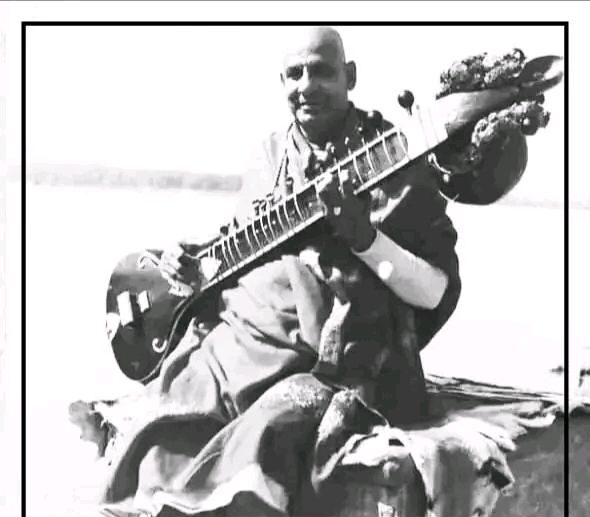
Swami Sivananda playing sitar outdoors image
Jnana Yoga, Swami Sivananda

World is Unreal-II

World is Unreal-II by Swami Sivananda Four kinds of objects are seen in this unive 1. Objects which have names only.2. Objects which have names and forms only.3. Objects which have names and forms and are fit for worldly Vyavahara. 4.Eternal, unchanging, imperishable, homogeneous Vastu which exists in the three periods of time. Examples of the above are: 1. Vandhya-putra (barren woman’s son), Sasasringa (horns of a hare), Gaganaravinda (lotus in the sky). 2. Rajju Sarpa (snake in the rope), Suktirajata (silver in the mother-of-pearl), Marumarichika or Mriga-trishna (water in the mirage), blueness in the sky, Gandharvanagara (city in the clouds), Svapna-prapancha (dream objects). These have names and forms; when you go near them or when you wake up from the dream they vanish. 3. Ghata (pot), Pata (cloth), etc., have names and forms. They are useful for keeping water and wearing. When you go near them you see them, they appear to exist. But when they are destroyed they have no existence. 4. Atman or the Inner Self alone exists at all times. It is unchanging.Objects of the first kind are called Asat Vastus. Objects of the second kind are called Mithya Vastus. Objects of the third kind are called Vyavaharika Vastus. The fourth kind is called Paramarthika Vastu. Worldly-minded, ignorant persons are charmed and deluded by the products of Maya. They lose their understanding on account of the force of Maya or Avidya and indulge themselves in sensual objects and perish without realising the Atman or Paramarthavastu. The worldly objects are also unreal. If you think deeply and do Vichara (enquiry), the world with its manifold, multi coloured objects will appear as a long dream only. The object which appears for a short period only like the snake in the rope but does not exist in reality is only a Mithya object. For the Ajnanis or the worldly-minded persons the sensual objects are quite real. For the sages or those who are endowed with discrimination and enquiry they are unreal. Whatever you see is false. There is no doubt in this. The deer see water in the mirage when the sun is hot. They run towards the mirage for drinking water. They do not find any water there. The boy runs to take a piece of silver when there is bright sun. When he goes near the silver he does not find any silver. He finds only the mother-of-pearl. When a girl goes to bring water at night she sees a snake on her way and gets frightened. She takes a light to see the snake but finds only a rope. There is no snake there. A young man embraces a girl in his dream and experiences actual discharge of semen. When he wakes up he does not find a girl. You behold blueness in the sky. The sky appears as a blue dome. When one moves in the aeroplane in the sky he does not find any blue dome but the blue dome appears at a distance. Whatever you see does not really exist. They are mere illusory appearances like the objects in a dream. But the seer exists when the objects appear and disappear. In the dream state big mountains, elephants, cities, big rivers, etc., are seen within a minute Nadi called Hitanadi that is located in the throat. There is no space in the minute Nadi for these big things to remain there. Hence the dream objects are false or illusory. A very big tree grows out of a tiny seed. A big body springs from a tiny drop of semen. Water condenses itself and forms a big block of ice. The objects that appear in the waking state are also false. In the dream you witness the events of several years within a few minutes. Within a day of Brahma thousand Chaturyugas pass for us. Within the day of a Deva six months pass for us. Within the time taken by a huge mountain snake for a second meal, man takes his meals a hundred times. Within the time taken by a child to develop itself in the womb, small insects take time to generate crores of their progeny. A happy man spends one night like a minute whereas a man who is drowned in grief spends one night like several years. Hence time also does not appear to be the same at all times for all. The objects that appear and perish in time are illusory. The thing seen by you in your dream is not seen in the same place and in the same manner in the waking state. In the same manner one man says that Mr. X is a good man. The same man appears as a bad man for another. The objects seen in a dream do not exist correctly in the waking state. The objects seen in the waking state appear different even in the waking state. In the dream state you do not recollect the things of the waking state. You do not recollect in the dreaming state I saw such and such objects in the waking state. I do not see them now. Therefore the objects of the waking state are more false than the objects of the dream. Srutis and sages declare that the objects of the world are as false as the objects of the dream. They call the world Deergha Svapna or a long dream. That which does not exist in the beginning and in the end does not really exist in the middle also. It is unreal. The snake that is found in the rope at night does not exist when a lamp is brought. It appears in the middle only. Such is the case with silver in the mother-of-pearl, water in the mirage, city in the clouds, etc. Therefore they are unreal even when they appear. The dream objects also do not exist in the daytime. Similarly the objects of this world appear in the middle only. Hence they are unreal. An objector says, The food and

World is Unreal-II Read Post »

swami sivananda Yoga demonstration by river with group watching
Jnana Yoga, Swami Sivananda

World is an Illusion

World is an Illusion I THIS world is a play of colours and sounds. This sense-universe is a play of nerves. It is a false show kept up by the jugglery of Maya, mind and nerves. You enjoy the sensual pleasures for a period of twenty years when the senses are strong. What is this short evanescent period of twenty years in eternity? What is this despicable, jarring, monotonous sensual life, compared with the eternal and peaceful life in the immortal Self within? If the nerve of taste, the glosso-pharyngeal gets paralysed, you cannot enjoy different kinds of palatable dishes. If your retina or optic nerve is paralysed, you cannot enjoy diverse beautiful forms. If the auditory nerve is paralysed, you cannot hear melodious music. If the olfactory nerve is paralysed, you cannot enjoy various kinds of sweet fragrance. If your sensory nerve of the hands is paralysed, you cannot enjoy soft things. If the nerve origin is paralysed, you cannot enjoy conjugal bliss. Do you not now clearly see that this world is a mere play of nerves? Do you not understand that this universe of opposites is illusory? You will have to depend upon these nerves and senses for your happiness. If these nerves go out of order, you become miserable, even though you possess enormous wealth. Can you call these little illusory sensual pleasures, which depend upon the play of nerves, as real lasting happiness? It is mere itching of nerves only, which tickles those deluded souls who have lost their power of discrimination and understanding. You are deluded or deceived by the senses. That which is changing and perishable cannot be real. There is neither mind nor matter, neither world nor creation in reality. Brahman alone shines in His pristine glory. This is the absolute Truth. The whole of experience consisting of perceiver and perceived is merely an imagination of the mind. That which exists only in imagination does not exist in absolute reality. Duality consisting of subject and object is a creation of the mind and the external senses. As long as there is faith in causality, the world is eternally present. When this faith is destroyed the world is nowhere. That which is nothing in the beginning and in the end does not necessarily exist in the present. Objects are all like ordinary illusions though regarded as real. In deep sleep you have no experience of the world because there is no mind. This clearly shows that there will be world only if there is mind and that the mind alone creates this world. This is the reason why Srutis declare that this world is Manomatram-jagat and Manahkalpitam-jagat. In Samadhi or super-conscious state, wherein there is annihilation of the mind, there is no world. Just as the snake in the rope vanishes when a lamp is brought, so also this world which is mere appearance or super-imposition disappear when one attains illumination, when the sun of knowledge dawns. A liberated sage only has no world. This world is an illusion or unreal for a man of discrimination. For a passionate man who is ignorant this world is a solid reality. He is immersed in Samsara. This world is everything for him. There is nothing beyond this world. Because it is said that there is no world, young aspirants should not give up the practice of Karma Yoga. People in whom a little dispassion has dawned should not abandon the world. This world is the best teacher. You will have to learn many lessons from this world. Remain in the world but be not worldly-minded. View the world as Brahman only. Change your angle of vision. You will be happy and wise. If you constantly keep before the mind the idea that the world is unreal, you will develop dispassion and a burning desire for liberation. II Time is a mode of the mind. Time is a mental creation. Time is a trick or jugglery of the mind. Time is an illusion. Brahman is beyond time. It is eternity. There is local time. If it is 12 at Madras, it is 12-23 at Calcutta. 1 at Rangoon, 1-30 at Singapore, 6-30 at London, 12-30 at Chicago and 1-30 at New York. What is all this? There is no uniformity. Does this not indicate that time is a creation of the mind? Go beyond time and rest in the timeless, eternal, imperishable Brahman. ‘Up and down’, ‘Within and without’, ‘high and low’, ‘big and small’, ‘thin and stout’, ‘virtue and vice’, ‘good and bed’, ‘pleasure and pain’, ‘beauty and ugliness’, ‘now and then’, ‘here and there’ are relative terms. These are all mental creation only. ‘Up’ will come ‘down’ and ‘down’ will come ‘up’. This stick is small when compared with that big stick. That big stick will become small when compared with another bigger stick. ‘Within’ will become ‘without’ and ‘without’ will become ‘within’. What is good at one time is bed at another time. What is good for one man is bad for another man. What is Dharma for one is Adharma for another. What is Dharma at one time is Adharma at another time. Brahman is neither thin nor stout, big nor small. In Brahman there is neither within nor without, virtue nor vice, pleasure nor pain, good nor bad. It is a homogeneous essence of bliss and knowledge, where there is no play of mind, neither time nor space, East nor West, past nor future, Thursday nor Friday. Tomorrow becomes today and today becomes yesterday. Future becomes present and present becomes past. What is all this? This is a creation or trick of the mind only. Is Ishvara everything is present only, everything is here only. Brahman is beyond time. There is neither day nor night, yesterday nor tomorrow in the sun. The mind has created time and space. When you are happy, time passes away quickly; when you are unhappy time hangs heavily. This is only a relative world. The

World is an Illusion Read Post »

Swami Sivananda blessing pose spiritual collage image
Jnana Yoga, Swami Sivananda

Adhyaropa or Superimposition

Adhyaropa or Superimposition by Swami Sivananda Adhyaropa is superimposition! This is one of the fundamental principles of Vedanta. You cannot proceed with the study of Vedanta without understanding Adhyaropa. In reality, this world was never created. This world is superimposed on Brahman. This world is imagined where there exists only Brahman. This is Adhyaropa. This superimposition is sublated through the Yukti called Apavada. You want to meet your friend Sri Rampratap. When you go to his house, he is not there. Somebody tells you that he has gone to a particular shop in the bazaar. You wait at his door and in a short time you see someone coming, who looks like Rampratap. From a distance you determine in your mind that the person coming is none but Rampratap. But after some time when he actually comes near you, you find that he is not Rampratap but Krishnagopal. You have superimposed Rampratap on Krishnagopal. This is Adhyaropa. Even in case the person coming is Rampratap himself really, you think, sometimes, that the person coming is somebody else, but when he comes nearer, he happens to be Rampratap himself. This is another kind of negative superimposition. The instance in the previous case was one of positive superimposition. In each of these cases, there has been a mistaken notion that one thing is another. This is called Adhyaropa or superimposition. Adhyaropa is the result of ignorance of the real object. Generally people mistake a rope for a snake, a post for a man, the mother-of-pearl for silver, the mirage for water, etc. In hazy light of dusk you mistake a rope to be a snake. You are terribly afraid of it. But a friend of yours who comes with a light assures you that it is only a rope. Now you look at the supposed snake once again and find it to be unmoving and that it is really a rope and not snake. Now the Adhyaropa vanishes. In this instance there was no snake at all. It was only the rope that appeared as a snake. The snake was not there in the past, is not in the present and will not be there in the future (three periods of time), i.e., neither before you saw the snake, nor when you were actually seeing the snake, nor, again after your friend came with the light and assured you that it was only a rope, was there really a snake. Why was it that you saw the snake when there was only a rope? This is beyond your capacity to understand. You will simply say, it appeared to me to be a snake. So also everything that you see in this world in the form of diverse objects is only Brahman. It was Brahman only in the past and it will remain so even in the future. To a Jnani there is no world at all. This world appears to be so only to an Ajnani. Till the dawn of knowledge everyone is under the spell of ignorance only. One sees diverse objects. He feels pleasure and pain. He undergoes sufferings and tribulations. He is subject to likes and dislikes. The five organs of knowledge and the five organs of action, all work, and you cognise diverse objects, hills, mountains, rivers, men, animals, and everything else. But when, through the grace of the preceptor and through Sadhana performed untiringly until purification, through hearing, reflection and meditation, you cognise the reality, then, no more the world appears to be real. You see Brahman alone everywhere. Then you cannot hate anyone. You cannot dislike anyone, because you see your own Self or Brahman in all. Can you ever dislike yourself? You may dislike any thing second to yourself, but you cannot dislike yourself. When you see everything else also to be your Self, then whom can you hate? You will become an embodiment of pure cosmic love. You are in search of a rope. You find one. But in the dark you mistake it to be a snake. You run away from it. You search all other places in the house and fail to find a rope. Your brother brings a light and shows you the rope which you mistook for a snake. You now see the rope. Just as you found the rope in the snake itself, even so, you will see Brahman in the objects of the world themselves. You cannot run away to the mountain-caves in search of Brahman. You have to practise seeing the Lord or Brahman in each and every object around you. When you are able to cognise the Reality underlying the objects, you will no more be deluded. The highly exalted Brahmanishtha-Guru for whom there is no world comes down from his exalted state to teach the disciple. He is even then fully conscious of his identity with Brahman. He is fully aware that he is himself Brahman, and the disciple too. But out of compassion and love he sheds his grace on the fit disciple by imparting to him the knowledge of Brahman. It is Adhyaropa that is to be well understood. If you can thoroughly grasp this principle, you can easily understand Vedanta. If you can dwell upon the simple truth that the whole world is merely superimposed on Brahman, if you can meditate on the idea, This body is a house made of five elements just as a house is made of brick, cement, wood and iron; the Self within me is the Self in every other being; the flickering mind is the cause for all misery and unhappiness, you will ever rest in joy, peace and eternal bliss. May you ever dwell upon this truth and remain happy amidst all changing circumstances, joys and sorrows of the busy worldly life! May you root yourself in Brahman, the Substratum for this body, mind and soul, Jiva and Jagat, Maya and Isvara, cause and effect!

Adhyaropa or Superimposition Read Post »

Swami Sivananda garlanded black and white portrait image
Jnana Yoga, Swami Sivananda

Adhyasa or Superimposition

Adhyasa or Superimposition by Swami Sivananda MAN’S transmigration is due to the evil of superimposition and the bondage of superimposition is created by himself and none else. It is this that causes the misery of birth and death for the man of non-discrimination who is tainted by Rajas and Tamas. Superimposition is the favourite theme of the Vedanta philosophy to explain how the ever-free Self came to be bound at all. The Jiva is under self-hypnotism. He must dehypnotise himself by meditation on the significance of Tat Tvam Asi Mahavakya. Then alone he will be free and the Jiva who was bleating like a lamb will roar like a lion. Adhyasa literally means ‘superimposition’ in the sense of mistaken ascription or imputation to something of an essential nature or attribute not belonging to it. It is an apparent presentation of the attributes of one thing in another thing. It is the illusory attribution or superimposition of the universe in the Atman which has no universe in it, like the misconception of silver in mother-of-pearl, snake in the rope, man in the post, bluishness in the sky, water in the mirage. This wrong notion is caused through Avidya or ignorance. According to Sankara, Adhyasa is the apparent presentation in the form of remembrance to consciousness something previously observed in some other thing. This is illusory knowledge. Adhyasa, Bhranti, Adhyaropa, Kalpana are synonymous terms. Sankaracharya writes in his Bhashya: Some indeed define the term ‘superimposition as the superimposition of the attributes of one thing on another thing. The so-called Anyatha-khyativadins maintain that in the act of Adhyasa the attributes of one thing, silver for instance, are superimposed on a different thing existing in a different place, for instance, on mother-of-pearl (if we take for our example of Adhyasa the case of some man mistaking a piece of mother-of pearl before him for a piece of silver). The Atma-khyativadins maintain that in Adhyasa the modification in the form of silver of the internal organ is superimposed on the external thing, mother-of-pearl, and thus itself appears external. Both views fall under the above definition. In illusion an unspeakable silver is produced which is a reality for the time being. Silver is superimposed on the mother-of-pearl. The deluded soul actually bends down his body to the ground to possess the silver. The silver is not in the mind. It is not present somewhere else, because it could not have experienced as here and now. You cannot say that it is mere non-entity. It is also not inherent in the mother-of-pearl, because it could not have been removed later on. Therefore, we are compelled to admit that the silver has no real existence anywhere, but it has only a seeming reality for the time being which is indeed indescribable. Others again define superimposition as the error founded on the non-apprehension of the difference of that which is superimposed from that on which it is superimposed. This is the definition of the Akhyativadins. Others, some Anyatha-khyativadins and the Madhyamikas, according to Ananda Giri, again define it as the fictitious assumption of attributes contrary to nature of that thing on which something else is superimposed. But all these definitions agree in so far as they represent superimpositions as the apparent presentation of the attributes of one thing in another thing. And therewith agrees also the popular view which is exemplified by expressions such as the following: Mother-of-pearl appears like silver The moon although one only appears as if she were double. But how is it possible in the interior self which itself is not an object, there should be superimposed objects and their attributes? For, everyone superimposes, and object only on such other objects as are placed before him (i.e., in contact with his sense organs), and you have said before that the interior self which is entirely disconnected from the idea of the Thou (the non-ego) is never an object. It is not, we reply, non-object in the absolute sense. For, it is the object of the notion of the ego. [The Pratyagatman is in reality non-object, for it is Svayam-Prakasha, self-luminous, i.e., the subjective factor in all cognition. But it becomes the object of the idea of the ego in so far as it is limited or conditioned by its adjuncts which are the product of nescience, viz., the internal organ, the sense and the subtle and gross bodies, i.e., in so far as it is Jiva, individual or personal soul]. The interior Self is well known to exist on account of its immediate (intuitive) presentation. Nor is it an exceptionless rule that objects can be superimposed only on such other objects as are before us, i.e., in contact with our sense organs; for, non-discerning men superimpose on the ether, which is not the object of sensuous perception, the dark-blue colour. Hence it follows that, that assumption of the non-self being superimposed on the interior Self, is not unreasonable. The subject and the object which have for the spheres the notion of ‘I’ and ‘thou’ respectively, and which are opposed to each other, as darkness and light, cannot be identifies. Their attributes also cannot be identified. Superimposition is an established fact. It is not an imaginary hypothesis. It is a serious mistake to superimpose on the subject, i.e., Atman whose nature is Intelligence, the object whose nature is insentiency and vice-versa to superimpose the subject and the attributes of the subject on the object. The subject is Atman or the Supreme Self whose nature is absolute consciousness. The object includes whatever of a non-intelligent nature, viz., body sense, mind, Prana and the objects of the senses, i.e., the manifested phenomenal universe. If the Atman or Brahman is really unconnected or unattached (Asanga), how can He be so related to the Koshas or the sheaths or the bodies as to be ordinarily regarded one with them? There are two kinds of relation in Indian logic. Samavaya Sambandha (inseparable relation as between an object and its parts,


Adhyasa or Superimposition Read Post »