











Bases of Vedanta
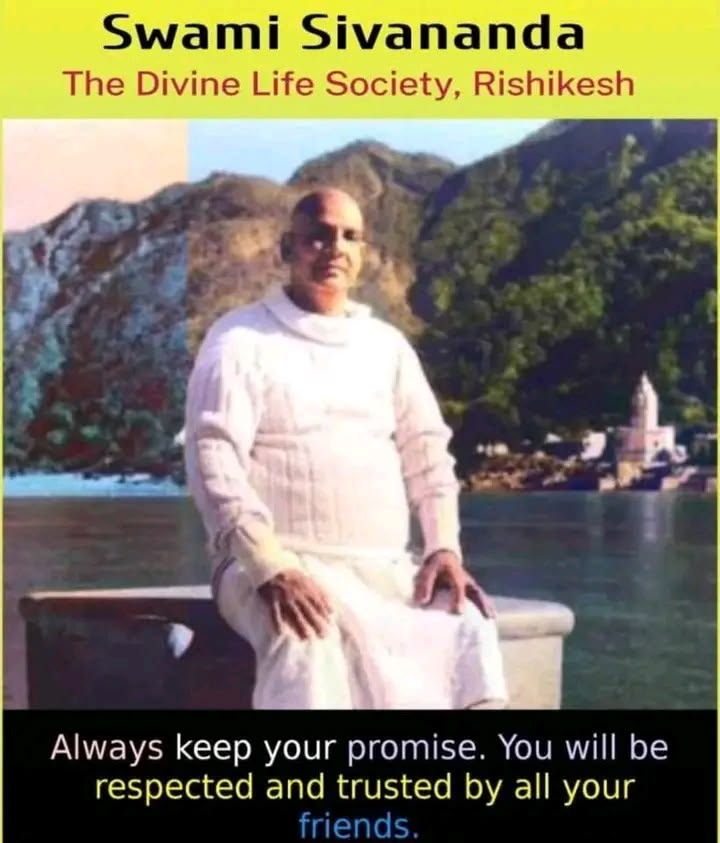
Bases of Vedanta by Swami Sivananda Introduction The purpose of life is the realisation of one�s own essential nature. It is to know that you are the pure ever-free Atman. The Vedanta expounds the great truth that Atman alone is real, the phenomenal world is unreal. You are Atman, but you forget your real Svarupa due to identification with the body. This is called Deha-Adhyasa. This is the greatest obstacle to Self-Knowledge or Atma-Jnana. To get over this delusion of identification with body the Vedantic Seers have made a detailed analysis of the different bodies, gross and subtle, and systematically proved that the Jiva is not the body but is identical with the Paramatman. The study of the three bodies, the five sheaths and the three states of waking, dream and deep sleep, helps man to understand that he is different from all these diverse modifications and that he is the unchanging, constant, witness of all these. This helps him to feel that he transcends the three states, the three bodies and the Panchakoshas. Constant remembrance of this and meditation on this knowledge will lead him to the realisation of his Atma-svarupa. Therefore, the study of the Panchakoshas is a valuable aid in the process of disassociating yourself from the bodies and the sheaths. It enables you to rise above body-consciousness, to feel that you are the Atman and thus remain quite unaffected and unattached amidst all distractions and tribulations of life. I. The Three Bodies & their Enumeratioon (The individual experiencer is a consciousness-centre enveloped by several layers of matter existing as the factors causing objective awareness in it. The analysis of these layers or bodies is necessary to ascertain the nature of the true Self.) Hari Om. Om Sat-Guru-Paramatmane Namah. Disciple: How many bodies are there in an individual (Jiva)? Guru: There are three bodies in every individual (Jiva). Disciple: Please name them. Guru: The physical body or the gross body (Sthula Sarira), the astral body or the subtle body (Sukshma Sarira or Lingadeha) and the causal body or the seed body (Karanasarira) are the three bodies. Disciple: Please illustrate them. Guru: The shell of a tamarind corresponds to the physical body. The pulp represents the subtle body. The seed corresponds to the causal body. Ice represents the physical body. H2O represents the subtle body. The Tanmatras or root-elements correspond to the causal body. The Gross Body Disciple: What are the components of the physical body? Guru: The physical body is composed of five elements, viz., earth (Prithivi), water (Apah), fire (Tejas), air (Vayu) and space (Akasa). Disciple: What are the seven primary essences (Sapta-Dhatus) of the physical body? Guru: Chyle (Rasa), blood (Asra), flesh (Mamsa), fat (Medas), bone (Asthi), marrow (Majja) and semen (Sukla), are the seven primary essences of the physical body. Disciple: What are the Shad-bhava-vikaras (six modifications of the body) ? Guru: Asti (existence), Jayate (birth), Vardhate (growth), Viparinamate (change), Apaksheeyate (decay), Vinashyate (death), are the six modifications or changes of the body. Disciple: What are the links with which the body is connected? Guru: The body (Deha), action (Karma), love and hate (Raga-dvesha), egoism (Ahamkara), non-discrimination (Aviveka) and ignorance (Ajnana) are the seven links of the chain of Samsara (world-experience). From Ajnana (ignorance), Aviveka is born. Aviveka is non-discrimination between the real and the unreal. From Aviveka is born Ahamkara or egoism; from egoism is born Raga-dvesha (like and dislike); from Raga-dvesha Karma (action) arises; from Karma the body or the Deha is produced. If you want to free yourself from the pain of birth and death, destroy ignorance (Ajnana), the root cause of this Samsara (world-experience), through the attainment of the Knowledge of Brahman or the Absolute. When ignorance is removed, all the other links will be broken by themselves. This physical body of yours is the result of your past actions and is the seat of your enjoyment of pleasure and pain. Disciple: Why is the body called Sarira or Deha? Guru: Because the body decays (Sheeryate) on account of old age, it is called Sarira. Because it is cremated or burnt (Dahyate) it is called Deha. The Subtle Body Disciple: What is the composition of the subtle body? Guru: The subtle body is composed of nineteen principles (Tattvas), viz., five Jnana Indriyas or organs of knowledge, five Karma Indriyas or organs of action, five Pranas or vital airs, Manas or mind, Buddhi or intellect, Chitta or the subconscious and Ahamkara or the ego. It is a means of enjoying pleasure and pain. Disciple: When will this subtle body get dissolved? Guru: It gets dissolved in Videha Mukti or disembodied Liberation. The Causal Body Disciple: What is the causal body (Karana Sarira) ? Guru: The beginningless ignorance that is indescribable is called the causal body. It is the cause of the gross and the subtle bodies. Disciple: How can I transcend the three bodies? Guru: Identify yourself with the All-pervading, Eternal Atman. Stand as a witness (Sakshi) of all experiences. Know that the Atman is always like a king – distinct from the body, organs, vital breaths, mind, intellect, ego and Prakriti – the Witness of their attributes. II. The Five Sheaths Disciple: What is meant by a Kosha? Guru: Kosha means a sheath. Disciple: Kindly illustrate these sheaths. Guru: Just as a pillow-cover is a covering or a sheath for the pillow, just as a scabbard is a sheath for the sword or the dagger, so also this body, Pranas, mind, intellect and the causal body are sheaths that cover the Atman or the Soul. There is the singlet close to the body; over this there is the shirt; over the shirt there is the waist-coat; over the waist-coat there is the coat; over the coat there is the overcoat. Even so, the Atman is enveloped by these five sheaths. Disciple: How many sheaths are there in the body? Guru: There are five sheaths. Disciple: Please name them. Guru: Annamaya Kosha, Pranamaya Kosha, Manomaya Kosha, Vijnanamaya Kosha and Anandamaya Kosha are the five Koshas or sheaths. Disciple: What is Annamaya Kosha? Guru: Annamaya Kosha is food-sheath. It is the gross body made up of the five gross elements. Disciple: Why is it called Annamaya