














Hari Om

Menu

February 11, 2026

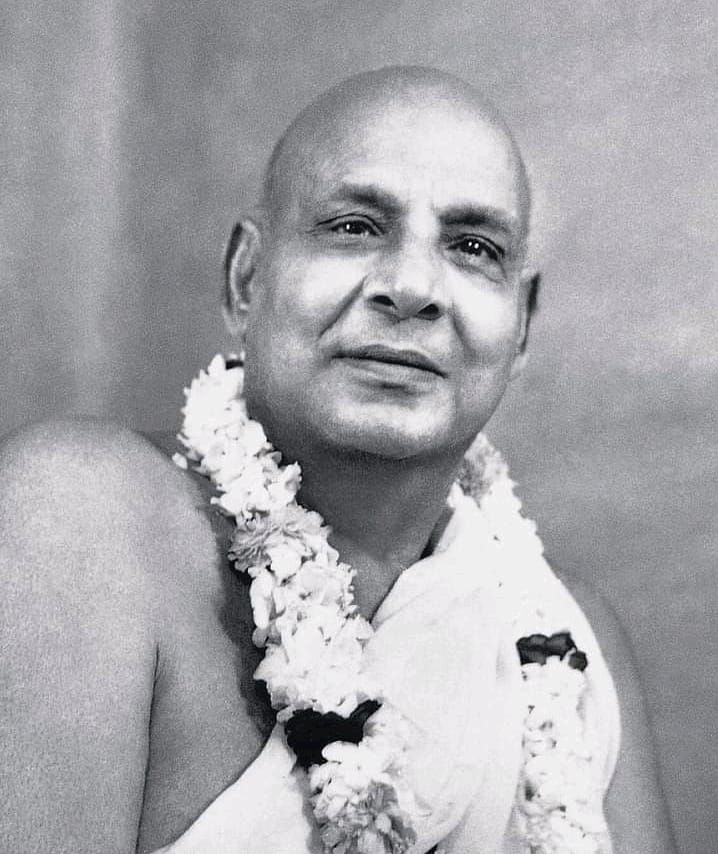
Swami Sivananda seated with garland giving blessing gesture. image
Jnana Yoga

Foundations for Education

Foundations for Education Education is the process of the gradual and systematic summoning of the tendency in the human being to the realisation of perfection. As the concept of perfection is unclear in the initial stages, the approach to the mind of the public, in this direction, has to be initiated with immense patience and care. When we deal with persons, we are really concerned with minds, and hence all successful approach in life is psychological. We have, first of all, to place ourselves in a position where we can appreciate sympathetic thoughts and feelings of people. For this purpose, we may classify society into three categories: (1) the student, who includes the child and the adolescent; (2) the man of the world or the active in society, including the youth and the middle-aged man; (3) the retired person, including all those who do not lead an active life but are in the evening of their age. Social regeneration has to keep in view all these stages of life and provide for their respective inner demands. For the present we may confine ourselves to the minds of the budding generation, viz. the student population, for we have to begin the work of reformation and the regeneration of society at the stage of the student, when the mind is flexible and amenable to the educational process. Here we have to start from the standpoint of the taught and not merely of the teacher. Education is not a process of merely emptying out the mind of the teacher by pouring its knowledge into the minds of students, but a feeling of their needs and supplying them with the proper thing, at the proper time, in the proper manner. A teacher, thus, has to be a good psychologist and should not regard teaching as a kind of business with the students. The teacher should have the capacity to make himself liked by the minds which need teaching. This pleasant process of the imparting of knowledge is education. In these days, neither the students nor the teachers are happy with the educational process, because it has been forgotten by the authorities concerned that education has to be physical, intellectual, emotional, moral, active and spiritual, all at once, in a way beautifully fitted to the conditions in which one is placed. The technique of education should take into consideration the average of the intelligence-quotient, health, social conditions, etc. of the students. It should also concentrate itself on methods for bringing about and effecting (1) the development of personality, (2) an adequate knowledge of the world, (3) an adjustment of self with society, and (4) a realisation of the permanent values of life. By development of personality what is meant is the wholesome building up of the individual, not only with reference to the internal states of body, mind and intellect, but also in relation to the external world reaching up to the individual through the different levels of society. In this sense, true education is both a diving inward and a spreading outward. Knowledge of the world is not merely a collection of facts or gathering information regarding the contents of the physical world but forms a kind of insight into its inner workings as well, at least in so far as one’s inner and outer life is inextricably wound up with them. With this knowledge it becomes easy for one to discover the art of adjusting oneself with society. This adjustment is not possible in any appreciable degree for one who has not acquired some amount of knowledge of the spiritual implications of the structure of human society. The aim of the education of the individual in society is the realisation of life’s values, personal, social, civic and even universal; all mutually related and determined by a common goal to which these are directed. Above all, we cannot start teaching students without our understanding the purpose of education. Many a Hindu, for example, has allowed himself or herself to be proselytised for different reasons. One such reason consists in the prospects of economic upliftment and raising of social status which the converters promise to these poor souls who have been unfortunately relegated to the unwanted section of Hindu society, by somehow depriving them of the facilities to improve themselves economically. The second reason is the baneful practice of untouchability and pollution by touch, which certain orthodox groups cultivated for a long time and which has not completely died out even today. Now the question arises: Why should have these things happened? Why should there be suppression and untouchability etc. in human circles? The answer is: lack of proper education. But what is proper education? Bearing in mind the essentials of the process enumerated above, it should be added that though education should be an immensely practicable affair, we should not think that the practicability of a thing consists in what is called ‘succeeding’ in life in any political sense of the term, because one may manoeuvre to succeed for some time, as one does in business, for instance, but be extremely unhappy within, in spite of the so-called ‘practical’ success. This happens because here we have only a soulless practicality of affairs, bereft of the sap of life which sustains it. Though, when we occupy a house, we are not always conscious of its foundation, nor is the foundation visible to the eyes, it goes without saying that the whole edifice stands on the foundation. Likewise, human success in life may look beautiful like a decorated and furnished building, but it cannot stand if it is not firmly fixed on a strong base. Our purpose here would be to have some idea as to w hat could this foundation of life’s education be. Education is for living life and not to suffer it. It is a wrong concept of the basis of life that has led to the defective structure of the present educational system. It is not necessary that religion in the

Foundations for Education Read Post »
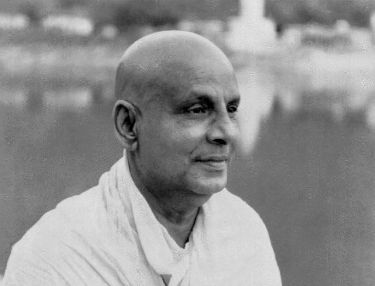
Swami Sivananda side view portrait near river. image
Jnana Yoga

Knowledge as a Means to Freedom

Knowledge as a Means to Freedom If our search is for freedom, knowledge is regarded as an endeavour towards the achievement of this freedom. The institutions of the world, whether they are educational, social or political, are instruments for the implementation of this endeavour towards the attainment of human freedom. From this point of view, it is difficult to believe that mankind has different ideals before itself. There seems to be a convergence of ideals, inspite of the diversity of approaches which appear to characterise the efforts of people. An investigative analysis into the structure of the human mind and its longings, would certainly reveal that there is a basic similarity of character in the needs of people and the effort on their part to gain greater and greater mastery over the techniques of the achievement of this freedom. This may be also regarded as an advancement in knowledge. So, the increase in knowledge is in a way equivalent to the increase in the capacity of a person to achieve freedom. But freedom from what, is the basic question. If this question cannot be answered, we cannot also know what knowledge is, and impliedly what education is, because education is the process of the acquisition of knowledge. So one thing hangs on the other. If we cannot know what we are asking for, what we are in search of and what is the sort of freedom that we expect in our lives, we cannot also know what is the knowledge that we seek in life. Consequently, we cannot know what should be the educational process. Everything will topple down, if the central aim is not clear to our minds. If we have a concept of an Academy in this Ashram, it is certainly not going to be an institution of a social kind, because we have many of such kind in the world. It is not going to be a series of studies, in the fashion of the age-old system of the several branches of learning. While all these learnings, arts and sciences, which we gain in the educational institutions of the world, are good in themselves and necessary as far as they go, because they help us to get on in life in some way or the other, we must know that the intention of mankind is not merely to get on in life. Because many can get on beautifully in life on the surface level and yet be very unhappy at the core of their heart. Our intention, in consonance with the intention of Sri Gurudev Swami Sivanandaji Maharaj and masters of that calibre, has not been certainly to tread the beaten track of social tradition or even personal idiosyncrasy or sentiment, but to find out some ways and means of unfolding the mysteries that seem to be at the background of the longings of mankind, and to provide them with a true enlightenment, which is perhaps a better word than knowledge. For this purpose, we may have to proceed from one degree of reality to another degree, gradually. It has to be reiterated, at the outset, that we are not to interpret knowledge as information of some particular subject. Truly speaking, knowledge is a percentage or degree of absorption of one’s life into the character of one’s knowledge. Knowledge is valuable to that extent alone which can be accommodated in one’s personal life and remains as a basic foundation for one’s search for the ultimate purpose which one is apparently longing for. It is very easy to be comfortable in life. But it is difficult to be happy in life. Society can deceive us into the notion that we are well off. When we conform to the standards of social ethics and idiosyncrasies, naturally we are supported by society. But society is only one segment in the vast circle of human endeavour. It is not the whole of the reality that is pictured before bur minds. What we call institutions, academies, societies, universities, colleges, etc., are certain convenient forms introduced to educate people to acquire the true knowledge of life which will make them really free and happy even when they are absolutely alone. These institutions have utterly failed to achieve this purpose. It is no use being free to move in society with the help of an army or a band of policemen. That is not freedom. Freedom is a kind of fearlessness that comes out of the acquisition of the wisdom of life, which again is identical with the reality of life. Thus, whatever groups we form in the social pattern such as institutions, academies or universities, they are not going to serve their purpose as long as they satisfy only the instincts and the sentiments of the groups of people we call society, but do not cater to the needs of the soul. The soul is not a department of the body. Likewise, I should say, the Academy here is not a department of the Divine Life Society, but it is the soul that works as the incentive behind every kind of activity, which you call a department, and is the vitality which supports the entire structure. It is not one branch of learning. Here it is that we have to draw a distinction between the concept of an academy here and similar concepts that may be elsewhere. We are not going to teach physics, chemistry, mathematics or any particular branch of approach in the line of education, though these branches can be accommodated into the curriculum, provided they are conducive to the development of its ideal, the wholeness which we call Knowledge. From this point of view, it will be difficult to find either teachers or students, because the whole approach is quite novel and unique. If this approach is not going to be understood and implemented, it would be of no use; for, we would then be starting another high school or college, as any one else may start. Well-to-do people

Knowledge as a Means to Freedom Read Post »

Swami Sivananda close-up portrait wearing flower garland. image
Jnana Yoga

The Best Part of Knowledge

The Best Part of Knowledge The whole of the spiritual life is an acquiring of spiritual knowledge. The guru is a source of spiritual knowledge: Scriptures are the source of spiritual knowledge. Special books on specific topics or aspects of the spiritual life and sadhana are also a source of spiritual knowledge. The function of knowledge is to remove ignorance. We replace ignorance by knowledge. It is knowledge itself that does this function of getting rid of ignorance and taking its place. It removes darkness and brings light. But, apart from its function of getting rid of ignorance, let us ask a different question about knowledge itself. What is the best part of knowledge? Have you ever considered this? We have knowledge, but what is the best part of this knowledge that we have acquired? We may say that knowledge by itself is undivided – it is one integrated thing – but there are parts of knowledge in relation to us When we consider knowledge and ourselves, when we consider knowledge and its relationship to ourselves, it is dual. We are related to knowledge, and knowledge is related to us. Therefore, the question of what is the best part of knowledge acquires a certain relevance. It also acquires an importance. The first part of knowledge is that we now know something that we did not know before we acquired this knowledge, before we were blessed or graced with this knowledge. The guru gives blessings in the form of the knowledge that has the power to gradually liberate us. Thus, you did not know, and when you got the knowledge, you knew. So knowing is a quintessential part of knowledge – enabling us to know things that we did not know until it came into our experience. Knowing, therefore, is the essence of the matter. However, what is the difference between a person who does not know and a person who knows? Is there any difference at all? That is the next part of knowledge – when the knowing of the knowledge makes a difference in the person. The person is more perceptive, more understanding, more tolerant, more sympathetic. They act with a greater spirit of give and take. Knowledge can do all these things, but there is a big IF. That big IF is that knowledge can do all these things only if the person allows this knowledge to have a transforming effect upon their being. They become a better person because before they got the knowledge they committed many errors. After they acquired this knowledge they begin to avoid all those errors. They act in a different way, a better way, a nobler way. So, knowledge is knowing, and when this knowing brings about a change for the better in us, it also becomes being. Knowledge first becomes knowing when previous to that we did not know. But then, if we are satisfied with keeping it at that level, and it does not bring about any change, then there is only one part of knowledge that is present – not a better part of knowledge. The second part of knowledge is becoming someone different in a positive and creative way because of the knowledge. The second part of knowledge is being. And there is still a better part of knowledge. This change must become a social asset. It must become a value that has an effect in terms of other people’s well-being. It is here that the third part of knowledge comes into our consideration. Out of becoming a knowing person and then a changed person, we turn this knowledge and its knowing and being into a social asset, a value in human relationship – a value not only to our own self-culture, self-evolution and ethical and spiritual progress, but a value also in terms of the well-being and happiness of others. Perhaps this is the best part of knowledge – the doing part of knowledge – bringing knowledge into actual manifestation in a creative pattern of human relationship, behaving with others so that every act that you do becomes a source of benefit to others, every act is, as it were, a seed for the well-being of others, the good of others, bringing into their lives something positive, something helpful, something for which they feel grateful. That is the third part of knowledge, the best part of knowledge. Knowing is good; it is a wonderful part of knowledge. Being is better. It is really a very praiseworthy part of knowledge, a very, very valuable part of knowledge. But doing is best because it affects in a positive, creative and beneficial way all other lives whom you touch as you move about in this world and live your life. It becomes a benediction, a boon, a blessing, a great desirable value in your life with others – all others, all of God’s creation. Therefore the best part of knowledge is knowledge in practice, the transforming effect of knowledge upon your being being a source of auspiciousness, good and benefit to others.

The Best Part of Knowledge Read Post »

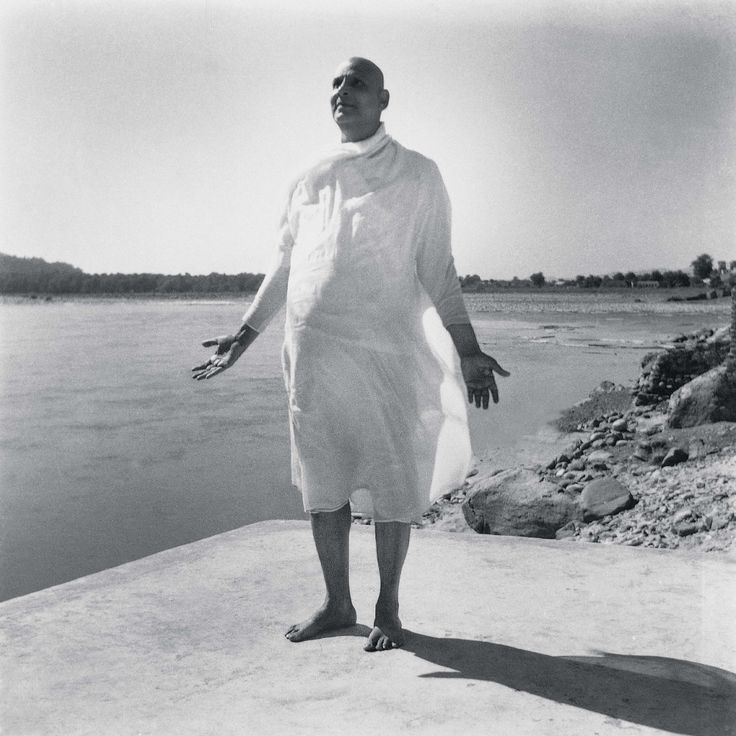
Swami Sivananda standing by river with open arms. image
Jnana Yoga

The Four Sources of Knowledge

The Four Sources of Knowledge Inspiration, revelation, insight, intuition, ecstasy, divine sight and the supreme, blissful state are the seven planes of knowledge. There are four sources of knowledge: instinct, reason, intuition, and direct knowledge of Brahman (God) or Brahma-Jnana (knowledge of God). Instinct When an ant crawls on your right arm, the left hand automatically moves towards the right arm to drive the ant away. The mind does not reason here. When you see a scorpion near your leg, you withdraw the leg automatically. This is called instinctive or automatic movement. As you cross a street, how instinctively you move your body to save yourself from the cars! There is no thought during such kind of mechanical movement. Instinct is found in animals and birds also. In birds, the ego does not interfere with the free, divine flow and play. Hence the work done by them through their instinct is more perfect than that done by human beings. Have you ever noticed the intricate and exquisite work done by birds in the building of their beautiful nests? Reason Reason is higher than instinct and is found only in human beings. It collects facts, generalizes, reasons out from cause to effect, from effect to cause, from premises to conclusions, from propositions to proofs. It concludes, decides and comes to final judgment. It takes you safely to the door of intuition and leaves you there. Belief, reason, knowledge and faith are the four important psychic processes. First you have belief in a doctor. You go to him for diagnosis and treatment. The doctor makes a thorough examination of you and prescribes certain medicines. You take them. You reason out: “Such and such is the disease. The doctor has given me some iron and iodide. Iron will improve my blood. The iodide will stimulate the lymphatics and absorb the exudation and growth in the liver. So I should take it.” Then, by a regular and systematic course of these drugs, the disease is cured in a month. You then get knowledge and have perfect faith in the efficacy of the medicine and the proficiency of the doctor. You recommend this doctor and his drugs to your friends so that they too might benefit from his treatment. Intuition Intuition is personal spiritual experience. The knowledge obtained through the functioning of the causal body (Karana Sarira) is intuition. Sri Aurobindo calls it the Supermind or Supramental Consciousness. There is direct perception of truth, or immediate knowledge through Samadhi or the Superconscious State. You know things in a flash. Professor Bergson preached about intuition in France to make the people understand that there was a higher source of knowledge than the intellect. In intuition there is no reasoning process at all. It is direct perception. Intuition transcends reason but does not contradict it. Intellect takes a man to the door of intuition and returns. Intuition is Divya Drishti (divine vision); it is the eye of wisdom. Spiritual flashes and glimpses of truth, inspiration, revelation and spiritual insight come through intuition. The mind has to be pure for one to know that it is the intuition that is functioning at a particular moment. Brahma-Jnana (knowledge of God) is above intuition. It transcends the causal body and is the highest form of knowledge. It is the only Reality.

The Four Sources of Knowledge Read Post »

Swami Sivananda portrait with green background. image
Swami Sivananda, Yoga of Synthesis

Is Guru Indenspensible

Is Guru Indenspensible Aspirants need not be afraid of pitfalls and snares in the spiritual path. The whole spiritual world is ready to back up sincere students who are trying to lift up their head from the quagmire of Samsara. Aspirants should nourish their good Samskaras through Japa and regular meditation. Even in this materialistic age, India is full of thirsty aspirants who, want God and God alone, who are ready to give up wealth, family and children, ruthlessly, for the sake of God-realisation which they regard as the be-all and end-all of their existence. This is a land of sages and saints. Thousands of seekers after Truth are in close touch with me from all parts of the world. Many foreigners come to India in search of Yogis and Mahatmas. Glory to India and all devotees. The spiritual path is beset with many obstacles. The Guru who has already trodden the path will guide the aspirants safely and remove all sorts of obstacles and difficulties. A personal Guru is therefore necessary. There is no more powerful way of overcoming the vicious nature and old Samskaras in the aspirants than personal contact with and service to the Guru. Guru’s Grace will, in a mysterious manner, enable the disciples to perceive the spiritual power within, though it is impossible for the Guru to point out God or Brahman to be this or that. INITIATION TRANSFORMS THE MIND Initiation (Diksha) is not a mere change in outward forms. Real change of mind and clear vision and understanding come to the aspirant after the initiation by a Brahmavidya Guru. Many students, according to their own fancy, select their own method of Sadhana without considering the consequences. Improper diet, wrong Sadhana without a proper guide, hard and foolish austerities on a weak body, torturing the body in the name of Tapasya, have entirely ruined many aspirants. Therefore a personal Guru is necessary to give timely instructions according to the change of seasons, circumstances and progress. The grace of a Guru is necessary. That does not mean that the disciple should sit idle. A Guru can clear the doubts, show the spiritual path best fitted to the aspirants and inspire them. The rest of the work will have to be done by the aspirants themselves. It is foolish to think that one can have all Siddhis (psychic powers) and Mukti from a drop of water from the Kamandalu of a Mahatma or a Yogi. There is no magic pill for attaining Samadhi. It is mere delusion to think so. FIRST DESERVE, THEN DESIRE To find out a Guru who may sincerely look after the interests of his pupil is a difficult task in this world. It is quite true. But to find out a disciple who will act sincerely according to the instructions of his Guru is also a very, very difficult task. As disciples are arrogant, disobedient and self-willed in these days, no senior man in the spiritual path wishes to accept disciples for training. They bring only troubles to the Guru. They do not want to carry out the instructions of the Guru. They become Gurus themselves in a few days. This problem of Guru and disciples is indeed an embarrassing one. If you cannot find a first class type of Guru, at least try to find out one who has been treading the path for some years, who is compassionate and selfless and who will take a special interest in your welfare and progress. Realised souls are not rare. Ignorant, worldly-minded persons cannot easily recognise them. Only a few persons who are pure and have all virtues can understand realised souls. They alone will be benefited in their company. There is no use of running hither and thither in search of realised men. Even if the Lord Krishna remains with you, He cannot do anything for you, unless you are fit to receive Him. To serve God and mammon at the same time is impossible. You will have to sacrifice the one or the other. You cannot have light and darkness at the same time. If you want to enjoy spiritual bliss, you will have to renounce sensual pleasures. Even if one of my disciples lifts up his head from the quagmire of Samsara, I have justified my existence. The greatest service that I can do to humanity is training and moulding aspirants. Every Yogic student, when he is purified and elevated, becomes a centre of spirituality. He will draw to himself, through his magnetic aura, thousands of baby souls for spiritual transformation and regeneration. Students who are in the world with responsibilities, need not wait for obtaining a Guru. They should select their own Ishta Devata and a Mantra suitable to their taste and do Sadhana and prayers. At the proper time, a Guru will appear to them. It is better to receive the Mantra from a Guru. The Mantra received from the Guru has a mysterious influence.

Is Guru Indenspensible Read Post »

Swami Sivananda seated with disciples during ceremonial offering. image
Jnana Yoga

Follow the Wise

Follow the Wise The Rishis and the Seers tapped the source through living the Truth. They had deep penetration into the Truth through the eye of wisdom or intuition in Nirvikalpa Samadhi. They did rigorous Tapas and intense meditation. They disciplined the outgoing senses and led a virtuous life. They were absolutely moral and righteous. They developed all the qualities of the heart. They practised dispassion and renunciation. They had no attachment for mundane things. They kicked off ruthlessly all wealth, relatives, wife, family, children, position and status. They embraced poverty, purity and austerity. They lived in forests. They ate fruits and roots. They breathed pure air. They lived on the banks of the Ganga amidst Himalayan scenery, which had, and has, high spiritual vibrations. They did not live in Mount Road or the Mall. Desirelessness is the flower-bunch in the tree of contentment and quiescence. Desirelessness is the axe with which the forest of this Samsara is cut down. A desireless man is totally free from all weakness of the heart. For a man of absolute desirelessness the whole universe is but a straw. You cannot practise Yoga living in the Wall Street or Piccadilly or Esplanade, Mount Road or the Mall, breathing the contaminated air of these places, eating unnatural, heavy foods, attending cinemas, theatres and ball-rooms, wasting much vital energy, with nerves under high tension and with ears dinned by the sounds of motor cars and machinery. In enjoyment there is fear of disease; in social position, the fear of falling off; in wealth, the fear of enemies; in honour, the fear of humiliation; in power, the fear of foes; in beauty, the fear of old age; in scriptural erudition, the fear of opponents; in virtue the fear of traducers; in body, the fear of death. All the things of this world pertaining to men are attended with fear; renunciation alone stands for fearlessness. Shun honour, respect, degrees, name, fame, power, position and titles. They are absolutely worth less. They will not give you eternal satisfaction. They will only intensify your vanity. They are all intoxicants of the mind. They bring misery and mental disturbance. That is the reason why Raja Bhartrihari, Raja Gopichand and Lord Buddha gave up kingdoms, riches, honour and fame. In the Bhagavadgita you will find: Humility, unpretentiousness, harmlessness, forgiveness, rectitude, service of the teacher, purity, steadfastness, self-control, dispassion towards the objects of the senses, and also absence of egoism, insight into the pain and evil of birth, death, old age and sickness, unattachment, absence of self-identification with son, wife, or home, and constant balance of mind in wished-for and unwished-for events, unflinching devotion to Me by Yoga, without other objects, resort to sequestered places, absence of enjoyment in the company of men, constancy in the wisdom of the Self, understanding the object of essential wisdom; that is declared to be real Wisdom; all else is ignorance (Ch. XIII: 8-12). Demoniacal men know neither right energy, nor right abstinence; nor purity, nor even propriety; nor is truth in them. ‘The whole universe is without Truth, without basis,’ they say, ‘without a God, brought about by mutual union, and caused by lust and nothing else.’ Holding this view, these ruined selves of small understanding, of fierce deeds, come forth as enemies for the destruction of the world. Surrendering themselves to insatiable desires, possessed with vanity, conceit and arrogance, holding evil ideas through delusion, they engage in action with impure resolves. Giving themselves over to unmeasured thought whose end is death, regarding the gratification of desires as the highest, feeling sure that this is all, held in bondage by a hundred ties of expectation, given over to lust and anger, they strive to obtain by unlawful means hoards of wealth for sensual enjoyments (Ch. XVI: 7-12). In the Vishnupurana it is said: If the deluded fool loves the body, a mere collection of flesh, blood, pus, faeces, urine, muscles, fat and bones, he will verily love hell itself! To him who is not disgusted with the nasty smell from his body, what other argument need be abduced for detachment? It is need less and useless to say more. All men and all buildings will be destroyed in the twinkling of an eye if only a dreadful epidemic is to break out or an earthquake to shake up the earth without mercy. Yet people want to build bungalows in Simla and Mussoorie and attain Immortality there! How foolish these people are! Poor self-deluded souls! Pitiable is their lot! They are earthworms only as they revel in filth. I pray for them. May God bestow on all Viveka, Vairagya and devotion! May all attain soon Eternal Bliss and Perennial Joy!

Follow the Wise Read Post »

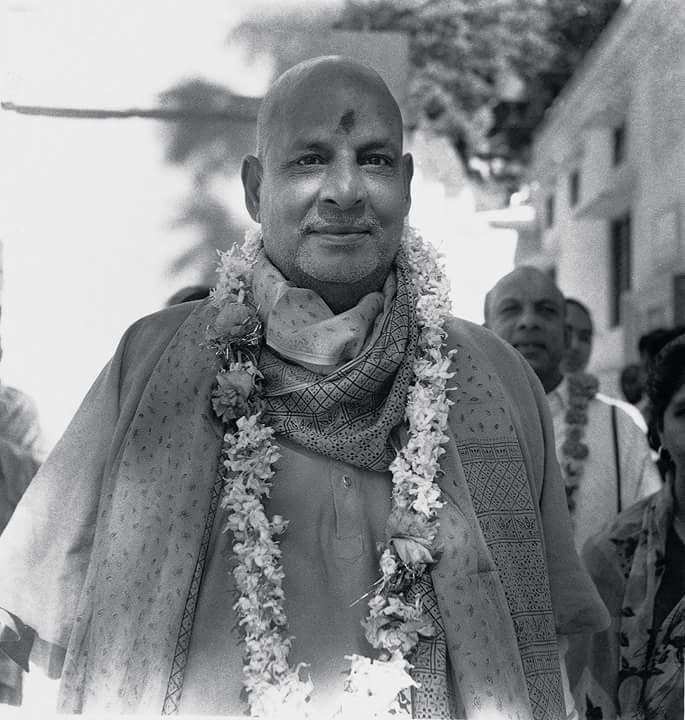
Swami Sivananda wearing garlands walking with devotees. image
Swami Sivananda, Yoga of Synthesis

To Those Who Wish to Take Sannyasa

To Those Who Wish to Take Sannyasa Many sincere seekers of Truth in different parts of the world write to me very often expressing their eagerness to take to the path of renunciation or the Order of Sannyasa. From experience I have found that many of those who renounce the world on account of the emotional type of Vairagya, which might have been induced special reason or other, eventually fail to keep up to the spirit of renunciation and consequently go back to the world or become a disgrace to the Order of Sannyasa. While to those who have genuine Vairagya and burning aspiration, I recommend immediate renunciation; others I advise as follows, in order to give them ample opportunity to develop their Vairagya and prepare themselves for the path:- Worldly greatness is nothing, it is a child’s play. You must become a great man in the spiritual field. Remain in the world, but be not worldly-minded. Mere college study cannot make you great. When you remain in the world, prepare yourself nicely for the path of Sannyasa. You have Vairagya, but you have no experience in the line. I am ready to give you Sannyasa at any moment. Suppose you remain with me as a Sannyasi, have you got the strength to face your mother, wife, sister and brothers when they weep bitterly with a broken heart in front of my Kutir? Think well and decide this point. Destroy Moha first. Occasionally go out and live in a secluded place for a month or two, away from your family and see if your mind often goes to your people, your property and native place. Test your mental strength. Mere emotion and enthusiasm will not serve you much in the path of renunciation. The path of Sannyasa is beset with many difficulties. But it is full of joy and bliss and is smooth for the man of firm determination, patience and fortitude. The life of a Sannyasi is the best kind of life in the world. A true Sannyasi is the real monarch of the three worlds. Even a mere aspirant is an Emperor of the three worlds. Have courage. Be bold. Realise that the world is a mere illusion. Assert your real Satchidananda Svarupa. Sit for a moment alone in a quiet room. Enquire. Cogitate and investigate. Realise the glory of living in the Atman. Introspect. Try to remove your defects and weaknesses. This is real Sadhana. In the early stages of your life, do intense Sadhana in seclusion and a little service to Mahatmas, the sick and the poor-as much as you can. Do not think of conducting classes on Yoga and preaching and presiding over big Conferences. Do not entertain the idea of a world tour and of becoming a World-Teacher. All such hopes will only result in a downfall. When you are young, do intense Sadhana and have deep study. Forget the past and the future. Lord Jesus hid himself in solitude for several years. He came out for a period of three years to electrify and thrill the world with his spiritual powers and illumination. Empty bullets in the air cannot influence the birds. The words of a man who has no ethical and spiritual development will be like empty bullets. They cannot have any influence on worldly minds. Become a dynamic personality. Through pure thought (Satsankalpa) you can revolutionise the materialistic world. Do not be tempted by name and fame or comforts and conveniences. Lead a hard life. COMBINE SERVICE AND MEDITATION There is one difficulty when you live in a jungle or a cave. As you are a neophyte, you do not know how to regulate your energy and adjust your daily routine and spend the time profitably. You do not know how to get over depression when it manifests itself. Beginners cannot spend all the twenty-four hours in meditation alone. They have to work in the beginning for purification of the heart as well. They should combine work and meditation. I have never come across people in all my experiences of this life who always remained in meditation entirely and who emerged from it with flying colours. What I want to emphasise is that beginners cannot fare well in seclusion. They become Tamasic and lose their talents and hidden faculties after a long stay in seclusion. FINANCIAL INDEPENDENCE I have closely studied the lives of Sannyasins, and I have come to the definite conclusion that a little money helps the Sadhaka in his Sadhana and evolution. Financial independence will bring peace of mind and strength during the Sadhana period. Downfall comes only when you try to augment the amount and to accumulate a bank balance. Yet, if you have a strong power of endurance, patience and fine health, if your Vairagya is intense and of a sustained type and if you are willing to do some selfless service to mankind, you need not worry about money. You can renounce the world even this moment. It is not advisable to waste your precious life in trying to earn more and saving a lot. There is plenty everywhere for sincere Sadhakas. Leave the world quickly. Fly, fly away from the company of worldly-minded persons. Get away from the bustle of cities and the tumultuous world. Run quickly to solitary places like Rishikesh. You will be outside the danger zone. Good Sadhus are well looked after everywhere. It is only the beggars who come in the garb of Mahatmas that become a nuisance to the public. It is not easy for the public to differentiate Mahatmas from beggars by a mere casual look. But it is quite possible to find out real Mahatmas from their talk, walk and action. These days Sraddha is lacking among householders. To avoid interruptions in Sadhana I ask the students to keep enough money with them to meet their needs. Do not entertain the begging mentality. If possible provide for bare necessities or join some Ashram or religious institutions.

To Those Who Wish to Take Sannyasa Read Post »

Swami Sivananda seated portrait with sepia tone background. image
Jnana Yoga

There is Only Suffering in this World

There is Only Suffering in this World Birth is suffering; disease is suffering; death is suffering; sorrow, grief, pain, lamentations are suffering; union with unpleasant objects is suffering; separation from the beloved objects is suffering; unsatisfied desires are suffering. O man! Is there any real pleasure or happiness in this world? Why do you cling to these mundane objects? Why do you stroll about here and there like a street-dog in search of happiness in this earth-plane? Search within. Look within and introspect and rest in the Supreme Abode of Peace and Immortality now. Never delay a second even. Plod on. March forward. Realise now and be free. Pain is the lot of deluded beings. Even the little pleasure that is experienced here is obtained after a lot of worry and troubles and is productive of much suffering. It is born in pain and ends in tears. Gratification of sensual pleasures only augments the craving. Lust invariably leads to extreme suffering on the impediment of senses in old age. Nobody has been benefited in this world by this Maya. People invariably weep in the end. Ask any grown-up householder whether he has got an iota of happiness in this world. The worldly man never comes to the senses although he gets severe knocks, kicks and blows from different corners. The strolling street-dog never stops visiting the houses even though pelted with stones every time. The whole world is a ball of fire though there are the so-called charming sceneries of Mayaic illusion. The whole world is a huge furnace wherein all living creatures are being roasted. Lord Buddha says: On the whole, life is a sorrow. Patanjali Maharshi in his Yoga Sutras says: Sarvam Duhkham Vivekinah, All indeed is pain to a person of discrimination. Just as a fish in its desire to eat flesh does not see the hook that lies beneath, so also man in his passionate desire to get sensual pleasure does not see the noose of death. Pleasure is not in the objects; it is in the imagination or inclination of the mind. Mango is not sweet but imagination makes it sweet. Woman is not beautiful, but imagination renders her so. An ugly woman appears very beautiful to her husband because his imagination is beautiful. There is a grain of pleasure in objects, but the pain that is mixed with it is of the size of a big mountain. Sensual pleasure is tantalising. There is enchantment so long as man does not possess the desired object. The moment he is in possession of the object, the charm vanishes. He finds that he is in an entanglement. The rich but childless man thinks he will be more happy by getting a son; he worries himself day and night to get a son, goes on pilgrim age to Ramesvaram and Kasi and performs various religious ceremonies. But when he gets a child, he feels miserable. The child suffers from epileptic fits, and his money is given away to doctors. Even then there is no cure. This is Mayaic jugglery. The whole world is fraught with temptation. The cause of pain is love of pleasure. The cause of death is love of sensual life. Death is a horrible thing to him who is intensely attached to sensual life. Words like cremation, murder, death, corpse, burial, make the sensualist shudder at heart; for he is extremely attached to the body and the objects of the senses. How to part with the sensual objects? is his great cause of misery. Pity! Pleasure is Purely Illusive Wealth and power promise to give you physical comforts, but they never give. They delude you and entangle you in the meshes of Samsara. They make you slaves. They shut out for you the doors of the illimitable domain of everlasting peace and the eternal bliss of the Atman. They have no value at all for the dispassionate aspirants. They kick them ruthlessly as mere bits of straw or broken glass-pieces. But they appear to be highly valuable in the eyes of the worldly-minded. They are their be-all and end-all. They spend their whole lives in the pursuit of these fleeting, worthless shadows. This world is a play of colours and sounds. This sense-universe is a play of nerves. It is a false show kept up by the jugglery of Maya, mind and senses. You enjoy the sensual pleasures for a period of twenty years when the senses are young and strong. What is this short evanescent period of twenty years in eternity? What is this despicable, jarring, monotonous, sensual life when compared with the eternal and peaceful life in the immortal Self within? You are always helpless. Why do you boast of your ability, capacity, independence and freedom? Why are you proud and egoistic? One anna of pleasure is mixed with fifteen annas of pain. Pleasure that is mixed with pain and fears no pleasure at all. If you begin to analyse this one anna of pleasure you will find that it is no pleasure at all. It is mere play or delusion of the mind. Milk gives pleasure to some and pain to others. Milk brings on retching in fever. The third cup of milk induces vomiting. What is this? This is play of Maya. This is Indrajala of Avidya Sakti. The Indriyas and the mind are deceiving you at every moment. Beware! Wake up! Open your eyes. Develop Viveka. If you suffer from cancer of the stomach, can you enjoy Rasagulla and other sweets, even though you are a multi-millionaire? The doctor will put you on a diet of pepper water only. If your wife dies, you are drowned in sorrow. You cannot expect happiness from finite, perishable objects that are conditioned in time, space and causation. Nitya, Nirupadhika, Niratisaya, Ananda, eternal, independent, infinite Bliss can only be had in the Atman that is hidden in your heart. Search, understand and realise the Atman within. To wear spectacles at the age of

There is Only Suffering in this World Read Post »

Swami Sivananda painting giving blessing near river image
Jnana Yoga

The Fleeting Nature of Things

The Fleeting Nature of Things lifeTime is the rat that cuts off the thread of lire in this universe. There is nothing in this world which the all-devouring time will spare. Time spares not even the greatest person for a moment. Time pervades and controls all things. Time dances about with a long chain of the bones of the dead hanging from its neck to its feet. It assumes the formidable form of a burning fire during the dissolution and reduces the whole world to ashes. Nothing can stop its course. Man grieves for his folly at the time of death. The same body which is clothed today in silk and decorated with garlands is to be burnt to ashes tomorrow. Just as the frog that is hanging in a serpent’s throat, is yet desirous of eating flies, even so men of the world are desirous of enjoying the worldly objects although they are being swallowed by the serpent of time. You see others dying and growing old, yet you never wake up from your own dream of the vanity of worldly life. If God has not covered this filthy body with the skin, will it not be eaten away by crows and eagles? The filth that comes out of our nose, mouth, ears, and anus causes extreme disgust in us. Would it be possible for us to take food if we were to see the filth that is inside our body? Will not germs begin to manifest if the filth of the body is not washed for three days? Can this obnoxious smell which has permeated the body from toenail to the top of the head be removed by application of saffron, sandal-paste, refined camphor, scents, etc.? Is he not a fool who takes too much care of the body? Do they not who delighted to look at the body sitting on the throne of kings, shudder to lock at it when life is snatched away by Death? The three entrances to the city of perdition are lust, wealth and tongue. He who has conquered these three need not be afraid of death. He has no enemies, who ride on the horse of discrimination with the sword of dispassion and the shield of en durance. Application of soap to the body, oil to the hair, powder to the face, looking into the mirror a thou sand and one times a day, wearing rings on the fingers these and many like these will intensify your attachment to the body. Therefore give up all these things ruthlessly. A big boil is washed with lotion. Then boric ointment is applied. Then bandage is put on. Even so, this nasty body is a very big boil. It is washed every day. Food is thrust into it. This is the ointment. Cloth is worn. This is the bandage. Sannyasins treat this body as a very big boil or wound with an oozing discharge. But the body is worshipped by worldly-minded persons on account of delusion and infatuation.

The Fleeting Nature of Things Read Post »

Swami Sivananda meditating under large tree with Om symbol image
Uncategorized

Who are Fit to be My Disciples

Who are Fit to be My Disciples Though I give much freedom and liberty in dress and external forms, I am very strict with my students with regard to the essentials. The rules prescribed by the Order of Sannyasa must be followed. Then only can they shine as ideal Sannyasins. Comfortable Sannyasa is very dangerous. They should not give lenience to the mind. Fashionable, independent Sannyasins are a menace to society. The people in the world curse such Sannyasins and treat them with disrespect and contempt. They, however exalted in the spiritual line, should not live in the company of women or householders and freely mix with others. Burning Vairagya with simple living and high thinking must be the ideal at every moment of their lives. No doubt renunciation is mental. That does not mean that you can do anything and live in any way you like. That will bring your downfall. Strive for perfection by following the traditional rules for discipline and control of mind and senses. Discipline in food and dress will naturally manifest itself if you have genuine Vairagya and dispassion. External observance of the rules will help you to stick to the path. Maya works havoc. Maya deludes. Beware. Be cautious at every step and watch the Vrittis of the mind. My disciples should have no superiority complex. They are not dry philosophers who spend all their time and energy in preaching alone. They have self-sacrifice and serve the world with their silent and intense Sadhana. In the midst of intense service, they learn the way to rivet the mind on the Lakshya. They are rooted in the idea: “The world is a long dream (Deergha Svapna), perishable. Truth alone is Real.” For my students, there is no world. They perceive the Divinity behind all names and forms. PURIFY THE INNER NATURE Purify your mind. Develop Sattvic qualities such as nobility, courage, magnanimity, generosity, love, straightforwardness, truthfulness. Eradicate all evil qualities such as lust, greed, anger, avarice, Raga-dvesha and other negative traits which stand in your way of ethical perfection and Self-realisation. Ethical perfection is a pre-requisite to Self-realisation. No amount of practice can be of any value to the aspirant if he ignores this side of Sadhana. Love all. Prostrate yourself before everybody. Become humble. Talk loving, sweet, endearing words. Give up selfishness, pride, egoism, hypocrisy. Regenerate your lower nature. Find out through self-introspection if you want real freedom and liberation or you are just inquisitive about higher things or have a lurking desire for obtaining money, name and fame by exhibiting spiritual powers. Become sincere. All qualifications will come by themselves when you are in the company of evolved persons and live in an atmosphere charged with spiritual vibrations. ATTITUDE TOWARDS WOMEN My silent adorations and prostrations to all women, who are manifestations of the Divine Mother, Sakti or Kaali. They are the backbone of society and upholders of religion. If they are inspired, the whole world will be inspired. There is a peculiar religious instinct in them. They have natural, inborn divine qualities. In olden days, Hindu ladies also led the life of celibacy, served the Rishis, meditated on the Atman and obtained Brahma Jnana. In ancient days there were many Siddhas, Brahma Jnanis, Vairagis, Bhaktas and advanced Yogis among women. By their purity and perfection they could do miraculous things when there were occasions for utilising their spiritual power. There are instances of their giving life to the dead, stopping the rising of the sun in the morning and of controlling the elements also. Even today you can find many women in Rishikesh, Haridwar, Brindavan. Banaras and other holy places in India, who have renounced the world and taken to the path of Yoga. I do not detest anybody. I revere a woman as my own self. I regard women as Mother Durga or Divine Mother. Women are dynamic forces on earth. Religion is sustained through their piety. To passionate youths, I have written a lot about the perishable nature of the physical body of women. It is just to develop in them a strong Vairagya and help control of their senses and mind. Though for the sake of inducing Vairagya in men I have given a negative description of women, I have great reverence for them. I serve them. I have done Kirtans with them in various Sankirtan Sammelans in the Punjab and the U.P. Many ladies come to the Ashram from Delhi and other places even if they get two or three days’ holidays. They come in groups and join the daily Satsanga and enjoy the peace and bliss, and stay within the Ashram for days and weeks. SHOULD WOMEN RENOUNCE THE WORLD No doubt it is difficult for young women to get on in the Sannyasa line. They do not have the same liberty and freedom as men. Men can live and move about in any way and sleep anywhere. They can go from door to door for alms and maintain themselves. But women are greatly at a disadvantage and suffer thereby. It is a pity that there are not many ideal institutions in India exclusively for women where they can live peacefully, serve the world and evolve. Ideal institutions with all comforts and conveniences for women, who are spiritually-inclined, are a great need of the hour. For ages, this important work has been neglected. I get letters from some sincere cultured ladies expressing a desire to tread the path of renunciation. In 1936, I gave a reply to a devotee giving my helpful suggestions: “I cannot safely suggest any Ashram where you can live peacefully and evolve. You should get a decent amount from your parents. Invest it in a Bank. You can lead a simple life with the interest you get from the deposit. This is the best way. Even then, live in an Ashram where you have advanced souls, Mahatmas, or live with some elderly ladies of a religious temperament. Devote all your time to

Who are Fit to be My Disciples Read Post »