








Hari Om

Menu

January 22, 2026

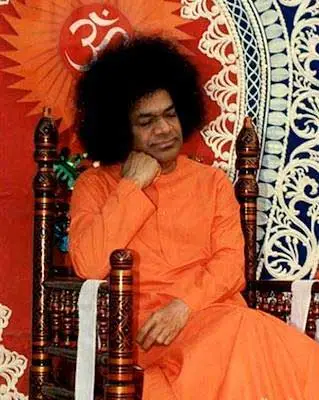
Person seated in traditional attire.
Love Offerings - Devotees Writings to Lord Sri Sathya Sai

Dhyanadarshana-II (Theory and Practice of Meditation)

Dhyanadarshana-II (Theory and Practice of Meditation) he following article was compiled and translated by B. Srinivas Murthy from Bhagavan Sri Sathya Sai Baba’s Divine Discourses. Below is Part 2 of the article. Part 1 was presented in the June 2021 issue of Sai Sarathi.   Meditation is conquest of mind The sadhana (spiritual practice) of dhyana starts at the lowest level of sense data. The way of knowing called sensationism is the most primitive faculty of living organisms. The organization of sensations into perceptions is known as empiricism. The generaliza­tion of perceptions into conceptions is known as rationalism. Intuitionism and mysticism are suprarational ways of know­ing. That is why indriyas (sensory and motor organs) have to be harnessed by controlling manas (mind), which is their master. If the master is controlled, his ser­vants can be easily snubbed. Mind is vicariously responsible for the erratic behavi­or of sensory and motor organs. The sense data supplied by eyes, ears, nose, tongue, and skin impinge on mind, which selects some sensations and then organizes them into perceptions and conceptions. If the mind is mastered, all jnanendriyas and karmendriyas can be conquered. Millions of soldiers are deployed in war. Each and every combatant need not be captured and killed in order to win the war. If the commander‑in‑chief is captured, the army will surrender unconditionally. A country can be conquered by capturing its king. Psychosomatic relationship Manas or mind is the master of jnanendriyas or sensory organs and karmendriyas or motor organs. Hence, it should be first conquered in order to transcend our sensations and suspend our metabolic processes. Intelligent diplomacy is needed for the conquest of the mercurial human mind. It should be conditioned and disci­plined with the aid of spiritual practices. It should be clearly recognized that mind and body are normally inseparable. They inter­penetrate each other. Mind is an embodied form of the personal self. It is a unified structure of the energy of consciousness. It may be regarded as superphysical energy or paraphysical matter. It cannot express itself without the material medium of a gross physical body. It communicates with the external world through its five doors of perception. A disincarnate mind cannot have meaningful intercourse with the material universe. The well‑known psychosomatic phenomenon pertaining to the intimate connection between psyche and soma or mind and body is of supreme importance for spiritual aspirants. A subtle personal self manifests itself as mind in a gross human body, expresses itself in various ways and communicates with other human minds or embodied selves. In other words, a material body is essential for the self-manifestation and self-expression of a personal self and its communication with other embodied selves. Meditation is not self‑mortification On account of this phenomenal psychosomatic relationship, a sadhaka should always keep himself physically fit and mentally alert. An optimum psychosomatic euphoria is essential for maintaining steady and sustained spiritual advancement. The physical body should be neither pampered nor mortified. Mortification of the material body does not lead to intellectual illumination or spiritual enlightenment. Self­-mortification results in physical senility and mental deterioration. Mental equanimity cannot be achieved without physical eupho­ria. Hence, a sadhakashould avoid self-­torment and self-punishment. It is necessary to reiterate that the human body should be preserved like a temple of the living God. Life is yoga The paramount importance of correct posture cannot be overstressed. You should always sit straight or stand erect wherever you happen to be. The mental equilibrium and physical discipline acquired through meditation should be transferred to every­day life because all life is yoga. A sadhaka should keep his body straight and his limbs supple. He should always try and sit straight. Wrong postures and awkward gestures debilitate the body and enfeeble the mind. Hence, a sadhaka should not bend his backbone and subject his body to all sorts of ugly contortions. A sound mind cannot be developed without a sound body. An emaciated, enervated and emasculated individual cannot do any serious sadhana. A sadhaka must be straight and supple like a reed. A correct and beautiful posture can be acquired by regular practice. A perfect posture facilitates meditation. Significance of jyoti A jyoti is the most suitable object to be meditated upon. It should be a steady lambent light or a gently glowing flame like a candlelight or the flame of an oil lamp. A flame has profound physical and spiritual significance. The biopsychophysical human body is in a state of dynamic equilibrium. Every person is surrounded by his own individual bioplasmic aura. A flame is not a solid, liquid, or gas. It exists in the fourth plasma state of matter. There is a significant resemblance between the dynamic equilibrium of a human organism and a glowing flame, and between a bioplasmic human aura and the plasmic state of a shin­ing flame. Meditation on a flame is tanta­mount to meditation on the bioplasmic aura of the personal self that is identified with the immanent and omnipresent Cosmic Self or God. A sadhaka should sit in front of a jyoti, relax his body, and fix his attention on its lambent light. Preparation for meditation Gaze steadily at the gleaming jyoti before you. Stare at it steadily. Stare as long as you can. Then close your eyelids slowly. Visualize mentally the jyoti before you. Dur­ing this process of imaginative re‑collection and re‑creation of the previously perceived jyoti you should neither shut your eyes nor keep them open. If you keep your eyes open, your attention will be distracted by extraneous sights. The span of your atten­tion will be extended, and your ekagrata or one‑pointedness will become anekagrata or many‑pointedness. Your latent rajoguna will flare up. But if you shut your eyes tightly you will fall asleep. Squatting in front of the jyoti, fix your attention on its golden flame. Then begin to gaze at the tip of your nose with half‑closed downcast eyes. From attention to concentration Your mind has a tremendous capacity and a gargantuan appetite for work of all kinds. It requires proper food for thought. There are various types of food. The most wholesome food for thought is provided by the divine pabulum of spirituality. Con­tract the span of your attention by making it one‑pointed. Then extend the duration of your one‑pointed attention until it becomes steady concentration. A slothful mind

Dhyanadarshana-II (Theory and Practice of Meditation) Read Post »

Shri Sathya Sai Baba peace photo
The Jagadguru Amidst Us - The Ultimate Fortune

Sneha—The Eighth Stage

Sneha—The Eighth Stage Bhagavan Baba encourages youth to cultivate true friendship that exhibits trust, steadfast faith, and acceptance of one’s circumstance devoid of doubt, fear, and anxiety, thus making it divine. Sneha (friendship) is the eighth of the nine stages of bhakti (devotion) described in the Bhagavatha [Hindu scripture] and other texts. It is usually translated as ‘friendship,’ a term that has been vulgarized by application to certain transitory relationships between human beings. Friends come together due to a variety of reasons and circumstances which are mostly of worldly and temporary interest. People who have ample resources gain friends quickly, just as those who can distribute favors. Those in authority also gather friends, who stay on during fair weather but disappear when the authority fades. Most friendships are based on selfish considerations and last only as long as their selfish interests are promoted. As the proverb goes, “when the lake is full, there are frogs in plenty, but when it runs dry, not a single croak is heard.” Friendship ought to be a spiritual bond, a heart-to-heart kinship based on full understanding of, and pure dedication to one another. Students should be vigilant against false and fleeting friendships, and not be simply led away by hellos and handshakes. Do not cultivate close friendship with anybody unless you know that the motives on the other side are pure, unselfish, and spiritual. Krishna & Arjuna’s friendship Genuine friendship is possible only between one atman [soul] and another, that is to say, between two persons who have each realized that atman is the core of their beings. Nowhere on the mundane plane, among the trivial transitory friendships of worldly beings, can you get the genuine sneha that is declared as the penultimate stage to sharanagati or atmanivedana (total surrender and dedication to God). Arjuna [from the epic Mahabharata] and [Lord] Krishna had this genuine sneha between them. Arjuna saw Krishna as his sakha (friend), and therefore had the temerity to use words of jesting irreverence during play, while in repose, when seated with Him, or at meals. The two often ate meals from the same plate, and were ready to help each other under all circumstances. Do not be under the impression that Arjuna was insidiously overpowered by Krishna. He was mature in character, well versed in the Vedic [Hindu scriptural] lore and a redoubtable warrior and bowman full of courage and heroism. Krishna was the Purushottama (Supreme Being), while Arjuna was the narottama (best human). It was a friendship between the embodiment of the highest and the embodiment of the best. Krishna was the avataric (incarnated) person; Arjuna was the anandic (blissful) person; it was a coming together of the avatar-murti [incarnated figure] and the ananda-murti [figure of bliss]. Arjuna was often addressed by Krishna as Kuru-nandana. This name has a deep significance. Kuru means act, activity, or karma. Nandana means happy, and delighted. Kuru-nandana, therefore, means he who is delighted while engaged in activity. Throughout the 18 chapters of the [Bhagavad] Gita, Arjuna is alert and active, participating vigilantly in every turn of argument. Krishna’s assurance to all Ramakrishna Paramahamsa [a Hindu master] was fascinated by the sneha that was exemplified by Krishna and Arjuna. He learned from the Bhagavatam and the Bhagavad-Gita how the sadhaka (spiritual aspirant) can go through all the nine stages of bhakti (devotion). He was also determined to emulate the gopis (cowherd girls) and earn for himself the viraha (passionate) type of bhakti—Madhura bhakti (sweet devotion)—that the gopis had. When he read the Ramayana (the epic story of Lord Rama), he decided to emulate Hanuman and practice his dasa bhakti (devotion of servitude). Of all the slokas (verses) in the Bhagavad-Gita, Ramakrishna was especially impressed by the one that emphasized the attitude of atma nivedanam or sharanagati. Manmana bhava madhbhakto madhyaji maam namaskuruMamevaishyasi yuktvaivam aatmaanam matparaayanah.(“Become one with Me; be devoted to Me; sacrifice unto Me; bow down to Me. Thus having made thy heart steadfast in Me, taking Me as the supreme goal, thou shalt surely come to Me.”) One day, while Ramakrishna was going to Kamarpukur (a town in the Indian state of Bengal), night overtook him and he was caught in heavy rain right in the center of a burial ground. Of course, he was in such an ecstatic mood that the time, place, or weather mattered little to him. When he awoke, Ramakrishna called upon God by various names—Rama, Shiva, Krishna, Kali, and Hanuman. Then, he suddenly realized that the names all referred to the [Divine] One, and he repeated within himself the verse from the Gita that reminded him of sharanagati (absolute surrender) to the One. What happened to Ramakrishna reminds me of a little story. The master of the household called the errand boy and giving him a five-rupee note asked him to bring vegetables from the market. While going toward the market, the boy took the note and placed it in his pocket saying, “Brinjals [eggplant] for one rupee”, “Cabbage for one rupee.” Thus he assigned the note to fish, to carrots etc. He started with a fiver and concluded with a fiver. Ramakrishna too started with the One and concluded with the One. The One becomes the many and the many is recognized as One. Surrender absolutely to God Many interesting incidents took place at Dakshineshwar (the temple where Ramakrishna served as a priest). When Ramakrishna was once asked to go to the temple office to receive his monthly salary, he was very upset, as he never wanted any wages for the chance to worship His (Divine) Mother. At another time, thieves broke into the Krishna temple. When Ramakrishna and Mathuranath (a colleague) came there, they discovered that Krishna’s idol was absolutely bare and that every jewel had been stolen. Mathuranath fell into a rage and began blaming Krishna Himself. “You are adored as the guardian of the 14 worlds, but you cannot guard even the jewels on your own body,” he said. Ramakrishna reprimanded him soundly for this sacrilege, saying, “Krishna has Lakshmi [Goddess of wealth] as His consort, and for Him your gold and gems are as cheap as dust. As a matter of fact, what is gold but dust in another form?” He made Mathuranath repent for his silly outburst, making him aware of the true nature of Godhead. Only when you surrender your wish and will, and your fancies and fantasies to God, will He lead you aright and

Sneha—The Eighth Stage Read Post »

Shri Sathya Sai Baba truth image
The Jagadguru Amidst Us - The Ultimate Fortune

The ‘I’ Disease

The ‘I’ Disease Bhagavan Sri Sathya Sai Baba has said, “The Buddha saw one sick man, one old man, one corpse, and one sanyasin [religious mendicant]; that was enough for him to leave his palace and seek the cure.” We see several such things and witness terrible misery all around. But yet we do not seek the reason or the remedy. The cause for our apathy is the ‘I’ disease. This Sai Avatar has come to cure us of this ‘I’ disease. The ‘I’ is a disease, so it is not the real nature of man. There is, of course, a real ‘I’, which is God’s energy, activating us. That ‘I’ does not require any cure. It is ever free and happy. Bhagavan’s prescription is to cure the false ‘I’ or ego that is also the existing mind. This false ‘I’ exists because of the impressions of the past and of the effect of prakriti [nature] on our minds. Bhagavan’s teachings are directed to our mind and our intel­lect. He instructs the mind and the intellect to give up their association with the ego and merge in the true ‘I’, or atma [higher self]. The mind is nothing but a stream of thoughts that passes over the consciousness. Of all these thoughts, the first and the most harmful is the wrong thought, “I am this body.” This gives rise to further attachment. When anything happens to the beings or things associated with the ‘I’ in this manner, the ego feels happy or unhappy, the mind gets agitated, angry, envious, or proud. All the misery and misunderstanding that we witness today are due to this disease of ‘I’ and mine. It makes man forget that everything is His, all are He, that it is His leela [divine play], His will. Bhagavan’s prescription to root this ‘I’ out is dhyanam [meditation], namasmarana [repetition of the holy name], bhajan [devotional singing], and satsang [good company]. For us to take up any of these seriously, faith in God is essential. Due to the enormous increase in material progress, we have lost faith in God and the real ‘I’ or atma. To develop faith He is promp­ting us forward by miracles. He says that we treat ourselves like watches, readymade. We feel that watches have existed by themselves; we never seek the maker of watches. We feel we are readymade human beings; we do not bother about the creator, the preserver, and the destroyer—God. Baba cures diseases of the body so that we can concentrate on following His prescription that will cure this ‘I’ disease. He grants mental courage and confidence for the same purpose. Let each one of us get rid of this dire disease. Let us pray that Bhagavan will cure the ‘I’ disease on a mass scale and make the world a happier place to live in. ~G. N. AcharyaSource: Sanathana Sarathi, Jan. 1968

The ‘I’ Disease Read Post »

Sathya Sai Baba spiritual wisdom
The Jagadguru Amidst Us - The Ultimate Fortune

Fulfilling DUTY (Dharma)

Fulfilling DUTY (Dharma) ‘Dharma’ is a powerful Sanskrit word streamlining the way and philosophy of life. There is solely a book entitled ‘Dharma Vahini’ by our beloved Swami, Sathya Sai. Numerous discourses of Swami touch upon this transcendental term in a detailed manner. In this Kali age, the Vedic injunction, ‘Satyam Vada Dharmam Chara (utter truth pursue DUTY)’ has been decaying to ‘Satyam Vadha Dharmam Chera (kill truth imprison DUTY)’. DUTY is the first of the four purusharthas (objectives) of life—Dharma, Artha (wealth), Kama (desire), and Moksha (liberation). It’s also termed as the crowning virtue as it encompasses all the other four human values—promoter of TRUTH and LOVE resulting in peace and hence non-violence. It thus provides humanness to all actions. In this context, it’s worth recalling our Swami’s popular statement, “Duty with love is desirable, and duty without love is deplorable.” Another quotable quote is by the scientist Weiskoff, “Compassion without knowledge is ineffective, knowledge without compassion is inhuman.” Since our beloved Swami emphasized, “First understanding, then adjustment,” let’s examine briefly the root words of Dharma (DUTY): “dharini and dhru”—as the vesture that binds the whole world. Dhr the root of Dharani also means that which binds, upholds, the universe in unison through DUTY. Dharma is a term that is all- embracing, and everything abides in it. ‘Dharma’ has thus no equivalent usage in English vocabulary and is generally referred to as code of conduct/ethics, duty, obligation, reason, regulation (secular and religious), responsibility, right-action/conduct, and righteousness. The words, ‘duty’, ‘right- action/conduct’ and ‘dharma’, are generally used interchangeably either for translation or transliteration purpose. The resulting application—underplaying the spiritual aspect of TRUTH, DUTY, and LOVE—may be hindering the Sathya Sai Education in Human Values (SSEHV) from arriving at the deserving Himalayan heights it should have been in comparison with other character education (Education in Human Values, EHV) curricula. In this article, we first refer dharma as the italic word ‘DUTY’. The Italicism is to emphasize the Sanskrit origin of the word, dharma. We also bring out both the distinct differences between duty and DUTY and also the linkage of duty to DUTY or vice-versa. This notational distinction is analogous to Anthropology’s 101 (basic course) thin and thick meaning of some words and also to Social Linguistics big ‘D’ and little ‘d’ for the word ‘discourse’ distinguishing the ideological and contextual reference respectively. While Lord Rama is acclaimed to be the embodiment of duty as a son, brother, husband, and king/emperor, the metaphysical concept of DUTY was addressed in Bhagavad Gita [scripture] by Lord Krishna. Our beloved Swami made it more practicable by explaining irrefutably in terms of the tenet ‘work is worship’, thereby sacrificing both the ego of doer-ship and the fruits of action. While referring to Gita, He said, “first word is Dharma and its last word is mama (mine). It teaches everyone who studies it “mama dharma”—”my dharma,” “my duty,” “my responsibility to myself.” This sequential description reminds us of our beloved Swami’s 3HV (unity of head, heart, and hands) concept. Duty and responsibility aspects are considered to be the body level (2HV—head and hands) duty (para-lokukia–vyavaharika dharma), the 3HV approach would lead to DUTY (Swa-atmic Dharma). The former is the right conduct in day-to-day life; the latter is based on the directives that emanate from soul, atma, or the consciousness. While supreme DUTY is eternal, obligatory duty is transient – variable with time and location. Yet every creature is bound by its own duty, and what’s right for one may not be right for another. For a better understanding of the latter, let’s briefly recount the popular King Sibi’s story as told by Lord Rama. Sibi assured protection to a pigeon chased by an eagle. The eagle rhetorically questioned Sibi, “Hunting and killing the pigeon, my prey, is my duty. In the process of protecting those who seek refuge in the king, as your duty, you are interfering with my duty.” So, being righteous, Sibi offered an equivalent weight of his body’s flesh. Sibi has used his discrimination and propagated DUTY with such a sacrifice. Duty may vary from specie to specie and also from person to person depending on the profession and life’s role and also stage. Although humans may have a choice between DUTY and duty, the former is same for all. Performing our obligation/work is the duty, and doing it with love and making it truly selfless is dharma (DUTY). We may thus conclude that terms ‘mere action, conduct, work’ as 1hv (hands) level; ‘duty, obligation, secular righteousness’ as 2HV/body level; spiritual righteousness (Swa-dharma) is at the heart level. These three aspects may also be termed as social, moral, and spiritual value levels. In order to better appreciate the distinct difference between the DUTY and duty concepts, following are a few examples: Constitution vs legislation, spirituality vs religion, educare vs education, SSEHV vs EHV, co-operation vs operation. Similarly being is my DUTY as per the norms of the role/situation I am in.In time of conflict between DUTY and duty, each human being has to evolve one’s own duty based on DUTY. As an example, let’s recall Lord Vishnu’s young devotee, Prince Prahlada’s story. Prahlada took refuge in Vishnu and refused to accept his father’s, Emperor Hiranyakashapu’s, command. He chose DUTY over duty as the former prevails. While the above distinguishes the conceptual distinction between DUTY and duty, for our day-to-day guidance, let’s briefly include the practical pointers based on Swami’s discourses: “What exactly is your duty?” First, tend your parents with love and reverence and gratitude. Second, speak the truth and act virtuously. Third, whenever you have a few moments to spare, repeat the name of the Lord, with the form in your mind. Fourth, never indulge in talking ill of others or try to discover faults in others. And, finally, do not cause pain to others, in any form.”1 “What bodily activity should one undertake? One should question oneself, what, when, how, why, and with what consequences, and discriminate; then only should one let the body perform action. This is known as sharira dharma (bodily duty)…. What is the dharma of the heart? It is Constant-Integrated-Awareness. The bodily and mental dharmas are physical and external (pravrittis), opposed to nivritti (internal enquiry and activity). The mind is there to exercise discrimination between the ephemeral and eternal, good and bad, and action should be undertaken only after such enquiry… This is the truth of the man’s individual dharma.” 2 DUTY: “Ideas,

Fulfilling DUTY (Dharma) Read Post »

Sathya Sai Baba divine presence
The Jagadguru Amidst Us - The Ultimate Fortune

Who is the Greatest?

Who is the Greatest? Heartfelt devotion is key to reaching God says Bhagavan Baba in this discourse. During a visit to Ooty [in S. India] in April 1984, Bhagavan related the following story about Sage Narada’s encounter with Lord Narayana [a form of Vishnu] to a small group of devotees accompanying him. On one occasion, Narada went to Lord [Narayana]. In the course of their conversation, Narayana asked Narada, “You are moving around the three worlds; what news do you have for Me from your wanderings? Have you seen anything great in my creation?” “What is greater than You in the world?” asked Narada. “I am asking you about my creation, and not about myself,” said Narayana. Narada said, “I do not understand the question.” “There are the panchabhutas (five basic elements). Which is the greatest among them?” Narayana asked. Narada said, “The earth is the biggest.” Narayana said, “Three-fourths of earth is occupied by water.” Narada agreed that water is greater than the earth. But Narayana observed, “All the oceans were drunk by the sage Agastya in one gulp. Therefore, who is greater, water or Agastya?” Narada agreed that Agastya was greater. Narayana continued, “Agastya remains as a star in the sky. In the vast firmament, Agastya is twinkling merely as a small star; is not the firmament greater than the star?” Narada agreed that the firmament is greater than Agastya. Then Narayana said, “In my Avatar (incarnation) as Vamana, I covered the entire earth and sky with one foot of mine. So, what is greater, the firmament or my foot? Narada replied, “Your foot.” Lord’s devotees are greater than the Lord “If my foot itself is so great, am I not greater than my foot?” Narayana asked. Narada agreed. Then Narayana said, “Although I am great, I am confined in the hearts of my devotees. So the devotees are greater than Me. Hence, wherever my devotees sing my name, I am there.” Therefore, everyone must cultivate a broad mind, and a large-hearted outlook. Broad mindedness is expansion; narrow-mindedness is contraction. Devotees should also cultivate broad mindedness. It is to broaden the heart that the name of the Lord should be chanted. Instead of singing by oneself, when devotees sing in groups, a sense of unity develops. By all people singing in unison and all hands clapping together, all hearts become one. This unity is proclaimed by the Vedas by describing the different organs of the Lord as the source of the power in the different sense organs of a human being. (On another evening at Ooty, Bhagavan expatiated on how devotional songs should be sung). Narada once asked Lord Narayana what His permanent address was. Narayana replied, “Wherever my bhakta (devotee) sings my name, I am present there.” Then Narada asked, “There are innumerable places where the devotees sing your name; how can you be present in all those places at the same time?” (Bhagavan explained that it was not any kind of singing that appealed to the Lord). While singing, there are some who indulge in gymnastics, devoid of genuine devotional feeling. When songs are sung in such manner, how can the Lord be present there? (Bhagavan illustrated it by reciting the musical notation sa, re, ga). Devotional singing that attracts the Lord Where the singers merely emphasize the raga and tala (tune and rhythm), He [God] will not be present. It is only when the song is melodious combining raga, tala and bhava (the tune, the rhythm, and the feeling) will He be present. The singing must be filled with feeling. The Lord is moved only by the feeling that is expressed and not by musical talent as such. It does not matter if the raga and tala are not perfect; those appeal only at the worldly level. The Lord loves only the sincerity of feeling. There was a great musician in Akbar’s (a Mogul Emperor of India) Court known as Tansen. He used to sing night and day, and the music was mellifluous. It was perfect music but there was no deep feeling in his singing. One day Akbar and Tansen were going around the city. Akbar found an old man singing to himself, songs in praise of God. Akbar stopped his chariot, and as he listened to the song of the devotee, tears started flowing from his eyes. His heart was deeply moved. He went some distance and told Tansen, “You have been singing for a long time before me and I have always found your music very sweet to the ears but it has never moved my heart, but the music of this devotee has melted my heart. I wish to know the difference between your singing and the singing of this devotee!” Tansen replied, “Maharaja [king]! I have been singing to please you, but this devotee is singing to please God; that is the difference.” So something that is sung to please a man cannot move the heart. Only that which is addressed to God can have that effect. What pleases the Lord alone can change the mind of man. Both the devotee and the great musician Tansen were singing well, but only the song filled with devotional feeling could appeal to God.

Who is the Greatest? Read Post »

Shri Sathya Sai Baba divine compassion
The Jagadguru Amidst Us - The Ultimate Fortune

Living with God is True Education

Living with God is True Education Prof. G. Nageswara Rao, was a student and Research Scholar (from 1982 to 1988), and currently heads the Department of Chemistry at the Shri Sathya Sai Institute of Higher Learning at the Prasanthi Nilayam Campus. Sri Sathya Sai University is a center for the learning of academic knowledge and yearning for spiritual wisdom. In this Institute, we learn both secular and spiritual education. Both are required like the two wings of a bird to fly safely and comfortably at any altitude. One is for living and the other is for life itself. Sri Sathya Sai, the sadguru, [true teacher] teaches us this right type of education ‘educare’, by His practice and precept. Bhagavan says, “Sadgunambulu Sadbuddhi Sathyanirati Bhakti Krama Shikshana Kartavya Palanambulu Nerpunade Vidya.” (Education is one that imparts virtues, good intellect, and adherence to truth, devotion, and discrimination, discipline, and duty consciousness.) Furthermore, good education confers humility, humility ensures credibility, credibility brings wealth, wealth induces charity, and charity confers peace and joy here and hereafter. Sadgunambulu (virtue) Among the virtues, forgiveness (kshama] is a noble one. Swami showed this when a lady devotee invited Him for lunch/ tea to her house and served poisoned vadas [dumplings]. Swami partook and came back home, His body became blue, and He vomited the eaten vadas as a whole. The lady followed Swami and observed this. Swami’s reaction to the lady was one of love. She realized her mistake and asked for forgiveness. The Lord forgave her, and later she became a devotee. Once Swami procured a bus. The dealer took money but supplied a substandard bus. The bus was not worth the money paid by Swami. In His large heartedness the Lord did not take any action against the supplier. Sadbuddhi (good intellect) Cultivation of discrimination between good and evil, truth and untruth, is culture. It is also the removal of one’s evil thoughts, evil feelings, and evil qualities. Culture is the realization of the inherent Divinity in man and making it manifest in one’s way of life. Swami gives us the example of Dattatreya. Lord Dattatreya went to the seashore. He observed the ocean throwing out any leaf or particle (falling into the ocean) on to the shore. When asked, the ocean replied, “If it admits dust into it, in course of time the entire ocean will be filled with garbage, changing its very face.” Sathvanirati (adherence to truth] It was in the summer of 1989 that Swami took some of us to Kodaikanal. One day Swami was talking about hostel food and the kitchen. He asked me, “What is the monthly expenditure on milk, and daily how much milk is procured for the hostel?” I told Swami, “I don’t know.” Swami said, “That is good. If you don’t know something you can state that you don’t know. One should not pretend as if one knows.” Adherence to truth also means to keep the word one has given. Once a lady whose husband had been killed by Naxalites [Communists] came to Swami. Swami gave her solace during the interview and assured her that he would take care of her children. Swami gave seats in the college for her two sons. They completed their MBA in Swami’s Institute and currently are settled in good jobs. Once anybody says, “I am yours”, the Lord will take care and protect him wherever he is. The Lord speaks the truth. To be more precise, whatever the Lord speaks, is the truth. Bhakti (devotion) Devotion is love for God and love for the self within. It means that we should see God in all beings and love them as manifestations of God by showing compassion. Bhagavan fosters love in us. At first, He gives us what we want so that, in course of time, as we develop love for Him, we love what He gives us. . His protection and assurance in times of difficulties and adversities give us hope and we develop love for Him. Once in Kodaikanal, as usual, all students sat with Swami and had food. One of the students was suffering from fever and did not eat his food. Swami observed this and asked him about his health. Swami then went to the kitchen, brought a glass of milk, and asked him to drink. As one develops devotion to God, one sees God in all beings and loves them. This is the real attitude of spirituality. This love must manifest as service to our fellow beings. We can see His spirit of service for His entire life is spent in the service of mankind. The Lord wants or does nothing for Himself. Whatever He does, speaks, or thinks is for the good of the entire humanity. All the service activities and projects undertaken by Swami are expressions of His Divine love. He demonstrates and shows us His ideals, so that we can follow His example. Love is sacrifice. The, spirit of sacrifice is very important. As it is said in the Vedas [sacred texts] ‘Nakarmana Naprajaya Dhanena Thyagenaike Ammritatwamanashu’ (Not by action, progeny, or wealth, but by sacrifice alone one can attain immortality) Real sacrifice is giving up bad qualities—like desire, anger, etc. The Lord is absolutely pure and selfless. As Swami says, “I have no selfishness. I am selfless from top to toe.” Out of His love and compassion for His devotees, He takes our suffering upon Himself and undergoes that suffering. A student was suffering from asthma. He was called for an interview and during the course of the interview, the boy prayed to Swami to relieve him of his pain. Swami looked at him. His eyes were filled with love and kindness. The student started feeling that his breathing problem was decreasing, but now the Lord was breathing with difficulty. The student prayed to Swami, “Please don’t take my disease; I can’t see You suffering like this.” The Lord said, “What you have to suffer for years, I can take upon Myself and finish the suffering in a few minutes.” Swami’s compassion is not limited

Living with God is True Education Read Post »

Bhagwan Shri Sathya Sai Baba truth image
The Jagadguru Amidst Us - The Ultimate Fortune

How Karma Works

How Karma Works Many are the blessings that Bhagavan Baba bestows on His devotees, and spiri­tual instruction is foremost among them. From the private interview to the public discourse, He takes every opportunity to teach and enlighten the seekers that con­stantly gather around him. He graciously speaks to them on all subjects, from the mundane problem of how to shed weight to the sublime one of how to attain Self­-realization, and gently leads them on to understand the distinction between illusi­on and reality through apt similes and appropriate illustrations drawn from everyday life. Bhagavan’s explication of the doctrine of karma [action] in a recent chat with the teach­ers of the Sri Sathya Sai Institute serves as an excellent example of this edifying experience at Prasanthi Nilayam. The problem of the ordeals that righteous and godly persons undergo has always perplexed the human mind and has driven many a confused soul toward agnosticism or atheism. If the universe is in truth the creation of a just God and is being gover­ned by Him, why do the righteous suffer in the world and the wicked thrive and prosper? Why does an omniscient God allow the unrighteous to inflict injury on innocent people and go unpunished for their misdeeds? The doctrine of karma is the answer offered by the ancient sages of this coun­try to this riddle of the presence and power of evil in a world created by a lov­ing God. According to this well‑known law of cause and effect, whatever happens to a person in the present life is the result of his deeds in the past. As his soul goes through successive states of existence, good deeds bring happiness and evil ones yield sorrow and suffering. It thus main­tains that a person’s past actions deter­mine his present and future experiences. Bhagavan explained the way this law operated in human society through a sim­ple parable. He said, “God is fully aware of the suffering of the apparently righteous at the hands of the apparently wicked. He is not indifferent. He is waiting for the appropriate time. He him­self is the embodiment of time. You can see only what is happening now. But God knows the past and the future as well as the present. You think that these are in­nocent people, and that evil-minded persons are unjustly harassing them. You do not know how these apparently innocent people had ruthlessly tortured others in the past. “Consider this illustration. Let us say, you have five acres of agricultural land in Tamilnadu [in South India] and that another man has five acres in Andhra Pradesh [another state of India]. Tamil­nadu had seasonal rains last year. So you could grow a fine variety of rice in your field and bring the grain home. As drou­ght prevailed in Andhra Pradesh at that time, the other man could grow only mil­lets. This year there are no rains in your village, and so you are obliged to grow millets. As there is good rainfall in his area, the other person is now growing a fine variety of rice. “Suppose I visit your home now. You will serve me fine rice, because you still have the stock of last year’s rice. If I go to the other man’s house, he will offer me only cakes made of millet flour. Though you are now growing millets, you are able to serve me rice because you still have some rice left from last year’s stock. If I visit your home next year, you will serve me millets, whereas the other man will offer me a sumptuous meal with fine rice. Think for a while why things happen this way. You grew rice in the past and so you are now enjoying it. Now you are growing millets, so you will have to eat them in future.” Thus, with a simple, universally fami­liar situation as an illustration Bhagavan expounded the implications of the comp­lex doctrine of karma to us on that occasion.

How Karma Works Read Post »

Sathya Sai Baba spiritual inspiration
Love Offerings - Devotees Writings to Lord Sri Sathya Sai

Sri Sathya Sai on Non-violence

Sri Sathya Sai on Non-violence In Treta Yuga on appeal from sages for protection from men with demonic qualities, God came in human form as Lord Rama, took Lakshmana and Hanuman as His assistants and performed the operation, and saved dharma. During Dwapara Yuga, taking the form of Lord Krishna, God came to the rescue of the Pandavas, “men of righteousness.” In that operation 40 lakh ‘germs’ were killed. And He protected dharma. In the Kali Yuga, to make men follow the path of righteousness God sent at different times His messengers–Buddha, Zarathushtra, Jesus, Muhammad, etc. Their scriptures are their precious gifts to mankind. But instead of following the path laid down by the messengers, their followers cornered the messengers and their respective scriptures, raised high walls, and created watertight compartments. As a result, wars became the routine of the day: 15,000 wars have been fought, millions of innocent lives lost during the last 5,000 years. Violence is still on the increase. Weapons of Mass Destruction have been piled up; these WMD could destroy the World 70 times over! Men of righteousness, in microscopic minority, prayed. And they had their prayer answered. God has come in human form to save mankind, taking birth in Ratnakara Raju family at Puttaparthi, with the name: “Sathyanarayana.” If He had come with destructive weapons, who would have been left out! He has come not for annihilation but for transformation. He has come with a powerful medicine, a panacea, and a perfect antidote to violence–“non-violence.” All the religions of the world–Hinduism, Jainism, Buddhism, Zoroastrianism, Christianity and Islam–have glorified “non-violence.” Right from His childhood every action of Sathya has been suffused with “non-violence”. He alone could say, “My life is My message.” The Ratnakara Rajus were non-vegetarians. The Divine child refused the food prepared in the vessels previously used for cooking non-vegetarian food. As the grandfather Kondama Raju was a strict vegetarian, the Divine Child would go to his house for His food. There was another great soul in the village to feed the Divine Child, a Brahmin lady, Karanam Subbamma. At the tender age of three or four, He had a heart that melted at human suffering. He would not allow a beggar to pass by His house unless alms were given. He would not even pass across places where any cruelty was perpetrated on animals and birds. When the village went to watch cockfights, He would sit lamenting in a lonely place. He would avoid the tank where fishing was on. On Tholi Ekadashi, when the entire village moves to witness the bullock-cart race on the Chitravati riverbed, He would sit in a corner and bemoan the suffering of the animals. He would persuade His playmates not to attend such functions. In due course devotees started coming to Puttaparthi in large numbers. Once He called back some devotees who had just taken leave of Him. They hurriedly returned. He said, “So many of you have come in a single cart. It will be a burden on the bullocks, especially in the sands of the River Chitravati. So, until you cross the riverbed you walk along. That was what I wanted to tell you.” This is non-violence in Action. Non-violence is the result of the total blossoming of the soul and the state of advaitic [non-dualistic] awareness. It is a state and sense of feeling of total identity with all life and creation. It is the quality and the attribute of the awakened soul. It sees only God in every bit of creation. It is pure and impersonal love flowing from the spirit. While the other four values, sathya, dharma, shanti, and prema are mostly subjective in their implications, ahimsa or non-violence refers to our social obligations and general attitude toward the entire world and all beings without exception. It is all-expansive and all-encompassing love. Ahimsa or non-violence according to the Shrutis [scriptures] is the first of the eight flowers (qualities) with which Bharatiyas [Indians] worshipped God. The other flowers are: Sathya [truth], dharma [righteousness], shanti [peace], prema [love], daya [compassion], kshama [forbearance], and dhyana [meditation]. Clarifying about the ahimsa pushpam, Lord Sai has said, “The true meaning of ahimsa is not to hurt or harm any being either through thought, word, or deed.” This kind of flower of ahimsa has been described as ‘trigunam [3 qualities—satisfaction, frustration, and confusion],triputi, ekabilvam’. All of these should be harmonized and brought together to one unit of flower. Further Lord Sai has explained, “Nonviolence does not mean merely not injuring a living being, you should not harm anyone through your vision, hearing, or talking.” The Buddha also has said, “Non-violence is the Supreme Right Action.” We should interpret non-violence as not causing any harm to any individual by any means. Tolerance, fortitude, equanimity—these help us to be steady in non-violence. It also implies refraining from causing harm to yourself. If you harm yourself, you cannot avoid harming others. How is this to be ensured? This is to be ensured by constantly examining whether your conduct is right or wrong. You should see that you give no room for a bad look, bad word, bad thought, and bad action. Whenever we act against the dictates of our conscience, bad results follow. Our conscience is the divine within each one of us. Whatever we do, the conscience tells us whether it is right or wrong. However, to ascertain the directive of the conscience we need time. When we want to listen to something, we must examine whether it is good or bad to listen to and then decide what is proper. We should be careful about our food. Moderation in food is conducive to happiness. Thus, ahimsa is what confers happiness on us. That which hurts us is violence. Likewise, our entire life should be governed by the principle of non-violence. Violence is present in all routine activities. To avoid the consequences of such involuntary violence to living creatures, we are advised to dedicate all actions to the Divine. But there is no meaning in dedicating conscious acts of violence to the Divine. The conscience will not approve of such conduct. In Vedanticparlance the conscience is called ‘chit’, ‘awareness’. Awareness is total understanding. Total understanding is within the capacity of every human being. And ahimsa is

Sri Sathya Sai on Non-violence Read Post »

Shri Sathya Sai Baba spiritual path image
The Jagadguru Amidst Us - The Ultimate Fortune

True Bliss Lies Within

True Bliss Lies Within Dr. Sanjay Mahalingam was a student and research scholar from 2002-2008. Currently, he is an Assistant Professor at the Faculty of Management and Commerce in the Sri Sathya Sai Institute of Higher Learning, Prasanthi Nilayam Campus. The great sage Veda Vyasa’s heart was full of anguish at the fratricidal carnage going on in the battlefield of Kurukshetra [in the Mahabharata epic], for were not both the warring groups of his lineage? Sad at heart, he was walking on the blood-soaked plains of the battlefield, where another day’s slaughter was about to begin. He spotted a spider scurrying along the ground. “Hey! Why so fast?” enquired the sage. The spider scurried off the path, climbed up an anthill and from that eminence it replied, “Know you not that the war chariot of Arjuna [one of the Pandavas] is about to pass this way! If I am caught under its wheels I am done.” The sage laughed and said, “No eye gets wet when you die! You leave no vacuum when you disappear.” Shaking with rage, the spider replied, “Oh bloated sage, you feel that if you die, the world will suffer a great loss whereas I will not be missed at all. I, too, have a wife and children whom I love; I, too, have a home and a store of food and cling to life with as much tenacity as you folk; I also have hunger, thirst, grief, pain, joy, delight, and the agony of separation from [my] kith and kin.” Sage Vyasa hung his head and moved on muttering, Samanyam Etat Pasubhir Narani, ‘for man and beast these things are common’. He added to himself, however, “Only man is capable of yearning for beauty, truth, and goodness, inquiry into the ultimate, and attaining awareness of the underlying unity. These attributes are the unique treasures of mankind.” Saying thus, he went his way. “It is indeed difficult to obtain a human birth, and he who having obtained the same does not exert himself to realize the highest truth verily commits suicide by clinging to things unreal.” (Viveka Chudamani—Vedanta) Do we really know the answers to the most fundamental questions of life? Alternatively put, have we made an effort to subjectively experience the absolute Truth. Truth is not at all what we see and experience. Truth is internal (nivritti satyam—inward truth). Truth is that which is untainted by mind and speech, beyond the categories of time and space, transcending cause and effect, ever the same, the very foundation of this universe. Vedanta describes it as Ritam, synonymous with the eternal Brahman.      ~Bhagavan Sri Sathya Sai Baba There is another reason why inquiry into the ultimate gains urgency. From cradle to grave, every man, every being, seeks only one thing: peace and joy without end. All seeking is a manifestation of this primordial need of man to be ‘happy’ always. A desire satisfied produces pleasure; a longing unfulfilled creates sadness. Between the mental crests of happiness and sadness are the troughs of boredom. But true bliss is not pleasure, pain, or indifference. It is ever new joy experienced subjectively in the still depths of the soul, buried deep beneath the exciting mental waves of pleasure and pain. This supreme bliss is revealed only in the quietness of the soul that is a result of an intense inner effort of the mind to commune with the Absolute. But very few people can actually tear themselves away from the attractions of the world and make a decisive turn toward self-inquiry. Man is engaged in an eternal quest for that ‘something else’ he hopes will bring him happiness, complete and unending. For those who have sought and found God, the search is over: He is that Something Else. ‘Don’t allow the mind to run after fleeting pleasures. Direct it toward the permanent bliss derivable from the knowledge of the immanent divinity. Keep before the mind’s eye the faults of sensory pleasures and worldly happiness. Whatever the crisis, however deep the misery, do not allow your grip over the mind to get loose; tighten it further, fixing your eyes on higher values. Do not allow the mind to stray away from the holy tabernacle of the heart. Make it bow before the atma within.’ (Jnana Vahini). The aim of our life is to realize our true selves as the imperishable divine essence, the very soul of the universe, so that when we ‘die’ we don’t perish. Any other desire in our bosom is at best a distraction and deserves to be renounced with earnestness. ‘As fog before the sun, ignorance melts away before knowledge. Knowledge is acquired by uninterrupted inquiry. One should constantly engage in the inquiry on the nature of the Self. As you remove the husk that covers the rice, so, too, the ignorance that adheres to the mind has to be removed by the frequent application of the abrasive atmic inquiry.’ (Jnana Vahini). The success of any endeavor in any sphere of life largely depends on the physical and mental equipment the seeker has at his disposal. This applies equally, if not more to the inward journey a seeker of truth undertakes. The scriptures declare that to entitle one to embark on the inquiry into the atma, one must be endowed with the Sadhana Chatustaya or the four qualifications. They are viveka (discrimination), vairagya (renunciation), shad–sampat (six allied virtues), and mumukshatwa (desire for liberation). The settled conviction that the Seer alone is eternal and the seen is transient is called viveka (discrimination). Once having discriminated between the real and the unreal, dispassion for the transient fruits of one’s action here and hereafter is termed as vairagya (renunciation). The six allied virtues are: turning the sense organs away from their objects; detachment from sense enjoyments by continuously observing their defects; withdrawal of the mind from the arena of sense pleasures; bearing afflictions without anxiety or lament; faith in the scriptures and the words of the Guru; and the concentration of the inner faculty on the Self; finally, the seeker must have intense yearning for liberation. Once the inner instrument has been thus prepared by adequate disciplines, it can now enter

True Bliss Lies Within Read Post »