Hari Om

Menu

December 4, 2025

76d435606a42c8ee1c74c2d3623e4698
PEARLS OF DEVOTION

Mooji & Sacred Heart 

Mooji & Sacred Heart  If You Hear These Words Inside Your Heart, You Are Free Today In these closing words of the Zmar Silent Retreat, Moojibaba reads a letter which opens up a deep looking into the nature of pure consciousness, ‘I Am’ presence, and the arising in consciousness of the conditioned person. Moojibaba explores in depth the difference between ‘Nirguna Brahman’ — God without attributes, absolute awareness — and ‘Saguna Brahman’ — God with attributes, the divine Presence. “We love to taste the honey, but we don’t want to be the honey. Here, you are tasting the honey, and you are also the honey. We are running out of words. Though speaking, when I speak of Nirguna, it is wordless, there are no concepts. It is really what you are. This is a communication from heart to heart in the presence of the Absolute.”

Mooji & Sacred Heart  Read Post »

e6f39f395321a9bd45cfba7c662ac4a0
PEARLS OF DEVOTION

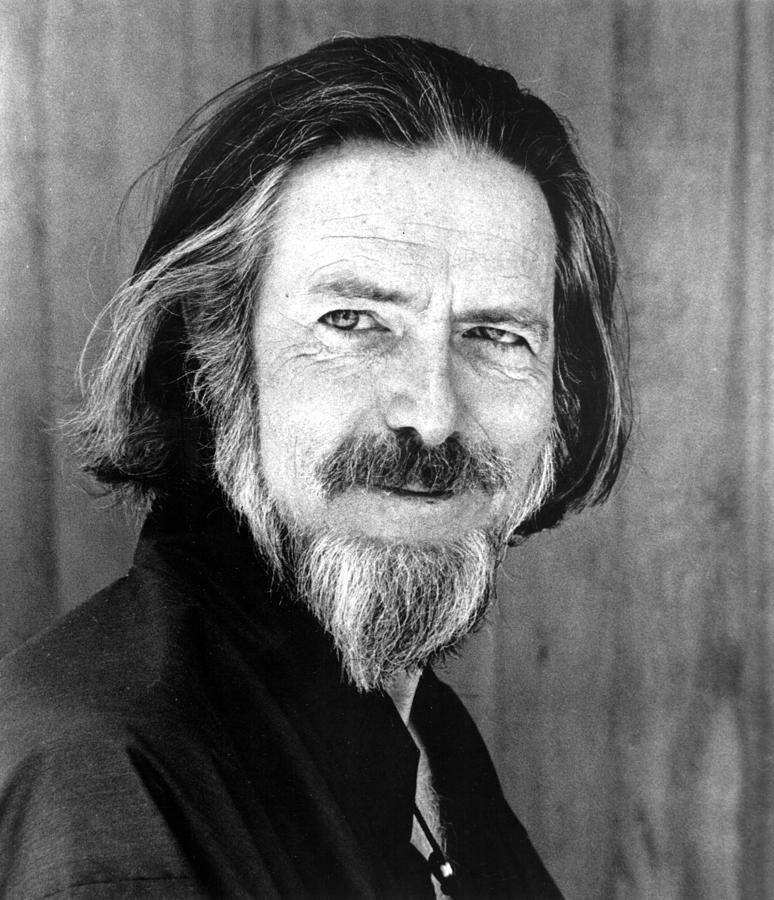
The Illusion of Life – Alan Watts

The Illusion of Life – Alan Watts If you awaken from this illusion and you understand that black implies white, self implies other, life implies death, (or shall I say death implies life?), you can feel yourself – not as a stranger in the world – not as something here on probation, not as something that has arrived by fluke – but you can begin to feel you own existence as absolutely fundamental. I am not trying to sell you on this idea, in the sense of converting you to it. I want you to play with it. I want you to think of it’s possibilities, I am not trying to prove it. I am just putting it forward as a possibility of life to think about. So then, let’s suppose that you were able every night to dream any dream you wanted to dream, and that you could, for example, have the power within one night to dream for 75 years of time, or any length of time you wanted to have. And you would naturally, as you begin on this adventure of dreams, you would fulfill all your wishes. You would have every kind of pleasure you can concieve. And after several nights of seventy five years of total pleasure each, you would say “Well that was pretty great”. But now let’s have a surprise, let’s have a dream that’s not under control, where something is going to happen to me that I don’t know what it’s going to be. And you would do that and would come out of that and you would say “Wow that was a close shave, wasn’t it”? Then you would get more and more adventurous and you would make further-in and further-out gambles to what you would dream. And finally, you would dream where you are now. You would dream the dream of living a life that you are actually living today. That would be within the infinite multiplicity of choices you would have. Of playing that you weren’t God, because the whole nature of the godhead, according to this idea, is to play that he is not. So in this idea then, everybody is fundamentallythe ultimate reality, not God in a political kingly sense, but God in the sense of being the self, the deep-down basic, whatever there is. And you are all that, only you are pretending that you are not. We need a new experience — a new feeling of what it is to be ‘I.’ The lowdown (which is, of course, the secret and profound view) on life is that our normal sensation of self is a hoax, or, at best, a temporary role that we are playing — with our own tacit consent, just as every hypnotized person is basically willing to be hypnotized. The most strongly enforced of all known taboos is the taboo against knowing who or what you really are behind the mask of your apparently separate, independent, and isolated ego.” “As is so often the way, what we have suppressed and overlooked is something startlingly obvious. The difficulty is that it is *so* obvious and basic that one can hardly find the words for it. The Germans call it Hintergedanke, an apprehension lying tacitly in the back of our minds which we cannot easily admit, even to ourselves. The sensation of ‘I’ as a lonely and isolated center of being is so powerful and commonsensical, and so fundamental to our modes of speech and thought, to our laws and social institutions, that we cannot experience selfhood except as something superficial in the scheme of the universe.” “The difficulty in realizing this to be so is that conceptual thinking cannot grasp it. It is as if the eyes were trying to look at themselves directly, or as if one were trying to describe the color of a mirror in terms of colors reflected in the mirror. Just as sight is something more than all things seen, the foundation or ‘ground’ of our existence and awareness cannot be understood in terms of things that are known.” “You cannot teach an ego to be anything but egotistic, even though egos have the subtlest ways of pretending to be reformed. The basic thing is therefore to dispel, by experiment and experience, the illusion of oneself as a separate ego.” “Furthermore, on seeing through the illusion of the ego, it is impossible to think of oneself as better than, or superior to, others for having done so. In every direction there is just one Self playing its myriad games of hide-and-seek. Birds are not *better* than the eggs from which they have broken.” –Alan Watts

The Illusion of Life – Alan Watts Read Post »

Importance of guru in life 2
The Divine Play

Importance of Guru

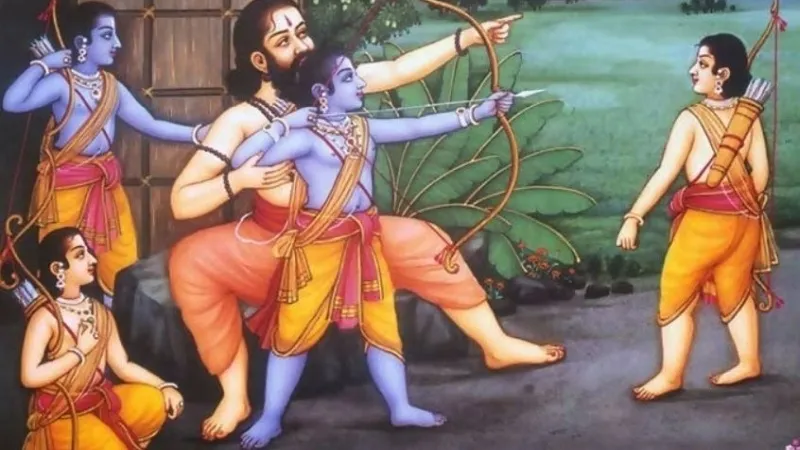
Importance of Guru Importance of Guru in Life has been illustrated in Shri Ramcharitmanas Guru or a Teacher has been given the highest stature in Shri Ramcharitmanas Shri Ramcharitmanas teaches us that to achieve success at any stage of life—whether as a child, a student, a youth, a professional, a retiree, or someone in the quest for spiritual enlightenment—one requires a guru. Despite being the incarnation of God, Lord Ram, during His earthly existence, sought guidance from gurus, emphasizing the indispensable role of mentors in one’s journey. Importance of Guru It is the Lord himself who, in His benevolence, connects us with a good Guru. In fact, the position of Guru is considered higher than that of God, as it is only through a Guru that one can reach the Almighty. गुरु गोविंद दोऊ खड़े काके लागू पाय बलिहारी गुरु आपकी गोविंद दियो बताए This couplet, attributed to the revered saint Kabirdas ji, underscores the profound reverence for the Guru in spiritual practice. Kabirdas ji expressed that if faced with the presence of both His Guru and the Lord, he would first bow to His Guru, as it was through the Guru’s guidance that he attained connection with the Divine. Before embarking on the composition of the holy scripture Shri Ramcharitmanas, Tulsidas ji initiates with paying homage to the Trinity – Lord Hari, Lord Shiv (His first Guru), and Brahma ji. Subsequently, he acknowledges the Saints and the Brahmins. It’s important to note that “Brahmins” in this context refers not to a specific clan but rather to individuals who are deeply immersed in contemplation of the Divine (Brahm). These saintly souls engage in constant chanting and meditation on the Lord in all aspects of their lives, whether working, eating, or sleeping. Guru is considered above the Lord in the Hindu Sanatan Dharam (Eternal Religion) philosophy. According to our scriptures, Lord Krishna is described as the universal guru, while Lord Shiv is hailed as the guru of the three worlds. In essence, there is no distinction between Lord Shiv and Lord Narayan (Lord Krishna or Lord Ram, who are avatars of Narayan). In the journey of life, one encounters various gurus. Initially, the mother and father serve as the first gurus of a child, guiding and nurturing them. As the child grows, teachers at school become gurus, imparting knowledge and wisdom. Similarly, in the professional sphere, a boss can also play the role of a guru, providing guidance and mentorship. In essence, a guru is always someone who leads and inspires a student to excel in their endeavors. One of the avatars of Narayan bhagwan is Lord Dattatreya who made 24 gurus in His life from nature’s creation. In Shri Ramcharitmanas, the role and blessings of gurus are mentioned extensively. Lord Ram’s gurus, Vashishth ji and Vishwamitra ji, are revered for their guidance. Additionally, the guru of Goddess Parvati, Narad ji, and the gurus of other notable figures such as Kak Bhasundi ji, Sage Sutikshan, Rishi Agastya ji, and Mata Shabri, are also highlighted, emphasizing the significant influence of gurus in the lives of devotees. Finding a Guru in Life Finding a good guru in life is indeed a blessing bestowed by the Lord. While it’s true that one may actively seek out a guru, it’s also possible for a guru to come to a disciple. The belief that Krishna and Shiv are universal gurus suggests that the Divine facilitates the connection between a seeker and a guru. Therefore, it is believed that the almighty manifests as a guru in the lives of devotees, often appearing in the form of a person to guide and enlighten them. The Universal guru Hindu scriptures have described Lord Krishna (an avatar of Lord Narayan like Lord Ram) as a universal guru and Lord Shiv as a guru of three worlds. Krishna is the teacher who taught, in Bhagavad Gita, the basic principles of life. कृष्णं वन्दे जगत गुरुं Meaning: Salutations to Sri Krishna, the Guru of the entire universe. Guru of the Three Worlds Lord Shiv is revered as the Guru not only of this world but also of all three worlds in our universe. He was pleased by the innocent inquiries of Goddess Parvati when she sought to understand the nature of Lord Ram and how He could embody both Nirgun (formless) Brahm and Sagun (as an avatar of Lord Narayan in human form). In response to Her questions, Lord Shiv began narrating the entire Ramcharitmanas to provide Her with answers and insights. तुम्ह त्रिभुवन गुर बेद बखाना। आन जीव पाँवर का जाना॥प्रस्न उमा कै सहज सुहाई। छल बिहीन सुनि सिव मन भाई॥ Meaning: The Vedas have proclaimed you as the guru of the three worlds. What sinful being would be aware of this? Lord Shiv’s heart was greatly pleased to hear Parvati’s beautiful and sincere question, devoid of any deceit. Guru (Teacher) has been Glorified throughout Shri Ramcharitmanas Here are some instances: Lord Ram as Shiv ji’s Guru After the loss of His is first wife, Sati, Lord Shiv became an ascetic for many years. Sati was later reborn as Goddess Parvati. Lord Ram appeared before Lord Shiv and requested Him to marry Parvati ji, who was undergoing penance to win Lord Shiv’s hand in marriage. Despite being perpetually devoted to asceticism and meditation on His supreme Lord Ram, Lord Shiv initially showed reluctance to marry. However, upon Lord Ram’s insistence, Lord Shiv uttered the following words: मातु पिता गुर प्रभु कै बानी। बिनहिं बिचार करिअ सुभ जानी॥तुम्ह सब भाँति परम हितकारी। अग्या सिर पर नाथ तुम्हारी॥ Meaning: The words of mother, father, guru, and master should be regarded as auspicious without any hesitation. You are my ultimate benefactor in every aspect of life. Lord, Your command rests upon my head. Goddess Parvati ji and Her Guru Narad ji Narad ji, who is Goddess Parvati’s guru, instructed Her to undertake penance and meditate upon Her beloved Lord Shiv in order to win His acceptance as His wife. Parvati underwent rigorous penance for more than four thousand years in the Himalayas. At

Importance of Guru Read Post »

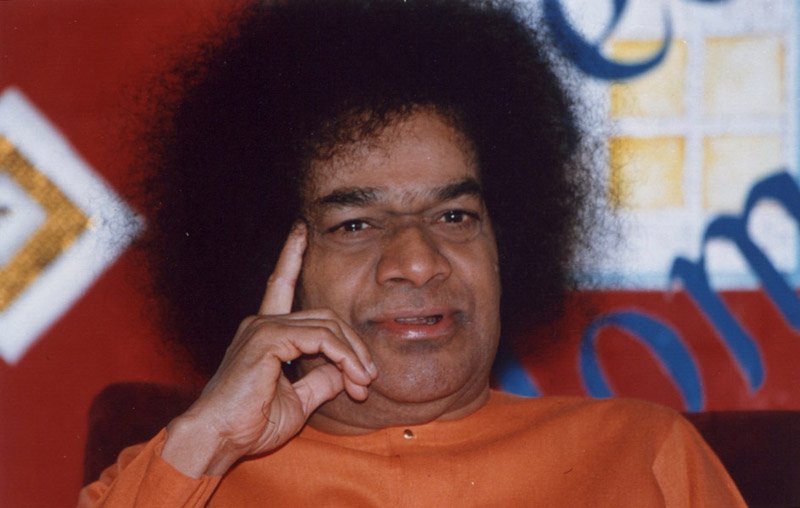
Bhagwan Shri Sathya Sai Baba tranquil ashram portrait photo
PEARLS OF DEVOTION

  It’s All a Dream 

  It’s All a Dream  My Dears! The time will come when the whole of this dream will vanish. To everyone of us there must come a time when the whole universe will be found to have been a mere dream, when we shall find that the soul is infinitely better than its surroundings. In this struggle through what we call environments, there will come a time when we shall find that these environments were almost zero in comparison with the power of the Soul. It is only a question of time, and time is nothing in the infinite. It is a drop in the ocean. We can afford to wait and be calm. With Blessings.(Baba) Sri Sathya Sai Baba “Just as Dream and Magic …” II.31:   Just as dream and magic are seen to be unreal, or as in a city in the sky, so also is this whole universe known to be unreal from the Upanisads by the wise. II.4:   As the dream objects are unreal in a dream, so also, because of that very reason, the objects of the waking state are unreal. But objects (in the dream state) differ because of existence inside (the body) and because of contraction (in the dream). II.5:   Inasmuch as the diverse things are (found to be) similar on the strength of the familiar grounds of inference, the wise say that the dream and waking states are one. II.15:   Those objects that appear as obscure inside the mind, and those that appear as vivid outside, are all merely created by imagination. Their distinction is to be traced to the difference in the organs of perception. These sacred verses from the Mandukya Upanisad / Karika exemplify the position from Advaita that, as far as their reality is concerned, the images of the world seen during waking are identical to dreams. I must confess that this was very difficult for me to accept till, many years ago now, one encountered Sri Bhagavan’s literature and His talks on the nature of the world for the first time. It was pretty earth-shattering for me to realize the complete inflexibility with which Bhagavan held on to these very same views; views which were derived, remarkably, not from the reading of any particular Advaitic text, but from His own personal experience of the Supreme State. That the two should match so perfectly, for me at least, has always been a source of wonder, and has led to an unshakeable belief in the teachings.  Here then are some of my favourite quotes from Sri Bhagavan on this theme, jotted down over the years. For me, reading them in one place like this brings home forcefully as to how closely Bhagavan was questioned on these teachings; and also the enormous tenacity with which He never budged even the slightest on this aspect. These teachings holding the World as unreal feature prominently even in Bhagavan’s original works like Ulladu Narpadu, and all put together it should leave no doubt as to how much importance He attached to them. ——————– [From: “Living by the Words of Bhagavan”, by David Godman, Pg 235; Annamalai Swami writes that once Sri Bhagavan made the following remarks about the waking and dream states]   “The world vision which appears in the waking state and the world vision which appears in the dream state are both the same. There is not even a trace of difference. The dream state happens merely to prove the unreality of the world which we see in the waking state. This is one of the operations of God’s Grace. The world of the waking state changes in the same way as the world of the dream state. Both are equally insubstantial and equally unreal. Some people dispute this by saying, ‘But the same world which we saw yesterday is existing today. Dream worlds are never the same from one night to the next. Therefore how can we believe that the world of the waking state is unreal? History tells us that this world has existed for thousands of years.’ We take the evidence that this changing world has been existing for a long time and decide that this constitutes a proof that the world is real. This is an unjustified conclusion. The world is changing every minute. How? Our body is not the same as it was when we were young. A lamp which we light at night may seem to be the same in the morning but all the oil in the flame has changed. Is this not so? Water flows in a river. If we see the river on two successive days we say it is the same river, but it is not the same; the water has completely changed. The world is always changing. It is not permanent. But we exist unchanged in all the three states of waking, dreaming and sleeping. Nobody can truthfully say, ‘I did not exist during these three states’. Therefore we must conclude that this “I” is the permanent substance because everything else is in a state of perpetual flux. If you never forget this, this is liberation.” *** [From: “Mountain Path”, Oct 1970, Pg 188 & 189, (Arthur Osborne Commemoration Issue); from the Editorial “What is death if Scrutinized?” by Lucia Osborne quoting Sri Bhagavan (third para is taken from “Day by Day”, Pg 221 19.6.1946)] “You create a dream-body for yourself in the dream and act with it. The same is falsified in the waking state. At present you think you are this body and not the dream-body. In your dream this body is falsified by the dream-body. So you see neither of these bodies is real. Because each of them is true for a time and false for other times. That which is real must be real always. The ‘I’-consciousness is present all through the three states. That alone is real. The three states are false. They are only for the mind It is the mind that obstructs your vision of your true nature, which is Infinite Spirit. Sleep is temporary death and death is longer sleep. Why go to

  It’s All a Dream  Read Post »

6ff42cec12117db2c4feb635c320c118
PEARLS OF DEVOTION

Bhramacharya & Spirituality 

Bhramacharya & Spirituality  Brahmacharya or spotless chastity is the best of all penances; a celibate of such spotless chastity is not a human being, but a god indeed… To the celibate who conserves the semen with great efforts, what is there unattainable in this world? By the power of the composure of the semen, one will become just like Myself.” – Sri Sankaracharya Introduction Brahmacharya is a divine word. It is the sum and substance of Yoga. Brahmacharya is the Achara or conduct by which you attain or reach Brahman (God). It is life in the Absolute. It is movement towards God or the Atman (Self). Brahmacharya is absolute freedom from sexual thoughts and desires. It is the vow of celibacy. It is control of all the senses in thought, word and deed. Brahmacharya is not mere bachelorhood. There should be strict abstinence not merely from sexual intercourse but also from auto-erotic manifestations, from masturbation, from homosexual acts and from all perverse sexual practices. It must further involve a permanent abstention from indulgence in erotic imagination and voluptuous reverie. In a narrow sense, Brahmacharya is celibacy. In a broad sense, it is absolute control of all the senses. The door of Nirvana (liberation) or perfection is complete Brahmacharya. Celibacy is to a Yogi what electricity is to an electric bulb. Without celibacy no spiritual progress is possible. It is a potent weapon and shield to wage war against the internal evil forces of lust, anger and greed. It serves as a gateway for the bliss beyond, and opens the door of liberation. It contributes perennial joy and uninterrupted bliss. It is the only key to open the Sushumna (the chief among astral tubes in the human body running inside the spinal column) and awaken the Kundalini (the primordial cosmic energy located in the individual). There cannot be any language without words. You cannot draw a picture without a canvas or a wall. You cannot write anything without paper. Even so, you cannot have health and spiritual life without celibacy. An established celibate will not feel any difference in touching the opposite sex, a piece of paper, a block of wood, or a piece of stone. A true celibate only can cultivate Bhakti (devotion). A true celibate only can practice Yoga. A true celibate only can acquire jnana (wisdom). Brahmacharya is meant both for men and women. Bhishma, Hanuman, Lakshmana, Jesus, Mirabai, Sulabha and Gargi were all celibates. The Vital Energy One of the students of Dhanvantari approached his teacher after finishing his full course of Ayurveda (the ancient Indian science of medicine) and asked: “O Bhagavan, kindly let me know the secret of health now.” Dhanvantari replied: “This seminal energy is verily the Atman. The secret of health lies in preservation of this vital force. He who wastes this vital and precious energy cannot have physical, mental, moral and spiritual development.” Veerya (seminal energy) is God in motion. Veerya is dynamic will. Veerya is soul-force. Veerya is the essence of life, thought, intelligence and consciousness. Always remember this. The vital energy, Veerya which supports your life, which is the Prana (life-force) of Pranas, which shines in your sparkling eyes, which beams in your shining cheeks, is a great treasure to you. It is the quintessence of blood. From food, chyle is manufactured; out of chyle comes blood; out of blood comes flesh; out of flesh comes fat; out of fat comes marrow; out of marrow comes semen. Semen is the last essence. It is the essence of essences. Just as sugar pervades sugar-cane and butter pervades milk, so also semen pervades the whole body. It exists in a subtle form throughout the body. It is withdrawn and elaborated in a gross form in the sexual organs under the influence of the sexual will and sexual excitement. Sexual Excitement and its Evil Consequences When a man is excited by passion, the Prana is set in motion. The vital air or Prana moves the internal sap or semen. The semen is put into motion. It falls downwards, just as the clouds burst into the rain water; just as the fruits, flowers, and leaves of the tree drop down by the force of the blowing winds. Note carefully the evil after-effects, once the Veerya is lost. Prana gets unsteady. It gets agitated.. The body and mind refuse to work energetically. There is physical and mental lethargy. Exhaustion and weakness are experienced. You have to take recourse to milk , fruits and other articles to make good the loss of energy. Remember, these articles can never, never repair loss. Bad memory, premature old age, impotence, various sorts of eye diseases and nervous diseases are attributable to the heavy loss of this vital fluid. Those who have lost much of their semen become easily irritated. They lose their balance of mind quickly. Little things upset them. Those who have not observed the vow of celibacy become slaves of anger, laziness and fear. If you do not have your senses under control, you venture to do foolish actions which even children will not dare to do. Man, with his boasted intellect, has to learn lessons from birds and animals. Even animals have more self-control than men. It is only the so-called man who has degraded himself much by indulgence. At the heat of sexual excitement, he repeats the same ignoble act again and again. He has not a bit of self-control. He is an absolute slave to passion. He is a puppet in the hands of passion. Like rabbits he procreates and brings forth countless children to swell up the number of beggars in the world. Lions, elephants, bulls and other powerful animals have better self-control than men. Lions cohabit only once in a year. After conception, the female animals will never allow the male animal to approach them till the young ones are weaned and they themselves become healthy and strong. Man only violates the laws of nature and consequently suffers from innumerable diseases.

Bhramacharya & Spirituality  Read Post »

Lord Vishnu god.jpg
PEARLS OF DEVOTION

The Grace of God 

The Grace of God  You can notice Lord’s grace in every inch of His creation. In a hot summer you enjoy the delicious sweet juice of grapes, cucumber, oranges and pomegranates and cool Ganga water of Rishikesh and Haridwar. This is Lord’s grace. When you suffer from any serious ailment, you get immediate relief and cure from herbs. This is Lord’s grace. When you walk in a dark night, the stars twinkle and throw light on your path. This is Lord’s grace. When you are unable to bear extreme pain you become unconscious. This is Lord’s grace. When the weather is sultry, a gentle breeze blows and refreshes you. This is Lord’s grace. Lord’s grace will descend in proportion to the degree of surrender. The more the surrender, the more the grace. Kathopanishad says in a thundering voice: Not by study or discourses, not by argument, not by intelligence is the Self attained. He whom the Lord chooses attains Self-realisation. He reveals Himself to such a chosen person. The subtle forms of lust, anger, egoism, pride, etc., can only be totally destroyed through the grace of the Lord. However hard you may strive and do Sadhana, these subtle forms cannot be eradicated through your Sadhana alone. The Lord’s grace completely purifies your heart. It is the Lord only who stirs the aspirants to do Purushartha or right exertion. You should not sit idle and say Lord’s grace will do everything for me. Why should I do any Sadhana? This is wrong philosophy. God helps those who help themselves. God’s grace will descend on those persons only who exert. You cannot expect the Lord to do self-surrender for you. Be up and doing. Strive. Plod. Persevere. The Lord will shower His grace upon you. Mira abandoned everything. She renounced kingdom, husband, relatives, friends and property. She remembered her Lord Krishna, whole day and night. She shed tears of Prem. She sang His praise with single-minded devotion. She gave up food. Her body got emaciated. Her mind was ever absorbed in Lord Krishna. Only then, did Lord Krishna shower His grace upon her. The Lord has five duties. He is Karta (actor), Akarta (non-actor), Anyatha Karta. He veils the Jiva (Tirodhana, Tirobhava). He removes the veil through His grace (Anugraha). People will become idle and say The Lord will do everything for me. Why should I do any Sadhana? I depend upon His grace alone. In order to remove the inertia, Sri Vasishtha and others have preached the Purushartha Vada. In reality it is all Lord’s grace only. Even a leaf or an atom will not move without the sanction of the Lord. May you all obtain Lord’s grace through faith and devotion! May Lord shower His grace upon you all. Glory to the Lord and His grace (Kripa, Anugraha, Prasad).

The Grace of God  Read Post »

406b8f84d823aacb2f24c0929fad01e7
PEARLS OF DEVOTION

The Divine Trees & Plants 

The Divine Trees & Plants  Peepul: Bodhi Tree of Enlightenment The peepul is in the fig family, with curiously heart-shaped leaves that taper off at the point in a small “tail.” Rather mysteriously, the leaves of this tree rustle even when there is no breeze to move them, which is attributed to the long leaf stalk and broad leaf structure. This tree, also known as “Ashvatta,” is purportedly the most worshipped tree in India. Lord Krishna, the original incarnation of Lord Vishnu and the supreme lord of the universe according to the Vaishnava faith, identifies with the peepul in the sacred text Bhagavad Gita. He states, “Of all trees, I am the holy fig tree.” In addition, the Hindus associate the roots of the tree with Lord Brahma (the creator of the universe), the trunk of the tree with Lord Vishnu (the protector and preserver), and the leaves of the tree with Lord Shiva (the destroyer). The Buddhists also revere this tree since Lord Buddha is thought to have attained enlightenment under the peepul tree. Thus it is also called the Bodhi Tree or Tree of Enlightenment. A red thread or cloth is often tied around the tree for worship and it is considered very inauspicious to ever cut one down. Banyan: Tree of Life This is actually another type of fig tree, with large, glossy leaves and trunks that appear to be composed of a labyrinth of roots (called “aerial prop roots”). It grows around a host plant, often killing the original tree or plant in the process, earning it the nickname “strangler fig.” The banyan tree often represents the Trimūrti, the three lords of cosmic creation, preservation and destruction—namely, Lord Brahma, Lord Vishnu and Lord Shiva. It is very often used for metaphorical reference in the Vedic scriptures written in ancient Sanskrit. With its ever-spreading roots and branches, it is also symbolic of life and fertility in many Indian cultures and is consequently worshipped by those who wish to have children. The revered banyan tree is never cut, and thus often grows over many acres. Bael: A Medicinal Tree The bael is a slender, aromatic tree that bears a sweet, yellow-green fruit. It is a very medicinal plant as well as a sacred tree. All parts of it are used for different healing purposes—the roots, leaves, and fruits—and it has proven effective in combatting many different kinds of bacteria. It is known as “Sivadruma” by the Hindus, and the leaves are often offered to Lord Shiva, who is known to be particularly pleased by this tree. Baels have trifoliate leaves, i.e. a leaf structure of three, and this is sometimes thought to symbolize Siva’s trident or the Trimūrti (described above) as well. Ashoka: A Guard Against Grief This is a small evergreen tree, with dark green leaves and fragrant orange-yellow to deep red flowers. The name of this tree means “without grief” or “one who gives no grief.” Water in which the ashoka flowers have been washed is used as a protective and healing draught against sorrow. It is representative of Kama Deva or the God of Love in the Hindu faith, and thus it is also associated with fertility. In fact, the bark of the tree is used as a remedy for reproductive disorders and to restore fertility. It is also thought that Lord Buddha was himself born under an ashoka tree and so it is often planted in Buddhist monasteries.trident or the Trimūrti (described above) as well. Coconut: Ceremonial Food The classic appearance of the coconut palm, with its slender trunk, large fan-like leaves, and round hard-shelled fruit, is beloved as a symbol of exotic beaches and tropical forests. In India, however, coconut trees are used for all kinds of religious purposes, mainly utilizing the coconut fruits in puja (religious ceremonies) and all kinds of traditional food preparations. Some say that the fruit represents Lord Shiva, with the three black marks on coconuts depicting his eyes. Around the world, the coconut fruit is well regarded for its distinctive flavor, nutritional benefits and even medicinal value, possessing anti-bacterial properties. Mango: Icon of Love and Fertility Mangos can grow exceedingly tall, over 100 feet, and can live hundreds of years. When mature, these trees have dark green leaves and put out small white, sweet-smelling flowers, which eventually ripen into the famous luscious fruit. In India, the mango is commonly seen as a symbol of love and fertility and is used in religious and social ceremonies accordingly. The mango leaves are often strung in a garland and hung over the entrance of a dwelling to mark an auspicious occasion. The Buddhists revere the mango for it is believed that Lord Buddha created a huge mango tree in Shravasti, an Indian district, from a seed. The mellow, sweet flesh of mangos is very popular everywhere for its delicious flavor. Banana: The Resourceful Tree Their huge lush green leaves make it clear that bananas thrive in a very rainforest-like environment. The leaves, fruits and flowers of this tree are all utilized in Indian religious ceremonies. For example, the fruit is offered to various gods and goddesses, especially Lord Vishnu and Sri Lakshmi, the Goddess of Fortune. Banana leaves are used as plates to distribute blessed and offered food, called prasadam. Those of the Hindu faith also worship the banana trees, bearing fruits and flowers, for the welfare of the family. This tree is certainly more than just a household fruit in India. Neem: A Tree of Healing Neems are drought-resistant evergreens in the mahogany family, with small tapering leaves and white, fragrant flowers. The flowers and leaves are used in traditional Indian cooking and small preparations of neem are consumed as part of the New Year’s celebration in several provinces. Deities are sometimes garlanded with offerings of neem flowers and leaves. It is greatly respected for its medicinal uses, including anti-bacterial, anti-viral, anti-fungal, and even sedative properties. It is also commonly used as a “toothbrush.” People in India (as well as Africa and

The Divine Trees & Plants  Read Post »