Hari Om

Menu

November 2025

IMG 20250924 WA0190
His Life is His Message topics

Spirituality

Divine Words of wisdom by Sathya Sai Baba – On Spirituality 1. Truth, brahman doesn’t die at any given point of time: With Analogies Your browser does not support the audio element. 1996-07-31 Document Download Audio Social Share Facebook Twitter Youtube Instagram Description Some millions of years ago, the Sun blew up due to excess of Helium gas in it. The Sun blew up into small pieces. The stars are the pieces that blew away from the Sun. Not only the stars but the Milky Way also has its beginnings from the pieces of the sun. Then when can the birth and death be decided? When there is a form then there is birth and death. But there exists an entity that lives even after the form perishes and that is the ‘truth’. A small example to illustrate this: ‘Aavu’- cow, is the name given to a cow. The name cow remains even after the cow dies. Similarly, the word ‘human’ remains even after the human dies. So also when Atma adorns a body it remains even after the death of the body. Mr. Jhumsai also said that one should be in search of truth. But one need not search for truth. How can one search for the truth that is all pervading? If there is a place where truth is not present then one can search for it elsewhere. The word of ‘truth’ spoken might die but the truth remains eternal. Likewise the nature of Brahman is changeless. The principle of Brahman is everlasting. It exists in the form of sound, light, movement, awareness, conscience and consciousness. How can one decide the exact form of Brahman? All forms are present in this truth. Vedanta has been propounding this aspect.   2. Spirituality must begin at a tender age: Analogy Your browser does not support the audio element. 1984-11-21 Document Download Audio Social Share Facebook Twitter Youtube Instagram Description Sathya Sai Organisations must not only teach spirituality but efforts must be made to change every activity into a spiritual pursuit. True spirituality is to develop the unity in humanity, unity in divinity. How can one achieve unity in divinity? This unity can be got through the purity of mind. Without a pure heart one cannot achieve unity.   4. Outer appearance and Inner conscience

Spirituality Read Post »

Destiny and Karma
His Life is His Message topics

Time

Divine Words of wisdom by Sathya Sai Baba – On Time 1. Time is very important in life Your browser does not support the audio element. 1996-07-31 Document Download Audio Social Share Facebook Twitter Youtube Instagram Description Bhagawan has started Vedanta in a simple way today. Every word and mantra in it has got immense meaning. Vedantam is very easy to understand. Bhagawan will explain every word in detail so as to make every one understand it. Ultimately the entire essence of Vedanta would not even be an inch long but within it there are about fifteen thousand mantras. Bhagawan says that He would show it. This explanation can be given only by God himself and not possible by others. 2. Scriptures and Puranas proclaim truth Your browser does not support the audio element. 1996-07-31 Document Download Audio Social Share Facebook Twitter Youtube Instagram Description What is meant by ‘Tarakam’? It is ‘Khechari’, ‘Vechari’, ‘Madhyama’ and the true essence ‘Bhagawati’. One must try to analyse the essence of these four aspects. What is the meaning of ‘Tarakam’? Many people have described it in many ways. There are five signs in this. One should know clearly the five signs, ‘Pancha Mudras’. One should know these five signs, research and investigate them properly, experience them, then determine the necessary and the unnecessary and brush aside the unnecessary; have a vision of Nadabindu and realise the ‘hamsatwa’, later on experience the state of sath-chit-ananda on earth—this sums up ‘Tarakam’. Immersing and concentrating the human mind in the principle of sath-chit-ananda, the ultimate bliss is called as ‘Tarakam’.   4. As is your feeling so is your vision

Time Read Post »

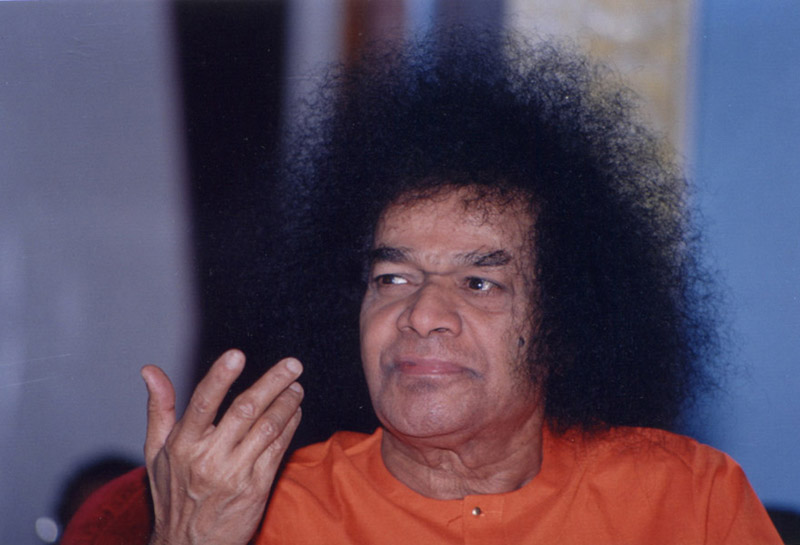
Shri Sathya Sai Baba tranquil divine temple photo
His Life is His Message topics

Discrimination

Divine Words of wisdom by Sathya Sai Baba – On Discrimination 1. I will explain Vedanta extensively to you all Your browser does not support the audio element. 1996-07-31 Document Download Audio Social Share Facebook Twitter Youtube Instagram Description Bhagawan has started Vedanta in a simple way today. Every word and mantra in it has got immense meaning. Vedantam is very easy to understand. Bhagawan will explain every word in detail so as to make every one understand it. Ultimately the entire essence of Vedanta would not even be an inch long but within it there are about fifteen thousand mantras. Bhagawan says that He would show it. This explanation can be given only by God himself and not possible by others. 2. What is Amanaskamu in Vedanta

Discrimination Read Post »

Sathya Sai Baba Landmark Discourses
His Life is His Message topics

Saints

Divine Words of wisdom by Sathya Sai Baba – On Saints 1. Life teachings of Mahavira Your browser does not support the audio element. 1996-07-31 Document Download Audio Social Share Facebook Twitter Youtube Instagram Description Mahavira who propounded the religion of Jainism upheld the principles of devotion and dedication and taught that doing one’s duty is the foremost goal of one’s life. He preached that one should recognise that the entire world is God’s creation and hence one should abstain from misusing or harming any being. He established the truth that God is present in all beings.   2. Buddha’s life teachings Your browser does not support the audio element. 1996-07-31 Document Download Audio Social Share Facebook Twitter Youtube Instagram Description What is meant by ‘Tarakam’? It is ‘Khechari’, ‘Vechari’, ‘Madhyama’ and the true essence ‘Bhagawati’. One must try to analyse the essence of these four aspects. What is the meaning of ‘Tarakam’? Many people have described it in many ways. There are five signs in this. One should know clearly the five signs, ‘Pancha Mudras’. One should know these five signs, research and investigate them properly, experience them, then determine the necessary and the unnecessary and brush aside the unnecessary; have a vision of Nadabindu and realise the ‘hamsatwa’, later on experience the state of sath-chit-ananda on earth—this sums up ‘Tarakam’. Immersing and concentrating the human mind in the principle of sath-chit-ananda, the ultimate bliss is called as ‘Tarakam’.   4. As is your feeling so is your vision

Saints Read Post »

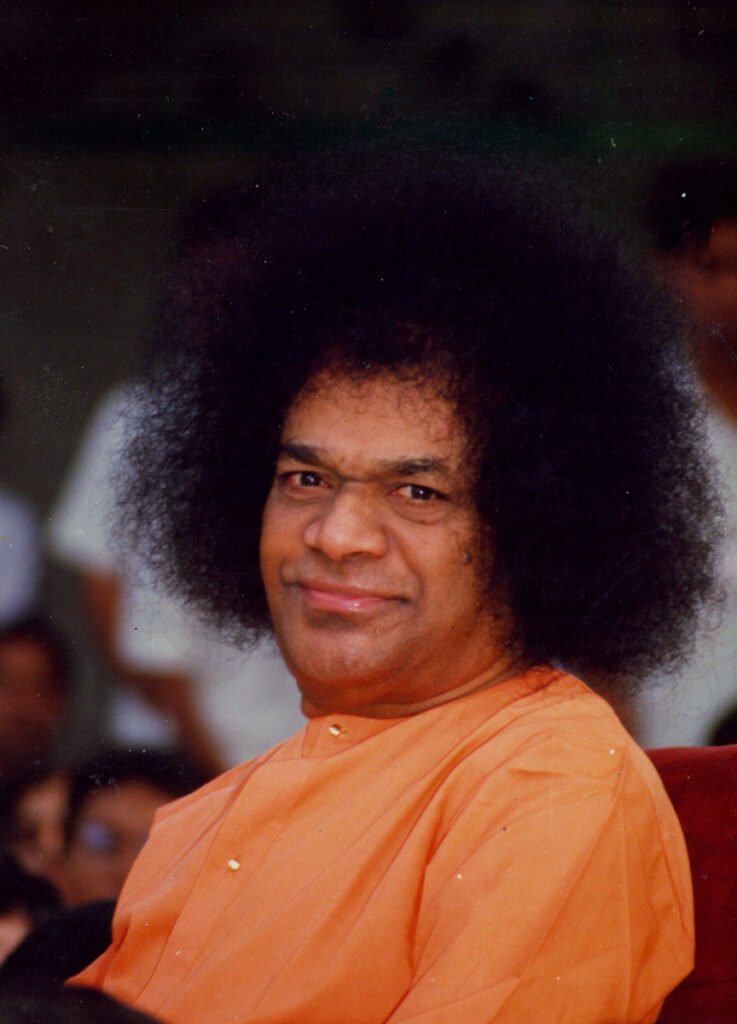
Bhagwan Shri Sathya Sai Baba peaceful devotional gathering image
His Life is His Message topics

Practice

Divine Words of wisdom by Sathya Sai Baba – On Practice 1. Act on the good thought the moment it rises : Ravana’s Message to Humanity Your browser does not support the audio element. 1996-06-25 Document Download Audio Social Share Facebook Twitter Youtube Instagram Description One should steady one’s body to have steady mind. If one’s body is continuously in motion, how can one steady one’s mind? Mind can be compared to the water in a pot. When the pot is moved, the water inside too will move. That is why one needs to train one’s body to be still in meditation. Meditation includes control of body. A steady body holds a steady mind. Intellect blossoms only when both the mind and the body are steady. Wisdom shines when intellect blossoms and once wisdom shines, one gets liberated. One is unable to control the body and sit still for two minutes and even the sitting posture is not correct. When one sits with a bent spinal cord, the nerves ‘ida’ and ‘pingala’ get disturbed. The power of ‘kundalini’ which travels from ‘mooladhara’ or the last vertebra of the spine to the first, goes in the wrong way thus making today’s man a mad monkey; not just a monkey but a mad monkey! A monkey cannot sit still even for a moment; it goes on moving one limb or the other. Its looks are also not steady. The reason for man’s fidgeting is the fact that man has evolved from monkey and though he has developed, the traits of the monkey behaviour still remain.   2. Concentration, Contemplation, Meditation Your browser does not support the audio element. 1979-05-25 Document Download Audio Social Share Facebook Twitter Youtube Instagram Description On the day of Diwali, a row of lamps or cressets are kept and with one flame all the other flames are kindled. With one flame we are able to light many lamps. The flame which kindles is the “Parabrahma jyothi”, the eternal flame and the lamps that are being lit are the “Jeevana jyothi”. At last the flame that kindles and the flame that is kindled appear alike. “Brahmavid brahmaiva bhavathi” because these two flames become identical, one and the same, it is said that one who knows “Brahma”, the Divine, “Brahmavid”, he will ultimately become “Brahma”, The Divine, himself. Therefore “jyothi” (flame) meditation is the highest form of meditation. Take for instance, this body, it changes always. But this flame doesn’t undergo change. A little example to illustrate this: There is a tub filled with water. If each one draws tumbler full water from it, the water in the tub diminishes. At one place we have deposited a lorry load of sand. If each one carries away a basket full of sand, the quantity of the sand will diminish. One may kindle a million flames with one flame but the primordial flame remains unchanged. There is no diminutive phase for this primordial flame. So after thus meditating upon the flame, slowly you can establish the form that is dear to you inside the flame and meditate on that. It is the best form of meditation to think that the form which one adores is in the flame and that that flame is in all. Today there are various types of meditation that are being propagated. We come across people who talk about it but none who have experienced it. These are all artificial meditations. If it were so easy to sit in meditation and transcend the body, would the seven sages of yore spend so many years to transcend the limitations of the body? Wouldn’t they have known of such an easy method? They say that within a few minutes the body consciousness is forgotten and then they reach state of trance. Just because the body consciousness is lost, we cannot describe that state as meditation. Body consciousness is also lost by drinking two bottles of wine; can that be called as meditation? So meditation is that which would make us forget the body consciousness and awaken and experience the super consciousness.   4. How to do Jyothi meditation

Practice Read Post »

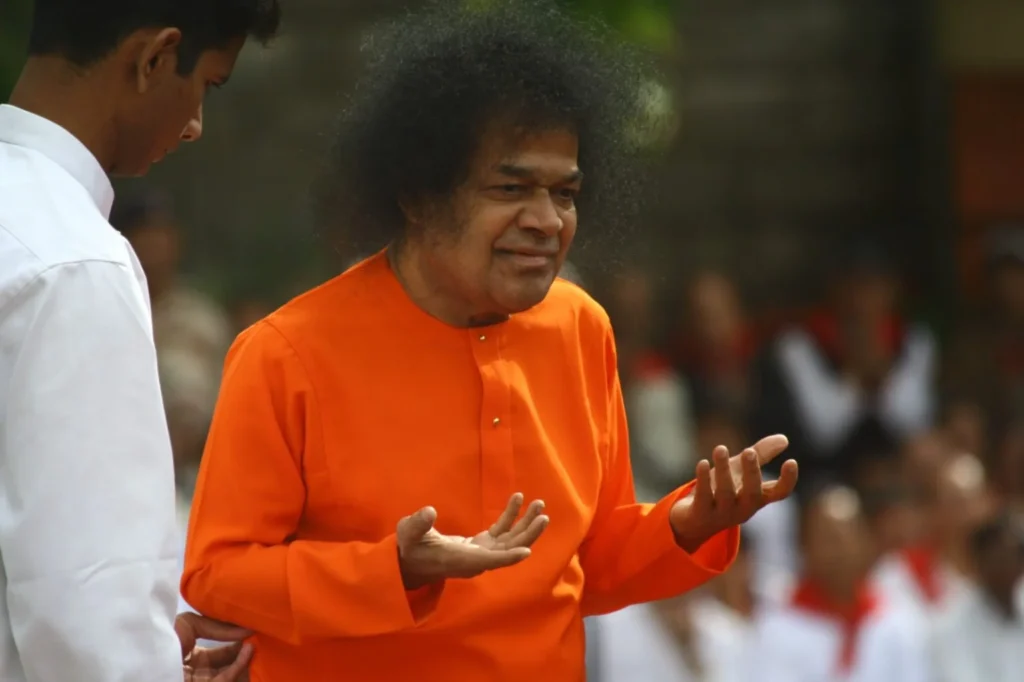
Bhagwan Shri Sathya Sai Baba serene compassionate portrait image
His Life is His Message topics

Parents

1. Love and show your gratitude to parents: Message to Students Your browser does not support the audio element. 1996-06-25 Document Download Audio Social Share Facebook Twitter Youtube Instagram Description Last words of wisdom from Ravana: Good message Ravana fell down after being hit by the arrows of Rama. Many sages came and surrounded Ravana who was about to die in a few moments. All wanted to know the aim of Ravana who was a great scientist; one of penance, and one who had all the power. The sages said, “Ravana, what did you want to achieve in your life? What did you want to do?” Ravana’s sins had been done away with after being hit by Rama’s arrows. He had noble thoughts now. Raising his hands in prostration above his head with great difficulty he said, “O great and noble sages, what shall I say?! I had many plans but I could not fulfil them. But you must realise one thing from my life. You should never procrastinate implementing a good thought, act on it immediately. Never delay a good act. Never take time to do anything good. A good thought and its action must happen simultaneously. On the other hand, ignore a bad thought. Take long to ponder over it. I had planned to convert the sea water around Lanka into sweet water. But postponed acting on it and could not accomplish it. I had planned to alleviate the suffering of people in hell and bring them to heaven. But I postponed acting on my plan. I postponed acting on the good thoughts and now I am about to die unable to accomplish the good tasks. At least you act on the good thought the moment it rises and do good actions without wasting time. 2. Parents should be role model to children Your browser does not support the audio element. 1996-07-31 Document Download Audio Social Share Facebook Twitter Youtube Instagram Description What is meant by ‘Tarakam’? It is ‘Khechari’, ‘Vechari’, ‘Madhyama’ and the true essence ‘Bhagawati’. One must try to analyse the essence of these four aspects. What is the meaning of ‘Tarakam’? Many people have described it in many ways. There are five signs in this. One should know clearly the five signs, ‘Pancha Mudras’. One should know these five signs, research and investigate them properly, experience them, then determine the necessary and the unnecessary and brush aside the unnecessary; have a vision of Nadabindu and realise the ‘hamsatwa’, later on experience the state of sath-chit-ananda on earth—this sums up ‘Tarakam’. Immersing and concentrating the human mind in the principle of sath-chit-ananda, the ultimate bliss is called as ‘Tarakam’.   4. Importance of Mothers words

Parents Read Post »

Shri Sathya Sai Baba tranquil divine temple image
His Life is His Message topics

Divine Words of wisdom by Sathya Sai Baba – On Human values

Divine Words of wisdom by Sathya Sai Baba – On Human values 1. Knowledge is bestowed only through practice Your browser does not support the audio element. 1997-03-08 Document Download Audio Social Share Facebook Twitter Youtube Instagram Description “Abhyasaamsaruni vidyaam” –one gets knowledge based on one’s perseverance and dedication. Learning requires sincere practice. By practice alone, one can meditate. Through meditation one develops sacrifice and by spirit of sacrifice one attains peace. So for everything practice is essential. Man masters walking, talking, reading etc only through practice. Practice is of utmost importance if one wants success in attaining knowledge.   2. Swami on the role of head, heart and hand Your browser does not support the audio element. 2003-01-14 Document Download Audio Social Share Facebook Twitter Youtube Instagram Description If money is lost, by struggle and strain you can get back the lost money. If the health is lost, by consulting physicians you can get back your fitness. But once character and values are lost, human life is a waste. Human values are most important today. In fact, human values have their origin in man. Human values are not found in any of the texts nor are they imported, exported or cultivated. When you follow the path of truth and undertake truthful activities, you will have the human values with you. Embodiment’s of love! More than the education you acquire, more than your actions, if you uphold the human values, all the rest will follow automatically.   4. Human life rests on human values

Divine Words of wisdom by Sathya Sai Baba – On Human values Read Post »

beautiful sri sathya sai baba old pictures black and white 6
His Life is His Message topics

Divine Words of wisdom by Sathya Sai Baba – On Sacrifice

Divine Words of wisdom by Sathya Sai Baba – On Sacrifice 1. What is sacrifice in its true sense Your browser does not support the audio element. 1996-06-20 Document Download Audio Social Share Facebook Twitter Youtube Instagram Description This body is mortal. Sacrifice means not to leave this body or wife and family. The evil qualities that cover us like hatred and jealousy are to be sacrificed. These are covering our human nature. If that cover is removed we get the Bliss. A layer that covers the lens of the eye is to be removed to get the correct vision. Likewise, the cover of attachment, hatred and jealousy are to be removed. That is the real sacrifice. Sacrifice does not mean giving away your material properties. You should sacrifice all your bad qualities. Then our real self comes out. It is your duty to do that. 2. Sacrifice is the hallmark of human life Your browser does not support the audio element. 1996-07-31 Document Download Audio Social Share Facebook Twitter Youtube Instagram Description What is meant by ‘Tarakam’? It is ‘Khechari’, ‘Vechari’, ‘Madhyama’ and the true essence ‘Bhagawati’. One must try to analyse the essence of these four aspects. What is the meaning of ‘Tarakam’? Many people have described it in many ways. There are five signs in this. One should know clearly the five signs, ‘Pancha Mudras’. One should know these five signs, research and investigate them properly, experience them, then determine the necessary and the unnecessary and brush aside the unnecessary; have a vision of Nadabindu and realise the ‘hamsatwa’, later on experience the state of sath-chit-ananda on earth—this sums up ‘Tarakam’. Immersing and concentrating the human mind in the principle of sath-chit-ananda, the ultimate bliss is called as ‘Tarakam’.   4. As is your feeling so is your vision

Divine Words of wisdom by Sathya Sai Baba – On Sacrifice Read Post »

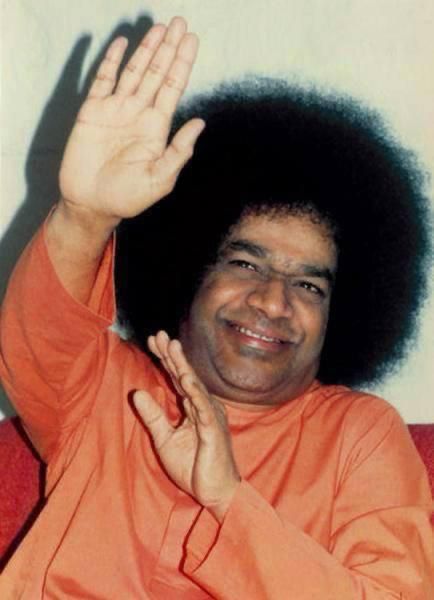
Sri Sathya Sai Baba blessing with raised hand picture
His Life is His Message topics

Divine Words of wisdom by Sathya Sai Baba – On Vedas

Divine Words of wisdom by Sathya Sai Baba – On Vedas 1. Where Vedas end, Vedanta begins, explanation of Vedanta Your browser does not support the audio element. 1996-07-31 Document Download Audio Social Share Facebook Twitter Youtube Instagram Description Therefore Vedas are limited to the physical world. Next is the ‘Vedantam’, which is most important. For the spiritual path, this is the true beginning and the true goal. The beginning and the end are one and the same. It is very difficult to know the different levels prescribed by the Vedantam. Hence the whole of Vedantam has been summed up into three aspects. Students must listen very carefully as it is essential to know about these three important aspects. The most important and the one that needs to be known are these three aspects. The first one is the ‘Tarakam’. The second one is ‘Sankhyam’ and third one is ‘Amanaskam’. These three are the end and essence of Vedanta. What is meant by ‘Tarakam’? It is ‘Khechari’, ‘Vechari’, ‘Madhyama’ and the true essence ‘Bhagawati’. One must try to analyse the essence of these four aspects. What is the meaning of ‘Tarakam’? Many people have described it in many ways. There are five signs in this. One should know clearly the five signs, ‘Pancha Mudras’. One should know these five signs, research and investigate them properly, experience them, then determine the necessary and the unnecessary and brush aside the unnecessary; have a vision of nadabindu and realise the ‘Hamsatwa’, later on experience the state of Sath-Chit-Ananda on earth—this sums up ‘Tarakam’. Immersing and concentrating the human mind in the principle of sath-chit-ananda, the ultimate bliss is called as ‘Tarakam’. The second one is ‘Sankhyamu’. It refers to the ‘Panchendriya’, the five senses, ‘Pancha prana’ the five life breaths, ‘Pancha bhoota’ ,the five elements , ‘Pancha kosamu’ the five life sheaths, the mind, ‘Chittamu’- intellect, ‘Antahkarana’- conscience, jeevamu -the in-dweller- these twenty five aspects. Then one must properly investigate and research each aspect to know the real ‘I’. Investigation and enquiry must lead one to know that none of them is the real “I”. Believing that none of the aspects help in knowing the real principle of one self- the Atma, one must realise that the principle of atma is the Sat-Chit-Ananda which is beyond enquiry and beyond the transcendental. Ultimately one realises that the sath-chit-ananda is atma and that one is atma, and realises the total identification of the “I” with the Atma. This is called as ‘Sankhya yoga’. It involves a thorough enquiry of the inner as well as the outer senses. Next is the ‘Amanaskamu’. What is the meaning of ‘Amanaskam’? The thing that is seen with the help of the five elements, the entire physical world, is the manifestation of the inner vision. The entire existence is nothing but the Brahman for there exists none other than that, “yekam yeva adviteeyam Brahma”, there is only one, the magnificent Brahma. The entire creation is Brahma. There is no second entity. In that scenario, the mind that thinks, too, does not exist. The vastness of the creation is visible only when there are thoughts and counter thoughts. Without the vastness when everything exists as single entity, the mind ceases to exist. Whatever one sees is Brahman, whatever one listens is Brahman, whatever one thinks is Brahman, whatever one utters is Brahman, and whatever one does is Brahman and wherever one walks is Brahman. Therefore when everything is Brahman, there is no mind. The thoughts and counter thoughts occur only when there is a second entity. Since there is no scope for thoughts, it is called as ‘Amanaskamu’, the state of retraction of mind. In that state love alone exists. That love is the truth. Truth and love are one and the same. 2. Vedas classified into three Samhithas Your browser does not support the audio element. 1996-06-22 Document Download Audio Social Share Facebook Twitter Youtube Instagram Description “Sahana vavathu, sahanau bhunaktu, sahaveeryam karavavahai,” All should be united. Kalasi melasi tirugudaam, Kalasimelasi perugudaam, Kalasimelasi telusukonna telivini poshinchudaam, Kalasimelasi kalatha leka Chelimi to jeevinchudaam, Let us move together, Let us grow together, Let us develop the knowledge together, Let us live in friendship, without any differences!! It was the Vedas that first taught unity and oneness. Vedas are being treated as useless because of the lack people who can teach it correctly. It is being treated as rituals, full of mantras to be chanted. No. It is not correct. Vedas are the source ofall the mighty power. Everything is contained in Vedas and everything originates from Vedas. Vedas supply knowledge to all nations. Knowledge of all the modern weaponry is from Vedas, mainly the Atharvana Veda but Bharathiyas are unable to recognize this fact. Bharath was the leader of all nations. But the great examples of those days are becoming extinct now. Thereby students are not able to have belief in those truths. 4. Veda is Dwaitha
Divine Words of wisdom by Sathya Sai Baba – On Vedas Read Post »

Sathya Sai Baba side portrait with calm expression image
His Life is His Message topics

Divine Words of wisdom by Sathya Sai Baba – On Meditation

Divine Words of wisdom by Sathya Sai Baba – On Meditation 1. Role of meditation for steady body and mind Your browser does not support the audio element. 1992-09-27 Document Download Audio Social Share Facebook Twitter Youtube Instagram Description One should steady one’s body to have steady mind. If one’s body is continuously in motion, how can one steady one’s mind? Mind can be compared to the water in a pot. When the pot is moved, the water inside too will move. That is why one needs to train one’s body to be still in meditation. Meditation includes control of body. A steady body holds a steady mind. Intellect blossoms only when both the mind and the body are steady. Wisdom shines when intellect blossoms and once wisdom shines, one gets liberated. One is unable to control the body and sit still for two minutes and even the sitting posture is not correct. When one sits with a bent spinal cord, the nerves ‘ida’ and ‘pingala’ get disturbed. The power of ‘kundalini’ which travels from ‘mooladhara’ or the last vertebra of the spine to the first, goes in the wrong way thus making today’s man a mad monkey; not just a monkey but a mad monkey! A monkey cannot sit still even for a moment; it goes on moving one limb or the other. Its looks are also not steady. The reason for man’s fidgeting is the fact that man has evolved from monkey and though he has developed, the traits of the monkey behaviour still remain.   2. Concentration, Contemplation, Meditation Your browser does not support the audio element. 1979-05-25 Document Download Audio Social Share Facebook Twitter Youtube Instagram Description On the day of Diwali, a row of lamps or cressets are kept and with one flame all the other flames are kindled. With one flame we are able to light many lamps. The flame which kindles is the “Parabrahma jyothi”, the eternal flame and the lamps that are being lit are the “Jeevana jyothi”. At last the flame that kindles and the flame that is kindled appear alike. “Brahmavid brahmaiva bhavathi” because these two flames become identical, one and the same, it is said that one who knows “Brahma”, the Divine, “Brahmavid”, he will ultimately become “Brahma”, The Divine, himself. Therefore “jyothi” (flame) meditation is the highest form of meditation. Take for instance, this body, it changes always. But this flame doesn’t undergo change. A little example to illustrate this: There is a tub filled with water. If each one draws tumbler full water from it, the water in the tub diminishes. At one place we have deposited a lorry load of sand. If each one carries away a basket full of sand, the quantity of the sand will diminish. One may kindle a million flames with one flame but the primordial flame remains unchanged. There is no diminutive phase for this primordial flame. So after thus meditating upon the flame, slowly you can establish the form that is dear to you inside the flame and meditate on that. It is the best form of meditation to think that the form which one adores is in the flame and that that flame is in all. Today there are various types of meditation that are being propagated. We come across people who talk about it but none who have experienced it. These are all artificial meditations. If it were so easy to sit in meditation and transcend the body, would the seven sages of yore spend so many years to transcend the limitations of the body? Wouldn’t they have known of such an easy method? They say that within a few minutes the body consciousness is forgotten and then they reach state of trance. Just because the body consciousness is lost, we cannot describe that state as meditation. Body consciousness is also lost by drinking two bottles of wine; can that be called as meditation? So meditation is that which would make us forget the body consciousness and awaken and experience the super consciousness.   4. How to do Jyothi meditation

Divine Words of wisdom by Sathya Sai Baba – On Meditation Read Post »