




Hari Om

Menu

yogies

Ramdas Kathiababa Maharaj Nimbarka Sampradaya 54th Acharya
Mahatmas

Sant Ramdas Kathiababa

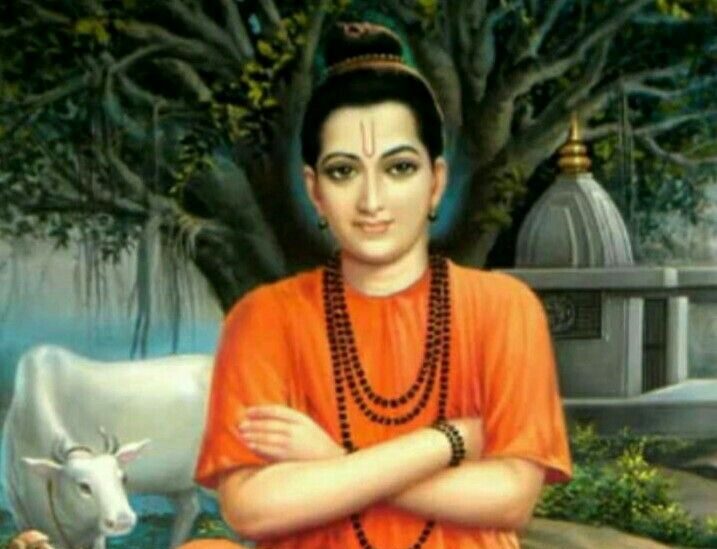
Sant Ramdas Kathiababa After his return from the guru’s home he decided to attain sidhi of the Gayatri Mantra. He sat under a banayan tree and began the japa of the Gayatri Mantra. He attained his goal and Devi Gayatri appeared before him in physical form and blessed him. There was still some japa to complete however, a heavenly voice instructed him to go to Jwalamukhi and do the remaining portion of the japa. He started his journey to Jwalamukhi without delay and on the way he met a divine looking sadhu with huge matted locks. Sri Ramdasji was so attracted towards that saint that he immediately sought diksha and sanyaas from the sadhu. Sri Ramdasji became an ascetic at a young age of 17-18 after he received sanyaas from his gurudeva, Sri Sri 108 Swami Devadasji Kathia Babaji Maharaj. Sri Devadasji too was a very powerful and realized saint. He could sit in samadhi for six months at a stretch without moving or without taking any food. Even otherwise he did not eat any food. Sri Ramdasji lived with his guru for many years and served his guru with utmost devotion and care. He obeyed the most difficult instructions of his guru without flinching and with a lot of patience. His gurudeva taught him Ashtanga Yoga, Hath Yoga, instructed him in the use of many mantras and many other spiritual practices necessary for a yogi. However Sri Devadasji tested the patience and devotion of his disciple in many ways. Sometimes he keep Sri Ramdasji without food for several days, and other times he would provide him with delicacies to see whether his disciple’s mind is swayed by food or lack thereof. Sometimes he would hurl insults which would be difficult for a normal human being to ignore or swallow. This was to see if the disciple is swayed by insults or responds in a tit for tat manner. Once Sri Devadasji pointed to a spot and said to him, “ Pleased with his unflinching devotion and selfless service, Sri Devadasji granted many boons to Sri Ramdasji. Before that however he put Sri Ramdasji to the test for one more time. Feigning anger, he started raining blows on Sri Ramdasji’s body and beat him up without mercy. He used his chimta to rain blows on his disciple and curse him all the while saying things like, “Why are still after me? All my other disciples have left me and yet you are the only one who won’t leave me alone. Go away, I don’t need anybody to do anything for me.” Sri Ramdasji bore all this without a trace of anger or any other emotion. His body was aching all over from the blows his guru had rained on him. At the end of it all he said to Sri Devadasji, “Maharaj, I consider you as God Himself. There is no way I would ever leave your side come what may. However, I cannot bear this torture at your hands any more. I will bring you knife and you can sever my head from my body and put an end to all this. However, as long as there is life within my body, I would never ever leave you.” Sri Devadasji was very happy with his disciples steadfastness and gurubhakti and said to Sri Ramdasji, “Today I tested you for the last time, I am very pleased by the devotion you have for your guru. I grant you the boon that you will attain complete realization of God. You words will never come untrue and you will receive the darshan of your ishta devata.” After the evanescence of his gurudeva, Sri Ramdasji immersed himself in severe penances. In summers he sat in the centre of a ring of fire created by burning Kandas (dried cakes of cow dung which are used as fuel for cooking in rural India). In winters he immersed himself in cold water and meditated throughout the night. Finally his Gurudeva’s boons came true and he attained complete realisation of God at a place called Sailani ka Kunda in Bharatpur. He covered all the pilgrimages of India on foot and finally came to live in Vrindavan. He lived on the banks of the Yamuna River for many years and finally at the request of some local Brajawasis he came to live in Kemarvan and built a small cottage there. Later one of his disciples, Sri Tarakishorji Sharma Chowdhury, built an ashram on that land. The place is still known as ‘Kathia Baba ka purana sthan.’ Ramdas, sit here and do not move till I return.” Sri Devadasji left and did not return for eight days Sri Ramdas Kathia Babaji Maharaj’s life is full of countless divine incidents and although he lived as an ordinary person amongst the Brajawasis, he was renown as a powerful saint and as a Yogiraj. At the request of one Brajawasi, Sri Channu Singh, he used his will power to convert a dreaded dacoit, Gosaiyaan, into a sadhu. The saints and ascetics of Vrindavan annointed him as,‘Brajabidehi Mahant’ and ‘Srimahant of the Chatursmpradai.’ Sri Ramdasji lived for around 120-125 years. It is impossible to describe his life in detail in such a limited space. He willingly left his mortal body in 1910. Sourse- spiritualdarshan

Sant Ramdas Kathiababa Read Post »
bef382ba4d1af6237c036097c83ff2d4
Mahatmas

Swami Ramanuja

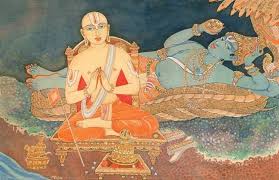
Swami Ramanuja His instructions to Srila Rupa Gosvami and Srila Sanatana Gosvami, His discussions with Ramananda Raya, the debate with the Mayavadi sannyasi Prakashananda Sarasvati and the Vedanta Sutra, the discussion between Him and Sarvabhauma Bhattacharya are excellent sources through which we understand His teachings in detail. The Lord left only eight slokas of His instructions in writing, and they are known as the Siksastaka. All other literatures based on His teachings were extensively written by the Lord’s principal followers, the six Gosvamis of Vrindavana, and their followers. Lord Chaitanya’s Mission – The Universal Religion His mission was to preach the importance of chanting the holy names of the Lord in this age of Kali (quarrel). In this present age quarrels take place even over trifles, and therefore the shastras have recommended for this age a common platform for realization, namely chanting the holy names of the Lord. People can hold meetings to glorify the Lord in their respective languages and with melodious songs, and if such performances are executed in an offenseless manner, it is certain that the participants will gradually attain spiritual perfection without having to undergo more rigorous methods. At such meetings everyone, the learned and the foolish, the rich and the poor, the Hindus and the Muslims, the Englishmen and the Indians, and the chandalas and the brahmanas, can all hear the transcendental sounds and thus cleanse the dust of material association from the mirror of the heart. To confirm the Lord’s mission, all the people of the world will accept the holy name of the Lord as the common platform for the universal religion of mankind. Jagadguru Shri Kripalu Ji Maharaj encapsulates this profound philosophy in his kirtan: Mahāprabhu Chaitanya Hari avatārī, āpuna bhakti kare āpu murārī He says that Chaitanya Mahaprabhu is an incarnation of Shree Krishna, who appeared as His own devotee. Chaitanya Mahaprabhu was Shree Krishna embodying the divine sentiment of Radharani. Shree Chaitanya had Radharani’s complexion and the physical attributes of Lord Krishna. Radha is the epitome of Krishna-Prem. She is Krishna’s divine Energy and Her love provides divine bliss to the Lord. While Shree Krishna descended as Chaitanya Mahaprabhu to disseminate pure, unadulterated devotion to God, He had other reasons to appear. He was thoroughly intrigued by the nature of Radhaji’s love for Him. Though He is the Knower of everything, He did not know the depth, nature, and ecstasy of Radha’s selfless love (nishkam prem) because He was the object of Her devotion, and that devotion resided in Her alone. Thus, if He descended imbibing the devotional sentiments of Radharani in His heart, He could experience Her bhav and relish it. Further, Shree Krishna wondered about the sweetness and happiness that Radhaji experienced in Her love for Him. And third, He wished to know, which divine qualities induced such ecstatic devotion in Her. So, Bhagavan Shree Krishna appeared in this world as Shri Chaitanya Mahaprabhu to taste the divine love of Radharani and distribute it to all living beings. In his earthly manifestation, Chaitanya Mahaprabhu immersed Himself in divine ecstasy as an ardent devotee lost in Krishna’s glories. Sarvabhauma Bhattacharya: Transformation of a Vedic Scholar to a Bhakt It is said that Sarvabhauma was an incarnation of Brihaspati, the Guru of the celestial gods, who descended to aid the Lord in His pastimes. He was known as the most erudite scholar of Vedanta, and the best Nyāyaik (master of logic) in Nadia who preached Vedanta to students in his school. As a Mayavadi, he believed that the Supreme Godhead was formless and His Attributes, Names, Forms, Virtues, and Pastimes were an illusion(maya) created for the less advanced souls to connect to the Supreme formless Brahman. At 24, Chaitanya Mahaprabhu took sanyas from Keshava Bharati in Katwa and traveled to Puri. Upon seeing the Jagannath Temple spire from the Atharnala bridge, He was overwhelmed with devotional sentiments and rushed inside to embrace the deity, fainting in ecstasy. Mistaking Him for a vagrant, the temple guards planned to evict Him, but Sarvabhauma Bhattacharya, recognizing His divinity, took Him home. Learning of Mahaprabhu’s noble lineage, Sarvabhauma, an esteemed scholar, suggested He adopt a more prestigious sanyas order. Sarvabhauma, concerned for the young sanyasi, offered to teach Him Vedanta to deepen His renunciation. For seven days, Mahaprabhu silently listened. When Sarvabhauma asked why He had no questions, Mahaprabhu replied that the sutras were self-evident, but Sarvabhauma’s interpretations clouded their meaning. Offended, Sarvabhauma accosted Mahaprabhu to give his interpretation of the Brahma Sutras. While Sarvabhauma provided only nine meanings, Mahaprabhu expounded eighteen unique interpretations of the Sutras, proving Brahman’s form and qualities. Realizing Mahaprabhu’s divinity, Sarvabhauma surrendered, repenting his arrogance and falling at the Lord’s feet in devotion. One day, Mahaprabhu brought Lord Jagannath’s mahaprasad (food offered to God before partaking) to Sarvabhauma’s house. Sarvabhauma had not yet bathed or performed his morning rituals, but he joyfully honored the prasad, contrary to his ritualistic beliefs. Seeing his deep faith, Mahaprabhu was overjoyed and began dancing in ecstasy. Sarvabhauma joined Him and both were overcome with divine bliss, shedding tears and trembling in joy. The dry Mayavadi scholar who scoffed at divine attributes now soaked in the nectar of bhakti. While Mayavadis dismissed the existence of maya and the distinct entity of the soul, Chaitanya Mahaprabhu envisioned a relationship between God, maya, and the soul through Achintya Bhedābhed vād, meaning ‘Inconceivable and Simultaneous Oneness and Difference’. He explained that both the soul and maya exist as energies of God—eternally connected to Him yet maintaining a simultaneous discreteness.

Swami Ramanuja Read Post »

images 10
Mahatmas

Swami Yamunacharya

Swami Yamunacharya His instructions to Srila Rupa Gosvami and Srila Sanatana Gosvami, His discussions with Ramananda Raya, the debate with the Mayavadi sannyasi Prakashananda Sarasvati and the Vedanta Sutra, the discussion between Him and Sarvabhauma Bhattacharya are excellent sources through which we understand His teachings in detail. The Lord left only eight slokas of His instructions in writing, and they are known as the Siksastaka. All other literatures based on His teachings were extensively written by the Lord’s principal followers, the six Gosvamis of Vrindavana, and their followers. Lord Chaitanya’s Mission – The Universal Religion His mission was to preach the importance of chanting the holy names of the Lord in this age of Kali (quarrel). In this present age quarrels take place even over trifles, and therefore the shastras have recommended for this age a common platform for realization, namely chanting the holy names of the Lord. People can hold meetings to glorify the Lord in their respective languages and with melodious songs, and if such performances are executed in an offenseless manner, it is certain that the participants will gradually attain spiritual perfection without having to undergo more rigorous methods. At such meetings everyone, the learned and the foolish, the rich and the poor, the Hindus and the Muslims, the Englishmen and the Indians, and the chandalas and the brahmanas, can all hear the transcendental sounds and thus cleanse the dust of material association from the mirror of the heart. To confirm the Lord’s mission, all the people of the world will accept the holy name of the Lord as the common platform for the universal religion of mankind. Jagadguru Shri Kripalu Ji Maharaj encapsulates this profound philosophy in his kirtan: Mahāprabhu Chaitanya Hari avatārī, āpuna bhakti kare āpu murārī He says that Chaitanya Mahaprabhu is an incarnation of Shree Krishna, who appeared as His own devotee. Chaitanya Mahaprabhu was Shree Krishna embodying the divine sentiment of Radharani. Shree Chaitanya had Radharani’s complexion and the physical attributes of Lord Krishna. Radha is the epitome of Krishna-Prem. She is Krishna’s divine Energy and Her love provides divine bliss to the Lord. While Shree Krishna descended as Chaitanya Mahaprabhu to disseminate pure, unadulterated devotion to God, He had other reasons to appear. He was thoroughly intrigued by the nature of Radhaji’s love for Him. Though He is the Knower of everything, He did not know the depth, nature, and ecstasy of Radha’s selfless love (nishkam prem) because He was the object of Her devotion, and that devotion resided in Her alone. Thus, if He descended imbibing the devotional sentiments of Radharani in His heart, He could experience Her bhav and relish it. Further, Shree Krishna wondered about the sweetness and happiness that Radhaji experienced in Her love for Him. And third, He wished to know, which divine qualities induced such ecstatic devotion in Her. So, Bhagavan Shree Krishna appeared in this world as Shri Chaitanya Mahaprabhu to taste the divine love of Radharani and distribute it to all living beings. In his earthly manifestation, Chaitanya Mahaprabhu immersed Himself in divine ecstasy as an ardent devotee lost in Krishna’s glories. Sarvabhauma Bhattacharya: Transformation of a Vedic Scholar to a Bhakt It is said that Sarvabhauma was an incarnation of Brihaspati, the Guru of the celestial gods, who descended to aid the Lord in His pastimes. He was known as the most erudite scholar of Vedanta, and the best Nyāyaik (master of logic) in Nadia who preached Vedanta to students in his school. As a Mayavadi, he believed that the Supreme Godhead was formless and His Attributes, Names, Forms, Virtues, and Pastimes were an illusion(maya) created for the less advanced souls to connect to the Supreme formless Brahman. At 24, Chaitanya Mahaprabhu took sanyas from Keshava Bharati in Katwa and traveled to Puri. Upon seeing the Jagannath Temple spire from the Atharnala bridge, He was overwhelmed with devotional sentiments and rushed inside to embrace the deity, fainting in ecstasy. Mistaking Him for a vagrant, the temple guards planned to evict Him, but Sarvabhauma Bhattacharya, recognizing His divinity, took Him home. Learning of Mahaprabhu’s noble lineage, Sarvabhauma, an esteemed scholar, suggested He adopt a more prestigious sanyas order. Sarvabhauma, concerned for the young sanyasi, offered to teach Him Vedanta to deepen His renunciation. For seven days, Mahaprabhu silently listened. When Sarvabhauma asked why He had no questions, Mahaprabhu replied that the sutras were self-evident, but Sarvabhauma’s interpretations clouded their meaning. Offended, Sarvabhauma accosted Mahaprabhu to give his interpretation of the Brahma Sutras. While Sarvabhauma provided only nine meanings, Mahaprabhu expounded eighteen unique interpretations of the Sutras, proving Brahman’s form and qualities. Realizing Mahaprabhu’s divinity, Sarvabhauma surrendered, repenting his arrogance and falling at the Lord’s feet in devotion. One day, Mahaprabhu brought Lord Jagannath’s mahaprasad (food offered to God before partaking) to Sarvabhauma’s house. Sarvabhauma had not yet bathed or performed his morning rituals, but he joyfully honored the prasad, contrary to his ritualistic beliefs. Seeing his deep faith, Mahaprabhu was overjoyed and began dancing in ecstasy. Sarvabhauma joined Him and both were overcome with divine bliss, shedding tears and trembling in joy. The dry Mayavadi scholar who scoffed at divine attributes now soaked in the nectar of bhakti. While Mayavadis dismissed the existence of maya and the distinct entity of the soul, Chaitanya Mahaprabhu envisioned a relationship between God, maya, and the soul through Achintya Bhedābhed vād, meaning ‘Inconceivable and Simultaneous Oneness and Difference’. He explained that both the soul and maya exist as energies of God—eternally connected to Him yet maintaining a simultaneous discreteness.

Swami Yamunacharya Read Post »

986d1a83a0f207d5d85c36279df5f5f7
Mahatmas

Gajanan Maharaj

Gajanan Maharaj His instructions to Srila Rupa Gosvami and Srila Sanatana Gosvami, His discussions with Ramananda Raya, the debate with the Mayavadi sannyasi Prakashananda Sarasvati and the Vedanta Sutra, the discussion between Him and Sarvabhauma Bhattacharya are excellent sources through which we understand His teachings in detail. The Lord left only eight slokas of His instructions in writing, and they are known as the Siksastaka. All other literatures based on His teachings were extensively written by the Lord’s principal followers, the six Gosvamis of Vrindavana, and their followers. Gajanan Maharaj – The Universal Religion His mission was to preach the importance of chanting the holy names of the Lord in this age of Kali (quarrel). In this present age quarrels take place even over trifles, and therefore the shastras have recommended for this age a common platform for realization, namely chanting the holy names of the Lord. People can hold meetings to glorify the Lord in their respective languages and with melodious songs, and if such performances are executed in an offenseless manner, it is certain that the participants will gradually attain spiritual perfection without having to undergo more rigorous methods. At such meetings everyone, the learned and the foolish, the rich and the poor, the Hindus and the Muslims, the Englishmen and the Indians, and the chandalas and the brahmanas, can all hear the transcendental sounds and thus cleanse the dust of material association from the mirror of the heart. To confirm the Lord’s mission, all the people of the world will accept the holy name of the Lord as the common platform for the universal religion of mankind. Gajanan MaharajJi encapsulates this profound philosophy in his kirtan: Mahāprabhu Chaitanya Hari avatārī, āpuna bhakti kare āpu murārī He says that Chaitanya Mahaprabhu is an incarnation of Shree Krishna, who appeared as His own devotee. Chaitanya Mahaprabhu was Shree Krishna embodying the divine sentiment of Radharani. Shree Chaitanya had Radharani’s complexion and the physical attributes of Lord Krishna. Radha is the epitome of Krishna-Prem. She is Krishna’s divine Energy and Her love provides divine bliss to the Lord. While Shree Krishna descended as Chaitanya Mahaprabhu to disseminate pure, unadulterated devotion to God, He had other reasons to appear. He was thoroughly intrigued by the nature of Radhaji’s love for Him. Though He is the Knower of everything, He did not know the depth, nature, and ecstasy of Radha’s selfless love (nishkam prem) because He was the object of Her devotion, and that devotion resided in Her alone. Thus, if He descended imbibing the devotional sentiments of Radharani in His heart, He could experience Her bhav and relish it. Further, Shree Krishna wondered about the sweetness and happiness that Radhaji experienced in Her love for Him. And third, He wished to know, which divine qualities induced such ecstatic devotion in Her. So, Bhagavan Shree Krishna appeared in this world as Shri Chaitanya Mahaprabhu to taste the divine love of Radharani and distribute it to all living beings. In his earthly manifestation, Chaitanya Mahaprabhu immersed Himself in divine ecstasy as an ardent devotee lost in Krishna’s glories. Sarvabhauma Bhattacharya: Transformation of a Vedic Scholar to a Bhakt It is said that Sarvabhauma was an incarnation of Brihaspati, the Guru of the celestial gods, who descended to aid the Lord in His pastimes. He was known as the most erudite scholar of Vedanta, and the best Nyāyaik (master of logic) in Nadia who preached Vedanta to students in his school. As a Mayavadi, he believed that the Supreme Godhead was formless and His Attributes, Names, Forms, Virtues, and Pastimes were an illusion(maya) created for the less advanced souls to connect to the Supreme formless Brahman. At 24, Chaitanya Mahaprabhu took sanyas from Keshava Bharati in Katwa and traveled to Puri. Upon seeing the Jagannath Temple spire from the Atharnala bridge, He was overwhelmed with devotional sentiments and rushed inside to embrace the deity, fainting in ecstasy. Mistaking Him for a vagrant, the temple guards planned to evict Him, but Sarvabhauma Bhattacharya, recognizing His divinity, took Him home. Learning of Mahaprabhu’s noble lineage, Sarvabhauma, an esteemed scholar, suggested He adopt a more prestigious sanyas order. Sarvabhauma, concerned for the young sanyasi, offered to teach Him Vedanta to deepen His renunciation. For seven days, Mahaprabhu silently listened. When Sarvabhauma asked why He had no questions, Mahaprabhu replied that the sutras were self-evident, but Sarvabhauma’s interpretations clouded their meaning. Offended, Sarvabhauma accosted Mahaprabhu to give his interpretation of the Brahma Sutras. While Sarvabhauma provided only nine meanings, Mahaprabhu expounded eighteen unique interpretations of the Sutras, proving Brahman’s form and qualities. Realizing Mahaprabhu’s divinity, Sarvabhauma surrendered, repenting his arrogance and falling at the Lord’s feet in devotion. One day, Mahaprabhu brought Lord Jagannath’s mahaprasad (food offered to God before partaking) to Sarvabhauma’s house. Sarvabhauma had not yet bathed or performed his morning rituals, but he joyfully honored the prasad, contrary to his ritualistic beliefs. Seeing his deep faith, Mahaprabhu was overjoyed and began dancing in ecstasy. Sarvabhauma joined Him and both were overcome with divine bliss, shedding tears and trembling in joy. The dry Mayavadi scholar who scoffed at divine attributes now soaked in the nectar of bhakti. While Mayavadis dismissed the existence of maya and the distinct entity of the soul, Chaitanya Mahaprabhu envisioned a relationship between God, maya, and the soul through Achintya Bhedābhed vād, meaning ‘Inconceivable and Simultaneous Oneness and Difference’. He explained that both the soul and maya exist as energies of God—eternally connected to Him yet maintaining a simultaneous discreteness.

Gajanan Maharaj Read Post »

4320f66c42deddd062669750ea8845d7
Mahatmas

Sripada Sri Vallabha

Sripada Sri Vallabha His instructions to Srila Rupa Gosvami and Srila Sanatana Gosvami, His discussions with Ramananda Raya, the debate with the Mayavadi sannyasi Prakashananda Sarasvati and the Vedanta Sutra, the discussion between Him and Sarvabhauma Bhattacharya are excellent sources through which we understand His teachings in detail. The Sripada Charitamrutam beautifully captures His mercy, recording how He helped people across regions—Brahmins, farmers, women, ascetics, the sick, the poor, and even animals. Every interaction carried divine purpose. Sometimes He blessed openly, and at other times through silence or seeming indifference—yet every gesture was woven with perfect wisdom. Sripada Sri Vallabha Sripada Sri Vallabha is revered as the first incarnation of Lord Dattatreya in the Kali Yuga. Born in the sacred town of Pithapuram (Andhra Pradesh), He manifested to guide humanity back to the path of dharma, devotion, and divine knowledge. His life is filled with miracles, blessings, and profound teachings that uplift all who remember Him with faith. Sripada Sri Vallabha lived a life of complete divinity — free from ego, full of compassion, and overflowing with spiritual radiance. He moved among people as a simple young man, yet His presence dissolved sorrows, healed the suffering, and awakened inner wisdom in countless devotees. His actions were spontaneous expressions of divine will, beyond human understanding. He taught that true devotion lies in surrender, purity of heart, and unwavering trust in God. He guided seekers to rise above worldly illusions and realize the eternal truth within themselves. Those who chant His name or read His Charitamrutam experience deep peace, protection, and a sense of divine companionship. Jagadguru Shri Kripalu Ji Maharaj encapsulates this profound philosophy in his kirtan: Even today, Sripada Sri Vallabha continues to bless His devotees from the subtle realms, responding to prayers, removing obstacles, and leading every sincere soul towards spiritual awakening. His divine assurance — “I am always present for those who seek Me” — remains a source of hope and inspiration for millions. Sripada Sri Vallabha, the first and most radiant incarnation of Lord Dattatreya in Kali Yuga, is known as the embodiment of divine compassion, supreme knowledge, and boundless grace. His advent took place in Pithapuram, a land already sanctified by many sages. From His very birth, divine signs surrounded Him, revealing His cosmic mission to uplift humanity. As a child, Sri Vallabha displayed extraordinary wisdom and miraculous abilities, astonishing even learned scholars. His presence was serene, yet powerful; gentle, yet deeply transformative. He lived not for Himself but for the welfare of all beings, easing the karmic burdens of devotees and guiding them toward righteousness. Every moment of His earthly life was a divine lila — mysterious, compassionate, and filled with spiritual depth. Sripada Sri Vallabha’s teachings emphasized truthfulness, inner purity, devotion to God, service to parents, and surrender to divine will. He urged seekers to cultivate humility and compassion, reminding them that God resides in every living creature. To the sincere devotee, He offered inner strength, clarity of mind, and freedom from fear. His blessings often worked in subtle, miraculous ways, touching the heart and transforming the destiny of those who sought His refuge. In his earthly manifestation, Chaitanya Mahaprabhu immersed Himself in divine ecstasy as an ardent devotee lost in Krishna’s glories. Sarvabhauma Bhattacharya: Transformation of a Vedic Scholar to a Bhakt Many stories in the Sripada Charitamrutam describe how He protected sincere devotees from dangers, cured diseases beyond worldly understanding, and granted spiritual experiences that awakened their higher consciousness. He moved freely between the physical and subtle worlds, guiding pious souls, liberating those trapped in suffering, and revealing eternal truths to deserving seekers. Even after His disappearance from the physical plane, Sripada Sri Vallabha continues to remain eternally present in subtle form. Devotees deeply believe that He responds instantly to heartfelt prayers, guiding them in dreams, intuitions, and life circumstances. His sacred assurance — “Those who seek Me shall never be forsaken” — fills hearts with courage and unwavering faith. To remember Sripada Sri Vallabha is to invite peace, protection, and spiritual progress into one’s life. Chanting His name, reading His Charitamrutam, or simply meditating on His divine form can dissolve obstacles, calm the restless mind, and open the path to inner awakening. He is not just a historical figure; He is a living divine presence, walking silently with every devotee who calls upon Him with sincerity. Learning of Mahaprabhu’s noble lineage, Sarvabhauma, an esteemed scholar, suggested He adopt a more prestigious sanyas order. Sarvabhauma, concerned for the young sanyasi, offered to teach Him Vedanta to deepen His renunciation. For seven days, Mahaprabhu silently listened. When Sarvabhauma asked why He had no questions, Mahaprabhu replied that the sutras were self-evident, but Sarvabhauma’s interpretations clouded their meaning. Offended, Sarvabhauma accosted Mahaprabhu to give his interpretation of the Brahma Sutras. While Sarvabhauma provided only nine meanings, Mahaprabhu expounded eighteen unique interpretations of the Sutras, proving Brahman’s form and qualities. Realizing Mahaprabhu’s divinity, Sarvabhauma surrendered, repenting his arrogance and falling at the Lord’s feet in devotion. Sripada Sri Vallabha is regarded as a limitless ocean of compassion, the divine force that descends whenever dharma needs restoration and seekers require guidance. His incarnation was not merely a birth—it was a cosmic event, a divine promise fulfilled for those yearning for spiritual transformation in the age of confusion and unrest. He lived a life that was externally simple but inwardly beyond comprehension. Even those who approached Him without understanding felt a mysterious peace in His presence. His smile dissolved lifelong burdens, His glance purified the heart, and His words carried the power to awaken dormant wisdom. To many, He was a loving son; to some, a compassionate guide; to a few, a stern teacher; but to all, He was the Supreme Reality walking upon the earth. Sripada Sri Vallabha’s life is filled with profound leelas—miracles that were not displays of power, but expressions of divine love. He protected those in danger, uplifted the downtrodden, healed the afflicted, and guided even wandering souls trapped between worlds. His

Sripada Sri Vallabha Read Post »