





Hari Om

Menu

yogi

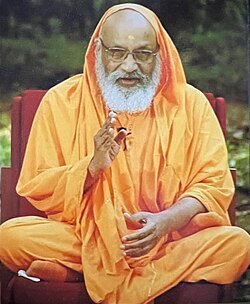
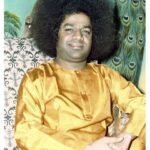
Shri Vasudevanand Saraswati image
Mahatmas

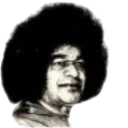
Vasudevanand Saraswati

Vasudevanand Saraswati His instructions to Srila Rupa Gosvami and Srila Sanatana Gosvami, His discussions with Ramananda Raya, the debate with the Mayavadi sannyasi Prakashananda Sarasvati and the Vedanta Sutra, the discussion between Him and Sarvabhauma Bhattacharya are excellent sources through which we understand His teachings in detail. The Lord left only eight slokas of His instructions in writing, and they are known as the Siksastaka. All other literatures based on His teachings were extensively written by the Lord’s principal followers, the six Gosvamis of Vrindavana, and their followers. Vasudevanand Saraswati Vasudevanand Saraswati, lovingly known as Shri Tembe Swami Maharaj, is revered as one of the purest and most radiant incarnations of Lord Dattatreya in recent times. Born in 1854 in Mangaon (Maharashtra), He lived a life of strict discipline, deep devotion, and uncompromising adherence to dharma. His life is a shining example of how a human being can rise to divine heights through purity, knowledge, and complete surrender to God. From childhood, Tembe Swami Maharaj showed extraordinary spiritual insight. His devotion to Lord Dattatreya was natural and spontaneous, not taught but born with him. He mastered the Vedas, scriptures, and spiritual sciences at a young age, yet remained humble and compassionate. His strict observance of rituals, daily worship, and vows of purity made Him a guiding light for seekers longing for a righteous and disciplined spiritual path. Tembe Swami Maharaj lived a wandering life, travelling from village to village, temple to temple, bringing divine blessings wherever He went. He never stayed too long in one place, for His mission was to uplift many souls across the land. His presence radiated peace—those who met Him felt inner clarity, mental quietness, and a strong pull toward devotion and moral living. Many troubled hearts found relief simply by being near Him. His teachings emphasized truthfulness, self-discipline, compassion, scriptural study, and devotion to Lord Datta. . His teachings emphasized truthfulness, self-discipline, compassion, scriptural study, and devotion to Lord Datta. He encouraged everyone to follow their duties with sincerity and to keep God at the center of life. Tembe Swami Maharaj also composed holy texts, including the revered Shri Gurucharitra Saar, which continues to guide devotees on the spiritual path. His words were filled with power, and His blessings removed obstacles, suffering, and inner darkness from the lives of countless devotees. One of His greatest contributions was the sacred Sri Kshetra Garudeshwar Datta Mandir in Gujarat, established with divine inspiration. Even today, the vibrations of Tembe Swami’s penance can be felt there, offering deep peace to all who visit. Devotees believe that His subtle presence remains active, guiding them through dreams, intuition, and silent inner experiences. Vasudevanand Saraswati is remembered not only as a saint but as a living embodiment of dharma, purity, and divine grace. To remember Him is to feel uplifted; to read His teachings is to walk toward light; to chant His name is to invite the blessings of Lord Dattatreya Himself. His legacy continues to inspire millions who seek a righteous, peaceful, and spiritually fulfilling life. Vasudevanand Saraswati, universally honoured as Tembe Swami Maharaj, is regarded as one of the most perfect manifestations of Lord Dattatreya’s divine energy in the modern age. His entire life reflects unbroken discipline, divine purity, and complete surrender to God. He walked the earth not merely as a saint but as an embodiment of dharma itself. From an early age, Swami Maharaj displayed remarkable brilliance in scriptures and an unwavering commitment to righteousness. He regarded every duty, every ritual, and every moment of life as sacred. His inner world was deeply connected to the divine, and his outer life was an example of the highest moral integrity. It is said that even nature seemed to align with his purity—animals became calm near him, and people felt peace simply by hearing his name. In his earthly manifestation, Chaitanya Mahaprabhu immersed Himself in divine ecstasy as an ardent devotee lost in Krishna’s glories. Sarvabhauma Bhattacharya: Transformation of a Vedic Scholar to a Bhakt Tembe Swami’s path was one of Nishkama Karma Yoga—performing every action only for God, without desire or expectation. He lived with minimal possessions, depended solely on divine grace, and never allowed comfort or convenience to distract him from his spiritual mission. His discipline was unmatched. Whether he was performing daily rituals, teaching scriptures, or guiding devotees, he carried out everything with total perfection. He travelled extensively across India, sanctifying every place he visited. Pilgrims who were lost found direction after meeting him. Families torn by suffering found peace. Even those with no spiritual interest felt mysteriously drawn toward the path of righteousness after hearing his teachings. Tembe Swami’s very presence acted as a medicine for the soul. A significant aspect of his life was his emphasis on the worship of Lord Dattatreya through mantra, service, and righteous living. He insisted that devotion must be practical—showing in one’s character, speech, behaviour, and compassion. He urged people to perform their duties sincerely, respect parents, maintain purity of mind, and cultivate humility. Tembe Swami Maharaj was also a great scholar and author. His works such as Gurucharitra Saar, Datta Purana, and many stotras are considered spiritually potent and filled with divine grace. Each verse carries a vibration that calms the mind and brings the devotee closer to God. For many, simply reading a few lines from his sacred writings brings tears of devotion and a feeling of divine protection. Swami Maharaj’s establishment of the Sri Datta Mandir at Garudeshwar is one of his greatest blessings for humanity. He performed intense penance on the banks of the Narmada River, and even today, devotees feel a powerful spiritual presence in that holy place. Many experience inner transformation, relief from karmic burdens, and deep peace when they visit Garudeshwar and remember him. Even after leaving his physical form, Tembe Swami Maharaj continues to guide devotees through dreams, inner intuition, and subtle blessings. His grace works quietly—removing obstacles, protecting the devoted, and bringing the mind toward truth and purity. Countless people

Vasudevanand Saraswati Read Post »
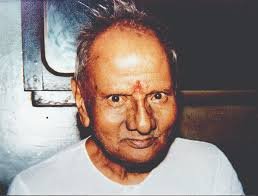
Nisargadatta Maharaj
Mahatmas

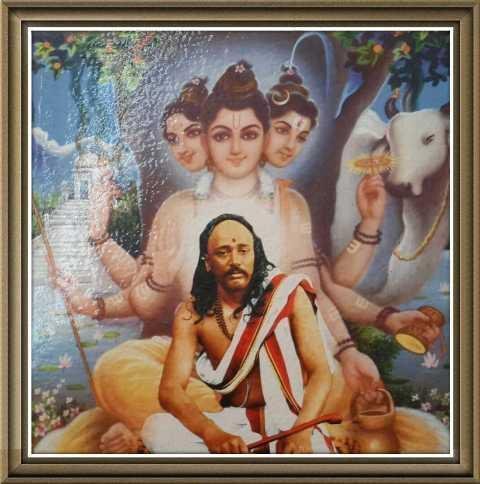
Nisargadatta Maharaj

Nisargadatta Maharaj His instructions to Srila Rupa Gosvami and Srila Sanatana Gosvami, His discussions with Ramananda Raya, the debate with the Mayavadi sannyasi Prakashananda Sarasvati and the Vedanta Sutra, the discussion between Him and Sarvabhauma Bhattacharya are excellent sources through which we understand His teachings in detail. The Lord left only eight slokas of His instructions in writing, and they are known as the Siksastaka. All other literatures based on His teachings were extensively written by the Lord’s principal followers, the six Gosvamis of Vrindavana, and their followers. Nisargadatta Maharaj Sri Nisargadatta Maharaj stands as one of the most influential Advaita teachers of the modern era, illuminating the path of Self-realization with unmatched clarity and directness. Born as Maruti Shivrampant Kampli in Mumbai, he lived an ordinary life, yet carried an extraordinary destiny. His transformation from a humble shopkeeper into a fully awakened master continues to inspire seekers worldwide. His spiritual journey began when he met his Guru, Sri Siddharameshwar Maharaj, who initiated him into the profound teachings of the Inchegeri Sampradaya. The Guru’s powerful instruction to meditate on the sense of “I Am” became the seed that blossomed into Nisargadatta’s complete realization of the Self. With deep sincerity, he turned inward, allowing the truth to reveal itself in all its purity. Nisargadatta Maharaj’s teachings were simple yet piercing. He urged seekers to stay with the feeling of existence, the bare sense of “I Am,” without attaching thoughts, identities, or stories to it. According to him, this direct approach cuts through mental conditioning and leads the seeker to experience the infinite awareness that lies beyond the mind. Jagadguru Shri Kripalu Ji Maharaj encapsulates this profound philosophy in his kirtan: He never encouraged intellectual debate or philosophical speculation. For him, spirituality was not about believing in concepts but about discovering one’s true nature through direct experience. His words often acted like a blade, slicing through illusion and leaving behind only the clear sky of pure consciousness. Despite his profound realization, he lived with absolute simplicity and humility. His small room in Khetwadi, Mumbai, became a sacred space for seekers from all corners of the world. People would climb the narrow staircase, sit in the modest room, and experience the powerful presence that emanated from him. His very silence carried the weight of truth. While Shree Krishna descended as Chaitanya Mahaprabhu to disseminate pure, unadulterated devotion to God, He had other reasons to appear. He was thoroughly intrigued by the nature of Radhaji’s love for Him. Though He is the Knower of everything, He did not know the depth, nature, and ecstasy of Radha’s selfless love (nishkam prem) because He was the object of Her devotion, and that devotion resided in Her alone. Thus, if He descended imbibing the devotional sentiments of Radharani in His heart, He could experience Her bhav and relish it. His dialogues, later compiled as the famous book “I Am That,” have become timeless guides for spiritual aspirant The book’s simplicity, depth, and unwavering focus on reality make it a cornerstone of Advaita literature. Readers often feel as though Maharaj is speaking directly to their innermost being, pointing them toward the essence of existence. He spoke with honesty, intensity, and compassion. If a seeker approached him with sincerity, he responded with immense kindness; but if someone clung to false notions, he would shatter them without hesitation. His purpose was not to comfort the ego but to free the seeker from its bondage. Even as he grew older and faced severe illness, Maharaj remained untouched by pain or fear. He repeatedly reminded devotees that the body is temporary and that the true Self is beyond birth, death, and suffering. His final days were a living demonstration of the freedom he spoke about—a steady flame of awareness unaffected by the fading of the physical form. After he left the body in 1981, his teachings continued to spread far beyond the walls of his little room. Today, countless seekers around the world discover inner peace, clarity, and awakening through his words. His presence continues to guide, support, and inspire those who walk the path of self-inquiry. Remembering Nisargadatta Maharaj is remembering the truth of one’s own being. His message is eternal: you are not the limited person you believe yourself to be—you are the boundless, luminous awareness in which all experiences arise. To truly hear his words is to awaken to your own infinite nature.

Nisargadatta Maharaj Read Post »

Shri Dayanands saraswati
Mahatmas

Shri Dayanand Saraswati

Shri Dayanand Saraswati His instructions to Srila Rupa Gosvami and Srila Sanatana Gosvami, His discussions with Ramananda Raya, the debate with the Mayavadi sannyasi Prakashananda Sarasvati and the Vedanta Sutra, the discussion between Him and Sarvabhauma Bhattacharya are excellent sources through which we understand His teachings in detail. The Lord left only eight slokas of His instructions in writing, and they are known as the Siksastaka. All other literatures based on His teachings were extensively written by the Lord’s principal followers, the six Gosvamis of Vrindavana, and their followers. Lord Chaitanya’s Mission – The Universal Religion His mission was to preach the importance of chanting the holy names of the Lord in this age of Kali (quarrel). In this present age quarrels take place even over trifles, and therefore the shastras have recommended for this age a common platform for realization, namely chanting the holy names of the Lord. People can hold meetings to glorify the Lord in their respective languages and with melodious songs, and if such performances are executed in an offenseless manner, it is certain that the participants will gradually attain spiritual perfection without having to undergo more rigorous methods. At such meetings everyone, the learned and the foolish, the rich and the poor, the Hindus and the Muslims, the Englishmen and the Indians, and the chandalas and the brahmanas, can all hear the transcendental sounds and thus cleanse the dust of material association from the mirror of the heart. To confirm the Lord’s mission, all the people of the world will accept the holy name of the Lord as the common platform for the universal religion of mankind. Jagadguru Shri Kripalu Ji Maharaj encapsulates this profound philosophy in his kirtan: Mahāprabhu Chaitanya Hari avatārī, āpuna bhakti kare āpu murārī He says that Chaitanya Mahaprabhu is an incarnation of Shree Krishna, who appeared as His own devotee. Chaitanya Mahaprabhu was Shree Krishna embodying the divine sentiment of Radharani. Shree Chaitanya had Radharani’s complexion and the physical attributes of Lord Krishna. Radha is the epitome of Krishna-Prem. She is Krishna’s divine Energy and Her love provides divine bliss to the Lord. While Shree Krishna descended as Chaitanya Mahaprabhu to disseminate pure, unadulterated devotion to God, He had other reasons to appear. He was thoroughly intrigued by the nature of Radhaji’s love for Him. Though He is the Knower of everything, He did not know the depth, nature, and ecstasy of Radha’s selfless love (nishkam prem) because He was the object of Her devotion, and that devotion resided in Her alone. Thus, if He descended imbibing the devotional sentiments of Radharani in His heart, He could experience Her bhav and relish it. Further, Shree Krishna wondered about the sweetness and happiness that Radhaji experienced in Her love for Him. And third, He wished to know, which divine qualities induced such ecstatic devotion in Her. So, Bhagavan Shree Krishna appeared in this world as Shri Chaitanya Mahaprabhu to taste the divine love of Radharani and distribute it to all living beings. In his earthly manifestation, Chaitanya Mahaprabhu immersed Himself in divine ecstasy as an ardent devotee lost in Krishna’s glories. Sarvabhauma Bhattacharya: Transformation of a Vedic Scholar to a Bhakt It is said that Sarvabhauma was an incarnation of Brihaspati, the Guru of the celestial gods, who descended to aid the Lord in His pastimes. He was known as the most erudite scholar of Vedanta, and the best Nyāyaik (master of logic) in Nadia who preached Vedanta to students in his school. As a Mayavadi, he believed that the Supreme Godhead was formless and His Attributes, Names, Forms, Virtues, and Pastimes were an illusion(maya) created for the less advanced souls to connect to the Supreme formless Brahman. At 24, Chaitanya Mahaprabhu took sanyas from Keshava Bharati in Katwa and traveled to Puri. Upon seeing the Jagannath Temple spire from the Atharnala bridge, He was overwhelmed with devotional sentiments and rushed inside to embrace the deity, fainting in ecstasy. Mistaking Him for a vagrant, the temple guards planned to evict Him, but Sarvabhauma Bhattacharya, recognizing His divinity, took Him home. Learning of Mahaprabhu’s noble lineage, Sarvabhauma, an esteemed scholar, suggested He adopt a more prestigious sanyas order. Sarvabhauma, concerned for the young sanyasi, offered to teach Him Vedanta to deepen His renunciation. For seven days, Mahaprabhu silently listened. When Sarvabhauma asked why He had no questions, Mahaprabhu replied that the sutras were self-evident, but Sarvabhauma’s interpretations clouded their meaning. Offended, Sarvabhauma accosted Mahaprabhu to give his interpretation of the Brahma Sutras. While Sarvabhauma provided only nine meanings, Mahaprabhu expounded eighteen unique interpretations of the Sutras, proving Brahman’s form and qualities. Realizing Mahaprabhu’s divinity, Sarvabhauma surrendered, repenting his arrogance and falling at the Lord’s feet in devotion. One day, Mahaprabhu brought Lord Jagannath’s mahaprasad (food offered to God before partaking) to Sarvabhauma’s house. Sarvabhauma had not yet bathed or performed his morning rituals, but he joyfully honored the prasad, contrary to his ritualistic beliefs. Seeing his deep faith, Mahaprabhu was overjoyed and began dancing in ecstasy. Sarvabhauma joined Him and both were overcome with divine bliss, shedding tears and trembling in joy. The dry Mayavadi scholar who scoffed at divine attributes now soaked in the nectar of bhakti. While Mayavadis dismissed the existence of maya and the distinct entity of the soul, Chaitanya Mahaprabhu envisioned a relationship between God, maya, and the soul through Achintya Bhedābhed vād, meaning ‘Inconceivable and Simultaneous Oneness and Difference’. He explained that both the soul and maya exist as energies of God—eternally connected to Him yet maintaining a simultaneous discreteness.

Shri Dayanand Saraswati Read Post »

panth maharaj
Mahatmas

Panth Maharaj

Panth Maharaj His instructions to Srila Rupa Gosvami and Srila Sanatana Gosvami, His discussions with Ramananda Raya, the debate with the Mayavadi sannyasi Prakashananda Sarasvati and the Vedanta Sutra, the discussion between Him and Sarvabhauma Bhattacharya are excellent sources through which we understand His teachings in detail. The Lord left only eight slokas of His instructions in writing, and they are known as the Siksastaka. All other literatures based on His teachings were extensively written by the Lord’s principal followers, the six Gosvamis of Vrindavana, and their followers. Lord Chaitanya’s Mission – The Universal Religion His mission was to preach the importance of chanting the holy names of the Lord in this age of Kali (quarrel). In this present age quarrels take place even over trifles, and therefore the shastras have recommended for this age a common platform for realization, namely chanting the holy names of the Lord. People can hold meetings to glorify the Lord in their respective languages and with melodious songs, and if such performances are executed in an offenseless manner, it is certain that the participants will gradually attain spiritual perfection without having to undergo more rigorous methods. At such meetings everyone, the learned and the foolish, the rich and the poor, the Hindus and the Muslims, the Englishmen and the Indians, and the chandalas and the brahmanas, can all hear the transcendental sounds and thus cleanse the dust of material association from the mirror of the heart. To confirm the Lord’s mission, all the people of the world will accept the holy name of the Lord as the common platform for the universal religion of mankind. Jagadguru Shri Kripalu Ji Maharaj encapsulates this profound philosophy in his kirtan: Mahāprabhu Chaitanya Hari avatārī, āpuna bhakti kare āpu murārī He says that Chaitanya Mahaprabhu is an incarnation of Shree Krishna, who appeared as His own devotee. Chaitanya Mahaprabhu was Shree Krishna embodying the divine sentiment of Radharani. Shree Chaitanya had Radharani’s complexion and the physical attributes of Lord Krishna. Radha is the epitome of Krishna-Prem. She is Krishna’s divine Energy and Her love provides divine bliss to the Lord. While Shree Krishna descended as Chaitanya Mahaprabhu to disseminate pure, unadulterated devotion to God, He had other reasons to appear. He was thoroughly intrigued by the nature of Radhaji’s love for Him. Though He is the Knower of everything, He did not know the depth, nature, and ecstasy of Radha’s selfless love (nishkam prem) because He was the object of Her devotion, and that devotion resided in Her alone. Thus, if He descended imbibing the devotional sentiments of Radharani in His heart, He could experience Her bhav and relish it. Further, Shree Krishna wondered about the sweetness and happiness that Radhaji experienced in Her love for Him. And third, He wished to know, which divine qualities induced such ecstatic devotion in Her. So, Bhagavan Shree Krishna appeared in this world as Shri Chaitanya Mahaprabhu to taste the divine love of Radharani and distribute it to all living beings. In his earthly manifestation, Chaitanya Mahaprabhu immersed Himself in divine ecstasy as an ardent devotee lost in Krishna’s glories. Sarvabhauma Bhattacharya: Transformation of a Vedic Scholar to a Bhakt It is said that Sarvabhauma was an incarnation of Brihaspati, the Guru of the celestial gods, who descended to aid the Lord in His pastimes. He was known as the most erudite scholar of Vedanta, and the best Nyāyaik (master of logic) in Nadia who preached Vedanta to students in his school. As a Mayavadi, he believed that the Supreme Godhead was formless and His Attributes, Names, Forms, Virtues, and Pastimes were an illusion(maya) created for the less advanced souls to connect to the Supreme formless Brahman. At 24, Chaitanya Mahaprabhu took sanyas from Keshava Bharati in Katwa and traveled to Puri. Upon seeing the Jagannath Temple spire from the Atharnala bridge, He was overwhelmed with devotional sentiments and rushed inside to embrace the deity, fainting in ecstasy. Mistaking Him for a vagrant, the temple guards planned to evict Him, but Sarvabhauma Bhattacharya, recognizing His divinity, took Him home. Learning of Mahaprabhu’s noble lineage, Sarvabhauma, an esteemed scholar, suggested He adopt a more prestigious sanyas order. Sarvabhauma, concerned for the young sanyasi, offered to teach Him Vedanta to deepen His renunciation. For seven days, Mahaprabhu silently listened. When Sarvabhauma asked why He had no questions, Mahaprabhu replied that the sutras were self-evident, but Sarvabhauma’s interpretations clouded their meaning. Offended, Sarvabhauma accosted Mahaprabhu to give his interpretation of the Brahma Sutras. While Sarvabhauma provided only nine meanings, Mahaprabhu expounded eighteen unique interpretations of the Sutras, proving Brahman’s form and qualities. Realizing Mahaprabhu’s divinity, Sarvabhauma surrendered, repenting his arrogance and falling at the Lord’s feet in devotion. One day, Mahaprabhu brought Lord Jagannath’s mahaprasad (food offered to God before partaking) to Sarvabhauma’s house. Sarvabhauma had not yet bathed or performed his morning rituals, but he joyfully honored the prasad, contrary to his ritualistic beliefs. Seeing his deep faith, Mahaprabhu was overjoyed and began dancing in ecstasy. Sarvabhauma joined Him and both were overcome with divine bliss, shedding tears and trembling in joy. The dry Mayavadi scholar who scoffed at divine attributes now soaked in the nectar of bhakti. While Mayavadis dismissed the existence of maya and the distinct entity of the soul, Chaitanya Mahaprabhu envisioned a relationship between God, maya, and the soul through Achintya Bhedābhed vād, meaning ‘Inconceivable and Simultaneous Oneness and Difference’. He explained that both the soul and maya exist as energies of God—eternally connected to Him yet maintaining a simultaneous discreteness.

Panth Maharaj Read Post »

premanand maharaj ji
Mahatmas

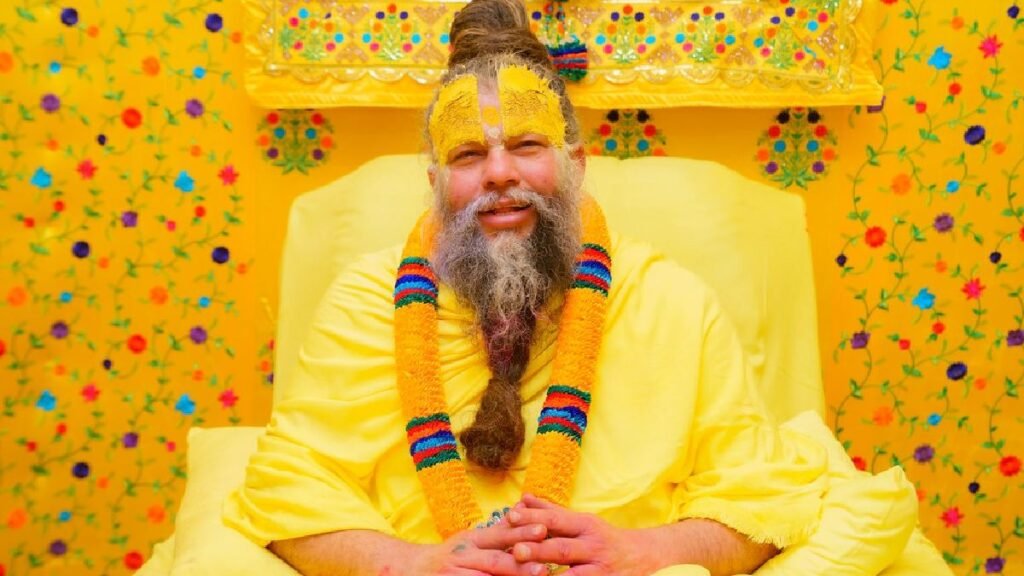
Premanand Maharaj

Premanand Maharaj Life as a Brahmchari and Sanyaas Diksha: Maharaj Ji was initiated into Naisthik Brahmcharya (नैष्ठिक ब्रह्मचर्य). He was named, AnandSwaroop Brahmchari and later he accepted Sanyaas. On accepting MahaVakya he was named Swami Anandashram. Maharaj Ji led a life of complete renunciation following strict principles to rise above bodily consciousness. During this time he accepted only Aakashvriti (आकाश वृति) for his survival which means accepting only which is offered by the mercy of God without any personal endeavour. As a spiritual seeker, most of his life was spent on the banks of river Ganges because Maharaj Ji never accepted the hierarchical life of an Ashram. Very soon Ganges became a second mother to him. He roamed on the Ghats of Ganges (Assi-Ghat and others between Haridwar and Varanasi) without caring about hunger, clothes or weather. Even in the harshest winter he never stopped his daily routine of taking bath thrice in Ganges. He used to fast without food for days and his body would shiver from the cold but he stayed completely absorbed in meditation of “The Ultimate” (हर छन ब्रह्माकार वृति). Within few years of Sanyaas he was duly blessed by Lord Shiva. Maharaj Ji was undoubtedly blessed by Lord Shiva, the epitome of knowledge and mercy. However he continued to strive for a higher purpose. One day while meditating under a tree in Banaras, by the sheer Grace of Shri ShyamaShyam he was drawn to the glory of Vrindavan. Later, an inspiration of a saint persuaded him to attend a Raas Lila which was being organized by Swami Shri SriRam Sharma. He attended the Raas Lila for a month. In the mornings he would watch the pastimes of Shri Chaitanya Mahaprabhu and at night the Raas Lila of Shri ShyamaShyam. In a month alone he became so captivated and attracted to watching these Lilas that he could not imagine leading a life without them. This one month proved to be the turning point of his life. Later, on the advice of Swami Ji and with the help of a disciple of Shri Narayan Das Bhaktmali (बक्सर वाले मामाजी), Maharaj Ji boarded a train to Mathura, not knowing then that Vrindavan would steal his heart forever. Transition from a Sanyaasi to RadhaVallabhi Saint: Maharaj Ji arrived in Vrindavan without any acquaintances. Maharajji’s initial daily routine comprised of Vrindavan Parikrama and darshan of Shri BankeBihari. In the temple of BankeBihariji, he was told by a saint that he must also visit Shri RadhaVallabh Mandir. Maharaj Ji would stand for hours admiring RadhaVallabh Ji. The respected Goswami’s would notice this and developed a natural affection for him. One day Pujya Shri Hit MohitMaral Goswami Ji recited a verse from Shri RadhaRasSudhaNidhi but Maharaj Ji despite being well versed in Sanskrit was unable to understand its deep meaning. Goswami ji then encouraged him to chant the name of Shri Harivansh. Maharaj Ji was initially reluctant to do so. However, the next day as soon as he began Vrindavan Parikrama, he found himself chanting the same holy name by the grace of Shri Hit Harivansh Mahaprabhu. Thus, he became convinced of the power of this Holy Name (Harivansh). One morning, while doing parikrama (परिक्रमा), Maharaj Ji was completely captivated by a Sakhi singing a verse … ” श्रीप्रिया-वदन छबि-चन्द्र मनौं, प्रीतम-नैंन-चकोर | प्रेम-सुधा-रस-माधुरी, पान करत निसि – भोर “. Maharaj Ji casting aside the rules of Sanyaas spoke to the sakhi requesting her to explain the verse she was singing. She smiled and told him that if he wants to understand this verse he must become a RadhaVallabhi. Maharaj Ji promptly and enthusiastically approached Pujya Shri Hit MohitMaral Goswami Ji for diksha, thus proving what the Goswami Parikar had already predicted. Maharaj Ji was initiated into the RadhaVallabh  Sampradaya with the Sharnagat Mantra (शरणागत मंत्र). Few days later on the insistence of Pujya Shri Goswami Ji, Maharaj Ji met his present Sadguru Dev, one of the most prominent and established saints in Sahchari Bhav – Pujya Shri Hit Gaurangi Sharan Ji Maharaj, who initiated him into Sahchari Bhav and NityaVihar Ras (निज मंत्र). Maharaj Ji remained in the close service of his Sadguru Dev for 10 years and served him with great earnest, performing any task given to him with utmost humility. Soon by the Grace of his Sadguru dev and the grace of Shri VrindavanDham, he became completely absorbed in Sahchari Bhav developing unflinching devotion in the lotus feet of Shri Radha. Following in the footsteps of his Sadguru dev, Maharaj Ji lived by Madhukari (मधुकरी) in Vrindavan. He has the utmost respect for Brajwasis and believes that one cannot experience “The Divine Love” without eating the grains of a Brajwasi (ब्रजवासी). The infinite Grace of his Sadguru Dev Bhagwan and Shri Vrindavan Dham, is evident in each and every aspect of Maharajji’s life.

Premanand Maharaj Read Post »