































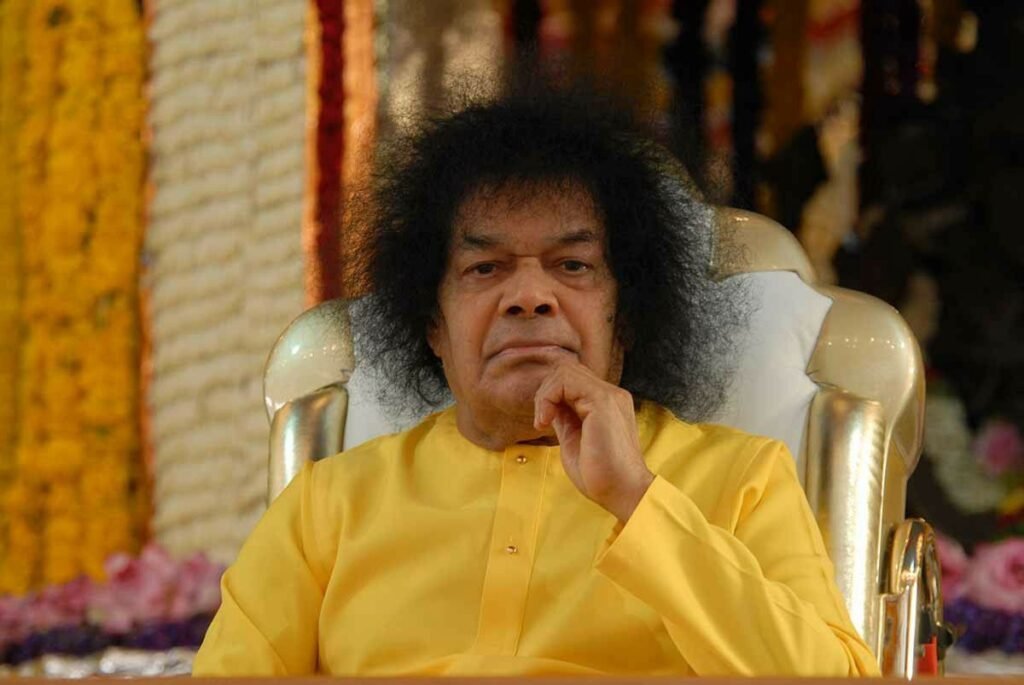
Volume Thirty
Volume Thirty (1997) Sathya Sai Speaks Volume 30 (1997) is a spiritually rich and inspiring compilation of discourses delivered by Bhagawan Sri Sathya Sai Baba, covering a wide range of topics central to the spiritual life: prema (divine love), tyaga (sacrifice), truth, duty, self‑realization, service, and the inner journey from the mundane to the divine. The volume begins with exhortations such as “Let Prema and Tyaga Be Your Ideals” and “Be Prepared for a Life of Sacrifice,” establishing from the start that the spiritual path is not one of ease but of giving, renunciation, and unwavering service. One of the recurrent messages is that faith in God must be firm and unshakeable, even when life tests us through trials and temptations. Baba encourages devotees to anchor themselves in divine love and surrender, not merely in fleeting emotional devotion, but in the steady foundation of trust in the Divine. In various discourses, Baba shows how work, love, and sacrifice form a trinity for spiritual living: work done with sincerity and dedication becomes worship; love infuses every action with meaning; and sacrifice purifies the ego and expands the heart. He often links truth and dharma together — asserting that truth is not abstract but must express itself in righteous living. He reminds listeners that every human being has a spark of the divine within, and the goal of spiritual life is to realize that divinity. This inner awakening requires not just belief but inner transformation: control of senses, renunciation of petty attachments, focus of the mind, and purification of motives. The volume also addresses social and educational themes: for instance, Baba speaks on serving the nation with pure hearts, urging that patriotism must be infused with spiritual integrity rather than mere rhetoric. He discusses the role of women, the Ramayana’s perennial message, purity as a path to liberation, and the significance of Ganesha principle (the principle of removing obstacles through right attitude). In these touches he weaves the personal and communal dimensions of spiritual life — showing that inner growth and outer responsibility go hand in hand. Another notable theme is “manifest the divine within you” — that every individual has latent divinity, and the spiritual journey is a process of unveiling that inner light. In the discourse “From the Corporeal to the Divine,” Baba contrasts the ephemeral nature of the body with the eternal nature of the soul, urging seekers to shift their identification from body to spirit. He also highlights the tension between the senses (Indriyas) and the mind, and the imperative to transcend the dominance of sensory cravings. The use of buddhi (intelligence or right discrimination) is emphasized as the charioteer of the mind, guiding it toward higher goals. Throughout, Baba’s tone is both inspiring and practical. He does not leave devotees with abstract doctrine alone, but calls them to live the teachings, to apply them daily in how they speak, act, relate to others, respond to challenges, and orient their inner life toward God. In essence, Volume 30 is a guide for seekers who aspire to live fully — not just in the world, but in the Divine — by uniting love, sacrifice, truth, and service. Its teachings remain a reservoir of strength, reminding us that spiritual maturity is not avoidance of life but transformation of life into prayer, devotion, and selfless action.