


















Hari Om

Menu

Vedas

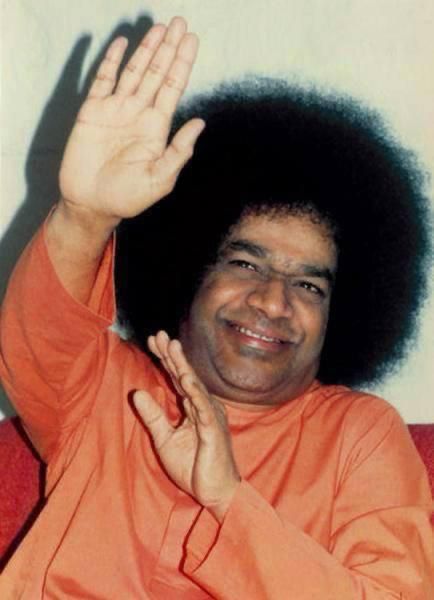
Sri Sathya Sai Baba blessing with raised hand picture
His Life is His Message topics

Divine Words of wisdom by Sathya Sai Baba – On Vedas

Divine Words of wisdom by Sathya Sai Baba – On Vedas 1. Where Vedas end, Vedanta begins, explanation of Vedanta Your browser does not support the audio element. 1996-07-31 Document Download Audio Social Share Facebook Twitter Youtube Instagram Description Therefore Vedas are limited to the physical world. Next is the ‘Vedantam’, which is most important. For the spiritual path, this is the true beginning and the true goal. The beginning and the end are one and the same. It is very difficult to know the different levels prescribed by the Vedantam. Hence the whole of Vedantam has been summed up into three aspects. Students must listen very carefully as it is essential to know about these three important aspects. The most important and the one that needs to be known are these three aspects. The first one is the ‘Tarakam’. The second one is ‘Sankhyam’ and third one is ‘Amanaskam’. These three are the end and essence of Vedanta. What is meant by ‘Tarakam’? It is ‘Khechari’, ‘Vechari’, ‘Madhyama’ and the true essence ‘Bhagawati’. One must try to analyse the essence of these four aspects. What is the meaning of ‘Tarakam’? Many people have described it in many ways. There are five signs in this. One should know clearly the five signs, ‘Pancha Mudras’. One should know these five signs, research and investigate them properly, experience them, then determine the necessary and the unnecessary and brush aside the unnecessary; have a vision of nadabindu and realise the ‘Hamsatwa’, later on experience the state of Sath-Chit-Ananda on earth—this sums up ‘Tarakam’. Immersing and concentrating the human mind in the principle of sath-chit-ananda, the ultimate bliss is called as ‘Tarakam’. The second one is ‘Sankhyamu’. It refers to the ‘Panchendriya’, the five senses, ‘Pancha prana’ the five life breaths, ‘Pancha bhoota’ ,the five elements , ‘Pancha kosamu’ the five life sheaths, the mind, ‘Chittamu’- intellect, ‘Antahkarana’- conscience, jeevamu -the in-dweller- these twenty five aspects. Then one must properly investigate and research each aspect to know the real ‘I’. Investigation and enquiry must lead one to know that none of them is the real “I”. Believing that none of the aspects help in knowing the real principle of one self- the Atma, one must realise that the principle of atma is the Sat-Chit-Ananda which is beyond enquiry and beyond the transcendental. Ultimately one realises that the sath-chit-ananda is atma and that one is atma, and realises the total identification of the “I” with the Atma. This is called as ‘Sankhya yoga’. It involves a thorough enquiry of the inner as well as the outer senses. Next is the ‘Amanaskamu’. What is the meaning of ‘Amanaskam’? The thing that is seen with the help of the five elements, the entire physical world, is the manifestation of the inner vision. The entire existence is nothing but the Brahman for there exists none other than that, “yekam yeva adviteeyam Brahma”, there is only one, the magnificent Brahma. The entire creation is Brahma. There is no second entity. In that scenario, the mind that thinks, too, does not exist. The vastness of the creation is visible only when there are thoughts and counter thoughts. Without the vastness when everything exists as single entity, the mind ceases to exist. Whatever one sees is Brahman, whatever one listens is Brahman, whatever one thinks is Brahman, whatever one utters is Brahman, and whatever one does is Brahman and wherever one walks is Brahman. Therefore when everything is Brahman, there is no mind. The thoughts and counter thoughts occur only when there is a second entity. Since there is no scope for thoughts, it is called as ‘Amanaskamu’, the state of retraction of mind. In that state love alone exists. That love is the truth. Truth and love are one and the same. 2. Vedas classified into three Samhithas Your browser does not support the audio element. 1996-06-22 Document Download Audio Social Share Facebook Twitter Youtube Instagram Description “Sahana vavathu, sahanau bhunaktu, sahaveeryam karavavahai,” All should be united. Kalasi melasi tirugudaam, Kalasimelasi perugudaam, Kalasimelasi telusukonna telivini poshinchudaam, Kalasimelasi kalatha leka Chelimi to jeevinchudaam, Let us move together, Let us grow together, Let us develop the knowledge together, Let us live in friendship, without any differences!! It was the Vedas that first taught unity and oneness. Vedas are being treated as useless because of the lack people who can teach it correctly. It is being treated as rituals, full of mantras to be chanted. No. It is not correct. Vedas are the source ofall the mighty power. Everything is contained in Vedas and everything originates from Vedas. Vedas supply knowledge to all nations. Knowledge of all the modern weaponry is from Vedas, mainly the Atharvana Veda but Bharathiyas are unable to recognize this fact. Bharath was the leader of all nations. But the great examples of those days are becoming extinct now. Thereby students are not able to have belief in those truths. 4. Veda is Dwaitha

Divine Words of wisdom by Sathya Sai Baba – On Vedas Read Post »

90b0d881e32f942d9d793528ee9d0498 removebg preview
The four vedas

Atharvaveda

Atharvaveda (अथर्ववेद) The Atharvaveda (अथर्ववेद) is the fourth Veda and is often considered somewhat different in character from the Rigveda, Yajurveda, and Samaveda. While the first three Vedas (known together as trayi-vidya) are closely connected with rituals and sacrifices, the Atharvaveda reflects more of the everyday concerns of human life. It contains around 730 hymns and over 6,000 verses, composed in both poetry and prose, and is attributed to the sages Atharvan and Angiras. This Veda is sometimes called the “Veda of Knowledge and Magic”, as it includes hymns, charms, prayers, and spells for practical purposes. It deals with a wide range of subjects such as healing from diseases, protection against evil forces, success in love, victory in battles, long life, and prosperity in household life. Many hymns are devoted to medicine and Ayurveda, making it one of the earliest sources of Indian medical knowledge. It also includes prayers for harmony in family and society, blessings for crops and cattle, and guidance on resolving conflicts. At the same time, the Atharvaveda is not merely practical or magical—it also contains deep spiritual and philosophical reflections. Some of its hymns speculate on the nature of the universe, the soul (ātman), and the Supreme Being (Brahman). It includes discussions on creation, death, afterlife, and immortality. Thus, while it is grounded in daily life, it also elevates thought toward ultimate truths. The Atharvaveda holds a special place because it shows the completeness of Vedic wisdom—embracing not just ritual and worship, but also health, social welfare, and spiritual liberation. It portrays the holistic vision of the Vedic seers, who saw no separation between the sacred and the practical. In this way, the Atharvaveda is both a manual for living a safe, prosperous life and a pathway to spiritual realization. The Atharvaveda (अथर्ववेद) stands apart from the other three Vedas because it is not confined only to rituals and sacrificial worship but extends to the practical, social, and mystical aspects of human life. It contains around 20 books (kāṇḍas) made up of hymns, incantations, and prayers, addressing both worldly needs and higher spiritual truths. While the Rigveda praises deities, the Yajurveda instructs priests, and the Samaveda provides chants, the Atharvaveda brings together healing, protection, prosperity, and philosophy, showing the all-encompassing vision of Vedic wisdom. A large portion of the Atharvaveda deals with medicine and health, making it one of the earliest sources for Ayurveda. It contains hymns for curing fever, wounds, skin diseases, and mental disorders, as well as charms for fertility and long life. It also addresses the use of herbs, plants, and natural remedies, highlighting the Vedic belief that nature itself is a divine healer. Alongside medicine, it offers protective charms and spells against evil spirits, curses, enemies, and misfortune—reflecting the fears and hopes of early society. Yet, beyond the practical and magical, the Atharvaveda also delves into lofty philosophical ideas. It contains hymns on creation, the eternal Self (ātman), and the universal reality (Brahman). Some passages explore the mystery of life and death, the journey of the soul, and the nature of immortality. In this way, it bridges the gap between worldly life and spiritual pursuit. Socially, the Atharvaveda emphasizes peace, unity, and harmony within families and communities. Hymns pray for concord between husband and wife, among brothers, and within society at large. It also seeks prosperity in agriculture, cattle rearing, and communal well-being, making it a guide for sustaining both individual and collective life. Overall, the Atharvaveda reveals a unique dimension of Vedic wisdom: it is not only concerned with cosmic order and divine worship but also with human struggles, health, relationships, and survival. It teaches that the sacred and the everyday are not separate—the divine pervades all aspects of existence. Thus, the Atharvaveda is often described as a Veda of both worldly welfare (abhichara) and spiritual liberation (moksha).

,

Atharvaveda Read Post »

cb36e557fcd677d5717fa47a433681bb removebg preview
The four vedas

Samaveda

Samaveda (सामवेद) The Samaveda (सामवेद) is the third of the four Vedas and is often called the “Veda of melodies and chants.” While the Rigveda focuses on hymns of praise and the Yajurveda on rituals and procedures, the Samaveda transforms many of the Rigvedic verses into musical form, setting them to specific notes and patterns of chanting. It contains about 1,875 verses, of which the vast majority are borrowed directly from the Rigveda, but arranged in a way that emphasizes their musical and liturgical function. The purpose of the Samaveda was not only to recite but to sing the mantras during yajnas (sacrifices), especially the Soma sacrifice, making sound and rhythm a bridge between humans and the divine. The Samaveda is divided into two main sections: the Archika (collection of verses) and the Gāna (melodic patterns or tunes). The priests known as Udgātṛs specialized in chanting these hymns with precise intonations, as the belief was that correctly performed chants carried immense spiritual power and could harmonize the cosmic order. The Samaveda is considered the root of Indian classical music and chanting traditions, as its system of notes and emphasis on melody laid the foundation for rāga and sāma singing styles that developed later in Indian culture. Beyond its ritualistic role, the Samaveda reflects the Vedic understanding that sound (nāda) has creative and divine power. Chanting the sacred mantras was seen as a way to connect directly with the gods, purify the mind, and elevate consciousness. In this way, the Samaveda does not add much new philosophical content compared to the Rigveda, but its unique contribution lies in its musical spirituality, showing that devotion can be expressed not only through prayer and action but also through the beauty of sound. The Samaveda (सामवेद) is the third of the four Vedas and is often called the “Veda of Chants” or “Veda of Melodies.” It is the foundation of Indian music, chanting traditions, and certain aspects of classical arts. While most of its verses are taken directly from the Rigveda, the Samaveda arranges them in a specific way to be sung rather than simply recited. Its primary purpose is to provide the musical intonation for the hymns used during Vedic sacrifices, particularly the Soma sacrifice, where priests would chant in rhythmic and melodic patterns to invoke divine presence and blessings. The Samaveda is divided into two main parts: the Archika, which contains verses (mostly from the Rigveda) to be sung, and the Gāna, which gives the detailed instructions on how those verses should be chanted melodically. The chants were performed in three distinct tones—high, medium, and low—forming the earliest structure of Indian musical notes. Because of this, the Samaveda is regarded as the origin of Indian classical music and dance traditions. Although the Samaveda is the shortest of all the Vedas, with about 1,875 verses, its importance is immense. It transforms the spoken word into sound vibrations that were believed to carry divine power, connecting the human soul with cosmic forces. The emphasis is not just on meaning but on sound, rhythm, and resonance, showing how spiritual practice in the Vedic age was deeply intertwined with music and chant. Philosophically, the Samaveda highlights the role of devotion, meditation, and inner harmony. By merging music with spirituality, it teaches that the divine can be realized not only through ritual and knowledge but also through melody, vibration, and heartfelt devotion. Thus, the Samaveda is not only a manual for priests but also a spiritual bridge between ritual, art, and divine experience.

,

Samaveda Read Post »

6ba1e319b38b1c948442784a2af5d971 removebg preview
The four vedas

Yajurveda

Yajurveda (यजुर्वेद) The Yajurveda (यजुर्वेद) is the second of the four Vedas and is primarily a manual for conducting rituals, sacrifices, and yajnas (ceremonial offerings). Unlike the Rigveda, which is largely poetic and hymnal, the Yajurveda is more practical and procedural, providing detailed instructions for priests on how to properly perform Vedic rituals. It contains both mantras (verses to be chanted) and prose explanations that guide the correct execution of sacrificial rites. The central focus of this Veda is the relationship between humans, nature, and the divine through ritual action, emphasizing that sacred duties, when performed with faith and precision, uphold the cosmic order (ṛta). The Yajurveda is divided into two main recensions: the Shukla (White) Yajurveda and the Krishna (Black) Yajurveda. The Shukla Yajurveda presents its mantras and explanations in a clearer, more orderly manner, while the Krishna Yajurveda mixes mantras with explanatory prose, making it more complex. Both, however, serve the same purpose of instructing priests on the practical aspects of Vedic sacrifices, such as the Agnihotra (fire offerings), Somayajna (Soma sacrifice), and Ashvamedha (horse sacrifice). Through these rituals, individuals and communities sought blessings of health, prosperity, rain, victory, and spiritual merit. Beyond ritual detail, the Yajurveda also carries profound philosophical elements. It contains the famous Isha Upanishad, which teaches that the divine pervades all creation and emphasizes living a life of balance—enjoying the world while renouncing selfish attachment. This blend of ritual practice with deep spiritual wisdom makes the Yajurveda both a practical guide to sacred duty and a source of timeless philosophy.

,

Yajurveda Read Post »

20eff27910593887e410fbb865135205 removebg preview 2
The four vedas

Rigveda

Rigveda (ऋग्वेद) The Rigveda (ऋग्वेद) is the oldest and most important of the four Vedas, composed around 1500–1200 BCE in Vedic Sanskrit. It consists of 1,028 hymns (suktas) divided into ten mandalas (books) and is regarded as the earliest source of Indian spiritual and philosophical thought. The hymns are primarily dedicated to natural deities such as Agni (fire), Indra (thunder and rain), Varuna (cosmic law), Surya (sun), and Ushas (dawn), reflecting the deep connection of the Vedic people with nature. The central idea of the Rigveda is ṛta, the cosmic order that governs the universe and ensures balance and truth. Alongside hymns of praise, it contains profound philosophical speculations such as the Nasadiya Sukta, which questions the origins of creation, and the Purusha Sukta, which describes the cosmic being from whom the universe was formed. The famous Gayatri Mantra also originates from the Rigveda. Beyond rituals and invocations, it marks the beginning of inquiry into spiritual truths, bridging nature worship with deeper philosophical insights. As the foundation of Vedic knowledge, the Rigveda has influenced Hindu rituals, spirituality, literature, and philosophy for thousands of years. The Rigveda is not only the oldest of the Vedas but also one of the world’s most ancient religious texts, preserving the spiritual vision and cultural life of early Vedic society. Its ten mandalas (books) were composed by different rishis (sages) over many generations and transmitted orally with extraordinary precision. The hymns are composed in highly poetic Sanskrit, rich with symbolism, metaphors, and deep spiritual insight. While many verses praise deities like Indra for strength in battle, Agni for carrying offerings to the gods, or Varuna for maintaining cosmic order, others move beyond ritual to contemplate universal truths. For instance, the Nasadiya Sukta (Hymn of Creation) reflects a profound philosophical spirit, asking whether even the gods know how the universe began. The Purusha Sukta portrays creation as emerging from the sacrifice of the cosmic being, symbolizing unity in diversity and the origins of social order. The Rigveda also emphasizes the power of sound and mantra, with chants believed to carry spiritual energy that connects humans to the divine. Its verses inspired not just ritual practices but also the development of later Hindu philosophy, yoga, meditation, and Indian classical music. Moreover, it represents an early stage of human thought, where natural phenomena were revered as manifestations of divine powers, yet also questioned in search of deeper truth. By blending hymns of devotion, moral reflection, and cosmic speculation, the Rigveda serves as both a record of early civilization and a timeless guide to spiritual wisdom. Its influence endures in daily Hindu prayers, yajnas (sacrifices), and philosophical traditions, making it the cornerstone of Sanatana Dharma.

,

Rigveda Read Post »



