


















Hari Om

Menu

tags

sawami rama tirtha
Mahatmas

Swami Rama Tirtha

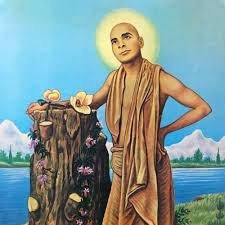
Swami Rama Tirtha Swami Rama Tirtha, previously known as Gossain Tirtha Rama, was born in 1873, at Murariwala, a village in the district of Gujranwala, Punjab, India. His mother passed away when he was but a few days old and he was brought up by his elder brother, Gossain Gurudas.As a child, Rama was very fond of listening to recitations from the holy scriptures and attending Kathas. He often put questions to holy men and even offered explanations. He was very intelligent and loved solitude.Rama was barely ten years old when his father got him married. His father left him under the care of his friend, Bhakta Dhana Rama, a man of great purity and simplicity of life. Rama regarded him as his Guru, and offered to him his body and soul in deep devotion. His surrender to his Guru was so complete that he never did anything without first consulting him. He wrote numerous loving letters to him. Swami Rama Tirtha was one of the most radiant and fearless spiritual philosophers of modern India, whose life and teachings awakened the Vedantic spirit of self-realization across the world. Born in 1873 as Tirtha Ram Goswami in Punjab, he was a brilliant scholar in mathematics, yet from an early age he possessed an intense longing for spiritual truth. His deep study of the Upanishads and Advaita Vedanta transformed him into a living embodiment of divine wisdom. Renouncing worldly life at a young age, he became Swami Rama Tirtha and dedicated himself to proclaiming the truth of man’s divine nature. The central message of Swami Rama Tirtha was “Thou art That.” He boldly declared that every human being is inherently divine, infinite, and free. According to him, ignorance alone makes people feel weak, limited, and unhappy. He taught that happiness does not come from possessions, status, or external circumstances, but from the realization of one’s own true Self. His teachings were filled with courage, joy, and spiritual strength, encouraging individuals to rise above fear and live with self-confidence and inner freedom. Despite his growing fame, Swami Rama Tirtha lived with extreme simplicity and detachment. He found joy in nature, solitude, and contemplation, often retreating to the banks of the Ganges or the Himalayan forests. In 1906, he attained Mahasamadhi at a young age, merging into the Infinite he so joyfully proclaimed. Swami Rama Tirtha’s life and teachings continue to inspire seekers worldwide, reminding humanity that true freedom, bliss, and strength arise from the realization of one’s own divine Self. Swami Rama Tirtha was a luminous embodiment of Vedantic truth whose life radiated joy, fearlessness, and spiritual freedom. Unlike many spiritual teachers who emphasized austerity and renunciation alone, he revealed Vedanta as a path of inner celebration and strength. To him, spirituality was not an escape from life but a bold affirmation of its divine essence. He spoke with the conviction of one who had directly realized the Self, and this authenticity made his words deeply transformative for all who heard or read them. The heart of Swami Rama Tirtha’s teaching was the realization of absolute oneness. He proclaimed that the individual is not a weak, sinful being but the very expression of infinite consciousness. According to him, all limitations arise from false identification with the body and mind. When this ignorance is removed through knowledge, one naturally experiences peace, bliss, and freedom. He encouraged seekers to constantly affirm their divine nature and live with dignity, courage, and inner authority. Swami Rama was a living Vedantin. He saw and felt God in all names and forms. His beautiful words are often addressed to the trees, rivers and mountains. Rama soon resigned his post and left for the forest. His wife and two children and a few others accompanied him to the Himalayas. Owing to ill-health, his wife later returned with one of her sons. The other was left at Tehri for his schooling there. Rama Tirtha took Sannyas a few days before the passing of Swami Vivekananda. Swami Madhava Tirtha had already allowed him to take Sannyas whenever he wished. A few years later he returned to the plains to preach. The effect of his presence was marvellous. His infectious joy and his bird-like warbling of Om enchanted everyone. Swami Rama’s burning desire to spread the message of Vedanta made him leave the shores of India for Japan. He went with his disciple Swami Narayana. After a successful visit to Tokyo, he departed for the U.S.A. He spent about a year and a half in San Francisco under the hospitality of Dr Albert Hiller. He gained a large following and started many societies, one of them being the Hermetic Brotherhood, dedicated to the study of Vedanta. His charming personality had a great impact on the Americans. Devout Americans even looked upon him as the living Christ On his return to India, Swami Rama continued to lecture in the plains, but his health began to break down. He went back to the Himalayas and settled at Vasishtha Ashram. He gave up his body in the Ganges on 17 October, 1906, when he was only thirty-three. The Rama Tirtha Publication League has brought out most of the writings of this great saint of India. They are given in several volumes, entitled, In the Woods of God-realisation. His inspiring writings show us that he saw his Beloved Lord in all names and forms. In many of his poems he sings the glory of nature. Swami Rama Tirtha’s biography above has been reproduced from Swami Sivananda’s “Yoga Lessons for Children (Vol. 7)”, published by the Divine Life Society of South Africa. More on Swami Rama Tirtha’s life and teachings from Swami Sivananda’s Life of Saints. Swami Rama Tirtha, a direct descendant of Gosain Tulsi Das, the immortal author of the widely read Hindi Ramayan, was born in 1873, at Muraliwala, in the district of Gujranwala, Punjab. Rama Tirtha was a very bright student, a genius possessing unusual intelligence, contemplative nature and an intrinsic love of mathematics

Swami Rama Tirtha Read Post »

shri adi shankracharya ji
Mahatmas

Sri Adi Shankaracharya

Sri Adi Shankaracharya The Divine Purpose of Avatara When spiritual darkness engulfs humanity and eternal principles of Dharma face extinction, the Supreme Consciousness manifests in human form to restore cosmic order. These divine incarnations—Avataras—emerge with specific forms and purposes uniquely suited to address the spiritual crises of their time. Sri Adi Shankaracharya stands among these luminaries as an Avatara of Lord Shiva Himself, whose appearance twelve centuries ago transformed the spiritual landscape of India, revitalized the profound wisdom of Vedanta, and forged national integration across diverse regions. It is universally acknowledged that if Sanatana Dharma thrives today, allowing us to partake in its spiritual treasures, it is primarily due to Sri Shankaracharya’s divine intervention and tireless work. His legacy continues to illuminate the path for seekers worldwide, serving as the foundation upon which the living tradition of eternal wisdom stands. Sri Adi Shankaracharya was one of the greatest spiritual luminaries in the history of Bharat and the foremost expounder of Advaita Vedanta, the philosophy of non-duality. Born in the eighth century CE in Kaladi, Kerala, he displayed extraordinary spiritual brilliance from a very young age. Renouncing worldly life in his childhood, Adi Shankaracharya devoted himself entirely to the realization and propagation of the highest truth—that Brahman alone is real, the world is transient, and the individual self is not different from Brahman. In a remarkably short lifespan, he revitalized Sanatana Dharma and unified diverse spiritual traditions through clarity of thought and spiritual authority. Adi Shankaracharya taught that ignorance (avidya) is the root cause of human suffering. According to him, people mistakenly identify themselves with the body and mind, forgetting their true nature as pure, infinite consciousness. Through the path of jnana (knowledge), he guided seekers to discriminate between the eternal and the temporary, leading to liberation (moksha). His teachings emphasized self-inquiry, detachment, and direct realization of the Self. While rituals and devotion have their place, he clarified that ultimate freedom comes only through the knowledge of non-duality. A Timely Manifestation The Hindu society of His time had fractured into countless competing sects, each advancing contradictory interpretations and engaging in endless disputations that served only to weaken the unified spiritual foundation of the culture.Into this intellectual chaos, Sri Bhagavatpada brought the crystalline clarity of Advaita Vedanta—the non-dual wisdom of the Upanishads. With matchless eloquence and penetrating insight, He revitalized the eternal truths that had become clouded by misinterpretation and neglect. His accomplishment becomes even more remarkable considering the absence of modern communication technologies and transportation systems, as He traveled the length and breadth of India on foot, igniting a spiritual renaissance. One of Adi Shankaracharya’s greatest contributions was his profound commentaries on the Upanishads, Bhagavad Gita, and Brahma Sutras, which remain authoritative texts of Advaita Vedanta to this day. He possessed a rare ability to present subtle metaphysical truths with logical precision and spiritual depth. At the same time, he composed numerous devotional hymns such as the Bhaja Govindam, Nirvana Shatakam, and Soundarya Lahari, showing that devotion and knowledge are not opposed but complementary paths. Through these hymns, he made deep philosophical truths accessible to the common people. Adi Shankaracharya traveled extensively across the Indian subcontinent, engaging in debates with scholars of various philosophical schools and re-establishing the primacy of Vedantic wisdom. To preserve and propagate the teachings of Advaita, he established four major monastic centers (Mathas) in the four directions of India—Sringeri in the south, Dwaraka in the west, Puri in the east, and Jyotirmath in the north. These institutions continue to uphold his spiritual vision and serve as pillars of Sanatana Dharma. Though established in the sublime state of Self-realization, where He could have remained in solitary bliss, Sri Shankaracharya chose instead to embrace humanity with boundless compassion. Recognizing the diverse spiritual capacities of seekers, He communicated transcendent wisdom at multiple levels, meeting souls precisely where they stood on the spiritual journey. His extraordinary talents included: Within the remarkably brief span of His manifest life—completing His earthly mission by age 32—Sri Shankaracharya accomplished what would seem impossible for many lifetimes. His commentaries on the principal Upanishads, the Brahma Sutras, and the Bhagavad Gita (collectively known as the Prasthanatraya) remain definitive expositions that have guided generations of seekers to the highest truth. The heart of Sri Shankaracharya’s philosophy reveals that: Many forms, one Bhagavan – all divine forms are manifestations of the same Supreme and there is no difference in the essence Brahman—the eternal, impersonal, conscious Absolute—is the only reality The universe, with all its names and forms, appears within this reality through the power of Maya The individual soul (jiva) is fundamentally non-different from Brahman, appearing separate only due to limiting adjuncts (upadhis) Liberation (Moksha) is the direct recognition of this eternal oneness, as proclaimed in the Mahavakyas of the Upanishads Karma (action) and Bhakti (devotion), when performed with proper understanding, purify the mind and prepare it for this supreme knowledge While maintaining that Brahman alone is the Absolute Truth (Paramarthika), Sri Shankaracharya acknowledged the practical reality (Vyavaharika) of the world for purposes of spiritual practice and daily living. This balanced approach allowed Him to integrate diverse spiritual practices within a coherent framework, leading ultimately to non-dual realization. Compassion in Action Though His philosophical achievements alone would secure His place among humanity’s greatest teachers, Sri Shankaracharya’s compassion extended beyond the intellectual realm to address practical human suffering. Numerous accounts attest to His willingness to employ yogic powers for the welfare of others—from blessing a destitute woman with prosperity through the Kanakadhara Stotram to revealing the greatness of His disciple Padmapadacharya through the miracle of lotus flowers manifesting upon the waters of the Ganga. Perhaps the most enduring testament to Sri Shankaracharya’s visionary leadership lies in the establishment of the four Chaturamnaya Peethams (monastic centers) at the cardinal points of India. With remarkable foresight, He created a network of spiritual epicenters that would preserve and propagate Sanatana Dharma through the centuries: Uttaramnaya Sri Jyotir Peetham at Badrinath in the North Dakshinamnaya Sri Sharada Peetham at Sringeri in the South

Sri Adi Shankaracharya Read Post »

swami chinmayananda ji devotional india
Mahatmas

Sri Swami Chinmayananda

Sri Swami Chinmayananda Sri Swami Chinmayananda was a rare spiritual force who combined profound scriptural knowledge with fearless action and modern vision. He emerged at a time when spiritual values were fading from public life and boldly re-introduced Vedanta as a practical philosophy for everyday living. With his sharp intellect and powerful oratory, he shattered the misconception that spirituality was meant only for ascetics. Instead, he proclaimed that Vedanta is a science of life meant to strengthen individuals, families, and society. His mission was not to create followers, but thinkers—people capable of standing on their own spiritual understanding. A defining quality of Swami Chinmayananda was his emphasis on inner strength and self-confidence. He repeatedly taught that weakness is the greatest sin, and that realization of one’s true nature removes fear at its root. According to him, every individual carries infinite potential within, but ignorance veils this truth. Through systematic study of the Upanishads and the Bhagavad Gita, he guided seekers to remove this ignorance and live with clarity and courage. His teachings encouraged people to face life’s challenges with composure, efficiency, and dignity. Swami Chinmayananda was also deeply committed to nation-building through spiritual awakening. He believed that a strong nation is built by strong individuals, and strong individuals are formed through right values. His work extended beyond discourses into education, healthcare, and cultural revival. Through Chinmaya Mission, he established centers that promoted not only spiritual study but also service activities, thereby integrating knowledge with compassionate action. His vision was holistic—uplift the individual, and society would naturally rise. Despite his commanding personality, Swami Chinmayananda was deeply humble at heart. He constantly credited his Guru, Swami Tapovan Maharaj, and the ancient rishis for all knowledge. He lived simply, owned very little, and dedicated every moment of his life to teaching and service. His personal discipline, intense study, and unwavering commitment to truth gave his words authenticity and power. Even today, Swami Chinmayananda’s influence continues to grow across the globe. His books, commentaries, and recorded lectures remain invaluable guides for spiritual seekers and students of philosophy. More than a teacher, he was a spiritual awakener who ignited self-belief and higher vision in countless hearts. Sri Swami Chinmayananda’s life reminds us that true spirituality is dynamic, courageous, and transformative—leading individuals from limitation to liberation, and from doubt to divine awareness. Swami Chinmayananda strongly emphasized discipline, courage, and character. He believed spirituality was not meant to weaken individuals but to make them bold, dynamic, and fearless. He often reminded his audiences that a spiritual person should be efficient in action, noble in thought, and pure in intention. Through karma yoga, he taught that work done with dedication and without selfish attachment becomes a means of inner purification. Such work, when combined with devotion and study, prepares the mind for higher knowledge. His exceptionally brilliant mind and intensity to seek out the goal of human existence led Swami Sivananda to recommend that he leave the ashram and study under the tutelage of the great Vedantic master, Swami Tapovanam. Swami Tapovanam was a recluse who did not stay in one place for long. He spent his time in the Himalayan mountains moving from place to place. Swami Chinmayananda turned out to be an exceptional student who could keep up with the rigorous lifestyle and the strict discipline of his master. Swami Tapovanam took him on as a disciple on the condition that he would would never repeat anything. The student would have to take the responsibility of going deep into the studies through his own personal notes, reflection and meditation. While the lessons were in Sanskrit, the language of the ancient spiritual texts, Swami Chinmayananda wrote out his notes in English. Under Swami Tapovanam, Swami Chinmayananda totally immersed himself in his spiritual studies and a life of meditation. In just two short years, in the tranquility of the great Himalayan mountains, Swami Chinmayananda, the once rational skeptic gained inner peace and spiritual enlightenment In December 1951, Swami Chinmayananda came down to the plains to teach spirituality to the ordinary man on the street. His approach was startlingly different. Traditionally, the ancient Hindu scriptures were taught only to the male members of the priest class in the ancient language of Sanskrit. But Swami Chinmayananda shocked everyone by teaching freely and openly to men and women alike without any class distinctions – and in ENGLISH!. Swami Chinmayananda was an enthusiastic and animated orator. He taught with clarity, humor and insightful examples from everyday life. He stormed into the lives of ordinary Indians with the inspiring teachings of spirituality in daily life. They were spellbound by his great brilliance and clarity. He was astonishingly popular. Indoor venues soon became too small to hold the masses that came to listen to him. Many came just to feed their curiosity about this remarkably modern Swami (monk). His talks soon took place in open public grounds which could accommodate thousands of people. Swami Chinmayananda, with his ability to reach into the hearts of people with his intellectual brilliance, insight, clarity of thought and down-to-earth manner, brought about a cultural and spiritual reawakening in a newly independent India. In 1953, a small group of enthusiastic devotees formed the ‘Chinmaya Mission’ in Madras (now Chennai, India) to formalize and organize the work of Swami Chinamayananda. ‘Chinmaya’ means True Knowledge in Sanskrit. Swami Chinmayananda’s followers thought it would be an apt name as it described not only His spiritual teachings but the seeking of the True Knowledge of life. Sri Swami Chinmayananda was one of the most influential spiritual teachers of modern India and a dynamic exponent of Vedanta, whose mission transformed the spiritual understanding of millions across the world. Born in 1916 as Balakrishna Menon in Kerala, he was initially a journalist with a sharp intellect and a questioning mind. His search for truth led him to meet Swami Sivananda of Rishikesh, who inspired him to pursue the deeper purpose of life. Under the guidance of Swami Tapovan Maharaj, Swami Chinmayananda underwent intense spiritual

Sri Swami Chinmayananda Read Post »

Swami Chidanananda saraswati
Mahatmas

Swami Chidananda Saraswati

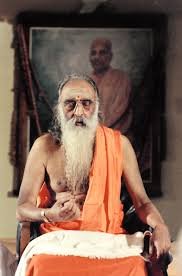
Swami Chidananda Saraswati Sridhar Rao, as Swami Chidananda was known before taking Sannyasa (embracing a life of renunciation), was born to Srinivasa Rao and Sarojini, on the 24th September, 1916, the second of five children and the eldest son. Sri Srinivasa Rao was a prosperous Zamindar (a rich landlord) owning several villages, extensive lands and palatial buildings in South India. Sarojini was an ideal Indian mother, noted for her saintliness. At the age of eight, Sridhar Rao’s life was influenced by one Sri Anantayya, a friend of his grandfather, who used to relate to him stories from the epics, Ramayana and Mahabharata. Doing Tapas (austerities), becoming a Rishi (sage), and having a vision of the Lord became ideals which he cherished. Swami Chidananda Saraswati was one of the most luminous spiritual masters of modern India and a revered disciple of Swami Sivananda of the Divine Life Society, Rishikesh. Born in 1916, he embodied from a young age a deep inclination toward spirituality, self-discipline, and service to humanity. After meeting Swami Sivananda, his life was completely transformed, and he dedicated himself fully to the path of renunciation, selfless service, and God-realization. Swami Chidananda later became the President of the Divine Life Society and carried forward his Guru’s mission with remarkable humility, wisdom, and inner purity. Known as the “Saint among saints,” his life itself was a silent teaching, radiating peace, compassion, and divine awareness. Swami Chidananda taught that the purpose of human life is realization of the Self, which is one with the Supreme Reality. He emphasized that true spirituality is not mere philosophy or ritual but a lived experience expressed through character, conduct, and compassion. According to him, purity of heart, control of the mind, and selfless service are essential foundations for spiritual growth. He constantly reminded seekers that God is not distant or separate, but ever-present within one’s own heart. In 1936, he was admitted to Loyola College, whose portals admit only the most brilliant of students. In 1938, he emerged with the degree of Bachelor of Arts. This period of studentship at a predominantly Christian College was significant. The glorious ideals of Lord Jesus, the Apostles and the other Christian saints had found in his heart a synthesis of all that is best and noble in the Hindu culture. To him, study of the Bible was no mere routine; it was the living word of God, just as living and real as the words of the Vedas, the Upanishads and the Bhagavad-Gita. His innate breadth of vision enabled him to see Jesus in Krishna, not Jesus instead of Krishna. He was as much an adorer of Jesus Christ as he was of Lord Vishnu. The family was noted for its high code of conduct and this was infused into his life. Charity and service were the glorious ingrained virtues of the members of the family. These virtues found an embodiment in Sridhar Rao. He discovered ways and means of manifesting them. None who sought his help was sent away without it. He gave freely to the needy. Service to lepers became his ideal. He would build them huts on the vast lawns of his home and look after them as though they were deities. Later, after he joined the Ashram (hermitage), this early trait found in him complete and free expression where even the best among men would seldom venture into this great realm of divine love, based upon the supreme wisdom that all are one in God. Patients from the neighbourhood, suffering from the worst kind of diseases came to him. To Sridhar Rao the patient was none other than Lord Narayana Himself. He served him with tender love and compassion. The very movement of his hands portrayed him as worshipping the living Lord Narayana. Nothing would keep him from bringing comfort to the suffering inmates of the Ashram, no matter what the urgency of other engagements at the time. Swami Chidananda was also a great exponent of yoga and Vedanta, yet his approach was simple and practical. He taught that regular prayer, meditation, study of sacred texts, and disciplined living gradually purify the mind and lead to inner illumination. His words were gentle, filled with love and clarity, touching the hearts of people from all walks of life. Without seeking recognition or fame, he became a source of inspiration for seekers across the world. Even after leaving his physical body in 1993, Swami Chidananda’s spiritual presence continues to guide countless aspirants. His writings, recorded talks, and the institutions he nurtured still inspire lives of faith, discipline, and service. Swami Chidananda Saraswati remains a shining example of how a life rooted in humility, devotion, and selfless love can uplift humanity and lead souls toward peace, truth, and liberation. Service, especially of the sick, often brought out the fact that he had no idea of his own separate existence as an individual. It seemed as if his body clung loosely to his soul. Swami Chidananda Saraswati was a towering spiritual personality whose life was a perfect expression of purity, self-discipline, and divine awareness. As the beloved disciple of Swami Sivananda, he absorbed his Guru’s teachings not merely through study, but through total surrender and lived experience. From the moment he entered the Divine Life Society at Rishikesh, his life became one of intense sadhana, simplicity, and service. He lived with minimal needs, strict personal discipline, and unwavering devotion, becoming a living embodiment of the yogic ideals taught in the scriptures. His presence itself created an atmosphere of peace and inner stillness for all who came in contact with him. Nor was all this service confined to human beings. Birds and animals claimed his attention as much as, if not more than, human beings. He understood their language of suffering. His service of a sick dog evoked the admiration of Gurudev. He would raise his finger in grim admonition when he saw anyone practicing cruelty to dumb animals in his presence. His deep and abiding interest in the

Swami Chidananda Saraswati Read Post »



