














Hari Om

Menu

swami

satchidananda saraswati ji
Mahatmas

Satchidananda Saraswati

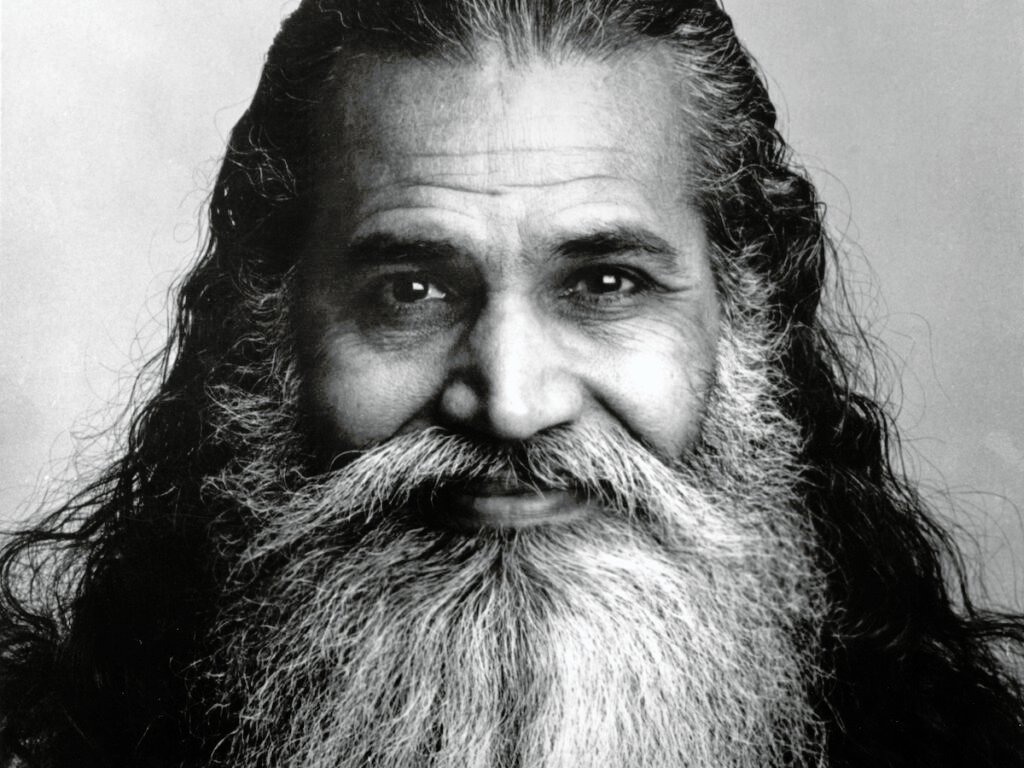
Satchidananda Saraswati In a chapter of profound personal transformation, he navigated the dissolution of an arranged marriage, a journey marked by his wife’s departure to pursue a love she had longed for and he turned his attention to spiritual practice.  East–West Guru. Beginning in the early 1970s, Swami Satchidananda was a frequent guest speaker and advisor to Indian communities around the world. In the United States, Canada, and the Caribbean islands, he became a principle advisor to Indian communities in planning their first temples and cultural centers, often suggesting that Jains, Hindus, and Sikhs combine their funds to build one facility that could be shared by all. He also brought the arts, culture, and traditions of India to the West and an ashram in Sri Lanka and a residential school and Yoga center in South India. Swami Satchidananda’s message emphasized harmony among people of all races and faiths. His motto was: “Truth is One, Paths are Many.” He believed that we are all one in Spirit and that throughout history great spiritual masters, such as Buddha, Moses, Jesus, and Muhammad, have come forward to teach the people of the world how to experience this spiritual oneness. After we have found that Spirit within ourselves, we will always recognize it in others. Then, we truly have power to help heal the world. Swami Satchidananda exemplified these teachings. His beautiful message is that we, too, can exemplify them. Not limited to any one organization, religion or country, he received invitations for over fifty years from around the world to speak about the way to peace. He served on the advisory boards numerous Yoga, interfaith, and world peace organizations.  On the occasion of his birth centennial in 2014, he was posthumously honored with the James Parks Morton Interfaith Award by the Interfaith Center of New York. Swami Satchidananda dedicated his life to the cause of peace—both individual and universal—and to unity and harmony among all people. “When we forget that we are essentially spiritual beings, we see only the body and mind. It is because we have different bodies and minds that we see all the diversity in people. And wherever there are differences, there can be either fighting or fun. If you learn to appreciate and enjoy the diversity—while realizing the unity—then it will all be fun! We may look different but if we see the spirit we realize, I am you, you are me, we are one. “Imagine, if all of a sudden we all cease to have these differences—we all look the same and we all have the same name. Imagine the confusion! Don’t we have the expression, ‘Variety is the spice of life?’ But behind all these identities there is something that unites us all—we are essentially spiritual beings made in the image of God. When you realize who you are, then you realize that everyone is equally a spark of the same divinity. “We should rise above all the differences and distinctions and see our spiritual oneness; we should learn to love each other, to open our minds and hearts. Even just focusing on this one thought: I belong to the whole world and the entire world is my family will make you so happy and peaceful. Remember: Each person is a child of God and we are all sisters and brothers.” Swami Satchidananda enriched the lives of countless others and his efforts made a positive difference to our world and our future. I have met some truly great men in my life, but none greater than Swami Satchidananda, for his life is dedicated to service and the cause of peace—both individual and universal—and to fostering religious harmony among all people. There are teachers who guide their students to mystical experience. There are others, too, who inspire their students to loving service. What I admire in Swami Satchidananda is the consistency with which he bonds these two together. Source: swamisatchidananda

Satchidananda Saraswati Read Post »
devotional india
Mahatmas

Ramalinga Swamigal

Ramalinga Swamigal  The young boy showed little interest in the formal education by his brother; instead, he used to go to the nearby temple of Lord Muruga, known as Kandakottam, and prayed to Lord Muruga to teach him the art of meditation. Tradition and Gurus. From age nine to twelve, for three years from 1832 to 1835, Ramalingam placed a mirror with a lamp in front of it in his room at Chennai and prayed to Lord Muruga to teach him how to meditate. Lord Muruga appeared through the mirror and taught him the path of Wisdom. You taught me the Vedas Your grace helped me to rise up. You prevented me from going to unworthy Preceptors; You took me as your disciple for a short period. – 5B/40:4 As noted above, at the age of twelve, while playing with friends outside on the street, Lord Shiva appeared before him in the guise of a Saint and placed a garland around his neck. There are hundreds of poems in the Thiruvarutpa showing that Lord Shiva Himself was the Guru of Ramalingam Due to immaturity of mind, Ramalingam had a lot of doubts while doing meditation. As he did not want to disturb Lord Shiva frequently, he asked for a guide to help him. Then Lord Siva directed the Sages Thirugnana Sambandar [7th century AD] and Manikavasgar [9th century AD] to assist him. Both of them appeared in their subtle bodies before Ramalingan and talked with him. I saw the heaven through you; I drank nectar through you; At the age of thirty-five, Ramalingam left Chennai during the year 1858. First, he went to Chidambaram where he had a debate with Kodaganallur Sundara Swamigal. At the request of one Ramakrishna Reddiyar he went to his house at Karunguzhi and stayed there for nine years. He was very much against the caste system because of the adverse impacts it had on society. Towards that end, he started the ‘Samarasa Vedha Sanmarga Sangam’ in 1865. In 1872 it was renamed ‘Samarasa Suddha Sanmarga Sathya Sangam,’ meaning ‘Society for pure truth in universal self-hood.’ In 1867, he established a free food facility named ‘The Sathya Dharma Salai’ in Vadalur. There all people are served free food without any caste distinctions. The land for the facility was donated by kind, generous people, and those registered documents are available for seeing by the visitors. This free facility continues its service till the present time.  Ramalingam intensely disliked people eating non-vegetarian foods, about which he said: ‘When I see men feeding on the coarse and vicious food of meat, it is an ever-recurring grief to me.‘ Entrance to the Sathya Gnana Sabha. The sign above it reads, ‘Only those who have renounced meat and murder should enter.‘ On 25 January 1872, Ramalingam opened the ‘Sathya Gnana Sabha’ (Hall of True Knowledge) at Vadalur. One of the primary teachings of Vallalar is ‘Service to Living Beings is the path of Liberation/ Moksha.’ He declared that death is not natural and that our life’s priority should be to fight death.  He laid a very great emphasis on being vegetarian. He said God is ‘Arul Perum Jyothi,’ who is the personification of Grace or mercy and knowledge. He said the path of compassion and mercy is the only path to God. Entrance to the Sathya Gnana Sabha. The sign above it reads, ‘Only those who have renounced meat and murder should enter.‘ e said that souls are blinded by seven veils. There are seven cotton fabric screens, representing the seven factors that prevent a soul from realising its true nature. The entire complex is bound by a chain with 21,600 links, said to represent 21,600 inhalations by a normal human being. He said the intelligence we possess is Maya (illusory) intelligence which is not accurate and final intelligence. The path of final intelligence is Jeeva Karunyam (Compassion for living beings). Source: mydattatreya

Ramalinga Swamigal Read Post »

Lomasha Rishi
Mahatmas

Sant Lomasha Rishi

Sant Lomasha Rishi Devotion to God is done to attain him, but the arbitrary conduct of seekers like Lomasha Rishi fails to achieve this sole purpose of human life. Finally, they remain trapped in a vicious cycle of birth and rebirth. The calculation of the age of all Gods is given in Suksham Veda. Death is a universal truth in 21 universes of Brahm Kaal, yet seekers in the Hindu religion in pursuit of attaining immortality have dedicated themselves to severe penance since Eras. There are several shreds of evidence in Hindu mythology where seekers demanded the boon of immortality from the Trinity Gods as a reward for their intense austerity, which over some time became a curse to them instead of the fulfilment of their desire to have an everlasting age.  The reason is that the power of Tridev Brahma, Vishnu, and Shiva is minimal. They are in the vicious cycle of birth-rebirth; then how can they grant a boon of immortality to their seekers?. Also, attaining immortality in Kaal’s realm is against the law of Almighty Kabir because all 21 universes of Kaal Brahm are mortal. The spirit of remaining immortal in souls in this mortal world is an outcome of that happiness that they had experienced in the immortal abode, which means in Satlok, which is the native world of all beings residing in Kaal’s realm. Here, it would be imperative to mention that at the inception of the creation of nature,  all souls trapped in Jyoti Niranjan’s realm used to reside in the immortal world  Satlok, where there is no death, and the same spirit remains alive in every soul, even here. The soul keeps wandering to relish the same happiness in the realm of Satan Kaal, which is impossible. With severe austerity, although seekers gained accomplishments and received a boon of long life from their revered deities, they did not gain immortality. In turn, such seekers later regretted their wrong aspiration to become eternal because in that long life, they experienced sufferings only. Even Gods in Kaal’s world die after drinking nectar after a stipulated duration. No one can be immortal here, even the owner, Kaal himself. Lomasha Rishi was a great ascetic and a scholar well known in Hinduism and a staunch worshipper of Tamogun Shiva/ Shankar. At a tender age, Lomasha feared death and hence wanted to become immortal, which is impossible in the mortal world of Kaal. Brahm Kaal is a deceiver and plays foul with the children of the Supreme God as he is vindictive after being cursed. Moving ahead we will know another aspect of devotion in Kaal’s  realm where the vices like greed, attachment, arrogance, anger and like in seekers dominate instead of subsiding. Once, Lomas Rishi was delivering a sermon about Sargun God. Kakbhushundi was sitting in the audience and listening to Lomas Rishi’s words. At that time, Kakbhushundi was like any ordinary human being. He was firm in the belief about the existence of God and wanted to know ‘how to attain God’. During the spiritual discourse, Kakbhushundi started arguing with Lomas Rishi about the Sargun and Nirgun forms of God. Although the sage tried to satisfy him with appropriate explanations, arrogant Kakbhushundi refused to accept his points and insulted Lomas Rishi. Source – Jagat Guru

Sant Lomasha Rishi Read Post »

Sant Thiruvalluvar
Mahatmas

Sant Thiruvalluvar

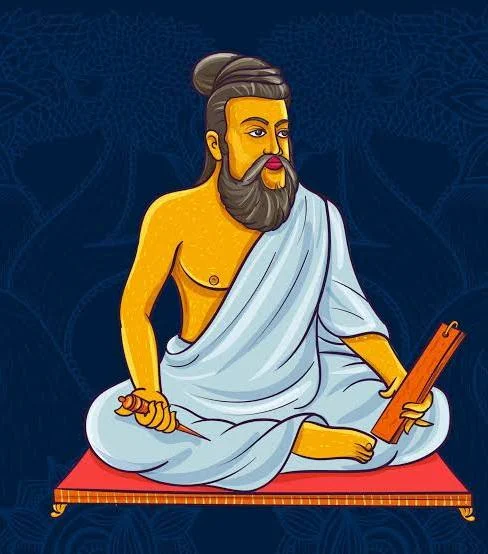
Sant Thiruvalluvar Thiruvalluvar did not give any answer. He simply kept quiet. He wanted to teach them the glory of Grihastha Ashrama by example. Thiruvalluvar was taking cold rice in the morning. He said to his wife: “Vasuki, the rice is very hot Bring a fan to cool it”. Thiruvalluvar’s wife was drawing water from the well when Thiruvalluvar called her. She at once left the rope and ran to him with a fan to cool the rice. She did not say to her husband: “How can the cold rice be hot? Why do you want a fan now?”. She simply obeyed his commands. The vessel that contained water was hanging half-way in the well unsupported, on account of her Pativrata Dharma Shakti. The aspirants noticed this phenomenon and the noble conduct of Vasuki and were simply struck with amazement. About midday, on another occasion, Valluvar called his wife and said, “Bring a lamp immediately, O Vasuki! I am stitching the cloth. I cannot see the eye of the needle. I cannot pass the thread properly”. Vasuki did not say to her husband: “It is broad daylight now. Why do you want a lamp? You can see the eye of the needle clearly”. But she implicitly obeyed his word.  he aspirants were much inspired by the ideal life of sage Thiruvalluvar and the exalted conduct of Vasuki They did not speak a word to the saint. They took leave of the saint and quietly left the place with profound satisfaction. They were deeply impressed by the practical and exemplary life led by Thiruvalluvar and Vasuki. They learnt the lesson that the life of an ideal householder was in no way inferior to that of an ideal Sannyasin who was treading the path of Nivritti and austerity in the Himalayan caves and that each was great in its own place, time and circumstances. Dear readers! Such ladies sit enthroned in the hearts of their husbands. No doubt they are hard to find, because such women never advertise themselves; but there must be many in our land of Rishis and sages; and unless we maintain such a high level of moral purity, we will all be going down in these days of modern civilization and scientific advancement. If the husbands of the present day behave like Thiruvalluvar, the wives will say, “My husband has become senseless. He wants to fan the rice when it is so cold! He wants a light when there is broad sunlight”. The wives will rebuke their husbands and fight with them. That house wherein the wife serves the husband with sincere devotion and observes Pativrata Dharma is heaven on earth. That house wherein the wife fights with the husband and disobeys his orders is a veritable hell on earth. Ladies who practise Pativrata Dharma need not go to temples. They need not practise any Vrata or penance. Service to the husband becomes worship. They can realise God through service to their husbands. Husbands also should be ideal persons with noble qualities. Husbands are the Gurus for their wives. The wives need not get any initiation from any Acharya. Glory to such exalted ladies who practise Pativrata Dharma! Source – dlshq org

Sant Thiruvalluvar Read Post »

Purandara Dasa ji
Mahatmas

Purandara Dasa

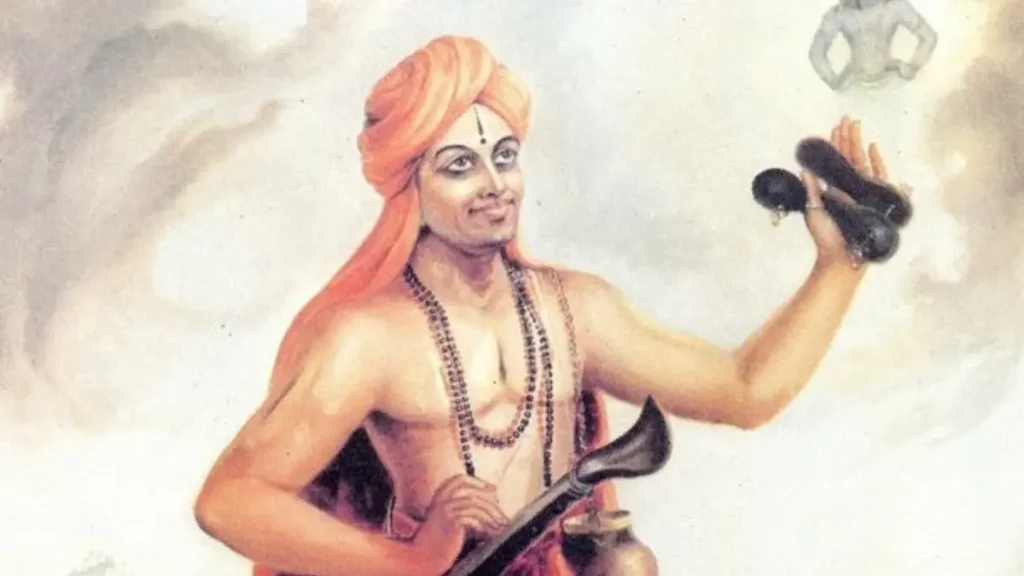
Purandara Dasa Srinivasa Naayaka had gained a reputation for being miserly. However, legend has it that one day, Lord Vishnu himself appeared before him, disguised as a poor Brahmin, seeking alms. Ignoring the Brahmin’s plea, Srinivasa Naayaka offered him a small quantity of food. As he tried to serve the food, it magically multiplied, revealing the divine nature of the guest. Realizing his folly and the importance of generosity, Srinivasa Naayaka experienced a profound change of heart. Inspired by the divine encounter, Srinivasa Naayaka renounced his material possessions and embraced a life of devotion. He became a Haridasa, a servant of God, and dedicated the rest of his life to the pursuit of spiritual enlightenment and musical expression. Purandara Dasa: The Architect of Carnatic Music. Purandara Dasa played a pivotal role in structuring the fundamental lessons of Carnatic music. He systematized the learning process by organizing the musical concepts into various modules, which included Sarali varases (basic exercises), Janti swaras (sequences), Alankaras (ornaments), Lakshana geetas (songs illustrating musical concepts), Prabandhas (compositions), Ugabhogas (lyrical compositions), Daatu varase (musical compositions with fixed rhythmic patterns), Geetams (simple songs), Sooladis (musical compositions with mathematical patterns), and Kritis (elaborate compositions). Many beginners use Riyaz app to get started with these basic carnatic vocal lessons.Purandara Dasa devised a graded approach to music education, providing a systematic progression of lessons for students. This structured learning approach facilitated the gradual development of skills and knowledge, ensuring a strong foundation in Carnatic music.  Purandara Dasa composed his songs mainly in Kannada, the local language of the people in the Vijayanagara kingdom. His lyrics were simple yet profound, employing telling phrases and similes that resonated with the common people. His compositions were accessible, making them relatable to a wide audience. Purandara Dasa’s prolific output resulted in a vast collection of compositions, totaling approximately 475,000 songs in both Kannada and Sanskrit. His compositions encompassed various themes, including devotional songs, dance-oriented padams (featuring nayaka-nayaki bhava, depicting the hero and heroine), and rare musical forms. Purandara Dasa as a Social ReformerPurandara Dasa recognized the barriers faced by the common people who could not understand Sanskrit, the prevalent language for religious rituals and worship. To make devotion and worship more accessible, he composed most of his songs in Kannada, the vernacular language spoken by the people of the Vijayanagara kingdom. By doing so, he ensured that everyone could participate in devotional practices and connect with the divine. Breaking Barriers of Caste and Religion. Purandara Dasa’s compositions often emphasized the importance of unity and equality, challenging the rigid caste and religious divisions prevalent in society. His songs promoted inclusivity, encouraging people from all walks of life to come together in devotion and harmony. Purandara Dasa’s compositions also criticized the materialistic pursuits and greed for power prevalent in his time. He urged individuals to prioritize spiritual growth and selfless service over the desire for wealth and conquest. His songs served as a powerful commentary on the societal issues of his era. Purandara Dasa spent his final years in Hampi, where he had the honour of singing in the durbar (royal court) of King Krishnadevaraya. The mantapa (hall) where he resided in Hampi is now known as the Purandara Dasa Mantapa, a sacred site for musicians and music lovers. Purandara Dasa’s profound influence on Carnatic music and his contributions as a social reformer make him a revered figure in Indian history. His music, with its soul-stirring melodies and poignant lyrics, continues to captivate audiences, while his messages of unity, equality, and devotion resonate across generations.  Every year, during the months of February and March, the aradhana (commemorative) celebrations of Purandara Dasa are held on the pushya bahula amavasya (no moon day) of the Indian chandramana calendar (lunar calendar). These celebrations, observed with deep religious and musical fervor, bring together musicians, art aficionados, and devotees from Karnataka, South India, and various other centers around the world. here are not many pupils in this world who are praised thus by their own teachers. Purandara dasa is also called the ‘pitaamaha’ of Karnataka sangeeta (South Indian Classical music) as it is practiced today. Purandara has had a varied role – a devotee, a haridasa (servant of God), a poet, a musician, a social reformer, a saint and a traveler who traveled all over south India. However, as it happens to many important men and women in Indian history, the details of his life that are available are rather scant and sketchy. We do not exactly know the day he was born or the the place he was born or the day he was initiated to the haridasa fold. But, if we know one thing certainly, it is the day of his passing away. Sri Purandara dasa left this world on the Pushya amavasye in the RaktAkshi samvatsara (This corresponds to the year 1564 AD). We get this information from a composition attributed to Purandara dasa’s son Sri Madhwapati dasa. Here is what he says: The pallavi and anupallavi lines in this song say that it was composed right on the day when Purandara Dasa passed away. The first charana states that it was on amavasye, Pushya mAsa, Sunday when Purandara dasa passed away. The second charana mentions Viroopaksha Kshetra (Hampe) and the line ‘in the sannidhi of vithala’, indicate that Purandara passed away somewhere in the viscinity of the Vijaya Vitthala temple in Hampe, very likely at the mantapa called Purandara Mantapa nowadays. Although Purandara dasa is said to have composed hundreds of thousands of songs, only a small fraction of that has been handed over to us through tradition. Luckily, within the available compositions there is plenty of information to understand the life and times of the period when Purandara dasa lived. Haridasa poetry is more like a mirror to the society. They show the positive attributes, as well as the shortcomings of their times. Many of these aspects are relevant even today, as they were several centuries ago. Seeing his deep faith, Mahaprabhu was overjoyed and began dancing in ecstasy. Sarvabhauma joined Him and both were overcome with divine bliss,

Purandara Dasa Read Post »