







Hari Om

Menu

shiva avatar

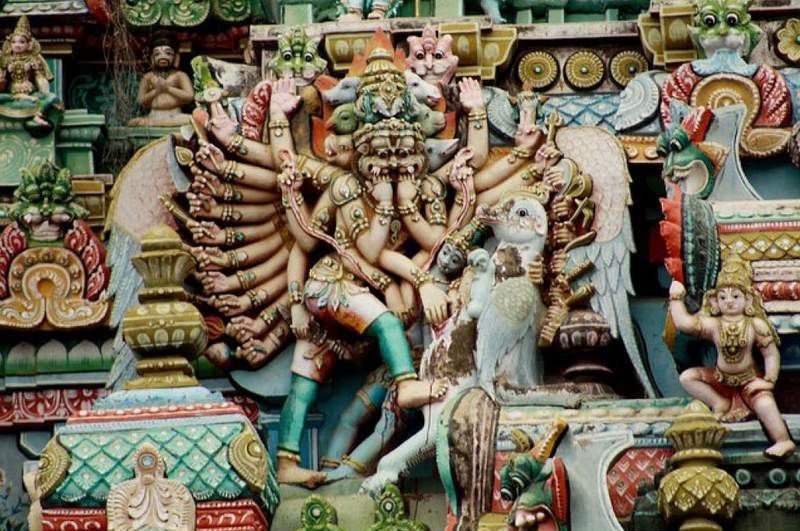
Ashtamukha Gandaberunda Sharabha Shiva Avatar Lord Narasimha 800x531 1
Shiva Avatar,

Sharabha Avatar of Lord Shiva

The Sharabha Avatar is primarily described in the Shiva Purana, where it is revealed that Lord Shiva took this form to subdue the mighty Vishnu’s Narasimha Avatar, a half-lion, half-man form. It was a battle of power and supremacy between two divine forces, which illustrates that Shiva’s power is unparalleled and can surpass all other deities. Mythological Significance of Sharabha Avatar The legend of the Sharabha Avatar begins with the Narasimha Avatar of Lord Vishnu, a fierce lion-headed figure who emerged to defeat the demon king Hiranyakashipu. Narasimha’s power was immense, and he was unstoppable. As Narasimha continued his rampage, the gods became worried about his uncontrollable wrath. To restore balance and stop Narasimha from causing further destruction, Lord Shiva manifested in his Sharabha form. Sharabha, in his lion-like avatar, subdued Narasimha, demonstrating the supremacy of Shiva’s energy. The legend indicates that Narasimha, although immensely powerful, had to bow to Shiva’s divine might. This form of Shiva is thus considered to be a manifestation of supreme power that is capable of calming even the most intense forces. Symbolism of Sharabha Avatar The Sharabha Avatar is deeply symbolic in several ways: Unity of Animal and Divine Energy: Sharabha’s hybrid nature signifies the harmonious balance between different aspects of nature. The combination of lion (strength) and bird (freedom, transcendence) shows how all energies of the universe work in tandem. Supremacy of Shiva: The Sharabha form indicates Shiva’s ultimate supremacy. It shows that no matter how powerful other divine beings are, Lord Shiva is the most powerful and has the strength to subdue even the fiercest of forms. Destruction and Protection: Like other avatars of Lord Shiva, Sharabha represents the dual roles of creation and destruction. While it is a destructive force, it also brings protection and restores balance in the universe. Balance of Power: The clash between Sharabha and Narasimha symbolizes the importance of balance in the universe. The divine need not destroy everything in its path to preserve order; sometimes, the overpowering force is needed to restore peace. Worship of Sharabha Avatar Mantras of the Divine Avatar ॐ श्री शारभाय नमः।ॐ ह्लीं शारभाय महाक्रूराय नमः। Om, I bow to Sharabha,Om Hleem Sharabhaya Mahakrooraya Namah Aarti of the Divine Avatar ॐ जय शारभ शंकर महाक्रूर महाप्रभुरक्षात्मक शारभ जयंते शारभ।नरसिंह संग्रामे लीनो हरि रूपी शारभ।विनाशक शारभ जयति शारभ॥ धन्य हैं वो भक्त जो शारभ रूपी देवताकी पूजा करते हैं और पाते हैं शक्ति और बल।रक्षात्मक शक्ति से शारभ उनकी रक्षा करेंहर संकट में वो शारभ की महिमा को समझें॥ शिव के रूप में शारभ ने किया नरसिंह का संहारशिव की शक्ति से हुआ जगत में संजीवनी प्रहार।शारभ के रूप में एक महाशक्ति को पहचाना,उसकी महिमा से संकट सरेगा सभी का॥ Famous Shiva Temple

, ,

Sharabha Avatar of Lord Shiva Read Post »
11a747abcb54b09bb80fe0955564ead1
Shiva Avatar,

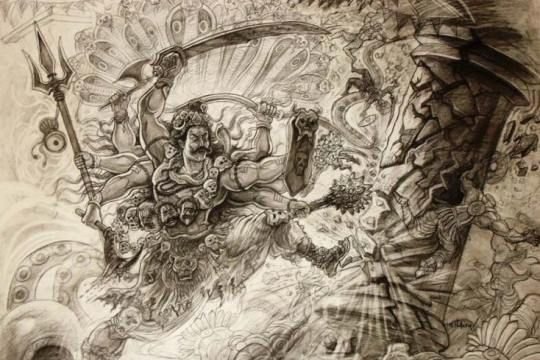
Veerabhadra Avatar of Lord Shiva

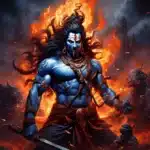
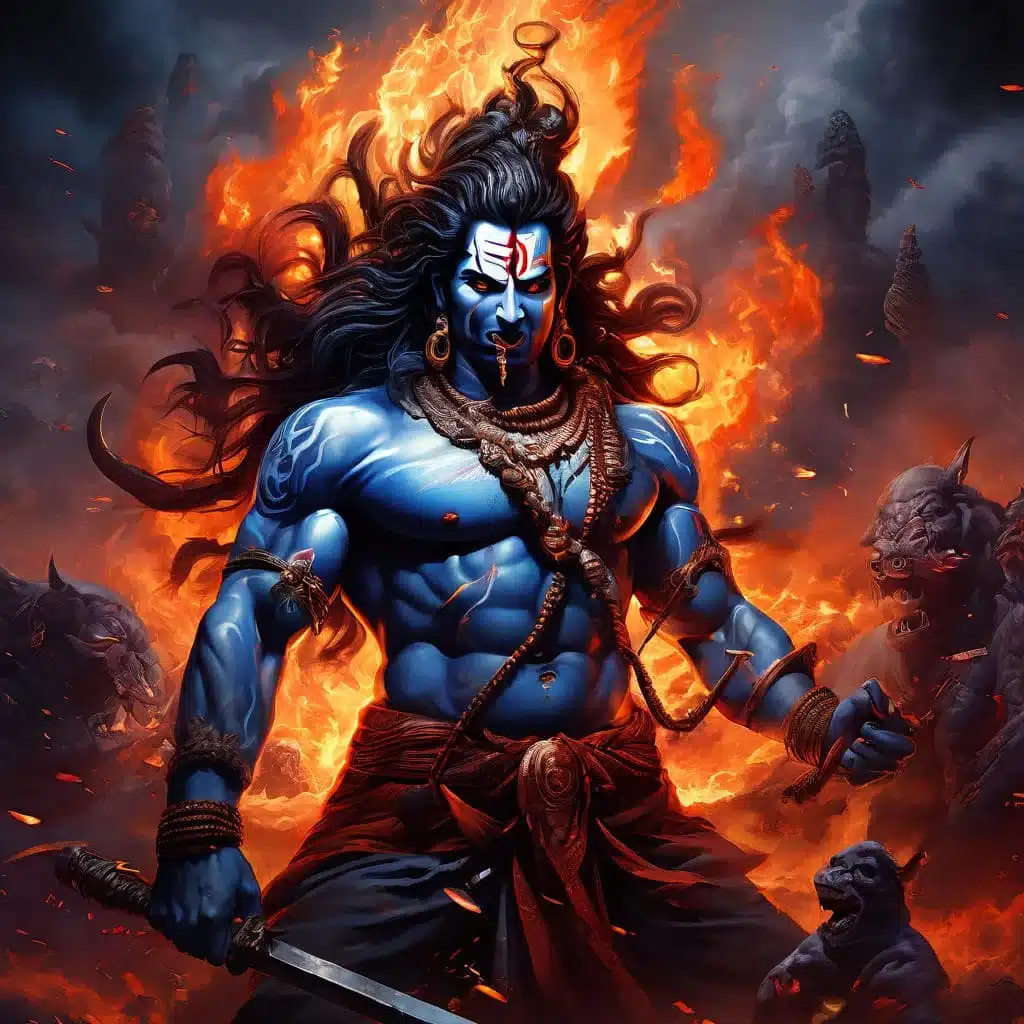
Veerabhadra is depicted as a formidable warrior with a fierce expression, carrying weapons such as a sword, trident, and shield. His role in the mythology is significant, as he was born to destroy the sacrifice performed by King Daksha, who insulted Lord Shiva and disrespected his wife, Sati. Mythological Significance of Veerabhadra Avatar The story of Veerabhadra is primarily found in the “Daksha Yajna” episode of the Vishnu Purana and Shiva Purana. According to the myth, King Daksha, the father of Sati, organized a grand yajna (sacrifice) but deliberately did not invite his daughter and her husband, Lord Shiva. This act of disrespect enraged Sati, who, unable to bear the insult, sacrificed herself in the yajna fire. In response to Sati’s death, Lord Shiva was consumed by grief and rage. From the matted locks of Shiva’s hair, a fierce being named Veerabhadra emerged. Veerabhadra was created to destroy the yajna and avenge Sati’s death. He and his army of fierce warriors ravaged Daksha’s sacrifice, decapitated Daksha, and brought an end to his arrogant defiance of Lord Shiva. Eventually, the gods intervened, and Daksha’s head was replaced with that of a goat, restoring his life, but he was forever humbled by his actions. Symbolism of Veerabhadra Avatar The Veerabhadra Avatar represents several key themes: Fierce Power & Courage: Veerabhadra’s image is that of a fearless warrior, showing the strength that one can derive from righteous anger. He represents the power that comes from standing up against oppression and injustice. Divine Wrath & Justice: Veerabhadra’s violent form symbolizes divine anger against unrighteousness. This avatar shows that when justice is violated, it must be restored, regardless of the consequences. Protection of Devotees: In his incarnation as Veerabhadra, Lord Shiva punishes those who harm his devotees or desecrate sacred practices. It shows the depth of Shiva’s love for his followers and his commitment to their protection. Destruction & Rebirth: The act of destruction by Veerabhadra is also seen as a form of cleansing and renewal. Destruction, in Shiva’s worldview, is a necessary step for the creation of something new. Worship of Veerabhadra Avatar Mantras of the Divine Avatar ॐ वीरभद्राय नमः।ॐ ह्लीं ह्लीं ह्लीं वीरभद्राय स्वाहा। Om, I bow to Veerabhadra,Om Hleem Hleem Hleem, salutations to Veerabhadra Aarti of the Divine Avatar ॐ जय वीरभद्राय महाक्रूरायशिवरूपाय पराक्रमाय।विग्रहाय महादेवायकान्तारं शत्रु विनाशकाय॥ चरणाम्बुजं भजे वीरभद्रंभक्तवत्सलं महाशक्तिम्।कान्तारं शत्रु विनाशकंविजयवर्धनं जय वीरभद्रम्॥ वीरभद्र का रूप है अद्भुतजो रक्ष करता है भस्मशरीर।निजस्वरूप का दर्शन करकेमिलते हैं हम सुख और शांति। Famous Shiva Temple

, ,

Veerabhadra Avatar of Lord Shiva Read Post »

Nandikeshvara
Shiva Avatar,

Nandi Avatar of Lord Shiva

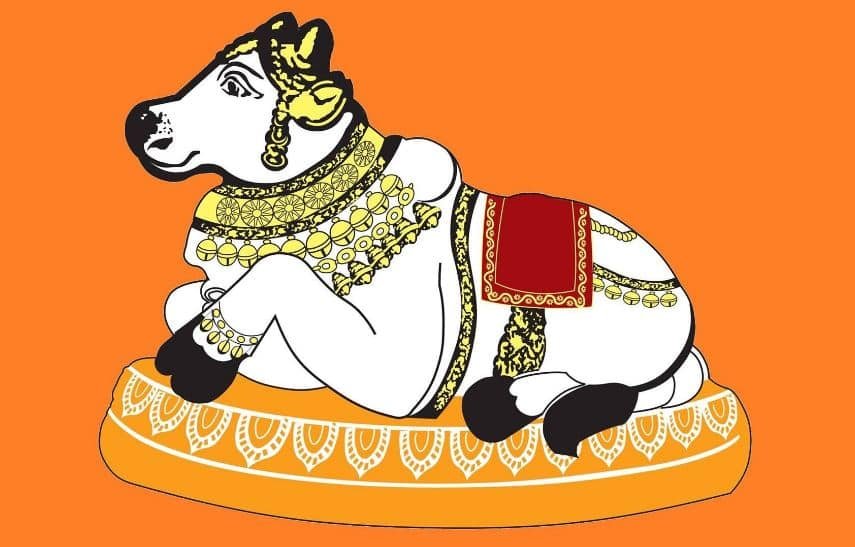
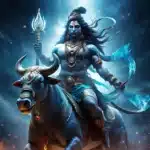
Nandi’s role in Shiva’s mythology is incredibly significant—he is not just a mount, but also a devoted follower and protector of the Lord. It is said that Nandi’s unwavering faith and devotion to Lord Shiva made him one of the most powerful divine beings. Mythological Significance of Nandi Avatar In Hindu mythology, Nandi’s origins are fascinating. According to some legends, Nandi was a sage named Shilada, who performed penance to receive a boon from Lord Shiva. Pleased with his devotion, Lord Shiva blessed Shilada with a son, who would be an incarnation of Nandi. Nandi is therefore considered a son of Shiva, born to serve and protect the Lord. In other traditions, it is believed that Nandi is a manifestation of Lord Shiva’s power itself—his divine form transformed into the bull to serve Shiva. Nandi represents qualities like loyalty, purity, and strength, and in many temples, he is seen seated outside the main sanctum, always facing the deity of Lord Shiva, symbolizing his eternal devotion. Nandi’s Role and Symbolism Nandi symbolizes many important qualities: Vehicle of Lord Shiva: As Shiva’s mount, Nandi is a symbol of carrying the divine energy and truth to all corners of the world. Devotion & Loyalty: Nandi’s devotion to Lord Shiva is legendary. He is often seen with his head bowed down, symbolizing humility and submission to the divine will. Strength & Protection: Nandi is a protector, guarding the entrance to Shiva temples. His strength and power ensure that no evil forces can enter the sanctum. Divine Messenger: Nandi is also a messenger of Lord Shiva. In certain stories, he conveys messages and blessings from Shiva to his devotees. Worship of Nandi Avatar Mantras of the Divine Avatar ॐ नमो नंदीश्वराय महादेवाय नमः।ॐ हुम हुम फट् स्वाहा। Om, I bow to Nandi, the Lord of Shiva,Om Hum Hum Phat Swaha (an invocation for spiritual success and protection). Aarti of the Divine Avatar ॐ जय जय नन्दीश्वर प्रभुतेरी महिमा अपार।शिव के रूप में समायातेरे नैनों में संसार॥ धन्य हैं नन्दी तेराजो शिव के व्रत में बसा।धन्य हैं वो भक्तजो तुझसे आशीर्वाद पाते॥ विघ्न विनाशक हैं तुमसकल संकट हरने वाले।हमारे दिल में बसे हो तुमशिव के प्यारे दुलारे॥ Famous Shiva Temple

, ,

Nandi Avatar of Lord Shiva Read Post »

piplad avatar
Shiva Avatar,

Piplaad Avatar of Lord Shiva

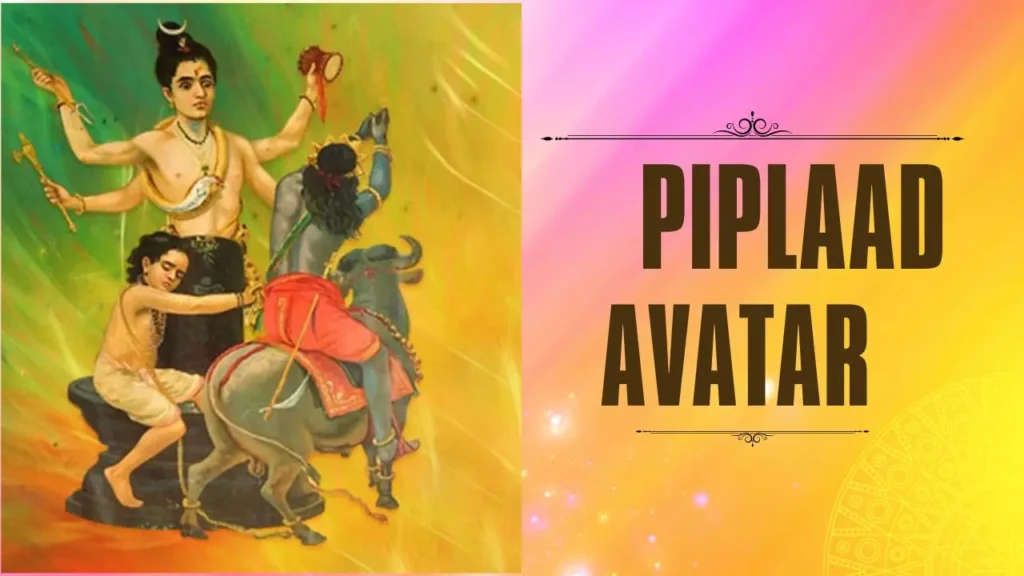
Piplaad is sometimes depicted as a child or a young boy carrying the divine power of Lord Shiva, representing the innocence, purity, and power of the deity in its youthful form. Mythological Significance of Piplaad Avatar According to some stories, Piplaad is considered to be the son of Lord Shiva and Mother Parvati. It is said that Piplaad Avatar was born when the world was suffering under the rule of demons. To protect the Earth and its beings, Lord Shiva took this divine form. He is believed to be a strong yet compassionate figure who intervened during troubling times, bringing peace and prosperity to the world. Piplaad is also known for his immense powers to fight evil forces and is considered to be the divine protector, safeguarding devotees and punishing wrongdoers. Symbolism of Piplaad Avatar Rituals and Worship of Piplaad Avatar Mantras of the Divine Avatar ॐ पिप्लादाय विद्महेमहादेवाय धीमहितन्नो शिवः प्रचोदयात्। Om, we meditate upon the child-like form of Lord Shiva (Piplaad),May the supreme Lord Shiva inspire and enlighten us. Aarti of the Divine Avatar ॐ जय पिप्लाद महादेवजगतनाथ सुत रक्षकविघ्न विनाशक शंकरसकल लोक के पालक। शिव शंकर शंकर महादेवआध्यात्मिक रक्षक महादेवसकल जगत के अन्नदाताकल्याणकारी रक्षक पिप्लाद। ॐ जय पिप्लाद महादेवपिप्लाद स्वरूपेण जगत मेंरखें हर प्राणी को शांति और सुखमहादेव की कृपा से दूर हो सब दुःख। Famous Shiva Temple

, ,

Piplaad Avatar of Lord Shiva Read Post »
lord shivaji hanuman avatar
Shiva Avatar,

Hanuman Avatar | Lord Shiva’s Avatar

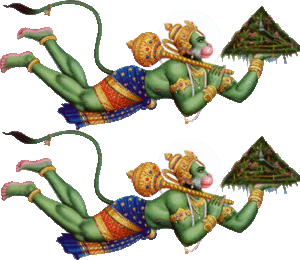
Discover the deep connection between Hanuman and Lord Shiva in Hindu mythology. Hanuman ji is believed to be an avatar (incarnation) of Lord Shiva, born to serve Lord Rama, an incarnation of Vishnu. Ancient scriptures like the Ramayana, Mahabharata, and Puranas describe Hanuman’s divine origin and his role in protecting dharma. As an incarnation of Shiva, Hanuman embodies strength, devotion, and selfless service. Worshipping him is believed to bring courage, wisdom, and protection from negativity. Learn about Hanuman’s mythology, historical significance, and why millions revere him as a symbol of power and devotion. Explore the spiritual link between Shiva and Hanuman and the reason behind this divine avatar. Read on to understand the deeper aspects of Hanuman’s legend This article delves into the birth of Hanuman, his role in Hindu scriptures, historical and sculptural references, perspectives of spiritual leaders, and his significance in the modern era. Shiva Purana’s Reference to Hanuman Ji The Shiva Purana is one of the most revered Hindu scriptures, dedicated to Lord Shiva, detailing his cosmic manifestations, divine attributes, and interactions with other deities. Among the many significant references in the text, one of the most profound is the mention of Lord Hanuman as an avatar of Shiva. The Shiva Purana describes how Lord Shiva took the form of Hanuman to serve Lord Rama, the incarnation of Vishnu, during the great epic of the Ramayana. The concept of Lord Hanuman as a manifestation of Shiva has been widely accepted in Hindu philosophy and theology. This article explores Shiva Purana’s reference to Hanuman Ji, the significance of this connection, and its impact on Hindu traditions. Shiva Purana’s Mentions of Hanuman ji’s Divine Role 1. Hanuman as the Symbol of Devotion and StrengthThe Shiva Purana extols Hanuman as a being of unparalleled devotion (bhakti), strength (shakti), and wisdom (jnana). It describes that Lord Shiva infused Hanuman with qualities that made him the perfect servant and protector of Dharma.Hanuman’s unwavering bhakti towards Rama is a reflection of Shiva’s eternal devotion to Vishnu.His strength and courage are symbolic of Shiva’s formidable energy (Rudra aspect).His celibacy and yogic discipline mirror Shiva’s role as an ascetic and supreme yogi. 2. Hanuman ji as an Immortal Being (Chiranjeevi)The Shiva Purana mentions that Hanuman was granted immortality (Chiranjivi status), ensuring his presence in all ages to protect righteousness (Dharma). This makes him one of the eight immortals (Ashta Chiranjivi) who live beyond the present time cycle.Lord Shiva blessed Hanuman with the ability to live beyond time, symbolising his eternal devotion to Lord Rama and his divine responsibility to uphold truth and righteousness.Hanuman ji in the Ramayana: Shiva’s Divine Role in Action 1. Meeting Lord RamaAs per the Shiva Purana and the Ramayana, Hanuman was destined to meet Lord Rama and become his most devoted servant. His first meeting with Rama was arranged by Sugriva and was filled with divine recognition. Rama instantly recognised Hanuman as Shiva’s incarnation and the one destined to aid him. 2. The Burning of Lanka – Shiva’s Rudra FormWhen Hanuman set fire to Lanka with his burning tail, he exhibited Shiva’s destructive Rudra aspect. Just as Shiva performs Tandava, the cosmic dance of destruction, Hanuman wreaked havoc on Ravana’s city, symbolising the destruction of evil. 3. Carrying the Sanjeevani MountainWhen Lakshmana was injured in battle, Hanuman flew to the Himalayas and lifted the entire Sanjeevani Mountain. This act of restoring life is reminiscent of Shiva’s role as the divine healer who can grant immortality. Significance of Worshipping Hanuman as Shiva’s Incarnation

Hanuman Avatar | Lord Shiva’s Avatar Read Post »