



























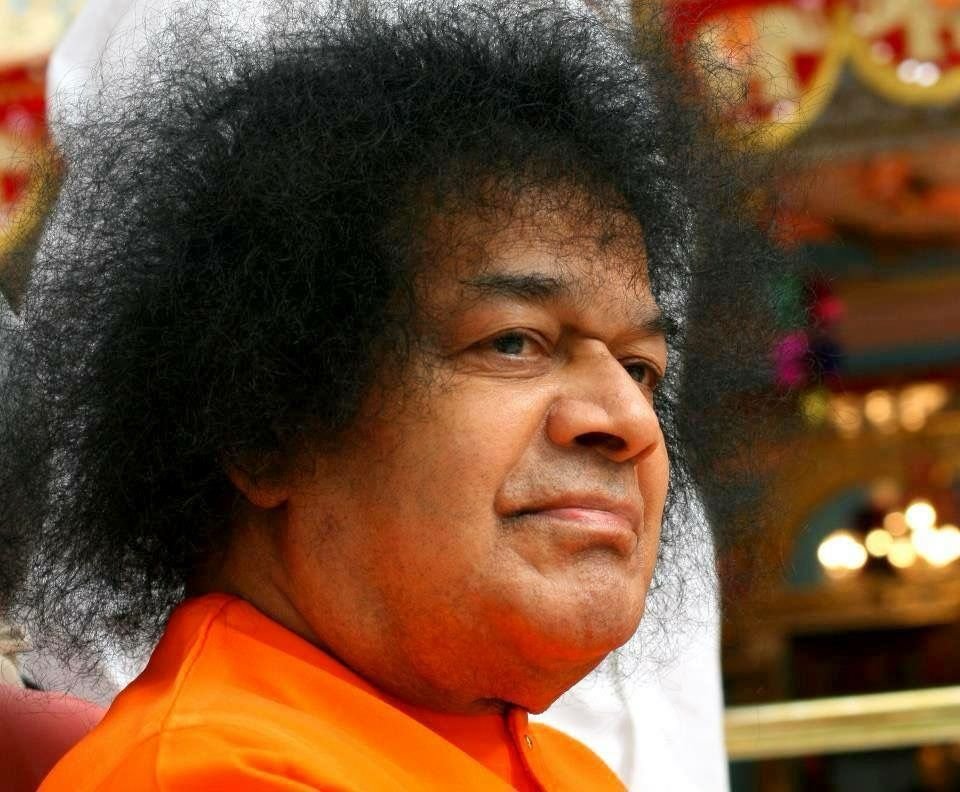
Sathya Sai Vahini
Sathya Sai Vahini Among the many spiritual texts gifted to humanity by Bhagawan Sri Sathya Sai Baba, Sathya Sai Vahini stands out as a comprehensive revelation of His mission and message. Whereas other Vahinis may focus on specific themes—such as love (Prema Vahini), wisdom (Jnana Vahini), or meditation (Dhyana Vahini)—this work can be seen as the distilled essence of His life and teachings. It is simultaneously a scripture, a guidebook, and a declaration of the divine purpose for which Baba took birth. Written in clear, simple language, it unfolds profound truths that apply not only to seekers in India but to people of every culture and faith. At its core, Sathya Sai Vahini proclaims the eternal unity of God, man, and the universe. Baba emphasizes that divinity is not something distant or reserved for a chosen few; it is the very essence of every being. Just as sugar is present in every grain of sugarcane, so too the Divine Atma permeates all creation. The tragedy of human life, He explains, is not the absence of divinity but ignorance of it. Man forgets his real nature and identifies with the body, senses, and fleeting desires, thus falling into bondage and sorrow. The purpose of spirituality, therefore, is to awaken this forgotten truth—that each one is the infinite Self, pure and immortal. In unfolding this vision, Baba does not confine himself to abstract philosophy. Sathya Sai Vahini blends Vedantic wisdom with practical guidance for daily living. He insists that spirituality is not separate from life; it is the very basis of right living. Truth (Sathya), Righteousness (Dharma), Peace (Shanti), and Love (Prema)—the four pillars often called Baba’s “Universal Human Values”—are highlighted throughout the text. These are not sectarian doctrines but universal principles, valid for all people everywhere. To live truthfully, to act righteously, to cultivate inner peace, and to love selflessly—these constitute the essence of spiritual practice. Baba points out that without these, rituals and intellectual study remain barren. One of the striking features of Sathya Sai Vahini is its global scope. Baba often spoke of His mission as one not limited to India or to Hinduism, but to the whole world. In this text, He explains that all religions are like rivers flowing to the same ocean of divine reality. He urges seekers to honor all faiths and recognize their shared foundation of love and morality. Just as different lamps give the same light when lit, different religions illuminate the same Truth when practiced sincerely. Thus, He advocates unity of faiths, not by superficial mixing, but by deep recognition of their common essence. This message of religious harmony is central to His Avataric mission and is powerfully articulated in this Vahini. Another important theme is the role of the Avatar. Baba clarifies that God assumes human form whenever Dharma declines, as declared in the Bhagavad Gita. The Avatar lives as man among men, guiding through example more than precept. Baba presents Himself in the Vahini not merely as a teacher but as the very embodiment of the divine principle of Truth (Sathya). His life, words, and works are inseparable. The text emphasizes that recognizing the Avatar is not about blind worship but about imbibing His ideals. To follow Sathya Sai is to live in truth, practice love, and dedicate one’s life to the service of humanity. The Vahini also addresses the modern condition of humanity. Baba observes that material progress, while impressive, has led to restlessness, competition, and loss of values. Education produces cleverness but not necessarily character. Wealth brings comfort but not peace. Science reveals external wonders but leaves inner life neglected. Against this background, Sathya Sai Vahini calls for a reorientation: true progress must be measured by the blossoming of virtues and the awakening of the spirit. Without this inner transformation, external achievements remain hollow. Baba therefore redefines education as “Educare”—the drawing out of the latent divinity within every child. Service (Seva) is presented as the highest expression of love. In the Vahini, Baba emphasizes that selfless service purifies the heart and reveals the unity of all beings. To serve the poor, the sick, the hungry, and the distressed is to worship God directly, for God dwells in every heart. Baba often said, “Hands that help are holier than lips that pray.” Sathya Sai Vahini reinforces this ideal, making it clear that spirituality is not escape from the world but active engagement with it in the spirit of compassion. In this way, devotion (bhakti), wisdom (jnana), and action (karma) are harmonized in the path of selfless service. The text also explains the nature of liberation (moksha). Liberation is not something to be attained after death in a faraway heaven, but a state of freedom here and now. It is freedom from ignorance, ego, and desire. When one realizes that the same Atma shines in all beings, one becomes liberated even while living (jivanmukta). Such a person sees no distinction between friend and foe, pleasure and pain, success and failure. He or she moves through the world with equanimity, radiating peace and joy. Baba assures that this liberation is the birthright of every human being, achievable through steady practice of truth, love, and self-control. In its style, Sathya Sai Vahini reflects Baba’s hallmark qualities—simplicity, clarity, and sweetness. Profound Vedantic truths, which in classical texts may appear difficult or abstract, are presented here in direct language, with homely examples. For instance, Baba compares the mind to a monkey, restless and mischievous, but capable of being trained through discipline and devotion. He likens life without God to a lamp without oil—bright for a moment but soon extinguished. Such imagery makes the teachings accessible to both scholars and lay seekers. The universality of this work also lies in its appeal to every aspect of human life. It speaks to householders and monks, to students and workers, to scientists and artists. Baba insists that spirituality is not confined to temples or monasteries; it must pervade education, politics, economics, and social life. A doctor




