













Hari Om

Menu

sants

yajnavalkya ji
Mahatmas

Sant Yajnavalkya

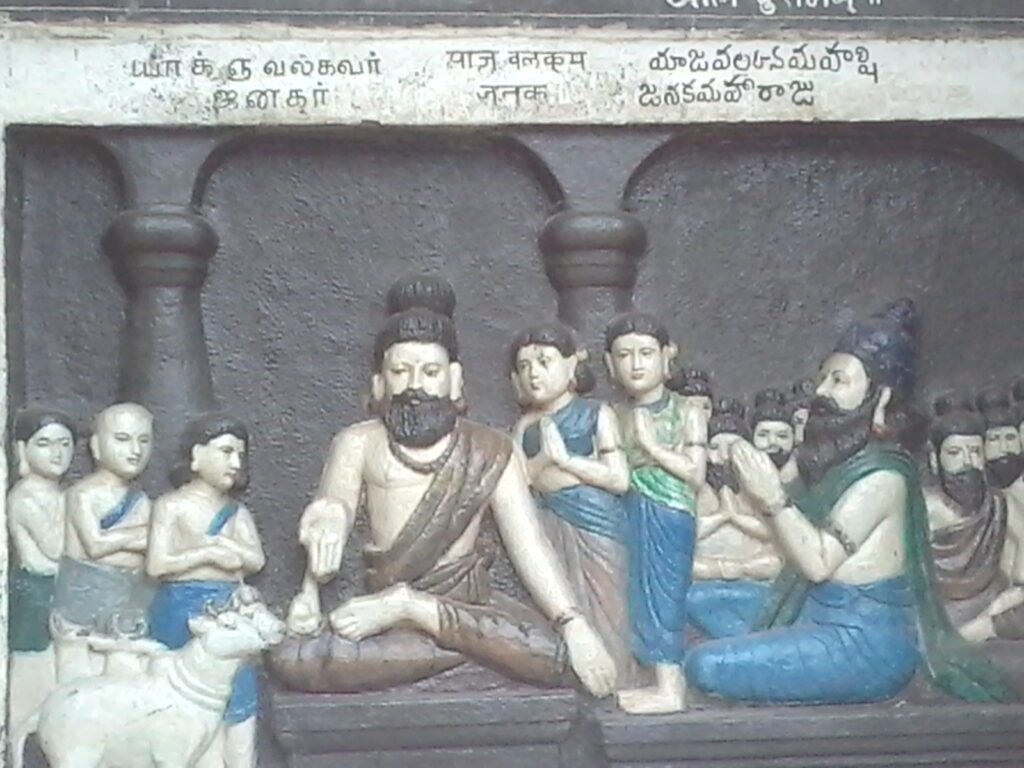
Sant Yajnavalkya BLOGS & LIBRARY. Yajnavalkya had two wives: Maitreyi and Katyayani. Of the two, Maitreyi was much interested in the knowledge of Brahman. Intending to enter into the monastic life Yajnavalkya wished to divide his property between the two wives before his departure. Maitreyi asked whether she could become immortal through wealth. Yajnavalkya replied that there was no hope of immortality through wealth and that she would only become one among the many who were well-to-do on earth. Hearing this Maitreyi refused to accept any wealth and desired to learn the means of immortality from the sage. Then Yajnavalkya described to her the greatness of the Absolute Self, the nature of Its existence, the way of attaining infinite knowledge and immortality, etc. This immortal conversation between Yajnavalkya and Maitreyi is recorded in the forth section of the second chapter of Brihadaranyaka Upanishad. The central theme of the discourse is this:“All things are dear, not for their sake, but for the sake of the Self. This Self alone exists everywhere. So, the real Self should be heard of, reflected on and meditated upon – and thus realised.” At this Vaishampayana got angry and asked Yajnavalkya to give back all the knowledge of Yajurveda he taught him. As a result Yajnavalkya vomited all the knowledge that he acquired from his teacher in the form of eaten food. Yajnavalkya determined not to have any human guru thereafter. Thus he began to propitiate the Sun God for the purpose of acquiring fresh knowledge of the Veda not known to his preceptor, Vaishampayana. The Sun God, pleased with Yajnavalkya’s penance graced the sage with such fresh portions of the Yajurveda as were not known to any other. This is how the Shukla or White Yajurveda came into existence. Once king Janaka performed a major sacrifice in which he declared that a thousand cows each carrying a bag of gold coin will be presented the sage who claims to be the most eminent among the sages. None dared to come forward. After a long silence one sage stood up and ordered his disciples to take home the cows. Other sages questioned his right to take the cows. Then Vaishampayana said to his disciples, “Now I have to expiate this great sin of Brahmahatya. Therefore, you all will observe, for my sake, an expiatory penance for seven days”. At once Yajnavalkya stood up and said, “O Guru! All these are poor-spirited young students. They will not be able to undergo such a hard penance. So, instead of all, I myself alone shall observe it in the manner in which nobody else can”. Vaishampayana told Yajnavalkya not to undertake it alone. But Yajnavalkya persisted. The preceptor was offended at this audacious attitude of the disciple and said, “O proud one, you are very conceited. You get away from me. Enough of you who is disposed to despise wise Brahmins. Give back to me immediately whatever you have learnt from me”. Upon the order of the Guru, Yajnavalkya, the son of Devarata, vomited out the collection of the Yajus in the form of food. The other disciples ate that food taking the form of the Tittiri birds, because they were very eager to receive the same. They then had the direct revelation of those Yajurveda collections. As the Tittiri birds ate this Veda, it is thenceforth called the Taittiriya Yajurveda. It is also known as Krishna (black) Yajurveda on account of its being vomited substance.  Then Yajnavalkya determined not to have any human Guru thereafter. Thus he began to propitiate the Sun-God, Surya. Yajnavalkya worshipped and extolled the Sun, the master of the Vedas, for the purpose of acquiring the fresh Vedic portions not known to his preceptor, Vaishampayana.    Yajnavalkya said, “Prostration to the glorious Aditya, who in the form of the Atman, abides in all beings. I bow to Him who surrounds all like Akasa, who is one and not separated or distanced by limiting conditions. O Great God, O Creator, I contemplate upon that glowing sphere which lights and warms the whole world! O God who burns all miseries wrought by unrighteous activities, who burns ignorance which is the seed of activity! O Lord, I worship Thy lotus-like feet praised and worshipped by the rulers of the three worlds. Give me those portions of the Veda which are not known to others”. The Sun-God, the glorious Lord Hari, pleased with Yajnavalkya’s penance, assumed the form of a horse and taught the sage such fresh portions of the Yajurveda as were not known to any other. This portion of the Yajurveda goes by the name of Shukla Yajurveda. It is also known as Vajasaneya Yajurveda, because it was evolved in great rapidity by Surya in the form of a horse through his manes. Yajnavalkya divided this Vajasaneya Yajurveda again into fifteen branches, each branch comprising hundreds of Yajus Mantras. Kanva, Madhyandina and others learnt those branches. Yajnavalkya married two wives. One was Maitreyi and the other Katyayani. Of the two, Maitreyi was a Brahmavadini. When Yajnavalkya wished to divide his property between the two wives before starting for the fourth Ashrama of his life, Maitreyi asked whether she could become immortal through wealth. Yajnavalkya replied that there was no hope of immortality through wealth and that she would only become one among the many who were well-to-do on earth. The other Brahmanas got angry at this and said to one another, “How can he declare himself to be the best among us?”. Thereupon several Rishis challenged Yajnavalkya with many questions on transcendental matters to all of which Yajnavalkya gave prompt reply.  There was a great debate in which Yajnavalkya won over all the others. Janaka was convinced that Yajnavalkya was the best Brahma-nishtha and received Brahma Vidya from him thereafter. Source: divineindians
Sant Yajnavalkya Read Post »

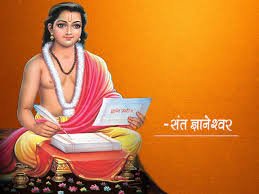
Sant Gyaneshwar
Mahatmas

Sant Gyaneshwar

Sant Gyaneshwar His instructions to Srila Rupa Gosvami and Srila Sanatana Gosvami, His discussions with Ramananda Raya, the debate with the Mayavadi sannyasi Prakashananda Sarasvati and the Vedanta Sutra, the discussion between Him and Sarvabhauma Bhattacharya are excellent sources through which we understand His teachings in detail. The Lord left only eight slokas of His instructions in writing, and they are known as the Siksastaka. All other literatures based on His teachings were extensively written by the Lord’s principal followers, the six Gosvamis of Vrindavana, and their followers. Lord Chaitanya’s Mission – The Universal Religion His mission was to preach the importance of chanting the holy names of the Lord in this age of Kali (quarrel). In this present age quarrels take place even over trifles, and therefore the shastras have recommended for this age a common platform for realization, namely chanting the holy names of the Lord. People can hold meetings to glorify the Lord in their respective languages and with melodious songs, and if such performances are executed in an offenseless manner, it is certain that the participants will gradually attain spiritual perfection without having to undergo more rigorous methods. At such meetings everyone, the learned and the foolish, the rich and the poor, the Hindus and the Muslims, the Englishmen and the Indians, and the chandalas and the brahmanas, can all hear the transcendental sounds and thus cleanse the dust of material association from the mirror of the heart. To confirm the Lord’s mission, all the people of the world will accept the holy name of the Lord as the common platform for the universal religion of mankind. Jagadguru Shri Kripalu Ji Maharaj encapsulates this profound philosophy in his kirtan: Mahāprabhu Chaitanya Hari avatārī, āpuna bhakti kare āpu murārī He says that Chaitanya Mahaprabhu is an incarnation of Shree Krishna, who appeared as His own devotee. Chaitanya Mahaprabhu was Shree Krishna embodying the divine sentiment of Radharani. Shree Chaitanya had Radharani’s complexion and the physical attributes of Lord Krishna. Radha is the epitome of Krishna-Prem. She is Krishna’s divine Energy and Her love provides divine bliss to the Lord. While Shree Krishna descended as Chaitanya Mahaprabhu to disseminate pure, unadulterated devotion to God, He had other reasons to appear. He was thoroughly intrigued by the nature of Radhaji’s love for Him. Though He is the Knower of everything, He did not know the depth, nature, and ecstasy of Radha’s selfless love (nishkam prem) because He was the object of Her devotion, and that devotion resided in Her alone. Thus, if He descended imbibing the devotional sentiments of Radharani in His heart, He could experience Her bhav and relish it. Further, Shree Krishna wondered about the sweetness and happiness that Radhaji experienced in Her love for Him. And third, He wished to know, which divine qualities induced such ecstatic devotion in Her. So, Bhagavan Shree Krishna appeared in this world as Shri Chaitanya Mahaprabhu to taste the divine love of Radharani and distribute it to all living beings. In his earthly manifestation, Chaitanya Mahaprabhu immersed Himself in divine ecstasy as an ardent devotee lost in Krishna’s glories. Sarvabhauma Bhattacharya: Transformation of a Vedic Scholar to a Bhakt It is said that Sarvabhauma was an incarnation of Brihaspati, the Guru of the celestial gods, who descended to aid the Lord in His pastimes. He was known as the most erudite scholar of Vedanta, and the best Nyāyaik (master of logic) in Nadia who preached Vedanta to students in his school. As a Mayavadi, he believed that the Supreme Godhead was formless and His Attributes, Names, Forms, Virtues, and Pastimes were an illusion(maya) created for the less advanced souls to connect to the Supreme formless Brahman. At 24, Chaitanya Mahaprabhu took sanyas from Keshava Bharati in Katwa and traveled to Puri. Upon seeing the Jagannath Temple spire from the Atharnala bridge, He was overwhelmed with devotional sentiments and rushed inside to embrace the deity, fainting in ecstasy. Mistaking Him for a vagrant, the temple guards planned to evict Him, but Sarvabhauma Bhattacharya, recognizing His divinity, took Him home. Learning of Mahaprabhu’s noble lineage, Sarvabhauma, an esteemed scholar, suggested He adopt a more prestigious sanyas order. Sarvabhauma, concerned for the young sanyasi, offered to teach Him Vedanta to deepen His renunciation. For seven days, Mahaprabhu silently listened. When Sarvabhauma asked why He had no questions, Mahaprabhu replied that the sutras were self-evident, but Sarvabhauma’s interpretations clouded their meaning. Offended, Sarvabhauma accosted Mahaprabhu to give his interpretation of the Brahma Sutras. While Sarvabhauma provided only nine meanings, Mahaprabhu expounded eighteen unique interpretations of the Sutras, proving Brahman’s form and qualities. Realizing Mahaprabhu’s divinity, Sarvabhauma surrendered, repenting his arrogance and falling at the Lord’s feet in devotion. One day, Mahaprabhu brought Lord Jagannath’s mahaprasad (food offered to God before partaking) to Sarvabhauma’s house. Sarvabhauma had not yet bathed or performed his morning rituals, but he joyfully honored the prasad, contrary to his ritualistic beliefs. Seeing his deep faith, Mahaprabhu was overjoyed and began dancing in ecstasy. Sarvabhauma joined Him and both were overcome with divine bliss, shedding tears and trembling in joy. The dry Mayavadi scholar who scoffed at divine attributes now soaked in the nectar of bhakti. While Mayavadis dismissed the existence of maya and the distinct entity of the soul, Chaitanya Mahaprabhu envisioned a relationship between God, maya, and the soul through Achintya Bhedābhed vād, meaning ‘Inconceivable and Simultaneous Oneness and Difference’. He explained that both the soul and maya exist as energies of God—eternally connected to Him yet maintaining a simultaneous discreteness.

Sant Gyaneshwar Read Post »

Bhagat Dhanna
Mahatmas

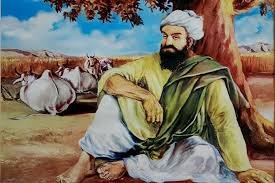
Bhagat Dhanna

Bhagat Dhanna His instructions to Srila Rupa Gosvami and Srila Sanatana Gosvami, His discussions with Ramananda Raya, the debate with the Mayavadi sannyasi Prakashananda Sarasvati and the Vedanta Sutra, the discussion between Him and Sarvabhauma Bhattacharya are excellent sources through which we understand His teachings in detail. The Lord left only eight slokas of His instructions in writing, and they are known as the Siksastaka. All other literatures based on His teachings were extensively written by the Lord’s principal followers, the six Gosvamis of Vrindavana, and their followers. Bhagat Dhanna – The Universal Religion His mission was to preach the importance of chanting the holy names of the Lord in this age of Kali (quarrel). In this present age quarrels take place even over trifles, and therefore the shastras have recommended for this age a common platform for realization, namely chanting the holy names of the Lord. People can hold meetings to glorify the Lord in their respective languages and with melodious songs, and if such performances are executed in an offenseless manner, it is certain that the participants will gradually attain spiritual perfection without having to undergo more rigorous methods. At such meetings everyone, the learned and the foolish, the rich and the poor, the Hindus and the Muslims, the Englishmen and the Indians, and the chandalas and the brahmanas, can all hear the transcendental sounds and thus cleanse the dust of material association from the mirror of the heart. To confirm the Lord’s mission, all the people of the world will accept the holy name of the Lord as the common platform for the universal religion of mankind. Jagadguru Shri Kripalu Ji Maharaj encapsulates this profound philosophy in his kirtan: Mahāprabhu Chaitanya Hari avatārī, āpuna bhakti kare āpu murārī He says that Chaitanya Mahaprabhu is an incarnation of Shree Krishna, who appeared as His own devotee. Chaitanya Mahaprabhu was Shree Krishna embodying the divine sentiment of Radharani. Shree Chaitanya had Radharani’s complexion and the physical attributes of Lord Krishna. Radha is the epitome of Krishna-Prem. She is Krishna’s divine Energy and Her love provides divine bliss to the Lord. While Shree Krishna descended as Chaitanya Mahaprabhu to disseminate pure, unadulterated devotion to God, He had other reasons to appear. He was thoroughly intrigued by the nature of Radhaji’s love for Him. Though He is the Knower of everything, He did not know the depth, nature, and ecstasy of Radha’s selfless love (nishkam prem) because He was the object of Her devotion, and that devotion resided in Her alone. Thus, if He descended imbibing the devotional sentiments of Radharani in His heart, He could experience Her bhav and relish it. Further, Shree Krishna wondered about the sweetness and happiness that Radhaji experienced in Her love for Him. And third, He wished to know, which divine qualities induced such ecstatic devotion in Her. So, Bhagavan Shree Krishna appeared in this world as Shri Chaitanya Mahaprabhu to taste the divine love of Radharani and distribute it to all living beings. In his earthly manifestation, Chaitanya Mahaprabhu immersed Himself in divine ecstasy as an ardent devotee lost in Krishna’s glories. Sarvabhauma Bhattacharya: Transformation of a Vedic Scholar to a Bhakt It is said that Sarvabhauma was an incarnation of Brihaspati, the Guru of the celestial gods, who descended to aid the Lord in His pastimes. He was known as the most erudite scholar of Vedanta, and the best Nyāyaik (master of logic) in Nadia who preached Vedanta to students in his school. As a Mayavadi, he believed that the Supreme Godhead was formless and His Attributes, Names, Forms, Virtues, and Pastimes were an illusion(maya) created for the less advanced souls to connect to the Supreme formless Brahman. At 24, Chaitanya Mahaprabhu took sanyas from Keshava Bharati in Katwa and traveled to Puri. Upon seeing the Jagannath Temple spire from the Atharnala bridge, He was overwhelmed with devotional sentiments and rushed inside to embrace the deity, fainting in ecstasy. Mistaking Him for a vagrant, the temple guards planned to evict Him, but Sarvabhauma Bhattacharya, recognizing His divinity, took Him home. Learning of Mahaprabhu’s noble lineage, Sarvabhauma, an esteemed scholar, suggested He adopt a more prestigious sanyas order. Sarvabhauma, concerned for the young sanyasi, offered to teach Him Vedanta to deepen His renunciation. For seven days, Mahaprabhu silently listened. When Sarvabhauma asked why He had no questions, Mahaprabhu replied that the sutras were self-evident, but Sarvabhauma’s interpretations clouded their meaning. Offended, Sarvabhauma accosted Mahaprabhu to give his interpretation of the Brahma Sutras. While Sarvabhauma provided only nine meanings, Mahaprabhu expounded eighteen unique interpretations of the Sutras, proving Brahman’s form and qualities. Realizing Mahaprabhu’s divinity, Sarvabhauma surrendered, repenting his arrogance and falling at the Lord’s feet in devotion. One day, Mahaprabhu brought Lord Jagannath’s mahaprasad (food offered to God before partaking) to Sarvabhauma’s house. Sarvabhauma had not yet bathed or performed his morning rituals, but he joyfully honored the prasad, contrary to his ritualistic beliefs. Seeing his deep faith, Mahaprabhu was overjoyed and began dancing in ecstasy. Sarvabhauma joined Him and both were overcome with divine bliss, shedding tears and trembling in joy. The dry Mayavadi scholar who scoffed at divine attributes now soaked in the nectar of bhakti. While Mayavadis dismissed the existence of maya and the distinct entity of the soul, Chaitanya Mahaprabhu envisioned a relationship between God, maya, and the soul through Achintya Bhedābhed vād, meaning ‘Inconceivable and Simultaneous Oneness and Difference’. He explained that both the soul and maya exist as energies of God—eternally connected to Him yet maintaining a simultaneous discreteness.

Bhagat Dhanna Read Post »

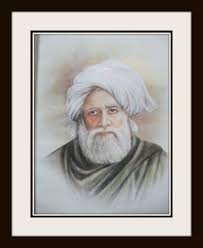
Hazrat BulleShah
Mahatmas

Hazrat BulleShah

Hazrat BulleShah His instructions to Srila Rupa Gosvami and Srila Sanatana Gosvami, His discussions with Ramananda Raya, the debate with the Mayavadi sannyasi Prakashananda Sarasvati and the Vedanta Sutra, the discussion between Him and Sarvabhauma Bhattacharya are excellent sources through which we understand His teachings in detail. The Lord left only eight slokas of His instructions in writing, and they are known as the Siksastaka. All other literatures based on His teachings were extensively written by the Lord’s principal followers, the six Gosvamis of Vrindavana, and their followers. Hazrat BulleShah – The Universal Religion His mission was to preach the importance of chanting the holy names of the Lord in this age of Kali (quarrel). In this present age quarrels take place even over trifles, and therefore the shastras have recommended for this age a common platform for realization, namely chanting the holy names of the Lord. People can hold meetings to glorify the Lord in their respective languages and with melodious songs, and if such performances are executed in an offenseless manner, it is certain that the participants will gradually attain spiritual perfection without having to undergo more rigorous methods. At such meetings everyone, the learned and the foolish, the rich and the poor, the Hindus and the Muslims, the Englishmen and the Indians, and the chandalas and the brahmanas, can all hear the transcendental sounds and thus cleanse the dust of material association from the mirror of the heart. To confirm the Lord’s mission, all the people of the world will accept the holy name of the Lord as the common platform for the universal religion of mankind. Jagadguru Shri Kripalu Ji Maharaj encapsulates this profound philosophy in his kirtan: Mahāprabhu Chaitanya Hari avatārī, āpuna bhakti kare āpu murārī He says that Chaitanya Mahaprabhu is an incarnation of Shree Krishna, who appeared as His own devotee. Chaitanya Mahaprabhu was Shree Krishna embodying the divine sentiment of Radharani. Shree Chaitanya had Radharani’s complexion and the physical attributes of Lord Krishna. Radha is the epitome of Krishna-Prem. She is Krishna’s divine Energy and Her love provides divine bliss to the Lord. While Shree Krishna descended as Chaitanya Mahaprabhu to disseminate pure, unadulterated devotion to God, He had other reasons to appear. He was thoroughly intrigued by the nature of Radhaji’s love for Him. Though He is the Knower of everything, He did not know the depth, nature, and ecstasy of Radha’s selfless love (nishkam prem) because He was the object of Her devotion, and that devotion resided in Her alone. Thus, if He descended imbibing the devotional sentiments of Radharani in His heart, He could experience Her bhav and relish it. Further, Shree Krishna wondered about the sweetness and happiness that Radhaji experienced in Her love for Him. And third, He wished to know, which divine qualities induced such ecstatic devotion in Her. So, Bhagavan Shree Krishna appeared in this world as Shri Chaitanya Mahaprabhu to taste the divine love of Radharani and distribute it to all living beings. In his earthly manifestation, Chaitanya Mahaprabhu immersed Himself in divine ecstasy as an ardent devotee lost in Krishna’s glories. Sarvabhauma Bhattacharya: Transformation of a Vedic Scholar to a Bhakt It is said that Sarvabhauma was an incarnation of Brihaspati, the Guru of the celestial gods, who descended to aid the Lord in His pastimes. He was known as the most erudite scholar of Vedanta, and the best Nyāyaik (master of logic) in Nadia who preached Vedanta to students in his school. As a Mayavadi, he believed that the Supreme Godhead was formless and His Attributes, Names, Forms, Virtues, and Pastimes were an illusion(maya) created for the less advanced souls to connect to the Supreme formless Brahman. At 24, Chaitanya Mahaprabhu took sanyas from Keshava Bharati in Katwa and traveled to Puri. Upon seeing the Jagannath Temple spire from the Atharnala bridge, He was overwhelmed with devotional sentiments and rushed inside to embrace the deity, fainting in ecstasy. Mistaking Him for a vagrant, the temple guards planned to evict Him, but Sarvabhauma Bhattacharya, recognizing His divinity, took Him home. Learning of Mahaprabhu’s noble lineage, Sarvabhauma, an esteemed scholar, suggested He adopt a more prestigious sanyas order. Sarvabhauma, concerned for the young sanyasi, offered to teach Him Vedanta to deepen His renunciation. For seven days, Mahaprabhu silently listened. When Sarvabhauma asked why He had no questions, Mahaprabhu replied that the sutras were self-evident, but Sarvabhauma’s interpretations clouded their meaning. Offended, Sarvabhauma accosted Mahaprabhu to give his interpretation of the Brahma Sutras. While Sarvabhauma provided only nine meanings, Mahaprabhu expounded eighteen unique interpretations of the Sutras, proving Brahman’s form and qualities. Realizing Mahaprabhu’s divinity, Sarvabhauma surrendered, repenting his arrogance and falling at the Lord’s feet in devotion. One day, Mahaprabhu brought Lord Jagannath’s mahaprasad (food offered to God before partaking) to Sarvabhauma’s house. Sarvabhauma had not yet bathed or performed his morning rituals, but he joyfully honored the prasad, contrary to his ritualistic beliefs. Seeing his deep faith, Mahaprabhu was overjoyed and began dancing in ecstasy. Sarvabhauma joined Him and both were overcome with divine bliss, shedding tears and trembling in joy. The dry Mayavadi scholar who scoffed at divine attributes now soaked in the nectar of bhakti. While Mayavadis dismissed the existence of maya and the distinct entity of the soul, Chaitanya Mahaprabhu envisioned a relationship between God, maya, and the soul through Achintya Bhedābhed vād, meaning ‘Inconceivable and Simultaneous Oneness and Difference’. He explained that both the soul and maya exist as energies of God—eternally connected to Him yet maintaining a simultaneous discreteness.

Hazrat BulleShah Read Post »

sant ravidas jayanti
Mahatmas

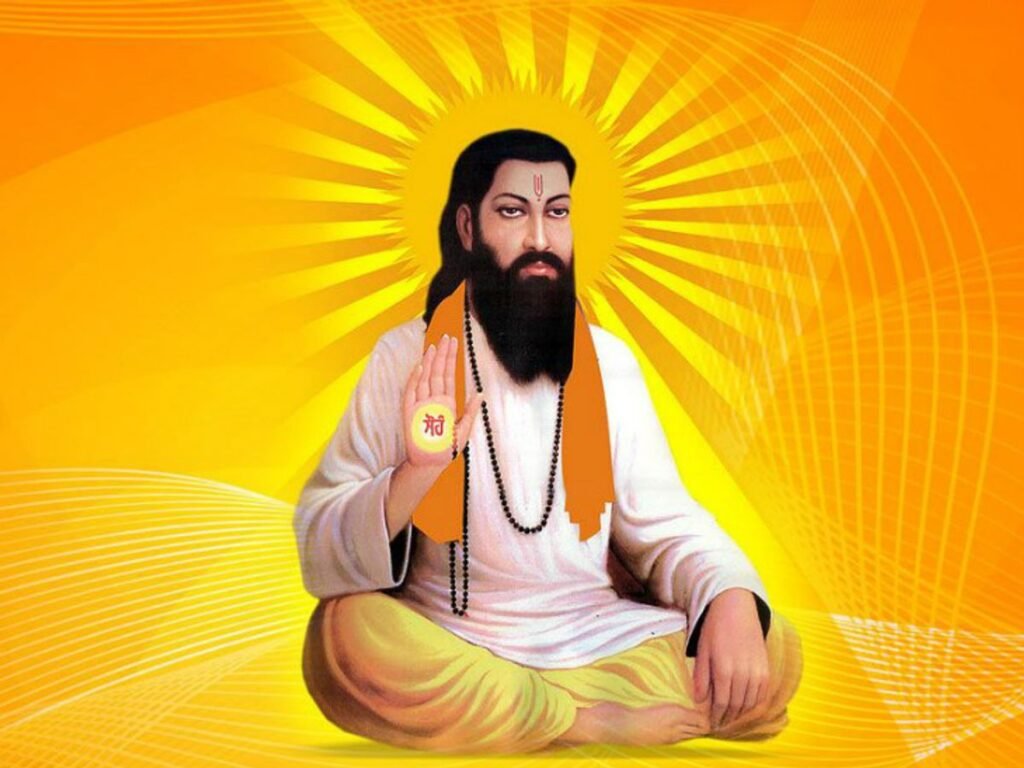
Sant Ravidas

Sant Ravidas His instructions to Srila Rupa Gosvami and Srila Sanatana Gosvami, His discussions with Ramananda Raya, the debate with the Mayavadi sannyasi Prakashananda Sarasvati and the Vedanta Sutra, the discussion between Him and Sarvabhauma Bhattacharya are excellent sources through which we understand His teachings in detail. The Lord left only eight slokas of His instructions in writing, and they are known as the Siksastaka. All other literatures based on His teachings were extensively written by the Lord’s principal followers, the six Gosvamis of Vrindavana, and their followers. Lord Chaitanya’s Mission – The Universal Religion His mission was to preach the importance of chanting the holy names of the Lord in this age of Kali (quarrel). In this present age quarrels take place even over trifles, and therefore the shastras have recommended for this age a common platform for realization, namely chanting the holy names of the Lord. People can hold meetings to glorify the Lord in their respective languages and with melodious songs, and if such performances are executed in an offenseless manner, it is certain that the participants will gradually attain spiritual perfection without having to undergo more rigorous methods. At such meetings everyone, the learned and the foolish, the rich and the poor, the Hindus and the Muslims, the Englishmen and the Indians, and the chandalas and the brahmanas, can all hear the transcendental sounds and thus cleanse the dust of material association from the mirror of the heart. To confirm the Lord’s mission, all the people of the world will accept the holy name of the Lord as the common platform for the universal religion of mankind. Jagadguru Shri Kripalu Ji Maharaj encapsulates this profound philosophy in his kirtan: Mahāprabhu Chaitanya Hari avatārī, āpuna bhakti kare āpu murārī He says that Chaitanya Mahaprabhu is an incarnation of Shree Krishna, who appeared as His own devotee. Chaitanya Mahaprabhu was Shree Krishna embodying the divine sentiment of Radharani. Shree Chaitanya had Radharani’s complexion and the physical attributes of Lord Krishna. Radha is the epitome of Krishna-Prem. She is Krishna’s divine Energy and Her love provides divine bliss to the Lord. While Shree Krishna descended as Chaitanya Mahaprabhu to disseminate pure, unadulterated devotion to God, He had other reasons to appear. He was thoroughly intrigued by the nature of Radhaji’s love for Him. Though He is the Knower of everything, He did not know the depth, nature, and ecstasy of Radha’s selfless love (nishkam prem) because He was the object of Her devotion, and that devotion resided in Her alone. Thus, if He descended imbibing the devotional sentiments of Radharani in His heart, He could experience Her bhav and relish it. Further, Shree Krishna wondered about the sweetness and happiness that Radhaji experienced in Her love for Him. And third, He wished to know, which divine qualities induced such ecstatic devotion in Her. So, Bhagavan Shree Krishna appeared in this world as Shri Chaitanya Mahaprabhu to taste the divine love of Radharani and distribute it to all living beings. In his earthly manifestation, Chaitanya Mahaprabhu immersed Himself in divine ecstasy as an ardent devotee lost in Krishna’s glories. Sarvabhauma Bhattacharya: Transformation of a Vedic Scholar to a Bhakt.

Sant Ravidas Read Post »

Swami Ramananda
Mahatmas

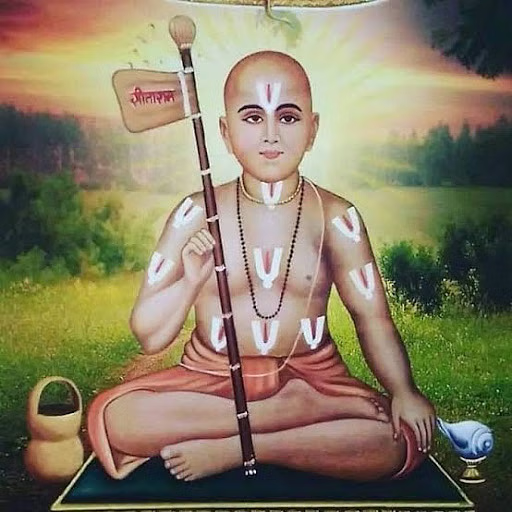
Swami Ramananda

Sri Chaitanya Mahaprabhu His instructions to Srila Rupa Gosvami and Srila Sanatana Gosvami, His discussions with Ramananda Raya, the debate with the Mayavadi sannyasi Prakashananda Sarasvati and the Vedanta Sutra, the discussion between Him and Sarvabhauma Bhattacharya are excellent sources through which we understand His teachings in detail. The Lord left only eight slokas of His instructions in writing, and they are known as the Siksastaka. All other literatures based on His teachings were extensively written by the Lord’s principal followers, the six Gosvamis of Vrindavana, and their followers. Lord Chaitanya’s Mission – The Universal Religion His mission was to preach the importance of chanting the holy names of the Lord in this age of Kali (quarrel). In this present age quarrels take place even over trifles, and therefore the shastras have recommended for this age a common platform for realization, namely chanting the holy names of the Lord. People can hold meetings to glorify the Lord in their respective languages and with melodious songs, and if such performances are executed in an offenseless manner, it is certain that the participants will gradually attain spiritual perfection without having to undergo more rigorous methods. At such meetings everyone, the learned and the foolish, the rich and the poor, the Hindus and the Muslims, the Englishmen and the Indians, and the chandalas and the brahmanas, can all hear the transcendental sounds and thus cleanse the dust of material association from the mirror of the heart. To confirm the Lord’s mission, all the people of the world will accept the holy name of the Lord as the common platform for the universal religion of mankind. Jagadguru Shri Kripalu Ji Maharaj encapsulates this profound philosophy in his kirtan: Mahāprabhu Chaitanya Hari avatārī, āpuna bhakti kare āpu murārī He says that Chaitanya Mahaprabhu is an incarnation of Shree Krishna, who appeared as His own devotee. Chaitanya Mahaprabhu was Shree Krishna embodying the divine sentiment of Radharani. Shree Chaitanya had Radharani’s complexion and the physical attributes of Lord Krishna. Radha is the epitome of Krishna-Prem. She is Krishna’s divine Energy and Her love provides divine bliss to the Lord. While Shree Krishna descended as Chaitanya Mahaprabhu to disseminate pure, unadulterated devotion to God, He had other reasons to appear. He was thoroughly intrigued by the nature of Radhaji’s love for Him. Though He is the Knower of everything, He did not know the depth, nature, and ecstasy of Radha’s selfless love (nishkam prem) because He was the object of Her devotion, and that devotion resided in Her alone. Thus, if He descended imbibing the devotional sentiments of Radharani in His heart, He could experience Her bhav and relish it. Further, Shree Krishna wondered about the sweetness and happiness that Radhaji experienced in Her love for Him. And third, He wished to know, which divine qualities induced such ecstatic devotion in Her. So, Bhagavan Shree Krishna appeared in this world as Shri Chaitanya Mahaprabhu to taste the divine love of Radharani and distribute it to all living beings. In his earthly manifestation, Chaitanya Mahaprabhu immersed Himself in divine ecstasy as an ardent devotee lost in Krishna’s glories.

Swami Ramananda Read Post »