


















Hari Om

Menu

Ramayana

shri sathya sai baba Spiritual guru resting hand on cheek image
His Life is His Message topics

Divine Words of wisdom by Sathya Sai Baba – On Ramayana

Divine Words of wisdom by Sathya Sai Baba – With Ramayana 1. Valmiki, Lava and Kusha’s role in spreading Ramakatha Your browser does not support the audio element. 1997-07-19 Document Download Audio Social Share Facebook Twitter Youtube Instagram Description One day Sage Valmiki, who wrote Ramayana, was sitting in front of the Ramayana and was lost in deep thought. He thought, “I have composed this sacred text. In order to see that it is known to everybody, I must propagate it. Who can propagate this?” At that time two young boys came running to him. They were Lava and Kusa. They asked, “Guruji! What are you brooding over?” “Son, I have written the sacred story of Rama. This must be publicized in the society. The ideals must be taught to the society. The divine glory of Rama should spread all over the world. The noble character of Rama must be made known to every person. I am thinking as to who would be the right person to do it.” Both the boys with folded hands said, “Guruji! We have life. We are your disciples. We are ready to shed our blood for you. We are ready to dedicate our lives in your service. Order us, we shall propagate it.” Sage Valmiki started to shed tears in pure ecstasy. He was overcome with happiness at seeing such young boys exhibiting such scared feelings of sacrifice and nobility. He said, “Boys! Do not delay, as delay amounts to poison! You may start propagating right from tomorrow.” Sage Valmiki taught these two boys. An earthen pot filled with poison is much better than a golden vessel filled with nectar or poison. An earthen pot filled with nectar is much better than a golden one filled with nectar! Human body is perishable just like an earthen pot. God has filled this earthen pot with the nectar of noble character and sacredness. Therefore this body is an earthen pot full of nectar!! This, one must invite. One must discard even a golden vessel if it is filled with poison. Here what is the said ‘golden vessel’? What is the vessel filled with poison? This material world, filled with all conveniences, comforts, pleasures, shines like gold. It is full of poison of sensual pleasure!! Is this the gold that we seek? No! God resides in the altar of our heart. God is not outside in pilgrim centres, like Badrinath or Kedarnath or Tirupathi or in Prashanthi Nilayam!! The absolute, total controller is in our hearts!! So where is God? He dwells in our hearts. One need not search for Him anywhere. God is present in each one’s heart. Though human body is like an earthen pot, it is highly sacred. This body should not be mindful of the attachments or respect or esteem. One should enjoy the bliss of God. Sage Valmiki said, “Be men of sacrifice and go forth.” In a moments time they wore ochre robes, adorned themselves with ‘rudraksha’ beads and with the ‘tambura’, the musical instrument, in their hands, got ready to stride ahead.They went about every street, singing, “O Listen, to the story of Rama!!” Such a spirit of sacrifice at that tender age!! Such detachment!! It was the work of Sage Valmiki that made them so.   2. Secret of Hanuman

Divine Words of wisdom by Sathya Sai Baba – On Ramayana Read Post »
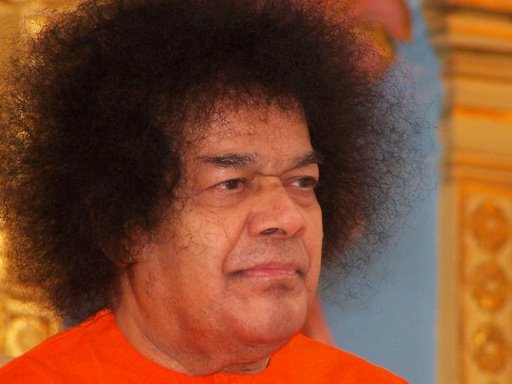
shri sathya sai baba Close-up side portrait of spiritual leader in orange robe image
Shri Sathya Sai Baba Chinna Kathas

Shri Sathya Sai Baba Chinna Kathas – Ramayana

Shri Sathya Sai Baba Chinna Kathas – Ramayana 1.- Difference between goodness and greatness; Story of Rama and Ravana Puttaparthi, Poornachandra Auditorium (World youth conference Your browser does not support the audio element. 1997-07-16   Document Download Audio Social Share Facebook Twitter Youtube Instagram Description “Brahmavid brahmaiva bhavathi”- the knower of the Brahman becomes the Brahman. When one entertains divine thoughts one becomes divine. With animal thoughts one becomes animal like. The vices and wicked thoughts hovering in man today, does not speak of any human nature. People of all countries and India in particular know this. Ravana, in the sacred epic Ramayana, was highly educated. Rama too is equally highly educated. Today one thinks of this education and study, but both Rama and Ravana were highly educated. The good one is studying so also the bad one. Here one should give attention to two aspects. Some want to become great, some want to become good. So what is the difference between goodness and greatness? There is a wide gulf between the great one and the good one. Every parent wants their children to become great; but is ignorant about the aspects that they want their child to be great in. Parents consider that high education, high jobs and earning loads of wealth as symbols of greatness. If one wants to be good then what is that good? No one makes an effort to know it. The one who finds the human qualities in the Divine is a great man. The one who sees the divinity in man is good man. So it is the sign of goodness to see God in human being. One is considered great if one sees man in God. Without goodness there is no use of greatness. Hence, one must aspire to become good. There are many great people today, but how is the country benefited by them? Ravana studied and so did Rama but among them Rama is good and Ravana great. In what way is Ravana great? Ravana did great penance but could not assimilate the knowledge that he acquired and that lead to indigestion. This indigestion is ignorance and because of this ignorance other vices followed. Unable put a ceiling on his desires he ruined his entire clan. He was responsible for the death of his brothers as he could not control his thoughts. He was also responsible for the death of sons due to his lack of control on his wants. He ruined his kingdom as he did not control his attachment. The reason behind this is that though Ravana was highly educated he was infested with evil thoughts, bad feelings. Had there been no attachment, he would have had his kingdom. Had there been no desire he would not have lost his clan. Had there been no thoughts, his brothers would not have been killed. Had there been no desire, his sons would not have died. Therefore, man becomes a demon because of the thoughts, desires and attachments. One must have only one desire and that is the love for God and the fear of sin. With these two one can be great. Rama dedicated himself to truth and righteousness. ‘Sathyam vada, dharmam chara’, meaning speak the truth and follow dharma. Rama spoke the truth and followed the path of righteousness and hence he became good. Even today, after thousands of years, he is still respected because of those qualities. Rama showed divinity in human being. ‘Daiwam maanusha roopena’- ‘God comes in human form’. That is goodness. It is nothing great to see man in God; that is one’s desire, imagination, reflection, reaction and resound. Since one is at human level he sees the same in God. What is the greatness in seeing human in the divine? No, no, one must see the divine in man, that is goodness. Hence one must clearly know the difference between greatness and goodness. One should aspire to be good and not great. What is greatness? One may have lot of wealth, may be highly educated, may be strong, may have strong army, may have great authority but how long will they last? They last until one is in high position and once the position is gone nobody gives any respect. A person who is a prime minister will be flocked by people as long as he continues to be in that position. The moment he retires from the position, even the rickshaw puller will demand money. Nobody recognises him post his retirement. Is this the greatness? This greatness is there today gone tomorrow but goodness is eternal. So, one must dedicate one’s life to goodness. What is goodness? Following the path of righteousness, living justly, loving all, believing in the divine, being compassionate towards the needy, serving the forlorn- these are the qualities of goodness. One should develop sacred thoughts and good actions.   Listen To Full Discourse Youth should never leave ideals Puttaparthi, Poornachandra Auditorium (World youth conference Your browser does not support the audio element. 1997-07-16 Document Download this Audio Social Share Facebook Twitter Youtube Instagram Description Embodiments of love, young man and women!! Citizens of the future world! One can earn money back even if it is lost. One can make another friend even if one loses one. One can get married again if one loses one’s wife. One can again acquire land and property even if one loses it. But once the body is gone one cannot get it back. In this vast creation, the human being is the noblest and exalted one. Man is noble. He is endowed with character and nobility; if that humanness is lost, one cannot get it again.     Youth should never leave ideals Puttaparthi, Poornachandra Auditorium (World youth conference Your browser does not support the audio element. 1997-07-16 Document Download this Audio Social Share Facebook Twitter Youtube Instagram Description Embodiments of love, young man and women!! Citizens of the future world! One can earn money back even if it is lost. One can make another

Shri Sathya Sai Baba Chinna Kathas – Ramayana Read Post »



