







Hari Om

Menu

Guru

Rishi Gautama ji
Mahatmas

Rishi Gautama

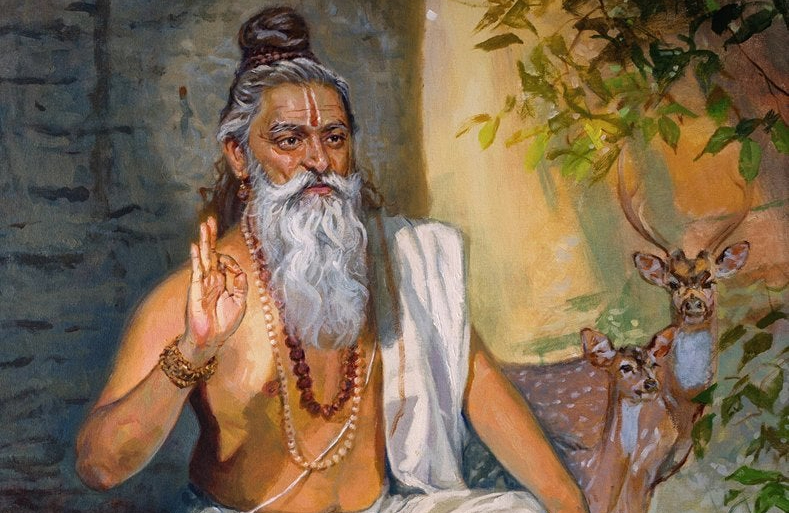
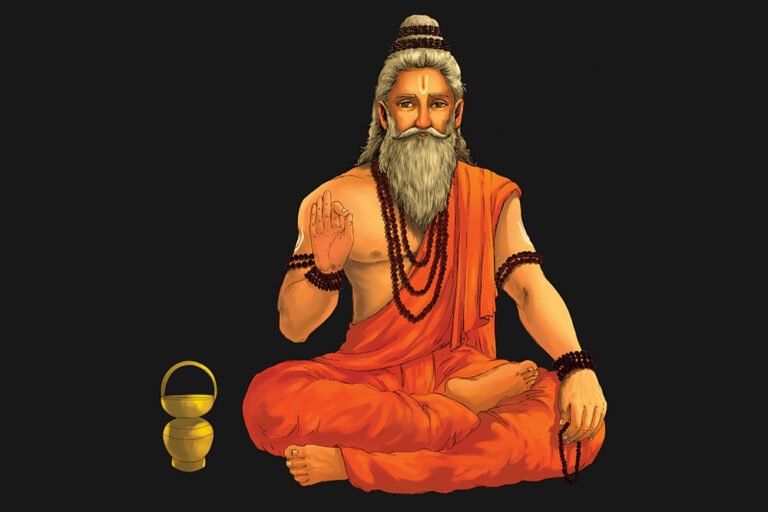
Rishi Gautama Akṣapāda Gotama, the 2nd century founder of the school of philosophy that goes by the name of ‘Nyaya’ (Logic), is not to be confused with Gautama Maharishi. Gauatama was also the author of Dharma-sutra known as Gautama Dharma sutra [2] [3] It is in fact the earliest Dharma Sutra. It contains 28 chapters with 1000 aphorisms. Almost every aspect of the observances of Hindu dharma – including the rules for the four Ashramas, the forty sanskāras, the four varnas, kingly duties, the punishments for various offences, the obsequies for the dead, do’s and don’ts of food consumption, the dharmas of women, the rules for Praayaschitta (atonement for sins), and the rules of succession of property. In this sense Gautama’s Dharma Shastra may perhaps be considered the oldest law book of the world. When the battle of Kurukshetra was going on, Dronacharya took over the commandership of the Kaurava army and got ready to destroy the entire Pandava army. At that point, Gautama entered the battle field, addressed the Drona, “stop the killings and give up arms. You are fighting a battle against your Varn-ashram dharma. Embrace death and go to heaven”. Drona, giving respect to the words of these sages, gave up his arms and left the battle field. As advised by sage Gautama, he went to heaven by the Yogadharana way. Later on after Rama returned  after killing Ravana Vaishta conducted his coronation ceremony. Sage Vasishta took great care and interest in the welfare of the royal family of ayodhya and the smoothrunning of the administration of the kingdom of Ayodhaya. Sage Gautam used to travel all over the world with the intention of helping people. Sage Gautam had mastered the great Savitri Mantra. Sage Gautama was the one to whom the great Vyahrthimanthra ‘Janah’ was revealed. He was a great Tapasvi. He was devoted to God and a generous host. The Narada Purana describes the story of the 12-year famine during which sage Gautam fed other sages and saved them. Once the country was reeling under a great famine, but owing to the virtue of Sage Gautam, his ashram dwellers had not experienced the calamity. Thousands of sages took refuge in his ashram. Sage Gautam welcomed everyone with open arms and played host to them. The famine continued for years, but Gautam offered them great hospitality. . He is very famous for various stories. Two of them are prominently known to the world – the creation of the Godavari river and the curse of Ahalya. Let us first understand the story of the Godavari river’s creation. Kotirudra Samhita in the Shiva Purana describes the story of the Godavari river’s creation. On the Brahmagiri mountain, the mind-son of Brahma, Gautama Maharishi was engrossed in penance and meditation. There was a drought in that area for a hundred whole years and hence crops could not grow there. For the goodness and wellness of the residents of that area, Gautama Maharishi started meditating in a direction to impress the god of the ocean, Varuna. Varuna appears to Gautama after six months of his penance. Varuna denies the request of Maharishi Gautama as it would be against the wishes of the other gods who have made this happen in the area.  Source: mythoworld
Rishi Gautama Read Post »

images 2
Mahatmas

Sant H.W.L Papa-ji

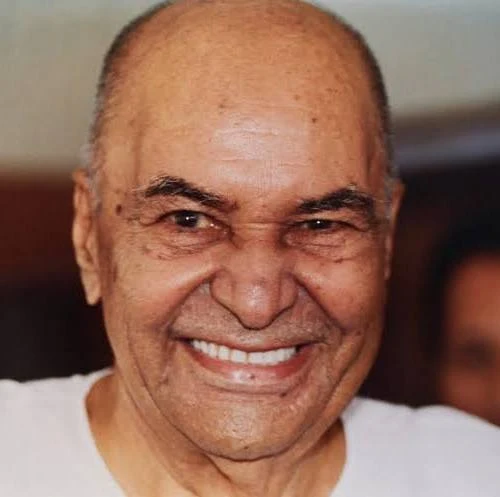
Sant H.W.L Poonjq When Poonja met Ramana Maharshi, and asked him, “Have you seen God?” Maharshi replied, “Anything that you see cannot be God. Whatever you see must be an object of your senses. God is not an object of your senses. God is the one through whom all things are seen, tasted, touched, heard and smelt, but He himself cannot be seen because He is the seer, not an object of sight.” This meeting with Ramana Maharshi ultimately led him to the profound state of awakening, Self-realisation. Ramana Maharshi explained to Poonja that worshipping of God as Krishna, through the repetition of his name 50,000 times a day was a path which brought you somewhere, like a train or car, and once you arrived at your destination you left it behind. The same applies to spiritual practices, which dissolve once they have brought the practitioner to his goal. Poonja listened with all his heart to his master’s words. The silent gaze of Maharshi’s cleansing presence pervaded his whole body and mind. It is then that he recognised Himself and understood that this was the experience he had at the age of six. His spiritual quest had ended. When the Maharshi told him, “I am with you wherever you are,” Poonjaji understood,  During a satsang in Lucknow many years later, he said: “For me, nothing has ever existed; all is only an expansion of a thought. Even “I am” is an extended thought of that which brings that thought, and that power will never be caught – It is eternal. When one puts his own will on the pure will, then he limits it. What else, in fact, is expanded other than the Divine, preordained by the Divine? All what you see is imagination; just allow your thoughts to rise and flow out of you.” After retirement, he led a more recluse and simple life, sharing his experience and knowledge of the Self with those who found their way to him. Poonja would pour out his love on the seekers who met him, and answer all of their questions with great passion and earnestness. He would take them on long, tireless walks into the surrounding hills of Rishikesh and Haridwar, where he cooked rice and dhal [legumes] with them along the banks of the Ganges. Through simple actions and words he constantly reminded them of their own Reality. Speaking with a disciple named Kailas, Poonjaji said: “Human evolution has got nothing to do with Self-realisation. When you realise the Self you will know that there has never been any evolution, that there has never been any creation, that there are no Gods, no demons, no animals, and not even any people. All these things belong to the mind, to the ego. They are all ignorance. You think “I am so and so, he is so and so”. This is just ignorance. It is a cycle that has no ending. But once you have true realisation, you know that you were never born. During the 1980s some of the Indian devotees gave him the name “Papaji”.  Many saw him as their spiritual father giving them boundless joy and love. At the request of devotees, he travelled to Europe, North America and South America until his health did not allow him further mobility. Since the early 1990s, he remained quite sedentary; first in Haridwar and then in Lucknow in Northern India. An informal community of devotees began to form itself around him in 1990. Unable to move about as easily as he had in the past, he invited people to spent time with him on a regular basis, in a house specially rented for this purpose. He called these meetings “satsang”, which literally means “association with Reality”. During his last two years, Papaji answered less questions and mostly read from texts such as Yoga Vasishta, Ribhu Gita, Bhagavad Gita and the Heart Sutra, to name a few. Even more recently, he had practically stopped speaking and left it to his more musically inclined disciples to express their artistic abilities during meetings. Sourse- inner quest

Sant H.W.L Papa-ji Read Post »

Rishi Vashistha ji
Mahatmas

Rishi Vashistha

Rishi Vashistha THE STORY OF TRISHANKU AND SATYA HARISHCHANDRA. One of the kings who was blessed for receiving the service of Sage Vasishta was a King named. He had a son nemed Satyavratha who was a spoilt brat. As a prince he thought that he was above everything and everyone. He had weakness for young women whom he used to kidnap. The king htearing of his sons atrocities was very upset and punished him in the presence of Sage Vasishta. Satyavratha expected Sage Vashta to defend him. But seeing the silence he understood that the sage was in on it, which angered him a lot. To take revenge he went to Sage Vashishta’s hermitage took and cow killed it and ate its flesh in raw. In this way kidnapping girls of marriageable age, killing a cow and eating its fleshthese three sins entitled him to be called Trishanku – meaning on who committed three terrible sins. Once Trishanku approached the sage he wanted to go to the heavens in his mortal form and when Vasishta refused he approached Vishwamitra. This story has already been told in my earlier article “Vishwamitra” I think I can never ever get tired of hearing this story of Satya Harischandra. In spite of his misunderstanding with trishanku Vashishta continued his support to Trishanku’s son Harishchandra. As usual Viswamitra was challenging Vashita, this ime it as over the Raja whowas an epitome of truth. Vaishta had full confidence on the Raja and e was proved right. Viwamtra tried verything in his power to dishearten him but the Raja was firm in his conviction.He put king Harishchandra, his wife and son to untold suffering, but the king remained calm all through his traumatic experiences. Harischandra was made a debtor to sage Viswamitra; his queen Chandramati and son Lohitashwa had to go to Kashi along with him with nothing but his clothes on him. He was reduced to the position of a servant of the man who watched over the cemetery at Kashi and did the job for him without any hesitation. Vishwamitra manipulated things in such a way that Harischandra was expected to even behead his wife. Even then Harischandra did not give up on truth. Since Vashishta was immortal he lived through a lot of episodes in his life. He was the royal priest to Dasaratha, father of Rama. Dasaratha did not have children for a long time and as per the advice of Sage Vasishta the king decided to conduct Aswamedha Yaga under the supervision of Sage Rishishringa at the banks of River Sarayu. Along with the Aswamedha, Rajasuya yoga was also performed. Along with the Aswamedha, Rajasuya yoga was also performed. As a result 4 sons were born to the three queens of king Dashratha. Vasishta namedthem Rama, Lakshamana, Bharatha and Shathrugha. Vishwamitra once came to the palace requesting Dasaratha to send Rama with him to the forest to protect his Yaga from the Asuras who were disturbing him and not letting him finish the yaga. Dasaratha did not want to send Rama as he was still very young, but on Vasishta’s advice complied to sage Vishwamitra’s request. Later on after Rama returned  after killing Ravana Vaishta conducted his coronation ceremony. Sage Vasishta took great care and interest in the welfare of the royal family of ayodhya and the smoothrunning of the administration of the kingdom of Ayodhaya. The Vasus are the attendant deities of Indra. Once they voisited the ashrama when Vashista was away. One of the Vasu’s Prabhasa/Dyaus/Dhava’s wife took a liking to Nandini the divine cow and wanted to possess it. She had heard that milk of that cow was equal to nectar and the one who drank would become immortal, and thus her desire to possess Nandini became an obsessioin. She wanted to give the milk of this cow to her friend Jeethavathi and so forced her husband to grab it for her. Dyaus was forced to comply to the wishes of his wife. Nandini was thus taken away by force and the rest of the 7 vasus looked on. On his return Vasishta realised that Nandini was gone and he saw what had happened and it made him and very and he cursed the 8 Vasus to be born as mortals. The Vasus went to the age to seek his forgiveness and seek freedom from the curse incurred. Vasishta explained that once the curse is been uttered it would take its course, but he promised that the 7 Vasus who were onlookers to the deed would be freed of the curse after few moments on earth but Dyaus would live a full life, but as a noble soul. The rest of the 7 Vasus were born to Ganga and was thrown in to the water, only Dyuas survived. He would remain a bachelor and become a man of great wisdom and righteousness. Later Dyaus was born as Bhishma, the son of emperor Shanthanu. Sage Vasishta was the royal priest not only to the kings of solar clan, but also to the kings of lunar clan. King Samvarana accepted Vasishta as his royal priest. He acted according to the advice given by the sage and regained his lost kingdom. Once king Samvarana went hunting. He chanced to meet a beautiful maiden and fell in love with her. She was Tapti the daughter of the sun-god. Samvarna loved Tapti so much that he went on a fast and prayed to Surva Deva.  Knowing his desire Sage Vasishta visited the Surya to seek his aughters hand in marriage for Kibg Samvarana. Surya deva was only too pleased. Later Samvarana and Tapathi were blessed with a son who later became famous as Kuru. He was the founder of the Kuru lineage. Source: Vipasana

Rishi Vashistha Read Post »