

Hari Om

Menu

Durga maa

d9e2b7bdd3fa794b7865d88e2e174470 1
Shakti Avatar

Shri Siddhidatri Avatar

Maa Kaalratri’s worship is believed to protect from evil forces, accidents, and negative energies, instill courage, and purify the mind and soul. She represents the destructive aspect of Shakti, showing that destruction is sometimes necessary to remove obstacles and pave the way for creation and positivity. Mythological Significance of Siddhidatri Avatar Maa Kaalratri, the seventh form of Maa Durga, is one of the most fierce and terrifying manifestations of the Divine Mother, symbolizing the destruction of evil, ignorance, and darkness. She represents the power of Shakti in its most formidable form, showing that the Divine Mother can be both protective and destructive when necessary. According to Hindu mythology, during the battle with the demons Chanda, Munda, and Raktabija, the gods were unable to defeat these powerful asuras due to their extraordinary strength. To destroy them, Maa Durga manifested Maa Kaalratri from her forehead, a form so fierce that it struck fear into the hearts of demons. With her dark complexion, disheveled hair, fiery eyes, and a sword in one hand, she attacked the demons relentlessly. Her terrifying appearance symbolizes the force that annihilates negativity and restores dharma. Maa Kaalratri rides a donkey, which signifies humility and her ability to move swiftly against evil. One of her hands is in abhaya mudra, offering protection and fearlessness to her devotees, while another bestows blessings. She embodies the destructive aspect of the Divine Mother, teaching that destruction of darkness and negativity is essential for the creation of a pure, virtuous, and balanced world. According to Hindu mythology, during the battle against the demons Chanda, Munda, and Raktabija, the gods struggled to defeat the asuras because of their immense strength and supernatural powers. In response, Maa Durga manifested Kaalratri from her forehead. With her fierce appearance, dark complexion, unkempt hair, flaming eyes, and a sword in her hand, she terrified and destroyed the demons. Her ferocity symbolizes the uncompromising power of righteousness and the necessity of destroying negative forces for the welfare of the universe. Her donkey mount signifies humility and the ability to act decisively against evil. The abhaya mudra in one hand reassures her devotees, giving them fearlessness and protection, while her other hands wield weapons to destroy negativity. Maa Kaalratri is also associated with spiritual awakening, showing that confronting one’s inner fears, ego, and negative tendencies is essential for growth and liberation. Symbolism of Siddhidatri Avatar Maa Kaalratri, the seventh form of Maa Shakti, symbolizes the destructive and transformative power of the Divine Mother. She represents the energy that destroys darkness, fear, evil, and ignorance, teaching devotees that courage and fearlessness are essential to overcome both external and internal obstacles. Her dark complexion and terrifying appearance reflect the intensity of divine power required to eradicate negativity, while her protective gestures assure devotees of safety and guidance. Her disheveled hair, flaming eyes, and sword symbolize strength, determination, and the ability to cut through illusions and ignorance. The lion or donkey she rides signifies courage, humility, and swift action against evil forces. One hand in abhaya mudra conveys protection and fearlessness, while the other carrying weapons shows her fierce energy against negativity and injustice. Maa Kaalratri’s symbolism extends beyond external battles; she teaches that spiritual growth requires confronting one’s inner fears, ego, and negative tendencies. Her darkness is transformative, purging ignorance and preparing the devotee for spiritual illumination. She embodies the balance of fierce power and compassionate protection, showing that true strength lies in fearlessness guided by righteousness and devotion. In essence, Maa Kaalratri represents the dynamic, protective, and purifying aspect of Shakti, inspiring devotees to face challenges boldly, remove inner and outer negativity, and attain spiritual courage, wisdom, and liberation. with compassion and strength with righteousness. Her dark complexion, disheveled hair, and flaming eyes symbolize the intensity and ferocity of divine energy required to destroy evil. These features also convey that fear and chaos in the world are temporary and can be overcome by the power of righteous action and devotion. The sword in her hand represents knowledge, discernment, and the courage to cut through ignorance, while her other hands, sometimes carrying weapons or in blessings, indicate that she is both destructive toward negativity and protective toward her devotees. Maa Kaalratri rides a donkey (or sometimes a lion), symbolizing humility, courage, and swift action. Her mount indicates that even the fiercest energy is grounded in purpose, discipline, and righteous intent. One hand in abhaya mudra reassures devotees, providing fearlessness and divine protection, while her overall fierce demeanor teaches that spiritual progress often requires confronting inner and outer darkness with courage and determination. Spiritually, Maa Kaalratri represents the purifying aspect of Shakti. Just as she destroys demons and negativity in mythology, she helps devotees overcome inner fears, ego, doubt, and attachments, preparing the mind and soul for higher consciousness. Her worship encourages the cultivation of fearlessness, resilience, moral strength, and unwavering devotion, reminding devotees that divine power protects those who uphold dharma. Worship of Siddhidatri Avatar of Maa Shakti Maa Siddhidatri, the ninth and final manifestation of Maa Durga, is worshipped on the ninth day (Navami) of Navratri, symbolizing the culmination of divine energy and the ultimate source of supernatural powers, wisdom, and fulfillment. She embodies the highest form of Shakti, granting her devotees spiritual enlightenment, prosperity, health, courage, and success in all endeavors. This form of the Divine Mother represents the completion of the Navadurga, emphasizing that devotion, discipline, and courage culminate in spiritual mastery and worldly accomplishment. Worship of Maa Siddhidatri begins with purification of the body, mind, and surroundings. Devotees take a bath, wear clean and auspicious clothing—often yellow or golden to signify purity, wisdom, and enlightenment—and arrange a sacred altar decorated with her idol or picture. The altar is adorned with lit lamps (diyas), incense sticks, flowers (especially yellow), fruits, sweets, holy water, rice, and kumkum, symbolizing purity, devotion, and auspiciousness. Devotees may also chant the Durga Saptashati or Siddhidatri Stotra to invoke the goddess’s blessings. The principal mantra for Maa Siddhidatri is:“ॐ ऐं सिद्धिदात्री नमः (Om Aim

Shri Siddhidatri Avatar Read Post »

5abeb48acccb5e3f8671cdd372dc7b2a 1
Shakti Avatar

Shri Mahagauri Avatar

Maa Kaalratri’s worship is believed to protect from evil forces, accidents, and negative energies, instill courage, and purify the mind and soul. She represents the destructive aspect of Shakti, showing that destruction is sometimes necessary to remove obstacles and pave the way for creation and positivity. Mythological Significance of Mahagauri Avatar Maa Kaalratri, the seventh form of Maa Durga, is one of the most fierce and terrifying manifestations of the Divine Mother, symbolizing the destruction of evil, ignorance, and darkness. She represents the power of Shakti in its most formidable form, showing that the Divine Mother can be both protective and destructive when necessary. According to Hindu mythology, during the battle with the demons Chanda, Munda, and Raktabija, the gods were unable to defeat these powerful asuras due to their extraordinary strength. To destroy them, Maa Durga manifested Maa Kaalratri from her forehead, a form so fierce that it struck fear into the hearts of demons. With her dark complexion, disheveled hair, fiery eyes, and a sword in one hand, she attacked the demons relentlessly. Her terrifying appearance symbolizes the force that annihilates negativity and restores dharma. Maa Kaalratri rides a donkey, which signifies humility and her ability to move swiftly against evil. One of her hands is in abhaya mudra, offering protection and fearlessness to her devotees, while another bestows blessings. She embodies the destructive aspect of the Divine Mother, teaching that destruction of darkness and negativity is essential for the creation of a pure, virtuous, and balanced world. According to Hindu mythology, during the battle against the demons Chanda, Munda, and Raktabija, the gods struggled to defeat the asuras because of their immense strength and supernatural powers. In response, Maa Durga manifested Kaalratri from her forehead. With her fierce appearance, dark complexion, unkempt hair, flaming eyes, and a sword in her hand, she terrified and destroyed the demons. Her ferocity symbolizes the uncompromising power of righteousness and the necessity of destroying negative forces for the welfare of the universe. Her donkey mount signifies humility and the ability to act decisively against evil. The abhaya mudra in one hand reassures her devotees, giving them fearlessness and protection, while her other hands wield weapons to destroy negativity. Maa Kaalratri is also associated with spiritual awakening, showing that confronting one’s inner fears, ego, and negative tendencies is essential for growth and liberation. Symbolism of Mahagauri Avatar Maa Kaalratri, the seventh form of Maa Shakti, symbolizes the destructive and transformative power of the Divine Mother. She represents the energy that destroys darkness, fear, evil, and ignorance, teaching devotees that courage and fearlessness are essential to overcome both external and internal obstacles. Her dark complexion and terrifying appearance reflect the intensity of divine power required to eradicate negativity, while her protective gestures assure devotees of safety and guidance. Her disheveled hair, flaming eyes, and sword symbolize strength, determination, and the ability to cut through illusions and ignorance. The lion or donkey she rides signifies courage, humility, and swift action against evil forces. One hand in abhaya mudra conveys protection and fearlessness, while the other carrying weapons shows her fierce energy against negativity and injustice. Maa Kaalratri’s symbolism extends beyond external battles; she teaches that spiritual growth requires confronting one’s inner fears, ego, and negative tendencies. Her darkness is transformative, purging ignorance and preparing the devotee for spiritual illumination. She embodies the balance of fierce power and compassionate protection, showing that true strength lies in fearlessness guided by righteousness and devotion. In essence, Maa Kaalratri represents the dynamic, protective, and purifying aspect of Shakti, inspiring devotees to face challenges boldly, remove inner and outer negativity, and attain spiritual courage, wisdom, and liberation. with compassion and strength with righteousness. Her dark complexion, disheveled hair, and flaming eyes symbolize the intensity and ferocity of divine energy required to destroy evil. These features also convey that fear and chaos in the world are temporary and can be overcome by the power of righteous action and devotion. The sword in her hand represents knowledge, discernment, and the courage to cut through ignorance, while her other hands, sometimes carrying weapons or in blessings, indicate that she is both destructive toward negativity and protective toward her devotees. Maa Kaalratri rides a donkey (or sometimes a lion), symbolizing humility, courage, and swift action. Her mount indicates that even the fiercest energy is grounded in purpose, discipline, and righteous intent. One hand in abhaya mudra reassures devotees, providing fearlessness and divine protection, while her overall fierce demeanor teaches that spiritual progress often requires confronting inner and outer darkness with courage and determination. Spiritually, Maa Kaalratri represents the purifying aspect of Shakti. Just as she destroys demons and negativity in mythology, she helps devotees overcome inner fears, ego, doubt, and attachments, preparing the mind and soul for higher consciousness. Her worship encourages the cultivation of fearlessness, resilience, moral strength, and unwavering devotion, reminding devotees that divine power protects those who uphold dharma. Worship of Mahagauri Avatar of Maa Shakti Mantras of the Divine Avatar ॐ महागौर्यै नमः॥ “I bow to Maa Mahagauri, the pure and radiant mother who removes sins, grants peace, prosperity, and spiritual wisdom.” Aarti of the Divine Avatar सिंह पर माता महागौरि,सकल पाप हरे जगदम्बि।भक्तों को दे सुख, समृद्धि,जय महागौरि माता।जय महागौरि माता॥ “O Mother Mahagauri, who rides a lion and removes all sins from the world. You bless your devotees with happiness, prosperity, and protection. Victory to you, O Divine Mother!” 51 Shakti peeth

Shri Mahagauri Avatar Read Post »

0fb52621b1481a90c7c68bc3d7800f77
Shakti Avatar

Shri Kaalratri Avatar

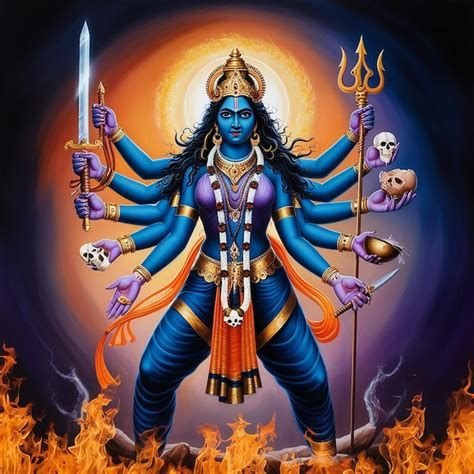
Maa Kaalratri’s worship is believed to protect from evil forces, accidents, and negative energies, instill courage, and purify the mind and soul. She represents the destructive aspect of Shakti, showing that destruction is sometimes necessary to remove obstacles and pave the way for creation and positivity. Mythological Significance of Kaalratri Avatar Maa Kaalratri, the seventh form of Maa Durga, is one of the most fierce and terrifying manifestations of the Divine Mother, symbolizing the destruction of evil, ignorance, and darkness. She represents the power of Shakti in its most formidable form, showing that the Divine Mother can be both protective and destructive when necessary. According to Hindu mythology, during the battle with the demons Chanda, Munda, and Raktabija, the gods were unable to defeat these powerful asuras due to their extraordinary strength. To destroy them, Maa Durga manifested Maa Kaalratri from her forehead, a form so fierce that it struck fear into the hearts of demons. With her dark complexion, disheveled hair, fiery eyes, and a sword in one hand, she attacked the demons relentlessly. Her terrifying appearance symbolizes the force that annihilates negativity and restores dharma. Maa Kaalratri rides a donkey, which signifies humility and her ability to move swiftly against evil. One of her hands is in abhaya mudra, offering protection and fearlessness to her devotees, while another bestows blessings. She embodies the destructive aspect of the Divine Mother, teaching that destruction of darkness and negativity is essential for the creation of a pure, virtuous, and balanced world. According to Hindu mythology, during the battle against the demons Chanda, Munda, and Raktabija, the gods struggled to defeat the asuras because of their immense strength and supernatural powers. In response, Maa Durga manifested Kaalratri from her forehead. With her fierce appearance, dark complexion, unkempt hair, flaming eyes, and a sword in her hand, she terrified and destroyed the demons. Her ferocity symbolizes the uncompromising power of righteousness and the necessity of destroying negative forces for the welfare of the universe. Her donkey mount signifies humility and the ability to act decisively against evil. The abhaya mudra in one hand reassures her devotees, giving them fearlessness and protection, while her other hands wield weapons to destroy negativity. Maa Kaalratri is also associated with spiritual awakening, showing that confronting one’s inner fears, ego, and negative tendencies is essential for growth and liberation. Symbolism of Kaalratri Avatar Maa Kaalratri, the seventh form of Maa Shakti, represents the most fierce and destructive aspect of the Divine Mother, embodying the cosmic energy that eradicates evil, ignorance, and darkness. Her name literally means “the dark night of death,” symbolizing the power of divine Shakti to destroy fear, negativity, and all forms of adharma (unrighteousness). While her form is terrifying to demons and negative forces, she is a protector and guardian to her devotees, showing that fearlessness and courage are essential to navigate the challenges of life. Her appearance is striking and symbolic: a dark complexion, disheveled hair, flaming eyes, and a sword in hand reflect her fierce determination to eliminate evil. The sword represents knowledge and power, capable of cutting through ignorance and illusions, while her fearsome look signifies the intensity of divine energy required to protect dharma. The donkey or sometimes lion she rides signifies humility and courage, highlighting that even in her ferocity, she moves with purpose and righteousness. One hand in abhaya mudra conveys fearlessness and protection to devotees, reassuring them that they are safe under her divine care. Spiritually, Maa Kaalratri symbolizes the destruction of inner and outer negativity. Her fierce form is a reminder that true spiritual growth requires confronting one’s fears, ego, and negative tendencies. Just as she destroys demons in mythology, she helps devotees overcome obstacles, bad habits, and harmful influences, clearing the path for inner strength, wisdom, and enlightenment. Her darkness is not evil but transformative — it purges ignorance and prepares the devotee for spiritual illumination, showing that the Divine Mother’s power is both protective and transformative. The symbolism of Maa Kaalratri extends to psychological and spiritual lessons: she represents courage in adversity, the need for vigilance against harmful influences, and the ability to face the harsh realities of life without fear. She teaches that destruction of negativity is necessary for creation and renewal, and that divine energy can be both nurturing and formidable. Through devotion to Maa Kaalratri, one can develop resilience, fearlessness, and spiritual insight, learning to balance courage with compassion and strength with righteousness. Worship of Kaalratri Avatar of Maa Shakti Mantras of the Divine Avatar ॐ काली कालरात्र्यै नमः॥ “I bow to Maa Kaalratri, the fierce mother who destroys all darkness, evil, and fear, and protects her devotees with courage and divine strength.” Aarti of the Divine Avatar सिंह पर माता कालरात्रि,सकल भय हरि जगदात्री।भक्तों को दे साहस शक्ति,जय कालरात्रि माता।जय कालरात्रि माता॥ “O Mother Kaalratri, who rides a lion and removes all fear from the world. You bless your devotees with courage, strength, and protection. Victory to you, O Divine Mother!” 51 Shakti peeth

Shri Kaalratri Avatar Read Post »

e2b72bd1e08901d1e996932e5ba8e835
Shakti Avatar

Shri Katyayani Avatar

Mythologically, Maa Katyayani is celebrated for her role in the slaying of the demon Mahishasura and other asuras, representing the victory of good over evil. S Mythological Significance of Katyayani Avatar Maa Katyayani, the sixth form of Maa Durga, is celebrated in Hindu mythology as the fierce warrior goddess who destroys evil and protects righteousness (dharma). She is believed to be the daughter of Sage Katyayana, and her birth symbolizes the concentrated power of the gods to restore balance in the world when demons threatened peace and justice. Legend tells that during a period of chaos, the demon Mahishasura and other asuras spread fear and destruction across the three worlds. The gods, unable to defeat these powerful demons individually, combined their energies, and from this divine force, Maa Katyayani was born. Mounted on a lion and wielding divine weapons, she courageously fought and ultimately slayed Mahishasura, symbolizing the triumph of good over evil. Her fierce form signifies that the Divine Mother is both compassionate and powerful — nurturing and protective towards her devotees, yet relentless against injustice and adharma. Worshipping Maa Katyayani is believed to instill courage, determination, and moral strength, helping devotees overcome obstacles and fear. She is also revered by unmarried girls seeking a suitable life partner, as she blesses them with prosperity, protection, and spiritual growth. Her fierce yet compassionate form conveys a profound spiritual lesson: the Divine Mother nurtures and protects her devotees, yet she is formidable against evil and injustice. Her worship is believed to instill fearlessness, strength of character, determination, and moral courage, empowering devotees to overcome challenges in life. Maa Katyayani is also venerated by unmarried girls seeking a suitable life partner, as she blesses them with prosperity, harmony, and divine guidance. Beyond her role as a warrior, Maa Katyayani symbolizes the dynamic energy of Shakti — the balance of strength, wisdom, and protection. She inspires devotees to uphold dharma, fight inner and outer evils, and embrace fearlessness while remaining compassionate and righteous. Her legend teaches that true power lies in courage combined with virtue, and that the divine feminine energy is the ultimate protector and guide in the cosmic order. Symbolism of Katyayani Avatar Maa Katyayani, the sixth form of Maa Durga, symbolizes the fierce and protective aspect of the Divine Mother. She embodies courage, strength, and righteousness, showing that the power of Shakti is not only nurturing but also fearless when confronting evil. Her form riding a lion represents valor and determination, teaching devotees that one must face challenges boldly while remaining guided by dharma (righteousness). Holding divine weapons in her hands, Maa Katyayani signifies the power to destroy negativity, obstacles, and ignorance. At the same time, her compassionate and motherly demeanor reflects that true strength is balanced with love, care, and protection for those who are devoted to her. The lion she rides also symbolizes control over ego and primal instincts, reminding devotees that courage must be paired with wisdom and self-discipline. Her fierce yet benevolent form is a spiritual lesson that divine energy can be both gentle and formidable, and that the Mother protects, nurtures, and empowers her devotees to overcome fear, attain victory, and lead a life of virtue. Maa Katyayani, therefore, is the symbol of dynamic Shakti, combining bravery, righteousness, and maternal care into a single, powerful form that inspires courage, devotion, and spiritual growth. Her motherly aspect, holding Lord Skanda (in some depictions) or displaying a benevolent face despite her warrior stance, reflects the idea that true power is always accompanied by protection, care, and guidance. She teaches that the Divine Mother is not only the destroyer of evil but also the source of courage, moral strength, and inner fortitude for her devotees. In essence, Maa Katyayani embodies the perfect balance of Shakti — fierce in her mission to destroy adharma, yet infinitely compassionate toward her devotees. She symbolizes that courage without love is incomplete, and love without strength is ineffective, encouraging devotees to cultivate bravery, righteousness, and devotion in all aspects of life. Worship of Katyayani Avatar of Maa Shakti Mantras of the Divine Avatar ॐ कात्यायन्यै नमः॥ “I bow to Maa Katyayani, the divine mother and fierce warrior, who protects her devotees, destroys evil, and grants courage, strength, and prosperity.” Aarti of the Divine Avatar सिंह पर माता कात्यायनी,सर्व भय हरि जगदानी।धन, धैर्य, शक्ति दे तुम्हें,जय कात्यायनी माता।जय कात्यायनी माता॥ Sinh par Mata Katyayani,Sarv Bhay Hari Jagadani.Dhan, Dhairya, Shakti De Tumhe,Jai Katyayani Mata, Jai Katyayani Mata. 51 Shakti peeth

Shri Katyayani Avatar Read Post »

design vector image little lakshmis face adorned 1
Shakti Avatar

Shri Skandamata Avatar

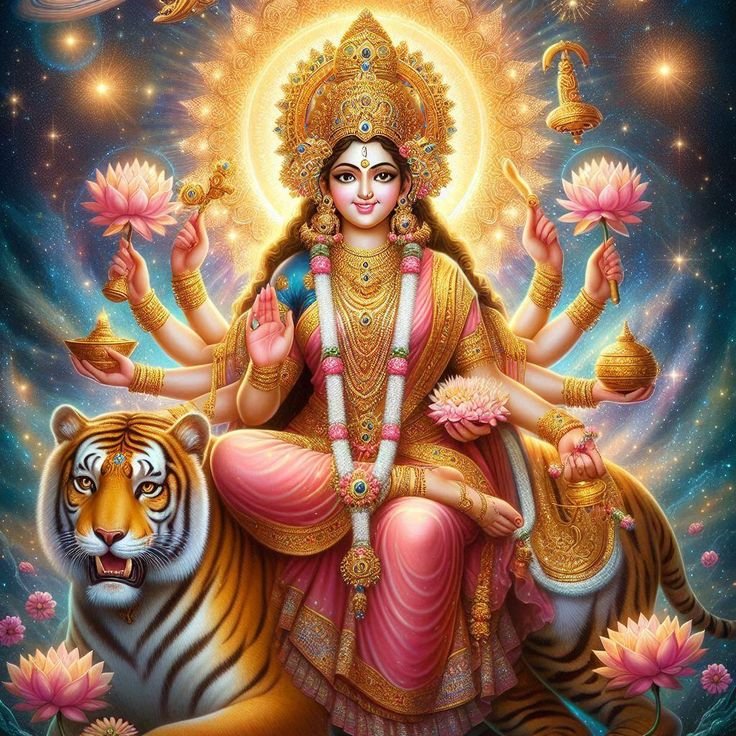
Mythologically, Maa Skandamata is said to bestow wisdom, prosperity, and bravery. Devotees who worship her are believed to receive her blessings of emotional stability, Mythological Significance of Skandamata Avatar Maa Skandamata, the fifth form of Maa Durga, holds a unique place in Hindu mythology as the divine mother of Lord Skanda (Kartikeya), the god of war. Her significance lies in her ability to combine motherly compassion with supreme power, symbolizing that true strength is rooted in love, care, and righteousness. According to the legends, she is the daughter of the Himalayas and is also considered an aspect of Adi Shakti, the primordial energy of the universe. She is depicted riding a lion, signifying courage and fearlessness, while holding her infant son Skanda in her lap. This iconography represents the balance of nurturing and protection — she nurtures her devotees like a mother and simultaneously protects them from evil and negative forces. Maa Skandamata is worshipped to bestow wisdom, prosperity, and courage. She removes fear and instills inner strength, determination, and devotion in her followers. Her lotus signifies purity and spiritual enlightenment, while her maternal form reminds devotees that the divine is both gentle and powerful, guiding humanity through compassion and divine protection. Her worship is believed to bring emotional stability, spiritual growth, and victory over obstacles, making her an embodiment of motherly love intertwined with divine power, a perfect example of how strength and gentleness coexist in the cosmic order. Symbolism of Skandamata Avatar Maa Skandamata embodies a profound spiritual symbolism that goes beyond mere motherhood. She represents the universal principle of nurturing energy — the power that sustains life, nurtures growth, and protects the innocent. Her position on a lion symbolizes that true courage and fearlessness come from inner strength, and that one can face the battles of life while remaining guided by love and righteousness. Holding her son, Lord Skanda, in her lap is highly significant. It illustrates that divine energy manifests through creation, and that protection and guidance are inseparable from nurturing. Just as she shields her child, she shields her devotees from harm, negativity, and fear, offering emotional stability and spiritual fortitude. Her lion also represents the controlled power of instincts and passion, teaching that strength should always be guided by wisdom and compassion. The lotus in her hand reflects spiritual awakening, purity, and detachment. Even in the material world filled with chaos and challenges, she remains untouched by impurity, reminding her devotees that inner spiritual growth and moral integrity must coexist with worldly responsibilities. Maa Skandamata also symbolizes the balance of the cosmic feminine energy (Shakti) — she is gentle yet powerful, nurturing yet strong, compassionate yet commanding. Worshipping her is said to awaken inner courage, confidence, and the ability to overcome obstacles, while fostering love, devotion, and a sense of protection for oneself and others. In essence, Maa Skandamata teaches that divine love and maternal care are inseparable from courage and righteous action, showing that the true power of the feminine lies in nurturing life while guiding it toward light, knowledge, and spiritual awakening. Worship of Skandamata Avatar of Maa Shakti The puja typically begins with purification of the mind and surroundings, followed by lighting a lamp (diya) and placing her idol or image on a clean, decorated altar. Red flowers, fruits, coconut, and sweets like malpua or peda are offered, as these symbolize nourishment, devotion, and happiness. Devotees also place a lotus or a symbolic child idol representing Skanda on her lap to honor her maternal aspect. Reciting her mantra:“ॐ स्कन्दमातायै नमः (Om Skandamatayai Namah)”with devotion awakens her divine energy, bringing courage, strength, and spiritual growth to the devotee. Special prayers such as Durga Saptashati, Skandamata Stotra, or Dhyana Mantras are chanted to invoke her blessings. Spiritually, worshipping Maa Skandamata removes fear, negativity, and emotional instability. She blesses her devotees with wisdom, fearlessness, and the power to overcome obstacles, while nurturing their hearts with love, compassion, and devotion. Her puja is not just a ritual but a celebration of divine motherhood, courage, and the protective power of Shakti. The ritual of worship begins with purifying oneself through bathing and wearing clean, preferably red or yellow attire, as red symbolizes strength and energy, and yellow symbolizes purity and devotion. The altar or puja area is decorated with flowers, especially lotuses, and a lamp (diya) is lit to invoke her divine radiance. Devotees place an idol or picture of Maa Skandamata, often seated on a lion and holding baby Skanda in her lap, to honor her maternal aspect. Offerings typically include fruits, sweets, coconut, and red flowers, which represent devotion, nourishment, and auspiciousness. Mantras of the Divine Avatar ॐ स्कन्दमातायै नमः॥ “I bow to Maa Skandamata, the divine mother of Lord Skanda, who blesses her devotees with courage, strength, and protection from all evils.” Aarti of the Divine Avatar सिंह पर माता स्कन्दमाता,सकल जग में प्रकाश फैलाती।सिंहवाहिनी, करुणामयी,जय स्कन्दमाता माता।जय स्कन्दमाता माता॥ “O Mother Skandamata, who rides a lion and spreads light throughout the world. You are compassionate and fearless. Victory to you, O Divine Mother!” 51 Shakti peeth

Shri Skandamata Avatar Read Post »

d219276d56a5f582cbf9e23a400c181f
Shakti Avatar

Shri Kushmanda Avatar

Kushmanda Avatar is the fourth form of Goddess Durga, worshipped on the fourth day of Navratri. She is believed to have created the universe with her divine smile Mythological Significance of Kushmanda Avatar It is said that before creation, there was only darkness everywhere. Then, Maa Kushmanda smiled, and from her divine radiance, the Sun, planets, and the entire cosmos came into existence. Her gentle laughter gave birth to the “Anda” (cosmic egg) — the seed of creation. She is also known as the “Adi Shakti”, the first energy that gave form to the formless. Residing in the core of the Sun, she provides light and life to all beings. In her iconography, Maa Kushmanda is depicted with eight or ten hands, holding weapons, rosary, and a pot of nectar — symbolizing creation, nourishment, and power. Worshipping her is believed to: Bring vitality, courage, and strength, Remove diseases and negative energies, Fill life with light, happiness, and prosperity. Her eight or ten hands carry various divine objects — a chakra, bow, arrow, mace, lotus, rosary, nectar pot, and other symbols of creation and destruction — showing that she maintains the balance of the universe through her powers. Symbolism of Kushmanda Avatar Maa Kushmanda symbolizes the divine energy from which the entire universe originated. Her name itself carries deep meaning — Ku means “a little,” Ushma means “warmth” or “energy,” and Anda means “cosmic egg,” representing her as the one who created the universe from a small, radiant core of energy. She resides in the heart of the Sun, symbolizing light, vitality, and the life-giving force that sustains all beings. Her radiant form signifies that she is the source of illumination, dispelling darkness and ignorance from the world. The gentle smile through which she created the cosmos represents creation born out of joy, peace, and divine will — showing that true power lies not in aggression but in serene creativity. Her multiple hands carrying various objects like weapons, a rosary, a nectar pot, and a lotus symbolize the perfect balance between creation and destruction, wisdom and strength, purity and protection. The Brahmanda or cosmic egg is a symbol of her boundless creative power, as everything in existence emerged from her divine energy. Spiritually, Maa Kushmanda represents the inner light within every being — the consciousness that connects all living souls to the supreme energy. She teaches that even a small spark of positivity and divine awareness within us can illuminate our entire life, just as her single smile filled the dark void with the brilliance of creation. Her serene smile reflects the truth that creation is an act of divine joy, not conflict — that harmony and grace can give rise to infinite power. The objects she holds — a rosary, nectar pot, lotus, and divine weapons — symbolize her complete mastery over creation, preservation, and destruction, the three cosmic functions that maintain universal balance. The rosary denotes continuous creation, the nectar pot signifies life and immortality, the lotus stands for purity amid chaos, and the weapons represent protection against evil. Worship of Kushmanda Avatar of Maa Shakti The worship of Maa Kushmanda, the fourth form of Maa Durga, is performed on the fourth day (Chaturthi) of Navratri. Devotees honor her as the creator of the universe, the source of energy and light, who blesses her followers with health, strength, and prosperity. Worshipping Maa Kushmanda begins with purification of the mind and body, followed by invoking Lord Ganesha and Kalash Sthapana to welcome divine energy. A calm, clean, and sacred place is chosen for the puja, often decorated with flowers and a lamp filled with ghee, symbolizing light and purity. The image or idol of Maa Kushmanda is placed on a red cloth — red being the color of power and vitality. Devotees then recite her mantra —“ॐ देवी कूष्माण्डायै नमः॥ (Om Devi Kushmandayai Namah)” —with devotion and focus, seeking her blessings for radiance, wisdom, and courage. Offerings of fresh flowers, fruits, coconut, and malpua (a sweet dish dear to her) are made, as these symbolize nourishment and happiness. Special prayers like the Durga Saptashati, Kushmanda Stotra, or her Dhyana Mantra are chanted to honor her creative and protective powers. Lighting an earthen lamp (diya) throughout the puja signifies inviting her divine light to dwell in the heart and home. Spiritually, worship of Maa Kushmanda removes negativity, fear, and illness, filling life with energy, hope, and clarity. Her blessings bring not only material prosperity but also the inner awakening of divine consciousness — reminding devotees that she, the Mother of the Sun, is the light within all living beings. Thus, the worship of Maa Kushmanda is a sacred celebration of life, creation, and spiritual illumination, where the devotee connects with the primal energy that sustains the cosmos. Mantras of the Divine Avatar ॐ देवी कूष्माण्डायै नमः॥ “I bow to the Divine Mother Kushmanda, the radiant creator of the universe, whose smile brought light and life to all creation. May her energy fill my life with health, strength, and inner brightness.” Aarti of the Divine Avatar सूर्यपुत्री कूष्मांडा माता,सभी जग में प्रकाश फैलाती।अंधकार मिटाकर सुख लाती,जय कूष्मांडा माता।जय कूष्मांडा माता॥ “O Mother Kushmanda, daughter of the Sun, who spreads light throughout the world. You remove darkness and bring happiness to all. Victory to you, O Divine Mother!” 51 Shakti peeth

Shri Kushmanda Avatar Read Post »