Hari Om

Menu

the divine times

e9579bc4405eaeaffb38440106f67fd0
Devotees Paradise

Nachiketa & Yamraja

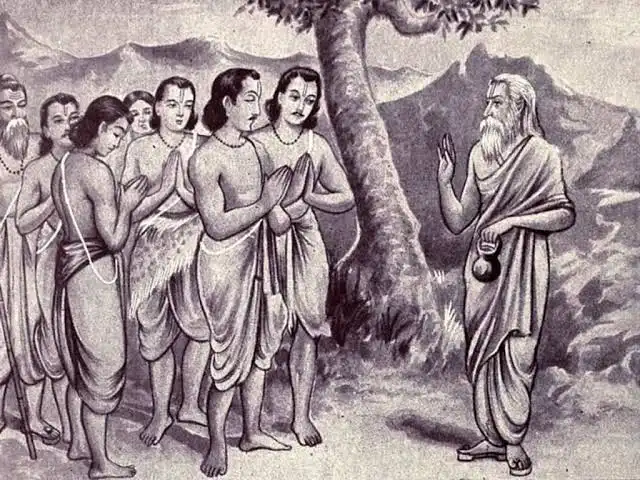
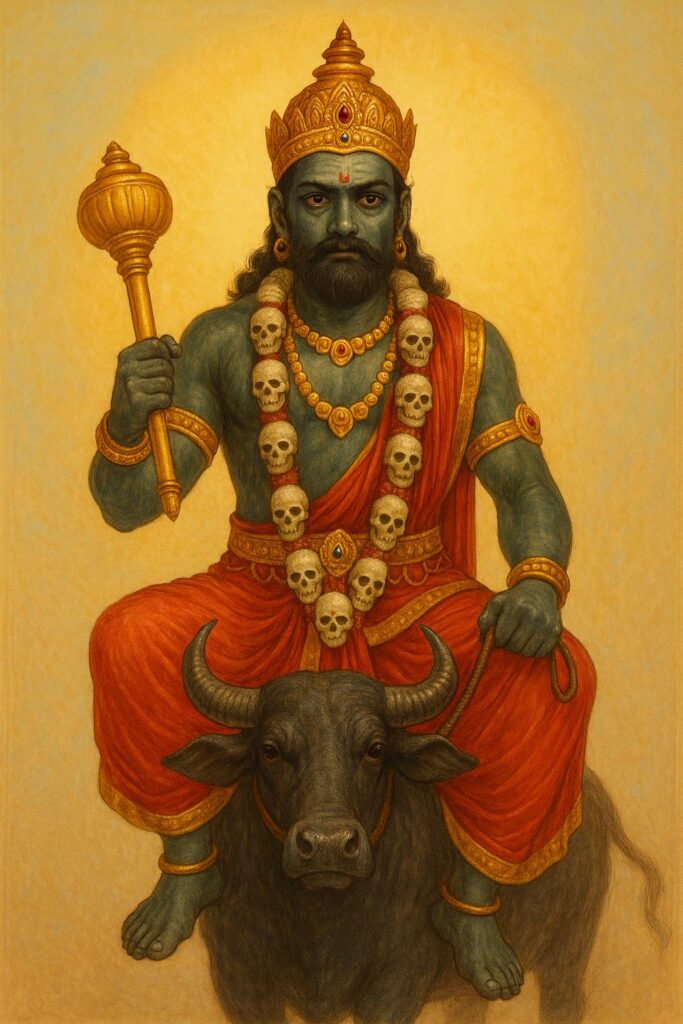
Nachiketa & Yamraja A Dialogue with the God of Death Vajashravas was a sage. Once, he decided to perform a great sacrifice in which he wanted to give away all that he had. He had a son by the name Nachiketa who was still a boy but extremely intelligent and very pure in mind and heart. He saw that his father was giving away the lean and weak cows that were unable to give milk. My father is not doing the right thing by giving the old cows in charity, said Nachiketa to himself so he went near his father and asked, “Father, I have heard that the kind of Yajna that you are performing, one has to give up all that one possesses. This being the case to whom will you give me?” Vajashravas did not give any reply. After some time Nachiketa asked again the same question, but in vain. He did not get any response from his father. Again for the third time, Nachiketa repeated the same question. Vajashravas could not control his temper; he burst out saying to his own son, “I will give you Yama, the God of Death.” Nachiketa followed the words of his father and went to the kingdom of Death. However, during that time Yama was not present. None dared to admit Nachiketa. So he waited near the gate for three days and three nights without taking even a drop of water. When Yama returned and found Nachiketa at his doorstep he felt sad for keeping a Brahmin waiting for three days and three nights. He ordered his attendants to fetch holy water to invite and welcome Nachiketa. After the hospitality offered to Nachiketa, Yama told Nachiketa, “Dear child, I have not done good by keeping you waiting for three days. So I request you to ask for three boons.” Nachiketa answered to Yama by saying, “O Lord, let my father not be anxious about me, and let his anger against me vanish. When I go back to earth, let him recognize me and receive me back gladly.” “Granted son,” said Yama. “Ask your second boon.” “Dear Sir, teach me the proper ritual for the fire sacrifice. This I ask for my second boon” said Nachiketa. Yama agreed and taught Nachiketa the proper ritual for the fire sacrifice. Then he said, “Nachiketa, what is your third boon?” Nachiketa said, “Is there indeed a life beyond death? Some say there is; others say life ends with this life. What is the truth?” Yama said, “Boy, do not ask me about matters of life and death. Even the gods are not clear on all points. Ask me something else. I will grant all your wishes other than this.” Nachiketa persisted and said, “O Yama, I only wish to know about the mysteries of life and death, and nothing else.” Yama tries to offer Nachiketa worldly pleasures so that he may change the nature of his request for the third boon, but Nachiketa insists by stating that all the worldly pleasures are short-lived and do not render long lasting happiness. Nachiketa was bold enough saying that one can never reach the eternal through the worldly possessions. Therefore he has renounced all desires for worldly pleasures and have come here with the hope of wining the Eternal through the instructions of the God of Death. It was too difficult for Yama to change the mind of young Nachiketa. So finally, he agreed to tell Nachiketa about the mysteries of life and death with the following words: “The Self is immortal. It was not born, nor does it die. It did not come out of anything, neither did anything came out of it. Even if this body is destroyed, the soul is not destroyed.” “The one who thinks that he is the slayer and the one who thinks that he is slain, both are ignorant. For the Self neither slays nor is it slain.” “Smaller than the smallest and larger than the largest, the Self is living in all beings.” “The knowledge about it can neither be obtained by discussion, nor by brain power, nor even by much learning. It reveals itself to the deserving one.” “This body is the chariot, intelligence the driver, the senses are the horses, conscience the rein and the soul is the lord of the chariot. The Self is superior to body, mind and senses. “Greater than the individual soul is the enveloping super consciousness, the seed of everything in the universe, still greater is the Ultimate Person than whom there is nothing greater. He is the goal of our aspiration. Once That (Supreme Self) is realized, death loses all its terrors, and the one who has realized becomes immortal. “The path to realization is long and difficult, like the razor’s edge, narrow and sharp. Therefore there is no time to be lost. Awake, arise, bestir yourself, and do not stop until the goal is reached.”

Nachiketa & Yamraja Read Post »
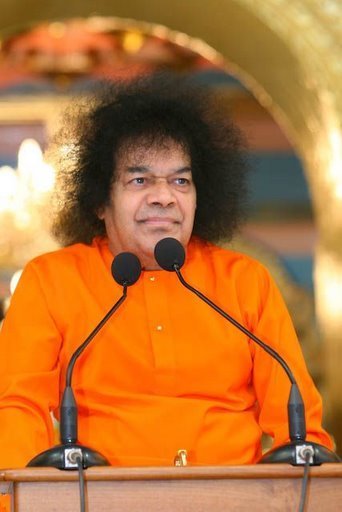
shri sathya sai baba Spiritual leader in orange robe speaking at podium with microphones
The Divine Play

A Beautiful Divine Message by Bhagavan Sri Sathya Sai Baba

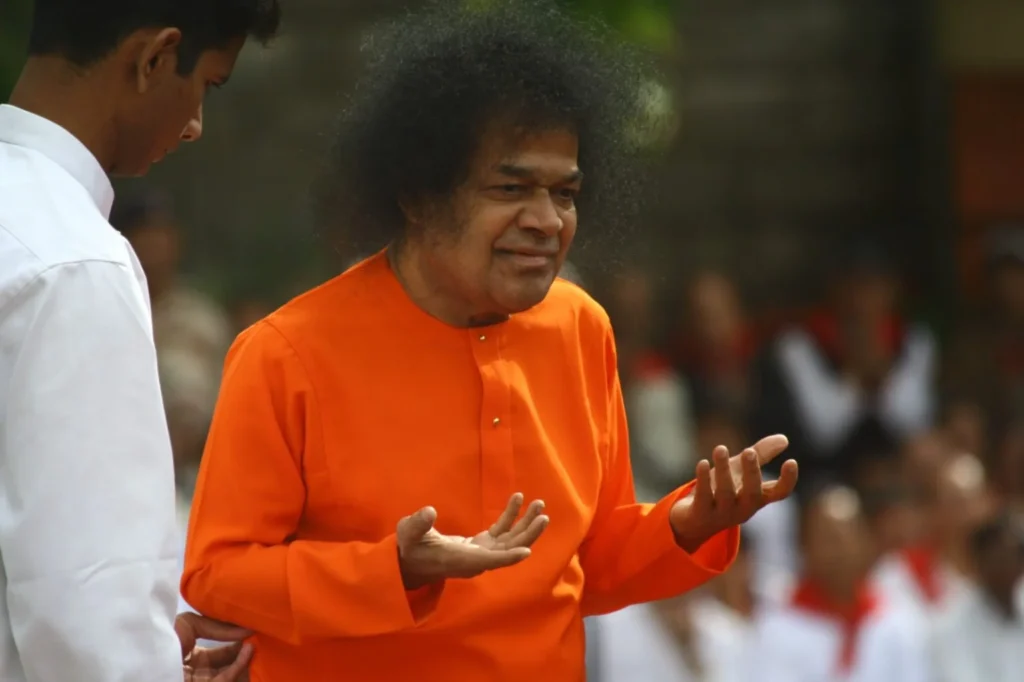
A Beautiful Divine Message by Bhagavan Sri Sathya Sai Baba Sathya dharma prema shantulu lekunnaVidhyalanniyu nerchi viluva sunnaSathya dharma prema santhulu lekunnaDana dharmala sardhakatha sunnaSathya dharma prema santhulu lekunnaBahula sathkarya labhmbhu sunnaSathya dharma prema santhulu lekunnaPadavulanelina viluva sunnaEe sanathana dharma harmyambu niluva gunamulivi nalgu punadhi godalappaIntakannanu vereddi yerukaparathuSadhu sadhguna ganyulau sabhyularaWithout Sathya (Truth), Dharma (Righteousness), Prema (Love), and Shanti (Peace),The mastery of all skills and all types of knowledge and education would be a futile exercise, the value being zero.Without Sathya, Dharma, Prema, and Shanti,All acts of charity, all acts of mercy would be rendered null and void.Without Sathya, Dharma, Prema, and Shanti,All the good that one does, all the good deeds that one performs, the fruit of such actions would be a zero.Without Sathya, Dharma, Prema, and Shanti,To occupy positions of power or authority, the results of actions which follow in the wake of this positions of authority would be a zero.These ancient principles of Sathya, Dharma, Prema, and Shanti are verily four cornerstones.They’re verily the fourfold pillars on which the rest of one’s life rests.What else than this could I possibly communicate to you all, pious members, the virtuous and the noble members of this august assembly. All those who can read and write, could they be called educated? Are those who secure degrees in the colleges, could they be called educated? And the type of education that does not fill you with good traits and a good conduct and character, could it be called true education? If by education you mean the means to live, what about the birds and the animals? Are they also not eking out a living? Embodiments of love! If man has to bring to the fore his innate personality, he has to develop ethics and morals. Without the guiding principle of morality, man cannot progress far in this life. This word, Neethi has its origin in the Sanskrit word Nathi. This word, Neethi, could be understood thus, that which you do through the capacity to discriminate. This word, Neethi is associated with good behavior, a good trait. Now this Morality or Neethi is the beacon light that leads you far. Today we are born as members of the human race. We’re brought up as members of the human race. We make a living in the community of human beings, but we do not understand the meaning of the word Manavata. Every person who wishes to be called Man or Manava should first and foremost understand the meaning of these words Manavata. The English connotation, the meaning of this word Manavata, is human value. This human value is not a separate subject by itself. This idea of human value is part and parcel of our existence in our daily lives. We have forgotten that which is very much us, which is part and parcel of our own nature. As a result, we are seeking external ways and means of trying to know what the subject of human values is all about. In order that you might further this idea of human value and the essence of human existence, a special effort has to be made. Alongside education you should also have this necessary culture which would go with it so that you can fulfill your life. Without this idea of culture or the transformation proper, mere education does not lead man far. One can master all types of skills, all types of education, and conquer an assembly of people. He could also be a valorous valiant one and win wars. He could be born a king among kings and rule over a vast empire. He could also indulge in acts of charity by way of giving away cow and cattle. He could also count all the stars in the skies. He could also recount to you the names of all the living forms of life. He could master all the eight types of education, Vidhya. He could also reach the moon. However, to control one’s bodily senses, to still the mind and look inwards, to be steady and one of equipoise, it’s impossible. Today’s skills make you a slave of your senses. They do not render you to be master of the senses. Today’s educational system makes you into a mechanical entity. It will not endow you with skills or a sense of awareness of purpose. So today we must seek out ways and means of filling ourselves with skills and the sense of awareness. Man should try and reach out to that type of education which would make him self-dependent. We should also give room for job-oriented types of education. Today there is no point in pursuing courses like MA (Master of Arts) and BA (Bachelor of Arts) and the like. Nor should we try and study for the sake of getting a job. We should have that education that will fill us with skills so that we are Self dependent. Today’s education system makes one get a degree. As a result, he wants to seek a job. He doesn’t get it. He’s subject to despair and despondency and takes undesirable ways to express his frustration. Today’s degree is like a begging bowl. You go from pillar to post seeking a job for yourself. If only you would understand your own nature and this essence of human values, you can certainly live on your own legs. This idea of Manavathva, this process of trying to imbue these human values, is to try to bring about a harmony between the thought, word, and deed. That word which is not defiled by untruth; the actions of the body which are not impure which do not indulge in violence; and the mind which is not defiled by ideas of ego and attachment. This is true human values. What you must imbibe. This also is called, “The proper study of mankind is man”. So, what you mean by the proper study here is this perfect consonance that prevails between thought, word, and deed. When these three become sacred and pure you

A Beautiful Divine Message by Bhagavan Sri Sathya Sai Baba Read Post »

images 1
The Divine Play

Story of Pandavas & Swargarohini

Story of Pandavas & Swargarohini Swargarohini, a majestic mountain peak in the Garhwal Himalayas, stands tall at an elevation of approximately 6,252 meters (20,505 feet) and holds immense significance in Hindu mythology and the spiritual landscape of Uttarakhand. Located near the picturesque town of Sankri, this stunning peak is part of the Greater Himalayas and is named after the legendary story of the Pandavas’ ascent to heaven. The mountain is not only a popular destination for trekkers and mountaineers but also a site of deep spiritual importance for pilgrims who follow the ancient routes connected to the epic Mahabharata. Mythological Significance In the final chapters of the Mahabharata, the Pandavas, led by their eldest brother Yudhishthira, embark on a profound journey northwards after renouncing their kingdom to their son Parikshit. Their ultimate goal is to reach heaven (Swarga) while still alive. It is said that Swargarohini peaks are the steps they followed on this spiritual ascent. However, only Yudhishthira manages to complete the journey, reflecting the epic’s theme of righteousness and virtue. This journey, steeped in mysticism, suggests that the path to heaven can be traversed without experiencing death, making Swargarohini a site of profound spiritual significance. Yet, the legends surrounding the Pandavas’ journey become complex, as many accounts indicate that the route they took led them through the present-day town of Badrinath, located in the eastern part of Garhwal, which is geographically distant from the Swargarohini peaks in the Sankari range of western Garhwal. Beyond Badrinath lies Mana village, followed by the beautiful Satopanth Lake, where the Swargarohini Glacier is visible. This glacier is often confused with the Swargarohini peaks themselves, yet it plays a crucial role in the journey described in the epic. According to the legends, Yudhishthira, accompanied by a dog—who is said to be the form of Yamraj (the god of death)—ascended the Swargarohini Glacier, marking the true path toward their celestial destination, rather than the peaks themselves. In the Mahaprasthanika Parva of the Mahabharata, the epic’s second to last chapter, there is a narration of events surrounding the final pastimes of the Pandavas and their ascent into the Himalayas, where they would, one by one, depart from this world. In Mausala Parva we find the story of Arjuna, who was in a disturbed state due to being unable to save the elders, women and children of the Yadava clan. He reached Hastinapur in a state of great disappointment. Arjuna related to Yudhistira the fate of the Yadava men and the mausala — iron clubs grown from a miraculously originating powder — with which they beat one another to death at the Prabasha sea. The departures of Sri Krsna and Balarama, the submersion of Dwaraka into the Sea… all these things weighed heavily on the Pandavas. In a state of dejection, Yudhistira, Arjuna, Bhima, Nakula, Sahadeva and Draupadi lost interest in the world and determined that the time of their own departure from this world was at hand. Coronating Pariksit as the King of Hastinapur, Yudhistira was free to take his leave, and led the group on their final journey towards the Himalayas. The Pandavas stopped to pray at many holy tirthas across the land before ascending the Himalaya foothills. At one point, Lord Agni appeared before the Pandavas and asked Arjuna to return his bow, which had been given to him by Varuna for destroying the asuras on Earth. Arjuna returned the bow, and Agni immediately disappeared from view. In Rishikesh, the Pandavas stopped to offer prayers to Lord Shiva and installed a Shivalingam there. Along the way they were joined by a dog, who accompanied them on the remainder of their journey. As the Pandavas travelled onward, Draupadi was the first among them to drop and die. Bhima asked Yudhistira the reason for her untimely death, before she could arrive in Heaven in her human form. He replied that although all five of the brothers loved her equally, her affections had been more inclined towards Arjuna. It was this partiality that caused her to depart midway along the journey. Sahadeva was the next to fall, and Bhima again asked Yudhistira about the reason for his death. Yudhistira replied that Sahadeva was very proud, because no one was his equal in wisdom. For this reason, he departed. Nakula was the next of the brothers to leave his body, and the reason Yudhistira gave was that being the most handsome person in the world, his pride had overcome him, resulting in his departure midway through the journey. Yudhistira then instructed Arjuna and Bhima to not look back, and to continue their journey with determination. Arjuna was the next Pandava brother to die, and this left Bhima very astonished. Again Bhima inquired from Yudhistira why Arjuna had not reached the heavens in human form. His elder brother replied that Arjuna had been boastful, vowing at the start of the Kurukshetra war that he would destroy all the Kauravas in a single day. Although very proud of his archery skills he was unable to fulfill this vow, thus the war raged on for eighteen days. Consequently, Arjuna had to be left behind by the remaining two brothers. Yudhistira, Bhima and the Dog proceeded on, but eventually Bhima himself fell. Inquiring again from his senior brother, Yudhistira replied that Bhima had eaten too much in his lifetime, without considering the hunger of others. For this reason, he was destined to die at this stage of the journey. Yudhistira and the Dog thus continued on alone, journeying towards the Heavens with their mortal bodies intact. The identity of the canine on this divine journey is disclosed at the very end of the story: Having lost his beloved Draupadi and all his brothers along the way, with only his companion the Dog remaining by his side, one day Lord Indra appeared in his chariot before Yudhistira. Because Yudhistira was the most pious of the brothers and had never strayed from the path of Dharma, Indra wished to now take him

Story of Pandavas & Swargarohini Read Post »

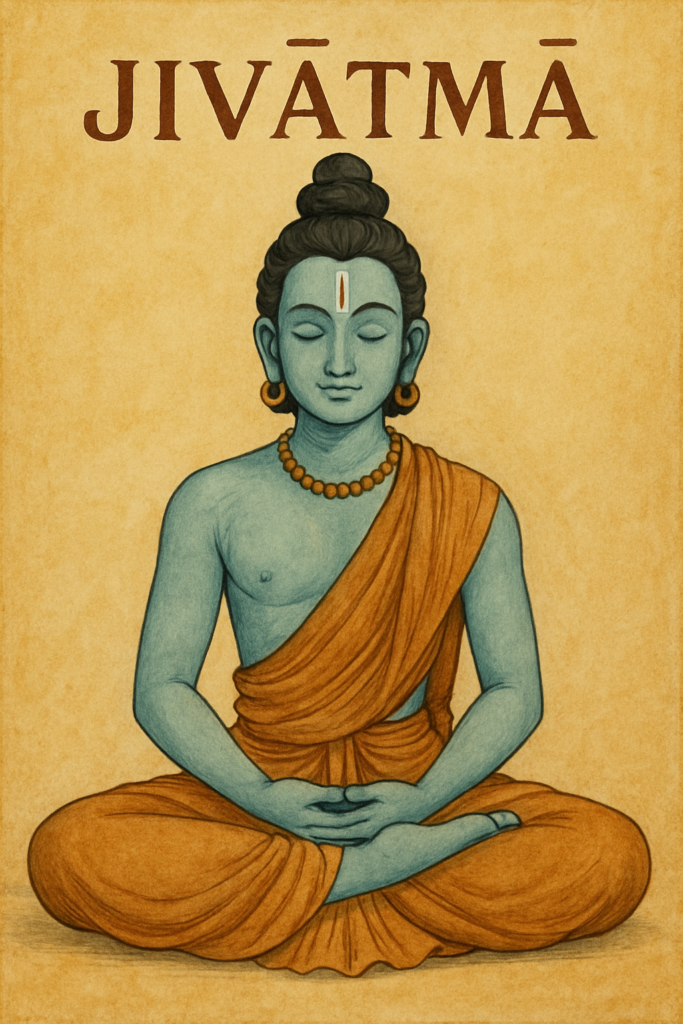
Meditating figure representing Jivatma with calm spiritual expression. image
The Divine Play

What is Jivi

What is Jivi The sage Uddalaka gave instructions to his son Svetaketu on the significance of Tat Tvam Asi Mahavakya nine times. This comes in Chhandogya Upanishad VI-7. The identity of Jivatma and Paramatma, the individual soul and the Supreme Soul is realised by meditating on the right significance of this Mahavakya or great sentence of the Upanishads. The relation between sound and its meaning is the Vritti of the sound. This Vritti is of two kinds, viz., Sakti Vritti and Lakshana Vritti. There is a power in the sound to generate the knowledge of the meaning of the sound. The direct connection between a sound and its meaning is its Sakti Vritti. The Parampara relationship between sound and its meaning, through the meaning known through the Sakti Vritti is the Lakshana Vritti of the sound. The meaning that is understood through the Sakti Vritti is the Vachyartha of the sound. The meaning that is understood by the Lakshana Vritti is the Lakshyartha of the sound. There are three kinds of relations, viz.,Samanadhi Karanya: (appositional) or the relation between two words having the same substratum. Visheshana-Visheshya: (the definitive) or the relation between the two words qualifying each other so as to signify a common object and Lakshya Lakshana Bhava: (the connotive) or the relation between two words and an identical thing implied by them (here Brahman). Samanadhi Karanya is the relationship between two words having the same substratum. by way of illustration take the sentence, This is that Devadatta. The word that indicates Devadatta connected with the past and the word this indicates Devadatta connected with the present. Both refer to one and the same person called Devadatta. Likewise, in the sentence Thou art That, the word That indicates consciousness characterised by remoteness, and the word Thou denotes consciousness characterised by nearness. Both refer to one and the same consciousness viz., the Brahman. The second relation is Visheshana-Visheshya Bhava. In the sentence, This is that Devadatta, that meaning a person endowed with the attribute of having been seen before is a conception of the past. They are dissimilar ideas but still they qualify each other so as to indicate a common object. Likewise in the Vedic sentence Thou art That, the meaning of the word Thou is consciousness characterised by nearness. They are dissimilar ideas but they qualify each other so as to indicate a common object. The third relation is Lakshya-Lakshana Bhava. In the sentence This is that Devadatta, this endowed with the attribute of having been seen at a particular place or in a particular dress or a particular time cannot be entirely identical with that endowed with the attribute of being seen at a different place, in a different dress in a different time. To equate them, therefore, we must abandon the inconsistent attributes and see the identity of the individual who has those varying attributes. Similarly in the Vedic sentence, Thou art That, to equate That, the omniscient, unmanifested Atman with Thou, the little-knowing, manifested, Jiva, we must abandon the inconsistent attributes such as omniscience and little knowledge etc., associated with That and Thou respectively and take up the pure consciousness which is common to both. Though the words That and Thou may indicate distinct conceptions, they must be taken to connote the same underlying reality or common consciousness. There are three kinds of Lakshana: Jahallakshan: Here the direct meaning of a sentence is abandoned completely in favour of an indirect meaning. For example, Gangayam Gosha, The village is on the Ganga. The direct meaning of The village is on the Ganga is abandoned in favour of the indirect meaning near the Ganga. There cannot be any village on the Ganga. There can be a village near the Ganga only. This Lakshana is not suitable for explaining Tat Tvam Asi Mahavakya because if the Kutasta Chaitanya, the Lakshyartha of Tvam Pada is abandoned, there is no Svarupa for the aspirant. Ajahallakshan: Here the direct meaning of a sentence is not abandoned but amplified. As for example, The red is running. Here we have to add the word horse, and understand as The red horse is running, because, redness being but a quality cannot run. This Lakshana also is not suitable to explain the identity of Jiva and Brahman in Tat Tvam Asi Mahavakya. Jahadajahallakshan: This is also known by the name Bhaga Tyaga Lakshana. Here a part of the direct meaning of a sentence is abandoned and another part is retained. As for example, This is that Devadatta, the associations regarding time and place are abandoned, but the person called Devadatta is retained. Likewise, in the great saying Thou art That the inconsistent attributes of remoteness and nearness, omni-science and little-knowledge, etc., associated with That and Thou respectively are abandoned and pure consciousness or Brahman, which is common to both is retained. The real meaning of the Vedic sentence is obtained by applying this Lakshana only. Identity of Jiva and Brahman is shown by applying this Lakshana. In the Vedic sentence, That art Thou or Thou art That, the direct significance of the word That is Maya plus the Brahman reflected therein, plus the pure Brahman, the substratum of Maya. The direct significance of the word Thou is Avidya plus the Self reflected therein plus Kutastha, the substratum of Avidya. The connotation or the real indicative meaning of the word That is pure Brahman. The connotation or the real indicative meaning of the word Thou is the Kutastha. The inconsistent attributes of Maya and Avidya have to be eliminated and the Kutastha whose nature is Existence, Knowledge and Bliss has to be identified with the pure Brahman whose nature is also Existence, Knowledge and Bliss. He who realises the identity through direct intuitive perception attains Moksha. He is a Jivanmukta. This is the emphatic unanimous voice of the Upanishads. Avidya and the Chaitanya that is at its back (Adhisthana Chaitanya, i.e., Kutastha), the individual subtle body that is the product of Apanchikrita Bhutas or non-quintuplicated

What is Jivi Read Post »

jesus dj
The Divine Play

God is a DJ

God is a DJ The Music we hear of the 5 elements, the beating of the heart, the blowing of wind, the sounds of rain, the thundering, the melody of the nature, the Beautiful Dance of Nataraja on the Divine Notes, proves that Only The Supreme Lord, only him is the True DJ, who plays his Divine Music everywhere we look. It is his music, which makes everything dance to its tune. The Om symbol is the primodal Taal of the Lord, he created everything out of the Pranava Om.Let’s dance to his tunes, and surrender our lives at his feet. He being our Guru, God and Guardian, will guide us, guard us and merge us in him so that we become the Omkara Swarupa as He is, the Primodial Sound of the Creator. “ put shiva nataraja photos , dancing and i wil also send u once u reach here , call me “God is a lover of music and enjoys music. Saintly devotees like Naradha and Thumburu, who are always in the proximity of God, are always singing the glory of God. Nothing else can give so much joy as music. You can please God with your music. God revels in music. Music is therefore holy. It reflects the state of one’s inner being. Singing the glories of God, render service to the people. You will derive the greatest joy when you sing and serve”. Bhagavan Sri Sathya Sai Baba The Music Of Devotion To God The Music Of Devotion To GodThe path of good music has always been through the heart. Antiquity proves that music had a divine origin and great music is always divine in its essence. Music has the power to cause emotions to well up within us and these emotions, if properly channelised, can touch the essence of our being. As a listener or as a performer, an ardent advocate of music actually meditates. The concept of harmony in western music and bhava (proper emotion), raga (deep tune), and tala (beat), in Indian music help to attain that meditative stage. It helps to complete a unique aesthetic experience that stills the mind, soothes the senses and makes one intuitively aware of the vibrations it creates. At one level, it has a healing and therapeutic effect, on another; it raises the consciousness of the individual. For centuries, man’s communion with the Divine has been music-aided. Whether it is in the Saamagaana of Vedic chants, the Kritis of the Carnatic musicians, the bhajans of the travelling singers of North India-the devotional fervour of the music is unmistakable. Attend a church choir, tune yourself to Gospel singing or even lend your ear to the muezzin calling to prayer, the experience is yet the same. Renowned Indian musician, Kishori Amonkar has this to say, “To me, music is a sadhana. To me, it is a dialogue with the divine, this intense focussed communication with the ultimate other.” Bhagawan Sri Krishna declares in the Bhagawad Gita, “Among all Vedas, I am the Saama Veda (the Vedas of music).” Bhagawan Sri Sathya Sai Baba also attaches tremendous importance to devotional music. He says that God is Gaana Priya – the lover of music. Bhagawan Baba blends the traditions of the North and the South of India and even the western world and encourages an all-embracing type of bhajan singing. It combines in itself, the essence of Kirthana of South India, the spirit of the Bhakti Movement that swept through North India two centuries ago, and the lively rhythm and cadence of western music. Based on the traditional Naamasankirthana, Sai bhajans are the simplest media for spiritual seekers to evolve themselves on the path of Bhakti. Songs that glorify the Supreme, form the sum and substance of bhajans. Naturally, therefore, the spiritual vibrations produced by bhajans confer great joy both on those who sing them and on those who hear the songs. Bhajans remove all negative thoughts, soothe the nerves, purify the mind and fill the body and the heart with a sweet love. As one sings bhajans, the mind gets saturated with God-consciousness and a great ecstasy wells up from within. No mental or intellectual effort is called for, as there is no need to understand anything while uttering the holy names of God and singing His glory. The singing and the atmosphere created by bhajans take one beyond the realm of the body, mind and intellect and help to establish communion with the Higher Self (consciousness) within. Therefore, singing bhajans becomes a beautiful and blissful experience. Many great composers and musicians like Thyagaraja established communion with God through devotional music.

God is a DJ Read Post »

202f8e7c3d3e09295b6b4757a7e609d3
The Divine Play

What is Re-Incarnation

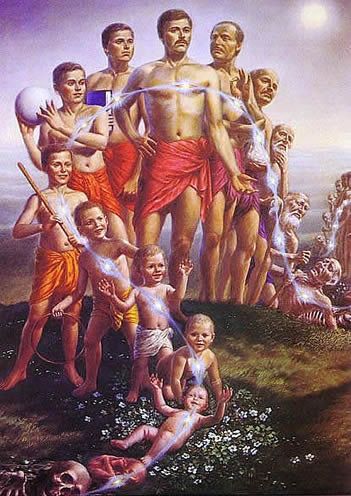
What is Re-Incarnation The doctrine of reincarnation is accepted by the majority of mankind of the present day. It has been held as true by the mightiest Eastern nations. The ancient civilisation of Egypt was built upon this doctrine, and it was handed over to Pythagoras, Empedocles, Plato, Virgil and Ovid who scattered it through Greece and Italy. It is the keynote of Plato’s philosophy when he says that all knowledge is reminiscence. It was wholly adopted by the Neo-Platonists like Plotinus and Proclas. The hundreds of millions of Hindus, Buddhists and Jains have made this doctrine the foundation of their philosophy, religion, government and social institutions. It was a cardinal point in the religion of the Persian Unagi. The doctrine of metempsychosis was an essential principle of the Druid faith and was impressed upon the Celts, the Gauls and the Britons. Among the Arab philosophers it was a favourite idea. The rights and ceremonies of the Romans, Druids and Hebrews expressed this faith forcibly. The Jews adopted it after the Babylonian captivity. John the Baptist was to them a second Elijah. Jesus was thought to be a reappearance of John the Baptist or one of the old prophets. The Roman Catholic purgatory seems to be a makeshift, contrived to take its place. Philosophers like Kant, Schelling and Schopenhauer have upheld this doctrine. Theologians like Julius Muller, Dorner and Edward Beecher have maintained it. And today it reigns over the Burmese, Siamese, Chinese, Japanese, Tartar, Tibetan, East Indian and Ceylonese including at least 750 millions of mankind or nearly two thirds of the human race. Is it not wonderful than that this great and grand philosophical education which the Hindus, Buddhists and Jains gave to the world centuries and centuries before the Christian era should or could be blotted out of existence from the Western and European world by the soul-blighting and absurd dogmas of the dark ages that supervened? By the persecution of the wise men and destruction of innumerable works in the library of Constantinople, the Church hierarchy managed to plunge the whole of Europe into mental darkness which has given the world the black record of the inquisition and the loss of millions of human lives through religious wars and persecutions. Here is a challenge to the non-believers of the Hindu theory of transmigration. Recently a little girl Santi Devi gave a vivid description of her past lives in Delhi. There was a great sensation in Delhi and Muttra, nay, throughout the United Provinces. There was a great assembly of persons to hear her statements. She recognised her husband and child of her previous birth who are living in Muttra. She pointed out the place where money was kept, and an old well in the house which is covered now. All her statements were duly verified and corroborated by respectable eye-witnesses. Several cases like this have occurred in Rangoon, Sitapur and various other places. They are quite common now. In such cases the Jiva takes immediate rebirth with the old astral body or Linga Sarira. That is the reason why memory of previous birth comes in. He did not stay in the mental world for a long time to rebuild a new mind and astral body according to his previous experiences of the world. Transmigration made its appearance in the early Christian church. Elijah was reborn as John the Baptist. “Did the blind man sin, or his parents, that he was born blind?” ask the believers in transmitted retribution. There is a period of anxiety immediately after death, when angels contend with demons for the possession of the departing soul on its way to purgatory. Pythagoras and others obtained their belief in metempsychosis from India only. Pythagoras who flourished in the sixth century also taught a doctrine of transmigration; and, curiously enough, prescribed abstinence from the eating of flesh. The suckling of a child and the act of swimming of a duckling-these instinctive acts are proofs of memory which must be the result of their corresponding and inseparable impressions left by the same acts in a previous incarnation, never mind when and where. Every act leaves Samskaras in the Chitta, which causes memory. Memory in its own turn leads to fresh actions and fresh impressions. This cycle or Chakrika goes on from eternity like the analogy of the seed and tree. There is no beginning for them, the desire to live being eternal, ‘for them’, i.e., for the desires. Desires have no beginning or end, every being has clinging to this physical life (Abhinivesa). This “will to live” is eternal. Experiences are also without beginning. You cannot think of a time when this feeling of ‘Aham’ or ‘I’ has not existed. This ‘I’ exists continuously without interruption. From this we can very easily infer that there have been previous births for us. Now, could there be fear of death to avoid pain in any being who has only been born, if he has had no experience of liability to death, it being understood that desire to avoid anything is only caused by remembrance suffered in consequence thereof? Nothing which is inherent in anything stands in need of a cause. How could it be that a child, who has not experienced this liability to death in the present life, should, as he is falling down from the mother’s lap, begin to tremble and hold with his hands tightly the necklace hanging on her breast? How is it that such a child should experience the fear of death, which can only be caused by the memory of the pain consequent upon aversion to death, whose existence is conferred by the trembling of the child? We have boy-geniuses. A boy of five becomes an expert on the piano or violin. Sri Jnanadev wrote his commentary “Jnaneshwari” on the Gita when he was fourteen years old. There have been boy-mathematicians. There was the boy-Bhagavatar in Madras who conducted Kathas when he was eight years old. How could you explain these

What is Re-Incarnation Read Post »

Shri Sathya Sai Baba tranquil divine temple image
The Divine Play

The Three Bodies

The Three Bodies MAN is engaged in ceaseless search for happiness; but, he is incapable of defining what exactly is the essential component of happiness. So, he flits from one objective gain to another, ever discontented with himself, ever bothered by disappointment. He tries to possess, to accumulate, to acquire more and more of external junk, which cloud his vision and dulls his appetite for gains for lasting value. When can a man say, “I am fully happy; I need no more?” What is the nature of joy or comfort that external objects can give? Man does not pause to inquire. He is unaware that he himself is the embodiment of the highest and the most lasting happiness or Anandha (Bliss). That flaw has led him into disaster and disease. Before seeking happiness through the senses, the mind and the intellect, man has to examine whether he is a bundle of senses, or a mind playing with them or an intellect that rationalises the mental cravings. The body is the gross body; the water which it is intended to contain and carry is the subtle body; the reality of the potter who shaped it and willed it is the causal body. The three bodies which each has are called respectively Sthuula (gross), Suukshma (subtle) and Karana (causal). Physical and vital sheaths are sthuula, mental and the intellectual sheaths are the Suukshma, and the Blissful or Anandhamaya sheath is the Karana or Causal body of man. Behind the Anandha is the spring of Anandha, the Atma. Three stages of Wisdom related to three bodies There are three stages of wisdom correlated to those three bodies: Jnana, Sujnana and Vijnana. Knowledge that is gained by the analysis of the objective world and the similarities of the behaviour of its components is Jnana. When this knowledge is further studied and practised to subserve the best interests of the individual society, it becomes Sujnana, or beneficial wisdom. The intentions and urges that arise from the purified consciousness saturated with the Divine qualities emanating from the sage is Vijnana, the Highest Wisdom. It is to be noted that the word Vijnana is often misused to indicate mere Jnana, or co-ordinated information, analysed information about sense perceptions arising out of contact with the material objective world. Bharatheeya Culture uses the word for the Supreme Wisdom, which denotes the seer, the saint. Intelligence, intellect, intuition – these three govern the thoughts and actions of man. One leads to another. This is the significance of the prayer with which Gandhi awakened the urge of liberation in this vast country, liberation not only from alien rule but also from alien tendencies and trends of thought. He caused the reverberation all over the land from a million throats of the prayer, Sabko sanmathi dhe Bhagavan – “O Lord! Grant every one the equipment of beneficent intelligence.” Once that is assured, progress is certain. Lessons to be learnt from Hanuman’s mission to Lanka Once the intelligence is purified and dedicated to spiritual effort, there should be no slipping back whatever the obstacle, whatever the temptation. Hanuman, charged with the mission of discovering the place where Ravana had confined Seetha, decided that he should take a leap over the sea towards Lanka to search for her in that island of Ram that he carried in his heart and on his tongue. A mountain immersed at the bottom of the sea felt a strong urge to do him some little service, for, he was the instrument of God, and engaged in an exhausting adventure! Its name was Mynaka. It rose above the waters and called upon Hanuman to rest awhile on its crest, and refresh himself with the fruits upon the trees that grew thereon. Hanuman declined to delay his landing in Lanka; he was engaged in a Divine Mission, which brooked no rest, no delay, no dallying. He turned a deaf ear to the importunities of Mynaka, and sped forward to fulfil the command of the Lord. Ponder over this incident: Consider the compassion and the eagerness to serve which the ‘inert’ massive mountain felt! Consider the steadfastness, the un-deviating faith, the single-pointed loyalty of the monkey, Hanuman! Do they not teach invaluable lessons to man – lessons of heart that melts at suffering, a head that refuses to swerve from the path of duty? The whole duty of man is to engage himself in good acts with the gross body, scatter good thoughts and good influences around him with his subtle body, and earn self-realisation and Bliss through his causal body. To search for God with the instruments of the laboratory is like trying to cure pain in the stomach by pouring drops into the eye. There is a technique and a special instrument for that purpose, which the pastmasters in that science have developed and spoken about.Equip yourselves with a clear eye, through detachment and love, sharpen your sense of discrimination, viveka, so that it has no prejudice or predilection; then, you can see God in you, around you, in all that you know and feel and are. – Sri Sathya Sai Baba The Three Bodies & their Enumeratioon (The individual experiencer is a consciousness-centre enveloped by several layers of matter existing as the factors causing objective awareness in it. The analysis of these layers or bodies is necessary to ascertain the nature of the true Self.) Hari Om. Om Sat-Guru-Paramatmane Namah. Disciple: How many bodies are there in an individual (Jiva)? Guru: There are three bodies in every individual (Jiva). Disciple: Please name them. Guru: The physical body or the gross body (Sthula Sarira), the astral body or the subtle body (Sukshma Sarira or Lingadeha) and the causal body or the seed body (Karanasarira) are the three bodies. Disciple: Please illustrate them. Guru: The shell of a tamarind corresponds to the physical body. The pulp represents the subtle body. The seed corresponds to the causal body. Ice represents the physical body. H2O represents the subtle body. The Tanmatras or root-elements correspond to the causal

The Three Bodies Read Post »

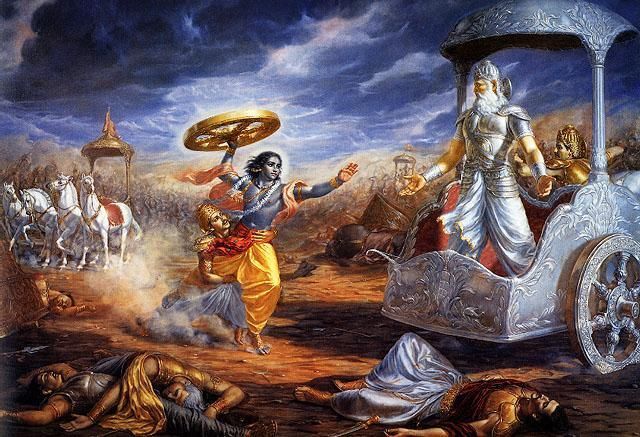
Krishna rushes toward Bhishma holding Sudarshan Chakra on Kurukshetra battlefield. image
Stories From Mahabharat

Listen Stories of Mahabharat

Listen Some Unknown Stories of Mahabharat Special announcement – a new podcast Your browser does not support the audio element. Lorem ipsum dolor sit amet, consectetur adipiscing elit. Ut elit tellus, luctus nec ullamcorper mattis, pulvinar dapibus leo. Mahabharata Episode 1 Beginnings Your browser does not support the audio element. Ganga, Devabrata and ShantanuThe first episode of the Stories of Mahabharata podcast series has been missing for a long time. The episode was not added because it did not have the production quality that we have been striving for. After a long break, we finally found some time to rerecord this episode and mix the vocal track with sound effects and music to make it at par with the rest of the episodes. We hope you like it.This episode tells the story of the beginnings of the great saga told by Rishi Vyasa and written by lord Ganesha. The story begins with the narrative of King Shantanu’s marriage with Ganga and the birth of Devabrata. Later we learn how prince Devabrata becomes the great Bhishma because of his “Bhisham” or profound vow – a vow which kickstarts the story of the Mahabharata and the destiny of the Kuru dynasty.  Mahabharata Episode 2: Amba’s Plight Your browser does not support the audio element. Bhishma abducts Amba, Ambika and AmbalikaAfter a long hiatus, we bring to you the fully produced version of the episode 2 of the Stories of Mahabharata Series – Amba’s Plight. In this episode, he learn how Bhisma abducts the three princesses of Kashi, Amba, Ambika and Ambalika by force and brings them to Hastinapur to get them married to his brother Vichitravirya.  Amba declines to marry Vichitravirya. Vichitravirya marries Ambika and Ambalika but dies without leaving an heir. Satyavati then invokes the practice of Niyoga and asks Vyasa to give the Kuru dynasty an heir. Listen to this crucial and exciting episode and share your thoughts with us.  Mahabharata Episode 3: Birth of the Kuru Princes Your browser does not support the audio element. Pandu Hunts the Deer Couple.The stories of Mahabharata continues. In this episode we learn about the birth of the Kuru princes, the Pandavas and the Kauravas. We also learn about the tragic death of King Pandu caused by a curse from the dying sage Kindama.Audio engineering and sound design by Avi Ziv.  Mahabharata Episode 4: The Conflict Begins Your browser does not support the audio element. Young Bheema fight with the Nagas The stories of Mahabharata continues. The conflict between the Pandava brothers and the Kaurava brothers began at an early age.  In this episode we learn of the first attempt by the Kaurava brothers, primarily Duryodhona and Duhsashana, to eliminate their arch rival Bheema. The story gives us a glimpse of the extent to which the Kauravas could go to achieve their goals. Enjoy and do not forget to give your feedback.(Note: You can also subscribe to this series (for free) as podcast on iTunes store or any other podcast aggregator. Just search for Mahabharata and Bhawmik.)  Mahabharata Episode 5: The Guru Arrives Your browser does not support the audio element. Drona tests his studentsIn this episode, Guru Dronacharya arrives in Hastinapura and awes the Kuru princes with his skills. Bhishma retains him as the royal arms and weapons trainer for the Pandava and Kaurava brothers. Arjuna excels in archery. Ekalavya, a tribal boy, comes to Drona to learn from him. Drona refuses to accept him as a student. But Ekalavya masters the art of archery by practicing in front of a statue of Dronacharya for which he had to pay the ultimate guru dakshina.Listen to the podcast below or subscribe in iTunes store (free.)   Mahabharata Episode 6: A Show of Arms Your browser does not support the audio element. Kunti and KarnaIn this episode of the stories from Mahabharata, Drona arranges for a grand show where his students, the Kuru princes demonstrate their prowess with arms. Arjuna dazzles the audience by his prowess with a variety of arms and weapons. But suddenly Karna enters the arena and the story takes a dranstic turn which none could have expected. Listen to this episode on the player below, or by subscribing to this podcast on iTunes.  Mahabharata Episode 7: Drona’s Revenge Your browser does not support the audio element. Drona takes his revenge on DrupadaThe stories of Mahabharata are not only about kings and gods and demons. It is also a tale of ethics, morality and politics.  The needs and conflicts that drive each character are the same that drives us today. The great weapons teacher Drona Acharya was a Brahmin. A Brahmin was supposed to have the noblest of qualities and free of petty politics and trivialities of life. Their main purpose in life was to acquire wisdom and spread knowledge to their pupils.  But Drona, had his own axe to grind.  He became the royal weapons teacher of the Kuru princes with a single objective in mind. He wanted to take his revenge on Drupada, the King of Panchala, for the insult he had to tolerate in Drupada’s court. We also learn how the Kaurava brothers start planning for their next step to eliminate their arch rivals, the Pandavas.  Mahabharata Episode 8: The Flaming House of Varanabata Your browser does not support the audio element. The Flaming House of VaranabataThe stories of Mahabharata continues with this eighth episode – The Flaming house of Varanabata. With the advice from Shakuni, Duryodhana comes up with a devious plan to kill the Pandavas. Dhritarashtra sends the Pandavas to Varanabata to attend a festival. But the Pandavas escape the trap set for them and flee into the forest. There Bheema encounters the demons Hidimb and Hidimbaa. Listen to this exciting episode in the podcast below.(Story told by Sudipta Bhawmik, Audio Engineering and Sound Design by Avi Ziv)  Mahabharata Episode 9: Draupadi’s Swayamvara Your browser does not support the audio element. Arjuna attempts to hit the target while Krishna, Draupadi and Drupada watch.Listen to another episode

Listen Stories of Mahabharat Read Post »

Vishnu Krishna
The Divine Play

Types of Lokas – Astral Worlds

The 14 Lokas as Explained by Bhagavan Sri Sathya Sai Baba The Puranas speak of fourteen Lokas (seven higher and seven lower regions). People have adopted the superficial meaning of the names given to these and they classify them as ‘sacred’ lokas and ‘condemned’ lokas – Deva Lokas and Pathala Lokas. But, all these lokas do exist, in our own bodies, (the bodies which we carry about and care for), seven in the upper part and seven in the lower part. Which is the upper part of the human body? It is the head, the Thrikuuta Peak, the crown, the higher region. Seven lokas are situated therein. They are the Garuda Loka, the Gandharva Loka, the Yaksha Loka, the Kinnara Loka and the Kimpurusha Loka. They are all situated in the head. The Garuda Loka is the nose, the seat of inhalation and exhalation. The Gandharva Loka is in the eye. The Yaksha Loka is in the tongue. Kinnara Loka is the ear and the Kimpurusha, on the skin, seat of the sense of touch. Though the names of the lokas are five, there are seven regions to which the name applies. The nose is the first, the eyes are the second and the third, the tongue is the fourth, the ears are the fifth and the sixth and the skin is the seventh. These are the Upper Lokas. Those who sanctify these lokas by recognising the respective organs as instruments for higher ideals can be deemed worthy of human existence. That is to say, inhaling unpolluted air, seeing auspicious sights, hearing heartening sounds, etc. These lokas when properly cultivated, can make man divine. Does thou know why you are given eyes? To see whatever can be seen ? No! No! To fill the eyes with the Vision of God Who resides on Mount Kailash. Both the higher and lower lokas are necessary We have to cast our looks at sacred sights. We must visualise in every one only the good and the godly. That is the purpose for which God has equipped us with eyes. He has not gifted them to us to observe and judge others, to follow people into the bazar or to see unsightly films. Dost thou know why you have a tongue? To despatch tasty foods in ? No! No! The prime purpose is not to enable us to swallow our meals. The object is to utter holy words Now, when some one is narrating some good incidents, the ears show no inclination to listen. But when one whispers something confidential to another, the ears jointly seek to overhear. Is it for this that God has blessed us with ears? Therefore, the seven higher lokas have to be utilised for Divine ends. When that is done, one becomes divinised, one is liberated. The rest of the lokas are intended for the maintenance of the physical frame in which we are enclosed. The stomach, so to say, is the petrol tank. When that is filled, every limb and cell of the body is supplied with energy and activated, to execute the beneficial duties assigned to each. With the two hands and the two legs, these make five lokas. The two others are the anal and the urinal parts. These seven lower lokas maintain the physical body. Both the higher seven and the lower seven are necessary; they complement each other. The lower lokas are the Pathala lokas according to the Puranas. They form the foundation, the base. Those who long for flowers and fruits have to feed the unseen roots. Pathala too should not be neglected merely because they are described as “low.” Joy has to be churned from grief. Pleasure is a product of pain. The tongue should be used for spelling the name of the Lord, not for hissing like a serpent, or growling or roaring with intention to strike terror. That is not the purpose for which the tongue is granted to man.Speech indicates one’s character, reveals one’s personality, educates others, and communicates experience and information. So, be vigilant about words.Slip while talking the injury is irreparable! – Sri Sathya Sai Baba Q. I have heard it said that the worlds (lokas) are all in the body of people! Some experienced people and some who are learned in the scriptures (sastras) have said so. Is that true? What are those worlds? Where are they situated? A. Yes. They are: the earth in the feet, the atmosphere in the genitals, heaven in the navel, the great world in the heart, the world of good people in the throat, the world of virtue in the brow centre, and the realm of truth on the crest of the head, These worlds, called the upper worlds, are all situated in the body of people. There are also lower worlds. (The upper worlds, in the order given above, are the bhu-loka, bhuvar-loka, swar-loka, mahar-loka, janaloka, thapo-loka, and sathya-loka.) Q. What are the lower worlds? Where do they exist? A. The bottomless region in the soles of the feet, the depth of hell on the nails, the great depth in the heels, the bottomless pit in the hip, the infernal region in the knees, the great pit in the thighs, and deepest hell in the anus. (The lower worlds are the athala, vithala, suthala, thalathala, rasathala, mahathala, and patala.) Q. If all worlds are in the body – the five elements being the components – what happened to the seven legendary seas? Are they also in the body or mind? A. When the body is the residence for all the worlds, how could only the seven seas have a separate existence? They are also “in” the body. The Seas of Salt (urine), Cane-juice (perspiration), Wine (senses), Ghee (semen), Buttermilk (mucus), Milk (saliva), and Pure Water (tears). Q. You spoke of several types of fire (agni). What are they, and how are they named? A. They are called the five fires, because there are five in all: the fire

Types of Lokas – Astral Worlds Read Post »

shri sathya sai baba with curly hair, seated photo
The Divine Play

Maya – The Divine Illusion

Maya – The Divine Illusion 𝐖𝐎𝐑𝐃𝐒 𝐎𝐅 𝐖𝐈𝐒𝐃𝐎𝐌 𝐅𝐑𝐎𝐌 𝐓𝐇𝐄 𝐒𝐄𝐋𝐅 𝐑𝐄𝐀𝐋𝐈𝐙𝐄𝐃 𝐌𝐀𝐒𝐓𝐄𝐑 – 𝐌𝐀𝐘𝐀 𝐀𝐍𝐃 𝐌𝐈𝐍𝐃Swami SivanandaThe things that we perceive all round us are only mind in form or substance. The world is a product of the mind. The whole world is an expansion of the mind. The entire universe arises and exists in the mind.Nothing of the world is outside the mind. Earth, mountains, and rivers – all are fragments of the mind, appearing as it were to exist outside The world does not exist by itself. It is not seen without the aid of the mind.It disappears when the mind ceases to function. It is imagination alone that assumes the forms of time, space, and motion. Space and time have no independent status apart from Brahman or the Self, which is Awareness. There is no space without time, and there is no time without space.He who is attempting to develop his will, should always try to keep a cool head. He should keep a balanced mind under all conditions. He will have to train or discipline the mind. Swami Sivananda Doctrine of Maya You must try to understand the right significance of Maya which is the chief characteristic of Vedanta or Kevala Advaita school of Sri Sankara. The term Maya appears in the Svetasvatara Upanishad and in the Gita, chapter VII-14, Mama Maya the divine illusion of Mine. Svetasvatara Upanishad IV-10 declares that Maya is the material cause of the world and the possessor of Maya is the great Lord. Maya is that portion of the primitive non-intelligent principle in which pure Sattva is not subordinated to Rajas and Tamas. In other words, that portion in which pure Sattva is predominant is called Maya. The world is regarded as Maya, as it cannot be accepted as real. Does Maya really exist or not? The Advaitin gives a reply: This inscrutable, indescribable Maya cannot be said either to exist or not to exist. It is a strange phenomenon which cannot be accounted by any law of nature. Maya is Anirvachaniya i.e., incapable of being described. It is neither Sat (real) like Brahman nor Asat (unreal) like a barren woman’s son or horn of a hare or a lotus flower in the sky. The phenomena produced by a magician do not really exist, because they vanish soon. The magician himself is fully aware that it is mere illusion. But we cannot say that they do not exist at all, because we are conscious of the phenomena, though only for a short time. We are never conscious of a thing which is altogether non-existent like the lotus flower in the sky. Similar is the phenomenon called the universe which is imagined to be distinct from Brahman. It is like the silver for which the mother-of-pearl is mistaken. It is difficult to conceive how the infinite comes out of itself into the finite. The magician brings out a mango tree before us from out of nothing. The tree is there, though we cannot explain it. So we call it Maya or illusion. If we know the nature of the Brahman, all names and forms and limitations will melt away. The world is Maya as it is not the essential truth of the infinite reality of the Brahman. The world somehow exists and its relation to the Brahman is indescribable (Anirvachaniya). The illusion vanishes by attainment of knowledge of the Brahman. Sages, Rishis and Srutis emphatically declare that the Maya vanishes entirely as soon as the knowledge of the Supreme Self dawns. It is in this sense, in the sense that it vanishes when Atma-Jnana arises that this phenomenal universe is said to be unreal (Mithya), in contradistinction to the Self-existent and Self-luminous Brahman who never ceases to exist and shine. The Eternal always abides in its own nature. It rests in its own native pristine glory. Srutis declare: All indeed is Brahman. There is no such thing as diversity. This is the experience of liberated sages. The Sankhyas and the Tarkikas teach that emancipation is attained by a knowledge of the true nature of the Spirit and by discriminating spirit from matter. The world of names and forms vanishes entirely from the vision of a sage. It is only an illusion that can be removed by mere knowledge. It is the illusory notion of serpent which is removed when the rope that is mistaken for a serpent is recognised. Therefore it must be clearly admitted that the universe which is removed by knowledge of Self is also an illusion. If you give up entirely reading of newspapers and shut yourself up in a room for a month and if you plunge yourself in deep meditation, you will have a very light impression of the world in your mind. Gradually this light impression also will be obliterated. The world is nothing but a play of the two currents of Raga-Dvesha. If these two currents are destroyed, the world will vanish. Because the minds of the worldly people are filled with passions, attachment and delusion, this world appears to be real. Some philosophers state that this world is real because, if at the very outset, they declare, the world is unreal, the aspirants will be bewildered. It is only with a view to prevent this perplexity that the universe is spoken of as real.

Maya – The Divine Illusion Read Post »