













Hari Om

Menu

the divine times

edb6dd9e63270c03e7c0f111541c300c
God is Love

Truth – The Divine Virtue

Truth – The Divine Virtue THERE is God everywhere and there is no second entity anywhere. God is the truth, the only truth. In every article or thing, God is, as the basis, as understanding and understandability, as the source of Divine light, as’ Atma. Know that All exists, has awareness and bliss because of the Atma which All is. Truth is a word that is frequently used on platforms but the concept is still very hazy and often mistakenly interpreted. In reality, man is afraid of probing into his own truth, lest his pet opinions and attitudes be proved hollow and dangerous. As a result, his actions and thoughts pursue disturbing and discordant paths. What exactly is truth? Is it the description of a ‘thing seen’ as one has seen it, without exaggeration or under-statement? No. Or, the narration of an incident in the same word as one has heard it narrated? No. Truth elevates; it holds forth ideals; it inspires the individual and society. It is the Light that illumines Man’s path to God. A life inspired by Truth will enable man to live as man – not degrade himself to the status of a lower species. From dawn to dusk, from the moment of wakefulness to the moment of sleep, if he devotes himself to his own deeds, is that a life inspired by the Truth? No. By his good thoughts translated into good words and manifested as good deeds, man must promote Truth in society and prove its usefulness. He is the image of God. He must be aware of the image of God that shines in society also. The thought that arises in the mind, the word that sprouts from the tongue and the deed that engages the hand must all three be fully co-ordinated. Each one must be in conformity with the other two. They must be in unison with each other. If you have one plan in your mind and talk of a different one and execute something else, it is a false life, not a true one. The ancient texts condemn such a person as a Dhuratma (evil person) and extol the person whose thought,Word and deed are all in line as a Mahatma (greatest soul). Nowadays, people are fascinated by the false and keep away from the true. They ignore the true and pursue the false. They are not eager to know the Truth, the eternal and the Absolute.  Protect your mother-tongue and Motherland with all your energy. Make yourselves fit for this, by making the best use of the opportunities in the school. Progress as much as you can, without hesitation. Develop character as well as intelligence and health. The most reliable source of strength is in you, not in money, or kinsmen, or physical acumen, but, in yourself, the Atman (divinity). Know it; delve into it; draw sustenance from it; see it in all; serve it in all. – Sri Sathya Sai Baba The Practice of Truth By Sri Swami Atmaswarupananda Early Morning Meditation Talk given in the Sacred Samadhi Hall of Gurudev Sri Swami Sivanandaji Maharaj, Sivananda Ashram, Rishikesh The Father of the Nation, Mahatma Gandhi, was a votary of truth. He used to declare, “They say that God is Truth. But I declare unto you, truth is God.” This would suggest that when Gurudev wants us take a vow of truthfulness, satyam, that if it is practised in all sincerity, then we become God. But what is involved in the practice of truth? If we reflect upon it, we will recognise that we need to practice truth at three levels of our being. The first level of the practice of truth is the obvious one, of telling the truth to each other in our day by day affairs. To practise the truth to the standard of Mahatma Gandhi means that ultimately we become incapable of telling a lie. If by chance a lie should escape our lips, we become immediately aware of it and make the necessary correction. The next level of truth is the practice of truth in our inner being. Gurudev said, “Scrutinise always your inner motives.” Normally, most of us have two reasons for doing something: One, a reason that sounds good to ourselves and others, and second, the real reason. We have to scrutinise carefully our inner motives, recognise what our real motives are, and never claim to be doing anything for other than our real motivation. But there is a third level of truth that most of us find almost impossible to practice. And that is truth at the level of yoga. The scriptures can declare “That thou art,” we can affirm, “I am Brahman,” we can believe with our intellect that “All this is Brahman,” but to come to grips with the truth of it is something else altogether. It requires tremendous strength, tremendous clarity of intellect, tremendous devotion to the truth, tremendous will-power and, above all, the character built by the practice of truth with others and within ourselves. It is this final practice of the truth that will convert us into the Divine. But it is an absolute practice and it is not a practice that we can do in the ordinary way. It is a practice–no matter how we describe it–of total letting go, total renunciation, total surrender, and it is affirming that the ultimate Truth is That which we can never grasp, in anyway, with the mind. The scriptures declare that we are That. But they also declare that That is unknowable and unthinkable. So to practise the real truth, we have to exchange that which we think we are for the truth that is unknowable by the mind. It is this practice that brings us to the peace that is beyond understanding. It is this practice that results in total humility. We are nothing, but paradoxically, we are everything. We have given up everything; we gain everything. We had confusion; now we have clarity. It comes

Truth – The Divine Virtue Read Post »
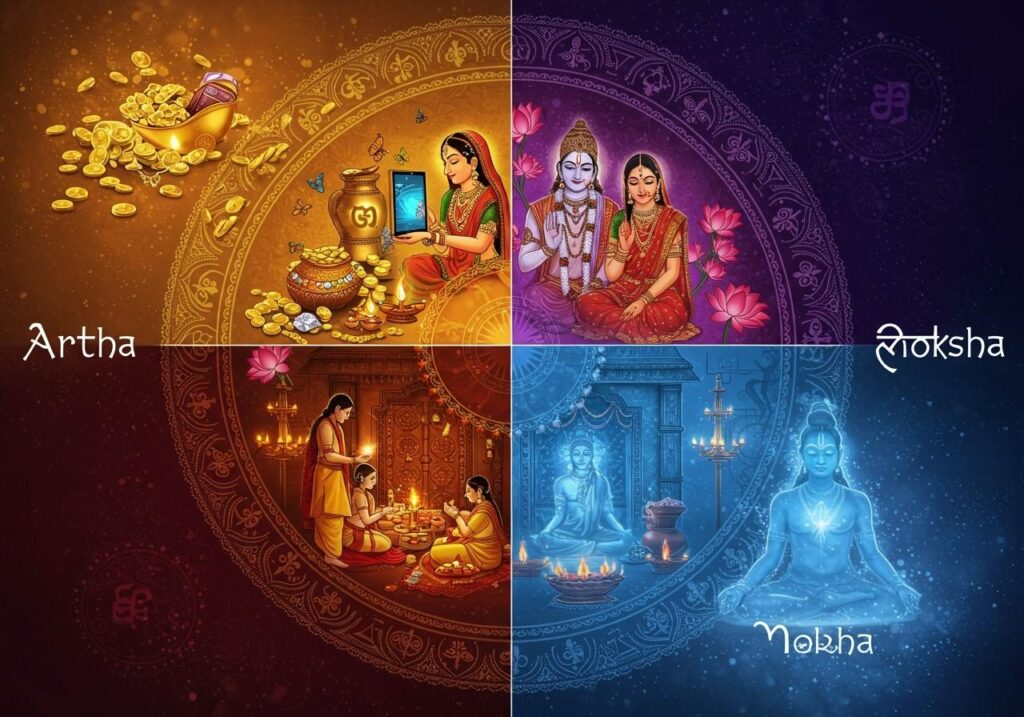
Artha Kama Dharma Moksha The Four Pillars of Hindu Life A 2025 Guide to Fulfillment.jpeg
God is Love

4 Pillars Of Sanathan Dharam

4 Pillars Of Sanathan Dharam The Pillars of Sanatan-Dharma are:   “The Supreme Personality of Godhead said: Fearlessness; purification of one’s existence; cultivation of spiritual knowledge; charity; self-control; performance of sacrifice; study of the Vedas; austerity; simplicity; nonviolence; truthfulness; freedom from anger; renunciation; tranquility; aversion to faultfinding; compassion for all living entities; freedom from covetousness; gentleness; modesty; steady determination; vigor; forgiveness; fortitude; cleanliness; and freedom from envy and from the passion for honor – these transcendental qualities, O son of Bharata, belong to godly men endowed with divine nature.   “…These four legs of powerful religion are truthfulness, mercy, austerity and charity.”  “Education, charity, penance and truth are said to be the four legs of religion…” “In the age of Satya [truthfulness] your four legs were established by the four principles of austerity, cleanliness, mercy and truthfulness…”  The Four Pillars of Dharma—truthfulness, compassion, austerity, and cleanliness—form the sacred foundation of a righteous life as described in the Srimad Bhagavatam. In a world tilting toward chaos in the age of Kali, these pillars are not just virtues, but lifelines that sustain spiritual progress and social harmony. This blog explores each pillar in depth, offering practical insights for modern living and timeless wisdom rooted in devotion to Krishna. 1. Satya (Truthfulness) Definition: Speaking the truth, living honestly, and aligning one’s actions with reality. Modern Relevance: In today’s world of misinformation and deception, truthfulness is a rare treasure. Being honest builds trust in relationships, whether personal or professional. Spiritually, it clears the heart and mind, making it easier to connect with the Absolute Truth—Krishna. Scriptural Insight: In the age of Kali, falsehood becomes rampant. But when we uphold truth, we protect one leg of dharma. 2. Daya (Compassion) Definition: Kindness toward all living beings, especially the helpless and the suffering. Modern Relevance: Compassion is not weakness—it is strength. In a society marked by competition and self-interest, practicing kindness softens the heart and creates a more empathetic world. Compassion in action includes vegetarianism, charity, and forgiveness. Scriptural Insight: Krishna is known as Bhaktavatsala—one who is affectionate to His devotees. By showing compassion, we reflect His nature. 3. Tapas (Austerity) Definition: Willingness to accept difficulty for a higher spiritual goal. Modern Relevance: Whether it’s waking up early to chant, fasting on Ekadashi, or refraining from indulgences, austerity purifies the senses. In a pleasure-driven culture, tapas builds discipline and inner strength. Scriptural Insight: Lord Rishabhadeva, an incarnation of Krishna, taught that human life is meant for tapasya—to realize the soul’s eternal nature. 4. Shaucham (Cleanliness) Definition: Purity of body, mind, and surroundings. Modern Relevance: Cleanliness is often reduced to physical hygiene, but true shaucham also includes mental cleanliness—keeping the mind free from lust, anger, and greed. Clean habits lead to clarity and peace, both essential for spiritual practice. Scriptural Insight: Cleanliness is the foundation of deity worship and sacred living. Krishna resides where purity is present.

4 Pillars Of Sanathan Dharam Read Post »

cb6674831331a58723aef38cc2008320
God is Love

What is Dharma

What is Dharma What is Svadharma? by Swami Sivananda There is no proper equivalent in English for the Sanskrit term ‘Dharma’. It is generally rendered as ‘duty’, ‘righteousness’. Any action that is best calculated to bring Sreyas (liberation) and Abhyudaya (exaltation) is Dharma. That which brings well-being to human beings is Dharma. The word Dharma comes from the root ‘Dhri’ which means ‘to support’ or ‘to hold on’. That which upholds is Dharma. By Dharma people are upheld. As it supports and holds together it is called Dharma. That which secures preservation of being is Dharma. ‘Svadharma’ means one’s own duty in accordance with the Varnashrama or caste and order of life which are founded according to the Gunas or qualities born of the nature of man. God, religion and Dharma are inseparable. Man evolves through the practice of Dharma according to his caste and order of life, and eventually attains Self-realisation, the ultimate goal of life, which brings infinite bliss, supreme peace, unbroken joy, highest knowledge, eternal satisfaction and immortality. The mark of Dharma is Achara (good conduct). Achara is the mark of the good. Higher than all the teachings, is Achara. From Achara, Dharma is born; and Dharma enhances life. By Achara man attains fame, power and strength here and hereafter. Achara is the highest Dharma. Achara is the root of all Tapas. Dharma tops the list of the four Purusharthas, viz., Dharma, Artha, Kama and Moksha. Dharma gives wealth, satisfaction of desires and liberation in the end. “The Brahmana was Brahma’s mouth; the Rajanya was made His two arms; His two thighs the Vaishya; the Sudra was born of His two feet.” The four castes are Brahmana, Kshatriya, Vaishya and Sudra. Self-restraint, serenity, patience, austerity, purity, belief in God, forgiveness, self-sacrifice, uprighteousness, truthfulness, wisdom, teaching and studying the Vedas, doing sacrifices, and also guiding others in offering sacrifices and gifts and receiving gifts are the duties of a Brahmana born of his own nature. Courage, generosity, vigour, prowess, splendour, firmness, dexterity, not fleeing from battle, the nature of a ruler, protection of the people, gifts, doing sacrifices and study of the Vedas are the duties of a Kshatriya born of his own nature. Ploughing, protection of cattle, trade, charity, doing sacrifice, study of the Vedas, engaging in commerce, finance and agriculture are the duties of a Vaishya born of his own nature. To serve ungrudgingly all these castes is the duty of a Sudra born of his own nature. Much of the evil has grown through men of one caste grasping at the work of the other castes, and thinking more of the rights his caste gives him than of the duties it imposes. The Brahmana and Kshatriya have claimed their privileges ardently and have shrunk from the heavy burden belonging to their castes. Naturally their attitude has provoked opposition, and antagonism has replaced mutual goodwill and service. Consequently caste has become a social bitterness, instead of being a framework maintaining all in happy order. If people of different castes practise their Dharmas, caste confusion will pass away and abundant peace and joy will prevail. The Ashramas or stages in life are four, viz., Brahmacharya, the stage of studentship, Garhasthya, the stage of householdership, Vanaprastha, the stage of forest-dwelling or seclusion, and Sannyasa, the order of total renunciation. Each order of life has its own duties. In none of these stages must a man grasp at the special duties of the other three. At the present moment it is difficult to maintain or observe the exact details of the ancient rules, as the conditions have changed very much. But, if we can have a clear idea of the fundamental duties of each, we shall still be able to shape the life to a regulated course of development and steady growth. The life of the student starts with the Upanayana ceremony, his second birth. You will find in the Manu Smriti: “Let the student ever engage in the study of the Vedas and in doing service to his preceptor. Let the student refrain from wine, meat, perfumes, tasty dishes, garlands, company of women, and from injury to sentient creatures. Let him give up lust, anger, greed, dancing, singing and playing on musical instruments, dice play, gossip, slander and untruth.” “Let the student always sleep alone and let him not waste his seed; he who from lust destroyeth his seed, destroyeth his vow. He should develop the spirit of service, humility and obedience. He should mould his character properly. He should be chaste in thought, word and deed.” Dharma From the teachings of Swami Sivananda Saraswati The Sanskrit term dharma is difficult to define. There is no equivalent word for it in English. Dharma is generally defined as righteousness or duty. It is the principle of holiness and unity. Bhishma says in his instructions to Yudhishthira that whatever creates conflict is adharma, and whatever puts an end to conflict and brings about unity and harmony is dharma. Anything that helps to unite and develop pure divine love and universal brotherhood is dharma. Anything that creates discord, split and disharmony, and foments hatred is adharma. The rules of dharma have been laid down for regulating the worldly affairs of people. Dharma brings happiness, both in this world and in the next. If you transgress it, it will kill you. If you protect it, it will protect you. It is the sole companion after death and the sole refuge of humanity. That which elevates is dharma. It leads to the path of perfection and glory. It helps to have direct communion with the Lord. Dharma makes one divine and is the ascending stairway to God. Self-realization is the highest dharma. God is the centre of dharma. Dharma has its root in mortality and the controller of dharma is God himself. Rishi Kanada, founder of the Vaisheshika system of philosophy, has given the best definition of dharma: “That which leads to the total cessation of pain, and the attainment of prosperity in this world

What is Dharma Read Post »

12e06f4f 058e 43b5 8a54 31a9ed5f149d
God is Love

Karma and Diseases

Jaisa Ann Waisa Mann – {Karma and Diseases} people, karma, life, born, disease, problem, action, create, suffer, body, pain, lungs, burned, weakness, indulged, result, understand, consequence, condition, skin Today we have a very serious topic, the topic of Karmic Disease. So, you know, people have diseases and sometimes it’s not explainable. We don’t understand why they have the diseases. So, first you need to understand the meaning of the word karma. Karma means simply the universal law of cause and effect, action and reaction. The word Karma means action, and karma applies to physical action, but also to mental action. I mean, you don’t do anything, but you think about it. And when you think about it, you create the mental karma, and the reason why we are born in this particular condition is because of our karma. So, there is no accident that we are born in a certain family in certain circumstances, a certain country and our life goes a certain way. It’s all because of our karma. So, karma doesn’t mean just an action, but also the result of an action, the consequences of an action. Yeah, it is the same as the action, it’s about the same nature and the same force. But if you understand that life is not only one life, but a series of lives and you have the Soul Life,  a very long Soul Life, and when you are born and you forget, you know, the previous lives. So, the present life is the result of thoughts and actions you have done in the past. And it’s not continuous sometimes. You reap the result of this action, of this thinking, in the past life, right away in this life. But sometimes it is the result of past thoughts in previous lives that comes out now. So these different actions are intermingling with each other. As it’s not a vertical line, you know, everything is not just one after the other. So that’s why you don’t quite understand sometimes, things happen all of a sudden, and you don’t know why.  But you understand the law of karma, the law of karma is that there is nothing that happens by accident. Okay. So you are born in a certain family, a rich family, a poor family, a violent family, a very depressed family, whether you were loved as a child or not. But why is the action, what happened in your childhood, is very important to influence the rest of your life? Because you reap the result of your past actions, your karma when you were young. So it determines the balance of your life okay. So, whatever happens when people are young influences the rest of their life, because of the karma that comes from the past. The whole world runs on that idea of karma, the idea of the seed, and from the seed you put in the ground the tree comes out. Okay, and the tree will create the seed. So it’s a chain of cause and effect that is continuous. So, no event can occur without having a definite positive cause. Sometimes you see the cause and sometimes you don’t see the cause. There are three laws that come under the concept of karma. The first is the law of action and reaction. Any action will have a similar reaction. The second is compensation, which means in the distribution of the karma, there is an intelligence that is behind, so that makes everything balanced out. And in the distribution of the karmic result, there is the idea of punishment of a wrong action that is being considered as well. So, if somebody does a wrong action, then they will reap the reaction, by the Divine Law. Nobody punishes the person, it’s their own action that gives the result back and it’s very important when we talk about comic disease to understand that point.

Karma and Diseases Read Post »

81eo2U8NgL
God is Love

What is MBA will be Hindu Gods and Goddesses

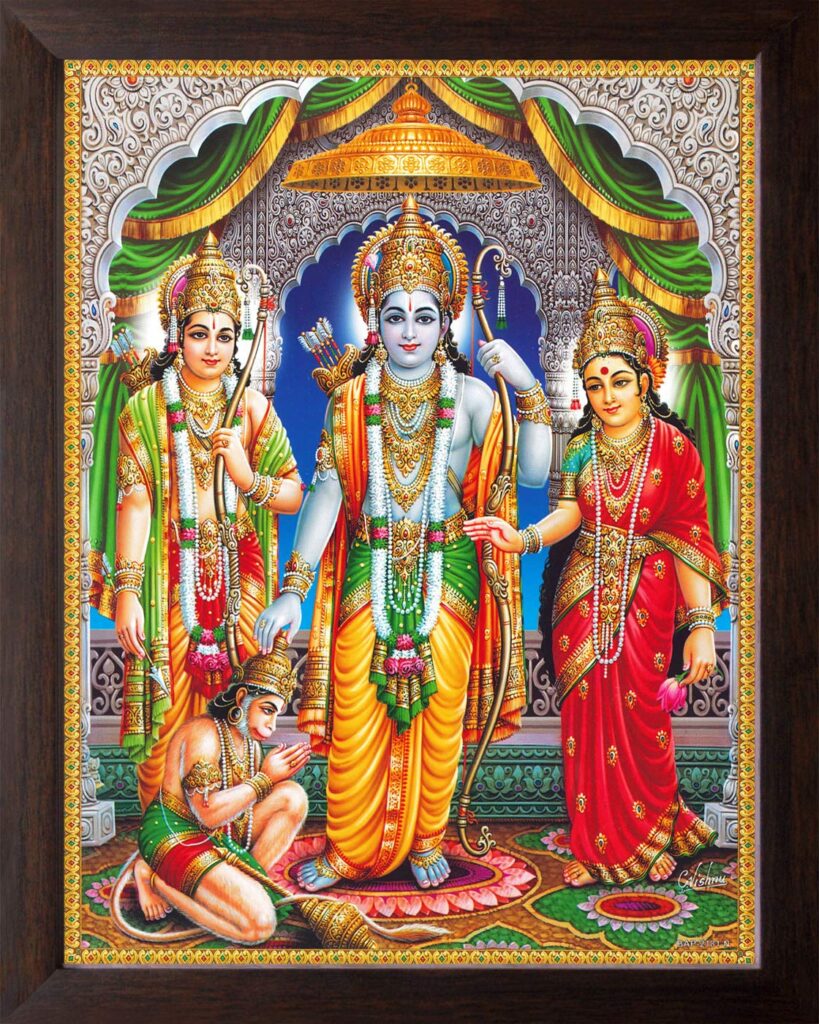
What is MBA will be Hindu Gods and Goddesses Lord Krishna, the divine strategist of the Mahabharata, is perhaps the greatest example of leadership, diplomacy, and emotional intelligence. His teachings in the Bhagavad Gita mirror the core subjects of an MBA—ethics, duty, strategy, motivation, clarity, and detachment. A true manager acts with purpose but without ego, focuses on right action rather than fear of outcomes, and guides others with compassion and conviction. Hanuman teaches loyalty, discipline, teamwork, courage, and the power of humility. Every successful leader requires a team with Hanuman-like dedication, strength, and purpose-driven action. Thus, an MBA is not just a business degree; it becomes a journey of inner awakening when viewed through the wisdom of Hindu Gods and Goddesses. It teaches that leadership begins with self-mastery, management begins with mindfulness, and success is meaningful only when aligned with dharma (righteous action). When professional skills blend with divine qualities—wisdom, discipline, compassion, courage, prosperity, and clarity—one becomes not only an effective manager but also an enlightened leader capable of uplifting others and contributing to the world in a higher, more conscious way.

What is MBA will be Hindu Gods and Goddesses Read Post »

3dbdd3b6 09fd 44f9 b829 ed2af9013d8c
God is Love

Science or Spirituality

Science or Spirituality You do not need a flame to find another flame. In the same way, it is ignorance and foolishness to search for the selfeffulgent, omnipresent Atma using other forms of knowledge. No one tries to search for himself in the world outside. In the same way, when you are the Atma, is it not plain ignorance to look for the Atma elsewhere? Such pure teachings on the Atma have been propagated by Bharath since ancient times, era after era. Bharath is the birthplace of spirituality and dharma. Peace and nonviolence also took birth in Bharath. The search for Truth done in Bharath has not been done anywhere else. This land is the birthplace of the Sapta Rishis. This is the country in which the first poet, Valmiki, and the classifier of the Vedas, Vyasa, took birth. This is the supremely sacred land of dharma in which Krishna taught the Bhagavad Gita. This is Rama’s kingdom. This is the soil on which Buddha was born. Bharath has always been replete with minds inquiring into the Truth, hands engaged in dharma, and hearts immersed in the Lord. Devotion has no distinctions of caste, age, and language. It is easy for everyone to contemplate on God. God is as essential for the mind as food is for the body. In the devotion of Bharathiyas we sometimes find situations bordering on the absurd. But spiritual feelings and love are the undercurrents even in this seemingly senseless behavior. A student prays to God to do well in exams. A man prays to God to win a court case. Why go that far? People pray even to secure a seat in a bus! In this way, Bharathiyas depend on God from the smallest to the biggest things. This may be called divine madness. Some call it foolishness. Whatever anyone may say, each is entitled to their own hunger, their own faith, their own kind of madness. No one has the right to deny another’s faith. But certain foundations are necessary even for faith. The presence of the groom doesn’t mean that the marriage is done. Having money does not imply that you can run a business. Some additional know-how is required. You cannot be considered a writer by knowing the alphabet. Only one who understands meanings of words can be an author. Similarly, you cannot recognize God with worldly knowledge. Spiritual knowledge is essential. To acquire it, inquire into the Truth. Everyone must understand the universe and the nature of the individual souls living in it. Those who recognize the secrets of the Cosmos and of the beings living in it can understand the nature of Divinity. Since ancient times, men of wisdom have investigated into Nature. The astronomer Galileo discovered many facts about the universe. The Earth revolves at a speed of 18,500 miles per second. It circles the Sun once a year. “Who is turning the Earth? Why does it revolve? What is the basis for its revolution?” asked Galileo. He found that the parabola is the basis of motion. If there is such a basis for even small objects, there must be a significance to the Earth’s movement as well. Once upon a time the Earth was hot. Then it took millions of years to cool down. Why should the burning planet revolve? Galileo pondered the answer to this question. Rotation causes day and night, which provide opportunities for men to undertake action. Revolution produces seasons, which are responsible for rain, harvest, and food. Every act of God, big or small, is for the good for mankind. There is a hidden power running everything. Galileo recognized it and called it God. Therefore, a natural scientist recognized this unchanging power. That which is present always is Truth. Within this Truth we find both worldly and spiritual knowledge. It is not possible for anyone to know this power through any means. To know the unchanging power behind Nature is to know God. This is what Galileo finally concluded. Einstein, the father of modern science, talked about the interchangeability of matter and energy. He said that these could neither be created nor destroyed. But energy may change forms. How? Magnetic energy can be turned into electricity, electricity into atomic power, atomic power into light and light into heat. Students should recognize a small fact. You can create water by combining hydrogen and oxygen. But who created hydrogen and oxygen? Water is the effect, hydrogen and oxygen are the causes. Nothing can exist without a cause. The effect gradually changes. That which changes is science. The changeless cause is spirituality. Ya Chinta Bhuvi Putra Mitra Bharanau Vyapara SambhashaneYa Chinta Dhana Dhanya Bhoga Yashase Labhe Sada JayateSa Chinta Bhuvi Nanda Nandana Pada Dvandvaravinde KshaneKa Chinta Yamaraja Bhima Sadana Dvara Prayani Prabho. You cry for wife, children, friends, wealth, business, pleasures, name and fame.But if you yearn for Krishna’s Lotus Feet even for a moment, you can easily cross the terrible doors of Death.

Science or Spirituality Read Post »

4502b199100d0d172f54901b9c505442
God is Love

Shraddha & Saburi

Shraddha & Saburi Baba’s explanation of Shraddha and Saburi A story mentioned in Chapters 18 and 19 of Sai Satcharitra provides a clear explanation of Shraddha and Saburi by Shirdi Sai Baba. Once an old woman named Radhabai resolved in her mind that she would fast herself unto death unless Baba accepted her as her Guru and provided her an Upadesh (instruction or mantra). Baba found out about it and addressed her by explaining the two paisa (coins) of Shraddha and Saburi: “I had a Guru. He was a great Saint and most merciful. I served him long, very long; still he would not blow any Mantra into My ears. I had a keen desire, never to leave him but to stay with and serve him; and at all costs receive some instructions from him. But he had his own way. He first got my head shaved and asked Me two paisa as Dakshina [offering to a Guru]. I gave this at once. If you say that since My Guru was perfect, why should he ask for money and how should he be called desireless? I replied plainly that he never cared for coins. What had he to do with them? His two paisa were (1) Firm Faith and (2) Patience or perseverance. I gave these two paisa or things to him, and he was pleased.” Shraddha or firm faith Baba further explained what firm faith meant: “I resorted to My Guru for 12 years…. When I looked at him, he seemed as if he was in deep meditation, and then we both were filled with Bliss. Night and day, I gazed at him with no thought of hunger and thirst. Without him, I felt restless. I had no other object to meditate, nor any other thing than My Guru to attend. He was My sole refuge. My mind was always fixed on him. This is one paisa Dakshina.” Saburi or patience Baba explained what patience meant: “Saburi (Patience or perseverance) is the other paisa. I waited patiently and very long on My Guru and served him. This Saburi will ferry you across the sea of this mundane existence. Saburi is manliness in man, it removes all sins and afflictions, gets rid of calamities in various ways, and casts aside all fear, and ultimately gives you success. Saburi is a mine of virtues [a place where valuable things are found], consort of good thought. Nishtha (Faith) and Saburi (Patience) are like twin sisters that love each other very intimately.” Here, Baba suggests that by cultivating patience, we can develop many other virtues. Patience can help us to stay calm in difficult situations, think clearly before reacting, maintain faith and hope, and be kind and compassionate towards others. It is not just about passively waiting, but also about having the inner strength to persevere through challenges. Mohanji’s explanation of Shraddha and Saburi In a blog, Mohanji explains Shraddha and Saburi as two walking sticks for any seeker. Mohanji says the path may sound simple but it is difficult in practice – since even a speck of ego or doership is unacceptable. Total surrender to the guru or master is a must. Mohanji further explains that people often have a hard time acknowledging a guru’s stature when they meet him in the flesh. People arrive with some kind of mental image of what an enlightened master should look like and how he should behave. When the guru’s personality doesn’t match up to that image, they are shocked – “Oh, I didn’t expect the guru to behave that way” or “What, he smokes a chillum?”. This kind of commonplace behavior would confuse people, creating conflicts in their minds. What is not known is that a guru, a liberated being, never feels pushed to talk or act in a certain way, or maintain a certain appearance. A true guru is free in the real sense of the word, unbound by a thing, person, situation or habit. If we do not demolish preconceived notions or concepts of the mind, we will be unable to catch the truth; it will slip past. Instead if we drop the mental picture and reach for the consciousness that Baba is operating in, that will be a genuine enduring connection where we will be able to actually feel and experience the oneness. Look upon Baba as omnipresent, powerful, ever available and surrender to him without expectation, without barriers, never asking for anything. Everything will be delivered. As explained by both Baba and Mohanji, this firm faith in the Guru with utmost patience believing that the Guru will ferry us across the sea of this existence, is the only offering that a devotee needs to make to their Guru.

Shraddha & Saburi Read Post »

Sankara 600
God is Love

Who Am I

Who Am I Nirvana Shatakam Lyrics and Meaning Nirvana Shatakam, composed by Adi Shankara himself, embodies the spiritual pursuit. Here are the lyrics and meaning of this timeless composition. Sadhguru looks at the significance of the Nirvana Shatakam chant and explores what is being conveyed through it. Sadhguru: Nirvana means “formless.” The Nirvana Shatakam is towards this – you don’t want to be either this or that. If you don’t want to be this nor that, then what do you want to be? Your mind cannot understand this because your mind always wants to be something. If I say, “I don’t want to be this; I don’t want to be that,” you would think, “Oh something super!” Not super. “Oh, so emptiness?” Not emptiness. “Nothingness?” Not nothingness. That’s what is being conveyed through this chant. Nirvana Shatakam Lyrics 1.Mano buddhya-haṅkāra chittāni nāhamNa cha shrotra jihve na cha ghrāṇa netreNa cha vyoma bhūmir na tejo na vāyuhChidānanda rūpah shivo’ham shivo’ham ॥1॥ 2.Na cha prāṇa sañjño na vai pancha vāyuhNa vā sapta dhātur na vā pancha kośahNa vāk pāṇi pādam na chopastha pāyuChidānanda rūpah shivo’ham shivo’ham ॥2॥ 3.Na me dvesha rāgau na me lobha mohauMado naiva me naiva mātsarya bhāvahNa dharmo na chārtho na kāmo na mokshaChidānanda rūpah shivo’ham shivo’ham ॥3॥ 4.Na puṇyam na pāpam na saukhyam na duḥkhamNa mantro na tīrtham na vedā na yajñāhAham bhojanam naiva bhojyam na bhoktāChidānanda rūpah shivo’ham shivo’ham ॥4॥ 5.Na mṛtyur na śaṅkā na me jāti bhedahPitā naiva me naiva mātā na janmahNa bandhur na mitram gurur naiva śishyaChidānanda rūpah shivo’ham shivo’ham ॥5॥ 6.Aham nirvikalpo nirākāra rūpoVibhu tvāccha sarvatra sarvendriyāṇāmNa chāsaṅgatam naiva muktir na meyahChidānanda rūpah shivo’ham shivo’ham ॥6॥

Who Am I Read Post »

359c53bb9f8c41bca7b7f86992776a1f
God is Love

The Surradhari Summon Bonum Of Life Hari Mukunda

The Surradhari Summon Bonum Of Life Hari Mukunda The Purna Avatara Lord Krishna was the highest Incarnation of the great Vishnu. He was the Purna Avatara. He had all the sixteen Kalas or rays of the Lord. He was a noble scion of the illustrious Yadava dynasty. He was the world-teacher. He was the one Lord of love. He was the lover of men. His enchanting form, with flute in hand, holds the heart of India captive in chains even today. The object of Sri Krishna’s Avatar who has become the beloved of India and the world at large, was threefold–to destroy the wicked demons, to take the leading part in the great war fought on the battlefield of Kurukshetra where He delivered His wonderful message of the Gita and to become the centre of a marvellous development of the Bhakti Schools of India. The purpose of the Krishna-Avatara was not only to destroy Adharma, but also to reveal to the world the magnificence of God. Sri Krishna was the symbol of the Absolute, the representation of the mighty Sovereign of the universe. In His well-adjusted, symmetrical conduct of life is portrayed the majestic perfection of God. Sri Krishna’s life is the Bhagavad Gita in action. In Him are found the supreme knowledge and power blending to form the God-Man of all times. In Him the highest Vidya and Vinaya (knowledge and humility) co-exist as inseparable virtues of the Great Hero of the world. Sri Krishna was a perfect Master. He was a Karma Yogi, Bhakta, Raja Yogi and Jnana Yogi. He preached Karma, Upasana Yoga and Jnana. Lord Krishna drove the chariot in the battle-field and danced with the Gopis in the shady retreats of Brindavan and taught Yoga and Jnana to Uddhava and Arjuna. The four Yogas are blended in His Gita or the Immortal Song. Lord Krishna was great in knowledge, great in emotion, great in action, altogether. The scriptures have not recorded any life more full, more intense, more sublime, more grand than His. Study the Bhagavat and the Pancharatras, which are equal to the Upanishads. You will know all about the glory of Lord Krishna, His Lilas and superhuman deeds. Student Days With Sage Sandipani Sri Krishna received His instructions from Sandipani, a sage of Avantipur. He lived with His teacher like an ordinary student. He was meek, humble and obedient. He led a laborious life. He gathered fuel from the woods for His preceptor’s household. He inspired His class-mates with love. Sri Krishna had wonderful retentive memory. He mastered the sixty-four arts in sixty-four days. The Lord’s Life of Selfless Action Krishna was a man of action. He was a history-maker and righter of wrongs. He stood for justice and righteousness. His policy was to defend the oppressed from the oppressor. Lord Krishna was the greatest Karma Yogi of all time. He held up the torch of wisdom. He was an embodiment of wisdom and selfless action. He was all love for the cowherd boys, cows and Gopis. He was the friend and benefactor of the poor and the helpless. He was extremely kind and merciful towards the meek and the humble. Krishna was the thunderbolt to the wrestlers assembled in the arena of Kamsa and yet, He had the softest heart among men. He was Yama unto Kamsa, a Cupid unto Gopis, the object of constant meditation for Yogins and devotees, the form of Bliss and Beatitude to the sages, and a child to His parents. He was Cupid unto Cupid himself. Lord Krishna was an embodiment of humility, though He was the Lord of the universe. He became the charioteer of Arjuna. He accepted the duty of washing the feet of the visitors voluntarily at the time of the Rajasuya Yajna performed by Yudhishthira. Krishna, The Warrior Lord Krishna was matchless in physical strength. He was an undaunted warrior even from His twelfth year. He, being anointed by Kubja and garlanded by Sudama, a flower-seller, entered the place of sacrifice in the Dhanur Yajna performed by Kamsa and broke the great bow. Kamsa sent an elephant named Kuvalayapeeda to kill Krishna. Krishna killed the elephant and entered the arena. Then He killed the chosen athletes of Kamsa, viz., Chanura and Toshalaka. Krishna got upon the platform on which Kamsa was seated, caught hold of his hair, threw him down on the ground and killed him. Jarasandha, son-in-law of Kamsa, was very much enraged when Krishna killed Kamsa. He invaded Mathura seventeen times. Krishna drove out Jarasandha every time. He fought with Bana, the thousand-armed king of Sonitpur, and cut off his arms. Thereafter He killed Paundra, the king of Karusha who denied Krishna’s divinity and assumed Vishnu’s conch, discus, club and lotus and declared himself to be the real Vasudeva. The wicked Sisupala challenged Krishna in Yudhishthira’s Rajasuya Yajna. Sri Krishna threw His Chakra at Sisupala and cut off his head. Similarly He slew Dantavakthra also. Salva, king of Saubha and a friend of Sisupala, waged war with Krishna to avenge his friend’s death. Salva was put to death by Lord-Krishna. A Great Statesman Sri Krishna was a great statesman. The world has not witnessed a greater statesman than Sri Krishna. He was a champion of liberty and a peacemaker. He had wonderful foresight and held extremely liberal views. Even when He was a boy, He taught people the essentials and the true significance of religion, when He rose against the popular worship of Indra for getting rains. Krishna was a king-maker. He was the founder of the city of Dwaraka. He was the towering genius of His age. He was a great historical figure. He was appointed as the peace-maker to stop the civil war that was to be fought between the Kauravas and the Pandavas. Yudhishthira sent Krishna to negotiate with the Kauravas. He made a long and wise exhortation to Duryodhana. The thrilling and soul-stirring speech delivered by Sri Krishna before the court of Dhritarashtra proves that He

The Surradhari Summon Bonum Of Life Hari Mukunda Read Post »

Bhagwan Shri Sathya Sai Baba divine ashram portrait picture
God is Love

Master The Mind By Bhagavan Sri Sathya Sai Baba

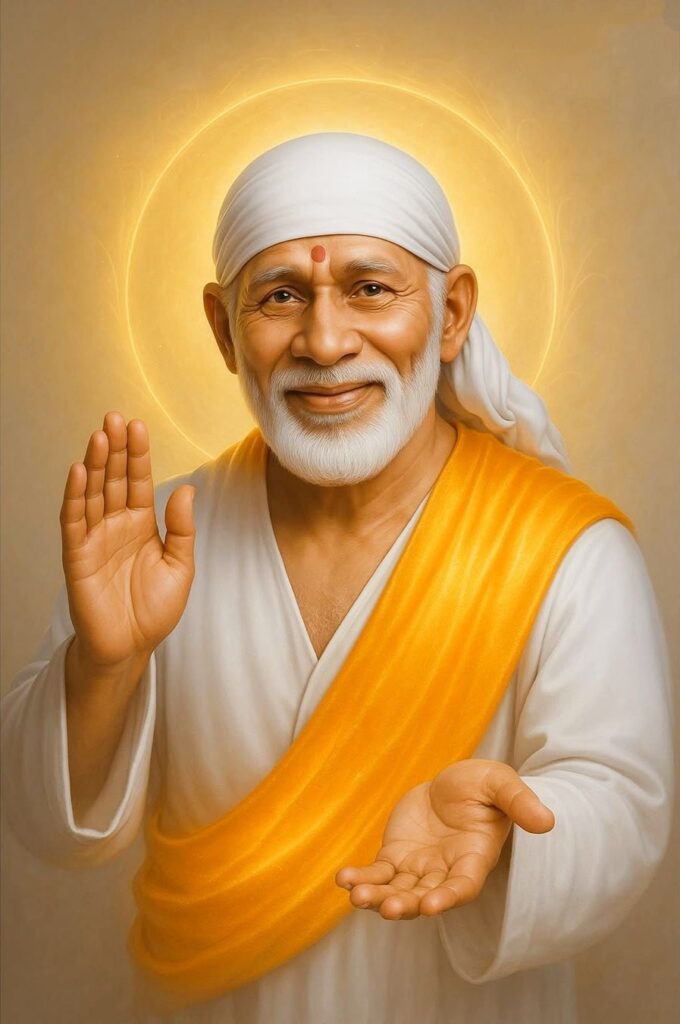
Master The Mind By Bhagavan Sri Sathya Sai Baba EMBODIMENTS of love! To see the lamp that gives light you don’t need another lamp. So also no other means of cognition is needed to realise the self-effulgent Atma or Self. The Self is changeless. The Buddhi (intellect) has no light of its own but it shines by the effulgence of the Atma. If the intellect is able. to apprehend and judge everything in the world, it is due to the power of the Self. Buddhi or intellect is based on Medha shakthi (intelligence). The power of the intellect is only a reflection, of Atma Chaithanya (the effulgence of the Atma). The mind has two aspects, as doer and experiencer. It is the cause of the sense of attachment and possession. Human action is more evident in the wakeful state than in the dream state or deep sleep state. In the deep sleep state, the Super Intellectual Consciousness is shining and the mind, senses and intellect are dormant. Just as a red hot iron glows more brilliantly than fire itself, though the fire is the cause thereof, the individual intellectual consciousness shines more because of the Cosmic Consciousness. When the mind is dormant in the deep sleep state, the Super Mind becomes active. In this state, man has no desire or fear or anxiety. Man is bound by the mind and the senses. In the pursuit of the spiritual path, first of all the mind should be brought under control. When the mind is steady, you reach the state of Super-Mind. In this state there is no room for physical or transient worldly feelings. As long as the mind is pure, no evil can enter the heart. When it is polluted with bad feelings,” there is room for evil thoughts to breed. We have to recognise the fact that human life depends on the functioning of the mind. As long as one is governed by the mind one continues to be human. Once one goes beyond the mind, one can enjoy the vastness of the limitless expanse of Cosmic Consciousness. Here is an example: Suppose you construct a spacious house with a number of bed rooms, living rooms, dining room and bath room. The spacious house appears divided into a number of small rooms. This is because of the walls put up for partitioning into rooms. If the walls are pulled down, the house will be one vast mansion. Similarly, the body is the Upadhi (wall) which limits one’s perception to the narrow confines of the body. Once you get rid of this body consciousness, you will experience the vast expanse of the Universal Cosmic Consciousness which is all-pervasive. Just as the hands, ears, eyes and legs are all angas (limbs or organs) of individual human body, the bodies of all human beings are the limbs of society. Again, society itself is a limb of mankind. And humanity is a limb of Prakrithi (Nature)and Prakrithi is a limb of Divinity. One should understand this Anga-Angee-Bhava – relationship between Divinity and human beings, in the proper perspective. Though man is endowed with Buddhi (intelligence), he is not able to master the senses. One should understand the great significance of human life, which is superior to that of all other species. Because of the body consciousness, man is forgetting his inherent divinity. You study a great deal about Prakrithi (Nature) and worldly things, and lead an artificial life, without realising that the heart is the seat of Divinity. If you allow bad feelings to enter the heart, it will be polluted and the Divine will have no place therein. The whole world today is replete with pollution of not only the individual senses but also the five elements. The air is impure; water is polluted and everything you see or hear or touch is polluted. How can you expect to have peace in the world? Vedantha teaches that we should go beyond the mind and realise the inner vision to prevent bad feelings entering the heart and polluting the seat of God. MASTERING THE MIND BY SWAMI SIVANANDA SARASWATI Sadhana for Mastering the Mind by Swami Sivananda You take great care of the body. You desire that it should be clean, healthy, beautiful and strong. You take bath with sweet soaps and hot water. You regularly feed it with nourishing food. If there is the least pain or disease medicine is given. Doctor is consulted. But you never give a thought to the much more important thing-MIND. Body is only the outward appearance, a projection of the mind. Mind operates through the senses and the sense-organs. If the mind is well then the body is well. If the mind is sick the body becomes ill. Mind is everything. It controls your whole life. Upon it depends your happiness or misery, success or failure. “Mana eva Manushyanam Karanam Bandhamokshayoh” thus say the Upanishads. Again, ‘Yena Manojitam Jagat Jitam Tena’ is the great truth. As you think, so you become. Do you fully realise now the great importance of controlling, training and overcoming the mind? So long you have neglected the care of the mind. Attend to this vital subject from now. Mastery of mind means success in all fields of life. To achieve this mastery you must study the mind. You must understand its nature, habits, tricks and the effective methods of bringing it under restraint. Mind is a bundle of desires, thoughts, feelings and emotions. It is nothing but a collection of Samskaras, desires arising from contact of the sense-organs with different objects, feeling aroused by worldly botherations, ideas gathered together from various different objects. These desires, feelings and ideas are not steady-they will be constantly changing. Suddenly some will subside and some others will occupy their places like the waves in the seas. Some old ones will depart from the storehouse, the mind and some new ones will replace them at once. It is also a bundle of habits. The bad

Master The Mind By Bhagavan Sri Sathya Sai Baba Read Post »