





Hari Om

Menu

Stories From Mahabharat

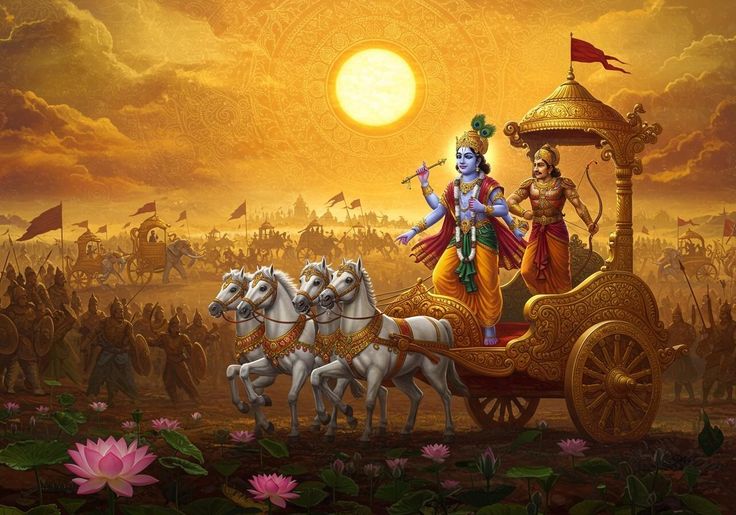
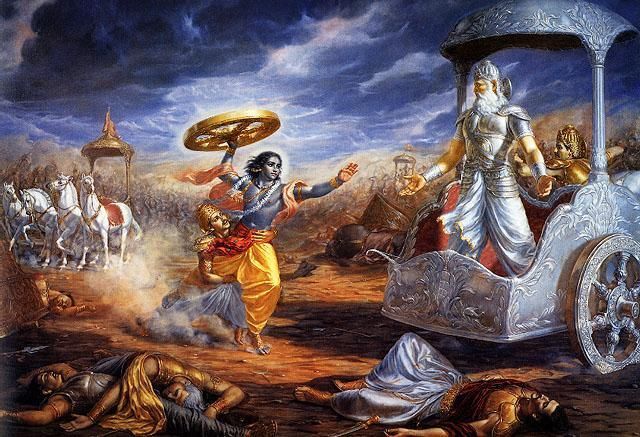
Krishna rushes toward Bhishma holding Sudarshan Chakra on Kurukshetra battlefield. image
Stories From Mahabharat

Listen Stories of Mahabharat

Listen Some Unknown Stories of Mahabharat Special announcement – a new podcast Your browser does not support the audio element. Lorem ipsum dolor sit amet, consectetur adipiscing elit. Ut elit tellus, luctus nec ullamcorper mattis, pulvinar dapibus leo. Mahabharata Episode 1 Beginnings Your browser does not support the audio element. Ganga, Devabrata and ShantanuThe first episode of the Stories of Mahabharata podcast series has been missing for a long time. The episode was not added because it did not have the production quality that we have been striving for. After a long break, we finally found some time to rerecord this episode and mix the vocal track with sound effects and music to make it at par with the rest of the episodes. We hope you like it.This episode tells the story of the beginnings of the great saga told by Rishi Vyasa and written by lord Ganesha. The story begins with the narrative of King Shantanu’s marriage with Ganga and the birth of Devabrata. Later we learn how prince Devabrata becomes the great Bhishma because of his “Bhisham” or profound vow – a vow which kickstarts the story of the Mahabharata and the destiny of the Kuru dynasty.  Mahabharata Episode 2: Amba’s Plight Your browser does not support the audio element. Bhishma abducts Amba, Ambika and AmbalikaAfter a long hiatus, we bring to you the fully produced version of the episode 2 of the Stories of Mahabharata Series – Amba’s Plight. In this episode, he learn how Bhisma abducts the three princesses of Kashi, Amba, Ambika and Ambalika by force and brings them to Hastinapur to get them married to his brother Vichitravirya.  Amba declines to marry Vichitravirya. Vichitravirya marries Ambika and Ambalika but dies without leaving an heir. Satyavati then invokes the practice of Niyoga and asks Vyasa to give the Kuru dynasty an heir. Listen to this crucial and exciting episode and share your thoughts with us.  Mahabharata Episode 3: Birth of the Kuru Princes Your browser does not support the audio element. Pandu Hunts the Deer Couple.The stories of Mahabharata continues. In this episode we learn about the birth of the Kuru princes, the Pandavas and the Kauravas. We also learn about the tragic death of King Pandu caused by a curse from the dying sage Kindama.Audio engineering and sound design by Avi Ziv.  Mahabharata Episode 4: The Conflict Begins Your browser does not support the audio element. Young Bheema fight with the Nagas The stories of Mahabharata continues. The conflict between the Pandava brothers and the Kaurava brothers began at an early age.  In this episode we learn of the first attempt by the Kaurava brothers, primarily Duryodhona and Duhsashana, to eliminate their arch rival Bheema. The story gives us a glimpse of the extent to which the Kauravas could go to achieve their goals. Enjoy and do not forget to give your feedback.(Note: You can also subscribe to this series (for free) as podcast on iTunes store or any other podcast aggregator. Just search for Mahabharata and Bhawmik.)  Mahabharata Episode 5: The Guru Arrives Your browser does not support the audio element. Drona tests his studentsIn this episode, Guru Dronacharya arrives in Hastinapura and awes the Kuru princes with his skills. Bhishma retains him as the royal arms and weapons trainer for the Pandava and Kaurava brothers. Arjuna excels in archery. Ekalavya, a tribal boy, comes to Drona to learn from him. Drona refuses to accept him as a student. But Ekalavya masters the art of archery by practicing in front of a statue of Dronacharya for which he had to pay the ultimate guru dakshina.Listen to the podcast below or subscribe in iTunes store (free.)   Mahabharata Episode 6: A Show of Arms Your browser does not support the audio element. Kunti and KarnaIn this episode of the stories from Mahabharata, Drona arranges for a grand show where his students, the Kuru princes demonstrate their prowess with arms. Arjuna dazzles the audience by his prowess with a variety of arms and weapons. But suddenly Karna enters the arena and the story takes a dranstic turn which none could have expected. Listen to this episode on the player below, or by subscribing to this podcast on iTunes.  Mahabharata Episode 7: Drona’s Revenge Your browser does not support the audio element. Drona takes his revenge on DrupadaThe stories of Mahabharata are not only about kings and gods and demons. It is also a tale of ethics, morality and politics.  The needs and conflicts that drive each character are the same that drives us today. The great weapons teacher Drona Acharya was a Brahmin. A Brahmin was supposed to have the noblest of qualities and free of petty politics and trivialities of life. Their main purpose in life was to acquire wisdom and spread knowledge to their pupils.  But Drona, had his own axe to grind.  He became the royal weapons teacher of the Kuru princes with a single objective in mind. He wanted to take his revenge on Drupada, the King of Panchala, for the insult he had to tolerate in Drupada’s court. We also learn how the Kaurava brothers start planning for their next step to eliminate their arch rivals, the Pandavas.  Mahabharata Episode 8: The Flaming House of Varanabata Your browser does not support the audio element. The Flaming House of VaranabataThe stories of Mahabharata continues with this eighth episode – The Flaming house of Varanabata. With the advice from Shakuni, Duryodhana comes up with a devious plan to kill the Pandavas. Dhritarashtra sends the Pandavas to Varanabata to attend a festival. But the Pandavas escape the trap set for them and flee into the forest. There Bheema encounters the demons Hidimb and Hidimbaa. Listen to this exciting episode in the podcast below.(Story told by Sudipta Bhawmik, Audio Engineering and Sound Design by Avi Ziv)  Mahabharata Episode 9: Draupadi’s Swayamvara Your browser does not support the audio element. Arjuna attempts to hit the target while Krishna, Draupadi and Drupada watch.Listen to another episode

Listen Stories of Mahabharat Read Post »
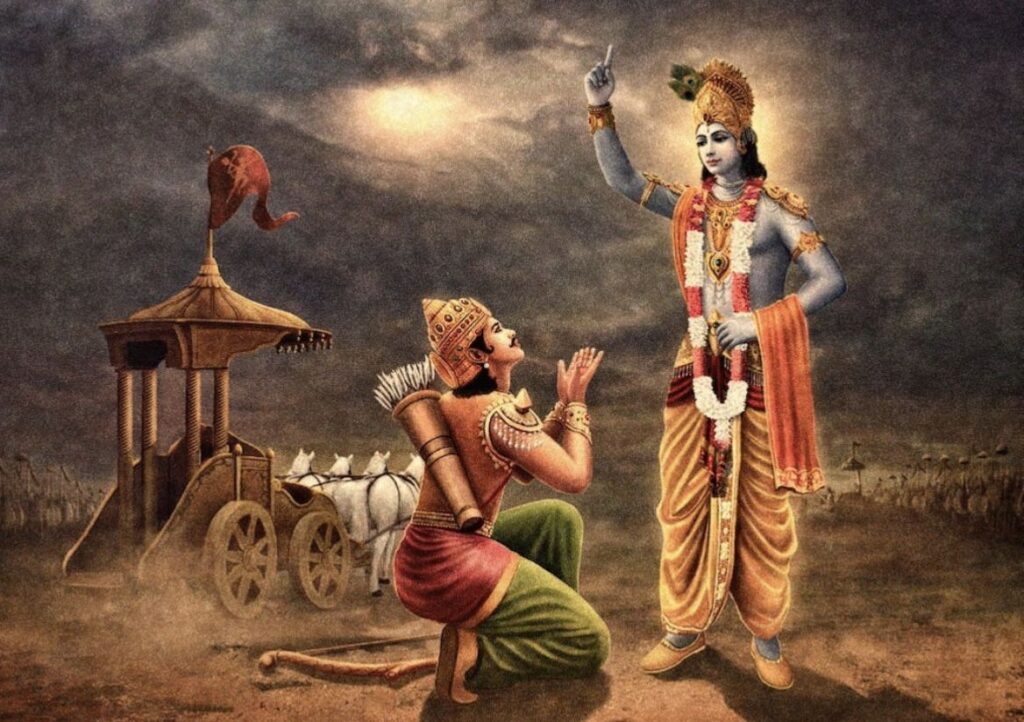
Krishna gives divine guidance to kneeling Arjuna on the Kurukshetra battlefield. image
Stories From Mahabharat

Mahabharata Stories

Mahabharata Stories Duhshanta and Shakuntala The founder of the Paurava line was Duhshanta, gifted with great energy. He was the protector of the earth bounded by the four seas. That king had full sway over four quarters of this world. He was the lord also of various regions in the midst of the sea. That great oppressor of all foes had sway over the countries even of the Mlechchhas. During his rule there were no men of mixed castes, no tillers of the soil (for the land, of itself, yielded produce), no workers of mines (for the surface of the earth yielded in abundance), and no sinful men. All were virtuous and did everything from virtuous motives. There was no fear of thieves, no fear of famine, no fear of disease. All four orders took pleasure in doing their respective duties and never performed religious acts for obtaining fruition of desires. His subjects, depending upon him, never entertained any fear. Indra poured showers at the proper time, and the produce of the fields was always pulpy and juicy. The earth was full of all kinds of wealth and all kinds of animals. The Brahmanas were always engaged in their duties and they were always truthful. The youthful monarch was endowed with wonderful prowess and a physical frame hard as the thunderbolt, so that he could, taking up the mountain Mandara with its forests and bushes, support it on his arms. He was well‐skilled in four kinds of encounters with the mace—hurling it at foes at a distance, striking at those that are near, whirling it in the midst of many, and driving the foe before him. He was skilled also in the use of all kinds of weapons and in riding elephants and horses. In strength he was like unto Vishnu, in splendour like unto the maker of day, in gravity like unto the ocean, and in patience like unto the earth. The monarch was loved by all his subjects, and he ruled his contented people virtuously. Once the king, accompanied by a large force, went into the forest for hunting. He took with him hundreds of horses and elephants. The force comprised foot‐soldiers, car‐warriors, cavalry, and elephants—heroes armed with swords, darts, maces and stout clubs. With the leonine roars of warriors, notes of conchs, sound of drums, rattle of chariot wheels, shrieks of elephants, neighing of horses and clang of weapons, a deafening tumult arose as the king marched. Ladies watching from terraces saw the heroic monarch and compared him to Indra himself. They showered flowers upon him as blessings. After travelling far, the king entered a great forest, full of Bilwa, Arka, Khadira, Kapittha and Dhava trees. The land was rough, filled with stones, without water and without people, yet full of deer, lions and other beasts. Duhshanta, with his warriors, agitated the forest, killing many animals. He pierced tigers with arrows, killed others with sword, mace, club and dart. The disturbance caused lions to flee, herds to scatter and animals to fall exhausted. Some were eaten by the warriors. After slaying thousands of animals, the king reached another forest, beautiful and filled with hermitages. It was a delightful place with blossoming trees, green grass, sweet notes of birds, cool breezes, bees humming around flowers and bowers everywhere. The forest was frequented by Siddhas, Charanas, Gandharvas, Apsaras, monkeys and Kinnaras. It resembled the gardens of heaven. In that forest the king saw a retreat of ascetics near the sacred river Malini, filled with birds and innocent deer. The Ashrama of the illustrious Kashyapa stood there, like the abode of Brahman, surrounded by Rishis of great merit. The king resolved to enter the retreat and see the great ascetic Kanwa. Leaving his army at the entrance, he entered the hermitage with only his minister and priest. Inside he heard chants of Rig, Yajur, Sama and Atharva Vedic Brahmanas, experts in sacrifice, grammar, logic, astrology, rituals, prosody, Nirukta, sciences and sacred lore. The Ashrama resounded with recitations, Japa, Homa and philosophical discussions. Proceeding further, the king left his retinue behind and entered alone. Not seeing Rishi Kanwa, he called out, and a maiden emerged—a stunningly beautiful ascetic girl with black eyes and sweet speech. She welcomed him, offered a seat, washed his feet and enquired after his welfare. The king, struck by her beauty and grace, asked who she was. She replied that she was Shakuntala, daughter of the illustrious Kanwa. Duhshanta, surprised, asked how she could be the daughter of a Rishi who observed strict celibacy. Shakuntala then narrated what she had been told: Once a Rishi had asked Kanwa the same question. Kanwa explained: Viswamitra, engaged in terrible penances, alarmed Indra, who feared being dethroned by the sage’s tapas. Indra summoned the celestial Apsara Menaka and instructed her to tempt Viswamitra with beauty, youth, art, smiles and speech, so that his penances might be interrupted. Menaka expressed fear. She explained that Viswamitra’s wrath and power were capable of shaking the three worlds. He had humbled Vasishtha, created the river Kausiki, raised Trisanku to heaven, created a parallel universe, and by austerities had transformed from a Kshatriya into a Brahmana. Even gods trembled at his sight. Still, obeying Indra, she agreed to attempt his distraction—if Indra would arrange protection. She suggested that when she approached the sage, the wind‐god Marut should blow away her garments and Love‐god Manmatha should assist, while forest fragrances tempted the ascetic. With these preparations made, Menaka went to the hermitage of the great Kausika. Indra, thus addressed by her, then commanded him who could approach every place (viz., the god of the wind) to be present with Menaka at the time she would be before the Rishi. The timid and beautiful Menaka then entered the retreat and saw there Viswamitra who had burnt, by his penances, all his sins, and was engaged still in ascetic penances. Saluting the Rishi, she then began to sport before him. Just at that time Marut robbed her

Mahabharata Stories Read Post »

Krishna guides Arjuna on a chariot before battle in Kurukshetra. image
Stories From Mahabharat

Stories Of Mahabharat

Stories Of Mahabharat Part Two Arjuna’s exile ​In the last part we read about how Bheem rid the world of a demon named Bakasur. Also we saw how the Arjun (disguised as a brahmin) won the hand of Draupadi, the Panchal King’s daughter, in marriage. Duryodhana had recognized the victorious brahmin to be Arjun after witnessing his tremendous archery skill. ​The Pandavas returned home with Draupadi as Arjuna’s wife. Kunti was waiting for them thinking that her five sons will return home soon with their daily collection of alms. ​As soon as they reached their cottage, Yudhishthira called out to Kunti, “Mother! See what we have today!” Kunti was inside and did not see what Yudhishthir was talking about. So she casually replied, “Whatever it is divide it equally among yourselves.” But as soon as she noticed Draupadi she felt highly embarrassed at what she had said. She repented, “My sons, I was under the impression that you had brought something special by way of alms from some benevolent wealthy person. That is why I directed you to share whatever you had procured.” ​Once spoken, Kunti’s words could not be taken back and her dedicated five sons took Draupadi as their common wife. Draupadi too accepted the five Pandava brothers as her husbands. By now she had realised that the five brothers were the Pandavas. She was also proud that she was now a part of the royal family of Hastinapur. It is not very easy to accept whatever is told by the elders; but ‘Dharma’ tells us to do so. The Pandavas were asked to do something unimaginable. But their mother’s word was final for the Pandavas and they followed it! However, when our parents ask us to do little chores, we rebel! Is it correct? We must learn to respect and follow our elders. ​After the swayamvara, Draupadi’s brother Dhrushtadyumna stealthily followed the five Brahmin brothers and found out their identities. Happily he returned home and informed his father Drupad that Draupadi had married the Pandavas. King Drupad then decided to celebrate the marriage, wherein the identities of the Pandavas were revealed. King Drupad then became a close ally to the Pandavas. ​News of Draupadi’s swayamvar and the true identities of the Brahmins reached Hastinapur. Bhishma advised Dhritarashtra to give half the kingdom to the Pandavas. Duryodhana did not like this idea but kept quiet and decided to wait for another opportunity to present itself to get rid of the Pandavas. ​Dhritarashtra listened to Bhishma and sent Vidura, his Prime Minister, to king Drupada’s court. He asked the Pandavas to return to Hastinapur with the promise that they would be treated fairly. The Pandavas agreed and proudly returned along with Kunti and Draupadi. Upon their arrival, the people accorded a grand welcome to the princes. The denizens of Hastinapur were overjoyed that the princes, who had been presumed dead in the fire, were safe and had returned! ​The Pandavas bowed down and humbly touched the feet of all their elders – Bhishma, Dhritarashtra, Vidur, Dronacharya and others. Dhritarashtra, consulted his trusted ministers and offered Khandavaprastha to the Pandavas. Yudhishthira, modest and accommodating as he was, accepted the offer and proceeded to Khandavprastha, to set up their own kingdom. ​In due course of time, the Pandavas made Indraprastha as the capital of Khandavaprastha. Indraprastha took the shape of a beautiful township with an impressive palace. People were happy and loved their king, Yudhishthira. ​Meanwhile to solve the complicated situation of Draupadi having wed the five Pandavas, Narada advised the brothers to draw up a code of conduct whereby none of the others could invade their brother’s privacy when the latter was with Draupadi. Failing which the violator was to go into exile for a period of twelve years. ​The dharma abiding Pandava brothers accepted these conditions and life proceeded smoothly until one day, a Brahmin came wailing bitterly. He told Arjuna that thieves had stolen his cows. Arjuna consoled and promised to go after the thieves. But he suddenly realised that his weapons were in Draupadi’s chamber and Yudhishthira was with her at that time. Arjuna was in a dilemma. But he chose to violate the code and accept exile instead of falling short in his duty as a Prince. He walked into Draupadi’s chamber, picked up his bow and quiver, and went after the thieves. ​Arjuna returned after restoring the cows to the Brahmin. He straightaway went to his elder brother Yudhishthira and apologised for breaking the code. He said, “I am guilty of violating our mutual agreement and now I seek your permission to go into exile for twelve years.” An aghast Yudhishthira tried to persuade Arjuna to change his mind by arguing that his selfless act of abiding by dharma negated the terms of the agreement. But Arjuna insisted on not making any exception and soon left for the forest. ​From Indraprastha, Arjuna first went to the Himalayas and passed his time in the company of sages, attending their discourses and performing the religious rituals. ​One day Ulupi, daughter of a Naga king (who was the ruler of the serpent-world) saw Arjuna engaged in his religious pursuits. Arjuna’s handsome personality had always attracted the damsels. Ulupi was no exception. She immediately fell in love and decided to abduct Arjuna and marry him. So, when Arjuna went for a bath in the river, she grabbed him and took him to her father’s under water palace. Arjuna was puzzled by the abduction and asked Ulupi about her intentions. Ulupi explained, “I am the princess of the Naga kingdom. I am sorry for the inconvenience caused to you. I have brought you here to make you my husband. You have no way to escape.” ​Arjuna had no choice. He accepted the proposal offered by Ulupi and stayed with her for a while. Then one day Arjuna appealed to Ulupi the reason for his inability to continue staying with her when he was expected to travel during his period

Stories Of Mahabharat Read Post »

Krishna plays flute on chariot with Arjuna during Kurukshetra battlefield. image
Stories From Mahabharat

Stories From Mahabharat

Stories From Mahabharat The Pandavas’ Last Test Before Heaven The Pandavas had ruled for several decades, but now it was time for them to renounce their kingdom and set out on their final journey to the Himalayas. As they walked, one by one, they fell. Only a stray dog was left to accompany Yudhishthira to the very end. Yudhishthira was told at the gates of heaven that he could not take the dog with him, but Yudhishthira flatly refused to enter heaven without his faithful companion. This loyalty was to be his final test, for he was truly righteous. Therefore, the dog transformed into the god Dharma, thus proving Yudhishthira’s worth for heaven. Barbarik – The Warrior Who Could Have Ended the War in a Momen Barbarik was the grandson of Bhima and son of Ghatotkacha, an exceedingly powerful warrior. He possessed three celestial arrows conferred upon him by Lord Shiva, each of these arrows had the might to devastate an entire army. When Krishna approached him and asked him to tell which side he would support, Barbarik replied that he would support the weaker side whenever he was given a choice. Sensing that this arrangement would go on forever, with one side being weak after the other side had lost the war, Krishna extremely wisely asked for Barbarik’s head in sacrifice. In obedience to the Lord’s request, Barbarik cut off his own head and watched the war from the top of a hill. The Mysterious Birth of Dronacharya The birth of Dronacharya was quite out of the ordinary, as he had a father in the great sage Bharadwaja, who once espied the celestial nymph Ghritachi bathing in the Ganga. This act of seeing created in him such uncontrolled desire that he spilled his seed accidentally, which was caught in a vessel, called in Sanskrit a “drona.” Thus, out of this vessel Dronacharya born. Drona being defined as “born in a vessel.” Dronacharya was brought up as an excellent scholar, but he suffered hardship due to his poverty, and the great hatred he cultivated for his childhood friend Drupada, whom he sought to humiliate, led him down paths of warfare and tragedy. The True Identity of Vidura Vidura, the wisest counselor in the Kuru dynasty, was not an ordinary citizen. He was truly an incarnation of Yama, the god of death, who, as a consequence of the curse, attained a mortal birth on earth to lead a life of Dharma and wisdom. Vidura’s counsel was ignored on most occasions, yet he remained steadfast in his beliefs and values. At last, he left the palace and chose to live the life of an ascetic. Eventually, he attained liberation, with his soul merging back into Yama. The Forgotten Twin Sons of the Pandavas While the sons of Arjuna (Abhimanyu), Bhima (Ghatotkacha), and Yudhishthira (Yaudheya) are remembered, the twin sons of Nakula and Sahadeva-Satanika and Srutasena-remain almost unnoticed. Satanika was the eldest son of Nakula and possessed exceptional talent in swordsmanship. Trained by Nakula and Dronacharya, he was also good at hand-to-hand combat and had often been seen fighting alongside his father during the war. The son of Sahadeva, Srutsena was a warrior in his own right, especially skilled with the mace and willing to take on a number of Kaurava warriors, including Shakuni’s sons and Dushasana’s brothers. Srutsena’s most notable highlight would occur when his father fought Shakuni, preventing the crafty king of Gandhara from shedding the wrath of the Pandavas. Despite his valor and battlefield gallantry, poor Srutsena was also slain in the war, becoming an unsung hero among many in the Mahabharata. The River Goddess Who Rejected Karna Karna, a tragic hero, was well known for his generosity and bravery. However, his one proud moment cost him dearly. Before the war, Ganga, the river goddess, took the form of a woman and approached him. She was impressed with his prowess and asked him to join her son Pandavas. Karna rejected her out of pride and boasted that he would defeat Arjuna. In response, Ganga foretold that he would die with his blood staining her waters-a prophecy fulfilled when his body was washed away in that same river after his death. The Kingdom of Women: Chitrasena’s Hidden Land During his wanderings, Arjuna located a mystical kingdom with an all-woman government. Queen Chitrasena told Arjun that any man who entered the land would undergo a transformation into a woman. Impressed by the place, Arjuna temporarily became a woman but after some time regained his original shape through the queen’s blessings. Still, this experience may have contributed to Arjuna’s willingness to live as an eunuch dance teacher by the name of Brihannala for the Pandavas’ last year of exile. The Secret Love Story of Arjuna and Ulupi During his years of banishment, Arjuna traveled a long way and had several other adventures, some romantic. One such lesser-known romance was with Ulupi, a Naga princess. When Arjuna happened to be bathing in the river, Ulupi, struck by his beauty, abducted him into the netherworld. She declared her love, and since Arjuna was unable to turn down any woman’s request, he married her. Their son Iravan later fought in the Kurukshetra War and sacrificed his life for the Pandavas’ victory. Ulupi also played an important role in bringing Arjuna back to life consecutively after he was cursed by the Vasus. The Curse of Draupadi’s Brother Dhrishtadyumna, Draupadi’s warrior brother, who was born out of the sacrificial fire with the sole purpose of slaying Dronacharya, happened to incur the curse of a sage somewhere-in a forgotten episode-that he would die a miserable death and go uncremated. The prophecy came to fruition when Ashwatthama, in his rage, butchering him in his sleep, denied him cremation. The Curse of the Kauravas’ Mother Gandhari When the war was all over and Gandhari witnessed the slaughter and the destruction of the very last of her sons, she lost heart. In her sorrow and fury, she cursed Krishna, that as

Stories From Mahabharat Read Post »