Hari Om

Menu

More

hero 2
Devotees Paradise

Stories from Lives of Saints

Stories from Lives of Saints The lives of saints are living scriptures, shining with the fragrance of divine grace, compassion, and unshakable faith. Their stories inspire humanity because they show how ordinary individuals, through extraordinary devotion, rise to the highest spiritual heights. Saints never claim greatness; their greatness blossoms naturally through humility, surrender, and a boundless love for God. Each saint’s journey begins with an inner calling — a subtle whisper of the divine that awakens an insatiable longing for truth. This longing becomes the fire that burns away ego, fear, and worldly attachments, revealing the radiant soul within. Their lives remind us that spirituality is not reserved for a chosen few; it is open to anyone who is willing to walk the path of sincerity, inner discipline, and heartfelt devotion. Across centuries, countless saints have emerged in various corners of the world, each demonstrating that God responds to love in whatever form it is offered. The stories of saints such as Sant Tukaram, Meerabai, Ramana Maharshi, Sri Ramakrishna, and Sai Baba of Shirdi are filled with moments of surrender so deep that miracles unfold effortlessly. Tukaram sang the Divine Name with such purity that even the stones listened; Meerabai’s devotion was so intense that poison turned into nectar; Ramana Maharshi realized the Self at a young age and radiated a silence that transformed all who came near him. These stories are not merely legends; they are reminders that divine grace flows wherever there is a heart burning with sincerity. When a saint prays, it is not a request but a union — a merging of the individual soul with the cosmic source. The lives of saints also highlight their immense compassion for humanity. They never turned away a suffering soul. Whether it was feeding the hungry, healing the sick, or offering a gentle word to a troubled mind, they served without expectation. Their actions were simple, yet their impact was profound, because each act of kindness was infused with the light of pure love. Many saints lived in poverty, but their hearts overflowed with divine wealth. They possessed nothing, yet gave everything. Their lives teach that true richness lies not in what one owns but in what one shares. Ultimately, the stories from the lives of saints remind us that God walks on earth through those who surrender completely. Their journeys prove that the divine is not far away — it reveals itself in a heart full of love, a mind anchored in truth, and a life dedicated to compassion. These sacred stories continue to illuminate the path for seekers, offering hope, strength, and the promise that anyone who seeks God with sincerity will surely find Him. “A saint lives in the world but is untouched by it, like a lotus on water.

Stories from Lives of Saints Read Post »

06cf7903ca8ebff6a92246e51b1e90b7
God is Love

The 5 Places of Kali-Yug

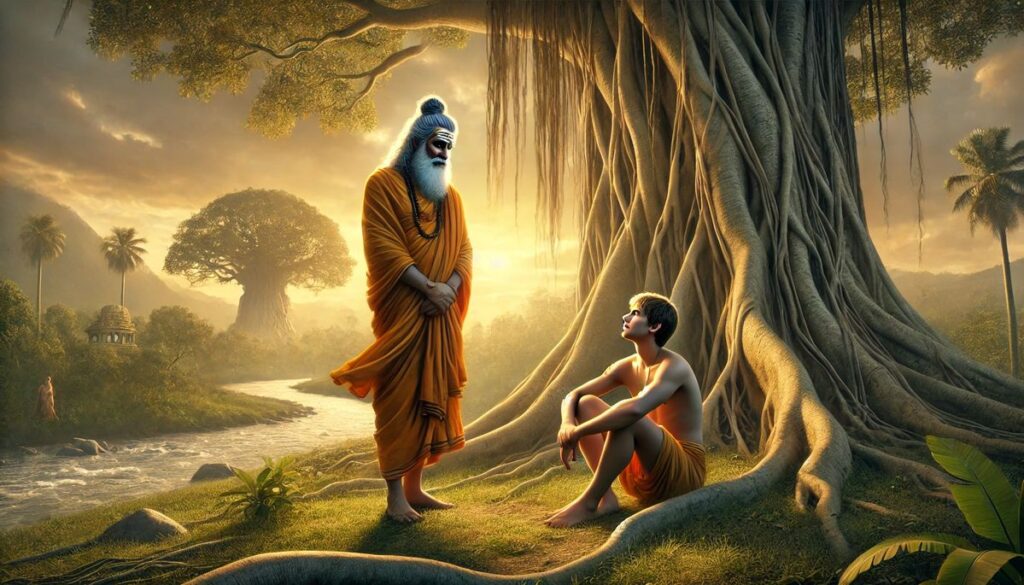
The 5 Places Of Kali-Yug Will be – (Tat Twam Asi) by Swami Sivananda The sage Uddalaka gave instructions to his son Svetaketu on the significance of Tat Tvam Asi Mahavakya nine times. This comes in Chhandogya Upanishad VI-7. The identity of Jivatma and Paramatma, the individual soul and the Supreme Soul is realised by meditating on the right significance of this Mahavakya or great sentence of the Upanishads. The relation between sound and its meaning is the Vritti of the sound. This Vritti is of two kinds, viz., Sakti Vritti and Lakshana Vritti. There is a power in the sound to generate the knowledge of the meaning of the sound. The direct connection between a sound and its meaning is its Sakti Vritti. The Parampara relationship between sound and its meaning, through the meaning known through the Sakti Vritti is the Lakshana Vritti of the sound. The meaning that is understood through the Sakti Vritti is the Vachyartha of the sound. The meaning that is understood by the Lakshana Vritti is the Lakshyartha of the sound. There are three kinds of relations, viz.,Samanadhi Karanya: (appositional) or the relation between two words having the same substratum. Visheshana-Visheshya: (the definitive) or the relation between the two words qualifying each other so as to signify a common object and Lakshya Lakshana Bhava: (the connotive) or the relation between two words and an identical thing implied by them (here Brahman). Samanadhi Karanya is the relationship between two words having the same substratum. by way of illustration take the sentence, This is that Devadatta. The word that indicates Devadatta connected with the past and the word this indicates Devadatta connected with the present. Both refer to one and the same person called Devadatta. Likewise, in the sentence Thou art That, the word That indicates consciousness characterised by remoteness, and the word Thou denotes consciousness characterised by nearness. Both refer to one and the same consciousness viz., the Brahman. The second relation is Visheshana-Visheshya Bhava. In the sentence, This is that Devadatta, that meaning a person endowed with the attribute of having been seen before is a conception of the past. They are dissimilar ideas but still they qualify each other so as to indicate a common object. Likewise in the Vedic sentence Thou art That, the meaning of the word Thou is consciousness characterised by nearness. They are dissimilar ideas but they qualify each other so as to indicate a common object. The third relation is Lakshya-Lakshana Bhava. In the sentence This is that Devadatta, this endowed with the attribute of having been seen at a particular place or in a particular dress or a particular time cannot be entirely identical with that endowed with the attribute of being seen at a different place, in a different dress in a different time. To equate them, therefore, we must abandon the inconsistent attributes and see the identity of the individual who has those varying attributes. Similarly in the Vedic sentence, Thou art That, to equate That, the omniscient, unmanifested Atman with Thou, the little-knowing, manifested, Jiva, we must abandon the inconsistent attributes such as omniscience and little knowledge etc., associated with That and Thou respectively and take up the pure consciousness which is common to both. Though the words That and Thou may indicate distinct conceptions, they must be taken to connote the same underlying reality or common consciousness. There are three kinds of Lakshana: Jahallakshan: Here the direct meaning of a sentence is abandoned completely in favour of an indirect meaning. For example, Gangayam Gosha, The village is on the Ganga. The direct meaning of The village is on the Ganga is abandoned in favour of the indirect meaning near the Ganga. There cannot be any village on the Ganga. There can be a village near the Ganga only. This Lakshana is not suitable for explaining Tat Tvam Asi Mahavakya because if the Kutasta Chaitanya, the Lakshyartha of Tvam Pada is abandoned, there is no Svarupa for the aspirant. Ajahallakshan: Here the direct meaning of a sentence is not abandoned but amplified. As for example, The red is running. Here we have to add the word horse, and understand as The red horse is running, because, redness being but a quality cannot run. This Lakshana also is not suitable to explain the identity of Jiva and Brahman in Tat Tvam Asi Mahavakya. Jahadajahallakshan: This is also known by the name Bhaga Tyaga Lakshana. Here a part of the direct meaning of a sentence is abandoned and another part is retained. As for example, This is that Devadatta, the associations regarding time and place are abandoned, but the person called Devadatta is retained. Likewise, in the great saying Thou art That the inconsistent attributes of remoteness and nearness, omni-science and little-knowledge, etc., associated with That and Thou respectively are abandoned and pure consciousness or Brahman, which is common to both is retained. The real meaning of the Vedic sentence is obtained by applying this Lakshana only. Identity of Jiva and Brahman is shown by applying this Lakshana. In the Vedic sentence, That art Thou or Thou art That, the direct significance of the word That is Maya plus the Brahman reflected therein, plus the pure Brahman, the substratum of Maya. The direct significance of the word Thou is Avidya plus the Self reflected therein plus Kutastha, the substratum of Avidya. The connotation or the real indicative meaning of the word That is pure Brahman. The connotation or the real indicative meaning of the word Thou is the Kutastha. The inconsistent attributes of Maya and Avidya have to be eliminated and the Kutastha whose nature is Existence, Knowledge and Bliss has to be identified with the pure Brahman whose nature is also Existence, Knowledge and Bliss. He who realises the identity through direct intuitive perception attains Moksha. He is a Jivanmukta. This is the emphatic unanimous voice of the Upanishads.

The 5 Places of Kali-Yug Read Post »

1721175744789
God is Love

Mystics of Bharat

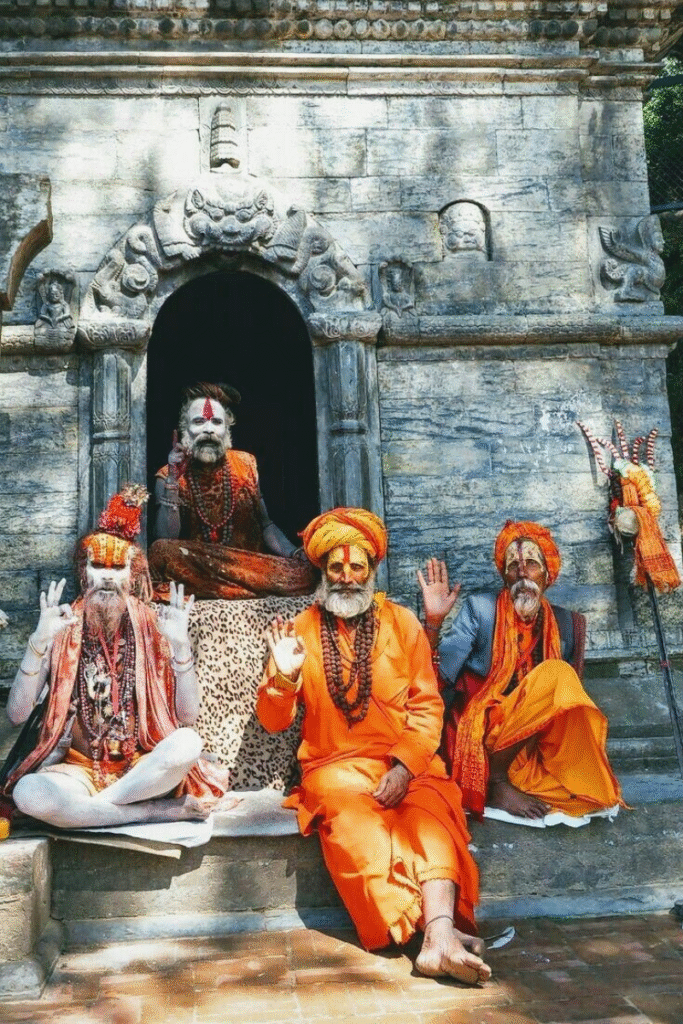
Mystics of Bharat Bharat, the land of ancient wisdom, has always been home to mystics whose lives transcend ordinary human experience. These mystics embody a rare fusion of knowledge, devotion, and direct experience of the divine. The mystics of Bharat viewed life not as a struggle for survival but as a sacred journey toward the discovery of the Self. Their teachings invite humanity to look inward rather than outward. From the earliest Vedic rishis to the contemporary sages, each mystic has added a luminous thread to the vast tapestry of India’s spiritual heritage. These mystics did not merely preach philosophy—they lived it. Their lives became demonstrations of truth, compassion, and inner freedom. One of the defining traits of Indian mystics is their insistence that divinity is not distant but inherently present within every human being. The Nath yogis, including Gorakhnath, explored the hidden capacities of the human body and mind through intense yogic disciplines and inner alchemy. These mystics did not seek miracles, yet miracles happened around them naturally as a result of their elevated consciousness. Sufi saints of Bharat, like Nizamuddin Auliya, contributed to the mystical melting pot of India by emphasizing love, surrender, and unity with the Divine. Sri Aurobindo offered a vision of spiritual evolution, teaching that humanity is destined to rise to higher planes of consciousness.

Mystics of Bharat Read Post »

224d7c01080b774e997a99731a019515
God is Love

Vibhuti of Lord

Vibhuti of Lord Who is Bhagavan? Understanding God’s Infinite Vibhutis To comprehend the significance of Shree Krishna’s vibhutis, it is essential to understand the definition of Bhagavan—the Supreme God. According to Parashar Rishi in the Devi Bhagavad Puran, Bhagavan is the one who possesses six infinite qualities:  Aiśvaryasya samagrasya Dharmasya yaśasaḥ sriyaḥ jñāna-vairagyayoś cāpi ṣaṇṇāṃ bhaga itīṅganā (Devi Bhagavad Puran) While these six attributes summarize God’s greatness, Ved Vyas in the Bhagavatam clarifies that God’s vibhutis are truly infinite. Attempting to count or comprehend them all would be as naive as a child trying to measure the sky with his hands. Yet, Shree Krishna reveals a few of these divine qualities to Arjun, not to boast, but to nurture his & our devotion. This knowledge serves as a catalyst, helping Arjun and all devotees deepen their faith and love for God. The Link Between Knowledge, Faith, and Love Swamiji emphasizes that devotion is cultivated through knowledge. Without understanding God’s greatness, it’s impossible to develop genuine faith, and without faith, true love cannot arise. This sequence, Gyan (knowledge) → Shraddha (faith) → Prem (love)—is illustrated through relatable examples that make this spiritual principle easy to grasp. The Ring of Increasing Value Imagine finding a ring on the street, assuming it’s artificial and worth only $50. You casually keep it in your pocket. Later, a goldsmith reveals it’s real gold, worth $500. Instantly, your appreciation for the ring grows. When a jeweller from New York examines the diamond and declares it’s worth $500,000, your love and attachment for the ring skyrocket. Did you have to chant “half a million dollar ring” repeatedly to develop this attachment? No. Simply gaining the correct knowledge about its value naturally intensified your love. Similarly, when we understand Shree Krishna’s infinite greatness, our faith and love for Him naturally expand. No extra rituals are needed—just true knowledge leads to profound devotion. This example shows that love is directly proportional to knowledge. The more you know about the object of your affection, the more your love grows. Just as the knowledge of the ring’s value increased the person’s attachment, knowing Shree Krishna’s infinite qualities naturally enhances our love for Him. The Paras Stone (Philosopher’s Stone) An officer’s servant, Ramu, once fed a hungry sadhu who, in gratitude, gifted him a Paras, a mythical stone that turns iron into gold. Unaware of its value, Ramu offered it to his master as a decorative item. The officer, stressed from work, dismissed it as a worthless stone and angrily threw it against a door latch made of iron. To his astonishment, the latch turned into gold. Testing it further on a key and a spoon, both transformed into gold. Realizing the stone’s miraculous power, the officer’s love and attachment for the Paras grew instantly. Did he need to perform fasting or pilgrimage to develop this love? No. Simply recognizing the stone’s true value transformed his feelings. Likewise, when we gain knowledge of Shree Krishna’s divine powers, our faith becomes unwavering, and our love deepens naturally. This analogy illustrates the sequence of spiritual growth: from gaining knowledge (Gyan) to developing faith (Shraddha) and ultimately experiencing divine love (Prem). The officer did not need any external motivation to cherish the Paras stone—his love grew spontaneously through knowledge. Similarly, understanding Shree Krishna’s vibhutis naturally leads to unwavering devotion. The Power of Faith: Believing in God’s Infinite Presence The Kathopanishad states that the moment we truly believe in God’s presence, we attain God-realization. Everyone knows the definition of God, he is omnipresent, omniscient, and the source of all bliss. Yet, few truly believe it. If we genuinely internalized this knowledge, our faith would become unshakable, leading directly to divine love. Faith is often tested in challenging times. When faced with difficulties, doubts may arise: “Does God really care about me? Why am I suffering if God is all-powerful?” Such doubts arise because our knowledge of God’s infinite compassion and wisdom is incomplete. Just as understanding the true value of the ring or the Paras stone eliminates doubt, knowing Shree Krishna’s divine attributes removes all uncertainty, strengthening our faith even in adversity.  The Phrase “Ram’s Name is True” In North India, when a person dies, their body is carried to the cremation ground with people chanting, “Ram naam satya hai” meaning “Ram’s name is true.” But imagine a scenario where a supposedly dead child miraculously comes back to life during the procession. The father, overjoyed, says, “No need to continue chanting. Let’s go home!” Someone suggests continuing the chant as they return home, but the father refuses, saying, “Don’t say that phrase—it’s only for the dead.” This reveals the limited belief people have in God’s name. They associate it with death rather than eternal truth. Jagadguru Shri Kripaluji Maharaj humorously points out this contradiction in his Doha: “When people go to the cremation ground, they say Ram is true. When they return, they say the world is true. This is not real knowledge—it’s ignorance.” True knowledge means believing in God’s presence at all times, not just during life’s final moments. If we genuinely understood and believed in God’s infinite power, our devotion would become unwavering, leading us to eternal love and bliss. This example illustrates the difference between intellectual knowledge and heartfelt belief. Many people know that God is omnipresent, yet their actions reveal a lack of true faith. By deepening our understanding of Shree Krishna’s vibhutis, we move from superficial knowledge to unshakeable belief, allowing us to experience His divine presence in every moment. Why Faith Falters: The Need for True Knowledge Many well-intentioned devotees struggle because their faith is not deeply rooted in true knowledge. Without understanding Shree Krishna’s divine attributes, their devotion wavers in the face of life’s challenges. This is why Shree Krishna, in BG 10.7, promises to reveal His vibhutis—to help Arjun (and all of us) develop unshakeable faith and love. Faith built on rituals or external practices alone can be fragile. For example, someone may regularly chant God’s name, but if they do not truly understand God’s infinite power, their faith may falter when faced with difficulties. However, when faith is rooted in knowledge, when we truly know that Shree Krishna is

Vibhuti of Lord Read Post »

1fa2f79729a874f9a3810011f0114260
God is Love

SO-HUM

SO-HUM Soham Meditation The joy we get from singing bhajans and by performing worship is temporary. But by experiencing the essence of “soham” mantra, you will get eternal joy. This soham is also known by the name “Hamsa Gayatri”. “So” means “that”; “ham” means “I am”. “I am that” is the meaning of soham. You should chant soham with every breath. When you breathe, you are inhaling “so” and you are exhaling “ham”. If we repeat soham mantra with every inhalation and exhalation of breath, it will do a lot of good to you. Repeat “soham” with every breath and watch your breath carefully. Brahma is the Creator of the whole Universe,Vishnu is the Sustainer, andSiva is the Destroyer of all sins.This is the Truth I am revealing to you.(Telugu Poem) Embodiments of Love! What is man, immersed in an ocean of sorrow, seeking in this vast and limitless universe? What for is he doing sadhana (spiritual exercises)? Some are seeking fulfilment in worldly things; some others are wasting their valuable time in trying to seek satisfaction of their unfulfilled desires. Yet, others are entering the spiritual path with a desire to have darshan, sparshan, and sambhashan of Divinity. Human beings contemplate on God as Brahma, Vishnu, and Maheswara. But these are not Gods with a human form. They have neither a form nor a place. If one enquires into the nature of their form, it will become clear that they have only some attributes, with no specific upadhi (vesture). It is said “Easwarah sarva bhoothanam (God is the indweller of every living being) “. But with what form? How can one contemplate on God with an invisible form? What is the use of such contemplation? Divinity is the very life breath that can be perceived and heard. How can one recognise and experience the sound of this Divine breath? The Upanishads have given the names of Brahman and Atma invisible divine breath in human beings. But one cannot understand these abstract concepts, with any amount of explanation. What is the meaning of Easwarathwa (Divinity)? It can be understood as the Divine, auspicious breath of soham that emanates from a human being. Soham means “I am that ” (Divinity). The sound of the breath in human being, i.e. soham establishes the nature of Divinity. If one tries to contemplate on the form without recognising the sound, he will not be able to understand the nature of Divinity. Soham is sathwic (pure, serene) in nature. This sathwa guna is Easwarathwa (the Shiva Principle). There is another principle that emanates from this Divine breath, namely, Vishnuthwa (the Vishnu Principle). What is the form of this Vishnu Principle? The feelings in the mind. In other words, mind is the Vishnu Principle. There is yet another form that emerges from the navel of Vishnu, namely, Brahma. Thus, the principles of Brahma, Vishnu, and Maheswara are emanating from the Soham Tathwa in a human being itself. In this trinity, Shiva is the Soham Tathwa, Vishnu is the mind, and Brahma is the vak swarupa (in the form of words). It means, every word that emerges from the human being is Brahma; every resolve (sankalpa) emerging from the mind is Vishnu and every breath coming out of the body is Easwara. Thus, Divinity is permeating the entire human body. The body is living as long as the life breath emanates from the body. Mind is made up of (sankalpa (resolution) and vikalpa (negation or dissolution). This is the Vishnu Principle. The Principle that emerges from the navel of Vishnu is Brahma. What is the root cause for this Brahma Principle? That which attracts the sound (sabda). It is said, Sabda Brahmamayi (sound is Brahman), Characharamayi (that which permeates the whole universe, movable and immovable is Brahman), and Vangmayi (word is Brahman). Durga, Lakshmi, and Saraswathi are the embodiments of these three, namely, sound, pervasiveness, and word. In every breath of the human being, there is this soham chanting. Without this soham sound, the breath cannot exist. Similarly, devoid of mind, sankalpa cannot arise. And, without sankalpa, the word cannot emerge. Thus, there is inseparable and inter-dependent relationship between the soham sound, the sankalpa in the mind, and the word. Several efforts are being made by several people to recognise this relationship. However, this principle cannot be understood by sadhana (spiritual exercise). It can be realised only through enquiry. Man today is engaged in the study of several Upanishads. What is the essence of these Upanishads? The essence of Upanishads is the principle of unity in diversity. We are nourishing and nurturing the body. For what purpose? What is the benefit accruing out of this nourishment? In fact, nothing. As long as the body exists, we have to feed it. As long as we take food, we sleep as well. During sleep, we experience happiness. But, once we wake up, are we able to experience the same happiness? No. Therefore, in order to experience everlasting bliss, we have to realise the essence of the Upanishads. Divinity has no names. All names and forms belong to God. There is no place in which He does not exist. Nor is there an object in this world, which does not belong to Him. Embodiments of Love! The essential nature of Divinity is Love. However, few make the effort to recognise this principle of love. There are several systems in the human body like the digestive system, nervous system, etc. But there is one main switch, which controls all the systems in the body. The eyes see several colours. The tongue tastes several delicacies. The ears hear several types of sounds. But, what is the basis for all these experiences? That basis is called the fundamental principle, because of which man is able to experience all these things. That fundamental principle is given the name of Atma. Because of this Atma Tathwa, several sankalpas and bhavas arise in our heart. Hridaya (heart) is the Veda. The sankalpas are the sruthis.

SO-HUM Read Post »

f740e568e76291cab8ee21c47bb750ec
God is Love

What is IGNORANCE

What is IGNORANCE Devotee: I have been anxious for a long time to ask You some things and to learn the answers from You. Today, I have the chance. This mind (manas) and its principle are unknown categories. Their meanings don’t get fixed and clear without actual experience. But Swami, this delusion of the objective world (samsara) overpowers us, thick and strong, like the darkness of clouds in the rainy season. What is this mighty force that drags us along? This is what has been bothering me. I feel that people like me should understand these things clearly in the very beginning. Will you kindly enlighten me? Swami: Well, my boy. What am I to say? You are suffering from fright, imagining a tree stump seen in the park to be a person. That is, you are mistaking the non-dual (a-dwaitha), the full (purna), which is Brahman as a separate incomplete soul (jiva) and suffering from that error. That delusion is the cause of all your sufferings. Devotee: How, then, did this delusion come about? Swami: You slept, or you dreamed. You slept the sleep of ignorance (a-jnana) and delusion (moha). Therefore, you dreamed this objective world. Awake, and you will have no more dreams. When the dream is gone, the delusion also goes. Devotee: Swami, what is this ignorance? What are its characteristics? How does it operate? Swami: That, which is attached to the body and feels as “I” is the individual soul (jiva). The soul is outwardfaced; it believes all this mutable creation (jagath) and objective world; it is immersed in both. When the soul ignores and forgets its non-dual embodiment (a-dwaitha-swarupa), we call it ignorance (a-jnana). Is that clear? Devotee: But Swami, the spiritual texts, all of them, say that this objective world is caused by illusion (maya). You are now saying it is due to ignorance. What is the distinction between the two? Swami: Ignorance (a-jnana) is known variously as illusion (maya), primordial matter (pradhana), nature (prakriti), unmanifest, ignorance (a-vidya), delusion (thamas), etc. Hence, understand this well: the objective world is the consequence of ignorance. Devotee: How can ignorance produce this objective world; I want to know from you, Guru-God (Guru-deva). Swami: Know that ignoranc has two powers: the veiling power (avarana-sakthi) and the projecting power (vikshepa-sakthi). It veils Reality and projects upon it the unreal. The veiling power acts in two different ways: veiling with untruth and veiling with appearance. When a spiritually wise person (jnani) and ignorant people (a-jnanis) meet, even though the wise one teaches that the Atma is One and non-dual, the ignorant ones deny it, because they can’t grasp the reality so easily. Even when they hear the truth, they don’t have the faith and steadfastness to imbibe it, so they dismiss it with a shrug of indifference. This is the veiling with untruth. Now about veiling with appearance. Even when someone believes by study of the scriptures (sastras) and by the grace of providence that there is non-dual Atma, one can be carried away by cursory and superficial arguments and dismiss it as non-existent. Though one has the consciousness (chit) that is aware of the very thing that one denies, the delusion (moha) makes one declare that it is non-existent. This is the sinister role of veiling with appearance. Devotee: You also spoke of the projecting power. What is meant by that? Swami: Though you are formless and changeless, and though your nature is bliss (ananda), you are deluded into believing, feeling, and acting as if you are the body, which has form, which changes, and which is the seat of pain and grief. You refer to your self as the doer and enjoyer; you speak of I, you, they, this, that, etc., deluded into believing variety and multiplicity where there is only One. This illusion of projecting many on the one is called vikshepa-sakthi, or superimposition. Devotee: What is that? Swami: When you superimpose the object “silver” on mother-of-pearl, when you see not the stump but the human form, you have superimposed on it. Or when instead of the stretch of desert you see a lake, you have superimposed the unreal on the real. This is superimposition. Devotee: Well, Baba. What is the real, and what is the unreal? Please explain that too. Swami: The one and only, non-dual, being-awareness-bliss (satchidananda) absolute Brahman (Parabrahman) is the Real. Just as the name and the form of the snake are superimposed on a rope, this cosmos (jagath) – inclusive of everything from Brahman to a blade of grass, all creatures, all inert objects like the earth – is super-imposed on that Absolute, Supreme Real. The cosmos is the unreal (a-vastu) – that is, the superimposed thing. Devotee: This superimposition of the name-form cosmos on the non-dual Real, how is it caused? Swami: By illusion (maya). Devotee: Illusion means …? Swami: The power of ignorance (a-jnana-sakthi) of the above-said Universal Absolute Brahman (Parabrahman). Devotee: Power of ignorance means …? Swami: I told you, didn’t I? The incapacity to understand the Supreme Being (Brahman) even though you are fundamentally Brahman – that is ignorance (a-jnana). Devotee: Well how does that ignorance produce all this cosmos (jagath)? Swami: The power of ignorance doesn’t allow you to see the rope; instead it imposes the snake upon it; it makes you see the cosmos where there is only Brahman. Devotee: Swami, when there is only the non-dual One (A-dwaitha), how did the creation of all these worlds happen? Swami: You have come back again to where we started! Even if I tell you now, it is very hard to grasp. Still, since you have asked, I shall tell you. Listen. The power of ignorance exists in the latent form in the rope itself. That is to say, it is latent, unmanifested in the Brahman. This is also called ignorance (a-vidya). Its base is Brahman, which is awareness (chit) and bliss (ananda). Of the two powers that illusion (maya) has, veiling (avarana) and projection (vikshepa), the

What is IGNORANCE Read Post »

Discourse 1
God is Love

THE GAME OF LIFE

Life is a Game – Play it : A Beautiful Message by Bhagavan Sri Sathya Sai Baba BELIEVING that the body is All, and that there is no entity embodied in it – this is Mistake No.1. Ignoring or forgetting that there can be no wave without the ocean, no body without the Atma (Divine Self), is Mistake No.2. The Atma has no modification or mood. It is the individualised embodiment that undergoes modifications and is caught in moods. Once you know that you are in essence the Atma, you too will be unaffected. Another characteristic of the individual is that he cannot be alone, separate from the rest. Like a drop of oil on water, he spreads; he reaches out and far. ‘I’ seeks other ‘I’s and seeks to become We. Life is a march from I to We. But, it usually strays from I to They. And does not reach the God, We. Intellect alone can direct man in the path of discrimination, between the true path and false, the proper step and the improper. This is the reason why man has been praying since ages, through the Gayathri hymn: “Illumine me, prompt my intelligence, so that I may walk aright.” The reasoning power of man is shaped, not only by the education he receives now, but. more by the impact of past lives and the import of future events. If the power is used for selfaggrandizement it feeds delusion; if it is used in service for others, it will promote the Revelation of Reality. Reason must examine the vagaries of the mind and make patent the Divinity, the resides and shines in every individual. Avathars are ever alert, aware, alight Give away ‘Love’ to all; give up the ego; display heroism in service; with compassion to fellowmen, feel your intimate kinship with them. Visualise the Atma that illumines all; derive unending Bliss therefrom. All who come embodied are Avathars, that is to say, advents of the Divine, manifestations of God. What, then, is the special feature of Rama, Krishna, Buddha, Christ? Why do you celebrate their birthdays with such reverential enthusiasm? The speciality is this: they are aware; you are unaware of the Atma which is the Truth. Awareness confers Grace, Glory, Majesty, Might, Splendour. Awareness confers liberation from bounds, from time, space and causation, from sleep, dream and wakefulness. For you, sleep is fiction, dream is fantasy and wakefulness a many-directional storm. Avathars are ever alert, aware, alight. The wise man is he who keeps his reason sharp and clear, and sees things as they really are. He listens to the advice: Life is a Challenge, Meet it; Life is Love, Share it; Life is a Dream, Realise it; Life a Game, Play it. This is the real Pilgrim’s progress. This is the Lion’s march across the forest, fearless, masterful and victorious. The roar .of the lion makes all the denizens scamper in panic; so too the Halo of Wisdom scatters the dark brood of fear and doubt. Life sweeps along like a wild typhoon; the allotted years do melt like snow before the Sun; but, man wastes the precious chance, and strays into folly and frivolity. The yearning of the human soul, “From untruth lead me into Truth; from darkness lead me into Light; from death, lead me into Immortality,” – this is unrealised. Of what use is it to honour the Avathar and hold the day when the Avathar took human form as sacred? Plant the seeds of love in your hearts The message of the Avathar must be born, must become alive, must grow in you, your heart – that is the birthday, you have to celebrate. Celebrate the Avathar’s Birthday in your own village. You need not travel long distances to where I physically am. Plant the seeds of Love in your hearts, let them grow into trees of service and shower the sweet fruits of Anandha. Share the Anandha with all. That is the proper way to celebrate the Birthday. I have been telling you that My Life is My Message. I am exhorting you in the Upanishadhic way, “Revere the Mother as Divine, Revere the Father as Divine, Revere the Teacher as Divine, Revere the Guest as Divine.” Now I am proceeding to the place where their bodies are entombed to offer, as I have advised you, to express gratitude and respect, to the parents. After that, the Prashanthi Flag will be hoisted on the Mandhir. Hoist it on the shrines of your hearts, shrines where God is installed and realised in actual presence, every moment of your lives. A red-hot iron hammer can be hammered into shape by a cold iron hammer. So too, a person red hot with emotion and passion can be hammered by the hammer that knows no heat of anger or hate. That is the reason Rama was able to defeat Ravana and destroy him. Why?The very word Sathwa means strength, power, vigour, vitality. For virtue is power, goodness is power. Rama and Lakshmana are Sathwik Mahatmas, embodiments of the powers thatrighteousness can endow. – Sri Sathya Sai Baba

THE GAME OF LIFE Read Post »

edb6dd9e63270c03e7c0f111541c300c
God is Love

Truth – The Divine Virtue

Truth – The Divine Virtue THERE is God everywhere and there is no second entity anywhere. God is the truth, the only truth. In every article or thing, God is, as the basis, as understanding and understandability, as the source of Divine light, as’ Atma. Know that All exists, has awareness and bliss because of the Atma which All is. Truth is a word that is frequently used on platforms but the concept is still very hazy and often mistakenly interpreted. In reality, man is afraid of probing into his own truth, lest his pet opinions and attitudes be proved hollow and dangerous. As a result, his actions and thoughts pursue disturbing and discordant paths. What exactly is truth? Is it the description of a ‘thing seen’ as one has seen it, without exaggeration or under-statement? No. Or, the narration of an incident in the same word as one has heard it narrated? No. Truth elevates; it holds forth ideals; it inspires the individual and society. It is the Light that illumines Man’s path to God. A life inspired by Truth will enable man to live as man – not degrade himself to the status of a lower species. From dawn to dusk, from the moment of wakefulness to the moment of sleep, if he devotes himself to his own deeds, is that a life inspired by the Truth? No. By his good thoughts translated into good words and manifested as good deeds, man must promote Truth in society and prove its usefulness. He is the image of God. He must be aware of the image of God that shines in society also. The thought that arises in the mind, the word that sprouts from the tongue and the deed that engages the hand must all three be fully co-ordinated. Each one must be in conformity with the other two. They must be in unison with each other. If you have one plan in your mind and talk of a different one and execute something else, it is a false life, not a true one. The ancient texts condemn such a person as a Dhuratma (evil person) and extol the person whose thought,Word and deed are all in line as a Mahatma (greatest soul). Nowadays, people are fascinated by the false and keep away from the true. They ignore the true and pursue the false. They are not eager to know the Truth, the eternal and the Absolute.  Protect your mother-tongue and Motherland with all your energy. Make yourselves fit for this, by making the best use of the opportunities in the school. Progress as much as you can, without hesitation. Develop character as well as intelligence and health. The most reliable source of strength is in you, not in money, or kinsmen, or physical acumen, but, in yourself, the Atman (divinity). Know it; delve into it; draw sustenance from it; see it in all; serve it in all. – Sri Sathya Sai Baba The Practice of Truth By Sri Swami Atmaswarupananda Early Morning Meditation Talk given in the Sacred Samadhi Hall of Gurudev Sri Swami Sivanandaji Maharaj, Sivananda Ashram, Rishikesh The Father of the Nation, Mahatma Gandhi, was a votary of truth. He used to declare, “They say that God is Truth. But I declare unto you, truth is God.” This would suggest that when Gurudev wants us take a vow of truthfulness, satyam, that if it is practised in all sincerity, then we become God. But what is involved in the practice of truth? If we reflect upon it, we will recognise that we need to practice truth at three levels of our being. The first level of the practice of truth is the obvious one, of telling the truth to each other in our day by day affairs. To practise the truth to the standard of Mahatma Gandhi means that ultimately we become incapable of telling a lie. If by chance a lie should escape our lips, we become immediately aware of it and make the necessary correction. The next level of truth is the practice of truth in our inner being. Gurudev said, “Scrutinise always your inner motives.” Normally, most of us have two reasons for doing something: One, a reason that sounds good to ourselves and others, and second, the real reason. We have to scrutinise carefully our inner motives, recognise what our real motives are, and never claim to be doing anything for other than our real motivation. But there is a third level of truth that most of us find almost impossible to practice. And that is truth at the level of yoga. The scriptures can declare “That thou art,” we can affirm, “I am Brahman,” we can believe with our intellect that “All this is Brahman,” but to come to grips with the truth of it is something else altogether. It requires tremendous strength, tremendous clarity of intellect, tremendous devotion to the truth, tremendous will-power and, above all, the character built by the practice of truth with others and within ourselves. It is this final practice of the truth that will convert us into the Divine. But it is an absolute practice and it is not a practice that we can do in the ordinary way. It is a practice–no matter how we describe it–of total letting go, total renunciation, total surrender, and it is affirming that the ultimate Truth is That which we can never grasp, in anyway, with the mind. The scriptures declare that we are That. But they also declare that That is unknowable and unthinkable. So to practise the real truth, we have to exchange that which we think we are for the truth that is unknowable by the mind. It is this practice that brings us to the peace that is beyond understanding. It is this practice that results in total humility. We are nothing, but paradoxically, we are everything. We have given up everything; we gain everything. We had confusion; now we have clarity. It comes

Truth – The Divine Virtue Read Post »

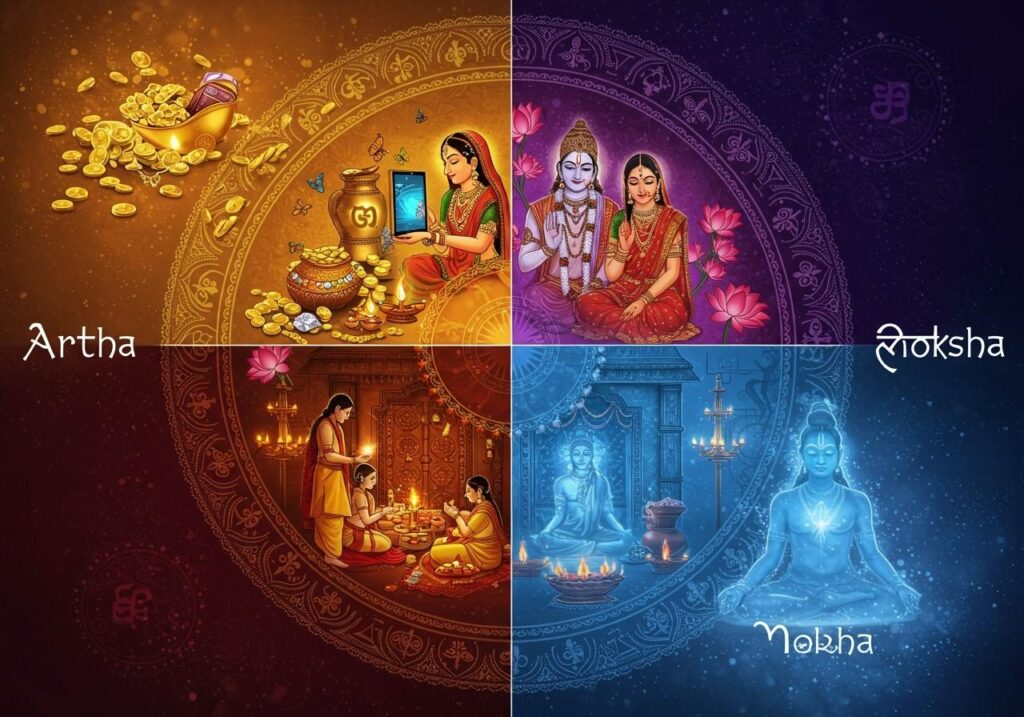
Artha Kama Dharma Moksha The Four Pillars of Hindu Life A 2025 Guide to Fulfillment.jpeg
God is Love

4 Pillars Of Sanathan Dharam

4 Pillars Of Sanathan Dharam The Pillars of Sanatan-Dharma are:   “The Supreme Personality of Godhead said: Fearlessness; purification of one’s existence; cultivation of spiritual knowledge; charity; self-control; performance of sacrifice; study of the Vedas; austerity; simplicity; nonviolence; truthfulness; freedom from anger; renunciation; tranquility; aversion to faultfinding; compassion for all living entities; freedom from covetousness; gentleness; modesty; steady determination; vigor; forgiveness; fortitude; cleanliness; and freedom from envy and from the passion for honor – these transcendental qualities, O son of Bharata, belong to godly men endowed with divine nature.   “…These four legs of powerful religion are truthfulness, mercy, austerity and charity.”  “Education, charity, penance and truth are said to be the four legs of religion…” “In the age of Satya [truthfulness] your four legs were established by the four principles of austerity, cleanliness, mercy and truthfulness…”  The Four Pillars of Dharma—truthfulness, compassion, austerity, and cleanliness—form the sacred foundation of a righteous life as described in the Srimad Bhagavatam. In a world tilting toward chaos in the age of Kali, these pillars are not just virtues, but lifelines that sustain spiritual progress and social harmony. This blog explores each pillar in depth, offering practical insights for modern living and timeless wisdom rooted in devotion to Krishna. 1. Satya (Truthfulness) Definition: Speaking the truth, living honestly, and aligning one’s actions with reality. Modern Relevance: In today’s world of misinformation and deception, truthfulness is a rare treasure. Being honest builds trust in relationships, whether personal or professional. Spiritually, it clears the heart and mind, making it easier to connect with the Absolute Truth—Krishna. Scriptural Insight: In the age of Kali, falsehood becomes rampant. But when we uphold truth, we protect one leg of dharma. 2. Daya (Compassion) Definition: Kindness toward all living beings, especially the helpless and the suffering. Modern Relevance: Compassion is not weakness—it is strength. In a society marked by competition and self-interest, practicing kindness softens the heart and creates a more empathetic world. Compassion in action includes vegetarianism, charity, and forgiveness. Scriptural Insight: Krishna is known as Bhaktavatsala—one who is affectionate to His devotees. By showing compassion, we reflect His nature. 3. Tapas (Austerity) Definition: Willingness to accept difficulty for a higher spiritual goal. Modern Relevance: Whether it’s waking up early to chant, fasting on Ekadashi, or refraining from indulgences, austerity purifies the senses. In a pleasure-driven culture, tapas builds discipline and inner strength. Scriptural Insight: Lord Rishabhadeva, an incarnation of Krishna, taught that human life is meant for tapasya—to realize the soul’s eternal nature. 4. Shaucham (Cleanliness) Definition: Purity of body, mind, and surroundings. Modern Relevance: Cleanliness is often reduced to physical hygiene, but true shaucham also includes mental cleanliness—keeping the mind free from lust, anger, and greed. Clean habits lead to clarity and peace, both essential for spiritual practice. Scriptural Insight: Cleanliness is the foundation of deity worship and sacred living. Krishna resides where purity is present.

4 Pillars Of Sanathan Dharam Read Post »

cb6674831331a58723aef38cc2008320
God is Love

What is Dharma

What is Dharma What is Svadharma? by Swami Sivananda There is no proper equivalent in English for the Sanskrit term ‘Dharma’. It is generally rendered as ‘duty’, ‘righteousness’. Any action that is best calculated to bring Sreyas (liberation) and Abhyudaya (exaltation) is Dharma. That which brings well-being to human beings is Dharma. The word Dharma comes from the root ‘Dhri’ which means ‘to support’ or ‘to hold on’. That which upholds is Dharma. By Dharma people are upheld. As it supports and holds together it is called Dharma. That which secures preservation of being is Dharma. ‘Svadharma’ means one’s own duty in accordance with the Varnashrama or caste and order of life which are founded according to the Gunas or qualities born of the nature of man. God, religion and Dharma are inseparable. Man evolves through the practice of Dharma according to his caste and order of life, and eventually attains Self-realisation, the ultimate goal of life, which brings infinite bliss, supreme peace, unbroken joy, highest knowledge, eternal satisfaction and immortality. The mark of Dharma is Achara (good conduct). Achara is the mark of the good. Higher than all the teachings, is Achara. From Achara, Dharma is born; and Dharma enhances life. By Achara man attains fame, power and strength here and hereafter. Achara is the highest Dharma. Achara is the root of all Tapas. Dharma tops the list of the four Purusharthas, viz., Dharma, Artha, Kama and Moksha. Dharma gives wealth, satisfaction of desires and liberation in the end. “The Brahmana was Brahma’s mouth; the Rajanya was made His two arms; His two thighs the Vaishya; the Sudra was born of His two feet.” The four castes are Brahmana, Kshatriya, Vaishya and Sudra. Self-restraint, serenity, patience, austerity, purity, belief in God, forgiveness, self-sacrifice, uprighteousness, truthfulness, wisdom, teaching and studying the Vedas, doing sacrifices, and also guiding others in offering sacrifices and gifts and receiving gifts are the duties of a Brahmana born of his own nature. Courage, generosity, vigour, prowess, splendour, firmness, dexterity, not fleeing from battle, the nature of a ruler, protection of the people, gifts, doing sacrifices and study of the Vedas are the duties of a Kshatriya born of his own nature. Ploughing, protection of cattle, trade, charity, doing sacrifice, study of the Vedas, engaging in commerce, finance and agriculture are the duties of a Vaishya born of his own nature. To serve ungrudgingly all these castes is the duty of a Sudra born of his own nature. Much of the evil has grown through men of one caste grasping at the work of the other castes, and thinking more of the rights his caste gives him than of the duties it imposes. The Brahmana and Kshatriya have claimed their privileges ardently and have shrunk from the heavy burden belonging to their castes. Naturally their attitude has provoked opposition, and antagonism has replaced mutual goodwill and service. Consequently caste has become a social bitterness, instead of being a framework maintaining all in happy order. If people of different castes practise their Dharmas, caste confusion will pass away and abundant peace and joy will prevail. The Ashramas or stages in life are four, viz., Brahmacharya, the stage of studentship, Garhasthya, the stage of householdership, Vanaprastha, the stage of forest-dwelling or seclusion, and Sannyasa, the order of total renunciation. Each order of life has its own duties. In none of these stages must a man grasp at the special duties of the other three. At the present moment it is difficult to maintain or observe the exact details of the ancient rules, as the conditions have changed very much. But, if we can have a clear idea of the fundamental duties of each, we shall still be able to shape the life to a regulated course of development and steady growth. The life of the student starts with the Upanayana ceremony, his second birth. You will find in the Manu Smriti: “Let the student ever engage in the study of the Vedas and in doing service to his preceptor. Let the student refrain from wine, meat, perfumes, tasty dishes, garlands, company of women, and from injury to sentient creatures. Let him give up lust, anger, greed, dancing, singing and playing on musical instruments, dice play, gossip, slander and untruth.” “Let the student always sleep alone and let him not waste his seed; he who from lust destroyeth his seed, destroyeth his vow. He should develop the spirit of service, humility and obedience. He should mould his character properly. He should be chaste in thought, word and deed.” Dharma From the teachings of Swami Sivananda Saraswati The Sanskrit term dharma is difficult to define. There is no equivalent word for it in English. Dharma is generally defined as righteousness or duty. It is the principle of holiness and unity. Bhishma says in his instructions to Yudhishthira that whatever creates conflict is adharma, and whatever puts an end to conflict and brings about unity and harmony is dharma. Anything that helps to unite and develop pure divine love and universal brotherhood is dharma. Anything that creates discord, split and disharmony, and foments hatred is adharma. The rules of dharma have been laid down for regulating the worldly affairs of people. Dharma brings happiness, both in this world and in the next. If you transgress it, it will kill you. If you protect it, it will protect you. It is the sole companion after death and the sole refuge of humanity. That which elevates is dharma. It leads to the path of perfection and glory. It helps to have direct communion with the Lord. Dharma makes one divine and is the ascending stairway to God. Self-realization is the highest dharma. God is the centre of dharma. Dharma has its root in mortality and the controller of dharma is God himself. Rishi Kanada, founder of the Vaisheshika system of philosophy, has given the best definition of dharma: “That which leads to the total cessation of pain, and the attainment of prosperity in this world


What is Dharma Read Post »